
So I've been feeling fever since yesterday night. And today, like, now it is 100 degree Fahrenheit. And I am having very runny nose and sore throat as well. Also... I'm having a severe back pain. And you know my body is aching. So... What could it be? Well, then how do I go about it?
fever runny nose sore throat body aches back pain diagnosis treatment 2025
What's Likely Going On
| Feature | Influenza | Common Cold |
|---|---|---|
| Fever | Yes, typically 100-102°F+ | Mild or absent |
| Body aches | Moderate to severe | Mild |
| Sore throat | Yes | Yes |
| Runny/stuffy nose | Yes | Yes (often more prominent) |
| Onset | Rapid (hours) | Gradual |
| Fatigue | Marked | Mild |
- COVID-19 - shares most of the same symptoms. Loss of smell/taste is more characteristic of COVID but not always present. A home antigen test can quickly rule this in or out.
- Strep throat - causes fever and severe sore throat but usually WITHOUT runny nose; body aches are less prominent.
- Common cold - possible but your degree of body aches and back pain leans more toward flu.
What You Should Do
Right now (home care):
- Rest - Your body needs it. Stay home, don't push through.
- Hydrate aggressively - Fever and sweating cause fluid loss. Water, oral rehydration drinks, warm broths, herbal teas. Aim for more than usual.
- Fever and pain relief - Take paracetamol (acetaminophen) or ibuprofen for your fever, sore throat pain, and body aches. Follow label dosing. Do NOT take aspirin (risk of Reye's syndrome if viral illness).
- Sore throat - Gargle with warm salt water. Throat lozenges also help.
- Runny nose - Saline nasal drops can relieve congestion. OTC decongestants (pseudoephedrine, oxymetazoline nasal spray) can help but use sparingly.
- Warm compress or heating pad for back/muscle pain gives good local relief.
Should you get an antiviral (Tamiflu/oseltamivir)?
- Age 65+
- Pregnant
- Asthma, COPD, diabetes, heart/kidney/liver disease
- Immunocompromised
- BMI ≥40
Warning Signs - Go to ER Immediately If:
- Difficulty breathing or shortness of breath at rest
- Chest pain
- Confusion, altered mental status, hard to wake up
- Lips or fingernails turning blue
- Fever not going down despite paracetamol/ibuprofen or fever rising above 103°F (39.4°C)
- No improvement after 72 hours or getting worse after initial improvement
- Severe vomiting / not keeping fluids down
- Decreased urination (sign of dehydration)
Quick Summary Plan
| Step | Action |
|---|---|
| Today | Rest, fluids, paracetamol/ibuprofen for fever+pain |
| Today | Do a COVID home test if you have one |
| Today (urgent if in window) | Call doctor/urgent care about oseltamivir |
| Throat | Warm salt water gargle, lozenges |
| Back/body pain | Warm compress, ibuprofen |
| Monitor | Watch for the red-flag warning signs above |
Disclaimer: This is general health information and not a substitute for professional medical evaluation. Please consult a healthcare provider for diagnosis and treatment tailored to your specific situation.
I had taken Dolo 650. Uh, in the morning, like around at 10:30 AM, and right now it's around 3:30. Should I take another one because I'm already at 100 degree Fahrenheit?
Dolo 650 (Paracetamol/Acetaminophen 650 mg) - Dosing
| Details | |
|---|---|
| Standard adult dose | 325-1000 mg every 4-6 hours |
| Your last dose | 10:30 AM |
| Time now | 3:30 PM = 5 hours later |
| Safe to take? | ✅ Yes - well past the 4-6 hour interval |
| Max dose per day | 4 g (4000 mg) under doctor guidance; 3 g (3000 mg) for self-medication |
Your Running Dose Count (to stay safe today)
- Dose 1: 10:30 AM - 650 mg
- Dose 2: 3:30 PM - 650 mg ← take this now
- Dose 3: Can take at ~8:30-9:30 PM if still needed
- Dose 4: Can take before bed if needed
One thing to note about 100°F (37.8°C)
Disclaimer: This is general health information, not a substitute for professional medical advice.
So I went to a doctor and the doctor gave me Calpol 650, Levocetirizine, Co-amoxiclav tablets, nose drops and some syrup. So is Calpol 650 as effective as Rolo 650?
Calpol 650 vs. Dolo 650 - Are They the Same?
| Brand | Active Ingredient | Manufacturer |
|---|---|---|
| Dolo 650 | Paracetamol 650 mg | Micro Labs |
| Calpol 650 | Paracetamol 650 mg | GSK (GlaxoSmithKline) |
One important note: since you already took a Dolo 650 earlier today, that counts toward your daily total. Don't double-dose just because it's a different brand name.
Your Full Prescription - What Each Drug Does
1. Calpol 650 (Paracetamol)
- For: Fever and body/throat pain
- Reduces fever and relieves aches. Take every 4-6 hours as needed, max 3-4 tablets/day.
2. Levocetirizine (antihistamine)
- For: Your runny nose and sore/scratchy throat
- It is a second-generation H1 antihistamine - the active form of cetirizine (Zyrtec). It blocks histamine receptors, drying up the runny nose and reducing nasal inflammation. It has mast cell-stabilizing and anti-inflammatory properties on top of its antihistamine action, making it very effective for nasal symptoms.
- It causes less sedation than older antihistamines but you may still feel slightly drowsy - avoid driving if so.
- Typically taken once at night (standard dose: 5 mg). (Goodman & Gilman's Pharmacology)
3. Co-amoxiclav (Amoxicillin + Clavulanate)
- For: Likely a bacterial co-infection your doctor suspects - possibly sinusitis, throat infection (pharyngitis/tonsillitis), or a secondary bacterial infection on top of your viral illness
- This is a broad-spectrum antibiotic. Amoxicillin kills bacteria; clavulanate blocks the enzyme bacteria use to resist amoxicillin.
- Per Harrison's Principles of Internal Medicine (22nd Ed.), amoxicillin/clavulanate is the antibiotic of choice for acute sinusitis and upper respiratory bacterial infections.
- Very important: Complete the full course even if you feel better in 2-3 days. Stopping early causes antibiotic resistance and relapse.
- Take it with food to reduce stomach upset.
4. Nose Drops
- For: Nasal congestion/runny nose
- Likely a decongestant (oxymetazoline/xylometazoline). Gives fast local relief.
- Do not use for more than 5 days - longer use causes rebound congestion (your nose gets more blocked than before).
5. Syrup
- Without knowing the exact name, it is most likely a cough/cold syrup (could contain dextromethorphan, guaifenesin, or chlorpheniramine). Follow the label dose - typically 5-10 mL every 6-8 hours.
Key Tips for Recovery
- Take Co-amoxiclav with food - it can cause nausea on an empty stomach
- Complete the full antibiotic course - do not stop early
- Nose drops - max 5 days, use only when really blocked
- Stay well hydrated - warm water, soups, broths
- Rest as much as possible today and tomorrow
- You should start feeling noticeably better within 48-72 hours on this regimen
Disclaimer: This is general health information. Your doctor has examined you and their instructions take precedence - follow the dose and timing they specified.
So basically, I don't know why the doctor gave antibiotics to me because my fever is like 100, 201 degree Fahrenheit. So it's a mild to moderate degree. 101, I said. And then, uh- Mm. ... how did he think that it is a bacterial fever and not a virus?
Why Did the Doctor Give You Antibiotics?
The honest truth: it is often impossible to be certain at the bedside
"The clinical picture in an individual sore throat is of limited assistance in distinguishing between a bacterial and a viral aetiology. There is no evidence that bacterial sore throats are more severe than viral ones or that the duration of the illness is significantly different in the two types."
What the Numbers Actually Say
- 40-60% of pharyngitis/sore throat cases are caused by viruses
- 5-30% are caused by bacteria
- In ~30% of cases, no pathogen is identified at all
Why Doctors Prescribe Antibiotics Anyway - The Clinical Reasoning
| What the Doctor May Have Seen | What It Suggests |
|---|---|
| Pus/white patches on tonsils (tonsillar exudate) | More likely bacterial (strep) |
| Swollen, tender lymph nodes in the neck | Bacterial infection sign |
| No cough | More suggestive of strep throat |
| Very red, inflamed throat | Could be either, but raises bacterial suspicion |
| High fever | Present in both, not conclusive |
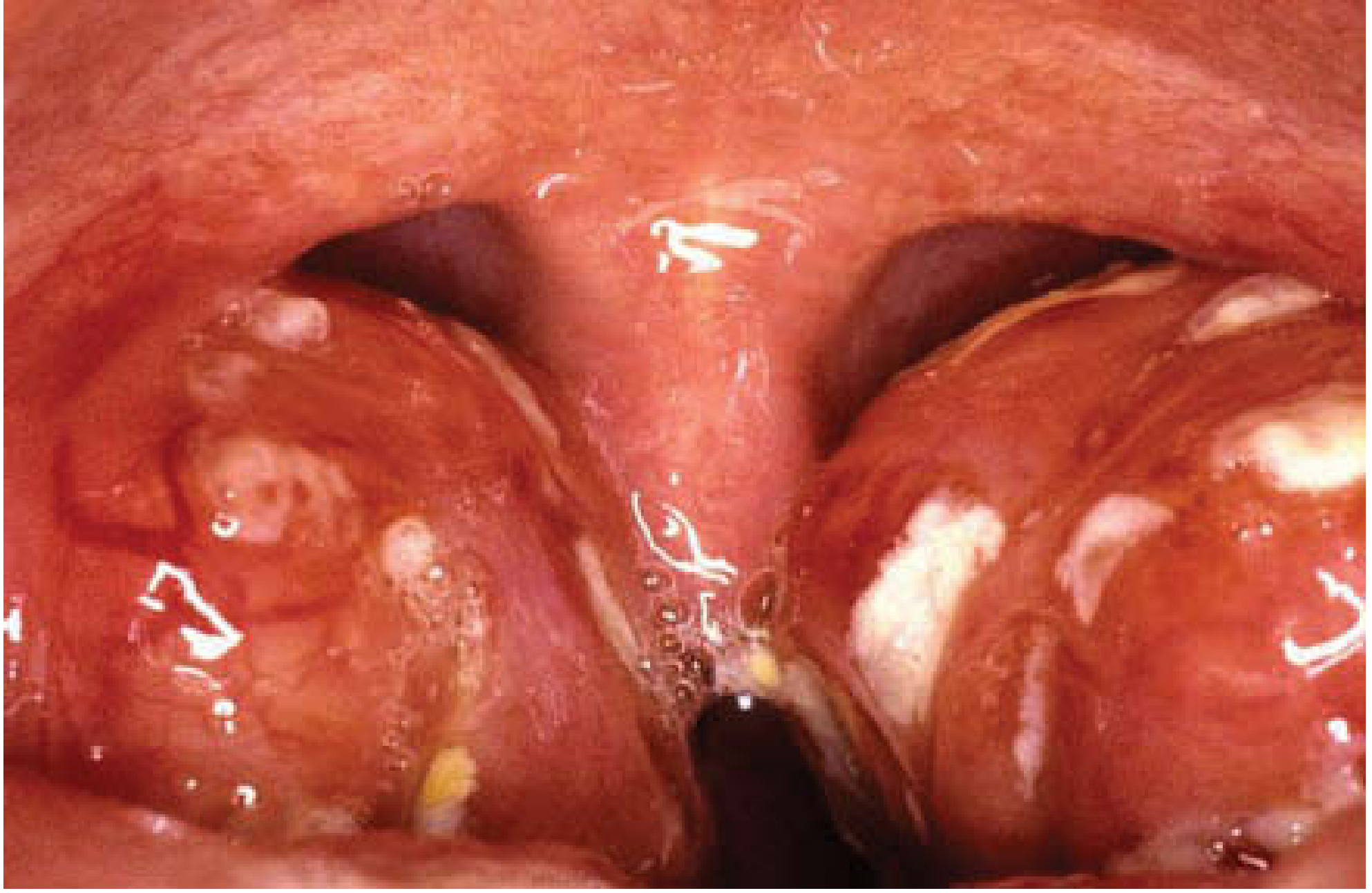
The Other Reason: Preventing a Secondary Bacterial Infection
- Sore throat
- Runny nose (possible early sinusitis)
- Body aches and fever persisting
Should You Be Worried About Taking Antibiotics Unnecessarily?
- Co-amoxiclav is safe for a short course (usually 5-7 days)
- The main downside of unnecessary antibiotics is gut disturbance (loose stools, stomach upset) - eat yogurt while taking it to protect your gut bacteria
- Take probiotics or curd/yogurt daily alongside the course
- Since the prescription has been given, complete the full course - do not stop midway even if you feel better, because stopping early is worse than completing it
Bottom Line
Disclaimer: This is educational information. Your doctor has physically examined you and their clinical judgment takes precedence.