
Slow sand filter and rapid sand filter topic for spm university exams from standard textbook include the flowcharts and diagrams where ever needed in detail
Reading File
Searching sources...
Finding Sources
Finding Sources
Finding Sources
Finding Sources
Finding Sources
The main content is in Park's Textbook, block 10. Let me read the full relevant section.
Reading File
Reading File
I've gone past the relevant section. Let me re-read the core filter content more carefully.
Reading File
I now have the core content. Let me also fetch the diagrams and continue reading to get the rapid sand filter and comparison table.
Loading Image
Loading Image
Reading File
Now let me read the rapid sand filter section and the comparison table, which appeared to be around lines 3350-3520.
Reading File
Reading File
I need to get the rapid sand filter details and the comparison table. Let me read the middle section that was truncated earlier.
Reading File
I have all the essential content. Let me also get the rapid sand filter diagram and the section on advantages/disadvantages/cleaning from the truncated portion.
Reading File
I now have all the content needed. Let me also get the rapid sand filter diagram (Fig. 6) and the slow sand filter advantages/disadvantages section and the comparison table.
I have all the key content. Let me now compile the comprehensive answer.
Water Filtration: Slow Sand Filter & Rapid Sand Filter
Source: Park's Textbook of Preventive and Social Medicine
FILTRATION - Overview
Filtration is the second stage in the purification of water supply (after storage). It removes 98-99% of bacteria in addition to suspended impurities. Two types of filters are used:
- Slow Sand (Biological) Filters
- Rapid Sand (Mechanical) Filters
PROCESS FLOWCHART: Water Purification
RAW WATER (Source)
│
▼
┌─────────────────┐
│ STORAGE │ (10-14 days; removes 90% bacteria, suspended matter settles)
│ (Reservoir) │
└────────┬────────┘
│
▼
┌─────────────────┐
│ FILTRATION │ ← You are here (Slow Sand OR Rapid Sand)
└────────┬────────┘
│
▼
┌─────────────────┐
│ DISINFECTION │ (Chlorination, Ozonation, UV)
└────────┬────────┘
│
▼
SAFE WATER
(Distribution)
PART 1: SLOW SAND (BIOLOGICAL) FILTERS
History
- First used in 1804 in Scotland, then London
- Spread globally through the 19th century
- Still accepted as the standard method of water purification
Elements of a Slow Sand Filter
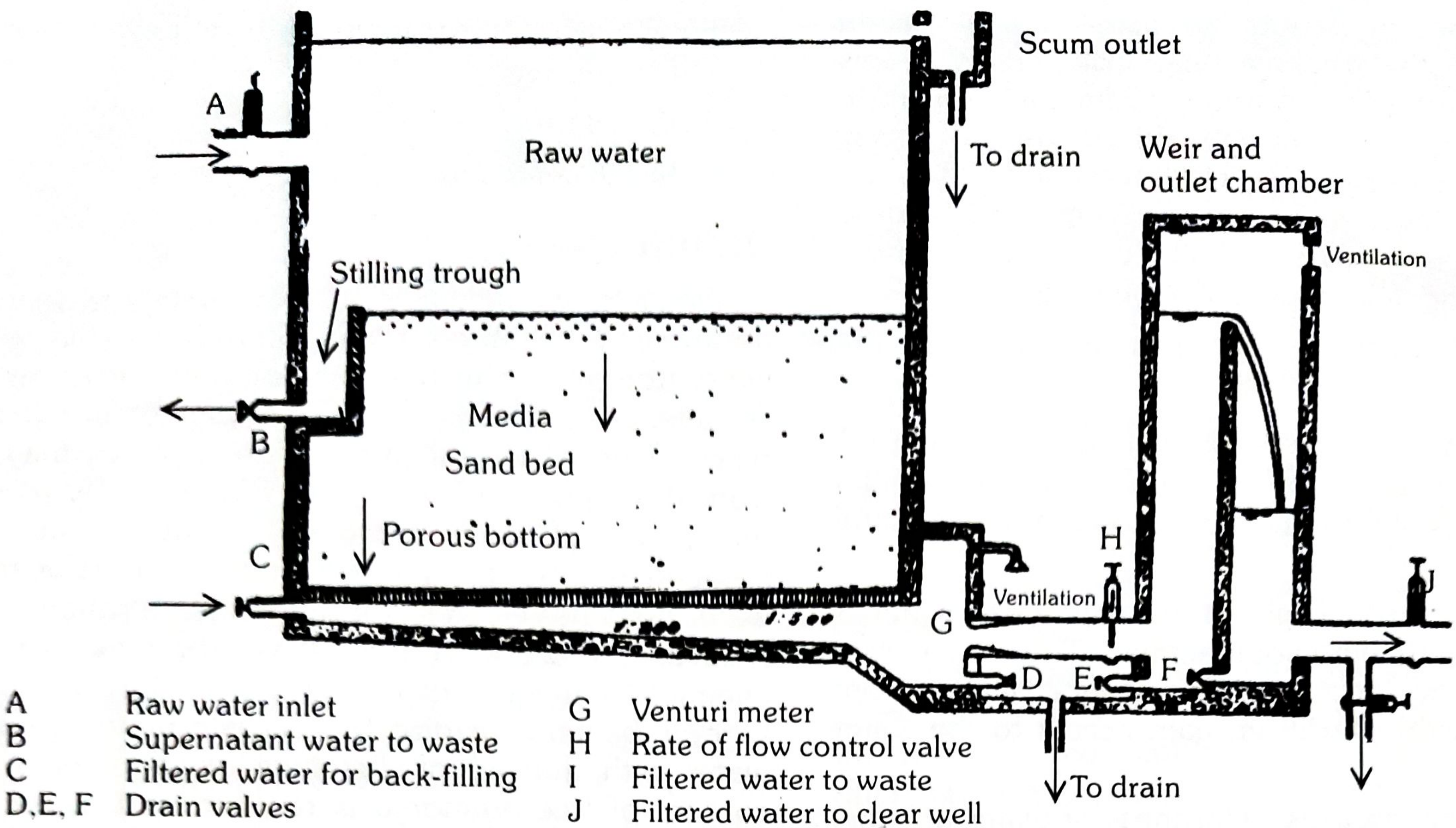
Fig. 4 - Slow Sand Filter (Park's Textbook, p. 812)
Four essential elements:
- Supernatant (raw) water
- A bed of graded sand
- An under-drainage system
- A system of filter control valves
(1) Supernatant Water
- Depth: 1 to 1.5 metres above sand bed
- Two purposes:
- Provides constant head of water to overcome resistance of filter bed and promote downward flow
- Provides a waiting period of 3-12 hours (depending on filtration velocity) for partial purification by sedimentation, oxidation, and particle agglomeration
- Level of supernatant water is always kept constant
(2) Sand Bed
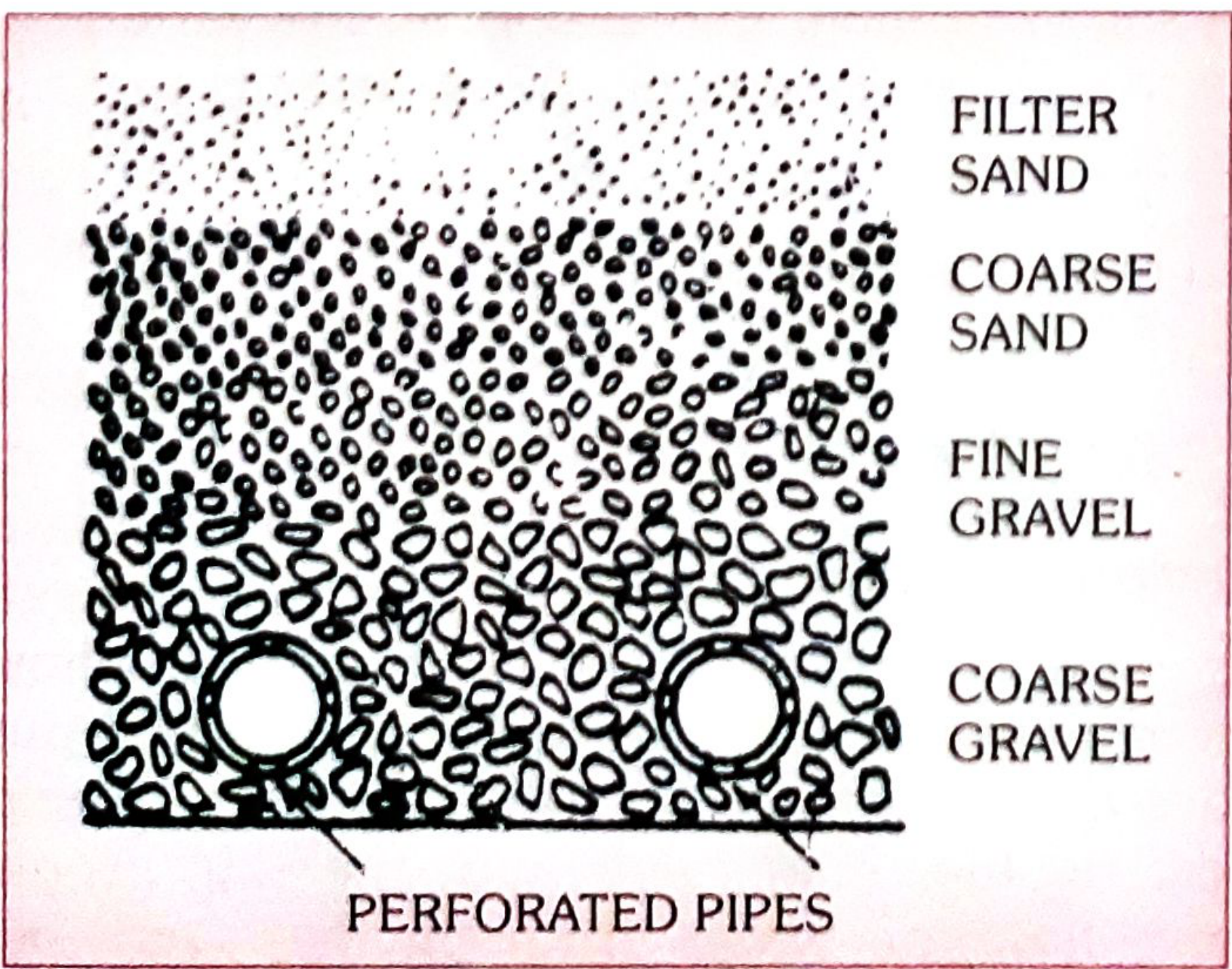
Fig. 5 - Section of Filter Bed (Park's Textbook, p. 812)
| Parameter | Value |
|---|---|
| Thickness of sand bed | ~1 metre |
| Effective diameter of sand grains | 0.2-0.3 mm (rounded, free from clay) |
| Supporting gravel layer | 30-40 cm deep |
| Surface area per cubic metre | ~15,000 sq. metres |
| Rate of filtration | 0.1-0.4 m³/hour/m² of sand surface |
Water percolates very slowly (process takes 2 hours or more) and is subjected to:
- Mechanical straining
- Sedimentation
- Adsorption
- Oxidation
- Bacterial action
The Vital Layer (Schmutzdecke / Zoogleal Layer / Biological Layer)
- When filter is newly laid, it acts only as a mechanical strainer - not truly biological
- Very soon, a slimy growth called "Schmutzdecke" (also called vital layer, zoogleal layer, or biological layer) forms on the sand surface
- Consists of: threadlike algae, plankton, diatoms, and bacteria
- Formation is called "ripening" of the filter - takes several days
- Functions of the vital layer:
- Removes organic matter
- Holds back bacteria
- Oxidizes ammoniacal nitrogen into nitrates
- Yields bacteria-free, good quality filtered water
- The vital layer is the "heart" of the slow sand filter
(3) Under-drainage System
- Consists of perforated pipes at the bottom
- Collects filtered water and conveys it to the clear well
(4) Filter Control
- Controls the rate of filtration
- Flow control valve regulates water output
- Venturi meter measures flow rate
Flowchart: Working of Slow Sand Filter
RAW WATER enters through inlet (A)
│
▼
SUPERNATANT WATER (1-1.5 m depth)
→ Sedimentation + partial purification (3-12 hrs)
│
▼
VITAL LAYER / SCHMUTZDECKE (top of sand)
→ Biological removal of bacteria, organic matter
│
▼
SAND BED (1 metre thick; grain size 0.2-0.3 mm)
→ Mechanical straining, adsorption, oxidation
│
▼
GRAVEL LAYERS (30-40 cm)
→ Supports sand, prevents fine grain entry into pipes
│
▼
UNDER-DRAINAGE (perforated pipes)
│
▼
FILTERED WATER → Weir and outlet chamber → Clear well
Cleaning the Slow Sand Filter
- When efficiency drops, the top layer of sand (2.5 cm) is scraped off along with the Schmutzdecke
- The scraped sand is washed, dried, and replaced
- After cleaning, the filter must "ripen" again (new Schmutzdecke forms) before it is fully effective
- A filter runs continuously for 20-30 days before cleaning is needed
Advantages of Slow Sand Filter
- Simple to construct and operate
- Cost of construction is cheaper than rapid sand filters
- Physical, chemical, and bacteriological quality of filtered water is very high
- Bacterial removal: total count reduced by 99.9 to 99.99%, E. coli by 99 to 99.9%
- Does not require chemical coagulants
- Suitable for smaller communities
Disadvantages of Slow Sand Filter
- Requires a large land area
- Rate of filtration is very slow (2-3 million gallons per acre per day)
- Requires preliminary storage of raw water
- Cleaning is labour-intensive (manual scraping)
- Cannot handle highly turbid raw water effectively
PART 2: RAPID SAND (MECHANICAL) FILTERS
History
- First installed in USA in 1885
- Gained considerable popularity especially in highly industrialized countries
- Two types: Gravity type (e.g., Paterson's filter) and Pressure type (e.g., Candy's filter)
Steps in Rapid Sand Filtration
The following 5 steps are involved (Fig. 6):
RAW WATER
│
▼
┌───────────────────────────────┐
│ STEP 1: COAGULATION │
│ Add alum (5-40 mg/L or more) │
│ Dose depends on turbidity, │
│ colour, temperature, pH │
└──────────────┬────────────────┘
│
▼
┌───────────────────────────────┐
│ STEP 2: RAPID MIXING │
│ Violent agitation in mixing │
│ chamber for a few minutes │
│ → thorough dissemination │
│ of alum in water │
└──────────────┬────────────────┘
│
▼
┌───────────────────────────────┐
│ STEP 3: FLOCCULATION │
│ Slow, gentle stirring in │
│ flocculation chamber ~30 min │
│ Mechanical flocculators: │
│ paddles rotate at 2-4 rpm │
│ → Thick white flocculent │
│ precipitate of Al(OH)₃ │
└──────────────┬────────────────┘
│
▼
┌───────────────────────────────┐
│ STEP 4: SEDIMENTATION │
│ Coagulated water → settling │
│ tanks for 2-6 hours │
│ ≥95% floc must settle out │
│ before entering rapid filter │
│ Sludge removed periodically │
└──────────────┬────────────────┘
│
▼
┌───────────────────────────────┐
│ STEP 5: RAPID SAND FILTRATION │
│ Partly clarified water passed │
│ through rapid sand filter bed │
└──────────────┬────────────────┘
│
▼
FILTERED WATER
│
▼
DISINFECTION
Filter Beds (Rapid Sand)
| Parameter | Value |
|---|---|
| Surface area per unit | 80-90 m² (approx. 900 sq. ft.) |
| Filtering medium | Sand |
| Effective size of sand | 0.4-0.7 mm |
| Depth of sand bed | ~1 metre (2½-3 feet) |
| Gravel layer below | 30-40 cm deep |
| Depth of water on top of sand | 1.0-1.5 m (5-6 feet) |
| Rate of filtration | 200 million gallons/acre/day (40-50x faster than slow sand) |
Filtration Process (Inside the Filter)
- The alum-floc not removed by sedimentation is held back on the sand bed
- It forms a slimy layer comparable to the zoogleal layer in slow sand filters
- This layer adsorbs bacteria and effects purification
- Oxidation of ammonia also takes place
- As filtration proceeds, suspended impurities and bacteria clog the filter
- When "loss of head" approaches 7-8 feet, filtration is stopped for washing
Backwashing
- Rapid sand filters require frequent washing - daily or weekly depending on loss of head
- Cleaning by reversing the flow of water through the sand bed = "backwashing"
- Backwashing dislodges impurities and cleans the sand bed
- Stopped when clear sand is visible and wash water is sufficiently clear
- The whole process takes about 15 minutes
- Some filters also use compressed air as part of backwashing
Advantages of Rapid Sand Filter over Slow Sand Filter
- Can deal with raw water directly - no preliminary storage needed
- Filter beds occupy less space
- Filtration is rapid - 40-50 times that of slow sand filter
- Washing (backwashing) is easy and quick
- More flexibility in operation
PART 3: COMPARISON TABLE (Table 3 from Park's)
| Feature | Rapid Sand Filter | Slow Sand Filter |
|---|---|---|
| 1. Space | Occupies very little space | Occupies large area |
| 2. Rate of filtration | 200 million gallons/acre/day (m.g.a.d.) | 2-3 m.g.a.d. |
| 3. Effective size of sand | 0.4-0.7 mm | 0.2-0.3 mm |
| 4. Preliminary storage | NOT needed | Required (10-14 days) |
| 5. Coagulant | Required (Alum) | NOT required |
| 6. Vital layer | No true vital layer (alum-floc layer) | Schmutzdecke (true biological layer) |
| 7. Cleaning | Backwashing (easy, ~15 min) | Scraping of sand (labour-intensive) |
| 8. Ripening | Not needed after each wash | Required after each scraping |
| 9. Bacterial removal | ~90-98% | 99.9-99.99% |
| 10. Cost of construction | More expensive | Cheaper |
| 11. Operation | Needs skilled supervision | Simple to operate |
| 12. Suitable for | Large cities / industrialized areas | Smaller communities |
QUICK MEMORY AID
SLOW SAND = "BIOLOGICAL"
✦ Speed: SLOW (0.1-0.4 m³/hr/m²)
✦ Sand: Fine (0.2-0.3 mm)
✦ Key feature: SCHMUTZDECKE (vital layer)
✦ No coagulant needed
✦ Cleaning: Manual scraping
✦ History: 1804, Scotland
✦ Best removal of bacteria
RAPID SAND = "MECHANICAL"
✦ Speed: FAST (200 mgad - 40-50x)
✦ Sand: Coarser (0.4-0.7 mm)
✦ Key steps: Coagulation → Mixing → Flocculation → Sedimentation → Filtration
✦ Alum REQUIRED
✦ Cleaning: Backwashing (15 min)
✦ History: 1885, USA
Source: Park's Textbook of Preventive and Social Medicine, Chapter on Environmental Health / Water Supply, pp. 811-815
This is a shared conversation. Sign in to Orris to start your own chat.