
I’m a md medicine resident preparing for exam so remember whenever i ask any question you should explainme in full depth so that i can write and give answers
Got it! I'll keep your exam preparation in mind and provide thorough, structured, exam-ready answers for every question you ask - covering pathophysiology, clinical features, investigations, management, and any mnemonics or high-yield points that examiners love.
Ask away whenever you're ready!
Explain me tetanus infection in depth
Reading File
Now let me search the library and PubMed in parallel for comprehensive tetanus coverage.
Finding Sources
Searching PubMed
tetanus pathophysiology management
Excellent. Now let me read the most comprehensive sources - Harrison's, Bailey & Love, and Tintinalli's simultaneously.
Reading File
Reading File
Reading File
Good content from multiple sources. Let me now read the Harrison's treatment section, the Cecil Medicine section, and the Rosen's section for complete management detail.
Reading File
Reading File
Reading File
I now have comprehensive content from Harrison's, Rosen's, Cecil Medicine, and Bailey & Love. Let me also fetch the risus sardonicus image for the exam answer.
Loading Image
Reading File
I now have all the content needed for a comprehensive exam-level answer. Let me write it up.
TETANUS - Comprehensive Exam Answer
1. DEFINITION
Tetanus is a toxin-mediated, non-communicable, potentially fatal disease characterized by generalized rigidity and convulsive spasms of skeletal muscles, caused by tetanospasmin - a potent neurotoxin produced by Clostridium tetani at the site of injury.
- Mortality: ~8% in the US, 35-40% globally, approaching 50% in patients >70 years
- Notable feature: patient remains conscious (lucid) unless complications arise; fever is usually absent unless secondary infection occurs
2. ETIOLOGY - THE ORGANISM
| Feature | Detail |
|---|---|
| Organism | Clostridium tetani |
| Type | Gram-positive, anaerobic, motile, non-encapsulated, slender bacillus |
| Spore shape | Drumstick / tennis racket shape (terminal, round spores) |
| Survival | Spores survive in soil and environmental surfaces for years |
| Natural habitat | Soil, animal (and human) feces - up to 10% of humans harbor it in the colon |
| Thrives in | Warm, damp climates; highly cultivated rural areas |
Two exotoxins produced:
- Tetanolysin - hemolysin; facilitates growth of bacterial population by destroying surrounding tissue
- Tetanospasmin - the neurotoxin responsible for ALL clinical manifestations; one of the most potent biological toxins known (lethal dose in humans: 2.5 ng/kg)
3. PATHOGENESIS & MECHANISM OF ACTION
Step-by-Step Pathogenesis:
Step 1 - Entry:
C. tetani spores enter the body through a wound (puncture, laceration, abrasion, burn, drug injection site, umbilical stump in neonates). The wound provides anaerobic conditions (low oxygen tension due to devitalized/crushed tissue, foreign body, or infection).
Step 2 - Germination:
Spores germinate into vegetative toxin-producing form in the low-oxygen wound environment. Bacteria remain localized - they do NOT invade tissues.
Step 3 - Toxin Production and Spread:
Tetanospasmin is released locally. It spreads by two routes:
- Hematogenous spread to peripheral nerve terminals throughout the body
- Retrograde intra-axonal transport (at ~75-250 mm/day) within membrane-bound vesicles, traveling up motor neurons to the spinal cord and brainstem. It does NOT cross the blood-brain barrier directly - retrograde transport is the key route to CNS access.
Step 4 - Mechanism at CNS:
"Tetanospasmin prevents the release of inhibitory neurotransmitters glycine and GABA (γ-aminobutyric acid) from presynaptic nerve terminals of Renshaw cells and other inhibitory interneurons in the spinal cord."
- Tintinalli's Emergency Medicine
The light chain of tetanospasmin is a zinc-dependent protease that cleaves synaptobrevin (VAMP - vesicle-associated membrane protein), a component of the SNARE complex essential for vesicle fusion and neurotransmitter release.
Result:
- Loss of inhibitory control → uninhibited, sustained motor neuron firing
- Simultaneous contraction of agonist AND antagonist muscles → tetanic spasms
- Loss of inhibition at preganglionic sympathetic neurons → autonomic dysfunction (sympathetic overactivity, high catecholamine levels)
Key Point: Toxin binding to nerve terminals is irreversible. Recovery depends on the growth of new axon terminals - this is why the disease lasts 4-6 weeks.
4. RISK FACTORS / PORTALS OF ENTRY
- Puncture wounds, lacerations, abrasions (most common - ~70% of cases)
- Contaminated wounds with soil/manure
- Chronic skin ulcers, abscesses
- Burn wounds
- Otitis media (cephalic tetanus)
- Injection drug users (50% of US cases)
- Neonates - through unclean umbilical cord care
- Childbirth/abortion (obstetric tetanus)
- Dental procedures
- Patients with diabetes, immunosuppression
- Waning immunity (>65 year age group, lack of booster vaccination)
5. INCUBATION PERIOD
- Usually 3 to 21 days (mean: 7-8 days), ranging from 4 to 14 days
- Shorter incubation = worse prognosis (toxin reaches CNS faster, meaning the wound is closer to the spinal cord)
6. CLINICAL TYPES
A. Generalized Tetanus (Most Common - 80-90%)
The classical form. Cephalocaudal progression.
- Trismus (lockjaw) - initial complaint in ~75% of cases - spasm of masseter muscles; patient often presents to a dentist first
- Risus sardonicus - persistent spasm of facial muscles producing a fixed, grimacing smile (see image below)
- Dysphagia - pharyngeal spasm
- Neck rigidity - opisthoclonus progressing to full opisthotonus
- Opisthotonus - severe arching of the back due to paraspinous muscle spasm (extensor muscles dominate)
- Generalized convulsive spasms - precipitated by any stimulus (noise, light, touch)
- Respiratory failure - laryngeal spasm causing apnea; the most common cause of death
- Autonomic Nervous System Dysfunction (ANSD) - appears in week 2 of severe disease (see below)
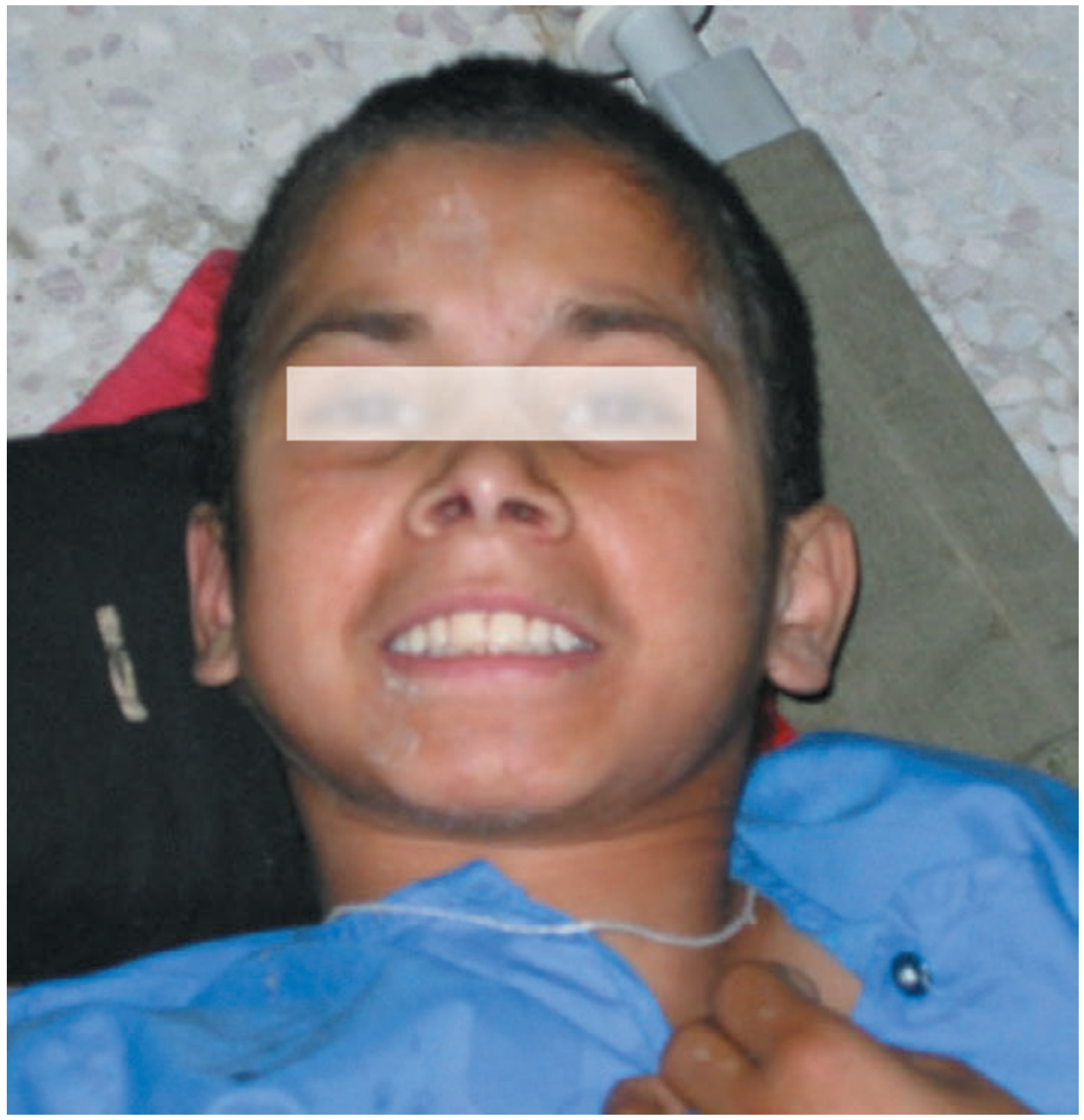
B. Localized Tetanus
- Muscle spasms confined to the area near the wound
- Can progress to generalized tetanus
- Mild form; persistent contractions in the affected extremity
- Relatively rare
C. Cephalic Tetanus
- Follows head injuries or middle ear infection (otitis media)
- Involves cranial nerves - most commonly facial nerve palsy
- Short incubation: 1-2 days
- Can involve laryngeal/pharyngeal muscles - aspiration, respiratory failure, airway obstruction
- Often progresses to generalized tetanus
D. Neonatal Tetanus (Tetanus Neonatorum)
- Occurs in neonates of unimmunized mothers through unclean umbilical cord practices
- Presents on days 3-10 of life
- Features: inability to suck, poor feeding, generalized spasms, irritability, opisthotonos
- WHO estimates ~34,000 neonatal deaths/year
- Differential: Hypocalcemia, meningoencephalitis, septicemia
7. ABLETT CLASSIFICATION OF SEVERITY
| Grade | Severity | Features |
|---|---|---|
| I | Mild | Mild trismus, general spasticity; NO respiratory compromise, NO spasms, NO dysphagia |
| II | Moderate | Moderate trismus, rigidity, SHORT spasms, mild dysphagia, moderate respiratory involvement (RR >30/min) |
| III | Severe | Severe trismus, generalized rigidity, PROLONGED spasms, severe dysphagia, apneic spells, pulse >120/min, RR >40/min |
| IV | Very Severe | Grade III + Autonomic Dysfunction |
8. AUTONOMIC NERVOUS SYSTEM DYSFUNCTION (ANSD)
- Occurs in week 2 of severe tetanus
- Death due to cardiovascular events becomes the leading risk at this stage
- Features:
- Labile BP - hypertension alternating with hypotension
- Labile heart rate - tachycardia alternating with bradycardia
- Profuse diaphoresis
- Hyperthermia
- Gastrointestinal stasis
- Increased tracheal secretions
- Rhabdomyolysis
- Urinary retention
- Cause: tetanospasmin blocks inhibitory input to preganglionic sympathetic neurons, leading to catecholamine surge
9. DIAGNOSIS
Tetanus is a CLINICAL DIAGNOSIS. There is no confirmatory lab test.
Diagnostic criteria (CDC): Acute onset of hypertonia and/or painful muscular contractions of jaw/neck + generalized muscle spasms without other apparent medical cause.
Laboratory findings:
- Wound culture: C. tetani can be isolated in only 30% of cases; a positive culture alone is NOT confirmatory
- Serum anti-tetanus IgG: levels >0.1 IU/mL are considered protective and argue against tetanus; levels below this support the diagnosis
- PCR / recombinase polymerase amplification for tetanus neurotoxin gene - promising but not routinely available
- Spatula test (tongue depressor test): touching the posterior pharynx with a spatula elicits reflex masseter spasm (positive in tetanus) rather than gag reflex - this bedside test has high sensitivity
Investigations to consider:
- ABG - for respiratory status
- Electrolytes, creatinine, LFTs - baseline
- CK - elevated (rhabdomyolysis)
- ECG - cardiac arrhythmias
- Wound swab culture
10. DIFFERENTIAL DIAGNOSIS
| Condition | Distinguishing Feature |
|---|---|
| Strychnine poisoning | History of ingestion; trismus is NOT prominent; facial muscle is spared |
| Dystonic reaction (antidopaminergic drugs - metoclopramide) | Responds promptly to anticholinergics; history of drug use |
| Neuroleptic Malignant Syndrome | Altered consciousness, hyperthermia, rigidity, elevated CK; antipsychotic use |
| Stiff Person Syndrome | Gradual onset; anti-GAD antibodies; responds to diazepam |
| Hypocalcemic tetany | Positive Chvostek/Trousseau signs; low serum calcium; carpal/pedal spasm, NOT trismus |
| Peritonitis | Abdominal rigidity but not generalized; fever; guarding/rebound; normal jaw |
| Meningoencephalitis | Altered consciousness; CSF changes; trismus not prominent |
| Rabies | Hydrophobia; encephalitic features; history of bite |
| Cephalic tetanus | Can mimic oropharyngeal infection, cranial nerve palsies, peritonsillar abscess |
11. MANAGEMENT
Management has four simultaneous goals:
- Neutralize circulating unbound toxin (antitoxin)
- Remove source of toxin production (wound care + antibiotics)
- Control spasms and support vital functions
- Manage autonomic dysfunction and complications
A. General Supportive Care
- Admit to ICU - quiet, darkened room (minimize sensory stimuli - noise and light trigger spasms)
- Secure airway early in Grade III/IV tetanus - early elective tracheostomy is preferred over orotracheal intubation (which itself can trigger spasm)
- Mechanical ventilation if needed (may require weeks)
- Nasogastric tube for feeding (due to dysphagia)
- DVT prophylaxis, bladder care, pressure sore prevention
- Nutritional support
B. Antitoxin (Passive Immunization)
- Neutralizes only circulating, unbound toxin - does NOT reverse already-bound toxin
- Give EARLY before wound debridement
| Preparation | Dose | Notes |
|---|---|---|
| Human Tetanus Immunoglobulin (HTIG) - DRUG OF CHOICE | 500 - 5000 IU IM (single dose) | Less risk of anaphylaxis; preferred wherever available |
| Equine antitoxin | 10,000-20,000 U IM after hypersensitivity testing | Used in low/middle-income countries; higher risk of serum sickness |
| Intrathecal HTIG | - | Recent RCT: showed no additional benefit over IM route |
C. Wound Care
- Identify and debride the wound - remove all necrotic tissue, foreign bodies, pus
- Perform wound care several hours AFTER antitoxin administration
- Failure to debride may cause recurrent/prolonged tetanus
D. Antibiotics
- Metronidazole - DRUG OF CHOICE: 400 mg rectally or 500 mg IV every 6 hours for 7 days
- Penicillin - Alternative (but AVOID if possible - it competitively inhibits GABA receptors, theoretically worsening spasms; one study showed increased mortality)
E. Control of Spasms
| Drug | Mechanism | Notes |
|---|---|---|
| Benzodiazepines (Diazepam, Midazolam) | GABA-A agonist - enhances inhibitory neurotransmission | First-line; patients can tolerate high doses; continuous midazolam preferred for prolonged use; high-dose diazepam can cause hyperosmolarity + lactic acidosis |
| Magnesium Sulfate | Blocks neuromuscular junction; inhibits catecholamine release | Used for both spasm control AND autonomic dysfunction; maintain plasma level 2-4 mmol/L |
| Neuromuscular Blocking Agents (vecuronium, pancuronium) | Non-depolarizing NMBDs | When sedatives alone cannot control spasms; requires mechanical ventilation |
| Baclofen (intrathecal) | GABA-B agonist | Alternative in refractory cases |
| Propofol infusion | Sedation | Alternative for sedation; caution with prolonged use (propofol infusion syndrome) |
F. Management of Autonomic Dysfunction
- Magnesium sulfate - first-line (controls both hypertension AND tachycardia; plasma level 2-4 mmol/L)
- Beta-blockers (labetalol, propranolol, esmolol) - for persistent tachycardia/hypertension (use cautiously - can cause sudden cardiac arrest due to loss of sympathetic compensation)
- Calcium channel blockers - alternative
- Vasopressors (norepinephrine) - when parasympathetic predominance causes hypotension and bradycardia
G. Immunization (Active)
- Since tetanospasmin is poorly immunogenic, surviving tetanus does NOT confer immunity
- All patients must receive a full primary immunization course during or after recovery
12. VACCINATION SCHEDULE (WHO / CDC Recommendations)
| Schedule | Details |
|---|---|
| Primary series (infants) | 3 doses of DTP at 6 weeks, 10 weeks, 14 weeks (WHO) / 2, 4, 6 months (CDC); 4-week minimum interval |
| 1st Booster | 12-23 months |
| 2nd Booster | 4-7 years |
| 3rd Booster | 9-15 years |
| Adult booster | Every 10 years (Td/Tdap) |
| Wound prophylaxis | Booster if >5-10 years since last dose; HTIG if unvaccinated/unknown status |
Wound Management Algorithm:
| Wound Type | Vaccination Status | Action |
|---|---|---|
| Clean, minor wound | Up to date | Toxoid only if >10 years since last dose |
| Clean, minor wound | Unknown/incomplete | Toxoid |
| Tetanus-prone wound | Up to date | Toxoid if >5 years since last dose |
| Tetanus-prone wound | Unknown/incomplete | Toxoid + HTIG (250 IU IM, different sites) |
13. COMPLICATIONS
- Respiratory failure / Aspiration pneumonia - most common cause of death
- Cardiovascular events - autonomic dysfunction (Week 2 peak risk)
- Rhabdomyolysis - from sustained muscle contractions
- Vertebral / long bone fractures from violent spasms
- Pulmonary embolism
- Hospital-acquired infections (VAP, bloodstream infections, UTI) - due to prolonged ICU stay
- Pressure sores, muscle weakness - from immobility and high-dose sedation
- Laryngeal spasm leading to asphyxia - most immediate life-threatening event
- Neonatal sequelae: neurological - cerebral palsy, deafness, learning disabilities
14. PROGNOSIS
- Recovery usually takes 4-6 weeks (time for new axon terminals to grow)
- Shorter incubation period → worse prognosis
- Shorter period of onset (time from first symptom to first generalized spasm) → worse prognosis
- Scoring systems:
- Tetanus Severity Score (TSS) - most accurate (sensitivity 66%, specificity 91%)
- Dakar Score (6 parameters: incubation period, period of onset, portal of entry, spasms, fever, tachycardia)
- Phillips Score
15. HIGH-YIELD EXAM POINTS - QUICK SUMMARY
| Point | Answer |
|---|---|
| Organism | Clostridium tetani - spore-forming, anaerobic, Gram-positive |
| Spore shape | Drumstick/tennis racket |
| Neurotoxin | Tetanospasmin (light chain = zinc protease; cleaves synaptobrevin/VAMP) |
| Mechanism | Blocks release of Glycine + GABA from inhibitory interneurons |
| Most common clinical type | Generalized tetanus (80-90%) |
| First symptom | Trismus (lockjaw) - in 75% of cases |
| Facial sign | Risus sardonicus |
| Back posture sign | Opisthotonus |
| Stimulus sensitivity | Spasms triggered by noise, light, touch |
| Most common cause of death | Laryngeal spasm → respiratory failure |
| Week 2 danger | Autonomic dysfunction → cardiovascular death |
| Consciousness | Preserved (patient is lucid) |
| Diagnosis | Clinical - no confirmatory lab test |
| Spatula test | Reflex biting of spatula = positive (not gag reflex) |
| Antitoxin choice | HTIG 500-5000 IU IM |
| Antibiotic choice | Metronidazole 500 mg IV q6h (avoid penicillin) |
| Antispasmodic 1st line | Benzodiazepines (diazepam/midazolam) |
| Autonomic control | Magnesium sulfate (2-4 mmol/L) |
| Post-recovery immunity | None - must actively vaccinate |
| Booster interval | Every 10 years |
| Neonatal tetanus sign | Inability to suck, day 3-10 of life |
Sources: Harrison's Principles of Internal Medicine 22E (2025) | Tintinalli's Emergency Medicine | Goldman-Cecil Medicine | Bailey & Love's Short Practice of Surgery 28E
This is a shared conversation. Sign in to Orris to start your own chat.