
Migraine causes
Reading File
Finding Sources
Searching PubMed
migraine pathophysiology causes
Reading File
Reading File
Finding Sources
Reading File
Reading File
Here is a comprehensive overview of migraine causes and pathophysiology, drawn from authoritative medical textbooks:
Migraine: Causes & Pathophysiology
1. Neurological Mechanism — Cortical Spreading Depression (CSD)
CSD is the central electrophysiological event underlying the migraine aura and likely the broader attack:
- A slow wave of neuronal depolarization spreads across the cerebral cortex at 2–4 mm/min, typically starting in the occipital lobe.
- It disrupts ionic gradients (Na⁺, K⁺, Ca²⁺), causing a brief phase of hyperemia followed by oligemia (reduced blood flow).
- This produces the characteristic sequence of "positive" aura symptoms (e.g., scintillating scotoma) followed by "negative" symptoms (e.g., visual scotoma).
- Whether CSD directly triggers the headache phase by activating the trigeminocervical system remains debated, but animal models suggest it does trigger meningeal nociceptors.
— Bradley and Daroff's Neurology in Clinical Practice
2. Trigeminovascular Activation
The trigeminovascular system is central to migraine pain generation:
- The trigeminal nerve sends axonal projections to intracranial blood vessels.
- When activated, these neurons release vasoactive neuropeptides:
- Calcitonin gene-related peptide (CGRP)
- Substance P
- Nitric oxide
- These cause vasodilation of intracranial vessels and local neurogenic inflammation in the meninges.
- Nociceptive signals are relayed to the somatosensory cortex, producing the perception of pain.
— Guyton and Hall Textbook of Medical Physiology
3. The "Migraine Generator" — Brainstem & Hypothalamus
Neuroimaging studies have identified possible migraine generators:
- Dorsal rostral pons: Functional MRI shows this region activates before the cortex and before symptom onset.
- Hypothalamus: Activates up to 24 hours before headache onset (accounting for premonitory symptoms — yawning, food cravings, mood changes, thirst, drowsiness). The hypothalamus also shows increased functional coupling with spinal trigeminal nuclei during the pre-headache phase.
- It is likely there is no single generator, but rather parallel dysfunction across multiple brain networks, which explains the variability between patients and between attacks.
— Bradley and Daroff's Neurology in Clinical Practice
4. Genetic Predisposition
- A positive family history is reported in 65–90% of migraine sufferers.
- Migraine is 3× more common in women than men.
- Up to 90% of migraineurs have a first-degree relative with migraine.
- Familial hemiplegic migraine (FHM) is a well-characterized monogenic form involving ion channel mutations (CACNA1A, ATP1A2, SCN1A).
— Guyton and Hall Textbook of Medical Physiology; Textbook of Family Medicine 9e
5. Common Triggers
Triggers lower the threshold for an attack in genetically susceptible individuals:
| Category | Examples |
|---|---|
| Dietary | Alcohol, caffeine/caffeine withdrawal, nitrates (cured meats), chocolate, aged cheese, dairy products, skipping meals |
| Hormonal | Oral contraceptives, menstruation, hormonal replacement therapy |
| Lifestyle | Irregular sleep, stress, fatigue, physical exertion |
| Environmental | Changes in weather/barometric pressure, strong scents, bright lights, loud noise |
| Medications | Medication overuse (analgesics, triptans) can lead to chronic migraine |
— Textbook of Family Medicine 9e
6. Serotonin Dysregulation
- Altered serotonin (5-HT) metabolism has been implicated — plasma serotonin levels drop during attacks.
- This may contribute to vasodilation and nociceptive sensitization.
- It is the basis for the efficacy of triptans (5-HT₁B/₁D agonists) as abortive agents.
Summary Diagram
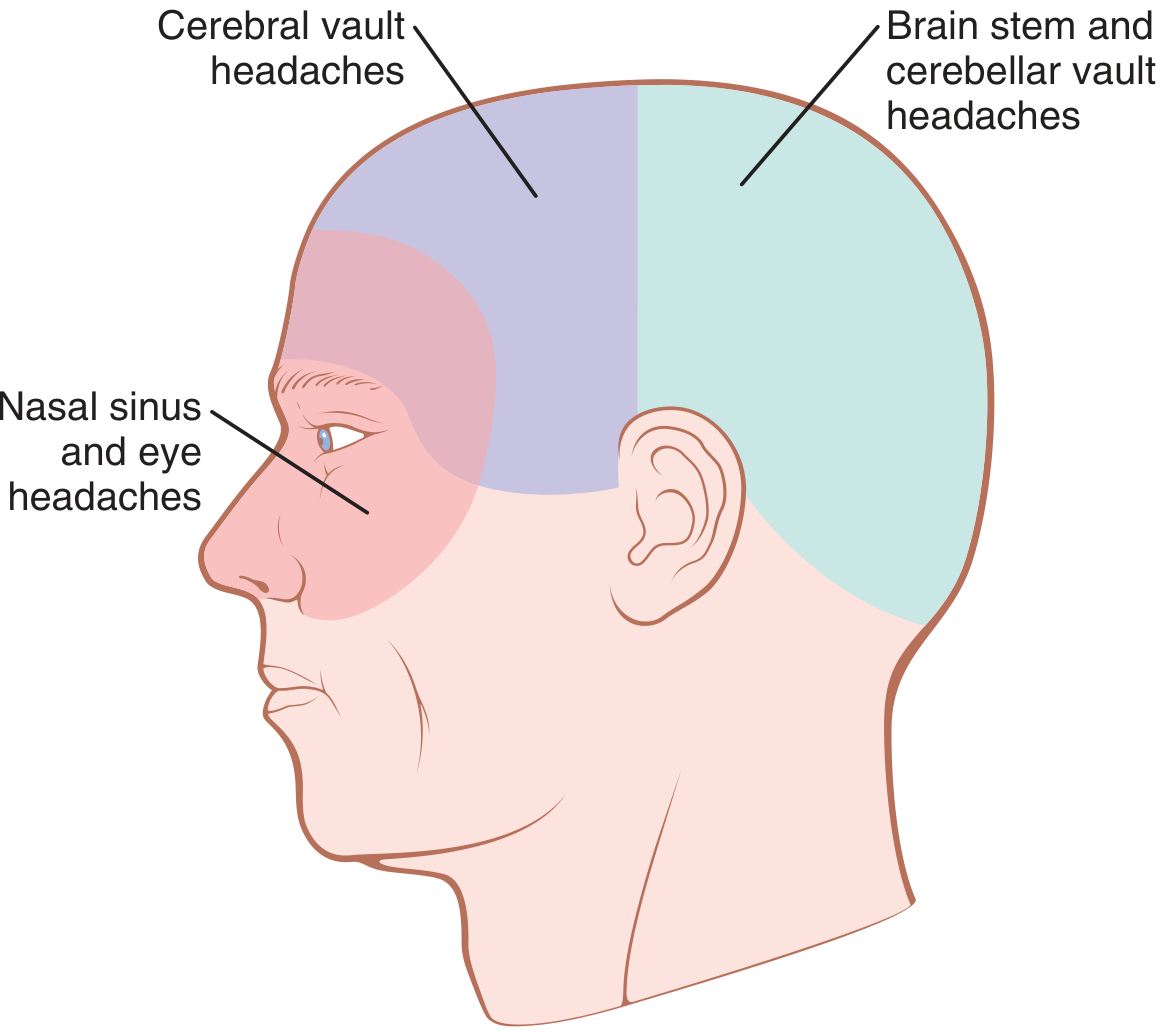
Quick Reference — Pathophysiological Cascade
Genetic susceptibility + Trigger
         ↓
Hypothalamic/brainstem dysregulation (premonitory phase)
         ↓
Cortical spreading depression (aura phase)
         ↓
Trigeminovascular activation → CGRP / Substance P release
         ↓
Neurogenic meningeal inflammation + vasodilation
         ↓
Central sensitization → Migraine headache
Recent evidence note: A 2025 systematic review (PMID 40790620) on vascular responses to molecular migraine triggers (e.g., CGRP, nitroglycerin) using MRI is ongoing in the literature — no data yet contradict the established pathophysiology above.
How to recover from migraine I get migraine every Monday watching screen after weekend in my company
Finding Sources
Searching PubMed
migraine screen light trigger prevention
Finding Sources
Searching PubMed
migraine acute treatment triptans
Finding Sources
Finding Sources
Reading File
Reading File
Reading File
Finding Sources
I now have enough information from the textbooks and recent evidence to give a thorough, personalised answer. Let me synthesize this.
Recovering from & Preventing Your Monday Screen Migraines
Your pattern — migraine every Monday after a screen-free weekend — is a classic "let-down" trigger combined with digital screen re-exposure stress. Two mechanisms are likely at play:
- Weekend screen withdrawal → Monday re-exposure: Your brain adapts to lower stimulation over the weekend, then overreacts to the sudden return of bright screen light, blue light, and visual strain on Monday.
- Lifestyle shifts over the weekend: Changes in sleep schedule, caffeine intake, meal timing, or hydration between Saturday–Sunday vs. Monday are among the most common migraine triggers.
Part 1: What to Do During an Attack (Recovery)
Mild attack
- NSAIDs: Ibuprofen 400–600 mg, naproxen 500–825 mg, or aspirin 250–1000 mg taken at the first sign of pain. Early treatment dramatically improves outcomes.
- Acetaminophen (paracetamol): 650–1000 mg if NSAIDs are not suitable.
- Caffeine in small amounts (combined products like Excedrin Migraine = aspirin + acetaminophen + caffeine) can enhance analgesic effect — but avoid if caffeine fluctuation is one of your triggers.
Moderate to severe attack
- Triptans are first-line — these are prescription medications and the most effective class for moderate–severe migraine. Options include:
- Sumatriptan (Imitrex) — tablet, nasal spray, or injection
- Rizatriptan (Maxalt)
- Zolmitriptan (Zomig)
- Eletriptan (Relpax)
- Take a triptan as early as possible — waiting until pain is severe reduces effectiveness.
- Combination: naproxen + triptan together works better than either alone.
⚠️ Triptans require a prescription and are contraindicated in uncontrolled hypertension and ischemic heart disease.
Newer options (if triptans fail or are contraindicated)
- CGRP receptor antagonists (gepants): Rimegepant (75 mg) or ubrogepant (50–100 mg) — prescription-only, no vasoconstriction risk.
- Lasmiditan: Serotonin agonist without vasoconstrictive effects — but causes sedation (no driving for ~8 hrs after).
Immediate non-drug relief
- Dark, quiet room — screen migraine is worsened by photophobia (light sensitivity)
- Cold compress on forehead/temples
- Lie down and sleep if possible — sleep often ends a migraine attack
- Stay well hydrated
— Goldman-Cecil Medicine; Textbook of Family Medicine 9e
Part 2: Preventing the Monday Attack
Since your trigger is predictable and weekly, prevention is highly achievable.
Fix the Weekend → Monday Transition
| Trigger | What to Change |
|---|---|
| Irregular sleep | Keep wake-up time consistent on weekends — even 1–2 hrs of extra sleep Saturday/Sunday can trigger Monday attacks |
| Caffeine changes | If you drink coffee at work but not on weekends, this withdrawal is a major trigger. Either have coffee on weekends too, or taper down daily intake |
| Skipping meals | Fasting or delayed meals trigger attacks. Don't skip breakfast on Monday morning |
| Dehydration | Many people drink less water on weekends. Hydrate well Sunday night |
| Screen re-exposure shock | Don't go from zero screens to 8 hrs instantly — briefly use screens on Sunday evening to re-acclimate your visual cortex |
Screen and Lighting Adjustments at Work
- Reduce screen brightness to match ambient room lighting — high contrast is a major trigger
- Enable night mode / warm colour temperature (blue light filter) — most OS have this built-in
- 20-20-20 rule: Every 20 minutes, look at something 20 feet away for 20 seconds
- Anti-glare screen filter or matte monitor
- FL-41 tinted glasses (rose/amber tint) — specifically designed for photophobia and migraine, evidence-supported
- Position screen at arm's length, slightly below eye level
- Avoid sitting directly under fluorescent lighting — flickering lights are a potent trigger
Preventive Medication (if attacks are ≥3 per month)
If lifestyle changes don't control it, speak to a doctor about prophylactic medication:
- Beta-blockers: Propranolol, metoprolol (first-line, well-studied)
- Topiramate or valproate (anti-epileptics used for migraine prevention)
- Tricyclic antidepressants: Amitriptyline (especially if sleep is also affected)
- CGRP monoclonal antibodies: Erenumab, fremanezumab, galcanezumab — monthly injections, newer and highly effective
- OnabotulinumtoxinA (Botox): For chronic migraine (≥15 headache days/month)
— Goldman-Cecil Medicine
Non-Drug Prevention
- Biofeedback and relaxation training — proven effective, especially combined with medication (Kaplan & Sadock's Psychiatry)
- Regular aerobic exercise — reduces attack frequency over time
- Migraine diary — track your Monday attacks for 4–6 weeks noting sleep, coffee, meals, screen time; this pinpoints your personal trigger combination precisely
Your Most Likely Fix (Given Your Pattern)
Since your migraine is predictable and screen-related after a weekend, the highest-yield interventions are:
- Stabilize caffeine and sleep across the weekend — don't change your schedule dramatically
- Hydrate well Sunday and Monday morning
- Eat breakfast before starting work on Monday
- Lower screen brightness and enable blue light filter Monday morning
- Take an NSAID (ibuprofen 400 mg) at the very first hint of symptoms — don't wait
- If attacks persist despite the above → see a doctor for a triptan prescription and/or preventive therapy
Latest evidence: A 2024 network meta-analysis in the BMJ (PMID 39293828) and a 2025 ACP systematic review (PMID 40096693) both confirm triptans and gepants as the most effective acute treatments for migraine, reinforcing the guidance above.
Give me five natural migraine remidies
Finding Sources
Searching PubMed
migraine natural remedies magnesium riboflavin feverfew
Searching PubMed
migraine magnesium supplementation prevention
Searching PubMed
migraine acupuncture biofeedback non-pharmacological
Finding Sources
Reading Article
PMID: 39404918
Searching PubMed
acupuncture migraine prevention
Here are five natural migraine remedies with solid evidence behind them:
5 Natural Migraine Remedies (Evidence-Based)
1. 🧲 Magnesium
Best for: Prevention
Magnesium deficiency is common in migraineurs, and it plays a direct role in cortical spreading depression and CGRP release. Supplementation is one of the best-studied natural options.
- Dose: 400–600 mg of magnesium oxide or magnesium citrate daily
- Evidence: A 2025 systematic review and meta-analysis of 22 RCTs found magnesium significantly reduced migraine attack frequency (−2.51 attacks), severity, and monthly migraine days compared to placebo. (PMID 39404918)
- Practical tip: Take at night — it also supports sleep quality. Magnesium citrate/glycinate are gentler on the stomach than oxide.
- Side effects: Loose stools at high doses — start low and increase gradually.
2. 💛 Riboflavin (Vitamin B2)
Best for: Prevention
Migraine is linked to mitochondrial energy dysfunction. Riboflavin supports mitochondrial electron transport and has been shown to reduce attack frequency.
- Dose: 400 mg daily (much higher than the normal dietary intake)
- Evidence: The same 2025 meta-analysis confirmed riboflavin reduced migraine attack frequency by −1.34 attacks/month. (PMID 39404918)
- Practical tip: Urine turns bright yellow — this is harmless and just indicates the supplement is absorbed.
- Note: Effects take 2–3 months to build up; don't expect immediate results.
3. ⚡ CoQ10 (Coenzyme Q10)
Best for: Prevention
Like riboflavin, CoQ10 targets mitochondrial function. It is one of the strongest natural performers across multiple outcomes.
- Dose: 100–300 mg daily
- Evidence: The 2025 meta-analysis found CoQ10 reduced migraine frequency (−1.73), severity (−1.35), and duration (−1.72 hours) — the broadest benefit of any supplement studied. (PMID 39404918)
- Practical tip: Take with a fatty meal as it is fat-soluble.
- Bonus for you: Particularly useful if your migraines are triggered by metabolic stress from screen work.
4. 🧘 Biofeedback & Relaxation Techniques
Best for: Prevention and reducing severity
Biofeedback trains you to consciously control physiological responses (muscle tension, blood vessel dilation, skin temperature) that contribute to migraine. It's as effective as some medications for prevention.
- Techniques: Thermal biofeedback, electromyographic (EMG) biofeedback, progressive muscle relaxation, mindfulness-based stress reduction
- Evidence: Endorsed in Goldman-Cecil Medicine as effective for migraine prophylaxis. Kaplan & Sadock's Psychiatry confirms that biofeedback and CBT produce "greater reductions in migraine for the intervention compared to no treatment."
- Practical tip: Several free and low-cost apps (e.g., Headspace, Calm, Muse) approximate relaxation training. Formal biofeedback with a therapist gives the strongest results.
- Especially relevant for you: Workplace stress compounding Monday screen exposure is a double trigger — this addresses both.
5. 🌿 Vitamin D
Best for: Prevention (especially if deficient)
Vitamin D deficiency is highly prevalent and strongly correlated with migraine frequency. Correcting deficiency reduces attack burden.
- Dose: 1000–2000 IU daily (get your 25-OH vitamin D level checked first — if deficient, higher doses may be needed under medical guidance)
- Evidence: The 2025 meta-analysis found Vitamin D reduced migraine frequency by −1.69 attacks/month and monthly migraine days by −2.41. (PMID 39404918)
- Practical tip: Especially useful if you work indoors and get limited sun exposure — a very common scenario for office workers.
Summary Table
| Remedy | Best For | Daily Dose | Time to Effect |
|---|---|---|---|
| Magnesium | Prevention | 400–600 mg | 4–6 weeks |
| Riboflavin (B2) | Prevention | 400 mg | 8–12 weeks |
| CoQ10 | Prevention + duration | 100–300 mg | 4–8 weeks |
| Biofeedback/Relaxation | Prevention + acute relief | Daily practice | 4–8 weeks |
| Vitamin D | Prevention (if deficient) | 1000–2000 IU | 8–12 weeks |
These remedies work best as prevention — taken consistently every day, not just when a migraine hits. For your specific pattern (Monday screen migraines), combining magnesium + CoQ10 daily with Monday morning relaxation/breathing and a blue light filter is a practical starting stack. None of these have significant side effects at the doses listed, but check with your doctor before starting if you have any health conditions.
This is a shared conversation. Sign in to Orris to start your own chat.