
Tell me everything about and teach me about midazolam, ketamine, fentanyl.
Reading File
Now let me search the medical library and web in parallel for all three drugs simultaneously.
Finding Sources
Finding Sources
Finding Sources
Good - found key sections. Now let me read the dedicated drug sections in parallel from the best sources.
Reading File
Reading File
Reading File
Excellent - rich content retrieved. Let me now get the dedicated midazolam section from Miller's Anesthesia and the Goodman & Gilman fentanyl section, plus the Barash ketamine pharmacodynamics continuation.
Reading File
Reading File
Reading File
Now let me get the dedicated midazolam section from Miller's and the Barash midazolam section, plus the Lippincott fentanyl section for clear pharmacology summaries.
Finding Sources
Reading File
Reading File
Reading File
Now let me get the Lippincott benzodiazepine/midazolam section and the Barash fentanyl dosing/clinical section for the complete picture.
Finding Sources
Reading File
Reading File
Reading File
I now have comprehensive content from multiple authoritative textbooks. Let me read the Goldman-Cecil ketamine section and get the ketamine-as-antidepressant + dosing info from Barash.
Reading File
Reading File
I now have extensive, high-quality content from multiple authoritative textbooks. Let me also fetch a key diagram image and do a quick pubmed search for any recent updates.
Loading Image
Loading Image
Searching PubMed
midazolam ketamine fentanyl procedural sedation
I now have all the content needed to write a comprehensive, textbook-level educational guide. Let me compile the full response.Here is a complete, structured guide to all three agents - sourced from Miller's Anesthesia (10th ed.), Barash's Clinical Anesthesia (9th ed.), Goodman & Gilman's Pharmacological Basis of Therapeutics, Goldman-Cecil Medicine, and Lippincott Illustrated Reviews: Pharmacology.
Midazolam, Ketamine, and Fentanyl - A Complete Guide
Part 1: MIDAZOLAM
Drug Class & Overview
Midazolam is a short-acting benzodiazepine with hypnotic, sedative, anxiolytic, amnesic, anticonvulsant, and centrally produced muscle-relaxing properties. It is the most commonly used benzodiazepine in anesthesia and procedural sedation, valued especially for its potent anterograde amnesia and water solubility at acidic pH.
Mechanism of Action
The GABA-A receptor is a pentameric ion channel (18+ subunit isoforms) that controls a chloride channel. When GABA binds, the channel opens, chloride enters, the neuron hyperpolarizes, and excitability is suppressed.
Midazolam binds to the benzodiazepine site located at the interface of the α and γ subunits (specifically at histidine-101 on the α subunit). It does not open the channel by itself - it is a positive allosteric modulator: it increases the frequency of channel opening in response to GABA, amplifying the inhibitory signal.
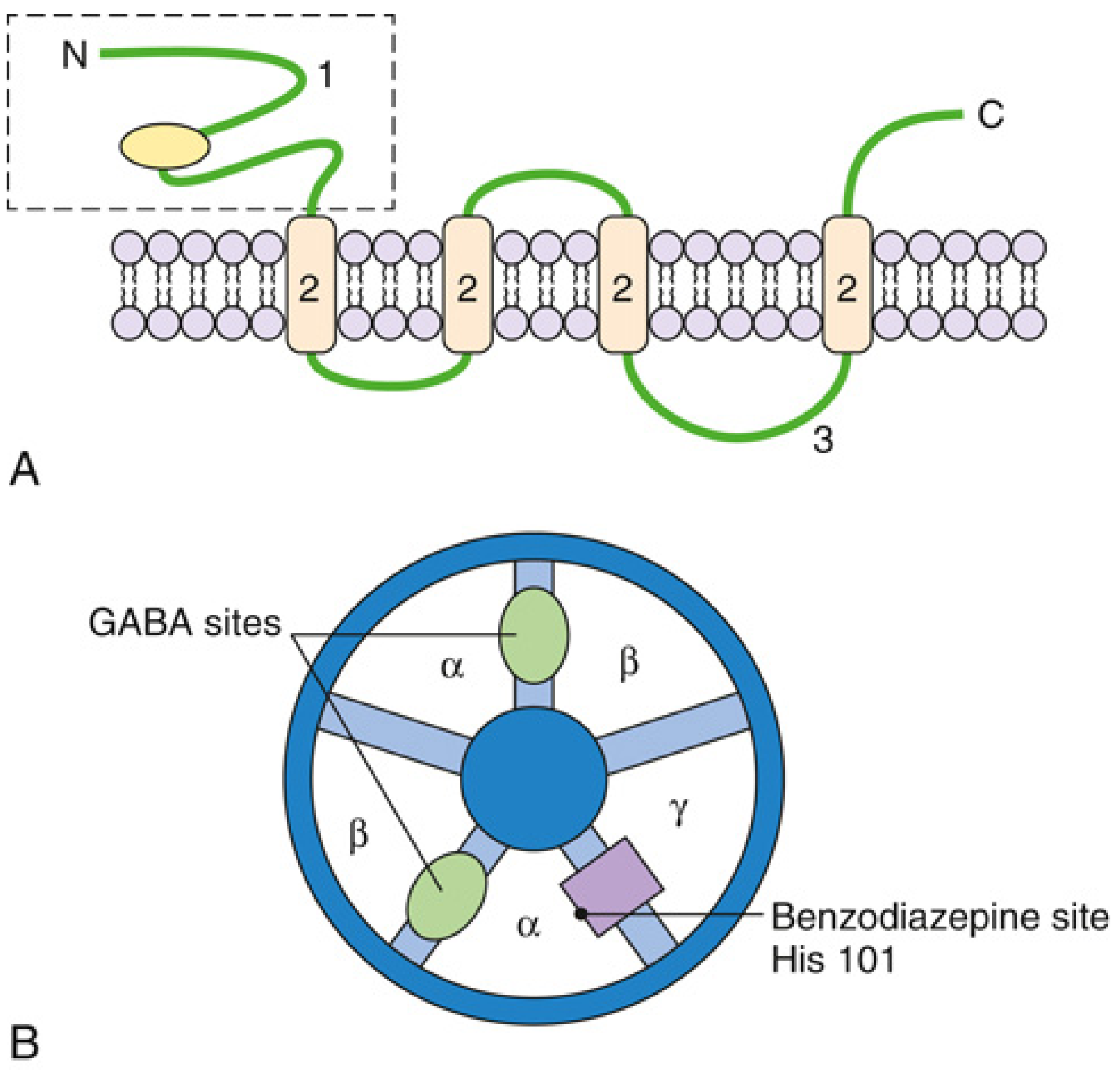
Subunit-specific effects:
| Subunit | Clinical Effect |
|---|---|
| α₁ | Sedation, anterograde amnesia, anticonvulsant |
| α₂ | Anxiolysis, muscle relaxation |
Key point: Only 20% receptor occupancy is needed for anxiolysis, whereas unconsciousness requires ~60% occupancy. This means you can anxiolyze without knocking someone out at lower doses.
Receptor affinity order: Lorazepam > Midazolam > Diazepam (midazolam is 3-6x more potent than diazepam).
Miller's Anesthesia, 10th ed.
Pharmacokinetics
| Parameter | Value |
|---|---|
| Oral bioavailability | <50% (significant first-pass metabolism) |
| Oral peak Cmax | 30-80 min |
| IV distribution half-life | 6-15 min |
| Protein binding | 94-98% |
| Elimination half-life | 1.7-3.5 hours |
| Plasma clearance | 5.8-9.0 mL/kg/min |
| Metabolism | CYP3A4, CYP3A5 |
| Active metabolites | 1-hydroxymidazolam (α-OH-midazolam), 4-hydroxymidazolam |
Why midazolam clears faster than other benzodiazepines: It has a fused imidazole ring that is rapidly oxidized in vivo, much faster than the methylene group of the diazepine ring of classic benzodiazepines like diazepam.
Key PK modifiers:
- Obesity: High lipophilicity at physiologic pH causes preferential distribution to adipose tissue → prolonged elimination half-life
- Liver cirrhosis: Reduced plasma clearance due to decreased metabolism
- CYP3A4 inhibitors (azole antifungals, HIV protease inhibitors, calcium channel blockers): prolong midazolam half-life significantly
- Renal impairment: Active metabolites accumulate → prolonged sedation (metabolites are normally cleared rapidly in healthy kidneys)
- Neonates/premature infants: Lower clearance; use caution
Miller's Anesthesia, 10th ed.; Goldman-Cecil Medicine
Pharmacodynamics
CNS:
- Reduces cerebral metabolic rate of oxygen (CMRO₂) in a dose-related manner
- Maintains relatively normal CBF:CMRO₂ ratio
- Raises seizure threshold to local anesthetics
- Neuroprotective via prevention of lipid peroxidation and mitochondrial damage
- No intrinsic analgesic activity
Respiratory:
- Dose-related respiratory depression: peak effect at 3 minutes, significant depression lasting 60-120 minutes
- Faster administration = faster onset of respiratory depression
- Additive (and potentially synergistic) respiratory depression with opioids, including apnea risk - this is a major clinical safety point
- Unlike propofol, alone it only modestly decreases blood pressure
Cardiovascular:
- Modest blood pressure decrease when used alone
- Significant hypotension when combined with IV opioids - this combination must be given carefully, particularly in hemodynamically compromised patients
Memory:
- Produces profound anterograde amnesia (cannot form new memories after administration); retrograde memory is relatively preserved
- Impairs both implicit and relational memory - associated with delirium in elderly patients
Clinical Uses
| Setting | Route | Typical Dose |
|---|---|---|
| Preoperative anxiolysis/sedation | IV/IM/oral | 0.02-0.05 mg/kg IV; 0.5 mg/kg oral (children) |
| Induction adjunct | IV | 0.1-0.2 mg/kg |
| Procedural sedation | IV | 1-2.5 mg titrated |
| Pediatric seizures (status epilepticus) | Intranasal | 0.2 mg/kg |
| Prevention of PONV | IV | 0.05-0.075 mg/kg |
| ICU sedation | IV infusion | titrated |
Intranasal midazolam for pediatric seizures has a significantly more rapid onset than rectal diazepam with minimal effect on respiration and oxygen saturation.
PONV prevention: Midazolam has a documented role in reducing postoperative nausea and vomiting, supported by multiple meta-analyses.
Contraindications & Cautions
- Known hypersensitivity
- Acute narrow-angle glaucoma
- Pregnancy (crosses placenta)
- Combine with opioids only with close respiratory monitoring
- Paradoxical reactions (restlessness, agitation, disinhibition) can occur
Reversal Agent
Flumazenil - competitive antagonist at the benzodiazepine site (α₁, α₂, α₃, α₅ subunits). Reversal may be incomplete for strong agonists at high doses. Duration of action is shorter than midazolam, so re-sedation is possible.
Part 2: KETAMINE
Drug Class & Overview
Ketamine is a dissociative anesthetic - a phencyclidine (PCP) derivative that produces a unique trance-like cataleptic state called "dissociative anesthesia." It is unique among anesthetics in that it has intrinsic analgesic properties, stimulates the cardiovascular system, and largely preserves airway reflexes and spontaneous respiration.
Mechanism of Action
Ketamine's neuropharmacology is complex and operates at multiple receptor systems:
Primary: NMDA Receptor Antagonism
Ketamine binds to an intrachannel site called the PCP binding site on the NMDA (N-methyl-D-aspartate) receptor. It is an open-channel blocker - the channel must first be opened by glutamate for ketamine to bind. Once bound, it decreases channel opening time and blocks calcium influx.
NMDA receptors are present on virtually all CNS cells, and particularly on:
- Primary afferent nociceptors in the spinal dorsal horn
- Inhibitory interneurons in the cortex, limbic system, and hippocampus
By preferentially binding to inhibitory interneurons, ketamine reduces their inhibitory function, leading to uncoordinated increases in neuronal activity, an active EEG pattern, and ultimately unconsciousness. This is why ketamine causes a dissociated state - certain brain regions become paradoxically more active while others are depressed.
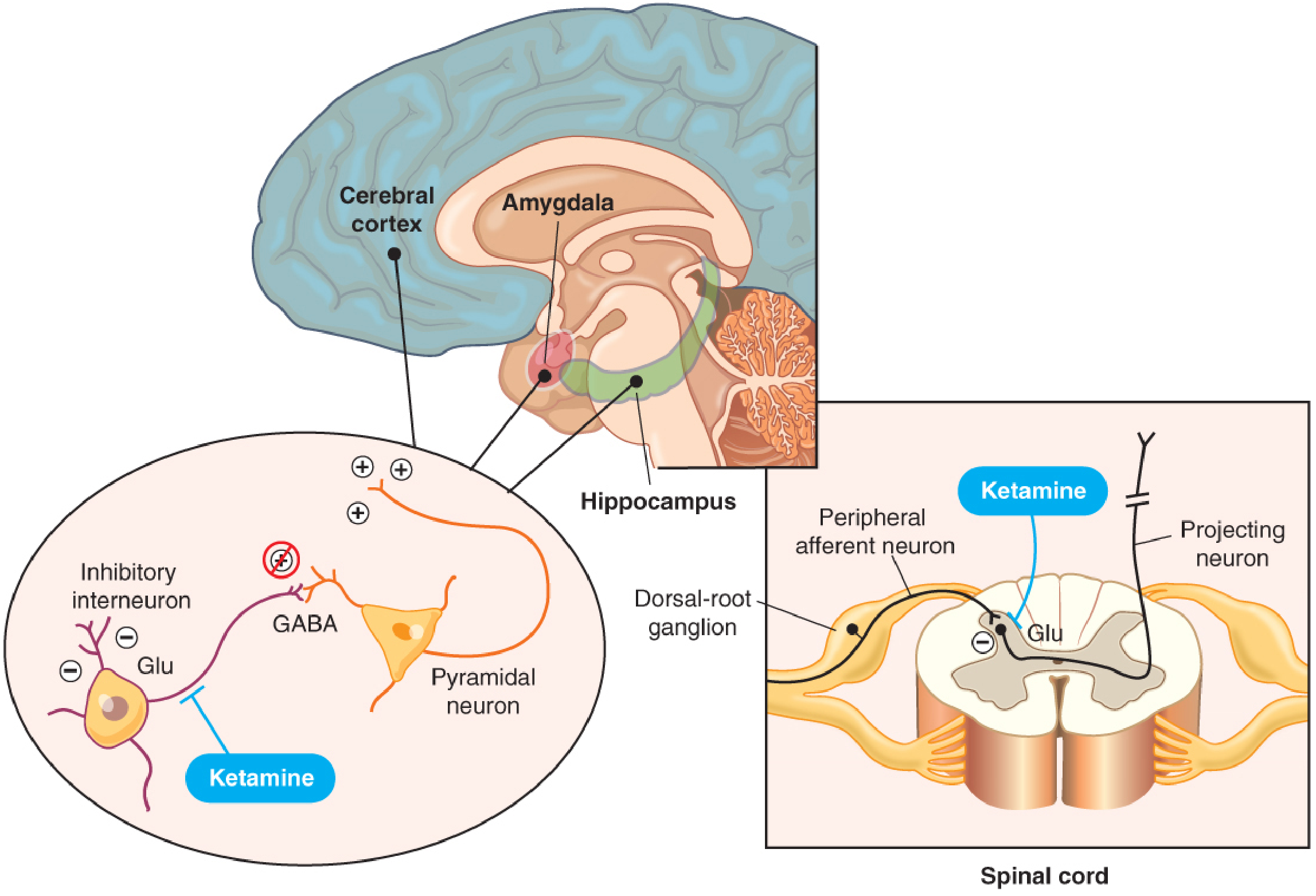
Secondary Receptor Effects:
| Receptor | Effect |
|---|---|
| Opioid (μ, δ, κ) | Contributes to analgesia |
| Noradrenergic (α) | Sympathetic stimulation (↑HR, ↑BP) |
| Muscarinic/nicotinic cholinergic | Anticholinergic physostigmine can antagonize hypnotic effects |
| Dopaminergic | May contribute to psychotomimetic effects and antidepressant action |
| AMPA receptors | Antidepressant effects (NMDA-independent; via metabolite HNK) |
"Wind-up" Prevention: The NMDA receptor plays a central role in "wind-up" - the amplification of pain signals from repeated stimulation, which is an elementary form of CNS sensitization. Ketamine blocks this process, which is a key basis for its analgesic and anti-hyperalgesic effects in both acute and chronic pain.
Pharmacokinetics
| Parameter | Value |
|---|---|
| IV alpha-elimination (redistribution) | ~11 minutes |
| IV beta-elimination | ~2.5 hours |
| Primary metabolism | Liver - CYP3A4 > CYP2C9 > CYP2B6 |
| Principal active metabolite | Norketamine (20-30% activity of racemic ketamine) |
| Elimination | Renal excretion of norketamine |
| IM: peak levels | ~20 min |
| Intranasal duration | ~1 hour |
| Dialysis removal | Partial only (lipophilic) |
Stereochemistry: Ketamine is a racemic mixture. S(+)-ketamine (esketamine) is ~4x more potent than R(-)-ketamine and causes fewer psychotomimetic side effects. Intranasal esketamine (Spravato) is FDA-approved for treatment-resistant depression.
Pharmacodynamics
CNS - Dissociative State:
- EEG shows depression of thalamocortical pathways + simultaneous activation of the limbic system
- Despite epileptiform activity on EEG, it does not spread to the cortex - ketamine is unlikely to precipitate clinical seizures and may in fact be neuroprotective
- Increases BIS from ~40 to 63 when added to propofol-fentanyl anesthesia (at 0.5 mg/kg)
- Produces lateral gaze nystagmus (characteristic finding)
- Functional MRI: dose-dependent reduction of pain activation along thalamus → insula → cingulate → prefrontal cortex pathway
Cardiovascular (unique among anesthetics):
- Increases heart rate, blood pressure, cardiac output, and SVR
- Mechanism: sympathetic nervous system activation (centrally mediated catecholamine release)
- Important caveat: Ketamine is a direct myocardial depressant. In sympathetically depleted patients (e.g., end-stage shock, catecholamine-exhausted sepsis), the usual sympathomimetic effects cannot mask the direct myocardial depression, leading to cardiovascular collapse
- Increases PVR - caution in severe right heart dysfunction
Respiratory:
- Largely maintains spontaneous respiration - a major advantage
- Bronchodilator (relaxes bronchial smooth muscle) - useful in reactive airway disease and status asthmaticus (as adjunct, not sole agent)
- Increases salivation → risk of laryngospasm if airway not protected
- Hypoxia can occur, treated with supplemental O₂
ICP/Neurologic:
- Historically contraindicated in elevated ICP (due to increased CMRO₂ and CBF)
- Revised view: ICP typically remains normal with ketamine in neurosurgical patients under controlled ventilation; may in fact be neuroprotective
- Associated with epileptiform EEG activity but not clinical seizures
Clinical Uses
1. Anesthesia Induction (IV):
- Dose: 1-2 mg/kg IV (onset 1 min, duration 10-20 min) or 4-6 mg/kg IM
- Drug of choice in hemodynamically unstable patients
- Advantage over etomidate: does not cause adrenal suppression
- Caution in critical coronary artery disease (tachycardia and increased BP are problematic)
2. Procedural Sedation:
- Particularly useful in pediatrics (fracture reduction, wound care) and burn patients
- Patients maintain open eyes, breathe spontaneously, maintain airway reflexes
- Can be given IM in uncooperative patients
3. Analgesia (Subanesthetic):
- IV bolus prior to incision + postoperative infusion = most effective regimen
- Reduces postoperative opioid requirements and pain scores
- Analgesic effects at subanesthetic blood concentrations
- Useful in opioid-tolerant patients and those with history of opioid abuse
- Does not fully replace opioids
4. Chronic Pain:
- CRPS (complex regional pain syndrome) - most extensive evidence
- IV ketamine infusions for refractory chronic pain (expert supervision required)
5. Depression:
- IV infusion 0.5 mg/kg over 40 minutes (subanesthetic dose)
- Rapid antidepressant effect within 1 hour; reduces suicidal ideation
- Duration: days to ~2 weeks per single injection
- Mechanism of antidepressant effect: NMDA-independent; involves AMPA receptor activation via metabolite hydroxynorketamine (HNK)
- Intranasal esketamine (Spravato) is FDA-approved for treatment-resistant depression
6. Bronchospasm/Status Asthmaticus:
- Adjunct agent when standard therapy is failing
Side Effects
| System | Effect |
|---|---|
| CNS | Hallucinations, out-of-body experiences, emergence delirium, nystagmus |
| Cardiovascular | ↑HR, ↑BP (↓BP in catecholamine-depleted patients) |
| Respiratory | Maintains respiration; ↑salivation (laryngospasm risk) |
| Ocular | Nystagmus (lateral gaze) |
| GI | ↑salivation, nausea |
| Pediatric/neonatal | NMDA receptor antagonists may accentuate apoptosis in newborn animal brains (clinical implications unclear) |
Managing emergence delirium: Co-administration of benzodiazepines (e.g., midazolam) significantly reduces hallucinations and psychotomimetic reactions.
Part 3: FENTANYL
Drug Class & Overview
Fentanyl is a synthetic phenylpiperidine opioid and pure mu-opioid receptor (MOR) agonist. It is approximately 100 times more potent than morphine by weight. Its extreme lipophilicity makes it one of the fastest-acting opioids available, with rapid CNS penetration and versatile routes of administration. It is the most widely used opioid in anesthesia globally.
Mechanism of Action
Fentanyl binds to the mu-opioid receptor (MOR), a Gi/Go-protein-coupled receptor (GPCR). When fentanyl binds:
- Gi protein is activated → adenylyl cyclase is inhibited → decreased cAMP
- Potassium channels open → hyperpolarization of the cell
- Voltage-gated calcium channels close → reduced neurotransmitter release
- Net effect: decreased neuronal excitability and reduced pain signal transmission
Sites of action:
- Spinal cord (dorsal horn): Inhibits release of substance P and glutamate from primary afferent nociceptors → blocks ascending pain transmission
- Supraspinal (PAG, thalamus, limbic system): Activates descending inhibitory pathways
- Peripheral: Direct action on peripheral sensory neurons (important in inflammation)
Other opioid receptor subtypes:
| Receptor | Location | Effects |
|---|---|---|
| Mu (μ) | Brain, spinal cord, periphery | Analgesia, euphoria, respiratory depression, constipation, dependence |
| Kappa (κ) | Brain, spinal cord | Analgesia, sedation, dysphoria |
| Delta (δ) | Brain, spinal cord | Analgesia, mood modulation |
Fentanyl works almost exclusively at mu receptors.
Pharmacokinetics
| Parameter | Value |
|---|---|
| Potency vs. morphine | ~100x more potent |
| Lipid solubility | Very high (crosses BBB rapidly) |
| t½ equilibration plasma→CSF | ~5 minutes |
| t½k₀ for analgesic effect | 10-20 minutes |
| C₅₀ for analgesia | 1-2 ng/mL |
| Protein binding | ~80% (primarily α-1 acid glycoprotein) |
| Distribution | 3-compartment model; ~75% first-pass pulmonary uptake |
| Elimination t½ | 3-4 hours (short bolus); extends with infusion |
| Metabolism | Hepatic (N-dealkylation → norfentanyl, inactive) |
| Excretion | Renal |
The pulmonary first-pass effect: Approximately 75% of IV-injected fentanyl is transiently taken up by pulmonary endothelial cells. This acts as a "buffer," slowing the rate at which fentanyl reaches the systemic circulation and contributes to the short duration of a single bolus dose.
Context-sensitive half-time: With small single bolus doses, fentanyl has a short duration because it redistributes rapidly. However, with large doses or prolonged infusions, tissues become saturated, redistribution decreases, and clearance mechanisms become progressively saturated - fentanyl behaves as a long-acting drug. This is a critical clinical concept: fentanyl accumulates.
Obesity: Published pharmacokinetic models tend to overestimate fentanyl concentrations as total body weight increases. Dose by lean body weight or adjusted body weight in obese patients.
Delayed respiratory depression: Can occur after fentanyl use, possibly due to enterohepatic recirculation.
Pharmacodynamics
Analgesia:
- Peak analgesic effect after IV administration: ~5 minutes
- Much shorter time to peak effect than morphine (~15 min) or meperidine (~15 min)
- EEG: characteristic δ-wave appearing rapidly after IV injection (t½k₀ ~6.5 min for EEG effect)
- Used intraoperatively to blunt cardiovascular responses to laryngoscopy and surgical stimulation
Respiratory:
- Dose-dependent respiratory depression: decreased rate and tidal volume → apnea
- More rapid onset and shorter duration than morphine at standard doses; extended after large doses or long infusions
- "Wooden chest syndrome" (chest wall rigidity): Life-threatening rigidity of the diaphragm, chest wall, and upper airways after rapid IV infusion of large doses. More common in pediatric patients. Treatment: succinylcholine (depolarizing NMB) or nondepolarizing NMB + mechanical ventilation
- Synergistic respiratory depression with benzodiazepines - boxed warning on both drug classes
Cardiovascular:
- Decreases heart rate via vagal activation (bradycardia)
- Modestly decreases blood pressure
- Does not release histamine → minimal direct myocardial depressant effect
- Excellent hemodynamic stability - this is why high-dose fentanyl (5-75 mcg/kg) is used as the primary anesthetic in cardiac surgery and patients with poor cardiac function
GI/Other effects:
- Delayed gastric emptying
- Nausea and vomiting
- Constipation (no tolerance develops to this effect)
- Pruritus (especially with neuraxial administration)
- Urinary retention
Tolerance & Dependence:
- Repeated use produces tolerance to: respiratory depression, analgesia, euphoria, emesis, sedation
- Tolerance does not typically develop to: miosis and constipation
- Physical and psychological dependence can occur; abrupt discontinuation causes withdrawal
Clinical Uses
1. Intraoperative Analgesia - the backbone of balanced anesthesia:
- Bolus doses of 1-3 mcg/kg during induction; repeated 25-100 mcg boluses intraoperatively
- Blunts hemodynamic responses to laryngoscopy and surgical stimulation
- C₅₀ for analgesia = 1-2 ng/mL; C₅₀ for hemodynamic responses = higher
2. High-Dose Cardiac Anesthesia:
- 5-75 mcg/kg - achieves plasma concentrations of 10-30 ng/mL
- Provides analgesia + hemodynamic stability without significant myocardial depression
- Historical technique: fentanyl + N₂O; now superseded by TIVA (total IV anesthesia) or balanced anesthesia with propofol + fentanyl
3. Chronic Pain:
- Transdermal fentanyl patch: 12-100 mcg/h; peak analgesic effect only after 10-12 hours; one patch lasts 3-4 days; absorption varies by skin thickness, subcutaneous fat, and perfusion
- Intranasal, sublingual, lozenge ("lollipop"), mucosal patch - all for breakthrough pain
- Iontophoretic transdermal system
4. Procedural Sedation (in combination):
- Commonly combined with midazolam for procedural sedation
- The combination produces synergistic CNS and respiratory depression - requires close monitoring
5. Neuraxial (epidural/intrathecal):
- Widely used for labor analgesia, postoperative pain
- Can cause pruritus (treated with low-dose naloxone or nalbuphine)
Routes of Administration Summary
| Route | Onset | Duration | Clinical Use |
|---|---|---|---|
| IV bolus | 1-5 min | 30-60 min | OR, ICU, procedural |
| IV infusion | Continuous | Context-sensitive | TIVA, ICU |
| Transdermal patch | 10-12 h | 3 days | Chronic pain |
| Intranasal | 5-10 min | 1-2 h | Breakthrough pain, ED |
| Sublingual/buccal lozenge | 5-15 min | 1-2 h | Breakthrough pain |
| Epidural | 5-10 min | 1-4 h | Labor, postoperative |
| Intrathecal | 5 min | 1-4 h | Surgical, postoperative |
Reversal Agent
Naloxone (Narcan) - pure competitive antagonist at all opioid receptors (mu, kappa, delta). Dose: 0.04-0.4 mg IV, titrated. Duration shorter than fentanyl - re-narcotization can occur; repeat dosing or infusion may be needed.
Part 4: COMPARATIVE SUMMARY TABLE
| Feature | Midazolam | Ketamine | Fentanyl |
|---|---|---|---|
| Class | Benzodiazepine | Dissociative anesthetic | Synthetic opioid |
| Primary receptor | GABA-A (positive allosteric modulator) | NMDA antagonist (+ opioid, noradrenergic, cholinergic) | Mu-opioid receptor (Gi-GPCR) |
| Analgesia? | None | Yes (profound) | Yes (primary indication) |
| Amnesia? | Strong anterograde | Partial | Minimal |
| Respiratory effect | Dose-dependent depression | Largely preserved | Dose-dependent depression; wooden chest risk |
| Cardiovascular | Modest ↓BP (↓↓ with opioids) | ↑HR, ↑BP, ↑CO (↓ if catecholamine-depleted) | ↓HR (vagal), modest ↓BP; excellent hemodynamic stability |
| Airway reflexes | Reduced | Preserved | Reduced |
| Typical induction dose | Adjunct 0.02-0.05 mg/kg | 1-2 mg/kg IV | 1-3 mcg/kg IV |
| Elimination t½ | 1.7-3.5 h | ~2.5 h | 3-4 h (single bolus) |
| Metabolism | CYP3A4/3A5 → active OH-metabolites | CYP3A4 → norketamine (active, 20-30%) | Hepatic N-dealkylation → inactive norfentanyl |
| Active metabolite? | Yes (1-OH-midazolam) | Yes (norketamine) | No |
| Reversal agent | Flumazenil | None | Naloxone |
| Unique indications | PONV prevention, status epilepticus | Depression, CRPS, bronchospasm, cardiac arrest induction | Cardiac surgery, chronic pain patches |
| Key danger | Respiratory depression + opioids | Psychotomimetic effects, laryngospasm | Wooden chest, respiratory depression, accumulation with infusions |
Part 5: COMBINATION USE - THE "KETOFOL" & "MIDAZOLAM + FENTANYL" PRINCIPLES
These three drugs are frequently combined in clinical practice:
Midazolam + Fentanyl (Procedural Sedation):
- The most common procedural sedation combination for GI endoscopy, minor procedures
- Synergistic CNS and additive-to-synergistic respiratory depression - the most dangerous aspect
- A boxed warning on both drug classes warns against co-prescribing
- Midazolam alone does not provide "reliable sedation for procedures" - the combination is required
Ketamine + Midazolam:
- Benzodiazepine co-administration significantly reduces ketamine's emergence delirium, hallucinations, and psychotomimetic effects
- Midazolam (1-2 mg IV prior to ketamine) is standard practice for adult procedural sedation with ketamine
Fentanyl + Ketamine (Opioid-Sparing Analgesia):
- Ketamine reduces postoperative opioid requirements and prevents opioid-induced hyperalgesia
- Note: the midazolam-fentanyl antinociceptive interaction is reported to be less than additive (at least in animal models), while ketamine + opioid combinations tend to be at least additive or synergistic for analgesia
Part 6: SAFETY - CRITICAL POINTS
-
Opioid + benzodiazepine combination (FDA Boxed Warning): Fentanyl and midazolam together produce synergistic respiratory depression - both drugs carry black box warnings against co-prescribing outside monitored settings
-
Ketamine in catecholamine-depleted patients: The drug is a direct myocardial depressant; sympathomimetic effects mask this in most patients. In severely depleted patients (prolonged hemorrhagic shock, end-stage sepsis), cardiovascular collapse can occur.
-
Fentanyl accumulation: A single small bolus wears off quickly (redistribution); prolonged infusions saturate peripheral compartments and fentanyl becomes very long-acting. Always account for context-sensitive half-time.
-
Wooden chest syndrome with fentanyl: Rapid IV injection of large doses → chest wall rigidity → unable to ventilate. Treat with succinylcholine + intubation. More common in neonates/pediatric patients.
-
Midazolam in renal impairment: Active metabolites (1-OH-midazolam) accumulate → unexpectedly prolonged sedation.
-
Reversal agents do not eliminate the drug - they compete at the receptor. Naloxone (t½ ~60-90 min) wears off before fentanyl in overdose. Flumazenil wears off before midazolam. Monitor for re-sedation.
Sources:
- Miller's Anesthesia, 10th ed. (Elsevier, 2023) - Chapters 21, 32
- Barash, Cullen & Stoelting's Clinical Anesthesia, 9th ed. - Chapters 19, 20
- Goodman & Gilman's The Pharmacological Basis of Therapeutics - Chapter 7
- Goldman-Cecil Medicine, International Ed. - Chapter 58
- Lippincott Illustrated Reviews: Pharmacology - Chapter 21
Recent Evidence Note: A 2026 systematic review and meta-analysis (PMID: 41698174) on procedural sedation in emergency departments confirms the high efficacy of these agents while noting adverse outcome profiles consistent with the above.That covers everything from first principles through advanced clinical application. Here's a quick orientation to what was covered:
What You Just Learned - Quick Map:
Midazolam works by potentiating GABA-A receptors (positive allosteric modulator at the benzodiazepine site). Its key clinical value is fast-onset anterograde amnesia with a short half-life (1.7-3.5 h). The most important danger is respiratory depression when combined with opioids. Reversed by flumazenil.
Ketamine works primarily as an NMDA receptor open-channel blocker, plus opioid and noradrenergic effects. It is the only anesthetic that both induces unconsciousness and provides powerful analgesia while largely preserving airway reflexes and respiration. It stimulates the heart in most patients. Its unique new role as a rapid antidepressant (IV 0.5 mg/kg) is mediated through AMPA receptors via its metabolite HNK, not NMDA blockade. Manage emergence delirium with a benzodiazepine. No specific reversal agent.
Fentanyl works as a pure mu-opioid receptor agonist (Gi-GPCR), inhibiting neuronal excitability. 100x morphine potency. Rapid BBB penetration due to high lipophilicity. Single boluses are short-acting (redistribution); infusions accumulate (context-sensitive half-time). The main dangers are dose-dependent respiratory depression, wooden chest syndrome with rapid large-dose injection, and synergistic depression with benzodiazepines. Reversed by naloxone (watch for re-narcotization).
This is a shared conversation. Sign in to Orris to start your own chat.