
Vaginal furuncle treatment
A vaginal furuncle (boil) is a localized bacterial infection of a hair follicle or sebaceous gland in the vulvovaginal area, most commonly caused by Staphylococcus aureus. Treatment depends on size and severity: small ones may resolve with warm compresses, while larger ones require incision and drainage (I&D) plus antibiotics.
Searching sources...
Reading File
Searching the Web
vaginal vulvar furuncle treatment incision drainage antibiotics
Now let me search the medical library and get more clinical details:
Finding Sources
Finding Sources
Searching PubMed
vulvar abscess furuncle treatment management
Let me pull the relevant textbook sections on furuncle/abscess treatment:
Reading File
Reading File
Reading Web Page
https://vulvovaginaldisorders.org/atlas_topic/furuncles
Let me fetch the furuncle image from the textbook and check for the Schwartz's surgery section:
Loading Image
Reading File
I now have comprehensive information from multiple authoritative sources. Here is a complete clinical guide:
Vaginal (Vulvar) Furuncle - Treatment
A vaginal furuncle is a localized abscess arising from a hair follicle or sebaceous gland in the vulvar/perineal area. It is almost always caused by Staphylococcus aureus (including CA-MRSA), and less commonly E. coli or Pseudomonas aeruginosa.
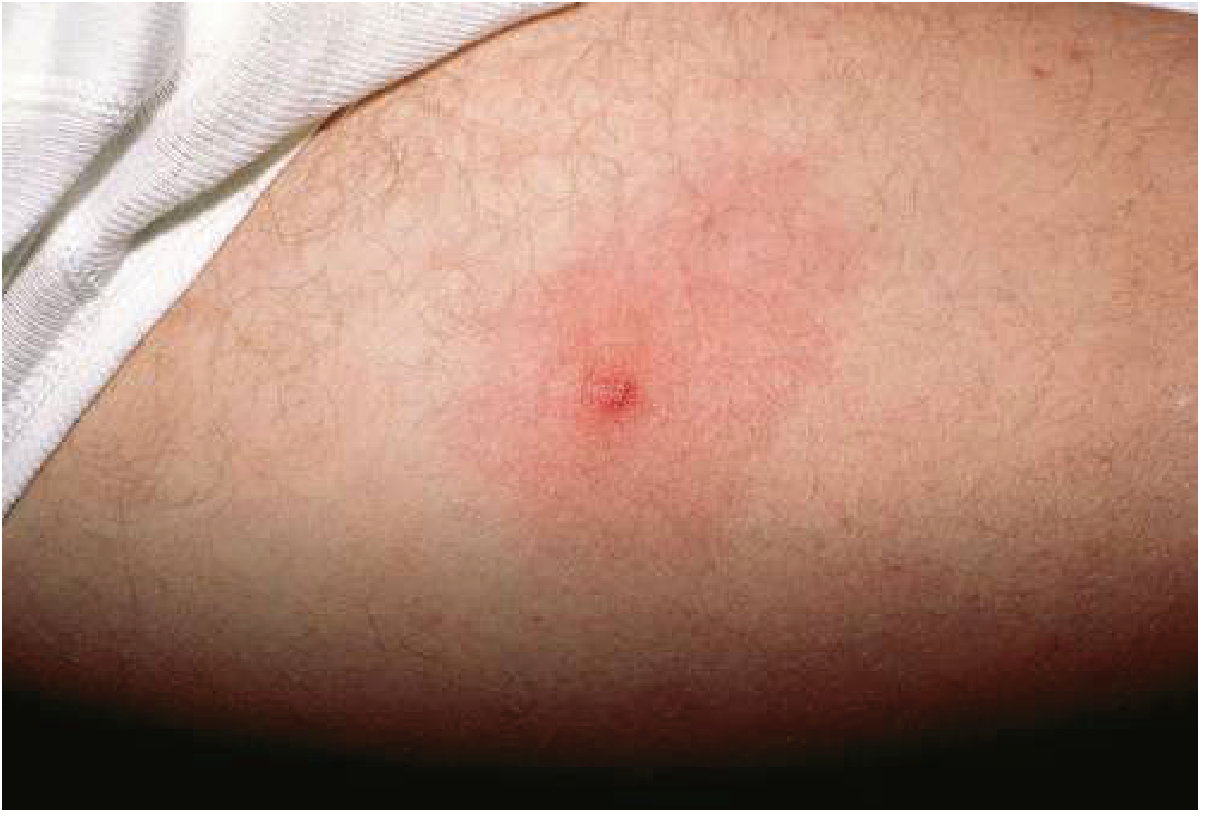
1. Conservative (Mild / Early Lesions)
- Warm compresses / warm soaks for 20 minutes, 3-4 times daily - promotes spontaneous drainage and maturation
- Loose-fitting, breathable cotton underwear to reduce friction
- Pat area dry; avoid harsh or scented soaps
- Do not squeeze or apply pressure - risk of bacteremia
- OTC analgesics (acetaminophen or ibuprofen) for pain relief
- Most small furuncles resolve with this approach alone
- Textbook of Family Medicine 9e, p. 1834; Vulvovaginal Disorders Atlas
2. Incision and Drainage (I&D) - Primary Surgical Treatment
I&D is the definitive treatment once the lesion has "pointed" (fluctuant, pus-filled). This applies when:
- The lesion is fluctuant or >2 cm
- No spontaneous drainage occurs
- Pain is severe or worsening
Technique:
- Performed under local anesthesia in a sterile field
- Linear incision over the point of maximum fluctuance
- Pus expressed and cavity irrigated
- Deeper lesions require packing (gauze wick) after drainage, changed every 24-48 hours
- For large abscesses (>5 cm), a hemovac drain may be placed
Because the genital area is difficult to drain adequately, antibiotic therapy is recommended in addition to I&D for vulvar/vaginal abscesses - per IDSA guidelines (unlike simple cutaneous abscesses elsewhere where antibiotics are often omitted after I&D).
- Goldman-Cecil Medicine, p. 520; Schwartz's Principles of Surgery, p. 2332
3. Antibiotic Therapy
For MSSA (Methicillin-Sensitive S. aureus)
| Antibiotic | Dose |
|---|---|
| Dicloxacillin / Cloxacillin | 250-500 mg orally 4x/day |
| Cephalexin | 250-500 mg orally 4x/day |
| Erythromycin (if penicillin allergy) | 250 mg orally 4x/day |
For MRSA (consider if: healthcare exposure, recurrent abscesses, local CA-MRSA prevalence, treatment failure)
| Antibiotic | Dose |
|---|---|
| Trimethoprim-sulfamethoxazole | 2 DS tablets (160/800 mg) twice daily |
| Clindamycin | 300-450 mg every 6-8 hours |
| Doxycycline | 100 mg twice daily |
| Minocycline | 100 mg twice daily |
| Linezolid | 600 mg twice daily |
Duration: 7-10 days (mild-moderate); 10-14 days for larger or complicated lesions.
Empiric choice at a vulvar site (given difficulty draining): gentamicin + clindamycin, or levofloxacin + metronidazole are used in some institutional protocols per a tertiary hospital algorithm (PMID 35908182).
- Goldman-Cecil Medicine, p. 520; Vulvovaginaldisorders.org; IDSA guidelines
4. Recurrent Furuncles (Furunculosis)
Recurrence often signals S. aureus nasal or perineal carriage, or an underlying condition like diabetes or immunosuppression.
Decolonization strategies:
- Nasal mupirocin 2% ointment applied 4x/day for 1 week per month (to suppress nasal carriage)
- Fusidic acid ointment as an alternative for nasal/gluteal cleft carriage
- Cloxacillin + rifampin combination for continued recurrences
- Culture-directed therapy - obtain swab of drained pus for C&S
- Rule out hidradenitis suppurativa, diabetes mellitus, and immunodeficiency (HIV, etc.)
- Textbook of Family Medicine 9e, p. 1835; Vulvovaginal Disorders Atlas
5. When to Escalate / Refer
| Finding | Action |
|---|---|
| Systemic signs (fever, tachycardia, SIRS criteria) | Add IV antibiotics; consider admission |
| Cellulitis extending >2 cm around lesion | Systemic antibiotics covering MRSA |
| Rapidly spreading erythema, pain out of proportion, skin necrosis | Urgent surgical evaluation - rule out necrotizing fasciitis |
| No improvement in 48-72 hours | Change/add antibiotics; repeat I&D; culture |
| Recurrence rate 0% was achieved in one study when applying a structured drainage + antibiotic algorithm | Use algorithm-based management |
| Abscess >5 cm | Hemovac drain placement; possible imaging-guided drainage |
| Underlying diabetes | Strict glycemic control is essential; diabetic patients had 60.7% prevalence in one vulvar abscess series |
6. Differential Diagnosis (Do Not Miss)
- Hidradenitis suppurativa - recurrent, multiple sinuses, scarring; requires different long-term management
- Bartholin's gland cyst/abscess - located at the 4 or 8 o'clock position of the vaginal introitus; requires marsupialization or Word catheter
- Ruptured epidermal (sebaceous) cyst - no follicular origin; less inflammatory
- Severe genital herpes simplex - grouped vesicles/ulcers, viral etiology
Key takeaway: Simple lesions resolve with warm soaks alone. Fluctuant furuncles need I&D, and vulvar location specifically warrants adjunctive antibiotics (MSSA regimen first; cover MRSA if risk factors present or no improvement). Always investigate recurrent episodes for underlying carrier status or systemic disease.
This is a shared conversation. Sign in to Orris to start your own chat.