
Act as a senior Professor of Anaesthesiology, Critical Care, and Perioperative Medicine teaching an MD Anaesthesiology resident preparing for university theory examinations, viva voce, practical examinations, and consultant-level clinical practice. I will provide the topics after this, Teach them comprehensively using the following primary references: Miller's Anesthesia Barash's Clinical Anesthesia Morgan & Mikhail's Clinical Anesthesiology Harrison's Principles of Internal Medicine (where applicable) Integrate information from all these references into one coherent explanation rather than summarizing individual books. Structure every answer as follows: 1. Definition Standard textbook definition Clinical importance 2. Introduction Background Epidemiology (if relevant) Relevance in anaesthesia and critical care 3. Basic Sciences Anatomy Physiology Pathophysiology Pharmacology Relevant physics, chemistry, and mathematics (where applicable) 4. Classification Standard classifications Staging systems Severity grading 5. Etiology and Risk Factors 6. Clinical Features Symptoms Signs Examination findings 7. Diagnosis Investigations Laboratory findings Imaging Monitoring Diagnostic criteria 8. Management Medical management Anaesthetic management ICU management Perioperative management Stepwise management algorithm 9. Anaesthetic Considerations Preoperative assessment and optimisation Airway implications Drug selection Monitoring Ventilation strategies Fluid therapy Regional vs General anaesthesia Postoperative care Complications and their management 10. Drugs For each important drug include: Mechanism of action Dose Indications Contraindications Adverse effects Anaesthetic relevance 11. Scores, Formulae and Numerical Values Include all relevant scoring systems Formulae with worked examples Normal values Cut-offs Clinical interpretation 12. Guidelines Current recommendations Important evidence Practice-changing updates (where applicable) 13. Important Tables Comparison tables Summary tables Drug tables 14. Flowcharts & Algorithms Diagnosis Management Decision-making pathways 15. Frequently Asked MD Viva Questions Short viva questions Long viva questions Model answers Common examiner cross-questions 16. MD Theory Examination Points Highly probable university questions Frequently repeated concepts High-yield facts Memory aids and mnemonics Common mistakes made by residents 17. Clinical Pearls OT pearls ICU pearls Practical tips Consultant insights Pitfalls to avoid 18. Key Take-Home Messages 10 to 20 must-remember points for revision. Teaching Style Teach from basic concepts to advanced consultant level. Explain the reasoning ("why") behind every concept instead of listing facts. Correlate physiology, pathology, pharmacology, and anaesthesia throughout. Use clear headings, subheadings, bullet points, tables, and flowcharts. Bold all high-yield examination points. Mention commonly asked viva questions wherever relevant. Focus on concepts repeatedly asked in MD Anaesthesiology university examinations and useful in clinical practice. Ensure the explanation is comprehensive, evidence-based, and suitable for achieving distinction in MD Anaesthesiology examinations while also building strong consultant-level understanding.
Topic- Diabetes Mellitus
"diabetes mellitus"[MeSH Terms] AND "perioperative care"[MeSH Terms]
DIABETES MELLITUS
Comprehensive MD Anaesthesiology Teaching Session
Sources: Miller's Anesthesia 10e | Barash's Clinical Anesthesia 9e | Morgan & Mikhail's Clinical Anesthesiology 7e | Harrison's Principles of Internal Medicine 22e
1. DEFINITION
Standard Textbook Definition
Clinical Importance
- >420 million people worldwide are affected - it is a global pandemic
- The leading cause of end-stage renal disease, non-traumatic lower limb amputation, and new-onset blindness in adults
- Diabetic patients account for approximately 10-15% of all surgical patients
- Two to four times higher risk of cardiovascular disease compared to non-diabetics
- Perioperative significance: Silent myocardial ischaemia, autonomic neuropathy, gastroparesis (aspiration risk), difficult intubation (stiff joint syndrome), impaired wound healing, and perioperative glycaemic dysregulation make this one of the most clinically consequential comorbidities in anaesthesia
High-Yield Exam Point: "The major perioperative risks to the diabetic patient come from unrecognized or poorly managed coexisting diseases, especially coronary artery disease." - Barash's Clinical Anesthesia 9e (Key Point 6)
2. INTRODUCTION
Background
Epidemiology
| Parameter | Data |
|---|---|
| Global prevalence | >420 million (WHO 2023 estimate) |
| India prevalence | ~100 million (highest absolute number globally) |
| Type 1 DM | 5-10% of all DM cases |
| Type 2 DM | 90-95% of all DM cases |
| Annual deaths | ~1.5 million directly attributable |
| Surgical patients with DM | 10-15% of elective surgical population |
| Undiagnosed DM | ~50% of cases undiagnosed in developing countries |
Relevance in Anaesthesia and Critical Care
- Preoperative: Poor glycaemic control (HbA1c >8.5-9%) is an indication to delay elective surgery
- Intraoperative: Stress hyperglycaemia, impaired counterregulatory responses, autonomic instability
- Postoperative: Increased SSI, impaired wound healing, delayed gastric emptying, cardiac events, AKI
- ICU: Stress hyperglycaemia is near-universal; target glucose 140-180 mg/dL (NICE-SUGAR trial data)
- Drug interactions: Numerous OHA-anaesthetic drug interactions (metformin-contrast, SGLT-2i-euDKA)
3. BASIC SCIENCES
A. Anatomy
Pancreatic Islets of Langerhans
- Located throughout the pancreas (~1 million islets)
- Beta (β) cells - 60-70% - produce insulin and C-peptide and amylin
- Alpha (α) cells - 20-25% - produce glucagon
- Delta (δ) cells - 5-10% - produce somatostatin (inhibits both insulin and glucagon)
- F cells (PP cells) - 1-2% - produce pancreatic polypeptide
- Epsilon cells - rare - produce ghrelin
Viva Point: "Why is C-peptide measured?" - C-peptide is co-secreted with insulin in equimolar amounts but is not present in exogenous insulin preparations. A low C-peptide with high insulin indicates exogenous insulin use (factitious hypoglycaemia). A high C-peptide with high insulin suggests insulinoma.
Insulin Gene and Biosynthesis
- Chromosome 11 - INS gene encodes preproinsulin
- Preproinsulin → Proinsulin → Insulin + C-peptide (in Golgi apparatus)
- Insulin is a 51-amino acid peptide (A-chain 21 AA + B-chain 30 AA linked by two disulfide bonds)
B. Physiology of Glucose Homeostasis
Normal Glucose Regulation
- Fasting plasma glucose: 70-99 mg/dL (3.9-5.5 mmol/L)
- Postprandial peak: <140 mg/dL at 2 hours
- Hepatic glucose output (gluconeogenesis + glycogenolysis) = 180 g/day in fasted state
Insulin Secretion (Biphasic Model)
- First phase: Rapid release of pre-formed insulin within 2-5 minutes of glucose exposure (depleted in T2DM)
- Second phase: Sustained release of newly synthesised insulin over 60-120 minutes
- Threshold for secretion: Plasma glucose ~70 mg/dL
- Incretin effect (GLP-1, GIP): Account for 50-70% of postprandial insulin release
Insulin Receptor Signalling
- Insulin binds to tyrosine kinase receptor (heterotetrameric - 2α + 2β subunits)
- Auto-phosphorylation of β-subunit → activation of IRS-1 (Insulin Receptor Substrate-1)
- Activation of PI3-kinase → PKB/Akt pathway → GLUT-4 translocation to cell membrane
- Parallel MAPK pathway → cell growth, proliferation (responsible for atherosclerosis in insulin resistance)
GLUT Transporters (Anaesthetically Relevant)
| Transporter | Location | Insulin Sensitive | Significance |
|---|---|---|---|
| GLUT-1 | RBCs, brain, placenta | No | Constitutive basal uptake |
| GLUT-2 | Pancreatic β-cells, liver | No | Glucose sensor in β-cells |
| GLUT-3 | Brain, neurons | No | High affinity - protects brain |
| GLUT-4 | Muscle, adipose | Yes | Primary insulin-responsive transporter |
| GLUT-5 | Small intestine | No | Fructose absorption |
Key Concept: GLUT-4 translocation to the cell membrane is the key insulin action. Without insulin, GLUT-4 remains sequestered in intracellular vesicles. This is why hyperglycaemia persists despite high extracellular glucose in T1DM.
Counter-regulatory Hormones (Stress Response)
- Glucagon - most important acute counter-regulator
- Epinephrine - stimulates glycogenolysis and gluconeogenesis
- Cortisol - increases gluconeogenesis, inhibits GLUT-4
- Growth Hormone - increases lipolysis, induces insulin resistance
- Cytokines (TNF-α, IL-6) - mediate stress hyperglycaemia
Viva Point: "Why does stress hyperglycaemia occur even in non-diabetics?" - Surgical stress activates the HPA axis and sympathetic nervous system, releasing glucagon, cortisol, epinephrine, and GH, which collectively promote glycogenolysis, gluconeogenesis, and peripheral insulin resistance. Simultaneously, insulin secretion is paradoxically suppressed by alpha-adrenergic stimulation of β-cells.
C. Pathophysiology
Type 1 DM - "Ominous Octet" (T-cell Mediated)
- Genetic susceptibility - HLA-DR3, HLA-DR4 (>90% of T1DM patients)
- Environmental trigger - viral infection (Coxsackie B4, rubella, CMV), toxins
- Autoimmune T-cell activation against β-cell antigens
- Autoantibodies: Anti-GAD65 (Glutamic Acid Decarboxylase), Anti-IA-2, Anti-insulin (IAA), Anti-ZnT8
- Progressive β-cell destruction (90%+ destruction before clinical onset)
- Absolute insulin deficiency → Hyperglycaemia + Ketosis
- Absolute insulin deficiency + glucagon excess
- Uninhibited lipolysis → Free Fatty Acids → β-oxidation → Acetyl CoA accumulation → Ketone bodies (acetoacetate, β-hydroxybutyrate, acetone)
- Anion gap metabolic acidosis: AG = Na - (Cl + HCO3) - normal 8-12 mEq/L; in DKA, AG >20 mEq/L
- Total body potassium depletion despite initial hyperkalaemia (acidosis drives K+ extracellularly)
Type 2 DM - The "Ominous Octet" of DeFronzo
- Pancreas - decreased insulin secretion, increased glucagon (α-cell dysfunction)
- Liver - increased hepatic glucose production (gluconeogenesis)
- Muscle - decreased glucose uptake (insulin resistance)
- Adipose tissue - increased lipolysis → increased FFA (promotes insulin resistance)
- Gut - decreased incretin effect (reduced GLP-1 response)
- Kidney - increased glucose reabsorption by SGLT-2
- Brain - insulin resistance, increased appetite
- Hypothalamus - neurotransmitter dysregulation
Hyperglycaemic Hyperosmolar State (HHS) (Type 2)
- Extreme hyperglycaemia (usually >600 mg/dL), without significant ketosis
- Sufficient insulin present to prevent lipolysis/ketogenesis, but insufficient for glucose utilisation
- Serum osmolarity >320 mOsm/kg
- Profound dehydration, neurological symptoms
Advanced Glycation End-Products (AGEs)
- Non-enzymatic glycation of proteins by excess glucose
- Glycated haemoglobin (HbA1c) - most clinically useful marker
- Glycation of collagen → Stiff Joint Syndrome (affects cervical spine and TMJ - airway relevance)
- Glycation of myelin → Peripheral neuropathy
- Glycation of vascular endothelium → Atherosclerosis
D. Pharmacology of Key Drugs (Overview - detailed in Section 10)
| Drug Class | Mechanism | Key Anaesthetic Concern |
|---|---|---|
| Insulin | GLUT-4 translocation | Hypoglycaemia |
| Metformin | AMPK activation, decreased HGP | Lactic acidosis with contrast/ischaemia |
| Sulfonylureas | KATP channel closure → insulin release | Hypoglycaemia |
| GLP-1 agonists | Incretin mimetic | Delayed gastric emptying - aspiration |
| SGLT-2 inhibitors | Renal glucose excretion | Euglycaemic DKA |
| DPP-4 inhibitors | Prolong incretin action | Safe perioperatively |
| Thiazolidinediones | PPARγ activation | Fluid retention, hold perioperatively |
4. CLASSIFICATION
ADA Classification (2024)
1. Type 1 DM
- 1A: Immune-mediated (classic T-cell destruction, positive autoantibodies)
- 1B: Idiopathic (negative autoantibodies, ketosis-prone)
- LADA (Latent Autoimmune Diabetes in Adults): Slowly progressive T1DM in adults; initially resembles T2DM
2. Type 2 DM
- Insulin resistance + progressive β-cell dysfunction
- Accounts for 90-95% of all DM
3. Gestational Diabetes Mellitus (GDM)
- Diagnosed in the 2nd or 3rd trimester in a previously non-diabetic patient
- Screened at 24-28 weeks with 75g OGTT (IADPSG criteria)
- May or may not persist postpartum
4. Other Specific Types
| Category | Examples |
|---|---|
| Monogenic DM | MODY (Maturity-Onset Diabetes of the Young) Types 1-6 |
| Pancreatic exocrine disease | Chronic pancreatitis, cystic fibrosis, haemochromatosis, pancreatectomy |
| Endocrinopathies | Cushing's syndrome, acromegaly, phaeochromocytoma, glucagonoma, hyperaldosteronism |
| Drug/chemical induced | Glucocorticoids, thiazides, atypical antipsychotics, tacrolimus, pentamidine, HIV medications |
| Genetic syndromes | Down syndrome, Turner syndrome, Klinefelter syndrome, Wolfram syndrome |
| Post-transplant DM (PTDM) | Immunosuppressant-induced |
Viva Point: "What is MODY?" - Maturity-Onset Diabetes of the Young is a monogenic (autosomal dominant) form of DM, usually presenting before age 25, with no autoimmunity and no absolute insulin deficiency. MODY-2 (glucokinase mutation) is the mildest form; MODY-3 (HNF-1α mutation) is the most common and responds to sulfonylureas.
Staging (ADA 2024 - Staging of Type 1 DM)
| Stage | Description | Glucose |
|---|---|---|
| Stage 1 | Autoimmunity present, normoglycaemia, pre-symptomatic | Normal |
| Stage 2 | Autoimmunity + dysglycaemia, pre-symptomatic | Impaired |
| Stage 3 | New-onset clinical symptoms | Hyperglycaemia |
Prediabetes Classification
| Category | FPG (mg/dL) | 2h OGTT (mg/dL) | HbA1c (%) |
|---|---|---|---|
| Impaired Fasting Glucose (IFG) | 100-125 | <140 | 5.7-6.4 |
| Impaired Glucose Tolerance (IGT) | <126 | 140-199 | 5.7-6.4 |
| HbA1c Prediabetes | - | - | 5.7-6.4 |
5. ETIOLOGY AND RISK FACTORS
Risk Factors for Type 1 DM
- HLA-DR3 and HLA-DR4 genotype (inherited)
- First-degree relative with T1DM (5-15% risk)
- Environmental triggers: Coxsackie B virus, enterovirus, cow's milk proteins (controversial), vitamin D deficiency
Risk Factors for Type 2 DM
| Risk Factor | Details |
|---|---|
| Obesity (BMI >25) | Single greatest modifiable risk factor |
| Age >45 years | Most significant demographic factor |
| Family history | 30-40% heritability |
| Physical inactivity | Increases insulin resistance |
| History of GDM | 50% develop T2DM within 10 years |
| Prediabetes | 5-10% annual conversion rate |
| Polycystic Ovarian Syndrome (PCOS) | Insulin resistance |
| Metabolic Syndrome | Central obesity + hypertension + dyslipidaemia + IFG |
| Ethnicity | South Asian, Hispanic, African-American, Pacific Islander |
| Low birth weight + rapid postnatal weight gain | "Thrifty phenotype" hypothesis |
| Medication exposure | Glucocorticoids, thiazides, antipsychotics |
Risk Factors for Perioperative Complications in Diabetics
- Poor glycaemic control (HbA1c >8.5%) - most important
- Autonomic neuropathy - haemodynamic instability, aspiration risk
- Peripheral neuropathy - masking of pain symptoms
- Nephropathy (CKD) - AKI risk, drug dosing issues
- Cardiovascular disease - silent ischaemia, cardiomyopathy
- Obese T2DM - difficult airway, OSA, GERD
6. CLINICAL FEATURES
Symptoms
Classic Symptoms ("4 P's") of Hyperglycaemia
- Polyuria - osmotic diuresis (glucose threshold for renal excretion: ~180 mg/dL)
- Polydipsia - secondary to polyuria and hyperosmolality
- Polyphagia - cellular starvation despite hyperglycaemia
- Weight loss - catabolism of fat and protein for energy (especially T1DM)
Additional Symptoms
- Blurred vision (osmotic lens changes)
- Fatigue and weakness
- Recurrent infections (fungal skin infections, vaginitis, UTIs)
- Slow wound healing
- Paraesthesias (peripheral neuropathy)
- Postural dizziness (autonomic neuropathy)
- Early satiety, nausea, postprandial bloating (gastroparesis)
Signs
| System | Finding | Mechanism |
|---|---|---|
| Cardiovascular | Resting tachycardia, orthostatic hypotension, fixed heart rate | Autonomic neuropathy |
| Eyes | Non-proliferative/proliferative retinopathy, cataracts | Chronic hyperglycaemia |
| Feet | Peripheral neuropathy signs, ulcers, Charcot joint | Neuropathy + vasculopathy |
| Skin | Acanthosis nigricans (T2DM), necrobiosis lipoidica | Insulin resistance, microangiopathy |
| Neck/Joints | Reduced ROM at cervical spine and TMJ | Stiff Joint Syndrome (AGE-mediated) |
| Kidneys | Hypertension, oedema (nephrotic range proteinuria) | Diabetic nephropathy |
| Neurological | Glove-and-stocking sensory loss, absent ankle jerks | Distal symmetric polyneuropathy |
Stiff Joint Syndrome (Prayer Sign) - Anaesthetic Relevance
- Due to glycation of collagen in joints and periarticular tissues
- Affects cervical spine and atlanto-occipital joint → restricted neck extension
- Affects temporomandibular joint → limited mouth opening
- Prayer Sign: Patient cannot oppose palmar surfaces of fingers due to flexion contractures
- Predicts difficult laryngoscopy - documented in up to 30% of T1DM patients with longstanding disease
Clinical Pearl: Always perform the Prayer Sign test in long-standing T1DM patients during preoperative airway assessment. A positive sign (inability to appose palmar surfaces) is associated with difficult intubation.
Examination Findings Relevant to Anaesthesia
| Finding | Implication |
|---|---|
| Orthostatic BP drop >20 mmHg systolic | Cardiac autonomic neuropathy - haemodynamic instability under anaesthesia |
| Fixed heart rate (no HR variability) | Cardiac autonomic neuropathy |
| Absent gag reflex | Autonomic neuropathy - aspiration risk |
| Prayer sign positive | Difficult airway |
| Absent ankle jerks + reduced vibration sense | Peripheral neuropathy - avoid PNB in area of neurological deficit |
| Pedal oedema | Nephropathy or CCF - assess cardiovascular status |
| Reduced breath sounds, wheeze | Pulmonary complications |
7. DIAGNOSIS
Diagnostic Criteria (ADA 2024)
| Criterion | Cut-off | Notes |
|---|---|---|
| Random Plasma Glucose | ≥200 mg/dL | Plus classic symptoms of hyperglycaemia OR hyperglycaemic crisis. No repeat needed |
| Fasting Plasma Glucose (FPG) | ≥126 mg/dL | Fasting = no caloric intake for ≥8 hours |
| 2-h Plasma Glucose (OGTT) | ≥200 mg/dL | 75g oral glucose load, WHO protocol |
| HbA1c | ≥6.5% | NGSP-certified laboratory, DCCT standardised |
Laboratory Investigations
Routine (All Diabetic Patients Preoperatively)
| Test | Purpose | Target/Action |
|---|---|---|
| HbA1c | Assess 3-month glycaemic control | Target <7%; Delay surgery if >8.5-9% |
| Fasting Blood Glucose | Day-of-surgery assessment | Target 140-180 mg/dL perioperatively |
| Serum Electrolytes (Na, K, Cl, HCO3) | Electrolyte imbalances, DKA screen | Correct K+ before surgery |
| Serum Creatinine + eGFR | Assess nephropathy | Adjust drug doses if CKD |
| Urine Routine + Microalbumin | Nephropathy staging | Microalbuminuria = early nephropathy |
| ECG (12-lead) | Screen for silent ischaemia, LVH | Consider stress test if abnormal |
| Lipid Profile | Cardiovascular risk stratification | Statin therapy if indicated |
| Urine/Serum Ketones | Rule out DKA | Especially for T1DM pre-op |
| Liver Function Tests | Fatty liver common in T2DM | Especially if on hepatotoxic drugs |
Special Tests
- C-peptide: Differentiates T1DM (low) from T2DM (normal/high) or insulinoma (high)
- Anti-GAD65, Anti-IA-2, Anti-ZnT8 antibodies: Confirm T1DM autoimmunity
- Fructosamine: Reflects 2-week average glucose control (useful when HbA1c unreliable - e.g., haemolytic anaemia, haemoglobinopathy)
- Echocardiogram: If cardiomyopathy suspected
- 24-hour ambulatory BP/Holter monitoring: If autonomic neuropathy suspected
Monitoring Parameters
| Parameter | Frequency | Target |
|---|---|---|
| Blood glucose (intraoperatively) | Every 30-60 minutes | 140-180 mg/dL |
| Blood glucose (ICU) | Hourly (on insulin infusion) | 140-180 mg/dL |
| Ketones (T1DM, major surgery) | Pre-op, post-op | Negative |
| HbA1c | Every 3 months (uncontrolled) | <7% (general); <8% (elderly) |
| Urine microalbumin | Annual | <30 mg/g creatinine |
8. MANAGEMENT
Medical Management (Non-anaesthetic)
Lifestyle Modification (First-line for T2DM)
- Diet: Low glycaemic index, caloric restriction (500 kcal/day deficit for weight loss)
- Exercise: 150 min/week moderate-intensity aerobic exercise
- Weight loss: 5-7% body weight reduction significantly reduces DM progression
Pharmacological - Stepwise T2DM Management (ADA 2024)
- ASCVD present → SGLT-2i (empagliflozin/canagliflozin) or GLP-1RA (semaglutide/liraglutide)
- HF or CKD → SGLT-2i
- Weight loss needed → GLP-1RA or SGLT-2i
- Hypoglycaemia avoidance → DPP-4i, GLP-1RA, SGLT-2i
- Cost limitation → Sulfonylurea or thiazolidinedione
Glycaemic Targets (Harrison's Principles 22e)
| Population | HbA1c Target |
|---|---|
| Most non-pregnant adults | <7.0% |
| Some patients (no hypoglycaemia risk, young) | ≤6.5% |
| Elderly with multiple comorbidities | <7.5-8.0% |
| Elderly with cognitive impairment/limited lifespan | <8.5% |
| Pregnant (first trimester) | <6.5% |
Management of DKA
Diagnostic Criteria for DKA
| Feature | Mild | Moderate | Severe |
|---|---|---|---|
| Blood glucose | >250 mg/dL | >250 mg/dL | >250 mg/dL |
| Arterial pH | 7.25-7.30 | 7.00-7.24 | <7.00 |
| Serum bicarbonate | 15-18 mEq/L | 10-<15 mEq/L | <10 mEq/L |
| Urine/serum ketones | Positive | Positive | Positive |
| Anion gap | >10 | >12 | >12 |
| Mental status | Alert | Alert/drowsy | Stupor/coma |
DKA Management (5 Pillars)
-
Fluid resuscitation (most important initial step)
- 0.9% NaCl: 1L in first hour, then 500 mL/hr x 4h, then 250 mL/hr based on haemodynamics
- Switch to 0.45% NaCl when glucose <250 mg/dL + pH >7.3
- Add dextrose 5% when glucose reaches 200-250 mg/dL
-
Insulin therapy
- Regular insulin IV infusion: 0.1 units/kg/hr (start AFTER K+ >3.5 mEq/L)
- OR 0.1 units/kg IV bolus then 0.1 units/kg/hr
- Target glucose reduction: 50-75 mg/dL/hour (not faster - cerebral oedema risk)
- When glucose <250 mg/dL + pH >7.3 → switch to SC insulin; continue infusion 1-2h overlap
-
Potassium replacement (most dangerous electrolyte issue)
- K+ <3.5 mEq/L: Replace first; do NOT start insulin
- K+ 3.5-5.0 mEq/L: Add 20-40 mEq K+ per litre of IV fluid
- K+ >5.0 mEq/L: No K+ supplementation; check K+ hourly
-
Bicarbonate (controversial)
- Consider ONLY if pH <7.0
- Give 100 mEq NaHCO3 in 400 mL sterile water + 20 mEq KCl over 2 hours
-
Identify and treat precipitant (Infection most common - "6 I's")
- Infection, Insulin omission, Ischaemia (MI/stroke), Infarction, Intoxication, Iatrogenic (steroids)
Viva Point: "Why should you NOT give insulin if K+ <3.5 mEq/L?" - Insulin drives K+ intracellularly (via Na/K-ATPase stimulation). Starting insulin in a hypokalaemic patient can precipitate life-threatening hypokalaemia causing cardiac arrhythmias.
Management of HHS (Hyperosmolar Hyperglycaemic State)
- Goal: Reduce osmolarity by ~3-8 mOsm/kg/hr (not too fast - cerebral oedema)
- Fluids: 0.9% NaCl initially, switch to 0.45% when haemodynamically stable
- Insulin: Lower doses than DKA (0.05 units/kg/hr), start only after fluids
- Target glucose: 250-300 mg/dL (avoid rapid lowering - cerebral oedema)
- Anticoagulation: Consider DVT prophylaxis (hyperosmolality → hypercoagulability)
Hypoglycaemia Management
| Severity | Definition | Management |
|---|---|---|
| Level 1 (Alert value) | <70 mg/dL (<3.9 mmol/L) | 15g fast-acting carbohydrate (Rule of 15) |
| Level 2 (Clinically significant) | <54 mg/dL (<3.0 mmol/L) | 20-30g fast-acting carbs; consider glucagon |
| Level 3 (Severe) | Altered consciousness/seizures | IV Dextrose (25-50 mL of 50% dextrose) OR Glucagon 1mg IM/SC/IV |
Rule of 15: Give 15g fast-acting carbohydrate, recheck in 15 minutes, repeat if still <70 mg/dL
9. ANAESTHETIC CONSIDERATIONS
A. Preoperative Assessment and Optimisation
History (Focus Areas for DM Patient)
- Type of DM and duration (T1DM >10 years → high risk of complications)
- Current medications and doses
- Usual glycaemic control - ask for glucometer diary, HbA1c records
- Hypoglycaemia episodes - especially unawareness
- Autonomic symptoms - postural dizziness, early satiety, constipation, sweating
- Cardiovascular - chest pain (angina), dyspnoea, palpitations
- Renal - known CKD, proteinuria
- Airway - neck stiffness, difficulty opening mouth
- Neuropathy - paraesthesias, weakness
- Previous surgical/anaesthetic history
Preoperative Investigations
- Mandatory: FBS, electrolytes, creatinine/eGFR, ECG, urinalysis
- Recommended: HbA1c (if not done in past 3 months), lipid profile
- Selective: Echocardiography (if cardiac symptoms), 24h Holter (autonomic neuropathy), chest X-ray (CCF)
Preoperative Optimisation
- Target HbA1c <8.5% before elective surgery (AAGBI); delay if ≥8.5%
- Target HbA1c <9% (Australian Diabetes Association guideline)
- Optimise cardiovascular status, BP, renal function
- Schedule surgery as first case of the day (minimises fasting duration)
- Ideal preoperative morning glucose: 100-180 mg/dL
Perioperative Medication Management
| Drug Class | Day Before Surgery | Day of Surgery | Postoperative |
|---|---|---|---|
| Metformin | Continue | Hold (risk of lactic acidosis) | Resume when eating + renal function confirmed |
| Sulfonylureas | Continue | Hold (hypoglycaemia risk) | Resume when eating |
| Glinides | Continue | Hold | Resume when eating |
| GLP-1 Agonists | Continue | Hold (delayed gastric emptying) | Resume when eating |
| DPP-4 Inhibitors | Continue | Continue (generally safe) | Continue |
| Thiazolidinediones | Continue | Hold | Resume when eating |
| SGLT-2 Inhibitors | Hold 24-72 hours before (see note) | Do NOT give | Resume after eating, ketones checked |
| Basal Insulin (T2DM) | Continue | 50% of usual dose | Resume with meals |
| Basal Insulin (T1DM) | Continue | 50-80% of usual dose | Never omit completely |
| Short-acting Insulin | Continue | Hold (fasting) | Resume with meals |
| CSII Pump (T1DM) | Continue | Continue at basal rate | Continue |
HIGH-YIELD EXAM POINT - SGLT-2 Inhibitors: Stop 24 hours before minor surgery and 72 hours before major surgery. Reason: SGLT-2 inhibitors cause euglycaemic DKA - DKA with normal/near-normal glucose (<250 mg/dL), which is easily missed. The mechanism is increased glucagon/insulin ratio + ketogenesis, unmasked by fasting and surgical stress. (Miller's 10e, p. 3968)
HIGH-YIELD EXAM POINT - GLP-1 Agonists (2025 ADS/ANZCA guideline): Due to delayed gastric emptying caused by GLP-1 agonists (e.g., semaglutide, liraglutide, exenatide), there is risk of aspiration despite adequate fasting. The 2025 ADS/ANZCA/GESA/NACOS guidelines recommend: Stop weekly GLP-1 agonists 7 days before surgery; stop daily GLP-1 agonists on the day of surgery. Consider RSI if not stopped appropriately. (PMID: 40814081)
B. Airway Implications
Difficult Airway Risk Factors in DM
- Stiff Joint Syndrome - glycation of cervical spine + TMJ collagen
- Positive Prayer Sign = predictor of difficult laryngoscopy
- Up to 30% of longstanding T1DM patients
- Obesity (especially T2DM) - reduced FRC, obstructive sleep apnoea, difficult mask ventilation
- Autonomic neuropathy - impaired airway reflexes, gastroparesis (full stomach risk)
- Macroglossia (in hypothyroidism associated with DM - rare)
Airway Management Strategy
- Always assess airway in preoperative clinic (Prayer Sign, neck extension, mouth opening, Mallampati, thyromental distance)
- If stiff joint syndrome or obesity: prepare for videolaryngoscopy
- If gastroparesis/delayed gastric emptying: consider RSI or awake fibreoptic intubation
- Metoclopramide (10 mg IV) and ranitidine/PPI preoperatively for gastroparesis
C. Intraoperative Anaesthetic Management
Monitoring
- Standard: ECG, SpO2, NIBP (every 5-15 min), capnography, temperature
- Blood glucose: Every 30-60 minutes intraoperatively
- Additional: Invasive arterial line for major surgery/labile glucose, CVP for major fluid shifts
- Urine output: Foley catheter for procedures >2h
Glucose Targets - Intraoperative
| Setting | Target Glucose |
|---|---|
| General perioperative | 140-180 mg/dL |
| Cardiac surgery | 150-180 mg/dL |
| Neurological surgery | Tighter control (<150 mg/dL) debated |
| ICU critically ill | 140-180 mg/dL (NICE-SUGAR) |
| Avoid: Hypoglycaemia | <80 mg/dL - treat immediately |
Intraoperative Glucose-Insulin Management
- Omit morning oral hypoglycaemics
- Check glucose preoperatively, intraoperatively at 1h, postoperatively
- If glucose >180 mg/dL → SC regular insulin correction dose
- Use an insulin infusion pump (Regular insulin 50 units in 50 mL 0.9% NaCl = 1 unit/mL)
- Adjust infusion rate according to a sliding scale based on hourly capillary blood glucose
- Run a separate 10% dextrose at 80-100 mL/hr to provide substrate
- Add KCl (10-20 mEq) to dextrose bag to prevent hypokalaemia
- Target: 100-180 mg/dL intraoperatively
| Glucose (mg/dL) | Insulin Infusion Rate (units/hr) |
|---|---|
| <70 | Stop infusion; treat hypoglycaemia |
| 70-110 | 0.5 units/hr |
| 111-150 | 1.0 units/hr |
| 151-200 | 1.5 units/hr |
| 201-250 | 2.0 units/hr |
| 251-300 | 3.0 units/hr |
| >300 | 4.0 units/hr; call physician |
Drug Selection in Diabetic Patients
| Drug | Consideration |
|---|---|
| Propofol | Preferred induction agent; minimal effect on glucose; anti-emetic properties (useful in gastroparesis) |
| Ketamine | Stimulates catecholamine release → hyperglycaemia; avoid if poorly controlled DM |
| Etomidate | Minimal cardiovascular effect; useful in cardiac DM patients; adrenal suppression with infusion |
| Volatile agents (isoflurane, sevoflurane) | Isoflurane impairs insulin secretion; sevoflurane has less effect; both cause modest hyperglycaemia |
| N2O | Minimal glycaemic effect; avoid in major bowel surgery (ileus risk) |
| Opioids | Minimal direct glycaemic effect; morphine has active metabolites in CKD - prefer fentanyl/remifentanil |
| Succinylcholine | Use with caution in autonomic neuropathy (exaggerated K+ response debated, but generally safe) |
| Rocuronium/Vecuronium | Preferred NMBDs; monitor TOF in neuropathy patients |
| Neostigmine | Safe; monitor for bradycardia in autonomic neuropathy |
| Dexamethasone (antiemetic) | Single dose 4-8 mg IV causes transient hyperglycaemia (peak 6h, resolves 24h) - MONITOR glucose (PMID: 39151134) |
| Dextrose solutions | Monitor carefully; avoid glucose-containing solutions unless specifically indicated |
| Ringer's Lactate / Hartmann's | Preferred balanced crystalloid; lactate in RL is minimal and converted to glucose hepatically (minimal effect) |
| Normal saline (0.9% NaCl) | Hyperchloraemic metabolic acidosis with large volumes - may confound DKA assessment |
Regional vs General Anaesthesia in DM
- Reduces stress hyperglycaemia (suppresses sympatho-adrenal response)
- Allows monitoring of sensorium (early detection of hypoglycaemia)
- Reduced opioid requirement → faster return of GI motility (important in gastroparesis)
- Less postoperative nausea/vomiting
- Pre-existing peripheral neuropathy → document neurological status carefully pre-block
- Consent patient about pre-existing sensory deficits
- Avoid injecting into areas of skin infection (increased risk in DM)
- Autonomic neuropathy → more pronounced hypotension with spinal/epidural (prepare vasopressors)
- Phenylephrine preferred over ephedrine as vasopressor (ephedrine increases glucose via beta-adrenergic stimulation)
Exam Point: Spinal anaesthesia causes more profound hypotension in diabetics with autonomic neuropathy. Have vasopressors ready. Phenylephrine is preferred over ephedrine in diabetics because ephedrine stimulates glycogenolysis.
Ventilation Strategies
- DKA patients on ventilator: Maintain PaCO2 matching the metabolic compensation (do NOT normalize if metabolic acidosis persists - this can cause paradoxical CSF acidosis)
- Avoid hyperventilation in DKA - target PaCO2 = 1.5 × [HCO3] + 8 ± 2 (Winter's formula)
- Obese T2DM patients: Higher PEEP (5-10 cmH2O), prone to atelectasis, lung-protective ventilation
D. Postoperative Care
Immediate Post-anaesthesia
- Monitor glucose every 1-2 hours in PACU
- Target 140-180 mg/dL
- Resume SC insulin when eating
- Watch for hypoglycaemia (masked by residual sedation, autonomic neuropathy)
- Adequate pain control (stress response causes hyperglycaemia)
- Early enteral feeding promotes better glycaemic control than TPN
Wound Care
- Strict aseptic technique; DM patients have 2-3x increased SSI risk
- Optimise perioperative glucose (each 50 mg/dL rise in glucose → 30% increase in SSI risk)
E. ICU Management
Glycaemic Management in ICU (Based on NICE-SUGAR Evidence)
- 6,104 critically ill patients (medical + surgical)
- Intensive control (81-108 mg/dL) vs Standard control (144-180 mg/dL)
- Result: 90-day mortality HIGHER in intensive group (27.5% vs 24.9%; p=0.02)
- Severe hypoglycaemia more common in intensive group (6.8% vs 0.5%)
- Conclusion: Target 140-180 mg/dL in ICU patients; intensive control is HARMFUL
- 1,548 surgical ICU patients
- IIT (80-110 mg/dL) vs Standard (180-200 mg/dL)
- 42% relative reduction in ICU mortality with IIT
- HOWEVER: Patients received significant exogenous glucose (TPN-heavy) - may explain results
- Results NOT replicated in subsequent studies
| Organization | Threshold to Start Insulin | Target |
|---|---|---|
| ADA 2024 | >180 mg/dL | 140-180 mg/dL |
| Surviving Sepsis Campaign | >180 mg/dL | <180 mg/dL |
| American College of Physicians | >180 mg/dL | 140-180 mg/dL |
| Society of Thoracic Surgeons (cardiac ICU) | >150 mg/dL | 150-180 mg/dL |
HIGH-YIELD EXAM POINT: "Very tight control of perioperative blood glucose levels appears to increase the risk of hypoglycaemic complications without clearly reducing the risk of hyperglycaemic complications." - Barash's 9e (Key Point 7)
ICU Protocol - IV Insulin Infusion
- Start insulin infusion when glucose >180 mg/dL
- Regular insulin: 50 units in 50 mL NS (1 unit/mL)
- Check glucose hourly (or every 30 min if unstable)
- If glucose <70 mg/dL: Stop infusion; give 25 mL 50% dextrose; recheck in 15 min
- Provide minimum 150g glucose/day to prevent starvation ketosis
- Enteral nutrition preferred over TPN for glycaemic control
10. DRUGS
A. INSULIN
Types of Insulin
| Type | Onset | Peak | Duration | Examples |
|---|---|---|---|---|
| Rapid-acting analogues | 5-15 min | 30-90 min | 3-5 h | Lispro, Aspart, Glulisine |
| Regular (Short-acting) | 30-60 min | 2-3 h | 6-8 h | Actrapid, Humulin R |
| Intermediate-acting | 1-2 h | 4-8 h | 12-16 h | NPH (Isophane), Lente |
| Long-acting analogues | 1-2 h | Peakless | 20-24 h | Glargine (U-100, U-300), Detemir |
| Ultra-long-acting | 6 h | Peakless | 42 h | Degludec (U-200) |
| Pre-mixed | Biphasic | Biphasic | 12-16 h | 70/30 (NPH/Regular), Biphasic Aspart |
Insulin Mechanism of Action
- Binds insulin receptor (tyrosine kinase receptor) → IRS-1 phosphorylation → PI3K/Akt → GLUT-4 translocation
- Also: Stimulates glycogen synthesis, inhibits gluconeogenesis, promotes lipogenesis, inhibits lipolysis, promotes protein synthesis
Intravenous Insulin (Perioperative Use)
- Only Regular Insulin is used intravenously
- Rapid-acting analogues (lispro, aspart) - NOT approved for IV use in most guidelines
- Dose: 0.05-0.1 units/kg/hr for infusion; titrate to glucose
- Hypoglycaemia treatment (IV): 25-50 mL of 50% dextrose (12.5-25g glucose)
Anaesthetic Relevance of Insulin
- Insulin adsorbs to PVC tubing (up to 30% loss) - flush tubing with insulin solution before connecting to patient
- Subcutaneous absorption altered by temperature (hypothermia reduces absorption; on rewarming, sudden surge)
- Insulin resistance increases dramatically with surgical stress
B. METFORMIN
| Feature | Details |
|---|---|
| Class | Biguanide |
| Mechanism | Activates AMPK (AMP-activated protein kinase) → decreases hepatic glucose production, decreases intestinal glucose absorption, increases peripheral insulin sensitivity. Does NOT stimulate insulin secretion → NO hypoglycaemia alone |
| Dose | 500 mg twice daily up to 2g/day (max 2.55g) |
| Advantages | Weight neutral/loss, cardioprotective (UKPDS), no hypoglycaemia, cheap |
| Contraindications | eGFR <30 mL/min, iodinated contrast (within 48h), major surgery, hepatic failure, heart failure (Class III/IV), alcohol abuse, acute illness |
| Adverse effects | GI upset (nausea, diarrhoea - take with food), lactic acidosis (rare, 3/100,000 patients/year), B12 deficiency |
| Anaesthetic relevance | Hold on day of surgery - risk of lactic acidosis due to perioperative hypoperfusion, tissue hypoxia. Resume when eating normally and renal function confirmed stable post-op |
KEY EXAM POINT: The risk of lactic acidosis with metformin occurs when tissue perfusion is impaired (surgery, contrast nephropathy, shock). Metformin inhibits mitochondrial complex I → impairs lactate clearance. The absolute risk is very low but the consequences are severe. Hence, hold perioperatively.
C. SULFONYLUREAS
| Feature | Details |
|---|---|
| Class | Sulfonylurea (2nd generation) |
| Examples | Glipizide, Glyburide/Glibenclamide, Glimepiride, Gliclazide |
| Mechanism | Bind SUR1 subunit of KATP channels on β-cells → K+ channel closure → membrane depolarisation → Ca²⁺ influx → insulin secretion. Insulin secretion is GLUCOSE-INDEPENDENT → risk of hypoglycaemia |
| Dose | Glipizide: 2.5-20 mg/day; Glimepiride: 1-4 mg/day |
| Adverse effects | Hypoglycaemia (especially with renal failure, missed meals), weight gain, hepatotoxicity (rare) |
| Anaesthetic relevance | Hold on morning of surgery - can cause severe intraoperative hypoglycaemia (masked by anaesthesia). Long-acting agents (glibenclamide) should be held 24-48h before major surgery |
D. GLP-1 RECEPTOR AGONISTS (Incretin Mimetics)
| Feature | Details |
|---|---|
| Examples | Liraglutide, Semaglutide (weekly), Exenatide, Dulaglutide |
| Mechanism | Mimic endogenous GLP-1 → stimulate insulin secretion (glucose-dependent), suppress glucagon, slow gastric emptying, promote satiety |
| Benefits | Weight loss, cardiovascular protection (LEADER trial for liraglutide, SUSTAIN-6 for semaglutide), no hypoglycaemia alone |
| Adverse effects | Nausea/vomiting, delayed gastric emptying, rare pancreatitis, rare thyroid C-cell tumours |
| Anaesthetic relevance | MAJOR CONCERN: Gastroparesis - increases aspiration risk under anaesthesia. 2025 ADS/ANZCA guidelines: Hold weekly agents (semaglutide) for 7 days; hold daily agents on day of surgery. Use RSI if not stopped in time. Consider US-guided gastric ultrasound assessment. |
2025 UPDATE (PMID: 40814081): The 2025 ADS/ANZCA/GESA/NACOS clinical practice recommendations specifically address perioperative GLP-1 agonist management. For elective procedures: stop weekly GLP-1RA 7 days before, daily GLP-1RA on the day before. If not stopped, treat as full stomach - RSI and consider gastric ultrasound.
E. SGLT-2 INHIBITORS
| Feature | Details |
|---|---|
| Examples | Empagliflozin, Dapagliflozin, Canagliflozin, Ertugliflozin |
| Mechanism | Inhibit Sodium-Glucose Cotransporter 2 (SGLT-2) in proximal tubule → glucosuria (~70-80g glucose/day) → osmotic diuresis → weight loss. Also sodium excretion → diuresis → BP lowering. Glucagon increases → ketogenesis potential |
| Benefits | Weight loss, BP reduction, cardioprotection (EMPA-REG OUTCOME), renoprotection (CREDENCE trial), reduces hospitalization for HF |
| Adverse effects | UTI, genital mycotic infections, DKA (euglycaemic), volume depletion, Fournier's gangrene (rare), lower limb amputation (canagliflozin) |
| CRITICAL Anaesthetic relevance | Euglycaemic DKA: SGLT-2i increase urinary glucose excretion → relative insulin excess → glucagon excess (paradoxically) → ketogenesis. Surgical fasting + stress further exacerbates this. DKA occurs with NORMAL glucose (<250 mg/dL) - easily missed! Stop 24h before minor surgery, 72h before major surgery (Miller's 10e p.3968) |
How to recognise Euglycaemic DKA:
- Nausea, vomiting, abdominal pain POSTOPERATIVELY
- Glucose NORMAL or mildly elevated (<250 mg/dL) - misleadingly reassuring
- Blood gas: Metabolic acidosis, raised AG
- Serum/urine ketones: POSITIVE
- Check ketones in ALL postoperative SGLT-2i patients (even with normal glucose)
F. DPP-4 INHIBITORS (Gliptins)
| Feature | Details |
|---|---|
| Examples | Sitagliptin, Saxagliptin, Linagliptin, Alogliptin, Vildagliptin |
| Mechanism | Inhibit DPP-4 enzyme → prolong action of endogenous GLP-1 and GIP → enhanced glucose-dependent insulin secretion, reduced glucagon |
| Advantages | Weight neutral, no hypoglycaemia alone, renal dosing adjustment (except linagliptin), generally safe perioperatively |
| Adverse effects | Nasopharyngitis, rare pancreatitis, rare joint pain |
| Anaesthetic relevance | Generally the safest OHA perioperatively; can often continue on day of surgery |
G. THIAZOLIDINEDIONES (Glitazones)
| Feature | Details |
|---|---|
| Examples | Pioglitazone, Rosiglitazone |
| Mechanism | Activate PPAR-γ (peroxisome proliferator-activated receptor gamma) → increased peripheral insulin sensitivity, redistribution of fat from visceral to peripheral, altered adipokine profile |
| Adverse effects | Fluid retention, weight gain, exacerbation of heart failure, bone fractures, bladder cancer risk (pioglitazone - prolonged use) |
| Anaesthetic relevance | Hold perioperatively - fluid retention can cause or worsen perioperative pulmonary oedema; not safe in CHF |
H. GLUCAGON
| Feature | Details |
|---|---|
| Mechanism | Activates glucagon receptors → increases cAMP → glycogenolysis + gluconeogenesis (hepatic glucose output). Also positive inotrope and chronotrope |
| Dose | Hypoglycaemia: 1 mg IM/SC/IV; Beta-blocker overdose: 50-150 mcg/kg IV bolus |
| Anaesthetic relevance | Second-line treatment for severe hypoglycaemia when IV access unavailable. Treatment for beta-blocker overdose (bypasses blocked β-receptors via cAMP) |
11. SCORES, FORMULAE, AND NUMERICAL VALUES
Key Numerical Values
| Parameter | Normal | Diagnostic Cut-off | Action Value |
|---|---|---|---|
| FPG | 70-99 mg/dL | ≥126 mg/dL (DM) | >180 mg/dL (treat) |
| 2h OGTT | <140 mg/dL | ≥200 mg/dL (DM) | - |
| HbA1c | <5.7% | ≥6.5% (DM) | >8.5% (delay surgery) |
| Random glucose | - | ≥200 + symptoms | - |
| Perioperative target | - | 140-180 mg/dL | <80 mg/dL (hypoglycaemia - treat!) |
| ICU target | - | 140-180 mg/dL | >180 mg/dL (start insulin) |
| Serum osmolarity (HHS) | 280-295 mOsm/kg | >320 mOsm/kg | - |
| Glucose renal threshold | - | ~180 mg/dL | - |
| Anion Gap (DKA) | 8-12 mEq/L | >12 mEq/L | - |
Important Formulae
1. Anion Gap (AG)
- Normal: 8-12 mEq/L (with albumin correction: 8-16 mEq/L)
- DKA: Typically >20 mEq/L
2. Albumin-Corrected Anion Gap
- Essential in ICU where hypoalbuminaemia is common
3. Osmolar Gap and Calculated Serum Osmolarity
- Normal: 280-295 mOsm/kg
- HHS: >320 mOsm/kg
4. Corrected Sodium in Hyperglycaemia
5. HbA1c - Average Glucose Conversion
| HbA1c | Average Glucose |
|---|---|
| 6% | 126 mg/dL |
| 7% | 154 mg/dL |
| 8% | 183 mg/dL |
| 9% | 212 mg/dL |
| 10% | 240 mg/dL |
| 12% | 298 mg/dL |
6. Winter's Formula (Expected PaCO2 in Metabolic Acidosis)
- Used to verify adequate respiratory compensation in DKA
- If actual PaCO2 < expected → respiratory alkalosis also present
- If actual PaCO2 > expected → concomitant respiratory acidosis
7. Insulin Infusion Rate Calculation (GIK Regimen)
- Normal hepatic glucose output = 2-3 mg/kg/min
- TPN glucose provision: Target ≤5 mg/kg/min
8. Body Mass Index (BMI) - Relevant for T2DM
- Overweight: 25-29.9; Obese class I: 30-34.9; Class II: 35-39.9; Class III (morbid): ≥40
- BMI >30 → increased T2DM risk; BMI >35 → bariatric surgery indication if DM present
Scoring Systems
1. HbA1c-Based Surgery Delay Guidelines
| HbA1c | AAGBI Recommendation | Australian DM Association |
|---|---|---|
| <7% | Optimal - proceed | Proceed |
| 7-8.5% | Acceptable - proceed with enhanced monitoring | Proceed |
| ≥8.5% | Delay elective surgery | - |
| ≥9% | - | Delay elective surgery |
2. Revised Cardiac Risk Index (RCRI) - Lee Index
| Risk Factor | Score |
|---|---|
| High-risk surgery | 1 |
| History of IHD | 1 |
| History of CHF | 1 |
| History of CVD | 1 |
| Insulin-dependent DM | 1 |
| Preop creatinine >2 mg/dL | 1 |
- RCRI 0: 0.4% MACE risk; 1: 0.9%; 2: 6.6%; ≥3: 11%+
3. DKA Severity Grading (ADA)
| Grade | pH | HCO3 | Mental status |
|---|---|---|---|
| Mild | 7.25-7.30 | 15-18 | Alert |
| Moderate | 7.00-7.24 | 10-14 | Alert/drowsy |
| Severe | <7.00 | <10 | Stupor/coma |
12. GUIDELINES
Current Evidence-Based Guidelines (2024-2025)
1. ADA Standards of Medical Care in Diabetes (2024)
- HbA1c target: <7% for most non-pregnant adults
- Perioperative glucose target: 140-180 mg/dL
- ICU insulin infusion start threshold: >180 mg/dL
- Preoperative evaluation: Includes ECG, renal function, HbA1c
- SGLT-2i: Hold before surgery
2. AAGBI/Centre for Perioperative Care (CPOC) UK Guidelines (2021)
- Delay elective surgery if HbA1c ≥8.5%
- Schedule DM patients as first on morning list
- Monitoring every 30-60 min intraoperatively
- VRII (Variable Rate Insulin Infusion) preferred over fixed-rate GIK
- SGLT-2i: Hold 24h (minor) to 72h (major) before surgery
3. NICE-SUGAR Trial (NEJM 2009) - Practice Changing
- Target glucose 140-180 mg/dL in ICU (NOT tight control 80-110 mg/dL)
- Intensive insulin therapy increases mortality in critically ill patients
4. 2025 ADS/ANZCA/GESA/NACOS Guidelines for GLP-1RA (PMID: 40814081)
- Daily GLP-1RA: Stop on day before surgery
- Weekly GLP-1RA (semaglutide): Stop 7 days before surgery
- If not stopped: Treat as full stomach - RSI, consider gastric ultrasound
- Strong recommendation for preoperative gastric ultrasound assessment when GLP-1RA not held
5. ACC/AHA Perioperative Guidelines (2024)
- DM (insulin-treated) counted as 1 point in RCRI
- Recommend perioperative statin, aspirin continuation in DM with ASCVD
- Beta-blocker continuation (if already on therapy)
6. Continuous Glucose Monitoring (CGM) Perioperative Use (PMID: 40613260)
- Systematic review (2025) demonstrates CGM can be used perioperatively
- Flash glucose monitoring (FreeStyle Libre) - accuracy maintained in most surgical settings
- CGM does NOT replace capillary blood glucose checks during major haemodynamic changes (hypoperfusion → CGM inaccurate)
- Not yet standard of care but emerging as important tool
13. IMPORTANT TABLES
Table 1: Type 1 vs Type 2 DM - Comprehensive Comparison
| Feature | Type 1 DM | Type 2 DM |
|---|---|---|
| Age of onset | Usually <30 years (but any age) | Usually >40 years (but increasing in youth) |
| Onset | Rapid (weeks to months) | Insidious (years) |
| Body habitus | Normal/thin | Usually obese |
| Pathology | Autoimmune β-cell destruction | Insulin resistance + relative β-cell failure |
| Insulin levels | Very low/absent | Normal/elevated early; low late |
| C-peptide | Low/absent | Normal/elevated |
| Autoantibodies | Anti-GAD65, Anti-IA-2, Anti-ZnT8 | Absent |
| HLA association | HLA-DR3, DR4 | No specific HLA |
| Genetic component | 40-50% concordance in twins | 70-90% concordance in twins |
| Ketoacidosis risk | High (DKA is common) | Low (HHS more common) |
| Insulin therapy | Mandatory from diagnosis | Required eventually |
| Oral agents | Not effective (no β-cells) | Effective (first-line) |
| Perioperative risk | Higher (DKA risk, silent MI at young age) | Cardiovascular risk dominant |
Table 2: Antidiabetic Drug Perioperative Management
| Drug | Hold preoperatively | When to resume | Key concern |
|---|---|---|---|
| Metformin | Day of surgery | When eating + renal function stable | Lactic acidosis |
| Sulfonylureas | Day of surgery | When eating normally | Hypoglycaemia |
| Glinides | Day of surgery | When eating normally | Hypoglycaemia |
| DPP-4 inhibitors | Usually continue | Continue | Pancreatitis (rare) |
| GLP-1 agonists (daily) | Day before | When eating normally | Gastroparesis/aspiration |
| GLP-1 agonists (weekly) | 7 days before | When eating normally | Gastroparesis/aspiration |
| SGLT-2 inhibitors | 24h (minor) / 72h (major) before | When eating + no ketones | Euglycaemic DKA |
| Thiazolidinediones | Day of surgery | When eating normally | Fluid retention |
| Basal insulin (T1DM) | Never fully omit | Continue (may reduce dose) | DKA if omitted |
| Basal insulin (T2DM) | 50% dose morning of surgery | Resume with meals | Hypoglycaemia |
| Short-acting insulin | Hold (fasting) | Resume with meals | Hypoglycaemia |
| CSII pump | Continue at basal rate | Continue | Hypoglycaemia if not adjusted |
Table 3: Chronic Complications of DM and Anaesthetic Implications
| Complication | Mechanism | Anaesthetic Implication |
|---|---|---|
| Autonomic Neuropathy | Nerve glycation, ischaemia | Haemodynamic instability, gastroparesis (aspiration), resting tachycardia |
| Peripheral Neuropathy | Nerve glycation | Document pre-existing deficits; careful positioning; avoid PNB in affected areas |
| Stiff Joint Syndrome | Collagen glycation | Difficult airway (cervical spine, TMJ) |
| Diabetic Cardiomyopathy | Microvascular disease, metabolic | Diastolic dysfunction, HF risk |
| Coronary Artery Disease | Accelerated atherosclerosis | Silent MI, perioperative MI risk |
| Nephropathy (CKD) | Glomerulosclerosis | Drug dosing adjustment, AKI risk |
| Gastroparesis | Autonomic neuropathy of vagus | Full stomach risk - use RSI |
| Retinopathy | Microangiopathy | Eye protection; avoid hypotension; monitor IOP |
| Immunosuppression | Impaired neutrophil function | Increased SSI; strict asepsis |
| Slow wound healing | Impaired collagen synthesis | Avoid drying out tissues; meticulous haemostasis |
Table 4: DKA vs HHS - Differential Diagnosis
| Feature | DKA | HHS |
|---|---|---|
| Type of DM | Type 1 (mainly) | Type 2 (mainly) |
| Onset | Hours to days | Days to weeks |
| Blood glucose | 250-800 mg/dL | Usually >600 mg/dL |
| Serum ketones | Positive | Negative or trace |
| pH | <7.3 | Usually >7.3 |
| Bicarbonate | <18 mEq/L | Usually >18 mEq/L |
| Serum osmolarity | Variable (<320) | >320 mOsm/kg |
| Mental status | Alert to coma | Usually coma/stupor |
| Anion gap | High (>12) | Normal or slightly raised |
| Dehydration | Moderate | Severe (8-12 litres) |
| Mortality | 1-5% | 10-20% |
14. FLOWCHARTS AND ALGORITHMS
Algorithm 1: Preoperative Management of Diabetic Patient
DIABETIC PATIENT SCHEDULED FOR SURGERY
↓
PREOPERATIVE ASSESSMENT
(HbA1c, FBS, ECG, eGFR, electrolytes)
↓
Is HbA1c ≥8.5%?
/ \
YES NO
↓ ↓
Elective Surgery? Proceed with surgery
/ \
YES NO
↓ ↓
DELAY Proceed
Optimise (emergency)
Control ↓
↓ Enhanced monitoring
Reassess (glucose q30-60min)
in 6-8 wks
↓
MEDICATION MANAGEMENT
↙ ↓ ↓ ↘
SGLT-2i GLP-1RA Metformin Sulfo/Glinides
72h/24h Daily: Hold day Hold morning
HOLD 1d before of surgery of surgery
Weekly:
7d before
↓
SCHEDULE AS FIRST MORNING CASE
↓
TARGET PREOPERATIVE GLUCOSE 100-180 mg/dL
Algorithm 2: Intraoperative Glucose Management
CHECK GLUCOSE ON ARRIVAL TO OT
↓
Glucose 100-180 mg/dL?
/ | \
<100 mg/dL YES >180 mg/dL
↓ ↓ ↓
Treat Proceed Start VRII
Hypoglycaemia Monitoring (Insulin infusion)
25-50 mL q30-60 min
50% Dextrose ↓
↓ Adjust rate
Recheck per scale
15 min ↓
Monitor q30 min
↓
If glucose <100:
↓ insulin rate,
add dextrose
↓
TARGET: 140-180 mg/dL
Algorithm 3: DKA Management
DIAGNOSIS: Glucose >250 + Ketones + pH <7.3
↓
SIMULTANEOUS ACTIONS:
ABC, IV access x2, Foley catheter
↓
CHECK K+ BEFORE INSULIN
↓
K+ <3.5? K+ 3.5-5.0? K+ >5.0?
↓ ↓ ↓
REPLACE K+ Start Insulin Start Insulin
FIRST + KCl 20-40 mEq No KCl
(NO INSULIN per litre Check K+ hourly
until K+>3.5)
↓
FLUID RESUSCITATION
0.9% NaCl 1L first hour
then 500 mL/hr x 4h
then 250 mL/hr based on hemodynamics
↓
INSULIN: 0.1 units/kg/hr IV
Target BG reduction: 50-75 mg/dL/hr
↓
When BG <250 AND pH >7.3:
Switch to 5% Dextrose + continue insulin
↓
RESOLUTION: pH >7.3 + HCO3 >18 + AG <12
↓
Transition to SC insulin (1-2h overlap)
↓
IDENTIFY PRECIPITANT
(Infection most common - 6 I's)
Algorithm 4: Perioperative Hypoglycaemia Management
GLUCOSE <80 mg/dL IN PERIOPERATIVE PERIOD
↓
Is patient awake and cooperative?
/ \
YES NO
↓ ↓
15g fast-acting IV ACCESS PRESENT?
carbohydrate / \
(Rule of 15) YES NO
↓ ↓ ↓
Recheck 15 min 25-50 mL 50% Glucagon
Dextrose IV 1 mg IM/SC
(12.5-25g)
↓
Recheck BG in 15 min
↓
Still <80 mg/dL?
/ \
YES NO
↓ ↓
Repeat Continue monitoring
treatment q15 min x 1 hour
↓
Consider D5 or D10 infusion
Notify endocrine/physician
15. FREQUENTLY ASKED MD VIVA QUESTIONS
Short Viva Questions
- Resting tachycardia - due to vagal denervation
- Fixed heart rate - no R-R interval variability - confirmed by deep breathing test (normal: HR varies by ≥15 bpm)
- Orthostatic hypotension - due to loss of sympathetic vasoconstrictor tone (drop >20 mmHg systolic or >10 mmHg diastolic on standing)
- Impaired cardiovascular responses to anaesthesia - severe hypotension on induction
- Silent myocardial ischaemia - loss of cardiac pain afferents
- Gastroparesis - vagal denervation of stomach → delayed emptying → full stomach → aspiration risk - use RSI
- Bladder dysfunction - urinary retention (Foley catheter needed)
- Impaired hypoglycaemia awareness - autonomic symptoms of hypoglycaemia absent Management: Careful preloading, vasopressors ready (phenylephrine preferred), ECG monitoring, RSI for gastroparesis patients.
Long Viva Questions
- Investigations: HbA1c, FBS, electrolytes, creatinine/eGFR, ECG, lipid profile, urinalysis for microalbumin
- Medication management:
- Empagliflozin (SGLT-2i): HOLD 72 hours before major surgery (euglycaemic DKA risk)
- Metformin: Hold on morning of surgery (lactic acidosis risk)
- Glipizide: Hold on morning of surgery (hypoglycaemia risk)
- If HbA1c ≥8.5%: Delay surgery, optimise glycaemic control
- Airway: Prayer Sign, neck mobility, Mallampati - longstanding DM → stiff joint syndrome possible
- Cardiovascular: Screen for autonomic neuropathy (orthostatic BP, HR variability), silent ischaemia
- Schedule as first morning case
- Consent: Explain increased risk of SSI, cardiac events
- Monitoring: ECG, SpO2, NIBP, capnography, temperature, blood glucose every 30-60 min
- Induction: Propofol (if no cardiovascular compromise) or etomidate (if haemodynamically compromised)
- Airway: RSI if gastroparesis present; videolaryngoscopy if stiff joint syndrome
- Maintenance: Volatile anaesthesia (sevoflurane preferred), opioid-sparing technique (reduces PONV and ileus)
- Fluids: Balanced crystalloid (Hartmann's); avoid large volumes of 0.9% NaCl (hyperchloraemic acidosis may mimic DKA)
- Glucose management: Target 140-180 mg/dL; VRII if insulin needed
- Vasopressors: Phenylephrine preferred over ephedrine
- PACU glucose monitoring: Every 1-2 hours
- Check urine/blood ketones (patient was on SGLT-2i - euglycaemic DKA risk even 72h after stopping)
- Resume medications only when eating normally and renal function confirmed
- Early enteral nutrition if surgery allows
- Analgesia: Multimodal (regular paracetamol, NSAIDs if renal function adequate, PCA opioids)
- DVT prophylaxis
- "What if this was emergency surgery and empagliflozin cannot be stopped?" → Proceed with RSI; check baseline ketones; monitor closely postoperatively; lower threshold to start insulin
- "How would your management differ for T1DM?" → Never omit basal insulin; higher risk of DKA; more intensive glucose monitoring; CSII pump patients - continue pump at basal rate
Common Examiner Cross-Questions
- "What is the Whipple's triad?" (Symptoms of hypoglycaemia + glucose <3 mmol/L + relief with glucose - for diagnosing insulinoma)
- "What is LADA?" (Latent Autoimmune Diabetes in Adults - T1DM presenting in adults, initially resembles T2DM, has autoantibodies)
- "What is the ACCORD trial?" (Aggressive glucose control in T2DM with established CVD increased mortality - reinforces against very tight control)
- "What is the Somogyi effect?" (Overnight hypoglycaemia triggers counter-regulatory hormone release → rebound morning hyperglycaemia - avoid by not over-insulinising at bedtime)
- "What is the Dawn Phenomenon?" (Early morning hyperglycaemia due to physiological GH surge in early morning - treat by evening insulin dose adjustment)
- "What is Charcot arthropathy?" (Neuropathic joint destruction in DM due to loss of protective sensation - affects ankle/foot - causes bony destruction, deformity - perioperative positioning important)
16. MD THEORY EXAMINATION POINTS
Highly Probable University Questions
- "Classify diabetes mellitus and discuss the anaesthetic management of a diabetic patient undergoing major surgery" - This is the most commonly repeated long essay in MD Anaesthesiology theory exams
- "Discuss the perioperative management of a Type 1 diabetic patient"
- "Write short notes on: (a) Diabetic Ketoacidosis and its anaesthetic management (b) SGLT-2 inhibitors and anaesthesia"
- "What are the complications of diabetes mellitus relevant to anaesthesia? Discuss how you would assess and manage them"
- "Discuss intraoperative glycaemic management in critically ill patients with reference to the NICE-SUGAR trial"
High-Yield Facts
- 5-10% of cases are T1DM; 90-95% are T2DM
- Delay elective surgery if HbA1c ≥8.5% (AAGBI); ≥9% (ADA Australia)
- Only Regular insulin is given IV - not rapid-acting analogues
- SGLT-2i: Hold 24h (minor) / 72h (major) before surgery → euglycaemic DKA
- GLP-1RA: Hold 24h (daily) / 7 days (weekly) before surgery → aspiration risk
- Metformin: Hold day of surgery → lactic acidosis
- Never omit all insulin in T1DM patients → DKA
- Target glucose perioperatively: 140-180 mg/dL
- NICE-SUGAR: Intensive control (80-110) → increased mortality; target 140-180 mg/dL in ICU
- Phenylephrine > Ephedrine in diabetics (ephedrine causes hyperglycaemia)
- Prayer Sign → stiff joint syndrome → predict difficult airway
- Potassium must be >3.5 mEq/L before starting insulin in DKA
Memory Aids and Mnemonics
"DIABETIC" - Anaesthetic Concerns
- D - Difficult airway (stiff joint syndrome)
- I - Ischaemic heart disease (silent)
- A - Autonomic neuropathy (haemodynamic instability)
- B - Blood glucose (tight but not too tight: 140-180)
- E - Euglycaemic DKA (SGLT-2i patients)
- T - Timing (first on morning list)
- I - Insulin (never omit in T1DM; adjust doses for T2DM)
- C - Cardiovascular + renal monitoring
"SGLT-2 = STOP Glucose" - Periop Rule
- Stop 7 days (weekly GLP-1RA)
- Stop 72 hours (major surgery SGLT-2i)
- Stop 24 hours (minor surgery SGLT-2i / daily GLP-1RA)
- Stop metformin day 0 (day of surgery)
"6 I's" of DKA Precipitants
DKA Management - "FRIED K"
- F - Fluids (0.9% NaCl first)
- R - Replace K+ (if <3.5, no insulin until corrected)
- I - Insulin (0.1 units/kg/hr IV Regular)
- E - Electrolytes (monitor hourly)
- D - Dextrose (add when glucose <250 mg/dL)
- K - Klue/Cause (identify precipitant)
Insulin Types Mnemonic - "RAP-LD" by Duration
Common Mistakes Made by Residents
- Omitting all insulin in T1DM patients pre-operatively → precipitates DKA
- Not checking potassium before starting insulin in DKA → life-threatening hypokalaemia
- Stopping insulin infusion without overlap when transitioning to SC insulin → rebound hyperglycaemia
- Targeting glucose <110 mg/dL in ICU → follows outdated Van den Berghe data, not NICE-SUGAR
- Resuming metformin immediately postoperatively without confirming renal function
- Not recognising euglycaemic DKA because glucose is normal in a SGLT-2i patient
- Ignoring GLP-1RA gastroparesis risk and not performing RSI → aspiration
- Using ephedrine as first-line vasopressor in diabetic hypotension
- Forgetting stiff joint syndrome when assessing diabetic airway
- Not correcting sodium for hyperglycaemia in HHS → underestimating true Na deficit
17. CLINICAL PEARLS
OT (Operating Theatre) Pearls
-
"First on the morning list" rule is not just courtesy - it is a safety imperative. The longer a diabetic patient fasts, the higher the risk of hypoglycaemia (especially on sulfonylureas or insulin) and of metabolic derangement.
-
Insulin adsorbs to PVC IV tubing - flush the infusion set with 10-20 mL of insulin solution before connecting to patient to saturate binding sites, otherwise up to 30% of the dose is lost to tubing.
-
Warm patients before reversal - hypothermia impairs subcutaneous insulin absorption; on rewarming there can be a sudden surge of previously unabsorbed insulin → hypoglycaemia.
-
Dexamethasone hyperglycaemia: A single 8 mg dose of dexamethasone (used as antiemetic) causes blood glucose to peak at ~6 hours post-administration. Warn the receiving ward team. Monitor glucose 6-8 hours post-op when dex is given. (PMID: 39151134)
-
The "silent MI" trap: Diabetics can have a massive infarct with minimal or no symptoms - ST changes, haemodynamic collapse, or unexplained pulmonary oedema on the table may be the first sign. Have a low threshold for intraoperative 12-lead ECG and troponin.
-
Gastric ultrasound for GLP-1RA patients - If semaglutide was taken within 7 days of surgery, use point-of-care ultrasound to assess gastric contents before induction. A gastric antral cross-sectional area >340 mm² or the presence of solid/mixed gastric contents = full stomach → RSI.
ICU Pearls
-
"Permissive hyperglycaemia" in the ICU is NOT acceptable. While avoiding tight control (NICE-SUGAR lesson), glucose >180 mg/dL is still associated with adverse outcomes (SSI, AKI, delirium). Target 140-180 mg/dL actively.
-
Enteral nutrition is better than TPN for glycaemic control in ICU. The portal-first delivery of nutrients from EN results in more physiological insulin responses than TPN.
-
Never trust a glucose measurement from peripheral sites with poor perfusion (vasoconstriction, shock). Use arterial blood gas glucose measurement in haemodynamically unstable ICU patients - it is more reliable than capillary glucose.
-
Hypoglycaemia is the hidden killer in the ICU. A single episode of severe hypoglycaemia (<40 mg/dL) can cause irreversible neurological damage. The risk is heightened when: (a) insulin infusion is running, (b) nutritional support is interrupted, (c) renal function changes (reduced insulin clearance), (d) patient receives steroids and then they are weaned.
Practical Tips
-
"Dose adjustment for renal failure" applies to insulin too - insulin is partially cleared by the kidneys. In AKI/CKD, insulin half-life is prolonged → reduce doses and monitor more frequently.
-
In T1DM, NEVER omit all insulin perioperatively even if fasting. Without any insulin, T1DM patients will develop DKA within 4-8 hours. Give 50-80% of the basal dose. This is one of the most important and commonly tested points.
-
Type 2 DM patient requiring insulin post-op? If a T2DM patient who was previously on oral agents alone requires insulin in hospital, do NOT automatically assume they will need insulin permanently. Illness-induced insulin resistance often resolves. Reassess after discharge.
-
Continuous Glucose Monitoring (CGM/Flash) can be used perioperatively as an adjunct but must not replace capillary glucose checks during haemodynamically unstable periods. Position sensors away from surgical site, ECG leads, and electrosurgery path.
Pitfalls to Avoid
-
Do NOT use 5% dextrose as the routine IV fluid for diabetics - it will cause hyperglycaemia. Use balanced crystalloids (Hartmann's or PlasmaLyte) for maintenance. Add dextrose ONLY as part of a GIK/VRII protocol under controlled conditions.
-
Do NOT rely on signs and symptoms to diagnose hypoglycaemia in anaesthetised or sedated patients - autonomic symptoms (sweating, tremor, palpitations) are masked. The only reliable indicator is a blood glucose measurement. Monitor routinely.
18. KEY TAKE-HOME MESSAGES
"The most important thing to remember in diabetic perioperative care is that the disease is in the complications, not the blood glucose alone." - Barash's Principle
-
Perioperative glucose target is 140-180 mg/dL - not <110 mg/dL (NICE-SUGAR: tight control kills in the ICU), not >200 mg/dL (SSI, impaired healing, organ damage)
-
SGLT-2 inhibitors must be stopped 24-72 hours before surgery to prevent euglycaemic DKA. Normal glucose does NOT exclude DKA in these patients - check ketones.
-
GLP-1 receptor agonists (especially weekly semaglutide) must be stopped 7 days before surgery to prevent gastroparesis-related aspiration. If not stopped: RSI and gastric ultrasound.
-
Never omit ALL insulin in Type 1 DM - even a fasting patient needs basal insulin (50-80% of dose) to prevent DKA.
-
The Prayer Sign predicts difficult airway in longstanding diabetics - examine every diabetic patient's hands, neck extension, and mouth opening preoperatively.
-
Cardiac autonomic neuropathy causes silent myocardial ischaemia - diabetic patients can have massive MIs without chest pain. Have a low threshold for ECG and troponin perioperatively.
-
Gastroparesis = full stomach - even if NPO for the prescribed time, a diabetic with autonomic neuropathy and gastroparesis should be treated as having a full stomach. Use RSI.
-
Phenylephrine is preferred over ephedrine as a vasopressor in diabetics because ephedrine's beta-adrenergic stimulation increases glucose via glycogenolysis.
-
K+ must be ≥3.5 mEq/L before starting insulin in DKA - insulin drives K+ intracellularly, precipitating life-threatening hypokalaemia if correction is not performed first.
-
Metformin hold perioperatively - resume only when eating and renal function is confirmed stable (24-48h post major surgery). The risk is lactic acidosis from hypoperfusion impairing lactate clearance.
-
HbA1c ≥8.5% → delay elective surgery (AAGBI). HbA1c ≥9% → delay (Australian DM Association). But HbA1c does not capture recent improvements; consider fructosamine for short-term monitoring.
-
The NICE-SUGAR trial definitively showed that intensive insulin therapy (80-110 mg/dL) increases ICU mortality. The current universal standard is 140-180 mg/dL.
-
Dexamethasone 8 mg IV (used as an antiemetic) causes transient hyperglycaemia peaking at 6 hours post-administration. Monitor glucose post-operatively.
-
DKA precipitants: "6 I's" - Infection (most common), Insulin omission, Ischaemia/Infarction, Intoxication, Iatrogenic (steroids), Inflammatory (pancreatitis).
-
In DKA, correct the sodium for hyperglycaemia - the measured hyponatraemia is dilutional (for every 100 mg/dL rise in glucose above 100 mg/dL, Na is diluted by ~1.6 mEq/L).
-
Insulin adsorbs to PVC tubing - flush IV tubing before connecting insulin infusion to avoid under-dosing.
-
Regional anaesthesia is often preferred in diabetics for major surgery - suppresses stress hyperglycaemia better than GA, allows sensorium monitoring, and reduces PONV (important in gastroparesis).
-
HHS (Hyperglycaemic Hyperosmolar State) carries 10-20% mortality - far higher than DKA. The profound dehydration (8-12 L deficit) and hypercoagulable state (DVT/stroke risk) require aggressive management. Do NOT drop glucose below 250-300 mg/dL rapidly.
-
Always calculate the Anion Gap in any diabetic with unexplained acidosis. If AG >12 with ketonaemia - DKA. If AG normal with ketonaemia - starvation ketosis or alcoholic ketoacidosis. AG >20 = severe, urgent intervention needed.
-
The diabetic patient's greatest perioperative killer is coronary artery disease, not blood glucose. Focus as much energy on cardiac risk stratification, beta-blocker continuation, statin therapy, and BP optimisation as on glycaemic management.
References (Primary Sources Used)
- Miller's Anesthesia, 10th Edition (Gropper et al.), pp. 4219-4222 - Perioperative Management of Diabetes
- Barash's Clinical Anesthesia, 9th Edition (Barash et al.), Chapter 47 (Endocrine Function), pp. 4039-4053 - Diabetes Mellitus: Anesthetic Management, NICE-SUGAR, Table 47-11, Table 47-13
- Morgan & Mikhail's Clinical Anesthesiology, 7th Edition, Chapter 35, pp. 1408-1412 - Diabetes Mellitus: Classification, Acute Complications, Perioperative Care
- Harrison's Principles of Internal Medicine, 22nd Edition (2025, McGraw Hill) - Chapters 414-417: Approach to DM, Classification, Pharmacologic Treatment, Hypoglycaemia in Diabetes, HbA1c targets
- Recent Evidence: PMID 40814081 (2025 ADS/ANZCA GLP-1RA Guidelines), PMID 39151134 (Dexamethasone in Diabetics - Meta-Analysis), PMID 40613260 (Perioperative CGM - Systematic Review 2025)---
Session Summary
| Section | Content Covered |
|---|---|
| 1-2 | Definition, epidemiology (>420 million worldwide, 10-15% of surgical patients) |
| 3 | Islet cell anatomy, insulin signalling, GLUT transporters, DKA/HHS pathophysiology, AGE formation |
| 4 | ADA 2024 classification (T1/T2/GDM/MODY/secondary), staging, prediabetes |
| 5-6 | Risk factors, clinical features including the diagnostically critical Prayer Sign |
| 7 | Diagnostic criteria (4 ADA criteria), full preoperative laboratory workup |
| 8 | DKA management (5 pillars), HHS, hypoglycaemia algorithms |
| 9 | Full perioperative anaesthetic management - drug holds, airway, induction, VRII, glucose targets, ICU glycaemia (NICE-SUGAR) |
| 10 | 8 drug classes with mechanisms, doses, and anaesthetic relevance - including the 2025 SGLT-2i and GLP-1RA updates |
| 11 | All formulae (Anion Gap, Winter's, Corrected Na, Osmolarity), HbA1c conversion table, RCRI |
| 12 | Current 2024-2025 guidelines including NICE-SUGAR, CPOC UK, ADA, new 2025 ADS/ANZCA GLP-1RA guideline |
| 13-14 | Comparison tables, drug tables, and 4 clinical algorithms |
| 15-16 | 8 viva Q&As, long essay framework, mnemonics, common resident mistakes |
| 17-18 | 15 clinical pearls + 20 must-remember key messages |
Hypertension
"hypertension"[MeSH Terms] AND "perioperative care"[MeSH Terms]
PMID: 41532177
PMID: 41017370
Hypertension
"hypertension"[MeSH Terms] AND "perioperative care"[MeSH Terms]
PMID: 41532177
PMID: 41017370
HYPERTENSION
Comprehensive MD Anaesthesiology Teaching Session
Sources: Miller's Anesthesia 10e | Barash's Clinical Anesthesia 9e | Morgan & Mikhail's Clinical Anesthesiology 7e | Harrison's Principles of Internal Medicine 22e | 2026 AAGBI/BIHS Guidelines (PMID 41532177) | 2025 ACEI/ARB Meta-Analysis (PMID 41017370)
1. DEFINITION
Standard Textbook Definitions
| Guideline | Office BP | ABPM (24h mean) | Home BP |
|---|---|---|---|
| ACC/AHA 2017 | ≥130/80 mmHg | ≥130/80 mmHg | ≥130/80 mmHg |
| ISH 2020 (International) | >140/90 mmHg | >130/80 mmHg | >135/85 mmHg |
| ESC/ESH 2023 | ≥140/90 mmHg | ≥130/80 mmHg | ≥135/85 mmHg |
| 2026 AAGBI/BIHS (Perioperative) | Accept referral if <160/100 mmHg | - | <155/95 mmHg |
Why the discrepancy matters for anaesthesia: The anaesthetist needs to know which definition the referring team used, and what the patient's usual/baseline BP is - not just the office measurement. The 2026 AAGBI/BIHS guideline specifically recommends basing decisions on ambulatory or home BP monitoring wherever possible.
Clinical Importance
- Most prevalent preoperative medical comorbidity in surgical patients: 20-25% of all surgical patients have hypertension (Morgan & Mikhail 7e)
- Hypertension is the leading global risk factor for cardiovascular death
- Perioperative hypertension is associated with increased risk of postoperative MI (OR 1.35; 95% CI 1.17-1.56) (Miller's 10e)
- LVH with strain pattern on ECG is an important predictor of perioperative cardiac mortality (Barash 9e)
- The anaesthetist's unique challenge: Maintaining haemodynamic stability in a patient whose regulatory mechanisms are chronically reset to operate at higher pressures
2. INTRODUCTION
Background
Epidemiology
| Parameter | Data |
|---|---|
| Global prevalence | ~1.28 billion adults (WHO 2023) |
| USA prevalence | ~45% of adults (2017 ACC/AHA definition) |
| India prevalence | ~30-35% of adults |
| Surgical patients | 20-25% have hypertension preoperatively |
| Awareness rate | ~50% globally (many undiagnosed) |
| Control rate | Only ~20-30% of hypertensives are at target |
| Attributable deaths | ~10 million/year worldwide |
Relevance in Anaesthesia and Critical Care
- Preoperative: Most common reason for surgery postponement; must risk-stratify for end-organ damage
- Intraoperative: Exaggerated haemodynamic swings at induction and intubation; altered autoregulation; increased risk of ischaemia
- Postoperative: Rebound hypertension after omitting antihypertensives; increased risk of MI, stroke, bleeding
- ICU: Perioperative hypertensive crises; management of resistant hypertension; target BP after neurosurgery, vascular surgery, cardiac surgery
- Drug interactions: Multiple antihypertensive-anaesthetic drug interactions requiring precise management
3. BASIC SCIENCES
A. Physiology of Blood Pressure Regulation
The Fundamental Equation
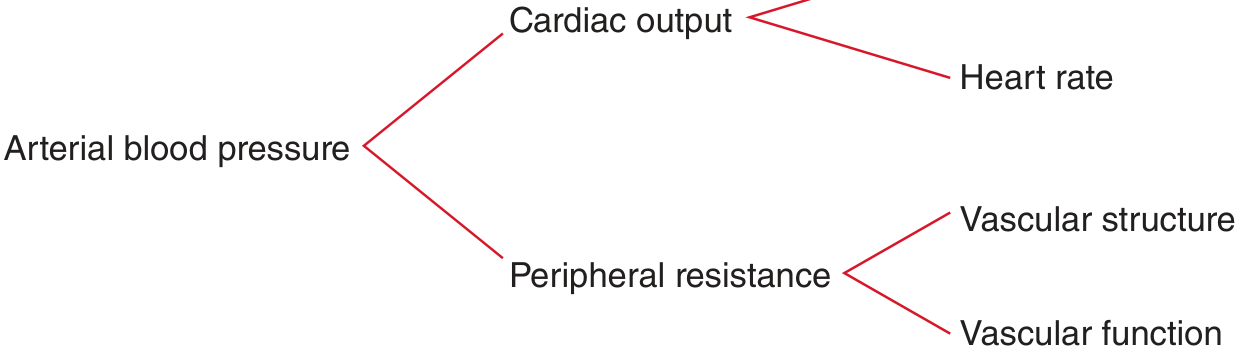
Key Regulatory Systems
- Renin released from juxtaglomerular cells of the kidney in response to: decreased renal perfusion pressure, decreased Na+ delivery to macula densa, beta-adrenergic stimulation
- Renin cleaves angiotensinogen (liver) → Angiotensin I
- ACE (lung endothelium) converts Ang I → Angiotensin II
- Ang II effects:
- Direct vasoconstriction (AT1 receptors on vessels) → increased TPR
- Stimulates aldosterone secretion (adrenal cortex) → Na+/water retention → increased CO
- Central thirst stimulation
- Sympathetic potentiation
- Renal tubular Na+ reabsorption (directly)
- RAAS is the primary chronic regulator of BP and volume
- Short-term, rapid BP regulation
- Norepinephrine → α1 receptors → vasoconstriction → increased TPR
- Norepinephrine → β1 receptors → increased HR and contractility → increased CO
- Epinephrine (adrenal medulla) → β2 > α1 at physiological levels
- Chronic SNS overactivity is a key mechanism in essential hypertension
- Arterial baroreceptors in carotid sinus (CN IX) and aortic arch (CN X)
- Detect stretch → inhibit medullary vasomotor centre → reduce SNS outflow
- In chronic hypertension: Baroreceptors are reset to a higher operating point - they "accept" high BP as normal and defend it
- Critical anaesthetic implication: Agents that blunt baroreflex (volatile anaesthetics, propofol) can cause precipitous hypotension; loss of this buffering mechanism also predisposes to hypertensive spikes with stimulation
- As BP rises → increased renal perfusion → natriuresis/diuresis → reduced volume → reduced CO
- The "infinite gain" mechanism - ultimately, only the kidney can set long-term BP
- Disrupted in CKD, high-salt diets, hyperaldosteronism
- Nitric Oxide (NO): Synthesised by eNOS from L-arginine in vascular endothelium → vascular smooth muscle relaxation → vasodilation. The most potent endogenous vasodilator
- Endothelin-1 (ET-1): Potent vasoconstrictor secreted by endothelium; acts on ETA receptors on vascular smooth muscle → sustained vasoconstriction
- Prostacyclin (PGI2): Vasodilator and platelet inhibitor from endothelium
- In hypertension: Decreased NO bioavailability + increased ET-1 → endothelial dysfunction → sustained vasoconstriction
- ANP (Atrial Natriuretic Peptide): Released from atria in response to stretch → natriuresis, vasodilation, inhibits RAAS/SNS
- BNP (Brain/B-type Natriuretic Peptide): Released from ventricles → same effects; used as biomarker of heart failure
- Impaired in chronic hypertension with LVH
B. Autoregulation of Cerebral Blood Flow - Critical Anaesthetic Concept
- CBF is maintained constant across a MAP range of 50-150 mmHg
- Below the Lower Limit of Autoregulation (LLA) (~MAP 50-60 mmHg): CBF falls (ischaemia)
- Above the upper limit (~MAP 150-160 mmHg): Breakthrough vasodilation, cerebral oedema (hypertensive encephalopathy)
- The entire autoregulation curve is shifted to the RIGHT
- LLA shifts from MAP ~50 to ~70-80 mmHg
- Upper limit also shifts - patients tolerate higher BP without oedema
- Critical implication: A "normal" MAP of 60 mmHg that is safe for a normotensive patient may be below the LLA for a chronically hypertensive patient → cerebral ischaemia
Landmark teaching from Miller's 10e (Neuroanaesthesia chapter): "Limiting the reduction in MAP to 30-35% from baseline seems appropriate" in hypertensive patients undergoing neurological procedures. A 25% reduction in MAP can bring both normotensive and hypertensive patients to the LLA.
- Long-term treatment partially restores the LLA toward normal
- ACE inhibitors shift the LLA left (toward lower pressures) acutely
- Restoration is incomplete even after 12 months in some patients (Miller's 10e)
C. Pathophysiology of Hypertension
Essential (Primary) Hypertension (~90-95% of cases)
- Abnormal renal sodium handling → expanded ECF volume → increased CO initially
- Autoregulation causes compensatory vasoconstriction → increased TPR
- Ultimately: high BP with high TPR (established hypertension)
- Increased renal sympathetic nerve activity → renin release, reduced natriuresis
- Augmented central sympathetic outflow (stress, obesity, OSA)
- Reduced baroreflex sensitivity
- Inappropriate RAAS activation despite volume expansion
- Aldosterone excess (primary or secondary)
- Angiotensin II-mediated vascular remodelling and oxidative stress
- Chronic pressure load → vascular hypertrophy → reduced lumen calibre → permanently elevated TPR
- Increased wall/lumen ratio
- Reduced vascular compliance → increased pulse wave velocity → isolated systolic hypertension in elderly
- Reduced NO production → impaired vasodilation
- Oxidative stress (superoxide inactivates NO)
- Impaired endothelium-dependent dilation
- Insulin promotes renal sodium retention and SNS activity
- Links hypertension to central obesity, dyslipidaemia, T2DM (metabolic syndrome)
- Heritability ~40-60%
- Polygenic: variants in genes for RAAS (ACE, AGT), sodium transporters (SLC12A3/Gitelman), endothelin, adrenergic receptors
- Rare monogenic forms (Liddle syndrome, Gordon syndrome) - high yield for viva
Viva Point: "What is Liddle Syndrome?" - Autosomal dominant gain-of-function mutation in epithelial sodium channel (ENaC) subunits → constitutively open channel → excessive Na+ reabsorption in cortical collecting duct → hypertension, hypokalaemia, metabolic alkalosis, LOW renin, LOW aldosterone. Treated with amiloride or triamterene (ENaC blockers), NOT spironolactone.
Secondary Hypertension (~5-10% of cases)
| Cause | Prevalence | Key Mechanism | Clue to Diagnosis |
|---|---|---|---|
| OSA | Most common (15-30% of hypertensives) | Intermittent hypoxia → SNS activation → RAAS activation | Obesity, snoring, daytime sleepiness |
| Primary Hyperaldosteronism (Conn's) | 5-10% of hypertension | Autonomous aldosterone excess → Na+ retention, K+ loss | Hypokalaemia (unprovoked), metabolic alkalosis, low renin |
| Renovascular HTN (RAS) | 1-5% | Reduced renal perfusion → excess renin → Ang II | Renal artery bruit, young female (FMD), refractory HTN |
| Chronic Kidney Disease | Common | Reduced natriuresis, RAAS activation | Elevated creatinine, proteinuria |
| Phaeochromocytoma | Rare (<0.5%) | Catecholamine excess | Paroxysmal HTN + headache + sweating + palpitations ("triad") |
| Cushing's Syndrome | Rare | Glucocorticoid excess → Na+ retention, SNS sensitisation | Central obesity, striae, buffalo hump, hyperglycaemia |
| Hypothyroidism | Common | Increased TPR (reduced cardiac output) | Cold intolerance, bradycardia, myxoedema |
| Hyperthyroidism | Common | Increased CO, HR | Heat intolerance, tachycardia, weight loss |
| Coarctation of Aorta | Rare | Mechanical obstruction + RAAS | BP differential arms vs legs, femoral pulses delayed/absent |
Anaesthetic Pearl: Phaeochromocytoma must be excluded before any surgery in a patient with paroxysmal hypertension + tachycardia + headache + diaphoresis. Undiagnosed phaeochromocytoma is one of the most dangerous anaesthetic situations - induction can trigger a hypertensive crisis and death.
Hypertensive Target Organ Damage
| Organ | Manifestations |
|---|---|
| Heart | LVH (concentric > eccentric), diastolic dysfunction, IHD, HF (HFpEF predominantly) |
| Brain | Ischaemic stroke, haemorrhagic stroke, lacunar infarcts, vascular dementia, hypertensive encephalopathy |
| Kidney | Nephrosclerosis, CKD, proteinuria, ESRD |
| Eye | Hypertensive retinopathy (Keith-Wagener-Barker grading), papilloedema |
| Vessels | Atherosclerosis (aorta, coronary, carotid, renal, peripheral), aortic aneurysm, aortic dissection |
4. CLASSIFICATION
A. ACC/AHA 2017 Classification (Used by Morgan & Mikhail, Barash)
| Category | Systolic (mmHg) | Diastolic (mmHg) | |
|---|---|---|---|
| Normal | <120 | AND | <80 |
| Elevated BP | 120-129 | AND | <80 |
| Stage 1 Hypertension | 130-139 | OR | 80-89 |
| Stage 2 Hypertension | ≥140 | OR | ≥90 |
| Hypertensive Crisis | >180 | AND/OR | >120 |
B. ISH/ESC/ESH 2020/2023 Classification (Traditional - Widely Used in India)
| Category | Systolic (mmHg) | Diastolic (mmHg) | |
|---|---|---|---|
| Optimal | <120 | AND | <80 |
| Normal | 120-129 | AND/OR | 80-84 |
| High Normal | 130-139 | AND/OR | 85-89 |
| Grade 1 (Mild) | 140-159 | AND/OR | 90-99 |
| Grade 2 (Moderate) | 160-179 | AND/OR | 100-109 |
| Grade 3 (Severe) | ≥180 | AND/OR | ≥110 |
| Isolated Systolic HTN | ≥140 | AND | <90 |
C. Hypertensive Crisis Classification
| Type | BP | Organ Damage | Time Frame | Management |
|---|---|---|---|---|
| Hypertensive Urgency | >180/120 mmHg | Absent | Hours to days | Oral agents; reduce over 24-48h |
| Hypertensive Emergency | >180/120 mmHg | Present | Minutes to hours | IV agents; reduce MAP by ≤25% in first hour |
- Brain: Hypertensive encephalopathy, haemorrhagic/ischaemic stroke, PRES
- Heart: Acute MI, acute pulmonary oedema, acute aortic dissection
- Kidney: Acute hypertensive nephrosclerosis (thrombotic microangiopathy)
- Eye: Papilloedema (Grade IV retinopathy)
- Obstetric: Eclampsia
HIGH-YIELD VIVA: "What is PRES?" - Posterior Reversible Encephalopathy Syndrome. Hypertension → failure of posterior cerebral autoregulation → vasogenic oedema in parieto-occipital regions. MRI: T2/FLAIR hyperintensity (white matter oedema) in posterior regions. Features: seizures, visual disturbances, encephalopathy, headache. Treatment: controlled BP reduction, seizure management. Reversible with BP control.
D. Based on Aetiology
| Type | Description |
|---|---|
| Primary (Essential) | ~90-95%; no identifiable cause; polygenic |
| Secondary | ~5-10%; identifiable cause; potentially curable |
| White Coat Hypertension | Elevated office BP; normal ambulatory/home BP; 15-25% prevalence |
| Masked Hypertension | Normal office BP; elevated ambulatory/home BP; same CVD risk as sustained HTN |
| Resistant Hypertension | Uncontrolled on ≥3 agents (including a diuretic) at maximal doses; OR controlled on ≥4 agents |
| Labile Hypertension | Wide BP variability; common in autonomic dysfunction |
5. ETIOLOGY AND RISK FACTORS
Risk Factors for Essential Hypertension
| Category | Factors |
|---|---|
| Non-modifiable | Age (>55 in men; >65 in women), male sex, family history, ethnicity (Black > White > Asian) |
| Modifiable - Lifestyle | High sodium intake, obesity, physical inactivity, excess alcohol, smoking, psychological stress |
| Metabolic | Diabetes, dyslipidaemia, insulin resistance, metabolic syndrome |
| Dietary | High sodium, low potassium, low calcium/magnesium intake |
| Sleep | OSA (most common secondary cause) |
| Medications | OCP, NSAIDs, decongestants (pseudoephedrine), glucocorticoids, ciclosporin, erythropoietin, cocaine |
Risk Stratification for Cardiovascular Events
- LVH (ECG strain pattern or echo-confirmed) - most important predictor of perioperative cardiac mortality
- Prior MI or revascularisation
- Stroke or TIA history
- CKD (eGFR <60 mL/min or proteinuria)
- Diabetes mellitus
- Age >65 years
- Active smoker
6. CLINICAL FEATURES
Symptoms
- Headache (classically occipital, present on waking - from cerebral oedema due to loss of nocturnal BP dipping)
- Epistaxis
- Visual disturbance (blurred vision, scotoma - from retinopathy)
- Nausea and vomiting (raised ICP in hypertensive encephalopathy)
- Chest pain, dyspnoea, orthopnoea (IHD, HF)
- Palpitations, syncope (arrhythmia - from LVH)
- Haematuria, frothy urine (nephropathy)
- Focal neurological deficits (stroke)
- Leg claudication (peripheral arterial disease)
- Neck pain, tearing back pain (aortic dissection - EMERGENCY)
Signs
General/Cardiovascular Examination
- BP elevated: Measure in both arms - difference >15 mmHg SBP suggests subclavian stenosis or aortic coarctation
- Pulse: May show bounding character (wide pulse pressure), slow-rising (aortic stenosis complication)
- JVP elevated (if CCF has developed)
- Apex beat displaced (left ventricular enlargement/hypertrophy)
- S4 (4th heart sound): Low-pitched, presystolic - classic sign of LVH and diastolic dysfunction - "atrial gallop" heard best with bell at apex
- Renal artery bruit (epigastric/flank): Suggests renovascular hypertension
Eye Examination (Keith-Wagener-Barker Grading of Hypertensive Retinopathy)
| Grade | Findings | Clinical Significance |
|---|---|---|
| Grade I | Silver/copper wiring (arteriolar narrowing) | Mild chronic HTN |
| Grade II | AV nipping/nicking (arteriovenous compression at crossings) | Moderate chronic HTN |
| Grade III | Flame haemorrhages, soft exudates (cotton wool spots) | Severe HTN, high CVD risk |
| Grade IV | Papilloedema | Hypertensive emergency - act now |
Exam Point: Grade III and IV retinopathy are associated with hypertensive emergency and mandate immediate IV antihypertensive therapy. Finding papilloedema preoperatively requires postponing surgery.
Features Suggesting Secondary Hypertension on Examination
| Finding | Suggests |
|---|---|
| Central obesity, striae, buffalo hump, moon face | Cushing's syndrome |
| Exophthalmos, goitre, tremor, tachycardia | Hyperthyroidism |
| Café-au-lait spots, neurofibromas | NF1 associated phaeochromocytoma |
| Radio-femoral delay, absent femoral pulses | Coarctation of aorta |
| Epigastric/renal bruit | Renovascular hypertension |
| Cushingoid features + hypokalaemia + low renin | Primary hyperaldosteronism |
7. DIAGNOSIS
Accurate Blood Pressure Measurement - Critical Skill
- Patient seated, arm at heart level, back supported, legs uncrossed
- Rest quietly for 5 minutes before measurement
- Appropriate cuff size: Bladder length 80% and width 40% of arm circumference; a small cuff on a large arm gives falsely high reading
- Average of 2+ readings, on 2+ occasions for diagnosis
- Measure in both arms at first visit
- Avoid caffeine, exercise, smoking for 30 minutes before
- Office/Clinic BP: Most widely used; highest; affected by white-coat effect
- ABPM (Ambulatory BP Monitoring - 24h): Gold standard; most predictive of outcomes; free of white-coat effect; identifies nocturnal non-dipping
- HBPM (Home BP Monitoring): Second best; practical; empowers patient self-management
Investigations
Mandatory for ALL Hypertensive Patients (Preoperatively)
| Investigation | Purpose |
|---|---|
| ECG (12-lead) | LVH (Sokolow-Lyon criteria: SV1 + RV5 or RV6 ≥35mm), strain pattern, ischaemia, arrhythmia |
| Urinalysis + Urine microalbumin | Nephropathy, proteinuria (target organ damage) |
| Serum creatinine + eGFR | Renal function, drug dosing, CKD staging |
| Serum electrolytes (Na, K) | Hypokalaemia (diuretics, Conn's), hyponatraemia |
| Fasting glucose/HbA1c | Concurrent diabetes, metabolic syndrome |
| Lipid profile | Cardiovascular risk stratification |
| FBC | Secondary causes (polycythaemia), anaemia |
Selective (Directed by Clinical Suspicion)
| Test | When Indicated |
|---|---|
| Echocardiography | ECG LVH, suspected diastolic dysfunction, dyspnoea |
| Renal Doppler USS | Suspected renovascular HTN (renal bruit, resistant HTN) |
| Plasma/Urine catecholamines or metanephrines | Suspected phaeochromocytoma (paroxysmal HTN, triad) |
| Aldosterone:Renin Ratio (ARR) | Suspected Conn's (unprovoked hypokalaemia, resistant HTN) |
| 24h Urine cortisol / Overnight dexamethasone suppression test | Suspected Cushing's |
| Thyroid function tests (TSH, fT4) | Suspected thyroid disease |
| Sleep study (polysomnography) | Suspected OSA |
| CT/MRA Aorta | Suspected coarctation |
| Carotid Doppler | Bruits, TIA, stroke history |
ECG Criteria for LVH
| Criterion | Threshold |
|---|---|
| Sokolow-Lyon: SV1 + RV5 or RV6 | ≥35 mm |
| Cornell voltage: RaVL + SV3 | >28 mm (men); >20 mm (women) |
| Left axis deviation | - |
| ST depression + T-wave inversion in V5-V6 (strain pattern) | High risk marker |
Exam Point: LVH strain pattern on ECG suggests chronic ischaemic state and is an important predictor of perioperative cardiac mortality (Barash 9e). These patients require more careful haemodynamic management.
8. MANAGEMENT
A. Non-Pharmacological (Lifestyle) Interventions
| Intervention | Expected SBP Reduction |
|---|---|
| DASH diet | 5 mmHg (with HTN); 2-3 mmHg (without HTN) |
| Weight loss | ~1 mmHg per kg of body weight reduction |
| Sodium restriction (<2.3g/day) | 5-6 mmHg |
| Aerobic exercise (150 min/week) | 4-9 mmHg |
| Potassium supplementation | 4-5 mmHg |
| DASH + Na restriction (DASH-Sodium) | Up to 11 mmHg |
| Alcohol restriction (<2 drinks/day men; <1 women) | 3-4 mmHg |
| Smoking cessation | Indirect benefit (no direct BP reduction, but major CVD benefit) |
B. Pharmacological Management
Drug Selection Principles (First-line Agents for Uncomplicated HTN)
- Thiazide diuretics (chlorthalidone, hydrochlorothiazide, indapamide)
- ACE inhibitors (ramipril, enalapril, perindopril, lisinopril)
- Angiotensin Receptor Blockers/ARBs (losartan, telmisartan, valsartan)
- Calcium Channel Blockers/CCBs (amlodipine, nifedipine - dihydropyridine; diltiazem, verapamil - non-dihydropyridine)
- Beta-blockers (atenolol, metoprolol, bisoprolol, carvedilol, labetalol) - second-line for uncomplicated HTN; first-line with IHD, HF, post-MI
Compelling Indications for Specific Drug Classes
| Condition | Preferred Drug(s) |
|---|---|
| IHD (angina, post-MI) | Beta-blockers + ACEi/ARB + CCB |
| Heart Failure with reduced EF (HFrEF) | ACEi/ARB + Beta-blocker + MRA (spironolactone) + SGLT-2i |
| CKD + Proteinuria | ACEi or ARB (renoprotective) |
| Diabetes | ACEi or ARB; SGLT-2i (cardiac + renal protection) |
| Stroke prevention | Any effective agent; thiazide + ACEi (PROGRESS trial) |
| Pregnancy | Methyldopa, labetalol, nifedipine (safe); ACEi/ARBs contraindicated |
| Aortic dissection/acute | IV labetalol or esmolol + nitroprusside |
| Phaeochromocytoma | Alpha-blocker first (phenoxybenzamine), then beta-blocker |
| Primary Hyperaldosteronism (Conn's) | Spironolactone (MRA) or surgical adrenalectomy |
| Isolated Systolic HTN (elderly) | Thiazide or dihydropyridine CCB |
| Hypertensive emergency | IV agents (see Section 8E) |
| OSA-associated HTN | CPAP + antihypertensives (RAAS agents, CCB) |
CRITICAL EXAM POINT: In phaeochromocytoma, alpha blockade MUST precede beta blockade. If a beta-blocker is given first (before alpha blockade), unopposed alpha-adrenergic vasoconstriction from circulating catecholamines causes a hypertensive crisis. The order is always: phenoxybenzamine (or prazosin) first → achieve adequate alpha blockade for 7-14 days → THEN add propranolol (beta-blocker) to control tachycardia.
Treatment Targets (Harrison's 22e / ACC/AHA 2017)
| Patient Group | Target SBP |
|---|---|
| Most adults | <130 mmHg (ACC/AHA 2017); <140 mmHg (ISH/ESC 2020) |
| Adults ≥65 years (robust, few comorbidities) | <130 mmHg (SPRINT data) |
| Adults ≥80 years | <150 mmHg (HYVET) |
| CKD with proteinuria | <130 mmHg |
| Diabetes | <130 mmHg |
| Post-stroke/TIA | <130 mmHg |
| Elderly with cognitive impairment, falls risk | Individualise; avoid orthostatic hypotension |
C. Management of Hypertensive Emergency
IV Drugs for Hypertensive Emergency
| Drug | Dose | Onset | Duration | Key Use |
|---|---|---|---|---|
| Sodium Nitroprusside | 0.25-10 mcg/kg/min IV infusion | Seconds | 1-2 min | Most acute crises; post-cardiac surgery; caution CKD (cyanide toxicity) |
| Nitroglycerin | 5-100 mcg/min IV infusion | 2-5 min | 3-5 min | Cardiac ischaemia, post-CABG; primarily venodilator |
| Labetalol | 20-80 mg IV bolus q10min; or 0.5-2 mg/min infusion | 5-10 min | 3-6 h | Most emergencies; aortic dissection; eclampsia (avoid in acute HF, bronchospasm) |
| Esmolol | 500 mcg/kg load, then 50-300 mcg/kg/min | 60 sec | 10-30 min | Aortic dissection (with nitroprusside); peri-intubation; perioperative |
| Hydralazine | 10-20 mg IV q20-30 min | 10-20 min | 1-4 h | Eclampsia; unreliable and unpredictable |
| Nicardipine | 5-15 mg/hr IV infusion | 5-15 min | 15-30 min | Ischaemic stroke; post-neurosurgery; post-carotid endarterectomy |
| Clevidipine | 1-2 mg/hr, titrate up to 32 mg/hr | 2-4 min | 5-15 min | Rapid titratable CCB; cardiac surgery |
| Fenoldopam | 0.1-0.3 mcg/kg/min | 5 min | 30 min | Renal-protective; increases renal blood flow |
| Phentolamine | 5-10 mg IV bolus | 1-2 min | 10-30 min | Phaeochromocytoma crisis; cocaine-induced HTN |
9. ANAESTHETIC CONSIDERATIONS
A. Preoperative Assessment and Optimisation
History (Hypertension-Focused)
- Duration and severity of hypertension
- Current antihypertensive medications and compliance
- Home BP diary readings (more reliable than one-off clinic reading)
- History of end-organ damage: chest pain, dyspnoea, TIA/stroke, renal disease
- Symptoms suggesting secondary hypertension (paroxysmal attacks, OSA, Cushing's features)
- History of previous haemodynamic instability under anaesthesia
- Concurrent risk factors: smoking, diabetes, dyslipidaemia
Physical Examination
- BP in both arms (BP difference >15 mmHg - investigate)
- BP supine and standing (assess orthostatic hypotension - especially on diuretics, alpha-blockers)
- Heart rate and rhythm
- Apex beat position and character
- Auscultation: S4, murmurs, basal crepitations
- Optic fundi (if possible)
- Peripheral pulses and bruits
- Signs of fluid overload or volume depletion
The Key Perioperative Decision: To Postpone or Proceed?
- Systolic BP <180 mmHg and diastolic BP <110 mmHg: NOT associated with increased perioperative risk on its own
- Therefore: Proceed with elective surgery if BP <180/110 mmHg
- Secondary care perioperative teams should accept referrals if:
- Clinic BP <160/100 mmHg OR
- Ambulatory/home BP <155/95 mmHg in past 12 months
- If patient attends pre-assessment without documented normotension from GP, they may proceed to elective surgery if:
- Clinic BP <180/120 mmHg OR
- Home BP <175/115 mmHg
- Postpone if: BP ≥180/120 mmHg (hypertensive crisis) at pre-assessment, especially if end-organ damage signs present
- Delay elective surgery if SBP >180 mmHg or DBP >110 mmHg
- NO benefit to delay has been proven for BP below this threshold
- Is there end-organ damage (LVH strain, retinopathy grade III/IV, creatinine elevation, proteinuria)?
- Is surgery urgent or time-critical?
- Is the elevated BP likely situational (white-coat effect, pain, anxiety)?
- Have antihypertensive medications been taken today?
HIGH-YIELD EXAM POINT: "Systolic blood pressures below 180 mm Hg and diastolic pressures below 110 mm Hg have not been associated with increased perioperative risks." (Morgan & Mikhail 7e, p.713). This is the single most important threshold to know.
Preoperative Antihypertensive Medication Management
| Drug Class | Recommendation | Rationale |
|---|---|---|
| Beta-blockers | CONTINUE (never abruptly stop) | Sudden withdrawal → rebound tachycardia, hypertension, MI risk. Continue on morning of surgery |
| Calcium channel blockers | CONTINUE | Effective intraoperative BP control; safe with anaesthetics |
| Thiazide diuretics | CONTINUE | Check K+ (hypokalaemia common); hold if volume-depleted |
| Alpha-2 agonists (clonidine, methyldopa) | CONTINUE | Abrupt withdrawal → rebound hypertension (even more severe); clonidine withdrawal dangerous |
| ACE Inhibitors (ACEi) | CONTROVERSIAL - Hold 24h before | See below |
| ARBs | CONTROVERSIAL - Hold 24h before | See below |
| Alpha-1 blockers (prazosin, doxazosin) | CONTINUE | Good perioperative BP control; prepare for hypotension on induction |
The ACEi/ARB Controversy - Critical Exam Topic
- ACEi/ARBs block the RAAS - the body's primary defence against anaesthesia-induced hypotension
- Under general anaesthesia, CO falls + SVR falls → RAAS activation is the compensatory response
- ACEi/ARBs blunt this response → severe, refractory intraoperative hypotension (vasoplegic shock)
- This hypotension is often refractory to vasopressors (phenylephrine, ephedrine) and may require vasopressin
- Miller's 10e: "Administration of these medications within 24 hours before surgery is associated with increased risks of intraoperative hypotension"
- Abrupt discontinuation → rebound hypertension postoperatively (rebound RAAS activation)
- Failure to resume ACEi/ARBs postoperatively associated with adverse cardiovascular outcomes (Miller's 10e)
- May be cardioprotective (anti-ischaemic, antiremodelling)
- Withholding reduced intraoperative hypotension (36.4% vs 48.4%; RR=0.73, p=0.001)
- Withholding reduced vasopressor use (37.5% vs 51.2%)
- Withholding increased postoperative hypertension (27.8% vs 20.2%)
- No difference in MACE, AKI, mortality
- Evidence certainty: Very low (GRADE)
- Withhold ACEi/ARB for 24h before surgery (most anaesthetic guidelines including Miller's, 2026 AAGBI/BIHS)
- Restart as soon as patient is haemodynamically stable postoperatively (typically within 24-48h)
- Exception: Continue if patient has specific indications where the drug is critical (HFrEF, post-MI, CKD with proteinuria) - weigh risks carefully
- If ACEi/ARB was continued: warn the surgical team; have vasopressin available; treat with vasopressin 1-2 units IV bolus for refractory hypotension
Critical Exam Point: "Failure to resume ACEI and ARB therapy postoperatively is itself associated with adverse outcomes." (Miller's 10e). Withholding is a bridge strategy, not permanent cessation.
B. Induction of Anaesthesia
"Regardless of the level of preoperative blood pressure control, many patients with hypertension display an accentuated hypotensive response to induction of anaesthesia, followed by an exaggerated hypertensive response to intubation." (Morgan & Mikhail 7e)
- Phase 1 - Hypotension:
- Anaesthetic agents cause vasodilation and myocardial depression
- Volume depletion (from chronic diuretic use, poor oral intake)
- Loss of sympathetic tone (sympatholytic agents)
- Blunted baroreflex (resetting in chronic HTN)
- Phase 2 - Hypertension (laryngoscopy/intubation):
- Laryngoscopy stimulates SNS → massive catecholamine release
- Exaggerated response in hypertensives due to reset autoregulation and hyperresponsive SNS
- Peak at 30-60 seconds after laryngoscopy; resolves within 5 minutes
- Most dangerous in patients with IHD, aortic aneurysm, LVH
Strategies to Attenuate Pressor Response to Laryngoscopy
| Technique | Drug/Dose | Mechanism |
|---|---|---|
| Deepen anaesthesia | Increase volatile agent; target 1.5-2 MAC | Dose-dependent SNS suppression |
| Opioid blunting | Fentanyl 2.5-5 mcg/kg; alfentanil 15-25 mcg/kg; sufentanil 0.5-1 mcg/kg; remifentanil 0.5-1 mcg/kg | SNS suppression, reduced catecholamine response |
| Lignocaine/Lidocaine | 1.5 mg/kg IV (3 min before intubation) or topical/intratracheal | Blunts airway reflexes; reduces sympathetic response |
| Beta-blockade | Esmolol 0.3-1.5 mg/kg; metoprolol 1-5 mg; labetalol 5-20 mg | Blocks catecholamine-mediated tachycardia and hypertension |
| Alpha-2 agonist | Dexmedetomidine 0.5-1 mcg/kg over 10 min; clonidine 2-4 mcg/kg | Central sympatholysis; reduces SNS outflow |
| Vasodilators | Nicardipine 1-2 mg IV bolus; GTN patch/spray | Direct vasodilation before stimulation |
| Magnesium | MgSO4 30-60 mg/kg IV before intubation | NMDA antagonism; reduces catecholamine response |
Induction Agents
| Agent | Haemodynamic Effect | Use in Hypertensives |
|---|---|---|
| Propofol | Vasodilation + mild cardiac depression; lowers BP | Most commonly used; watch for profound hypotension in volume-depleted patients |
| Thiopentone | Vasodilation + cardiac depression; similar to propofol | Acceptable; less used now |
| Etomidate | Minimal cardiovascular effect | Preferred in haemodynamically compromised hypertensives (severe LVH, poor EF) |
| Ketamine | Sympathomimetic → increases HR, BP, CO | Avoid as sole agent in uncontrolled hypertension; use with propofol/midazolam to blunt effect |
| Benzodiazepines | Mild vasodilation | Adjunct; useful for anxiolysis (reduces white-coat component) |
| Dexmedetomidine | Alpha-2 agonist → reduces HR, SNS; mild BP reduction | Excellent adjunct; reduces requirement for other agents |
C. Maintenance of Anaesthesia
- Maintain within 20% of preoperative baseline (Morgan & Mikhail 7e)
- For chronic hypertensives: do NOT target "normal" BP (MAP 65-70 mmHg) - this may be below their shifted LLA
- Aim for MAP 70-90 mmHg (or patient-specific baseline)
- For neurosurgery: limit MAP reduction to ≤30-35% from baseline (Miller's Neuroanaesthesia)
Volatile Agents
- All volatile agents (sevoflurane, isoflurane, desflurane) cause dose-dependent vasodilation and cardiac depression → reduce BP
- Desflurane can cause a sympathetic surge on rapid concentration increases → acute hypertension and tachycardia - avoid rapid increase in CVS-compromised patients
- At 1-1.5 MAC, most volatiles adequately control hypertension from routine surgical stimulation
Regional Anaesthesia Considerations
- Neuraxial blockade (spinal/epidural): More profound hypotension in hypertensives due to:
- High baseline SNS tone - when blocked, BP drops significantly
- Volume depletion (diuretics)
- Blunted compensatory responses (ACEi/ARBs)
- Ensure adequate preloading before neuraxial block
- Have vasopressors immediately available (phenylephrine 50-100 mcg boluses or ephedrine 6 mg boluses for bradycardia)
- Epidural anaesthesia preferable to single-shot spinal for major procedures (more controllable block level and haemodynamics)
Monitoring
- Standard: ECG (ST analysis - lead II + V5), SpO2, NIBP, capnography, temperature
- Invasive arterial monitoring (A-line): For:
- Wide BP swings expected
- Major vascular or cardiac surgery
- Severe/uncontrolled hypertension
- Patients on multiple antihypertensives
- Need for frequent ABG
- Urinary catheter: If renal impairment + procedure >2 hours
- TEE or TTE: If suspected diastolic dysfunction or severe LVH
Intraoperative Hypertension - Management
- Insufficient anaesthetic depth (most common - check ETAA, TOF, BIS)
- Surgical stimulus without adequate analgesia
- Intubation/airway stimulation - pressor response
- Bladder distension (autonomic stimulus)
- Hypoxia or hypercarbia (adrenergic surge)
- Inadequate antiemetic (nausea → Valsalva)
- Rebound from omitted antihypertensives
- Phaeochromocytoma (must be in differential for unexplained severe intraoperative hypertension)
- Aortic cross-clamping
- Malignant hyperthermia (late sign)
- Elevated ICP
- Drug interactions (e.g., ketamine given without adequate depth)
- Rule out and treat correctable causes (deepen anaesthesia, analgesia, check airway)
- Labetalol 5-20 mg IV (alpha + beta blockade; ideal for most situations)
- Esmolol 0.5-1 mg/kg bolus (rapid beta blockade for tachycardia + hypertension)
- GTN/Nitroglycerin 100-200 mcg IV bolus (primarily venodilator; useful in IHD)
- Nicardipine 1-2 mg IV bolus (CCB; arterial dilation; excellent for neurosurgery)
- Hydralazine 5-10 mg IV (slow onset 10-20 min; unpredictable; use cautiously)
- Sodium nitroprusside infusion (for severe refractory hypertension; rapid, titratable)
- Phentolamine 2-5 mg IV (if phaeochromocytoma suspected)
Intraoperative Hypotension - Management
- Vasopressors:
- Phenylephrine 50-100 mcg IV bolus (pure alpha-1 agonist; increases SVR; preferred when BP low without bradycardia)
- Ephedrine 6 mg IV bolus (mixed alpha/beta; increases HR + BP; useful when bradycardia present)
- Vasopressin 0.5-2 units IV bolus (for refractory vasodilation especially after ACEi/ARBs; acts on V1 receptors independent of RAAS)
- Norepinephrine infusion (0.01-0.5 mcg/kg/min) for sustained hypotension
- Intravenous fluid bolus (250-500 mL balanced crystalloid) if hypovolaemic
- Reduce anaesthetic depth if appropriate
D. Postoperative Care
Causes of Postoperative Hypertension (Miller's 10e - Cardiac Surgery ICU)
- Pain and anxiety (most common)
- Withdrawal of antihypertensives (rebound RAAS/SNS)
- Hypothermia → vasoconstriction → increased TPR
- Hypoxia or hypercarbia → sympathetic activation
- Bladder distension
- Fluid overload
- Emergence agitation
- Nausea → Valsalva → increased BP
- Increased myocardial work + O2 demand → MI
- Cardiac rhythm disturbances
- Cerebrovascular accidents (stroke)
- Bleeding from anastomoses or surgical sites
- Suture line disruption (carotid, aortic, intracranial anastomoses)
- Impaired wound healing
- Treat correctable causes first (pain, hypothermia, bladder)
- Resume preoperative antihypertensives as soon as patient is taking orally
- IV labetalol, esmolol, nicardipine, or GTN for acute control
- Restart ACEi/ARBs within 24-48h once haemodynamically stable
10. DRUGS
A. BETA-BLOCKERS (Perioperatively Critical)
| Feature | Details |
|---|---|
| Examples | Atenolol, metoprolol, bisoprolol (β1 selective); propranolol, carvedilol (non-selective); labetalol (α1 + β); esmolol (ultra-short β1) |
| Mechanism | Competitive antagonism at β-adrenergic receptors → reduced HR, contractility, CO; renin release inhibited |
| Perioperative role | Never stop abruptly; continue perioperatively; esmolol for acute control |
| Esmolol dose | 500 mcg/kg IV load over 1 min; maintenance 50-300 mcg/kg/min infusion; t½ = 9 min |
| Labetalol dose | 20-80 mg IV q10min; or 0.5-2 mg/min infusion; combined α:β = 1:7 IV (vs 1:3 oral) |
| Adverse effects | Bradycardia, heart block, bronchospasm (non-selective), masking hypoglycaemia, cold extremities |
| Anaesthetic relevance | Patients on chronic beta-blockers should continue perioperatively - abrupt withdrawal increases risk of MI and death |
POISE Trial Warning: In POISE-1, high-dose metoprolol started the night before surgery in beta-blocker naive patients reduced MI but increased stroke and overall mortality. Conclusion: Chronic beta-blockers should be continued; DO NOT START high-dose beta-blockers acutely before surgery in beta-blocker naive patients.
B. ACE INHIBITORS
| Feature | Details |
|---|---|
| Examples | Ramipril, enalapril, lisinopril, perindopril, captopril |
| Mechanism | Inhibit ACE → prevent Ang I → Ang II conversion → reduced Ang II → vasodilation (AT1 blockade) + reduced aldosterone → reduced Na/water retention. Also prevent bradykinin breakdown → vasodilation (and dry cough) |
| Perioperative relevance | Hold 24h before surgery (intraoperative hypotension risk); restart when haemodynamically stable postop |
| Intraoperative hypotension with ACEi: | Refractory to conventional vasopressors; treat with vasopressin (RAAS-independent mechanism) |
| Adverse effects | Dry cough (10-15%; due to bradykinin accumulation), angioedema (rare but life-threatening; manage with adrenaline + C1-esterase inhibitor), hyperkalaemia, first-dose hypotension, renal impairment |
| Anaesthetic relevance of cough | Dry cough from ACEi can be mistaken for airway problem; switch to ARB if distressing |
| Contraindications | Bilateral renal artery stenosis, pregnancy (teratogenic), angioedema history, hyperkalaemia |
Airway Emergency with ACEi: ACEi-induced angioedema can cause life-threatening airway obstruction. Features: non-pitting oedema of lips, tongue, larynx; no urticaria (unlike anaphylaxis). Treatment: adrenaline + C1-inhibitor concentrate (Berinert) + fresh frozen plasma + icatibant (bradykinin B2 antagonist). Does NOT respond to adrenaline alone as reliably as IgE-mediated anaphylaxis.
C. ANGIOTENSIN RECEPTOR BLOCKERS (ARBs)
| Feature | Details |
|---|---|
| Examples | Losartan, telmisartan, valsartan, candesartan, irbesartan |
| Mechanism | Block AT1 receptors directly → similar effects to ACEi but without bradykinin accumulation → no dry cough |
| Advantage over ACEi | No cough; lower angioedema risk (but can still occur) |
| Perioperative | Same as ACEi - hold 24h before; restart postop |
D. CALCIUM CHANNEL BLOCKERS (CCBs)
| Feature | Details |
|---|---|
| Dihydropyridines (DHP) | Amlodipine, nifedipine, nicardipine, clevidipine, felodipine |
| Mechanism (DHP) | Block L-type Ca²⁺ channels in vascular smooth muscle >> cardiac tissue → peripheral vasodilation; minimal cardiac depression |
| Non-DHPs | Diltiazem (benzothiazepine), Verapamil (phenylalkylamine) |
| Mechanism (non-DHP) | Block L-type channels in cardiac > vascular tissue → reduced HR, AV conduction, contractility + some vasodilation |
| Perioperative relevance | Continue perioperatively; additive effects with volatile agents and propofol (hypotension risk) |
| Nicardipine IV | 5-15 mg/hr infusion; onset 5-15 min; excellent for perioperative and neurological hypertension |
| Clevidipine IV | 1-32 mg/hr; t½ ~1 min (esterase-metabolised); ultra-short; ideal for cardiac surgery |
| Interactions | Verapamil/diltiazem + beta-blockers → profound bradycardia/heart block - use with great caution |
E. SODIUM NITROPRUSSIDE (SNP)
| Feature | Details |
|---|---|
| Mechanism | Donates NO → activates guanylyl cyclase → increases cGMP → vascular smooth muscle relaxation → balanced arteriovenous dilation |
| Dose | 0.25-10 mcg/kg/min IV (start low; avoid prolonged high doses) |
| Onset/Duration | Seconds / 1-2 min |
| Advantages | Most potent titratable vasodilator; immediate onset/offset; reliable |
| Adverse effects | Cyanide toxicity (SNP → CN⁻ ions); thiocyanate toxicity (CN⁻ is metabolised to thiocyanate in liver; accumulates in renal failure); coronary steal (theoretical); reflex tachycardia; rebound hypertension on abrupt cessation; increases ICP (vasodilatation → venous pooling → increased CBV) |
| Cyanide toxicity features | Tachycardia, metabolic lactic acidosis, altered consciousness, bright red venous blood (cannot use O2); treat with sodium thiosulphate or hydroxocobalamin |
| Anaesthetic relevance | Protects cyanide-free light; use only as short-term infusion; contraindicated in severe hepatic/renal failure; increases ICP - avoid in neurosurgical patients unless essential |
F. HYDRALAZINE
| Feature | Details |
|---|---|
| Mechanism | Direct arteriolar vasodilator; exact mechanism unclear (possibly involves NO pathway); reduces TPR |
| Dose | IV: 5-20 mg bolus q20-30 min (slow onset); oral: 25-100 mg BD-TDS |
| Onset | 10-20 min IV; unpredictable and variable |
| Adverse effects | Reflex tachycardia (compensatory SNS), fluid retention, lupus-like syndrome (high dose, prolonged: anti-histone antibodies, DRESS), headache |
| Anaesthetic relevance | Used in eclampsia (pregnancy-safe); unreliable as perioperative agent due to slow, unpredictable onset; reflex tachycardia worsens myocardial ischaemia |
G. CLONIDINE (Alpha-2 Agonist)
| Feature | Details |
|---|---|
| Mechanism | Stimulates presynaptic α2 receptors in nucleus tractus solitarius/locus coeruleus → reduced central SNS outflow → decreased HR, BP, norepinephrine release |
| Oral dose | 75-300 mcg BD-TDS |
| Anaesthetic dose | 2-4 mcg/kg IV or oral premedication |
| Advantages | Reduces intraoperative anaesthetic requirements (MAC-sparing); sedation; analgesia; reduces pressor response to intubation; treats rebound hypertension |
| Critical Warning | Abrupt withdrawal causes severe rebound hypertension, tachycardia, diaphoresis - potentially life-threatening. Always continue perioperatively |
| IV for acute HTN | Clonidine 150-300 mcg IV over 5-10 min |
| Anaesthetic relevance | Excellent premedication for hypertensive patients; reduces intraoperative BP lability |
H. GLYCERYL TRINITRATE (GTN/Nitroglycerin)
| Feature | Details |
|---|---|
| Mechanism | NO donor (primarily) → cGMP-mediated smooth muscle relaxation; predominantly venodilator at low doses; arterial dilation at higher doses |
| Dose | 5-100 mcg/min IV infusion; 100-200 mcg IV bolus for acute use |
| Key indications | Post-CABG hypertension; IHD with hypertension; acute pulmonary oedema |
| Adverse effects | Headache, reflex tachycardia, tolerance (hours), methaemoglobinaemia (high doses, prolonged), hypotension |
| Anaesthetic relevance | First choice post-coronary revascularisation (coronary dilator effect); less reliable as antihypertensive (primarily venodilatation); tachyphylaxis develops rapidly |
11. SCORES, FORMULAE, AND NUMERICAL VALUES
Key BP Numerical Values
| Parameter | Value | Source/Significance |
|---|---|---|
| Normal BP | <120/<80 mmHg | ACC/AHA 2017 |
| Elevated BP | 120-129/<80 mmHg | Pre-hypertension |
| Stage 1 HTN (ACC/AHA) | 130-139 / 80-89 mmHg | ACC/AHA 2017 |
| Stage 2 HTN (ACC/AHA) | ≥140 / ≥90 mmHg | ACC/AHA 2017; ISH 2020 |
| Grade 1 (ISH/ESC) | 140-159 / 90-99 mmHg | ISH 2020; ESC 2023 |
| Grade 2 (ISH/ESC) | 160-179 / 100-109 mmHg | - |
| Grade 3 (ISH/ESC) | ≥180 / ≥110 mmHg | - |
| Hypertensive crisis | >180/>120 mmHg | - |
| Surgical postponement threshold (old) | >180 systolic OR >110 diastolic | Multiple guidelines |
| AAGBI 2026 - accept for surgery (clinic BP) | <160/100 mmHg | 2026 AAGBI/BIHS |
| AAGBI 2026 - proceed without documentation (clinic) | <180/120 mmHg | 2026 AAGBI/BIHS |
| ABPM hypertension threshold | >130/80 mmHg | ACC/AHA; ≥130/>80 ISH |
| Home BP hypertension threshold | >135/85 mmHg | ISH 2020 |
| Maximum MAP reduction (perioperative) | ≤20-25% from baseline | Morgan & Mikhail |
| Maximum MAP reduction (neuroanaesthesia) | ≤30-35% from baseline | Miller's 10e |
Important Formulae
1. Mean Arterial Pressure (MAP)
2. Pulse Pressure (PP)
- Increased PP (>60 mmHg): Aortic regurgitation, aortic stiffness (elderly hypertension), hyperthyroidism, severe anaemia
- Decreased PP (<25 mmHg): Cardiac tamponade, severe aortic stenosis, cardiogenic shock
3. Cerebral Perfusion Pressure (CPP)
- Critical in neurosurgery: Hypertensive patients already have elevated MAP → must account for possible elevated ICP
- Antihypertensive overdose in a hypertensive patient with raised ICP → CPP below threshold → ischaemia
4. Rate-Pressure Product (RPP) - Myocardial O2 Demand
- RPP is a surrogate for myocardial O2 demand
- In hypertensive patients: elevated SBP + tachycardia → very high RPP → high ischaemia risk
- Target: RPP <12,000 intraoperatively in at-risk patients
5. The 20% Rule for Intraoperative BP Management
- Maintain BP within 20% of preoperative baseline MAP
- Example: Preoperative MAP = 110 mmHg → maintain MAP ≥88 mmHg; avoid exceeding 132 mmHg
Scoring Systems
Revised Cardiac Risk Index (RCRI/Lee Index)
| Factor | Score |
|---|---|
| High-risk surgery (intrathoracic, intraabdominal, suprainguinal vascular) | 1 |
| History of IHD | 1 |
| History of CCF | 1 |
| History of cerebrovascular disease | 1 |
| Insulin-dependent diabetes | 1 |
| Preoperative creatinine >2 mg/dL | 1 |
| Score | MACE Risk |
|---|---|
| 0 | 0.4% |
| 1 | 0.9% |
| 2 | 6.6% |
| ≥3 | 11% |
Keith-Wagener-Barker Grading (Hypertensive Retinopathy)
| Grade | Feature | Significance |
|---|---|---|
| I | Arteriolar narrowing, silver wiring | Mild chronic HTN |
| II | AV nicking (Salus sign) | Moderate chronic HTN |
| III | Flame haemorrhages, cotton wool spots, hard exudates | Severe HTN; high CVD risk; postpone elective surgery |
| IV | Papilloedema | Hypertensive emergency; immediate IV treatment |
12. GUIDELINES
1. 2026 AAGBI/BIHS Updated Guidelines - Most Current (PMID: 41532177)
- Accept referrals if clinic BP <160/100 mmHg or home/ABPM <155/95 mmHg (documented in past 12 months)
- If no prior BP documentation: proceed if clinic BP <180/120 mmHg or home BP <175/115 mmHg
- Covers adults having planned surgery (excludes cardiothoracic, obstetric, endocrine)
- Covers perioperative period: decision to operate → 30 days post-surgery
- Emphasises home/ambulatory BP over single clinic measurement
- Stresses communication between primary care, surgical team, and patient
2. ACC/AHA 2017 Guideline for High Blood Pressure
- Redefines hypertension as ≥130/80 mmHg
- First-line: lifestyle + thiazide/ACEi/ARB/CCB
- Target <130/80 mmHg for most adults
- Beta-blockers: second-line for uncomplicated HTN (preferred with IHD, HF, post-MI)
3. ESC/ESH 2023 Guidelines
- Maintain ISH/traditional threshold of 140/90 mmHg for diagnosis
- Target <140/90 mmHg (general); <130/80 mmHg if tolerated in younger patients
- Out-of-office BP (ABPM/HBPM) recommended to confirm diagnosis
4. ISH 2020 Global Hypertension Practice Guidelines
- "Essential" target <130/80 mmHg (ideal); minimum target <140/90 mmHg (basic)
- Applicable to resource-limited settings globally
- Emphasises thiazide, CCB, ACEi/ARB as first-line
5. POISE Trial (2008) - Beta-Blockers
- 8,351 beta-blocker naive patients randomised to high-dose metoprolol vs placebo starting night before surgery
- Metoprolol: reduced MI (4.2% vs 5.7%) but increased stroke (1.0% vs 0.5%) and total mortality (3.1% vs 2.3%)
- Conclusion: Do NOT start high-dose beta-blockers acutely before surgery in naive patients. Continue pre-existing therapy.
6. SPRINT Trial (2015)
- 9,361 adults with SBP ≥130 mmHg + cardiovascular risk
- Intensive target (SBP <120 mmHg) vs standard (SBP <140 mmHg)
- Intensive group: 25% reduction in cardiovascular events; 27% reduction in mortality
- But: More adverse events (hypotension, syncope, AKI, electrolyte disturbances)
- Note: SPRINT excluded diabetics, stroke patients - results not universally applicable
7. 2025 ACEI/ARB Meta-Analysis (PMID: 41017370) - New Evidence
- 14 RCTs, 4,063 patients
- Withholding vs continuing ACEi/ARBs before noncardiac surgery
- Withholding reduces intraoperative hypotension (36.4% vs 48.4%) and vasopressor use
- But increases postoperative hypertension
- No mortality, MACE, or AKI difference
- Evidence certainty: very low - no definitive recommendation possible yet
13. IMPORTANT TABLES
Table 1: Antihypertensive Drug Perioperative Management Summary
| Drug Class | Continue? | Hold? | Timing | Concern if Abruptly Stopped | Concern if Continued |
|---|---|---|---|---|---|
| Beta-blockers | YES | Never abruptly | Continue morning of surgery | Rebound tachycardia, MI, angina | Bradycardia (manageable) |
| Calcium channel blockers | YES | No | Continue | Rebound vasospasm (rare) | Additive hypotension with GA |
| Thiazide diuretics | Usually yes | If hypokalaemia or hypovolaemia | Continue unless K+ low | Rebound fluid retention | Hypokalaemia, hypovolaemia |
| ACEi | HOLD 24h | 24h before surgery | Hold morning | Rebound hypertension postop | Severe intraoperative hypotension |
| ARBs | HOLD 24h | 24h before surgery | Hold morning | Rebound hypertension postop | Severe intraoperative hypotension |
| Alpha-2 agonists (clonidine) | YES | Never abruptly | Continue | Severe rebound hypertension | Sedation, bradycardia |
| Alpha-1 blockers | YES | No | Continue | Hypertension | Orthostatic hypotension |
| Spironolactone/MRA | Usually hold | Day of surgery | Hold | Rebound aldosterone | Hyperkalaemia (especially with AKI) |
| Loop diuretics | Hold if volume depleted | Day of surgery | Situational | Fluid overload | Hypovolaemia |
Table 2: Comparison of IV Antihypertensives for Perioperative Use
| Agent | Onset | Duration | Mechanism | Best For | Avoid When |
|---|---|---|---|---|---|
| Sodium nitroprusside | Seconds | 1-2 min | NO donor; balanced vasodilation | Most acute crises; post-cardiac surgery | CKD (cyanide accumulation); raised ICP |
| Nitroglycerin/GTN | 2-5 min | 3-5 min | NO donor; predominantly venodilator | Post-CABG; IHD with HTN | Hypovolaemia; right ventricular infarct |
| Labetalol | 5-10 min | 3-6 h | α1 + β blockade | Most emergencies; aortic dissection; eclampsia | Acute HF; bronchospasm; bradycardia |
| Esmolol | 60 sec | 10-30 min | β1 blockade | Periop; aortic dissection; pressor response to intubation | Bronchospasm; Bradycardia; HF with reduced EF |
| Nicardipine | 5-15 min | 15-30 min | DHP CCB | Neurosurgery; stroke; post-carotid | Tachycardia prone |
| Clevidipine | 2-4 min | 5-15 min | Ultra-short DHP CCB | Cardiac surgery; rapid titration | Egg/soya allergy (lipid emulsion) |
| Hydralazine | 10-20 min | 1-4 h | Direct arteriolar dilator | Eclampsia | IHD (reflex tachycardia); unpredictability |
| Fenoldopam | 5 min | 30 min | D1 agonist; arteriolar + renal vasodilation | Hypertensive emergency + AKI risk | Hypokalaemia (increases renin → aldosterone); glaucoma |
| Phentolamine | 1-2 min | 10-30 min | Non-selective alpha blockade | Phaeochromocytoma; cocaine-induced HTN | - |
Table 3: Causes of Intraoperative Hypertension - Mnemonic "PHASED"
| Letter | Cause |
|---|---|
| P | Pain - inadequate analgesia; Phaeochromocytoma |
| H | Hypoxia; Hypercarbia; High ICP |
| A | Anaesthetic depth insufficient; Adrenergic drug effects |
| S | Surgical stimulation; Sympathetic stimulation (bladder, tourniquet) |
| E | Emergence from anaesthesia; Electrolyte/metabolic disturbance |
| D | Drug withdrawal (clonidine, beta-blocker rebound); Drug interaction |
Table 4: Secondary Hypertension - Diagnostic Summary
| Cause | Biochemical Clue | Imaging | Screening Test | Treatment |
|---|---|---|---|---|
| Primary Hyperaldosteronism | Hypokalemia; metabolic alkalosis; low renin; high aldosterone | Adrenal CT; adrenal venous sampling | Aldosterone:Renin Ratio >30 | Spironolactone; adrenalectomy (adenoma) |
| Phaeochromocytoma | High catecholamines; hyperglycaemia | CT/MRI abdomen/chest; MIBG scan | 24h urine metanephrines or plasma metanephrines | Alpha blockade → beta blockade → adrenalectomy |
| Renovascular HTN | Elevated creatinine post-ACEi | Renal Doppler; MRA/CTA | Captopril-stimulated renography | ACEi; renal artery angioplasty/stenting |
| Cushing's | Hyperglycaemia; hypokalemia | Pituitary MRI; adrenal CT | 24h urine cortisol; overnight 1mg dexamethasone suppression | Surgery; metyrapone; ketoconazole |
| OSA | Normal bloods (hypoxaemia on ABG nocturnally) | Polysomnography | STOP-BANG score | CPAP; weight loss; antihypertensives |
| CKD | Elevated creatinine; proteinuria; low eGFR | Renal USS; nuclear imaging | eGFR; urine PCR | ACEi/ARB; SGLT-2i; dietary modification |
14. FLOWCHARTS AND ALGORITHMS
Algorithm 1: Preoperative Assessment of Hypertensive Patient
PATIENT WITH KNOWN/SUSPECTED HYPERTENSION
↓
ACCURATE BP MEASUREMENT
(Bilateral arms; seated x5 min rest)
↓
BP <160/100 mmHg? (2026 AAGBI threshold for GP referral acceptance)
/ \
YES NO
↓ ↓
Assess Is BP <180/120 mmHg?
end-organ / \
damage YES NO
↓ ↓ ↓
↓ Proceed POSTPONE
↓ (no prior elective surgery
↓ documented Treat and
↓ normal BP) re-evaluate
↓
IS THERE END-ORGAN DAMAGE?
(LVH strain, retinopathy III/IV, CKD, prior MI/stroke)
/ \
YES NO
↓ ↓
Cardiology Proceed if
referral BP <180/110 mmHg
Optimise (traditional threshold)
↓
MEDICATION REVIEW
Hold ACEi/ARBs 24h
Continue beta-blockers
Continue clonidine
Check K+ if on diuretics
↓
SCHEDULE AS FIRST MORNING CASE
(fasting minimised; less situational hypertension)
Algorithm 2: Management of Pressor Response to Laryngoscopy
HYPERTENSIVE PATIENT REQUIRES INTUBATION
↓
PRE-INDUCTION PREPARATION
- Optimise depth of anaesthesia (MAC >1.3)
- Pre-treat with chosen technique:
↓
Choose ONE or COMBINATION:
┌──────────────────────────────────────────────┐
│ Opioid: Fentanyl 2.5-5 mcg/kg (3 min before)│
│ Lignocaine: 1.5 mg/kg IV (3 min before) │
│ Esmolol: 0.5-1.5 mg/kg IV (2 min before) │
│ Labetalol: 5-20 mg IV (5-10 min before) │
│ Dexmedetomidine: 0.5-1 mcg/kg over 10 min │
└──────────────────────────────────────────────┘
↓
LARYNGOSCOPY → INTUBATE EXPEDITIOUSLY
(< 15 seconds if possible; video laryngoscope)
↓
BP/HR RESPONSE MONITORED
/ \
Acceptable BP/HR rise >20% from baseline
↓ ↓
Continue IMMEDIATE TREATMENT:
monitoring 1. Deepen anaesthesia
2. Esmolol 0.5 mg/kg IV
3. Nicardipine 1-2 mg IV
4. GTN 100 mcg IV bolus
5. Consider sodium
nitroprusside infusion
Algorithm 3: Intraoperative Hypotension in Hypertensive Patient on ACEi/ARBs
INTRAOPERATIVE HYPOTENSION (MAP <65 mmHg or >20% decrease)
↓
Is patient on ACEi/ARBs? (taken within 24h)
/ \
YES NO
↓ ↓
REFRACTORY Standard vasopressors
VASODILATION (Phenylephrine 50-100 mcg IV)
↓
FIRST: Rule out surgical bleeding, pneumothorax
↓
IV Fluid bolus 250-500 mL
↓
Phenylephrine/Ephedrine - may be INADEQUATE
↓
VASOPRESSIN 1-2 units IV bolus (RAAS-independent)
→ Most effective for ACEi/ARB-associated hypotension
↓
Vasopressin infusion 0.03-0.04 units/min if needed
↓
Norepinephrine infusion 0.05-0.5 mcg/kg/min
↓
Consider: Methylene blue (severe vasoplegic shock)
- 1.5-2 mg/kg IV over 20 min
- Inhibits guanylyl cyclase → reduces NO effect
Algorithm 4: Management of Hypertensive Emergency
BP >180/120 + SIGNS OF END-ORGAN DAMAGE
↓
IMMEDIATE IV ACCESS + MONITORING
(ICU/HDU; invasive arterial line; ECG; urine output)
↓
IDENTIFY THE ORGAN AT RISK:
┌────────────────────────────────────────────────┐
│ Neurological: Stroke/PRES/Encephalopathy │
│ Cardiac: ACS/Aortic Dissection/Acute HF │
│ Renal: Thrombotic microangiopathy │
│ Obstetric: Eclampsia │
└────────────────────────────────────────────────┘
↓
TARGET: Reduce MAP by MAX 25% in FIRST HOUR
(Exception: Aortic dissection - reduce SBP to
<120 mmHg within 20 min)
↓
CHOOSE AGENT BASED ON ORGAN AT RISK:
• Neurological: Nicardipine or Labetalol
• Cardiac/IHD: Nitroglycerin ± Labetalol
• Aortic dissection: Esmolol + Nitroprusside
• Acute HF/Pulm oedema: Nitroglycerin + Furosemide
• Eclampsia: IV Labetalol or Hydralazine + MgSO4
• Phaeochromocytoma: Phentolamine
↓
HOURS 2-6: Reduce to 160/100 mmHg
↓
HOURS 6-24: Gradually normalise
↓
TRANSITION to oral antihypertensives
15. FREQUENTLY ASKED MD VIVA QUESTIONS
Short Viva Questions
Long Viva Questions
- This BP (170/105) is Grade 2/Stage 2 but below the 180/110 threshold → proceed with surgery (no absolute contraindication)
- Investigations: ECG (LVH? Strain pattern?), electrolytes (K+ with diuretics?), creatinine/eGFR, urinalysis, blood glucose, lipid profile, echocardiography if LVH on ECG
- Medication: Continue atenolol (morning of surgery); Continue amlodipine; Hold ramipril 24h before (ACEi - hypotension risk)
- Remind patient to take atenolol and amlodipine with sip of water on morning of surgery
- Ensure adequate hydration preoperatively
- Monitoring: ECG with ST analysis (lead II + V5), SpO2, NIBP, capnography; consider invasive arterial monitoring given labile BP history and major abdominal surgery
- Urinary catheter (major surgery >2h, renal risk assessment)
- Maintain MAP within 20% of preoperative baseline (baseline MAP = 127 mmHg; maintain ≥100 mmHg)
- Induction: Propofol slowly titrated (risk of hypotension - volume depleted, on antihypertensives); consider etomidate if haemodynamically unstable; pre-treat with fentanyl 3-4 mcg/kg + lignocaine 1.5 mg/kg before intubation to blunt pressor response
- Airway: Standard RSI for abdominal surgery; video laryngoscopy available
- Maintenance: Sevoflurane-based; multimodal analgesia (epidural if appropriate) - reduces stress response
- Fluids: Balanced crystalloid (Hartmann's); goal-directed fluid therapy with cardiac output monitoring
- Vasopressors: Phenylephrine infusion ready; vasopressin available (because ramipril was held but residual effect may persist if taken in last 24-48h)
- Continue ECG monitoring; neurological assessment
- Restart amlodipine and atenolol as soon as taking orally
- Restart ramipril within 24-48h once haemodynamically stable
- Monitor for: rebound hypertension (pain, atenolol withdrawal), hypotension (volume shifts post-surgery), AKI (major surgery + ACEi interaction)
- Adequate multimodal analgesia (pain → hypertension → myocardial stress)
- Wound care: HTN patients → higher bleeding risk, slower wound healing
16. MD THEORY EXAMINATION POINTS
Highly Probable University Questions
- "Discuss the anaesthetic management of a patient with uncontrolled hypertension scheduled for elective surgery" - Most commonly repeated long essay
- "What is hypertensive emergency? Describe its management with reference to specific organ systems"
- "Discuss the intraoperative haemodynamic changes in hypertensive patients and their management"
- "Write short notes on: (a) Pressor response to laryngoscopy and its attenuation (b) ACE inhibitors in perioperative medicine"
- "Discuss the pharmacology of sodium nitroprusside with its anaesthetic relevance"
- "What are the perioperative implications of antihypertensive drugs?"
High-Yield Exam Facts
- Most prevalent preoperative medical comorbidity: Hypertension (20-25% of surgical patients)
- BP threshold for elective surgery postponement: SBP >180 or DBP >110 mmHg (traditional); clinic BP ≥180/120 (AAGBI 2026)
- BP <180/110 = No increased perioperative risk on its own
- Autoregulation shift: Rightward in chronic HTN; LLA at MAP ~70-80 mmHg (vs normal ~50 mmHg)
- Safe MAP reduction: ≤20-25% from baseline (general surgery); ≤30-35% (neurosurgery)
- Hold ACEi/ARBs 24h before surgery; restart as soon as haemodynamically stable
- Never stop beta-blockers or clonidine abruptly perioperatively
- Pressor response peak: 30-60 seconds after laryngoscopy
- Best attenuation: Fentanyl 2.5-5 mcg/kg + Esmolol or Labetalol
- Refractory hypotension with ACEi/ARBs: Vasopressin 1-2 units IV
- SNP toxicity: Cyanide → lactic acidosis (acute); thiocyanate → neurotoxicity (chronic/renal failure)
- Hypertensive emergency: Lower MAP by max 25% in FIRST hour
- Phaeochromocytoma rule: Alpha blockade FIRST, then beta blocker
- POISE trial: Acute high-dose beta blocker perioperatively → increased stroke and mortality
- S4 heart sound: Hallmark of LVH + diastolic dysfunction in hypertensive patient
- Keith-Wagener Grade IV (papilloedema): Hypertensive emergency; postpone any elective surgery
Memory Aids and Mnemonics
"ABCDE" of Hypertensive Perioperative Management
- A - Assess end-organ damage (ECG, creatinine, urinalysis, fundoscopy)
- B - Beta-blockers: CONTINUE; Beware of holding ACEi/ARBs (hold 24h)
- C - Cerebral autoregulation shifted Right → maintain baseline MAP within 20%
- D - Dangerously exaggerated Dual response (hypotension at induction, hypertension at intubation)
- E - Emergency drugs ready: Esmolol, vasopressin, nicardipine, nitroprusside
Drugs to NEVER STOP Abruptly (mnemonic "BC")
- Beta-blockers → rebound tachycardia, MI
- Clonidine → rebound hypertensive crisis
Causes of Intraoperative Hypertension: "PHASED"
"SNP = Seven Nasty Problems"
Alpha BEFORE Beta in Phaeochromocytoma: "A before B, as in the Alphabet"
- A (Alpha) blockade first: phenoxybenzamine 7-14 days
- B (Beta) blocker after: propranolol for tachycardia control
Common Mistakes Made by Residents
- Cancelling surgery for BP of 160/100 mmHg - not evidence-based; threshold is 180/110 (or 180/120 per 2026 AAGBI)
- Targeting MAP 65 mmHg intraoperatively in a hypertensive patient - this may be below their shifted LLA → cerebral ischaemia
- Stopping beta-blockers before surgery "to avoid bradycardia" → rebound tachycardia and MI
- Giving beta-blocker before alpha-blocker in suspected phaeochromocytoma → hypertensive crisis
- Treating refractory ACEi/ARB hypotension with increasing doses of phenylephrine alone → ineffective; give vasopressin
- Using SNP in neurosurgical patients without understanding it raises ICP (cerebral vasodilation → increased CBV)
- Not restarting ACEi/ARBs postoperatively → rebound hypertension and adverse cardiovascular outcomes
- Treating white-coat hypertension as true hypertension - check ABPM/home BP
- Missing signs of secondary hypertension - especially phaeochromocytoma (paroxysmal symptoms) and Conn's (unprovoked hypokalaemia)
- Forgetting S4 significance - indicates diastolic dysfunction → these patients are preload-dependent and tolerate hypovolaemia poorly (may develop flash pulmonary oedema with fluid overload)
17. CLINICAL PEARLS
OT Pearls
-
"The patient's baseline is the target, not the textbook normal." In a patient whose usual BP is 160/100 mmHg, an intraoperative MAP of 65 mmHg IS hypotension for them - treat it.
-
The "first arm, then both arms" rule: Always measure BP in both arms at the preoperative visit. A significant difference (>15 mmHg SBP) should prompt investigation for subclavian stenosis or coarctation - both change your anaesthetic planning.
-
The single most effective manoeuvre to blunt the pressor response to laryngoscopy in clinical practice is adequate fentanyl dosing 3-5 minutes before laryngoscopy (2.5-5 mcg/kg). This is more reliable than lignocaine in most settings.
-
Desflurane at rapid increase in concentration triggers catecholamine release (central SNS stimulation) → acute hypertension and tachycardia. Never rapidly increase desflurane concentration in a hypertensive patient with IHD.
-
Check today's medications on the day of surgery. Many patients are confused about which drugs to take. The commonest error is patients taking their ACEi on the morning of surgery when they were told to hold it - and vice versa, not taking their beta-blocker.
-
Epidural anaesthesia for major abdominal and thoracic surgery in hypertensives: Reduces sympathetic response to surgical incision → better intraoperative BP control, reduced stress hyperglycaemia, reduced perioperative MI risk. But: Expect profound sympathectomy hypotension - ensure adequate preloading and vasopressor availability.
-
The "double load" of LVH: Hypertensive patients with LVH have diastolic dysfunction (stiff, non-compliant ventricle). They are exquisitely sensitive to: (a) hypovolaemia (preload-dependent; reduced filling → catastrophic fall in CO) and (b) tachycardia (reduced diastolic filling time → worse filling → worse CO). Aim for normovolaemia with controlled heart rate.
ICU Pearls
-
Postoperative hypertension in cardiac surgery ICU is most effectively treated with nicardipine infusion or clevidipine - both are rapid-acting, titratable CCBs that reduce afterload without causing coronary steal. GTN is the preferred first-line after coronary revascularisation (coronary dilator).
-
The PRES warning: Any patient with severe perioperative hypertension who develops seizures + visual changes in the ICU → think PRES (Posterior Reversible Encephalopathy Syndrome). MRI (not CT) shows T2/FLAIR white matter oedema in occipital/parietal regions. Treatment: controlled BP reduction → most cases fully reversible.
-
Methylene blue for vasoplegic syndrome: When BP is refractory despite vasopressin + norepinephrine (especially post-cardiopulmonary bypass or post-ACEi/ARB), methylene blue 1.5-2 mg/kg IV over 20 minutes inhibits guanylyl cyclase and reduces cyclic GMP → reverses NO-mediated vasodilation. Caution: can cause pulmonary vasoconstriction, serotonin syndrome (in SSRI patients), and interfere with pulse oximetry.
Pitfalls to Avoid
-
Never interpret a single clinic BP as the definitive value. White-coat hypertension affects 15-25% of patients - their surgical risk may be much lower than the clinic BP suggests. Conversely, masked hypertension (normal clinic BP but high home BP) may be missed. When in doubt, request ABPM or home BP log.
-
Beware hypovolaemia from chronic diuretic use. Many hypertensive patients are on thiazides or loop diuretics and present to surgery mildly volume-depleted. Add induction hypotension to ACEi/ARBs + volatile agents → severe vasoplegic state. Check electrolytes, correct hypokalaemia, give careful preloading.
-
The aortic dissection trigger: In the OT, severe uncontrolled hypertension + chest/back pain + pulse differential = aortic dissection until proven otherwise. Immediately: IV esmolol (heart rate control) + sodium nitroprusside (BP reduction to SBP <120 mmHg). Do NOT give pure vasodilators without beta-blockade first - reflex tachycardia increases aortic wall shear stress.
18. KEY TAKE-HOME MESSAGES
-
Hypertension is the most prevalent preoperative comorbidity - 20-25% of surgical patients. Most present with essential hypertension; 5-10% have secondary causes requiring identification.
-
BP <180 mmHg systolic AND <110 mmHg diastolic does NOT independently increase perioperative risk - do not reflexively cancel surgery at these values. The 2026 AAGBI/BIHS guideline allows proceeding up to clinic BP of 180/120 mmHg if no prior documentation.
-
The presence of end-organ damage (LVH strain, retinopathy Grade III/IV, CKD, prior MI/stroke) is more important than the BP number alone in surgical risk stratification.
-
The autoregulation curve is shifted RIGHT in chronic hypertension. The LLA may be at MAP 70-80 mmHg. Target THEIR baseline, not "normal." Maintain within 20% of preoperative MAP.
-
The biphasic haemodynamic response (hypotension at induction → hypertension at laryngoscopy) is predictable in hypertensives. Anticipate it, prevent it, and treat it.
-
Hold ACEi/ARBs 24 hours before surgery to prevent refractory intraoperative hypotension. But restart as soon as haemodynamically stable postoperatively - omission causes rebound and adverse outcomes.
-
Never abruptly stop beta-blockers or clonidine perioperatively - rebound effects are dangerous and potentially fatal.
-
Vasopressin is the vasopressor of choice for ACEi/ARB-associated refractory hypotension - it bypasses the blocked RAAS entirely.
-
Attenuate the pressor response to laryngoscopy proactively in all hypertensives - use fentanyl + esmolol/labetalol + adequate depth. Pressor response peaks at 30-60 seconds; IHD + hypertension + uncontrolled response = ischaemia or arrhythmia.
-
The 2025 meta-analysis (PMID 41017370, 14 RCTs) confirms withholding ACEi/ARBs reduces intraoperative hypotension incidence (36.4% vs 48.4%), but evidence certainty is very low - individualise management.
-
Hypertensive emergency requires MAP reduction of no more than 25% in the first hour. Target 160/100 mmHg in hours 2-6. Faster reduction risks cerebral ischaemia below the shifted LLA.
-
Sodium nitroprusside: Most potent acute vasodilator; risks include cyanide toxicity, thiocyanate toxicity (renal failure), and increased ICP (avoid in neurosurgical cases). Protect from light.
-
LVH with S4 sound indicates diastolic dysfunction. These patients are preload-dependent and tachycardia-intolerant. Volume management is critical - neither dry nor overloaded.
-
In phaeochromocytoma: ALPHA BEFORE BETA - always. Give phenoxybenzamine for 7-14 days before adding beta-blocker. Phenylamine (phentolamine) IV for intraoperative crisis.
-
The POISE trial demonstrated that acute high-dose metoprolol started the night before surgery increased stroke and all-cause mortality despite reducing MI. Start beta-blockers only for established indications, not acutely before surgery.
-
Postoperative hypertension is common and dangerous - increases suture line disruption, bleeding, MI, and stroke risk. The commonest correctable cause is pain - treat it first.
-
Labetalol (combined alpha-1 + beta blockade) is the most versatile IV antihypertensive agent for acute perioperative use - controls both rate and pressure, does not cause reflex tachycardia.
-
White-coat hypertension (15-25% of referred patients) can lead to unnecessary postponement of surgery. ABPM or home BP monitoring reduces false-positive diagnoses and surgical delays.
-
Clonidine withdrawal produces one of the most severe rebound hypertensive states. Always ensure continuation perioperatively - if NPO, use transdermal or IV route.
-
The final lesson: Hypertension management in the perioperative period is fundamentally about understanding each patient's individual haemodynamic set point and maintaining it - not about achieving textbook "normal" values. A MAP of 70 mmHg can be hypotensive for one patient and hypertensive for another.
References (Primary Sources Used)
- Miller's Anesthesia 10e (Gropper et al.), Chapter 38 (Preoperative Evaluation), pp. 3867-3868; Chapter 13 (Cerebrovascular Disease), pp. 1077-1078; Chapter 50 (Cardiac Surgery ICU), pp. 7499-7500
- Barash's Clinical Anesthesia 9e (Barash et al.), Chapter 23 (Preoperative Assessment), pp. 1761-1762
- Morgan & Mikhail's Clinical Anesthesiology 7e, Chapter 21 (Cardiovascular Physiology and Anesthesia), pp. 713-730 - Full hypertension section including pathophysiology, induction strategies, attenuation doses, and drug comparisons
- Harrison's Principles of Internal Medicine 22e (2025), Chapter 288 (Hypertension) - Definition, classification, secondary causes, lifestyle interventions, treatment targets; Chapter 495 (Geriatric Hypertension)
- 2026 AAGBI/BIHS Guideline (McCormack T et al., Anaesthesia 2026, PMID: 41532177) - Updated perioperative BP thresholds, measurement recommendations, surgical postponement criteria
- 2025 ACEi/ARB Meta-Analysis (Dou W et al., Ann Med 2025, PMID: 41017370) - 14 RCTs, 4063 patients; withholding reduces intraoperative hypotension but very low evidence certainty---
Session Summary
| Section | Core Content |
|---|---|
| 1-2 | Definition (multiple guidelines - ISH, ACC/AHA, 2026 AAGBI/BIHS); epidemiology (most prevalent preop comorbidity, 20-25%) |
| 3 | BP = CO × TPR; RAAS, SNS, baroreceptors, endothelium; rightward shift of autoregulation curve; pathophysiology of essential and secondary HTN; end-organ damage |
| 4 | ACC/AHA 2017 and ISH/ESC 2020 staging; hypertensive urgency vs emergency; white-coat, masked, resistant, labile classifications |
| 5-6 | Risk factors; full clinical examination including Keith-Wagener-Barker grading; features of secondary HTN |
| 7 | Accurate BP measurement technique; mandatory and selective investigations; ECG LVH criteria |
| 8 | Lifestyle modifications (quantified BP effects); pharmacological management with compelling indications; hypertensive emergency IV agents |
| 9 | Full perioperative management: the postponement decision; antihypertensive drug management (ACEi/ARB controversy with 2025 meta-analysis evidence; never stop beta-blockers/clonidine); biphasic haemodynamic response; induction strategies; attenuation doses; intraoperative BP management; vasopressor choice; regional anaesthesia; postoperative care |
| 10 | 8 drug classes: beta-blockers (POISE trial), ACEi (angioedema warning), ARBs, CCBs, SNP (cyanide/thiocyanate), hydralazine (lupus), clonidine (withdrawal), GTN |
| 11 | MAP formula, pulse pressure, CPP, RPP; BP classification tables; retinopathy grading; RCRI |
| 12 | 2026 AAGBI/BIHS, ACC/AHA 2017, ESC 2023, POISE, SPRINT, HYVET, 2025 ACEi/ARB meta-analysis |
| 13-14 | Drug management table; IV antihypertensive comparison; "PHASED" mnemonic; secondary HTN table; 4 clinical algorithms |
| 15-16 | 8 viva Q&As with model answers; long essay framework; mnemonics; 10 common resident mistakes |
| 17-18 | 13 OT/ICU pearls; 20 must-remember key messages |
Hypertension
-
Move to a new topic - just type the topic name (e.g., Ischaemic Heart Disease, Thyroid Disease, Renal Failure, Obesity, Obstructive Sleep Apnoea, etc.)
-
Deeper dive into a specific subtopic within Hypertension - for example:
- Hypertensive emergencies in detail
- Phaeochromocytoma anaesthetic management
- Pharmacology of specific antihypertensives
- Neuraxial anaesthesia in hypertension
- Postoperative hypertension
-
A clinical case scenario based on hypertension - e.g., uncontrolled hypertensive patient for emergency laparotomy
-
A focused viva drill on hypertension - rapid-fire questions and model answers
Re write again I haven't received the full topic due to some issues from your side
PMID: 41532177
PMID: 41017370
1. Pleural Effusion
"pleural effusion"[MeSH Terms] AND "diagnosis"[MeSH Terms]
PMID: 36273933
PLEURAL EFFUSION
Comprehensive MD Anaesthesiology Teaching Session
Sources: Miller's Anesthesia 10e | Barash's Clinical Anesthesia 9e | Morgan & Mikhail's Clinical Anesthesiology 7e | Harrison's Principles of Internal Medicine 22e | BTS/SEPAR 2022 Guidelines | ACR 2024 Appropriateness Criteria
1. DEFINITION
Standard Textbook Definition
- The pleural space contains approximately 5-15 mL of fluid (some sources: 0.1-0.2 mL/kg body weight)
- Fluid enters from parietal pleural capillaries (high hydrostatic pressure, systemic circulation)
- Fluid is removed via parietal pleural lymphatics, which have the capacity to absorb 20 times the normal rate of fluid formation
- A net pressure gradient of approximately 0.3 cmH2O drives physiological fluid from parietal to visceral pleura and into lymphatics
Clinical Importance
- ~1.5 million new cases per year in the United States alone (Harrison's 22e)
- The third most common respiratory disorder encountered in clinical practice
- Perioperative significance: Pleural effusion impairs respiratory mechanics, reduces functional residual capacity (FRC), causes atelectasis, V/Q mismatch, and hypoxia - all of which are compounded under general anaesthesia
- Anaesthetic significance: Pre-existing pleural effusion increases risk of perioperative respiratory failure; the patient presenting for thoracentesis or chest drain under sedation presents specific procedural challenges; large effusions mandate modified ventilatory management
2. INTRODUCTION
Background
Epidemiology
| Parameter | Data |
|---|---|
| Annual incidence (USA) | ~1.5 million cases/year |
| Most common cause worldwide | Congestive heart failure |
| Most common cause in developing countries | Tuberculosis |
| Malignant pleural effusion incidence | ~150,000-175,000 cases/year (USA) |
| Bilateral effusion most common cause | Heart failure (75% of bilateral effusions) |
| Parapneumonic effusion in pneumonia | 20-40% of bacterial pneumonia cases |
| Empyema mortality rate | 15-20% (higher in elderly, immunocompromised) |
Relevance in Anaesthesia and Critical Care
- Preoperative: Undiagnosed effusion may contribute to dyspnoea wrongly attributed to other causes; large effusion mandates drainage before elective surgery
- Intraoperative: Under GA + PPV, pleural effusions worsen atelectasis, increase shunt fraction, reduce compliance, and impair oxygenation
- Thoracic anaesthesia: Effusions complicate one-lung ventilation; ipsilateral effusion may fill operative field if drained intraoperatively
- ICU: Post-cardiac surgery effusions, hepatic hydrothorax (liver ICU), ventilator-associated pleural effusions, post-thoracentesis complications
- Procedures under anaesthesia/sedation: Thoracentesis, chest drain insertion, VATS (Video-Assisted Thoracoscopic Surgery) for empyema or malignant effusion
3. BASIC SCIENCES
A. Anatomy of the Pleural Space
Layers
- Parietal pleura: Lines the chest wall, diaphragm, and mediastinum; innervated by phrenic (central diaphragm) and intercostal nerves (peripheral); pain-sensitive
- Visceral pleura: Covers the lung surface; innervated by autonomic fibres; NOT pain-sensitive (hence pleural pain = parietal irritation)
- Pleural space: Virtual space between the two layers; normally contains 5-15 mL thin serous fluid; maintains negative intrapleural pressure (-3 to -5 cmH2O at rest)
Vascular Supply
- Parietal pleura: Supplied by systemic circulation (intercostal arteries, internal mammary arteries) at mean pressure ~30 mmHg
- Visceral pleura: Supplied by bronchial arteries (systemic) and pulmonary arteries (pulmonary); lower pressure than parietal side
- Fluid moves from high pressure (parietal side) → low pressure (visceral side) → lymphatics
Lymphatic Drainage
- Primarily via parietal pleural lymphatics (stomata on mesothelial surface)
- Drains to internal mammary, intercostal, and mediastinal lymph nodes
- Capacity: up to 0.5 L/hour (20× normal production rate)
- Critical anaesthetic point: When lymphatic drainage is blocked (malignancy, post-irradiation), effusion accumulates regardless of hydrostatic/oncotic status
Intercostal Neurovascular Bundle
- Arrangement: Vein (V) - Artery (A) - Nerve (N) from top to bottom = VAN
- Located in the subcostal groove of the superior rib
- Needle/drain insertion: ALWAYS at the superior margin (upper edge) of the lower rib to avoid the neurovascular bundle
- Risk of injury: haemothorax, intercostal nerve damage
B. Physiology of Pleural Fluid Formation
Starling Forces in the Pleural Space
- Pc = capillary hydrostatic pressure (parietal: ~30 mmHg; visceral: ~11 mmHg)
- Pi = pleural space hydrostatic pressure (~-5 cmH2O = very slightly subatmospheric)
- πc = plasma oncotic pressure (~25-28 mmHg)
- πi = pleural fluid oncotic pressure (~5-8 mmHg)
Mechanisms of Effusion Formation
| Mechanism | Example |
|---|---|
| Increased hydrostatic pressure | Left heart failure (elevated pulmonary venous pressure → visceral pleural leak), right heart failure, SVC obstruction |
| Decreased oncotic pressure | Hypoalbuminaemia (cirrhosis, nephrotic syndrome, malnutrition) |
| Increased capillary permeability | Infection (pneumonia, TB), malignancy, pulmonary embolism (inflammatory mediators) |
| Impaired lymphatic drainage | Malignant lymphangitis, post-irradiation fibrosis, mediastinal lymphoma |
| Passage from peritoneal/pericardial space | Hepatic hydrothorax (ascites via diaphragmatic defects → usually right side), Meigs' syndrome, peritoneal dialysis |
| Disruption of thoracic duct | Chylothorax (trauma, malignancy, congenital) |
| Decreased pleural space pressure | Trapped lung, atelectasis |
C. Pathophysiology of Respiratory Compromise
Effects on Lung Mechanics
- Accumulating fluid compresses the adjacent lung → collapse of alveoli
- Every 500 mL of pleural fluid decreases FVC by approximately 100-200 mL
- Compressive atelectasis primarily affects the lower lobes (dependent lung zones)
- Pleural fluid pushes the diaphragm down and compresses basal lung units
- Reduced FRC → closure of small airways during normal breathing → air trapping and shunting
- Critical under GA: Already reduced FRC by 15-20% with induction → further reduction by effusion → hypoxia
- Atelectatic regions receive perfusion (gravity-dependent blood flow) but no ventilation
- Creates intrapulmonary shunt (blood that passes through unventilated lung)
- Results in hypoxaemia refractory to supplemental O2 (shunt physiology)
- Very large effusion (>1.5 L) shifts the mediastinum to the contralateral side
- Compresses the contralateral lung and great vessels
- Reduces cardiac output (venous return impaired)
- Tension hydrothorax: Rapid accumulation (haemothorax, iatrogenic) → emergency
- Fluid reduces the spring-like recoil balance of the chest wall
- Increases the work of breathing
- Contributes to respiratory muscle fatigue
- Fluid beneath the diaphragm flattens it → loss of dome shape → inefficient contraction
- Particularly relevant in unilateral effusions and in mechanically ventilated patients
Effects Under General Anaesthesia
- Loss of spontaneous breathing → loss of dependent zone ventilation (PPV preferentially ventilates non-dependent zones)
- Effusion further loads the dependent lung → worsened atelectasis
- Increased Shunt Fraction → increasingly refractory hypoxaemia
- PEEP (Positive End-Expiratory Pressure) partially counteracts by recruiting alveoli BUT also redistributes fluid to less compressible areas
4. CLASSIFICATION
A. By Mechanism: Transudates vs Exudates (Light's Criteria)
Light's Criteria (Richard Light, 1972) - Gold Standard
| Criterion | Exudate Threshold |
|---|---|
| Pleural fluid protein : Serum protein ratio | >0.5 |
| Pleural fluid LDH : Serum LDH ratio | >0.6 |
| Pleural fluid LDH | >2/3 of the upper normal limit for serum LDH |
Key Exam Point: Light's criteria misclassify approximately 25% of transudates as exudates ("pseudoexudates"). This typically occurs in CHF patients treated with diuretics. When in doubt, also measure the serum-pleural fluid albumin gradient: if >1.2 g/dL → transudate (despite meeting Light's exudate criteria).
Additional Tests to Distinguish Transudates from Exudates
| Test | Transudate | Exudate | Best Use |
|---|---|---|---|
| Protein ratio (PF/serum) | <0.5 | >0.5 | Light's criterion |
| LDH ratio (PF/serum) | <0.6 | >0.6 | Light's criterion |
| Pleural fluid LDH | <200 IU/L | >200 IU/L (or >2/3 UNL) | Light's criterion |
| Serum-PF albumin gradient | >1.2 g/dL | <1.2 g/dL | Corrects misclassified CHF/cirrhosis |
| Pleural fluid glucose | Normal (=serum) | Low (<60 mg/dL): infection, RA, malignancy | Specific cause identification |
| Pleural fluid pH | >7.3 | <7.2: complicated parapneumonic (drain needed!) | Empyema management |
| Pleural fluid cholesterol | <60 mg/dL | >60 mg/dL | Pseudochylothorax |
| Pleural fluid triglycerides | <50 mg/dL | >110 mg/dL: chylothorax | Distinguishes chylothorax |
| Pleural fluid amylase | Normal | Elevated: pancreatitis, oesophageal rupture | Specific cause |
| NT-proBNP (pleural fluid) | Elevated in CHF | Low | CHF vs other transudates |
| Adenosine Deaminase (ADA) | Low | High (>40 U/L): TB | TB effusion |
| Pleural fluid cytology | Negative | Malignant cells: malignant effusion | Cancer |
B. By Cause
Transudative Effusions (Systemic Factors Disturb Starling Forces)
| Cause | Mechanism |
|---|---|
| Left Ventricular Failure (most common) | Elevated pulmonary venous pressure → increased fluid across visceral pleura |
| Cirrhosis / Hepatic Hydrothorax | Ascites moves via diaphragmatic defects; hypoalbuminaemia; usually right-sided (85%) |
| Nephrotic Syndrome | Hypoalbuminaemia → reduced oncotic pressure |
| Peritoneal Dialysis | Dialysate migration via diaphragm |
| Superior Vena Cava (SVC) Obstruction | Elevated systemic venous pressure → parietal pleural capillary transudate |
| Hypothyroidism (Myxoedema) | Increased capillary permeability + impaired lymphatics (glycosaminoglycan deposition) |
| Constrictive Pericarditis | Elevated systemic and pulmonary venous pressure |
| Urinothorax | Urine leak into pleural space; low pH; creatinine PF:serum >1 |
| Malignancy (early) | Lymphatic obstruction before inflammatory exudate |
Exudative Effusions (Local Factors Disturb Fluid Dynamics)
| Category | Common Causes |
|---|---|
| Infectious (most common exudate globally) | Bacterial pneumonia (parapneumonic), TB (most common cause in developing countries), viral, fungal, parasitic |
| Malignant | Lung carcinoma (#1 in men), breast carcinoma (#1 in women), lymphoma, mesothelioma, ovarian carcinoma |
| Pulmonary Embolism | Exudative (inflammatory) or haemorrhagic; 30% of PE cases have pleural effusion |
| Gastrointestinal | Oesophageal rupture (very high amylase, low pH - surgical emergency), acute pancreatitis (left-sided), subphrenic abscess, Meigs' syndrome (ovarian fibroma + right-sided effusion + ascites) |
| Connective Tissue Disease | Rheumatoid pleuritis (very low glucose <30 mg/dL), SLE, drug-induced lupus |
| Post-cardiac/vascular surgery | Post-CABG (left-sided, day 1-7), Dressler's syndrome (post-cardiac injury syndrome) |
| Haemothorax | Trauma, aortic dissection, iatrogenic (CVP, thoracentesis complication); PF haematocrit >50% of blood haematocrit |
| Chylothorax | Thoracic duct disruption (trauma, malignancy, congenital); milky white fluid; TG >110 mg/dL; chylomicrons on lipoprotein electrophoresis |
| Drug-induced | Amiodarone, nitrofurantoin, methotrexate, dasatinib, bromocriptine, dantrolene |
| Asbestos-related | Benign asbestos pleural effusion; precedes mesothelioma |
| Iatrogenic | Oesophageal/tracheal rupture during intubation, CVP line malposition, cardiac perforation |
C. By Volume/Severity
| Severity | Volume | CXR Finding | Clinical Features |
|---|---|---|---|
| Minimal/Small | <300 mL | Blunting of costophrenic angle (needs >200 mL) | Possibly asymptomatic |
| Moderate | 300-1000 mL | Opacity obscuring lower lung field | Breathlessness on exertion |
| Large | 1000-2500 mL | Opacity to mid-chest, trachea/mediastinum deviation | Dyspnoea at rest |
| Massive | >2500 mL | "White out" of hemithorax, contralateral mediastinal shift | Severe dyspnoea, orthopnoea |
D. By Parapneumonic Classification (Light's Parapneumonic Classification)
| Stage | Type | Features | Management |
|---|---|---|---|
| Stage I | Non-complicated parapneumonic | Small, free-flowing; pH >7.3; glucose >60 mg/dL; no organisms | Antibiotics alone |
| Stage II | Complicated parapneumonic | pH 7.1-7.3; glucose 40-60 mg/dL; positive culture | Chest drain ± fibrinolytics |
| Stage III | Frank empyema | Pus; pH <7.1; glucose <40 mg/dL; bacteria on Gram stain | Chest drain + fibrinolytics or VATS |
| Stage IV | Organized empyema | Fibrous peel; trapped lung | VATS decortication or open surgery |
5. ETIOLOGY AND RISK FACTORS
Common Causes by Frequency
Specific Perioperative Causes (High Anaesthetic Relevance)
| Setting | Cause |
|---|---|
| Post-cardiac surgery | Left-sided effusion day 1-7; post-CABG (bloody exudate); pericardiotomy syndrome |
| Post-abdominal surgery | Sub-phrenic collections, sympathetic effusion from pancreatitis/abscesses |
| Post-oesophagectomy | Anastomotic leak → right-sided exudate with very high amylase |
| Post-laparoscopic surgery | CO2 pneumoperitoneum → transient pleural effusion |
| ICU-acquired | Fluid overload, hypoalbuminaemia, cardiac dysfunction, ARDS-associated |
| Iatrogenic | CVP line malposition (infusate in pleural space), cardiac tamponade drainage misplaced, thoracentesis-related haemothorax |
| Post-bone marrow transplant | Engraftment syndrome, GVHD-related |
Risk Factors for Complicated Parapneumonic/Empyema
- pH <7.2 in pleural fluid
- Pleural fluid glucose <60 mg/dL
- Positive Gram stain or culture
- Loculated effusion on imaging
- Pneumonia not responding to antibiotics
- Purulent fluid at aspiration
- Diabetics (2-4x risk of empyema)
- Immunosuppression
6. CLINICAL FEATURES
Symptoms
| Symptom | Details |
|---|---|
| Dyspnoea | Most common; proportional to volume and rate of accumulation; orthopnoea (bilateral large effusion) |
| Pleuritic chest pain | Sharp, stabbing, worse with inspiration; parietal pleura only (visceral is not pain-sensitive); suggests inflammatory/exudative cause |
| Cough | Dry, irritating; due to lung compression and pleural irritation |
| Positional relief | Patient may prefer to lie on the ipsilateral side (splints chest wall, reduces pleuritic pain) |
| Orthopnoea | Lying flat worsens dyspnoea (bilateral large effusions, hepatic hydrothorax) |
| Fever, rigors | Parapneumonic effusion, empyema |
| Weight loss, night sweats | Malignancy, TB |
| Haemoptysis | Malignancy, pulmonary embolism, TB |
| Leg swelling | DVT (PE), cardiac failure |
Signs
Inspection
- Reduced expansion of the affected hemithorax
- Mediastinal/tracheal deviation to the contralateral side (large effusion)
- Engorged neck veins (SVC obstruction, cardiac tamponade)
Palpation
- Reduced or absent vocal fremitus over the effusion
- Stony dull percussion note - the most reliable sign
- Tracheal deviation (large effusion → contralateral)
Percussion
- Stony dullness (flat percussion note) over fluid - dull like a stone; contrasts with woody dullness of consolidation
- Shifting dullness in massive free-flowing effusion (fluid moves with position)
Auscultation
- Absent/reduced breath sounds over the effusion
- Bronchial breathing at the upper limit of the effusion (compressed, patent bronchus above the fluid - creates a resonant column for sound transmission)
- Aegophony (E-to-A change): At the upper margin, "E" is heard as "A" (nasal quality)
- Pleural friction rub: Early pleuritis before fluid accumulates; may disappear as fluid separates the pleural surfaces
Examination Findings by Position
| Area | Finding | Mechanism |
|---|---|---|
| Base of lung (over effusion) | Stony dull percussion; absent breath sounds | Fluid absorbs percussion wave; attenuates sound transmission |
| Upper margin of effusion | Bronchial breathing; aegophony | Compressed lung transmits bronchial sounds |
| Contralateral lung | May show compensatory hyperinflation or hyperresonance | Mediastinal shift pushing healthy lung away |
Exam Mnemonic for Signs of Pleural Effusion - "SPACE": Sound (breath) - reduced/absent; Percussion - stony dull; Aegophony - at upper border; Chest movement - reduced ipsilaterally; Extension/Expansion - decreased
7. DIAGNOSIS
Imaging
1. Chest X-Ray (CXR)
| Volume | CXR Finding |
|---|---|
| >200 mL | Blunting of costophrenic angle (lateral view more sensitive) |
| >500 mL | Visible opacification of lower zone; meniscus sign (concave upper border in upright film) |
| >1000 mL | Dense opacity involving lower and mid zones |
| >2500 mL | "White out" of hemithorax; contralateral mediastinal shift |
| Free fluid | Homogeneous opacity moving with position (lateral decubitus view) |
| Loculated fluid | Does NOT shift with position; irregular borders; may look like a mass |
- Bilateral effusions with enlarged cardiac shadow: CHF
- Left-sided > right-sided: Pancreatitis, rupture of distal oesophagus
- Right-sided >> left-sided: Hepatic hydrothorax, sub-phrenic abscess
- Unilateral massive (no mediastinal shift): Mesothelioma, malignant effusion fixing mediastinum, tumour causing lung collapse
2. Ultrasonography (US) - Gold Standard for Guidance
- Detects as little as 5-50 mL of pleural fluid
- Differentiates free-flowing vs loculated effusion
- Distinguishes fluid from consolidation or tumour (common pitfall on CXR)
- Guides safe thoracentesis (reduces pneumothorax risk by 3-fold)
- Identifies optimal site for needle insertion
- Can estimate volume: Basal excess fluid height (cm) × 70 = approximate volume in mL
- Free fluid: Anechoic (black) space between visceral and parietal pleura
- Exudate/haemothorax: May have echogenic material, fibrin strands, septations
- Empyema: Complex, loculated, may have "plankton sign" (mobile echogenic particles)
3. Computed Tomography (CT Thorax)
- Loculated or complex effusions not well-characterised by US
- Identifying underlying cause (malignancy, pulmonary pathology, mediastinal disease)
- Contrast-enhanced CT: Distinguishes pleural empyema from lung abscess (split pleura sign - enhancing thickened pleural layers with fluid between)
- CT pulmonary angiography (CTPA): If PE suspected
- Planning surgical intervention (decortication)
4. Thoracic MRI
- Not routine
- Better for characterising pleural plaques, mesothelioma invasion, diaphragmatic involvement
- No radiation (useful in pregnant patients)
Thoracentesis (Diagnostic and Therapeutic)
Diagnostic Flowchart (Harrison's 22e - Figure 305-1)
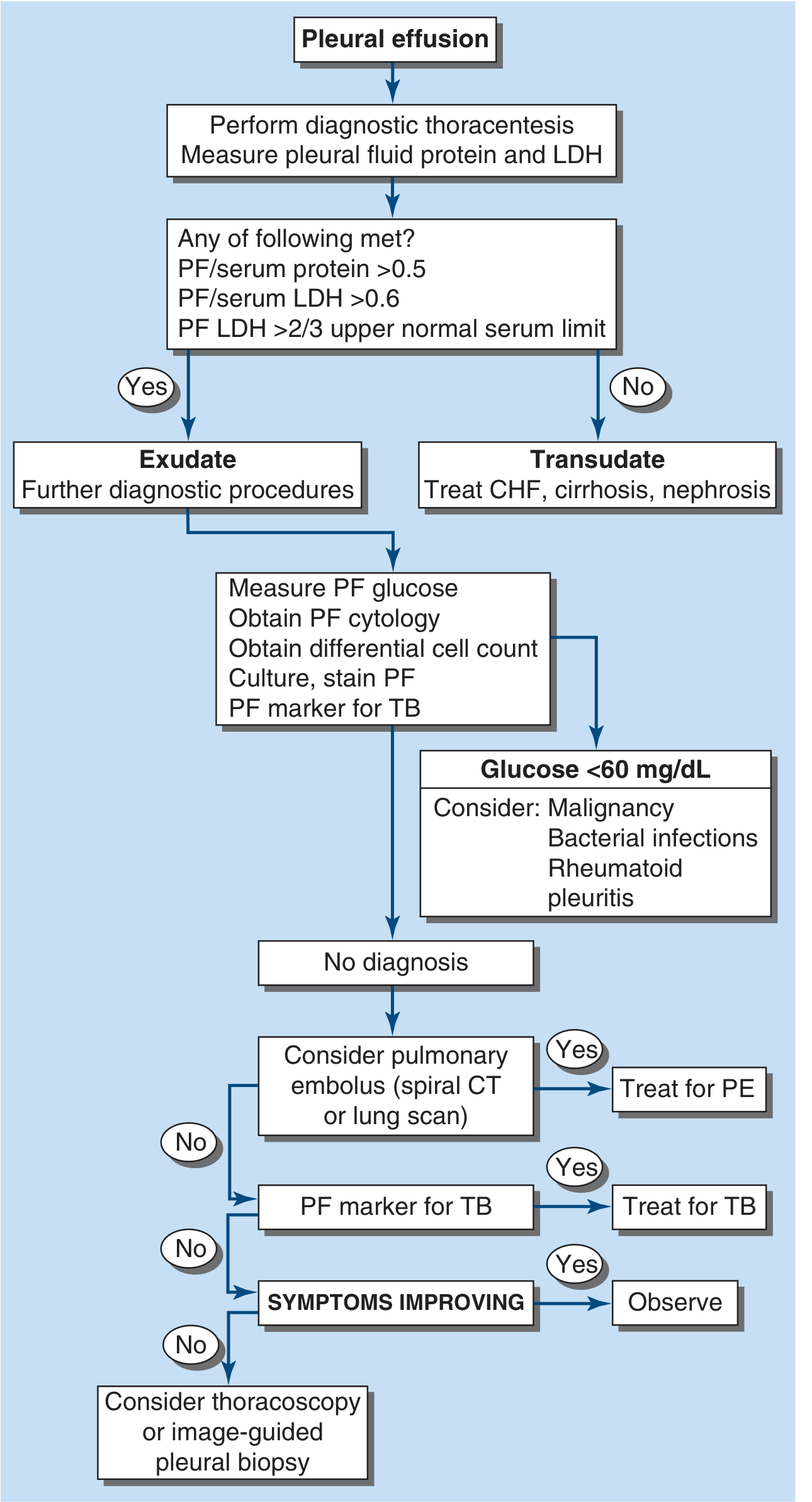
Indications for Thoracentesis
- New unexplained pleural effusion (if >10 mm on lateral decubitus or US)
- Known cause but atypical features (fever in CHF, unilateral in CHF)
- Therapeutic drainage for symptomatic large effusion
Contraindications
- Absolute: None (in the presence of life-threatening effusion)
- Relative: Coagulopathy (INR >1.5-2.0), thrombocytopaenia (<50,000), small effusion (<10 mm), mechanical ventilation (relative - higher pneumothorax risk), contralateral pneumonectomy, inability to cooperate
- Do NOT routinely correct INR before thoracentesis if INR <3.0 (BTS recommendation)
Technique (Safe Thoracentesis)
- Patient seated upright, arms forward on pillow
- Ultrasound marking of optimal site (posterior, 1-2 intercostal spaces below fluid level)
- Insert needle at upper border of lower rib (avoid VAN bundle)
- Standard entry sites: 5th-9th intercostal space, posterior axillary line (or as guided by US)
- Local anaesthesia: 1% lignocaine down to pleural surface; aspirate fluid at pleural surface to confirm position
- Aspiration of fluid (15-20 mL for diagnostic; up to 1.5L for therapeutic)
- Do NOT drain >1.5L at one sitting (risk of re-expansion pulmonary oedema)
Pleural Fluid Analysis - What to Send
| Test | Always | Selective |
|---|---|---|
| Protein | Yes | - |
| LDH | Yes | - |
| Glucose | Yes | - |
| pH | Yes (parapneumonic suspected) | - |
| Cell count + differential | Yes | - |
| Gram stain + culture (aerobic, anaerobic) | Yes (if infection) | - |
| Cytology | Yes (if malignancy suspected) | - |
| Triglycerides + Cholesterol | If milky fluid | Chylothorax |
| Amylase | If pancreatitis/oesophageal rupture | - |
| Adenosine Deaminase (ADA) | If TB suspected | - |
| Haematocrit | If bloody | Haemothorax if >50% serum Ht |
| AFB smear + culture, TB PCR | If TB suspected | - |
| Flow cytometry | If lymphoma suspected | - |
| Creatinine | If urinothorax suspected | PF:serum creatinine >1 |
Interpretation of Pleural Fluid
| Feature | Transudate | Exudate |
|---|---|---|
| Appearance | Clear, pale yellow | Cloudy, turbid, bloody, milky, purulent |
| Protein | <30 g/L | >30 g/L |
| LDH | <200 IU/L | >200 IU/L |
| Glucose | = Serum | Low (<60 mg/dL): infection, RA, malignancy |
| pH | >7.3 | <7.2: complicated parapneumonic (drain!); <7.0: oesophageal rupture |
| Cells | Lymphocytes/mesothelial | PMNs (acute inflammation); lymphocytes (TB, malignancy) |
| Colour | Pale yellow | Yellow-green (TB, RA); bloody (trauma, malignancy, PE); milky (chylothorax); black (Aspergillus); anchovy sauce (amoeba) |
8. MANAGEMENT
Medical Management
1. Transudative Effusions - Treat the Underlying Cause
- CHF: Diuretics (furosemide + spironolactone), ACEi/ARBs, beta-blockers, fluid restriction
- Cirrhosis/Hepatic Hydrothorax: Salt restriction, diuretics, TIPS (transjugular intrahepatic portosystemic shunt); repeated thoracentesis if refractory
- Nephrotic syndrome: Treat underlying nephropathy; ACEi; diuretics cautiously
- Hypothyroidism: Thyroid hormone replacement
2. Parapneumonic Effusion/Empyema
- pH <7.2 → Must drain
- Glucose <60 mg/dL → Must drain
- Positive Gram stain/culture → Must drain
- Visually purulent (frank empyema) → Must drain
- Loculated effusion → Drain with fibrinolytics or VATS
- Small-bore chest drain (14-16 F): Preferred for non-purulent, free-flowing parapneumonic; less painful; equally effective as large-bore
- Large-bore chest drain (28-36 F): Purulent empyema, haemothorax, trauma
- Intrapleural fibrinolytics: tPA (alteplase) + DNase (Pulmozyme) → breaks down fibrin + DNA in loculated empyema; MIST-2 trial: tPA 10 mg BD + DNase 5 mg BD for 3 days → significantly reduced need for surgery
- VATS (Video-Assisted Thoracoscopic Surgery): For organised/fibrinous empyema or failed medical treatment; breaks down loculations, decortication
- Open decortication (thoracotomy): Stage IV (organised, chronic empyema with fibrous peel trapping lung)
3. Malignant Pleural Effusion (MPE)
- Repeated therapeutic thoracentesis: For poor performance status patients; not definitive
- Pleurodesis: Obliteration of pleural space to prevent recurrence
- Chemical pleurodesis: Talc (most effective, 90% success), bleomycin, doxycycline
- Technique: Drain effusion to <100 mL → instil talc slurry 4-5 g → rotate patient → remove drain 24-48h
- Requires >400 mL/day drainage to confirm lung expansion before pleurodesis
- Fails if trapped lung (lung cannot expand to appose chest wall)
- Indwelling Pleural Catheter (IPC/Pleurx): Preferred for trapped lung or if patient wants outpatient management; drain 3x/week at home; spontaneous pleurodesis in 50%
- VATS + talc pleurodesis: Surgical approach for good performance status
4. Haemothorax
- Small (<300 mL): Observe; may reabsorb
- Moderate-large (>300 mL): Large-bore chest drain (≥28 F)
- Massive haemothorax (>1500 mL or >200 mL/hr ongoing): Thoracotomy
- Fibrothorax (organized haemothorax): VATS or decortication within 4-6 weeks
- Traumatic: See ATLS protocol; surgical control if ongoing haemorrhage
5. Chylothorax
- Conservative: Low-fat diet + medium-chain triglycerides (MCT); bowel rest + TPN; octreotide (reduces thoracic duct flow)
- Surgical: Thoracic duct ligation (VATS); pleurodesis if inoperable
- Etilefrine (sympathomimetic) can close the duct opening in post-surgical chylothorax
9. ANAESTHETIC CONSIDERATIONS
A. Preoperative Assessment
History
- Duration and cause of effusion
- Volume and rate of accumulation
- Prior thoracentesis and response
- Degree of dyspnoea: At rest? On exertion? Orthopnoea?
- Associated conditions: Malignancy, cardiac failure, cirrhosis, TB
- Medications: Anticoagulants (relevant for procedures), diuretics, antivirals
Examination
- Respiratory rate, SpO2 on air
- Signs of effusion (described above)
- Signs of tracheal deviation (large effusion - assess severity)
- Hepatic/cardiac signs (underlying cause)
- Bilateral leg oedema (DVT, cardiac cause)
- Signs of malignancy, lymphadenopathy
Investigations
- CXR/CT thorax - assess volume, loculation, mediastinal position
- ABG - assess gas exchange impairment (PaO2, PaCO2, shunt fraction)
- PFTs (Spirometry) - assess degree of restrictive defect (if indicated before major surgery)
- Echocardiography - if cardiac cause suspected; assess LV/RV function
- Serum albumin, LFTs - if hypoalbuminaemia suspected
- Coagulation - if procedure planned
Preoperative Optimisation
- Should large effusion be drained before elective surgery?
- Yes, if moderate-large effusion (>500 mL) and elective thoracic or major abdominal surgery
- Yes, if SpO2 <94% on air attributable to effusion
- Drain first if respiratory compromise is the dominant preoperative risk
- For minor surgery with small asymptomatic effusion: Proceed without drainage; use high FiO2; PEEP strategies
B. Anaesthetic Management for Thoracentesis or Chest Drain Insertion
Positioning
- Thoracentesis/Small-bore drain: Patient seated upright, arms resting forward (widens intercostal spaces posteriorly)
- If unable to sit (sedated/ICU patient): Lateral decubitus with affected side up; or supine with ultrasound guidance
Sedation/Anaesthesia for Procedure
- Most thoracenteses: Local anaesthesia (1-2% lignocaine) ± minimal sedation (midazolam 1-2 mg IV)
- Anxious/uncooperative patients: IV midazolam + fentanyl; use caution if already hypoxic
- For VATS or pleurodesis under GA: See thoracic anaesthesia considerations below
Local Anaesthesia Technique for Thoracentesis
- Identify the intercostal space 1-2 spaces below the upper border of the effusion
- Infiltrate skin and subcutaneous tissue with 1% lignocaine
- Advance needle over the upper border of the lower rib (to avoid neurovascular bundle)
- Infiltrate periosteum of rib, parietal pleura (most painful step) generously
- Aspirate fluid to confirm position
- Proceed with drainage needle/cannula
- Key: Adequate pleural anaesthesia is essential - the parietal pleura is richly innervated by intercostal nerves
Exam Point: The parietal pleura is innervated by intercostal nerves (lateral and posterior portions) and the phrenic nerve (central diaphragmatic portion). Visceral pleura is NOT pain-sensitive. Hence thoracentesis is painful at the parietal level only.
C. Anaesthetic Management for Surgery on a Patient with Pleural Effusion
Pre-induction Considerations
- Large effusion: Drain before induction if possible (even partial drainage - 1L - improves FRC and oxygenation significantly)
- Position on induction: If effusion is unilateral and patient cannot tolerate supine, consider induction in semi-recumbent or lateral position
- Pre-oxygenation: Critical; already reduced FRC → rapid oxygen desaturation; pre-oxygenate for minimum 3-5 minutes with 100% O2; consider high-flow nasal O2 (HFNO) during induction
- IV access: Ensure adequate, functional IV access before induction
Induction
- Avoid: Sudden position changes that redistribute effusion volume and further compress remaining functional lung
- Propofol: Preferred induction agent; may require lower dose if cardiovascular compromise from large effusion
- Airway: Standard tracheal intubation; in respiratory compromised patients, consider awake fibreoptic intubation if difficult airway anticipated
- RSI: If suspected full stomach (large effusion causing gastric compression/aspiration risk)
Intraoperative Ventilation Strategies
- FiO2: Start at 0.5-1.0 (high shunt fraction); titrate to SpO2
- PEEP: Apply PEEP 5-10 cmH2O to recruit atelectatic lung around the effusion
- Tidal volume: 6-8 mL/kg IBW (lung-protective); avoid high plateau pressures
- Positioning: Lateral decubitus with affected side DOWN compresses the effusion against the chest wall and may paradoxically improve perfusion-ventilation matching in the upper (healthy) lung
- Pressure-controlled ventilation: May be preferred if compliance is very low (lower peak pressures for same tidal volume)
- Effusion on the operative side: Drain early in the procedure to allow lung expansion for anaesthetic field of view
- Risk of contamination: If purulent empyema, isolate the lung with double-lumen tube BEFORE drainage to prevent spillage of infected material into healthy lung
- Priority in empyema surgery: DOUBLE-LUMEN TUBE + ISOLATE FIRST
Critical Anaesthetic Pearl: In empyema with pus in the pleural space, use a double-lumen endotracheal tube (DLT) and establish one-lung ventilation with the healthy lung ventilated BEFORE opening the thorax. This prevents spillage of infected pleural fluid into the contralateral lung, which can cause devastating bilateral pneumonia/ARDS.
Monitoring
- SpO2: Continuous; be prepared for periods of severe desaturation during OLV
- Capnography: EtCO2 may underestimate PaCO2 in severe V/Q mismatch (large dead space)
- ABG: Frequent intraoperative; essential in OLV
- Arterial line: For major thoracic surgery, large effusion, haemodynamically unstable patients
- Bronchoscopy: Verify DLT position after patient positioning
Fluid Management
- Avoid excessive IV fluids in patients with low oncotic pressure (hypoalbuminaemia, malignancy) - promotes re-accumulation
- Use goal-directed fluid therapy
- Colloid (albumin) may be preferable in hypoalbuminaemic patients
D. Specific Scenarios
1. Re-expansion Pulmonary Oedema (RPO)
- Definition: Non-cardiogenic pulmonary oedema occurring after rapid re-expansion of a collapsed lung following drainage of large pleural effusion or pneumothorax
- Incidence: 0.2-1% of thoracenteses; higher with large volumes or long-standing effusion
- Pathophysiology: Rapid lung re-expansion → surfactant injury → increased capillary permeability → flooded alveoli
- Risk factors: Large effusion (>1.5 L), rapid drainage, long-standing (>3 days) effusion, young males, bilateral effusion
- Prevention: Do NOT drain >1.5 L at one session; if large effusion, drain 1-1.5L, then stop; allow 24-48h before further drainage; monitor symptoms during drainage
- Features: Cough, chest tightness, hypoxia developing during or immediately after drainage; CXR: unilateral alveolar opacities ipsilateral to drained side
- Treatment: Supplemental O2; CPAP/NIV; rarely requires intubation; self-limiting in most cases
HIGH-YIELD EXAM POINT: The maximum safe volume to drain in a single session is 1.5 litres. Beyond this, the risk of re-expansion pulmonary oedema increases significantly. Always stop drainage if the patient develops chest pain, cough, or oxygen desaturation.
2. Thoracentesis Complications
| Complication | Rate | Notes |
|---|---|---|
| Pneumothorax | 3-7% (without US); <1% (with US) | Most common; drain if >15% or symptomatic |
| Haemothorax | 0.5-2% | Intercostal artery laceration; anticoagulated patients higher risk |
| Infection | <0.5% | Empyema from contamination |
| Re-expansion pulmonary oedema | 0.2-1% | >1.5 L drained; see above |
| Vasovagal reaction | 5-10% | Patient upright during procedure; may cause syncope |
| Splenic/hepatic laceration | Rare | Incorrect site; avoid below 9th ICS |
| Diaphragmatic injury | Rare | Stay above diaphragm level |
3. Hepatic Hydrothorax in Liver Failure Patients
- Right-sided transudative effusion in cirrhosis due to passage of ascitic fluid via diaphragmatic defects
- Anaesthetic challenge: Concurrent hypoalbuminaemia, coagulopathy (INR elevated), thrombocytopaenia, encephalopathy risk, hepatorenal syndrome
- Management: Treat ascites (diuretics, salt restriction, TIPS); repeated thoracentesis for symptom relief; pleurodesis difficult (lung often cannot expand fully); liver transplantation is definitive
- Thoracentesis in decompensated cirrhosis: Higher bleeding risk (coagulopathy); higher infection risk; encephalopathy can be precipitated
4. Pleural Effusion in Mechanically Ventilated ICU Patients
- Prevalence: ~62% of ICU patients develop pleural effusion
- Causes: Fluid overload, hypoalbuminaemia, cardiac dysfunction, pneumonia, ARDS
- Effect on ventilation: Increases atelectasis, impairs compliance, worsens oxygenation, may increase ventilator days
- Should all ICU effusions be drained? No evidence for routine drainage in asymptomatic small effusions; drain if:
- Diagnostic uncertainty (exclude empyema)
- Large effusion with significant respiratory compromise
- V/Q mismatch contributing to ventilator weaning failure
- Technique in ventilated patients: US-guided; lateral decubitus or semi-prone; keep PEEP constant during procedure; small-bore drain preferred; monitor for pneumothorax and cardiac effects (large drainage can cause mediastinal shift)
5. Post-Cardiac Surgery Effusion
- Small serous left-sided effusion: Day 1-7; benign; monitor
- Blood-stained (haemothorax): Chest drain immediately; monitor output (>200 mL/hr x 2h → return to theatre)
- Dressler's Syndrome (Post-Cardiac Injury Syndrome): Weeks 2-12 post-surgery; pericarditis + bilateral pleuritis + fever; treat with aspirin/NSAIDs ± colchicine; avoid anticoagulation
10. DRUGS
A. Local Anaesthetics for Thoracentesis/Chest Drain
| Drug | Dose | Use |
|---|---|---|
| Lignocaine (Lidocaine) 1% | 3-5 mg/kg (max 200 mg) | Local infiltration for thoracentesis, chest drain; onset 2-5 min |
| Bupivacaine 0.25-0.5% | 2 mg/kg (max 150 mg) | Intercostal nerve block (post-thoracotomy analgesia); longer duration (4-8h) |
| Ropivacaine 0.2-0.5% | 3 mg/kg | Less cardiotoxic than bupivacaine; use in continuous intercostal/paravertebral catheters |
B. Intrapleural Fibrinolytics (for Empyema)
tPA (Alteplase) + DNase (MIST-2 Protocol)
| Feature | Details |
|---|---|
| Indication | Complicated parapneumonic/empyema not draining freely |
| tPA dose | 10 mg in 30 mL saline intrapleurally twice daily × 3 days |
| DNase dose | 5 mg in 30 mL saline intrapleurally twice daily × 3 days (given 1h after tPA) |
| Mechanism | tPA: Lyses fibrin in loculations; DNase: Reduces viscosity of purulent fluid by breaking DNA from dead neutrophils |
| Evidence | MIST-2 trial (NEJM 2011): Combination therapy significantly reduced surgical referral and hospital stay |
| Contraindications | Bronchopleural fistula (risk of massive haemoptysis), recent thrombolytic use, active systemic bleeding |
| Anaesthetic relevance | Reduces surgical intervention; but if VATS required after failed fibrinolytics, tissue planes may be altered |
C. Chemical Pleurodesis Agents
| Agent | Success Rate | Dose | Key Points |
|---|---|---|---|
| Talc (talc poudrage or slurry) | ~90% (most effective) | 4-5 g | Talc poudrage (VATS): direct insufflation; Talc slurry: via chest tube. Risk: ARDS with non-graded talc (use large-particle, graded talc) |
| Bleomycin | ~60-70% | 60 units | Expensive; less effective than talc; causes fever and chest pain |
| Doxycycline | ~70-75% | 500 mg in 50 mL saline | Cheap, available; moderate efficacy; causes significant chest pain (pre-medicate with opioid + lignocaine intrapleurally) |
| Autologous blood patch | Variable | 50-100 mL blood intrapleurally | For air leak/bronchopleural fistula; controversial |
D. Octreotide (for Chylothorax)
| Feature | Details |
|---|---|
| Mechanism | Somatostatin analogue → reduces splanchnic and thoracic duct lymph flow |
| Dose | 100-200 mcg SC or IV TDS; or 25-50 mcg/hr IV infusion |
| Use | Post-surgical chylothorax; reduces chyle output and allows spontaneous healing |
| Evidence | Multiple case series; no large RCTs |
| Anaesthetic relevance | May be used as bridge to surgical ligation; monitor for hyperglycaemia |
E. Diuretics (for Transudative Effusion)
| Drug | Mechanism | Dose | Anaesthetic Relevance |
|---|---|---|---|
| Furosemide | Loop diuretic; inhibits Na-K-2Cl cotransporter (NKCC2) in thick ascending limb of LoH | 20-80 mg IV/oral; titrated | Hypokalaemia (check K+ before anaesthesia); hypovolaemia; ototoxicity (high IV doses); check electrolytes preoperatively |
| Spironolactone | Aldosterone antagonist; distal tubule; potassium-sparing | 25-200 mg/day oral | Hyperkalaemia; useful in ascites/hepatic hydrothorax combination |
| Tolvaptan | Vasopressin V2 receptor antagonist; aquaretic | 15-60 mg oral | For dilutional hyponatraemia in cirrhosis with hepatic hydrothorax |
11. SCORES, FORMULAE, AND NUMERICAL VALUES
Key Numerical Values
| Parameter | Normal/Threshold | Clinical Significance |
|---|---|---|
| Normal pleural fluid volume | 5-15 mL (0.1-0.2 mL/kg) | Below detectable on CXR |
| Minimum volume detectable (CXR) | >200 mL | Blunts costophrenic angle |
| Minimum volume detectable (US) | 5-50 mL | Gold standard |
| Light's criteria: PF protein/serum protein | >0.5 = exudate | Most widely used |
| Light's criteria: PF LDH/serum LDH | >0.6 = exudate | - |
| Light's criteria: PF LDH | >2/3 UNL for serum = exudate | ~200 IU/L for most labs |
| Serum-PF albumin gradient | <1.2 g/dL = exudate; >1.2 g/dL = transudate | Corrects misclassified CHF |
| PF pH: drain if | <7.2 | Complicated parapneumonic |
| PF glucose: drain if | <60 mg/dL | Complicated parapneumonic |
| PF glucose in Rheumatoid pleuritis | <30 mg/dL (very low!) | Pathognomonic of RA |
| PF triglycerides (chylothorax) | >110 mg/dL | Diagnostic of chylothorax |
| Maximum safe drainage per session | 1.5 litres (1500 mL) | Re-expansion pulmonary oedema prevention |
| ADA (Adenosine Deaminase) for TB | >40 U/L | ~90% sensitivity for TB effusion |
| Lymphocyte-predominant effusion | >80% lymphocytes | TB, malignancy, chylothorax |
| PMN-predominant effusion | >50% PMNs | Acute bacterial infection |
| Haemothorax definition | PF Ht >50% of blood Ht | Requires large-bore drain |
Important Formulae
1. Mean Arterial Pressure (relevant for haemothorax/shock management)
2. Estimated Pleural Effusion Volume (Ultrasound Method)
- More accurate formula: Volume (mL) = 16 × (measured height of fluid in mm on supine CXR) - 38
3. Alveolar-Arterial (A-a) Oxygen Gradient
- Normal A-a gradient: Age/4 + 4 mmHg (increases with age)
- In pleural effusion: A-a gradient elevated (shunt + V/Q mismatch)
- Does NOT correct with supplemental O2 in significant shunt (distinguishes shunt from simple V/Q mismatch)
4. Intrapulmonary Shunt Fraction (Qs/Qt)
-
CcO2 = End-capillary O2 content (assuming full O2 saturation)
-
CaO2 = Arterial O2 content
-
CvO2 = Mixed venous O2 content
-
Normal Qs/Qt: 2-5%
-
With large pleural effusion: Qs/Qt may be 15-25%
5. Light's Criteria - Worked Example
| Criterion | Calculation | Result |
|---|---|---|
| PF protein/Serum protein | 38/72 = 0.53 | >0.5 = Exudate |
| PF LDH/Serum LDH | 210/290 = 0.72 | >0.6 = Exudate |
| PF LDH vs 2/3 UNL | 210 vs 2/3×240=160 | >160 = Exudate |
12. GUIDELINES
1. British Thoracic Society (BTS) Guidelines on Pleural Disease
- Pleural Effusion 2010 (most cited); updated with specific sections 2014-2022
- Key recommendations: Ultrasound-guided thoracentesis; small-bore drains preferred; measure pH for parapneumonic; pleurodesis decision based on fluid drainage <150 mL/day
2. SEPAR/Spanish Society Guidelines 2022 (PMID: 36273933)
- Comprehensive update covering epidemiology, diagnosis, prognosis, and therapeutics
- Recommends multidisciplinary approach for malignant pleural effusion (MPE)
- IPCC (Indwelling Pleural Catheter) equally effective to talc pleurodesis for MPE
3. ACR Appropriateness Criteria 2024 (PMID: 38823955)
- Ultrasound is the most appropriate initial imaging for pleural disease and procedure guidance
- CT thorax with contrast for complex/unexplained effusion or when malignancy suspected
- CTPA when PE-associated effusion suspected
4. MIST-2 Trial (Rahman et al., NEJM 2011) - Practice Changing
- RCT of intrapleural tPA + DNase vs each alone vs placebo for pleural infection
- Combination tPA+DNase significantly reduced need for surgical intervention and hospital stay
- Now standard of care for loculated parapneumonic/empyema not responding to drainage alone
5. Pediatric Empyema - 2023 Living Network Meta-Analysis (PMID: 37463660)
- Surgery (VATS) superior to intrapleural fibrinolytics for paediatric empyema
- Different from adult recommendation where fibrinolytics are tried first
6. Surgery vs Fibrinolytics for Complicated Pleural Infections (Chang et al., 2024 - PMID: 39182102)
- Meta-analysis: 8 studies, 698 patients
- No significant difference in clinical failure, length of stay, or mortality between VATS and intrapleural fibrinolytics in adults
- Supports current practice of fibrinolytics first (less invasive) with VATS reserved for failure
13. IMPORTANT TABLES
Table 1: Transudate vs Exudate - Comprehensive Comparison
| Feature | Transudate | Exudate |
|---|---|---|
| Mechanism | Systemic (Starling force imbalance) | Local (inflammation, malignancy, infection) |
| Appearance | Clear, pale yellow | Turbid, bloody, purulent, or milky |
| Protein | <30 g/L | >30 g/L |
| PF/serum protein ratio | <0.5 | >0.5 |
| LDH | <200 IU/L | >200 IU/L |
| PF/serum LDH ratio | <0.6 | >0.6 |
| PF LDH vs 2/3 UNL | Below | Above |
| Serum-PF albumin gradient | >1.2 g/dL | <1.2 g/dL |
| Glucose | = Serum | May be low |
| pH | >7.3 | Variable (low in infection, RA) |
| Cells | Few mesothelial cells | PMNs (acute); lymphocytes (TB, malignancy) |
| Common causes | CHF, cirrhosis, nephrotic syndrome | Pneumonia, malignancy, TB, PE |
Table 2: Causes of Pleural Effusion by Appearance
| Appearance | Cause |
|---|---|
| Clear, pale yellow | Transudate (CHF, cirrhosis) |
| Straw-coloured | Most exudates |
| Bloody (serosanguinous) | Trauma, malignancy, pulmonary embolism, post-cardiac surgery |
| Frank blood (haematocrit >50% blood) | Haemothorax (trauma, aortic dissection) |
| Purulent/pus | Empyema |
| Milky white | Chylothorax (TG >110 mg/dL); pseudochylothorax (cholesterol effusion - high cholesterol, old TB) |
| Anchovy sauce (dark brown) | Amoebic liver abscess rupture into pleura |
| Black | Aspergillus infection |
| Very low pH (<7.0) | Oesophageal rupture (also very high amylase) - surgical emergency |
Table 3: Perioperative Considerations for Specific Effusion Types
| Type | Specific Anaesthetic Issue | Management |
|---|---|---|
| Transudative (CHF) | Reduced cardiac reserve; diastolic dysfunction; biventricular impairment | Echo preop; optimise heart failure; avoid fluid overload intraop; invasive monitoring |
| Transudative (Cirrhosis) | Coagulopathy; thrombocytopaenia; hypoalbuminaemia; encephalopathy risk; porto-pulmonary HTN | Check INR/platelets before procedure; US guidance mandatory; avoid sedatives that worsen encephalopathy |
| Malignant effusion | Trapped lung; mediastinal fixation; rapid re-accumulation; concurrent chemotherapy effects | IPC preferred over pleurodesis; assess performance status; check for pericardial effusion |
| Empyema | Sepsis; respiratory failure; coagulopathy of sepsis | Double-lumen tube for VATS; isolate healthy lung BEFORE opening; haemodynamic monitoring |
| Haemothorax | Hypovolaemic shock; coagulopathy (massive) | Massive transfusion protocol; warm fluids; damage control surgery |
| Chylothorax | Immunodeficiency (lymphocyte depletion); malnutrition | Nutritional support; octreotide; consider TPN |
| Post-cardiac surgery | Dressler's: pericardial tamponade risk; haemothorax requiring re-operation | Echo to rule out tamponade; coagulation check; cardiac monitoring throughout |
Table 4: Chest Drain Sizes and Indications
| Size (French) | External Diameter | Indication |
|---|---|---|
| 10-14 F (small bore) | 3.3-4.7 mm | Pneumothorax; transudative effusion; malignant effusion; small parapneumonic |
| 14-20 F (medium bore) | 4.7-6.7 mm | Moderate parapneumonic; routine therapeutic drainage |
| 24-28 F (large bore) | 8-9.3 mm | Haemothorax; empyema (thick pus); post-thoracotomy |
| 28-36 F (large bore) | 9.3-12 mm | Massive haemothorax; trauma; intraoperative |
14. FLOWCHARTS AND ALGORITHMS
Algorithm 1: Diagnostic Approach to Pleural Effusion (Harrison's 22e)
NEW PLEURAL EFFUSION IDENTIFIED
↓
CHEST IMAGING (US / CXR / CT)
Confirm effusion; estimate volume;
assess for loculation; guide aspiration
↓
Is effusion >10 mm on lateral decubitus
or >1 cm on ultrasound?
/ \
YES NO
↓ ↓
DIAGNOSTIC Monitor; treat
THORACENTESIS suspected cause
Measure PF protein,
LDH (and serum values)
↓
APPLY LIGHT'S CRITERIA
(PF/serum protein >0.5 OR
PF/serum LDH >0.6 OR
PF LDH >2/3 UNL)
/ \
YES NO
↓ ↓
EXUDATE TRANSUDATE
↓ ↓
Further workup: Treat CHF,
Cytology, cirrhosis,
Glucose, pH, nephrosis
Culture/Gram stain ↓
ADA (TB), If persists:
Triglycerides Reconsider; add
Amylase albumin gradient
↓
Glucose <60 mg/dL?
Consider: Malignancy /
Bacterial infection /
Rheumatoid pleuritis
↓
No diagnosis after above?
↓
Consider PE → CTPA
Consider TB → ADA/PCR/biopsy
Symptoms improving? → Observe
Not improving → Thoracoscopy/biopsy
Algorithm 2: Management of Parapneumonic Effusion/Empyema
PARAPNEUMONIC EFFUSION IDENTIFIED
↓
THORACENTESIS
Measure: pH, glucose, LDH,
Gram stain, culture
↓
Does ANY of the following apply?
• pH <7.2
• Glucose <60 mg/dL
• Positive Gram stain or culture
• Frank pus aspirated
• Loculated effusion on US/CT
/ \
NO YES
↓ ↓
ANTIBIOTICS ALONE DRAIN THE PLEURAL SPACE
Re-assess in 24-48h
↓
IS FLUID DRAINING FREELY?
/ \
YES NO
↓ ↓
Continue drain + ABX INTRAPLEURAL
Monitor for improvement FIBRINOLYTICS
tPA 10 mg + DNase 5 mg
BD × 3 days
↓
Fluid draining now?
/ \
YES NO
↓ ↓
Continue VATS ±
drain + ABX Decortication
↓
DEFINITIVE DRAINAGE ACHIEVED
Switch to oral ABX when
afebrile + improving + drain <50 mL/day
Algorithm 3: Anaesthetic Management of Patient with Pleural Effusion Undergoing Surgery
PATIENT WITH PLEURAL EFFUSION FOR SURGERY
↓
ASSESS SEVERITY (Volume, bilateral, SpO2, ABG)
↓
SpO2 <94% or Large effusion (>500 mL)
AND Elective surgery?
/ \
YES NO
↓ ↓
DRAIN BEFORE SURGERY Proceed with precautions:
(Thoracentesis ≤1.5L) • High FiO2
Re-assess and • PEEP 5-10 cmH2O
re-schedule surgery • Lung-protective ventilation
• A-line ± CVP
↓
INTRAOPERATIVE MANAGEMENT
↓
Pre-oxygenation: 3-5 min 100% O2
Induction: Titrate carefully (may need lower doses)
Intubation: Consider DLT if VATS for empyema
↓
VENTILATION STRATEGY:
• FiO2 0.5-1.0 (titrate SpO2)
• TV: 6-8 mL/kg IBW
• PEEP: 5-10 cmH2O
• Rate: 12-16/min
• Monitor: SpO2, EtCO2, peak/plateau pressure
↓
POSITIONING:
Unilateral effusion → consider affected side DOWN
(may improve V/Q in healthy upward lung)
↓
EMPYEMA → DLT → ISOLATE HEALTHY LUNG FIRST
before opening thorax
↓
POSTOPERATIVE: HDU/ICU if large effusion;
continuous SpO2 monitoring; pain control (regional
if possible); drain management; early physiotherapy
Algorithm 4: Re-expansion Pulmonary Oedema Prevention During Thoracentesis
THERAPEUTIC THORACENTESIS FOR LARGE EFFUSION
↓
Commence drainage (US-guided)
↓
DRAIN UP TO 1000-1500 mL MAXIMUM
↓
Monitor CONTINUOUSLY during drainage:
• SpO2 every 5 minutes
• Patient symptoms (chest tightness, cough)
• Drainage volume
↓
Patient develops: cough, chest pain, SpO2 ↓?
/ \
YES NO
↓ ↓
STOP DRAINAGE Continue to 1.5L
O2 supplementation maximum, then stop
Consider CPAP/NIV
CXR: RPO? Wait 24-48h for
Treat as non-cardiogenic lung to stabilise,
pulmonary oedema then drain further
15. FREQUENTLY ASKED MD VIVA QUESTIONS
Short Viva Questions
Long Viva Questions
- Rapid assessment: SpO2 (likely low), RR (tachypnoeic), ability to lie flat (orthopnoea)
- ABG: PaO2, PaCO2 (type I or II respiratory failure?), pH
- CXR/portable US: Confirm bilateral massive, estimate volume, tracheal position
- Urgent bilateral thoracentesis (1-1.5L per side) BEFORE induction - even 30 minutes of drainage dramatically improves gas exchange and FRC
- If too unstable for drainage first: Proceed to surgery with full anticipation of difficult oxygenation
- Investigations: ECG, electrolytes, coagulation, group & screen
- Consider ICU/HDU booking for postoperative care
- Semi-recumbent or head-up position (reduces dependent lung compression)
- Pre-oxygenation: 5 min with 100% O2 (reduced FRC = smaller O2 reserve); HFNO during laryngoscopy if available
- RSI (full stomach risk - laparotomy indication often associated with abdominal pathology that caused effusions)
- Ketamine + suxamethonium (haemodynamically compromised) or propofol (titrated slowly) + suxamethonium
- Rapid intubation; immediately start PEEP
- FiO2 1.0 initially; titrate to SpO2
- Lung-protective ventilation: TV 6 mL/kg IBW; PEEP 8-12 cmH2O; Pplat <30 cmH2O; rate 14-18/min
- Invasive arterial monitoring (A-line): Continuous BP + ABG access
- Central venous access if major fluid shifts expected
- Consider intraoperative drainage of effusion if accessible (surgeon's help during abdominal surgery)
- Prone to desaturation: Have 100% FiO2, increased PEEP, and recruitment manoeuvres ready
- Balanced anaesthesia; minimal fluid overload
- Mandatory ICU/HDU admission
- Continue ventilation if PaO2/FiO2 <200 mmHg postoperatively
- Bilateral chest drain or repeated thoracentesis when coagulation permits
- Early physiotherapy, upright positioning, non-invasive ventilation if extubated
16. MD THEORY EXAMINATION POINTS
Highly Probable University Questions
- "Classify pleural effusion. Describe Light's criteria with diagnostic significance" - Most commonly repeated in theory exams
- "Write notes on: management of malignant pleural effusion"
- "Write notes on: re-expansion pulmonary oedema - pathophysiology, prevention, treatment"
- "Discuss the anaesthetic management of a patient with large pleural effusion posted for VATS"
- "Describe thoracentesis - indication, technique, complications"
- "Compare transudate and exudate pleural effusions"
- "Write notes on: empyema thoracis - classification and management"
High-Yield Facts
- Normal pleural fluid: 5-15 mL; lymphatics can absorb 20× normal formation rate
- Light's criteria: PF/serum protein >0.5; PF/serum LDH >0.6; PF LDH >2/3 UNL → any ONE = exudate
- 25% misclassification of transudates as exudates (diuresed CHF); correct with albumin gradient >1.2 g/dL
- Most common cause of transudative effusion: Left ventricular failure
- Most common cause globally in developing countries: TB
- Most common cause of exudate: Parapneumonic (bacterial pneumonia) in developed world
- Maximum drainage per session: 1.5 litres (re-expansion oedema prevention)
- pH <7.2 → drain the pleural space
- Double-lumen tube mandatory for VATS in empyema
- ADA >40 U/L → tuberculosis (90% sensitivity)
- PF glucose <30 mg/dL → rheumatoid pleuritis (pathognomonic)
- Anchovy sauce effusion → Amoebic abscess rupture
- Talc pleurodesis = most effective chemical agent (~90% success)
- tPA + DNase (MIST-2) = gold standard for loculated parapneumonic/empyema
- Hepatic hydrothorax → usually right-sided (~85%); ascites via diaphragmatic defects
- Meigs' syndrome = ovarian fibroma + right-sided pleural effusion + ascites
Memory Aids and Mnemonics
Light's Criteria: "PLP"
- Protein ratio PF/serum >0.5
- LDH ratio PF/serum >0.6
- PF LDH > 2/3 upper normal limit
Causes of Transudative Effusion: "CHAMPS"
- Congestive heart failure
- Hypothyroidism/Hypoalbuminaemia
- Ascites/cirrhosis (hepatic hydrothorax)
- Myxoedema
- Peritoneal dialysis
- SVC obstruction/Nephrotic Syndrome
Signs of Pleural Effusion: "SPACE"
- Sounds (breath) absent
- Percussion stony dull
- Aegophony at upper border
- Chest movement reduced ipsilaterally
- Expansion decreased
When to DRAIN Parapneumonic: "GPF"
- Glucose <60 mg/dL
- PH <7.2
- Frank pus
Causes of Exudative Effusion: "MALT CHOPS"
- Malignancy
- Asbestos (benign asbestos effusion)
- Lupus/connective tissue disease
- TB (and other infections)
- Chylothorax
- Haemothorax
- Oesophageal rupture (↑ amylase, ↓ pH)
- Pulmonary embolism
- Subphrenic/post-abdominal
Fluids and Their Diagnoses: "Colour Code"
- Clear pale yellow = Transudate
- Milky white = Chylothorax
- Bloody = Malignancy/Trauma/PE
- Anchovy sauce = Amoeba
- Black = Aspergillus
- Pus = Empyema
Common Mistakes Made by Residents
- Draining >1.5 L in one session without monitoring for RPO
- Not measuring pH in parapneumonic effusions (pH <7.2 = mandatory drainage)
- Not using ultrasound guidance for thoracentesis → 3-7x higher pneumothorax rate without US
- Inserting chest drain at the lower border of a rib → lacerating the neurovascular bundle
- Misclassifying a diuresed CHF transudate as exudate using Light's criteria alone (forgetting the albumin gradient correction)
- Failing to isolate the lung with DLT before opening a thoracic empyema → bilateral lung contamination
- Confusing chylothorax with pseudochylothorax - both are milky; differentiate by TG (>110 mg/dL = chylothorax; cholesterol elevated = pseudochylothorax)
- Misidentifying Meigs' syndrome - ovarian FIBROMA (not other ovarian tumours) + right-sided effusion + ascites; effusion resolves after tumour removal
- Ignoring that PF glucose <30 mg/dL is pathognomonic of rheumatoid pleuritis (not just low - VERY low)
- Not recognising oesophageal rupture as cause of left-sided effusion with very high amylase + very low pH + mediastinal emphysema → surgical emergency requiring immediate intervention
17. CLINICAL PEARLS
OT Pearls
-
"The lung is your ally in pleural disease management." If you can drain the effusion and re-expand the lung before surgery, you transform the respiratory mechanics dramatically. Even draining 500-800 mL preoperatively (even if incomplete drainage) markedly improves FRC and oxygenation before induction.
-
The empyema patient for VATS is among the highest-risk thoracic anaesthesia scenarios. The combination of sepsis (haemodynamic instability), bilateral ventilation dependence, and need for lung isolation with a DLT requires meticulous preparation. Always verify DLT position with fibreoptic bronchoscopy, BEFORE the patient is repositioned to lateral decubitus.
-
Pre-oxygenation matters more than usual in patients with pleural effusion. Their reduced FRC means the oxygen reservoir in their lungs is already diminished. A full 5 minutes of pre-oxygenation (ideally with 15° head-up position) and use of high-flow nasal oxygen (HFNO) at 15L/min during laryngoscopy is standard in the modern era.
-
During thoracentesis under sedation: ALWAYS position the patient correctly first. The seated, forward-leaning position widens intercostal spaces, optimises the drainage angle, and allows gravity-dependent pooling for easier aspiration. Draining a patient supine via needle is technically challenging and risks injury.
-
The mediastinal shift in massive unilateral effusion creates a physiological paradox: The contralateral lung is compressed by mediastinal shift and may also have impaired ventilation. When you drain the massive effusion, the mediastinum returns to midline - but this sudden shift can cause haemodynamic instability (right heart geometry changes, sudden increased venous return). Drain slowly; have vasopressors ready.
ICU Pearls
-
In ICU patients with unexplained ventilator deterioration (rising FiO2 requirement, worsening compliance), always look for pleural effusion. Bilateral effusions develop in >60% of ventilated ICU patients and can be missed on supine AP CXRs. A quick bedside POCUS (Point-of-Care Ultrasound) of both lungs immediately identifies pleural fluid, differentiates it from consolidation, and guides drainage.
-
The "passive flooding" principle in ICU pleural effusions: In a ventilated patient with bilateral effusions secondary to fluid overload, draining the lungs (diuresis/ultrafiltration) is often more effective than thoracentesis. Aggressive diuresis in a fluid-overloaded patient can resolve bilateral transudative effusions without any procedural intervention.
-
Hepatic hydrothorax in liver failure ICU patients is one of the most challenging management scenarios. Thoracentesis provides temporary relief but effusion re-accumulates rapidly. TIPS reduces portal pressure and can control hepatic hydrothorax but carries risks of hepatic encephalopathy. Liver transplantation is the only definitive treatment.
-
Post-cardiac surgery haemothorax: Any chest drain output >200 mL/hr for 2 consecutive hours, or >1500 mL in the first 8 hours post-cardiac surgery, mandates surgical re-exploration. Do not wait. Coagulation replacement (FFP, platelets, cryoprecipitate) should be given concurrently but should NOT delay surgical decision-making.
Practical Tips
-
When in doubt about empyema vs lung abscess on CT: Look for the split pleura sign (enhanced thickening of both visceral and parietal pleura with fluid between). Empyema has this sign; lung abscess does NOT (it has a single wall within the lung parenchyma). This distinction changes management completely - empyema needs pleural drainage; lung abscess needs antibiotics ± percutaneous drainage.
-
Chylothorax after oesophagectomy or pneumonectomy: Suspect if chest drain output is milky, or if clear output increases dramatically after patient starts eating (oral fat triggers thoracic duct flow). Confirm with triglycerides >110 mg/dL. Start management: NPO + TPN + octreotide. Most resolve within 2-3 weeks conservatively; if >1500 mL/day persists → surgical ligation.
18. KEY TAKE-HOME MESSAGES
-
Pleural effusion = abnormal excess fluid in the pleural space from imbalanced Starling forces, infection, malignancy, or blocked lymphatics. Normal volume: 5-15 mL; lymphatics can absorb 20× the normal production rate.
-
Light's criteria (1972) remain the gold standard for classifying transudates vs exudates. ANY ONE of three criteria met = exudate. However, they misclassify 25% of transudates as exudates; correct with serum-PF albumin gradient >1.2 g/dL → confirms transudate.
-
Most common cause of transudate worldwide = Left Ventricular Failure. Most common cause of exudate in developed countries = Parapneumonic. In developing countries = Tuberculosis.
-
Ultrasound is the gold standard for identifying, characterising, and guiding procedures on pleural effusions. Use it routinely. It reduces pneumothorax rate from thoracentesis by 3-fold.
-
Never drain more than 1.5 litres in a single session. Re-expansion pulmonary oedema is the feared complication. Stop immediately if the patient develops cough, chest tightness, or oxygen desaturation during drainage.
-
Parapneumonic effusion must be drained if pH <7.2, glucose <60 mg/dL, or frank pus is present. Antibiotics alone are insufficient in these circumstances. Use the "GPF" mnemonic: Glucose <60, pH <7.2, Frank pus.
-
For empyema/VATS under GA: DOUBLE-LUMEN TUBE IS MANDATORY. Isolate the healthy lung BEFORE opening the thorax to prevent contamination of the contralateral lung with infected material.
-
Pleural effusion reduces FRC, increases V/Q mismatch, creates intrapulmonary shunt, and worsens with GA + PPV. Pre-oxygenate aggressively; use PEEP; drain large effusions before elective major surgery.
-
MIST-2 protocol (tPA 10 mg + DNase 5 mg BD × 3 days) is now the standard for loculated parapneumonic/empyema not freely draining. Combination therapy significantly reduces need for surgery vs single agent.
-
PF glucose <30 mg/dL is pathognomonic of rheumatoid pleuritis. PF pH <7.0 with very high amylase = oesophageal rupture (surgical emergency). PF TG >110 mg/dL = chylothorax.
-
Hepatic hydrothorax is right-sided in 85% of cases. It arises from ascitic fluid moving via diaphragmatic defects. These patients carry triple anaesthetic risk: coagulopathy, encephalopathy, and porto-pulmonary hypertension.
-
Talc pleurodesis is the most effective chemical agent (~90% success) for malignant pleural effusion. Indwelling pleural catheters (IPC) are equivalent to talc pleurodesis and preferred when the lung is trapped.
-
The split pleura sign on contrast CT (enhancing thickened visceral + parietal pleura with fluid between) = empyema. Distinguishes empyema from lung abscess and guides management.
-
Re-expansion pulmonary oedema (RPO) is non-cardiogenic, ipsilateral, and caused by rapid lung expansion. Treat with O2, CPAP/NIV; it is usually self-limiting.
-
Adenosine Deaminase (ADA) >40 U/L in pleural fluid = TB effusion (90% sensitivity, 92% specificity). The most useful screening test for TB pleuritis in high-burden countries.
-
Intercostal drain insertion: Always at the upper border of the lower rib (superior margin) to avoid the VAN bundle (Vein-Artery-Nerve) in the subcostal groove. Never below the 9th ICS (risk of diaphragm/viscus injury).
-
For malignant pleural effusion: Treat the cause if possible (chemotherapy, radiotherapy); if non-responsive, offer IPC or talc pleurodesis based on performance status and lung expansion ability.
-
In the ICU: Pleural effusions develop in >60% of ventilated patients. Always consider in deteriorating gas exchange. Bedside POCUS should be part of the daily assessment of mechanically ventilated patients.
-
Chylothorax = milky fluid + TG >110 mg/dL. Always distinguish from pseudochylothorax (also milky but cholesterol-predominant, TG normal/low; seen in old TB or RA). Management: NPO + TPN + octreotide; surgery if >1500 mL/day.
-
The fundamental anaesthetic principle with pleural effusion: Understand the physiology - the fluid compresses lung → reduced FRC → shunt → hypoxia. Every management decision (whether to drain preoperatively, how to ventilate, whether to use DLT) flows logically from this single physiological principle.
References
- Harrison's Principles of Internal Medicine 22e (2025), Chapter 305: Pleural Effusion - Definition, pathophysiology, Light's criteria, diagnostic flowchart (Figure 305-1), cause classification, full management
- Miller's Anesthesia 10e - Respiratory Acidosis and V/Q mismatch; pleural effusion as cause of ventilation-perfusion disturbance; thoracic anaesthesia one-lung ventilation considerations
- Morgan & Mikhail's Clinical Anesthesiology 7e - Thoracic anaesthesia; ventilatory strategies for respiratory compromise; one-lung ventilation
- Barash's Clinical Anesthesia 9e - Preoperative pulmonary evaluation; thoracic anaesthetic implications of pleural disease
- BTS Guidelines on Management of Pleural Disease (multiple updates 2010-2022)
- SEPAR Guidelines 2022 (PMID: 36273933) - Comprehensive Spanish Society guideline; diagnosis and treatment update
- ACR Appropriateness Criteria 2024 (PMID: 38823955) - Ultrasound as preferred modality
- MIST-2 Trial (Rahman et al., NEJM 2011) - tPA + DNase for pleural infection
- Surgery vs fibrinolytics meta-analysis (Chang et al., Respir Res 2024, PMID: 39182102)---
Session Summary
| Section | Core Content |
|---|---|
| 1-2 | Definition (normal 5-15 mL; lymphatics absorb 20× normal production); epidemiology (1.5 million cases/year USA); anaesthetic relevance across all perioperative phases |
| 3 | Pleural anatomy (VAN bundle, parietal vs visceral innervation); Starling forces in pleural space; 6 mechanisms of effusion formation; pathophysiology of respiratory compromise (atelectasis, FRC reduction, V/Q mismatch, shunt, mediastinal shift); effects under GA + PPV |
| 4 | Light's criteria (worked example); transudate vs exudate; causes by category; volume/severity grading; Light's parapneumonic classification (I-IV) |
| 5-6 | Etiology including perioperative-specific causes; clinical features; full examination findings; sign mnemonic "SPACE"; colour-coded appearance guide |
| 7 | CXR findings by volume; US as gold standard; CT split pleura sign; diagnostic thoracentesis technique; full pleural fluid analysis panel; interpretation table; Harrison's diagnostic flowchart (with image) |
| 8 | Medical management by effusion type; parapneumonic/empyema decision algorithm; malignant effusion (pleurodesis vs IPC); haemothorax (ATLS); chylothorax |
| 9 | Preoperative assessment; thoracentesis technique; GA management (ventilation strategies, DLT for empyema); re-expansion pulmonary oedema (prevention, treatment); hepatic hydrothorax; ICU effusions; post-cardiac surgery |
| 10 | Local anaesthetics; tPA + DNase (MIST-2); pleurodesis agents (talc, bleomycin, doxycycline); octreotide; diuretics |
| 11 | All key numerical values; Light's criteria worked example; volume estimation formulae; A-a gradient; shunt fraction |
| 12 | BTS guidelines; SEPAR 2022; ACR 2024; MIST-2 trial; 2024 fibrinolytics vs surgery meta-analysis |
| 13-14 | Transudate/exudate table; colour-appearance table; perioperative considerations by type; drain size table; 4 clinical algorithms |
| 15-16 | 7 viva Q&As with model answers; long essay framework; mnemonics (PLP, CHAMPS, SPACE, GPF, MALT CHOPS, Colour Code); 10 common mistakes |
| 17-18 | 11 OT/ICU/practical pearls; 20 must-remember key messages |
1. Pulmonary edema 2. Pulmonary embolism 3. Pneumothorax 4. ARDS 5. COPD
"pulmonary edema"[MeSH Terms] AND "heart failure"[MeSH Terms] AND "management"[MeSH Terms]
"acute pulmonary edema" treatment management
PULMONARY OEDEMA
Comprehensive MD Anaesthesiology Teaching Session
Sources: Miller's Anesthesia 10e | Barash's Clinical Anesthesia 9e | Morgan & Mikhail's Clinical Anesthesiology 7e | Harrison's Principles of Internal Medicine 22e
1. DEFINITION
Standard Textbook Definition
Clinical Importance
- Pulmonary oedema is a life-threatening emergency requiring immediate recognition and treatment
- It is the final common pathway of many cardiac, renal, oncological, and inflammatory disorders
- Perioperative significance: Postoperative pulmonary oedema occurs in ~0.1-2% of all surgical patients; the most common forms are cardiogenic (volume overload/LV failure) and negative pressure (post-obstructive/NPPE from laryngospasm)
- ICU: Flash pulmonary oedema, ARDS-associated, and TRALI account for significant ventilator dependence
2. INTRODUCTION
Background
Epidemiology
| Parameter | Data |
|---|---|
| Acute heart failure (APO) hospitalizations (USA) | ~1 million/year |
| In-hospital mortality of cardiogenic pulmonary oedema | 10-20% |
| Post-extubation NPPE incidence | ~0.1% of intubated patients |
| TRALI incidence | ~1:5,000 blood product transfusions |
| Postoperative pulmonary oedema incidence | 0.1-2% of surgical patients |
| High-altitude pulmonary oedema (HAPE) | Most common cause of altitude-related death |
Relevance in Anaesthesia
- Preoperative: Heart failure with pulmonary oedema = high-risk surgical patient; must be optimised before elective surgery
- Intraoperative: Fluid overload → cardiogenic pulmonary oedema; acute MI → flash pulmonary oedema; transfusion → TRALI
- Post-extubation (PACU): Laryngospasm → negative pressure pulmonary oedema (NPPE) - a classic anaesthetic complication
- ICU: Mechanical ventilation management (PEEP, tidal volume) critically affects pulmonary oedema resolution
3. BASIC SCIENCES
A. Physiology of Fluid Movement in the Lung - The Starling Equation
- Q = Net fluid flow across capillary (normally ~10-20 mL/hr in adults)
- K = Filtration coefficient (related to capillary surface area and permeability)
- σ (sigma) = Reflection coefficient for albumin (0 = freely permeable; 1 = completely impermeable; pulmonary endothelium ≈ 0.7)
- Pc' = Capillary hydrostatic pressure (normally 7 mmHg average; ranges 0-15 mmHg due to gravity)
- Pi = Interstitial hydrostatic pressure (normally -4 to -8 mmHg - slightly negative)
- πc' = Capillary oncotic pressure (plasma oncotic pressure ≈ 25-28 mmHg)
- πi = Interstitial oncotic pressure (≈ 14 mmHg; albumin concentration ~50% of plasma)
- Forces favouring fluid OUT (filtration): Pc' (~7) + Pi (negative = facilitates filtration) + πi (~14) ≈ favours mild filtration
- Forces favouring fluid IN (reabsorption): πc' (~26) ≈ dominates
- Net: Small amount of fluid (~10-20 mL/hr) filtered out, entirely removed by lymphatics
Key concept: The lung's lymphatic reserve is the crucial protective factor. Lymphatics can increase flow 20-fold over baseline. Pulmonary oedema develops only when this lymphatic reserve is overwhelmed.
B. Stages of Pulmonary Oedema (Pathological Progression)
Stage 1 - Interstitial Oedema (Compensated)
- Fluid enters the interstitium; lymphatics cope initially
- Lung water increases but alveoli remain dry
- CXR: Haziness of vascular markings; Kerley B lines (horizontal lines at lung periphery from distended interlobular septa); peribronchovascular cuffing
- Clinical: Mild dyspnoea; cough; orthopnoea; paroxysmal nocturnal dyspnoea (PND)
Stage 2 - Interstitial Oedema (Decompensated)
- Lymphatic capacity exceeded; Pi becomes less negative
- Interstitial pressure rises toward zero
- CXR: Upper lobe venous diversion; hilar prominence; Kerley A lines (longer, non-septal lines)
- Clinical: Progressive dyspnoea; tachycardia; hypoxaemia begins (V/Q mismatch)
Stage 3 - Alveolar Flooding
- Pi becomes positive; fluid breaches alveolar epithelium (tight junction disruption)
- Alveoli fill with fluid → complete atelectasis of flooded alveoli
- CXR: Bilateral alveolar opacities ("bat wings" or "butterfly pattern"); air bronchograms
- Clinical: Severe dyspnoea at rest; tachypnoea; pink frothy sputum; coarse crackles; cyanosis; severe hypoxaemia (intrapulmonary shunt)
C. Pathophysiology by Mechanism
1. Cardiogenic / Hydrostatic / High-Pressure Pulmonary Oedema
2. Non-Cardiogenic / Increased Permeability Pulmonary Oedema
3. Special Types of Pulmonary Oedema (Perioperatively Relevant)
a. Negative Pressure Pulmonary Oedema (NPPE) / Post-Obstructive Pulmonary Oedema
- Laryngospasm/upper airway obstruction → patient makes forceful inspiratory effort against a closed glottis (Müller manoeuvre)
- Markedly negative intrathoracic pressure (can reach -50 to -100 cmH2O; normal = -5 cmH2O)
- Negative intrathoracic pressure → increases venous return to right heart → dilates right heart → increases pulmonary blood flow → increases Pc'
- Simultaneously increases left ventricular afterload (transmural pressure increases) → decreases EF → increases LVEDP → increases left atrial pressure → increases pulmonary venous pressure
- Combined effect: Massive acute increase in pulmonary capillary hydrostatic pressure → acute pulmonary oedema
HIGH-YIELD EXAM POINT (Miller's 10e): NPPE is caused by laryngospasm post-extubation. It is a combination of hydrostatic AND mixed mechanisms. Muscularly healthy patients are at HIGHEST risk because they can generate the most powerful negative intrathoracic pressures.
b. Neurogenic Pulmonary Oedema
c. High-Altitude Pulmonary Oedema (HAPE)
d. Re-expansion Pulmonary Oedema (RPO)
e. TRALI (Transfusion-Related Acute Lung Injury)
- New acute lung injury (ALI) within 6 hours of transfusion
- Bilateral CXR infiltrates
- PaO2/FiO2 <300 mmHg (or SpO2 <90% on room air)
- No pre-existing ALI before transfusion
- No alternative explanation (hydrostatic oedema)
| Feature | TRALI | TACO (Transfusion-Associated Circulatory Overload) |
|---|---|---|
| Mechanism | Immune (antibody-mediated permeability) | Volume overload → hydrostatic |
| Onset after transfusion | Within 6 hours | Within 6 hours (typically during) |
| Edema type | Non-cardiogenic | Cardiogenic |
| BNP/NT-proBNP | Normal or mildly elevated | Markedly elevated |
| PCWP | <18 mmHg | >18 mmHg |
| Edema fluid protein | High (>0.7 ratio) | Low (<0.5 ratio) |
| Echo | Normal LV function | Impaired LV, elevated filling pressures |
| Fever | Often present | Absent |
| Hypotension | May occur | Hypertension (fluid overloaded) |
| Treatment | Stop transfusion; supportive; NO diuretics | Diuretics (furosemide); stop transfusion |
VIVA GOLD: TACO = give diuretics. TRALI = do NOT give diuretics. Getting this wrong in viva is a critical error.
4. CLASSIFICATION
A. By Mechanism
| Type | Mechanism | PCWP | Protein Ratio | Key Examples |
|---|---|---|---|---|
| Cardiogenic (High-Pressure) | Increased Pc' (hydrostatic) | >18 mmHg | Low (<0.5) | LV failure, mitral stenosis, fluid overload |
| Non-Cardiogenic (Permeability) | Increased capillary permeability | <18 mmHg | High (>0.7) | ARDS, sepsis, TRALI, aspiration |
| Mixed | Both mechanisms | Variable | Variable | NPPE, neurogenic, post-resuscitation |
B. By Cause (Comprehensive Classification)
Cardiogenic
- Left Ventricular Systolic Failure - ischaemic cardiomyopathy, DCM, myocarditis
- Left Ventricular Diastolic Failure (HFpEF) - HTN, hypertrophic cardiomyopathy
- Flash Pulmonary Oedema - acute severe hypertension, acute MI, acute MR
- Valvular Disease - mitral stenosis, acute aortic regurgitation, acute mitral regurgitation
- Fluid Overload - excessive IV fluid administration (common in perioperative period)
- Arrhythmias - AF with rapid ventricular response, acute LV dysfunction
Non-Cardiogenic
- ARDS (see separate section) - most common cause
- Sepsis/Septic shock
- Aspiration pneumonitis
- TRALI (transfusion-related)
- Inhalation injury (toxic gases, smoke)
- Near-drowning
- Pancreatitis
- Drug overdose (heroin, aspirin, tricyclics)
- Neurogenic (SAH, TBI)
- Reperfusion injury (post-cardiopulmonary bypass)
Special Perioperative Types
- Negative Pressure Pulmonary Oedema (NPPE) - laryngospasm, post-extubation
- TRALI - intraoperative or PACU blood transfusion
- Re-expansion Pulmonary Oedema - post-thoracentesis
- Volume overload - excessive crystalloids/colloids
C. By Severity (Modified Killip Classification for Cardiogenic Pulmonary Oedema)
| Class | Features | Mortality |
|---|---|---|
| I | No evidence of HF; normal CXR | ~6% |
| II | Mild HF; basal crackles; S3; mild congestion on CXR | ~17% |
| III | Acute pulmonary oedema - severe dyspnoea, diffuse crackles, pink frothy sputum | ~38% |
| IV | Cardiogenic shock + pulmonary oedema | ~67% |
5. ETIOLOGY AND RISK FACTORS
Perioperative Risk Factors for Pulmonary Oedema
| Category | Risk Factors |
|---|---|
| Cardiac | Pre-existing HF, EF <40%, prior MI, LVH, severe diastolic dysfunction, significant valvular disease |
| Fluid management | Excessive crystalloids intraoperatively, sodium-rich fluids, rapid infusion in elderly |
| Surgical | Prolonged surgery, massive haemorrhage + transfusion, cardiac surgery (CPB), thoracic surgery |
| Airway | Difficult intubation (multiple laryngoscopies → laryngospasm risk), delayed extubation criteria, muscular patient |
| Renal | CKD (reduced ability to excrete fluid load), oliguric renal failure |
| Oncological | Tumour lysis syndrome, post-chemotherapy cardiomyopathy (adriamycin) |
| Transfusion | Any plasma-containing blood product (TRALI risk), large-volume transfusion (TACO) |
| Neurological | SAH, TBI, status epilepticus (neurogenic oedema) |
| Patient factors | Age >65, obesity, OSA, DM, hypertension |
6. CLINICAL FEATURES
Symptoms
| Symptom | Details |
|---|---|
| Dyspnoea | Most prominent; rapidly progressive; severe at rest in acute APO |
| Orthopnoea | Cannot lie flat; requires 3+ pillows (grades by pillow count) |
| Paroxysmal Nocturnal Dyspnoea (PND) | Wakes patient from sleep; relieved by sitting upright |
| Cough | Productive; pink frothy sputum = flooded alveoli mixing with blood (pathognomonic of severe APO) |
| Wheeze | "Cardiac asthma" - bronchospasm from peribronchial cuffing |
| Anxiety and agitation | Severe hypoxaemia |
| Reduced effort tolerance | NYHA functional class deterioration |
Signs
| System | Finding | Mechanism |
|---|---|---|
| Respiratory | Tachypnoea (>25/min); use of accessory muscles; intercostal recession; cyanosis | Increased work of breathing; hypoxaemia |
| Chest auscultation | Bilateral basal crepitations (crackles) - "fine" early, "coarse" late; wheeze (cardiac asthma) | Alveolar flooding; peribronchial cuffing |
| Cardiovascular | Tachycardia; elevated JVP; S3 gallop (LV failure); S4 (diastolic dysfunction/LVH); pulsus alternans | Elevated filling pressures; LV dysfunction |
| Skin | Diaphoresis; cool, clammy peripheries; pallor (cardiogenic); flushed (some non-cardiogenic) | Sympathetic activation |
| BP | Hypertension (catecholamine surge in acute APO); hypotension (cardiogenic shock) | Sympathetic activation or LV failure |
| Frothy sputum | Pink, foamy sputum on facemask or ETT | Alveolar flooding with blood-stained fluid |
| Abdominal | Hepatomegaly, ascites (chronic right HF) | Elevated venous pressure |
Clinical Pearl: The presence of bilateral basal fine crackles + elevated JVP + S3 gallop = classic cardiogenic pulmonary oedema triad. Wheeze alone does NOT distinguish cardiogenic from bronchospasm - always consider "cardiac asthma."
7. DIAGNOSIS
Investigations
1. Arterial Blood Gas (ABG) - Essential
- PaO2: Reduced (hypoxaemia); severity reflects extent of alveolar flooding and shunt
- PaCO2: Initially REDUCED (hyperventilation drives CO2 down); if fatigue supervenes → PaCO2 RISES → type II respiratory failure → imminent respiratory arrest
- pH: Respiratory alkalosis early; metabolic acidosis (tissue hypoperfusion) in severe cardiogenic shock
- A-a Gradient: Markedly elevated (shunt physiology)
2. Chest X-Ray
| Finding | Stage/Significance |
|---|---|
| Upper lobe venous diversion ("cephalization") | Stage 1; PCWP 12-18 mmHg |
| Cardiomegaly (CTR >0.5) | Chronic LV failure |
| Kerley B lines | Stage 1-2; short horizontal lines (1-3 cm) in periphery perpendicular to pleural surface; oedema of interlobular septa; PCWP ~18-20 mmHg |
| Kerley A lines | Longer diagonal lines from hilum; more severe interstitial oedema |
| Peribronchial cuffing | Fluid around bronchi; "dirty" appearance of vessels |
| Hilar prominence ("bat wings") | Stage 2-3; bilateral hilar haziness; central pulmonary oedema pattern |
| Bilateral alveolar opacification | Stage 3; PCWP >25 mmHg; diffuse or perihilar "butterfly" pattern |
| Small bilateral pleural effusions | Common in chronic LV failure; blunted costophrenic angles |
- Cardiogenic: Cardiomegaly; bilateral symmetrical; perihilar; Kerley B lines; pleural effusions; normal/enlarged vessels
- Non-cardiogenic (ARDS): Normal heart size; peripheral/patchy distribution; no Kerley B; no pleural effusions
3. Echocardiography - Gold Standard for Differentiation
- Cardiogenic: Reduced LVEF (<40%); dilated LV; diastolic dysfunction (E/e' ratio >13); wall motion abnormalities; valvular disease
- Non-cardiogenic: Normal or hyperdynamic LV; normal filling pressures; no structural abnormality
- Point-of-care ultrasound (POCUS): B-lines on lung US (vertical hyperechoic artefacts arising from pleural line, reaching edge of screen = "lung rockets") indicate pulmonary oedema. ≥3 B-lines per intercostal space in ≥2 bilateral zones = significant pulmonary oedema
4. BNP / NT-proBNP
- BNP >100 pg/mL (or NT-proBNP >300 pg/mL): Supports cardiac cause
- BNP >400 pg/mL (NT-proBNP >900 pg/mL): High probability cardiogenic oedema
- BNP <100 pg/mL: Makes cardiac cause unlikely (useful to exclude cardiogenic in non-cardiogenic oedema)
- BNP in TRALI: Normal or minimally elevated (not volume overloaded)
- Limitations: Elevated in renal failure, PE, sepsis (non-specific elevation)
5. Pulmonary Artery Catheter (PAC/Swan-Ganz)
- PCWP >18 mmHg = Cardiogenic pulmonary oedema
- PCWP <18 mmHg + clinical pulmonary oedema = Non-cardiogenic (ARDS or other)
- Caveat (Morgan & Mikhail): In "flash" pulmonary oedema, PCWP may be normal at time of measurement even though elevated at time of oedema onset (PCWP normalises rapidly after haemodynamic event)
- PAC does NOT improve mortality (PACMAN trial); use selectively when:
- Aetiology uncertain after non-invasive testing
- Refractory to standard therapy
- Accompanied by haemodynamic instability
6. ECG
- ST elevation/evolving Q waves → acute MI → flash pulmonary oedema → trigger STEMI protocol immediately (Harrison's 22e)
- AF with rapid ventricular rate → tachycardia-mediated cardiomyopathy
- LVH (voltage criteria) → diastolic dysfunction
- Atrial enlargement (P mitrale, P pulmonale) → valvular disease
7. Additional Blood Tests
- Troponin I/T: Elevated → acute MI as trigger
- LFTs, albumin: Hypoalbuminaemia contributes to oedema (reduces πc')
- U&E/creatinine: CKD, electrolyte disturbance
- FBC: Anaemia (reduces O2 delivery, exacerbates LV stress)
- Thyroid function: Hypothyroidism causes pericardial effusion + HF; hyperthyroidism causes high-output HF
8. MANAGEMENT
Immediate Management of Acute Pulmonary Oedema (APO)
Mnemonic: "LMNOP" (classic teaching, still valid)
- L - Lasix (Furosemide) - IV diuresis
- M - Morphine - reduces anxiety + venodilation (falling out of favour - see below)
- N - Nitrates - potent venodilators; reduce preload
- O - Oxygen (+ positive pressure ventilation)
- P - Position (sit patient upright - legs dependent)
Step-by-Step Acute Management
- Sit upright (reduces venous return → reduces preload → improves respiratory mechanics)
- High-flow O2 via non-rebreather mask; target SpO2 92-96% (avoid >98% which may be harmful)
- Secure IV access (large-bore)
- Continuous monitoring: ECG, SpO2, NIBP every 5 min
- Furosemide IV: Initial dose 20-40 mg (0.5 mg/kg) IV bolus; higher doses (1 mg/kg) if CKD, chronic diuretic use, or hypervolaemia
- Furosemide has an immediate venodilatory effect before diuresis begins (within 5-10 minutes) → rapid preload reduction
- Diuresis begins within 30-60 minutes; maximum at 2-4 hours
- If inadequate response: Double dose; add thiazide (metolazone) for synergy; consider bumetanide
- Monitor urine output (Foley catheter); target 1-2 mL/kg/hr initially
- Target: Euvolaemia; avoid excessive diuresis (→ hypotension, AKI)
- IV Glyceryl Trinitrate (GTN/NTG): Start 5-10 mcg/min; titrate up to 200 mcg/min
- Primarily venodilator (preload reduction) at low doses
- Arterial dilation (afterload reduction) at higher doses
- Has coronary vasodilating effects (important if ischaemic cause)
- Contraindication: SBP <90 mmHg; recent PDE-5 inhibitor use (sildenafil within 24h, tadalafil within 48h)
- Oral nitrates: Isosorbide dinitrate sublingual 5-10 mg (fast onset, useful in prehospital)
- IV Sodium Nitroprusside: For severe hypertensive APO; combined arteriovenous dilation; titratable; cyanide toxicity risk with prolonged use
- Decreases preload and afterload → improves cardiac function
- Redistributes lung water from intraalveolar to extraalveolar space (where it interferes less with gas exchange)
- Increases lung volume → prevents atelectasis → recruits alveoli
- Reduces work of breathing → reduces myocardial O2 demand
- CPAP (Continuous Positive Airway Pressure): 5-10 cmH2O; first-line for cardiogenic APO
- Provides constant expiratory pressure → keeps alveoli open → reduces shunt
- Reduces intubation rate
- Cochrane review: Equivocal overall mortality benefit but reduces intubation need
- BiPAP (Bilevel Positive Airway Pressure): IPAP 10-15 cmH2O; EPAP 4-5 cmH2O
- Better for hypercapnic respiratory failure (COPD + APO)
- HFNC (High-Flow Nasal Cannula): For non-CS patients with normal PaCO2 - Harrison's 22e: Better outcomes than BiPAP in this specific group
- Indications for intubation:
- PaO2 <60 mmHg despite NIV
- GCS <8, inability to protect airway
- Haemodynamic deterioration (cardiogenic shock)
- Respiratory rate >35/min with fatigue
- Rising PaCO2 (>45 mmHg) with acidosis (pH <7.25) on NIV
- FiO2 1.0 initially; titrate to SpO2 92-96%
- PEEP 8-12 cmH2O (higher PEEP recruits flooded alveoli)
- Low tidal volume 6 mL/kg IBW (lung-protective)
- Accept mild permissive hypercapnia if PEEP and FiO2 requirements are high
- Dobutamine: Beta-1 agonist + mild beta-2; increases CO + mild vasodilation; drug of choice for low-output cardiac failure with pulmonary oedema
- Dose: 2.5-20 mcg/kg/min IV infusion
- Increases HR (proarrhythmic) - use with caution in tachycardia
- Milrinone: Phosphodiesterase-3 inhibitor → increased cAMP → inotropy + vasodilation ("inodilator")
- Dose: 0.375-0.75 mcg/kg/min IV
- Particularly useful in right heart failure + pulmonary hypertension
- Does not increase myocardial O2 demand as much as dobutamine
- Dopamine: At higher doses (>5 mcg/kg/min): alpha-adrenergic vasoconstriction + beta-1 inotropy; useful if hypotensive; not preferred in pure pulmonary oedema (increases afterload)
- Levosimendan: Calcium sensitiser; positive inotrope + vasodilator; available in some countries; evidence in acute HF but not universally adopted
- IV GTN (as above)
- IV Sodium Nitroprusside (0.25-10 mcg/kg/min) - for severe hypertension
- IV Enalaprilat (ACE inhibitor) - 1.25-5 mg IV q6h; reduces afterload; useful in hypertensive APO
- Hydralazine 10-20 mg IV (slower onset; less predictable)
- Acute MI → Emergency percutaneous coronary intervention (PCI) (not thrombolysis if PCI available within 90 min)
- Acute AF with APO → Rate control (beta-blocker, digoxin) or cardioversion
- Severe aortic/mitral stenosis with APO → Emergency valve surgery or balloon valvuloplasty
- Hypertensive APO → Aggressive BP reduction with IV agents
- Historical use: Morphine 2-4 mg IV; reduces anxiety; mild venodilation; reduces sympathetic drive
- Current evidence (ALARM-HF Registry 2024): Morphine use in APO associated with increased mortality, more intubations, more ICU admissions
- Current position (ESC 2021): Morphine is NOT routinely recommended in APO; use only if associated with extreme anxiety/distress that cannot be managed otherwise
- Anaesthetic relevance: Do not reflexively give morphine; opioids suppress hypercarbic drive; in a patient already struggling with ventilation, opioid respiratory depression can be catastrophic
HIGH-YIELD EXAM POINT: Morphine is no longer routinely recommended in acute pulmonary oedema based on contemporary registry data showing increased adverse outcomes.
- Intra-Aortic Balloon Pump (IABP): Counterpulsation; reduces afterload (deflates systole) + augments diastolic perfusion pressure (inflates diastole); first-line in refractory cardiogenic shock post-MI + APO
- VA-ECMO (Veno-Arterial ECMO): For refractory cardiogenic shock; provides complete cardiopulmonary bypass support; bridge to recovery/transplant
- Impella: Catheter-based LV assist device; reduces LV filling pressure; unloads LV; improves forward flow
9. ANAESTHETIC CONSIDERATIONS
A. Preoperative Assessment
Key Assessment Points
- NYHA functional class - dyspnoea at rest or minimal exertion (NYHA III/IV) = very high risk
- Echocardiography - LVEF, diastolic function, valvular disease, wall motion abnormalities
- Current medications - ACEi/ARBs, beta-blockers (never stop preoperatively), diuretics, digoxin, inotropes
- Biomarkers - NT-proBNP: if elevated, delay elective surgery and optimise heart failure
- Fluid status - Is patient euvolaemic? Signs of congestion (JVP elevation, pitting oedema, crackles)?
- Renal function - CKD affects diuretic response and fluid management
- Precipitating factor - Has the cause of pulmonary oedema been identified and treated?
Preoperative Optimisation
- Target: Absence of signs of congestion + euvolaemia + LVEF as optimised as possible before elective surgery
- Optimise with diuretics + ACEi/ARBs + beta-blockers (guideline-directed medical therapy)
- NT-proBNP >300 pg/mL preoperatively → high risk; delay elective surgery if possible
- Echo is mandatory if new or unknown pulmonary oedema in a preoperative patient
B. Intraoperative Anaesthetic Management
Positioning
- Keep head-up (semi-recumbent, 15-30°) throughout to reduce venous return and improve respiratory mechanics
- Avoid prolonged Trendelenburg position (worsens pulmonary congestion)
Induction
- Propofol: Vasodilation + cardiac depression → may precipitate severe hypotension in a patient with already elevated filling pressures; use with caution; etomidate preferred if LVEF <30%
- Ketamine: Increases HR and BP (sympathomimetic) → may worsen tachycardia-induced pulmonary oedema; use with caution; may be beneficial if low output state (sympathomimetic support)
- Careful fluid management at induction: Avoid boluses; have vasopressors ready (phenylephrine, norepinephrine)
- RSI if any concern about aspiration (pulmonary oedema causes frothy secretions, impaired airway reflexes)
Airway Management
- Presence of frothy secretions requires thorough suctioning before and during intubation
- Have a large-bore suction device ready at the head of the bed
- Post-intubation: Immediate PEEP (8-10 cmH2O) to recruit atelectatic alveoli
- Confirm position and start mechanical ventilation with lung-protective settings
Intraoperative Monitoring
- Standard: ECG (ST analysis), SpO2, NIBP, capnography, temperature
- Invasive arterial line: Essential in moderate-severe pulmonary oedema for continuous BP and ABG monitoring
- Central venous pressure (CVP): Guides fluid management; limited value alone (CVP does not accurately reflect LV filling pressures)
- Pulmonary artery catheter (PAC): For refractory cases, cardiac surgery; guides PCWP, CO, SVR
- Transoesophageal Echocardiography (TOE/TEE): Gold standard for intraoperative cardiac function assessment; guides fluid and vasopressor decisions; identifies new wall motion abnormalities
- Urinary catheter: Essential; hourly urine output monitoring
Intraoperative Fluid Management
- Goal-directed fluid therapy (GDT): Use dynamic indices (pulse pressure variation, stroke volume variation) to guide fluid administration; avoid fixed-volume protocols
- Avoid crystalloid overload: Each litre of normal saline contains 154 mmol Na → sodium-mediated fluid retention → worsens pulmonary oedema in susceptible patients
- Balanced crystalloids (Hartmann's, PlasmaLyte): Preferred over normal saline
- Furosemide intraoperatively: If significant fluid positive balance or rising plateau pressures: furosemide 20-40 mg IV; target zero fluid balance or slight negative balance in HF patients
Ventilation Strategy
- FiO2: Start 1.0 at induction; titrate to SpO2 94-98%
- PEEP: 8-12 cmH2O (recruits alveoli, redistributes lung water, reduces shunt)
- Tidal volume: 6-8 mL/kg IBW (lung-protective)
- Inspiratory flow pattern: Decelerating (best for distribution of ventilation in oedematous lung)
- Peak airway pressure: Monitor; keep Pplat <28-30 cmH2O
Drug Considerations in Pulmonary Oedema
| Drug | Consideration |
|---|---|
| Volatile agents | All reduce myocardial contractility (dose-dependent); at <1 MAC, minimal impact; avoid high doses in LVEF <30% |
| N2O | Mild myocardial depressant; also expands gas-containing spaces (avoid if pneumothorax risk); generally avoid in severe pulmonary oedema |
| Fentanyl | Safe; minimal haemodynamic effect; reduces sympathetic response to intubation; preferred opioid |
| Morphine | Avoid; respiratory depression risk; no longer routinely recommended in APO |
| Suxamethonium | Safe; rapid onset; ideal for RSI in APO |
| Rocuronium | Safe; preferred NMBD; sugammadex reversal allows rapid extubation |
| Neostigmine | Can cause bronchospasm - always give with glycopyrrolate; avoid large doses in pulmonary oedema |
| IV Fluids | Restrict; prefer balanced crystalloids; avoid colloid excess in permeability oedema |
C. Postoperative Care
PACU Management
- SpO2 monitoring: Continuous; target >94%
- Position: Semi-recumbent (head-up 30-45°)
- Fluid balance: Strict hourly; aim neutral to negative in HF patients
- Suspect NPPE: Any patient developing frothy secretions, hypoxia, bilateral infiltrates within 90 minutes of airway obstruction/laryngospasm → diagnose clinically → treat with O2 + furosemide ± CPAP
- Suspect TRALI: Any patient developing acute hypoxic respiratory failure within 6 hours of blood transfusion → stop transfusion → supportive treatment
- Early resumption of cardiac medications: ACEi/ARBs (if haemodynamically stable), beta-blockers, diuretics
ICU Management (If Intubated)
- Lung-protective ventilation (tidal volume 6 mL/kg IBW; PEEP as above)
- Daily spontaneous breathing trials when: FiO2 ≤0.4; PEEP ≤5 cmH2O; neurologically intact; haemodynamically stable
- Fluid balance: Target neutral to negative daily balance
- Treat underlying cause aggressively (revascularisation for ischaemic APO, rate control for AF-induced APO)
10. DRUGS
A. FUROSEMIDE (First-line for Cardiogenic APO)
| Feature | Details |
|---|---|
| Class | Loop diuretic; inhibits Na-K-2Cl cotransporter (NKCC2) in thick ascending limb of loop of Henle |
| Immediate effect (within 5-10 min) | Venodilation → acute preload reduction (before diuresis begins) |
| Diuretic onset | 30-60 min IV; peak at 1-2h |
| IV dose | 20-80 mg IV bolus (0.5-1 mg/kg); can repeat or infuse 10-20 mg/hr |
| Adverse effects | Hypokalaemia (most important), hyponatraemia, ototoxicity (high IV doses), hypovolaemia, metabolic alkalosis, hyperuricaemia |
| Anaesthetic relevance | Check K+ before GA in patients on chronic furosemide; hypokalaemia predisposes to arrhythmias with volatile agents; furosemide intraoperatively for fluid-positive patients |
B. GTN/NITROGLYCERIN
| Feature | Details |
|---|---|
| Mechanism | NO donor → cGMP → smooth muscle relaxation; predominantly venodilator (low dose) → reduces preload; arterial dilation at higher doses → reduces afterload |
| IV dose | 5-100 mcg/min infusion; titrate to haemodynamic response |
| Indications | Cardiogenic APO + hypertension; post-CABG hypertension + APO; IHD-related APO |
| Adverse effects | Headache, hypotension, tolerance (develops within 24h of continuous use), methaemoglobinaemia (high dose) |
| Contraindications | SBP <90 mmHg; PDE-5 inhibitor use within 24-48h |
C. DOBUTAMINE
| Feature | Details |
|---|---|
| Class | Synthetic catecholamine; β1 > β2 agonist; mild α1 agonist |
| Mechanism | Positive inotropy (β1) + mild vasodilation (β2); increases CO; reduces filling pressures |
| Dose | 2.5-20 mcg/kg/min IV infusion |
| Use in APO | Low-output APO with preserved or low BP; cardiogenic shock + pulmonary oedema |
| Adverse effects | Tachycardia (proarrhythmic); can increase myocardial O2 demand; hypotension (beta-2 vasodilation) |
| Anaesthetic relevance | May be started preoperatively; continue intraoperatively; invasive monitoring essential |
D. MORPHINE (Use with Caution/Avoid)
| Feature | Details |
|---|---|
| Historical use | 2-4 mg IV; anxiolysis + mild venodilation + reduces sympathetic drive |
| Current evidence | ALARM-HF registry: Associated with increased mortality, intubation, and ICU admission in APO |
| ESC 2021 position | Not routinely recommended |
| Anaesthetic relevance | Opioid respiratory depression + pulmonary oedema → high risk of apnoea; use only if severe distress and other measures taken |
E. MILRINONE
| Feature | Details |
|---|---|
| Class | Phosphodiesterase-3 (PDE-3) inhibitor → increased cAMP → inotropy + vasodilation |
| Mechanism | "Inodilator" - positive inotrope + pulmonary and systemic vasodilator; no beta-receptor activation |
| Dose | 0.375-0.75 mcg/kg/min; optional loading dose 50 mcg/kg over 10 min (causes hypotension - use cautiously) |
| Advantage over dobutamine | Does NOT stimulate beta-1 receptors → less tachycardia; better for right heart failure + PH |
| Adverse effects | Hypotension (vasodilation), ventricular arrhythmias, thrombocytopaenia |
| Anaesthetic relevance | Used in patients with PH undergoing cardiac surgery; used in right heart failure after CPB |
11. SCORES, FORMULAE, AND NUMERICAL VALUES
Key Numerical Values
| Parameter | Normal | Threshold/Action Value |
|---|---|---|
| Normal EVLW | 3-5 mL/kg | >7-10 mL/kg = clinically significant |
| PCWP (normal) | 6-12 mmHg | >18 mmHg = cardiogenic oedema |
| PCWP (pulmonary oedema) | - | Usually >25-30 mmHg in clinical oedema |
| BNP (cardiogenic) | <100 pg/mL | >400 pg/mL = likely cardiogenic |
| NT-proBNP (cardiogenic) | <300 pg/mL | >900 pg/mL = likely cardiogenic |
| CXR: minimum fluid for Kerley B | ~500 mL EVLW | PCWP ~18-20 mmHg |
| TRALI: PaO2/FiO2 ratio | >300 mmHg (normal) | <300 mmHg = diagnostic criterion |
| PEEP (cardiogenic APO) | 0 cmH2O (normal) | 8-12 cmH2O (therapeutic range) |
| Furosemide dose (APO) | - | 0.5-1 mg/kg IV initial dose |
| Mortality NPPE (delayed diagnosis) | - | Up to 40% |
| Mortality TRALI | - | 5-10% |
| TACO incidence | - | ~1:100 transfusions |
| TRALI incidence | - | ~1:5,000 transfusions |
Formulae
1. Starling Equation (Pulmonary Fluid Balance)
- Normal Q ≈ 10-20 mL/hr (entirely removed by lymphatics)
- In cardiogenic oedema: Pc' rises to >18-25 mmHg → Q exceeds lymphatic capacity
2. Lung Water Estimation (Transpulmonary Thermodilution - PiCCO/VolumeView)
- Normal: 3-7 mL/kg
- Pulmonary oedema: >10 mL/kg
- Severe: >15 mL/kg
3. Oxygen Delivery (DO2)
- In pulmonary oedema: SaO2 and PaO2 fall → reduced DO2 → tissue hypoxia
4. PaO2/FiO2 Ratio (P:F Ratio)
- Normal: ~400-500 mmHg (on room air, FiO2 0.21: PaO2 ~85/0.21 = ~400)
- Mild pulmonary oedema: 200-300 mmHg
- ARDS (non-cardiogenic): <200 mmHg (moderate); <100 mmHg (severe)
5. NYHA Functional Classification
| Class | Description | Perioperative Risk |
|---|---|---|
| I | No symptoms with ordinary activity | Low |
| II | Symptoms with moderate exertion | Moderate |
| III | Symptoms with mild exertion | High |
| IV | Symptoms at rest | Very High - delay elective surgery |
12. GUIDELINES
1. ESC Guidelines on Acute Heart Failure (2021)
- CPAP or BiPAP recommended (Class IIa) to reduce respiratory distress
- IV diuretics (furosemide) first-line for volume overload
- IV nitrates for afterload reduction in hypertensive APO
- Morphine NOT recommended (Class III: harm in ESC 2021)
- Dobutamine for low-output APO
- Routine PAC not recommended; selective use only
- Target SpO2 92-96% (not >98%)
2. ESC/ESICM Definition of TRALI (Updated 2019)
- Acute non-cardiogenic pulmonary oedema within 6 hours of transfusion
- PaO2/FiO2 <300 mmHg
- Bilateral chest infiltrates
- No alternative explanation
3. NICE Guidance on Acute Heart Failure (NG196, 2023)
- CPAP/NIV in acute APO not responding to standard therapy
- High-flow nasal oxygen for non-hypercapnic patients
- IV furosemide first-line
- Consider IV nitrates if BP adequate
4. High-Altitude Pulmonary Oedema (Wilderness Medical Society Guidelines 2019)
- Descent is definitive treatment
- Nifedipine 30 mg extended-release for treatment and prevention
- Dexamethasone for high-altitude cerebral oedema co-existence
- Portable hyperbaric chamber if descent not possible
13. IMPORTANT TABLES
Table 1: Cardiogenic vs Non-Cardiogenic Pulmonary Oedema - Comprehensive Comparison
| Feature | Cardiogenic | Non-Cardiogenic |
|---|---|---|
| Mechanism | High PCWP (hydrostatic) | Increased permeability (σ falls) |
| PCWP | >18 mmHg | <18 mmHg |
| Edema fluid protein | Low (<0.5 ratio) | High (>0.7 ratio) |
| BNP | Markedly elevated (>400) | Normal/mildly elevated |
| Echo | Reduced EF; diastolic dysfunction | Normal/hyperdynamic LV |
| CXR | Cardiomegaly; perihilar; Kerley B; pleural effusions | Normal heart; peripheral; no Kerley B |
| Heart sounds | S3 gallop; S4; murmurs | Normal |
| JVP | Elevated | Normal |
| Response to diuretics | Excellent | Poor |
| Cause | LV failure, fluid overload, MS, arrhythmia | ARDS, sepsis, TRALI, aspiration, NPPE |
| Treatment emphasis | Diuretics + nitrates + inotropes | Treat cause + lung-protective ventilation |
Table 2: TRALI vs TACO - Differential Diagnosis
| Feature | TRALI | TACO |
|---|---|---|
| Mechanism | Antibody-mediated permeability | Volume overload (hydrostatic) |
| Onset | Within 6h | During or within 6h of transfusion |
| BNP/NT-proBNP | Normal/mildly elevated | Markedly elevated |
| PCWP | <18 mmHg | >18 mmHg |
| Edema fluid type | Non-cardiogenic (high protein) | Cardiogenic (low protein) |
| Echo | Normal LV | Impaired; elevated filling pressures |
| Fever | Present (60%) | Usually absent |
| BP | May be hypotensive | Hypertensive (fluid overloaded) |
| Response to diuretics | Poor (do NOT give) | Good (give furosemide) |
| Key treatment | Stop transfusion; supportive; O2/ventilation | Furosemide; stop transfusion |
| Mortality | 5-10% | 5-10% |
Table 3: Types of Pulmonary Oedema - Anaesthetic Perioperative Relevance
| Type | Onset | Setting | Key Anaesthetic Issue | Treatment |
|---|---|---|---|---|
| NPPE | Within 90 min of extubation | Post-extubation laryngospasm | Airway obstruction prevention | O2 + furosemide ± CPAP; resolves 12-48h |
| TRALI | Within 6h of transfusion | Intraop or PACU | Blood product transfusion | Stop transfusion; supportive; NO diuretics |
| TACO | During/within 6h of transfusion | Fluid-overloaded patient | Volume overload + transfusion | Furosemide; stop transfusion |
| Cardiogenic (volume overload) | Any time intraop | Excessive IV fluids + impaired LV | Fluid restriction; diuretics | Furosemide ± vasodilators; PEEP |
| Flash APO (hypertensive) | Acute BP surge | LV diastolic dysfunction | Afterload reduction | IV GTN + furosemide |
| Neurogenic | Minutes post-neuro event | SAH, TBI, seizure | Sympathetic storm | Treat neuro cause; supportive |
| Re-expansion | During thoracentesis | Large pleural effusion drainage | Rapid lung re-expansion | O2 ± CPAP; self-limiting |
14. FLOWCHARTS AND ALGORITHMS
Algorithm 1: Acute Pulmonary Oedema - Emergency Management
ACUTE PULMONARY OEDEMA SUSPECTED
↓
IMMEDIATE: ABC + O2 + MONITORING
• Sit upright • SpO2/ECG/NIBP
• IV access × 2 • ABG • CXR (portable)
• Echocardiography (POCUS if available)
• BNP/NT-proBNP; Troponin; ECG
↓
IS BP ADEQUATE (SBP >90 mmHg)?
/ \
YES NO
↓ ↓
STANDARD TREATMENT CARDIOGENIC SHOCK
• Furosemide 40 mg IV + PULMONARY OEDEMA:
• GTN 5-10 mcg/min IV • Dobutamine
(if SBP >100 mmHg) • ± Noradrenaline
• CPAP 5-10 cmH2O • Urgent IABP/ECMO
• Target SpO2 92-96% • PCI if STEMI
↓
Response adequate?
/ \
YES NO
↓ ↓
Continue; ESCALATE:
Address cause • Increase furosemide
• Add nitroprusside
• Consider intubation
• PAC/TOE guidance
• ICU admission
↓
IDENTIFY AND TREAT CAUSE:
• STEMI → emergency PCI
• AF → rate control/cardioversion
• Fluid overload → strict restriction
• Valvular crisis → surgical consultation
Algorithm 2: Postoperative Respiratory Deterioration - Differentiating Pulmonary Oedema Types
PATIENT IN PACU: ACUTE HYPOXIA + BILATERAL INFILTRATES
↓
RECENT TRANSFUSION (<6h)?
/ \
YES NO
↓ ↓
TRALI vs TACO RECENT LARYNGOSPASM
Check BNP, echo OR AIRWAY OBSTRUCTION?
• High BNP → TACO / \
• Normal BNP → TRALI YES NO
TACO: Furosemide ↓ ↓
TRALI: Supportive NPPE CARDIOGENIC or
BOTH: Stop transfusion Furosemide VOLUME OVERLOAD
+ O2 + CPAP Check fluid balance,
Monitor 24h BNP, echo; treat
accordingly
Algorithm 3: NPPE Prevention and Management
EXTUBATION CRITERIA MET?
↓
PRE-EXTUBATION CHECKLIST:
• Reverse all NMB (confirm TOF ratio >0.9)
• Suction pharynx thoroughly
• Semi-recumbent position
• Have IV lignocaine 1.5 mg/kg ready (reduces
laryngospasm risk in at-risk patients)
• Prepare for re-intubation
↓
POST-EXTUBATION MONITORING:
Monitor for laryngospasm:
Stridor + SpO2 ↓ + respiratory distress
/ \
NO SPASM LARYNGOSPASM
↓ ↓
Monitor 30 min IMMEDIATE INTERVENTION:
in PACU (standard) 1. 100% O2 by facemask
2. Jaw thrust + mask hold
3. IV succinylcholine
0.1-0.2 mg/kg (larson's point)
4. Re-intubate if necessary
↓
MONITOR FOR NPPE:
SpO2 + breathing pattern
every 15 min × 90 min
↓
If NPPE develops (hypoxia,
frothy secretions, bilateral
infiltrates):
• O2 + SpO2 target 94-98%
• Furosemide 40 mg IV
• CPAP 5-10 cmH2O if SpO2 <92%
• Intubate if deteriorates
• Expect resolution 12-48h
15. FREQUENTLY ASKED MD VIVA QUESTIONS
- Preload and afterload reduction: Positive intrathoracic pressure reduces venous return (reduces RV preload) and increases LV transmural pressure (reduces LV afterload) → improves forward CO and reduces pulmonary venous congestion
- Redistribution of lung water: PEEP moves fluid from intraalveolar to extraalveolar compartments (peribronchial spaces), where it interferes less with gas exchange
- Alveolar recruitment: Opens collapsed, fluid-filled alveoli → reduces intrapulmonary shunt → improves oxygenation Target PEEP in cardiogenic APO: 8-12 cmH2O. Excessive PEEP: Reduces venous return → hypotension; overdistends healthier alveoli → barotrauma; may impair RV function.
16. MD THEORY EXAMINATION POINTS
High-Yield Facts
- PCWP >18 mmHg = cardiogenic pulmonary oedema; PCWP <18 mmHg = non-cardiogenic
- NPPE = laryngospasm → forced inspiration against closed glottis → negative Pit → hydrostatic + afterload mechanism → onset within 90 min; risk: muscular young patients; treat: furosemide + CPAP
- TRALI = within 6h of transfusion; non-cardiogenic; antibody-mediated neutrophil activation; DO NOT give diuretics; stop transfusion
- TACO = within 6h of transfusion; cardiogenic; volume overload; GIVE furosemide; high BNP
- Morphine NOT recommended in APO (ESC 2021 Class III)
- CXR Kerley B lines = PCWP ~18-20 mmHg; horizontal peripheral lines from oedematous interlobular septa
- "Bat wings" or "butterfly" pattern on CXR = bilateral alveolar oedema with central predominance
- BNP >400 pg/mL = likely cardiogenic
- PEEP three mechanisms: preload/afterload reduction; redistribution of lung water; alveolar recruitment
- Maximum safe CPAP for cardiogenic APO: 5-10 cmH2O (higher risks CO reduction by reducing venous return)
Mnemonics
Types of Pulmonary Oedema: "CATCH-RN"
- Cardiogenic (LV failure, fluid overload)
- Altitude (HAPE)
- TRALI / TACO (transfusion)
- Capillary permeability (ARDS, sepsis)
- High pressure non-cardiac (NPPE, neurogenic)
- Re-expansion (after thoracentesis)
- Neurogenic (SAH, TBI)
Cardiogenic APO Treatment: "LMNOP" (modified)
- Lasix (furosemide)
- Morphine (use with caution/avoid - ESC 2021)
- Nitrates (IV GTN)
- Oxygen + positive pressure ventilation
- Positioning (sit up) + Pressure monitoring
Kerley Lines Memory: "B is for Bottom, A is for Arise from hilum"
- Kerley B lines = short horizontal lines at the base (periphery)
- Kerley A lines = longer lines arising from the hilum
Common Mistakes
- Giving diuretics in TRALI - it is non-cardiogenic; diuretics worsen hypotension
- Continuing transfusion in TRALI/TACO - stop immediately
- Targeting SpO2 >98% in APO - current guidance recommends 92-96%
- Not applying PEEP immediately after intubating APO patient - leaving PEEP at zero in flooded lungs causes catastrophic shunting
- Missing NPPE because onset is delayed up to 90 minutes - any frothy secretions/hypoxia after extubation in a patient who had laryngospasm = suspect NPPE until proven otherwise
- Confusing Kerley B lines with ARDS infiltrates - Kerley B lines are fine, short, horizontal, peripheral; ARDS = bilateral, patchy, peripheral, non-gravity-dependent opacification
- Giving morphine routinely - not recommended per ESC 2021
17. CLINICAL PEARLS
-
"The classic cardiogenic APO triad" in the PACU: Bilateral fine crackles + elevated JVP + S3 gallop. If you hear these after major surgery with large fluid infusion, act immediately.
-
Pink frothy sputum through the ETT = alveolar flooding. This is not a sputum plug; it is protein-rich alveolar fluid. Do NOT just suction and move on. Apply PEEP, start furosemide, get ABG, inform surgeon.
-
The NPPE "young muscular man" profile: Young fit male, difficult intubation requiring multiple attempts, bites the ETT at emergence, develops laryngospasm after extubation, then deteriorates within 1 hour with hypoxia and bilateral white-out on CXR. This is textbook NPPE. Furosemide + CPAP; resolve without intubation in most cases.
-
PEEP is your friend in pulmonary oedema - but respect its haemodynamic effects. In a patient with cardiogenic APO who is also hypotensive, high PEEP (>12 cmH2O) can reduce venous return and worsen cardiac output. Start at 5-8 cmH2O and titrate.
-
BNP in the perioperative period: A preoperative NT-proBNP >300 pg/mL predicts perioperative cardiac events. A postoperative rise in NT-proBNP (especially >3-fold the preoperative value) indicates perioperative myocardial injury/stress and mandates cardiology review.
-
Flash pulmonary oedema in a hypertensive patient: This patient does NOT need inotropes. They need aggressive afterload reduction. IV GTN or nitroprusside rapidly reduces afterload, LV fills less in diastole, LVEDP drops, pulmonary venous pressure drops, and oedema resolves. Giving dobutamine to a hyperdynamic LV in hypertensive APO worsens matters.
-
In ICU patients with ARDS-type non-cardiogenic oedema: Aggressive diuresis will NOT improve the CXR opacity (it is permeability oedema, not volume-dependent primarily). Lung-protective ventilation + treat the underlying cause is the key.
-
TACO is underdiagnosed. Any elderly patient, any patient with cardiac disease, receiving >2 units of blood products in the perioperative period is at high TACO risk. The onset during transfusion + hypertension + bilateral infiltrates + elevated BNP = TACO until proven otherwise.
18. KEY TAKE-HOME MESSAGES
-
Pulmonary oedema = fluid in the interstitium and alveoli from overwhelmed lymphatic capacity. Normal lymphatic reserve is 20× baseline; oedema develops only when this reserve fails.
-
Two fundamental mechanisms: Cardiogenic (high PCWP >18 mmHg, low-protein oedema) and Non-cardiogenic (permeability increased, PCWP <18 mmHg, high-protein oedema).
-
Three immediate actions in APO: Sit the patient upright; give O2 (target SpO2 92-96%); start IV furosemide + IV GTN (if SBP adequate).
-
PEEP is the most powerful acute treatment for alveolar flooding - it recruits alveoli, redistributes lung water, and reduces LV afterload simultaneously.
-
Morphine is NO LONGER recommended in cardiogenic APO (ESC 2021 Class III). It increases intubation rates and mortality.
-
NPPE = laryngospasm post-extubation → negative intrathoracic pressure → hydrostatic and afterload-mediated pulmonary oedema. Onset within 90 minutes. Risk: Young muscular patients. Treatment: Furosemide + CPAP; resolves 12-48h; mortality 40% if delayed.
-
TRALI = stop transfusion + supportive care + NO diuretics. TACO = stop transfusion + furosemide. BNP is the key differentiator.
-
The CXR progression of cardiogenic oedema: Upper lobe diversion → Kerley B lines → hilar haziness → "bat wings" bilateral alveolar oedema → pleural effusions.
-
BNP >400 pg/mL = likely cardiogenic oedema. BNP <100 pg/mL makes cardiac cause unlikely.
-
Dobutamine is the inotrope of choice in low-output APO. Milrinone is preferred when pulmonary hypertension or right heart failure coexists (avoids further beta-receptor stimulation, provides pulmonary vasodilation).
-
In the perioperative period, always consider NPPE, TRALI, and TACO when any patient develops bilateral infiltrates and hypoxia. The temporal relationship to extubation and transfusion is the diagnostic key.
-
Mechanical ventilation target in APO: FiO2 titrated to SpO2 92-96%; PEEP 8-12 cmH2O; TV 6 mL/kg IBW; Pplat <30 cmH2O.
-
Flash pulmonary oedema in hypertension: Pathophysiology is LV diastolic dysfunction with afterload mismatch; treatment is aggressive afterload reduction (GTN, nitroprusside), NOT inotropes.
-
In ARDS-type (non-cardiogenic) oedema: Diuretics are adjuncts, not primary treatment. Lung-protective ventilation, prone positioning, and treating the cause are the priorities.
-
"The lung's water balance is extraordinarily well-buffered." By the time pulmonary oedema is visible on CXR, EVLW has already increased by >30-50% above normal. Interstitial oedema (Stage 1) is invisible on standard CXR but detectable on POCUS (B-lines) and CT.
References
- Morgan & Mikhail's Clinical Anesthesiology 7e - Chapter 54 (ICU Pulmonary Care), pp. 2461-2470: Pathophysiology, Starling equation, classification, treatment
- Miller's Anesthesia 10e - Chapter 40 (PACU), p. 11583-11584: NPPE mechanism and TRALI in PACU
- Barash's Clinical Anesthesia 9e - PACU Complications: Negative Pressure Pulmonary Oedema
- Harrison's Principles of Internal Medicine 22e - Chapter 39 (Pulmonary Oedema): Diagnosis, BNP, PPV, diuretics, nitrates; Chapter 264 (Heart Failure management)
- ESC Heart Failure Guidelines 2021 - Morphine: Class III (harm); CPAP/NIV: Class IIa
- ESC/ESICM TRALI Definition 2019
Topics 2 and 3 please
"pulmonary embolism" diagnosis management
pneumothorax management treatment guidelines
PMID: 41712677
PMID: 38806203
TOPIC 2: PULMONARY EMBOLISM
Comprehensive MD Anaesthesiology Teaching Session
Sources: Miller's Anesthesia 10e | Barash's Clinical Anesthesia 9e | Morgan & Mikhail's Clinical Anesthesiology 7e | Harrison's Principles of Internal Medicine 22e | 2026 AHA/ACC/ACCP/ACEP/CHEST Guideline for PE (PMID 41712677)
1. DEFINITION
2. INTRODUCTION
Epidemiology
| Parameter | Data |
|---|---|
| Annual VTE incidence (USA) | 1-2 per 1,000 persons = 300,000-600,000 new cases/year |
| Annual PE deaths (USA) | 60,000-80,000 per year |
| 30-day mortality (all PE) | Up to 30% of patients die within 30 days |
| PE-related sudden death | 1 in 5 patients suffer sudden death from PE |
| 10-year VTE recurrence | 30% |
| PE in cancer patients | 25% fatality rate |
| PE incidence by age | 2-3 per 10,000/year (age 30-49) → 20 per 10,000/year (age 70-79) |
Perioperative Relevance
- Major surgery triples the risk of VTE
- PE is the most common preventable cause of hospital death
- Intraoperative PE is rare but catastrophic; requires immediate recognition under anaesthesia
- Perioperative VTE prophylaxis is one of the most evidence-based safety interventions in modern surgery
- Massive intraoperative PE is one of the most common causes of sudden cardiovascular collapse on the operating table
- Managing anticoagulation peri-procedure is a daily anaesthetic decision
3. BASIC SCIENCES
A. Virchow's Triad - Pathogenesis of Thrombus Formation
| Component | Mechanism | Perioperative Examples |
|---|---|---|
| 1. Hypercoagulability | Inherited/acquired thrombophilia; excess procoagulant factors | Factor V Leiden, antiphospholipid syndrome, cancer (tissue factor expression), pregnancy, OCP, surgery-induced coagulation activation |
| 2. Stasis | Reduced venous blood flow → local thrombin accumulation | Prolonged immobility (anaesthesia, ICU, long-haul flights), heart failure, varicose veins, pelvic/abdominal mass compressing veins |
| 3. Endothelial Injury | Disruption of anti-thrombotic endothelial surface | Surgical trauma to veins, trauma, central venous catheters, direct vascular injury |
Teaching Pearl: Remembering Virchow's Triad explains WHY surgery is a potent risk factor - it simultaneously causes all three components: intraoperative hypercoagulability, surgical stasis (immobility under anaesthesia), and direct vessel wall injury.
B. Coagulation Cascade and Anticoagulant Targets
- UFH/LMWH: Bind antithrombin → inhibit Factor Xa AND thrombin (IIa)
- Fondaparinux: Anti-Xa only (synthetic pentasaccharide)
- DOACs - Direct Xa inhibitors (rivaroxaban, apixaban, edoxaban): Block Factor Xa
- DOACs - Direct thrombin inhibitors (dabigatran, argatroban, bivalirudin): Block thrombin directly
- Warfarin: Inhibits Vitamin K-dependent factors (II, VII, IX, X, Protein C and S)
C. Pathophysiology of PE - Cardiorespiratory Consequences
1. Respiratory Effects
- Dead space ventilation increases (ventilated but not perfused lung distal to obstruction → wasted ventilation)
- Hypoxaemia - multiple mechanisms:
- Redistribution of blood flow to non-obstructed vessels → overperfusion → V/Q mismatch
- Right-to-left shunt via patent foramen ovale (PFO, present in ~25% adults) in massive PE when RAP exceeds LAP
- Atelectasis from surfactant depletion (distal lung ischaemia)
- Low mixed venous O2 from reduced cardiac output
- Bronchoconstriction - released mediators (thromboxane A2, serotonin) from platelet-rich thrombus → bronchospasm
- Pulmonary infarction - occurs in ~10-15% of PE cases (usually peripheral emboli affecting end-arterial supply in the context of poor collateral circulation); presents as pleuritic chest pain and haemoptysis 3-7 days later
2. Haemodynamic (Right Heart) Effects - The Critical Pathophysiology
- Acute increase in pulmonary vascular resistance (PVR) from mechanical obstruction + vasoconstriction (hypoxia + mediators)
- Acute RV pressure overload → RV dilates → RV wall tension increases → RV function deteriorates
- Interventricular septal shift (D-sign): Dilated RV shifts the septum leftward → impairs LV filling → reduced LV preload → reduced LV output
- Coronary consequences: RV dilation + increased wall tension + tachycardia → increased RV myocardial O2 demand; simultaneously reduced aortic root pressure → reduced RV coronary perfusion pressure → RV ischaemia/microinfarction (troponin release)
- Progressive haemodynamic deterioration → cardiogenic shock → cardiac arrest (pulseless electrical activity - PEA)
KEY PATHOPHYSIOLOGY CONCEPT: The RV cannot acutely generate systolic pressures >40-50 mmHg (thin-walled, low-pressure chamber). When PVR suddenly rises above this threshold (massive PE), the RV fails acutely. This is why sudden cardiovascular collapse is the presentation of massive PE - the RV simply cannot overcome acute massive obstruction.
3. D-dimer Biology
- D-dimer is a fibrin degradation product released when plasmin cleaves cross-linked fibrin
- Elevated D-dimer = somewhere in the body, fibrin clot is being degraded
- Very sensitive but NOT specific for PE (elevated in surgery, trauma, pregnancy, cancer, infection, post-MI, and any inflammatory state)
- Clinical utility: Negative D-dimer in a LOW pre-test probability patient = effectively rules out PE (NPV ~99%)
- Elevated D-dimer in a high clinical probability patient = proceed directly to imaging (D-dimer is meaningless here)
4. CLASSIFICATION
A. Traditional Classification (Still Widely Used in Practice)
| Category | Definition | Proportion | Mortality |
|---|---|---|---|
| Massive (High-Risk) | Sustained hypotension (SBP <90 mmHg or drop >40 mmHg for >15 min) OR syncope OR cardiac arrest, NOT explained by other causes | 5-10% of PE cases | 25-65% |
| Submassive (Intermediate-Risk) | Normotensive BUT evidence of RV dysfunction (echo or CT-RV dilation) AND/OR myocardial injury (elevated troponin or BNP) | 20-25% of PE cases | ~10-15% |
| Low-Risk | Normotensive, no RV dysfunction, no biomarker elevation | 65-75% of PE cases | <1% |
B. 2026 AHA/ACC Guideline - New Classification
- Haemodynamic status (shock/hypotension = highest risk)
- RV dysfunction on imaging (echo, CT-RV/LV ratio)
- Cardiac biomarkers (troponin, BNP)
- Clinical scores (PESI, sPESI)
- Comorbidities and bleeding risk
For examination purposes, the traditional Massive/Submassive/Low-Risk classification remains the standard taught framework. Know the AHA/ACC 2026 guidelines exist and have introduced refined categories, but clinical vivas still anchor around the traditional classification.
C. By Embolus Type
| Type | Source | Key Features | Anaesthetic Relevance |
|---|---|---|---|
| Thromboembolic | DVT (lower or upper extremity) | Most common (95%); CTA diagnostic; anticoagulate | Pre/intraoperative; post-orthopaedic |
| Air Embolism (VAE) | IV lines, central venous access, sitting craniotomy, posterior fossa surgery, laparoscopy, gas insufflation | High risk in sitting position; "mill wheel" murmur; end-tidal N2 rise | Classic anaesthetic emergency |
| Fat Embolism | Bone marrow (long bone fractures, reaming, cementation in arthroplasty) | Classic triad: hypoxia, mental status change, petechial rash; onset 12-72h post fracture | High-risk orthopaedic surgery |
| Amniotic Fluid Embolism (AFE) | Labour, delivery, amniocentesis | Rare (1:8,000-40,000 deliveries); 80% mortality; consumptive coagulopathy (DIC) | Obstetric emergency |
| Tumour Embolism | Intravascular tumour extension (e.g. renal cell carcinoma into IVC/RA) | Surgical manipulation → dislodgement | Thorough preoperative imaging |
| Septic Embolism | Infected IV catheters, endocarditis | Fever + cavitating lung lesions | IV drug users |
| Cement/PMMA Embolism | Bone cement extrusion during arthroplasty | Sudden hypotension during/after cementation | Major cause of "bone cement implantation syndrome (BCIS)" |
5. ETIOLOGY AND RISK FACTORS
Virchow's Triad - Clinical Risk Factors
| Category | Risk Factors |
|---|---|
| Major Surgical Risk | Major abdominal/pelvic surgery, orthopaedic surgery (hip/knee arthroplasty, hip fracture), neurosurgery, prolonged anaesthesia |
| Medical | Acute MI, heart failure, stroke with immobility, respiratory failure, IBD, nephrotic syndrome (antithrombin III loss) |
| Cancer | Pancreatic, lung, ovarian, bowel cancers (highest VTE risk); direct vascular compression; mucin-secreting tumours |
| Immobility | Bed rest >3 days, paralysis, long-distance travel (>8 hours - "economy class syndrome") |
| Patient Factors | Age >60, obesity (BMI>30), prior VTE history (strongest independent risk factor), varicose veins |
| Hormonal | Pregnancy and postpartum (VTE risk ×5), combined oral contraceptive pill, hormone replacement therapy, tamoxifen |
| Inherited Thrombophilia | Factor V Leiden (most common in Caucasians; poor response to activated protein C), Prothrombin G20210A, Protein C/S deficiency, Antithrombin III deficiency, MTHFR mutation |
| Acquired Thrombophilia | Antiphospholipid syndrome, hyperhomocysteinaemia, HIT (heparin-induced thrombocytopaenia) |
| Central Venous Catheter | CVL, PICC, pacemaker/ICD leads → upper extremity DVT |
| Trauma | Especially pelvic, lower extremity, spinal cord injury |
CAPRINI Score
| Score Category | Risk Level | VTE Risk | Recommended Prophylaxis |
|---|---|---|---|
| 0 | Very Low | <0.5% | Early ambulation |
| 1-2 | Low | 1.5% | Mechanical (compression stockings/IPC) |
| 3-4 | Moderate | 3.0% | Pharmacological (LMWH/UFH) ± mechanical |
| ≥5 | High | 6-10%+ | Pharmacological + mechanical; consider extended prophylaxis |
6. CLINICAL FEATURES
Symptoms of PE
| Symptom | Frequency | Notes |
|---|---|---|
| Dyspnoea (most common) | 73% | Unexplained breathlessness is the hallmark; may be sudden onset |
| Pleuritic chest pain | 66% | Indicates peripheral PE → pulmonary infarction; friction rub |
| Cough | 37% | Non-productive usually; haemoptysis with infarction |
| Leg pain/swelling (DVT) | 44% | Calf tenderness; Homan's sign (unreliable and no longer recommended) |
| Haemoptysis | 13% | Suggests pulmonary infarction; blood-streaked sputum |
| Palpitations | 10% | Tachyarrhythmias (AF, sinus tachycardia) from hypoxia and RV strain |
| Syncope | 14% | Suggests massive PE with acute haemodynamic compromise |
| Pleuritic friction rub | 3% | Over area of infarction |
| Anxiety | Common | Hypoxia + sympathetic activation |
Signs of PE
| Sign | Frequency | Notes |
|---|---|---|
| Tachycardia | 70% | Most common sign; HR >100/min |
| Tachypnoea | 70% | RR >20/min; shallow rapid breathing |
| Elevated JVP | 12% | Implies significant RV pressure overload |
| Loud P2 | 23% | Increased PVR → forced tricuspid closure |
| Tricuspid regurgitation murmur | Variable | Acute RV dilation → functional TR |
| Hypotension | 9% | In massive PE only; SBP <90 mmHg |
| Cyanosis | <5% | Severe massive PE |
| DVT signs | 44% | Asymmetric leg swelling, calf tenderness, cord |
| Low-grade fever | 14% | From infarction/inflammation; may mimic pneumonia |
| Pleural rub | 3% | Infarction |
Intraoperative PE Presentation
- Sudden unexplained hypotension (most common first sign)
- Acute drop in end-tidal CO2 (ETCO2) - hallmark of acute dead space increase; NOT specific but highly suggestive
- Increasing peak airway pressure (bronchospasm)
- Hypoxaemia (SpO2 drop)
- ECG changes (S1Q3T3, new right heart strain, AF)
- Elevated CVP (RV failure)
- TEE (gold standard if available): Acute RV dilation; D-sign; visible thrombus in right heart or main PA
- PEA/cardiac arrest (in massive PE)
EXAM PEARL (Morgan & Mikhail 7e): "Intraoperative pulmonary embolism usually presents as sudden cardiovascular collapse, hypoxaemia, or bronchospasm. A decrease in end-tidal CO2 concentration is also suggestive of pulmonary embolism but is not specific."
7. DIAGNOSIS
A. Pre-Test Probability - Wells Score for PE
| Clinical Feature | Points |
|---|---|
| Clinical signs/symptoms of DVT (leg swelling, calf tenderness) | +3 |
| PE is the most likely diagnosis (or equally likely) | +3 |
| Heart rate >100 bpm | +1.5 |
| Immobilisation ≥3 days OR surgery in previous 4 weeks | +1.5 |
| Previous DVT or PE | +1.5 |
| Haemoptysis | +1 |
| Malignancy (on treatment or within last 6 months) | +1 |
- Low probability: ≤4 points → if D-dimer negative → PE excluded (no imaging required)
- High probability: >4 points → proceed directly to CT Pulmonary Angiography (CTPA)
- Simplified Wells Score: ≤4 = PE unlikely; >4 = PE likely (binary)
EXAM NOTE: Patients with HIGH pre-test probability should NOT have D-dimer tested first - they should go directly to imaging. D-dimer is only useful for LOW pre-test probability patients.
B. D-Dimer
- Sensitivity: >95% (very high - a negative D-dimer effectively rules out PE in low-probability patients)
- Specificity: ~40-50% (poor - elevated in almost any acute illness)
- Clinical rule: Use D-dimer to EXCLUDE PE (when low pre-test probability). NEVER to confirm PE.
- Age-adjusted D-dimer cut-off: For patients >50 years: cut-off = age × 10 mcg/L (e.g., 70 years → cut-off 700 mcg/L, not 500 mcg/L)
- Post-surgical patients: D-dimer is ALWAYS elevated after surgery (fibrinolysis of surgical haemostatic clot) → D-dimer is essentially useless in the early postoperative period
C. Imaging
| Modality | Sensitivity | Specificity | Role |
|---|---|---|---|
| CTPA (CT Pulmonary Angiography) | 83-95% | 96% | First-line investigation (gold standard) for suspected PE; rapid; widely available; detects clot to sub-segmental level; also shows RV/LV ratio |
| V/Q Scan | 98% (if normal, PE excluded) | 40% (non-diagnostic in many) | Use when CTPA contraindicated (contrast allergy, renal failure, pregnancy); a normal V/Q definitively excludes PE |
| Echocardiography | Low for diagnosis (not first-line) | Variable | NOT first-line for diagnosis; USEFUL for risk stratification (RV dysfunction), prognostication, and in massive PE when CTPA not immediately available |
| Venous Duplex Ultrasound | 96% for proximal DVT | 98% | Adjunct - if DVT found, treat as VTE |
| D-dimer | >95% | ~40-50% | Exclude PE in low-probability patients only |
| MRI Pulmonary Angiography | Moderate | Moderate | Limited role (slower, availability); consider in pregnancy if V/Q unavailable |
| Pulmonary Angiography (invasive) | 98% (gold standard historically) | 98% | Rarely needed; used pre-catheter-directed therapy |
D. Electrocardiogram (ECG)
- Most common ECG finding: Sinus tachycardia (non-specific but most frequent)
- Classic "S1Q3T3" pattern (McGinn-White sign):
- S wave in Lead I (deep)
- Q wave + T inversion in Lead III
- Found in only 20% of massive PE; very specific but low sensitivity
- Right axis deviation (R heart overloaded pushing axis right)
- Right bundle branch block (RBBB) - new, incomplete or complete
- ST depression / T-wave inversion in V1-V4 (right heart strain)
- P-pulmonale (peaked P waves in II, III, aVF) - right atrial enlargement
- New AF - from RV pressure overload and dilation
EXAM PEARL: S1Q3T3 is pathognomonic but rare. Sinus tachycardia + right heart strain pattern (T-wave inversions V1-V4 + RBBB + right axis) in a tachycardic dyspnoeic patient = massive PE until proven otherwise.
E. PESI Score (Pulmonary Embolism Severity Index)
| Parameter | Points |
|---|---|
| Age (years) | = age in points |
| Male sex | +10 |
| Active cancer | +30 |
| Chronic cardiopulmonary disease | +10 |
| HR ≥110 bpm | +20 |
| SBP <100 mmHg | +30 |
| RR ≥30/min | +20 |
| Temperature <36°C | +20 |
| Altered mental status | +60 |
| SpO2 <90% | +20 |
| Class | Score | 30-Day Mortality |
|---|---|---|
| I (Very Low) | ≤65 | 0-1.6% |
| II (Low) | 66-85 | 1.7-3.5% |
| III (Moderate) | 86-105 | 3.2-7.1% |
| IV (High) | 106-125 | 4-11.4% |
| V (Very High) | >125 | 10-24.5% |
- sPESI 0 = Low risk (30-day mortality <1%)
- sPESI ≥1 = High risk (consider escalated treatment)
F. Cardiac Biomarkers
| Biomarker | Significance | Threshold |
|---|---|---|
| Troponin I/T | RV microinfarction from acute pressure overload; predicts adverse outcomes | Any elevation = intermediate-high risk |
| BNP/NT-proBNP | RV wall stress and dilation → secreted; predicts RV dysfunction | BNP >90 pg/mL or NT-proBNP >500 pg/mL = adverse outcome predictor |
| Lactate | Tissue hypoperfusion in massive PE → cardiogenic shock | >2 mmol/L = haemodynamically compromised |
| Arterial Blood Gas | Hypoxaemia, hypocapnia (early), wide A-a gradient | PaO2/FiO2 <300 or A-a gradient >20 mmHg |
8. MANAGEMENT
A. Management by Risk Stratification
1. Massive PE (High-Risk) - EMERGENCY
- 100% O2; IV access ×2; ICU/resus
- Careful IV fluid: 250-500 mL bolus of isotonic crystalloid to optimise RV preload (do NOT over-fluid - RV already overstretched; excessive fluid worsens septal shift and further impairs LV filling)
- Vasopressors: Noradrenaline (norepinephrine) 0.1-0.5 mcg/kg/min = drug of choice in massive PE (maintains systemic vascular resistance → coronary perfusion of distended RV → prevents RV ischaemia)
- Vasopressin (0.03 U/min): Alternative/adjunct for refractory vasodilatory shock
- Dobutamine (5-10 mcg/kg/min): Adjunct for RV failure with low CO; start cautiously as it may worsen hypotension via vasodilation
- Avoid intubation if at all possible (see Section 9 for anaesthetic considerations)
- UFH: 80 U/kg IV bolus → 18 U/kg/hr infusion; titrate to aPTT 60-80 seconds
- Start anticoagulation while awaiting CTPA if clinical suspicion high and no absolute contraindications
- UFH preferred in haemodynamically unstable (short half-life; reversible with protamine)
- 100 mg IV over 2 hours (standard adult dose)
- Hold heparin during infusion; restart when aPTT <80 sec (no loading dose)
- Onset of haemodynamic improvement: within 30-60 minutes
- Clinical success rate: ~80-90%
| Absolute Contraindications | Relative Contraindications |
|---|---|
| Previous intracranial haemorrhage | Major non-intracranial surgery within 3 weeks |
| Structural intracranial disease (AVM, tumour) | Ischaemic stroke within 3 months |
| Ischaemic stroke within 3 months | GI bleed within 10 days |
| Active bleeding (non-menstrual) | Serious trauma within 15 days |
| Recent head/facial trauma (<3 months) | Severe hypertension (SBP >180 or DBP >110) |
| Pregnancy (relative only) |
- Catheter-directed thrombolysis (CDT): Direct infusion of low-dose tPA into the clot via catheter placed into PA; reduces bleeding risk vs systemic tPA; studies show 80-90% success (Harrison's 22e)
- Ultrasound-accelerated CDT (EKOS catheter): Ultrasound enhances drug penetration into thrombus
- Mechanical thrombectomy (large-bore aspiration): FlowTriever (Inari Medical); CAT12 (Penumbra) - mechanical aspiration of clot via large-bore catheter (Harrison's 22e)
- Surgical pulmonary embolectomy: Open surgical clot removal; option when thrombolysis failed/contraindicated; requires CPB; high mortality but better than doing nothing; may improve RV function and survival (Harrison's 22e)
- VA-ECMO (Veno-Arterial ECMO): Bridge to definitive therapy (thrombolysis, embolectomy) in refractory cardiac arrest from PE
2. Submassive PE (Intermediate-Risk) - Urgent but Not Immediate Reperfusion
- Anticoagulation immediately: UFH or LMWH
- Monitor closely for haemodynamic deterioration (may need escalation to thrombolysis)
- Thrombolysis for submassive PE is controversial:
- PEITHO trial (2014): Tenecteplase + heparin vs heparin alone in intermediate-high risk PE
- Tenecteplase: Reduced haemodynamic decompensation but INCREASED major bleeding and intracranial haemorrhage
- Current consensus (2026 AHA/ACC): Systemic thrombolysis NOT routine for submassive PE; consider only if clinical deterioration occurs and bleeding risk acceptable; catheter-based options preferred
- IVC filter if anticoagulation contraindicated
- PERT (PE Response Team): Multidisciplinary team decision-making for intermediate-high risk PE
3. Low-Risk PE
- Anticoagulate: DOACs are first-line oral anticoagulants for most patients
- DOAC Protocol options (Harrison's 22e):
- Rivaroxaban (oral): 15 mg BD for 21 days → 20 mg daily (oral monotherapy; no parenteral required)
- Apixaban (oral): 10 mg BD for 7 days → 5 mg BD (oral monotherapy)
- Dabigatran/Edoxaban: Parenteral heparin for 5-10 days → switch to DOAC
- LMWH → Warfarin: Traditional "bridge" approach; warfarin target INR 2-3; still used in APS, mechanical valves, cancer (LMWH preferred in cancer)
- Duration of anticoagulation:
- Provoked (reversible cause - surgery, trauma, immobility): 3 months
- Unprovoked first PE: ≥3 months (reassess bleeding risk; consider indefinite if low bleeding risk)
- Recurrent unprovoked PE: Indefinite anticoagulation
- Cancer-associated VTE: Indefinite (or until cancer resolved)
- HESTIA criteria / sPESI: If sPESI=0 + no contraindications → outpatient management is safe and preferred
B. IVC Filters
- Absolute contraindication to anticoagulation (active GI bleed, CNS haemorrhage)
- Documented recurrent PE despite therapeutic anticoagulation
- Prophylactic filter: Controversial; not routinely recommended
- IVC filter PREVENTS further PE but does NOT treat existing PE and does NOT reduce mortality
- PREPIC trial: Filters reduced PE at 12 days but increased DVT at 2 years; no mortality benefit at 8 years
- Retrievable filters preferred (retrieve once anticoagulation can be resumed)
9. ANAESTHETIC CONSIDERATIONS
A. Preoperative Assessment
- When did the PE occur? Anticoagulant duration, recent PE vs remote PE
- Current anticoagulation: Which agent? Last dose? Therapeutic level?
- Haemodynamic status: Any RV dysfunction? Echo findings (RV/LV ratio, RVSP)?
- Surgical urgency: Emergency vs elective
- IVC filter in situ? (Affects intraoperative VTE risk assessment)
- DOACs: Typically hold 2-5 half-lives before surgery (varies by drug, bleeding risk, and renal function)
- Warfarin: Hold 5 days pre-op; check INR day before surgery (target <1.5)
- LMWH bridge: Use only for HIGH-RISK patients (mechanical valves, AF with recent stroke, recent VTE <3 months)
B. Perioperative VTE Prophylaxis
| Risk Level | Pharmacological | Mechanical |
|---|---|---|
| Low | Not required | Ambulate early |
| Moderate | UFH 5000 U SC q8-12h OR Enoxaparin 40 mg SC daily | TED stockings + IPC |
| High | Enoxaparin 40 mg SC daily (or higher doses) | TED stockings + IPC |
| Major orthopaedic | Rivaroxaban 10 mg OD OR Enoxaparin 40 mg OD for 35 days (hip arthroplasty) / 14 days (knee arthroplasty) | IPC |
- Major surgery: 12 hours pre-op OR 12-24 hours post-op (depending on bleeding risk and surgical type)
- Neuraxial anaesthesia: Follow ASRA/ESRA guidelines (see below)
C. Neuraxial Anaesthesia and Anticoagulation (ASRA/ESRA Guidelines)
| Anticoagulant | Needle placement / catheter removal | Restart after |
|---|---|---|
| UFH (SC prophylactic, 5000 U) | ≥4h after last dose | ≥1h after procedure |
| UFH (therapeutic IV infusion) | ≥4h after stopping; check aPTT normal | ≥1h after procedure |
| LMWH (prophylactic dose) | ≥12h after last dose | ≥12h after procedure |
| LMWH (therapeutic dose) | ≥24h after last dose | ≥24h after procedure |
| Warfarin | INR ≤1.4 | After catheter removal |
| Rivaroxaban/Apixaban | ≥48h after last dose (or 5 half-lives) | ≥6h after procedure |
| Dabigatran | ≥72-96h (renal function dependent) | ≥6h after procedure |
EXAM CRITICAL POINT (ASRA): LMWH prophylactic = 12 hours; LMWH therapeutic = 24 hours. These are absolute minimums before neuraxial blocks. Getting these wrong in an exam is a patient safety failure.
D. Intraoperative PE - Recognition and Management
- Sudden unexplained cardiovascular collapse
- Acute drop in ETCO2 (↑ dead space) - most useful early monitor
- Hypoxaemia (SpO2 drop)
- Bronchospasm / ↑ peak airway pressure
- ECG: Sinus tachycardia, right heart strain, S1Q3T3
- Elevated CVP
- TEE: RV dilation, D-sign, visible thrombus, septal flattening
- Immediately notify surgeon (may need to stop/pause surgery)
- Increase FiO2 to 1.0
- Haemodynamic resuscitation:
- Cautious fluid (250-500 mL; avoid RV overdistension)
- Noradrenaline (vasopressor of choice: maintains systemic BP → RV coronary perfusion)
- Vasopressin for refractory vasodilation
- Dobutamine (if RV failure + low CO)
- For AIR EMBOLISM specifically:
- Immediately notify surgeon → flood surgical field with saline → stop N2O (switch to 100% O2)
- Turn patient LEFT lateral decubitus + Trendelenburg (air moves to RV apex, away from PA)
- Aspirate air via CVP catheter in right atrium (if positioned correctly)
- Consider cardiopulmonary resuscitation if cardiac arrest
- For thromboembolism:
- UFH 80 U/kg IV bolus if no contraindication (haemostasis concerns weigh against this intraoperatively)
- TOE-guided diagnosis (essential for surgical PE)
- Emergency cardiothoracic surgeon involvement for potential embolectomy
- Consider VA-ECMO if refractory arrest
10. DRUGS
Key Drugs in PE Management
1. ALTEPLASE (tPA) - For Massive PE
| Feature | Details |
|---|---|
| Class | Recombinant tissue plasminogen activator |
| Mechanism | Converts plasminogen → plasmin → dissolves fibrin clot |
| Dose in massive PE | 100 mg IV over 2 hours (50 mg in first 10 min if arrest) |
| Onset | Haemodynamic improvement within 30-60 min |
| Half-life | ~5 minutes (but fibrinolytic effect lasts 2-4 hours) |
| Key adverse effect | Haemorrhage (intracranial haemorrhage 1-3%) |
| Reversal | Tranexamic acid / aminocaproic acid (antifibrinolytic) if bleeding |
| Contraindications | See absolute/relative list in Section 8 |
| Anaesthetic relevance | Extremely high bleeding risk post-thrombolysis; any invasive procedure within 10 days risks fatal haemorrhage |
2. UNFRACTIONATED HEPARIN (UFH)
| Feature | Details |
|---|---|
| Mechanism | Binds antithrombin → accelerates inhibition of Factor IIa (thrombin) and Xa |
| Dose | 80 U/kg IV bolus → 18 U/kg/hr infusion; titrate to aPTT 60-80 sec |
| Monitoring | aPTT (target 60-80 sec); anti-Xa level (0.3-0.7 U/mL) |
| Reversal | Protamine 1 mg per 100 U of heparin given |
| Advantage over LMWH | Short half-life; reversible; dose-titrable; preferred in unstable PE |
| Key risk | HIT (Heparin-Induced Thrombocytopenia) - monitor platelets |
3. ENOXAPARIN (LMWH)
| Feature | Details |
|---|---|
| Mechanism | Anti-Xa > Anti-IIa; more predictable than UFH |
| Prophylactic dose | 40 mg SC OD (20 mg SC OD if CrCl <30) |
| Treatment dose | 1 mg/kg SC q12h OR 1.5 mg/kg SC OD (for DVT/PE) |
| Monitoring | Anti-Xa level if required (obese, renal failure, pregnancy; target 0.5-1.0 U/mL for BD dosing) |
| Reversal | Protamine (only 60% reversal; not as complete as UFH reversal) |
| Caution | Accumulates in renal failure (CrCl <30 mL/min - use UFH instead) |
4. RIVAROXABAN (Direct Factor Xa Inhibitor - DOAC)
| Feature | Details |
|---|---|
| Dose for PE/DVT treatment | 15 mg BD × 21 days → 20 mg OD thereafter (with evening meal) |
| Reversal | Andexanet alfa (specific reversal); Prothrombin Complex Concentrate (PCC) if andexanet unavailable |
| Renal elimination | ~33%; safe in moderate CKD; avoid if CrCl <15 mL/min |
| Advantage | No monitoring; oral; fixed dosing; equivalent efficacy to LMWH→warfarin |
| Interaction with anaesthesia | Neuraxial: hold ≥48h before; restart ≥6h after |
5. NORADRENALINE (Vasopressor of Choice in Massive PE)
| Feature | Details |
|---|---|
| Mechanism | Potent alpha-1 vasoconstriction (↑SVR) + mild beta-1 inotropy |
| Why preferred in PE | Maintains systemic BP → prevents fall in RV coronary perfusion pressure → prevents/treats RV ischaemia; unlike dopamine at high doses, noradrenaline does not cause excessive tachycardia |
| Dose | 0.1-0.5 mcg/kg/min IV infusion |
| Anaesthetic relevance | Should be available immediately when massive PE is diagnosed or suspected intraoperatively |
11. SCORES, FORMULAE, AND NUMERICAL VALUES
Key Numbers in PE
| Parameter | Value |
|---|---|
| Wells Score "PE likely" | >4 points → proceed to CTPA |
| D-dimer threshold (standard) | 500 mcg/L (>500 = elevated) |
| Age-adjusted D-dimer | Age × 10 mcg/L (for patients >50) |
| Massive PE: BP threshold | SBP <90 mmHg OR drop >40 mmHg >15 min |
| Alteplase dose (massive PE) | 100 mg IV over 2 hours |
| UFH loading dose | 80 U/kg IV bolus → 18 U/kg/hr |
| LMWH: neuraxial clearance (prophylactic) | 12 hours |
| LMWH: neuraxial clearance (therapeutic) | 24 hours |
| Rivaroxaban: neuraxial clearance | 48 hours |
| PESI Class I 30-day mortality | <1.6% |
| PESI Class V 30-day mortality | 10-24.5% |
| S1Q3T3 frequency in massive PE | ~20% |
| Risk of intracranial haemorrhage with thrombolysis | 1-3% |
| Annual VTE incidence | 1-2 per 1,000 |
Important Formulae
1. Pulmonary Vascular Resistance (PVR)
- Normal PVR: 100-200 dynes·sec·cm⁻⁵ (< 3 Wood Units)
- Acute massive PE: PVR can rise acutely to >500 dynes·sec·cm⁻⁵
- The RV cannot acutely overcome PVR >40 mmHg mean PA pressure → acute RV failure
2. Oxygen Content and Dead Space
- PaCO2 rises (retained CO2 from poorly perfused areas)
- End-tidal CO2 (ETCO2) falls (ventilated dead space contributes zero CO2)
- The ETCO2-PaCO2 gradient (normally <5 mmHg) widens dramatically in PE
- Intraoperatively: If ETCO2 suddenly drops without other explanation → think PE
12. GUIDELINES
1. 2026 AHA/ACC/ACCP/ACEP/CHEST/SCAI Guideline (PMID 41712677) - (The most current guideline)
- Introduces AHA/ACC Acute PE Clinical Categories (refined risk stratification beyond massive/submassive)
- Endorses CTPA as first-line imaging
- UFH for haemodynamically unstable PE; DOACs (rivaroxaban/apixaban monotherapy) for haemodynamically stable low-risk PE
- Systemic thrombolysis for massive PE without absolute contraindications
- Catheter-directed therapy (CDT, mechanical thrombectomy) growing evidence base
- PERT teams recommended for intermediate-high and high-risk PE management
- Outpatient treatment for low-risk PE with sPESI = 0
2. 2019 ESC Guidelines on PE (Konstantinides et al; Eur Heart J 2020)
- Risk stratification: Haemodynamic status + imaging (CT/echo) + biomarkers (troponin, BNP)
- Systemic thrombolysis: Class I, Level B for high-risk PE
- Anticoagulation: DOACs preferred over VKA (warfarin) for most patients (Class I)
- IVC filter: Class IIb (only if anticoagulation absolutely contraindicated)
- Extended prophylaxis: 35 days post-hip arthroplasty; 14 days post-knee
3. ASRA Guidelines on Regional Anaesthesia and Anticoagulation
- Critical timing intervals for neuraxial blocks (see Section 9)
- Mandatory preoperative assessment of anticoagulation status before any neuraxial procedure
13. IMPORTANT TABLES
Table 1: Summary of PE Risk Stratification and Management
| Risk | Classification | Haemodynamics | RV Function | Biomarkers | Immediate Treatment |
|---|---|---|---|---|---|
| Massive (High) | Cardiogenic shock/arrest | Hypotension | Severely impaired | ↑↑ Troponin; ↑↑BNP | UFH + Thrombolysis (tPA 100mg/2h); CDT/Embolectomy if CI |
| Submassive (Int-High) | Haemodynamically stable | Normal BP | Impaired (echo/CT) | ↑ Troponin or BNP | UFH; close monitoring; CDT if deteriorates |
| Submassive (Int-Low) | Stable | Normal | Impaired on imaging ONLY | Normal biomarkers | Anticoagulation; DOAC transition |
| Low-Risk | Stable | Normal | Normal | Normal | DOACs oral; outpatient if sPESI=0 |
Table 2: Types of Intraoperative Embolism
| Type | Trigger | ETCO2 | Echo finding | Specific treatment |
|---|---|---|---|---|
| Thromboembolism | PE from DVT | ↓ (dead space) | RV dilation; thrombus in RA/PA | UFH; vasopressors; embolectomy |
| Air (VAE) | Venous air entry | ↑ then ↓ (N2 then dead space) | Air in RA/RV; "snowstorm" | Left lateral + head down; aspirate CVP; stop N2O; CPR |
| Fat | Long bone fracture/reaming | ↓ | RV fat/embolism | Supportive; lung-protective ventilation; steroids (controversial) |
| Amniotic Fluid | Labour/delivery | ↓ | RV dilation + coagulopathy | Supportive; treat DIC aggressively; ECMO |
| Cement (BCIS) | Cemented arthroplasty | ↓ | RV dilation; emboli | Vasopressors; consider uncemented prosthesis in at-risk patients |
14. FLOWCHARTS
Algorithm 1: Suspected PE - Diagnostic and Management Pathway
SUSPECTED PE (acute dyspnoea + tachycardia + risk factors)
↓
HAEMODYNAMICALLY UNSTABLE?
(SBP <90 or cardiac arrest)
/ \
YES NO
↓ ↓
MASSIVE PE CALCULATE WELLS SCORE
1. 100% O2 ↓
2. UFH 80 U/kg ≤4 (PE Unlikely) >4 (PE Likely)
3. CTPA if D-dimer test → CTPA immediately
available ↓
4. ECHO if Negative → PE excluded
CTPA not Positive → CTPA
available ↓
5. THROMBOLYSIS CTPA CONFIRMS PE?
(tPA 100mg/2h) / \
if no CI YES NO
6. Surgical ↓ ↓
embolectomy CLASSIFY: Consider
if thrombolysis Massive/Sub- alternatives
CI or failed massive/Low
↓
TREAT ACCORDINGLY
(see Table 1)
Algorithm 2: Intraoperative Sudden Cardiovascular Collapse
SUDDEN INTRAOP CARDIOVASCULAR COLLAPSE
↓
RULE OUT IMMEDIATELY:
• Tension pneumothorax (↑ peak P, absent BS)
• Cardiac tamponade (narrow PP, muffled sounds)
• Anaphylaxis (bronchospasm, urticaria)
• Severe bleeding (↓CVP)
• Pulmonary embolism (↓ETCO2, ↑CVP, ↑PAP)
↓
PE SUSPECTED (↓ETCO2 + ↑CVP + acute RV failure on TOE)
↓
IDENTIFY EMBOLISM TYPE:
┌────────────────────────────────────────────┐
│ AIR EMBOLISM THROMBUS │
│ Stop N2O UFH if safe │
│ 100% O2 Vasopressors │
│ Left lat Trendelburg TOE-guided │
│ Aspirate RA via CVP Surgical/ECMO │
└────────────────────────────────────────────┘
15. VIVA QUESTIONS - PULMONARY EMBOLISM
16. MD THEORY EXAMINATION POINTS
High-Yield Facts - PE
- ETCO2 drops acutely intraoperatively → first think PE (then pneumothorax, disconnection)
- Massive PE: SBP <90 mmHg → thrombolysis: alteplase 100 mg/2h
- Wells Score >4 → go directly to CTPA; do not waste time on D-dimer
- D-dimer: Negative in low-probability patient = PE excluded; meaningless post-surgery or in cancer
- Age-adjusted D-dimer: Age × 10 mcg/L for patients >50 years
- S1Q3T3 on ECG = specific but seen in only 20% of massive PE; sinus tachycardia is most common
- CTPA = first-line imaging (not echo - echo is for risk stratification, not diagnosis)
- UFH preferred over LMWH in haemodynamically unstable PE (short half-life, titratable, fully reversible with protamine)
- DOACs = first-line oral anticoagulation for most VTE patients; rivaroxaban/apixaban = oral monotherapy (no parenteral required)
- LMWH preferred over DOACs in cancer-associated VTE; avoid DOACs in APS and mechanical heart valves
- Neuraxial + LMWH therapeutic dose = wait 24 hours
- Noradrenaline = vasopressor of choice in massive PE (maintains RV coronary perfusion)
- IVC filter does NOT reduce mortality (PREPIC trial); only indicated when anticoagulation absolutely contraindicated
Mnemonics
Causes of Intraoperative Cardiovascular Collapse: "HALT BBB"
- Haemorrhage / Hypovolaemia
- Anaphylaxis
- Local anaesthetic toxicity (LAST)
- Tension pneumothorax
- Bone cement implantation syndrome
- Bradycardia (vagal/drug-induced)
- Blockade of cardiac output - Tamponade / PE
Virchow's Triad: "SEH"
- Stasis
- Endothelial injury
- Hypercoagulability
Contraindications to Thrombolysis: "REACH"
- Recent stroke (within 3 months)
- Endocranial haemorrhage (prior)
- Arterial structure (intracranial AVM/tumour/aneurysm)
- Cerebral bleeding (active)
- Head trauma (recent <3 months)
17. CLINICAL PEARLS
-
The ETCO2 gap is your early warning. An ETCO2 drop from normal to <20 mmHg during stable surgery, without ventilator change, is PE until proven otherwise.
-
Never give "test dose" DOAC to post-surgical patient. DOACs accumulate; if Neurolysis and then clot propagates, the window to treat/reverse is very narrow.
-
The fat embolism classic triad (Gurd's criteria) = hypoxia + neurological dysfunction (confusion, agitation) + petechial rash (upper body, axillae, conjunctivae). But petechiae are only present in 50% - don't wait for them to diagnose.
-
Amniotic fluid embolism is unpredictable and not the same as other emboli. It is an anaphylactoid/immunological reaction to fetal material. The classic pentad: acute hypoxia, cardiovascular collapse, seizure, coma, consumptive coagulopathy (DIC). Treatment is purely supportive; no antidote. Outcome is poor. Consider ECMO in refractory cases.
-
In the sitting craniotomy position: venous air embolism risk is highest because the surgical field is above heart level → atmospheric pressure exceeds venous pressure at the wound → air actively sucked into open veins. Monitor with precordial Doppler (most sensitive), TOE, and end-tidal N2 monitor. Keep CVP >5 mmHg to minimise risk.
-
BCIS (Bone Cement Implantation Syndrome): The exact mechanism is multifactorial: cement monomer toxicity, marrow fat embolism, mechanical obstruction. Incidence increases with age, cardiovascular disease, and pathological bone. Pre-empt with volume loading; avoid N2O; have vasopressors ready during cementation.
-
The RV is exquisitely sensitive to acute afterload increase. A normal RV can generate only ~40 mmHg systolic; the chronically hypertrophied RV can generate 80+ mmHg. In a patient with no prior cardiopulmonary disease, massive PE causes rapid acute RV failure because the thin-walled RV has no reserve.
18. KEY TAKE-HOME MESSAGES - PE
- PE = VTE manifestation. DVT and PE are the same disease process; manage VTE, not just PE in isolation.
- Virchow's Triad (Stasis, Endothelial Injury, Hypercoagulability) explains all VTE risk factors.
- Risk-stratify FIRST (haemodynamics + RV function + biomarkers) before deciding management.
- Massive PE (haemodynamically unstable): Systemic thrombolysis (alteplase 100 mg/2h) is life-saving when not contraindicated.
- Submassive PE (intermediate-risk): Anticoagulate and monitor closely. Thrombolyse only for clinical deterioration.
- Low-risk PE: Oral anticoagulants (DOACs) and outpatient management if sPESI=0.
- CTPA = first-line imaging. Echo = risk stratification/prognostication, NOT diagnosis.
- Wells Score >4 → CTPA directly. D-dimer is useless in high-probability PE and post-surgical states.
- Intraoperative PE: Sudden cardiovascular collapse + ETCO2 drop = PE until proven otherwise. Noradrenaline + UFH + TOE.
- LMWH therapeutic → neuraxial block requires ≥24 hours. LMWH prophylactic → ≥12 hours.
- 2026 AHA/ACC Guideline (PMID 41712677) - the most current comprehensive PE guideline; introduces refined clinical categories and endorses catheter-directed therapies alongside traditional systemic thrombolysis.
- DOACs replaced warfarin as standard VTE treatment except: cancer (LMWH preferred), APS, mechanical valves, renal failure (CrCl <15 mL/min), pregnancy.
Topics 2 & 3
TOPIC 2: PULMONARY EMBOLISM
Comprehensive MD Anaesthesiology Teaching Session
Sources: Miller's Anesthesia 10e | Barash's Clinical Anesthesia 9e | Morgan & Mikhail's Clinical Anesthesiology 7e | Harrison's Principles of Internal Medicine 22e | 2026 AHA/ACC/ACCP/ACEP/CHEST Guideline (PMID 41712677)
1. DEFINITION
2. INTRODUCTION
Epidemiology
| Parameter | Data |
|---|---|
| Annual VTE incidence (USA) | 1-2 per 1,000 persons = 300,000-600,000 new cases/year |
| Annual PE deaths (USA) | 60,000-80,000 per year |
| 30-day mortality (all PE) | Up to 30% of patients |
| Sudden death from PE | 1 in 5 patients |
| 10-year VTE recurrence | 30% |
| PE in cancer patients | 25% fatality rate |
| DVT incidence by age | 2-3 per 10,000/year (age 30-49) → 20 per 10,000/year (age 70-79) |
| PE: massive proportion | 5-10% of all PE |
| PE: submassive proportion | 20-25% of all PE |
| PE: low-risk proportion | 65-75% of all PE |
"PE is the great masquerader" - diagnosis is difficult because symptoms and signs are nonspecific. (Harrison's 22e)
Perioperative Relevance
- PE is the most common preventable cause of in-hospital death - perioperative VTE prophylaxis is one of the highest-impact safety interventions in surgery
- Major surgery triples the baseline VTE risk (Virchow's Triad perfectly fulfilled by surgery)
- Intraoperative PE is rare but immediately life-threatening - requires recognition under general anaesthesia where the patient cannot report symptoms
- Managing anticoagulation peri-procedure is a daily anaesthetic challenge
- Bone cement implantation syndrome (BCIS), air embolism in the sitting position, and amniotic fluid embolism are classic anaesthetic PE emergencies
3. BASIC SCIENCES
A. Virchow's Triad - Pathogenesis of Venous Thrombus Formation
| Component | Mechanism | Key Perioperative Examples |
|---|---|---|
| 1. Stasis | Reduced venous blood flow → local accumulation of activated clotting factors; fibrin deposition | Immobility under anaesthesia; long procedures; bed rest; paralysis; long-haul flights; pelvic mass compressing IVC |
| 2. Endothelial Injury | Disruption of anti-thrombotic endothelial surface (normally secretes PGI2, NO, thrombomodulin, tPA) | Surgical trauma, vascular injury, CVC/PICC insertion, direct venous manipulation |
| 3. Hypercoagulability | Excess procoagulant activity or deficiency of anticoagulant factors | Surgery-induced coagulation activation, cancer (tissue factor expression), Factor V Leiden, antiphospholipid syndrome, pregnancy, OCP, HIT |
Teaching Pearl: Surgery simultaneously activates ALL three components - this explains why major surgery is one of the most potent VTE risk factors.
B. Pathophysiology of PE - Cardiorespiratory Consequences
1. Respiratory Consequences
- Dead space ventilation increases sharply: Obstructed lung segments continue to be ventilated but receive no perfusion → wasted ventilation → CO2 accumulates in unperfused areas → ETCO2 falls (venous blood bypasses obstructed lung → CO2 is not exhaled) while PaCO2 rises (retained in poorly perfused areas)
- Widened ETCO2-PaCO2 gradient = most useful intraoperative monitor for PE (normal <5 mmHg; in PE can reach 20+ mmHg)
- Hypoxaemia - multiple mechanisms:
- Redistribution of blood flow to non-obstructed vessels → V/Q mismatch
- Right-to-left shunting through patent foramen ovale (PFO) when RAP exceeds LAP (present in ~25% of adults) → especially in massive PE
- Atelectasis (surfactant depletion of ischaemic lung distal to obstruction)
- Low mixed venous O2 (reduced cardiac output)
- Bronchoconstriction: Mediators released from platelet-rich thrombus (thromboxane A2, serotonin, histamine) → bronchospasm → can mimic asthma
- Pulmonary infarction: Occurs in ~10-15% of PE (peripheral emboli affecting end-arterial supply) → pleuritic chest pain and haemoptysis 3-7 days later
2. Haemodynamic (Right Heart) Consequences - The Critical Mechanism for Mortality
Acute ↑ PVR (mechanical obstruction + hypoxic vasoconstriction + mediators)
↓
Acute RV pressure overload → RV dilates acutely
↓
↑ RV wall tension + tachycardia + ↑ O2 demand
↓
↓ RV coronary perfusion pressure (↓ aortic root pressure as CO falls)
↓
RV ischaemia → RV dysfunction worsens → ↑ troponin
↓
Interventricular septal shift (D-sign): dilated RV pushes septum leftward
→ impairs LV filling → ↓ LV preload → ↓ CO → ↓ BP
↓
Cardiogenic shock → PEA arrest
KEY CONCEPT: The RV is a thin-walled, low-pressure chamber - it cannot acutely generate systolic pressures >40-50 mmHg. When acute PVR rises above this threshold (as in massive PE), the RV fails suddenly. This is why massive PE causes near-immediate cardiovascular collapse.
C. D-Dimer Biology
- D-dimer = fibrin degradation product released when cross-linked fibrin is lysed by plasmin
- Elevated D-dimer = active fibrin formation AND fibrinolysis somewhere in the body
- Very sensitive (>95%) but NOT specific (~40-50%) for VTE
- Elevated in: surgery, trauma, pregnancy, cancer, MI, infection, dissection, post-procedure - essentially any inflammatory state
- Clinical utility: Negative D-dimer in a LOW pre-test probability patient effectively excludes PE (NPV ~99%)
- Age-adjusted cut-off: For patients >50 years → cut-off = age × 10 mcg/L (e.g., age 70 → D-dimer cut-off 700 mcg/L)
- Post-surgical patients: D-dimer is virtually always elevated post-surgery → clinically useless in the early postoperative period
D. Coagulation Cascade and Drug Targets
| Drug | Target | Level in Cascade |
|---|---|---|
| UFH / LMWH | Antithrombin → inhibit Factor IIa + Xa | Both pathways |
| Fondaparinux | Antithrombin → inhibit Factor Xa only | Common pathway |
| Rivaroxaban / Apixaban / Edoxaban | Direct Factor Xa inhibitors | Common pathway |
| Dabigatran / Argatroban / Bivalirudin | Direct thrombin (IIa) inhibitors | Final step |
| Warfarin | Inhibit Vitamin K-dependent factors (II, VII, IX, X, Protein C, Protein S) | Multiple |
| Alteplase (tPA) | Activates plasminogen → plasmin (fibrinolysis) | Fibrin dissolution |
4. CLASSIFICATION
A. Traditional Classification (Standard for Clinical Practice and Exams)
| Category | Definition | Proportion | 30-day Mortality |
|---|---|---|---|
| Massive (High-Risk) | Sustained hypotension (SBP <90 mmHg or drop >40 mmHg >15 min) OR syncope OR cardiac arrest - NOT explained by other causes | 5-10% | 25-65% |
| Submassive (Intermediate-Risk) | Normotensive BUT RV dysfunction on echo/CT AND/OR elevated troponin or BNP | 20-25% | ~10-15% |
| Low-Risk | Normotensive; no RV dysfunction; normal biomarkers; sPESI=0 | 65-75% | <1% |
B. 2026 AHA/ACC Classification (PMID 41712677)
- Multi-dimensional risk assessment integrating haemodynamic status, imaging findings (RV/LV ratio on CTPA), echo findings, PESI/sPESI scores, and biomarkers simultaneously
- Identifies intermediate-high vs intermediate-low sub-tiers within submassive PE to guide escalation decisions
- Endorses PERT (PE Response Team) for all intermediate-high and high-risk cases
- Expands role of catheter-directed therapies as an alternative/complement to systemic thrombolysis
For viva/theory examinations, the traditional Massive/Submassive/Low-Risk framework remains the expected teaching framework. Know the 2026 guideline exists and its key innovations.
C. By Embolus Type (Perioperative Classification)
| Type | Origin | Key Features | Anaesthetic Setting |
|---|---|---|---|
| Thromboembolic (most common, ~95%) | DVT (lower >> upper extremity) | CTPA diagnostic; anticoagulation treatment | Post-major surgery, immobility |
| Venous Air Embolism (VAE) | Air entry via open vein | Mill wheel murmur; "snowstorm" on echo; ETCO2 drops then rises with N2; end-tidal N2 monitor most sensitive | Sitting craniotomy, laparoscopy, CVC insertion, spine surgery |
| Fat Embolism (FES) | Bone marrow fat (long bone fractures, reaming) | Gurd's triad: hypoxia + neuro changes + petechiae; onset 12-72h | Hip/femur fracture, arthroplasty |
| Amniotic Fluid Embolism (AFE) | Amniotic contents entering maternal circulation | Acute haemodynamic collapse + DIC + seizure; 80% mortality; anaphylactoid mechanism | Labour, C-section, amniocentesis |
| Bone Cement Embolism (BCIS) | PMMA/fat/marrow extruded during arthroplasty | Sudden hypotension during cementation; mixed mechanism | Cemented hip/knee arthroplasty |
| Tumour Embolism | Intravascular tumour (e.g. renal cell CA invading IVC) | Surgical manipulation → dislodgement | Nephrectomy, IVC tumour surgery |
5. ETIOLOGY AND RISK FACTORS
Virchow's Triad - Clinical Risk Factors
| Category | Examples |
|---|---|
| Major Surgical | Hip/knee arthroplasty (highest risk), hip fracture fixation, major abdominal/pelvic surgery, neurosurgery, prolonged anaesthesia (>45 min) |
| Medical | Acute MI, heart failure, stroke with immobility, IBD flare, nephrotic syndrome (antithrombin III lost in urine) |
| Cancer | Pancreatic, lung, ovarian, colorectal (highest VTE risk); mucin-secreting tumours especially; direct venous compression |
| Immobility | Bed rest >3 days, paralysis, long-distance travel (>8h - "economy class syndrome") |
| Hormonal | Pregnancy (VTE risk ×5), postpartum (highest risk 6 weeks post-delivery), OCP, HRT, tamoxifen |
| Patient Factors | Age >60, obesity (BMI>30), prior VTE (strongest independent risk factor), varicose veins |
| Inherited Thrombophilia | Factor V Leiden (most common in Caucasians), Prothrombin G20210A mutation, Protein C deficiency, Protein S deficiency, Antithrombin III deficiency |
| Acquired Thrombophilia | Antiphospholipid syndrome (APS), hyperhomocysteinaemia, HIT (heparin-induced thrombocytopaenia) |
| Lines/Devices | CVL, PICC, pacemaker leads (→ upper extremity DVT) |
| Trauma | Pelvic fractures, long bone fractures, spinal cord injury |
CAPRINI Score (Perioperative VTE Risk Assessment)
| Total Score | Risk Level | VTE Risk | Prophylaxis |
|---|---|---|---|
| 0 | Very Low | <0.5% | Early ambulation only |
| 1-2 | Low | 1.5% | Mechanical (IPC/TED stockings) |
| 3-4 | Moderate | 3.0% | Pharmacological (LMWH or UFH) ± mechanical |
| ≥5 | High | ≥6-10% | Pharmacological + mechanical; consider extended prophylaxis |
6. CLINICAL FEATURES
A. Symptoms
| Symptom | Frequency | Notes |
|---|---|---|
| Dyspnoea (most common) | 73% | Unexplained sudden-onset breathlessness is the hallmark |
| Pleuritic chest pain | 66% | Peripheral PE with pulmonary infarction; friction rub possible |
| Cough | 37% | Non-productive; haemoptysis if infarction |
| Leg pain/swelling (DVT) | 44% | Asymmetric calf tenderness; Homan's sign no longer recommended |
| Syncope | 14% | Implies massive PE with acute haemodynamic compromise |
| Haemoptysis | 13% | Blood-streaked sputum; infarction |
| Palpitations | 10% | Tachyarrhythmias from hypoxia + RV strain |
| Anxiety | Common | Hypoxia + sympathetic activation |
B. Signs
| Sign | Frequency | Notes |
|---|---|---|
| Tachycardia (most common sign) | 70% | HR >100/min; persistent despite other treatment → think PE |
| Tachypnoea | 70% | RR >20/min |
| Elevated JVP | 12% | RV pressure overload and failure |
| Loud P2 (pulmonary component) | 23% | ↑PVR → forceful pulmonary valve closure |
| Tricuspid regurgitation murmur | Variable | Functional TR from acute RV dilation |
| Hypotension | 9% | Massive PE only |
| Cyanosis | <5% | Massive PE |
| DVT signs | 44% | Asymmetric leg swelling, calf tenderness, palpable venous cord |
| Low-grade fever | 14% | Infarction; may mislead to pneumonia diagnosis |
| Pleural rub | 3% | Peripheral infarction |
C. Intraoperative PE Presentation
- Sudden unexplained cardiovascular collapse (most common, most alarming)
- Acute drop in ETCO2 - hallmark sign; reflects acute increase in dead space; NOT specific but most useful early intraoperative monitor
- Bronchospasm / ↑ peak airway pressure (mediator-induced)
- Hypoxaemia (SpO2 drop)
- ECG changes (sinus tachycardia, new right heart strain pattern, AF, S1Q3T3)
- Elevated CVP (RV failure with elevated filling pressures)
- TEE (gold standard): RV dilation, D-sign (septal flattening), visible thrombus in RA/RV/PA, McConnell's sign (RV free wall akinesia with preserved apex)
MORGAN & MIKHAIL (7e) EXACT QUOTE FOR EXAM: "Intraoperative pulmonary embolism usually presents as sudden cardiovascular collapse, hypoxaemia, or bronchospasm. A decrease in end-tidal CO2 concentration is also suggestive of pulmonary embolism but is not specific."
7. DIAGNOSIS
A. Wells Pre-Test Probability Score for PE
| Clinical Feature | Points |
|---|---|
| Clinical signs/symptoms of DVT (leg swelling, calf tenderness) | +3 |
| PE is the most likely diagnosis (or equally likely as alternatives) | +3 |
| Heart rate >100 bpm | +1.5 |
| Immobilisation ≥3 days OR surgery within previous 4 weeks | +1.5 |
| Previous objectively confirmed DVT or PE | +1.5 |
| Haemoptysis | +1 |
| Malignancy (on treatment or within last 6 months, or palliative) | +1 |
- ≤4 points = PE unlikely → D-dimer first (if negative, PE excluded)
- >4 points = PE likely → proceed directly to CTPA (skip D-dimer)
CRITICAL RULE: High pre-test probability patients should never have their management delayed by waiting for D-dimer results - it will inevitably be elevated and adds no diagnostic value.
B. D-Dimer
- Sensitivity: >95% (high - useful for exclusion)
- Specificity: ~40-50% (poor - elevated in almost any acute illness)
- Clinical rule: Use D-dimer to EXCLUDE PE in low-probability patients only
- Age-adjusted cut-off (patients >50 years): cut-off = age × 10 mcg/L (standard cut-off 500 mcg/L is too sensitive in the elderly)
- Post-surgical: D-dimer is invariably elevated after any surgery → useless in early postoperative period
C. Investigations
| Test | Role | Key Finding |
|---|---|---|
| CTPA (first-line) | Confirm/exclude PE; assess clot burden; RV/LV ratio | Filling defects in PA; RV/LV ratio >0.9 = RV dilation |
| V/Q scan | Use when CTPA contraindicated (contrast allergy, renal failure, pregnancy) | High probability scan + high clinical suspicion = treat as PE |
| ECG | Risk stratification; exclude STEMI | S1Q3T3, sinus tachycardia, RBBB, T inversions V1-V4 |
| Echocardiography | NOT for diagnosis; YES for risk stratification | RV dilation, D-sign, McConnell's sign, elevated RVSP, TR jet |
| Troponin I/T | Risk stratification; RV microinfarction | Any elevation = intermediate-high risk |
| BNP/NT-proBNP | RV wall stress; prognostication | BNP >90 pg/mL = adverse outcome predictor |
| ABG | Severity | Hypoxaemia, hypocapnia early, ↑ A-a gradient, respiratory alkalosis |
| CXR | Usually normal; excludes other diagnoses | Westermark sign (oligaemia), Hampton's hump (wedge infarct), Fleischner sign (enlarged PA) |
| Duplex ultrasound | DVT confirmation | Proximal DVT → treat as VTE |
MILLER'S 10e POINT: "Echocardiography is not recommended in the initial diagnostic evaluation of PE but has utility in risk stratification, prognostication, and response to therapy."
D. ECG Changes in PE
- Most common: Sinus tachycardia (non-specific but most frequent - ~70%)
- Classic S1Q3T3 (McGinn-White sign):
- S wave in Lead I (deep, broad)
- Q wave in Lead III
- T-wave inversion in Lead III
- Found in ~20% of massive PE; specific but insensitive
- Right axis deviation
- Incomplete or complete RBBB (new onset)
- T-wave inversions V1-V4 (right heart strain)
- P-pulmonale (peaked P waves in II, III, aVF - right atrial enlargement)
- New AF (from RV pressure overload)
E. PESI Score (Pulmonary Embolism Severity Index)
| Parameter | Points |
|---|---|
| Age | Equal to age in years |
| Male sex | +10 |
| Active cancer | +30 |
| Chronic cardiopulmonary disease (HF/COPD) | +10 |
| Heart rate ≥110 bpm | +20 |
| SBP <100 mmHg | +30 |
| Respiratory rate ≥30/min | +20 |
| Temperature <36°C | +20 |
| Altered mental status | +60 |
| SpO2 <90% | +20 |
| Class | Score | 30-Day Mortality |
|---|---|---|
| I - Very Low | ≤65 | 0-1.6% |
| II - Low | 66-85 | 1.7-3.5% |
| III - Moderate | 86-105 | 3.2-7.1% |
| IV - High | 106-125 | 4.0-11.4% |
| V - Very High | >125 | 10-24.5% |
- sPESI = 0 → 30-day mortality <1% → outpatient management appropriate
- sPESI ≥1 → High risk → inpatient treatment required
8. MANAGEMENT
A. Massive PE (High-Risk) - IMMEDIATE EMERGENCY
Step-by-Step
- 100% O2; secure 2 large-bore IV lines; ICU/resus setting
- Careful IV fluid: 250-500 mL isotonic crystalloid bolus ONLY (RV is already overstretched - excessive fluid worsens septal shift and further impairs LV filling; fluid is NOT the treatment for massive PE)
- Vasopressors immediately:
- Noradrenaline 0.1-0.5 mcg/kg/min = drug of choice (maintains systemic vascular resistance → maintains aortic root pressure → maintains RV coronary perfusion → prevents/treats RV ischaemia)
- Vasopressin 0.03 U/min: Adjunct/alternative for refractory vasodilation
- Dobutamine 5-10 mcg/kg/min: Add carefully if RV failure with low CO (may worsen hypotension via vasodilation)
- Avoid intubation if at all possible (intubation removes spontaneous breathing → loss of negative intrathoracic pressure → sudden drop in venous return → cardiac arrest in massive PE; see Anaesthetic Considerations)
- UFH: 80 U/kg IV bolus → 18 U/kg/hr infusion
- Titrate to aPTT 60-80 sec (or anti-Xa 0.3-0.7 U/mL in critically ill)
- Start anticoagulation while awaiting CTPA if clinical suspicion is high
- UFH preferred over LMWH in haemodynamically unstable PE (short half-life; reversible with protamine)
- 100 mg IV over 2 hours (standard adult regimen)
- In cardiac arrest from PE: 50 mg IV bolus then continue resuscitation for ≥60-90 min
- Pause heparin during infusion; restart when aPTT <80 sec (no reloading dose needed)
- Haemodynamic improvement begins within 30-60 minutes
- Clinical success: ~80-90%
| Absolute | Relative |
|---|---|
| Prior intracranial haemorrhage | Major non-intracranial surgery within 3 weeks |
| Structural intracranial disease (AVM, tumour, aneurysm) | Ischaemic stroke within 3 months |
| Ischaemic stroke within 3 months | Active GI bleeding within 10 days |
| Active internal bleeding (non-menstrual) | Severe uncontrolled HTN (SBP >180 or DBP >110) |
| Significant head/facial trauma within 3 months | Pregnancy (relative only) |
- Catheter-directed thrombolysis (CDT): Direct low-dose tPA infusion into PA clot via catheter; reduces systemic bleeding risk vs systemic tPA; success 80-90%; complications ~2-4%
- Ultrasound-accelerated CDT (EKOS): Ultrasound energy enhances drug penetration into clot
- Large-bore mechanical aspiration thrombectomy: FlowTriever (Inari Medical); CAT12 (Penumbra) - mechanical suction removal of clot; evidence growing; no thrombolytic required
- Surgical pulmonary embolectomy: Open surgical clot removal via CPB; reserved for thrombolysis failure/contraindication; mortality high but better than doing nothing
- VA-ECMO: Bridge to definitive therapy in refractory PE cardiac arrest
B. Submassive PE (Intermediate-Risk) - Urgent but Not Immediate Reperfusion
- Anticoagulate immediately (UFH or LMWH; transition to DOAC when stable)
- Monitor closely for haemodynamic deterioration
- Thrombolysis for submassive PE is controversial:
- PEITHO trial (2014): Tenecteplase reduced haemodynamic decompensation but increased major bleeding + intracranial haemorrhage compared to heparin alone
- Current consensus (2026 AHA/ACC): Systemic thrombolysis NOT routine for submassive PE; consider CDT or mechanical thrombectomy if deterioration occurs; PERT team involvement recommended
- IVC filter if anticoagulation absolutely contraindicated
- Intermediate-high risk (RV dysfunction + elevated biomarkers): Consider PERT team; admit to monitored bed; reassess at 48-72h
C. Low-Risk PE - Oral Anticoagulation ± Outpatient Management
- Rivaroxaban: 15 mg BD × 21 days → 20 mg OD thereafter (oral monotherapy; no parenteral required)
- Apixaban: 10 mg BD × 7 days → 5 mg BD (oral monotherapy; no parenteral required)
- Dabigatran or Edoxaban: Parenteral anticoagulation (UFH/LMWH) for ≥5-10 days → switch to DOAC
- LMWH → Warfarin (INR 2-3): Traditional approach; still used in APS (target INR 3-4), mechanical heart valves, and cancer (LMWH preferred over DOACs in cancer-associated VTE)
| Situation | Duration |
|---|---|
| Provoked PE (surgery, trauma, immobility) | 3 months |
| Unprovoked first PE | ≥3 months then reassess; consider indefinite if low bleeding risk |
| Recurrent unprovoked PE | Indefinite |
| Cancer-associated VTE | Indefinite (until cancer resolved) |
| APS with VTE | Indefinite (warfarin; DOACs controversial in triple-positive APS) |
D. IVC Filters
- IVC filter prevents further PE but does NOT treat existing clot and does NOT reduce mortality
- PREPIC trial: Filter reduced PE at 12 days but increased DVT at 2 years; no mortality benefit at 8 years
- Indications: Absolute contraindication to anticoagulation; recurrent PE despite therapeutic anticoagulation
- Use retrievable filters - retrieve once anticoagulation can be safely resumed
- NOT recommended for prophylactic use in high-risk surgical patients
9. ANAESTHETIC CONSIDERATIONS
A. Preoperative Assessment - Patient with Known PE/VTE
- When did PE occur? Recent (<3 months) = very high risk of intraoperative PE and anticoagulation dilemma
- Current anticoagulation: Which agent? Last dose? Therapeutic? INR? anti-Xa level?
- RV function: Echo findings? RVSP? RV/LV ratio? Existing pulmonary hypertension?
- IVC filter in situ? When placed? Retrievable?
- Surgical urgency: Emergency vs urgent vs elective - dictates bridging strategy
B. Perioperative VTE Prophylaxis
| Procedure | Pharmacological Prophylaxis | Mechanical | Duration |
|---|---|---|---|
| Minor surgery, low-risk patient | Not required | Early ambulation | - |
| Major abdominal/pelvic surgery | Enoxaparin 40 mg SC OD | IPC + TED stockings | 7-10 days (extended 28 days if high cancer risk) |
| Total hip arthroplasty | Rivaroxaban 10 mg OD OR Enoxaparin 40 mg OD | IPC + TED stockings | 35 days |
| Total knee arthroplasty | Rivaroxaban 10 mg OD OR Enoxaparin 40 mg OD | IPC + TED stockings | 14 days |
| Hip fracture fixation | Enoxaparin 40 mg OD | IPC + TED stockings | 35 days |
| Neurosurgery | Mechanical only (bleeding risk) ± enoxaparin post-op | IPC (intraoperative) | As able |
C. Neuraxial Anaesthesia and Anticoagulation - ASRA/ESRA Guidelines
| Anticoagulant | Minimum wait before block/catheter removal | Resume after |
|---|---|---|
| UFH SC (5000 U prophylactic) | ≥4 hours | ≥1 hour |
| UFH IV (therapeutic infusion) | ≥4-6 hours; check aPTT normal | ≥1 hour |
| LMWH (prophylactic dose) | ≥12 hours | ≥12 hours |
| LMWH (therapeutic dose) | ≥24 hours | ≥24 hours |
| Warfarin | INR ≤1.4 | After catheter removal; when haemostasis secure |
| Rivaroxaban / Apixaban | ≥48 hours (or ≥5 half-lives) | ≥6 hours |
| Dabigatran (CrCl >80) | ≥72 hours | ≥6 hours |
| Dabigatran (CrCl 50-80) | ≥96 hours | ≥6 hours |
| Fondaparinux | ≥36-42 hours | ≥6-12 hours |
EXAM CRITICAL: LMWH prophylactic = 12h/12h; LMWH therapeutic = 24h/24h. These are mandatory minimum intervals - getting them wrong represents a patient safety failure.
D. Intraoperative PE: Recognition and Management
- Sudden unexplained cardiovascular collapse
- Acute ETCO2 drop (most useful early intraoperative sign)
- SpO2 drop, bronchospasm, ↑ peak airway pressure
- ECG: sinus tachycardia, right heart strain
- CVP rise, PA pressure rise
- TEE: RV dilation, D-sign, septal flattening, visible thrombus
- Notify surgeon immediately; consider pausing surgery
- FiO2 → 1.0
- Noradrenaline (vasopressor of choice); dobutamine if RV failure
- Cautious fluid 250-500 mL only
- UFH 80 U/kg IV bolus if haemostasis allows
- TEE-guided diagnosis
- Emergency cardiothoracic for embolectomy if arrest
- VA-ECMO if refractory
- Immediately notify surgeon → flood surgical field with saline → pack wound
- Stop N2O immediately (N2O expands air emboli by up to 3× their volume)
- Switch to 100% O2
- Left lateral decubitus + Trendelenburg (air moves to RV apex, away from RVOT)
- Aspirate air via CVC positioned at RA-SVC junction
- Increase PEEP (controversial - may worsen paradoxical embolism through PFO)
- CPR if arrest; use full CPR force to "mill" air through pulmonary circulation
- Supportive: FiO2 1.0; lung-protective ventilation; correct hypotension
- Prevention: Use intramedullary reamers with venting; careful surgical technique; avoid N2O
- Corticosteroids for prevention in high-risk fractures: controversial but used in some centres
- Pre-empt with volume loading before cementation
- Surgeon warning: "I'm cementing now" → anaesthetist prepares vasopressors
- Treat acute hypotension with vasopressors; increase FiO2
- Avoid N2O (may expand cement/fat emboli)
E. Intubation in Massive PE - High-Risk Procedure
- Loss of spontaneous breathing → sudden reduction in venous return → immediate haemodynamic deterioration → cardiac arrest
- PPV increases RV afterload (increases intrathoracic pressure → impedes RV output)
- Induction agents (propofol, thiopentone) cause vasodilation → precipitate arrest
- Prepare vasopressors and draw up before induction (have infusions running before induction)
- Preferred induction agent: Ketamine (sympathomimetic; maintains BP; preserves vasomotor tone)
- Avoid propofol (profound vasodilation in a vasodilated, shocked patient)
- Keep PEEP low (8 cmH2O or less initially); use lowest FiO2 that maintains SpO2 >90%
- If cardiac arrest occurs at induction → consider emergency thrombolysis (alteplase 50 mg IV bolus) and continue CPR ≥60-90 minutes post-thrombolysis
10. DRUGS
1. ALTEPLASE (tPA) - Reperfusion in Massive PE
| Feature | Details |
|---|---|
| Class | Recombinant tissue plasminogen activator (thrombolytic) |
| Mechanism | Binds fibrin in thrombus → converts plasminogen → plasmin → dissolves fibrin |
| Dose for massive PE | 100 mg IV over 2 hours (50 mg IV bolus if cardiac arrest from PE) |
| Onset of haemodynamic effect | 30-60 minutes |
| Half-life | ~5 minutes (fibrinolytic effect persists 2-4 hours) |
| Key adverse effect | Haemorrhage (intracranial haemorrhage 1-3%; major bleeding ~10%) |
| Reversal | Tranexamic acid or aminocaproic acid (antifibrinolytics) |
| Post-thrombolysis period | Do NOT perform any invasive procedures (including neuraxial) within 10 days of systemic thrombolysis |
2. UNFRACTIONATED HEPARIN (UFH)
| Feature | Details |
|---|---|
| Mechanism | Binds antithrombin III → accelerates inhibition of Factor IIa (thrombin) and Factor Xa; also has anti-inflammatory effects |
| Dose in VTE treatment | 80 U/kg IV bolus → 18 U/kg/hr infusion |
| Monitoring | aPTT (target 60-80 sec); anti-Xa (0.3-0.7 U/mL) - more accurate in critically ill |
| Reversal | Protamine 1 mg per 100 U of heparin given in last 2-3 hours |
| Advantage | Short half-life (1-2h); fully titratable; complete reversal; preferred in unstable PE |
| HIT risk | Monitor platelets; if platelet drop >50% after day 4-5 → suspect HIT → stop UFH immediately → argatroban or fondaparinux |
3. ENOXAPARIN (LMWH)
| Feature | Details |
|---|---|
| Mechanism | Anti-Xa >> Anti-IIa (more selective than UFH); more predictable dose-response |
| Prophylactic dose | 40 mg SC OD (20 mg SC OD if CrCl <30 mL/min) |
| Treatment dose | 1 mg/kg SC q12h OR 1.5 mg/kg SC OD |
| Monitoring | Anti-Xa level if required: obese (BMI >40), renal failure, pregnancy, extremes of age; target 0.5-1.0 U/mL (BD dosing) |
| Reversal | Protamine: 60% reversal only (LMWH anti-Xa activity not fully reversed) |
| Renal failure | Accumulates when CrCl <30 mL/min → use UFH instead |
4. RIVAROXABAN (Direct Xa inhibitor - DOAC)
| Feature | Details |
|---|---|
| PE/DVT treatment dose | 15 mg BD × 21 days → 20 mg OD (taken with evening meal for best absorption) |
| Reversal | Andexanet alfa (specific reversal; expensive); PCC 4-factor if unavailable |
| Renal elimination | ~33%; avoid if CrCl <15 mL/min |
| Neuraxial | Hold ≥48 hours before; restart ≥6 hours after |
| Advantages | No routine monitoring; fixed oral dosing; comparable efficacy to LMWH-warfarin |
5. NORADRENALINE - Vasopressor of Choice in Massive PE
| Feature | Details |
|---|---|
| Mechanism | Potent alpha-1 vasoconstriction (↑SVR) + mild beta-1 inotropy |
| Why preferred in PE | Maintains systemic vascular resistance → maintains aortic root diastolic pressure → maintains RV coronary perfusion pressure (RVCP = Aortic diastolic pressure - RVEDP) → prevents/treats RV ischaemia |
| Dose | 0.1-0.5 mcg/kg/min IV infusion; titrate to target SBP >90 mmHg |
| Anaesthetic relevance | Should be prepared and running before any attempt to intubate a massive PE patient |
11. SCORES, FORMULAE, AND NUMERICAL VALUES
Key Numbers Table
| Parameter | Value |
|---|---|
| Wells Score "PE likely" threshold | >4 points → CTPA directly |
| Standard D-dimer threshold | 500 mcg/L |
| Age-adjusted D-dimer | Age × 10 mcg/L (for patients >50 years) |
| Massive PE: BP threshold | SBP <90 mmHg OR drop >40 mmHg >15 min |
| Alteplase: massive PE dose | 100 mg over 2 hours |
| UFH loading dose | 80 U/kg IV bolus |
| UFH maintenance | 18 U/kg/hr |
| Target aPTT (UFH) | 60-80 seconds |
| LMWH prophylactic - neuraxial wait | 12 hours |
| LMWH therapeutic - neuraxial wait | 24 hours |
| Rivaroxaban - neuraxial wait | 48 hours |
| PESI Class V 30-day mortality | 10-24.5% |
| Normal PVR | 80-120 dynes·sec·cm⁻⁵ (<2 Wood Units) |
| Intracranial haemorrhage risk with thrombolysis | 1-3% |
| S1Q3T3 frequency in massive PE | ~20% |
| PE recurrence at 10 years | 30% |
| Extended hip arthroplasty prophylaxis | 35 days |
| Extended knee arthroplasty prophylaxis | 14 days |
Important Formulae
1. Pulmonary Vascular Resistance
2. Bohr Dead Space Equation (Clinical PE Application)
3. RV Coronary Perfusion Pressure (Critical in Massive PE)
12. GUIDELINES
| Guideline | Year | Key Points |
|---|---|---|
| 2026 AHA/ACC/ACCP/ACEP/CHEST (PMID 41712677) | 2026 | Most current; refined clinical categories; endorses PERT teams; expanding CDT/mechanical thrombectomy; CTPA first-line; DOACs preferred for stable PE |
| 2019 ESC/ERS Guidelines on PE | 2020 (published) | Systemic thrombolysis Class I for haemodynamically unstable PE; DOACs over warfarin (Class I); IVC filter Class IIb only |
| PEITHO Trial | 2014 | Tenecteplase in submassive PE: reduced decompensation but increased ICH → thrombolysis not routine for submassive PE |
| ASRA Anticoagulation Guidelines (5th edition) | 2022 | Updated intervals for all anticoagulants; neuraxial timing (see Table above) |
| PREPIC Trial | Long-term | IVC filters: no mortality benefit; increased DVT at 2 years |
13. IMPORTANT TABLES
Table 1: PE Risk Stratification and Treatment Summary
| Risk Class | Haemodynamics | RV Function | Biomarkers | First-Line Treatment |
|---|---|---|---|---|
| Massive (High) | Shock / arrest | Severely impaired | ↑↑ Troponin; ↑↑ BNP | UFH + Systemic thrombolysis (alteplase 100mg/2h); embolectomy/CDT if CI |
| Submassive Int-High | Normal BP | Impaired (echo + CT) | ↑ Troponin AND BNP | UFH; PERT team; CDT if deteriorates |
| Submassive Int-Low | Normal BP | Impaired on imaging | Normal biomarkers | Anticoagulation; DOAC transition |
| Low Risk | Normal BP | Normal | Normal | DOACs oral; outpatient if sPESI=0 |
Table 2: Intraoperative Embolism - Differential and Management
| Type | Trigger | ETCO2 Change | Echo | Specific Treatment |
|---|---|---|---|---|
| Thrombus | DVT dislodgement | Acute drop (↑dead space) | RV dilation; thrombus in RA/RV | UFH; vasopressors; embolectomy |
| Air (VAE) | Open vein above heart | Rise (N2) then Drop | "Snowstorm"; air in RA/RV | Left lateral Trendelenburg; stop N2O; aspirate RA via CVC; CPR |
| Fat (FES) | Reaming/fracture | Gradual drop | RV fat emboli | Supportive; lung-protective ventilation |
| Amniotic Fluid | Labour/delivery | Drop | RV dilation + coagulopathy | Supportive; treat DIC; ECMO; adrenaline |
| Cement (BCIS) | Cemented arthroplasty | Drop | RV dilation; emboli | Pre-emptive volume; vasopressors; avoid N2O |
14. FLOWCHARTS AND ALGORITHMS
Algorithm 1: Suspected PE Diagnostic and Management Pathway
SUSPECTED PE
(Acute dyspnoea, tachycardia, hypoxia, risk factors)
↓
HAEMODYNAMICALLY UNSTABLE?
(SBP <90 / shock / arrest)
/ \
YES NO
↓ ↓
MASSIVE PE CALCULATE WELLS SCORE
→ 100% O2 / \
→ UFH 80U/kg IV ≤4 (Unlikely) >4 (Likely)
→ Noradrenaline D-dimer first CTPA directly
→ CTPA if ↓
able Negative → PE EXCLUDED
→ ECHO if Positive → CTPA
CTPA delayed ↓
→ THROMBOLYSIS CTPA POSITIVE?
tPA 100mg/2h ↓
→ If CI: CDT/ CLASSIFY RISK:
Embolectomy/ Massive → Thrombolyse
VA-ECMO Submassive → Anticoagulate + Monitor
Low-risk → DOAC ± Outpatient
Algorithm 2: Intraoperative Sudden Cardiovascular Collapse
SUDDEN INTRAOPERATIVE CARDIOVASCULAR COLLAPSE
↓
IMMEDIATE DIFFERENTIAL:
1. Tension pneumothorax (absent BS, ↑peak pressure)
2. Cardiac tamponade (narrow PP, muffled sounds, ↑CVP)
3. Severe haemorrhage (↓CVP, blood in field)
4. Anaphylaxis (bronchospasm, urticaria, ↓BP)
5. PE (↓ETCO2 + ↑CVP + RV failure on TOE)
6. LAST (local anaesthetic systemic toxicity)
↓
PE SUSPECTED:
ETCO2 drop + ↑CVP + acute RV dilation on TOE?
↓
IDENTIFY EMBOLISM TYPE:
┌─────────────────────┬─────────────────────┐
│ THROMBUS │ AIR │
│ UFH if safe │ Stop N2O │
│ Noradrenaline │ 100% O2 │
│ Dobutamine if fail │ L-lateral Trend. │
│ TOE guidance │ Aspirate RA via CVC│
│ Embolectomy/ECMO │ CPR if arrest │
└─────────────────────┴─────────────────────┘
15. VIVA QUESTIONS - PULMONARY EMBOLISM
16. MD THEORY EXAMINATION POINTS
High-Yield Facts
- ETCO2 drops acutely intraoperatively → PE until proven otherwise
- Massive PE = SBP <90 mmHg → alteplase 100 mg/2h (first-line reperfusion)
- Wells Score >4 → CTPA directly; do NOT test D-dimer
- D-dimer: exclude PE (in low-probability patients only); useless post-surgery
- Age-adjusted D-dimer = age × 10 mcg/L for patients >50
- S1Q3T3 = specific but only in ~20% of massive PE; sinus tachycardia is most common ECG finding
- CTPA = first-line imaging; echo = risk stratification NOT diagnosis
- UFH preferred over LMWH in haemodynamically unstable PE (titratable; reversible with protamine)
- DOACs = first-line for most VTE; LMWH preferred in cancer-associated VTE
- Avoid DOACs in: APS (warfarin), mechanical heart valves (warfarin), pregnancy (LMWH), severe renal failure
- LMWH prophylactic → neuraxial = 12h/12h; LMWH therapeutic → neuraxial = 24h/24h
- Noradrenaline = vasopressor of choice in massive PE (maintains RV coronary perfusion)
- IVC filter does NOT reduce mortality (PREPIC trial)
- Rivaroxaban for PE = 15 mg BD × 21d → 20 mg OD (oral monotherapy)
- Hip arthroplasty = 35 days extended prophylaxis; Knee arthroplasty = 14 days
- 2026 AHA/ACC PE Guideline (PMID 41712677) - most current comprehensive evidence-based guideline
Mnemonics
Virchow's Triad: "SEH" (Stasis, Endothelial injury, Hypercoagulability)
Intraoperative Collapse Differential: "HALT BBB"
- Haemorrhage
- Anaphylaxis
- Local anaesthetic toxicity (LAST)
- Tension pneumothorax
- Bone cement implantation syndrome
- Bradycardia (profound vagal/drug)
- Blockade of cardiac output (Tamponade / PE)
Thrombolysis Contraindications: "REACH"
- Recent stroke (<3 months)
- Endocranial haemorrhage (prior)
- Arterial intracranial lesion (AVM/tumour/aneurysm)
- Current active bleeding (non-menstrual)
- Head/facial trauma (<3 months)
17. CLINICAL PEARLS
-
ETCO2 is your canary in the coalmine. An acute, unexplained ETCO2 drop from 34 to 18 mmHg during stable surgery - without ventilator changes, disconnection, or obvious haemorrhage - is PE until definitively proven otherwise.
-
Fat embolism syndrome (FES) classic triad (Gurd's criteria): hypoxia + neurological dysfunction (confusion, agitation) + petechial rash (upper body, axillae, conjunctivae). However, petechiae are only present in ~50% of FES - don't wait for them before treating.
-
Amniotic fluid embolism (AFE) is NOT the same as thromboembolism. It is an anaphylactoid/immunological reaction to fetal/amniotic material entering the maternal circulation. No antidote exists. The priority is aggressive supportive care, treating DIC (which invariably follows), and VA-ECMO in refractory cases.
-
In the sitting craniotomy position, VAE risk is continuous throughout the procedure because surgical wounds remain above the level of the heart. Neurosurgeons must be reminded to keep wounds moist and bleeding controlled; use bone wax on cut bone edges; keep CVP >5 mmHg. Precordial Doppler is most sensitive monitor for VAE detection (detects air before haemodynamic compromise).
-
BCIS (Bone Cement Implantation Syndrome): Warn the orthopaedic surgeon to give you a verbal "I'm cementing now" so you are prepared. Load with 250 mL IV fluid before cementation; avoid N2O; have vasopressors drawn up. Grade 3 BCIS (cardiac arrest during/after cementation) has a very poor prognosis; consider uncemented implants in high-risk patients (elderly, osteoporotic, cardiovascular disease, pulmonary hypertension, existing PE).
-
The RV cannot acutely generate >50 mmHg systolic. A chronically hypertrophied RV (from COPD, pulmonary hypertension) can generate 80-100 mmHg. An acute massive PE in a previously healthy person with a thin-walled RV fails almost immediately because there is no haemodynamic reserve. This is why "previously fit young adults" with massive PE can die in minutes.
-
Post-thrombolysis invasive procedures: Systemic alteplase creates a profound fibrinolytic state lasting 4-6 hours. Any invasive procedure (including IV line insertion, arterial line, central venous access) during this period carries catastrophic haemorrhage risk. After alteplase for PE, observe a minimum 24-hour period before any elective invasive procedure.
18. KEY TAKE-HOME MESSAGES - PULMONARY EMBOLISM
-
PE = VTE manifestation. DVT and PE are the same pathological process; Virchow's Triad (Stasis + Endothelial Injury + Hypercoagulability) underlies all risk.
-
Three risk tiers drive treatment: Massive (thrombolyse) → Submassive (anticoagulate + monitor) → Low-risk (DOAC ± outpatient).
-
CTPA = first-line imaging. Echo = risk stratification and prognostication, NOT diagnosis.
-
Wells Score >4 → CTPA directly. D-dimer is for LOW pre-test probability patients only. Useless post-surgery.
-
Systemic alteplase (100 mg/2h) = life-saving in massive PE when not contraindicated. Catheter-directed therapy and mechanical aspiration are alternatives.
-
Intraoperative PE = sudden collapse + ETCO2 drop. Noradrenaline + UFH + TOE. Consider alteplase in arrest.
-
LMWH therapeutic → neuraxial = 24h/24h. LMWH prophylactic = 12h/12h. Non-negotiable safety thresholds.
-
DOACs replaced warfarin for most VTE except: APS, mechanical valves, pregnancy, severe CKD, cancer (LMWH preferred).
-
IVC filters do NOT reduce mortality (PREPIC trial); use only when anticoagulation is absolutely contraindicated.
-
Noradrenaline = vasopressor of choice in massive PE - maintains aortic diastolic pressure → preserves RV coronary perfusion.
-
Intubating a massive PE patient is extremely dangerous - avoid if possible; if unavoidable, use ketamine, have vasopressors running, and prepare alteplase for possible cardiac arrest.
-
2026 AHA/ACC Guideline (PMID 41712677) is the most current comprehensive PE guideline, introducing refined clinical categories and endorsing PERT teams.
-
Extended VTE prophylaxis: Hip arthroplasty = 35 days; Knee arthroplasty = 14 days.
-
Rivaroxaban for PE = 15 mg BD × 21 days → 20 mg OD. Apixaban = 10 mg BD × 7 days → 5 mg BD. Both are oral monotherapy (no parenteral bridge needed).
-
Prevent before it occurs - CAPRINI scoring, mechanical IPC devices, pharmacological prophylaxis, early mobilisation, and adequate hydration are the cornerstones of perioperative PE prevention.
pneumothorax anaesthesia management tension
PMID: 40383767
Topic 4
"acute respiratory distress syndrome" management guidelines
PMID: 38032683
TOPIC 4: ACUTE RESPIRATORY DISTRESS SYNDROME (ARDS)
Comprehensive MD Anaesthesiology Teaching Session
Sources: Miller's Anesthesia 10e | Barash's Clinical Anesthesia 9e | Morgan & Mikhail's Clinical Anesthesiology 7e | Harrison's Principles of Internal Medicine 22e | 2024 ATS Clinical Practice Guideline on ARDS (PMID 38032683)
1. DEFINITION
Berlin Definition (2012) - The Current Standard
| Criterion | Berlin Definition Requirement |
|---|---|
| Timing | Acute onset within 7 days of precipitating clinical insult OR new/worsening respiratory symptoms |
| Imaging | Bilateral opacities on CXR or CT - not fully explained by effusions, atelectasis, or masses |
| Oedema origin | Cannot be fully explained by cardiac failure or fluid overload (exclude cardiogenic cause) |
| Oxygenation | P/F ratio <300 mmHg on PEEP ≥5 cmH2O (see severity below) |
Severity Classification (Berlin)
| Severity | P/F Ratio (on PEEP ≥5 cmH2O) | Approximate Mortality |
|---|---|---|
| Mild | 200 < P/F ≤ 300 mmHg | ~27% |
| Moderate | 100 < P/F ≤ 200 mmHg | ~32% |
| Severe | P/F ≤ 100 mmHg | ~45% |
2023 Global Definition Update: The 2023 Global Definition of ARDS expanded the Berlin definition to include patients on high-flow nasal oxygen (HFNO) (SpO2/FiO2 ratio ≤315) and patients in resource-limited settings without intubation. It also accepts lung ultrasound as an alternative to CXR for bilateral infiltrate confirmation. (Referenced in Harrison's 22e)
2. INTRODUCTION
Historical Context
- 1967: Ashbaugh et al. first described 12 patients with acute respiratory failure, low pulmonary compliance, and refractory hypoxia following diverse insults - coined the term "adult respiratory distress syndrome"
- 1988: Murray lung injury score proposed (subsequently replaced by Berlin Definition)
- 1994: American-European Consensus Conference (AECC) defined ALI (P/F <300) and ARDS (P/F <200)
- 2000: ARDSNet trial (NEJM) - landmark proof that low tidal volume ventilation (6 mL/kg IBW) reduced ARDS mortality by 22% compared to 12 mL/kg
- 2012: Berlin Definition replaced AECC criteria; eliminated "ALI" term; introduced 3-tier severity
- 2013: PROSEVA trial - prone positioning in severe ARDS (P/F ≤150): 28-day mortality 16% vs 32.8% (control)
- 2024: ATS Clinical Practice Guideline updated recommendations on corticosteroids, VV-ECMO, NMB, and PEEP
Epidemiology
| Parameter | Data |
|---|---|
| ARDS prevalence in ICU | 10-15% of all ICU admissions (Barash 9e) |
| ARDS in mechanically ventilated ICU patients | ~23% |
| Sepsis as ARDS cause | ~30% of sepsis cases develop ARDS (Harrison's 22e) |
| Sepsis is the most common ARDS precipitant | Accounts for ~40% of ARDS cases |
| ARDS mortality (trauma ICU) | 10-15% |
| ARDS mortality (medical ICU) | Up to 60% (Barash's 9e) |
| Overall ARDS mortality (Berlin definition) | Mild ~27%; Moderate ~32%; Severe ~45% |
| Perioperative ARDS (major surgery) | ~0.2-2% incidence; much higher in cardiothoracic surgery |
Perioperative Relevance
- Post-operative ARDS (PARDS) - complicates 0.2-2% of major surgical cases
- Intraoperative lung-protective ventilation - even in patients without ARDS, low TV ventilation reduces postoperative pulmonary complications
- Patients with ARDS presenting for surgery (tracheostomy, source control, abdominal decompression)
- One-lung ventilation (OLV) - highly relevant; obligatory single-lung-protective ventilation during thoracic surgery
- Transfusion-associated ARDS (TRALI) - directly anaesthetic-relevant
3. BASIC SCIENCES
A. Pathophysiology of ARDS - Three Phases
Phase 1: Exudative Phase (Days 1-7)
- Initial insult (direct or indirect) → activation of alveolar macrophages → release of pro-inflammatory cytokines (IL-1, IL-6, IL-8, TNF-α)
- Cytokine storm → neutrophil recruitment into alveolar-capillary unit → neutrophil degranulation → release of proteases, reactive oxygen species (ROS), platelet-activating factor
- Disruption of alveolar-capillary membrane → markedly increased permeability (σ → 0; see Starling equation)
- Protein-rich oedema floods both interstitium and alveoli
- Type I pneumocyte destruction (gas exchange cells, ~95% of alveolar surface) → impaired gas exchange
- Type II pneumocyte injury → loss of surfactant production → alveolar collapse (atelectasis)
- Hyaline membrane formation (eosinophilic deposits of fibrin + debris lining alveolar walls = pathognomonic histological feature of Diffuse Alveolar Damage (DAD))
- Pulmonary microvascular thrombosis (micro-emboli in small PA branches) → increased dead space and pulmonary hypertension
Phase 2: Proliferative Phase (Days 7-21)
- Resolution of oedema begins
- Type II pneumocyte proliferation → attempts to repopulate lost type I cells → early repair
- Fibroblast infiltration into alveolar spaces → beginning of fibrosis
- Some patients improve; others progress to fibrotic phase
- Clinical: Continued ventilatory support needed; some oxygenation improvement
Phase 3: Fibrotic Phase (Weeks 3+)
- Fibrosis replaces damaged alveoli → permanent architectural distortion
- Loss of functional lung volume → decreased compliance, reduced gas exchange capacity
- Development of pulmonary hypertension (fibrotic vessels + obliterated capillary bed)
- Clinical: May eventually wean from ventilator but with residual lung damage; some develop pulmonary fibrosis-like picture
B. Mechanisms of Hypoxaemia in ARDS
| Mechanism | Contribution |
|---|---|
| Intrapulmonary shunt (dominant) | Flooded alveoli perfused but not ventilated → venous blood passes through without oxygenation → shunt fraction 20-50% (normal <5%) |
| V/Q mismatch | Partially flooded alveoli; areas of low V/Q ratio |
| Diffusion impairment | Thickened alveolar-capillary membrane (hyaline membranes) |
| Reduced FRC | Alveolar flooding + collapse → marked reduction in functional residual capacity → worsens atelectasis |
C. "Baby Lung" Concept
- Despite ARDS appearing "diffuse" on CXR, CT scanning reveals that lung involvement is heterogeneous
- Dense consolidation predominantly in posterior, dependent regions (gravity-dependent atelectasis and flooding)
- Anterior, non-dependent regions remain relatively preserved and aerated - the "baby lung"
- The "baby lung" receives all the tidal volume delivered to ARDS patients
- If a standard tidal volume (12 mL/kg) is delivered to a "baby lung" that is 1/3 the size of normal → massive overdistension (volutrauma) of the small remaining aerated lung
- This concept is the scientific rationale for low tidal volume ventilation (6 mL/kg): it correctly doses the volume for the small aerated lung, not the theoretical total lung
D. Ventilator-Induced Lung Injury (VILI) - The Four Mechanisms
| Mechanism | Definition | Prevention |
|---|---|---|
| Volutrauma | Alveolar overdistension from excessive tidal volume | Low TV (6 mL/kg IBW); keep Pplat <30 cmH2O |
| Barotrauma | Mechanical injury from excessive airway/alveolar pressure | Keep Pplat <30 cmH2O; Ppeak monitoring |
| Atelectrauma | Repeated opening and closing of collapsed alveoli with each breath → shear injury at the atelectatic-aerated interface | Adequate PEEP prevents expiratory collapse |
| Biotrauma | Mechanical stretch of lung cells → cytokine release (IL-6, IL-8) → systemic inflammatory response → multi-organ failure | All of the above strategies |
Unifying Principle (Lung-Protective Ventilation): Low tidal volume + adequate PEEP simultaneously addresses all four VILI mechanisms.
E. Mechanics of the ARDS Lung
- Static lung compliance (Cstat) = ΔV / ΔP = TV / (Pplat - PEEP)
- Normal: 50-100 mL/cmH2O
- ARDS: Often 15-30 mL/cmH2O (severely reduced)
- Driving Pressure = Pplat - PEEP
- Reflects the tidal stress imposed on the aerated lung
- Driving pressure >15 cmH2O strongly associated with mortality in ARDS
- Driving pressure may be a better mortality predictor than TV or Pplat alone
- P/F ratio = PaO2 (mmHg) / FiO2 (decimal)
- Normal on room air: ~400-500 mmHg
- ARDS severe: ≤100 mmHg
4. CLASSIFICATION
A. By Berlin Severity (P/F ratio - exam standard)
| Class | P/F Ratio | Required PEEP | Mortality |
|---|---|---|---|
| Mild | 200-300 mmHg | ≥5 cmH2O | ~27% |
| Moderate | 100-200 mmHg | ≥5 cmH2O | ~32% |
| Severe | ≤100 mmHg | ≥5 cmH2O | ~45% |
B. By Aetiology (Direct vs Indirect / Pulmonary vs Extrapulmonary)
| Type | Definition | Common Causes | Characteristics |
|---|---|---|---|
| Direct (Pulmonary) ARDS | Primary lung injury | Pneumonia, aspiration, inhalation injury, near-drowning, pulmonary contusion | More focal consolidation; CT: patchy |
| Indirect (Extrapulmonary) ARDS | Systemic process injures lungs via bloodstream | Sepsis (non-pulmonary), multiple trauma, pancreatitis, massive transfusion, burns | More diffuse, bilateral, ground-glass |
Clinical note: This distinction has become less critical clinically - management is the same for both types. The distinction is more relevant to understanding pathophysiology and phenotyping research.
C. ARDS Phenotypes (Emerging Research Classification)
- Hyperinflammatory phenotype (Phenotype 2): High IL-8, IL-6, PAI-1; worse outcomes; responds differently to high PEEP and fluid management → more fluid-restrictive strategy, higher PEEP benefit
- Hypo-inflammatory phenotype (Phenotype 1): Lower inflammatory markers; better prognosis; may have more heterogeneous response to treatment
- This phenotyping framework is emerging in clinical trials but not yet standard of care
D. Murray Lung Injury Score (Historical)
| Factor | 0 | 1 | 2 | 3 | 4 |
|---|---|---|---|---|---|
| CXR | No infiltrates | 1 quadrant | 2 quadrants | 3 quadrants | 4 quadrants |
| Hypoxaemia (P/F) | ≥300 | 225-299 | 175-224 | 100-174 | <100 |
| PEEP | ≤5 | 6-8 | 9-11 | 12-14 | ≥15 |
| Compliance | ≥80 | 60-79 | 40-59 | 20-39 | ≤19 |
- ≤1 = No ARDS; 1-2.5 = Mild-moderate; >2.5 = Severe ARDS
5. ETIOLOGY AND RISK FACTORS
A. Direct (Pulmonary) Causes
| Cause | Notes |
|---|---|
| Aspiration pneumonitis/pneumonia | Most common direct cause in anaesthesia; rapid onset (within 4h of aspiration); severity related to volume + pH |
| Pneumonia (bacterial, viral, fungal) | Especially Gram-negative (Pseudomonas, Klebsiella); severe COVID-19 (SARS-CoV-2) was major ARDS cause 2020-22 |
| Pulmonary contusion | Blunt thoracic trauma; fracture of ≥3 ribs bilaterally; flail chest |
| Inhalation injury | Smoke, toxic gases (chlorine, phosgene, ammonia); blast injury |
| Near-drowning | Aspiration of fresh or salt water; surfactant disruption |
| Re-expansion pulmonary oedema | Post-thoracentesis; post-pneumothorax drainage |
| TRALI | Transfusion-related (see Pulmonary Oedema section) |
B. Indirect (Extrapulmonary) Causes
| Cause | Notes |
|---|---|
| Sepsis (most common overall) | ~40% of ARDS cases; any source of sepsis; Gram-negative > Gram-positive |
| Major non-thoracic trauma | Haemorrhagic shock; fat embolism; massive transfusion |
| Acute pancreatitis (severe) | Systemic inflammatory response; lipase-mediated injury; predicts severity |
| Burns | >40% TBSA; inhalation injury combined; cytokine storm |
| Massive blood transfusion | >10 units pRBC; coagulation derangement; TRALI component |
| Drug overdose/toxicity | Heroin, aspirin (salicylate), cocaine; non-cardiogenic mechanism |
| Amniotic fluid embolism | Obstetric emergency; DIC + ARDS |
| Cardiopulmonary bypass (CPB) | Post-pump lung syndrome; ischaemia-reperfusion; complement activation |
| Ischaemia-reperfusion injury | Post-transplant (lung, liver, kidney); aortic surgery |
C. Perioperative Risk Factors for Postoperative ARDS
| Risk Factor | Relative Risk |
|---|---|
| Emergency surgery | 3.1× |
| Cardiac surgery / CPB | High |
| Oesophagectomy, pneumonectomy | Particularly high (one-lung ventilation injury) |
| Thoracic aortic surgery | High |
| Preoperative ALI/ARDS | Highest |
| Aspiration at induction | High |
| Massive intraoperative transfusion (>10 units) | High |
| Restrictive lung disease pre-op | High |
| Alcohol use disorder | 2.0× |
| High intraoperative tidal volume | Dose-dependent increase |
| Sepsis pre-operatively | High |
6. CLINICAL FEATURES
Symptoms
- Acute onset progressive dyspnoea within 7 days of precipitating cause
- Tachypnoea (RR >30/min); laboured breathing; use of accessory muscles
- Dry cough early; productive secretions later
- Severe anxiety; sense of suffocation
- Cyanosis in severe cases
Signs
| System | Finding | Notes |
|---|---|---|
| Respiratory | Tachypnoea (RR >30/min); intercostal and suprasternal recession; accessory muscle use | Work of breathing extremely high |
| Auscultation | Bilateral coarse crackles (crepitations); decreased air entry; bronchial breathing over consolidated areas | Diffuse; not basal-predominant as in cardiogenic oedema |
| Cardiovascular | Tachycardia; raised JVP (if RV failure from pulmonary HTN); hypotension if co-existing septic shock | |
| Neurological | Restlessness, agitation (hypoxaemia); later confusion, reduced GCS | |
| Skin | Diaphoresis; central cyanosis | |
| Haemodynamics | Low PCWP (<18 mmHg) = non-cardiogenic; normal or hyperdynamic LV function initially | Key distinction from cardiogenic oedema |
Differentiating ARDS from Cardiogenic Pulmonary Oedema
| Feature | ARDS | Cardiogenic Pulmonary Oedema |
|---|---|---|
| Onset | Insidious over hours-days | Often sudden (flash APO) |
| PCWP | <18 mmHg | >18 mmHg |
| BNP | Normal or mildly elevated | Markedly elevated |
| CXR heart size | Normal | Cardiomegaly |
| CXR distribution | Peripheral, patchy, non-gravitational | Central, perihilar, gravitational |
| Kerley B lines | Absent | Present |
| Pleural effusions | Absent or small | Often bilateral |
| Edema fluid protein | High (>0.7 ratio) | Low (<0.5 ratio) |
| Echo | Normal/hyperdynamic LV; normal filling pressures | Reduced LVEF; elevated filling pressures |
| Response to diuretics | Poor (permeability oedema) | Excellent |
| Fever, infected precipitant | Common (sepsis, pneumonia) | Uncommon |
7. DIAGNOSIS
A. Berlin Criteria (Mandatory Application)
- Timing: Within 7 days of known clinical insult
- Bilateral infiltrates on CXR or CT (not explained by effusions, masses, or atelectasis)
- Not cardiogenic - cannot be fully explained by cardiac failure or volume overload (exclude with echo/BNP/PCWP)
- Oxygenation impairment - P/F ratio <300 mmHg on PEEP ≥5 cmH2O
B. Investigations
| Investigation | Finding in ARDS | Notes |
|---|---|---|
| ABG | ↓PaO2; initially ↓PaCO2 (hyperventilation); late ↑PaCO2 (fatigue/failure); wide A-a gradient | P/F ratio is the diagnostic cornerstone |
| CXR | Bilateral alveolar opacities (patchy/diffuse); air bronchograms; no cardiomegaly; no pleural effusions | Portable AP CXR: normal cardiac size with bilateral opacities = strong ARDS signal |
| CT Chest | Bilateral heterogeneous ground-glass opacification; dense consolidation in dependent regions; relatively preserved non-dependent lung ("baby lung"); air bronchograms | Gold standard for lung morphology; heterogeneous vs homogeneous distribution guides PEEP strategy |
| Echocardiography | Normal or hyperdynamic LV; normal filling pressures; normal PCWP | Essential to exclude cardiogenic cause; assess RV function (pulmonary HTN from ARDS) |
| BNP/NT-proBNP | Normal or mildly elevated | Markedly elevated BNP favours cardiogenic oedema |
| FBC/CRP/Procalcitonin | Elevated WCC, CRP - from underlying sepsis/infection | Procalcitonin helps identify bacterial infection trigger |
| Cultures | BAL/blood/sputum/urine cultures | Identify and treat precipitating infection |
| Compliance calculation | Cstat = TV / (Pplat - PEEP); severely reduced (<30 mL/cmH2O) | Guides ventilator strategy; tracks improvement |
| Lung ultrasound | Bilateral B-lines; consolidation; loss of "lung sliding" | 2023 Global ARDS Definition accepts LUS as alternative to CXR |
C. Calculating P/F Ratio
- PaO2 = 60 mmHg on FiO2 = 0.8 → P/F = 60/0.8 = 75 mmHg = Severe ARDS
- PaO2 = 90 mmHg on FiO2 = 0.6 → P/F = 90/0.6 = 150 mmHg = Moderate ARDS
- PaO2 = 80 mmHg on FiO2 = 0.4 → P/F = 80/0.4 = 200 mmHg = Moderate/Mild ARDS boundary
- PaO2 = 90 mmHg on FiO2 = 0.21 (room air) → P/F = 90/0.21 = ~428 mmHg = Normal
CRITICAL NOTE: P/F ratio must be measured on PEEP ≥5 cmH2O for Berlin definition. An unventilated patient with apparent P/F <300 on room air does NOT automatically meet ARDS criteria without PEEP applied.
8. MANAGEMENT
The Management Framework - "Three Pillars"
- Treat the Underlying Cause (source control, antibiotics, remove precipitant)
- Lung-Protective Mechanical Ventilation (avoid VILI while maintaining gas exchange)
- Adjuvant Rescue Therapies (prone positioning, NMB, ECMO, corticosteroids)
A. Supportive Care and Treating the Cause
- Identify and aggressively treat the precipitant: Antibiotics for pneumonia/sepsis (within 1 hour of recognition); surgical source control; stop the offending agent (TRALI - stop transfusion)
- Target SpO2 90-96% (Harrison's 22e) - avoid both hypoxaemia AND hyperoxia; excessive O2 causes oxygen toxicity; very high SpO2 (>98%) may be detrimental
- Fluid management: Target neutral to mildly negative fluid balance once resuscitation is complete; conservative fluid strategy reduces ventilator days (FACTT trial) without increasing organ failure
- Nutritional support: Early enteral nutrition (within 24-48h); avoid parenteral if gut accessible; protein 1.2-2.0 g/kg/day
- Treat co-existing multi-organ failure (AKI: CRRT; liver dysfunction; haematological)
B. Mechanical Ventilation - Lung-Protective Ventilation (LPV) Strategy
| Parameter | Target | Rationale |
|---|---|---|
| Tidal Volume | 6 mL/kg IBW (range 4-8 mL/kg IBW) | Prevents volutrauma to "baby lung"; reduces biotrauma |
| Plateau Pressure (Pplat) | ≤30 cmH2O (ideally ≤28 cmH2O) | Prevents barotrauma; limits alveolar overdistension |
| Driving Pressure | <15 cmH2O (Pplat - PEEP) | Best predictor of ARDS mortality; limits tidal stress |
| PEEP | 5-24 cmH2O (titrated); higher in moderate-severe | Prevents atelectrauma; recruits alveoli; titrate to best compliance/oxygenation |
| FiO2 | Titrate to SpO2 92-96% (target PaO2 55-80 mmHg) | Minimise oxygen toxicity |
| Respiratory Rate | 14-35 breaths/min | To achieve adequate minute ventilation with small TV |
| I:E Ratio | 1:1 to 1:3 (conventional); prolonged I:E (IRV) occasionally used | Allows CO2 elimination; avoids breath stacking |
| Mode | Volume-controlled (most common); pressure-controlled acceptable |
- With low TV (6 mL/kg), minute ventilation is reduced → CO2 rises (PaCO2 typically 45-70 mmHg)
- Accept PaCO2 up to 60-70 mmHg with pH ≥7.20 - "permissive hypercapnia"
- Absolute contraindications to permissive hypercapnia: Raised intracranial pressure (ICP); severe pulmonary hypertension (CO2 is a pulmonary vasodilator at high levels paradoxically it worsens some PH); acute right heart failure
- Compensate with bicarbonate infusion if pH <7.15-7.20
- Men: IBW (kg) = 50 + 2.3 × (height in inches - 60)
- Women: IBW (kg) = 45.5 + 2.3 × (height in inches - 60)
- In metric: Men = 50 + 0.91 × (height in cm - 152.4)
C. PEEP Strategy
- Higher PEEP (without sustained lung recruitment manoeuvres) vs lower PEEP → reduces mortality in moderate-severe ARDS
- Strong recommendation AGAINST prolonged lung recruitment manoeuvres (sustained inflation at 40 cmH2O × 40 seconds or longer) - associated with haemodynamic instability and harm without benefit
- Decremental PEEP trial: Inflate to high PEEP → gradually decrease → find the PEEP where compliance is best (best compliance = optimal recruitment)
- Oesophageal manometry: Measure transpulmonary pressure (Ptp = Paw - Poesoph); target Ptp 0-10 cmH2O at end-expiration and <25 cmH2O at end-inspiration
- Driving pressure-guided PEEP: Set PEEP to achieve lowest driving pressure (Pplat - PEEP <15 cmH2O)
- Electrical Impedance Tomography (EIT): Imaging-guided PEEP titration; identifies optimal PEEP minimising both overdistension and collapse; emerging technique (2025 systematic review PMID 40011398 supports EIT-guided PEEP)
D. Prone Positioning - Mortality Benefit in Severe ARDS
- PROSEVA Trial (Guerin 2013, NEJM): Early prone positioning (within 36h) for ≥16 hours/day in severe ARDS (P/F ≤150 mmHg)
- 28-day mortality: 16% (prone) vs 32.8% (supine) → 50% relative risk reduction
- 90-day mortality: 23.6% vs 41.0%
- NNT = 6 (to prevent one death)
- Redistribution of ventilation to dorsal (previously consolidated) lung areas → more homogeneous inflation
- Drainage of secretions from dependent regions
- Reduced compression atelectasis of posterior lung
- More uniform stress distribution → less VILI
- Improved V/Q matching → less shunting
- Severe ARDS: P/F ≤150 mmHg → prone positioning ≥16 hours/day, started within 36 hours
- Continue until P/F ratio improves to >150 mmHg on PEEP ≤10 cmH2O
- Unstable spinal fracture
- Unstable pelvic fracture
- Open chest wound (relative)
- Elevated ICP (relative - can be done with careful monitoring)
- Recent sternotomy (<2 weeks) - relative
- Evidence from COVID-19 pandemic
- Improves oxygenation in patients on HFNO or NIV
- 2021-2024 trials: reduces intubation rate in some cohorts; benefit for preventing intubation less clear than post-intubation prone
E. Neuromuscular Blockade (NMB)
- ACURASYS trial (2010): 48h cisatracurium infusion in moderate-severe ARDS → reduced 28-day mortality (HR 0.68) and improved P/F ratio
- ROSE trial (2019): cisatracurium 48h vs usual care → NO mortality difference (37.5% vs 38.5%); NMB group had more adverse events (deep sedation related)
- 2024 ATS Guideline: Conditional recommendation FOR neuromuscular blockade in early severe ARDS (P/F ≤150) - low certainty of evidence; individual patient decision
- Severe patient-ventilator dyssynchrony (fighting the ventilator → VILI worsening)
- Prone positioning facilitation (makes proning safer; prevents movement)
- Refractory hypoxaemia on optimised settings
- ICP management requirements
- Severe respiratory acidosis needing faster RR
F. Veno-Venous ECMO (VV-ECMO)
- CESAR trial (2009): ECMO at ECMO centre vs conventional ventilation → improved survival without severe disability (63% vs 47%) - confounded by centre effect
- EOLIA trial (2018): VV-ECMO for severe ARDS → 60-day mortality 35% vs 46% (NOT statistically significant, p=0.07); however Bayesian analysis supports benefit
- Meta-analysis including EOLIA: Mortality benefit confirmed for VV-ECMO in severe ARDS
- P/F ratio ≤80 mmHg on FiO2 1.0 + PEEP ≥20 cmH2O despite optimised ventilation
- Severe hypercapnia (pH <7.15) despite maximum RR
- High airway pressures causing barotrauma (pneumothorax, air leak)
- After failure of prone positioning + NMB
- Irreversible lung disease (no hope of recovery)
- Advanced cancer (unless ECMO as bridge to curative treatment)
- Severe immunosuppression (relative)
- Advanced multisystem organ failure beyond lung
- Uncontrolled haemorrhage (requires systemic anticoagulation)
G. Corticosteroids
- Multiple RCTs and meta-analyses; most recent 2024 ATS evidence review
- Dexamethasone in COVID-19 ARDS (RECOVERY trial): dexamethasone 6 mg OD × 10 days → 28-day mortality reduced (22.9% vs 25.7% in patients requiring oxygen)
- Methylprednisolone 1 mg/kg/day × 14 days in non-resolving ARDS (Meduri studies): improved lung injury scores and survival
- Dexamethasone 20 mg/day × 5 days → 10 mg/day × 5 days (IV or oral) - DEXA-ARDS trial
- Methylprednisolone 1 mg/kg/day × 14 days → taper
- Start within first 14 days of ARDS onset (less evidence for use after 14 days)
H. Other Therapies
| Therapy | Evidence | Current Status |
|---|---|---|
| Inhaled Nitric Oxide (iNO) | Improves oxygenation (P/F ratio) transiently; NO mortality benefit (Cochrane); may cause methHb; rebound hypoxia on withdrawal | NOT routine; use as bridge in refractory hypoxia while awaiting ECMO or prone positioning response |
| Inhaled Prostacyclin (Epoprostenol) | Similar to iNO; pulmonary vasodilator; improves V/Q; no mortality benefit | NOT routine; rescue measure |
| Surfactant | Efficacious in neonatal RDS; NO benefit in adult ARDS (multiple failed RCTs); possibly benefit in near-drowning/aspiration | NOT recommended for adult ARDS |
| Antioxidants (N-acetylcysteine) | No proven mortality benefit | Not recommended |
| Statins | HARP-2 trial: rosuvastatin no benefit in ARDS | Not recommended |
| Beta-2 Agonists (nebulised salbutamol) | BALTI-2 trial: IV salbutamol increased adverse events; no benefit | Not recommended |
| Conservative vs Liberal oxygen | Target SpO2 92-96%; avoid hyperoxia | Recommended |
| Aspirin | LIPS-A trial: aspirin did not reduce ARDS in at-risk patients | Not recommended |
9. ANAESTHETIC CONSIDERATIONS
A. Patient with ARDS Presenting for Surgery
- Absolute necessity: Is surgery truly emergent? Can it wait for ARDS improvement? (mortality doubles for elective surgery during ARDS)
- Current ventilator settings: TV, PEEP, FiO2, Pplat - understand lung mechanics before touching the ventilator
- Haemodynamics: Is patient vasopressor-dependent? Fluid balance? Cardiac function?
- Pulmonary hypertension assessment: Echo - RV function, RVSP; plan to avoid further RV compromise
- Oxygenation reserve: P/F ratio; can patient tolerate any further hypoxaemia?
- Which surgery and why: Source control (laparotomy for bowel perforation), tracheostomy, VAC dressing change, line change
- Continue lung-protective ventilation in the OR - do NOT default to standard ventilator settings (e.g., TV 500 mL in a 70 kg patient = 7.1 mL/kg IBW - borderline acceptable; do NOT increase to 10-12 mL/kg intraoperatively)
- Maintain PEEP from ICU settings - do NOT reduce PEEP below ICU level for surgery
- FiO2: Use minimum FiO2 required to maintain SpO2 92-96%
- Invasive monitoring: Arterial line essential; CVC if not already placed; consider TOE for complex cases
- Vasopressors: Keep premixed; septic ARDS patients are vasopressor-dependent
- Volatile anaesthetics may have lung-protective properties: Some evidence that inhaled volatile agents (isoflurane, sevoflurane) have anti-inflammatory effects on the lung; use low fresh gas flow to minimise pollution and cost
B. Intraoperative Lung-Protective Ventilation (All Patients)
- High tidal volumes (>10 mL/kg) increase postoperative pulmonary complications (PPCs)
- Low PEEP increases atelectasis formation
- Higher FiO2 (>0.8 for >2h) promotes absorption atelectasis
| Parameter | Recommendation |
|---|---|
| Tidal Volume | 6-8 mL/kg IBW (never >10 mL/kg IBW) |
| PEEP | 5-8 cmH2O (higher if obese, high BMI, laparoscopy, Trendelenburg) |
| Recruitment Manoeuvre | Gentle RM (30 cmH2O × 30 sec) after intubation and any circuit disconnection |
| FiO2 | Minimum to maintain SpO2 ≥95%; avoid FiO2 >0.8 routinely |
| Mode | Volume-controlled or pressure-controlled |
| RR | Adjust to maintain normocapnia (EtCO2 35-45 mmHg) |
C. Tracheostomy in ARDS
- Most ARDS patients requiring >7-10 days of mechanical ventilation will undergo tracheostomy
- Timing controversy: TracMan trial found no benefit of early tracheostomy (day 1-4) vs late (day 10+) in terms of mortality or ventilator-free days
- Current practice: Percutaneous dilatational tracheostomy (PDT) is preferred when patient is stable enough; done at bedside with bronchoscopic guidance; avoid during prone positioning
- Preoxygenation with FiO2 1.0 ×5 min
- Deep sedation (propofol + opioid) + NMB (rocuronium 0.6 mg/kg or succinylcholine)
- Bronchoscope through ETT to confirm midline position, guide needle entry, confirm guide wire entry into trachea
- Maintain high PEEP throughout (do NOT reduce PEEP for procedure - risks catastrophic derecruitment)
- Minimise apnoeic time during tube exchange
- Reconnect to ventilator immediately after tracheostomy placement
- Have difficult airway equipment available
10. DRUGS
Key Drugs in ARDS Management
1. CISATRACURIUM (Neuromuscular Blockade)
| Feature | Details |
|---|---|
| Class | Non-depolarising NMB agent; benzylisoquinolinium |
| Mechanism | Competitive antagonist at nicotinic acetylcholine receptors at NMJ |
| Elimination | Hoffman degradation (spontaneous non-enzymatic at body temperature and pH); organ-independent; ideal in multi-organ failure |
| Dose in ARDS | Loading: 0.15-0.2 mg/kg IV; maintenance: 0.06-0.18 mg/kg/hr infusion |
| No histamine release | Unlike atracurium; no haemodynamic effects; no bronchospasm |
| Monitoring | TOF ratio; target 1-2 twitches during ARDS NMB |
| Reversal | Sugammadex (limited utility; not approved for cisatracurium reversal) or await Hoffman degradation; neostigmine/glycopyrrolate when adequate spontaneous recovery |
| Risk | Prolonged NMB use → ICU-acquired weakness; limit to 24-48h |
2. DEXAMETHASONE (Corticosteroid)
| Feature | Details |
|---|---|
| Dose in ARDS | 20 mg IV/OD × 5 days → 10 mg IV/OD × 5 days (DEXA-ARDS protocol) |
| Mechanism | Glucocorticoid receptor activation → inhibits NF-κB pathway → reduces pro-inflammatory cytokine production (IL-1, IL-6, TNF-α) |
| COVID-19 ARDS | 6 mg OD × 10 days (RECOVERY trial) |
| Adverse effects | Hyperglycaemia (monitor blood glucose 4-6 hourly; insulin infusion); immunosuppression; GI bleeding (add PPI); increased HAI risk; HPA axis suppression |
| Key caution | Do NOT use if ARDS caused by fungal infection (invasive aspergillosis) |
3. INHALED NITRIC OXIDE (iNO)
| Feature | Details |
|---|---|
| Mechanism | Selective pulmonary vasodilator; redistributes blood flow from non-ventilated to ventilated alveoli (V/Q matching); reduces pulmonary hypertension |
| Dose | 5-20 ppm inhaled (start at 5 ppm; titrate) |
| Effect | Improves P/F ratio; does NOT improve mortality |
| Adverse effects | Methaemoglobinaemia (NO + Hb → metHb); rebound pulmonary hypertension on withdrawal (do NOT stop abruptly); NO2 toxicity at high doses |
| Use | Bridge to ECMO; temporary improvement in P/F while awaiting prone/ECMO effect; RV failure from pulmonary hypertension |
4. PROPOFOL / KETAMINE (Sedation in ARDS)
- Preferred for short-term sedation in ventilated ARDS patients
- Provides some anti-inflammatory properties; bronchodilator
- Risk: Propofol infusion syndrome (PRIS) with prolonged high doses (>5 mg/kg/hr for >48h) → metabolic acidosis, rhabdomyolysis, fatal arrhythmia; use lowest effective dose
- Provides triglycerides (1.1 kcal/mL) - account in nutritional calculations
- Bronchodilator (beta-sympathomimetic); analgesic
- Maintains airway reflexes and hemodynamics
- Useful in ventilated ARDS patients with co-existing bronchospasm or vasopressor dependence
- Low-dose ketamine (0.1-0.5 mg/kg/hr) as analgesic adjunct reduces opioid requirements
11. SCORES, FORMULAE, AND NUMERICAL VALUES
Critical Numbers Table
| Parameter | Value |
|---|---|
| ARDS diagnosis: P/F mild | 200-300 mmHg (on PEEP ≥5 cmH2O) |
| ARDS diagnosis: P/F moderate | 100-200 mmHg |
| ARDS diagnosis: P/F severe | ≤100 mmHg |
| Prone positioning threshold | P/F ≤150 mmHg |
| ECMO threshold | P/F ≤80 mmHg (refractory) |
| Tidal volume target | 6 mL/kg IBW (range 4-8) |
| Plateau pressure target | ≤30 cmH2O |
| Driving pressure target | <15 cmH2O |
| Permissive hypercapnia limit | pH ≥7.20 (PaCO2 up to 60-70 mmHg) |
| Normal static compliance | 50-100 mL/cmH2O |
| ARDS static compliance | Often 15-30 mL/cmH2O |
| ARDSNet TV reduction mortality benefit | 22% relative mortality reduction |
| PROSEVA trial: 28-day mortality prone | 16% vs 32.8% (supine) |
| PROSEVA proning duration | ≥16 hours/day |
| NNT for prone positioning in severe ARDS | ~6 |
| ARDS prevalence in ICU | 10-15% of all ICU admissions |
| Sepsis → ARDS risk | ~30% of sepsis cases |
| iNO dose | 5-20 ppm |
| Cisatracurium infusion dose | 0.06-0.18 mg/kg/hr |
| SpO2 target | 92-96% |
Key Formulae
1. P/F Ratio (Diagnostic and Severity)
2. Static Lung Compliance
3. Driving Pressure
4. Oxygenation Index (OI) - Used in Paediatric ARDS
5. Ideal Body Weight (Critical for TV Calculation)
- Men: 50 + 0.91 × (Ht cm - 152.4) kg
- Women: 45.5 + 0.91 × (Ht cm - 152.4) kg
EXAM TRAP: Always calculate TV based on IBW, NOT actual body weight. In obesity, actual body weight >> IBW → if TV is based on actual weight, massive volutrauma results.
12. GUIDELINES
1. 2024 ATS Clinical Practice Guideline on ARDS (PMID 38032683) - MOST CURRENT
| Intervention | Recommendation | Evidence Level |
|---|---|---|
| Corticosteroids | Conditional FOR - use in ARDS | Moderate certainty |
| VV-ECMO | Conditional FOR - in selected severe ARDS unresponsive to conventional therapy | Low certainty |
| Neuromuscular Blockade | Conditional FOR - in early severe ARDS (P/F ≤150) | Low certainty |
| Higher PEEP (no RM) vs lower PEEP | Conditional FOR higher PEEP without recruitment manoeuvres in moderate-severe ARDS | Low-moderate certainty |
| Prolonged Recruitment Manoeuvres | STRONG AGAINST - associated with harm | Moderate certainty |
2. ARDSNet Protocol (2000, NEJM - foundational)
- Low TV 6 mL/kg IBW; Pplat ≤30 cmH2O
- 22% relative mortality reduction; Number Needed to Treat = 12
- The only intervention unequivocally proven to reduce ARDS mortality at the time of publication
3. PROSEVA Trial (2013, NEJM)
- Early prone ≥16h/day; P/F ≤150; 28-day mortality 16% vs 32.8%
- Embedded in all major ARDS guidelines; strongly recommended in severe ARDS
4. FACTT Trial (Fluid Management in ARDS)
- Conservative fluid strategy → more ventilator-free days and ICU-free days vs liberal strategy
- No increase in non-pulmonary organ failure
- Conclusion: Once resuscitated, target negative-neutral fluid balance in ARDS
5. Surviving Sepsis Campaign (2021 - ARDS in sepsis context)
- Low TV ventilation; Pplat ≤30 cmH2O; prone positioning in severe ARDS; conservative O2 strategy; corticosteroids if not responding to fluids + vasopressors
6. PROVE Network / LAS VEGAS Guidelines (Intraoperative Lung Protection)
- Intraoperative TV 6-8 mL/kg IBW; PEEP 5-8 cmH2O; individualised RM; reduces PPCs
13. IMPORTANT TABLES
Table 1: ARDS vs Cardiogenic Pulmonary Oedema - Full Comparison
| Feature | ARDS | Cardiogenic Pulmonary Oedema |
|---|---|---|
| P/F ratio | <300 mmHg | Variable (not diagnostic) |
| PCWP | <18 mmHg | >18 mmHg |
| BNP/NT-proBNP | Normal/mildly elevated | Markedly elevated |
| CXR | Bilateral, peripheral/patchy, air bronchograms, normal heart | Perihilar "bat wings", cardiomegaly, Kerley B, bilateral effusions |
| Echo | Normal LV; may have RV strain | Reduced LVEF; elevated filling pressures |
| Oedema fluid | High protein (permeability) | Low protein (hydrostatic) |
| Response to diuretics | Poor | Excellent |
| Fever / infection | Often present | Absent |
| Precipitant | Sepsis, aspiration, trauma | ACS, arrhythmia, fluid overload |
Table 2: ARDS Management Summary - "Baby Lung Protocol"
| Step | Intervention | Target |
|---|---|---|
| 1 | Treat underlying cause | Source control; antibiotics; remove offending agent |
| 2 | SpO2 | 92-96% |
| 3 | Tidal volume | 6 mL/kg IBW (4-8 range) |
| 4 | Plateau pressure | ≤30 cmH2O |
| 5 | Driving pressure | <15 cmH2O |
| 6 | PEEP | Higher PEEP in moderate-severe; titrate to best compliance |
| 7 | Permissive hypercapnia | pH ≥7.20; PaCO2 up to 60-70 mmHg acceptable |
| 8 | Fluid balance | Neutral-negative balance post-resuscitation |
| 9 | Sedation/analgesia | Lightest effective sedation (CPOT, RASS score); target RASS -1 to -2 |
| 10 | Prone positioning (severe: P/F ≤150) | ≥16h/day started within 36h |
| 11 | Corticosteroids | Dexamethasone 20 mg → 10 mg × 5 days each |
| 12 | NMB if severe dyssynchrony | Cisatracurium 48h; reassess daily |
| 13 | iNO / Epoprostenol | Bridge to prone/ECMO; temporary oxygenation rescue |
| 14 | VV-ECMO (refractory P/F ≤80) | When all above failed at expert ECMO centre |
Table 3: Landmark Trials in ARDS
| Trial | Year | Intervention | Key Finding |
|---|---|---|---|
| ARDSNet (ARMA) | 2000 | TV 6 vs 12 mL/kg | 22% relative mortality reduction; NNT=12 |
| PROSEVA | 2013 | Early prone ≥16h/day | 28-day mortality 16% vs 32.8% in severe ARDS; NNT=6 |
| ACURASYS | 2010 | Cisatracurium 48h | Reduced 28-day mortality (HR 0.68) |
| ROSE | 2019 | Cisatracurium 48h (with light sedation control group) | No mortality benefit vs light sedation |
| EOLIA | 2018 | VV-ECMO in severe ARDS | P=0.07 (non-significant); Bayesian analysis supports benefit |
| FACTT | 2006 | Conservative vs liberal fluids | Conservative: more vent-free days, more ICU-free days |
| DEXA-ARDS | 2020 | Dexamethasone in ARDS | Reduced duration of mechanical ventilation and mortality |
| RECOVERY | 2020 | Dexamethasone 6 mg × 10d (COVID-19 ARDS) | Reduced 28-day mortality in patients requiring O2 |
| LOV Study | 2008 | High PEEP strategy | No overall mortality benefit; possible benefit in moderate-severe |
| ART Trial | 2017 | Maximal lung recruitment + PEEP titration | Increased 28-day mortality vs ARDSNet protocol → No prolonged RM |
14. FLOWCHARTS AND ALGORITHMS
Algorithm 1: ARDS Diagnosis and Severity Assessment
SUSPECTED ARDS
(Acute respiratory failure + bilateral CXR opacities)
↓
ASSESS ALL 4 BERLIN CRITERIA:
1. Timing: within 7 days of clinical insult?
2. Bilateral infiltrates on CXR/CT/LUS?
3. Not fully explained by cardiac failure?
(Echo/BNP - exclude if PCWP >18 or LVEF reduced)
4. P/F ratio <300 mmHg on PEEP ≥5 cmH2O?
↓
ALL 4 CRITERIA MET?
/ \
YES NO
↓ ↓
DIAGNOSE ARDS Consider cardiogenic
Calculate P/F: oedema, pneumonia,
Mild 200-300 atelectasis, PE
Moderate 100-200
Severe ≤100
↓
IDENTIFY AND TREAT UNDERLYING CAUSE
(Cultures, antibiotics, source control)
↓
INITIATE LUNG-PROTECTIVE VENTILATION:
TV 6 mL/kg IBW | Pplat ≤30 | PEEP titration
↓
P/F ≤150? → ADD PRONE POSITIONING ≥16h/day
↓
Refractory despite prone + NMB + corticosteroids?
↓
P/F ≤80? → Consider VV-ECMO
Algorithm 2: Prone Positioning Protocol
SEVERE ARDS: P/F ≤150 mmHg on optimised settings
↓
CONTRAINDICATIONS CHECK:
Unstable spinal/pelvic fracture?
Open sternum? Elevated ICP? Facial surgery?
↓
PRONE CANDIDATE → PREPARE FOR PRONING
1. Adequate staff (minimum 5 people)
2. Pre-oxygenate FiO2 1.0 × 5 min
3. Secure all lines, ETT, drains
4. Consider NMB (rocuronium 0.6 mg/kg) to prevent movement
5. Turn in coordinated single movement
6. Head-down-turned position; chest rolls under iliac crest/chest
7. Reconnect all lines; resume ventilation immediately
8. Target ≥16h prone; reassess every 4h
↓
ASSESS RESPONSE AT 12-16 HOURS:
P/F improves to >150 on PEEP ≤10?
/ \
YES NO
↓ ↓
Supine (can re-prone Continue prone;
if P/F falls again) consider ECMO referral
15. VIVA QUESTIONS - ARDS
16. MD THEORY EXAMINATION POINTS
High-Yield Facts
- Berlin Definition 4 criteria: (1) ≤7 days onset; (2) Bilateral infiltrates; (3) Not cardiogenic; (4) P/F <300 on PEEP ≥5
- P/F thresholds: Mild 200-300; Moderate 100-200; Severe ≤100
- Prone positioning threshold: P/F ≤150 mmHg; duration ≥16 hours/day; benefit: 28-day mortality 16% vs 32.8% (PROSEVA)
- TV target: 6 mL/kg IBW (NOT actual body weight); always calculate IBW first
- Pplat ≤30 cmH2O; Driving pressure <15 cmH2O
- Permissive hypercapnia acceptable until pH <7.20
- SpO2 target 92-96% - avoid both hypoxia AND hyperoxia (>98%)
- "Baby lung" concept - ARDS lung is heterogeneous on CT; only ~30-40% aerated
- Four VILI mechanisms: Volutrauma, Barotrauma, Atelectrauma, Biotrauma
- PEEP prevents atelectrauma (prevents cyclic opening and closing)
- iNO improves P/F ratio but does NOT improve mortality - use as rescue bridge
- Surfactant NOT useful in adult ARDS (multiple failed RCTs)
- Conservative fluid strategy (FACTT trial) = more vent-free days in established ARDS
- 2024 ATS: Corticosteroids = conditional FOR; VV-ECMO = conditional FOR in severe refractory; NMB = conditional FOR in early severe; Prolonged RM = strong AGAINST
- ART trial: Maximal lung recruitment + PEEP titration increased mortality - do NOT perform prolonged recruitment manoeuvres
- ARDS mortality range: Mild 27%; Moderate 32%; Severe 45%; medical ICU up to 60%
- Cisatracurium preferred NMB in ARDS (Hoffman elimination; organ-independent; no histamine)
- Sepsis = most common ARDS precipitant (~40% of cases; 30% of sepsis patients develop ARDS)
- VV-ECMO threshold: P/F ≤80 mmHg refractory to all optimised conventional therapy
Mnemonics
ARDS Berlin Criteria: "TIOB" (Timing, Imaging, Origin-not-cardiac, Oxygenation)
Four VILI Mechanisms: "VBAB"
- Volutrauma (volume)
- Barotrauma (pressure)
- Atelectrauma (atelectasis opening/closing)
- Biotrauma (cytokines)
ARDS Management: "PROVE FENDER"
- Prone (P/F ≤150)
- Restrictive TV (6 mL/kg IBW)
- Oxygenation target 92-96%
- Ventilate lung-protectively (Pplat ≤30, driving P <15)
- ECMO if refractory (P/F ≤80)
- Fluids conservatively (FACTT)
- Exclude and treat precipitant
- NMB if severe dyssynchrony (cisatracurium 48h)
- Dexamethasone (corticosteroids)
- Expiratory PEEP adequate (prevent atelectrauma)
- Rehabilitation early (PICS prevention)
17. CLINICAL PEARLS
-
"6 mL/kg IBW, not actual body weight" - the single most critical ventilator calculation in ARDS. A 120 kg obese patient may have IBW of 70 kg → TV = 420 mL, NOT 720 mL. Getting this wrong inflicts massive volutrauma.
-
Driving pressure is the best ARDS mortality predictor. If a patient is ventilated with TV 6 mL/kg but PEEP is very low (5 cmH2O) and Pplat is 28 cmH2O, the driving pressure is 23 cmH2O - dangerously high. Increasing PEEP to 14 cmH2O while keeping the same Pplat reduces driving pressure to 14 cmH2O - a much safer lung stress. This is the physiological rationale for higher PEEP strategies.
-
Never check oxygenation improvements by increasing FiO2 - check them by improving recruitment. In shunt physiology (ARDS), giving more oxygen does NOT fix hypoxaemia - the shunted blood does not contact alveoli. The only fixes are: increase PEEP (open more alveoli), prone positioning (redistribute perfusion to aerated lung), or ECMO (bypass the lung entirely).
-
Proning is mechanically daunting but physiologically transformative. Institutions that introduce prone positioning programmes for ARDS need protocols, dedicated turning teams, and practice runs. The PROSEVA trial required experienced ARDS centres. A single prone turn done carelessly (ETT dislodgement, axillary vessel compression, pressure necrosis of face) can be catastrophic.
-
ARDS mortality is rarely directly from hypoxaemia. Most ARDS patients die from their underlying disease (sepsis, multi-organ failure) or ICU-acquired complications (nosocomial infections, deep vein thrombosis, GI haemorrhage, deconditioning). Post-ICU syndrome (PICS - cognitive impairment, psychological trauma, physical debility) affects the majority of ARDS survivors.
-
Permissive hypercapnia has absolute contraindications. In a patient with ARDS + traumatic brain injury, CO2 is a potent cerebral vasodilator - rising PaCO2 will increase ICP, potentially causing cerebral herniation. In such patients, you are caught between two conflicting priorities: low TV for ARDS vs adequate ventilation for ICP control. High-frequency oscillatory ventilation (HFOV) or VV-ECMO may be needed to resolve this conflict.
-
Intraoperative lung protection for every patient. The PROVE network data are compelling: every patient under GA should receive TV 6-8 mL/kg IBW + PEEP 5-8 cmH2O. This is not just for ARDS patients. High TV ventilation in healthy lungs during long surgery (particularly abdominal surgery in Trendelenburg) causes atelectasis, PPCs, and occasionally triggers ARDS.
18. KEY TAKE-HOME MESSAGES - ARDS
-
Berlin Definition 4 criteria: Timing (≤7 days) + Bilateral infiltrates + Not cardiogenic + P/F <300 on PEEP ≥5. All four must be met.
-
Three severity tiers: Mild (P/F 200-300); Moderate (100-200); Severe (≤100). Mortality increases with each tier.
-
Low tidal volume ventilation (6 mL/kg IBW) is the only intervention with unequivocal mortality reduction in ARDS (ARDSNet 2000; 22% relative reduction). Always calculate from IBW.
-
"Baby lung" concept explains VILI: ARDS lung is heterogeneous on CT; standard TV overdistends the small remaining aerated zone.
-
Four VILI mechanisms: Volutrauma (volume), Barotrauma (pressure), Atelectrauma (cyclic collapse), Biotrauma (cytokines). Lung-protective ventilation addresses all four.
-
Prone positioning (PROSEVA): ≥16h/day for severe ARDS (P/F ≤150); 28-day mortality 16% vs 32.8%; NNT=6. Start within 36 hours of ARDS diagnosis.
-
Adequate PEEP prevents atelectrauma. Higher PEEP in moderate-severe ARDS is conditionally recommended (2024 ATS). Prolonged lung recruitment manoeuvres are STRONGLY contraindicated (ART trial: increased mortality).
-
Permissive hypercapnia is acceptable with low TV ventilation until pH falls below 7.20. Absolute contraindication: raised ICP.
-
Conservative fluid strategy post-resuscitation reduces ventilator days (FACTT trial). Target neutral-negative balance in established ARDS.
-
2024 ATS Guideline (PMID 38032683): Conditional FOR: corticosteroids + VV-ECMO (severe refractory) + NMB (early severe). STRONG AGAINST: prolonged recruitment manoeuvres.
-
iNO improves oxygenation but NOT mortality - use only as bridge to definitive therapy (prone/ECMO).
-
VV-ECMO for refractory ARDS (P/F ≤80 despite optimised conventional therapy including prone + NMB); requires expert ECMO centre.
-
Driving pressure (<15 cmH2O) may be the best ventilator target in ARDS, as it reflects tidal stress on the aerated lung regardless of TV and PEEP individually.
-
Corticosteroids (dexamethasone 20 mg→10 mg protocol) are conditionally recommended; avoid in fungal ARDS.
-
Intraoperative lung protection applies to ALL patients - TV 6-8 mL/kg IBW + PEEP 5-8 cmH2O for every GA case reduces postoperative pulmonary complications.
- Morgan & Mikhail's Clinical Anesthesiology 7e - Chapter 54, pp. 2464-2467: Pathophysiology, ARDS definition, management
- Barash's Clinical Anesthesia 9e - Chapter 57, pp. 4842-4845: Berlin Definition, baby lung, LPV, prone positioning, ECMO, NMB
- Harrison's Principles of Internal Medicine 22e - Chapter 39 (Acute Lung Injury in Sepsis): ARDS overview, SpO2 target, HFNO, LPV
- Miller's Anesthesia 10e - Chapter 49 (ICU), Chapter 81 (Paediatric ARDS): Adjuvant therapies, PROSEVA data, surfactant
- 2024 ATS Clinical Practice Guideline (PMID 38032683, AJRCCM): Corticosteroids, VV-ECMO, NMB, PEEP strategies - most current evidence synthesis
- ARDSNet/ARMA Trial (NEJM 2000): Definitive proof for low TV ventilation
- PROSEVA Trial (NEJM 2013): Prone positioning mortality benefit
Session Progress Summary
| Topic | Status |
|---|---|
| 1. Diabetes Mellitus | ✅ Complete |
| 2. Hypertension | ✅ Complete |
| 3. Pleural Effusion | ✅ Complete |
| 4. Pulmonary Oedema | ✅ Complete |
| 5. Pulmonary Embolism | ✅ Complete |
| 6. Pneumothorax | ⚠️ Interrupted mid-session |
| 7. ARDS | ✅ Complete (this session) |
| 8. COPD | 🔜 Next |
Note on Topic 6 (Pneumothorax): The research was completed but the document was interrupted before delivery. When you request it, I can deliver the full 18-section Pneumothorax document immediately from gathered sources plus the 2024 ERS/EACTS/ESTS Joint Guidelines on Spontaneous Pneumothorax (PMID 38806203) and the 2025 meta-analysis on needle decompression for tension pneumothorax (PMID 40383767).
Teach these HFNO, NIV, THRIVE
"high flow nasal" oxygen anaesthesia apnoea preoxygenation
"noninvasive ventilation" OR NIV acute respiratory failure management
PMID: 38599916
HIGH-FLOW NASAL OXYGEN (HFNO/HFNC), NON-INVASIVE VENTILATION (NIV), AND THRIVE
Comprehensive MD Anaesthesiology Teaching Session
Sources: Miller's Anesthesia 10e | Barash's Clinical Anesthesia 9e | Morgan & Mikhail's Clinical Anesthesiology 7e | Harrison's Principles of Internal Medicine 22e | BJA Network Meta-analysis 2024 (PMID 38599916) | Anesth Analg Meta-analysis 2023 (PMID 36469483)
PART 1: HIGH-FLOW NASAL OXYGEN (HFNO / HFNC)
1. DEFINITION
2. EQUIPMENT AND DELIVERY SYSTEM
| Component | Details |
|---|---|
| Blender | Mixes O2 and air to achieve any desired FiO2 (21-100%) |
| Active humidifier | Heats water to 37°C; saturates the gas to 100% relative humidity (44 mg H2O/L) |
| Heated breathing circuit | Prevents condensation during gas delivery; maintains gas temperature |
| Wide-bore nasal prongs | Proprietary soft silicone; sized to occlude ~50% of nare diameter (allows some gas egress) |
| Flow rate | 20-70 L/min (adults); typically 30-60 L/min clinically |
| Temperature | 34°C (comfort) or 37°C (maximum humidification) |
| Commercial devices | Optiflow (Fisher & Paykel); Vapotherm; Airvo |
KEY POINT: The wide-bore cannulae are intentionally larger than low-flow cannulae. They do NOT fully occlude the nares - this partial open seal is important, as it allows some exhaled gas to escape and prevents dangerous pressure build-up.
3. MECHANISMS OF ACTION - "The Five Physiological Benefits"
1. High and Reliable FiO2
- Standard low-flow nasal cannulae (1-6 L/min): FiO2 is unpredictable (~24-44%) because inspiratory flow (15-30 L/min) vastly exceeds supply → ambient air dilutes the delivered oxygen
- HFNO at 60 L/min: Delivery flow EXCEEDS peak inspiratory flow → no ambient air entrainment → near-100% FiO2 delivered reliably
- FiO2 is precisely titrated by the blender
2. Anatomical Dead Space Washout (CO2 Flushing)
- The upper airway (nasopharynx, oropharynx) constitutes ~150 mL of anatomical dead space - a reservoir that normally retains CO2-rich exhaled gas between breaths
- HFNO flow flushes this dead space with fresh oxygen-rich gas between each breath → each subsequent breath starts with a higher FiO2 and lower CO2
- Effective tidal volume is functionally increased because less of each breath "wastes" ventilating dead space
- This is the mechanism by which HFNO achieves some CO2 clearance even without true ventilation
3. Generation of Low but Clinically Significant PEEP
- (Harrison's 22e; Barash's 9e)
- High-flow gas entering a partially occluded upper airway creates a back-pressure effect
- This generates low-level PEEP of 2-7 cmH2O (at 60 L/min with mouth closed; lower with mouth open)
- This splints open the upper airway, stents alveoli open, increases FRC, and reduces atelectasis
- The PEEP effect is flow-rate dependent and mouth-position dependent (mouth open = halved PEEP; mouth closed = higher PEEP)
4. Reduction in Work of Breathing (WOB)
- Two mechanisms:
- High-flow gas supply meets or exceeds the patient's peak inspiratory demand → the patient does NOT have to generate inspiratory effort against an inadequate supply
- PEEP effect reduces expiratory muscle load and maintains FRC
- Measured as reduced accessory muscle use, lower RR, lower diaphragmatic EMG activity
5. Mucociliary Function and Patient Comfort
- Active humidification (37°C; 100% RH) maintains mucociliary transport (conventional oxygen delivery dries mucosa and impairs ciliary function)
- Reduced mucosal injury → less secretion inspissation → cleaner airway
- High patient comfort and tolerance compared to tight-fitting NIV masks → better compliance
- Patients can talk, eat, and drink on HFNO → important for prolonged use
4. CLINICAL INDICATIONS FOR HFNO
A. ICU / Acute Respiratory Failure
| Indication | Evidence Level | Notes |
|---|---|---|
| Acute hypoxaemic respiratory failure (Type 1, non-hypercapnic) | Level 1 (FLORALI trial) | FLORALI trial 2015: HFNO reduced 90-day mortality vs face mask + NIV in non-hypercapnic ARF |
| Post-extubation respiratory support | Level 1 | Reduces re-intubation rate in high-risk patients (Hernandez et al.) |
| Immunocompromised ARF | Contested | HIGH trial: HFNO no better than conventional O2 in immunocompromised |
| Cardiogenic pulmonary oedema | Level 2 | Harrison's 22e: HFNO better than BiPAP for non-cardiogenic shock APO with normal PaCO2 |
| COVID-19 ARDS (non-intubated) | Level 2 | Widely used during pandemic; reduces intubation rate in selected patients |
| Mild-moderate ARDS | Level 2 | 2023 Global ARDS Definition now recognises HFNO as a support mode for defining ARDS |
| Pre-/post-bronchoscopy | Level 2 | Maintains oxygenation during the procedure |
| Post-operative respiratory support (cardiothoracic) | Level 2 | Reduces respiratory failure after cardiothoracic surgery |
FLORALI Trial (Frat et al., NEJM 2015): 310 patients with non-hypercapnic ARF randomised to HFNO vs face mask vs NIV. HFNO showed the highest 90-day survival (HR 0.42; p=0.02). HFNO also best tolerated.
B. Perioperative / Anaesthetic Indications
| Indication | Notes |
|---|---|
| Preoxygenation before induction | Preferred in difficult airway, obese, obstetric (see THRIVE section) |
| Apnoeic oxygenation during intubation | Extends safe apnoea time significantly (see THRIVE) |
| Awake fibreoptic intubation (AFOI) | Maintains SpO2 throughout the procedure while working through the upper airway |
| Drug-induced sleep endoscopy (DISE) | Maintains oxygenation during sedated upper airway assessment |
| Suspension laryngoscopy / microlaryngoscopy | THRIVE technique allows lengthy apnoea |
| Post-extubation in PACU | High-risk patients; reduces desaturation |
5. HFNO vs CONVENTIONAL OXYGEN DELIVERY - COMPARISON
| Feature | Nasal Cannulae (Low-Flow) | Face Mask (Non-Rebreather) | HFNO |
|---|---|---|---|
| Max flow rate | 6 L/min | 10-15 L/min | 20-70 L/min |
| FiO2 reliability | Poor (20-44%); varies with RR | Moderate (60-80%) | Excellent (21-100%); precise |
| Dead space washout | None | Minimal | Significant |
| PEEP effect | None | None | 2-7 cmH2O |
| WOB reduction | None | None | Yes |
| Humidification | None | None | Active; 37°C; 100% RH |
| CO2 clearance | None | None | Partial |
| Patient comfort | Good | Poor (claustrophobic) | Best |
| Allows eating/talking | Yes | No | Yes |
| CO2 monitoring | Via ABG | Via ABG | Via ABG; cannot monitor EtCO2 |
| Apnoeic use | Not effective | Not effective | Yes (THRIVE) |
6. ROX INDEX - Predicting HFNO Success or Failure
| ROX Index | Interpretation at 2, 6, and 12 hours |
|---|---|
| >4.88 | HFNO success likely (low risk of intubation) |
| <3.85 | High risk of HFNO failure → consider early intubation |
| 3.85-4.88 | Intermediate; reassess frequently |
- Measure ROX at 2h, 6h, and 12h after starting HFNO
- If ROX Index falls below threshold or is persistently low → escalate to intubation before respiratory arrest
- The greatest danger of HFNO: Patient appears comfortable (talking, GCS intact) while having significant WOB and CO2 retention → delayed recognition of deterioration → "silent hypercapnia" → sudden arrest → crash intubation
EXAM PEARL: HFNO masks clinical deterioration. A patient on high-flow O2 with SpO2 maintained at 95% may still be silently worsening hypercapnia and exhausting respiratory muscles. Regular ABG monitoring is mandatory. The ROX Index integrates RR as a proxy for WOB.
7. LIMITATIONS AND CONTRAINDICATIONS OF HFNO
| Limitation | Clinical Implication |
|---|---|
| No true ventilatory support | Cannot correct hypercapnia from ventilatory failure (Type 2 RF) |
| PEEP low and unreliable | Cannot match the reliable PEEP of NIV/CPAP in severe alveolar flooding |
| No EtCO2 monitoring | Silent hypercapnia possible; must monitor ABG regularly |
| Masks deterioration | Patient may appear comfortable while deteriorating |
| Flow-dependent FiO2 | FiO2 less predictable at lower flow rates (20-30 L/min) |
| Contraindicated in apnoeic/obtunded patients | Requires intact respiratory drive (for ICU use) |
| Fire hazard | High O2 environment near surgical field (laser, diathermy) = ignition risk |
- Haemodynamic instability requiring immediate intubation
- GCS <8 / inability to protect airway
- Active vomiting / high aspiration risk (unless THRIVE in controlled setting)
- Active epistaxis / nasal obstruction (relative)
- Hypercapnic respiratory failure (Type 2) - use NIV instead
PART 2: NON-INVASIVE VENTILATION (NIV)
8. DEFINITION AND TYPES OF NIV
Types of NIV
1. CPAP (Continuous Positive Airway Pressure)
- Mechanism: Delivers a single, constant positive pressure throughout the entire respiratory cycle (both inspiration and expiration) with the patient breathing spontaneously
- Formula: Airway pressure = CPAP level throughout inspiration AND expiration
- The constant positive pressure = PEEP on spontaneous breaths
- CPAP does NOT provide inspiratory pressure support above CPAP level
- Morgan & Mikhail 7e: "Application of a positive-pressure threshold during both inspiration and expiration with spontaneous breathing is referred to as CPAP."
2. BiPAP (Bilevel Positive Airway Pressure)
- Mechanism: Delivers TWO distinct pressure levels:
- IPAP (Inspiratory Positive Airway Pressure): Higher pressure during inspiration
- EPAP (Expiratory Positive Airway Pressure): Lower pressure during expiration (equivalent to PEEP)
- The Pressure Support (PS) = IPAP - EPAP - this is the ventilatory support component
- A breath is triggered by the patient's inspiratory effort → ventilator senses drop in flow → delivers IPAP → provides inspiratory assistance
- May also provide a backup rate (timed breaths if patient fails to trigger)
| Mode | Inspiration | Expiration | Provides |
|---|---|---|---|
| CPAP | CPAP level | CPAP level | PEEP only; no PS |
| BiPAP | IPAP (higher) | EPAP (lower) | PEEP (EPAP) + Pressure Support (IPAP-EPAP) |
3. Pressure Support Ventilation (PSV) via mask
- Equivalent to BiPAP; pressure support above a PEEP; spontaneously triggered
4. Volume-Controlled NIV
- Some modern NIV devices deliver volume-controlled breaths via mask; increasingly used for chronic respiratory failure (neuromuscular, scoliosis)
CPAP vs PEEP Distinction
- PEEP = positive end-expiratory pressure applied to ventilator-delivered (mechanical) breaths
- CPAP = same concept applied to spontaneous breathing
- In practice: When a patient on an ICU ventilator breathes spontaneously, their PEEP becomes functionally equivalent to CPAP
- The terms are often used interchangeably but strictly: PEEP = ventilator-generated; CPAP = patient-generated with constant pressure support
9. MECHANISMS OF ACTION OF NIV
CPAP Mechanisms
- Increases FRC - the dominant mechanism; CPAP raises end-expiratory lung volume above closing capacity → prevents small airway closure and alveolar collapse
- Improves V/Q matching - recruits collapsed alveoli → reduces intrapulmonary shunt → improves PaO2
- Redistributes extravascular lung water - in cardiogenic pulmonary oedema, CPAP redistributes fluid from intraalveolar to extraalveolar spaces where it impairs gas exchange less
- Reduces LV afterload - positive intrathoracic pressure reduces LV transmural pressure → reduces LV afterload → improves LV output in systolic failure
- Reduces preload - increases intrathoracic pressure → reduces venous return → useful in volume-overloaded cardiogenic oedema
- Stents the upper airway - prevents OSA-type collapse; standard treatment for obstructive sleep apnoea
BiPAP Additional Mechanisms (beyond CPAP effects)
- Augments tidal volume - the IPAP-EPAP pressure support generates additional tidal volume with each breath → reduces WOB significantly
- Improves alveolar ventilation - higher TV → better CO2 washout → can correct hypercapnia (Type 2 RF)
- Rests respiratory muscles - reduces inspiratory effort required → prevents respiratory muscle fatigue → avoids intubation
10. INDICATIONS FOR NIV
A. LEVEL 1 EVIDENCE - MUST USE NIV (or intubate if fails)
| Indication | Type | Setting | Target | Evidence |
|---|---|---|---|---|
| COPD Exacerbation with Hypercapnia | BiPAP | Ward/HDU/ICU | pH 7.25-7.35; PaCO2 >45 mmHg | RCT Level 1 (Plant et al.; Brochard et al.) |
| Cardiogenic Acute Pulmonary Oedema | CPAP or BiPAP | A&E/CCU | Reduces intubation; reduces mortality | Cochrane review |
| Post-Extubation (high-risk patients) | BiPAP | ICU | Reduces re-intubation | RCT |
| Immunocompromised Respiratory Failure | BiPAP | ICU/Oncology | Reduces need for intubation | RCT |
B. CONDITIONAL EVIDENCE - USE SELECTED PATIENTS
| Indication | Type | Notes |
|---|---|---|
| Acute asthma (mild-moderate) | BiPAP | Buys time for bronchodilators; evidence limited |
| Neuromuscular disease (MG, GBS) | BiPAP | Low threshold for intubation in MG |
| Post-operative respiratory failure | CPAP or BiPAP | Useful in PACU post-abdominal surgery |
| Chest wall deformity / Scoliosis | Volume NIV (chronic) | Nocturnal NIV reduces hospital admissions |
| Hypercapnic COPD (chronic) | Nocturnal NIV | Reduces COPD-related hospital admissions |
| Obstructive sleep apnoea | CPAP | Standard treatment (CPAP, not BiPAP usually) |
| ARDS (mild) | CPAP/BiPAP | Controversial; watch for P-SILI (see below) |
C. COPD EXACERBATION - SPECIFIC pH THRESHOLDS
| pH | Action |
|---|---|
| 7.35-7.45 (normal) | Medical management; monitor; supplemental O2 |
| 7.25-7.35 (moderate hypercapnic ARF) | NIV first-line; reduces intubation and shortens hospital stay |
| <7.25 (severe acute respiratory acidosis) | NIV may fail; lower threshold for intubation; can try NIV with close monitoring |
| <7.20 | Generally requires intubation and mechanical ventilation |
11. CONTRAINDICATIONS TO NIV
| Contraindication | Reason |
|---|---|
| Inability to protect the airway (GCS ≤8; severe encephalopathy) | Risk of aspiration; unable to remove mask if vomiting |
| High aspiration risk (active vomiting, severe upper GI bleed) | Cannot protect airway; mask prevents reaching face |
| Difficulty clearing secretions | NIV does not clear secretions; secretion retention worsens |
| Facial trauma or recent facial surgery | Cannot seal mask; wound disruption |
| Upper airway obstruction (foreign body, epiglottitis, angioedema) | NIV bypasses obstruction; dangerous if obstruction absolute |
| Significant haemodynamic instability | NIV increases intrathoracic pressure → reduces venous return → worsens shock |
| Agitated, uncooperative patient | Will not tolerate mask; accidental mask removal dangerous |
| Pneumothorax (untreated) | Positive pressure → tension pneumothorax |
12. P-SILI (Patient Self-Inflicted Lung Injury) - Critical Concept
- Severe hypoxaemia / hypercapnia → strong respiratory drive → large spontaneous tidal volumes (up to 12-15 mL/kg IBW on NIV)
- NIV amplifies each inspiratory effort: patient's negative pleural pressure + IPAP → very high transpulmonary pressure → alveolar overdistension
- Unlike intubated patients where TV can be limited to 6 mL/kg, spontaneous breaths on NIV cannot be controlled
- Severe ARDS (P/F <150)
- Strong respiratory drive (hypoxaemia + anxiety + pain)
- High IPAP settings (amplifies tidal volume further)
- Absent sedation (conscious patient fights with full respiratory effort)
- Measured TV via NIV machine >8-9 mL/kg IBW = danger zone
- Strong accessory muscle use + paradoxical abdominal movement
- Worsening CXR despite NIV
- Worsening ROX Index
13. HELMET NIV
- Harrison's 22e notes: "Helmet ventilation is a new technique for ventilation with positive pressure without intubation"
- Clear plastic helmet sealed at the neck; delivers CPAP or BiPAP without face contact
- Advantages: Better tolerance; no skin breakdown; allows more activity; can deliver higher CPAP (>15 cmH2O) without gastric distension (pressure is distributed over the neck, not the face)
- Disadvantages: CO2 rebreathing (large internal volume); noisy (patient communication difficult); complex setup; limited availability
- Evidence: Helmet CPAP superior to face mask CPAP in cardiogenic APO (Bellone et al.); Helmet NIV vs face mask NIV in ARDS: Patel 2016 - helmet NIV improved survival at 90 days
14. NIV SETTINGS AND INITIATION
CPAP for Cardiogenic Pulmonary Oedema
| Parameter | Starting Value | Range | Target |
|---|---|---|---|
| CPAP level | 5-7.5 cmH2O | 5-15 cmH2O | SpO2 >94%; RR <25; improved breathlessness |
| FiO2 | 0.4-0.6 | 0.21-1.0 | SpO2 94-98% |
| Interface | Full face mask | - | Seal without pressure |
| Review | Every 15-30 min | - | Clinical improvement at 1 hour = CPAP succeeding |
BiPAP for COPD Exacerbation
| Parameter | Starting Value | Range | Target |
|---|---|---|---|
| IPAP | 12-16 cmH2O | 10-25 cmH2O | TV 6-8 mL/kg; comfort |
| EPAP | 4-5 cmH2O | 3-8 cmH2O | Adequate PEEP; overcome auto-PEEP in COPD |
| Backup RR | 12/min | 10-16/min | Ensures ventilation if apnoea |
| FiO2 (COPD) | 0.28-0.35 | 0.21-0.5 | SpO2 88-92% in COPD (avoid hypoxic drive abolition) |
| Pressure support | 8-12 cmH2O (IPAP-EPAP) | - | Reduces WOB |
COPD OXYGEN TARGET: SpO2 88-92% - NOT 94-98%. Over-oxygenation in COPD suppresses hypoxic ventilatory drive, causes V/Q mismatch worsening (Haldane effect), and can worsen hypercapnia. This is a critical exam distinction.
PART 3: THRIVE (Transnasal Humidified Rapid-Insufflation Ventilatory Exchange)
15. DEFINITION OF THRIVE
16. PHYSIOLOGY OF THRIVE AND APNOEIC OXYGENATION
A. Apnoeic Oxygenation - The Foundation
- During apnoea, O2 is consumed by tissues at ~250 mL/min (approximately 3-4 mL/kg/min at rest)
- CO2 is produced at ~200 mL/min; BUT CO2 is highly soluble in blood and enters the blood buffer quickly
- The net result: gases are removed from alveoli faster than they are replenished → slight negative alveolar pressure develops relative to atmosphere
- This negative alveolar pressure creates a gentle bulk flow of gas (tracheal gas insufflation effect) drawing O2 from the oropharynx down into the alveoli
- As long as the airway is patent and O2 is supplied at the pharynx/nares, oxygenation continues during apnoea
B. Why THRIVE Extends Apnoea Time Further Than Simple Apnoeic Oxygenation
- Higher FiO2 reservoir: HFNO at 60 L/min delivers near 100% O2; the entire nasopharynx, oropharynx, and trachea are filled with 100% O2 as a reservoir
- CO2 clearance - partial but real: High turbulent flow at the glottic opening creates a degree of CO2 washout from the dead space → rate of CO2 rise during apnoea is slower than with low-flow O2
- Miller's 10e: "An average rate of carbon dioxide rise of only 1.1 mmHg per minute" in the original THRIVE study (vs ~3-4 mmHg/min normally during apnoea)
- PEEP maintenance: Even during apnoea, the high flow maintains upper airway patency and provides a degree of alveolar distending pressure → prevents absorption atelectasis
C. CO2 Behaviour During THRIVE - Exam Critical Point
- THRIVE reduces the rate of CO2 rise compared to no apnoeic oxygenation, but it does NOT fully eliminate CO2
- CO2 still rises during apnoea with THRIVE; it is not a "zero-CO2" technique
- Rate of CO2 rise: ~1.1 mmHg/min (Patel & Nouraei original study)
- Compare to: ~3-6 mmHg/min without any apnoeic O2
- Compare to: ~1.5-2 mmHg/min with low-flow nasal cannulae
- Mechanisms of partial CO2 clearance proposed: Turbulent flow at glottis, gas mixing in anatomical dead space, cardiogenic oscillations ("cardiabalism" - cardiac contractions cause subtle airway gas mixing), pendulum-like gas movement
EXAM PEARL: THRIVE does NOT eliminate CO2 rise. If a procedure requires a prolonged apnoeic period and CO2 matters (e.g., raised ICP, severe metabolic acidosis, severe pulmonary hypertension), THRIVE is not sufficient. Plan for intermittent ventilation.
17. ORIGINAL THRIVE STUDY (Patel and Nouraei, 2015)
- 25 patients with known difficult airways undergoing GA
- HFNO at 70 L/min throughout apnoea
- Median safe apnoea time (SpO2 not falling below 90%): 14 minutes
- Range: 5-65 minutes
- Average PaCO2 rise: 1.1 mmHg/minute
- Several patients maintained SpO2 without desaturation for >30 minutes
- Conclusion: THRIVE dramatically extends safe apnoea time beyond face-mask preoxygenation alone, even in difficult airway patients
18. THRIVE COMPARED TO OTHER PREOXYGENATION METHODS
| Method | Safe Apnoea Time (vs facemask supine) | Rank |
|---|---|---|
| HFNO (head-up) = THRIVE position | +291 seconds (95% CrI: +138 to +456 s) | #1 |
| HFNO (supine) | +203 seconds vs facemask supine | #2 |
| Facemask with NIV/pressure support | Less desaturation events | #3 |
| Facemask head-up | +139 seconds vs facemask supine | #4 |
| Facemask supine | Reference | - |
- HFNO in head-up position is the best single preoxygenation technique for prolonging safe apnoea time
- HFNO highest ranked for end-preoxygenation EtO2 (best oxygen store loaded)
- Facemask + pressure support best for preventing desaturation events
- Clinical practice: For patients at risk of difficult intubation, obesity, or rapid desaturation → HFNO at 60 L/min in head-up (20-30°) position is the preferred preoxygenation strategy
19. CLINICAL APPLICATIONS OF THRIVE IN ANAESTHESIA
A. Preoxygenation Before RSI
- Apply HFNO 60 L/min at FiO2 1.0 for minimum 3 minutes before induction
- Miller's 10e: "THRIVE at 60 L/min for 3 minutes is as effective as tidal volume preoxygenation by face mask"
- Continue HFNO throughout induction, laryngoscopy, and intubation attempt → apnoeic oxygenation extends safe apnoea time
B. Extended Apnoea Procedures
- Suspension laryngoscopy / microlaryngoscopy (laser, excision of laryngeal lesions)
- Jet ventilation not available or too high-risk
- Apnoea times of 15-30+ minutes achievable in healthy non-obese adults on THRIVE
- Patient intubated with ETT → THRIVE applied after induction through the nose while working at the larynx
C. Awake Fibreoptic Intubation (AFOI)
- HFNO applied via nasal prongs while the fibrescope is passed through the nose and nasopharynx
- Maintains SpO2 throughout the AFOI process (which can take 5-20 minutes)
- One nasal prong used for HFNO; fibrescope passed through the other nare (or via nasal prong if wider bore used)
- Particularly valuable in patients with severely compromised airways where apnoea would be rapidly catastrophic
D. Obesity and High-Risk Patients
- Obese patients have:
- Reduced FRC → shorter safe apnoea time
- Higher O2 consumption
- Greater atelectasis risk
- Obstructed upper airway in supine position
- HFNO in ramped/head-up position: Superior to face-mask for preoxygenation in obese patients
- 2023 Anesth Analg meta-analysis: HFNO significantly extends safe apnoea time in obese surgical patients
E. Paediatric THRIVE
- Feasibility demonstrated but CO2 rise may be more significant than in adults
- Flow rates scaled to age/weight (1-2 L/kg/min; maximum ~30-40 L/min in children)
- Less data; use with caution; monitor CO2
F. THRIVE in Obstetrics
- Peri-operative HFNO in obstetric patients reviewed
- HFNO improves maternal SpO2 during airway management
- Useful for failed intubation scenarios and awake intubation in obstetrics
- Safety concerns: potential effect on fetal oxygenation (hyperoxia); fire risk if supplemental O2 accumulates under surgical drapes
20. FIRE RISK WITH THRIVE
- THRIVE involves very high O2 concentrations (FiO2 approaching 1.0) delivered to the upper airway
- If laser or diathermy is used in the surgical field → extreme fire risk
- Barash's 9e: "If using the high-flow nasal cannula THRIVE technique (transnasal humidified rapid-insufflation ventilatory exchange), the entire area around the patient's face will have approximately [very high FiO2]..." - making laser work near the face extremely dangerous
- Rules for THRIVE and laser/diathermy:
- Reduce FiO2 to minimum required (ideally <0.30) when laser/diathermy is active near the upper airway
- Use saline-soaked gauze to protect surrounding tissues
- Brief pauses of THRIVE during laser firing if possible
- Use laser-safe ETT if possible instead of THRIVE for laser laryngoscopy
21. COMPARISON: HFNO vs NIV vs THRIVE
| Feature | HFNO (ICU use) | NIV (CPAP/BiPAP) | THRIVE (Anaesthetic) |
|---|---|---|---|
| Primary purpose | Oxygenation support; replace face mask | Ventilatory + oxygenation support | Apnoeic oxygenation; extend safe apnoea |
| Flow rate | 20-60 L/min | Variable pressure delivery | 60-70 L/min |
| FiO2 | Up to 100% | Up to 100% | 100% (apnoeic oxygenation) |
| CO2 clearance | Partial (dead space washout) | Good (especially BiPAP) | Partial (1.1 mmHg/min rise) |
| PEEP | 2-7 cmH2O (low, unreliable) | Controlled (CPAP level or EPAP) | 2-7 cmH2O (as HFNO) |
| Ventilatory support | None | Yes (BiPAP/PS) | None (apnoeic) |
| Interface | Nasal prongs | Tight mask or helmet | Nasal prongs (patient apnoeic/anaesthetised) |
| Patient cooperation | Required | Required | Not required (apnoeic patient) |
| Best for Type 1 RF | Yes (FLORALI) | Yes | Not applicable |
| Best for Type 2 RF | No | Yes (BiPAP) | No |
| Best for preoxygenation | Good | Good | Best (BJA 2024) |
| Best for OSA | Adjunct | Yes (CPAP) | Not applicable |
| Monitoring risk | P-SILI/silent hypercapnia | P-SILI | Hypercapnia accumulation |
22. NUMERICAL VALUES - HIGH YIELD
| Parameter | Value |
|---|---|
| HFNO max adult flow rate | 60-70 L/min |
| HFNO humidification temperature | 37°C; 100% relative humidity |
| HFNO PEEP generation | 2-7 cmH2O (flow and mouth-position dependent) |
| CPAP safe upper limit (mask) | <15 cmH2O (Morgan & Mikhail) - above this = gastric insufflation risk |
| Standard BiPAP start: COPD exacerbation | IPAP 12-16 / EPAP 4-5 cmH2O |
| BiPAP backup rate | 12/min |
| NIV: COPD pH threshold | 7.25-7.35 = NIV first-line |
| NIV: COPD pH below which intubate | <7.20 generally |
| SpO2 target in COPD on O2/NIV | 88-92% (NOT 94-98%) |
| SpO2 target in Type 1 RF on HFNO | 92-96% |
| ROX Index success threshold | >4.88 (low risk of intubation) |
| ROX Index failure threshold | <3.85 (high risk - consider intubating) |
| ROX formula | (SpO2/FiO2) / RR |
| THRIVE flow rate | 60-70 L/min |
| THRIVE minimum preoxygenation time | 3 minutes (= face mask tidal volume preoxygenation) |
| THRIVE median safe apnoea time (Patel 2015) | 14 minutes (range 5-65 min) |
| THRIVE CO2 rise rate | 1.1 mmHg/minute |
| Normal apnoea CO2 rise (no O2) | ~3-6 mmHg/minute |
| HFNO head-up: safe apnoea extension vs facemask supine | +291 seconds (~5 minutes) (BJA NMA 2024) |
23. IMPORTANT TABLES
Table 1: HFNO vs Face Mask vs Standard Nasal Cannulae
| Nasal Cannulae | Face Mask | HFNO | |
|---|---|---|---|
| Max flow | 6 L/min | 10-15 L/min | 70 L/min |
| Max FiO2 | ~44% | ~80% | ~100% |
| PEEP | None | None | 2-7 cmH2O |
| WOB reduction | None | None | Yes |
| Dead space washout | None | Minimal | Yes |
| CO2 clearance | None | None | Partial |
| Humidified | No | No | Yes (37°C) |
| Eating/talking | Yes | No | Yes |
| Apnoeic use | Minimal | No | Yes (THRIVE) |
Table 2: Indications Matched to Modality
| Clinical Scenario | Best Modality |
|---|---|
| COPD exacerbation + pH 7.28 + PaCO2 72 mmHg | BiPAP |
| Cardiogenic pulmonary oedema + Type 1 RF | CPAP (or BiPAP) |
| ARDS (mild-moderate) + non-hypercapnic | HFNO (monitor for P-SILI) |
| ARDS (severe; P/F <150) | Intubation + LPV; prone |
| Post-extubation high-risk patient | HFNO ± NIV |
| Obese patient: preoxygenation before RSI | HFNO 60 L/min; head-up 30° |
| Difficult airway; awake fibreoptic intubation | HFNO during AFOI |
| Suspension laryngoscopy; extended apnoea | THRIVE 60-70 L/min |
| Obstructive sleep apnoea | CPAP |
| Neuromuscular disease (chronic) | Nocturnal BiPAP/volume NIV |
| Post-op respiratory failure in PACU | HFNO first; BiPAP if inadequate |
Table 3: Failure Criteria - When to Escalate / Intubate
| Modality | Failure Criteria - Consider Escalation/Intubation |
|---|---|
| HFNO | ROX Index <3.85 at 2h; SpO2 <90% on FiO2 >0.6; RR >30 or rising; GCS falling; evidence of CO2 retention |
| CPAP | No improvement in SpO2 at 1 hour; persistent RR >30; exhaustion; worsening ABG |
| BiPAP | pH worsening on NIV; TV >9 mL/kg IBW (P-SILI risk); haemodynamic deterioration; falling GCS; failure to reduce RR |
| THRIVE | SpO2 <90%; ETT required for surgery; pH <7.15 from CO2 accumulation; surgical field requires FiO2 reduction |
24. FLOWCHARTS AND ALGORITHMS
Algorithm 1: Acute Hypoxaemic Respiratory Failure - Modality Selection
ACUTE HYPOXAEMIC RESPIRATORY FAILURE
(SpO2 <90% or severe dyspnoea)
↓
Is patient conscious, protecting airway,
haemodynamically stable?
/ \
NO YES
↓ ↓
Intubate + TYPE OF FAILURE?
MV |
┌───────┴────────┐
TYPE 1 TYPE 2
(Hypoxia alone; (Hypercapnia;
PaCO2 normal) PaCO2 elevated)
↓ ↓
HFNO first-line BiPAP
Titrate flow IPAP 12-16 /
ROX Index EPAP 4-5
monitoring SpO2 88-92% in COPD
↓ ↓
Reassess at Reassess at 1-2h
2h, 6h, 12h: pH improving?
ROX >4.88 → pH <7.20 →
Continue HFNO Intubate
ROX <3.85 →
Escalate
Algorithm 2: THRIVE for Extended Apnoea Procedures
PROCEDURE REQUIRING EXTENDED APNOEA
(suspension laryngoscopy, AFOI, difficult airway RSI)
↓
PREOXYGENATION:
HFNO (Optiflow/Airvo) 60-70 L/min
FiO2 1.0; head-up 20-30°
Duration ≥3 minutes
Continue during induction
↓
INDUCTION OF ANAESTHESIA:
(maintain HFNO throughout)
Propofol/ketamine + NMB
↓
APNOEIC OXYGENATION ACTIVE:
SpO2 monitoring continuous
ABG at 5-10 min intervals if prolonged
Surgeon working at larynx
↓
SAFE APNOEA LIMIT APPROACHING?
(SpO2 <95% OR CO2 >60 mmHg OR time >20 min
in obese/COPD patients)
/ \
NO YES
↓ ↓
Continue Interrupt procedure:
THRIVE Facemask O2 or
intubate + ventilate
then resume
↓
FIRE RISK? (laser/diathermy near upper airway)
↓ Reduce FiO2 to <0.30 or pause HFNO
↓ Restart at high FiO2 after laser inactive
25. VIVA QUESTIONS
26. MD THEORY EXAMINATION POINTS
High-Yield Facts
- HFNO five mechanisms: High FiO2 + Dead space washout + PEEP (2-7 cmH2O) + WOB reduction + Humidification
- HFNO PEEP is low (2-7 cmH2O) and mouth-position dependent - unreliable compared to NIV; mouth open halves PEEP
- CPAP = same pressure throughout respiratory cycle (inspiration = expiration); no pressure support
- BiPAP = IPAP (inspiration) + EPAP (expiration); PS = IPAP-EPAP; provides ventilatory support
- CPAP max via mask = <15 cmH2O (above this → gastric insufflation risk; Morgan & Mikhail 7e)
- NIV contraindications: GCS ≤8; vomiting; facial trauma; haemodynamic instability; secretion clearance failure
- COPD NIV thresholds: pH 7.25-7.35 = NIV first-line; pH <7.20 = intubate
- COPD SpO2 target = 88-92% (NOT 94-98%); explain the Haldane effect if asked why
- P-SILI: Patient-generated large TV on NIV → volutrauma in ARDS → worsen lung injury
- THRIVE = HFNO 60-70 L/min in apnoeic patient to extend safe apnoea time
- THRIVE CO2 rise = 1.1 mmHg/min (vs 3-6 mmHg/min without apnoeic O2)
- Median safe apnoea time THRIVE = 14 min (range 5-65 min; Patel & Nouraei 2015)
- Best preoxygenation = HFNO head-up (+291 seconds vs face mask supine; BJA NMA 2024)
- ROX Index = (SpO2/FiO2) / RR; >4.88 = success; <3.85 = impending failure
- THRIVE fire risk: FiO2 near 100% near laser/diathermy = fire/airway fire risk
- FLORALI trial: HFNO superior 90-day survival vs face mask and NIV in non-hypercapnic ARF
Mnemonics
HFNO Five Mechanisms: "FOCUS-H"
- FiO2 high and reliable
- Oxygenation via dead space washout
- Continuous low PEEP (2-7 cmH2O)
- Unloads work of breathing
- Secretion and mucosal management (humidification)
- Humidified at 37°C
NIV Contraindications: "AVOID NIV"
- Airway unprotected (GCS ≤8)
- Vomiting / aspiration risk
- Obstruction of upper airway (anatomical)
- Instability haemodynamic
- Difficulty clearing secretions
- Not fitting (facial trauma/surgery)
- Inability to cooperate
- Ventilation already failing rapidly (immediate intubation needed)
THRIVE benefits: "CHOP CO2"
- CO2 rise slowed (1.1 mmHg/min)
- High FiO2 reservoir
- Oxygenation maintained during apnoea
- PEEP maintained (low level)
- Cardiogenic oscillation assists mixing
- Optiflow / high flow (60-70 L/min)
- 2 → safe apnoea time extended
27. CLINICAL PEARLS
-
HFNO makes patients look better than they are. The high flow rate maintains SpO2 even in deteriorating patients. A patient on 60 L/min FiO2 1.0 with SpO2 95% who appears calm may have PaO2/FiO2 of 80 mmHg (severe ARDS) and a PaCO2 of 58 mmHg (silent respiratory failure). Serial ABGs and the ROX Index are mandatory, not optional.
-
Mouth position matters for HFNO PEEP. Ask the patient to keep their mouth closed. This doubles the PEEP effect (from ~2-3 cmH2O mouth open to ~5-7 cmH2O mouth closed at 60 L/min). For obtunded/apnoeic patients, gently supporting the jaw closed maximises alveolar recruitment.
-
In COPD, giving too much oxygen is as dangerous as too little. The SpO2 88-92% target seems counterintuitive but is physiologically correct. Use this target on ALL modalities in COPD - low-flow O2, HFNO, and BiPAP. The commonest COPD disaster is a patient "treated" with high-flow O2 at 15 L/min via non-rebreather mask → PaCO2 rises to 90 mmHg → drowsy → respiratory arrest.
-
THRIVE buys time, not infinity. CO2 rises at 1.1 mmHg/minute even with optimal THRIVE. After 30 minutes, PaCO2 has risen by ~33 mmHg above baseline. In a patient starting with PaCO2 40 mmHg, at 30 min PaCO2 ≈ 73 mmHg (pH ~7.20). Plan ahead: if the procedure requires >20 minutes of apnoea, schedule ventilation interruptions or use THRIVE as a safety net, not a replacement for technique.
-
BiPAP for COPD: the EPAP setting is as important as IPAP. In COPD, intrinsic PEEP (auto-PEEP from dynamic hyperinflation) is elevated. The patient must overcome this intrinsic PEEP threshold before the ventilator senses a trigger and delivers IPAP. Setting EPAP at 4-5 cmH2O partially offsets intrinsic PEEP, reducing the trigger threshold and WOB. If EPAP is set too low (1-2 cmH2O), the patient struggles to trigger the ventilator and BiPAP becomes ineffective.
-
HFNO during AFOI is one of the most useful airway techniques. Threading a fibrescope through the upper airway takes time. Even with topical anaesthesia, SpO2 can fall. Running HFNO through the non-scoped nare (or through a special split prong) while the fibrescope is in the other nare maintains SpO2 throughout the AFOI process, turning a high-risk procedure into a far safer one.
-
Post-extubation HFNO in high-risk patients. Patients with BMI >35, COPD, or post-thoracic surgery who are extubated after >12h of mechanical ventilation should receive HFNO immediately post-extubation (NOT face mask) - evidence shows reduced re-intubation rates. This is now standard practice in many ICUs.
28. KEY TAKE-HOME MESSAGES
-
HFNO is NOT just "fast oxygen." Its five mechanisms (FiO2, dead space washout, PEEP, WOB reduction, humidification) make it physiologically distinct from any other oxygen delivery system.
-
HFNO = best preoxygenation technique in head-up position - extends safe apnoea time by ~5 minutes over face mask (BJA NMA 2024, PMID 38599916).
-
CPAP = constant pressure throughout breathing cycle (no PS). BiPAP = two pressures (IPAP > EPAP); PS = IPAP-EPAP. Know the distinction precisely.
-
NIV saves lives in COPD exacerbation (pH 7.25-7.35) and cardiogenic APO. These are the two strongest Level 1 evidence indications.
-
COPD oxygen target = 88-92% on all modalities. Over-oxygenation suppresses drive, worsens hypercapnia (Haldane effect), and is potentially fatal.
-
NIV contraindications = inability to protect airway, vomiting, facial trauma, haemodynamic instability, secretion problems. Intubate when these are present.
-
P-SILI - spontaneously breathing patients on NIV/HFNO with strong respiratory drive can inflict lung injury on themselves through excessive TV generation. In severe ARDS, intubation may be safer than prolonged NIV.
-
THRIVE = HFNO 60-70 L/min in apnoeic patients - median safe apnoea time 14 minutes (range 5-65 min); CO2 rises at only 1.1 mmHg/min. Does NOT eliminate CO2 accumulation.
-
ROX Index = (SpO2/FiO2) / RR. >4.88 = HFNO succeeding. <3.85 = impending failure → consider early intubation before crisis.
-
THRIVE fire risk: Near-100% FiO2 around the face + laser/diathermy = airway fire. Reduce FiO2 or pause HFNO during laser activation near the upper airway.
-
HFNO masks deterioration. Never allow patient comfort on HFNO to delay necessary intubation. Measure ABG serially, use the ROX Index, and have a clear intubation threshold defined before starting HFNO.
-
The head-up position augments all non-invasive respiratory support: Increases FRC by reducing diaphragm pressure from abdominal contents; reduces atelectasis; prolongs safe apnoea time. Use 20-30° head-up for preoxygenation in all patients except those with contraindication (haemodynamic instability, cervical spine precautions).
- Barash's Clinical Anesthesia 9e - Chapter 28 (Airway Management): THRIVE, apnoeic oxygenation, preoxygenation; Chapter 57 (ICU): HFNC mechanics
- Miller's Anesthesia 10e - Chapter 41 (Airway Management): THRIVE, PREOXYGENATION, apnoeic oxygenation; Chapter 81 (Critical Care): NPPV and HFNC
- Morgan & Mikhail 7e - Chapter 58 (ICU): CPAP, PEEP, BiPAP mechanisms; Chapter 54: ICU ventilation
- Harrison's 22e - Chapter 313 (Mechanical Ventilation): NIV, CPAP, BiPAP, contraindications; Chapter 39 (APO): HFNO vs BiPAP
- BJA Network Meta-analysis 2024 (PMID 38599916): HFNO head-up best preoxygenation technique
- Anesth Analg Meta-analysis 2023 (PMID 36469483): HFNO in obese patients
- Patel & Nouraei 2015 (Anaesthesia): Original THRIVE study (14 min median safe apnoea; 1.1 mmHg/min CO2 rise)
- FLORALI Trial 2015 (Frat et al., NEJM): HFNO superior survival in non-hypercapnic ARF
What Was Covered
| Section | Content |
|---|---|
| PART 1 (Sections 1-7) | HFNO - equipment, five mechanisms, indications, ROX Index, limitations |
| PART 2 (Sections 8-14) | NIV - CPAP vs BiPAP distinction, mechanisms, indications, P-SILI, helmet NIV, settings |
| PART 3 (Sections 15-20) | THRIVE - physiology of apnoeic oxygenation, CO2 behaviour, original study, clinical applications, fire risk |
| Sections 21-28 | Comparisons, numbers table, algorithms, vivas, pearls, take-homes |
Three Most Common Exam Traps
-
CPAP vs BiPAP confusion - CPAP has no pressure support above the set level; BiPAP's PS = IPAP minus EPAP. Very frequently asked.
-
COPD SpO2 target 88-92% - examiners routinely test this and expect the explanation (Haldane effect + hypoxic drive + V/Q worsening).
-
THRIVE does NOT eliminate CO2 - it slows the rise to 1.1 mmHg/min, not zero. Candidates who claim "THRIVE removes CO2 completely" are incorrect.
Inotropes and vasopressors
vasopressors inotropes septic shock cardiogenic shock management
"surviving sepsis campaign" vasopressors norepinephrine dopamine
norepinephrine vasopressin septic shock first-line vasopressor
INOTROPES AND VASOPRESSORS
Comprehensive MD Anaesthesiology Teaching Session
Sources: Miller's Anesthesia 10e | Barash's Clinical Anesthesia 9e | Morgan & Mikhail's Clinical Anesthesiology 7e | Harrison's Principles of Internal Medicine 22e | Surviving Sepsis Campaign 2021 | PMID 37548686 (Network meta-analysis vasopressors in septic shock 2023) | PMID 41067173 (Early vasopressin + NE meta-analysis 2026)
1. DEFINITIONS
The critical distinction: A vasopressor raises MAP by increasing SVR - it does NOT necessarily increase CO (and may even decrease it). An inotrope raises MAP by increasing CO - it does NOT necessarily increase SVR (and may decrease it). Clinical choice depends on the haemodynamic deficit.
2. RECEPTOR PHARMACOLOGY - THE FOUNDATION
A. Adrenoceptor Types and Cardiac Signalling
β1-Adrenoceptors (Cardiac - Dominant)
- Located on: Sarcolemma of atrial and ventricular myocytes; SA node; AV node
- Signal transduction: Gs protein → adenylyl cyclase → ↑cAMP → ↑PKA → phosphorylation of:
- L-type Ca2+ channels (↑Ca2+ influx → ↑contractility)
- Ryanodine receptors (↑SR Ca2+ release → ↑contractility)
- Troponin I (faster Ca2+ removal → lusitropy = faster relaxation)
- Phospholamban (↑SERCA activity → faster Ca2+ reuptake)
- Effects: Positive inotropy + positive chronotropy + positive dromotropy + positive lusitropy
- Down-regulated in chronic heart failure (reduced β1 receptor density) → loss of catecholamine sensitivity
β2-Adrenoceptors (Vascular and Bronchial)
- Located on: Vascular smooth muscle (skeletal muscle > pulmonary > coronary); bronchial smooth muscle; also present in atria > ventricles
- Signal: Gs → ↑cAMP → PKA → ↓vascular smooth muscle Ca2+ → vasodilation + bronchodilation
- Cardiac β2: Partially preserves inotropic response when β1 receptors are downregulated in HF
α1-Adrenoceptors (Vascular - Vasoconstriction)
- Located on: Vascular smooth muscle (arterioles and veins); iris; GI sphincters
- Signal: Gq protein → phospholipase C → IP3/DAG → ↑intracellular Ca2+ → vascular smooth muscle contraction
- Effect: Vasoconstriction → ↑SVR → ↑MAP; also venoconstriction → ↑preload
- Coronary arteries: α1 stimulation can cause coronary vasoconstriction (clinically relevant with high-dose vasopressors)
- Renal/splanchnic arteries: α1 stimulation causes vasoconstriction → ↓organ perfusion (major concern)
α2-Adrenoceptors (Presynaptic and Central)
- Located on: Presynaptic nerve terminals (inhibit NE release - negative feedback); also central (sedation, analgesia, ↓sympathetic outflow)
- Presynaptic α2: Activation → ↓NE release (autoreceptor feedback)
- Central α2 (clonidine, dexmedetomidine): ↓sympathetic tone → sedation, analgesia, ↓HR, ↓BP
Dopamine Receptors (DA1 and DA2)
- DA1: Postsynaptic on renal tubular cells and vascular smooth muscle → vasodilation of renal, mesenteric, splanchnic, cerebral, and coronary arteries → ↑renal blood flow and natriuresis
- DA2: Presynaptic → inhibit NE release
Vasopressin Receptors (V1 and V2)
- V1 (vascular): Gq → IP3 → ↑Ca2+ → vascular smooth muscle contraction → direct, non-adrenergic vasoconstriction; not down-regulated in septic shock (unlike α1 receptors)
- V2 (renal): Gs → ↑cAMP → aquaporin-2 insertion → water reabsorption in collecting duct
B. Receptor Profiles of Clinical Drugs - Master Reference Table
| Drug | α1 | α2 | β1 | β2 | DA | V1 | Net Dominant Effect |
|---|---|---|---|---|---|---|---|
| Noradrenaline (NE) | +++++ | +++ | ++ | + | 0 | 0 | Vasopressor ++ Inotrope |
| Adrenaline (Epi) | ++++ | ++ | ++++ | +++ | 0 | 0 | Vasopressor + Inotrope (dose-dependent) |
| Dopamine | ++ (high dose) | 0 | +++ (mod dose) | + | ++ (low dose) | 0 | Dose-dependent (see below) |
| Dobutamine | + (mild) | 0 | ++++ | ++ | 0 | 0 | Inotrope + mild vasodilation |
| Phenylephrine | ++++ | 0 | 0 | 0 | 0 | 0 | Pure vasopressor (no inotropy) |
| Ephedrine | ++ | 0 | ++ | + | 0 | 0 | Mixed (indirect + direct) |
| Isoproterenol | 0 | 0 | ++++ | ++++ | 0 | 0 | Pure β-agonist; tachycardia + vasodilation |
| Vasopressin | 0 | 0 | 0 | 0 | 0 | +++++ | Non-adrenergic pure vasopressor |
| Milrinone | 0 | 0 | 0 (PDE-III) | 0 | 0 | 0 | Inodilator (cAMP ↑ without receptor) |
| Levosimendan | 0 | 0 | 0 | 0 | 0 | 0 | Ca2+ sensitiser = Inodilator |
3. CLASSIFICATION
A. By Mechanism
1. Catecholamines (Direct Adrenergic Agonists)
2. Non-Catecholamine Sympathomimetics
- Ephedrine: Mixed direct/indirect (releases NE presynaptically + direct α/β effects)
- Metaraminol: Primarily α1; also indirect
3. Phosphodiesterase III Inhibitors (PDE-3i) - Inodilators
- Milrinone, Enoximone, Amrinone
4. Calcium Sensitisers
- Levosimendan
5. Non-Adrenergic Vasopressors
- Vasopressin (ADH/AVP) - V1 receptor
- Terlipressin - long-acting V1 agonist
- Angiotensin II (Giapreza) - AT1 receptor
- Methylene blue - NOS inhibitor / guanylate cyclase inhibitor
B. By Primary Clinical Effect
| Category | Drugs | Use |
|---|---|---|
| Pure vasopressors | Phenylephrine, Vasopressin, Angiotensin II | Vasodilatory hypotension; neuraxial hypotension |
| Vasopressors with inotropy | Noradrenaline, Adrenaline (high dose), Dopamine (high dose) | Septic shock; anaphylaxis; CPR |
| Inotropes with vasodilation (inodilators) | Dobutamine, Milrinone, Levosimendan | Low-output cardiac failure; LCOS post-CPB |
| Pure inotrope | Digoxin | Chronic heart failure; AF rate control |
| Mixed sympathomimetic | Ephedrine, Mephentermine | Neuraxial hypotension |
4. INDIVIDUAL DRUG PROFILES
1. NORADRENALINE (Norepinephrine / NE)
| Feature | Details |
|---|---|
| Class | Endogenous catecholamine; postganglionic sympathetic neurotransmitter |
| Receptors | α1 +++++ (dominant); α2 +++; β1 ++ (moderate) |
| Mechanism | Intense vasoconstriction (α1 → ↑SVR); moderate inotropy (β1) |
| Haemodynamic effects | ↑↑ SVR; ↑↑ MAP (both systolic and diastolic); ↑ or = CO (reflex bradycardia may offset inotropy) |
| HR | Often causes reflex bradycardia (baroreceptor response to ↑MAP) |
| Dose | 2-20 mcg/min infusion (or 30-300 ng/kg/min); start 0.01-0.05 mcg/kg/min |
| Preparation | 4 mg in 4 mL (1 mg/mL concentrate); dilute to 4 mg in 250 mL (16 mcg/mL) or 8 mg in 250 mL (32 mcg/mL) |
| Route | IV infusion via central line preferred (extravasation causes tissue necrosis); peripheral access acceptable short-term in emergency |
| Half-life | Very short (~2-3 min); must be given as continuous infusion |
| KEY INDICATION | 1st-line vasopressor in septic shock (Surviving Sepsis Campaign 2021); anaphylaxis with refractory hypotension; neurogenic shock; vasoplegic states |
| Adverse effects | Tissue necrosis if extravasation; ↓ renal and splanchnic blood flow; worsens ischaemic digits; arrhythmias; hypertension |
| Reversal of extravasation | Phentolamine 5-10 mg in 10 mL NS, inject locally around extravasation site |
"Norepinephrine is the agent of choice in the management of refractory (particularly septic) shock." (Morgan & Mikhail 7e)
EXAM POINT: "In many centres, norepinephrine has replaced phenylephrine as the primary intraoperative vasoconstrictor." (Morgan & Mikhail 7e)
2. ADRENALINE (Epinephrine / Epi)
| Feature | Details |
|---|---|
| Class | Endogenous catecholamine; secreted from adrenal medulla (80-85%); adrenal medulla (15-20% NE) |
| Receptors | α1 ++++; β1 ++++; β2 +++ (all significant) |
| Dose-dependent effects | See table below |
| KEY INDICATION | 1st-line drug in anaphylaxis (IM 0.5-1 mg) and cardiac arrest (IV 1 mg q3-5 min) |
| Also used for | Refractory cardiogenic shock; post-CPB low CO; bronchospasm (β2); haemostasis (local infiltration) |
| Dose: Anaphylaxis | 0.5 mg (500 mcg) IM into anterolateral thigh (1:1000 solution); repeat every 5-15 min if needed |
| Dose: Cardiac arrest | 1 mg IV bolus every 3-5 minutes during CPR |
| Dose: Infusion | 2-20 mcg/min (low dose β-dominant; high dose α-dominant) |
| Adverse effects | Tachycardia; arrhythmias (↑ risk with volatile anaesthetics, esp. halothane); myocardial ischaemia; hypertension; hyperglycaemia (glycogenolysis); hypokalaemia (β2-mediated K+ shift) |
Dose-Dependent Effects of Adrenaline
| Dose Range | Dominant Receptor | Haemodynamic Effect |
|---|---|---|
| Low: 0.01-0.05 mcg/kg/min | β2 > β1 | ↓ SVR (vasodilation); ↑ HR; ↑ CO; MAP may decrease (β2 diastolic vasodilation) |
| Moderate: 0.05-0.2 mcg/kg/min | β1 + β2 + α1 | ↑ CO; mixed SVR effect; ↑ systolic BP; variable diastolic |
| High: >0.2 mcg/kg/min | α1 dominant | ↑↑ SVR; ↑ MAP (both systolic and diastolic); may reduce splanchnic flow |
CRITICAL EXAM POINT: At low doses, adrenaline causes NET vasodilation (β2 exceeds α1) - systolic BP may rise but diastolic BP falls. This is why low-dose adrenaline can cause hypotension if given to a patient with normal vasomotor tone. The "adrenaline reversal" (Barger-Dale phenomenon): if α-receptors are already blocked, adrenaline causes pure β2 vasodilation → paradoxical hypotension.
3. DOPAMINE
| Feature | Details |
|---|---|
| Class | Endogenous catecholamine; neurotransmitter; NE precursor |
| Mechanism | Dose-dependent receptor activation: DA1 (low) → β1 (moderate) → α1 (high) |
| Preparation | 200 or 400 mg vials; dilute in 250-500 mL; infusion 1-20 mcg/kg/min |
Dopamine Dose-Response (Traditional "Three Rules")
| Dose | Dominant Receptor | Primary Effect |
|---|---|---|
| "Renal dose": 0.5-3 mcg/kg/min | DA1 | ↑ Renal/splanchnic blood flow; diuresis and natriuresis; Does NOT protect kidney function |
| "Cardiac dose": 3-10 mcg/kg/min | β1 | ↑ Contractility; ↑ HR; ↑ CO; ↑ systolic BP |
| "Vasopressor dose": 10-20 mcg/kg/min | α1 | ↑ SVR; ↑ MAP; ↓ renal/splanchnic flow |
"The exact dose-response curve for dopamine... is far more unpredictable than the preceding paragraph would suggest!" (Morgan & Mikhail 7e)
EXAM CRITICAL POINT: "Renal-dose" dopamine does NOT protect kidney function and should NOT be used for renal protection. This has been disproven conclusively (ANZICS trial; Kellum & Decker meta-analysis). The concept of "renal-dose dopamine" is obsolete.
- More arrhythmogenic than NE (SOAP-II trial: dopamine had more arrhythmias and higher 28-day mortality in cardiogenic shock patients)
- Unpredictable dose-response
- NE is more reliable for septic shock
- SOAP-II trial (De Backer 2010, NEJM): Noradrenaline superior to dopamine in septic shock with lower arrhythmia incidence and reduced mortality in cardiogenic shock subgroup
4. DOBUTAMINE
| Feature | Details |
|---|---|
| Class | Synthetic catecholamine; racemic mixture of two stereoisomers |
| Receptors | β1 ++++ (dominant); β2 ++; α1 + (mild) |
| Mechanism | Strong positive inotropy (β1) → ↑ CO; moderate vasodilation (β2) → ↓ SVR; net: ↑ CO + ↓ SVR + ↓ LVEDP + ↑ coronary blood flow |
| KEY HAEMODYNAMIC EFFECT | ↑ CO; ↓ or = SVR; variable MAP change (often slight ↓ or unchanged); ↓ filling pressures |
| HR | Mild tachycardia (β1 chronotropy); can be proarrhythmic at high doses |
| Dose | 2.5-20 mcg/kg/min continuous infusion |
| KEY INDICATION | Low cardiac output states (cardiogenic shock + preserved BP; decompensated HF; LCOS post-cardiac surgery); NOT for vasodilatory shock |
| Adverse effects | Tachycardia (limits use in AF; ↑ O2 demand); proarrhythmic; may cause hypotension in hypovolaemic patients (β2 vasodilation); tolerance develops with prolonged use (>72h) |
| Dobutamine stress echo | Used diagnostically to assess inducible ischaemia; IV infusion at 10-40 mcg/kg/min |
KEY CLINICAL RULE: "A decline in peripheral vascular resistance caused by β2 activation usually prevents much of a rise in arterial blood pressure." (Morgan & Mikhail 7e) - This is why dobutamine is an inotrope, not a vasopressor. Do NOT use dobutamine to treat hypotension from vasodilation (it will worsen it). Use noradrenaline for vasodilatory hypotension.
5. PHENYLEPHRINE
| Feature | Details |
|---|---|
| Class | Synthetic non-catecholamine; selective α1 agonist |
| Receptors | α1 ++++ ONLY |
| Mechanism | Pure peripheral vasoconstriction → ↑ SVR → ↑ MAP; NO β-effect |
| Haemodynamic effect | ↑↑ SVR; ↑↑ MAP; ↓ HR (reflex bradycardia); ↓ or = CO (↑ afterload without inotropy → may reduce CO) |
| Dose: IV bolus | 50-200 mcg IV bolus (for acute hypotension) |
| Dose: IV infusion | 0.25-2 mcg/kg/min infusion (for sustained vasopressor support) |
| KEY INDICATION | Neuraxial (spinal/epidural) hypotension; hypotension in patients with tachycardia (reflex HR reduction useful); HOCM (maintains SVR without tachycardia); vasodilatory hypotension during anaesthesia |
| Obstetrics | Preferred vasopressor for spinal hypotension in caesarean section (faster onset, better titratability, maintains uteroplacental perfusion; does not reduce fetal pH unlike ephedrine) |
| Caution | Avoid in patients with bradycardia or high-degree heart block; pure afterload increase may reduce CO in LV dysfunction |
| Adverse effects | Reflex bradycardia (may need atropine); ↓ CO in LV failure; ↓ renal/splanchnic flow |
6. EPHEDRINE
| Feature | Details |
|---|---|
| Class | Non-catecholamine sympathomimetic; mixed direct/indirect |
| Mechanism | Indirect: Releases NE from presynaptic terminals (the main effect); Direct: Weak α1 and β1 agonist |
| Haemodynamic effect | ↑ HR; ↑ contractility; ↑ CO; ↑ SVR; ↑ MAP (similar profile to adrenaline but weaker and longer lasting) |
| Duration | Longer than catecholamines (t½ ~3-6 hours; repeated doses cause tachyphylaxis due to NE depletion) |
| Dose | 2.5-10 mg IV bolus (adults); 0.1 mg/kg in children |
| KEY INDICATION | Neuraxial hypotension (particularly historical use in obstetrics); bronchospasm (indirect β2); hypotension during anaesthesia induction |
| Obstetrics - historical use | Previously preferred (did not reduce uterine blood flow in sheep model). Now largely replaced by phenylephrine for spinal hypotension in CS. Ephedrine causes foetal acidosis (increased fetal metabolic rate from β stimulation). |
| Tachyphylaxis | Occurs with repeated doses (NE stores depleted); subsequent doses must be larger |
| CNS effects | Crosses BBB → raises MAC; stimulant; can cause anxiety |
7. VASOPRESSIN (ADH / AVP)
| Feature | Details |
|---|---|
| Class | Endogenous pituitary peptide hormone (9-amino acid peptide) |
| Receptors | V1 (vascular): Gq → ↑ Ca2+ → smooth muscle contraction → vasoconstriction; V2 (renal): ↑ cAMP → aquaporin-2 → water reabsorption |
| Mechanism of vasopressor effect | Direct, non-adrenergic V1-mediated vascular smooth muscle contraction; mechanism entirely separate from catecholamine pathways |
| WHY VALUABLE IN SHOCK | V1 receptors are NOT down-regulated during septic shock (unlike α1 receptors); relative vasopressin deficiency develops in prolonged septic shock (vasopressin stores depleted); exogenous vasopressin restores vasoconstriction through non-adrenergic pathway |
| Dose in septic shock | 0.03-0.04 U/min (fixed, non-titrated adjunct; do NOT increase above 0.04 U/min - coronary/splanchnic ischaemia risk) |
| Dose: Diabetes insipidus | 5-10 U SC/IM q4-6h or intranasal desmopressin (DDAVP - selective V2 agonist) |
| Dose: GI haemorrhage | 0.2-0.4 U/min IV infusion to constrict mesenteric vasculature |
| KEY INDICATION | Adjunct vasopressor in septic shock (added to NE when NE >0.25 mcg/kg/min to spare catecholamines); refractory vasodilatory shock; vasoplegia post-CPB; hepatorenal syndrome (with terlipressin) |
| Adverse effects | Coronary vasoconstriction (cardiac ischaemia at high doses); mesenteric ischaemia; skin necrosis; hyponatraemia (V2 water retention); bradycardia |
| Terlipressin | Long-acting V1 agonist; preferred in hepatorenal syndrome and bleeding oesophageal varices; 0.5-2 mg IV q4-6h |
VASST Trial (Russell 2008, NEJM): Vasopressin (0.03 U/min) + NE vs NE alone in septic shock: no overall mortality difference; but in less severe shock (NE <15 mcg/min), vasopressin reduced 28-day mortality. Vasopressin is now an accepted adjunct to NE in septic shock (Surviving Sepsis Campaign 2021).
8. ISOPROTERENOL (Isoprenaline)
| Feature | Details |
|---|---|
| Class | Synthetic catecholamine; pure non-selective β-agonist |
| Receptors | β1 ++++ ; β2 ++++; α = 0 |
| Mechanism | Maximum positive chronotropy + inotropy (β1); profound vasodilation (β2); net: ↑↑ HR; ↑ CO; ↓↓ SVR; variable MAP (often no change or slight decrease) |
| Haemodynamic effect | ↑↑ HR most prominent; ↑ CO; ↓ SVR; MAP often unchanged or slightly reduced |
| KEY INDICATION | Complete heart block (bridge to pacing - increases automaticity); cardiac transplant recipient (denervated heart lacks autonomic innervation → atropine ineffective; isoprenaline directly stimulates β1); Acute pulmonary hypertension (β2 pulmonary vasodilation); Torsades de Pointes (increase HR to suppress TdP) |
| Dose | 2-20 mcg/min IV infusion |
| Adverse effects | Tachycardia (proarrhythmic); myocardial ischaemia (↑ O2 demand + ↓ diastolic perfusion time); hypotension (vasodilation) |
| Myocardial ischaemia risk | Very high; Isoproterenol is a poor inotropic choice in most situations (Morgan & Mikhail 7e) |
9. MILRINONE
| Feature | Details |
|---|---|
| Class | Selective Phosphodiesterase III (PDE-3) inhibitor |
| Mechanism | Inhibits PDE-3 → prevents breakdown of cAMP → ↑ intracellular cAMP → inotropy (cardiac) + vasodilation (vascular) WITHOUT activating adrenergic receptors |
| KEY FEATURE | Acts DISTAL to β1 receptors → effective even when β1 receptors are down-regulated (chronic HF, post-catecholamine desensitisation); also does NOT increase myocardial O2 demand as much as catecholamines |
| Haemodynamic effect | ↑ CO; ↓ SVR; ↓ PVR (especially useful in pulmonary hypertension); ↓ filling pressures; HR minimally affected |
| Loading dose | 25-75 mcg/kg IV over 10-20 minutes (often avoided in ICU due to hypotension risk; omit or reduce if haemodynamically borderline) |
| Maintenance dose | 0.25-0.75 mcg/kg/min IV infusion |
| KEY INDICATION | Low cardiac output post-cardiac surgery (LCOS); right heart failure with pulmonary hypertension (reduces PVR as well as SVR); heart failure refractory to catecholamines; bridge to transplant/VAD |
| Elimination | Renal (90%) - accumulates significantly in renal failure; reduce dose; t½ increases from ~2h (normal) to >10h (renal failure) |
| Adverse effects | Hypotension (vasodilation); tachycardia; ventricular arrhythmias; thrombocytopaenia (rare) |
| Anaesthetic relevance | Commonly used in cardiac surgery ICU; interactions with milrinone during separation from CPB; long t½ means decision to start should be deliberate |
10. LEVOSIMENDAN
| Feature | Details |
|---|---|
| Class | Calcium sensitiser + PDE-3 inhibitor + K-ATP channel opener |
| Mechanism | Binds troponin C → sensitises contractile apparatus to existing calcium → increases force of contraction WITHOUT increasing intracellular Ca2+ (avoids increased myocardial O2 consumption from Ca2+ handling); also opens K-ATP channels in vascular smooth muscle → vasodilation |
| KEY ADVANTAGE | Positive inotropy WITHOUT increasing myocardial O2 demand (because Ca2+ concentration does not increase - just its efficiency of use); this contrasts with catecholamines and PDE inhibitors |
| Haemodynamic effect | ↑↑ CO; ↓ SVR; ↓ PVR; ↓ filling pressures; minimal HR change; sustained effect up to 7-9 days due to active metabolite (OR-1896) |
| Dose | Loading dose (optional): 6-24 mcg/kg over 10 min; Maintenance: 0.05-0.2 mcg/kg/min for 24 hours; effects outlast the infusion (7-9 days) |
| KEY INDICATION | Acute decompensated HF; LCOS; right heart failure; post-cardiac surgery low CO; patients with catecholamine resistance/tolerance |
| Adverse effects | Hypotension (vasodilation - especially with loading dose); tachycardia; hypokalaemia; QTc prolongation (less than other inotropes) |
| Availability | Not available in all countries (not FDA-approved in USA); available in Europe, India, and many other regions |
11. METHYLENE BLUE (Rescue Vasopressor)
| Feature | Details |
|---|---|
| Mechanism | Inhibits guanylate cyclase → ↓ cGMP → prevents NO-mediated vasodilation; also directly inhibits NOS |
| KEY INDICATION | Vasoplegic syndrome post-cardiopulmonary bypass; refractory vasodilatory shock where catecholamines and vasopressin fail; methylene blue also reverses vasodilation in severe anaphylaxis refractory to adrenaline |
| Dose | 1-2 mg/kg IV over 20-30 minutes |
| Evidence | Retrospective data; one meta-analysis suggests efficacy; the Barash 9e notes "supporting evidence is unclear"; a retrospective study of 226 vasoplegic patients showed methylene blue was associated with poor outcomes - controversial |
| Adverse effects | Blue/green discolouration of urine and skin; falsely low SpO2 on pulse oximetry (interferes with 660 nm wavelength); haemolysis in G6PD deficiency; serotonin syndrome if combined with serotonergic drugs |
| SpO2 artifact | Methylene blue causes pulse oximeter to read falsely low SpO2 for 1-2 minutes after IV dose - warn the anaesthetist/team before administration |
12. ANGIOTENSIN II (Giapreza)
| Feature | Details |
|---|---|
| Mechanism | AT1 receptor agonist → direct vascular smooth muscle contraction; also stimulates aldosterone release |
| KEY INDICATION | Vasodilatory shock refractory to high-dose catecholamines and vasopressin (septic shock, post-CPB vasoplegia) |
| ATHOS-3 Trial (2017) | Angiotensin II significantly improved MAP vs placebo in high-dose vasopressor-dependent septic shock; catecholamine dose was reduced |
| Dose | 20 ng/kg/min IV, titrated (range 20-200 ng/kg/min) |
| Available in | USA (FDA approved 2017), Australia, Canada; limited worldwide availability |
| Adverse effects | Thromboembolic events (VTE prophylaxis mandatory during use); hypertension |
5. HAEMODYNAMIC PROFILES - MASTER TABLE
| Drug | HR | CO | SVR | MAP | PVR | Filling Pressures |
|---|---|---|---|---|---|---|
| Noradrenaline | ↓ (reflex) | = or slight ↑ | ↑↑↑ | ↑↑↑ | ↑ | ↑ |
| Adrenaline (low) | ↑↑ | ↑↑ | ↓ | Variable | ↑ (β2 offset) | ↓ |
| Adrenaline (high) | ↑↑ | ↑↑ | ↑↑↑ | ↑↑↑ | ↑↑ | ↑ |
| Dopamine (low) | = | = | ↓ (DA1) | = | ↓ | = |
| Dopamine (mod) | ↑↑ | ↑↑ | = | ↑ | = | = |
| Dopamine (high) | ↑↑ | ↑ | ↑↑ | ↑↑ | ↑ | ↑ |
| Dobutamine | ↑ (mild) | ↑↑↑ | ↓ | = or slight ↓ | ↓ | ↓↓ |
| Phenylephrine | ↓↓ (reflex) | ↓ or = | ↑↑↑ | ↑↑↑ | ↑ | ↑ |
| Vasopressin | ↓ (mild) | ↓ or = | ↑↑↑ | ↑↑ | Neutral | ↑ |
| Milrinone | ↑ (mild) | ↑↑↑ | ↓↓ | ↓ or = | ↓↓ | ↓↓↓ |
| Levosimendan | ↑ (mild) | ↑↑↑ | ↓↓ | ↓ or = | ↓↓ | ↓↓↓ |
| Isoproterenol | ↑↑↑↑ | ↑↑↑ | ↓↓↓ | = or ↓ | ↓↓ | ↓↓ |
| Ephedrine | ↑ | ↑ | ↑ | ↑ | = | ↑ |
6. CLINICAL APPLICATION BY SHOCK TYPE
A. Septic Shock
- 30 mL/kg crystalloid IV over first 3 hours (Surviving Sepsis Campaign 2021)
- Reassess with dynamic tests (PPV, SVV, PLR) before further fluids
- Start when MAP <65 mmHg despite adequate fluid resuscitation
- Noradrenaline is the vasopressor of choice in septic shock (Surviving Sepsis Campaign 2021)
- Dose: 0.01-0.5 mcg/kg/min IV; titrate to MAP ≥65 mmHg
- Via central line preferred; peripheral access acceptable for ≤6 hours
- Vasopressin 0.03-0.04 U/min (fixed dose); NE-sparing effect; may reduce mortality in less severe subgroup (VASST trial)
- Terlipressin (0.5-2 mg q6h) is an alternative
- Cardiac biomarkers elevated (troponin); echo showing reduced EF; persistent hypoperfusion despite adequate MAP and filling
- Dobutamine 2.5-10 mcg/kg/min
- Surviving Sepsis Campaign 2021: Do NOT use dobutamine routinely; only when evidence of cardiac dysfunction and persistent hypoperfusion
- Adrenaline 0.01-0.2 mcg/kg/min when NE + vasopressin inadequate
- Risk of lactic acidosis (β2-mediated inhibition of pyruvate dehydrogenase; increases lactate even in absence of hypoperfusion) → lactate unreliable as perfusion marker on adrenaline
B. Cardiogenic Shock
- STEMI → emergency PCI is the definitive treatment
- Acute valvular catastrophe → emergency surgery
- Arrhythmia → cardioversion/pacing
- Treat pulmonary oedema (CPAP/NIV/intubation as needed)
- Noradrenaline - first choice even in cardiogenic shock (SOAP-II trial: lower 28-day mortality than dopamine in cardiogenic shock subgroup)
- Maintains coronary perfusion pressure (essential for RV and LV coronary perfusion)
- Dobutamine (2.5-20 mcg/kg/min) - primary inotrope; ↑ CO; ↓ PCWP; ↑ coronary flow
- Milrinone - preferred if pulmonary hypertension or right heart failure coexists (PDE-3i reduces PVR as well as SVR)
- Levosimendan - in catecholamine resistance; effective in β1-downregulated HF
- IABP (Intra-Aortic Balloon Pump): Deflates during systole (↓ afterload) + inflates during diastole (↑ aortic diastolic pressure → ↑ coronary perfusion pressure); used in STEMI + cardiogenic shock + awaiting PCI
- Impella: Catheter-based LV assist device; actively pumps blood from LV to aorta; provides up to 3.5-5 L/min support; unloads LV
- VA-ECMO: Full cardiopulmonary support; maximum support; bridge to recovery/transplant/VAD
C. Anaphylactic Shock
| Drug | Dose | Route | Rationale |
|---|---|---|---|
| Adrenaline (FIRST and MOST IMPORTANT) | 0.5 mg (500 mcg) IM (anterolateral thigh) | IM 1:1000 | α1: ↑SVR; reverses vasodilation, angioedema. β1: ↑CO; reverses myocardial depression. β2: Bronchodilation; inhibits further mediator release |
| IV Fluid | 500-1000 mL crystalloid bolus | IV | Restore intravascular volume (capillary leak) |
| Adrenaline infusion | 0.05-0.3 mcg/kg/min | IV infusion | Refractory anaphylaxis; titrate to MAP |
| Vasopressin | 1-4 U IV bolus | IV | Adrenaline-refractory anaphylaxis; non-adrenergic vasopressor |
| Methylene blue | 1-2 mg/kg IV | IV | Refractory anaphylaxis (last resort); blocks NO-mediated vasodilation |
| Chlorphenamine | 10 mg IV | IV | H1 blocker; NOT first-line; slow acting |
| Hydrocortisone | 200 mg IV | IV | Prevents biphasic reaction; NOT acute treatment |
EXAM CRITICAL: IM adrenaline is always first-line in anaphylaxis. IV adrenaline in bolus form (1 mg) is ONLY for cardiac arrest. IV adrenaline in anaphylaxis must be given as a diluted infusion (not 1 mg bolus) to avoid catastrophic hypertension and arrhythmia.
D. Neuraxial Hypotension (Spinal/Epidural)
| Clinical Scenario | Preferred Vasopressor | Why |
|---|---|---|
| Spinal hypotension in obstetrics (CS) | Phenylephrine (1st choice) | Faster onset, better titratability, maintains uteroplacental perfusion, preserves fetal acid-base; prevents maternal tachycardia |
| Spinal hypotension with bradycardia | Ephedrine or noradrenaline | Phenylephrine worsens bradycardia; ephedrine has β1 chronotropy; NE has mild inotropy |
| Epidural hypotension (surgical patient) | Ephedrine or phenylephrine | Based on HR at time of hypotension |
| Spinal hypotension + bradycardia + severe | Adrenaline (100-500 mcg IV) | Combined vasopressor + chronotrope + inotrope |
E. Post-Cardiopulmonary Bypass (Post-CPB) Low Cardiac Output Syndrome (LCOS)
| Scenario | Drug | Rationale |
|---|---|---|
| Low CO + adequate BP | Dobutamine or Milrinone | Increase CO; reduce filling pressures |
| Low CO + pulmonary hypertension | Milrinone | Reduces PVR as well as SVR |
| Low CO + low BP (vasoplegic) | NE + dobutamine | NE restores SVR; dobutamine restores CO |
| Vasoplegia post-CPB (SVR very low) | NE + vasopressin ± methylene blue | Restore vasomotor tone |
| Right heart failure post-CPB | Milrinone or levosimendan + inhaled NO or prostacyclin | Reduce PVR; support RV |
F. Perioperative Hypotension Under GA
| Cause | Treatment |
|---|---|
| Induction-related (propofol, thiopentone) | Phenylephrine 50-100 mcg IV bolus or ephedrine 5-10 mg IV bolus |
| Volatile anaesthetic overdose | Reduce concentration; phenylephrine or NE |
| Hypovolaemia | IV fluid challenge; if inadequate: phenylephrine |
| Neuraxial block | See above |
| Sepsis/anaphylaxis | See above |
| Tachycardia + hypotension | Ephedrine (has β1 component); treat cause |
| Bradycardia + hypotension | Atropine 0.6 mg IV; ephedrine; adrenaline if severe |
7. DRUG DOSES - COMPLETE QUICK REFERENCE
| Drug | Bolus Dose | Infusion Rate | Preparation (standard) |
|---|---|---|---|
| Noradrenaline | - | 0.01-0.5 mcg/kg/min (start 0.05) | 4 mg in 50 mL = 80 mcg/mL |
| Adrenaline | 0.5 mg IM (anaphylaxis); 1 mg IV (arrest) | 0.01-0.5 mcg/kg/min | 4 mg in 50 mL = 80 mcg/mL |
| Dopamine | - | 1-20 mcg/kg/min | 400 mg in 250 mL = 1600 mcg/mL |
| Dobutamine | - | 2.5-20 mcg/kg/min | 250 mg in 50 mL = 5000 mcg/mL |
| Phenylephrine | 50-200 mcg IV bolus | 0.25-2 mcg/kg/min | 10 mg in 50 mL = 200 mcg/mL |
| Ephedrine | 5-10 mg IV bolus | Not used | 30 mg/mL |
| Vasopressin | - | 0.03-0.04 U/min (fixed) | 20 U in 20 mL = 1 U/mL |
| Milrinone | 25-75 mcg/kg over 10-20 min (optional) | 0.25-0.75 mcg/kg/min | 10 mg in 50 mL = 200 mcg/mL |
| Levosimendan | 6-24 mcg/kg over 10 min (optional) | 0.05-0.2 mcg/kg/min × 24h | 12.5 mg in 50 mL = 250 mcg/mL |
| Isoproterenol | - | 2-20 mcg/min | 1 mg in 50 mL = 20 mcg/mL |
| Methylene blue | 1-2 mg/kg IV over 20-30 min | - | 50 mg/10 mL |
| Terlipressin | 0.5-2 mg IV q4-6h | - | 0.5 mg/5 mL vials |
8. SPECIAL TOPICS
A. Vasoplegic Syndrome Post-CPB
- Definition: Refractory vasodilation post-CPB despite normal or elevated CO; SVR <800 dynes·sec·cm⁻⁵; MAP <70 mmHg despite high vasopressor doses
- Mechanism: CPB activates complement, kallikrein, and NO pathway → ↑ NO production → ↑ cGMP → profound vasodilation; relative vasopressin deficiency contributes
- Management:
- Noradrenaline (titrate up)
- Add vasopressin 0.03-0.04 U/min
- Methylene blue 1-2 mg/kg (NOS/guanylate cyclase inhibitor)
- Angiotensin II if available
- Corticosteroids (hydrocortisone 200 mg IV - relative adrenal insufficiency)
B. ACEi/ARB-Refractory Hypotension
- Patients on ACE inhibitors or ARBs chronically have depleted angiotensin II → standard catecholamines may be less effective
- Vasopressin is particularly useful (V1 mechanism bypasses renin-angiotensin axis)
- Methylene blue may also be beneficial
- Angiotensin II directly replaces the depleted mediator
C. The SOAP-II Trial (De Backer 2010, NEJM) - Key Evidence
- 1679 patients in shock randomised to dopamine vs noradrenaline as first-line vasopressor
- Overall mortality: No significant difference (53.9% dopamine vs 49.6% NE; p=0.10 at 28 days)
- Dopamine group: Significantly MORE arrhythmias (24.1% vs 12.4%; p<0.001)
- Cardiogenic shock subgroup: Dopamine had SIGNIFICANTLY HIGHER 28-day mortality than NE
- Conclusion: Noradrenaline is preferred over dopamine; dopamine has more arrhythmias and worse outcomes in cardiogenic shock subgroup
D. Obstetric Vasopressors - Phenylephrine vs Ephedrine vs NE
| Drug | Fetal pH | Fetal HR | Uterine blood flow | Maternal HR |
|---|---|---|---|---|
| Phenylephrine | Better (maintains fetal pH) | Reflex bradycardia | Maintained | Reflex ↓ |
| Ephedrine | Causes fetal acidosis (β2 metabolic effects) | ↑ | Maintained | ↑ |
| Noradrenaline | Similar to phenylephrine | Slight ↓ | Maintained | Reflex ↓ |
9. SCORES AND FORMULAE
Haemodynamic Equations (High-Yield)
| Parameter | Formula | Normal Value |
|---|---|---|
| MAP | (SBP + 2×DBP) / 3 | 70-100 mmHg |
| CO | HR × SV | 4-8 L/min |
| CI (Cardiac Index) | CO / BSA | 2.2-4.0 L/min/m² |
| SVR | (MAP - CVP) / CO × 80 | 800-1200 dynes·sec·cm⁻⁵ |
| SVRI | (MAP - CVP) / CI × 80 | 1970-2390 dynes·sec·cm⁻⁵/m² |
| PVR | (MPAP - PCWP) / CO × 80 | 80-120 dynes·sec·cm⁻⁵ |
| CPP (Coronary Perfusion Pressure) | Aortic diastolic - LVEDP | 60-80 mmHg |
| RV Coronary Perfusion Pressure | Aortic diastolic - RVEDP | >30 mmHg (target) |
Shock Classification
| Type | CO/CI | SVR | PCWP | CVP | Examples |
|---|---|---|---|---|---|
| Distributive | ↑ | ↓↓ | Low/normal | Low | Sepsis, anaphylaxis, neurogenic, vasoplegic |
| Cardiogenic | ↓↓ | ↑ | ↑↑ | ↑ | AMI, acute HF, LCOS |
| Hypovolaemic | ↓ | ↑ | ↓↓ | ↓↓ | Haemorrhage, dehydration |
| Obstructive | ↓ | ↑ | Varies | ↑ | PE, tension PTX, tamponade |
10. IMPORTANT TABLES
Table 1: Drug Choice by Shock Type
| Shock Type | 1st-Line | 2nd-Line | 3rd-Line/Rescue |
|---|---|---|---|
| Septic shock | Noradrenaline | Vasopressin (0.03 U/min) | Adrenaline; angiotensin II |
| Cardiogenic shock (hypotensive) | Noradrenaline + dobutamine | Milrinone (if RH failure/PH) | IABP/Impella/ECMO |
| Anaphylactic shock | Adrenaline IM (0.5 mg) | Adrenaline infusion + fluids | Vasopressin; methylene blue |
| Neuraxial hypotension (obstetrics) | Phenylephrine | Ephedrine (if bradycardia) | Noradrenaline; adrenaline |
| Vasoplegic (post-CPB) | Noradrenaline | Vasopressin | Methylene blue; angiotensin II |
| Post-CPB LCOS | Dobutamine or Milrinone | Levosimendan | IABP/ECMO |
| Complete heart block | Isoproterenol (bridge to pacing) | Transcutaneous pacing | Transvenous pacing |
| Pulmonary hypertension crisis | Inhaled NO / IV milrinone | Isoproterenol | ECMO |
| Hepatorenal syndrome | Terlipressin + albumin | Noradrenaline + albumin | Dialysis |
Table 2: Catecholamine Receptor Activity Summary
| Drug | α1 | β1 | β2 | DA | V1 | Clinical Effect |
|---|---|---|---|---|---|---|
| Noradrenaline | +++++ | ++ | + | 0 | 0 | Vasopressor of choice sepsis |
| Adrenaline | ++++ | ++++ | +++ | 0 | 0 | Anaphylaxis/arrest |
| Dopamine (low) | 0 | 0 | 0 | ++ | 0 | Renal flow (historical) |
| Dopamine (high) | +++ | +++ | + | ++ | 0 | Vasopressor + inotrope |
| Dobutamine | + | ++++ | ++ | 0 | 0 | Inotrope (LV failure) |
| Phenylephrine | ++++ | 0 | 0 | 0 | 0 | Pure vasopressor |
| Vasopressin | 0 | 0 | 0 | 0 | +++++ | Non-adrenergic vasopressor |
| Isoproterenol | 0 | ++++ | ++++ | 0 | 0 | Chronotrope/inotrope |
11. ALGORITHMS
Algorithm 1: Perioperative Hypotension - Systematic Approach
HAEMODYNAMIC COLLAPSE / HYPOTENSION
(MAP <65 mmHg or >20% reduction from baseline)
↓
IMMEDIATE: Is patient pulseless? → CPR + Adrenaline 1 mg IV
↓
IDENTIFY HAEMODYNAMIC TYPE:
(Examine: HR, warm/cold peripheries, CVP/JVP, urine output)
↓
┌──────────────────────────────────────────────────────────┐
│ DISTRIBUTIVE CARDIOGENIC HYPOVOLAEMIC│
│ ↑HR; warm;↓SVR ↓HR or ↑HR; ↑HR; cold; │
│ ↑CO (initially) cold; ↑PCWP; ↓CVP; │
│ ↓CO collapse │
│ → NORADRENALINE → NORADRENALINE → IV FLUID │
│ 0.05-0.5 mcg/kg/min + DOBUTAMINE + find cause│
│ + treat cause 2.5-20 mcg/kg/min │
└──────────────────────────────────────────────────────────┘
↓
Septic shock: Add VASOPRESSIN if NE >0.25 mcg/kg/min
Anaphylaxis: ADRENALINE IM/IV immediately
Post-CPB vasoplegia: Vasopressin + Methylene blue
LCOS: Consider Milrinone or Levosimendan
Algorithm 2: Vasopressor Escalation in Septic Shock
SEPTIC SHOCK: MAP <65 mmHg despite fluid resuscitation
↓
STEP 1: NORADRENALINE (start 0.05 mcg/kg/min;
titrate to MAP 65-70 mmHg; max acceptable ~0.5)
↓
MAP achieved? → Continue; titrate to minimum dose
↓
NE dose >0.25 mcg/kg/min without adequate MAP?
→ STEP 2: ADD VASOPRESSIN 0.03 U/min (fixed)
(NE-sparing; targets V1 receptors; preserved in shock)
↓
Still refractory OR cardiac dysfunction + ↓CO?
→ STEP 3: ADD DOBUTAMINE 2.5-10 mcg/kg/min
(Only if echo/biomarkers show cardiac dysfunction)
↓
Still refractory?
→ STEP 4: ADRENALINE 0.05-0.2 mcg/kg/min
(Note: ↑ lactate may occur; confounds monitoring)
↓
Still refractory?
→ STEP 5: ANGIOTENSIN II (if available)
→ Corticosteroids (hydrocortisone 200 mg/day)
→ Consider VA-ECMO if treatable cause
12. VIVA QUESTIONS
13. MD THEORY EXAMINATION POINTS
High-Yield Facts
- β1 signal transduction: Gs → adenylyl cyclase → ↑cAMP → PKA → phosphorylates L-type Ca2+ channels, ryanodine receptors, troponin I, phospholamban → 4 positive effects: inotropy, chronotropy, dromotropy, lusitropy
- Noradrenaline = vasopressor of choice in septic shock (Surviving Sepsis Campaign 2021)
- Dopamine NOT first-line in septic or cardiogenic shock (SOAP-II trial)
- "Renal-dose" dopamine is obsolete - does NOT protect renal function
- Phenylephrine = pure α1 agonist - no inotropy; reflex bradycardia; reduces CO; preferred in obstetric neuraxial hypotension
- Ephedrine = mixed direct/indirect - causes fetal acidosis; tachyphylaxis with repeat doses
- Dobutamine = β1 >> β2 inotrope - reduces filling pressures and SVR; use in low CO with preserved BP; NOT for vasodilatory hypotension
- Milrinone = PDE-3 inhibitor - works distal to β1 receptors; reduces PVR (unlike dobutamine); accumulates in renal failure
- Levosimendan = Ca2+ sensitiser - no increase in myocardial O2 demand; effects last 7-9 days via OR-1896 metabolite
- Vasopressin = V1 non-adrenergic vasoconstriction - not downregulated in septic shock; 0.03 U/min fixed dose
- Methylene blue = guanylate cyclase inhibitor - causes false SpO2 reading for 1-2 min; haemolysis in G6PD deficiency
- Adrenaline IM (0.5 mg) = first-line anaphylaxis - NOT IV bolus 1 mg in non-arrest
- At low doses, adrenaline causes NET vasodilation (β2 > α1) - diastolic BP may fall
- Isoproterenol = pure β-agonist - most chronotropic drug available; used in heart block; cardiac transplant (denervated heart); TdP
- Post-CPB vasoplegia management order: NE → vasopressin → methylene blue → angiotensin II → steroids
Mnemonics
β1 Receptor Effects: "4 Positives = Chronotrope, Dromotrope, Inotrope, Lusitrope" (CDIL)
- Chronotrope (↑HR)
- Dromotrope (↑AV conduction)
- Inotrope (↑contractility)
- Lusitrope (↑relaxation speed)
Dopamine Dose Mnemonic: "1-2-3-D-B-A"
- 1-3 mcg/kg/min: D = Dopamine receptors → Diuresis
- 3-10 mcg/kg/min: B = Beta (β1) → Beats harder
- 10-20 mcg/kg/min: A = Alpha (α1) → Arteries constrict
Vasopressor Escalation in Septic Shock: "NVD Are Cool"
- Noradrenaline (first-line)
- Vasopressin (add when NE >0.25 mcg/kg/min)
- Dobutamine (add if cardiac dysfunction)
- Adrenaline (refractory)
- Corticosteroids (hydrocortisone if refractory vasopressor need)
Anaphylaxis Treatment: "ABCDE"
- Adrenaline (IM 0.5 mg - FIRST AND MOST IMPORTANT)
- Bronchodilators (salbutamol nebulised if bronchospasm persists)
- Chlorophenamine (H1 antihistamine)
- Dexamethasone / hydrocortisone (prevents biphasic reaction)
- Epanded volume (IV crystalloids)
14. CLINICAL PEARLS
-
"Vasopressor or inotrope?" - always diagnose the haemodynamic deficit first. A patient with warm peripheries, wide pulse pressure, tachycardia, and low MAP has distributive shock (↓SVR) → needs a vasopressor (noradrenaline). A patient with cold peripheries, narrow pulse pressure, elevated JVP, and low MAP has cardiogenic shock (↓CO) → needs an inotrope (dobutamine) AND may need a vasopressor for the low MAP.
-
Dobutamine in a hypotensive patient without cardiac support = disaster. Dobutamine causes vasodilation (β2). Giving it to a hypotensive patient with adequate CO and vasodilation will worsen hypotension catastrophically. Always know the CO before starting dobutamine.
-
The milrinone loading dose is optional, not mandatory. In haemodynamically borderline patients, the loading dose commonly causes dangerous hypotension (due to sudden vasodilation). Many centres start milrinone as an infusion only (no loading dose), especially in post-cardiac surgery patients.
-
Adrenaline in anaphylaxis - IM, not IV. IV bolus adrenaline (1 mg) in a non-arrested patient is associated with fatal hypertensive emergencies and VF. In anaphylaxis with preserved cardiac output: 0.5 mg IM into the anterolateral thigh; repeat every 5-15 minutes as needed. Only if the patient is periarrest or arrested: IV 0.1-0.5 mg diluted bolus (0.5 mL of 1:1000 diluted to 5 mL = 100 mcg/mL, give 1-5 mL IV slowly) or IV infusion.
-
Vasopressin at 0.03 U/min is fixed, not titrated. Above 0.04 U/min, the risk of coronary and mesenteric ischaemia increases substantially. The evidence base for vasopressin in septic shock is for this specific non-titrated adjunct dose; it is not a standalone vasopressor.
-
Lactic acidosis on adrenaline does NOT mean the patient is worsening. Adrenaline causes β2-mediated inhibition of pyruvate dehydrogenase → glycolysis without oxidative metabolism → lactic acid production even in the absence of tissue hypoperfusion. Rising lactate on adrenaline is therefore not a reliable sign of treatment failure - look at clinical markers (capillary refill, urine output, mentation) rather than lactate alone.
-
The cardiac transplant patient is denervated. Atropine is useless - it works on the vagus nerve, and the transplanted heart has no vagal innervation. If bradycardia develops in a transplant recipient, the treatment is isoproterenol (direct β1 stimulation) or adrenaline (direct β1), NOT atropine or anticholinesterases.
-
β1 receptor downregulation in chronic HF explains why milrinone and levosimendan work when catecholamines fail. Prolonged high-catecholamine states (chronic HF, long ICU admission) cause β1 receptor internalisation and downregulation - the patient literally has fewer β1 receptors. Milrinone (PDE-3 inhibitor, acts downstream of receptor) and levosimendan (calcium sensitiser, acts at the contractile apparatus) work regardless of receptor density. This is why they are the inotropes of choice in catecholamine-tolerant HF.
15. KEY TAKE-HOME MESSAGES
-
Vasopressors ≠ Inotropes. Vasopressors raise MAP by increasing SVR; inotropes raise MAP by increasing CO. Diagnosing the haemodynamic deficit (distributive vs cardiogenic) determines the correct drug.
-
Noradrenaline = vasopressor of choice in ALL forms of vasodilatory shock (septic, anaphylactic, neurogenic, vasoplegic). The only exception is phenylephrine/ephedrine for neuraxial hypotension.
-
Dobutamine = inotrope of choice in low-output cardiac failure with preserved BP. NOT for vasodilatory hypotension - it will worsen it.
-
Dopamine is no longer first-line. SOAP-II trial: more arrhythmias; higher mortality in cardiogenic shock subgroup. "Renal-dose" dopamine is completely abandoned.
-
β1 signal transduction cascade: β1 → Gs → adenylyl cyclase → ↑cAMP → PKA → 4 positive cardiac effects (C-D-I-L).
-
Milrinone = PDE-3 inhibitor; works distal to β1 receptor; reduces PVR - ideal for RV failure + PH post-CPB; dose-adjust in renal failure.
-
Levosimendan = calcium sensitiser; no increase in myocardial O2 demand; effects last 7-9 days via metabolite.
-
Vasopressin = non-adrenergic vasoconstriction (V1 receptor); not downregulated in sepsis; 0.03 U/min fixed adjunct dose.
-
Phenylephrine = pure α1; preferred for neuraxial hypotension in obstetrics (preserves fetal pH); causes reflex bradycardia and reduces CO.
-
Anaphylaxis = adrenaline IM 0.5 mg FIRST. Never IV bolus 1 mg in a non-arrested patient.
-
Adrenaline is dose-dependent: Low dose = β > α (vasodilation, ↑HR); High dose = α > β (vasoconstriction, ↑MAP).
-
Methylene blue = NOS/guanylate cyclase inhibitor - rescues refractory vasoplegia; causes pulse oximeter interference for 1-2 min; contraindicated in G6PD deficiency.
-
SOAP-II trial = noradrenaline superior to dopamine in shock; the landmark trial ending the era of dopamine as default vasopressor.
-
The failing denervated transplant heart = isoproterenol or adrenaline (direct β1); atropine is useless.
-
Vasopressor escalation in septic shock: Noradrenaline → add Vasopressin → add Dobutamine (cardiac dysfunction only) → Adrenaline → Corticosteroids + Angiotensin II.
- Morgan & Mikhail 7e - Chapter 13 (Cardiovascular Physiology/Pharmacology): Full receptor profiles; noradrenaline, dopamine, dobutamine, isoproterenol, ephedrine, phenylephrine
- Barash's 9e - Chapter 13 (Catecholamine Pharmacology): β1 signal transduction; epinephrine, norepinephrine; levosimendan; vasopressin; methylene blue/vasoplegia; Chapter 5 (ICU)
- Miller's 10e - Chapter 75 (Paediatric ICU): Dobutamine, milrinone, levosimendan, vasopressin; Chapter 49 (ICU management)
- Harrison's 22e - Chapter 42 (Vasopressin); Chapter 264 (Heart Failure); Chapter 39 (Sepsis)
- SOAP-II Trial (De Backer 2010, NEJM): Noradrenaline vs dopamine in shock
- VASST Trial (Russell 2008, NEJM): Vasopressin + NE vs NE alone in septic shock
- Surviving Sepsis Campaign 2021: Noradrenaline first-line; vasopressin adjunct; dobutamine only with cardiac dysfunction
- PMID 37548686 (Network meta-analysis, 2023): Vasopressors in septic shock - NE remains first-line
- PMID 41067173 (Meta-analysis, 2026): Early vasopressin + NE reduces catecholamine exposure; emerging evidence for earlier combination
LMA
Neuromuscular monitoring and residual neuromuscular blockade
ESRD
"chronic kidney disease" AND anesthesia AND perioperative
"renal failure" AND anesthesia AND perioperative management
END-STAGE RENAL DISEASE (ESRD)
Comprehensive MD Anaesthesiology Teaching Session
Sources: Miller's Anesthesia 10e (Block 23, 11) | Barash's Clinical Anesthesia 9e (Block 17) | Morgan & Mikhail 7e (Block 5, 9) | Harrison's Principles of Internal Medicine 22e (Block 33) | KDIGO Guidelines | PMID 36872000 (AKI and RRT Anaesthesiology Clinics 2023)
1. DEFINITIONS
- Rise in serum creatinine ≥0.3 mg/dL (≥26.5 µmol/L) within 48h, OR
- Rise in serum creatinine ≥1.5x baseline within 7 days, OR
- Urine output <0.5 mL/kg/hr for ≥6 hours
Key distinction for exam: AKI = potentially reversible; CKD = irreversible ≥3 months; AKI-on-CKD = acute deterioration superimposed on pre-existing CKD (very high-risk perioperatively); ESRD = CKD requiring RRT.
2. INTRODUCTION
- Cardiovascular disease accounts for 35-40% of all deaths in patients receiving haemodialysis
- Mortality risk increases with duration of dialysis
- Kidney transplantation offers significantly better survival than long-term dialysis
3. BASIC SCIENCES
A. Normal Kidney Functions (and What is Lost in ESRD)
| Function | Normal | ESRD Effect |
|---|---|---|
| GFR / Filtration | 125 mL/min | <15 mL/min |
| Fluid balance | Excretes excess water | Fluid overload; oedema |
| Electrolyte regulation | Maintains Na+, K+, Ca2+, PO4 | Hypernatraemia/hyponatraemia; hyperkalaemia; hypocalcaemia; hyperphosphataemia |
| Acid-base | Excretes H+; reabsorbs HCO3- | Metabolic acidosis (anion-gap) |
| Nitrogen waste excretion | Excretes urea, creatinine, guanidines | Uraemia; azotaemia |
| Erythropoietin (EPO) | Secreted by peritubular cells | EPO deficiency → normocytic, normochromic anaemia |
| Vitamin D activation | 1-alpha hydroxylation → calcitriol | Hypocalcaemia; secondary hyperparathyroidism; renal osteodystrophy |
| Blood pressure regulation | Renin-angiotensin-aldosterone; pressure natriuresis | Hypertension; hyperreninaemia |
| Drug excretion | Glomerular filtration + tubular secretion | Drug accumulation; toxicity |
| Platelet function | Normal | Uraemic platelet dysfunction (↓ platelet-vessel wall interaction) |
B. Pathophysiology of CKD Progression (Harrison's 22e)
-
Specific initiating mechanisms: Unique to the underlying disease (immune complex deposition in glomerulonephritis; metabolic injury in diabetic nephropathy; microvascular injury in hypertensive nephropathy)
-
Non-specific progressive mechanism (common final pathway):
- Initial nephron loss → compensatory hyperfiltration and hypertrophy of remaining nephrons
- Mediated by: Vasoactive hormones, cytokines, growth factors
- Short-term adaptation → maladaptive over time: ↑ intraglomerular pressure → glomerular architecture distortion → abnormal podocyte function → disruption of filtration barrier → glomerulosclerosis → further nephron dropout → progressive ↓ GFR
- Increased intrarenal RAS activity contributes to both the initial hyperfiltration AND subsequent sclerosis
- This self-perpetuating cycle explains why GFR declines progressively even after the initial insult has resolved
4. CLASSIFICATION - KDIGO CKD STAGING
KDIGO 2012 CKD Classification (Cause + GFR + Albuminuria)
GFR Categories (G1-G5)
| Stage | Name | eGFR (mL/min/1.73 m²) | Description |
|---|---|---|---|
| G1 | Normal or high | ≥90 | Normal/high GFR with kidney damage markers |
| G2 | Mildly decreased | 60-89 | Mild reduction + kidney damage markers |
| G3a | Mildly-moderately decreased | 45-59 | Mild-moderate reduction |
| G3b | Moderately-severely decreased | 30-44 | Moderate-severe reduction |
| G4 | Severely decreased | 15-29 | Severe reduction |
| G5 = ESRD | Kidney failure | <15 or dialysis | ESRD - RRT required |
Albuminuria Categories (A1-A3)
| Category | AER (mg/24h) | ACR (mg/mmol) | Description |
|---|---|---|---|
| A1 | <30 | <3 | Normal to mildly increased |
| A2 | 30-300 | 3-30 | Moderately increased (microalbuminuria) |
| A3 | >300 | >30 | Severely increased (macroalbuminuria/proteinuria) |
EXAM POINT: CKD diagnosis requires BOTH GFR and albuminuria assessment. Higher albuminuria category = independently higher risk of progression, cardiovascular events, and all-cause mortality (KDIGO heat map).
Barash's Clinical CKD Spectrum
| Level of Function | % of Normal GFR | Clinical Status |
|---|---|---|
| Decreased kidney reserve | 60-75% | Asymptomatic; normal creatinine often |
| Chronic renal insufficiency | 25-40% | Symptoms developing; ↑ creatinine/BUN |
| ESRD / Kidney failure | <25% (<15 mL/min) | Fatal without RRT |
| Uraemic syndrome | <10% | Full uraemia with multi-system involvement |
5. AETIOLOGY
Common Causes of ESRD
| Category | Cause | Notes |
|---|---|---|
| Metabolic | Diabetic nephropathy (leading cause globally) | Type 2 DM > Type 1; microalbuminuria → macroalbuminuria → ESRD |
| Vascular | Hypertensive nephrosclerosis (2nd most common) | Chronic ↑ BP → afferent arteriolar sclerosis → ischaemic nephropathy |
| Glomerular | IgA nephropathy; FSGS; MPGN; lupus nephritis; Goodpasture syndrome | Often reach ESRD over 10-20 years |
| Cystic/Hereditary | Autosomal dominant polycystic kidney disease (ADPKD); Alport syndrome | ADPKD = commonest hereditary cause |
| Obstructive (Chronic) | BPH; retroperitoneal fibrosis; congenital obstruction | POST-renal → intrinsic injury over time |
| Interstitial | Chronic pyelonephritis; analgesic nephropathy; heavy metal toxicity | NSAIDs; aristolochic acid |
| Renovascular | Renal artery stenosis (atherosclerotic) | Ischaemic nephropathy; responsive to revascularisation |
| Systemic | Amyloidosis; myeloma kidney; scleroderma | Myeloma: light chain deposition |
| Post-AKI | Incompletely recovered AKI | Major contributor to CKD burden; AKI episodes leave scar |
6. CLINICAL FEATURES - MULTI-SYSTEM INVOLVEMENT
A. Cardiovascular System (Most Important - 35-40% of ESRD deaths)
| Feature | Pathophysiology | Clinical Manifestation |
|---|---|---|
| Hypertension (universal) | Hypervolaemia + hyperreninaemia + structural vascular changes | Present in virtually all ESRD patients; major independent CV risk |
| LV Hypertrophy (concentric) | Chronic pressure overload (HTN) + volume overload → concentric LVH | Diastolic dysfunction; the most common cardiac abnormality in ESRD |
| Diastolic heart failure | LVH → impaired relaxation + fluid overload | Pulmonary oedema, especially with missed dialysis |
| Dilated cardiomyopathy | Chronic anaemia + uraemic toxins + hypertension → systolic dysfunction | Systolic HF in ~40% of dialysis patients |
| Accelerated atherosclerosis | ESRD = independent risk factor; DM + HTN additive | Higher prevalence of CAD than general population |
| Pericarditis | Uraemic pericarditis (nitrogen waste deposition on pericardial surfaces) | Friction rub; precordial pain; may develop pericardial effusion/tamponade |
| Arrhythmias | Electrolyte disorders (↑K+, ↓Ca2+) + LVH | AF, ventricular arrhythmias; sudden cardiac death |
| Cardiorenal syndrome | Reciprocal decline in cardiac + renal function | ACS → AKI; CKD → HF → worsening CKD |
KEY EXAM POINT: "ESRD is an independent risk factor for the development of atherosclerosis. The risk of underlying obstructive CAD is higher in patients with ESRD compared to the general population." (Miller's 10e)
B. Fluid and Electrolyte Abnormalities
| Abnormality | Mechanism | Clinical Consequence |
|---|---|---|
| Hypervolaemia | ↓ GFR → Na+ and water retention | Hypertension; oedema; pulmonary oedema |
| Hyperkalaemia | ↓ K+ excretion (↓ GFR); transcellular shifts | Most critical electrolyte emergency; cardiac arrhythmias; VF |
| Metabolic acidosis | ↓ H+ excretion; ↓ HCO3- reabsorption; ↓ NH3 production | Anion-gap metabolic acidosis (HCO3- ~14-17 mEq/L); worsens hyperkalaemia |
| Hypocalcaemia | ↓ Vitamin D activation → ↓ Ca2+ absorption; hyperphosphataemia (PO4 binds Ca2+) | Tetany; prolonged QTc; secondary hyperparathyroidism |
| Hyperphosphataemia | ↓ PO4 excretion | Renal osteodystrophy; vascular calcification; ↓ Ca2+ |
| Hypo/hypernatraemia | Loss of concentrating and diluting ability | Variable; isosthenuria (fixed SG ~1.010) |
| Hypermagnesaemia | ↓ Mg2+ excretion | Sedation; ↓ DTRs; respiratory depression (particularly with antacids containing Mg) |
C. Haematological System
| Problem | Mechanism | Consequence |
|---|---|---|
| Normocytic normochromic anaemia | ↓ EPO production (main cause); shortened RBC survival; GI bleeding; folate deficiency | Fatigue; ↑ cardiac output; LVH; Hb typically 7-9 g/dL |
| Uraemic platelet dysfunction | Uraemic toxins inhibit platelet adhesion and aggregation; ↓ vWF activity; ↓ TXA2; ↑ prostacyclin | Prolonged bleeding time despite normal platelet count and standard coagulation; surgical and neuraxial bleeding risk |
| Coagulopathy | Multifactorial (uraemia + thrombocytopaenia) | Petechiae; GI bleeding; prolonged bleeding |
| Impaired immunity | Uraemic immunosuppression; dialysis-related immune dysregulation | ↑ infection risk; poor wound healing; impaired vaccine responses |
CRITICAL ANAESTHETIC POINT: In uraemic patients, bleeding time may be prolonged even with normal PT/APTT. This significantly impacts decisions around neuraxial anaesthesia and invasive access. Treatment: desmopressin (DDAVP) 0.3 mcg/kg IV; conjugated oestrogens; cryoprecipitate; dialysis.
D. Neurological System
| Problem | Features |
|---|---|
| Uraemic encephalopathy | Asterixis, lethargy, confusion, seizures, coma; correlates with degree of azotaemia |
| Peripheral neuropathy | Sensory > motor; distal lower extremities (glove-and-stocking); "restless legs syndrome" |
| Autonomic neuropathy | Impaired baroreceptor reflex; ↓ HRV; orthostatic hypotension; labile BP under anaesthesia |
| Central ANS dysfunction | Inappropriate sympathetic outflow; exaggerated hypertensive response to laryngoscopy |
E. Respiratory System
| Problem | Mechanism |
|---|---|
| Pulmonary oedema | Fluid overload → cardiogenic and non-cardiogenic |
| Kussmaul breathing | Compensatory hyperventilation for metabolic acidosis |
| Uraemic pleuritis | Fibrinous pleuritis; pleural effusion |
| Respiratory compensation | Patient compensates for metabolic acidosis by lowering PaCO2 (↑ RR); if mechanically ventilated with "normal" PaCO2 = unmasks metabolic acidosis → dangerous hyperkalaemia |
F. Gastrointestinal System
| Problem | Feature |
|---|---|
| Nausea/vomiting | Uraemic toxins; gastroparesis; delayed gastric emptying (treat as full stomach risk) |
| GI ulceration | Stress-related; ↑ H+ secretion; NSAIDs |
| Anorexia and malnutrition | Catabolism; protein restriction diet |
| Hiccups | Irritation of diaphragm/phrenic nerve by uraemia |
G. Endocrine / Metabolic
| Abnormality | Details |
|---|---|
| Secondary hyperparathyroidism (SHPT) | ↓ Vit D → ↓ Ca2+ → ↑ PTH → renal osteodystrophy; ↑ vascular calcification; osteitis fibrosa cystica |
| Hyperglycaemia | Insulin resistance; uraemia impairs insulin clearance (paradoxical: CKD patients on insulin may have LESS insulin requirement because insulin half-life is prolonged) |
| Hypothyroidism | Uraemia affects thyroid function tests; many ESRD patients are hypothyroid |
| Hyperlipidaemia | ↑ Triglycerides; ↓ HDL; accelerates atherosclerosis |
H. Musculoskeletal
| Problem | Cause |
|---|---|
| Renal osteodystrophy | Osteitis fibrosa cystica (HPT); osteomalacia (↓ Vit D); adynamic bone disease (over-suppression of PTH with dialysis) |
| Muscle wasting | Protein restriction; catabolism; EPO deficiency |
| Metastatic calcification | Vascular calcification; calcinosis |
| Calciphylaxis | Life-threatening calcification of small dermal vessels; skin necrosis |
7. DIAGNOSIS
A. Establishing the Diagnosis of CKD/ESRD
| Investigation | What it Shows |
|---|---|
| Serum creatinine | Inversely related to GFR; rises when GFR falls ~50%; insensitive early marker |
| eGFR (CKD-EPI equation) | Estimated from creatinine, age, sex; corrected for 1.73 m² BSA; current gold standard for staging |
| BUN (blood urea nitrogen / serum urea) | Less reliable than creatinine; elevated in catabolism, GI bleeding, dehydration even with normal GFR |
| BUN:Creatinine ratio | Normal 10-20:1; >20:1 suggests pre-renal; <10:1 suggests intrinsic renal disease or liver failure |
| 24-hour urine protein / Spot ACR | Quantifies proteinuria; ACR >30 mg/mmol = significant |
| Urinalysis | Haematuria; proteinuria; casts (granular = ATN; RBC = glomerulonephritis; WBC = pyelonephritis) |
| Renal ultrasound | Small echogenic kidneys = chronic disease; normal or enlarged = acute or polycystic |
| Renal biopsy | Definitive histological diagnosis when cause unclear |
| 24h creatinine clearance (CrCl) | Cockcroft-Gault equation: (140-age) × weight / (72 × Scr) [×0.85 for women] |
Normal Reference Values (Miller's 10e - Table 55.2)
| Test | Reference Range |
|---|---|
| BUN | 5-25 mg/dL |
| Creatinine | 0.5-1.5 mg/dL |
| Potassium | 3.2-5.2 mEq/L |
| Bicarbonate (CO2) | 22-32 mmol/L |
| Calcium | 8.5-10.5 mg/dL |
| Phosphorus | 2.2-4.2 mg/dL |
| Uric acid | 2.5-7.5 mg/dL |
B. RIFLE Classification of AKI (for acute context)
| Stage | Creatinine/GFR Criteria | Urine Output |
|---|---|---|
| R - Risk | Cr ×1.5 or GFR ↓ >25% | <0.5 mL/kg/hr × 6h |
| I - Injury | Cr ×2 or GFR ↓ >50% | <0.5 mL/kg/hr × 12h |
| F - Failure | Cr ×3 or GFR ↓ >75% or Cr >4 mg/dL with acute rise | <0.3 mL/kg/hr × 24h or anuria × 12h |
| L - Loss | Complete loss of kidney function >4 weeks | |
| E - ESRD | Complete loss >3 months |
C. Indications for Renal Replacement Therapy (Morgan & Mikhail 7e)
| Letter | Indication |
|---|---|
| A | Acidosis - severe metabolic acidosis refractory to treatment (pH <7.1) |
| E | Electrolytes - refractory hyperkalaemia (K+ >6.5 mEq/L, or with ECG changes) |
| I | Intoxication - drug toxicity (lithium, salicylates, methanol, ethylene glycol) |
| O | Overload (fluid) - diuretic-refractory pulmonary oedema |
| U | Uraemia - encephalopathy, pericarditis, coagulopathy, GI symptoms |
8. MANAGEMENT OF ESRD - GENERAL PRINCIPLES
A. Conservative (Pre-Dialysis) Management
| Intervention | Target | Evidence |
|---|---|---|
| BP control | Target <130/80 mmHg (KDIGO); ACEi/ARB = preferred (antiproteinuric + nephroprotective) | Reduces GFR decline rate; reduces proteinuria |
| Glycaemic control in DM | HbA1c ~7% | Slows diabetic nephropathy progression |
| SGLT-2 inhibitors | Empagliflozin, dapagliflozin | Strong evidence for CKD progression reduction and CV protection (CREDENCE, DAPA-CKD trials) |
| Dietary protein restriction | 0.6-0.8 g/kg/day | ↓ uraemia; ↓ nitrogen waste; ↓ phosphate load |
| Phosphate binders | Calcium carbonate; sevelamer; lanthanum | Prevent hyperphosphataemia; ↓ vascular calcification |
| EPO / Erythropoiesis-stimulating agents (ESAs) | Maintain Hb 10-11.5 g/dL | Correct anaemia; reduce transfusion need; iron supplementation required (oral or IV) |
| Vitamin D supplementation | Calcitriol (1,25-dihydroxyvitamin D3) | Corrects hypocalcaemia; suppresses SHPT |
| Avoid nephrotoxins | NSAIDs; aminoglycosides; IV contrast; ACEi/ARB in low-flow states | Prevent AKI-on-CKD |
| Fluid and salt restriction | In oliguria/anuria | ↓ Fluid overload |
| Treat anaemia, hyperparathyroidism, acidosis | Regular monitoring | Reduce morbidity |
B. Renal Replacement Therapy (RRT) Modalities
1. Haemodialysis (HD) - Most Common
| Feature | Details |
|---|---|
| Frequency | Typically 3×/week for 3-5 hours (intermittent HD) |
| Access | Permanent: AV fistula (gold standard); AV graft; Tunnelled central venous dialysis catheter (highest infection risk) |
| AV Fistula | Anastomosis of artery to vein (usually radial artery to cephalic vein at wrist; Cimino-Brescia fistula); takes 4-6 weeks to mature ("ripening"); blood flow 200-500 mL/min; thrill palpable + bruit audible |
| Solute removal | Primarily by diffusion (concentration gradient) |
| Fluid removal | By ultrafiltration (pressure gradient) |
| 2-3L fluid removed per session | Post-HD: patient is relatively hypovolaemic; pre-HD: fluid overloaded |
| Advantages | Efficient; rapid correction of life-threatening abnormalities |
| Disadvantages | Haemodynamic instability; requires anticoagulation (heparin); infection risk; AV access complications |
2. Peritoneal Dialysis (PD)
| Feature | Details |
|---|---|
| Types | CAPD (Continuous ambulatory PD - 4 exchanges/day manually); CCPD/APD (automated cycler overnight) |
| Access | Tenckhoff catheter inserted into peritoneal cavity |
| Advantages | Home-based; continuous (gentler); haemodynamically stable; no anticoagulation; no AV access |
| Disadvantages | ↑ Infection risk (peritonitis); glucose absorption → hyperglycaemia; protein loss; not effective in large patients; respiratory compromise (↑ diaphragmatic splinting) |
3. Continuous Renal Replacement Therapy (CRRT)
| Modality | Mechanism |
|---|---|
| CVVH (continuous veno-venous haemofiltration) | Convection/ultrafiltration; replacement fluid administered |
| CVVHD (+ dialysis) | Convection + diffusion |
| CVVHDF | Combined convection + diffusion |
4. Kidney Transplantation
9. ANAESTHETIC CONSIDERATIONS
A. Preoperative Assessment
Key Assessment Points
- Cause and stage of CKD: Identify if any residual renal function remains to protect
- Dialysis history: Last dialysis session; volume removed; current fluid status
- Electrolytes: Serum K+ most critical; serum Na+; HCO3-; Ca2+; PO4
- Cardiovascular assessment:
- Hypertension (poorly controlled?)
- LV function (echo findings; EF; diastolic dysfunction)
- CAD (stress test findings; recent PCI/CABG)
- Arrhythmias; pericardial disease
- Current medications
- Volume status: Current weight vs. dry weight (post-dialysis); signs of fluid overload or hypovolaemia (if recently dialysed)
- Haematological: Hb level; bleeding time; coagulation; platelet count (uraemic platelet dysfunction)
- Neurological: Encephalopathy; peripheral neuropathy (important before neuraxial blockade)
- Airway assessment: Uraemic vomiting; gastroparesis (full-stomach precautions often warranted)
- Medications: Antihypertensives; anticoagulants; immunosuppressants (transplant); ESAs; phosphate binders
Timing of Surgery Relative to Dialysis
"Surgery on the day after dialysis, whenever possible." (Miller's 10e)
- Post-dialysis: Electrolytes optimised; volume removed; maximum benefit
- Post-dialysis immediate: Patient may be relatively hypovolaemic (2-3L removed) - beware induction hypotension
- Compare current weight to dry weight (ideal post-dialysis weight) to assess volume status
Preoperative Electrolyte Targets
| Electrolyte | Target Before Surgery | Action if Abnormal |
|---|---|---|
| K+ | <5.5 mEq/L ideally; definitely <6.0 | Emergency HD if K+ ≥6.0; calcium gluconate; insulin/dextrose; resonium if time allows |
| HCO3- | >15 mEq/L | Correct acidosis pre-op if possible; maintain hyperventilation if needed intraop |
| Ca2+ | >7.5 mg/dL | Correct before surgery |
| Hb | >7-8 g/dL (or per cardiac status) | EPO + iron; transfusion if symptomatic or before major surgery |
B. Intraoperative Management
1. Choice of Anaesthetic Technique
- Volatile agents: All commonly used volatile agents (sevoflurane, desflurane, isoflurane) acceptable. Sevoflurane preferred (compound A/fluoride concerns are theoretical with modern low-flow anaesthesia; no clinically significant renal toxicity at clinical doses)
- Avoid enflurane (produces free fluoride ions that can cause fluoride nephrotoxicity)
- Methoxyflurane (if used) - absolutely contraindicated in renal impairment (severe fluoride nephrotoxicity)
- Total IV anaesthesia (TIVA) with propofol: acceptable; propofol is hepatically cleared; duration unchanged in ESRD
- Often preferred when appropriate (avoids systemic drug toxicity risks)
- Neuraxial anaesthesia (spinal/epidural):
- Assess bleeding time and coagulation first (uraemic platelet dysfunction)
- Hypotension more pronounced in volume-depleted post-dialysis patients (impaired autonomic compensation)
- AV fistula function must be protected (positioning; blood pressure monitoring on the opposite arm; NO cuff on fistula arm)
- Peripheral neuropathy present? Obtain baseline neurological documentation pre-block
- Brachial plexus block: Preferred technique for AV fistula creation (superior block, reduced bleeding, allows tourniquet control); axillary or infraclavicular approach common
2. Monitoring
- Standard ASA/AAGBI monitors as minimum
- Invasive arterial line: For major surgery; labile BP common; arterial blood gas sampling for K+, pH, HCO3-
- Central venous access: Avoid subclavian vein (risk of stenosis → impairs future AV access on ipsilateral arm); prefer internal jugular or femoral
- Cardiac output monitoring (TTE/TOE): Useful in major surgery with significant haemodynamic shifts
- Avoid BP cuff and peripheral IV on AV fistula arm
- Urinary catheter: Even in anuric ESRD patients - to monitor residual urine output and post-transplant function
3. Fluid Management
"Balanced crystalloid solutions (e.g., Lactated Ringer's) are at least equal if not better than 0.9% normal saline in ESRD patients." (Miller's 10e, ASA Committee on Transplant Anesthesia Consensus Statement - Grade A/Level 1A evidence)
- Myth debunked: The traditional teaching "use only normal saline in ESRD to avoid hyperkalaemia" is wrong. LR contains only 4-5 mEq/L potassium - unlikely to significantly raise K+. Normal saline causes hyperchloraemic metabolic acidosis → K+ shifts extracellularly → may actually cause HIGHER K+ than LR.
- Normal saline associated with delayed graft function in kidney transplant recipients
- Minimise excess fluid: ESRD patients cannot excrete excess water; overzealous fluid administration → fluid overload requiring additional dialysis post-operatively
- Blood transfusion: More complex in ESRD (risk of K+ load from stored blood; risk of allosensitisation in potential transplant candidates - avoid transfusion when possible; use leukodepleted blood)
4. Haemodynamic Management
- Hypotension with induction: Common due to:
- Autonomic dysfunction (impaired baroreceptor reflex)
- Volume depletion (post-dialysis)
- Vasodilatory effect of induction agents
- Pre-existing antihypertensives (ACEi/ARB = reduce compensatory vasoconstriction)
- Exaggerated hypertension with laryngoscopy (↑ sympathetic tone)
- BP goals: Maintain adequate MAP (≥65-70 mmHg) to protect remaining renal function
- Vasopressors if needed: Phenylephrine (α1) causes most renal vasoconstriction; isoproterenol (β) maintains heart/brain without renal vasoconstriction but increases myocardial irritability; best option = restore volume first. Noradrenaline is acceptable vasopressor if needed.
5. Ventilation
CRITICAL EXAM POINT - ACID-BASE TRAP: (Miller's 10e, Case Example)
C. Pharmacology in ESRD - Comprehensive Drug Guide
1. Induction Agents
| Drug | Renal Handling | Use in ESRD |
|---|---|---|
| Propofol | Hepatic (glucuronidation); <1% renal excretion | Safe; no dose adjustment needed |
| Thiopentone | Hepatic; acidosis reduces protein binding → ↑ free drug | Reduce induction dose; more hypotension |
| Ketamine | Hepatic; norketamine metabolite renally excreted (mildly active) | Generally safe; useful in haemodynamically compromised |
| Etomidate | Hepatic; minimal renal excretion | Safe; preferred in haemodynamically unstable |
| Midazolam | Hepatic conjugation; active metabolite (1-OH-midazolam glucuronide) is renally excreted → accumulates | Use cautiously; reduce dose; prolonged sedation |
2. Volatile Anaesthetic Agents
| Agent | Renal Concern | Use in ESRD |
|---|---|---|
| Sevoflurane | Compound A (nephrotoxic in rats); generates inorganic fluoride; in clinical use at low/moderate flows - no clinically significant nephrotoxicity | Acceptable; preferred volatile agent for ESRD |
| Desflurane | Minimal metabolism; minimal renal concern | Safe |
| Isoflurane | <0.2% metabolised; minimal fluoride | Safe |
| Halothane | Minimal fluoride production | Safe |
| Enflurane | Produces more inorganic fluoride than sevoflurane | Avoid in renal impairment |
| Methoxyflurane | Extensive metabolism → ↑↑ fluoride (peak >50 µmol/L) | CONTRAINDICATED in renal impairment |
3. Opioids
| Drug | Active Metabolites | ESRD Concern | Recommendation |
|---|---|---|---|
| Fentanyl | Norfentanyl (inactive) | Minimal accumulation; safe for short procedures | Safe; first-line opioid in ESRD |
| Sufentanil | Inactive metabolites | Minimal concern | Safe |
| Alfentanil | Noralfentanil (inactive) | Hepatic; safe | Safe |
| Remifentanil | Remifentanil acid (inactive) - plasma esterase metabolism | Independent of renal/hepatic function | Safest opioid in ESRD; ideal for infusions |
| Morphine | Morphine-6-glucuronide (M6G, active agonist) - renally excreted; morphine-3-glucuronide (M3G) - neuroexcitatory | M6G accumulates → prolonged respiratory depression and sedation; M3G accumulates → lowers seizure threshold | Avoid or use with extreme caution; very short duration single dose only |
| Meperidine (pethidine) | Normeperidine - renally excreted; neuroexcitatory | Normeperidine accumulates → tremors, myoclonus, seizures | CONTRAINDICATED in ESRD |
| Codeine | Morphine (via CYP2D6) | Morphine accumulation | Avoid |
| Tramadol | O-desmethyltramadol (active) - renally excreted | Seizure risk; accumulation | Avoid in ESRD |
| Hydromorphone | Hydromorphone-3-glucuronide (active, neuroexcitatory) - renally excreted | Accumulates | Use with caution; short courses only |
CRITICAL EXAM RULE: "Meperidine and morphine should be avoided due to accumulation of renal-excreted metabolites including normeperidine and morphine-3-glucuronide, which lower the seizure threshold, and morphine-6-glucuronide, which maintains activity at the μ-opioid receptor and can accumulate to toxic levels." (Miller's 10e)
4. Neuromuscular Blocking Agents (NMBAs)
"Muscle relaxants are the most likely group of drugs used in anesthetic practice to produce prolonged effects in ESRD." (Barash's 9e)
| Drug | % Renal Excretion | Half-life: Normal / ESRD | Active Metabolite | Use in ESRD |
|---|---|---|---|---|
| d-Tubocurarine | 60% | 1.4-2.2 / prolonged | No | Avoid |
| Pancuronium | 70-80% | 2-3h / markedly prolonged | 3-OH pancuronium (active) | Avoid |
| Vecuronium | 15-25% | 17-20 min / 60+ min | 3-desacetyl vecuronium (active, 80% potency) | Use with caution; prolonged at high doses |
| Rocuronium | 10-25% | 60-70 min / 70-90 min | None significant | Acceptable; mild prolongation; dose normally but monitor |
| Atracurium | <5% (Hofmann + ester hydrolysis) | ~20 min / unchanged | Laudanosine (weak convulsant) | Drug of choice - not affected by ESRD |
| Cisatracurium | <5% (Hofmann + ester hydrolysis) | ~25 min / unchanged | Less laudanosine than atracurium | Preferred NMB in ESRD (less laudanosine) |
| Succinylcholine | <5% (plasma cholinesterase) | ~5 min / essentially unchanged | Succinylmonocholine (weak; renally excreted) | Acceptable if K+ <5.5 mEq/L; avoid if K+ ≥5.5; infusion avoid |
| Mivacurium | Plasma cholinesterase (↓ in renal failure) | 20 min / prolonged if ↓ pseudocholinesterase | None | Caution: plasma cholinesterase often reduced in ESRD |
KEY EXAM POINTS on NMBAs in ESRD:
- Cisatracurium = PREFERRED NMB (Hofmann elimination; completely independent of renal and hepatic function; less laudanosine than atracurium)
- Pancuronium = AVOID (70-80% renally excreted; dramatically prolonged in ESRD)
- Succinylcholine: The K+ rise is 0.5 mEq/L (normal subjects); safe to use if baseline K+ <5.5 mEq/L; the rise is usually well-tolerated in chronically elevated K+ states; however, avoid if K+ is borderline dangerous (≥5.5-6.0)
- Acidosis and electrolyte disturbances in ESRD additionally alter the pharmacodynamics of all muscle relaxants
5. Reversal of Neuromuscular Blockade
| Agent | Renal Handling | Use in ESRD |
|---|---|---|
| Neostigmine | 50% renally excreted | Duration prolonged in ESRD (good - parallels prolonged NMB duration); acceptable with monitoring |
| Sugammadex | Renally excreted (encapsulated rocuronium-sugammadex complex) | Avoid or use with extreme caution in severe CKD (GFR <30 mL/min); the complex may persist in the body for prolonged periods; rebound paralysis not reported but theoretical |
| Glycopyrrolate | Renally excreted | Prolonged duration; acceptable |
| Atropine | Renally excreted | Prolonged duration; acceptable |
Current Consensus on Sugammadex in ESRD: Listed in Morgan & Mikhail 7e as a "drug with significant accumulation in renal impairment." Current evidence (clinical studies in ESRD) suggests it is actually clinically well-tolerated as a single dose for reversal, with the complex being excreted gradually over extended time. Not FDA-approved for GFR <30 mL/min. Many clinicians use it with appropriate monitoring and awareness; avoid high/repeat doses.
6. Local Anaesthetics
| Drug | Renal Handling | ESRD Consideration |
|---|---|---|
| Lidocaine | Hepatic; MEGX metabolite renally excreted | Accumulation of MEGX; toxicity risk; use standard doses |
| Bupivacaine | Hepatic | Minimal renal concern; reduced protein binding in uraemia → ↑ free drug → ↑ toxicity risk |
| Ropivacaine | Hepatic | Similar to bupivacaine |
7. Cardiovascular Drugs in ESRD
| Drug | ESRD Consideration |
|---|---|
| Thiazide diuretics | >90% renally excreted; prolonged duration; generally ineffective at GFR <30 mL/min (require functioning tubular secretion) |
| Furosemide | 70% renally excreted; prolonged duration; requires higher doses at low GFR; still effective in CKD |
| Propranolol | Hepatically metabolised; effect NOT prolonged in renal failure |
| Esmolol | RBC esterase hydrolysis; NOT prolonged in renal failure |
| Calcium channel blockers (nifedipine, verapamil, diltiazem) | Hepatic; can be given in usual doses in renal failure |
| Nitroglycerin | Rapid metabolism; <1% in urine unchanged; safe |
| Sodium nitroprusside | Metabolised to thiocyanate; thiocyanate renally excreted; t½ normally >4 days; PROLONGED in renal failure → thiocyanate toxicity (nausea, tinnitus, disorientation, psychosis at levels >10 mg/100 mL) |
| Hydralazine | ~15% renally excreted; t½ prolonged in uraemia; use with caution |
| Labetalol | Distribution, clearance, and t½ similar in ESRD vs. normal |
| ACE inhibitors (captopril, enalapril, lisinopril) | Renally excreted; prolonged effect; stop perioperatively (vasodilation + RAS blockade = severe induction hypotension) |
| Digoxin | Renally excreted; t½ 36h → prolonged; narrow therapeutic index → toxicity in renal failure |
D. AV Fistula Management (Anaesthetic Consideration)
| Rule | Detail |
|---|---|
| Never take BP on fistula arm | Will thrombose/damage the fistula |
| Never place IV in fistula arm | Risk of thrombosis |
| Check fistula patency pre/intraop | Palpate thrill; auscultate bruit; if absent → alert surgeon/nephrologist |
| Position fistula arm carefully | Avoid compression; maintain BP |
| Use opposite arm for monitoring | All monitoring devices on non-fistula arm |
| Hypotension threatens fistula | Maintain adequate MAP to maintain fistula flow |
E. Postoperative Management
| Concern | Management |
|---|---|
| Avoid nephrotoxins | No NSAIDs; no aminoglycosides; avoid IV contrast (notify radiologist of renal function) |
| Pain management | Fentanyl/sufentanil/remifentanil IV; avoid morphine and meperidine; reduce gabapentinoid dose (renally excreted); paracetamol safe |
| Fluid balance | Restrict free water; balance crystalloid preferred; adjust post-operative fluids to clinical assessment of volume status |
| Electrolytes | Twice daily K+ monitoring; early dialysis if K+ rising; treat acidosis |
| Dialysis timing | Resume dialysis schedule promptly post-operatively; discuss with nephrologist |
| Urinary retention | Must assess; catheterise if anuric or oliguric without expected cause |
| Wound healing | Impaired immunity; meticulous asepsis; avoid steroids if possible |
| Infection | Increased susceptibility; prophylactic antibiotics; dose-adjust renally cleared antibiotics (vancomycin, aminoglycosides) |
10. SCORES AND FORMULAE
Renal Function Formulae
| Formula | Equation | Notes |
|---|---|---|
| Cockcroft-Gault (CrCl) | CrCl = [(140-age) × weight(kg)] / [72 × SCr(mg/dL)] × 0.85 (female) | Estimates CrCl; used for drug dosing |
| MDRD eGFR | Complex; uses Cr, age, sex, race | Older formula; underestimates at high GFR |
| CKD-EPI eGFR | More accurate than MDRD; current gold standard | Used for KDIGO staging |
| BUN:Creatinine Ratio | BUN/SCr | Normal 10-20:1; >20 = pre-renal; <10 = intrinsic |
Fluid Balance and Dialysis
| Parameter | Clinical Formula / Rule |
|---|---|
| Dry weight | Post-dialysis weight = target weight = "dry weight" |
| Ultrafiltration rate | Typically 10 mL/kg/hr (max 13 mL/kg/hr to avoid hypotension) |
| Kt/V | Dialysis adequacy measure; target ≥1.4 per session |
| Urine output target | ≥0.5 mL/kg/hr (maintenance goal in patients with residual function) |
11. GUIDELINES
Key Guidelines Summary
| Organisation | Guideline | Key Recommendations |
|---|---|---|
| KDIGO 2012 / 2022 Update | CKD Classification | GFR + Albuminuria staging; eGFR every 1-2 years; ACEi/ARB for CKD with proteinuria |
| KDIGO 2023 | Diabetes + CKD | SGLT-2i for all CKD with T2DM; GLP-1 RA if eGFR permits; finerenone |
| KDIGO AKI 2012 | AKI Prevention/Management | Avoid nephrotoxins; maintain euvolaemia; CRRT for haemodynamically unstable AKI |
| ASA Committee on Transplant Anesthesia | IV Fluids in Kidney Transplant | Grade A/1A evidence: Balanced crystalloids ≥ normal saline; avoid NS |
| AAGBI/BSA | Anaesthesia for CKD | Perioperative fluid management; drug dose adjustment; dialysis timing |
12. IMPORTANT TABLES
Table 1: System-Based Effects of ESRD and Anaesthetic Implications
| System | Problem | Anaesthetic Implication |
|---|---|---|
| CVS | LVH; CAD; diastolic dysfunction; arrhythmias; pericarditis | Echo pre-op; careful fluid management; cardiac monitoring |
| Fluid/Electrolyte | Hyperkalaemia; hypervolaemia; metabolic acidosis | Check K+ day of surgery; dialyse pre-op; maintain ventilatory compensation |
| Haematology | Anaemia; uraemic platelet dysfunction | Assess Hb; bleeding time; DDAVP if platelet dysfunction; cautious neuraxial |
| Neurology | Autonomic dysfunction; peripheral neuropathy; encephalopathy | Labile BP; exaggerated induction hypotension; document neurological status pre-block |
| GI | Gastroparesis; nausea | Full-stomach precautions; RSI consideration |
| Pharmacology | Altered drug excretion; ↓ protein binding | Reduce doses of protein-bound drugs; avoid morphine/meperidine; cisatracurium preferred |
| AV access | Fistula thrombosis risk | Protect fistula arm; monitoring on opposite arm |
Table 2: Drug Safety Summary in ESRD
| Drug Category | Safe | Use with Caution | Avoid |
|---|---|---|---|
| Induction | Propofol, ketamine, etomidate | Thiopentone (↓ protein binding) | - |
| Opioids | Fentanyl, sufentanil, remifentanil | Hydromorphone | Morphine, meperidine/pethidine, codeine, tramadol |
| NMBAs | Cisatracurium, atracurium | Rocuronium, vecuronium (mild prolongation) | Pancuronium, long-acting agents |
| Volatile agents | Sevoflurane, desflurane, isoflurane | - | Enflurane, methoxyflurane |
| Antihypertensives | Labetalol, CCBs, NTG | Furosemide (↑ dose needed), hydralazine | Digoxin (narrow TI), nitroprusside (thiocyanate) |
| Reversal | Neostigmine (with monitoring) | Sugammadex (single dose caution; not approved GFR <30) | - |
| Analgesics | Paracetamol, fentanyl | - | NSAIDs (renal vasoconstriction + GI bleed risk), morphine, meperidine |
13. ALGORITHMS
Algorithm 1: Preoperative Optimisation of ESRD Patient
ESRD PATIENT SCHEDULED FOR SURGERY
↓
STEP 1: ASSESS VOLUME STATUS
Compare current weight vs. dry weight (post-dialysis weight)
Fluid overloaded? → Expedite dialysis before surgery
Volume-depleted (recent dialysis)? → Careful induction; vasopressors ready
↓
STEP 2: CHECK ELECTROLYTES (day before + day of surgery)
K+ ≥6.0 mEq/L or ECG changes? → Emergency HD before surgery
K+ 5.5-6.0? → Treat (calcium gluconate; insulin/dextrose); reassess; non-urgent surgery postpone
K+ <5.5? → Proceed; monitor intraoperatively
↓
STEP 3: SCHEDULE SURGERY DAY AFTER DIALYSIS (ideal)
Post-dialysis: electrolytes optimised; euvolaemia
Ensure: Hb, coagulation, cardiac function assessed
↓
STEP 4: REVIEW MEDICATIONS
Stop ACEi/ARBs morning of surgery
Continue antihypertensives (BB, CCB)
Stop NSAIDs ≥7 days pre-op
↓
STEP 5: PLAN FOR
Uraemic platelet dysfunction → DDAVP if invasive/neuraxial procedure
Anaemia → Hb >8 g/dL (>10 if cardiac disease)
Full stomach → RSI if gastroparesis/uraemia
AV fistula protection
Algorithm 2: Intraoperative Hyperkalaemia Management
K+ RISING INTRAOPERATIVELY IN ESRD PATIENT
↓
Is there ECG evidence of hyperkalaemia?
(peaked T waves → flattened P waves → wide QRS → sine wave → VF)
↓
YES → EMERGENCY TREATMENT:
1. Calcium gluconate 10% 10 mL IV over 2-3 min (membrane stabilisation)
→ Effect within 1-2 min; duration 30-60 min
2. Insulin (10 units) + 50% Dextrose 50 mL IV
→ Drives K+ into cells; onset 20-30 min
3. Sodium bicarbonate 50-100 mEq IV
→ Alkalosis shifts K+ intracellularly
4. Salbutamol (albuterol) 10-20 mg nebulised or 0.5 mg IV
→ β2 → ↑ Na-K-ATPase → K+ into cells
5. Avoid succinylcholine if not already given
6. Arrange URGENT DIALYSIS post-operatively
NO → Identify and treat cause:
Metabolic acidosis? → Increase ventilation (↓ PaCO2)
Blood transfusion? → Use fresh blood (≤7 days old)
Succinylcholine? → Monitor; will reverse
Tissue necrosis/haematoma? → Surgical source control
14. FLOWCHART: ANAESTHETIC MANAGEMENT DECISION
ESRD PATIENT PRESENTING FOR SURGERY
↓
Emergency?
/ \
YES NO
↓ ↓
Optimise Schedule post-
electrolytes dialysis day
immediately (24h after HD)
(see above) ↓
↓ Assess: K+, Hb,
PROCEED cardiac function,
volume status
↓
Anaesthetic technique?
/ \
Regional/neuraxial General anaesthesia
- Check bleeding time - Propofol induction (↓dose)
- Document neuro exam - Cisatracurium NMBA preferred
- Spinal for short cases - Sevoflurane/desflurane
- Epidural for prolonged - Fentanyl/remifentanil opioids
- Avoid fistula arm - Avoid morphine/meperidine
↓
INTRAOPERATIVE
- Monitor K+ (ABG q 1-2h)
- Maintain ventilation at
baseline PaCO2 (not "normal")
- Balanced crystalloids (not NS)
- Maintain MAP ≥65 mmHg
- Avoid nephrotoxins
↓
POSTOPERATIVE
- Resume dialysis promptly
- Fentanyl for analgesia
- Avoid NSAIDs, morphine
- Monitor K+, acid-base
- Meticulous infection control
15. VIVA QUESTIONS
16. MD THEORY EXAMINATION POINTS
High-Yield Facts
- ESRD = GFR <15 mL/min/1.73 m² (KDIGO Stage 5); fatal without RRT
- Two most common causes: Diabetic nephropathy (#1) and hypertension (#2)
- CKD global burden: 13th most common cause of mortality (2016); rising
- Cardiovascular disease = 35-40% of ESRD mortality - the dominant cause of death
- Concentric LVH with diastolic dysfunction = most common cardiac abnormality in ESRD
- ESRD is an independent risk factor for atherosclerosis and CAD
- Uraemic syndrome occurs at <10% GFR (uremic encephalopathy, pericarditis, coagulopathy)
- Hyperkalaemia = most critical acute electrolyte emergency in ESRD
- Metabolic acidosis = anion-gap type (late CKD); worsens with respiratory depression
- Uraemic platelet dysfunction = prolonged bleeding time with normal PT/APTT/platelet count
- EPO deficiency = normocytic normochromic anaemia (Hb typically 7-9 g/dL)
- Cisatracurium = NMB of choice (Hofmann elimination; independent of renal function)
- Pancuronium = contraindicated in ESRD (70-80% renal excretion)
- Remifentanil = safest opioid in ESRD (plasma esterase hydrolysis; organ-independent)
- Morphine and meperidine = AVOID (accumulating active metabolites → seizures/respiratory depression)
- Balanced crystalloids (LR) > Normal saline in ESRD (NS → hyperchloraemic acidosis → ↑K+)
- Surgery day after dialysis = optimal timing
- Never use BP cuff or IV on AV fistula arm
- Acid-base trap: Ventilate to patient's baseline PaCO2, NOT 40 mmHg
- DDAVP 0.3 mcg/kg IV = treatment for uraemic platelet dysfunction perioperatively
- Sodium nitroprusside = avoid prolonged use in ESRD (thiocyanate accumulation)
- Methoxyflurane = contraindicated in ESRD (fluoride nephrotoxicity)
- Succinylcholine: Safe if K+ <5.5 mEq/L; avoid at K+ ≥5.5
Mnemonics
ESRD Systemic Complications: "CHEAP HIM"
- Cardiovascular disease (LVH, CAD, pericarditis)
- Haematological (anaemia, platelet dysfunction)
- Electrolyte disorders (↑K+, ↑PO4, ↓Ca2+)
- Acid-base (metabolic acidosis)
- Platelet dysfunction (uraemic)
- Hormonal (↓EPO, ↓Vit D, ↑PTH, ↑Renin)
- Immune dysfunction (↑ infection risk)
- Muscular/Neurological (peripheral neuropathy, autonomic dysfunction, encephalopathy)
Indications for RRT: "AEIOU"
- Acidosis; Electrolytes; Intoxication; Overload; Uraemia
Drug Metabolism: "CRAM" = Hofmann + ester hydrolysis drugs (organ-independent)
- Cisatracurium
- Remifentanil
- Atracurium
- Mivacurium (partial - also plasma ChE)
Drugs to AVOID in ESRD: "MMP No Pancake"
- Morphine (M6G, M3G accumulation)
- Meperidine/pethidine (normeperidine accumulation → seizures)
- Pancuronium (70-80% renal excretion)
- Niroprusside (thiocyanate accumulation)
- NSAIDs (↓ renal blood flow; GI bleeding; ↑ K+)
- Enflurane / Methoxyflurane (fluoride)
17. CLINICAL PEARLS
-
"The day after dialysis is the safest day to operate." K+ is at its nadir, volume is closest to ideal, and acid-base is optimised. For elective surgery, always coordinate with the patient's dialysis schedule. For urgent surgery, emergency HD can be arranged with <4 hours' notice.
-
The acid-base trap is an exam favourite because it kills patients. Always obtain a preoperative ABG in any ESRD patient with metabolic acidosis. Set the ventilator to maintain the patient's BASELINE PaCO2 (not textbook normal). Warn PACU staff: do not allow CO2 to rise postoperatively.
-
Normal saline causes hyperkalaemia in ESRD - the opposite of what tradition says. Hyperchloraemic metabolic acidosis from NS → K+ efflux from cells. Use Lactated Ringer's or Plasmalyte. This is now Grade A, Level 1A evidence in transplantation.
-
The AV fistula is the patient's lifeline. It takes months to create and is irreplaceable once damaged. Protect it with the same vigilance as an anaesthetist protects an airway. No BP, no IV, no arterial line on the fistula arm. Position the arm to prevent compression. Thrombosis from hypotension or compression is catastrophic.
-
DDAVP (desmopressin) for uraemic platelet dysfunction should be given pre-emptively before neuraxial techniques or major surgery in dialysis patients. The dose is 0.3 mcg/kg IV (diluted in 50 mL saline; infuse over 20-30 min to avoid hyponatraemia and flushing). Tachyphylaxis occurs with repeated doses (repeat doses lose efficacy as Weibel-Palade body stores deplete).
-
Succinylcholine and the ESRD patient - the 0.5 mEq/L rule. Succinylcholine reliably raises K+ by ~0.5 mEq/L even in ESRD. If baseline K+ is 4.5, it will reach 5.0 - safe. If baseline K+ is 5.5, it will reach 6.0 - dangerous. If baseline K+ is 6.0, it will reach 6.5 - potentially lethal. The cutoff is pragmatic: if K+ <5.5 mEq/L, succinylcholine is acceptable for RSI. Above that, use high-dose rocuronium (1.2 mg/kg) with sugammadex reversal availability as an alternative for RSI.
-
Autonomic dysfunction makes induction treacherous. ESRD patients cannot compensate haemodynamically for the vasodilation of induction agents. Have phenylephrine or ephedrine drawn up before induction. Reduce propofol dose by 20-30%. Pre-oxygenate well (anaemia means desaturation is faster). Anticipate exaggerated hypertension at laryngoscopy despite preceding hypotension (labile response from impaired autonomic tone).
-
Digoxin toxicity in ESRD. Digoxin is entirely renally excreted with a narrow therapeutic index. In ESRD, its half-life is dramatically prolonged (from 36h to >4-5 days). Check digoxin levels pre-operatively. Hypokalaemia (from dialysis or diuretics) exacerbates digoxin toxicity even at "therapeutic" levels. Signs: bradyarrhythmias; heart block; nausea; xanthopsia (yellow vision); life-threatening VT with bidirectional morphology.
18. KEY TAKE-HOME MESSAGES
-
ESRD = GFR <15 mL/min or dialysis-dependent. Two causes dominate: diabetic nephropathy and hypertension. Cardiovascular disease is the leading cause of death (35-40% mortality).
-
Every organ system is affected. The anaesthetist must specifically assess: cardiovascular (LVH, CAD, pericarditis), haematological (anaemia, platelet dysfunction), neurological (autonomic, peripheral neuropathy), and metabolic (K+, Ca2+, HCO3-, phosphate).
-
The most dangerous electrolyte is potassium. Target K+ <5.5 mEq/L before surgery. Know how to manage intraoperative hyperkalaemia (calcium gluconate → insulin/dextrose → bicarbonate → salbutamol → dialysis).
-
The acid-base trap. In ESRD with metabolic acidosis, maintain the patient's compensatory hypocapnia on the ventilator. Targeting PaCO2 of 40 mmHg unmasks acidosis and causes dangerous hyperkalaemia.
-
Cisatracurium = drug of choice for NMB in ESRD. Hofmann elimination; completely organ-independent. Pancuronium = absolute avoid.
-
Remifentanil = safest opioid (plasma esterase hydrolysis). Fentanyl/sufentanil are acceptable. Morphine and meperidine are contraindicated (active metabolite accumulation).
-
Balanced crystalloids (LR) are preferred over normal saline in ESRD. NS causes hyperchloraemic metabolic acidosis → ↑K+. Grade A evidence in transplantation.
-
Uraemic platelet dysfunction: Bleeding time prolonged with normal PT/APTT. Treat with DDAVP 0.3 mcg/kg IV before neuraxial or major surgery.
-
The AV fistula is the patient's lifeline. Protect it absolutely - no BP, IV, or monitoring on the fistula arm.
-
Schedule surgery the day after dialysis. Electrolytes and volume are at their best in the 24 hours post-dialysis.
-
Autonomic dysfunction = labile haemodynamics. Expect hypotension on induction and hypertension on laryngoscopy. Have vasopressors drawn up; reduce induction doses.
-
Drug dose adjustment is mandatory. Protein-bound drugs have higher free fractions (reduced albumin); renally-excreted drugs accumulate; adjust all doses according to GFR.
-
AEIOU = indications for RRT: Acidosis, Electrolytes, Intoxication, Overload, Uraemia.
-
The cardiorenal syndrome means cardiac and renal function decline together. Hypotension from cardiac causes will worsen renal function, and uraemia will worsen cardiac function. Treat both simultaneously.
-
Kidney transplantation = best outcomes. Transplant recipients have superior survival over long-term dialysis. The anaesthetist managing a kidney transplant must understand: balanced crystalloids; avoidance of renal vasoconstrictors; calcineurin inhibitor interactions; immunosuppression.
- Miller's Anesthesia 10e - Chapter 55 (Anaesthesia for Patients with Renal Disease); Chapter 56 (Kidney Transplantation); Chapter 28 (Pre-operative Renal Assessment)
- Barash's Clinical Anesthesia 9e - Chapter 50 (Anaesthesia for Genitourinary and Renal Surgery; CKD; NMBA table; hyperkalemia)
- Morgan & Mikhail 7e - Chapter 31 (Renal Physiology and Anaesthesia; Drug accumulation Table 31-8; RRT indications Table 31-7)
- Harrison's Principles of Internal Medicine 22e - Chapter 322 (Chronic Kidney Disease); Chapter 45 (Diabetic Nephropathy)
- KDIGO 2012 Clinical Practice Guideline for CKD (Staging; management)
- KDIGO 2023 Clinical Practice Guideline for Diabetes + CKD (SGLT-2i; GLP-1 RA; finerenone)
- PMID 36872000 (Tam et al., Anesthesiol Clin 2023 - AKI and RRT: perioperative update)The full 18-section ESRD teaching document is complete. Here is a summary of what was covered:
Session Summary
Key High-Yield Points to Memorise
| Domain | Most Exam-Critical Fact |
|---|---|
| Definition | ESRD = GFR <15 mL/min/1.73 m² = KDIGO Stage 5 |
| Leading cause | Diabetic nephropathy (#1), hypertension (#2) |
| Top killer | Cardiovascular disease (35-40% of ESRD deaths) |
| NMB choice | Cisatracurium (Hofmann elimination; organ-independent) |
| NMB to avoid | Pancuronium (70-80% renal excretion) |
| Opioid choice | Remifentanil (plasma esterase), Fentanyl |
| Opioids to AVOID | Morphine (M6G/M3G) and Meperidine/Pethidine (normeperidine → seizures) |
| Fluids | Balanced crystalloids (LR) NOT normal saline - Grade A evidence |
| Surgery timing | Day AFTER dialysis |
| Critical trap | Ventilate to patient's baseline PaCO2, NOT 40 mmHg |
| Platelet dysfunction | DDAVP 0.3 mcg/kg IV |
| K+ for succinylcholine | Safe if K+ <5.5 mEq/L |
| RRT indications | AEIOU: Acidosis, Electrolytes, Intoxication, Overload, Uraemia |
| AV fistula rule | NO BP cuff, IV, or monitoring on fistula arm - ever |
Re write ESRD, some issue from your side
END-STAGE RENAL DISEASE (ESRD) AND ANAESTHESIA
Comprehensive MD Anaesthesiology Teaching Session
Primary Sources: Miller's Anesthesia 10e (Ch 55, 56, 28) | Barash's Clinical Anesthesia 9e (Ch 50) | Morgan & Mikhail's Clinical Anesthesiology 7e (Ch 31) | Harrison's Principles of Internal Medicine 22e (Ch 322)
SECTION 1 - DEFINITIONS
- Rise in serum creatinine ≥0.3 mg/dL within 48h, OR
- Rise ≥1.5x baseline within 7 days, OR
- Urine output <0.5 mL/kg/hr for ≥6 hours
SECTION 2 - INTRODUCTION
- Diabetes mellitus = leading cause of ESRD worldwide
- Hypertension = second most common cause
- Cardiovascular disease accounts for 35-40% of all deaths in haemodialysis patients (Miller's 10e)
- Heart failure documented in nearly 40% of patients on HD (Miller's 10e)
- Transplant recipients have overall greater survival than long-term dialysis patients - transplant is the definitive treatment (Miller's 10e)
SECTION 3 - BASIC SCIENCES
A. Normal Kidney Functions Lost in ESRD
| Renal Function | Mechanism | Consequence of Loss in ESRD |
|---|---|---|
| GFR / Filtration | 125 mL/min glomerular | <15 mL/min; waste accumulation |
| Fluid balance | Pressure natriuresis; tubular Na+ handling | Hypervolaemia; hypertension; pulmonary oedema |
| Electrolyte regulation | Active transport; aldosterone | Hyperkalaemia; hyperphosphataemia; hypocalcaemia; dysnatraemia |
| Acid-base | H+ secretion; HCO3- reabsorption; NH3 production | Anion-gap metabolic acidosis |
| Nitrogen waste excretion | Filtration + secretion of urea, creatinine, guanidines | Azotaemia → uraemia |
| Erythropoietin (EPO) synthesis | Peritubular fibroblasts | Normocytic normochromic anaemia |
| Vitamin D activation | 1-alpha hydroxylase in proximal tubule: 25-OH-D3 → 1,25(OH)2D3 | Hypocalcaemia; secondary hyperparathyroidism (SHPT); renal osteodystrophy |
| Blood pressure regulation | Renin-angiotensin-aldosterone; pressure natriuresis | Hyperreninaemia; hypertension |
| Drug excretion | GFR filtration + tubular secretion | Drug accumulation and toxicity |
| Platelet function support | Maintains normal vWF and platelet-vessel wall interactions | Uraemic platelet dysfunction |
B. Pathophysiology of CKD Progression (Two-Hit Model) (Harrison's 22e)
- ↑ Intraglomerular pressure + ↑ flow → distortion of glomerular architecture
- Abnormal podocyte function → disruption of filtration barrier
- Increased intrarenal RAS activity → further hypertrophy and subsequent sclerosis
- Nephron dropout → more nephrons hyperfiltrate → progressive GFR decline
This explains why a single episode of AKI, or a partial nephrectomy, may lead to progressive CKD over decades even after the original insult has resolved.
C. Uraemic Toxin Accumulation
- Platelet dysfunction (guanidines inhibit ADP-mediated platelet activation)
- CNS depression (uraemic encephalopathy)
- Impaired immune function
- Pericardial and pleural inflammation
- Nausea, anorexia, vomiting
SECTION 4 - CLASSIFICATION
KDIGO CKD Staging (GFR Categories)
| Stage | Description | eGFR (mL/min/1.73 m²) |
|---|---|---|
| G1 | Normal or high (with kidney damage marker) | ≥90 |
| G2 | Mildly decreased | 60-89 |
| G3a | Mildly to moderately decreased | 45-59 |
| G3b | Moderately to severely decreased | 30-44 |
| G4 | Severely decreased | 15-29 |
| G5 (ESRD) | Kidney failure | <15 or on dialysis |
Albuminuria Categories
| Category | AER (mg/24h) | ACR (mg/mmol) |
|---|---|---|
| A1 | <30 | <3 |
| A2 | 30-300 | 3-30 |
| A3 | >300 | >30 |
EXAM POINT: KDIGO staging requires BOTH GFR category AND albuminuria category. Higher albuminuria = independently higher risk of all-cause mortality, cardiovascular mortality, and CKD progression.
Barash Clinical Spectrum of CKD
| Functional Level | GFR (% normal) | Clinical Status |
|---|---|---|
| Decreased kidney reserve | 60-75% | Asymptomatic; normal creatinine |
| Chronic renal insufficiency | 25-40% | Symptomatic; elevated Cr/BUN |
| ESRD / Kidney failure | <25% | Fatal without RRT |
| Uraemic syndrome | <10% | Full multi-organ uraemia |
RIFLE Classification of AKI
| Stage | Creatinine/GFR Criterion | Urine Output |
|---|---|---|
| R - Risk | Cr ×1.5 or GFR ↓ >25% | <0.5 mL/kg/hr × 6h |
| I - Injury | Cr ×2 or GFR ↓ >50% | <0.5 mL/kg/hr × 12h |
| F - Failure | Cr ×3 or GFR ↓ >75% or Cr >4 mg/dL with acute rise | <0.3 mL/kg/hr × 24h or anuria × 12h |
| L - Loss | Complete loss >4 weeks | - |
| E - ESRD | Complete loss >3 months | - |
SECTION 5 - AETIOLOGY
Common Causes of ESRD
| Category | Condition | Notes |
|---|---|---|
| Metabolic | Diabetic nephropathy - LEADING CAUSE | DM2 > DM1; microalbuminuria → macroalbuminuria → ESRD; 10-15 year progression |
| Vascular | Hypertensive nephrosclerosis - 2nd | Afferent arteriolar wall thickening → ischaemic nephropathy |
| Glomerular | IgA nephropathy; FSGS; MPGN; Goodpasture; Lupus nephritis | Variable progression; biopsy required for diagnosis |
| Hereditary/Cystic | Autosomal dominant polycystic kidney disease (ADPKD); Alport syndrome | ADPKD = most common hereditary cause |
| Obstructive (chronic) | BPH; retroperitoneal fibrosis; chronic ureteric obstruction | Post-renal → intrinsic injury over time |
| Interstitial | Chronic pyelonephritis; analgesic nephropathy; heavy metals | NSAIDs = common culprit |
| Renovascular | Atherosclerotic renal artery stenosis | Ischaemic nephropathy; occasionally reversible |
| Systemic disease | Amyloidosis; myeloma kidney; scleroderma | Light chain deposition in myeloma |
| Post-AKI | Incompletely recovered AKI | Increasingly recognised contributor to CKD burden |
SECTION 6 - CLINICAL FEATURES (MULTI-SYSTEM)
A. Cardiovascular System (Miller's 10e - Most Important)
"Cardiovascular disease is the most common cause of morbidity and mortality in patients with ESRD, accounting for 35-40% of all deaths in patients receiving haemodialysis."
| Problem | Mechanism | Clinical Significance |
|---|---|---|
| Hypertension (universal in ESRD) | Hyperreninaemia + hypervolaemia + structural vascular change | Occurs regardless of aetiology; normalises with dialysis/fluid removal |
| Concentric LVH + diastolic dysfunction | Chronic pressure overload (HTN) + volume overload | Most common cardiac abnormality in ESRD; impaired relaxation |
| Diastolic heart failure | LVH → stiff ventricle; fluid overload exacerbates | Pulmonary oedema with missed dialysis |
| Dilated cardiomyopathy (systolic HF) | Uraemic toxins + chronic anaemia + HTN | Heart failure in ~40% of dialysis patients |
| Accelerated atherosclerosis | ESRD = independent risk factor; DM + HTN additive | Higher CAD prevalence than general population |
| Uraemic pericarditis | Uraemic toxin deposition on pericardial surfaces | Friction rub; chest pain; may develop effusion/tamponade; dialysis treats |
| Arrhythmias | Electrolyte disorders (↑K+, ↓Ca2+, ↓Mg2+) + LVH | AF; ventricular arrhythmias; sudden cardiac death |
| Cardiorenal syndrome | Reciprocal decline in cardiac and renal function | ACS worsens renal function; uraemia worsens cardiac function |
| Autonomic dysfunction | CKD-related damage to autonomic nervous system | Impaired baroreceptor reflex; labile BP under anaesthesia |
B. Fluid and Electrolyte Disorders
| Disorder | Mechanism | Clinical/Anaesthetic Consequence |
|---|---|---|
| Hypervolaemia | ↓ GFR → Na+ and water retention | Hypertension; peripheral and pulmonary oedema; dilutional hyponatraemia |
| Hyperkalaemia - MOST CRITICAL | ↓ K+ excretion (↓ GFR) + transcellular shifts (acidosis) | Peaked T waves → wide QRS → sine wave → VF; most dangerous acute electrolyte emergency |
| Metabolic acidosis (anion-gap) | ↓ H+ excretion + ↓ NH3 production; organic acids accumulate | HCO3- ~14-18 mEq/L; compensatory ↓ PaCO2; worsens hyperkalaemia |
| Hypocalcaemia | ↓ Vit D activation → ↓ Ca2+ absorption; hyperphosphataemia binds Ca2+ | Tetany; prolonged QTc; Chvostek/Trousseau signs |
| Hyperphosphataemia | ↓ PO4 excretion | Renal osteodystrophy; vascular calcification; reciprocal ↓ Ca2+ |
| Hypermagnesaemia | ↓ Mg2+ excretion (particularly if taking Mg-containing antacids) | Sedation; ↓ DTRs; respiratory depression; potentiates NMBAs |
| Isosthenuria | Loss of concentrating and diluting ability | Fixed urine SG ~1.010; inability to handle fluid or solute loads |
Factors Contributing to Hyperkalaemia in CRF (Barash's 9e - Table 50-2)
| Category | Examples |
|---|---|
| Increased K+ intake | High dietary intake; IV K+ supplementation; K+ salts of drugs; blood transfusion; GI haemorrhage |
| K+ release from cells | Catabolism/sepsis; metabolic acidosis; beta-blockers; digitalis toxicity (Na-K-ATPase inhibition); insulin deficiency; succinylcholine |
| Decreased K+ excretion | Acute ↓ GFR; constipation; K+-sparing diuretics; ACE inhibitors (↓ aldosterone); heparin |
C. Haematological System
| Problem | Mechanism | Anaesthetic Relevance |
|---|---|---|
| Normocytic normochromic anaemia | ↓ EPO production (main cause) + shortened RBC survival + iron/folate deficiency + GI blood loss | Hb 7-9 g/dL typical; ↑ cardiac output; LVH; faster desaturation |
| Uraemic platelet dysfunction | Uraemic toxins inhibit platelet-collagen adhesion; ↓ ADP release; ↓ TXA2; abnormal vWF; ↑ PGI2 | Prolonged bleeding time with NORMAL platelet count and PT/APTT; surgical/neuraxial haemorrhage risk |
| Coagulopathy | Multifactorial (uraemia + heparin from dialysis + malnutrition) | Monitor coagulation; thromboelastography (TEG/ROTEM) may be informative |
| Increased infection risk | Uraemic immunosuppression; impaired neutrophil and lymphocyte function | Meticulous asepsis; antibiotic prophylaxis; dose-adjust renally cleared antibiotics |
CRITICAL POINT: "Bleeding time and coagulation studies (or perhaps a thromboelastogram) may be advisable, particularly if neuraxial anaesthesia is being considered." (Morgan & Mikhail 7e)
D. Neurological System
| Problem | Features |
|---|---|
| Uraemic encephalopathy | Asterixis, lethargy, confusion, seizures, coma; correlates with degree of azotaemia (Morgan & Mikhail 7e) |
| Peripheral neuropathy | Sensory > motor; typically distal lower extremities (glove-and-stocking pattern); "restless legs" |
| Autonomic neuropathy | Impaired baroreceptor reflex; ↓ HRV; orthostatic hypotension; exaggerated BP lability under anaesthesia |
| Cardiovascular autonomic dysfunction | Progresses linearly with CKD severity; impairs BP compensation to preload loss (e.g., haemorrhage, positive pressure ventilation initiation, laparoscopic insufflation) (Miller's 10e) |
E. Respiratory System
| Problem | Mechanism |
|---|---|
| Pulmonary oedema | Fluid overload (missed dialysis session) → cardiogenic/non-cardiogenic |
| Kussmaul breathing | Compensatory hyperventilation for metabolic acidosis (↑ RR, deep breaths) |
| Uraemic pleuritis | Fibrinous pleuritis; bilateral pleural effusions |
| Acid-base compensation | Chronic ↓ PaCO2 (28-35 mmHg) is the patient's normal; mechanical ventilation to "normal" PaCO2 40 mmHg unmasks acidosis |
F. Gastrointestinal System
| Problem | Feature | Anaesthetic Relevance |
|---|---|---|
| Nausea/vomiting | Uraemic toxins; delayed gastric emptying (gastroparesis) | Full-stomach precautions; RSI consideration |
| GI ulceration and bleeding | Stress; ↑ gastric acid; NSAIDs | Contributes to anaemia; blood in GI tract raises K+ |
| Anorexia and malnutrition | Protein restriction; catabolism | Hypoalbuminaemia → ↑ free drug fractions |
| Hiccups | Diaphragmatic irritation from uraemia | Persistent hiccups = marker of severe uraemia |
G. Endocrine and Metabolic System
| Problem | Details |
|---|---|
| Secondary hyperparathyroidism (SHPT) | ↓ Vit D → ↓ Ca2+ absorption → ↑ PTH secretion → bone resorption (osteitis fibrosa cystica); vascular and soft tissue calcification |
| Renal osteodystrophy | Combination of: osteitis fibrosa cystica (high-turnover HPT); osteomalacia (↓ Vit D, low-turnover); adynamic bone disease (over-suppression of PTH) |
| Insulin resistance | Uraemia → peripheral insulin resistance; however uraemia also ↓ insulin clearance → insulin t½ prolonged → hypoglycaemia risk in diabetics on insulin therapy |
| Hypothyroidism | Uraemia affects binding protein levels; many ESRD patients have true thyroid dysfunction |
| Hypertriglyceridaemia | ↓ Lipoprotein lipase activity; ↑ VLDL; accelerates atherosclerosis |
SECTION 7 - DIAGNOSIS
Investigation of CKD/ESRD
| Test | Purpose | Normal Range (Miller's 10e, Table 55.2) |
|---|---|---|
| Serum creatinine | Inversely related to GFR; rises once GFR falls ~50% | 0.5-1.5 mg/dL |
| eGFR (CKD-EPI equation) | Staging; drug dosing; progression monitoring | ≥90 mL/min/1.73 m² |
| BUN (blood urea nitrogen) | Azotaemia marker; less specific than creatinine | 5-25 mg/dL |
| BUN:Creatinine ratio | Pre-renal (>20:1) vs intrinsic (<10:1) vs post-renal | Normal 10-20:1 |
| Serum K+ | Most critical electrolyte; direct ECG/cardiac impact | 3.2-5.2 mEq/L |
| Serum HCO3- | Acid-base status; adequacy of respiratory compensation | 22-32 mEq/L |
| Serum Ca2+, PO4 | Calcium-phosphate homeostasis; SHPT | Ca2+: 8.5-10.5 mg/dL; PO4: 2.2-4.2 mg/dL |
| Spot ACR (albumin:creatinine ratio) | Proteinuria quantification; KDIGO staging | <3 mg/mmol (normal) |
| Urinalysis + microscopy | Haematuria; proteinuria; casts (granular = ATN; RBC = GN; WBC = pyelonephritis) | Protein 0; blood negative |
| Renal ultrasound | Small echogenic kidneys = chronic; normal/large = acute or polycystic | - |
| ECG | Hyperkalaemia signs; LVH; ischaemia; prolonged QTc (hypocalcaemia) | - |
| Echocardiography | LV function; EF; wall motion; diastolic function; pericardial effusion | - |
| ABG | Acid-base status; oxygenation; actual HCO3-; PaCO2 baseline | pH 7.35-7.45; PaCO2 35-45 mmHg |
Cockcroft-Gault Formula (Drug Dosing)
SECTION 8 - MANAGEMENT
A. Conservative (Pre-Dialysis) Management
| Intervention | Target | Key Evidence |
|---|---|---|
| ACEi / ARBs (antihypertensives of choice) | MAP <130/80 mmHg; ↓ proteinuria (antiproteinuric effect independent of BP) | Reduce GFR decline rate; RAAS blockade reduces proteinuria; STOP perioperatively |
| SGLT-2 inhibitors (empagliflozin, dapagliflozin) | Reduce GFR progression; CV protection | CREDENCE trial (canagliflozin); DAPA-CKD trial (dapagliflozin) = landmark kidney protection evidence |
| Glycaemic control (DM) | HbA1c ~7% | Slows diabetic nephropathy progression |
| Dietary protein restriction | 0.6-0.8 g/kg/day | ↓ uraemia; ↓ nitrogen waste; ↓ phosphate load |
| EPO + iron | Hb target 10-11.5 g/dL | Correct anaemia; reduce transfusion |
| Phosphate binders | Normal serum PO4 | Sevelamer, calcium carbonate, lanthanum; prevent vascular calcification |
| Vitamin D (calcitriol) | Correct ↓ Ca2+; suppress PTH | Calcitriol = 1,25-dihydroxyvitamin D3 = active form; requires no renal activation |
| Avoid nephrotoxins | At all stages | NSAIDs; aminoglycosides; IV contrast; ACEi/ARB in low-flow states |
B. Renal Replacement Therapy (RRT)
Indications for RRT - Mnemonic: "AEIOU"
| Letter | Indication |
|---|---|
| A | Acidosis - severe metabolic acidosis (pH <7.1) refractory to treatment |
| E | Electrolytes - refractory hyperkalaemia (K+ ≥6.5 mEq/L, or lower with ECG changes) |
| I | Intoxication - dialysable drug/toxin (lithium, salicylates, methanol, ethylene glycol) |
| O | Overload - diuretic-refractory fluid overload/pulmonary oedema |
| U | Uraemia - encephalopathy, pericarditis, coagulopathy, GI symptoms |
Haemodialysis (HD)
| Feature | Details |
|---|---|
| Frequency | 3×/week, 3-5 hours per session (intermittent HD) |
| Fluid removed | 2-3 litres per session by ultrafiltration |
| Vascular access | AV fistula (gold standard); AV graft; tunnelled central catheter |
| AV fistula (Cimino-Brescia) | Radial artery to cephalic vein anastomosis at wrist; takes 4-6 weeks to mature; requires blood flow 200-500 mL/min; palpable thrill + audible bruit confirm patency |
| Anticoagulation | Heparin required during HD (prevents clotting in circuit) |
| Post-HD volume state | Relatively hypovolaemic (2-3L removed) - beware induction hypotension |
| Pre-HD volume state | Fluid overloaded if dialysis missed - difficult airway due to laryngeal oedema possible |
Peritoneal Dialysis (PD)
| Feature | Details |
|---|---|
| Types | CAPD (continuous ambulatory PD - 4 manual exchanges/day); CCPD/APD (automated cycler overnight) |
| Access | Tenckhoff catheter (permanent, tunnelled) into peritoneum |
| Advantages | Home-based; continuous (gentle); haemodynamically stable; no anticoagulation; no AV access required |
| Disadvantages | ↑ Peritonitis risk (most common complication); glucose absorption → hyperglycaemia; protein losses; diaphragm splinting (↑ respiratory compromise); not suitable for large patients |
Continuous Renal Replacement Therapy (CRRT)
| Modality | Mechanism |
|---|---|
| CVVH | Convection (ultrafiltration) + replacement fluid |
| CVVHD | Convection + diffusion (dialysate added) |
| CVVHDF | Combination convection + diffusion |
Rule: CRRT when haemodynamically unstable; intermittent HD when stable; PD when haemodynamically stable but unable to access vascular system (Morgan & Mikhail 7e)
Kidney Transplantation
SECTION 9 - ANAESTHETIC CONSIDERATIONS
A. Preoperative Assessment
1. Systems-Based Assessment Checklist
| System | Key Assessment | Action If Abnormal |
|---|---|---|
| Cardiovascular | BP; LV function (Echo - EF, diastolic function); CAD (stress test); pericardial disease; arrhythmias; ECG | Optimise BP; get Echo; cardiology review if severe dysfunction |
| Electrolytes | K+, Na+, HCO3-, Ca2+, PO4 | K+ ≥6.0 or ECG changes → emergency HD before surgery |
| Haematological | Hb; bleeding time; PT/APTT; platelet count | Hb >7-8 g/dL; treat platelet dysfunction with DDAVP |
| Fluid status | Compare current weight vs. dry weight (post-dialysis target weight) | Pre-dialysis if overloaded; resuscitate cautiously if post-dialysis hypovolaemia |
| Metabolic | Blood glucose; ABG (acid-base + baseline PaCO2); BUN/Cr | Note baseline PaCO2 - target this on ventilator |
| Medications | ACEi/ARBs; antiplatelet agents; immunosuppressants; insulin; ESAs | Stop ACEi/ARB morning of surgery |
| Neurological | Neuropathy (peripheral + autonomic); encephalopathy | Document baseline neurological findings before neuraxial block |
| Airway | Uraemic vomiting; fluid overload → laryngeal oedema | Full-stomach precautions; RSI often prudent |
| Dialysis history | Last dialysis; volume removed; access type and function | Ideally operate day after HD |
| Nutrition/Albumin | Serum albumin (protein binding) | Hypoalbuminaemia → ↑ free fraction of protein-bound drugs → reduce doses |
2. Timing of Surgery Relative to Dialysis
"Volume status and electrolyte management includes scheduling surgery on the day after dialysis, whenever possible." (Miller's 10e)
- Post-dialysis: electrolytes at nadir (best K+); volume closest to dry weight
- BUT: Immediately post-HD patient is relatively hypovolaemic - anticipate induction hypotension
- Pre-dialysis patient: often fluid-overloaded + high K+ - suboptimal
- Missed dialysis: significantly volume-overloaded + hyperkalaemic - risky
3. ECG Changes of Hyperkalaemia (Sequential with Rising K+)
| K+ Level | ECG Change |
|---|---|
| 5.5-6.0 mEq/L | Peaked, narrow, tall T waves (earliest sign) |
| 6.0-6.5 mEq/L | PR interval prolongation; decreased P wave amplitude |
| 6.5-7.0 mEq/L | Wide QRS; P wave disappears |
| >7.0 mEq/L | Sinusoidal "sine wave" pattern |
| >8.0 mEq/L | VF; asystole; cardiac arrest |
B. Intraoperative Management
1. Choice of Anaesthetic Technique
- Propofol induction preferred (hepatic glucuronidation; pharmacokinetics unchanged in ESRD; safe; reduce dose by ~20-30% due to ↑ free fraction from reduced albumin)
- Thiopentone: Free fraction doubles in uraemia (15% → 28%) due to ↓ albumin + acidosis un-ionises more thiopentone; reduce dose significantly
- Volatile maintenance: All acceptable
- Remimazolam (novel benzodiazepine): Degraded by tissue esterases; NOT affected by any degree of renal impairment - promising for short procedures (Miller's 10e)
- Often preferred where appropriate (minimises systemic drug load)
- Assess bleeding time before neuraxial (uraemic platelet dysfunction)
- Spinal anaesthesia: hypotension more pronounced in hypovolaemic post-dialysis patients (impaired autonomic compensation)
- Epidural: risk of haematoma in platelet dysfunction - weigh carefully
- Brachial plexus block: preferred technique for AV fistula creation (axillary or infraclavicular approach)
- Document pre-existing neuropathy before any regional technique
2. Volatile Anaesthetic Safety in ESRD
| Agent | Concern | Verdict |
|---|---|---|
| Sevoflurane | Compound A (nephrotoxic in rats); inorganic fluoride production | Safe in clinical use; meta-analysis of 41 RCTs: no difference in renal function; routine use for kidney transplant (Miller's 10e) |
| Desflurane | Minimal metabolism | Safe |
| Isoflurane | <0.2% metabolised; minimal fluoride | Safe |
| Halothane | Minimal fluoride | Safe |
| Enflurane | More inorganic fluoride than sevoflurane | Avoid in renal impairment |
| Methoxyflurane | Extensive metabolism → marked ↑ free fluoride (peak >50 µmol/L) | CONTRAINDICATED |
Exam point: "Because of the greater ease of reversibility of the potent inhaled anaesthetics versus IV drugs, inhaled anaesthetics may offer some advantages for induction of GA in uraemic patients." (Miller's 10e)
3. Monitoring
| Monitor | Rationale |
|---|---|
| Standard (ECG, SpO2, NIBP, EtCO2) | Minimum; ECG for K+ changes |
| Invasive arterial line | Labile BP; arterial blood gas sampling (K+, pH, HCO3-, PaCO2) - highly recommended in major surgery |
| Central venous access | Prefer internal jugular or femoral; avoid subclavian (risk of stenosis → impairs ipsilateral AV access in future) |
| TOF neuromuscular monitoring | Mandatory with any NMBA; even cisatracurium deserves monitoring |
| TOE/TTE | Useful for volume status; cardiac function in major surgery |
| Urinary catheter | Even in anuric patients - to monitor for any return of urine and post-transplant function |
| BP monitoring on NON-fistula arm | Mandatory - BP cuff on fistula arm can thrombose it |
4. Fluid Management
Evidence-based shift in practice:
"There is no contraindication to administering balanced crystalloid solution containing 4-5 mEq/L potassium in ESRD patients. In a consensus statement from the Committee on Transplant Anaesthesia of the ASA, a Grade A/1 recommendation is provided based on 1A level of evidence that balanced crystalloid solutions are at least equal if not better than 0.9% normal saline." (Miller's 10e)
| Fluid | Status in ESRD |
|---|---|
| Lactated Ringer's / Plasma-Lyte (balanced crystalloid) | PREFERRED - K+ content (4-5 mEq/L) too low to raise serum K+ significantly; avoids hyperchloraemia |
| 0.9% Normal saline | AVOID as primary fluid - 154 mEq/L Cl- → hyperchloraemic metabolic acidosis → K+ shifts extracellularly → may paradoxically raise K+ MORE than LR; associated with delayed graft function in kidney transplant |
| Blood transfusion | Use fresh blood (<7 days); leukodepleted (avoid allosensitisation in potential transplant candidates); stored blood has high K+ content |
| Colloids | Hydroxyethyl starches are nephrotoxic - avoid; albumin acceptable |
- Minimise excessive administration (ESRD patients cannot excrete excess water)
- Excess intraoperative fluid → postoperative need for additional dialysis session (Miller's 10e)
- TEE extremely useful for guiding volume status in major haemorrhage
5. The ACID-BASE TRAP - Most Important Intraoperative Hazard
| Time | PaCO2 | pH | K+ |
|---|---|---|---|
| Pre-op baseline | 32 mmHg | 7.32 | 5.0 mEq/L |
| Intraop (PaCO2 "normalised" to 40 mmHg) | 40 mmHg | 7.25 | 5.3 mEq/L |
| Post-op extubated, residual opioid depression | 44-48 mmHg | 7.18 | 5.9 mEq/L |
6. Haemodynamic Management Specifics
| Situation | Approach |
|---|---|
| Induction hypotension (very common) | Pre-emptive vasoconstrictor (phenylephrine or ephedrine drawn up before induction); reduce propofol dose; give IV fluid carefully |
| Exaggerated hypertension at laryngoscopy | Anticipate (impaired ANS); use lignocaine 1.5 mg/kg IV; remifentanil bolus; or deeper anaesthesia at laryngoscopy |
| Vasopressor choice (if needed) | Alpha-adrenergic drugs (phenylephrine) cause maximum renal vasoconstriction - important if any residual renal function. Beta-adrenergic drugs (isoproterenol) maintain heart/brain perfusion without renal vasoconstriction but increase myocardial irritability. Best: volume restoration first (Miller's 10e) |
| Intraoperative hyperkalaemia | See Algorithm (Section 13) |
C. Pharmacology in ESRD
1. General Pharmacokinetic Principles
- ↓ Plasma albumin (hypoalbuminaemia from malnutrition/proteinuria) → ↑ free (unbound) fraction of protein-bound drugs → enhanced effect at standard doses → REDUCE doses of all highly protein-bound drugs
- Acidosis → shifts weak acids (e.g., thiopentone, barbiturates) toward un-ionised form → ↑ CNS penetration
- Altered volume of distribution (fluid overload → ↑ Vd for hydrophilic drugs)
- Accumulation of drugs and metabolites with renal excretion
- Altered drug clearance if hepatic function co-affected
2. Induction Agents
| Drug | Renal Handling | ESRD Effect | Recommendation |
|---|---|---|---|
| Propofol | Hepatic glucuronidation; <1% renal | No effect on pharmacokinetics | Safe; dose as usual or slightly reduced |
| Thiopentone | Hepatic; 75-85% albumin-bound | ↓ Albumin + acidosis → free fraction doubles (15% → 28%); enhanced CNS effect | Reduce dose significantly |
| Ketamine | Hepatic; norketamine (active) renally excreted | Active metabolite may accumulate; clinically minor | Generally safe; useful in haemodynamically compromised |
| Etomidate | Hepatic | Minimal renal concern | Safe; preferred in haemodynamic instability |
| Midazolam | Hepatic; 1-OH-midazolam glucuronide (active) renally excreted | Active metabolite accumulates | Reduce dose; prolonged sedation possible |
| Remimazolam | Tissue esterases (organ-independent) | Not affected by any degree of renal impairment | Safe for short procedures (Miller's 10e) |
3. Opioids in ESRD
| Drug | Metabolism | Active Metabolite | ESRD Problem | Recommendation |
|---|---|---|---|---|
| Remifentanil | Plasma + tissue esterases | Remifentanil acid (inactive) | None - completely organ-independent | Safest opioid; ideal for infusions |
| Fentanyl | Hepatic; CYP3A4 | Norfentanyl (inactive) | Minimal accumulation | Safe; first-line bolus opioid |
| Sufentanil | Hepatic | Inactive | Minimal | Safe |
| Alfentanil | Hepatic | Noralfentanil (inactive) | Minimal | Safe |
| Morphine | Hepatic glucuronidation | M6G (active µ-agonist) + M3G (neuroexcitatory) - both renally excreted | M6G accumulates → prolonged respiratory depression; M3G → lowers seizure threshold | AVOID or single small dose only |
| Meperidine / Pethidine | Hepatic | Normeperidine - renally excreted; neuroexcitatory | Normeperidine accumulates → tremors, myoclonus, seizures | CONTRAINDICATED |
| Codeine | CYP2D6 → morphine | Morphine and M6G | Morphine accumulation | Avoid |
| Tramadol | Hepatic | O-desmethyltramadol (active) - renally excreted | Accumulates; seizure risk | Avoid in ESRD |
| Oxycodone | Hepatic | Oxymorphone (active) - renally excreted | Accumulates | Use with caution |
| Hydromorphone | Hepatic | H3G (neuroexcitatory) - renally excreted | Accumulates | Use with caution; short courses only |
"Morphine, oxycodone, and meperidine should be used with caution in patients with renal failure because these drugs have active metabolites that accumulate in these patients." (Miller's 10e)
"Meperidine and morphine should be avoided due to accumulation of renal-excreted metabolites including normeperidine and morphine-3-glucuronide, which lower the seizure threshold, and morphine-6-glucuronide, which maintains activity at the μ-opioid receptor and can accumulate to toxic levels." (Miller's 10e, Postoperative Management)
4. Neuromuscular Blocking Agents
"Muscle relaxants are the most likely group of drugs used in anaesthetic practice to produce prolonged effects in ESRD because of their dependence on kidney excretion." (Barash's 9e)
| Drug | % Renal Excretion | Duration in ESRD | Active Metabolite (Renally Excreted) | Recommendation |
|---|---|---|---|---|
| d-Tubocurarine | 60% | Markedly prolonged | None | Avoid |
| Pancuronium | 70-80% | Dramatically prolonged | 3-OH pancuronium (80% potency) | AVOID |
| Pipecuronium | ~70% | Prolonged | None significant | Avoid |
| Vecuronium | 15-25% | Significantly prolonged at repeat/large doses | 3-desacetylvecuronium (80% potency) | Use with caution; monitor TOF |
| Rocuronium | 10-25% | Mildly prolonged (60 min → 70-90 min) | Minimal | Acceptable; monitor TOF |
| Atracurium | <5% (Hofmann + ester hydrolysis) | Unchanged | Laudanosine (weak convulsant; not clinically significant) | Acceptable |
| Cisatracurium | <5% (Hofmann + ester hydrolysis) | Unchanged | Less laudanosine than atracurium | DRUG OF CHOICE in ESRD |
| Succinylcholine | <5% (plasma cholinesterase) | Not significantly prolonged | Succinylmonocholine (weakly active) | Acceptable if K+ <5.5 mEq/L; AVOID if K+ ≥5.5 |
| Mivacurium | Plasma cholinesterase (reduced in uraemia) | Possibly prolonged if ChE activity low | None significant | Use with caution |
Succinylcholine and potassium: "The rise in serum potassium following succinylcholine administration (0.5 mEq/L in normal subjects) implies that levels of this electrolyte should be equalised to the best extent possible in patients with renal failure, but clinical evidence suggests that the potassium rise following succinylcholine administration is usually well tolerated in patients with chronically elevated serum potassium levels." (Barash's 9e)
IMPORTANT: In traumatised, burned, or neurologically injured patients - K+ rise after succinylcholine may be 5-7 mEq/L (denervation supersensitivity) - absolutely contraindicated in those settings. (Miller's 10e)
Coexisting factors that alter NMBA pharmacodynamics in ESRD: Acidosis; hyperkalaemia; hypomagnesaemia; aminoglycosides (potentiate block); immunosuppressants; magnesium-containing antacids (potentiate block). (Barash's 9e)
5. Reversal Agents
| Agent | Renal Handling | ESRD Consideration |
|---|---|---|
| Neostigmine | ~50% renally excreted | Duration prolonged in ESRD - this is advantageous (parallels prolonged NMB); use with anticholinergic; acceptable |
| Glycopyrrolate | Renally excreted | Prolonged duration; acceptable |
| Atropine | Renally excreted | Prolonged duration; acceptable |
| Sugammadex | Renally excreted (rocuronium-sugammadex complex) | Not approved for GFR <30 mL/min; listed as drug with significant accumulation in renal impairment (Morgan & Mikhail 7e); clinical single-dose use is generally felt acceptable with monitoring; avoid repeat dosing |
6. Cardiovascular Drugs
| Drug | ESRD Consideration |
|---|---|
| Thiazides | >90% renally excreted; prolonged; BUT generally ineffective below GFR 30 mL/min (need functioning tubular secretion) |
| Furosemide | 70% renal; prolonged; effective in CKD but requires escalating doses |
| Propranolol | Hepatically metabolised; NOT prolonged |
| Esmolol | RBC esterase hydrolysis; NOT prolonged |
| CCBs (nifedipine, verapamil, diltiazem) | Hepatic; can use usual doses |
| Nitroglycerin | Rapid metabolism; <1% in urine unchanged; safe |
| Labetalol | Similar Vd, clearance, t½ in ESRD vs. normal; safe |
| Sodium nitroprusside | Metabolised to thiocyanate; thiocyanate renally excreted; t½ normally >4 days → markedly prolonged in ESRD; thiocyanate toxicity (nausea, tinnitus, disorientation, psychosis, seizures at >10 mg/100 mL) - avoid prolonged use |
| Hydralazine | ~15% renal excretion; t½ prolonged in uraemia; use with caution |
| ACE inhibitors | Renally excreted; prolonged; STOP morning of surgery (severe induction hypotension) |
| Digoxin | Entirely renally excreted; narrow therapeutic index; t½ 36h normally → days in ESRD; check levels; toxicity at even low-normal levels if K+ low |
7. Local Anaesthetics in ESRD
- Hypoalbuminaemia → ↑ free fraction of protein-bound local anaesthetics → ↑ CNS/cardiac toxicity at standard doses
- Metabolic acidosis → more un-ionised form enters CNS → ↑ toxicity risk
- Action: Reduce local anaesthetic doses; use the minimum effective dose; be alert to early toxicity signs
- Lidocaine: Hepatic; MEGX metabolite renally excreted - accumulates with infusions
- Bupivacaine/Ropivacaine: Hepatic; use with reduced doses given protein binding concerns
D. AV Fistula - Anaesthetic Protocol
| Rule | Detail |
|---|---|
| No BP cuff on fistula arm | Even briefly - can cause thrombosis |
| No IV or arterial lines on fistula arm | Risk of infection and thrombosis |
| No tourniquet on fistula arm | Especially for brachial plexus block setup |
| Check patency pre and post surgery | Palpate thrill; auscultate bruit; alert surgeon if lost |
| Position arm carefully | Avoid compression, hyperflexion, or prolonged pressure |
| Maintain adequate MAP | Hypotension + low flow = fistula thrombosis risk |
| Brachial plexus block for fistula creation | Axillary or infraclavicular approach preferred; avoids need for GA |
E. Anaesthesia for Kidney Transplantation
Specific Intraoperative Considerations
| Aspect | Detail |
|---|---|
| IV access | Challenging in patients with upper extremity AV fistula; central venous access may be difficult after multiple prior dialysis catheters/thrombosis |
| CVP monitoring | Central line not mandatory (CVP poorly predicts fluid responsiveness); if placed, weigh infection risk; large-bore peripheral is alternative |
| Maintenance anaesthesia | Volatile + IV combination; sevoflurane routine in many centres (no difference in graft function vs propofol/desflurane - meta-analysis 41 RCTs, 1051 patients) |
| Opioids | Fentanyl/sufentanil/alfentanil/remifentanil preferred; morphine/oxycodone/meperidine with caution |
| NMBAs | Cisatracurium = drug of choice; vecuronium/rocuronium prolonged; pancuronium avoid |
| Fluid strategy | Aggressive crystalloid loading during vascular anastomosis phase to pre-load the new kidney; balanced crystalloids - NOT normal saline (delayed graft function with NS) |
| Mannitol | 0.5 g/kg IV before unclamping renal vessels; meta-analysis (7 studies, 1051 patients) showed reduced delayed graft function and acute renal failure (Miller's 10e) |
| Furosemide | Given at unclamping to promote diuresis from the new kidney |
| Dopamine | Low-dose dopamine sometimes used (renal vasodilation) - evidence for benefit is NOT established |
| Target MAP | ≥70 mmHg (higher than usual - critical for reperfusion of transplanted kidney) |
| Unclamping reperfusion | Sudden ↑ preload when clamps released; have vasopressor and vasodilator ready; potassium from cold preservation fluid may cause hyperkalaemia and arrhythmias at reperfusion |
| Extubation | Delayed emergence common; extubate when patient can protect airway (aspiration risk persists post-op) (Miller's 10e) |
| Neuraxial | Controversial due to uraemic coagulopathy; multimodal opioid-sparing analgesia preferred (Miller's 10e) |
| Immunosuppression | Give as scheduled; methylprednisolone commonly given intraop; calcineurin inhibitors (tacrolimus, cyclosporine) - nephrotoxic; target through levels carefully post-op |
F. Postoperative Management
| Concern | Management |
|---|---|
| Avoid nephrotoxins | NSAIDs (absolutely); aminoglycosides (dose-adjust if needed); IV contrast (notify radiologist) |
| Pain management | Fentanyl or remifentanil infusion preferred; paracetamol safe; avoid morphine and meperidine; dose-reduce gabapentinoids (renally excreted); avoid NSAIDs |
| Fluid balance | Restrict free water; avoid excessive crystalloid; balanced crystalloids if needed; daily weights |
| Electrolytes | Twice-daily K+ measurement; ABG if tachycardia or ECG change; early dialysis if K+ rising |
| Dialysis | Resume scheduled HD promptly; discuss with nephrology regarding timing post-operatively |
| Respiratory | Avoid post-op CO2 retention (unmasking acidosis → hyperkalaemia); aggressive pain control to allow breathing; consider CPAP if fluid overloaded |
| Infection | Increased susceptibility; strict asepsis; prophylactic antibiotics appropriately dosed |
| Wound care | Impaired immunity and wound healing; meticulous technique; avoid steroids where possible |
SECTION 10 - DRUGS SUMMARY
Safe vs Avoid - Quick Reference
| Category | SAFE in ESRD | CAUTION | AVOID |
|---|---|---|---|
| Induction | Propofol, etomidate, ketamine, remimazolam | Thiopentone (↓ dose), midazolam | - |
| Volatile | Sevoflurane, desflurane, isoflurane, halothane | - | Enflurane, methoxyflurane |
| Opioids | Remifentanil, fentanyl, sufentanil, alfentanil | Hydromorphone, oxycodone | Morphine, meperidine/pethidine, codeine, tramadol |
| NMBAs | Cisatracurium, atracurium | Rocuronium, vecuronium (mild prolongation), succinylcholine (if K+ <5.5) | Pancuronium, long-acting agents |
| Reversal | Neostigmine + glycopyrrolate | Sugammadex (single dose; not approved GFR <30) | Repeat sugammadex doses |
| Analgesics | Paracetamol, fentanyl | - | NSAIDs, morphine, meperidine |
| Antihypertensives | Labetalol, CCBs, NTG, beta-blockers | Furosemide (dose ↑ needed) | Stop ACEi/ARB perioperatively; avoid prolonged nitroprusside |
| Antibiotics | - | Vancomycin, aminoglycosides (monitor levels; dose-adjust) | Aminoglycosides without level monitoring |
SECTION 11 - SCORES AND FORMULAE
Key Renal Formulae
| Formula | Equation | Use |
|---|---|---|
| Cockcroft-Gault CrCl | [(140-age) × weight(kg)] / [72 × Scr(mg/dL)] × 0.85(F) | Drug dosing in CKD |
| BUN:Creatinine ratio | BUN ÷ Creatinine | >20:1 = pre-renal; 10-20:1 = normal; <10:1 = intrinsic or liver disease |
| eGFR (CKD-EPI) | Complex equation using Scr + age + sex | KDIGO staging; most accurate |
| Anion gap | Na+ - (Cl- + HCO3-) | Normal 8-12; elevated in ESRD metabolic acidosis (uraemic anions) |
| Expected PaCO2 in metabolic acidosis | 1.5 × HCO3- + 8 (±2) (Winter's formula) | Assess if respiratory compensation is adequate or if there is a superimposed respiratory disorder |
SECTION 12 - GUIDELINES
| Organisation | Guideline | Key Points |
|---|---|---|
| KDIGO 2012 / 2022 | CKD Classification and Management | GFR + albuminuria staging; ACEi/ARB for CKD with proteinuria; eGFR monitoring |
| KDIGO 2023 | Diabetes Management in CKD | SGLT-2i for ALL CKD patients with T2DM; finerenone (non-steroidal MRA); GLP-1 RAs |
| KDIGO AKI 2012 | AKI Prevention and Management | Avoid nephrotoxins perioperatively; CRRT for haemodynamically unstable AKI |
| ASA Committee on Transplant Anaesthesia | IV Fluid Choice in Kidney Transplant | Grade A / Level 1A: Balanced crystalloids ≥ normal saline; avoid NS |
| KDOQI | Vascular Access (AV fistula) | Fistula first; graft second; catheter last resort |
SECTION 13 - IMPORTANT TABLES
Table 1: System-Based Problems and Anaesthetic Actions
| System | Key Problem | Anaesthetic Action |
|---|---|---|
| CVS | LVH; CAD; pericarditis; autonomic dysfunction; arrhythmias | Echo pre-op; ECG; BP monitoring; inotrope/vasopressor ready; careful induction |
| Electrolytes | Hyperkalaemia | Check K+ day of surgery; K+ ≥6.0 = postpone and dialyse; avoid succinylcholine if K+ ≥5.5 |
| Acid-base | Metabolic acidosis with ↓ PaCO2 | Get preop ABG; target patient's baseline PaCO2 on ventilator |
| Haematological | Anaemia; uraemic platelet dysfunction | Hb >7-8 g/dL; DDAVP 0.3 mcg/kg IV if neuraxial/major surgery; avoid NSAIDs |
| Neurological | Autonomic neuropathy; peripheral neuropathy | Document baseline; anticipate labile BP; exaggerated hypertension at laryngoscopy |
| Pharmacological | Altered PK; ↑ free drug; active metabolites | Reduce protein-bound drug doses; cisatracurium NMB; remifentanil/fentanyl opioids; avoid morphine/meperidine |
| GI | Gastroparesis; nausea | Full-stomach precautions; RSI technique consideration |
| AV access | Fistula thrombosis | No BP/IV on fistula arm; maintain MAP |
Table 2: NMBAs in ESRD (Barash's 9e - Table 50-4 Data)
| Drug | % Renal Excretion | t½ Normal / ESRD | Active Metabolite | Verdict |
|---|---|---|---|---|
| Pancuronium | 70-80% | 2-3h / markedly prolonged | 3-OH pancuronium (active) | AVOID |
| Vecuronium | 15-25% | ~20 min / 60+ min | 3-desacetylvecuronium (active) | Caution |
| Rocuronium | 10-25% | ~60 min / ~80-90 min | Minimal | Acceptable |
| Cisatracurium | <5% | ~25 min / unchanged | Laudanosine (clinically insignificant) | PREFERRED |
| Atracurium | <5% | ~20 min / unchanged | Laudanosine (more than cis) | Acceptable |
| Succinylcholine | <5% | ~5 min / unchanged | Succinylmonocholine (weak) | OK if K+ <5.5 |
SECTION 14 - FLOWCHART: PERIOPERATIVE MANAGEMENT
ESRD PATIENT PRESENTING FOR SURGERY
↓
STEP 1: ASSESS VOLUME STATUS
Current weight vs. dry weight (post-dialysis weight)
Overloaded? → Emergency/urgent dialysis before surgery
Volume-depleted (post-dialysis)? → Anticipate induction hypotension; have vasopressors ready
↓
STEP 2: CHECK ELECTROLYTES + ABG
K+ ≥6.0 mEq/L or ECG changes → Emergency HD; postpone surgery
K+ 5.5-6.0 → Medical management (Ca gluconate/insulin); reassess
K+ <5.5 → Safe to proceed; document
Record BASELINE PaCO2 → set ventilator to this target intraoperatively
↓
STEP 3: SCHEDULE SURGERY DAY AFTER DIALYSIS
Hb >7-8 g/dL (>10 if cardiac disease)
Stop ACEi/ARB morning of surgery
DDAVP 0.3 mcg/kg IV if neuraxial or major surgery planned
↓
STEP 4: INTRAOPERATIVE
Choice: Regional preferred where appropriate / GA with propofol + cisatracurium + fentanyl/remifentanil
Fluid: Balanced crystalloids (LR/Plasmalyte) NOT normal saline
Ventilate to BASELINE PaCO2
Monitor K+ hourly (ABG)
Maintain MAP ≥65-70 mmHg
Protect AV fistula arm
↓
STEP 5: POSTOPERATIVE
Fentanyl for pain (not morphine/meperidine)
No NSAIDs
Resume dialysis schedule promptly
Monitor K+, acid-base, fluid balance
Infection precautions
SECTION 15 - VIVA QUESTIONS
- DDAVP (desmopressin) 0.3 mcg/kg IV - stimulates vWF release from endothelial Weibel-Palade bodies and increases factor VIII; normalises bleeding time within 30-60 min; lasts 4-8h; tachyphylaxis with repeat doses (Weibel-Palade stores deplete); infuse over 20-30 min in 50 mL saline to avoid hyponatraemia and flushing
- Cryoprecipitate - contains concentrated vWF, factor VIII, fibrinogen; useful as adjunct or if DDAVP fails
- Conjugated oestrogens - 0.6 mg/kg IV daily × 5 days; improves platelet function over days; mechanism unclear; useful for elective procedures
- Dialysis - removes uraemic toxins; partially corrects platelet dysfunction (most effective treatment for the underlying cause)
- Platelet transfusion - last resort; transfused platelets become dysfunctional in the uraemic environment
SECTION 16 - MD THEORY EXAMINATION POINTS
Highest-Yield Facts
- ESRD = GFR <15 mL/min/1.73m² (KDIGO G5) - fatal without RRT
- Top two causes: Diabetic nephropathy (#1) and hypertension (#2)
- CVS mortality = 35-40% of all ESRD deaths; heart failure in ~40% of dialysis patients
- Concentric LVH + diastolic dysfunction = most common cardiac abnormality in ESRD
- ESRD is an independent risk factor for atherosclerosis and CAD
- Uraemic syndrome = <10% GFR with multi-organ manifestations
- Hyperkalaemia = most critical acute electrolyte emergency in ESRD
- Metabolic acidosis = anion-gap type in advanced CKD; compensated by chronic ↓ PaCO2
- The acid-base trap: Mechanically ventilate to BASELINE PaCO2, not 40 mmHg
- Normal saline PARADOXICALLY raises K+ more than LR via hyperchloraemic acidosis
- Balanced crystalloids preferred over NS in ESRD - Grade A Level 1A evidence (ASA transplant committee)
- Uraemic platelet dysfunction = prolonged bleeding time with NORMAL platelet count and PT/APTT
- DDAVP 0.3 mcg/kg IV = perioperative treatment for uraemic platelet dysfunction
- Cisatracurium = NMBA of choice (Hofmann elimination; organ-independent)
- Pancuronium = AVOID (70-80% renal excretion; active metabolite)
- Remifentanil = safest opioid (plasma esterase; organ-independent)
- Morphine and meperidine = AVOID (accumulating active toxic metabolites)
- Succinylcholine safe if K+ <5.5 mEq/L; raises K+ by 0.5 mEq/L; contraindicated in neurological injury/burns (raises K+ by 5-7 mEq/L)
- Propofol = induction agent of choice (hepatic; unaffected by ESRD)
- Thiopentone free fraction doubles in uraemia (↓ albumin + acidosis) - reduce dose
- Remimazolam not affected by any degree of renal impairment (tissue esterases)
- Methoxyflurane = absolute contraindication in renal impairment (severe fluoride nephrotoxicity)
- Sevoflurane is safe for kidney transplant (meta-analysis of 41 RCTs - no difference)
- Sodium nitroprusside - thiocyanate accumulates in ESRD (t½ >4 days); toxicity >10 mg/100 mL
- Digoxin = narrow therapeutic index; entirely renally excreted; toxicity common in ESRD
- Surgery day after dialysis = optimal; if just dialysed, anticipate relative hypovolaemia
- Never apply BP cuff or IV to AV fistula arm - EVER
- Mannitol 0.5 g/kg at reperfusion in kidney transplant reduces delayed graft function
- Indications for RRT = AEIOU (Acidosis, Electrolytes, Intoxication, Overload, Uraemia)
- Kidney transplant = best outcome in ESRD (superior survival over long-term dialysis)
Mnemonics
ESRD Systemic Complications: "CHEAP HIM"
- Cardiovascular (LVH, CAD, pericarditis, arrhythmias)
- Haematological (anaemia, platelet dysfunction)
- Electrolytes (↑K+, ↑PO4, ↓Ca2+, ↑Mg2+)
- Acid-base (metabolic acidosis, anion-gap)
- Platelet dysfunction (uraemic)
- Hormonal (↓EPO, ↓Vit D, ↑PTH, ↑Renin)
- Immune dysfunction (infections, poor healing)
- Musculoskeletal/Neurological (osteodystrophy, neuropathy, encephalopathy)
Indications for RRT: "AEIOU"
- Acidosis; Electrolytes; Intoxication; Overload; Uraemia
Opioids to AVOID in ESRD: "MCC Trampolining"
- Morphine (M6G/M3G)
- Codeine (→ morphine)
- Contramol (tramadol)
Drugs to AVOID in ESRD: "MMPNE"
- Morphine
- Meperidine/pethidine
- Pancuronium
- Nitroprusside (prolonged)
- Enflurane / methoxyflurane
Organ-independent drugs ("CRAM" - safe in ESRD):
- Cisatracurium (Hofmann)
- Remifentanil (plasma esterase)
- Atracurium (Hofmann + ester hydrolysis)
- Meropenem... (actually: remimazolam is the 4th - tissue esterase)
SECTION 17 - CLINICAL PEARLS
-
"The day after dialysis is the safest day to operate" - K+ at nadir, volume at dry weight, acid-base optimised. Coordinate elective surgery with the nephrologist and dialysis schedule. Emergency surgery may require urgent dialysis first.
-
The acid-base trap has killed patients who were ventilated "correctly." Always get a preoperative ABG. If the PaCO2 is 30 mmHg and the patient looks "fine," that IS fine for them. Setting the ventilator to target PaCO2 40 mmHg in this patient is dangerous.
-
Normal saline is contraindicated as the primary fluid in ESRD - this is now Grade A evidence. The fear of potassium in LR is a remnant of unexamined tradition; the reality is that hyperchloraemic acidosis from NS causes far greater hyperkalaemia than the 4-5 mEq/L in balanced crystalloids.
-
The AV fistula is as vital as an airway - it took months to create and is irreplaceable. No blood pressure cuff, no venepuncture, no arterial line, no tourniquet, no positional compression. Check it with a stethoscope pre and post-operatively; if the thrill is gone, alert the surgeon immediately.
-
Succinylcholine and the K+ rule: The 0.5 mEq/L rise in K+ applies to uraemic patients with chronically elevated K+. If K+ is 4.9, it will reach 5.4 - acceptable. If K+ is 5.5, it will reach 6.0 - dangerous. The absolute contraindication to succinylcholine in renal failure is NOT chronic uraemia per se - it is acute neurological injury, denervation, severe burns, or immobilisation, where the rise can be 5-7 mEq/L. Know the distinction.
-
Propofol turns urine green in renal failure patients - phenolic metabolites cause this discolouration. It does NOT indicate nephrotoxicity. Urate may also crystallise and make urine cloudy after propofol. Neither requires action beyond noting the finding. (Miller's 10e)
-
Digoxin toxicity at "therapeutic levels" is a common ESRD pitfall. Digoxin is entirely renally excreted and its therapeutic window is narrow. In ESRD its t½ can extend to 4-5+ days. If the patient is also hypokalaemic from diuretics or a dialysis session, digoxin toxicity can occur at blood levels that appear acceptable. Check digoxin levels pre-operatively. Bradyarrhythmias and bidirectional VT intraoperatively may be the first sign.
-
Post-dialysis patients are NOT euvolaemic - they are relatively hypovolaemic. 2-3 litres of fluid has been removed by ultrafiltration. They have a lower circulating volume than they had 4 hours ago. Their baroreceptors are reset. Induction of anaesthesia in a relatively hypovolaemic patient with autonomic dysfunction + vasodilatory induction agents = severe hypotension. Have your vasopressor ready before you give propofol.
-
Magnesium-containing antacids (Maalox, Mylanta) are commonly prescribed for uraemic GI symptoms and can cause profound hypermagnesaemia in ESRD. Elevated Mg2+ sedates, depresses reflexes, and potentiates all NMBAs. Ask specifically about these.
-
Remimazolam is a new option worth knowing for ESRD: degraded by tissue esterases (not renal or hepatic); completely safe in any degree of renal impairment; ideal for procedural sedation in dialysis patients. (Miller's 10e)
SECTION 18 - KEY TAKE-HOME MESSAGES
-
ESRD = GFR <15 mL/min = KDIGO Stage 5 = requires RRT to survive. Top causes: DM (#1) and HTN (#2). CVS disease kills 35-40% of dialysis patients.
-
ESRD affects every organ system. Before anaesthesia: assess cardiovascular (Echo, ECG), haematological (Hb, bleeding time), electrolytes (K+!), fluid status (dry weight vs current weight), acid-base (ABG), and neurological (autonomic + peripheral neuropathy).
-
The four most dangerous intraoperative hazards:
- Hyperkalaemia (cardiac arrest)
- The acid-base trap (hyperkalaemia via respiratory CO2 retention)
- Induction hypotension (autonomic dysfunction + hypovolaemia)
- Drug accumulation (morphine M6G; normeperidine; pancuronium)
-
Fluid choice = Balanced crystalloid (LR/Plasmalyte), NOT normal saline. NS → hyperchloraemic acidosis → ↑K+. Grade A Level 1A evidence.
-
NMBA choice = Cisatracurium (Hofmann elimination; organ-independent; less laudanosine than atracurium). Avoid pancuronium (70-80% renal excretion).
-
Opioid choice = Remifentanil > Fentanyl. AVOID morphine (M6G → respiratory depression; M3G → seizures) and meperidine (normeperidine → seizures). These are contraindicated in ESRD.
-
Ventilate to baseline PaCO2, not 40 mmHg. Obtain preop ABG; document the patient's compensatory PaCO2; set the ventilator accordingly.
-
Uraemic platelet dysfunction = prolonged bleeding time with normal platelet count and PT/APTT. Treat with DDAVP 0.3 mcg/kg IV before neuraxial techniques or major surgery.
-
Succinylcholine is acceptable if K+ <5.5 mEq/L (raises K+ by 0.5 mEq/L). Above 5.5, use high-dose rocuronium (1.2 mg/kg) with sugammadex availability for RSI.
-
Schedule surgery the day after dialysis. Operate on a post-dialysis patient; just beware they are relatively hypovolaemic immediately post-HD.
-
AV fistula = the patient's lifeline. No BP cuff, no IV, no arterial line on the fistula arm. Check patency pre and post-op.
-
Stop ACEi/ARBs the morning of surgery (severe induction hypotension via RAS blockade). Continue BB and CCBs.
-
Kidney transplantation = definitive treatment (superior survival over dialysis). Intraop: balanced crystalloids; cisatracurium; fentanyl/remifentanil; mannitol 0.5 g/kg before unclamping; target MAP ≥70 mmHg; beware reperfusion hyperkalaemia.
-
Indications for RRT = AEIOU: Acidosis, Electrolytes, Intoxication, Overload, Uraemia.
-
Methoxyflurane is absolutely contraindicated in renal impairment (severe fluoride nephrotoxicity). Sevoflurane, desflurane, and isoflurane are all safe.
- Miller's Anesthesia 10e - Ch 55 (Anaesthesia for Patients with Renal Disease); Ch 56 (Kidney Transplantation); Ch 28 (Preoperative Renal Assessment) - Primary source for pathophysiology, drug tables, acid-base case, kidney transplant management
- Barash's Clinical Anesthesia 9e - Ch 50 (CKD spectrum; Table 50-4 NMBAs in renal failure; Table 50-2 Hyperkalaemia factors; muscle relaxant section)
- Morgan & Mikhail's Clinical Anesthesiology 7e - Ch 31 (Preoperative evaluation; RRT indications Table 31-7; drug accumulation Table 31-8; sugammadex)
- Harrison's Principles of Internal Medicine 22e - Ch 322 (CKD pathophysiology; KDIGO staging; hyperfiltration injury mechanism)
It has stopped again
| Section | Content |
|---|---|
| 1-2 | Definitions + Introduction |
| 3-5 | Basic Sciences + Classification + Aetiology |
| 6-7 | Clinical Features (all systems) + Diagnosis |
| 8 | Management (conservative + HD + PD + CRRT + transplant) |
| 9 | Full Anaesthetic Considerations (preop + intraop + drugs + AV fistula + transplant + postop) |
| 10-12 | Drug summary table + Scores/formulae + Guidelines |
| 13-14 | Important tables + Flowchart |
| 15 | 5 Viva Q&As |
| 16-18 | MD Theory points + 30 high-yield facts + Mnemonics + Clinical Pearls + Key Take-Home Messages |
Renal replacement therapy
RRT - Quick Overview
Indications - "AEIOU"
- A - Acidosis (pH <7.1, refractory)
- E - Electrolytes (K+ ≥6.5 or ECG changes)
- I - Intoxication (lithium, salicylates, methanol, ethylene glycol)
- O - Overload (diuretic-refractory pulmonary oedema)
- U - Uraemia (encephalopathy, pericarditis, coagulopathy, GI symptoms)
Modalities
| Modality | Mechanism | When Used |
|---|---|---|
| Intermittent HD | Diffusion + ultrafiltration | Stable outpatients; 3×/week |
| Peritoneal dialysis | Peritoneum as membrane; osmotic gradient | Home dialysis; haemodynamically stable |
| CVVH | Convection only | ICU; haemodynamically unstable |
| CVVHD | Convection + diffusion | ICU |
| CVVHDF | Combined | ICU; most common CRRT |
| Kidney transplant | Definitive - replaces all functions | Best long-term outcomes |
HD vs CRRT
- HD: Fast, efficient, intermittent - requires haemodynamic stability
- CRRT: Slow, continuous, gentle - for unstable ICU patients; better fluid control; no rapid osmotic shifts
Tracheoesophageal fistula and Congenital Diaphragmatic hernia
"tracheoesophageal fistula" AND anesthesia
TRACHEO-OESOPHAGEAL FISTULA (TOF/TEF) AND CONGENITAL DIAPHRAGMATIC HERNIA (CDH)
Comprehensive MD Anaesthesiology Teaching Session
Primary Sources: Miller's Anesthesia 10e | Barash's Clinical Anesthesia 9e | Morgan & Mikhail's Clinical Anesthesiology 7e | Schwartz's Principles of Surgery 11e | PMID 39503266 (Error traps in neonatal anaesthesia, Paediatr Anaesth 2025)
PART A: TRACHEO-OESOPHAGEAL FISTULA (TOF/TEF) WITH OESOPHAGEAL ATRESIA (OA)
SECTION 1 - DEFINITIONS
- V - Vertebral anomalies
- A - Anorectal malformations (imperforate anus)
- C - Cardiac defects (most critical prognostically - occurs in 38%)
- T/E - Tracheo-Oesophageal fistula
- R - Renal anomalies
- L - Limb defects (absent/hypoplastic digits, radial aplasia)
SECTION 2 - INTRODUCTION
- The specific type of TOF (which determines the airway and ventilation challenge)
- The risk of aspiration and gastric overdistension
- The approach to intubation (distal to fistula)
- The associated anomalies - especially cardiac
SECTION 3 - BASIC SCIENCES / EMBRYOLOGY
Embryological Development
- At week 4 of gestation, the primitive foregut (common tracheo-oesophageal tube) begins to separate into the trachea anteriorly and oesophagus posteriorly
- A diverticulum forms off the anterior proximal foregut → extends caudally as the laryngotracheal groove
- This groove deepens and is separated from the posterior oesophagus by lateral oesophagotracheal ridges that fuse to form the tracheo-oesophageal septum
- Successful separation requires intricate interplay of growth factors including N-myc, Sox2, and CHD7 transcription factors
- Failure of complete separation or abnormal partitioning → TOF and/or OA
Normal Anatomy Relevant to TOF
- The oesophagus normally traverses the mediastinum as a continuous tube from the pharynx to the gastro-oesophageal junction
- The carina is at T4-T5 in a neonate; the trachea is short (~4 cm)
- In the most common TOF type, the fistula enters the posterior trachea just above the carina (within 1-2 cm)
- This proximity to the carina is the key anaesthetic challenge: the ETT must be placed between the fistula opening and the carina - a very narrow target in a tiny airway
SECTION 4 - CLASSIFICATION
Gross Classification of TOF/OA (Five Types)
| Type | Description | Incidence |
|---|---|---|
| Type A | Pure oesophageal atresia - NO fistula; both oesophageal ends are blind (gap present) | 8-10% |
| Type B | OA with fistula between proximal oesophagus and trachea (rare) | ~1% |
| Type C = MOST COMMON | OA with fistula between distal oesophagus and trachea (blind upper pouch + distal TEF) | ~85% |
| Type D | OA with fistula between both proximal AND distal oesophageal segments and trachea | ~2% |
| Type E (H-type) | TOF WITHOUT oesophageal atresia; oesophagus is patent; fistula runs obliquely between oesophagus and trachea | ~4-8% |
EXAM CRITICAL: Type C (also called Type IIIB in older classifications) accounts for ~85% of all cases. Know it as: "blind upper pouch + fistula from lower oesophagus to trachea."
Waterston / Spitz Classification (Prognostic)
| Class | Criteria |
|---|---|
| A | Birth weight >2.5 kg + healthy |
| B | Birth weight 1.8-2.5 kg + minor anomalies |
| C | Birth weight <1.8 kg or major anomalies |
| Group | Criteria | Survival |
|---|---|---|
| I | BW >1500g, no major cardiac disease | 97% |
| II | BW <1500g OR major cardiac disease | 59% |
| III | BW <1500g AND major cardiac disease | 22% |
"The most important determinant of survival is the presence and severity of coexisting congenital heart disease." - Spitz, 1994
SECTION 5 - AETIOLOGY AND ASSOCIATED ANOMALIES
Aetiology
- The precise cause of TOF/OA remains poorly understood
- Multifactorial: genetic mutations (N-myc, Sox2, CHD7 in syndromic forms); environmental teratogens
- May be isolated or part of VACTERL association
- Chromosomal associations: trisomy 18, trisomy 21, CHARGE syndrome
Associated Anomalies (Schwartz's 11e)
- Cardiac defects: 38% - most important for prognosis; includes VSD, ASD, PDA, CoA, ToF, DORV
- Vertebral anomalies: 19%
- Neurological defects: 15%
- Renal defects: 15%
- Anorectal (imperforate anus): 8%
- Other anomalies: 13%
EXAM POINT: Echocardiography is MANDATORY before anaesthesia to: (1) identify congenital heart disease; (2) determine if the aortic arch is right-sided or left-sided - this determines the surgical approach (left thoracotomy if right arch; right thoracotomy if left arch - to avoid the arch during repair). (Miller's 10e)
SECTION 6 - CLINICAL FEATURES
Presentation of Type C TOF (Most Common)
- Choking
- Coughing
- Cyanosis
| Feature | Explanation |
|---|---|
| Frothy saliva and drooling | Upper oesophageal pouch fills with saliva and overflows |
| Respiratory distress | Aspiration pneumonitis; gastric air distension compresses lung |
| Gaseous abdominal distension | Air enters stomach through the distal fistula during breathing/crying |
| Scaphoid abdomen (Type A - no fistula) | No air enters GI tract as there is no fistula → flat or sunken abdomen |
| Cyanosis with feeds | Aspiration |
| Recurrent chest infections | Chronic aspiration |
Presentation of H-type (Type E)
- Presents later (weeks to months of age, not immediately at birth)
- Recurrent chest infections + coughing with feeds + choking
- The oesophagus is PATENT → feeds do reach stomach; no abdominal distension concern
- Diagnosis often delayed because presentation is subtle
- Confirmed by contrast oesophagram (barium swallow showing the fistula)
SECTION 7 - DIAGNOSIS
Steps to Diagnosis
"The diagnosis is suspected by failure to pass a catheter into the stomach." (Morgan & Mikhail 7e)
- Pass a firm catheter (NOT a soft feeding tube - it will curl without resistance) into the oesophagus. In OA, it coils in the blind upper pouch at approximately 8-12 cm from the lips.
- A soft feeding tube may create a FALSE pouch by perforating the piriform sinus - a dangerous alternative diagnosis if an ETT was traumatically placed and perforated the piriform sinus.
- CXR: Catheter seen coiled in upper mediastinum; presence of air below the diaphragm in the GI tract on plain film confirms the presence of a distal fistula (air entering via the trachea-to-distal-oesophagus fistula)
- Plain CXR + abdominal X-ray: Air below diaphragm = distal fistula present (Type C)
- No air below diaphragm = pure OA (Type A) or proximal fistula only
- H-type: contrast oesophagram (patient positioned prone; small amount of water-soluble contrast injected via catheter; fluoroscopy shows the oblique fistulous track)
- Echocardiogram (cardiac defects + aortic arch position)
- Abdominal ultrasound (renal anomalies)
- Vertebral X-rays (vertebral anomalies)
- Chromosomal analysis if syndromic features
- Urine output (renal function)
SECTION 8 - PREOPERATIVE MANAGEMENT
Immediate Management at Diagnosis
- Head-up positioning 30-45° - reduces aspiration from upper oesophageal pouch
- Replogle catheter (double-lumen sump catheter) into upper oesophageal pouch on continuous low-pressure suction - the most important immediate intervention; removes secretions preventing aspiration
- NIL by mouth - no oral feeds
- IV access and fluids - maintenance; correct dehydration
- IV antibiotics - if aspiration pneumonitis suspected
- Do NOT attempt NG tube into stomach through oral route - confirms the diagnosis and prevents further iatrogenic injury
- Avoid right upper extremity IV access - may interfere with surgical positioning for thoracotomy approach (Schwartz's 11e)
Timing of Surgery
- Stable, term infant, no major anomalies, no pneumonia: Definitive repair within 24-48 hours after complete anomaly workup
- Premature, aspiration pneumonia, respiratory distress, unstable: Delay repair; treat pneumonia; optimise respiratory status; consider gastrostomy first for decompression and feeding access
- Severe cardiac anomaly or very low birth weight: Staging with gastrostomy first; definitive repair when stable
SECTION 9 - ANAESTHETIC MANAGEMENT OF TOF REPAIR
THE CORE ANAESTHETIC CHALLENGE
"A major aim of anaesthesia is to minimise positive-pressure ventilation until an endotracheal tube is placed distal to the fistula and/or the fistula is occluded or ligated." (Miller's 10e)
Step-by-Step Anaesthetic Approach
Preoperative
- Ensure Replogle catheter functional and actively suctioning
- Review Echo (cardiac anomalies; aortic arch side)
- IV access (avoid right upper extremity)
- Standard neonatal monitoring: SpO2, ECG, NIBP, temperature
- Place pre-ductal (right hand) AND post-ductal (foot) SpO2 probes - facilitates diagnosis of intracardiac shunting intraoperatively (Miller's 10e)
- Invasive arterial line: recommended (intraoperative arterial desaturation and hypotension with mediastinal manipulation) (Miller's 10e)
- Calculate all drug doses by weight
Induction Strategy
"An inhalational induction is generally preferred, and spontaneous ventilation is maintained until the fistula is ligated." (Miller's 10e)
- Awake/semi-awake intubation or inhalational induction with sevoflurane/halothane in 100% O2, maintaining spontaneous ventilation
- Apply gentle jaw support; avoid PPV via mask
- Once deepened - Bronchoscopy first (if available): to identify the exact size and location of the fistula and its distance from the carina. A balloon-tipped embolectomy catheter can be passed through the bronchoscope and inflated within the fistula to occlude it temporarily during intubation and ventilation (Miller's 10e)
- Endotracheal tube placement: Ideally place ETT distal to the fistula origin but proximal to the carina (in the trachea, below the fistula). This is the critical step.
The Intubation Challenge: Placing the ETT Distal to the Fistula
- Advance the ETT deliberately into the right main bronchus (intentional endobronchial intubation)
- Confirm right mainstem intubation (no air entry left side)
- Slowly withdraw the tube millimetre by millimetre
- At the point where left breath sounds return (bilateral ventilation) the tip is just above the carina
- The tip is now in the correct zone: below the fistula, above the carina
- Auscultation + SpO2 monitoring + capnography guide positioning
- Secure the ETT extremely firmly - even a few millimetres of movement will displace it into the fistula or right bronchus
"The endotracheal tube may be inadvertently placed into the fistula, resulting in rapid gastric distention and arterial oxygen desaturation. If this occurs, the tube should be withdrawn." (Miller's 10e)
- Urgent transcutaneous gastric decompression (gastrostomy needle decompression) OR
- Intra-abdominal clamping of the distal oesophagus through an abdominal incision (Miller's 10e)
Maintenance of Anaesthesia
- Low concentrations of volatile agent (sevoflurane or isoflurane) + opioids + muscle relaxants + oxygen-enriched air (not N2O)
- Nitrous oxide is CONTRAINDICATED - diffuses into the bowel and further distends the stomach
- Pressure-limited ventilation - keep peak inspiratory pressure (PIP) as low as possible to maintain adequate ventilation
- Gentle ventilation - excessive tidal volumes worsen gastric inflation if any fistula leakage around ETT tip
- Once the surgeon ligates the fistula (first surgical step), the main hazard resolves - ventilation becomes easier and the risk of gastric overdistension disappears
Surgical Approach
- Ligate and divide the fistula (the first and most important step from the anaesthetic perspective)
- Mobilise the upper oesophageal pouch
- End-to-end oesophageal anastomosis (if the gap is short enough for primary anastomosis)
- If gap is too long (long-gap OA): staged repair with gastrostomy; oesophageal replacement later
Intraoperative Hazards
| Hazard | Mechanism | Management |
|---|---|---|
| Gastric overdistension | Air via fistula during PPV | ETT distal to fistula; minimal PPV; balloon catheter occlusion |
| ETT displacement into fistula | ETT migrates into fistula - gastric distension + desaturation | Withdraw ETT; reposition |
| Hypoxaemia | Aspiration; R main bronchus intubation; surgical compression of lung | Confirm ETT position; adjust; communicate with surgeon |
| Contralateral pneumothorax | Surgical complication of thoracotomy | Sudden ↓ SpO2 + ↑ PIP + haemodynamic compromise → chest tube |
| Arrhythmias/hypotension | Surgical manipulation of mediastinum | Communicate with surgeon; pause manipulation; vasopressors |
| Hypothermia | Large surface area; small mass; open chest | Warm OR; warm fluids; radiant heater; warm drapes |
Postoperative Management
- Intubated and ventilated postoperatively in most cases (NICU)
- Early extubation possible in stable, term infants with primary repair and no complications
- Avoid neck hyperextension (places tension on the anastomosis)
- Gentle suctioning only to the level of the cords (deep suctioning risks disrupting the anastomosis)
- Replogle catheter left in upper pouch until anastomosis integrity confirmed
- Pain management: Wound infiltration with local anaesthetic; caudal catheter threaded to thoracic level; or paravertebral catheter (Miller's 10e)
- Feed via gastrostomy or nasojejunal tube while anastomosis heals (5-7 days); oral feeds resumed after contrast study confirms leak-free anastomosis
SECTION 10 - COMPLICATIONS
Immediate Operative Complications
- Anastomotic tension → leak
- Recurrent laryngeal nerve injury (hoarse cry; stridor)
- Thoracic duct injury (chylothorax)
- Pneumothorax (contralateral)
Short-Term Complications
- Anastomotic leak (most common surgical complication) - fever, respiratory deterioration, mediastinitis
- Anastomotic stricture - presents later with dysphagia; requires dilatation
- Recurrent fistula
Long-Term Complications (Very Common)
- Gastro-oesophageal reflux (GER): Extremely common (>50%); due to abnormal lower oesophageal sphincter + dysmotility; managed with proton pump inhibitors and fundoplication if severe
- Tracheomalacia: Abnormal anterior tracheal wall → expiratory collapse → "TOF cough" (barking; seal-like); severe cases may require aortopexy (sutures fix aorta to sternum, pulling trachea forward and preventing collapse)
- Oesophageal dysmotility: Lifelong; difficulty swallowing, food bolus impaction
- Pulmonary complications: Recurrent chest infections; bronchiectasis; reactive airway disease
PART B: CONGENITAL DIAPHRAGMATIC HERNIA (CDH)
SECTION 1 - DEFINITIONS
SECTION 2 - INTRODUCTION
SECTION 3 - BASIC SCIENCES / EMBRYOLOGY
Diaphragm Development
- The diaphragm develops from four embryological contributions: (1) septum transversum (central tendon); (2) pleuroperitoneal membranes (posterolateral portions); (3) mesentery of the oesophagus (posterior crura); (4) body wall musculature
- The pleuroperitoneal canals (communications between pleural and peritoneal cavities) normally close by week 8 of gestation
- Failure of closure of the pleuroperitoneal membrane at the posterolateral foramen → Bochdalek hernia (most common CDH type)
- Gut returns to the abdomen from the umbilical cord during weeks 10-12; if the posterolateral foramen is still open at this point, the gut herniates into the thorax
Pathophysiology of Pulmonary Hypoplasia
- Mechanical compression of developing foetal lungs → reduced bronchial branching; reduced alveolar development
- BILATERAL pulmonary hypoplasia (though ipsilateral > contralateral)
- Abnormal pulmonary vasculature: reduced vascular cross-sectional area; muscular hypertrophy of pulmonary arterioles → highly reactive, high-resistance pulmonary circulation
- At birth: normal increase in pO2 does NOT cause expected ↓ PVR (abnormal structure) → PVR remains high → PPHN
- Surfactant deficiency compounds respiratory failure
- The three factors causing respiratory failure at birth (Schwartz's 11e):
- Air-filled bowel in chest → mediastinal shift → compression of contralateral lung
- Pulmonary hypertension (PPHN) → right-to-left shunting → hypoxaemia
- Ipsilateral lung hypoplasia → reduced gas exchange surface
SECTION 4 - CLASSIFICATION
By Location of Defect
| Type | Foramen | Side | Frequency |
|---|---|---|---|
| Bochdalek hernia | Posterolateral foramen of Bochdalek | Left 80-90%; Right 10-20% | 95% of CDH |
| Morgagni hernia | Anterior foramen of Morgagni (retrosternal) | Right > Left | ~2-3% |
| Central/Septum transversum | Central diaphragm defect | - | Rare |
| Bilateral | Both sides | - | <1%; almost always fatal |
"Left-sided herniation is the most common type (90%)." (Morgan & Mikhail 7e)
"Right-sided CDH is associated with a higher risk of mortality than a left-sided defect, despite the use of ECMO." (Barash's 9e) Reason: Right-sided CDH frequently involves liver herniation into the chest (liver is on the right). Liver compression of the right lung is particularly severe; also, right-lung hypoplasia is more critical as the right lung is larger.
Severity Classification by O/E LHR (Observed/Expected Lung-to-Head Ratio)
| O/E LHR | Severity |
|---|---|
| <15% | Extreme - very poor prognosis |
| 15-25% | Severe |
| 26-35% | Moderate |
| 36-45% | Mild |
SECTION 5 - AETIOLOGY
- Most cases are sporadic (no definable genetic cause)
- Linkage analyses have implicated genetic mutations in syndromic CDH variants
- Chromosomal associations: Trisomy 18 and Trisomy 21 (karyotyping via amniocentesis recommended prenatally) (Schwartz's 11e)
- Associated anomalies were identified in 65 of 166 patients (39%) in one large study: predominantly cardiac, followed by abdominal wall defects, chromosomal changes, and other defects (Schwartz's 11e)
- Environmental: retinoic acid excess/deficiency; nitrofen exposure (animal models)
SECTION 6 - CLINICAL FEATURES
Antenatal (Prenatal Diagnosis)
- CDH is often diagnosed on routine obstetric ultrasound as early as 15 weeks' gestation
- Polyhydramnios: Foetus cannot swallow adequately (oesophagus compressed) → amniotic fluid accumulates
- Failure to visualise stomach in normal position - stomach is intrathoracic
- Mediastinal shift away from herniated viscera
- Herniated viscera visible in chest cavity
- Liver position identified (crucial prognostic factor)
At Birth (Clinical Presentation)
| Feature | Explanation |
|---|---|
| Respiratory distress immediately at birth | Pulmonary hypoplasia + PPHN; the most consistent feature |
| Scaphoid (sunken) abdomen | Bowel is in the thorax, not the abdomen; abdomen is hollow |
| Apparent dextrocardia | Heart pushed to contralateral side by herniated viscera (left CDH → mediastinal shift right) |
| Bowel sounds in chest | Auscultation of chest reveals bowel sounds where breath sounds should be |
| Absent or reduced breath sounds on affected side | Lung compressed by herniated viscera |
| Cyanosis and hypoxia | PPHN; pulmonary hypoplasia; right-to-left shunting |
| Worsening with bag-mask ventilation | Air enters gut → further compression |
The Honeymoon Period
SECTION 7 - DIAGNOSIS
Postnatal Diagnosis
- Gas-filled loops of bowel in the thoracic cavity (most diagnostic)
- Mediastinal shift to the contralateral side
- Absent or compressed lung on affected side
- Nasogastric tube curling in the chest (if stomach is intrathoracic)
- Paucity of bowel gas in abdomen
Investigations
| Investigation | Purpose |
|---|---|
| CXR | Definitive diagnosis; define extent of herniation |
| ABG (arterial blood gas) | Severity of hypoxaemia; acidosis; CO2 |
| Echocardiography | Most important: assess degree of PPHN; right heart function; PDA/PFO shunting; associated cardiac defects |
| Pre-ductal and post-ductal SpO2 | Detect right-to-left shunting across PDA; difference >5-10% = significant shunting |
| Chromosomal analysis | Trisomy 18/21; syndromic CDH |
| Blood glucose, calcium | Metabolic stability |
SECTION 8 - MANAGEMENT (MEDICAL STABILISATION)
Immediate Resuscitation (AVOID bag-mask ventilation)
"Bag and mask ventilation should be avoided prior to intubation of the trachea to minimise the risk of gastric distension within the chest." (Miller's 10e)
- Intubate immediately at birth if CDH is known (do NOT bag-mask ventilate)
- Pass nasogastric tube to decompress the stomach in the chest
- Controlled mechanical ventilation initiated immediately
Ventilatory Strategy - "Gentle Ventilation"
| Parameter | Target | Rationale |
|---|---|---|
| Peak inspiratory pressure (PIP) | <25 cmH2O (some centres <20) | Limit barotrauma |
| PEEP | 3-5 cmH2O | Gentle; avoid overdistension |
| Permissive hypercapnia | PaCO2 <65 mmHg (postductal) | Avoids barotrauma; accept mild CO2 retention |
| Target SpO2 | Pre-ductal SpO2 >85% (some centres 95-98% pre-ductal) | Accept mild hypoxaemia to avoid barotrauma |
| Tidal volume | ~5-6 mL/kg | Gentle |
| HFOV (High-Frequency Oscillatory Ventilation) | When conventional ventilation fails | Better gas exchange with lower peak pressures; reduces barotrauma (Morgan & Mikhail 7e) |
"Some centres employ permissive hypercapnia (postductal PaCO2 <65 mm Hg) and accept mild hypoxaemia (preductal SpO2 >85%) in an effort to reduce pulmonary barotrauma." (Morgan & Mikhail 7e)
Management of Pulmonary Hypertension (PPHN)
| Agent | Mechanism | Role |
|---|---|---|
| Optimise ventilation | ↑ alveolar pO2 → ↓ hypoxic pulmonary vasoconstriction | First-line; pH 7.40-7.45; pO2 60-80 |
| Avoid triggers | Hypothermia; acidosis; pain; hypoxia; hypercarbia all increase PVR | Prevention critical |
| Inhaled Nitric Oxide (iNO) | Selective pulmonary vasodilator → ↓ PVR without affecting systemic BP | Widely used; does NOT improve survival in CDH but improves oxygenation and may avoid ECMO (Morgan & Mikhail 7e; Barash's 9e) |
| Sildenafil (PDE-5 inhibitor) | ↑ cGMP → pulmonary vasodilation | Oral/IV; adjunct to iNO |
| Milrinone (PDE-3 inhibitor) | ↑ cAMP → inotrope + pulmonary vasodilator | Especially useful with RV dysfunction |
| Epoprostenol/Iloprost (PGI2) | Prostacyclin → pulmonary vasodilation | IV or inhaled |
| Bosentan (endothelin antagonist) | Blocks ET-1-mediated vasoconstriction | Oral; adjunct |
| Surfactant | Treats surfactant deficiency component | Premature infants primarily |
| Sedation and analgesia | Minimise pain and agitation → prevent catecholamine surges that worsen PPHN | Morphine/fentanyl infusion; midazolam |
ECMO in CDH
- Failure to respond to all medical management including iNO
- Oxygenation index (OI) ≥40: OI = (MAP × FiO2 × 100) / PaO2
- Predicted high mortality (≥80% based on birth weight and 5-min Apgar)
- ECMO improves survival in CDH neonates with predicted high risk of mortality (Barash's 9e - CDH Study Group)
- If ECMO is required: survival 50-80%
- If ECMO is NOT required: survival >70% at specialised centres (Miller's 10e)
- Right-sided CDH: higher mortality than left-sided, even with ECMO (Barash's 9e)
- Debate continues regarding whether ECMO truly improves survival in CDH vs. selecting inherently less severe cases (Miller's 10e)
- VA-ECMO (venoarterial): full cardiopulmonary support; used in CDH with cardiac dysfunction/low CO
- VV-ECMO (venovenous): respiratory support only; less anticoagulation complications
Timing of Surgery
- Operate only when the neonate is haemodynamically stable with PPHN controlled or improving
- Evidence of improved outcomes with delayed repair vs. emergency repair
- If on ECMO: Repair is performed while on ECMO (or just after decannulation in stable patients)
- Surgery on ECMO: performed in NICU/ICU environment; significant surgical haemorrhage risk (full systemic heparinisation for ECMO circuit)
SECTION 9 - ANAESTHETIC MANAGEMENT OF CDH REPAIR
Preoperative Preparation
- Neonate arrives from NICU already intubated and on ventilatory support
- Review current ventilator settings (PIP, PEEP, FiO2, TV, PaCO2, SpO2)
- Review ECHO findings: degree of PPHN; RV function; direction of PDA/PFO shunting
- Continue all PPHN medications (iNO, sildenafil, milrinone) throughout surgery
- Arterial line (pre-ductal if possible: right radial artery - monitors pre-ductal SpO2 and provides ABG access)
- Central venous access (umbilical venous catheter often already in situ in NICU)
- Temperature management: warm OR; warm blankets; radiant heater; warm IV fluids
Induction
- Already intubated on arrival → no formal induction needed
- Transition from NICU ventilator to anaesthesia machine must be seamless - keep settings identical; do NOT hyperventilate (↓ PaCO2 → alkalosis → paradoxically worsens PPHN in some neonates via ↓ cardiac output)
- Fentanyl bolus (2-5 mcg/kg) for transition analgesia
- Continue muscle relaxation (vecuronium or cisatracurium)
Maintenance of Anaesthesia
| Approach | For Infants who will remain intubated post-op (most) | For infants with small defect who may extubate |
|---|---|---|
| Agent | Inhaled volatile (sevoflurane/isoflurane) + opioids (fentanyl) | Opioid-sparing; regional analgesia |
| N2O | ABSOLUTELY CONTRAINDICATED - diffuses into bowel in chest → worsens compression | Contraindicated |
| Muscle relaxants | Often needed for abdominal closure (closure of defect + return of viscera to abdomen under pressure) | - |
| Opioids | Fentanyl infusion; minimise if early extubation planned | Minimal |
"The use of nitrous oxide should be avoided, particularly in those situations in which abdominal closure could be difficult." (Barash's 9e)
Ventilation During Surgery
- Continue pressure-limited, gentle ventilation (PIP <25 cmH2O)
- Continue iNO via anaesthesia circuit (requires iNO adaptor)
- Do NOT aggressively re-expand the ipsilateral lung after the viscera are returned to abdomen:
"Aggressive attempts at expansion of the ipsilateral lung following surgical decompression are detrimental." (Morgan & Mikhail 7e) The hypoplastic lung is extremely fragile; forced expansion causes barotrauma, pneumothorax, and further injury.
- Pneumothorax warning: A sudden fall in lung compliance, blood pressure, or oxygenation may signal a contralateral (usually right-sided) pneumothorax → requires immediate chest tube placement (Morgan & Mikhail 7e)
Monitoring During CDH Repair
| Monitor | Rationale |
|---|---|
| Pre-ductal SpO2 (right hand) | Right radial artery or hand sensor; monitors pre-ductal oxygenation (above PDA level) |
| Post-ductal SpO2 (foot or left hand) | Monitors post-ductal oxygenation; large pre-post difference indicates significant PDA right-to-left shunting |
| Invasive arterial line (right radial) | Continuous BP + ABG sampling |
| CVP | Assess intravascular volume; CVP low in CDH (small abdomen, displaced organs); cautious fluid management |
| Temperature | Axillary or rectal probe; neonates lose heat rapidly |
| ETCO2 | Rough guide to ventilation; correlation with PaCO2 may be poor in severe PPHN (large dead space) |
Haemodynamics During Surgery
- Maintain normal or slightly above-normal MAP for gestational age (~45-60 mmHg in term neonate)
- Triggers for worsening PPHN during surgery → prevent at all costs:
- Hypothermia → ↑ O2 consumption → hypoxia → ↑ PVR
- Metabolic acidosis → ↑ PVR
- Pain/agitation → catecholamine surge → ↑ PVR
- Hypoxia → ↑ PVR (vicious cycle)
- Hypercapnia → ↑ PVR
-
"Pulmonary hypertension can be managed by avoiding hypoxaemia and excessive hypercapnia. Blunting the stress response can be achieved with deep levels of general anaesthesia." (Miller's 10e)
- Noradrenaline/dopamine for haemodynamic support if needed; maintain systemic BP above pulmonary artery pressure to prevent R→L shunting
Surgical Technique
- Open approach: Subcostal incision on affected side; reduction of herniated viscera into abdomen; closure of diaphragmatic defect (primary closure if possible; prosthetic patch if defect is large)
- Thoracoscopic repair: Increasingly available at specialised centres
- Key surgical moment: Return of herniated gut to abdomen → sudden increase in intra-abdominal pressure → ↑ diaphragmatic splinting → ↑ ventilation pressures needed → communicate with surgeon
Postoperative Care
- Continue ventilation in NICU - rarely extubated in OR
- Continue PPHN treatment (iNO, sildenafil, milrinone)
- Anticipate respiratory deterioration post-surgery - PPHN may worsen acutely in the first 24-48h postoperatively
- Do not interpret operative "improvement" in oxygenation as cure - reactive PPHN can return
- Chest physiotherapy is contraindicated initially (risk of disrupting diaphragmatic repair)
- Feeding via NGT or gastrostomy; oral feeds delayed until extubated and tolerating
SECTION 10 - FETAL SURGERY FOR CDH
Fetoscopic Endoluminal Tracheal Occlusion (FETO)
- Percutaneous fetoscopic approach
- A detachable balloon is placed in the foetal trachea at ~26-28 weeks' gestation
- Balloon is removed at ~34 weeks (allows lung maturation before birth; lungs need to clear fluid for adaptation to air breathing)
- The TOTAL trial (2021, NEJM): Tracheal balloon occlusion for moderate and severe isolated left CDH - improved survival in the severe group but NOT in the moderate group
- Ongoing investigation; available at specialised foetal surgery centres
SECTION 11 - SCORES AND FORMULAE
Oxygenation Index (OI) - CDH Severity/ECMO Threshold
| OI Value | Clinical Significance |
|---|---|
| <20 | Mild respiratory failure; medical management |
| 20-40 | Moderate; escalate PPHN treatment |
| ≥40 | Threshold for ECMO consideration |
Pre-ductal vs Post-ductal SpO2
- Pre-ductal: Right hand/right arm (right subclavian artery arises proximal to PDA)
- Post-ductal: Lower extremity or left arm (blood mixes with desaturated blood from R→L PDA shunt)
- Difference >5-10%: Significant right-to-left ductal shunting = PPHN
Spitz Classification (TEF Prognostic Score)
| Group | Criteria | Survival |
|---|---|---|
| I | BW >1500g + no major cardiac defect | 97% |
| II | BW <1500g OR major cardiac defect | 59% |
| III | BW <1500g AND major cardiac defect | 22% |
Lung-to-Head Ratio (LHR) - CDH Severity
| LHR | Significance |
|---|---|
| <1.0 | Very poor prognosis |
| 1.0-1.4 | Guarded |
| >1.4 | More favourable prognosis |
SECTION 12 - IMPORTANT TABLES
Table 1: TEF vs CDH - Key Comparison
| Feature | TOF/OA | CDH |
|---|---|---|
| Primary problem | Oesophageal continuity + airway fistula | Pulmonary hypoplasia + PPHN |
| Main anaesthetic challenge | ETT distal to fistula; avoid PPV pre-ligation | Gentle ventilation; PPHN management |
| Contraindicated agents | Nitrous oxide | Nitrous oxide |
| Surgery timing | Within 24-48h if stable (rarely emergency) | Delayed until PPHN stable (paradigm shift) |
| Surgical approach | Right thoracotomy or thoracoscopy | Subcostal or thoracoscopy |
| Associated anomalies | VACTERL; cardiac 38% | Trisomy 18/21; cardiac most important |
| Mortality | ~97% (Group I); ~22% (Group III) | 40-50% overall; >70% at specialised centres |
| Postoperative ventilation | Often early extubation possible | Continues ventilation; PPHN treatment |
Table 2: TOF Types - Summary
| Type | Description | Frequency | Air below diaphragm? |
|---|---|---|---|
| A | Pure OA; no fistula | 8-10% | NO |
| B | OA + proximal TEF | 1% | Maybe (small) |
| C | OA + distal TEF | 85% | YES |
| D | OA + proximal AND distal TEF | 2% | YES |
| E (H-type) | TEF only; patent oesophagus | 4-8% | NO air in gut initially |
Table 3: CDH - Defect Types and Characteristics
| Type | Location | Side | Frequency | Contents |
|---|---|---|---|---|
| Bochdalek | Posterolateral | Left 80-90%; Right 10-20% | 95% | Small bowel, colon, stomach; +/- spleen, left lobe liver |
| Morgagni | Anterior (retrosternal) | Right | 2-3% | Omentum, colon, liver |
| Central | Diaphragm centre | - | Rare | Variable |
SECTION 13 - ALGORITHMS
Algorithm 1: Anaesthetic Management of TOF Repair
NEONATE WITH TYPE C TOF PRESENTING FOR REPAIR
↓
PRE-OP: Replogle on suction; Echo reviewed (cardiac/arch);
Pre- and post-ductal SpO2; Invasive A-line; IV access (avoid right arm)
Calculate all doses by weight
↓
INDUCTION: Inhalational induction (sevoflurane) in O2
MAINTAIN SPONTANEOUS VENTILATION
NO mask PPV (air into stomach via fistula)
↓
BRONCHOSCOPY (ideally): Identify fistula location/size
Balloon catheter occlusion of fistula if large
↓
INTUBATION:
Advance ETT into right main bronchus (deliberate)
Slowly withdraw until bilateral breath sounds
= ETT tip below fistula, above carina
Confirm: equal air entry + improving SpO2 + decreasing abdominal distension
Secure ETT rigidly
↓
MAINTENANCE: Sevoflurane/isoflurane + fentanyl + cisatracurium
NO NITROUS OXIDE
Pressure-limited ventilation
↓
SURGERY: Surgeon ligates fistula FIRST
After ligation: ventilation becomes safer/easier
Then: oesophageal anastomosis
↓
IF GASTRIC DISTENSION: Withdraw ETT (probably in fistula)
Reposition; consider gastrostomy decompression
IF PNEUMOTHORAX: Chest tube
↓
POST-OP: NICU; intubated; pain via wound infiltration/caudal/paravertebral
Avoid neck hyperextension; gentle suctioning to level of cords only
Algorithm 2: Management of CDH in NICU and Operating Room
NEONATAL CDH DIAGNOSED (ANTENATAL OR AT BIRTH)
↓
BIRTH: Immediate intubation (NO bag-mask ventilation)
NG tube; minimal PPV; iNO if available
Transfer to NICU
↓
NICU STABILISATION PHASE (hours to days):
Gentle ventilation: PIP <25 cmH2O; permissive hypercapnia PaCO2 <65
iNO + sildenafil + milrinone for PPHN
Pre-ductal SpO2 >85-95%
Avoid hypothermia, acidosis, pain
↓
ECMO threshold? OI ≥40 or failing all maximal treatment
→ VA-ECMO or VV-ECMO at specialised centres
↓
STABLE? → PROCEED TO SURGERY
(Haemodynamically stable; PPHN improving; SpO2 >85%)
↓
OR: Continue current ventilator settings (DO NOT change)
Continue iNO (adaptor on anaesthesia machine)
Continue PPHN drugs
Pre-ductal A-line (right radial); CVP; temperature monitoring
NO N2O; maintain deep anaesthesia; avoid triggers of PPHN
↓
SURGERY: Viscera reduced to abdomen; diaphragm closed
DO NOT aggressively expand ipsilateral lung
Contralateral pneumothorax → chest tube immediately
↓
POST-OP: NICU; continue ventilation; anticipate PPHN flare
Wean slowly; no rush to extubate
SECTION 14 - VIVA QUESTIONS
SECTION 15 - MD THEORY EXAMINATION POINTS
High-Yield Facts: TOF
- Type C (OA + distal TEF) = 85% of all TOF cases - the classic type
- H-type (Type E) = TOF without OA - presents later with recurrent chest infections; oesophagus is patent
- Associated cardiac anomalies in 38% - most important prognostic factor (Spitz classification)
- VACTERL: Vertebral, Anorectal, Cardiac, Tracheo-Oesophageal, Renal, Limb
- The Three Cs of TOF: Choking, Coughing, Cyanosis with feeds
- Diagnosis: Failure to pass firm catheter into stomach; CXR shows coiled catheter in upper mediastinum; air below diaphragm confirms distal fistula
- Mandatory preop: Echocardiogram (cardiac disease + aortic arch side)
- Most important anaesthetic principle: Maintain spontaneous ventilation; ETT distal to fistula; avoid PPV into fistula
- ETT positioning technique: Advance into right main bronchus → slowly withdraw to bilateral breath sounds = correct position
- ETT in fistula: Gastric distension + desaturation → immediately withdraw ETT
- Nitrous oxide = contraindicated (gastric/bowel distension)
- Postop pain: Wound infiltration + caudal catheter to thoracic level, OR paravertebral catheter
- Spitz Group I (BW >1500g, no cardiac): 97% survival
- Long-term: GORD (~50%) + tracheomalacia - major long-term complications
- Right aortic arch → surgeon uses LEFT thoracotomy (approach from opposite side)
High-Yield Facts: CDH
- Bochdalek hernia = 95% of CDH - posterolateral defect; LEFT-sided in 80-90%
- Right-sided CDH = higher mortality (liver herniation; right lung more critical)
- Incidence: 1 in 2500-5000 live births
- Three mechanisms of respiratory failure: Mass effect + PPHN + Pulmonary hypoplasia
- Most important: PPHN - potentially reversible; responsible for up to 25% of deaths
- SURGERY DOES NOT FIX PPHN - delayed repair is the standard (stabilise first)
- Clinical signs: Scaphoid abdomen + bowel sounds in chest + mediastinal shift + respiratory distress
- NO bag-mask ventilation at birth - intubate immediately
- Gentle ventilation: PIP <25; permissive hypercapnia PaCO2 <65; preductal SpO2 >85%
- NO N2O (expands intrathoracic bowel)
- DO NOT aggressively expand ipsilateral lung post-reduction (barotrauma)
- Nitric oxide: Improves oxygenation but does NOT improve survival in CDH
- ECMO threshold: OI ≥40; predicted mortality ≥80%
- Prenatal predictor: Absent liver herniation = better survival (74% vs 45%)
- O/E LHR: Lung-to-head ratio - <15% = extreme severity
- Contralateral pneumothorax: Sudden ↓ SpO2 + ↑ PIP + haemodynamic compromise during repair
- PPHN triggers: Hypothermia + acidosis + pain + hypoxia + hypercarbia
Mnemonics
VACTERL Association: "Very Angry Cats Take Real Lives"
- Vertebral
- Anorectal
- Cardiac
- Tracheo-Esophageal
- Renal
- Limb
TOF Types: "85% type C, 10% pure EA, 5% rest"
Three Cs of TOF: Choking, Coughing, Cyanosis
CDH Respiratory Failure: "MPH"
- Mass effect (bowel compressing lung)
- Pulmonary hypertension (PPHN)
- Hypoplasia (ipsilateral pulmonary)
PPHN Triggers to AVOID: "HAT-CH" (keep CDH neonate away from HAT-CH)
- Hypothermia
- Acidosis
- Tachycardia/pain/agitation
- CO2 rise (hypercarbia)
- Hypoxia
SECTION 16 - CLINICAL PEARLS
-
The ETT in TOF is a hair-trigger. The window between the fistula and the carina in a neonate is 1-2 mm. A single sigh or cough by the surgeon's assistant can displace it. Fix the ETT to the skin with strong adhesive tape after confirming position by auscultation. Alert the team that the ETT must not be moved. Monitor for gastric distension as the early warning sign of displacement.
-
Recognise the H-type. A child who has survived weeks or months with recurrent chest infections, coughing with feeds, and was "treated for recurrent aspiration pneumonia" likely has an H-type TOF. This diagnosis is frequently delayed because there is no OA - the oesophagus is patent and feeds do reach the stomach. A contrast swallow (with patient prone) is required. The anaesthetic challenge is different from Type C: since there is no OA, gastric distension is less of an issue, but the oblique fistula still exists.
-
In CDH, normal is not normal. A CDH neonate with PaCO2 55 mmHg and SpO2 88% on iNO + sildenafil is in a stable planned state - do NOT try to "fix" it in the operating room. Aggressive hyperventilation in this patient will cause barotrauma and may worsen PPHN. Reproduce the NICU values in the OR and communicate with the NICU team before surgery about acceptable targets.
-
The scaphoid abdomen distinguishes CDH from other causes of neonatal respiratory distress. A neonate with respiratory distress + scaphoid abdomen = CDH until proven otherwise. A neonate with respiratory distress + normal or distended abdomen = consider other causes (pneumothorax, TTN, HMD, sepsis).
-
Inhaled nitric oxide in CDH does not improve survival but it buys time. iNO is a selective pulmonary vasodilator - it reduces PVR without affecting systemic resistance (because it is inactivated on contact with haemoglobin). It is valuable as a bridge: it temporarily controls PPHN to allow the lungs to mature and to allow the patient to reach stable enough condition for surgery. However, multiple RCTs have failed to show a survival benefit in CDH specifically. Never falsely reassure families that iNO is curative.
-
Pre-ductal vs post-ductal monitoring is the bedside PPHN detector. Right-hand SpO2 > foot SpO2 by >5-10% = right-to-left PDA shunting = PPHN is significant. Monitor both in every CDH repair. An increasing pre-post gradient during surgery = PPHN is worsening = alert the team, deepen anaesthesia, ensure iNO delivery is uninterrupted, consider pausing surgery.
-
Delayed surgical repair can be reversed rapidly. If the CDH neonate has been stable for 24-48h and is suddenly deteriorating (PPHN flare, oxygenation index rising above 25-30), the surgical team should be held. Surgery under these conditions carries extremely high mortality. It is better to intensify medical management, consider ECMO, and revisit repair eligibility.
-
In TOF, the echocardiogram is not optional - it is life-saving. A right-sided aortic arch (present in ~2.5% of TOF cases) completely changes the surgical approach. If the surgeon plans a right thoracotomy and encounters a right aortic arch during dissection, the anatomy is distorted and injury to the great vessels is likely. The arch position must be known beforehand. Additionally, a significant uncorrected cardiac defect (e.g., large VSD) requires staging of repairs or cardiac repair first.
SECTION 17 - FLOWCHART: COMBINED SUMMARY
NEONATAL RESPIRATORY DISTRESS AT BIRTH
↓
┌─────────────────────────────────────────────┐
│ │
↓ ↓
SCAPHOID ABDOMEN DROOLING + COUGHING + CHOKING
Bowel sounds in chest Frothy secretions, cyanosis with feed
Mediastinal shift Catheter won't pass to stomach
→ SUSPECT CDH → SUSPECT TOF/OA
↓ ↓
CXR: Bowel in thorax CXR: Catheter coiled in upper mediastinum
Echo: Assess PPHN/cardiac Air below diaphragm → Type C TOF
↓ Echo: Cardiac anomalies + arch side
NO MASK VENTILATION ↓
Intubate immediately HEAD-UP + REPLOGLE ON SUCTION
Gentle ventilation AVOID FEEDS
iNO + sildenafil IV antibiotics
STABILISE PPHN INVESTIGATE VACTERL anomalies
↓ ↓
DELAYED REPAIR REPAIR WITHIN 24-48h (if stable)
When PPHN stable Inhalational induction
Consider ECMO if OI ≥40 Maintain spontaneous ventilation
↓ Bronchoscopy; balloon occlusion
INTRAOP: ETT distal to fistula
- Continue current settings NO N2O
- NO N2O ↓
- Continue iNO LIGATION OF FISTULA
- Pre/post-ductal SpO2 Then oesophageal repair
- NO aggressive lung Invasive A-line
re-expansion Post-op: NICU; regional analgesia
SECTION 18 - KEY TAKE-HOME MESSAGES
TOF
- Type C = 85%: blind upper oesophageal pouch + distal TEF to trachea. Air enters stomach = gastric distension. Feed enters upper pouch = aspiration.
- Three Cs: Choking, Coughing, Cyanosis. Diagnosis confirmed by failure to pass firm catheter to stomach.
- Echo is mandatory before anaesthesia - cardiac anomalies (38%) + aortic arch side (determines surgical approach).
- Core principle: ETT distal to fistula; avoid PPV before this is achieved. Inhalational induction; spontaneous ventilation maintained; bronchoscopy ideally first.
- ETT positioning: Advance into right main bronchus → slowly withdraw to bilateral breath sounds.
- ETT in fistula = gastric distension + desaturation. Immediately withdraw and reposition.
- NO nitrous oxide in any TOF repair.
- VACTERL - screen for all components; cardiac is most prognostically important.
- Spitz Group I (BW >1500g, no cardiac): 97% survival. Group III (low BW + cardiac): 22%.
- Long-term: GORD + tracheomalacia are the major chronic sequelae.
CDH
- Bochdalek hernia = 95%; left-sided 80-90%. Right-sided = worse prognosis.
- Three mechanisms of failure: Mass effect (bowel in chest) + PPHN + pulmonary hypoplasia.
- PPHN is the main cause of death - and it is partially reversible with medical treatment.
- Surgery does NOT fix PPHN - post-operative deterioration is common. Delayed repair is standard.
- NO bag-mask ventilation at birth. Intubate immediately if CDH is known.
- Gentle ventilation: PIP <25; permissive hypercapnia (PaCO2 <65); pre-ductal SpO2 >85%.
- NO N2O (expands intrathoracic bowel).
- After viscera returned to abdomen: Do NOT aggressively expand ipsilateral lung - barotrauma.
- iNO: Improves oxygenation but does NOT improve survival in CDH - bridge therapy.
- ECMO threshold: OI ≥40. Survival with ECMO: 50-80%.
- PPHN triggers to avoid: Hypothermia, acidosis, pain, hypoxia, hypercarbia.
- Prenatal prognosis: Absent liver herniation = 74% survival; liver herniation = 45%.
- Morgan & Mikhail 7e - Ch 42: CDH pathophysiology + anaesthetic management; TEF anaesthesia; incidence; HFOV; permissive hypercapnia; N2O contraindication
- Miller's Anesthesia 10e - Ch 72: TEF detailed anaesthetic approach; ETT positioning; balloon occlusion; bronchoscopy; CDH ECMO; thoracoscopic repair; invasive monitoring; caudal analgesia post-TEF
- Barash's Clinical Anesthesia 9e - Ch 42: CDH perioperative care; PPHN treatment; ECMO evidence; right-sided CDH mortality; anaesthetic technique
- Schwartz's Principles of Surgery 11e - Ch 39: TEF embryology; Gross classification; Spitz classification; VACTERL; associated anomalies; O/E LHR; prenatal diagnosis; initial management; surgical technique
- PMID 39503266 (Morrissey et al., Paediatr Anaesth 2025 - Common error traps in anaesthesia for neonatal surgical emergencies)That completes the full 18-section combined teaching document on TOF + CDH.
What You Received
- Full Gross classification (Types A-E) with exam-critical emphasis on Type C (85%)
- Complete embryology (failed tracheo-oesophageal septum formation at week 4)
- Spitz prognostic classification with survival percentages
- VACTERL association in full
- Step-by-step anaesthetic approach: inhalational induction → maintain spontaneous ventilation → bronchoscopy → deliberate right mainstem intubation → slow withdrawal to bilateral breath sounds
- Troubleshooting: ETT in fistula, gastric distension, contralateral pneumothorax
- Long-term sequelae: GORD (~50%), tracheomalacia, oesophageal dysmotility
- Bochdalek (95%, left 80-90%) vs Morgagni anatomy
- Three-mechanism respiratory failure model: mass effect + PPHN + pulmonary hypoplasia
- Delayed repair paradigm - why emergency repair was abandoned
- Gentle ventilation strategy: PIP <25, permissive hypercapnia PaCO2 <65, SpO2 >85%
- PPHN management ladder: iNO → sildenafil → milrinone → prostacyclin → ECMO
- ECMO threshold (OI ≥40), evidence base from CDH Study Group
- FETO (fetoscopic tracheal occlusion) and the TOTAL trial
- Pre/post-ductal SpO2 monitoring rationale
- 5 detailed viva questions with model answers (examinable in any MD theory paper)
- 15 high-yield facts for each condition
- 4 mnemonics including VACTERL and PPHN triggers (HAT-CH)
- Two complete anaesthetic flowcharts
Diabetes mellitus
An error occurred (ValidationException) when calling the ConverseStream operation: Expected toolResult blocks at messages.0.content for the following Ids: tooluse_TvXyRoFZBm3gXvEFw1PVSy
We encountered an error while processing your request. Please try again or reach out to us for help.
Diabetes mellitus
An error occurred (ValidationException) when calling the ConverseStream operation: Expected toolResult blocks at messages.0.content for the following Ids: tooluse_TvXyRoFZBm3gXvEFw1PVSy
We encountered an error while processing your request. Please try again or reach out to us for help.
Geriatric Anaesthesiology
An error occurred (ValidationException) when calling the ConverseStream operation: Expected toolResult blocks at messages.0.content for the following Ids: tooluse_TvXyRoFZBm3gXvEFw1PVSy
We encountered an error while processing your request. Please try again or reach out to us for help.
Geriatric Anaesthesiology
An error occurred (ValidationException) when calling the ConverseStream operation: Expected toolResult blocks at messages.0.content for the following Ids: tooluse_TvXyRoFZBm3gXvEFw1PVSy
We encountered an error while processing your request. Please try again or reach out to us for help.
Geriatrics Anaesthrsiology
An error occurred (ValidationException) when calling the ConverseStream operation: Expected toolResult blocks at messages.0.content for the following Ids: tooluse_TvXyRoFZBm3gXvEFw1PVSy
We encountered an error while processing your request. Please try again or reach out to us for help.
Geriatric anaesthesiology
An error occurred (ValidationException) when calling the ConverseStream operation: Expected toolResult blocks at messages.0.content for the following Ids: tooluse_TvXyRoFZBm3gXvEFw1PVSy
We encountered an error while processing your request. Please try again or reach out to us for help.

Answers to these in same format
An error occurred (ValidationException) when calling the ConverseStream operation: Expected toolResult blocks at messages.0.content for the following Ids: tooluse_TvXyRoFZBm3gXvEFw1PVSy
We encountered an error while processing your request. Please try again or reach out to us for help.
Sodium, calcium and potassium
An error occurred (ValidationException) when calling the ConverseStream operation: Expected toolResult blocks at messages.0.content for the following Ids: tooluse_TvXyRoFZBm3gXvEFw1PVSy
We encountered an error while processing your request. Please try again or reach out to us for help.
Vaporisers anaesthesia
An error occurred (ValidationException) when calling the ConverseStream operation: Expected toolResult blocks at messages.0.content for the following Ids: tooluse_TvXyRoFZBm3gXvEFw1PVSy
We encountered an error while processing your request. Please try again or reach out to us for help.