
Pediatrics Advanced life support in exam oriented pattern for emergency physician
Reading File
Now let me search the library for PALS content across multiple dimensions simultaneously.
Finding Sources
Finding Sources
Finding Sources
Finding Sources
Finding Sources
Reading File
Reading File
Reading File
Reading File
Finding Sources
Finding Sources
Reading File
Reading File
Now let me fetch the key algorithm images and read more content on vascular access and post-arrest care:
Loading Image
Loading Image
Loading Image
Reading File
Loading Image
Reading File
I now have comprehensive data. Let me compile the full exam-oriented PALS guide:
Pediatric Advanced Life Support (PALS) - Exam-Oriented Review for Emergency Physicians
Sources: Rosen's Emergency Medicine (9e), Tintinalli's Emergency Medicine (9e)
1. EPIDEMIOLOGY & KEY CONCEPTS (High-Yield)
| Feature | Pediatric (vs Adult) |
|---|---|
| Arrest etiology | Respiratory predominates (hypoxia/asphyxia), NOT primary cardiac |
| VF/pVT incidence | ~10-15% (vs ~85% in adults) |
| Bystander CPR | Improves survival but underperformed |
| Survival (out-of-hospital) | ~10%; in-hospital ~30-40% |
| Primary goal | Oxygenation + ventilation FIRST, then perfusion |
Exam pearl: Because children arrest from respiratory causes, they benefit from conventional CPR (compressions + ventilations), unlike adults where compression-only CPR is acceptable. Compression-only CPR is inferior in pediatric arrests from asphyxia.
2. AGE DEFINITIONS (PALS)
| Term | Age Range |
|---|---|
| Neonate | Birth to 28 days |
| Infant | <1 year |
| Child | 1 year to puberty |
| Adult ACLS | Signs of puberty onward |
3. RECOGNIZING ARREST / PRE-ARREST
Pediatric Assessment Triangle (PAT)
- Appearance (TICLS: Tone, Interactiveness, Consolability, Look/Gaze, Speech/Cry)
- Work of Breathing
- Circulation to skin (color, mottling, pallor)
Normal Vital Signs by Age
| Age | HR (beats/min) | RR (breaths/min) | SBP (mmHg) |
|---|---|---|---|
| Newborn | 100-160 | 30-60 | 60-90 |
| Infant (1-12 mo) | 100-160 | 25-50 | 70-100 |
| Toddler (1-3 y) | 90-150 | 20-30 | 80-110 |
| Preschool (3-5 y) | 80-140 | 20-25 | 80-110 |
| School-age (6-12 y) | 70-120 | 15-20 | 90-120 |
| Adolescent | 60-100 | 12-20 | 100-120 |
Hypotension by age (PALS formula): Systolic BP < 70 + (2 × age in years) for ages 1-10
4. CPR - HIGH-QUALITY COMPRESSIONS
Key Parameters
| Parameter | Value |
|---|---|
| Rate | 100-120/min |
| Depth - Infants | 1.5 inches (≥1/3 AP diameter) |
| Depth - Children | 2 inches (≥1/3 AP diameter) |
| Recoil | Complete chest recoil |
| Interruptions | Minimize; switch compressor every 2 minutes |
| C:V ratio (no airway) | 15:2 (pediatric; 30:2 for adults) |
| C:V ratio (advanced airway) | Continuous compressions + 1 breath every 2-3 sec (20-30 breaths/min) |
Compression Technique by Age
| Age | Technique |
|---|---|
| Infant (1-rescuer) | 2-finger technique on sternum below nipple line |
| Infant (2-rescuer) | 2-thumb encircling technique - preferred (generates higher cardiac output) |
| Child 1-8 years | 1 or 2 hands, heel of hand on lower half sternum |
| Older child/adolescent | 2 hands, same as adult |
Exam pearl: For infants, the 2-thumb encircling technique generates greater cardiac output and coronary perfusion pressure than the 2-finger technique. Use it when a second rescuer is available.
ETCO₂ in CPR
- Target ETCO₂ >20 mmHg to indicate adequate compressions
- Sudden rise in ETCO₂ signals ROSC
- If ETCO₂ consistently <10 mmHg despite optimal CPR, prognosis is poor
5. AIRWAY & VENTILATION
BVM vs Endotracheal Intubation
- For pre-hospital arrest: 2019 PALS update recommends bag-mask ventilation - ETI does not improve survival and may worsen outcomes (delays compressions; OR 0.82 for survival, no benefit)
- For in-hospital arrest: insufficient evidence to mandate ETI over BVM
- If ETI performed: aim for 8-10 breaths/min without interrupting compressions
Airway Sizes (Exam Classics)
- ET tube size = (Age/4) + 4 (uncuffed) or (Age/4) + 3.5 (cuffed)
- Preferred: cuffed ETT in all ages (avoids multiple attempts)
- Verify placement with waveform capnography
Jaw Thrust vs Head-Tilt/Chin-Lift
- Jaw thrust preferred if cervical spine injury suspected
- Head-tilt/chin-lift is standard for non-trauma
6. VASCULAR ACCESS
Priority order:
- Peripheral IV (2 attempts max - 90 seconds)
- Intraosseous (IO) - if IV fails; should be obtained within 60-90 seconds of arrest
- Central venous access
IO sites:
- Proximal tibia (most common)
- Distal tibia
- Distal femur
- Humeral head (EZ-IO)
Exam pearl: IO is equivalent to IV for drug delivery in arrest. All resuscitation drugs can be given IO. If epinephrine is given via ETT: dose is 10× the IV dose (0.1 mg/kg of 1:1000).
7. PALS CARDIAC ARREST ALGORITHM (2020 AHA)
AHA 2020 Pediatric Cardiac Arrest Algorithm
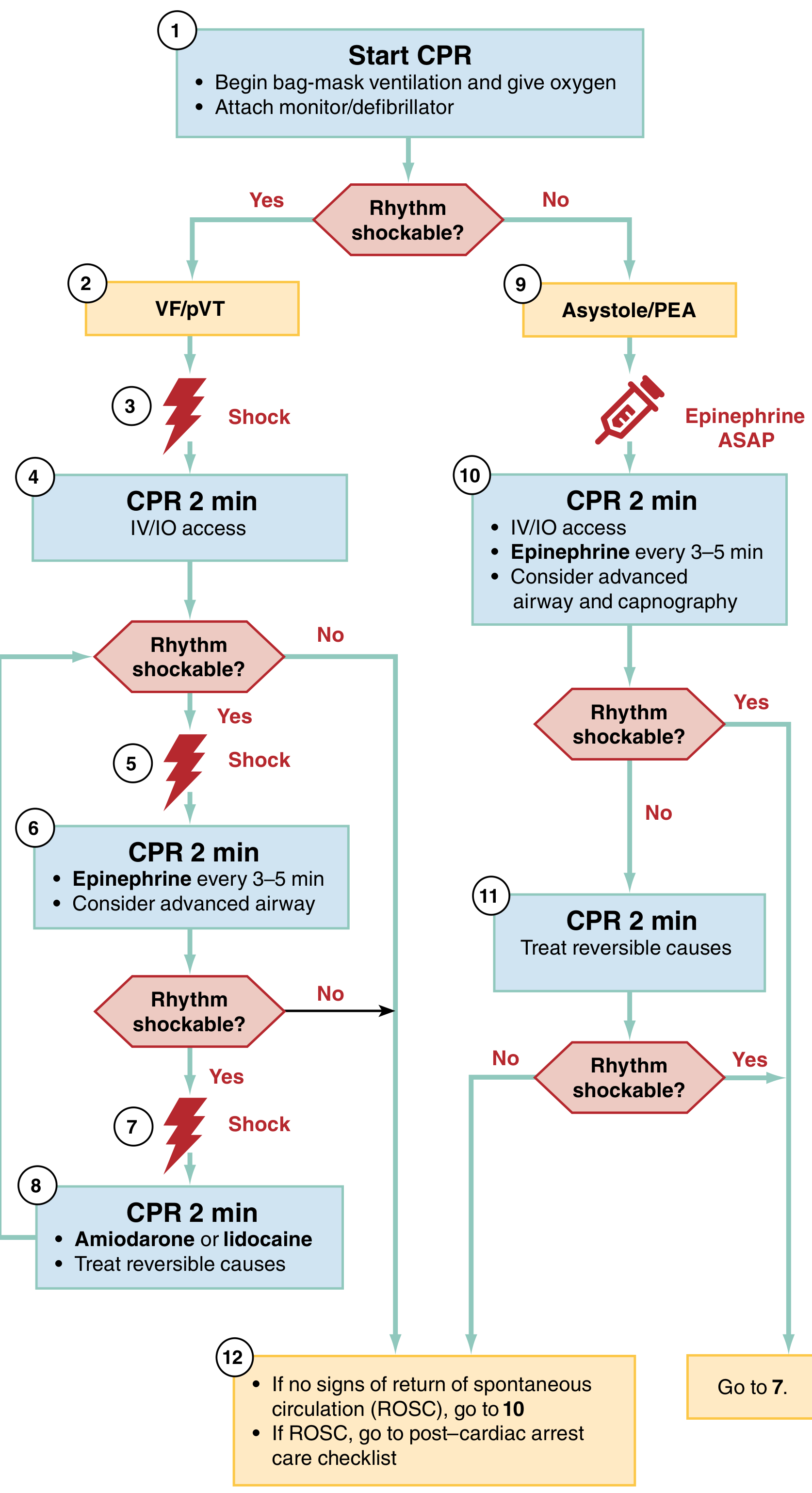
The algorithm splits into two arms based on rhythm:
Shockable (VF / pulseless VT)
- Start CPR + O₂ + attach monitor
- Shock: 2 J/kg
- CPR 2 min + IV/IO access
- Shock: 4 J/kg
- CPR 2 min + Epinephrine every 3-5 min
- Shock: ≥4 J/kg (max 10 J/kg or adult dose)
- CPR 2 min + Amiodarone or Lidocaine + treat reversible causes
- Continue loops; check rhythm every 2 min
Non-Shockable (Asystole / PEA)
- Start CPR + O₂
- CPR 2 min + IV/IO access + Epinephrine ASAP (repeat every 3-5 min)
- Consider advanced airway
- Treat reversible causes (H's and T's)
- Check rhythm every 2 min; if converts to shockable → go to shockable arm
8. DRUG THERAPY IN ARREST
Medications for Pediatric Cardiac Arrest
| Drug | Indication | IV/IO Dose | Key Notes |
|---|---|---|---|
| Epinephrine | All rhythms | 0.01 mg/kg (0.1 mL/kg of 0.1 mg/mL); max 1 mg | Repeat every 3-5 min; ET dose 0.1 mg/kg; HIGH doses (>0.01) do NOT improve survival |
| Amiodarone | VF/pVT, SVT | 5 mg/kg bolus; up to 3 doses for VF/pVT | May repeat x3 for refractory VF; infuse over 20-60 min for SVT |
| Lidocaine | VF/pVT | 1 mg/kg loading dose | Alternative to amiodarone; avoid in WPW |
| Atropine | Bradycardia (vagal/AV block) | 0.02 mg/kg; min 0.1 mg, max 0.5 mg/dose | NOT for routine use in PEA/asystole |
| Adenosine | SVT | 0.1 mg/kg (1st dose, max 6 mg); 0.2 mg/kg (2nd, max 12 mg) | 1st-line for stable SVT; rapid IV push + flush; avoid in WPW/wide QRS |
| Procainamide | SVT (WPW), stable VT | 10-15 mg/kg over 30-60 min | 1st line for SVT in WPW; do NOT combine with amiodarone |
| Calcium chloride | Hyperkalemia, hypocalcemia, CCB OD | 20 mg/kg | Not routine; central line preferred |
| Sodium bicarbonate | Hyperkalemia, TCA overdose | 1 mEq/kg | Not routine use |
| Magnesium sulfate | Torsades de pointes | Max single dose 2 g | Not routine |
| Dextrose | Hypoglycemia | 0.5-1 g/kg (max 25 g) | D10W: 5 mL/kg; D25W: 2 mL/kg; D50W: 1 mL/kg; Do NOT give empirically |
Exam pearl: Epinephrine dose via ETT is 10× IV dose = 0.1 mg/kg of 1 mg/mL (1:1000) concentration. IV/IO dose uses 0.1 mg/mL (1:10,000) concentration.
9. H's AND T's - REVERSIBLE CAUSES
| H's | T's |
|---|---|
| Hypovolemia | Tension pneumothorax |
| Hypoxia | Tamponade (cardiac) |
| Hydrogen ion (acidosis) | Toxins |
| Hypo/Hyperkalemia | Thrombosis (pulmonary) |
| Hypoglycemia | Thrombosis (coronary) |
| Hypothermia |
Pediatric-specific emphasis: Hypoxia and hypovolemia are the most common reversible causes in children.
10. PEDIATRIC BRADYCARDIA ALGORITHM
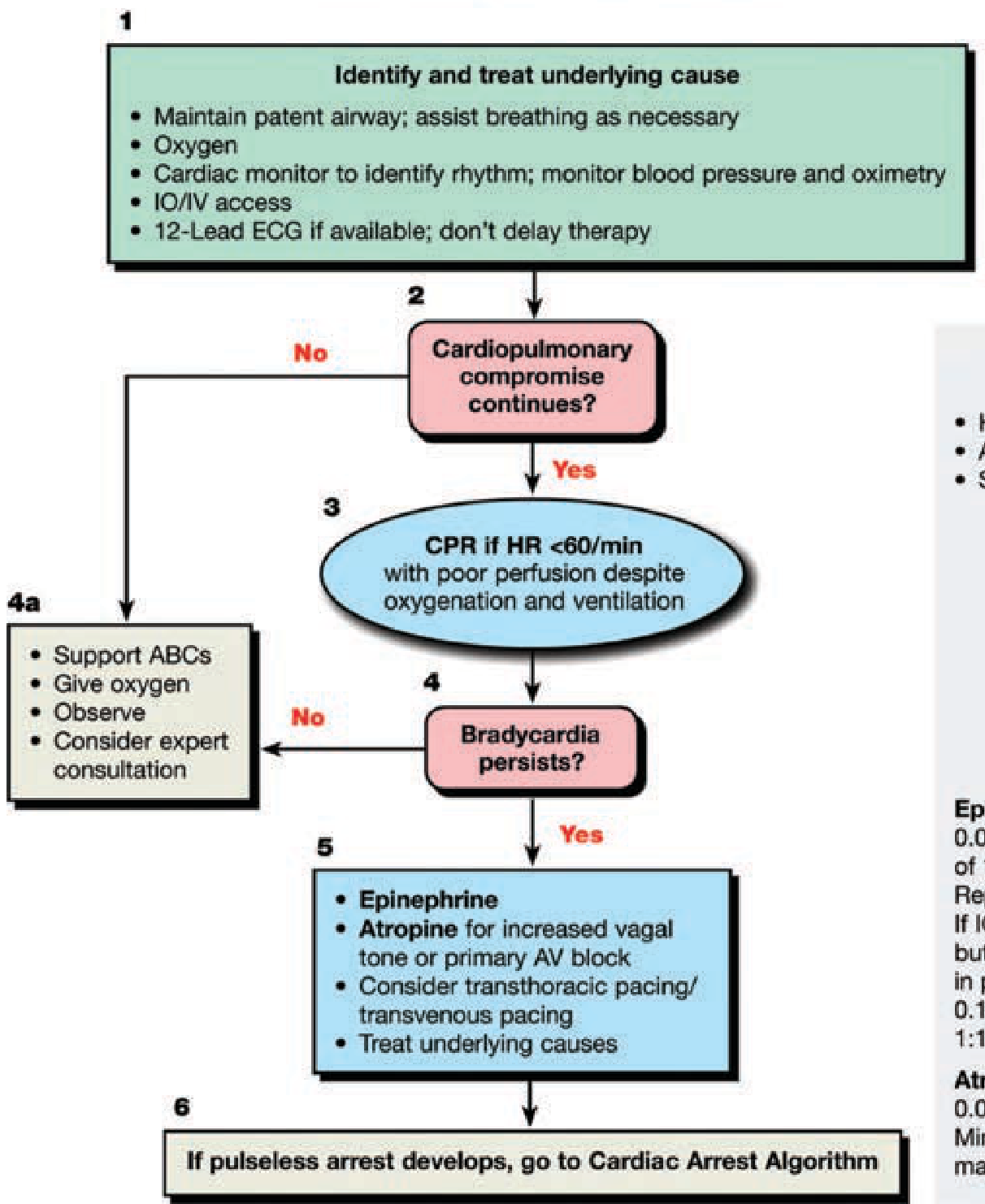
Key steps:
- Identify and treat underlying cause (O₂, airway, IO/IV access)
- Is there cardiopulmonary compromise? (hypotension, AMS, shock)
- No → support ABCs, observe
- Yes → If HR <60/min with poor perfusion despite O₂/ventilation → CPR
- If bradycardia persists:
- Epinephrine 0.01 mg/kg IV/IO (repeat every 3-5 min); or
- Atropine 0.02 mg/kg (for increased vagal tone or primary AV block); min 0.1 mg, max 0.5 mg
- Consider transcutaneous pacing
- If pulseless arrest develops → Cardiac Arrest Algorithm
Exam pearl: In pediatrics, bradycardia is most commonly due to hypoxia - treat the airway first. Atropine is for vagal causes/AV block, NOT hypoxic bradycardia.
11. PEDIATRIC TACHYCARDIA ALGORITHM
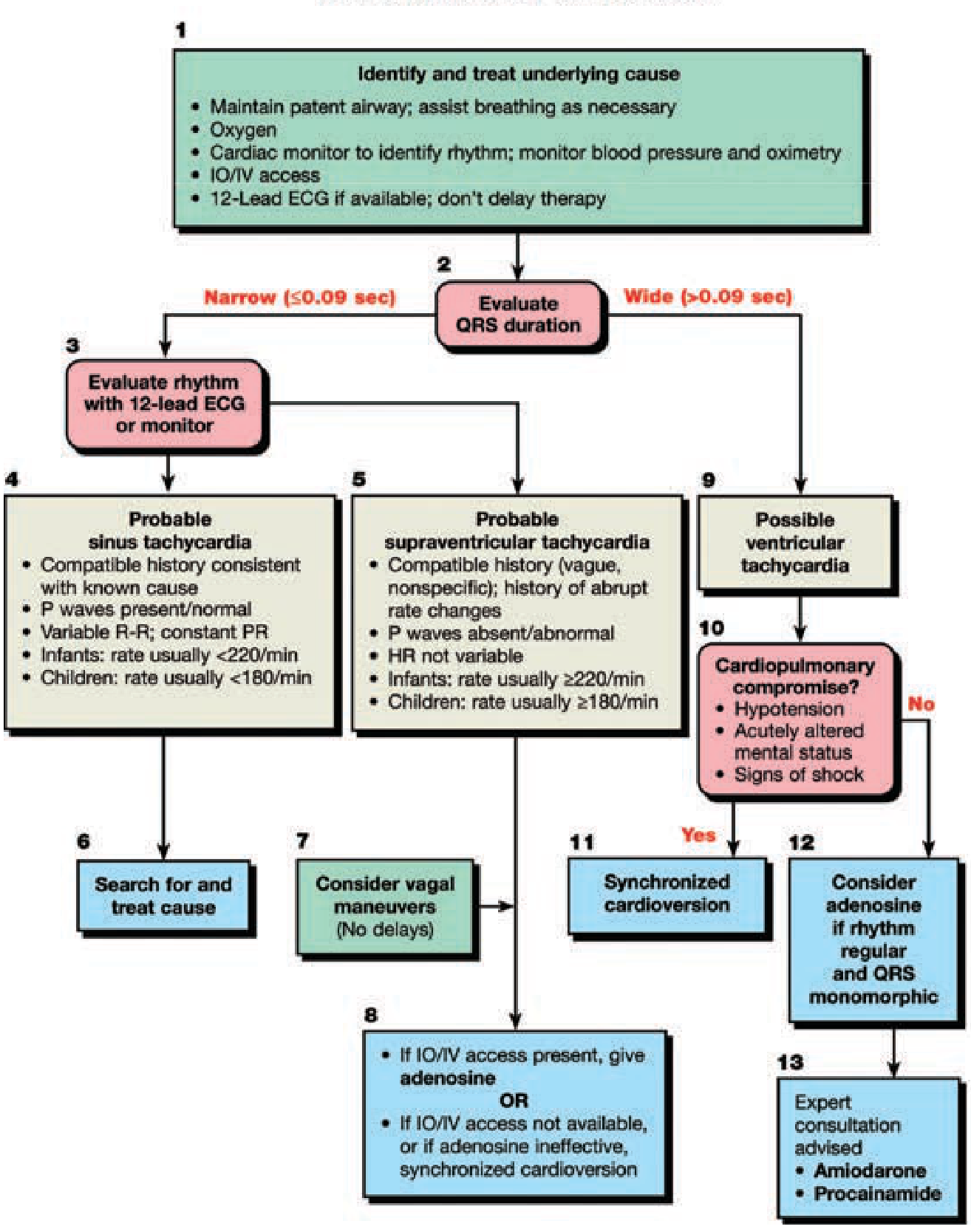
Step 1: Evaluate QRS Duration
- Narrow QRS (≤0.09 sec)
- Wide QRS (>0.09 sec)
Step 2: Sinus Tachycardia vs SVT (Narrow Complex)
| Feature | Sinus Tachycardia | SVT |
|---|---|---|
| History | Compatible with known cause (fever, pain, hypovolemia) | Vague, abrupt onset |
| P waves | Present/normal | Absent or abnormal |
| R-R interval | Variable | Fixed (non-variable HR) |
| Rate - Infants | Usually <220/min | Usually ≥220/min |
| Rate - Children | Usually <180/min | Usually ≥180/min |
| Treatment | Treat underlying cause | Vagal maneuvers → Adenosine → Cardioversion |
SVT Treatment (Narrow Complex)
- Vagal maneuvers (ice water to face in infants; Valsalva in older children) - first-line, no delays
- Adenosine 0.1 mg/kg rapid IV bolus (max 6 mg); if ineffective → 0.2 mg/kg (max 12 mg)
- Synchronized cardioversion 0.5-1 J/kg; if ineffective → 2 J/kg (sedate if possible, do NOT delay)
Wide Complex Tachycardia
- Possible VT - evaluate for cardiopulmonary compromise
- With compromise → Synchronized cardioversion
- Without compromise + regular + monomorphic QRS → consider adenosine; consult expert; consider amiodarone or procainamide
Exam pearl - WPW: Avoid adenosine, digoxin, beta-blockers, calcium channel blockers in WPW. Use procainamide (first-line for SVT in WPW) or cardioversion.
12. DEFIBRILLATION & CARDIOVERSION
| Intervention | Energy | Notes |
|---|---|---|
| Defibrillation (VF/pVT) | 1st: 2 J/kg; 2nd: 4 J/kg; subsequent: ≥4 J/kg (max 10 J/kg or adult dose) | Unsynchronized |
| Synchronized cardioversion (SVT/unstable VT) | 0.5-1 J/kg; repeat at 2 J/kg | Synchronize mode ON |
| AED for children <8 years / <25 kg | Prefer AED with pediatric dose attenuator | Use adult AED if no pediatric attenuator available |
| AED for children ≥8 years / >25 kg | Standard adult AED |
Pad/Paddle placement:
- One contact: right of sternum at 2nd intercostal space
- Other contact: left midclavicular line at xiphoid level
13. POST-CARDIAC ARREST CARE (ROSC)
| Goal | Target |
|---|---|
| Oxygenation | SpO₂ 94-99%; avoid hyperoxia (FiO₂ titration) |
| Ventilation | PaCO₂ 35-45 mmHg; avoid hypocapnia |
| Hemodynamics | MAP ≥5th percentile for age; treat hypotension aggressively |
| Glucose | Normoglycemia; treat hypo- AND hyperglycemia |
| Temperature | Targeted Temperature Management (TTM): 32-36°C; avoid fever |
| 12-lead ECG | Obtain immediately to identify ST-elevation MI or arrhythmia |
| Neurological monitoring | EEG (especially if unresponsive post-arrest) |
Exam pearl: Post-ROSC hypotension and hyperoxia are independently associated with worse neurological outcomes and mortality.
14. PEDIATRIC SEPTIC SHOCK
Recognition
- Tachycardia + signs of decreased perfusion (delayed cap refill >2s, mottling, altered mental status)
- Hypotension is a LATE sign in children (maintained by compensatory tachycardia/vasoconstriction)
- "Compensated shock" = shock WITHOUT hypotension - critical to recognize
Management (Golden Hour Bundle)
- 0-15 min: Obtain IV/IO access; labs (CBC, BMP, lactate, blood culture, glucose); IV/IO fluid bolus
- Fluid resuscitation: 10-20 mL/kg NS or LR bolus; titrate to signs of perfusion; reassess after each bolus
- Antibiotics: Broad-spectrum IV within 1 hour of recognition
- Vasopressors (if fluid-unresponsive): Norepinephrine or epinephrine for fluid-refractory shock
- Hydrocortisone: for catecholamine-refractory shock with suspected adrenal insufficiency
Exam pearl: The 2020 Surviving Sepsis Campaign moved AWAY from mandating aggressive fluid resuscitation (no longer 3×20 mL/kg). Reassess after each bolus and stop if signs of fluid overload (crackles, hepatomegaly, worsening O₂).
15. TERMINATION OF RESUSCITATION
- Pediatric CPA lasting >20 minutes without ROSC is associated with poor outcome
- Exception: Hypothermic arrest - continue until rewarmed ("not dead until warm and dead")
- If hypothermia is responsible and cardiac electrical activity is present, continue resuscitation
QUICK REFERENCE: PALS DOSE SUMMARY CARD
| Drug | Dose | Route | Max |
|---|---|---|---|
| Epinephrine (arrest) | 0.01 mg/kg | IV/IO q3-5 min | 1 mg |
| Epinephrine (ETT) | 0.1 mg/kg | ETT | - |
| Amiodarone (arrest) | 5 mg/kg bolus (×3) | IV/IO | - |
| Lidocaine | 1 mg/kg | IV/IO | - |
| Atropine | 0.02 mg/kg | IV/IO | 0.5 mg |
| Adenosine 1st | 0.1 mg/kg | IV rapid | 6 mg |
| Adenosine 2nd | 0.2 mg/kg | IV rapid | 12 mg |
| Cardioversion | 0.5-1 J/kg → 2 J/kg | Synchronized | - |
| Defibrillation | 2 → 4 → ≥4 J/kg | Unsynchronized | 10 J/kg |
| Glucose (D10W) | 5 mL/kg | IV/IO | 25 g |
| Ca chloride | 20 mg/kg | IV/IO | - |
| NaHCO₃ | 1 mEq/kg | IV/IO | - |
| MgSO₄ | 25-50 mg/kg | IV/IO | 2 g |
TOP 10 PALS EXAM TRAPS
- C:V ratio = 15:2 (pediatric single/2-rescuer without advanced airway) - NOT 30:2
- Minimum atropine dose = 0.1 mg - doses <0.1 mg can cause paradoxical bradycardia
- ETT epinephrine dose = 0.1 mg/kg (10× the IV dose)
- First defibrillation = 2 J/kg, not 1 or 3 J/kg
- Bradycardia + hypoxia in children - treat airway FIRST before medications
- CPR starts at HR <60/min with poor perfusion, not just HR <60
- Adenosine is ineffective or potentially harmful in WPW - use procainamide
- Compression-only CPR is inferior in pediatric asphyxial arrest
- Hypotension is a LATE sign of shock in children
- Hypothermia = continue resuscitation regardless of duration
Sources: Rosen's Emergency Medicine 9e, Ch. 158; Tintinalli's Emergency Medicine 9e, Ch. 109 - AHA 2020 PALS Guidelines
Stroke syndrome complete guide from Harrison, tintinaali and Rosen's emergency book
Stroke syndrome is a major topic - I'll pull all three textbooks simultaneously for maximum coverage.
Finding Sources
Finding Sources
Finding Sources
Finding Sources
Finding Sources
Reading File
Reading File
Reading File
Finding Sources
Reading File
Reading File
Finding Sources
Reading File
Finding Sources
Reading File
Finding Sources
Reading File
Finding Sources
Reading File
Loading Image
Reading File
Reading File
Reading File
Reading File
Reading File
Loading Image
Now I have comprehensive data from all three sources. Let me compile the complete guide:
STROKE SYNDROME - Complete Emergency Medicine Guide
Sources: Rosen's Emergency Medicine 9e (Ch. 87), Tintinalli's Emergency Medicine 9e, Harrison's Principles of Internal Medicine 22e
1. EPIDEMIOLOGY & CLASSIFICATION
| Type | Frequency | Key Features |
|---|---|---|
| Ischemic stroke | ~87% of all strokes | Thrombotic, embolic, or lacunar |
| Intracerebral hemorrhage (ICH) | ~10-15% | 30-day mortality up to 50% |
| Subarachnoid hemorrhage (SAH) | ~3-5% | "Worst headache of life" |
Ischemic stroke subtypes:
- Thrombotic (large vessel): ~1/3 of ischemic strokes; atherosclerotic plaque at vessel bifurcations, stenosis >90%
- Lacunar (small vessel): Terminal arterioles; basal ganglia, thalamus, pons, internal capsule; strongly linked to hypertension (80-90%) and diabetes; range 2 mm to 2 cm; caused by lipohyalinosis
- Cardioembolic: ~1/4 ischemic strokes; AFib = most common mechanism (5× increased risk); mural thrombus, endocarditis, cardiomyopathy
- Cryptogenic: >1/3 cases - no clear cause identified
Exam pearl: Atrial fibrillation is the single most common identifiable cause of cardioembolic stroke.
2. PATHOPHYSIOLOGY (Harrison's)
| CBF Level | Effect |
|---|---|
| Normal | 40-60 mL/100g brain/min |
| <15-18 mL/100g/min | Brain becomes electrically silent; neurologic deficit appears; neurons still viable |
| <10 mL/100g/min | Membrane failure → intracellular Ca²⁺ rise → cell death |
Ischemic penumbra: Surrounding at-risk tissue supplied by collaterals - this is the therapeutic target for reperfusion.
ICH injury mechanisms:
- Mass effect from hematoma
- Coagulation cascade activation
- Inflammatory cytokines release
- Blood-brain barrier disruption → perihematomal edema
- Hematoma expansion (occurs in ~30-40% within first hours)
3. ANATOMY OF STROKE SYNDROMES
Anterior Circulation (80% of brain) - ICA territory
| Artery | Territory | Stroke Features |
|---|---|---|
| Ophthalmic artery (1st branch of ICA) | Optic nerve, retina | Amaurosis fugax - sudden painless monocular blindness (identifies ipsilateral carotid pathology) |
| Anterior cerebral artery (ACA) | Medial frontal/parietal lobe | Contralateral leg weakness > arm (leg is cortically represented medially); abulia, personality change |
| Middle cerebral artery (MCA) | Lateral cortex, lenticulostriate | Contralateral arm/face > leg weakness; contralateral sensory loss; gaze deviation toward lesion; aphasia (dominant); neglect (non-dominant) |
| Lenticulostriate (MCA branches) | Basal ganglia, internal capsule | Pure motor/sensory lacunar strokes |
Posterior Circulation (20% of brain) - Vertebrobasilar territory
| Artery | Territory | Stroke Features |
|---|---|---|
| Posterior inferior cerebellar artery (PICA) | Lateral medulla, cerebellum | Wallenberg syndrome (lateral medullary syndrome): ipsilateral facial pain/numbness, contralateral body pain/temp loss (crossed pattern), ipsilateral Horner's, dysphagia, dysarthria, ataxia, hiccups |
| Basilar artery | Pons, midbrain | "Locked-in syndrome" (bilateral pontine infarct): quadriplegia, anarthria, intact cognition, eye movement preserved; "Top of basilar" syndrome |
| Posterior cerebral artery (PCA) | Occipital lobe, medial temporal | Contralateral homonymous hemianopia with macular sparing; memory loss; thalamic pain |
| Anterior inferior cerebellar artery (AICA) | Lateral pons, inner ear | Ipsilateral facial palsy, hearing loss, vertigo, contralateral body sensory loss |
Classic Lacunar Syndromes
| Syndrome | Location | Features |
|---|---|---|
| Pure motor hemiplegia | Posterior internal capsule or pons | Motor deficit alone (face + arm + leg) - NO sensory, NO cortical signs |
| Pure sensory stroke | Thalamus (VPL nucleus) | Sensory deficit alone - NO motor |
| Ataxic hemiparesis | Pons or internal capsule | Ipsilateral ataxia + contralateral leg weakness |
| Clumsy hand dysarthria | Pons | Dysarthria + hand clumsiness |
| Sensorimotor stroke | Thalamus + internal capsule | Motor + sensory combined |
Exam pearl - Lacunar vs cortical: Cortical signs (aphasia, hemianopia, neglect, agnosia) are ABSENT in lacunar strokes. Their presence points to large vessel or cortical disease.
4. TRANSIENT ISCHEMIC ATTACK (TIA)
Definition (AHA tissue-based): "A transient episode of neurologic dysfunction caused by focal brain, spinal cord, or retinal ischemia, WITHOUT acute infarction."
- Old definition (time-based, now abandoned): symptoms resolve within 24 hours
- ~240,000 TIAs/year in the United States
- 10% stroke risk within 3 months of TIA; 50% of those occur within the first 2 days
- DWI-negative TIAs have a much lower recurrence risk
ABCD² Score (TIA risk stratification)
| Feature | Points |
|---|---|
| Age ≥60 years | 1 |
| BP ≥140/90 on presentation | 1 |
| Clinical features: unilateral weakness | 2 |
| Clinical features: speech disturbance without weakness | 1 |
| Duration ≥60 min | 2 |
| Duration 10-59 min | 1 |
| Diabetes | 1 |
| Total max | 7 |
- Score 0-3: Low risk (~1% 2-day stroke risk)
- Score 4-5: Moderate risk (~4%)
- Score 6-7: High risk (~8%)
5. HEMORRHAGIC STROKE
Intracerebral Hemorrhage (ICH)
Classic presentation: Sudden onset headache + vomiting + severely elevated BP + focal neurologic deficits that progressively worsen (distinguishes from ischemic stroke, which is often maximal at onset).
Most common cause: Hypertensive vasculopathy (lipohyalinosis of small penetrating arteries) + Cerebral amyloid angiopathy (lobar, older patients)
Sites of Hypertensive ICH (Rosen's)
| Location | Frequency | Clinical Presentation |
|---|---|---|
| Putamen | 44% | Contralateral motor/sensory deficit |
| Thalamus | 13% | Limb pain, speech difficulty, eye findings |
| Cerebellum | 9% | Truncal/limb ataxia, vomiting, gait instability |
| Pons | 9% | Pinpoint pupils, quadriplegia, hyperthermia, coma |
| Other cortical | 25% | Variable |
Exam pearl: Cerebellar hemorrhage = neurosurgical emergency. Patient can deteriorate rapidly with brainstem compression. Evacuate if deteriorating or hydrocephalus present.
ICH Score (Predicts 30-day mortality)
| Feature | Points |
|---|---|
| GCS 3-4 | 2 |
| GCS 5-12 | 1 |
| GCS 13-15 | 0 |
| ICH volume ≥30 mL | 1 |
| Intraventricular hemorrhage | 1 |
| Infratentorial origin | 1 |
| Age ≥80 years | 1 |
- Score 0 = 0% mortality; Score 5+ = ~100% mortality
6. STROKE RECOGNITION & SCALES
FAST Mnemonic (Prehospital)
Face drooping | Arm weakness | Speech difficulty | Time to call 911
Los Angeles Prehospital Stroke Scale (LAPSS)
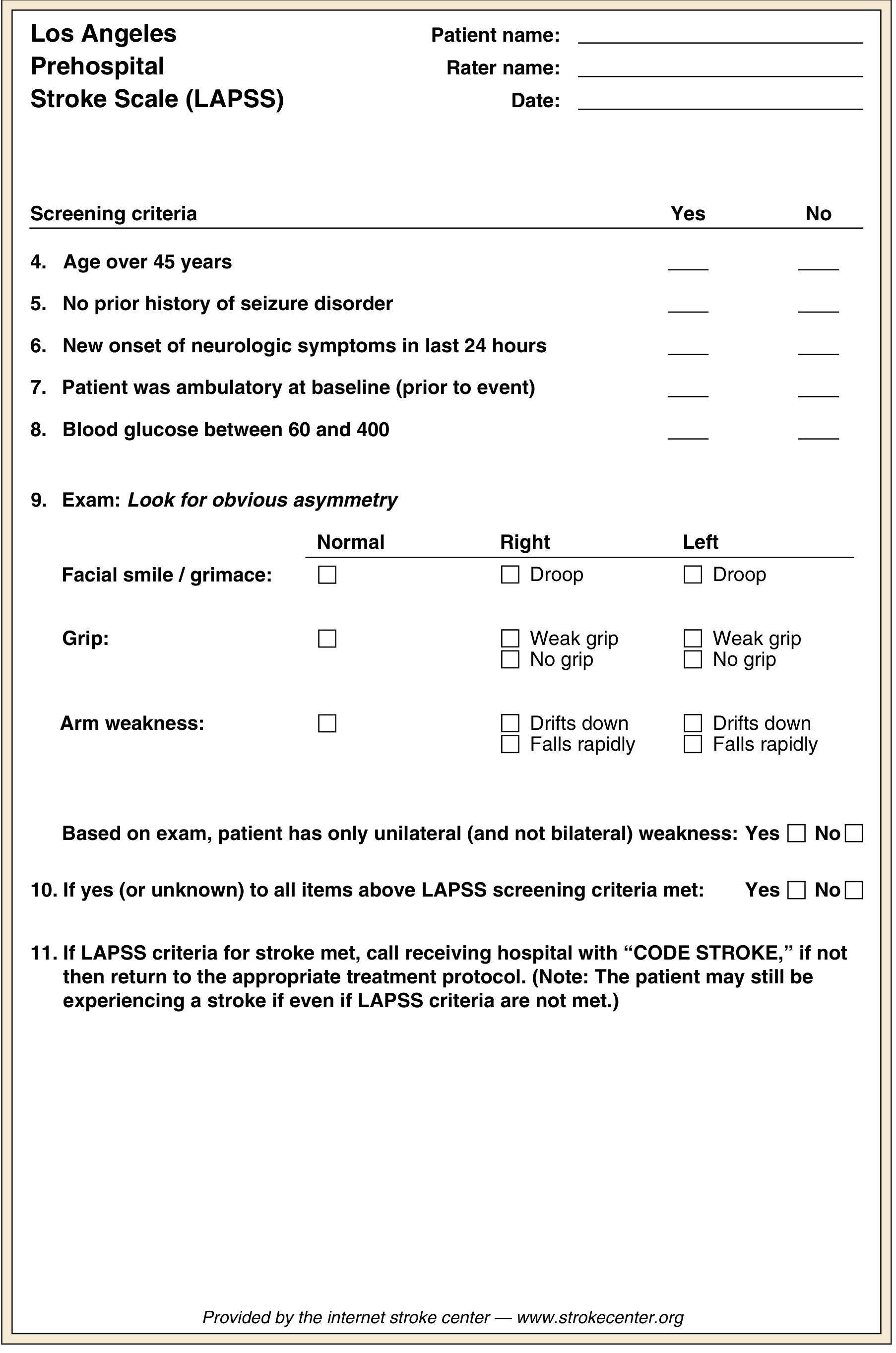
Criteria: Age >45, no seizure history, new symptoms within 24h, ambulatory at baseline, glucose 60-400, unilateral facial/grip/arm weakness asymmetry.
Cincinnati Prehospital Stroke Scale
- Facial droop (asymmetry)
- Arm drift (one arm drifts down in 10 seconds)
- Abnormal speech (slurred, wrong words, no speech)
- Any one = 72% probability of stroke
NIHSS (National Institutes of Health Stroke Scale)
| Score | Severity |
|---|---|
| 0 | No stroke |
| 1-4 | Minor stroke |
| 5-15 | Moderate stroke |
| 15-20 | Moderate-severe |
| 21-42 | Severe stroke |
NIHSS Items (11 categories):
1a. Level of consciousness (0-3)
1b. LOC questions (0-2)
1c. LOC commands (0-2)
2. Best gaze (0-2)
3. Visual fields (0-3)
4. Facial palsy (0-3)
5. Motor arm L/R (0-4)
6. Motor leg L/R (0-4)
7. Limb ataxia (0-2)
8. Sensory (0-2)
9. Best language (0-3)
10. Dysarthria (0-2)
11. Extinction/inattention (0-2)
Exam pearl: NIHSS ≥6 with anterior circulation stroke suggests large vessel occlusion (LVO) and may be candidate for mechanical thrombectomy.
7. IMAGING IN STROKE
Non-Contrast CT Head (First-Line)
- Available 24/7, fast, rules out hemorrhage - the critical first step
- Sensitivity for hemorrhage >95%
- Early ischemic changes (within 3-6 hours):
- Hyperdense artery sign - acute thrombus in vessel (hyperdense MCA sign)
- Loss of insular ribbon - loss of gray-white differentiation in insular cortex
- Sulcal effacement - early cerebral edema
- Loss of gray-white interface - basal ganglia obscuration
- Acute hypodensity - appears by 6-12 hours
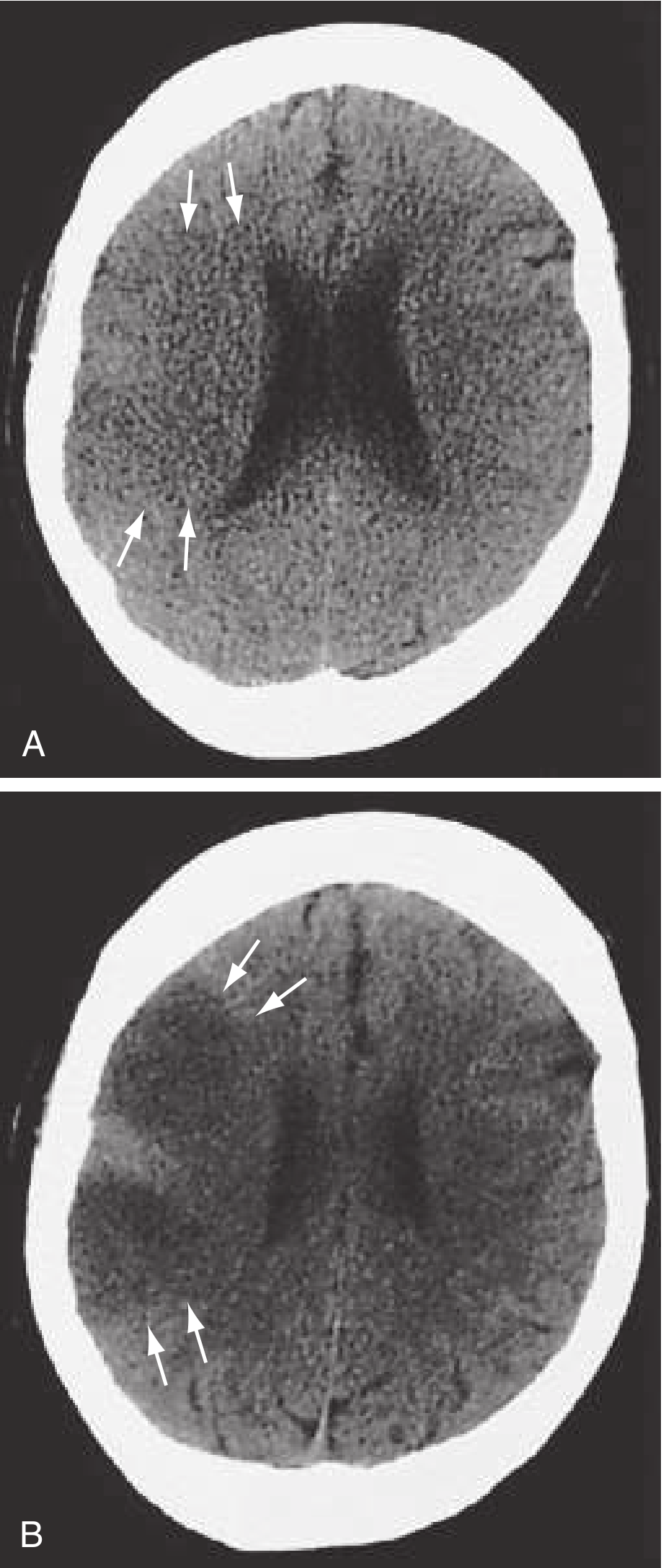
CT Angiography (CTA)
- Identifies large vessel occlusion (LVO) - required for thrombectomy planning
- Can be obtained concurrently with non-contrast CT
- Identifies dissection, stenosis, aneurysm, AVM
CT Perfusion (CTP)
- Used for extended time windows (6-24h)
- Identifies penumbra (salvageable tissue) vs core infarct
- Generally not needed in first 6 hours if tPA criteria met
MRI/DWI-FLAIR
- DWI (diffusion-weighted): shows acute infarction within minutes - most sensitive
- FLAIR: negative within ~4.5h of onset
- DWI-FLAIR mismatch = acute infarct on DWI but NOT on FLAIR → indicates stroke occurred within ~4.5 hours → supports tPA in wake-up strokes (WAKE-UP trial)
8. STROKE TIME GOALS (NINDS Targets)
| Milestone | Target Time |
|---|---|
| Door to physician | 10 minutes |
| Door to CT completion | 25 minutes |
| Door to CT read | 45 minutes |
| Door to treatment (tPA) | 60 minutes |
| Access to neurology | 15 minutes |
| Access to neurosurgery | 2 hours |
9. THROMBOLYTIC THERAPY (IV tPA)
Agents
| Agent | Dose | Administration |
|---|---|---|
| Alteplase (first-line, FDA approved) | 0.9 mg/kg (max 90 mg) | 10% as IV bolus over 1 min; remaining 90% over 60 min |
| Tenecteplase (alternative, AHA 2022) | 0.25 mg/kg (max 25 mg) | Single IV bolus - simpler to administer; preferred if thrombectomy planned |
Time Windows for IV tPA (2019 AHA/ASA)
| Window | Criteria |
|---|---|
| 0-3 hours | Standard eligibility (broadest indication) |
| 3-4.5 hours | Additional exclusions apply (see below) |
| 4.5-9 hours | With CT perfusion mismatch (EXTEND trial) |
| Wake-up / unknown onset | DWI-FLAIR mismatch on MRI (WAKE-UP trial) |
2019 AHA/ASA Eligibility for IV Alteplase
RECOMMENDED (within 3 hours):
- Ischemic stroke with measurable neurological deficit
- Age ≥18 years
- Onset ≤3 hours
ADDITIONAL EXCLUSIONS for 3-4.5 hour window:
- Age >80 years (relative)
- NIHSS >25 (severe stroke)
- Oral anticoagulant use regardless of INR
- History of both prior stroke AND diabetes
ABSOLUTE CONTRAINDICATIONS:
- Any ICH on CT
- SBP >185 or DBP >110 (unless treated to below threshold before tPA)
- Active internal bleeding
- Recent cranial surgery/serious head trauma/prior stroke within 3 months
- History of intracranial hemorrhage
- Platelet count <100,000
- Heparin within 48h with elevated aPTT
- INR >1.7
- Blood glucose <50 mg/dL
- CT shows >1/3 MCA territory hypodensity
- DOAC use within 48 hours (unless labs normal)
Symptomatic ICH after tPA
- Risk: 2-7% overall; highest with most severe strokes
- Usually occurs within 5-10 hours after infusion; very unlikely after 36 hours
- If suspected: STOP tPA infusion immediately
- Labs: fibrinogen, PT/INR, aPTT, CBC, type & crossmatch
- Treat: Cryoprecipitate 10 units IV (target fibrinogen ≥150 mg/dL)
- Neurosurgical consultation
10. BLOOD PRESSURE MANAGEMENT IN STROKE
Ischemic Stroke (Without tPA)
| Scenario | BP Target | Agents |
|---|---|---|
| Not a tPA candidate | Withhold treatment unless SBP >220 or DBP >120 or MAP >130 | Labetalol, nicardipine |
| Specific indications (MI, aortic dissection, HHE, LV failure) | Lower BP carefully | Individualize |
Rationale: BP is auto-regulated and often elevated to maintain penumbral perfusion. Aggressive lowering can extend infarct.
Pre-tPA / Pre-thrombectomy BP Target
- SBP ≤185 / DBP ≤110 before administration
- Agents: Labetalol 10-20 mg IV over 1-2 min; or Nicardipine 5 mg/h IV (titrate to max 15 mg/h); or Clevidipine 1-2 mg/h IV
Post-tPA (First 24 hours)
- Maintain BP <180/105 mmHg aggressively - risk of hemorrhagic transformation
Hemorrhagic Stroke (ICH) BP Management
- Target SBP <140 mmHg within 1 hour (INTERACT2, ATACH-2 trials)
- Reduces hematoma expansion
- Use: Labetalol, nicardipine, clevidipine IV
Hypotension in Stroke
- Low BP worsens ischemic stroke (decreased CPP)
- Treat with fluid bolus; vasopressors if needed
- Goal: maintain MAP appropriate to support cerebral perfusion
11. MECHANICAL THROMBECTOMY (Endovascular)
Indication: Acute ischemic stroke + anterior circulation large vessel occlusion (LVO) + presentation within 24 hours
Criteria (2018 AHA/ASA)
- NIHSS ≥6
- Prestroke mRS 0-1 (independent baseline function)
- ICA or MCA M1 occlusion on CTA
- Age ≥18 years
- CT: ASPECTS ≥6 (Alberta Stroke Program Early CT Score - assesses early ischemic changes)
Time Windows
- 0-6 hours: Standard window, CT-based selection
- 6-16 hours: DAWN/DEFUSE 3 trials - CT perfusion mismatch required
- 6-24 hours: DAWN trial selection criteria
Exam pearl: Tenecteplase is preferred over alteplase when thrombectomy is planned because it is a single bolus (simpler, faster) and showed higher reperfusion rates (EXTEND-IA TNK trial).
12. ICH MANAGEMENT
Reversal of Anticoagulation in ICH
| Anticoagulant | Reversal Agent |
|---|---|
| Warfarin (elevated INR) | Vitamin K 10 mg IV + 4-factor PCC (KCentra) - FASTER than FFP |
| Dabigatran (direct thrombin inhibitor) | Idarucizumab (Praxbind) - specific reversal agent |
| Rivaroxaban/Apixaban (factor Xa inhibitors) | Andexanet alfa (Andexxa) |
| Heparin | Protamine sulfate |
| t-PA induced ICH | Cryoprecipitate 10 units IV (target fibrinogen ≥150 mg/dL) |
ICH General Management
- Airway protection (GCS ≤8 or loss of protective reflexes → intubate)
- BP target SBP <140 mmHg
- Reverse anticoagulation urgently
- Seizures: Treat if clinical or EEG evidence; No prophylactic anticonvulsants
- ICP management: EVD if hydrocephalus + decreased LOC; mannitol or 3-23.4% hypertonic saline; target CPP 50-70 mmHg
- Hyperglycemia and hypoglycemia both worsen outcomes - target normoglycemia
- Fever (>38°C): identify source, antipyretics, avoid hyperthermia
- DNR decisions: Defer new DNR orders until at least the 2nd full day (early DNR orders worsen prognosis due to self-fulfilling prophecy)
Surgical Indications in ICH
- Cerebellar hemorrhage ≥3 cm or neurologic deterioration OR brainstem compression OR hydrocephalus → emergent surgical evacuation
- Supratentorial ICH: generally not beneficial for surgery (STICH trials); consider in young patients with lobar hemorrhage <1 cm from surface
- Hydrocephalus + decreased LOC → external ventricular drain (EVD)
13. SUBARACHNOID HEMORRHAGE (SAH)
Classic presentation: "Thunderclap headache" - sudden onset, worst headache of life (10/10), peaks within seconds to minutes; may be associated with brief LOC, meningismus, photophobia.
Hunt and Hess Grade (clinical)
| Grade | Description | Mortality |
|---|---|---|
| 1 | Asymptomatic or mild headache, slight nuchal rigidity | <5% |
| 2 | Moderate to severe headache, nuchal rigidity, no neurological deficit except CN palsy | 10% |
| 3 | Drowsiness, confusion, or mild focal deficit | 30% |
| 4 | Stupor, moderate to severe hemiparesis | 50% |
| 5 | Deep coma, decerebrate posturing, moribund | >80% |
Diagnosis
- Non-contrast CT head: Sensitivity ~98% within first 6 hours (decreases over time)
- Lumbar puncture: If CT negative but clinical suspicion high - xanthochromia (yellow CSF from bilirubin) or > 2000 RBCs non-clearing across tubes
- CT angiography or cerebral angiography: identifies causative aneurysm
Management
- Secure the aneurysm (coiling preferred over clipping per ISAT trial)
- Nimodipine 60 mg PO every 4 hours × 21 days (reduces vasospasm, improves neurological outcome)
- Euvolemia (not hypervolemia)
- Treat vasospasm: transcranial Doppler monitoring; induced hypertension/hypervolemia if symptomatic
- Avoid fever, hypoxia, hypotension
14. STROKE MIMICS (Differential Diagnosis)
| Mimic | Key Differentiating Feature |
|---|---|
| Hypoglycemia | Most common mimic; check glucose immediately; can cause sustained focal deficits lasting days |
| Todd's paralysis (post-ictal) | History of witnessed seizure |
| Complex migraine | Focal deficits with or without headache; young patient; prior migraines |
| Wernicke encephalopathy | Ophthalmoplegia + ataxia + confusion; mimics cerebellar/brainstem stroke; thiamine deficiency |
| Bell's palsy | LMN facial weakness (forehead involved); no other deficits |
| Subdural/epidural hematoma | Trauma history; progressive course; elder on anticoagulants |
| Brain tumor/abscess | Subacute onset; fever (abscess); history of malignancy |
| Air embolism | Scuba diving, iatrogenic; atmospheric pressure change |
| Hypertensive encephalopathy | Diffuse symptoms, papilledema; BP usually >200/130 |
| Ménière disease | Episodic vertigo + tinnitus + hearing loss - mimics posterior circulation stroke |
| Giant cell arteritis | Elder; severe headache + ESR elevated; can cause visual symptoms and rarely aphasia/hemiparesis |
Exam pearl: Check glucose on EVERY patient with suspected stroke. Hypoglycemia is the most treatable mimic and can be immediately fatal if missed.
15. STROKE MIMICS vs STROKE - KEY CT FINDINGS
| Finding | Significance |
|---|---|
| Hyperdense MCA sign | Acute thrombus in MCA = large vessel occlusion |
| Subarachnoid hyperdensity (star pattern) | SAH |
| Intraparenchymal hyperdensity | ICH |
| Loss of insular ribbon | Early MCA territory ischemia |
| Hypodensity <1/3 MCA territory | Early infarct, tPA still appropriate |
| Hypodensity >1/3 MCA territory | Extensive infarct, increased ICH risk with tPA |
16. SECONDARY STROKE PREVENTION
Antiplatelet Therapy
- Aspirin 325 mg within 24-48 hours of ischemic stroke (not within 24h of tPA)
- Aspirin + clopidogrel (DAPT): For minor stroke (NIHSS ≤3) or high-risk TIA (ABCD² ≥4) - given for 21 days (POINT/CHANCE trials)
Anticoagulation
- Atrial fibrillation: Start oral anticoagulation within 4-14 days of ischemic stroke (depends on infarct size/hemorrhagic risk)
- DOAC preferred over warfarin for nonvalvular AFib
- Warfarin target INR 2.0-3.0 for mechanical valves
BP Control
- Target <130/80 mmHg for secondary prevention
Statin Therapy
- High-intensity statin (atorvastatin 40-80 mg) for all ischemic stroke/TIA patients
Carotid Disease
- Symptomatic stenosis 50-99%: Carotid endarterectomy (CEA) within 2 weeks (greatest benefit)
- Asymptomatic stenosis >60-70%: CEA or medical management depending on center expertise
17. QUICK REFERENCE: STROKE DRUG DOSES
| Drug | Indication | Dose |
|---|---|---|
| Alteplase (tPA) | Ischemic stroke ≤4.5h | 0.9 mg/kg (max 90 mg); 10% bolus, 90% over 60 min |
| Tenecteplase | Ischemic stroke ≤4.5h or pre-thrombectomy | 0.25 mg/kg (max 25 mg) single IV bolus |
| Labetalol | BP lowering pre/post-tPA | 10-20 mg IV over 1-2 min; repeat q10 min; max 300 mg |
| Nicardipine | BP lowering | 5 mg/h IV; titrate by 2.5 mg/h q5-15 min; max 15 mg/h |
| Clevidipine | BP lowering | 1-2 mg/h IV; double every 2-5 min; max 21 mg/h |
| Nimodipine | SAH vasospasm prevention | 60 mg PO q4h × 21 days |
| Mannitol | Elevated ICP/cerebral edema | 0.25-1 g/kg IV bolus |
| 3% NaCl (HTS) | Elevated ICP/cerebral edema | Continuous infusion; target Na 145-155 mEq/L |
| 4-factor PCC | Warfarin reversal in ICH | 25-50 units/kg IV based on INR |
| Idarucizumab | Dabigatran reversal | 5 g IV (two 2.5 g doses) |
| Cryoprecipitate | tPA-induced ICH | 10 units IV over 10-30 min |
| Aspirin | Secondary prevention | 325 mg (initial); 81 mg (maintenance) |
| Levetiracetam | Post-ICH seizures | 1000-1500 mg IV |
18. TOP EXAM TRAPS IN STROKE
- Never start tPA if BP >185/110 - treat BP first, then reassess eligibility
- Glucose check is mandatory before calling stroke - hypoglycemia is the #1 mimic
- "Last known well" time, not "found" time determines tPA eligibility
- Amaurosis fugax = ipsilateral carotid disease (ophthalmic artery is first ICA branch)
- Cerebellar ICH = neurosurgical emergency - can herniate rapidly
- Crossed findings = posterior circulation/brainstem (ipsilateral face + contralateral body)
- Lacunar stroke = no cortical signs (no aphasia, no hemianopia, no neglect)
- CT negative + thunderclap headache = LP for xanthochromia (SAH)
- Do NOT lower BP aggressively in ischemic stroke without tPA - auto-regulation is impaired
- Post-ICH DNR: defer until Day 2 - early withdrawal is associated with worse outcomes
- Tenecteplase preferred if thrombectomy planned (single bolus, EXTEND-IA TNK)
- DWI-FLAIR mismatch allows tPA in wake-up strokes
*Sources: Rosen's Emergency Medicine 9e Ch. 87 (Stroke), Tintinalli's Emergency Medicine 9e Ch. 109, Harrison's Principles of Internal Medicine 22e; AHA/ASA Guidelines 2019 (Ischemic Stroke), 2015 (ICH)*Here's a summary of what's covered in this complete guide:
What's Covered (18 Sections)
The guide integrates content from Rosen's Emergency Medicine 9e (Ch. 87), Tintinalli's Emergency Medicine 9e, and Harrison's Principles of Internal Medicine 22e, organized in exam-focused format:
- Epidemiology - stroke types and frequencies
- Pathophysiology - CBF thresholds, penumbra, ICH injury mechanisms
- Anatomy of stroke syndromes - anterior/posterior circulation, lacunar syndromes with full tables (including Wallenberg, locked-in, ACA/MCA/PCA territories)
- TIA - tissue-based definition, ABCD² score, risk stratification
- Hemorrhagic stroke - ICH sites and frequencies, clinical presentations, ICH Score
- Stroke recognition scales - FAST, LAPSS, Cincinnati, full NIHSS with scoring
- Imaging - CT findings (hyperdense MCA, insular ribbon, etc.), CT with actual case images, CTA, CTP, DWI-FLAIR mismatch
- Time goals - NINDS door-to-needle targets
- IV thrombolysis - alteplase vs tenecteplase, time windows, full inclusion/exclusion criteria, sICH management
- BP management - separate targets for ischemic/pre-tPA/post-tPA/ICH
- Mechanical thrombectomy - LVO criteria, DAWN/DEFUSE3 extended windows
- ICH management - anticoagulation reversal, surgical indications, ICP management
- SAH - Hunt-Hess grade, diagnosis, nimodipine
- Stroke mimics - 10+ conditions with differentiating features
- CT findings table
- Secondary prevention - antiplatelet, anticoagulation, statins, carotid surgery
- Drug doses quick reference card
- Top 12 exam traps
This is a shared conversation. Sign in to Orris to start your own chat.