
Supraglottic airway devices and their classification with few important and unique points about each of them.
Reading File
Now let me search the medical library for supraglottic airway devices in parallel:
Finding Sources
Finding Sources
Excellent results. Let me read the most relevant sections in parallel - Miller's Anesthesia (the gold standard for this topic), Morgan & Mikhail, and Current Surgical Therapy:
Reading File
Reading File
Reading File
Great content from Miller's. Let me now read the extended section from Miller's that covers all the SGA types and the Morgan & Mikhail continuation:
Reading File
Reading File
Reading File
I have excellent content from Miller's block_16. Let me continue reading that section to capture all SGA classifications:
Reading File
I went past the SGA section. Let me go back and read the full SGA classification section from Miller's (approximately lines 1730-1860):
Reading File
I now have very rich content. I can see the classification structure in Miller's - perilaryngeal sealers, cuffless anatomically preshaped sealers, cuffed pharyngeal sealers, 1st vs 2nd generation. The text was truncated but I got extensive content. Let me now fetch the key image of LMA insertion and compile my answer:
Loading Image
Loading Image
I now have comprehensive content from Miller's Anesthesia 10e and Morgan & Mikhail 7e. Let me compile a thorough, well-structured answer.
Supraglottic Airway Devices (SGAs) - Classification and Key Points
A supraglottic airway (SGA), also called an extraglottic airway, is a family of devices blindly inserted into the pharynx to provide a patent conduit for ventilation, oxygenation, and delivery of anesthetic gases - without tracheal intubation. The LMA was invented by Dr. Archie Brain in 1983 and introduced clinically in 1988, becoming one of the most important developments in both routine and difficult airway management.
Core advantage over face mask: More definitive airway. Core advantage over ETT: Less invasive, better hemodynamic stability, no muscle relaxants required, reduced anesthetic requirements.
Classification Overview
No single universally adopted classification exists. The two most commonly used systems are:
System 1: Donald Miller's Terminology (used in Miller's Anesthesia 10e)
- Perilaryngeal sealers
- Cuffless, anatomically preshaped sealers
- Cuffed pharyngeal sealers
System 2: Generational Classification (most clinically used)
- First-generation SGAs - basic airway + ventilation
- Second-generation SGAs - add gastric access + higher seal pressures + aspiration protection
CLASSIFICATION 1: By Donald Miller's Terminology
1. Perilaryngeal Sealers
These form a seal around the periglottic tissues (laryngeal inlet).
Prototype: LMA Classic (cLMA)
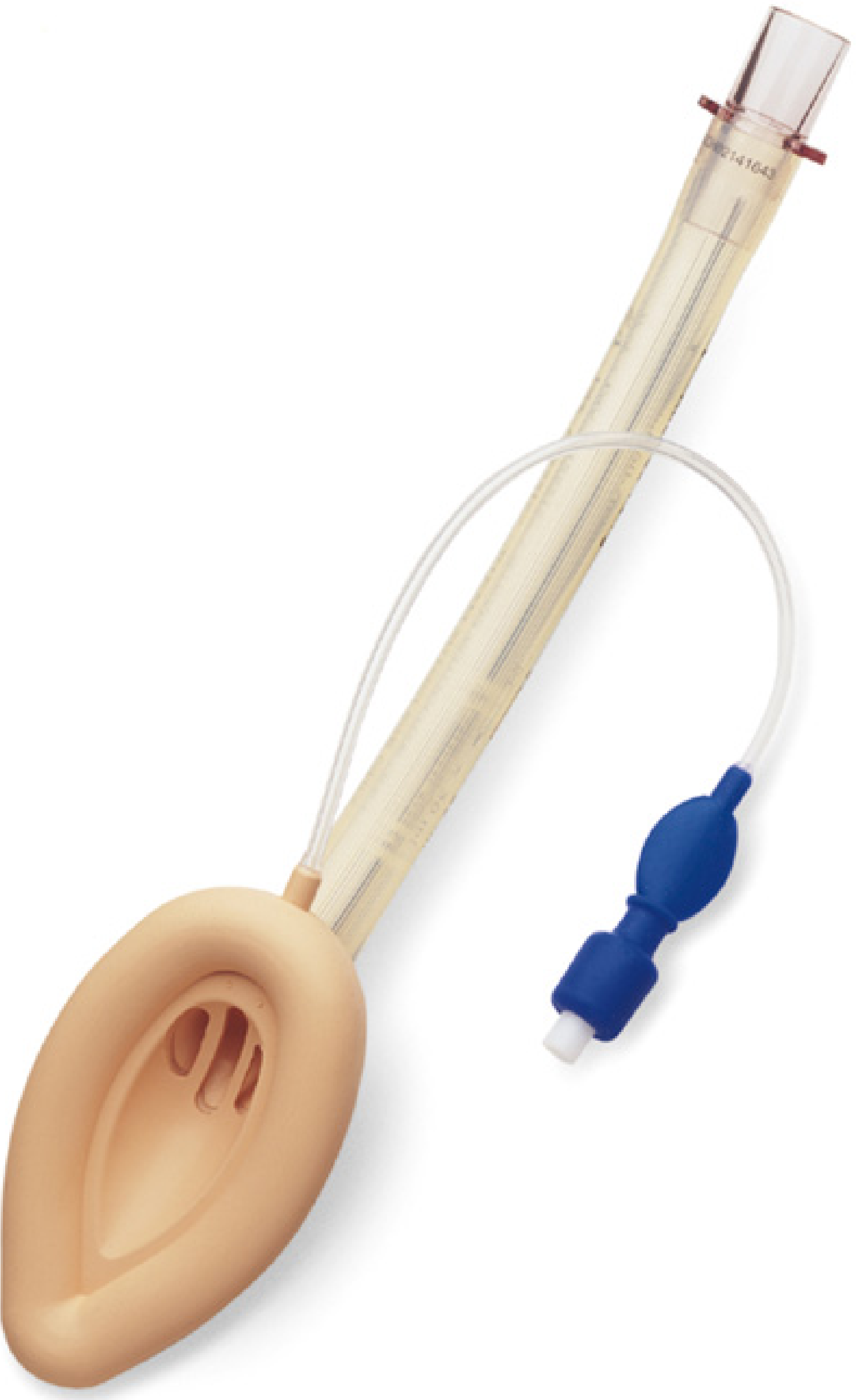
| Feature | Detail |
|---|---|
| Designed by | Dr. Archie Brain, 1983 |
| Reusability | Up to 40 times |
| Sizes | 1 (neonate) to 6 (>100 kg adult) |
| Seal pressure | Up to ~20 cm H₂O for PPV |
| Placement | Blind insertion, tip rests at upper esophageal sphincter |
Key and unique points:
- Cuff bordered by base of tongue superiorly, pyriform sinuses laterally, upper esophageal sphincter inferiorly
- If the esophagus lies within the rim of the cuff, gastric distention and regurgitation become possible
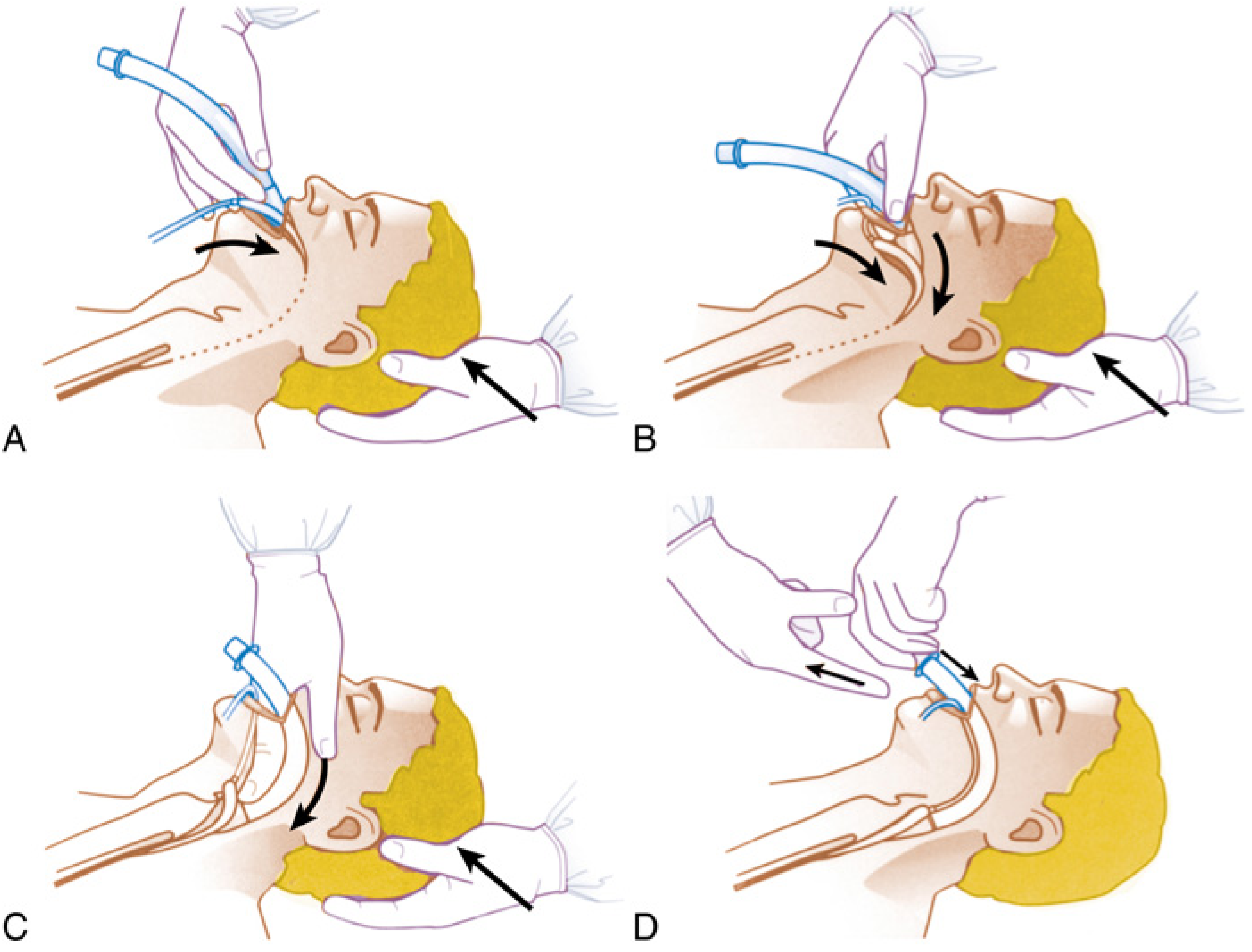
- The longitudinal black line should always face cephalad (toward the upper lip) during insertion
- Partially protects the larynx from pharyngeal secretions but not from gastric regurgitation
- Should remain in place until the patient coughs and opens mouth on command
- PPV pressures >20 cm H₂O may cause gastric insufflation through the relatively low-pressure seal
Other perilaryngeal sealers and their unique features:
| Device | Unique Point |
|---|---|
| LMA Flexible (Armored LMA) | Flexible, kink-resistant wire-reinforced tube - can be positioned away from surgical field; ideal for head & neck and ENT procedures |
| LMA Fastrach (Intubating LMA / iLMA) | Rigid, curved, stainless steel handle; 15 mm wider airway tube; can blindly or fiberoptically intubate through it; comes with dedicated silicone ETT |
| AES LMs with CPV | Cuff pilot valve (CPV) allows real-time continuous cuff pressure monitoring |
| air-Q SP (self-pressurizing) | Cuff inflates using the patient's own positive pressure ventilation - no inflation line, eliminates cuff overinflation; cuff deflates to PEEP level on exhalation, reducing mucosal pressure |
| LMA Unique EVO / air-Q | Design features specifically facilitating tracheal intubation through the device |
2. Cuffless, Anatomically Preshaped Sealers
These devices achieve a seal through their anatomical shape rather than an inflatable cuff.
Key devices:
| Device | Unique Points |
|---|---|
| Cobra PLA (Perilaryngeal Airway) | Wide-bore tube with a cobra-head distal end; cuffless at tip but has an oropharyngeal cuff proximally; sits in the hypopharynx |
| SLIPA (Streamlined Liner of the Pharynx Airway) | Pre-formed hollow shell that fits the pharyngeal anatomy; has an integrated reservoir that captures up to 50 mL of regurgitated fluid before overflow - unique passive aspiration protection without a separate gastric tube |
| Baska Mask | Membrane-based self-sealing cuff; non-inflatable; higher oropharyngeal leak pressure; has an integrated gastric channel |
3. Cuffed Pharyngeal Sealers
These seal further back in the pharynx, occluding both the glottis area and esophagus.
Key devices:
| Device | Unique Points |
|---|---|
| Esophageal-Tracheal Combitube (ETC) | Dual-lumen, dual-cuff device; designed for blind insertion; works whether placed in trachea or esophagus (the more common blind placement); one large oropharyngeal cuff (up to 100 mL) and one distal cuff; ventilation occurs through the blue lumen (esophageal placement, most common) or clear lumen (tracheal placement) |
| King Laryngeal Tube (King LT) | Single lumen, two cuffs (oropharyngeal + esophageal); simpler than Combitube; popular in EMS/prehospital; available in disposable version (King LT-D); ventilation occurs through side apertures between the two cuffs |
| Laryngeal Tube Suction (LTS-II) | King LT variant with a separate suction/gastric drainage lumen |
CLASSIFICATION 2: Generational Classification
First-Generation SGAs
Basic airway management - ventilation only, no gastric access, limited aspiration protection.
| Device | Key Feature |
|---|---|
| LMA Classic | Gold standard; up to 40 reuses; PPV up to 20 cm H₂O |
| LMA Unique | Disposable version of Classic |
| LMA Flexible | Wire-reinforced flexible shaft for head/neck surgery |
| Soft Seal LM | Disposable, single-use |
Limitations of 1st gen: Lower seal pressures, no gastric drainage, no protection against regurgitation/aspiration.
Second-Generation SGAs
Differentiated by three key added features:
- Gastric access channel (separate esophageal drainage port)
- Higher oropharyngeal seal pressures (>20-30 cm H₂O)
- Reduced aspiration risk
Key 2nd Generation Devices:
1. LMA ProSeal (PLMA)
- Has a second gastric drainage tube alongside the airway tube, reaching the upper esophageal sphincter
- Higher seal pressure (~30 cm H₂O) than Classic due to a larger posterior cuff
- Comes with an introducer tool (can also be digitally or with gum-elastic bougie)
- A unique bite block is integrated
- Can confirm esophageal position with a "water test" - if water bubbles back, gastric tube is in airway
2. LMA Supreme (SLMA)
- Single-use, disposable version combining features of the Flexible + ProSeal
- Pre-curved, rigid airway tube (no need for introducer); easier insertion than ProSeal
- Integrated gastric drainage port + bite block
- Seal pressure ~25-30 cm H₂O
- Has a reinforced tip to prevent fold-over on insertion
3. i-gel
- Cuffless - uses a soft, gel-like thermoplastic elastomer (SEBS material) that conforms to the perilaryngeal anatomy via body temperature
- No inflation required - unique among SGAs
- Integrated gastric channel + bite block
- Seal pressure ~25 cm H₂O
- Has a buccal cavity stabilizer to prevent rotation and displacement
- Epiglottic rest prevents downfolding of epiglottis
- Lower mucosal pressure than cuffed devices
4. LMA Fastrach (iLMA) - also a 2nd gen intubating device
- Rigid, curved, metal handle with 15 mm internal diameter airway tube
- Can be used with a dedicated blind-insertion ETT or fiber-optic guided intubation
- Allows blind intubation success rate >95% with practice
- The ETT has a rounded, flexible tip and a reverse bevel to deflect away from the arytenoids
- Can be left in situ for ETT stabilization or removed over the ETT using a stabilizer rod
Comparison Table: Key SGAs
| Device | Generation | Cuff Type | Seal Pressure | Gastric Access | Intubation Conduit | Reusable |
|---|---|---|---|---|---|---|
| LMA Classic | 1st | Inflatable | ~20 cm H₂O | No | Limited | Yes (x40) |
| LMA Flexible | 1st | Inflatable | ~20 cm H₂O | No | No | Yes |
| LMA Unique | 1st | Inflatable | ~20 cm H₂O | No | Limited | No |
| LMA ProSeal | 2nd | Inflatable (larger posterior cuff) | ~30 cm H₂O | Yes | No | Yes |
| LMA Supreme | 2nd | Inflatable | ~25-30 cm H₂O | Yes | No | No |
| i-gel | 2nd | Cuffless (gel) | ~25 cm H₂O | Yes | Limited | No |
| LMA Fastrach (iLMA) | 2nd | Inflatable | ~20-30 cm H₂O | No | Yes (primary) | Yes |
| Combitube | Pharyngeal | Dual cuff | High | Via lumen | No | No |
| King LT | Pharyngeal | Dual cuff | High | No (LTS has it) | No | No/Yes |
High-Yield Unique Points (Exam/Clinical Focus)
| Point | Device |
|---|---|
| Invented by Dr. Archie Brain (1983, clinical use 1988) | LMA Classic |
| Only SGA with NO cuff - gel material conforms to airway | i-gel |
| Rigid metal handle; blind intubation through it possible | LMA Fastrach (iLMA) |
| Water test to confirm correct placement | LMA ProSeal |
| Works whether in trachea OR esophagus | Combitube |
| Cuff self-pressurizes with patient's own ventilation | air-Q SP |
| Wire-reinforced shaft; preferred for ENT/head & neck surgery | LMA Flexible |
| Pre-formed hollow shell captures up to 50 mL regurgitate | SLIPA |
| Buccal stabilizer + epiglottic rest | i-gel |
| Biggest oropharyngeal cuff (up to 100 mL) | Combitube |
| Reusable up to 40 times | LMA Classic |
| Cuff pressure should be monitored with N₂O (diffuses in, raises pressure) | All cuffed SGAs |
| First SGA to gain widespread clinical adoption | LMA Classic |
Contraindications (General SGAs)
- Pharyngeal pathology (abscess, tumor)
- High aspiration risk (pregnancy, full stomach, hiatal hernia, GERD) - relative for 2nd gen; absolute for 1st gen
- Low pulmonary compliance requiring peak inspiratory pressures >30 cm H₂O
- Restricted mouth opening <1.5 cm
- Pharyngeal obstruction
SGA as a Rescue Device
SGAs are a pivotal component of the ASA Difficult Airway Algorithm (DAA). When both BVM ventilation and direct laryngoscopy fail, placement of an LMA is a lifesaving temporizing measure with a 95-99% success rate. The iLMA can then serve as a conduit for definitive intubation.
Sources: Miller's Anesthesia, 2-Volume Set, 10e (Ch. 40); Morgan and Mikhail's Clinical Anesthesiology, 7e (Ch. 19)
This is a shared conversation. Sign in to Orris to start your own chat.