
Answer on Neonatal mortality 6. Marks as per parks latest edition
Neonatal Mortality
Definition
Neonatal Mortality Rate (NMR)
NMR = (Number of deaths of children under 28 days of age in a year / Total live births in the same year) × 1000
- India (2018): NMR = 9 per 1000 live births (both rural and urban areas)
Sub-classification
| Type | Period |
|---|---|
| Early neonatal mortality | Deaths in first 7 days of life |
| Late neonatal mortality | Deaths from day 7 to day 28 |
Causes of Neonatal Mortality (Global, 2018)
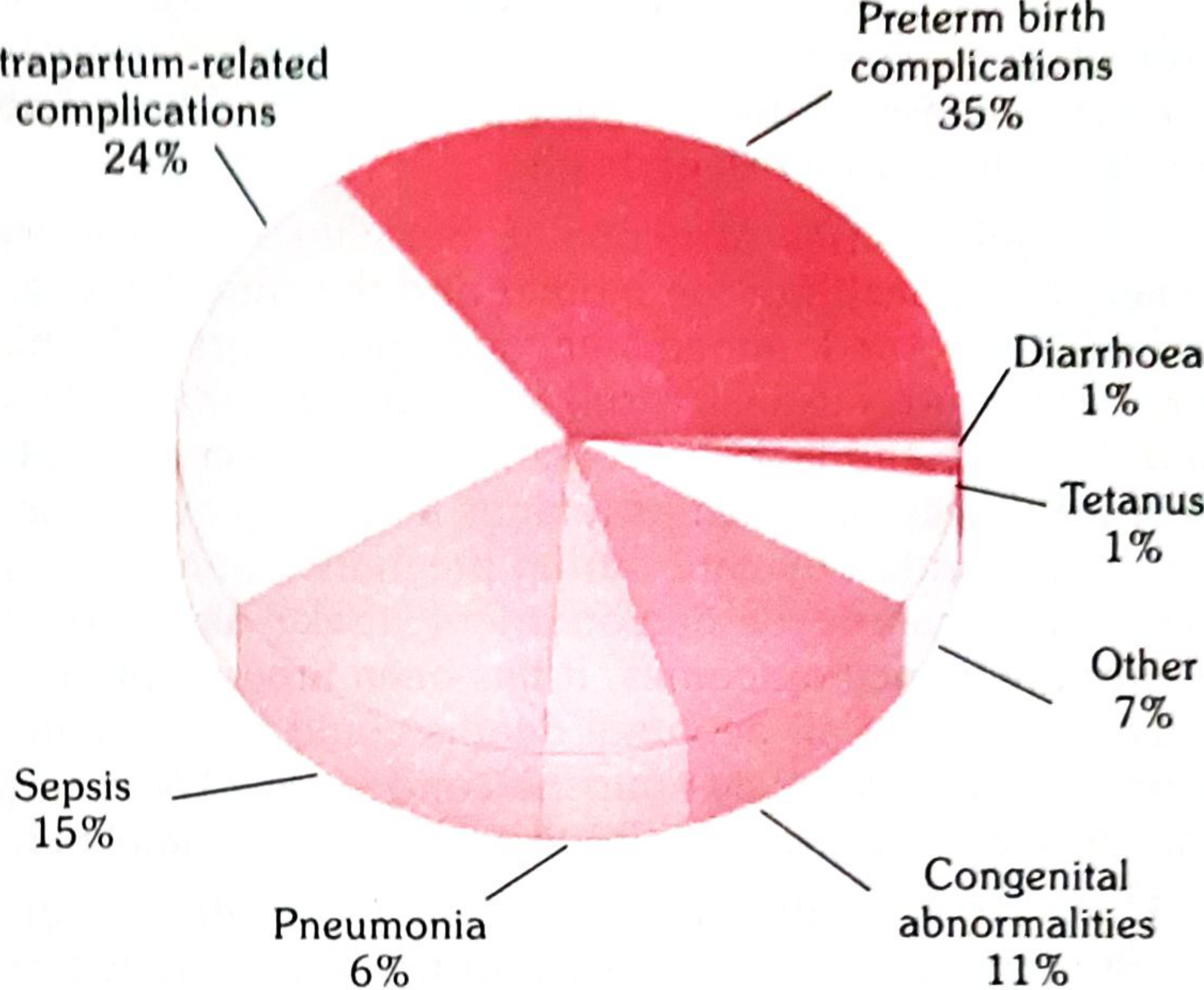
| Cause | Percentage |
|---|---|
| Preterm birth complications | 35% |
| Intrapartum-related complications | 24% |
| Sepsis | 15% |
| Congenital abnormalities | 11% |
| Pneumonia | 6% |
| Other | 7% |
| Diarrhoea | 1% |
| Tetanus | 1% |
- Intrapartum-related complications, low birth weight, and preterm birth are causal factors in 60% of neonatal deaths
- Prematurity and congenital anomalies account for ~60% of newborn deaths, mostly in the first week of life
- ~25% of neonatal deaths are attributable to asphyxia - also mainly in the first week
- In the late neonatal period (after day 7), infections (diarrhoea, tetanus) predominate
- The role of tetanus as a cause of neonatal death has diminished sharply due to intensified immunization
Determinants / Risk Factors
- Neonatal mortality is a measure of "endogenous factors" (e.g., low birth weight, birth injuries)
- Directly related to birth weight and gestational age
- Neonatal mortality rates of babies born to mothers with no education are nearly twice as high as those born to mothers with secondary education or higher
- Family wealth and rural/urban residence remain powerful determinants
- Ending child marriage, reducing adolescent pregnancy, and extending birth intervals are key to reducing newborn mortality risk
Priority Areas to Improve Newborn Health (Park's Table)
| Timing | Key Interventions |
|---|---|
| Before/during pregnancy | Delayed childbearing, well-spaced pregnancies, well-nourished mother, tetanus & rubella immunization, female education, prevention of HIV MTCT |
| During pregnancy | Early antenatal contact, birth preparedness, treatment of anaemia, infections (malaria, syphilis), good diet |
| During & soon after delivery | Skilled birth attendant, newborn resuscitation, warmth & cleanliness, cord/eye/skin care, early exclusive breastfeeding, special care for preterm/LBW |
| First month of life | Early postnatal contact, exclusive breastfeeding support, prompt disease detection, immunization, protection of girl child |
International Comparisons (IMR, 2018)
| Country | IMR 1990 | IMR 2018 |
|---|---|---|
| India | 88 | 32 |
| Bangladesh | 100 | 25 |
| Japan | 5 | 2 |
| World average | 63 | 29 |
- World IMR (2018): ~29 per 1000 live births
- Developed countries: 4 per 1000 | Least developed: 46 per 1000
RMNCH+A
RMNCH+A Strategy (2013)
Background / Launch
- In June 2012, the Governments of India, Ethiopia, USA and UNICEF convened the "Global Child Survival Call to Action: A Promise to Keep" summit in Washington, DC.
- More than 80 countries pledged to reduce child mortality to ≤ 20 per 1000 live births in every country by 2035.
- In February 2013, the Government of India launched "A Strategic Approach to RMNCH+A in India" at its own historic Summit on Call to Action for Child Survival.
- RMNCH+A became the heart of the National Health Mission (NHM).
The "+" (Plus) Significance
- Including adolescence for the first time as a distinct life stage
- Linking maternal and child health to reproductive health, family planning, adolescent health, HIV, gender, preconception care, and PCPNDT
- Linking home and community-based services to facility-based care
- Ensuring linkages, referrals, and counter-referrals between PHC, CHC, and District Hospital (primary, secondary, tertiary levels)
Five Pillars (Thematic Areas)
| Pillar | Focus |
|---|---|
| R - Reproductive Health | Family planning, RTI/STI, comprehensive abortion care |
| M - Maternal Health | ANC, skilled delivery, EmOC, postnatal care |
| N - Newborn Health | Essential newborn care, home-based newborn care (ASHA), SNCUs |
| C - Child Health | Immunization, IMNCI, RBSK (4Ds), nutrition |
| +A - Adolescent Health | ARSH clinics, IFA, menstrual hygiene, peer educators |
5 × 5 Matrix
- 5 high-impact interventions across each of the 5 thematic areas
- 5 cross-cutting and health systems strengthening interventions
- Minimum essential commodities
Goals and Targets (12th Five Year Plan, 2012-2017)
| Indicator | Target by 2017 |
|---|---|
| Infant Mortality Rate (IMR) | 25 per 1000 live births |
| Maternal Mortality Ratio (MMR) | 100 per 1,00,000 live births |
| Total Fertility Rate (TFR) | 2.1 |
Implementation Strategies - Area-wise
1. Reproductive Health
- Focus on spacing methods - PPIUCD at high caseload facilities
- Home Delivery of Contraceptives (HDC) and Ensuring Spacing at Birth (ESB) through ASHAs
- Pregnancy Testing Kits ("Nischay Kits"), comprehensive abortion care
- Quality sterilization services
2. Maternal Health
- Use MCTS (Mother and Child Tracking System) for early registration and full ANC
- Detect high-risk pregnancies (including severely anaemic mothers)
- Equip delivery points with trained HR; access to EmOC at FRUs
- Distribution of Misoprostol to selected women in 8th month of pregnancy
- Strengthen referral system for high-risk pregnancies
3. Newborn Health
- Early initiation and exclusive breastfeeding
- Home-based newborn care through ASHA
- Essential Newborn Care and resuscitation at all delivery points
- Special Newborn Care Units (SNCUs) with trained HR
- Community-level use of Gentamycin by ANM
4. Child Health
- Complementary feeding, IFA supplementation, nutrition focus
- Diarrhoea management with ORS and Zinc
- Management of pneumonia
- Full immunization coverage
- Rashtriya Bal Swasthya Karyakram (RBSK) - screening for 4Ds: Birth Defects, Development Delays, Deficiencies, and Diseases
5. Adolescent Health
- Address teenage pregnancy; increase contraceptive prevalence in adolescents
- Community-based services through peer educators
- Strengthen ARSH (Adolescent Reproductive and Sexual Health) clinics
- Roll out National Iron Plus Initiative with weekly IFA supplementation
- Promote menstrual hygiene
Cross-Cutting Interventions
- Bring down out-of-pocket expenses - JSSK, RBSK, and other free entitlements
- ANMs and nurses to provide specialized, quality care
- Address social determinants through convergence
- Focus on un-served, underserved villages, urban slums
- Performance-based and difficult-area incentives
Health Systems Strengthening
- Caseload-based deployment of HR at all levels
- Ambulances, drugs, diagnostics, reproductive health commodities
- Health education, demand promotion and BCC (Behaviour Change Communication)
- Supportive supervision and HMIS-based scorecard monitoring
- Public grievance redressal and quality assurance
Clinical Services at Facility Level
| Component | Services |
|---|---|
| Reproductive Care | Comprehensive abortion care, RTI/STI management, PPIUCD, sterilization |
| Pregnancy & Childbirth | Skilled obstetric care, newborn resuscitation, EmOC, PPTCT of HIV |
| Newborn & Child Care | Essential newborn care, SNCU, IMNCI, NRC (Nutrition Rehab Centre), immunization |
Key Coverage Targets (Table 14)
- Increase institutional births (Government + accredited private) at 5.6%/year from 61% baseline
- ANC coverage increase at 6%/year from 53% baseline
- Postnatal care increase at 7.5%/year from 45% baseline
- Exclusive breastfeeding increase at 9.6%/year from 35% baseline
- Reduce under-five underweight at 5.5%/year from 45% baseline (NFHS-3)
- Reduce unmet need for family planning at 8.8%/year from 21% baseline
- Reduce anaemia in adolescent girls (15-19 years) at 6%/year from 56% baseline
School health services pls teach in a way I can learn quick too
🏫 School Health Services
🧠 Quick Memory Hook
"School = Future Community" School health is NOT just about checking sick kids - it's about building the health of future generations.
What is School Health Service?
📅 Historical Timeline (India) - Easy to Remember
| Year | Event |
|---|---|
| 1909 | First medical examination of school children - Baroda city |
| 1946 | Bhore Committee - said services were "practically non-existent" |
| 1953 | Secondary Education Committee - emphasized need for medical exams + school feeding |
| 1960 | Govt of India constituted School Health Committee |
| 1961 | School Health Committee Report with recommendations |
🎯 Objectives - Remember "PEEA"
| Objective | |
|---|---|
| P | Promotion of positive health |
| E | Early diagnosis, treatment and follow-up of defects |
| E | Enabling healthful environment |
| A | Awakening health consciousness in children |
| (+) | Prevention of diseases |
🏥 Health Problems of School Children in India
- Malnutrition
- Infectious diseases
- Intestinal parasites
- Skin, Eye & Ear diseases
- Dental caries
📋 12 Aspects of School Health Service
| # | Aspect | Key Detail |
|---|---|---|
| 1 | Health Appraisal | Medical exam at entry + every 4 years; daily morning inspection by teacher |
| 2 | Remedial measures & follow-up | Exams must be followed by treatment; clinics for every ~5,000 children |
| 3 | Prevention of communicable diseases | Immunization, isolation of sick, fumigation |
| 4 | Healthful school environment | Safe water, sanitation, lighting, ventilation, seating |
| 5 | Nutritional services | Mid-day meals, nutrition education, monitoring height/weight |
| 6 | First-aid & emergency care | First-aid box, trained teacher, referral system |
| 7 | Mental health | Identify maladjusted children, counselling |
| 8 | Dental health | Fluoride, toothbrushing, dental clinics |
| 9 | Eye health | Refractive errors, squint, trachoma, Vitamin A |
| 10 | Health education | Most important element - personal hygiene, environment, family life |
| 11 | Education of handicapped children | Help reach maximum potential, multi-agency cooperation |
| 12 | School health records | Cumulative record: DOB, history, exam findings, services provided |
🔍 Health Appraisal - Deeper Look
- History + physical examination
- Tests for vision, hearing, speech
- Routine blood & urine tests
- Nutritional deficiency screening
- Stool examination for parasites
- Tuberculin testing / mass screening
Flushed face, rash, cold symptoms, cough/sneeze, sore throat, rigid neck, nausea/vomiting, red eyes, headache, chills/fever, listlessness, won't play, diarrhoea, body pains, scabies/ringworm, pediculosis (lice)
🍎 Health Education - The MOST Important Element
- Personal hygiene - skin, hair, teeth, clothing, posture; address cigarette smoking
- Environmental health - keeping surroundings clean, participating in community health campaigns
- Family life - healthy attitudes towards human reproduction
💡 Key quote from Park: "Every school child is a health worker" - children carry health messages home to their families!
🏛️ School Health Administration
(a) School Health Committee
- Coordinates between Education and Health departments
- Sets policy, reviews progress
(b) School Health Committees (at school level)
- Principal + teachers + health staff
- Day-to-day implementation
📝 School Health Records - Contents
- Identifying data - name, DOB, parent's name & address
- Past health history
- Physical examination findings and screening test results
- Record of services provided
🧩 Quick Revision Summary
School Health = 12 Aspects
├── EXAMINE: Health appraisal (entry + every 4 yrs)
├── TREAT: Remedial measures + follow-up
├── PREVENT: Communicable disease prevention
├── ENVIRONMENT: Safe school building
├── FEED: Nutritional services (mid-day meals)
├── EMERGENCY: First aid
├── MIND: Mental health
├── TEETH: Dental health
├── EYES: Eye health (Vit A, refractive errors)
├── EDUCATE: Health education (MOST IMPORTANT)
├── SPECIAL NEEDS: Handicapped children
└── RECORD: School health records
⭐ High-Yield Exam Points
| Point | Detail |
|---|---|
| School health started in India | 1909, Baroda |
| Bhore Committee finding | Services "practically non-existent" |
| Exam frequency | Entry + every 4 years |
| Most important aspect | Health education |
| Key person in health education | School teacher (not doctor) |
| Clinic for how many children | 1 clinic per ~5,000 children |
| Famous quote | "Every school child is a health worker" |
| India's main health problems | MIISED (Malnutrition, Infections, Intestinal parasites, Skin/Eye/Ear, Dental) |
What are important causes of infant mortality in India. Describe the organization of healthcare delivery system with objective of reducing infant mortality.
Infant Mortality in India - Causes & Healthcare Organization
Definition & Formula
IMR - India at a Glance
- Highest IMR state: Madhya Pradesh - 48
- Lowest IMR state: Kerala - 7
- Critical infant mortality belt: Odisha, Madhya Pradesh, Assam, Bihar, Chhattisgarh, Uttar Pradesh, Rajasthan (all above national average)
- Rural IMR always higher than urban in all states
PART 1 - Important Causes of Infant Mortality in India
A. Medical Causes (Table 26)
| Neonatal (0-4 weeks) | Post-neonatal (1-12 months) |
|---|---|
| 1. Low birth weight & prematurity | 1. Diarrhoeal diseases |
| 2. Birth injury & difficult labour | 2. Acute respiratory infections |
| 3. Sepsis | 3. Other communicable diseases |
| 4. Congenital anomalies | 4. Malnutrition |
| 5. Haemolytic disease of newborn | 5. Congenital anomalies |
| 6. Conditions of placenta & cord | 6. Accidents |
| 7. Diarrhoeal diseases | |
| 8. Acute respiratory infections | |
| 9. Tetanus |
Key percentages in India:
- Low birth weight - 57% (single largest cause)
- Respiratory infections - 17%
- Congenital malformations - 5%
- Diarrhoeal diseases - 4%
- Birth injury - 3%
- Cord infection - 2%
- Unclassified - 18%
In developing countries: mainly LBW + infections + malnutrition In developed countries: mainly congenital anomalies + anoxia/hypoxia
B. Factors Affecting Infant Mortality
1. BIOLOGICAL FACTORS
- LBW (<2.5 kg) AND high birth weight (>4 kg) are at risk
- Main cause of LBW = poor maternal nutrition
- Risk highest if mother is <19 years or >30 years
- Teen mothers are poorer, less educated
- Highest mortality: 1st born; lowest: 2nd born
- Risk escalates from 3rd child onwards
- Nutritional deficiency deaths 3-4× higher for 5th+ birth order
- Khanna Study (India): IMR highest when births <1 year apart
- WHO study: Same finding in rural India
- Births within 1 year of each other = 2-4× higher risk of death
- Optimal spacing: >2-4 years between births
2. ECONOMIC FACTORS
- Socioeconomic status is most important variable - both directly and indirectly
- IMR highest in slums, lowest in richer localities
- Health care quality and child's environment are closely related to socioeconomic status
3. CULTURAL AND SOCIAL FACTORS
- Neonatal death rate: higher for males
- Post-neonatal death rate: higher for females (due to neglect)
PART 2 - Organization of Healthcare Delivery to Reduce Infant Mortality
1. Prenatal Nutrition
- Improve maternal nutrition - risk of infant death begins before birth
- Food supplementation during pregnancy: extra 500 kcal + 10g protein in last 4 weeks → birth weight increases by ~300g (Indian controlled study)
- ICDS (Integrated Child Development Services) is key programme in India
2. Prevention of Infection
- Universal Immunization Programme (1985) - protection against 9 vaccine-preventable diseases for mothers and children
- Immunization prevents neonatal tetanus, diphtheria, pertussis, measles etc.
- Specially targets EPI diseases
3. Promotion of Breast-feeding
- Most effective single measure for lowering IMR
- Protects against gastrointestinal and respiratory infections
- Protects against protein-energy malnutrition (PEM)
4. Growth Monitoring
- Weigh all infants at least once a month
- Maintain growth charts (Road-to-Health chart)
- Early identification of children at risk of malnutrition
- Low-cost, high-impact technology
5. Family Planning
- Birth limitation + birth spacing substantially lowers IMR
- Risk is greatly enhanced if:
- Last child born <2 years ago
- Mother already has ≥4 children
- Wider birth spacing = improved infant and child survival in all societies
6. Environmental Sanitation
- Safe water supply, proper housing, drainage, control of flies
- Infant risk of dying closely related to environment
- IMR = indicator of social environment quality
7. Provision of Primary Health Care (Organization)
| Level | Role |
|---|---|
| Community (ASHA, dai, ANM) | Antenatal registration, home deliveries, postnatal visits, immunization |
| PHC (Medical Officer) | Prenatal care, high-risk detection, referral |
| CHC / FRU | Management of obstetric complications, EmOC |
| District Hospital | Special Care Baby Units for babies <2000g, tertiary referrals |
- All personnel from obstetrician to local dai must work as a team
- Prenatal care to detect mothers with high-risk factors (toxaemia, APH, diabetes)
- High-risk mothers to be hospitalized and treated
- Special Care Baby Units (SCBUs) for all babies <2000g
- Proper referral services at all levels
8. Socio-economic Development
- Ultimate solution lies in overall socioeconomic development:
- Spread of female literacy (most powerful single determinant)
- Safe water + basic sanitation
- Improved housing
- Growth of agriculture and industry
- Commerce and communication
9. Education (especially Female Education)
- Educated women:
- Avoid early pregnancies
- Space pregnancies better
- Have better personal hygiene knowledge
- Make better use of health services
- Tamil Nadu example: Mid-day meal programme + improved MCH care → IMR fell from 90 (1984) to 57 (1991) → fertility reduced to 2.5 per woman → eventually zero population growth
Quick Summary Mnemonic - Preventive Measures: "PPI-FG SSE"
| Letter | Measure |
|---|---|
| P | Prenatal nutrition |
| P | Prevention of infection (immunization) |
| I | Initiate breast-feeding |
| F | Family planning |
| G | Growth monitoring |
| S | Sanitation |
| S | Special Care Baby Units / PHC organization |
| E | Education (female literacy) |
Preventive geriatrics
Preventive Geriatrics
🧠 Opening Quote to Remember
"You do not heal old age. You protect it; you promote it; you extend it." - Sir James Sterling Ross
Key Definitions
| Term | Meaning |
|---|---|
| Gerontology | Study of physical and psychological changes incident to old age |
| Geriatrics | Clinical care of the aged (= clinical gerontology) |
| Social gerontology | Deals with social problems of the increasing number of old people |
| Experimental gerontology | Research into basic biological problems of ageing (physiology, biochemistry, pathology) |
| Senescence | Deterioration in vitality / lowering of biological efficiency that accompanies ageing |
Size of the Problem
- World elderly population (2019): 694 million (540 million in developing countries)
- India (2019): 9.3% of total population above 65 years
- By 2025: elderly expected to exceed 1.2 billion globally
- Countries with highest proportion of elderly: Italy and Japan (~24% and 16% respectively)
- Brings social, economic, and healthcare policy challenges
Health Problems of the Aged
(1) Problems Due to the Ageing Process
- Senile cataract
- Glaucoma
- Nerve deafness
- Osteoporosis (affecting mobility)
- Emphysema
- Failure of special senses
- Changes in mental outlook
Note: Biological age ≠ Chronological age. "Years wrinkle the skin, but worry, doubt, fear and self-distrust wrinkle the soul."
(2) Problems Associated with Long-Term Illness
| Disease | Key Points |
|---|---|
| (a) Degenerative cardiovascular diseases | Atherosclerosis, HT, thrombus formation; major cause of death in developed countries; starts after age 40 |
| (b) Cancer | Incidence rises rapidly after age 40; prostate cancer common >65 years |
| (c) Accidents | Fragile bones (decalcification); Fracture neck of femur = very common geriatric problem; more common at HOME |
| (d) Diabetes | ~75% of diabetics are >50 years; leading cause of death in ageing population |
| (e) Diseases of locomotor system | Fibrositis, myositis, neuritis, gout, rheumatoid arthritis, osteoarthritis, spondylitis - cause most discomfort and disability |
| (f) Respiratory illnesses | Chronic bronchitis, asthma, emphysema |
| (g) Genitourinary system | Prostatic enlargement, urinary incontinence, renal problems |
(3) Social and Psychological Problems
🔺 Poverty + Loneliness + Ill-health
- Social isolation, depression, dementia
- Retirement → loss of income, purpose, social role
- Dependence on family, institutional care needs
Potential for Disease Prevention in the Elderly
1. PRIMARY PREVENTION
- Diet and nutrition: Adequate calories, proteins, vitamins (especially Vit D, Vit B12), calcium; avoid obesity
- Physical activity: Regular moderate exercise preserves muscle strength, bone density, cardiovascular fitness, mental health
- Avoidance of risk factors: Stop smoking, reduce alcohol, control hypertension and diabetes
- Immunization: Influenza vaccine annually; Pneumococcal vaccine; Tetanus booster
- Accident prevention: Remove home hazards (loose rugs, poor lighting), use of walking aids, hip protectors
- Social integration: Maintain social contacts, productive activities; combat loneliness
2. SECONDARY PREVENTION
- Periodic health examination / screening for:
- Hypertension
- Diabetes mellitus
- Cancer (colorectal, prostate, breast, cervical)
- Glaucoma and cataract
- Hearing loss
- Osteoporosis (bone density scans)
- Depression and cognitive decline (dementia screening)
- Dental disease
- Geriatric assessment (comprehensive)
3. TERTIARY PREVENTION
- Rehabilitation after stroke, fractures, joint replacement
- Physiotherapy, occupational therapy, speech therapy
- Prevent complications of chronic diseases
- Day-care centres and old-age homes for those unable to live independently
- Home-based care programmes
Implications for Preventive & Social Medicine
- Ageing population = greater demand on health services
- Healthy ageing is a prerequisite for economic growth
- Predicted explosion of NCDs (CVD, cancer, depression) will cause enormous human and social costs unless preventive action is taken
- Developing countries face a double burden of infectious + non-communicable diseases with limited resources
- Modern philosophy: The old must continue as active members of the community
Government Programmes for the Aged in India
| Programme | Details |
|---|---|
| National Policy on Older Persons (1999) | First national policy for elderly welfare |
| Integrated Programme for Older Persons | Day-care centres, mobile medical units, old-age homes |
| Indira Gandhi National Old Age Pension Scheme (2007) | Monthly pension for >65 years below poverty line; ₹200/month central + state contribution |
| National Social Assistance Programme | Old age pension to 4+ million destitute elderly |
| OASIS Project | Old Age Social and Income Security - policy framework |
| HelpAge India | Largest voluntary organization; free cataract ops, mobile medicare units, income generation, adopt-a-gran, disaster mitigation |
| Travel concessions | Indian Railways, Airlines, State Transport |
| Tax concessions | Income tax benefits for senior citizens |
Quick Revision Summary Table
| Aspect | Key Points |
|---|---|
| Philosophy | "Protect, Promote, Extend" old age |
| Triple evils | Poverty + Loneliness + Ill-health |
| Commonest geriatric accident | Fracture neck of femur |
| Most common chronic disease cause of disability | Locomotor diseases |
| Prevention levels | Primary, Secondary, Tertiary |
| India elderly % (2019) | 9.3% above 65 years |
| National policy year | 1999 |
| Key pension scheme | IGNOAS (2007) - for >65 years BPL |
| Largest NGO for elderly | HelpAge India |
What do you mean by adolescence? What aer hte health problems fo adolescents? Enlist preventive and promotive steps requiredot kep (2012) adolescents healthy ni India. Or
Adolescence - Health Problems & Preventive/Promotive Measures
PART 1 - What is Adolescence?
Definition
- It is the transitional phase between childhood and adulthood
- Characterized by rapid physical, psychological, and social changes
- Marked by puberty - the biological process of sexual maturation
Stages of Adolescence
| Stage | Age |
|---|---|
| Early adolescence | 10-13 years |
| Middle adolescence | 14-16 years |
| Late adolescence | 17-19 years |
Key Characteristics
- Biological age of puberty and physical maturation does not vary greatly worldwide
- Adolescence as a stage is influenced by economic development, social/cultural values, and historical traditions
- The age at which development occurs may differ between countries in the same geographic region
India's Adolescent Population
- India has 253 million adolescents (one of the largest adolescent populations in the world)
- Adolescents constitute ~21% of India's total population
PART 2 - Health Problems of Adolescents
1. Nutritional Problems
- Anaemia - most widespread problem
- Prevalence of anaemia in adolescent girls: 72.6% (DLHS 2002-04)
- Severe anaemia: 21.1% in adolescent girls
- Iron deficiency is the main cause
- Undernutrition - low body weight, stunting
- Obesity - emerging problem especially in urban areas
- Micronutrient deficiencies - Vitamin D, B12, folate
2. Sexual and Reproductive Health Problems
- Early marriage and early pregnancy - teen mothers have highest risk of maternal and neonatal mortality
- Unsafe abortions - significant cause of morbidity and mortality
- Sexually Transmitted Infections (STIs) and RTIs
- HIV/AIDS - adolescents are a vulnerable group
- Menstrual problems - dysmenorrhoea, irregular cycles, poor menstrual hygiene
- Unmet need for contraception
3. Mental Health Problems
- Depression, anxiety disorders
- Behavioural problems
- Learning disabilities
- Suicide and self-harm (adolescent suicide is a significant public health issue)
- Body image issues, eating disorders
4. Substance Misuse
- Tobacco (smoking and smokeless)
- Alcohol
- Drug abuse
- India has inadequate information on the true prevalence
5. Injuries and Violence
- Road traffic accidents - leading cause of death in adolescents
- Gender-based violence - domestic, sexual abuse, eve-teasing
- Child marriage and sexual coercion
6. Non-Communicable Diseases (NCDs)
- Risk factor formation begins in adolescence (smoking, sedentary habits, unhealthy diet)
- Hypertension, diabetes - seeds sown in adolescence
- Rheumatic heart disease in low-income groups
7. Communicable Diseases
- Tuberculosis
- Vector-borne diseases (malaria)
- Diarrhoeal diseases, typhoid
- Worm infestations (affecting nutrition)
8. Life-Skills Deficits
- Peer pressure, inability to resist risk behaviours
- Poor decision-making, lack of information on health issues
- Gender inequity - girls especially disadvantaged
PART 3 - Preventive and Promotive Steps for Adolescent Health in India
A. NUTRITIONAL INTERVENTIONS
1. Weekly Iron and Folic Acid Supplementation (WIFS)
- Launched by MoHFW to address high anaemia prevalence
- Covers 10.25 crore adolescents (10-19 years) across rural and urban India
- Key interventions:
- Supervised weekly IFA tablet (1 tablet/week)
- Biannual deworming with albendazole
- Nutrition and health education
- Screening for severe anaemia and referral
2. Kishori Shakti Yojana
- Implemented through ICDS infrastructure
- Targets adolescent girls aged 11-18 years
- Addresses: self-development, nutrition, health, literacy, numerical skills, vocational skills
3. Nutrition Programme for Adolescent Girls
- For undernourished girls (11-19 years) - weight <30 kg (age 11-15 yrs) or <35 kg (age 15-19 yrs)
- 6 kg free food grain per beneficiary per month
- Implemented in 51 identified districts
4. National Iron Plus Initiative (2013)
- Provides IFA supplementation to children, adolescents, and women in reproductive age group
- WIFS for adolescents (10-19 years) is a key strategy
B. RASHTRIYA KISHOR SWASTHYA KARYAKRAM (RKSK) - 2014
- Reaches 253 million adolescents in their own spaces
- Introduces peer-led interventions at community level
- Supported by augmentation of facility-based services
- Broadens focus BEYOND reproductive health to include:
- Life skills
- Nutrition
- Injuries and violence (including gender-based violence)
- Non-communicable diseases
- Mental health
- Substance misuse
C. ADOLESCENT REPRODUCTIVE AND SEXUAL HEALTH (ARSH) PROGRAMME
-
Adolescent Friendly Health Clinics (AFHCs):
- 6,302 AFHCs functional nationally
- Services for >2.5 million adolescents
- Fixed-day clinics at PHC, CHC, and District Hospital levels
- Services: contraceptives, menstrual problems, RTI/STI, ANC, anaemia
- For both married and unmarried, girls and boys
-
Dedicated ARSH Counsellors:
- 881 counsellors providing comprehensive counselling
- Topics: nutrition, puberty, RTI/STI, contraception, delaying marriage, substance misuse, mental health
-
Outreach Activities:
- Schools, colleges, teen clubs, vocational training centres
- Village Health Nutrition Days (VHNDs), health melas
- Collaboration with self-help groups
D. CORE PACKAGE OF ADOLESCENT HEALTH SERVICES (at PHC level)
- Adolescent reproductive health information, counselling and services (pregnancy, contraception, abortion, menstrual problems)
- Tetanus immunization for adolescents
- Nutritional counselling + prevention/management of nutritional anaemia
- STI/HIV/RTI management
- Referral for VCTC, PPTCT, safe termination of pregnancy
- Periodic health check-ups in schools
- Health education activities
- Awareness generation and co-curricular activities
E. OTHER PREVENTIVE AND PROMOTIVE MEASURES
| Area | Measures |
|---|---|
| Mental health | Life skills education, counselling, suicide prevention, stress management |
| Substance misuse | School-based anti-drug programmes, peer education |
| Gender-based violence | Legal framework (Child Marriage Act), girls' education, community sensitization |
| School health | Screening for anaemia, vision, hearing, dental; deworming; micronutrient supplementation |
| Immunization | Tetanus toxoid, HPV vaccine (girls), catch-up vaccines |
| Menstrual hygiene | Scheme covers 152 districts, ~1.5 crore adolescent girls in 20 states |
| Delayed marriage | Legal minimum age (18 for girls, 21 for boys), enforcement |
| Female education | Girl's education linked to delayed marriage, lower fertility, better health outcomes |
F. RMNCH+A STRATEGY (2013)
- Includes adolescence as a distinct life stage for the first time
- Links adolescent health to maternal health, child survival, and family planning
- Works through the continuum of care model across all health facility levels
Quick Revision Summary
Adolescence = 10-19 years (WHO)
India's adolescents = 253 million
Health Problems:
├── NUTRITION: Anaemia (72.6% girls), undernutrition
├── REPRODUCTIVE: Early marriage, STI, unsafe abortion
├── MENTAL: Depression, suicide, substance abuse
├── NCDs: Risk factor formation begins now
├── INJURIES: RTAs, gender-based violence
└── COMMUNICABLE: TB, malaria, worms
Preventive Programmes:
├── WIFS (Iron+Folic acid weekly)
├── RKSK (2014) - peer-led, holistic
├── ARSH + AFHCs (adolescent friendly clinics)
├── Kishori Shakti Yojana
├── National Iron Plus Initiative
└── RMNCH+A (adolescence included for 1st time)
.2 Complementary feeding of infants
Complementary Feeding of Infants
🧠 Quick Memory Hook
Exclusive breast milk (0-6 months) → Add complementary foods at 6 months → Continue breastfeeding up to 2 years or beyond
Definition
- It is a gradual process - NOT sudden withdrawal from the breast
- Starts when breast milk alone is no longer sufficient to meet the growing child's nutritional needs (beyond 6 months)
"Weaning is not sudden withdrawal of child from the breast. It is a gradual process starting around the age of 6 months." - Park's
Why is Complementary Feeding Needed at 6 Months?
| Reason | Detail |
|---|---|
| Nutritional insufficiency | Breast milk alone cannot sustain growth and energy needs beyond 6 months |
| Caloric demand increases | Rapid growth requires more energy and micronutrients |
| Iron stores deplete | Fetal iron stores start depleting by 6 months |
| Developmental readiness | By 6 months, infant can sit with support and has oral motor readiness for semi-solids |
Current National Policy (India)
- Exclusive breastfeeding for the first 6 months (replacing the old 4-6 month range)
- Introduction of complementary foods at 6 months while continuing breastfeeding
- Breastfeeding to be continued up to 2 years or beyond
Principles of Complementary Feeding (Key Rules)
| Principle | Detail |
|---|---|
| Timely | Start at exactly 6 months - not before, not after |
| Adequate | Sufficient quantity, frequency, and energy density |
| Safe | Hygienically prepared and stored |
| Appropriately given | Responsive feeding, age-appropriate texture |
| Locally appropriate | Use home-available foods |
What Foods to Give - A Practical Guide
Sequence of Introduction
| Age | Food type | Examples |
|---|---|---|
| 6 months | Soft semi-solid, single ingredient | Soft cooked rice (kanji), suji (semolina), mashed dal, mashed vegetable |
| 6-8 months | Thick porridge, mashed foods | Rice+dal khichdi, mashed banana, mashed potato, curd |
| 8-10 months | Finely chopped foods | Soft chapatti pieces, finely chopped vegetables, soft cooked egg |
| 10-12 months | Family foods (modified) | Small pieces of family meals |
| 12 months onwards | Regular family foods | Same as family diet, modified in texture |
- Cow's milk
- Fruit juice
- Soft cooked rice
- Suji (semolina)
- Dhal (lentils)
- Vegetables
At 1 year: child should receive solid foods consisting of cereals, pulses, vegetables, and fruits
Frequency of Feeding
| Age | Number of meals/day |
|---|---|
| 6-8 months | 2-3 meals + frequent breastfeeds |
| 8-12 months | 3-4 meals + breastfeeds |
| 12-24 months | 4-5 meals including snacks + breastfeeds |
The Weaning Period - Why It is Critical
"The weaning period is the most crucial period in child development"
- Diarrhoea
- Months of growth failure
- Kwashiorkor (protein deficiency)
- Marasmus (severe caloric deficiency)
- Immunodeficiency
- Recurrent and persistent infections (which may be fatal)
What NOT to Do (Common Mistakes)
| Error | Consequence |
|---|---|
| Starting too early (<6 months) | Increased infection risk; immature gut |
| Starting too late (>6 months) | Growth faltering, iron deficiency, micronutrient deficiencies |
| Sudden weaning (abrupt) | Psychological and nutritional distress |
| Using bottle feeding with formula | Risk of diarrhoea, infections, loss of breastfeeding |
| Giving very dilute, low-energy foods | Inadequate caloric intake, malnutrition |
| Poor food hygiene | Diarrhoea, gastroenteritis |
Local/Home-Made Weaning Foods (Park's Recommendation)
"There is now enough evidence to show that children can be properly weaned by local foods of a kind usually consumed by the older children and adults in their families."
- Rice + dal (khichdi) - excellent protein-calorie combination
- Ragi porridge - rich in calcium and iron
- Suji (semolina) halwa - energy dense
- Banana mash - easy to prepare, energy-rich
- Fortified atta (wheat flour) preparations
Government Targets (National Guidelines, India)
- Enhance complementary feeding rate at 6 months from 33.5% → 75%
- Enhance exclusive breastfeeding (0-3 months) from 55.2% → 80%
- Enhance early breastfeeding (colostrum feeding) from 15.8% → 50%
Baby Friendly Hospital Initiative (BFHI) - Relevance to Complementary Feeding
- Step 6: Do not provide breastfed newborns any food or fluids other than breast milk, unless medically indicated
- Step 9: Counsel mothers on the risks of feeding bottles, teats, and pacifiers
- Step 10: Coordinate discharge with ongoing support
Summary Table - "FAST" Principles of Complementary Feeding
| Frequency | Age-appropriate number of meals per day |
| Amount | Gradually increasing quantity as age advances |
| Safety | Hygienic preparation and storage |
| Texture | Start semi-solid → progress to solid |
High-Yield Exam Points
| Point | Fact |
|---|---|
| Start age | 6 months |
| Continue breastfeeding until | 2 years or beyond |
| Weaning period is | Most crucial period in child development |
| Risk of improper weaning | Kwashiorkor, marasmus, diarrhoea |
| Home-made vs commercial | Home-made preferred (Park's) |
| Legal framework | IMS Act 1992, amended 2003 |
| Government target (CF rate) | 33.5% → 75% |
| Most important principle | Timely + adequate + safe |
Services of coiled under icds
Services Offered Under ICDS
Background
- ICDS is currently the most important scheme in child welfare in India
- Blueprint prepared by the Department of Social Welfare in 1975
- 33 pilot projects launched in October 1975 (4 urban, 19 rural, 10 tribal areas across 22 states)
- Both a preventive and developmental effort
- Implemented through Anganwadi Centres (AWCs)
AWC Population Norms
| Area | Norm |
|---|---|
| Rural/Urban | 1 AWC per 400-800 population |
| Tribal/Hilly/Difficult areas | 1 AWC per 300-800 population |
| Mini-AWC | 1 per 150-400 population |
| Anganwadi on demand | If ≥40 children under 6 years with no AWC |
Objectives of ICDS
- Improve nutritional and health status of children 0-6 years
- Lay foundations for proper psychological, physical and social development
- Reduce mortality, morbidity, malnutrition and school dropout
- Achieve coordination among departments for child development
- Enhance the capability of the mother through nutrition and health education
6 Services of ICDS
Mnemonic: "SIN NRE" Supplementary Nutrition, Immunization, Nutrition & Health Education, Health Check-up, Referral Services, Non-formal Pre-school Education
1. Supplementary Nutrition
| Beneficiary | Calories | Protein |
|---|---|---|
| Child 6-72 months (normal) | 500 kcal | 12-15 g |
| Severely malnourished child | 800 kcal | 20-25 g |
| Pregnant/nursing woman | 600 kcal | 18-20 g |
- Supplementary nutrition given for 300 days/year
- Children weighed every month
- Children below 3 years and pregnant/lactating mothers get "Take Home Ration"
- AWC children get morning snack (milk/banana/egg/seasonal fruit) + hot cooked meal
- Universal scheme - below poverty line is NOT a criterion; all are eligible
- Children with Grade 2 and 3 malnutrition get therapeutic supplementary nutrition
- Grade 4 malnutrition → referred for hospitalization
2. Immunization
- Children immunized against 9 vaccine-preventable diseases
- Expectant mothers receive tetanus immunization
- Services provided through PHC/CHC/sub-centre infrastructure
3. Nutrition and Health Education
- Given to all women 15-45 years of age
- Priority to nursing and expectant mothers
- Imparted through:
- Specially organized courses in villages
- Home visits by Anganwadi Workers (AWW)
- Topics: infant feeding, weaning, personal hygiene, family planning
4. Health Check-up
- Minimum 3 physical examinations
- Iron and folic acid tablets + protein supplements
- High-risk mothers referred to appropriate institutions
- Postnatal care of mother and newborn
- Record of weight and height at periodic intervals
- Watch over developmental milestones
- Immunization
- General check-up every 3-6 months (detect disease, malnutrition)
- Treatment of common diseases (diarrhoea, ARI, dysentery)
- Deworming
- Prophylaxis against Vitamin A deficiency and anaemia
- Referral of serious cases to hospital
5. Referral Services
- Cases beyond the capacity of anganwadi worker are referred
- Serious cases sent to PHC, CHC, or District Hospital
- High-risk mothers referred to FRUs
- Referral for Grade 4 malnutrition
6. Non-Formal Pre-School Education
- For children 3-6 years of age
- Objective: Develop desirable attitudes, values, and behaviour patterns
- Locally produced, inexpensive toys and materials used
- Play-based and creative activities
- Provided at the Anganwadi Centre
Beneficiary-wise Services (The Master Table from Park's)
| Beneficiary | Services Provided |
|---|---|
| Pregnant women | Health check-up, Tetanus immunization, Supplementary nutrition, Nutrition & health education |
| Nursing mothers | Health check-up, Supplementary nutrition, Nutrition & health education |
| Other women (15-45 years) | Nutrition & health education only |
| Children <3 years | Supplementary nutrition, Immunization, Health check-up, Referral services |
| Children 3-6 years | Supplementary nutrition, Immunization, Health check-up, Referral services, Non-formal education |
| Adolescent girls (11-18 years) | Supplementary nutrition, Nutrition & health education |
Delivery Mechanism
- Anganwadi Worker (AWW) - key functionary; delivers most services at the AWC
- Health services (immunization, health check-up, referral) - provided through Sub-centre / PHC / CHC infrastructure
- ICDS is much more than a health programme - it is a social development programme
Funding Pattern
| State/UT | Central : State share |
|---|---|
| General states/UTs | 60 : 40 |
| North-East & Himalayan states | 90 : 10 |
| UTs without legislature | 100% central |
Quick Summary: 6 Services in 10 Seconds
ICDS = 6 Services
1. Supplementary Nutrition (500 kcal/child; 300 days/year)
2. Immunization (9 diseases for children; TT for mothers)
3. Nutrition & Health Education (all women 15-45 yrs)
4. Health Check-up (ANC + PNC + child care)
5. Referral Services
6. Non-formal Pre-school Education (3-6 yrs)
Services of child under icds
Services for Children Under ICDS
Children are Divided into 2 Age Groups:
Group 1: Children BELOW 3 Years (0-3 years)
| Service | Details |
|---|---|
| 1. Supplementary Nutrition | 500 kcal + 12-15 g protein/day (300 days/year); Take Home Ration provided |
| 2. Immunization | As per national immunization schedule (9 vaccine-preventable diseases) |
| 3. Health Check-up | Weight & height recording, milestone monitoring, deworming, Vit A prophylaxis, anaemia prophylaxis, treatment of common illnesses |
| 4. Referral Services | Serious/complicated cases referred to PHC/CHC/hospital |
❌ No non-formal education for this age group (that starts at 3 years)
Group 2: Children 3-6 Years
| Service | Details |
|---|---|
| 1. Supplementary Nutrition | 500 kcal + 12-15 g protein/day; hot cooked meal + morning snack at AWC |
| 2. Immunization | Catch-up doses as needed |
| 3. Health Check-up | Same as above |
| 4. Referral Services | As needed |
| 5. Non-formal Pre-school Education | Play-based learning at AWC; develops attitudes, values, behaviour patterns using locally made toys |
✅ Non-formal education is an additional (5th) service only for the 3-6 year age group
Detailed Breakdown of Health Check-up for Children (Under 6 Years)
| # | Component |
|---|---|
| 1 | Recording weight and height at periodic intervals |
| 2 | Watch over developmental milestones |
| 3 | Immunization |
| 4 | General check-up every 3-6 months (detect disease, malnutrition) |
| 5 | Treatment of common diseases - diarrhoea, dysentery, ARI |
| 6 | Deworming |
| 7 | Prophylaxis against Vitamin A deficiency and anaemia (IFA) |
| 8 | Referral of serious cases to hospital |
Supplementary Nutrition - Caloric Norms for Children
| Child Type | Calories | Protein |
|---|---|---|
| Normal child (6-72 months) | 500 kcal | 12-15 g |
| Severely malnourished child | 800 kcal | 20-25 g |
- Given 300 days per year
- Children weighed every month
- Grade 2 & 3 malnutrition → therapeutic supplementary nutrition
- Grade 4 malnutrition → referred for hospitalization
- Universal - BPL not a criterion; all eligible
Side-by-Side Comparison Table
| Service | <3 years | 3-6 years |
|---|---|---|
| Supplementary Nutrition | ✅ (Take Home Ration) | ✅ (at AWC - hot meal + snack) |
| Immunization | ✅ | ✅ |
| Health Check-up | ✅ | ✅ |
| Referral Services | ✅ | ✅ |
| Non-formal Education | ❌ | ✅ |
Key Exam Points
| Fact | Detail |
|---|---|
| Services for <3 yrs | 4 services (no education) |
| Services for 3-6 yrs | 5 services (includes non-formal education) |
| Calories (normal child) | 500 kcal, 12-15 g protein |
| Calories (malnourished) | 800 kcal, 20-25 g protein |
| Nutrition given how many days | 300 days/year |
| Weight monitoring | Monthly |
| Grade 4 malnutrition | Hospitalization |
| Pre-school education age | 3-6 years only |
Growth surveillance in child
Growth Surveillance in the Child
Definition
Main purpose: To identify children who are not growing normally - so that early intervention can be taken.
Aspects of Growth Surveillance
- Physical growth (weight, height, arm circumference)
- Developmental milestones (motor, language, social)
1. PHYSICAL GROWTH
(a) Weight-for-Age - The Most Important Parameter
"Measurement of weight and rate of gain in weight are the best single parameters for assessing physical growth."
| Age | Weighing Frequency |
|---|---|
| Birth to 1 year | Monthly |
| Second year | Every 2 months |
| 2-5 years | Every 3 months |
This age group (0-5 years) is at greatest risk from growth faltering, so regular monitoring is essential.
| Milestone | Age |
|---|---|
| Gain ≥500 g/month | First 3 months |
| Double birth weight | 5 months |
| Triple birth weight | End of 1st year |
| Quadruple birth weight | 2 years |
| Weight increase in 1st year | ~7 kg |
| Weight gain in 2nd year | ~2.5 kg |
| Weight gain till puberty | ~2 kg/year |
THE GROWTH CHART (Road-to-Health Chart)
First designed by David Morley, later modified by WHO
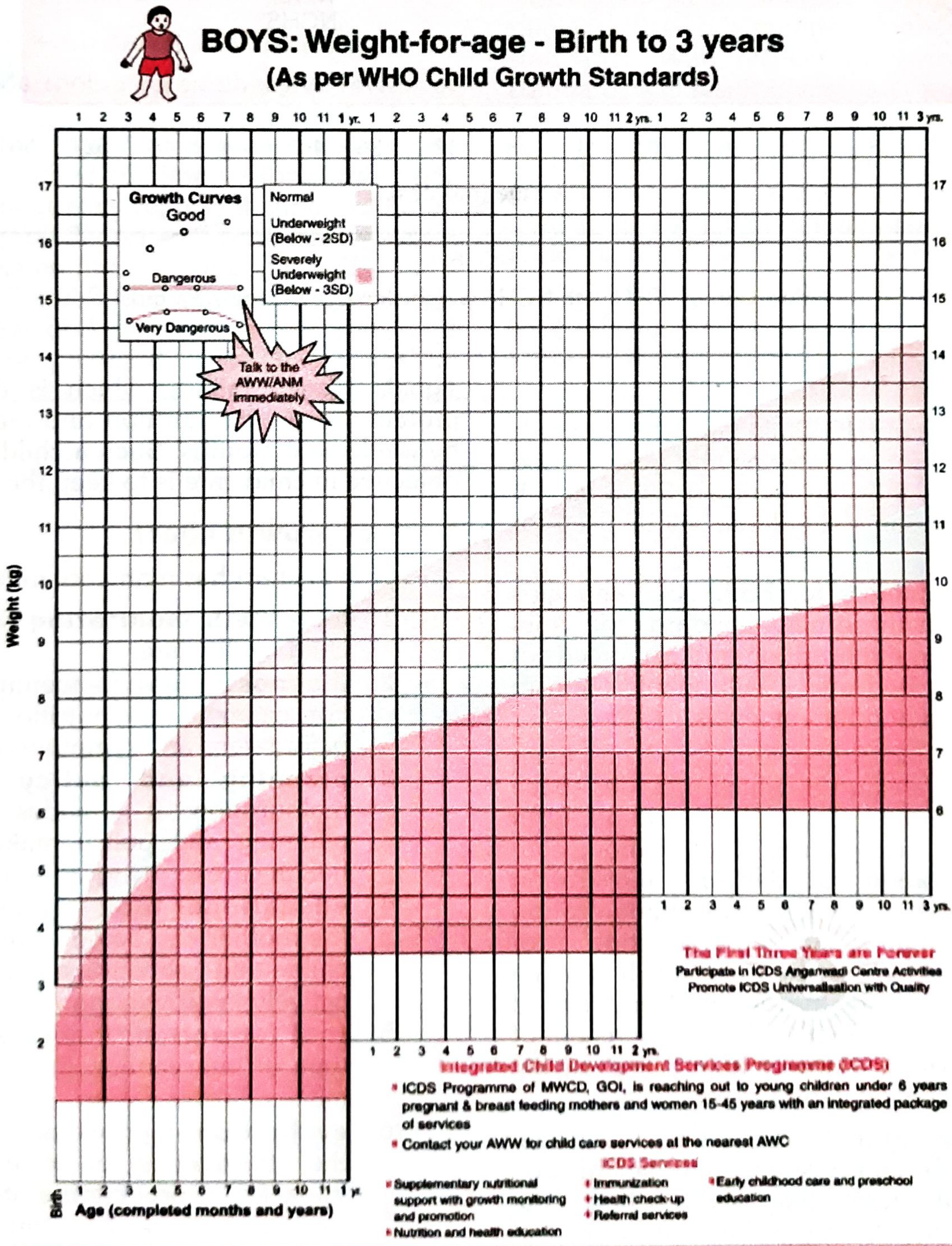
- Weight is the most sensitive measure of growth
- Any deviation from normal is easily detected by comparison with reference curves
- A child can lose weight but not height
WHO Child Growth Standards (2006)
- WHO undertook a comprehensive review in 1993 and conducted the Multicentre Growth Reference Study (MGRS) from 1997-2003
- Conducted in 6 countries: Brazil, Ghana, India, Norway, Oman, USA
- 9,440 healthy breastfed infants and young children (0-60 months) studied
- Generated curves for boys and girls: length/height-for-age, weight-for-age, weight-for-length, weight-for-height, and BMI-for-age
- India adopted WHO Child Growth Standards 2006 in February 2009 (within NRHM and ICDS)
Growth Chart Used in India - Zones
| Zone | Cut-off | Colour |
|---|---|---|
| Normal | Above -2SD | Normal (white) |
| Undernutrition | Below -2SD | Light shading |
| Severely underweight | Below -3SD | Dark shading |
In Maharashtra, chart additionally shows Grade 1, 2, 3, and 4 malnutrition zones
Interpreting the Chart
| Pattern | Interpretation |
|---|---|
| Curve rising (upward) | Normal growth - Good |
| Curve flat (horizontal) | Growth faltering - Warning |
| Curve falling (downward) | Growth failure - Danger |
"Flattening or falling of the child's weight curve signals growth failure - the earliest sign of PEM - and may precede clinical signs by weeks or months."
Mother and Child Protection Card
- Family identification and registration
- Birth record and pregnancy record
- Immunization details
- Breastfeeding and supplementary feeding milestones
- Baby's developmental milestones
- Birth spacing
- Growth chart
Uses of Growth Chart (7 Uses)
| # | Use |
|---|---|
| 1 | Growth monitoring - track child health over time |
| 2 | Diagnostic tool - identify high-risk children, detect malnutrition before symptoms appear |
| 3 | Planning and policy making - provides objective basis for child health planning at local and central levels |
| 4 | Educational tool - mother educated in care of her child and encouraged to participate actively |
| 5 | Tool for action - health worker decides what action to take (counselling, referral, supplementation) |
| 6 | Teaching tool - demonstrates importance of adequate feeding, dangers of diarrhoea |
| 7 | Passport to child health care (internationally recognized) |
Alternative Methods of Growth Monitoring
- Height-for-age (stunting)
- Weight-for-height (wasting)
- Mid-Upper Arm Circumference (MUAC) - independent of age; especially useful when age is unknown
Growth Monitoring vs. Nutritional Surveillance
| Factor | Growth Monitoring | Nutritional Surveillance |
|---|---|---|
| Strategy | Preservation of normal growth | Detection of undernutrition |
| Approach | Educational-motivational | Diagnostic-interventional |
| Target | All infants (individual focus) | Representative sample (community focus) |
| Age of enrolment | Start before 6 months; monthly | Representative ages, longer intervals |
| Group size | Small (10-20 per session) | 50-100 most efficient |
| Weigher | Mothers guided by worker | Trained worker |
| Response | Early home intervention | Nutritional rehabilitation with supplements |
| Response time | Brief (resumption of normal growth) | Long (regain good nutrition in community) |
| Interventions | ORS, vaccines, Vit A, deworming, treatment | Food supplements, food subsidy |
| Referral | Health system + brief food supplements | Malnutrition rehabilitation centre |
Key Exam Points
| Fact | Detail |
|---|---|
| Growth chart designed by | David Morley (modified by WHO) |
| WHO growth standards year | 2006 |
| India adopted WHO standards | February 2009 |
| Frequency of weighing (0-1 yr) | Monthly |
| Birth weight doubles | 5 months |
| Birth weight triples | End of 1st year |
| Most important direction | Direction of growth > position on chart |
| Earliest sign of PEM | Flattening/falling of weight curve |
| Growth chart called | "Passport to child health care" |
| MUAC used when | Age unknown |
What are the causes of high MMR ni India? Explain what steps will you take to reduce level to target level.
Causes of High MMR in India & Steps to Reduce It
PART 1 - Definition & Measurement
- India's MMR has significantly declined but still high
- ~44,000 mothers continue to die every year in India
- India and Nigeria together account for ~35% of global maternal deaths
- Target (RMNCH+A / 12th Five Year Plan): MMR ≤ 100 per 1,00,000 live births by 2017
- SDG target: MMR < 70 per 1,00,000 live births by 2030
PART 2 - Causes of High MMR in India
A. MEDICAL CAUSES
Direct Obstetric Causes (80% of deaths):
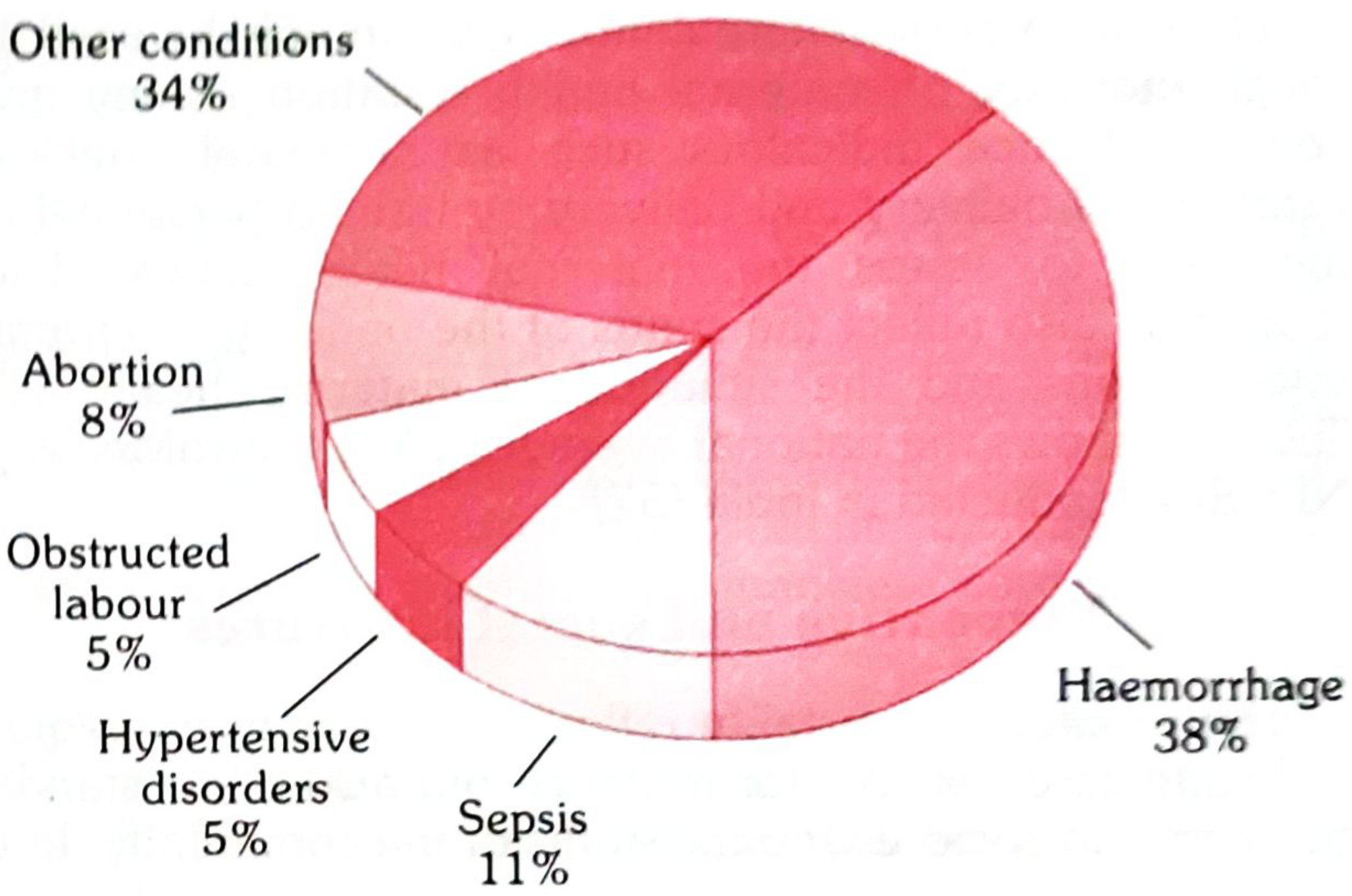
| Cause | % |
|---|---|
| Haemorrhage (mainly PPH) | 38% |
| Other conditions | 34% |
| Sepsis | 11% |
| Abortion (unsafe) | 8% |
| Obstructed labour | 5% |
| Hypertensive disorders (eclampsia) | 5% |
Anaemia (19%) - not only a direct cause of death but also an aggravating factor in haemorrhage, sepsis, and toxaemia
Indirect Obstetric Causes (20% of deaths):
- Anaemia - affects ~50% of all pregnant women; most significant indirect cause
- Cardiac diseases (rheumatic heart disease)
- Renal diseases
- Hepatitis
- Tuberculosis
- Malaria (~10,000 maternal deaths/year globally)
- HIV/AIDS (increasingly important)
- Endocrine and metabolic diseases
- Malignancy
- Accidents
B. SOCIAL AND DETERMINANT FACTORS
| Social Factor | How It Causes High MMR |
|---|---|
| Age at childbirth | Risk highest <20 yrs and >30 yrs; optimal age 20-30 years |
| High parity | Grand multiparity = higher risk; 75% of deaths in high-parity women |
| Too-close pregnancies | Short birth intervals → maternal depletion syndrome |
| Large family size | Nutritional depletion, anaemia |
| Malnutrition | Anaemia → haemorrhage deaths; poor immunity → sepsis |
| Poverty | Cannot access health services; poor nutrition |
| Illiteracy | No awareness of danger signs; no ANC seeking |
| Ignorance and prejudices | Traditional preference for home deliveries, refusal of institutional care |
| Lack of maternity services | Inadequate ANC, EmOC, skilled birth attendants |
| Untrained dais (traditional birth attendants) | Unhygienic delivery - infection; inability to manage complications |
| Shortage of health manpower | Inadequate obstetricians, nurses, ANMs especially in rural areas |
| Poor environmental sanitation | Infections, puerperal sepsis |
| Poor communications and transport | Delay in reaching facility during emergency ("3 Delays") |
| Social customs | Female seclusion, preference for male child, low women's empowerment |
C. THE "3 DELAYS MODEL" (Key concept for understanding MMR)
| Delay | Description |
|---|---|
| Delay 1 | Delay in deciding to seek care (ignorance, poverty, low women's status) |
| Delay 2 | Delay in reaching healthcare facility (poor transport, distance) |
| Delay 3 | Delay in receiving adequate care at the facility (understaffed, no blood, no surgeon) |
D. CURRENT STATUS OF MATERNAL CARE IN INDIA (NFHS-4, 2015-16)
| Indicator | National Average |
|---|---|
| ANC in first trimester | Only 58.6% |
| ≥4 ANC visits | Only 51.2% |
| Full ANC | Only 21.0% |
| IFA for ≥100 days | Only 30.3% |
| Institutional births | 78.9% (rural 75.1%) |
| PNC within 2 days | 62.4% |
PART 3 - Steps to Reduce MMR to Target Level
"The problem of maternal mortality is principally one of applying existing obstetric knowledge through antenatal, intranatal and postnatal services rather than developing new skills." - Park's
1. ANTENATAL CARE (ANC)
- Early registration of pregnancy - ideally in 1st trimester
- At least 4 ANC visits (WHO now recommends 8 contacts)
- Full ANC package: BP check, weight, Hb, urine albumin, TT, IFA
- Dietary supplementation including iron-folic acid for ≥100 days
- Correction of anaemia - the most important preventable indirect cause
- Detection and management of high-risk pregnancies (toxaemia, APH, diabetes, cardiac)
- Anti-malaria prophylaxis + Tetanus immunization
- MCTS (Mother and Child Tracking System) for early registration and follow-up
2. INTRANATAL CARE (During Delivery)
- Clean delivery practices - prevents puerperal sepsis
- Skilled birth attendant (SBA) for every delivery
- Institutional delivery for all, especially high-risk mothers
- Emergency Obstetric Care (EmOC) - essential: blood transfusion, C-section, manual removal of placenta
- First Referral Units (FRUs) at CHC level - equipped for complicated deliveries
- Active management of 3rd stage of labour (AMTSL) - oxytocin/misoprostol to prevent PPH
- MCH Wings - 100/50/30 bedded maternal and child health wings at high caseload facilities
3. POSTNATAL CARE (PNC)
- PNC visit within 48 hours of delivery
- Monitor for postpartum haemorrhage, infection, eclampsia
- Postnatal IFA supplementation
- Breastfeeding support
4. KEY GOVERNMENT PROGRAMMES
| Programme | Role in MMR Reduction |
|---|---|
| Janani Suraksha Yojana (JSY) | Cash incentive for institutional delivery; increases skilled birth attendance |
| Janani Shishu Suraksha Karyakram (JSSK) | Free delivery, C-section, medicines, transport for pregnant women |
| RMNCH+A Strategy (2013) | Comprehensive continuum of care approach; targets EAG states |
| ARSH / Adolescent health | Reduces early marriage and teenage pregnancies |
| National Iron Plus Initiative | Reduces anaemia (leading indirect cause) |
| Safe abortion services (MTP Act) | Eliminates unsafe abortion deaths |
| Family planning | Reduces high parity and closely spaced pregnancies |
5. ADDRESSING SOCIAL FACTORS
- Female education / literacy - most powerful single determinant of MMR
- Delay age of marriage (Child Marriage Restraint Act)
- Women's empowerment - ability to decide to seek care
- Poverty reduction through socioeconomic development
- Improve transport and communication - reduce Delay 2
- Community mobilization through ASHA workers
6. HUMAN RESOURCES & SYSTEMS STRENGTHENING
- Train and deploy more skilled birth attendants, ANMs, obstetricians
- Train traditional dais in clean delivery and danger sign recognition
- Ensure availability of blood banks, blood transfusion services at FRUs
- Maternal Death Review (MDR) - identify cause of every maternal death and take corrective action
- Equip CHC/PHC with EmOC capabilities
7. FAMILY PLANNING
- Limit family to ≤2 children
- Spacing births by ≥3 years
- Reduces high parity and associated risks
- Addresses large unmet need for contraceptives
Summary: The 3 Levels of Action
PREVENT disease: ANC + nutrition + immunization + family planning
TREAT complications: EmOC + FRUs + MCH Wings + skilled care
ADDRESS social causes: Female literacy + women's empowerment + poverty reduction
High-Yield Exam Facts
| Fact | Detail |
|---|---|
| Single most common cause (India) | Haemorrhage (38%) |
| Most important indirect cause | Anaemia |
| Target MMR (RMNCH+A) | ≤100 per 1,00,000 live births |
| SDG target | <70 by 2030 |
| Full ANC coverage in India (NFHS-4) | Only 21% |
| Key scheme for institutional delivery | JSY (Janani Suraksha Yojana) |
| Scheme for free delivery services | JSSK |
| Maternal death review purpose | Identify cause of EVERY death + take corrective action |
| Optimal age for childbearing | 20-30 years |
| 3 Delays | Decision to seek + Reaching facility + Receiving care |
Write an exam based answer on principles of Primary health care
Write an exam based answer on principles of Primary health care
Purchase a top-up credit package to continue now
Write an exam based answer on principles of Primary health care