
Ibs
Reading File
IBS (Irritable Bowel Syndrome) is a functional gastrointestinal disorder characterized by chronic abdominal pain, bloating, and altered bowel habits (diarrhea, constipation, or both) without structural or biochemical abnormality. It is one of the most common GI conditions worldwide, affecting ~10-15% of the population.
Searching sources...
Finding Sources
Searching PubMed
"irritable bowel syndrome"[MeSH Terms] AND treatment
Reading File
Reading File
Reading File
Reading File
The file is truncated. I have rich content from Goldman-Cecil Medicine. Let me now read the diagnosis and treatment sections:
Finding Sources
Finding Sources
Reading File
Reading File
Reading File
Reading File
I now have rich content from Goldman-Cecil Medicine. Let me also fetch the IBS diagnostic flowchart image and get the treatment section more completely:
Loading Image
Reading File
I have enough rich material from the textbooks to provide a comprehensive answer. Let me also fetch the IBS-C treatment algorithm image:
Loading Image
I now have comprehensive textbook content and the diagnostic/treatment algorithms. Here is a full, structured overview of IBS:
Irritable Bowel Syndrome (IBS)
Definition
IBS is a functional bowel disorder characterized by chronic or recurrent abdominal pain associated with alterations in stool form and/or frequency (diarrhea, constipation, or both), without a structural or biochemical cause to explain the symptoms. It belongs to the spectrum of functional GI disorders that can transition between each other over time.
- Goldman-Cecil Medicine, p. 1413
Epidemiology
- Global prevalence: ~4.1% using Rome IV criteria (33 countries, 6 continents)
- More common in women (5.2%) than men (2.9%)
- US/UK/Canada prevalence: ~4.6% by Rome IV
- Incidence: ~38 per 10,000 person-years
- Up to 50% of sufferers never seek care, yet IBS generates ~4.4 million physician visits annually
- Associated with significant work absenteeism, comorbid somatic and psychiatric disorders, and higher rates of unnecessary diagnostic testing and surgery
IBS Subtypes (Rome IV)
| Subtype | Abbreviation | Proportion |
|---|---|---|
| Predominant diarrhea | IBS-D | 35-40% |
| Mixed bowel habits | IBS-M | 35-40% |
| Predominant constipation | IBS-C | ~25% |
| Unclassified | IBS-U | <5% |
Note: Subtypes can transition in the same patient over time.
Pathobiology
IBS is a multifactorial disorder resulting from dysregulation of gut-brain interactions, causing:
- Altered intestinal motility
- Visceral hypersensitivity (heightened pain perception from normal gut stimuli)
- Autonomic nervous system dysfunction
- Impaired stress responsiveness
- Mucosal immune activation
- Gut microbiota alterations
- Abnormal CNS modulation of viscerosensory input
Risk factors include:
- Genetic predisposition (family clustering)
- Adverse childhood experiences
- Post-infectious IBS - developing after acute gastroenteritis (one of the strongest risk factors)
- Psychological stress
- Dietary triggers (especially FODMAPs - fermentable oligosaccharides, disaccharides, monosaccharides, polyols)
Diagnosis (Rome IV Criteria)
Core requirement: Recurrent abdominal pain at least 1 day/week on average over the last 3 months, with symptom onset ≥6 months ago, AND associated with ≥2 of the following:
- Related to defecation
- Change in stool frequency
- Change in stool form/appearance
Supportive symptoms:
- Abnormal stool frequency (≤3/week or >3/day)
- Abnormal stool form (hard/lumpy or loose/watery)
- Straining or urgency
- Incomplete evacuation
- Mucus in stool
- Bloating or abdominal distension
Diagnostic Algorithm
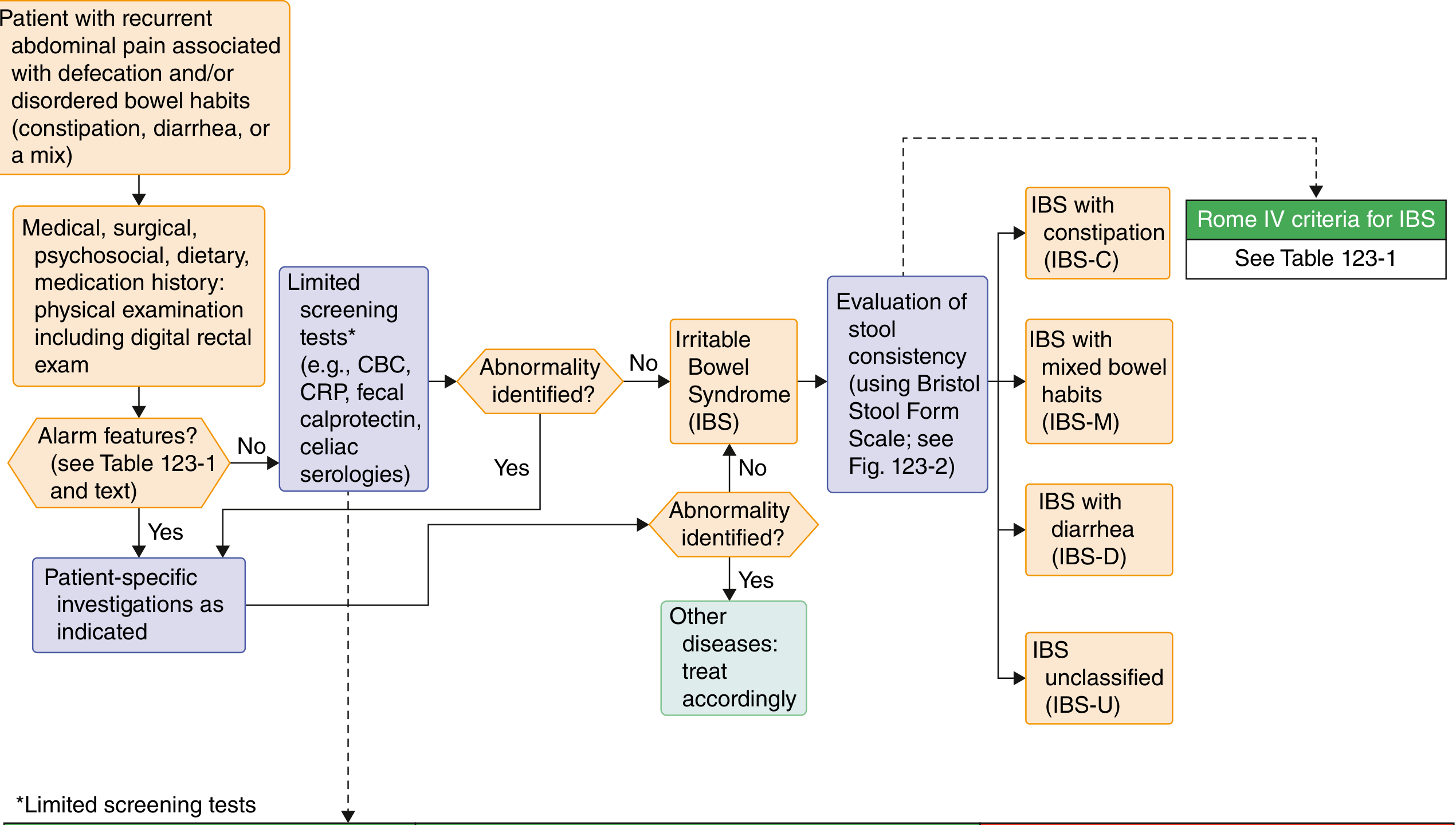
Alarm Features (require further investigation)
- New symptoms at age ≥50 years
- Unintentional weight loss
- Hematochezia or melena (not hemorrhoidal)
- Nocturnal diarrhea
- Anemia
- Palpable abdominal mass or lymphadenopathy
- Family history of colorectal cancer, IBD, or celiac disease
Limited Screening Tests Recommended
| Test | Population |
|---|---|
| Celiac serologies | IBS-D |
| CBC, CRP, fecal calprotectin | All IBS |
| Routine colonoscopy | NOT recommended if <45 years without alarm features |
Treatment
Treatment is symptom-driven and subtype-based. The IBS-C treatment algorithm:
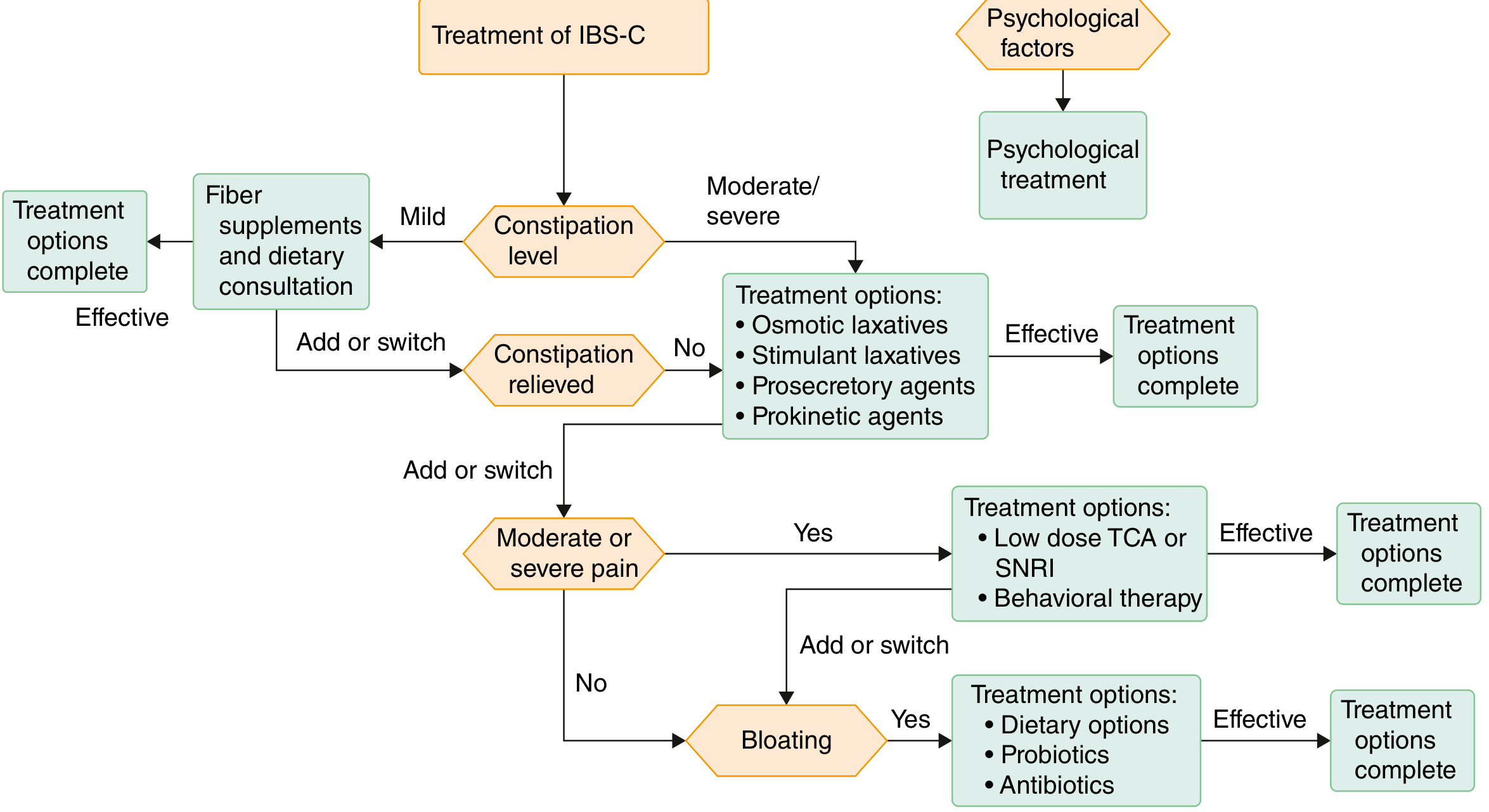
1. General / Lifestyle
- Patient education and reassurance
- Dietary modification: low-FODMAP diet is the most evidence-based dietary approach
- Soluble fiber supplementation (psyllium) for IBS-C; insoluble fiber (bran) may worsen symptoms
- Regular exercise, stress management
2. Pain and Spasm
| Drug | Dose | Notes |
|---|---|---|
| Peppermint oil | 1-2 capsules 3x daily | First-line antispasmodic |
| Hyoscyamine | 0.125 mg 3-4x daily | Anticholinergic; dry mouth, constipation |
| Dicyclomine | 10 mg 3-4x daily | Anticholinergic |
| Amitriptyline (TCA) | 10-25 mg at bedtime (up to 100 mg) | Best for IBS-D and pain |
| Desipramine/Nortriptyline (TCA) | 10-25 mg at bedtime | Pain modulation |
| SSRIs (citalopram, fluoxetine, sertraline) | Standard doses | Better for IBS-C with anxiety/depression |
3. IBS-C (Constipation-predominant)
- Osmotic laxatives: polyethylene glycol 17 g/day, lactulose 10-40 g/day
- Prosecretory agents:
- Linaclotide 290 mcg daily (guanylate cyclase-C agonist)
- Lubiprostone 8 mcg twice daily (chloride channel activator)
- Plecanatide 3 mg daily
- Tenapanor (NHE3 inhibitor)
4. IBS-D (Diarrhea-predominant)
| Drug | Class | Notes |
|---|---|---|
| Loperamide | Opioid receptor agonist | Reduces stool frequency; no effect on pain |
| Rifaximin | Non-absorbable antibiotic | 550 mg 3x daily x 14 days; targets gut microbiota |
| Eluxadoline | Mixed opioid agonist/antagonist | 100 mg twice daily; contraindicated post-cholecystectomy |
| Alosetron | 5-HT3 antagonist | Women with severe refractory IBS-D only; risk of ischemic colitis |
| Bile acid sequestrants (cholestyramine) | For bile acid malabsorption variant |
5. Psychological / Behavioral Interventions
A 2025 network meta-analysis (PMID 41077057) confirms efficacy of behavioral therapies including:
- Cognitive-behavioral therapy (CBT) - most evidence-based
- Gut-directed hypnotherapy
- Relaxation training, mindfulness meditation
- Psychodynamic psychotherapy
These are particularly effective for patients with prominent psychological comorbidities or inadequate response to medications.
6. Gut-Brain Neuromodulators
A 2025 meta-analysis (PMID 40258375) updated the evidence on TCAs, SSRIs, and SNRIs as "gut-brain neuromodulators" showing significant benefit for global IBS symptoms and abdominal pain, particularly TCAs.
Prognosis
IBS is a chronic, relapsing condition. Life expectancy is normal. Roughly one-third of patients experience sustained remission. Subtype can change over time. Comorbid psychological disorders (anxiety, depression, somatic symptom disorder) are common and worsen outcomes if untreated.
Sources: Goldman-Cecil Medicine 27e, p. 1413-1420; Katzung's Basic and Clinical Pharmacology 16e; Sleisenger and Fordtran's GI and Liver Disease
This is a shared conversation. Sign in to Orris to start your own chat.