
Uncerative colitis
Reading File
Now let me search the medical library for ulcerative colitis content in parallel:
Finding Sources
Searching PubMed
"ulcerative colitis"[MeSH Terms] AND treatment
Good. Now let me read the comprehensive Goldman-Cecil section and the emergency medicine section in parallel:
Reading File
Reading File
Good. Now let me get the treatment/management content from Goldman-Cecil and Rosen's:
Reading File
Reading File
Let me now get the Goldman-Cecil treatment section and fetch the toxic megacolon image:
Reading File
Loading Image
Now let me get the UC-specific treatment section from Goldman-Cecil:
Reading File
I now have enough comprehensive content to write a thorough answer on ulcerative colitis. Let me also quickly check for the UC treatment table in Goldman-Cecil:
Finding Sources
I have comprehensive content. Here is a thorough summary of ulcerative colitis:
Ulcerative Colitis (UC)
Definition and Epidemiology
Ulcerative colitis is a chronic inflammatory bowel disease (IBD) that causes continuous mucosal inflammation confined to the colon and rectum. Unlike Crohn disease, it does not affect the small intestine (though "backwash ileitis" - a spillover effect - can occasionally occur at the terminal ileum and should not be confused with true ileal involvement).
- Peak age of onset: 20-40 years, with a smaller second peak beyond the 7th decade
- Sex distribution: equal in males and females (F:M ratio ~1:1)
- Inflammation starts in the rectum and extends proximally in a continuous pattern - there are no skip lesions (unlike Crohn disease)
Pathology
Gross/Endoscopic findings:
- Mild disease: granular, hyperemic, edematous mucosa with loss of the normal mucosal vascular pattern
- Moderate disease: friable mucosa that bleeds easily on touch
- Severe disease: frank mucosal ulceration extending into the lamina propria
- Chronic disease: pseudopolyp formation (from epithelial regeneration after recurrent attacks - a marker of more severe disease), loss of normal colonic fold pattern, colonic shortening and narrowing
Histopathology:
- Early/acute: epithelial necrosis, acute inflammatory infiltrate in the lamina propria, cryptitis and crypt abscesses
- Chronic: predominant lymphocytic infiltrate and distortion of crypt architecture
- Key distinguishing features: crypt distortion, continuous mucosal inflammation from rectum, absence of granulomas, absence of small bowel disease
Inflammation in UC is superficial/mucosal - it does not penetrate transmurally (unlike Crohn disease).
Clinical Features
Symptoms:
- Bloody diarrhea (hallmark)
- Abdominal pain / tenesmus (feeling of incomplete evacuation)
- Weight loss
- Fatigue and fever in severe disease
Extraintestinal manifestations:
- Inflammatory arthropathies (most common)
- Primary sclerosing cholangitis (most common hepatobiliary manifestation)
- Skin: erythema nodosum, pyoderma gangrenosum
- Eyes: uveitis, episcleritis
- Bone involvement
UC vs Crohn Disease - Key Differences
| Feature | Ulcerative Colitis | Crohn Disease |
|---|---|---|
| Sites involved | Colon only | Esophagus to anus |
| Skip lesions | No | Yes |
| Transmural inflammation | No | Yes |
| Ulceration pattern | Continuous | Usually discrete |
| Fistulas | No | Yes |
| Strictures | No | Yes |
| Perianal disease | No | Yes |
Diagnosis
Endoscopy is the gold standard - findings start in the rectum and extend proximally in a continuous pattern.
Serologic markers (supportive, not diagnostic):
- pANCA (perinuclear antineutrophil cytoplasmic antibodies): positive in ~55% of UC patients
- ASCA (anti-Saccharomyces cerevisiae antibodies): present in <15% of UC patients (more specific for Crohn)
- ASCA-positive + pANCA-negative pattern is 93% specific for Crohn disease
Lab findings:
- Anemia (from chronic disease or blood loss)
- Elevated ESR and CRP (nonspecific markers of active disease)
- Elevated fecal calprotectin in active disease
- Hypoalbuminemia in active/severe disease
Radiology: CT and MRI enterography are preferred over barium studies; useful to assess complications.
Treatment
Mild to Moderate Disease
- 5-aminosalicylates (5-ASA) - first-line agents for induction and maintenance of remission
- Proctitis: mesalazine suppositories (≥500 mg/day PR)
- Proctosigmoiditis: mesalazine enemas (can reach the splenic flexure)
- Left-sided or extensive colitis: combined topical + oral mesalazine (≥3 g/day PO) - superior to oral alone
- Sulfasalazine is an alternative (3-6 g/day)
- Corticosteroids if 5-ASA fails:
- Budesonide (colonic release, rectal enema, or foam formulations) limits systemic steroid exposure
- Topical hydrocortisone (suppository, enema, or foam) for mild-moderate proctitis/proctosigmoiditis
- Oral prednisone 0.5-1 mg/kg/day for left-sided or pancolitis unresponsive to mesalazine; taper once symptoms improve
- Immunomodulators (azathioprine 2 mg/kg/day PO) if steroids fail
Moderate to Severe Disease
- IV corticosteroids - mainstay of inpatient management for severe flares
- Infliximab (anti-TNF-α) - rescue therapy; preferred over cyclosporine in most centers for ease of use and fewer side effects
- Cyclosporine (2-4 mg/kg IV/day) - alternative rescue therapy but significant toxicity (myelosuppression, nephrotoxicity, hepatotoxicity, electrolyte disturbances, risk of opportunistic infections including Pneumocystis pneumonia)
- Vedolizumab - approved for moderate-severe UC resistant to immunomodulators, steroids, or anti-TNF therapy
- Antibiotics should be considered in severe disease or with immunosuppressive drug use
- Avoid anticholinergics, antidiarrheals, narcotics, and procedures (colonoscopy, barium enema) that increase risk of toxic megacolon
- Early surgical consultation recommended for hospitalized patients
Maintenance of Remission
- 5-ASA agents are the mainstay of maintenance
- Azathioprine for patients with more aggressive disease
Complications
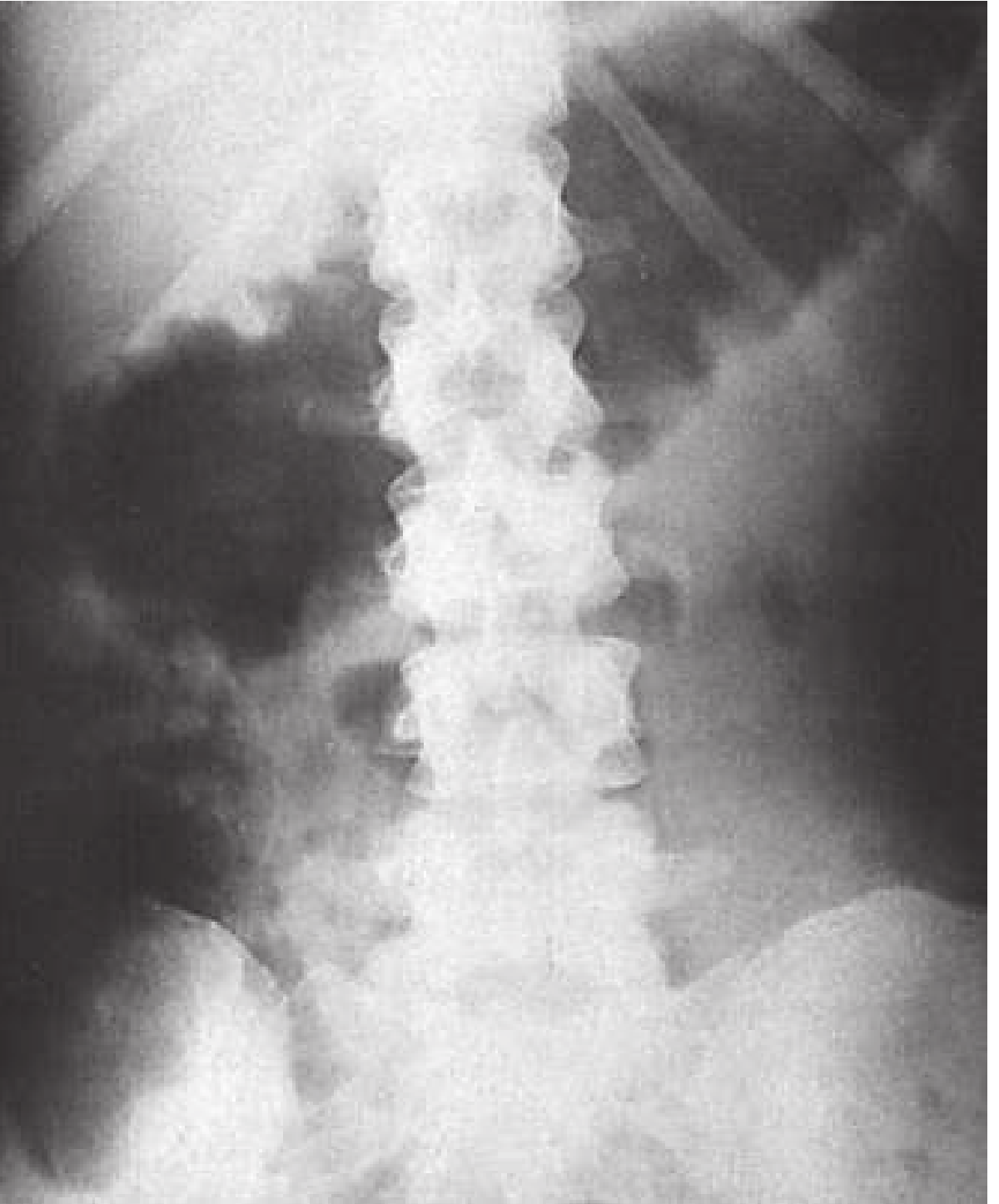
Toxic Megacolon
A feared, life-threatening complication. Involves pathologic dilation of the colon from inflammation of smooth muscle layers, leading to muscle paralysis, dilation, and potentially perforation.
Triggers: anticholinergics, antimotility agents, narcotics, antidepressants.
Signs: >10 stools/day, continuous bleeding, abdominal distention, fever, severe systemic toxicity.
Colorectal Cancer Risk
Long-standing UC significantly increases colorectal cancer risk - this can be an indication for colectomy.
Surgery
Colectomy is curative for UC (unlike Crohn disease, where surgery is not curative).
- Indications: disease refractory to medical management, toxic megacolon, massive bleeding, cancer
- ~3% require colectomy at 1 year, ~7% at 5 years, ~10% at 10 years (better medical therapy has reduced this)
- Standard operation: proctocolectomy with Brooke ileostomy
- Anal-sparing option: ileal pouch-anal anastomosis (IPAA) - 30 cm of terminal ileum fashioned into a J-pouch and pulled through the anal canal; preserves anal function
- Complication of IPAA: pouchitis (inflammation of the ileal pouch), treated with metronidazole 500 mg TID or ciprofloxacin 500 mg BID for 2 weeks
Sources: Goldman-Cecil Medicine (26th ed.), Rosen's Emergency Medicine, Katzung's Basic & Clinical Pharmacology (16th ed.)
This is a shared conversation. Sign in to Orris to start your own chat.