
Regulation of thyroid hormone
I'll read the medical library skill first, then search for thyroid hormone regulation content.
Reading File
Now I'll run parallel searches for thyroid hormone regulation content.
Finding Sources
Finding Sources
Excellent - I have strong hits. Now I'll read the key sections in parallel from Costanzo, Guyton, Ganong, and Lippincott.
Reading File
Reading File
Reading File
Reading File
Excellent content. Now let me fetch the key diagrams and read more of Guyton's and Costanzo's detailed sections in parallel.
Loading Image
Loading Image
Loading Image
Reading File
I now have rich, comprehensive content from multiple authoritative textbooks plus the diagrams. Let me compile the full answer.
Regulation of Thyroid Hormone
1. Overview: The HPT Axis
Thyroid hormone regulation is governed by a three-tier hypothalamic-pituitary-thyroid (HPT) axis, with tight negative feedback at every level. The goal is to maintain a metabolic rate that is optimal for normal body function.
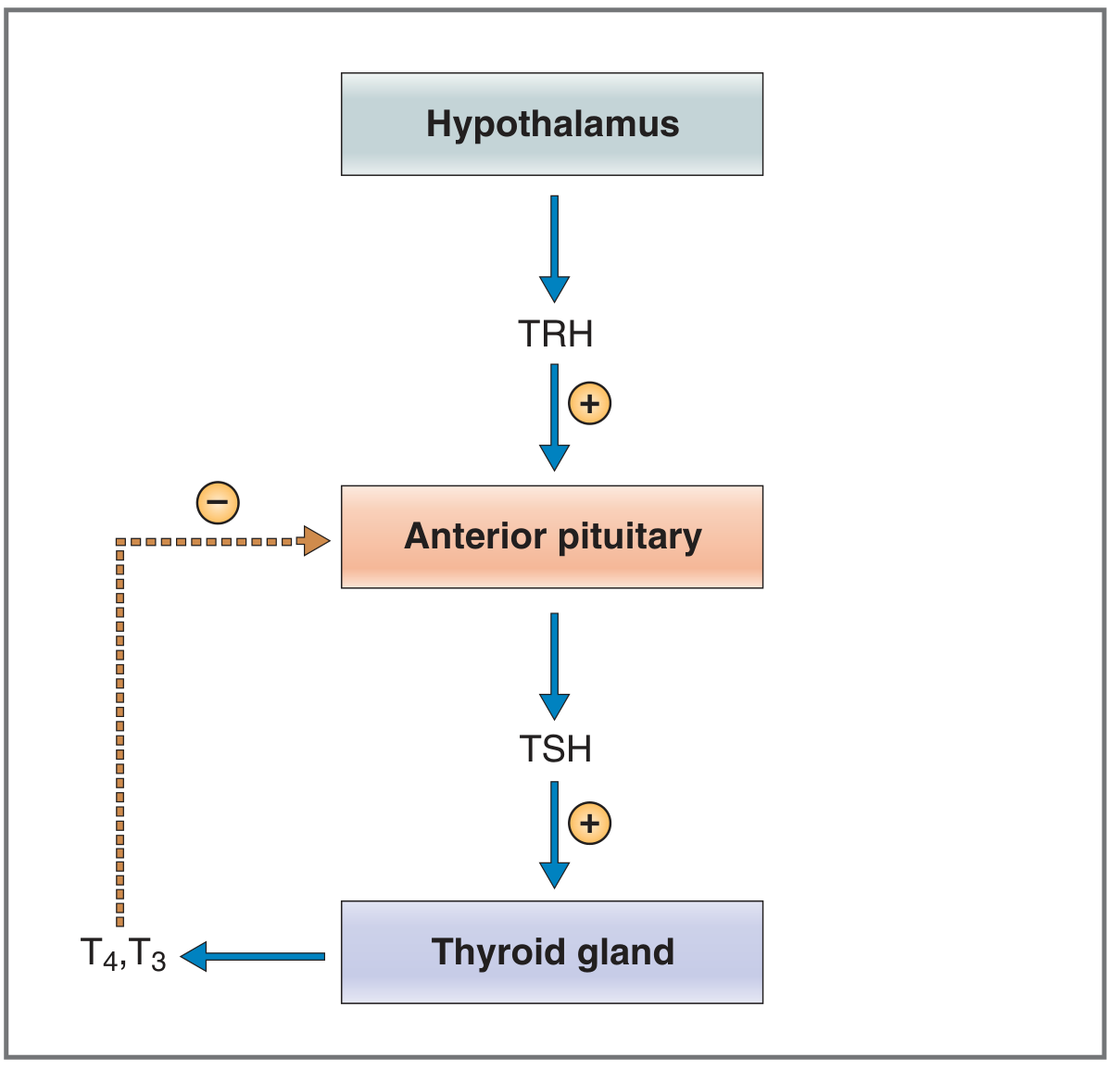
Fig. 9.19 - Regulation of thyroid hormone secretion (Costanzo Physiology, 7th Ed.)
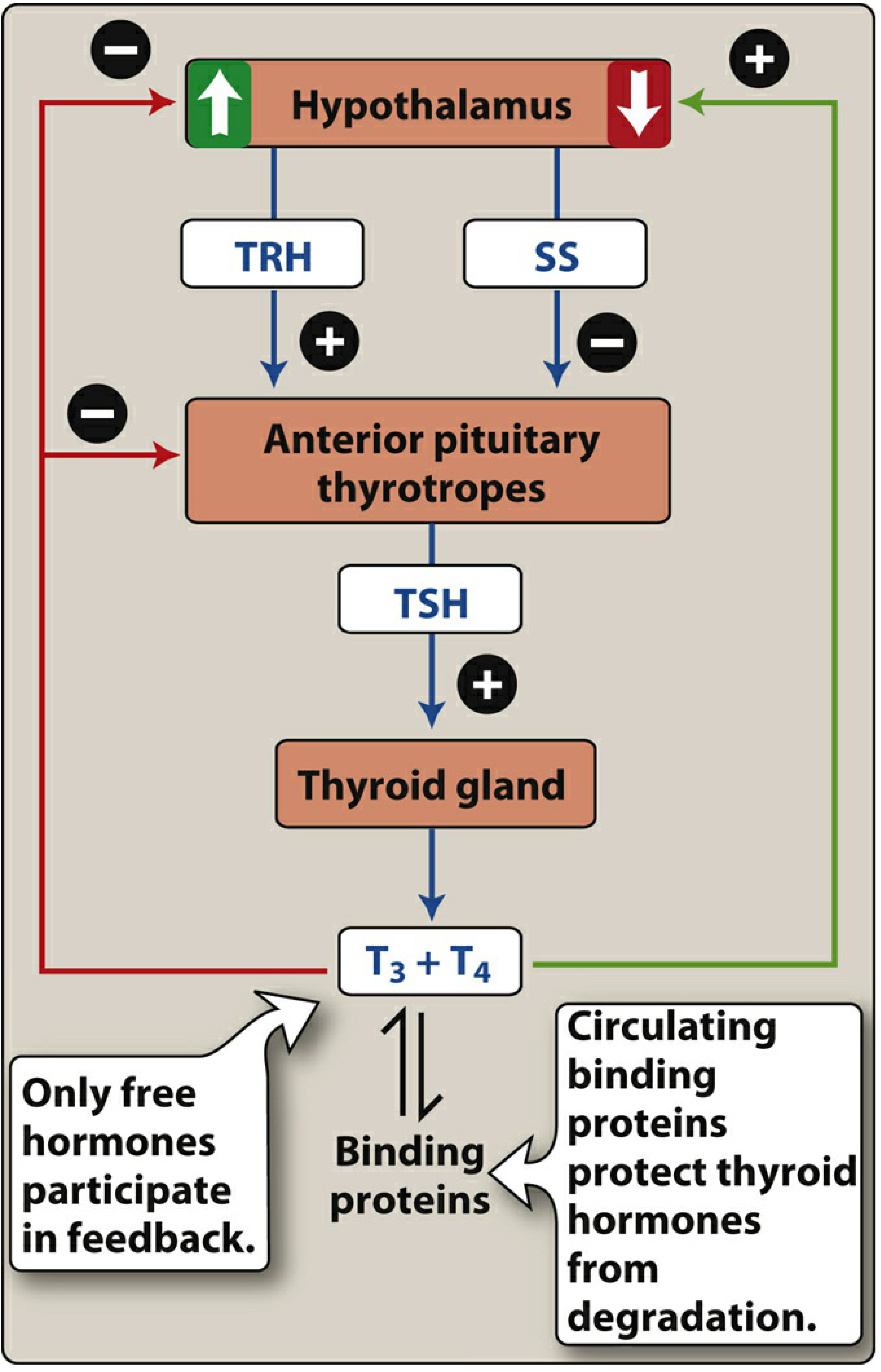
Fig. 23.8 - Feedback regulation of thyroid hormone release (Lippincott Illustrated Reviews: Pharmacology)
2. Hypothalamus: TRH
Thyrotropin-releasing hormone (TRH) is a tripeptide (pyroglutamyl-histidyl-proline-amide) secreted by neurons in the paraventricular nucleus (PVN) of the hypothalamus. It is released into the hypothalamic-hypophysial portal blood and travels to the anterior pituitary.
TRH acts on thyrotrophs of the anterior pituitary via a Gq/phospholipase C mechanism, generating IP3/DAG and releasing intracellular Ca²+, which leads to TSH secretion. TRH also stimulates transcription of the TSH gene.
Factors that increase TRH secretion:
- Exposure to cold (via hypothalamic thermoregulatory centers - a well-known stimulus, capable of raising BMR by 15-20%)
- Leptin (via POMC neurons in the arcuate nucleus)
Factors that decrease TRH secretion:
- Prolonged fasting - reduced leptin reduces POMC activity and directly inhibits TRH neurons
- High thyroid hormone levels (long-loop negative feedback)
- Somatostatin (SS) - inhibits both TRH output and TSH release at the pituitary
- Emotional stress/sympathetic activation (excitement, anxiety) - acutely decreases TSH output
(Guyton & Hall, Medical Physiology; Lippincott Pharmacology)
3. Anterior Pituitary: TSH (Thyrotropin)
TSH is a glycoprotein (~28,000 Da) secreted by thyrotrophs of the anterior pituitary. It is the central regulator of thyroid gland activity.
TSH's actions on the thyroid gland (via cAMP second messenger):
TSH binds to Gs protein-coupled TSH receptors on the basolateral membrane of thyroid follicular cells → activates adenylyl cyclase → ↑ cAMP → protein kinase activation → multiple phosphorylations:
- Increased proteolysis of stored thyroglobulin → immediate release of T3/T4 into blood (within 30 minutes)
- Activation of the iodide pump (Na⁺/I⁻ symporter) → increased iodide trapping (intracellular:extracellular I⁻ ratio up to 8× normal)
- Increased iodination of tyrosine residues
- Increased size and secretory activity of thyroid follicular cells
- Increased number of thyroid cells (hypertrophy and hyperplasia); cuboidal → columnar morphology with increased infolding of the epithelium
(Guyton & Hall, Medical Physiology, p. 937)
4. Thyroid Gland: Hormone Synthesis
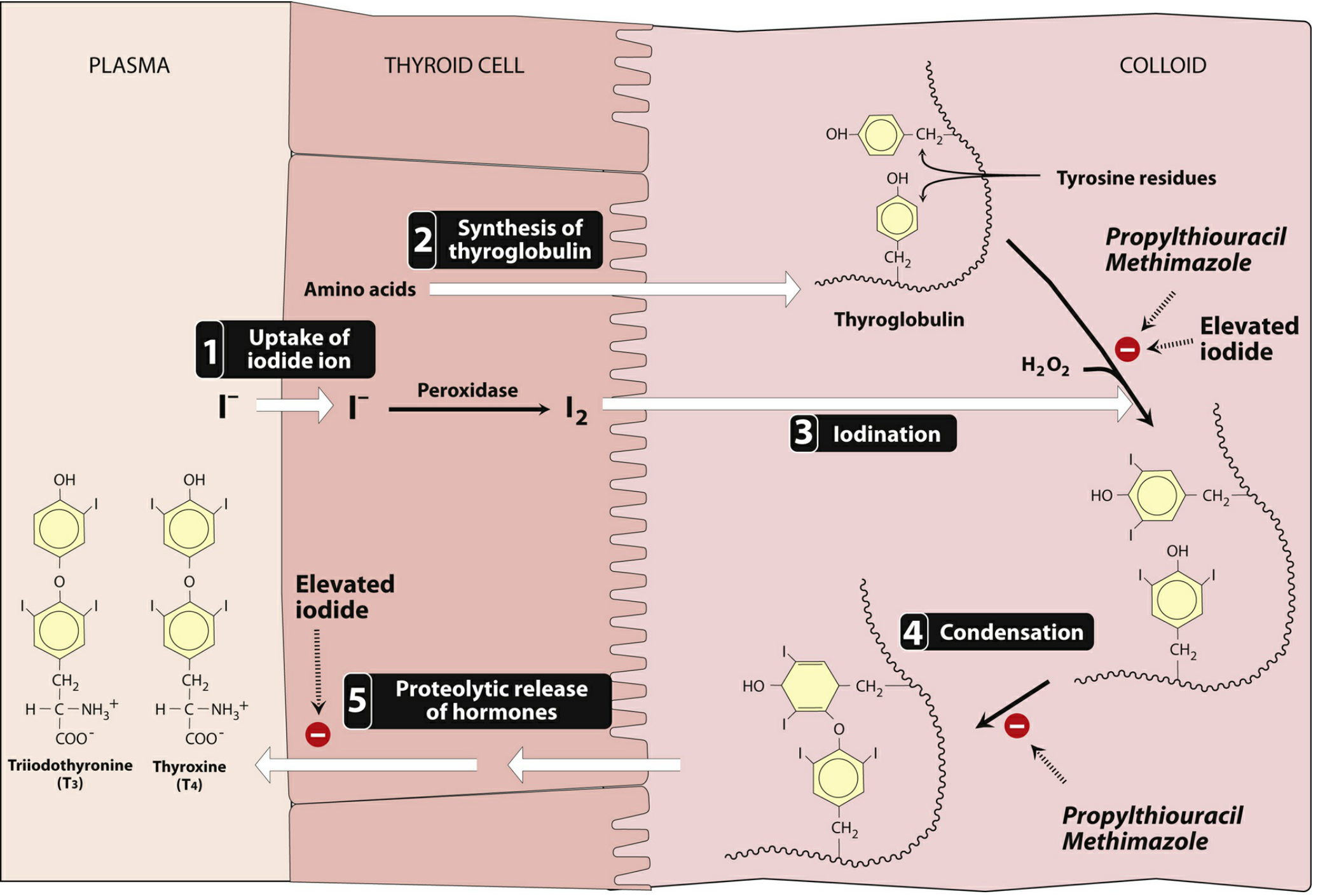
Fig. 23.9 - Biosynthesis of thyroid hormones (Lippincott Illustrated Reviews: Pharmacology)
The 5 key steps in thyroid hormone synthesis:
| Step | Process |
|---|---|
| 1 | Iodide uptake - Na⁺/I⁻ symporter on basolateral membrane traps I⁻ from plasma |
| 2 | Thyroglobulin synthesis - large glycoprotein (~660 kDa) assembled in follicular cells, secreted into colloid |
| 3 | Iodination (organification) - thyroid peroxidase (TPO) oxidizes I⁻ → I₂; iodination of tyrosine residues on thyroglobulin forms MIT (monoiodotyrosine) and DIT (diiodotyrosine) |
| 4 | Condensation (coupling) - TPO couples two DIT → T4; one MIT + one DIT → T3 |
| 5 | Proteolytic release - follicular cells endocytose colloid; lysosomes cleave thyroglobulin, releasing T3 and T4 into the blood |
5. Peripheral Conversion: T4 → T3
The major secretory product is T4 (thyroxine), which is the less active form. In target tissues, the enzyme 5'-iodinase (type I deiodinase) removes one iodine atom from the outer ring of T4, converting it to the active T3.
A portion of T4 is instead converted to reverse T3 (rT3) by removing iodine from the inner ring - rT3 is metabolically inactive.
Important modulator - starvation:
- Fasting inhibits 5'-iodinase in peripheral tissues (e.g., skeletal muscle) → less T3 produced → reduced O₂ consumption and BMR (energy conservation)
- Brain 5'-iodinase is isoform-distinct and is NOT inhibited by starvation, protecting cerebral T3 levels
(Costanzo Physiology, 7th Ed., p. 426)
6. Negative Feedback
This is the master control mechanism:
- T3 and T4 (free forms) feed back to suppress TSH secretion from the anterior pituitary
- T3 acts via nuclear thyroid hormone receptors (TRβ2 isoform) in thyrotrophs → suppresses the TSH-β gene
- When thyroid hormone output rises to ~1.75× normal, TSH secretion falls to near zero
- This feedback operates directly at the pituitary - it persists even after pituitary-hypothalamus disconnection
- Only free (unbound) hormones participate in feedback - protein-bound hormone is biologically inert
(Guyton & Hall; Ganong's Review, 26th Ed.)
7. Plasma Binding Proteins
Most circulating T3 and T4 is protein-bound. Binding proteins protect hormones from degradation and maintain a large reservoir.
| Protein | Plasma Concentration | % T4 Bound | % T3 Bound |
|---|---|---|---|
| Thyroxine-binding globulin (TBG) | 2 mg/dL | 67% | 46% |
| Transthyretin (TBPA) | 15 mg/dL | 20% | ~0% |
| Albumin | ~4,000 mg/dL | 13% | ~54% |
Key facts:
- 99.98% of plasma T4 is bound; free T4 ≈ 2 ng/dL
- T4 half-life: ~6-7 days (prolonged due to protein binding)
- T3 is less tightly bound, more rapidly dissociates → faster onset of action
- Clinical: only free T4 and free T3 are physiologically active and clinically meaningful to measure
(Ganong's Review of Medical Physiology, 26th Ed.)
8. Summary: Factors Affecting Thyroid Hormone Output
| Stimulatory | Inhibitory |
|---|---|
| TSH | Iodide deficiency |
| Thyroid-stimulating immunoglobulins (TSI, in Graves' disease) | Excessive iodide intake (Wolff-Chaikoff effect) |
| Cold exposure | Perchlorate, thiocyanate (block Na⁺/I⁻ cotransporter) |
| Increased TBG levels (e.g., pregnancy) | Propylthiouracil / methimazole (inhibit TPO) |
| Leptin / adequate nutrition | Fasting / low leptin |
| Somatostatin | |
| Decreased TBG (e.g., liver disease) |
(Costanzo Physiology, 7th Ed., Table 9.8)
9. Wolff-Chaikoff Effect (Special Regulatory Mechanism)
Acutely high plasma iodide paradoxically inhibits thyroid hormone synthesis. The mechanism involves high intracellular I⁻ suppressing TPO activity. This effect is transient - the thyroid normally "escapes" by downregulating the Na⁺/I⁻ symporter. This phenomenon is exploited clinically (e.g., Lugol's iodine pre-operatively in Graves' disease, or potassium iodide in radiation emergencies).
Sources:
- Costanzo Physiology, 7th Edition, pp. 424-426
- Guyton and Hall Textbook of Medical Physiology, pp. 936-939
- Ganong's Review of Medical Physiology, 26th Edition, Chapter 20
- Lippincott Illustrated Reviews: Pharmacology, Chapter 23
This is a shared conversation. Sign in to Orris to start your own chat.