
A 52-year-old corporate executive undergoes a routine employee health checkup. He feels perfectly fine, energetic, and reports no physical symptoms. However, his laboratory results reveal a fasting blood glucose level of 136 mg/dL(confirming Type 2 Diabetes) and a blood pressure reading of 148/95 mmHg. His father died of a myocardial infarction (heart attack) at age 55. 1. According to the natural history of disease framework, which specific phase or stage is this patient currently in and also draw the labeled diagram of stages of natural history of disease (1+4) 2. What level of prevention is represented by this health checkup screening? State one specific medical intervention that should be initiated right now at this level. (1+1) 3. Relate this patient's scenario to the epidemiological concept of the "Iceberg of Disease". Which part of the iceberg does he represent, and who fills the rest of the structure?(2+1)
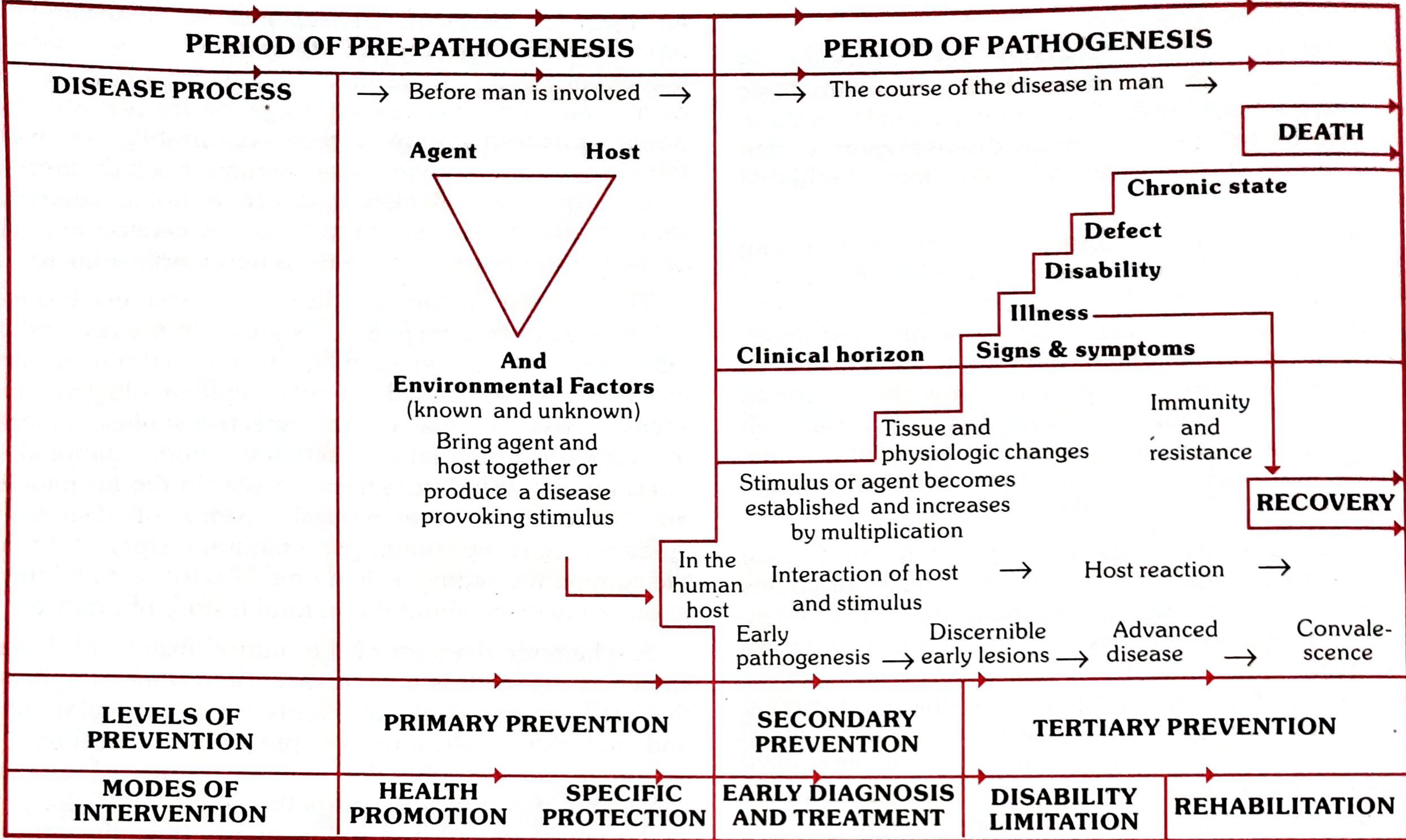
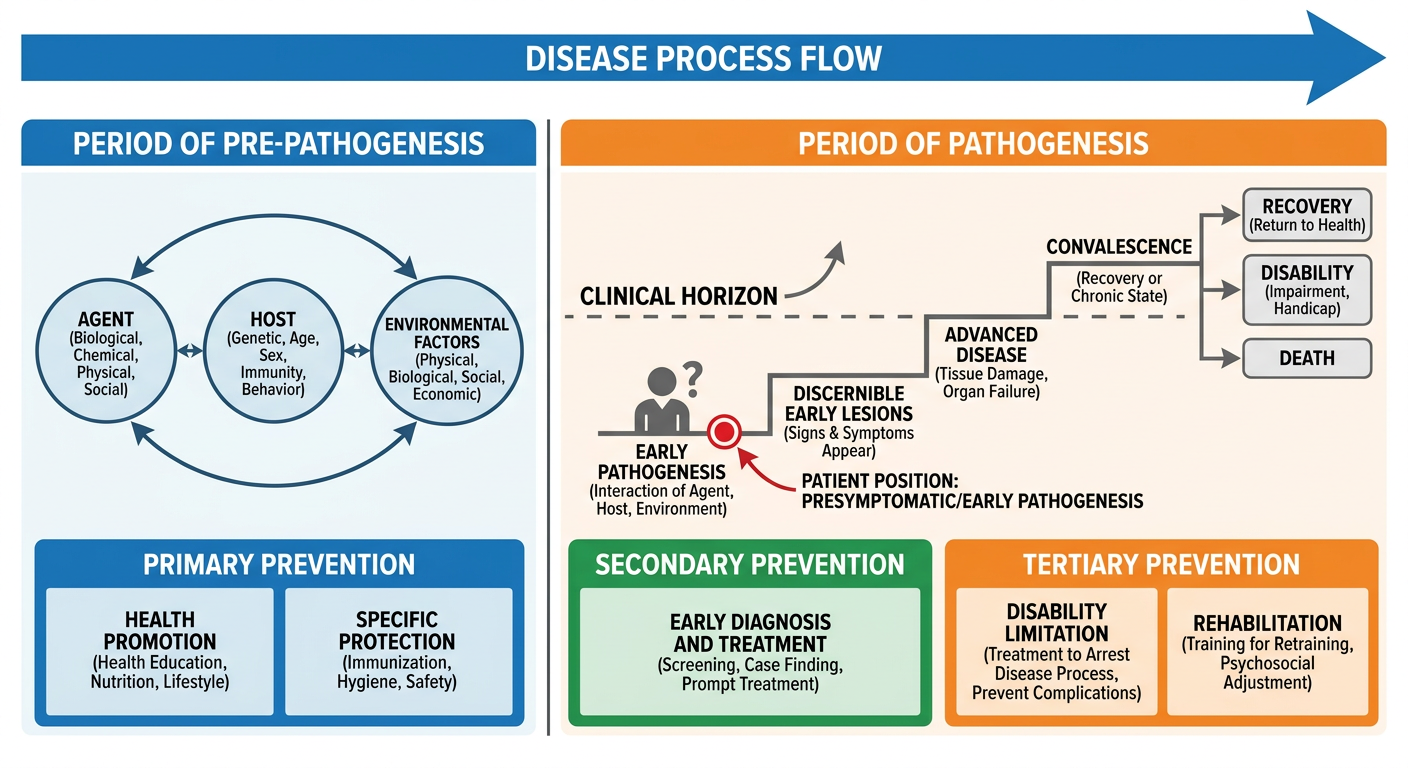
Labeled diagram of the Natural History of Disease (Leavell and Clark model) showing two main phases: Period of Pre-Pathogenesis (left) and Period of Pathogenesis (right). Pre-Pathogenesis shows Agent, Host, and Environmental Factors interacting. Pathogenesis phase shows a staircase progression from Early Pathogenesis to Discernible Early Lesions to Advanced Disease to Convalescence, with outcomes of Recovery, Disability, or Death. A horizontal dashed line labeled Clinical Horizon separates subclinical from clinical disease. Bottom row shows Levels of Prevention: Primary Prevention (Health Promotion + Specific Protection) under Pre-Pathogenesis; Secondary Prevention (Early Diagnosis and Treatment) under early Pathogenesis; Tertiary Prevention (Disability Limitation + Rehabilitation) under late Pathogenesis. Arrow at top shows disease process flowing left to right. Mark the patient's position in the Presymptomatic/Early Pathogenesis stage just below the clinical horizon. Clean, professional medical education style with clear labels and arrows.
Answer
Question 1: Stage in the Natural History of Disease (1 + 4 marks)
Stage: Early Pathogenesis Phase (Presymptomatic Stage)
- The disease process (Type 2 Diabetes, hypertension) has clearly already begun - pathological and biochemical changes are measurable (FBG 136 mg/dL, BP 148/95 mmHg). This means the prepathogenesis phase is over.
- Yet the patient feels perfectly fine, has no symptoms, and reports no physical complaints. The disease has not yet crossed the "clinical horizon" into symptomatic illness.
- In chronic diseases such as coronary heart disease, hypertension, and diabetes, the early pathogenesis phase is called the presymptomatic phase. As Park's states: "During the presymptomatic stage, there is no manifest disease. The pathological changes are essentially below the level of the 'clinical horizon'." - Park's Textbook of Preventive and Social Medicine
Labeled Diagram: Natural History of Disease (Leavell & Clark)
| Phase | Sub-stage | What It Means |
|---|---|---|
| Pre-Pathogenesis | Agent + Host + Environment | Disease has not yet entered man; risk factors exist |
| Pathogenesis - Early | Presymptomatic (Early Lesions) | [THIS PATIENT] - Biochemical disease present, no symptoms |
| Pathogenesis - Late | Signs & Symptoms, Illness | Clinical disease becomes apparent |
| Outcome | Recovery / Disability / Death | End result of untreated disease |
- Primary Prevention - applies in the pre-pathogenesis phase (Health Promotion + Specific Protection)
- Secondary Prevention - applies at early pathogenesis (Early Diagnosis + Treatment) ← this patient's zone
- Tertiary Prevention - applies in late pathogenesis (Disability Limitation + Rehabilitation)
Question 2: Level of Prevention + Specific Intervention (1 + 1 marks)
Level of Prevention: Secondary Prevention
Specific Medical Intervention to Initiate Now:
Question 3: Iceberg of Disease (2 + 1 marks)
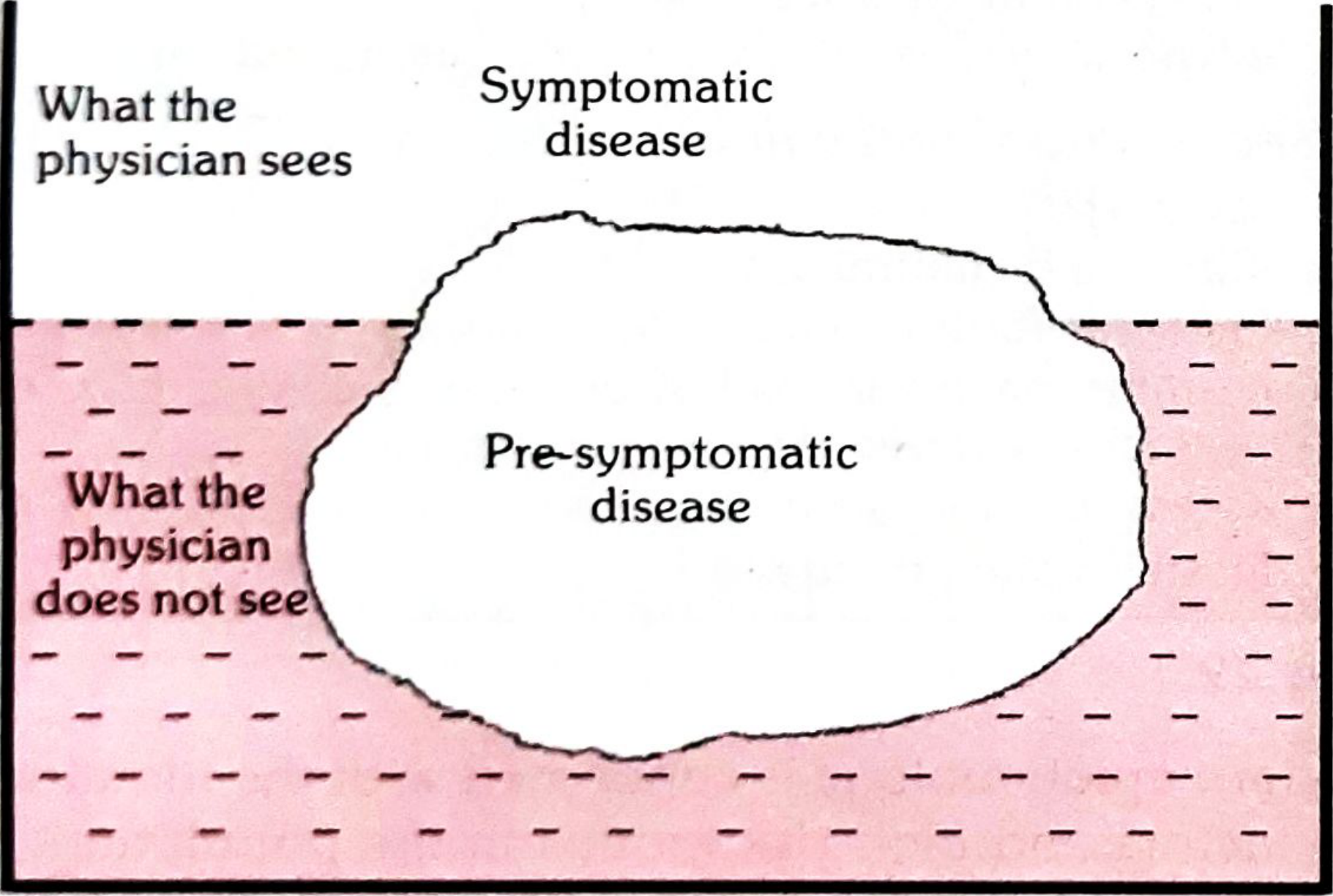
Which Part of the Iceberg Does He Represent?
Who Fills the Rest of the Iceberg Structure?
| Part of the Iceberg | Who It Represents |
|---|---|
| Tip above waterline (visible) | Symptomatic, diagnosed clinical cases presenting to doctors |
| Waterline | The "clinical horizon" - the threshold between apparent and inapparent disease |
| Submerged portion - just below waterline | Presymptomatic cases like this patient - disease present, but no symptoms yet |
| Deeper submerged portion | Latent/inapparent cases (e.g., subclinical diabetes, undiagnosed hypertensives who never get screened), undiagnosed carriers (in infectious disease), and individuals with risk factors who have not yet developed measurable disease |