
I have Radiology class for internal medicine, can you prepare me
I'd love to help you prepare for your Radiology class in internal medicine! Let me ask a couple of quick questions to make sure I cover the right material.
Asking for Preferences
Which radiology topic(s) are you covering in class? · What kind of prep material would help most?
I'll build you a comprehensive radiology study guide covering the major imaging modalities and their internal medicine applications. Let me pull from the medical library now.
Searching sources...
Reading File
Finding Sources
Finding Sources
Excellent - there's a dedicated diagnostic radiology textbook and Harrison's IM. Let me pull the key radiology content in parallel now.
Reading File
Reading File
Finding Sources
Good material coming in. Let me now pull more from Harrison's radiology section and the dedicated radiology textbook's CT/MRI content.
Reading File
Finding Sources
Reading File
Finding Sources
Reading File
Finding Sources
Reading File
Finding Sources
Reading File
Finding Sources
Reading File
Finding Sources
I now have enough rich textbook content to build the full study guide. Let me fetch a couple of key images and compile everything.
Loading Image
Loading Image
Here is your comprehensive radiology study guide for internal medicine, built from Grainger & Allison's Diagnostic Radiology and Harrison's Principles of Internal Medicine (22nd ed., 2025).
Radiology for Internal Medicine - Full Study Guide
Part 1: Imaging Modalities - Overview
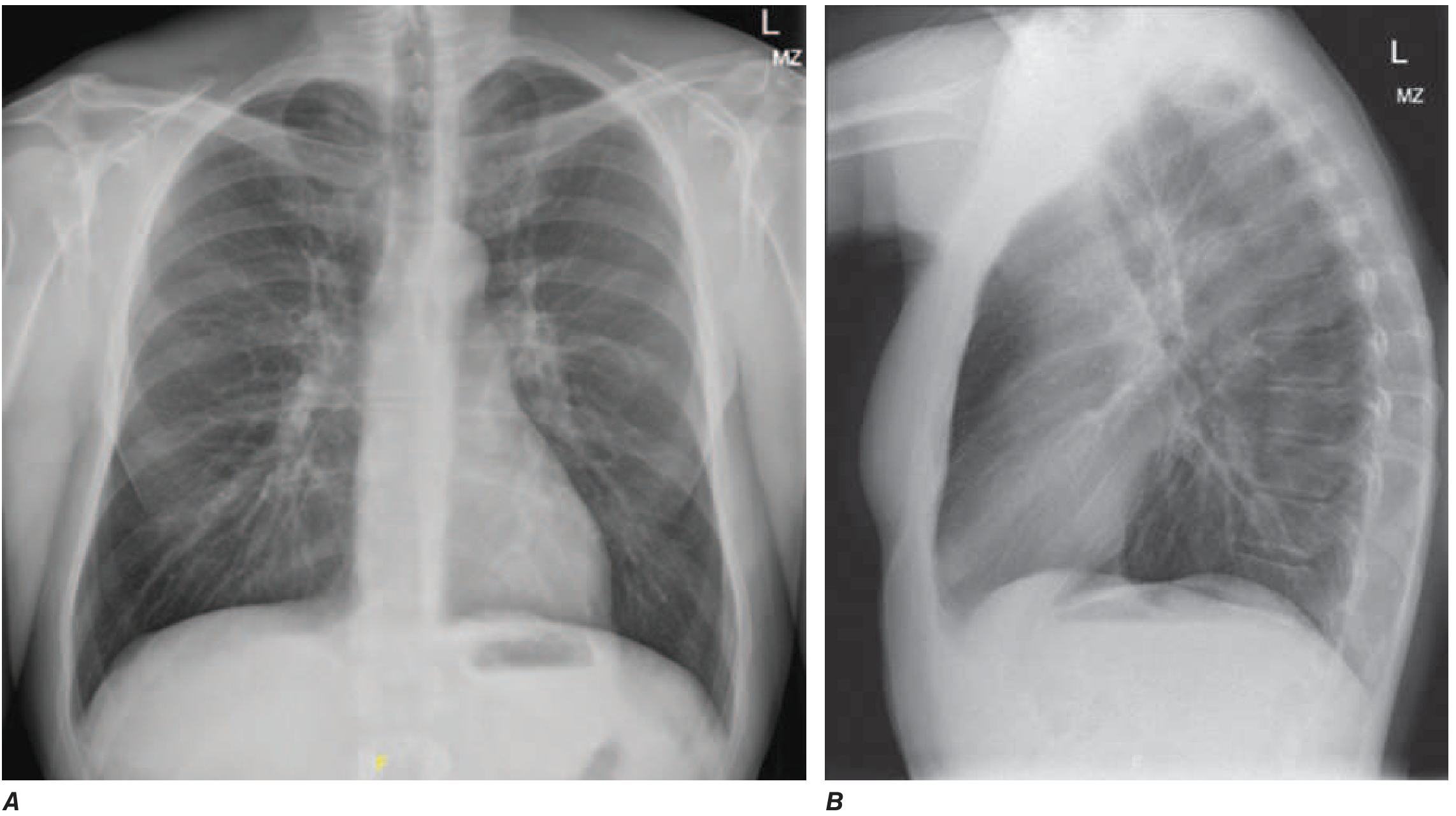
1.1 Chest X-Ray (CXR)
The history of medical imaging traces back to Wilhelm Roentgen's discovery of x-rays in the 1890s. X-rays pass through solid material and are attenuated in proportion to tissue density - the physical basis of all plain radiography.
Standard views:
| View | Use case |
|---|---|
| Posteroanterior (PA) | Outpatient standard; heart projected near true size |
| Anteroposterior (AP) | Bedside/ICU; heart appears larger due to beam divergence |
| Lateral | Resolves superimposed structures (e.g., retrocardiac opacity) |
What a normal CXR assesses:
- Chest wall contours
- Heart silhouette and great vessels
- Mediastinal outline
- Pulmonary parenchyma and bronchovascular markings
- Costophrenic angles and diaphragm
1.2 Computed Tomography (CT)
CT uses rotating x-ray detectors to generate cross-sectional images. It provides far greater detail than plain film for evaluating lung parenchyma, vascular structures, and solid organs.
Key principles:
- Hounsfield Units (HU): Quantify tissue density (air = -1000 HU; water = 0; bone ~+400; fat ~-100)
- Lung windows: Best for parenchymal detail (airways, nodules, emphysema)
- Mediastinal windows: Best for soft tissue and vascular structures
- Bone windows: For ribs and vertebrae
CT-specific techniques in chest disease:
- HRCT (High-Resolution CT): Thin slices (1-2 mm); gold standard for interstitial lung disease
- CT Pulmonary Angiography (CTPA): Timed bolus for pulmonary embolism detection - filling defects appear as dark voids in bright vessels
- CECT (Contrast-Enhanced CT): Mediastinal masses, lymph nodes, abscess
Radiation consideration: CT carries a measurable radiation dose. Efforts are made to keep dose as low as reasonably achievable (ALARA principle).
1.3 Magnetic Resonance Imaging (MRI)
MRI relies on the behavior of protons in a magnetic field. A radiofrequency pulse perturbs proton alignment; tissue differences in realignment speed create image contrast.
Strengths for internal medicine:
- No ionizing radiation - preferred for repeated assessments and pediatric patients
- Superior for chest wall, mediastinum, cardiac structures
- Gadolinium contrast enables perfusion assessment
Limitation in the lung: Abundant air creates artifacts, impairing direct parenchymal assessment. Newer techniques use inhaled hyperpolarized noble gas (³He) to visualize ventilation - poorly ventilated areas appear dark.
1.4 Ultrasound (US)
- Best for pleural effusion detection and guided drainage
- Used for mediastinal cystic vs. solid mass differentiation
- Increasingly used at bedside for pulmonary edema (B-lines = "comet tails" = subpleural fluid)
- More sensitive than CXR for small pleural effusions
1.5 Nuclear Medicine / PET
- V/Q scan: Ventilation-perfusion mismatch - used for PE diagnosis when CT is contraindicated (e.g., contrast allergy, pregnancy)
- PET/CT with FDG: Metabolic activity - used for lung cancer staging, mediastinal lymphoma, sarcoidosis
- Limitations: False positives (thymic hyperplasia, fibrosing mediastinitis can have high FDG uptake)
Part 2: Systematic Chest X-Ray Interpretation (The ABCDE Approach)
Use a systematic approach every time to avoid missing findings:
| Letter | Structure | What to check |
|---|---|---|
| A | Airways | Tracheal position (midline?), carina angle (<70°), main bronchi |
| B | Bones & soft tissues | Rib fractures, lytic/sclerotic lesions, soft tissue swelling |
| C | Cardiac silhouette | Size, shape, borders (see below) |
| D | Diaphragm | Level, costophrenic angles, subphrenic gas |
| E | Everything else / Edges | Mediastinum, hila, lung fields, pleura |
Cardiac silhouette:
- Normal CTR (Cardiothoracic Ratio): <0.5 on PA film
- Cardiomegaly: CTR >0.5 - causes include LV dilatation (dilated CMP, aortic regurgitation), biventricular failure, pericardial effusion
- "Globular" heart: Large, round - suggests pericardial effusion
- Right border = right atrium; Left border (top to bottom) = aortic knuckle → pulmonary trunk → left atrial appendage → left ventricle
Part 3: Key Radiological Signs and What They Mean
3.1 Silhouette Sign
When two structures of equal density are adjacent, their border is lost. A right lower lobe consolidation adjacent to the right heart border obliterates it. A left lower lobe lesion posterior to the heart does not obliterate the heart border. This localizes pathology without CT.
| Lost border | Location of pathology |
|---|---|
| Right heart border | Right middle lobe (medial segment) |
| Left heart border | Lingula |
| Diaphragm (right) | Right lower lobe (posterior/basal) |
| Aortic knuckle | Left upper lobe (posterior segment) |
3.2 Air Bronchogram
Airways remain air-filled while surrounding alveoli fill with fluid/cells. Appears as black branching lines within a white opacity. Indicates airspace (alveolar) disease, most commonly:
- Pneumonia (lobar or bronchopneumonia)
- Pulmonary edema
- ARDS
- Lung contusion
Air bronchograms are absent in pleural effusions and mediastinal masses - this is one of the key features distinguishing a mediastinal lesion from a pulmonary one.
3.3 Kerley B Lines
- Short (1-2 cm), horizontal, peripheral lines at the lung bases
- Represent thickened interlobular septa
- Classic for interstitial pulmonary edema (hydrostatic, e.g., congestive heart failure)
- Also seen in: lymphangitis carcinomatosis, interstitial lung disease, pneumoconiosis
3.4 Ground-Glass Opacity (GGO) on CT
- Hazy increased density that does not obscure underlying vessels
- Indicates partial filling of alveoli or interstitial thickening
- Causes: pneumonia (atypical/viral), pulmonary edema, organizing pneumonia, drug toxicity, early fibrosis, COVID-19
Part 4: Common Internal Medicine Conditions - Radiological Findings
4.1 Pleural Effusion
Pathophysiology of location:
- Bilateral effusions = usually transudates (heart failure, hypoalbuminemia, cirrhosis)
- Right-sided = associated with ascites, heart failure, liver abscess
- Left-sided = pancreatitis, pericarditis, oesophageal rupture, aortic dissection
- Massive effusions = most often malignant (lung or breast metastases)
CXR findings (in sequence as fluid accumulates):
- Small: fluid collects subpulmonary - undetectable on erect PA; seen on US or CT
- ~200-500 mL: blunting of the posterior then lateral costophrenic angles
- Moderate: homogeneous basal opacification, obliteration of costophrenic angle and hemidiaphragm; meniscus sign (concave superior margin, higher laterally)
- ~1000 mL: opacity reaches the level of the 4th anterior rib
- Massive: dense hemithoracic opacification with contralateral mediastinal shift
⚠️ If there is no mediastinal shift with a large effusion: suspect ipsilateral lung collapse or extensive pleural malignancy (e.g., mesothelioma).
4.2 Lobar Collapse / Atelectasis
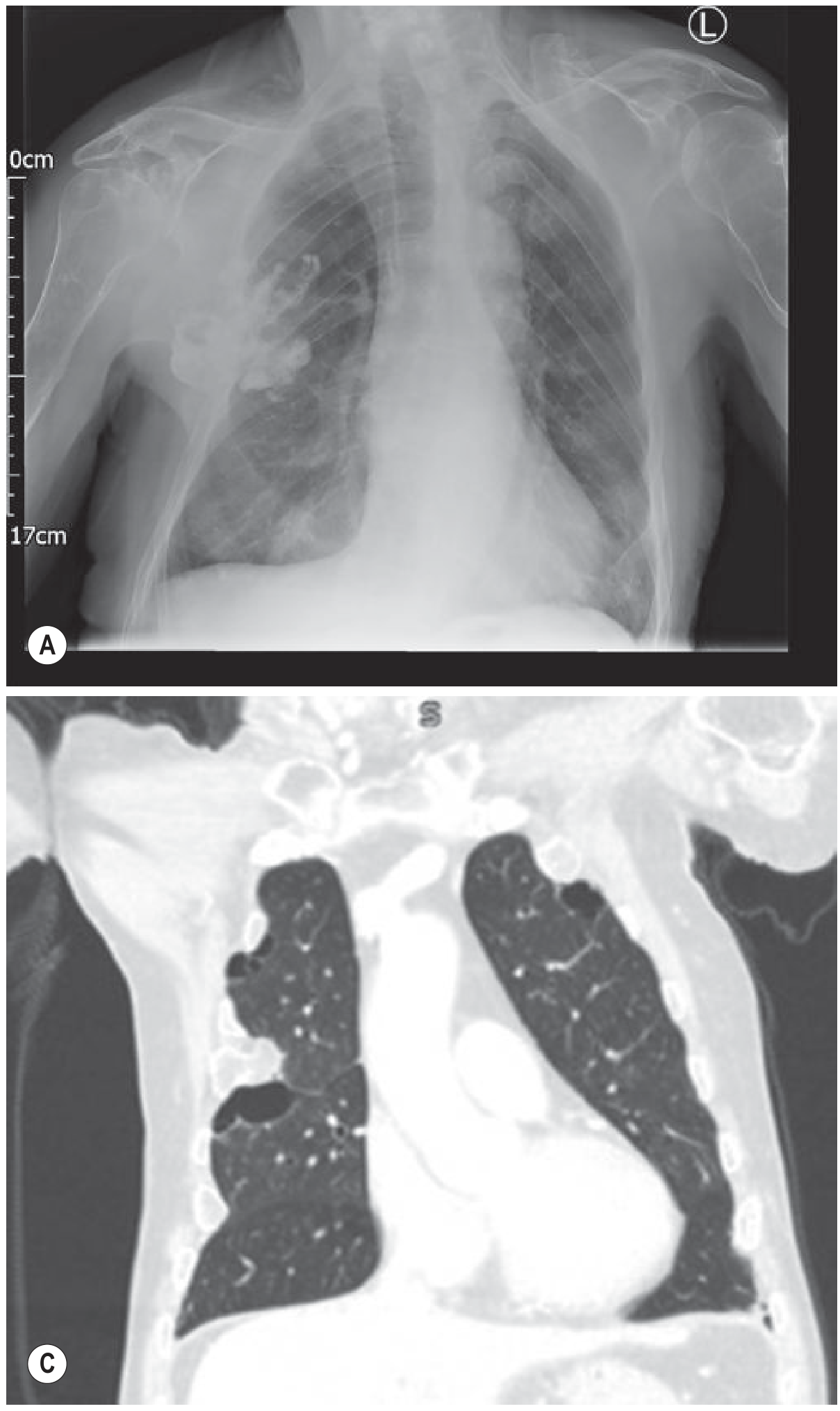
Mechanisms:
- Obstructive (most common in adults): Bronchogenic carcinoma, mucous plugs, foreign body. In a middle-aged/elderly smoker, lobar collapse is bronchogenic carcinoma until proven otherwise.
- Extrinsic compression: Lymph node enlargement, mediastinal mass, aortic aneurysm
- Passive/compressive: Pleural effusion or pneumothorax compressing adjacent lung
Radiographic signs:
- Direct signs (volume loss): Displacement of interlobar fissures, pulmonary vessels and bronchi toward the collapsed lobe
- Indirect signs (compensatory changes): Hyperinflation of adjacent lobes, elevation of ipsilateral diaphragm, tracheal/mediastinal shift toward the collapse, hilar displacement, rib crowding
Pattern by lobe:
| Lobe | Typical CXR finding |
|---|---|
| Right upper lobe (RUL) | Opacity in right upper zone, elevated minor fissure, trachea deviated right |
| Right middle lobe (RML) | Obscures right heart border (silhouette sign), triangular opacity on lateral |
| Right lower lobe (RLL) | Retrocardiac triangular opacity, depressed major fissure |
| Left upper lobe (LUL) | Veil-like opacity over entire left lung, absent left heart border |
| Left lower lobe (LLL) | Retrocardiac opacity, obscured left diaphragm |
4.3 Pneumonia (Consolidation)
Lobar pneumonia:
- Homogeneous opacity occupying a lobe or segment
- Air bronchograms present (distinguishes from effusion/collapse)
- Lobar distribution: classic for Streptococcus pneumoniae
- Cavitation: Klebsiella (upper lobe, "bulging fissure"), Staph, TB, anaerobes
Bronchopneumonia (patchy):
- Bilateral patchy peribronchial opacities
- Seen with gram-negative organisms, viral pneumonia
Interstitial / Atypical pneumonia:
- Bilateral diffuse ground-glass / reticular opacities
- Mycoplasma, Legionella, viral (influenza, COVID-19)
Important complications to look for:
- Cavitation (lung abscess, necrotizing pneumonia)
- Pleural effusion / empyema
- Pneumothorax
- Lobar collapse from mucous plugging
4.4 Pulmonary Edema
Radiological stages (CXR, in order of severity):
| Stage | CXR Finding |
|---|---|
| 1 - Vascular redistribution | Cephalization of flow (upper lobe vessels more prominent than lower) |
| 2 - Interstitial edema | Kerley B lines, peribronchial cuffing (blurred bronchial walls), "bat-wing" or perihilar haze |
| 3 - Alveolar edema | Bilateral airspace opacities ("bat-wing" perihilar pattern), air bronchograms |
Additional features of cardiac pulmonary edema:
- Cardiomegaly (CTR >0.5)
- Pleural effusions (typically bilateral, right > left)
- Engorged lymphatics (Kerley B lines)
- Loss of normally sharp vascular markings
The bat-wing/perihilar "butterfly" pattern is classic for hydrostatic (cardiogenic) pulmonary edema. In ARDS (non-cardiogenic), edema tends to be more peripheral and diffuse.
4.5 Pneumothorax
CXR findings:
- Visible visceral pleural line (thin white line) with absent lung markings beyond it
- Hyperlucent area at the lung apex (most common site on erect film)
- On supine AP film (ICU): deep sulcus sign (abnormally deep lateral costophrenic angle)
Tension pneumothorax (emergency):
- Complete collapse of the lung
- Tracheal and mediastinal shift away from the affected side
- Depressed ipsilateral diaphragm
- Diagnosis is clinical - do not delay treatment for imaging confirmation
Size estimation (BTS guidelines):
- Small: <2 cm rim at apex
- Large: ≥2 cm rim; requires intervention
4.6 Mediastinal Widening
A mediastinal width >8 cm on a PA film is considered abnormal. Approach:
Localizing a mediastinal mass (the 3-compartment rule):
The "4 T's of the anterior mediastinum":
- Thymoma
- Teratoma / Germ cell tumor
- Thyroid (retrosternal goitre)
- Terrible lymphoma
| Compartment | Common lesions |
|---|---|
| Anterior | Thymoma, teratoma, thyroid mass, lymphoma (4 T's) |
| Middle | Lymph nodes (lymphoma, sarcoid, metastases), pericardial/bronchogenic cysts, aortic arch aneurysm |
| Posterior | Neurogenic tumors (schwannoma, neurofibroma), esophageal lesions, descending aortic aneurysm |
CXR clues to localize:
- No air bronchogram (vs. pulmonary consolidation which does)
- Obtuse margins with the lung
- Distortion/thickening of mediastinal lines
- Bone abnormalities (rib/vertebral involvement)
Key emergency: Aortic Dissection
- Widened mediastinum >8 cm
- Loss of the aortic knuckle
- Clinical: tearing/ripping interscapular pain, differential blood pressures in arms
- CT aorta with IV contrast = definitive imaging
4.7 Cardiac Imaging
Echocardiography is the primary cardiac imaging tool in IM:
- Transthoracic echo (TTE): Non-invasive, first line for LV function, valves, pericardium
- Transesophageal echo (TEE): Superior for aortic dissection, endocarditis vegetations, LA thrombus
CT Coronary Angiography (CTCA):
- High negative predictive value for CAD in low-intermediate risk chest pain
- Calcium scoring (CACS) for cardiovascular risk stratification
Cardiac MRI:
- Gold standard for myocardial viability (late gadolinium enhancement)
- Characterizes cardiomyopathies (HOCM, ARVC, infiltrative disease e.g. amyloid, sarcoid)
Part 5: Abdominal & Other Imaging
5.1 Abdominal X-Ray (AXR)
Used for emergencies mainly:
| Finding | Condition |
|---|---|
| Air under the diaphragm (pneumoperitoneum) | Perforated hollow viscus (peptic ulcer, diverticulitis) |
| Dilated loops of bowel (>3 cm small bowel, >6 cm colon) | Obstruction or ileus |
| "Coffee bean" sign | Sigmoid or caecal volvulus |
| Calcification (RIF) | Appendicolith, nephrolithiasis, gallstones (only 10-15% radiopaque) |
5.2 Abdominal Ultrasound
- First-line for: gallstones, hydronephrosis, hepatic lesions, ascites, AAA screening
- Limitations: operator-dependent, bowel gas interference
5.3 CT Abdomen/Pelvis
- Best for: acute abdomen, bowel obstruction, appendicitis, pancreatitis, trauma, abscess
- Triple-phase CT liver: arterial/portal/delayed for hepatocellular carcinoma
- CT urogram: urolithiasis, urothelial malignancy
Part 6: Radiation Safety Principles
| Modality | Approximate effective dose |
|---|---|
| CXR (PA) | ~0.02 mSv |
| CT chest | ~7 mSv |
| CT abdomen/pelvis | ~10 mSv |
| MRI | 0 mSv |
| Ultrasound | 0 mSv |
| Annual background radiation | ~2.4 mSv |
Key principles:
- ALARA: As Low As Reasonably Achievable
- MRI and US carry no ionizing radiation - preferred in pregnancy and pediatrics
- Benefits must outweigh risks for every imaging request
- Lead shielding and collimation reduce exposure
Part 7: Quick-Reference "Must-Know" Signs Table
| Sign | Imaging | Meaning |
|---|---|---|
| Silhouette sign | CXR | Adjacent structure lost = same-density pathology touching it |
| Air bronchogram | CXR/CT | Airspace disease (alveolar filling) |
| Kerley B lines | CXR | Interstitial edema, lymphangitic spread |
| Meniscus sign | CXR | Free pleural fluid |
| Deep sulcus sign | CXR (AP/supine) | Pneumothorax on supine film |
| Bat-wing / butterfly | CXR | Perihilar alveolar edema |
| Cephalization | CXR | Early pulmonary venous hypertension (CHF) |
| Mediastinal shift away | CXR | Tension pneumothorax or massive effusion |
| Mediastinal shift toward | CXR | Lobar collapse |
| Ground-glass opacity | HRCT | Partial alveolar/interstitial filling |
| Honeycombing | HRCT | End-stage fibrosis (UIP pattern) |
| Tree-in-bud | HRCT | Bronchiolar infection/inflammatory exudate |
| Hampton's hump | CXR | Wedge-shaped pleural-based opacity - pulmonary infarction (PE) |
| Westermark sign | CXR | Oligemia (absent vascular markings) - pulmonary embolism |
Part 8: High-Yield Exam Summary
- First imaging in any chest complaint: CXR
- Gold standard for PE: CTPA
- Gold standard for interstitial lung disease: HRCT
- Gold standard for myocardial viability: Cardiac MRI
- Best for pleural effusion size: Ultrasound (detects as little as 20 mL)
- Middle-aged smoker with lobar collapse: Bronchogenic carcinoma until proven otherwise
- Bilateral pleural effusion without mediastinal shift: Think transudates (heart failure, cirrhosis, nephrotic syndrome)
- Massive effusion with no mediastinal shift: Think mesothelioma or endobronchial obstruction from malignancy
- CT pattern - perihilar ground-glass + Kerley B + cardiomegaly: Congestive heart failure
- CT pattern - peripheral ground-glass + honeycombing: Usual Interstitial Pneumonia (UIP) / IPF
Sources: Harrison's Principles of Internal Medicine 22E (2025, McGraw-Hill); Grainger & Allison's Diagnostic Radiology; Murray & Nadel's Textbook of Respiratory Medicine; Fuster & Hurst's The Heart 15th ed.
---Your complete study guide is ready. Here's a quick orientation of what's inside:
Part 1 - Imaging Modalities: CXR, CT (with Hounsfield units and window types), MRI, Ultrasound, PET/Nuclear - including when each is used and their limitations.
Part 2 - Systematic ABCDE Approach: A structured method for reading any chest X-ray so you never miss a finding.
Part 3 - Classic Radiological Signs: Silhouette sign, air bronchogram, Kerley B lines, ground-glass opacity - with explanations of their mechanism and meaning.
Part 4 - Common IM Conditions with their Imaging Patterns:
- Pleural effusion (with the volume thresholds - 200 mL, 500 mL, 1000 mL rules)
- Lobar collapse (by lobe, with the "bronchogenic carcinoma until proven otherwise" rule)
- Pneumonia patterns (lobar vs. bronchopneumonia vs. atypical)
- Pulmonary edema stages (cephalization → Kerley B → bat-wing)
- Pneumothorax (including the supine deep sulcus sign)
- Mediastinal widening with the 4 T's
Part 5 - Abdominal & Other Imaging: AXR emergencies, US, CT abdomen.
Part 6 - Radiation Doses: A table you'll likely be tested on.
Parts 7 & 8 - Quick-Reference Sign Table + High-Yield Exam Summary: Perfect for last-minute review before class.
Let me know if you want me to go deeper into any specific topic - for example HRCT patterns for interstitial lung disease, cardiac imaging in detail, or practice cases.
This is a shared conversation. Sign in to Orris to start your own chat.