
Various routes of drug of administration in 15 marks long note and digram or flowchart where applicable
routes of drug administration diagram
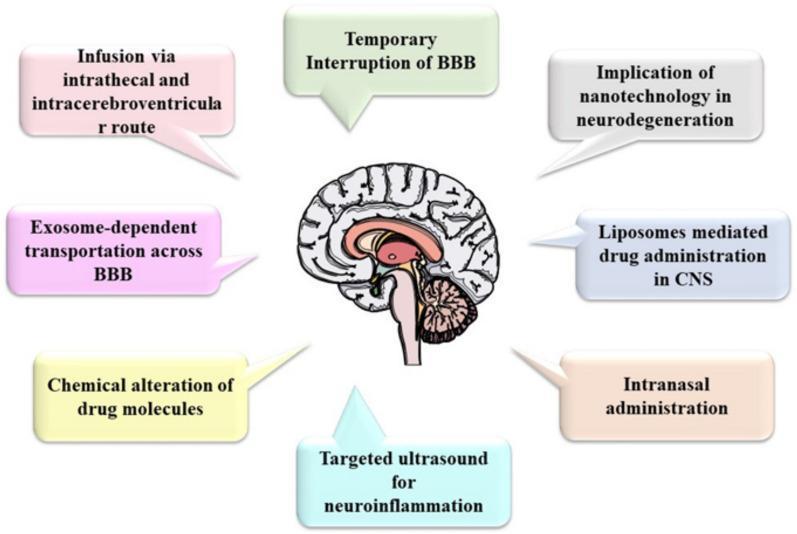
This infographic illustrates various brain-targeted drug delivery systems and strategies, specifically within the context of managing Alzheimer's disease and neurodegeneration. At the center is a sagittal, schematic illustration of the human brain, highlighting the cerebral cortex, corpus callosum, thalamus, brainstem, and cerebellum. Surrounding the anatomical diagram are callout boxes detailing diverse pharmacological and technological approaches to bypass or modulate the blood-brain barrier (BBB). Listed methods include invasive techniques such as intrathecal and intracerebroventricular infusion, and non-invasive routes like intranasal administration. Advanced biomedical strategies shown include the use of nanotechnology, liposome-mediated delivery in the central nervous system (CNS), and exosome-dependent transportation. Additionally, the diagram features physiological and physical interventions, such as the temporary interruption of the BBB, chemical alteration of drug molecules to enhance permeability, and the use of targeted ultrasound to address neuroinflammation. This visual summary is designed for medical education regarding neuro-pharmacology and drug delivery innovation in neurodegenerative disorders.
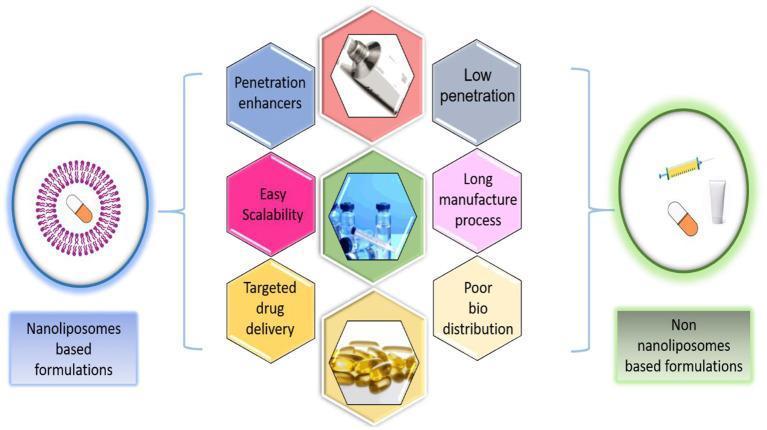
This Comparison Chart illustrates the pharmacological advantages of nanoliposome-based drug delivery systems versus conventional non-nanoliposome formulations. On the left, a nanoliposome is depicted as a circular lipid bilayer encapsulating a drug molecule, associated with positive attributes: 'Penetration enhancers,' 'Easy Scalability,' and 'Targeted drug delivery.' In the center, a series of hexagonal icons represent common delivery modes including topical creams, injectables, and oral capsules. On the right, non-nanoliposome formulations (represented by a standard syringe, cream tube, and capsule) are linked to clinical limitations: 'Low penetration,' 'Long manufacture process,' and 'Poor bio distribution.' The diagram highlights the educational focus on nanotechnology in pharmacology, specifically how lipid-based vesicles improve the pharmacokinetic profile and bioavailability of therapeutic agents across oral, topical, and intramuscular administration routes. It serves as a visual guide for understanding drug carrier efficiency and advanced formulation strategies in medical biotechnology.
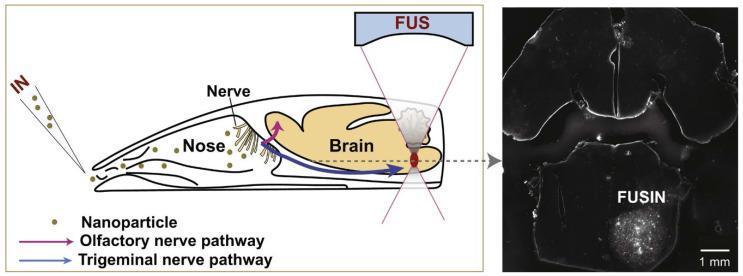
This composite image illustrates the mechanisms of nose-to-brain nanoparticle delivery. On the left is a pathophysiology diagram of a sagittal rodent head model showing intranasal (IN) administration. It depicts gold nanoparticles traversing the nasal cavity via two primary neural routes: the olfactory nerve pathway (purple arrow) and the trigeminal nerve pathway (blue arrow), bypassing the blood-brain barrier. The diagram includes a focused ultrasound (FUS) device targeting a specific intracranial region to enhance localized delivery. On the right is a diagnostic ex vivo fluorescence image (labeled 'FUSIN') showing an axial cross-section of the brainstem. The image reveals a high-intensity focal signal in the lower right quadrant, representing the successful accumulation of nanoparticles at the FUS-targeted site. A 1 mm scale bar is provided for reference. This visual material demonstrates the synergy between intranasal administration and focused ultrasound for spatially targeted central nervous system drug delivery, relevant for neuro-oncology and neurodegenerative disease research.
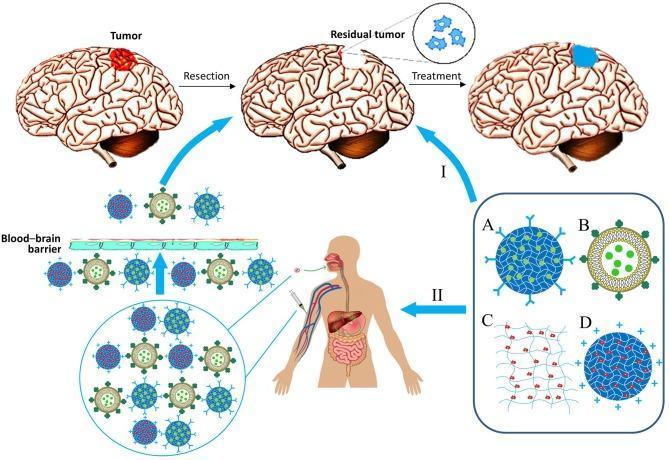
This medical illustration depicts therapeutic strategies for glioblastoma, focusing on drug and cell delivery methods following surgical resection. The diagram highlights two primary administration routes: (I) Local implantation, where therapeutic materials are applied directly into the resection cavity of the brain, bypassing the blood-brain barrier (BBB); and (II) Systemic administration, involving intravenous injection or oral delivery, where therapeutic agents must penetrate the BBB to reach residual tumor cells. The illustration classifies four types of biocompatible delivery materials: (A) Functionalized nanoparticles with surface ligands for targeted therapy; (B) Lipid nanocapsules or liposomes encapsulating active compounds; (C) A 3D hydrogel matrix or scaffold for structural support and localized release; and (D) Specialized nanoparticles, potentially incorporating immobilized cells or carrying specific surface charges. A timeline at the top shows the progression from tumor identification to resection, leaving residual tumor cells, and final treatment application. This schematic serves as an educational tool for neuro-oncology and pharmacology, demonstrating advanced drug delivery systems designed to overcome physiological barriers in brain cancer treatment.
Routes of Drug Administration
Introduction
- Physicochemical properties of the drug (lipid vs. water solubility, ionization, molecular weight)
- Desired therapeutic objective (rapid onset vs. sustained effect)
- Patient condition (conscious/unconscious, GI function)
- Site of drug action (local vs. systemic)
Classification Flowchart
ROUTES OF DRUG ADMINISTRATION
│
├── I. ENTERAL (via GI tract)
│ ├── Oral
│ ├── Sublingual
│ ├── Buccal
│ └── Rectal
│
├── II. PARENTERAL (bypassing GI tract)
│ ├── Intravenous (IV)
│ ├── Intramuscular (IM)
│ ├── Subcutaneous (SC)
│ └── Intradermal (ID)
│
└── III. OTHER / MISCELLANEOUS
├── Inhalation
├── Nasal
├── Topical
├── Transdermal
├── Intrathecal / Intraventricular
├── Ocular (Ophthalmic)
└── Otic (Aural)
Diagram: Commonly Used Routes of Administration
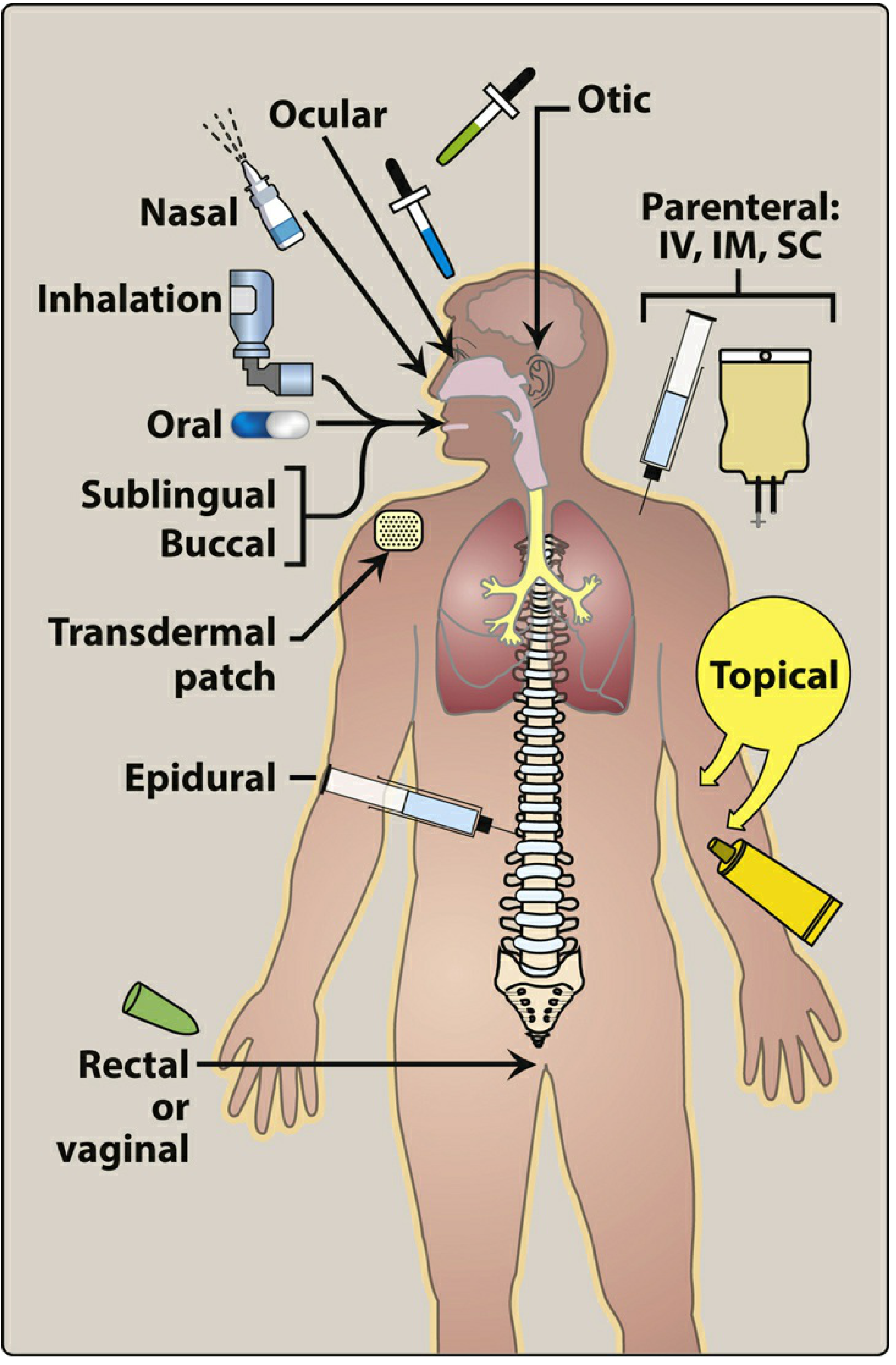
I. ENTERAL ROUTES
1. Oral Route
- Drug is swallowed and absorbed mainly in the small intestine (large surface area, rich blood supply).
- Absorption depends on: surface area, blood flow, physical state of drug (solution > suspension > solid), aqueous solubility, and drug concentration.
- Most absorption occurs by passive diffusion - favoring non-ionized, lipophilic forms.
- Advantages: Safe, convenient, self-administered, economical; toxicities manageable (e.g., activated charcoal).
- Disadvantages: Low gastric pH inactivates some drugs; subject to first-pass metabolism (hepatic); food interactions; erratic absorption; needs patient cooperation.
- Special preparations:
- Enteric-coated tablets: Chemical envelope protects acid-labile drugs (e.g., omeprazole) or GI-irritating drugs (e.g., aspirin) - dissolves in alkaline intestine.
- Extended-release (ER/XR/SR/CR): Special coatings control drug release - slower absorption, prolonged duration, less frequent dosing, better compliance. Example: oral morphine (t½ 2-4 hrs, needs 6 doses/day normally vs. 2 doses with ER tablets).
2. Sublingual Route
- Drug placed under the tongue; absorbed through oral mucosa directly into systemic circulation.
- Bypasses first-pass metabolism and the harsh GI environment.
- Rapid onset due to rich submucosal vasculature.
- pH of saliva (approximately neutral) maintains drug stability.
- Example: Nitroglycerin (acute angina), buprenorphine.
- Limitations: Limited to small doses; some drug may be swallowed.
3. Buccal Route
- Drug placed between the cheek and gum.
- Similar advantages to sublingual: bypasses first-pass, rapid absorption, neutral pH environment.
- Slightly slower than sublingual.
4. Rectal Route
- Drug administered as suppositories or enemas.
- 50% of rectal drainage bypasses the portal circulation, thereby reducing hepatic first-pass effect.
- Useful when: patient is vomiting, unconscious, or when the oral drug causes nausea.
- Prevents destruction by GI enzymes and acid.
- Disadvantages: Absorption is often erratic and incomplete; many drugs irritate rectal mucosa; socially inconvenient.
II. PARENTERAL ROUTES
- Drug is poorly absorbed orally (e.g., heparin)
- Drug is unstable in GI tract (e.g., insulin)
- Patient is unconscious or vomiting
- Rapid onset is required
Diagram: Depths of Injection
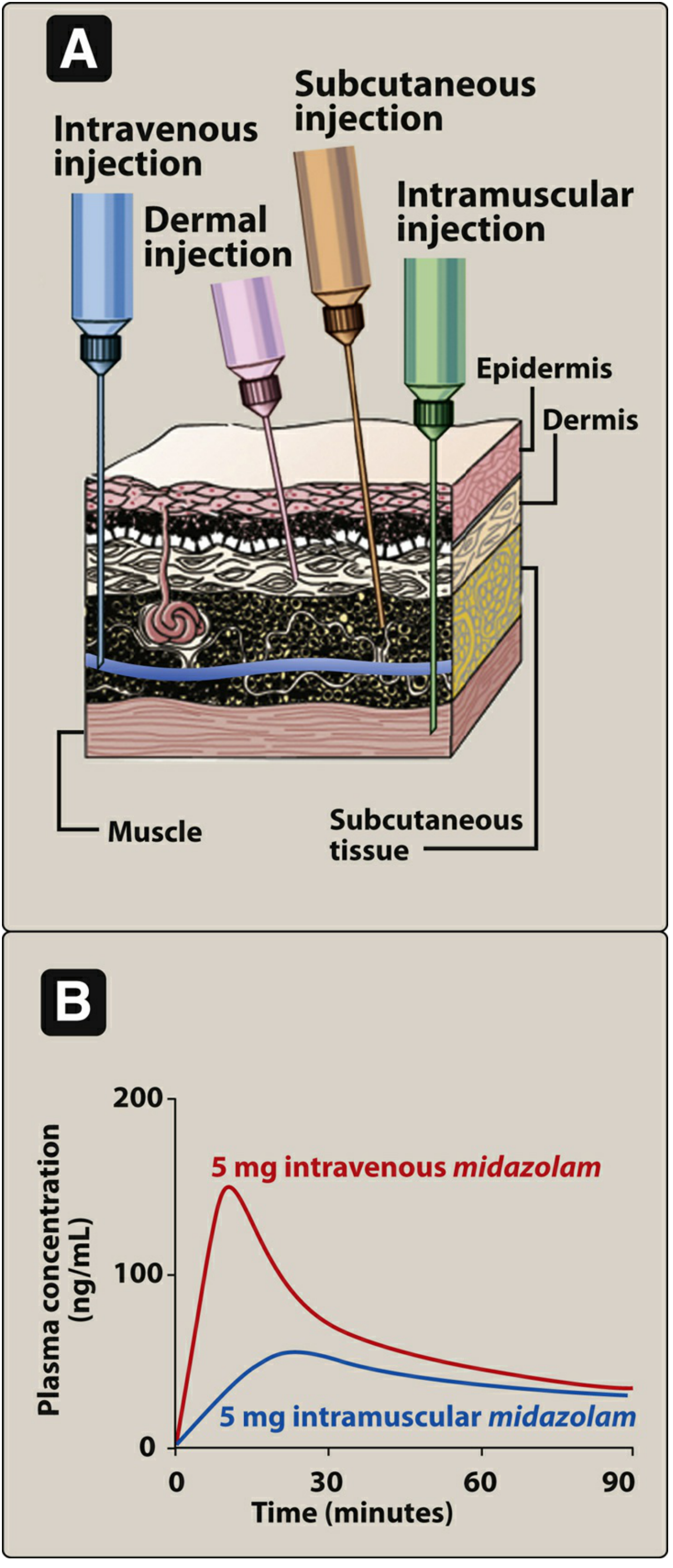
1. Intravenous (IV) Route
- Most common parenteral route.
- Drug is injected directly into a vein.
- No absorption step - 100% bioavailability (F = 1).
- Bolus injection: Entire dose reaches systemic circulation almost immediately - fastest onset.
- IV infusion: Drug given over extended time - lower peak concentration, prolonged effect; allows titration.
- Useful for: drugs not absorbed orally (rocuronium), emergencies, large volumes, irritating substances (diluted in blood), precise dose control.
- Disadvantages: Strict aseptic technique needed; risk of thrombosis, hemolysis, air embolism; most substances must be injected slowly; cannot be easily reversed.
2. Intramuscular (IM) Route
- Drug injected into skeletal muscle (e.g., deltoid, gluteus maximus, vastus lateralis).
- Absorbed by simple diffusion.
- Aqueous solutions: absorbed rapidly.
- Depot preparations: Suspended in non-aqueous vehicles (polyethylene glycol, oil) - vehicle diffuses away, drug precipitates at injection site and dissolves slowly → sustained release over days to weeks (e.g., depot antipsychotics, hormonal contraceptives).
- Advantages: Suitable for moderately irritating drugs; depot preparations allow prolonged action.
- Disadvantages: Painful; risk of nerve injury, hematoma; variable absorption in poor perfusion states.
3. Subcutaneous (SC) Route
- Drug injected into the loose connective tissue under the dermis.
- Absorbed by simple diffusion - slower than IV but faster than oral.
- Provides constant, slow, sustained absorption.
- Minimizes risk of hemolysis and thrombosis.
- Examples: Insulin, heparin, epinephrine.
- Contraindication: Avoid drugs that cause tissue irritation (risk of severe pain and necrosis).
4. Intradermal (ID) Route
- Drug injected into the dermis (vascular layer below epidermis).
- Very small volumes (0.1 mL).
- Used primarily for diagnostic purposes (tuberculin test, allergy skin testing) and desensitization injections.
- Not used for systemic drug delivery due to poor and slow absorption.
III. OTHER / MISCELLANEOUS ROUTES
1. Inhalation Route
- Drugs administered as gases, vapors, or aerosols directly into the respiratory tract.
- Rapid drug delivery across the large surface area of pulmonary epithelium - onset nearly as fast as IV bolus.
- Drug effects largely local (minimizes systemic side effects).
- Ideal for: asthma, COPD (bronchodilators, corticosteroids delivered directly to airways).
- Also used for: volatile anesthetics (e.g., sevoflurane, isoflurane).
- Limitations: Requires patient technique (proper use of inhaler); difficult to control precise dose; may cause local irritation.
2. Nasal Route
- Drug applied topically to the nasal mucosa.
- Used for allergic rhinitis (nasal corticosteroids), decongestants.
- Some drugs intended for systemic effect via nasal absorption (e.g., desmopressin, calcitonin, sumatriptan nasal spray).
- Rapid absorption due to highly vascular mucosa.
3. Topical Route
- Drug applied to skin or mucous membranes for local effect.
- Examples: Antifungal creams, ophthalmic drops, otic drops, local anesthetics.
- Minimizes systemic absorption and systemic side effects.
4. Transdermal Route
- Drug applied to skin via a transdermal patch for systemic effect.
- Drug slowly diffuses through skin layers into systemic circulation.
- Rate of absorption varies with skin characteristics (site, thickness, integrity) and lipid solubility of the drug.
- Produces constant, sustained plasma levels - avoids peaks and troughs.
- Advantages: Avoids first-pass metabolism, convenient (once-weekly or biweekly patches), good compliance.
- Disadvantages: Limited to highly lipid-soluble, low-molecular-weight, potent drugs; skin reactions possible.
- Examples: Nicotine patch, fentanyl patch, nitroglycerin patch, contraceptive patch (estrogen/progestin).
5. Intrathecal / Intraventricular Route
- Drug injected directly into the subarachnoid space (intrathecal) or brain ventricles (intraventricular).
- Used to bypass the blood-brain barrier (BBB), which prevents entry of many drugs into the CNS.
- Provides rapid local CNS effects.
- Examples: Spinal anesthetics (bupivacaine), intrathecal methotrexate (leukemia), baclofen for spasticity.
- Requires specialized skill; risk of infection (meningitis), headache.
6. Ocular (Ophthalmic) Route
- Eye drops, ointments, or injections (intravitreal, subconjunctival) applied directly to the eye.
- Primarily for local effect (glaucoma, infections, inflammation).
- Some systemic absorption can occur via nasolacrimal drainage (risk of systemic side effects, e.g., timolol eye drops causing bradycardia).
7. Otic (Aural) Route
- Ear drops administered into the ear canal.
- Used for local treatment of otitis externa, cerumen softening.
Comparative Summary Table
| Route | Absorption | Bioavailability | Onset | Advantages | Disadvantages | Examples |
|---|---|---|---|---|---|---|
| Oral | Variable | Low-moderate (first-pass) | 30-60 min | Safe, economical, convenient | First-pass, acid degradation | Amoxicillin, paracetamol |
| Sublingual | Rapid | High (bypasses first-pass) | 1-2 min | Fast onset, no first-pass | Small dose only | Nitroglycerin |
| Rectal | Erratic | Partial (50% bypasses liver) | 15-30 min | Useful if vomiting/unconscious | Irregular absorption, irritation | Diazepam suppository |
| IV | None needed | 100% (F=1) | Seconds | Immediate, precise | Irreversible, infection risk | Morphine, rocuronium |
| IM | Rapid (aqueous) / Slow (depot) | High | 10-30 min (aqueous) | Depot possible | Painful, nerve injury risk | Penicillin G, haloperidol decanoate |
| SC | Slow, steady | Good | 15-30 min | Sustained levels | Not for irritating drugs | Insulin, heparin |
| Intradermal | Very slow | Poor | - | Diagnostic | Not for systemic therapy | Mantoux test |
| Inhalation | Very rapid | High (pulmonary) | Seconds-minutes | Local action, minimal systemic SE | Technique-dependent | Salbutamol, sevoflurane |
| Transdermal | Slow, sustained | Good (no first-pass) | Hours | Constant levels, convenient | Only lipophilic, potent drugs | Fentanyl patch, nicotine patch |
| Intrathecal | Direct CNS | Complete (local) | Minutes | Bypasses BBB | Infection, specialized skill | Bupivacaine, MTX |
Key Concept: First-Pass Effect
- Sublingual, buccal
- Intravenous, IM, SC
- Inhalation
- Transdermal
- Rectal (partial - 50% bypass)
- Oral (most significant)
- Portal absorption enters liver before systemic circulation
Factors Governing Choice of Route
- Drug properties: Acid stability, lipid solubility, molecular size, ionization
- Speed of action needed: Emergency → IV; Sustained → depot IM or transdermal
- Site of action: Local → topical; CNS → intrathecal; Lung → inhalation
- Patient status: Unconscious → IV/rectal; pediatric → rectal or IM
- First-pass effect: High oral first-pass drugs (e.g., nitroglycerin, testosterone) benefit from sublingual or transdermal
- Volume and irritancy: Irritating solutions → IV (diluted); large volumes → IV