
Hymenolpsis nana
Reading File
Finding Sources
Finding Sources
Good results. Now let me read the most comprehensive sources in parallel.
Reading File
Reading File
Reading File
Now let me fetch the life cycle diagram and egg image.
Loading Image
Reading File
Loading Image
I now have comprehensive information from multiple authoritative sources. Here is a complete overview:
Hymenolepis nana (Dwarf Tapeworm)
Taxonomic note: Recent molecular data have led to reclassification of this organism to the new name Rodentolepis nana (previously Hymenolepis nana), though the old name remains widely used in clinical practice. — Harrison's Principles of Internal Medicine 22e
Classification
- Type: Cestode (tapeworm), class Eucestoda
- Common name: Dwarf tapeworm
- Most common: The most common human cestode infection worldwide
Morphology
| Feature | Detail |
|---|---|
| Adult length | 2–4 cm (up to 5 cm) — tiny compared to Taenia spp. (several meters) |
| Scolex | 4 muscular suckers + crown of hooklets (rostellum) |
| Proglottids | Rarely seen in stool (tiny, disintegrate) |
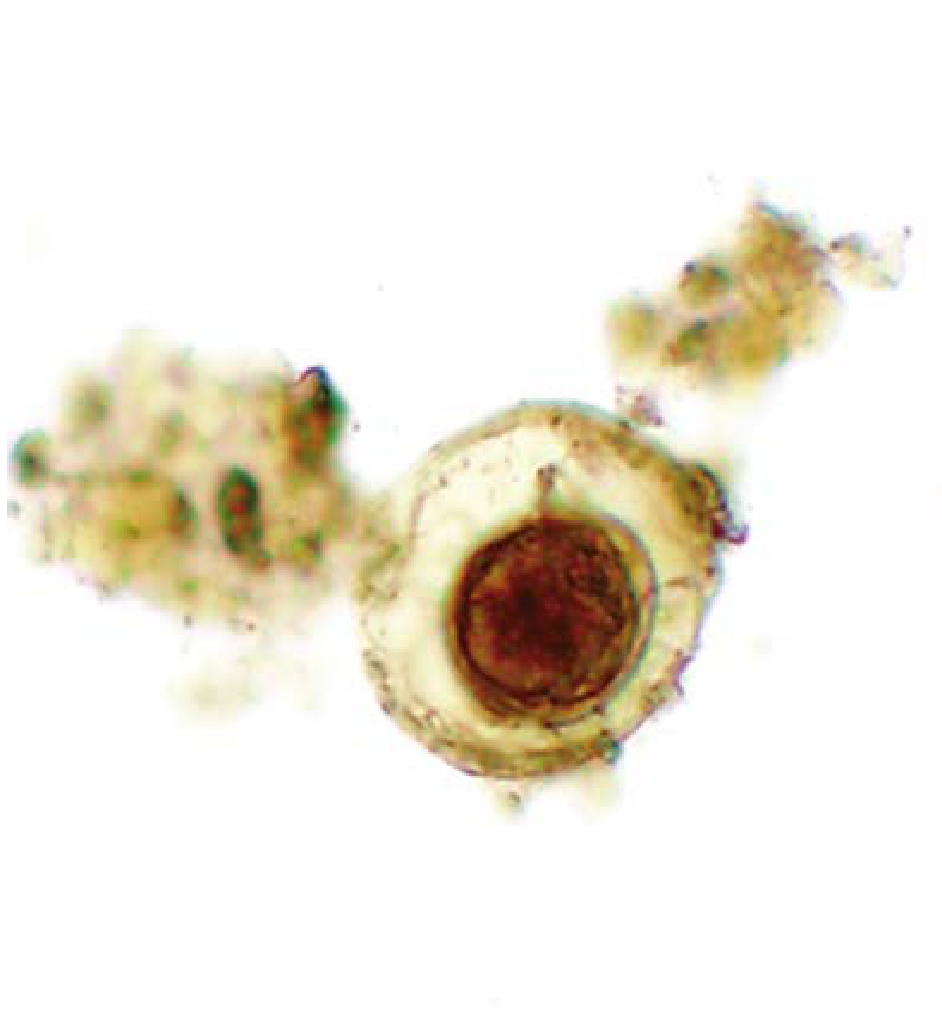
| Eggs | Spherical, 30–45 μm, thin shell, six-hooked oncosphere (hexacanth embryo) with polar filaments between the inner and outer membranes |
Life Cycle
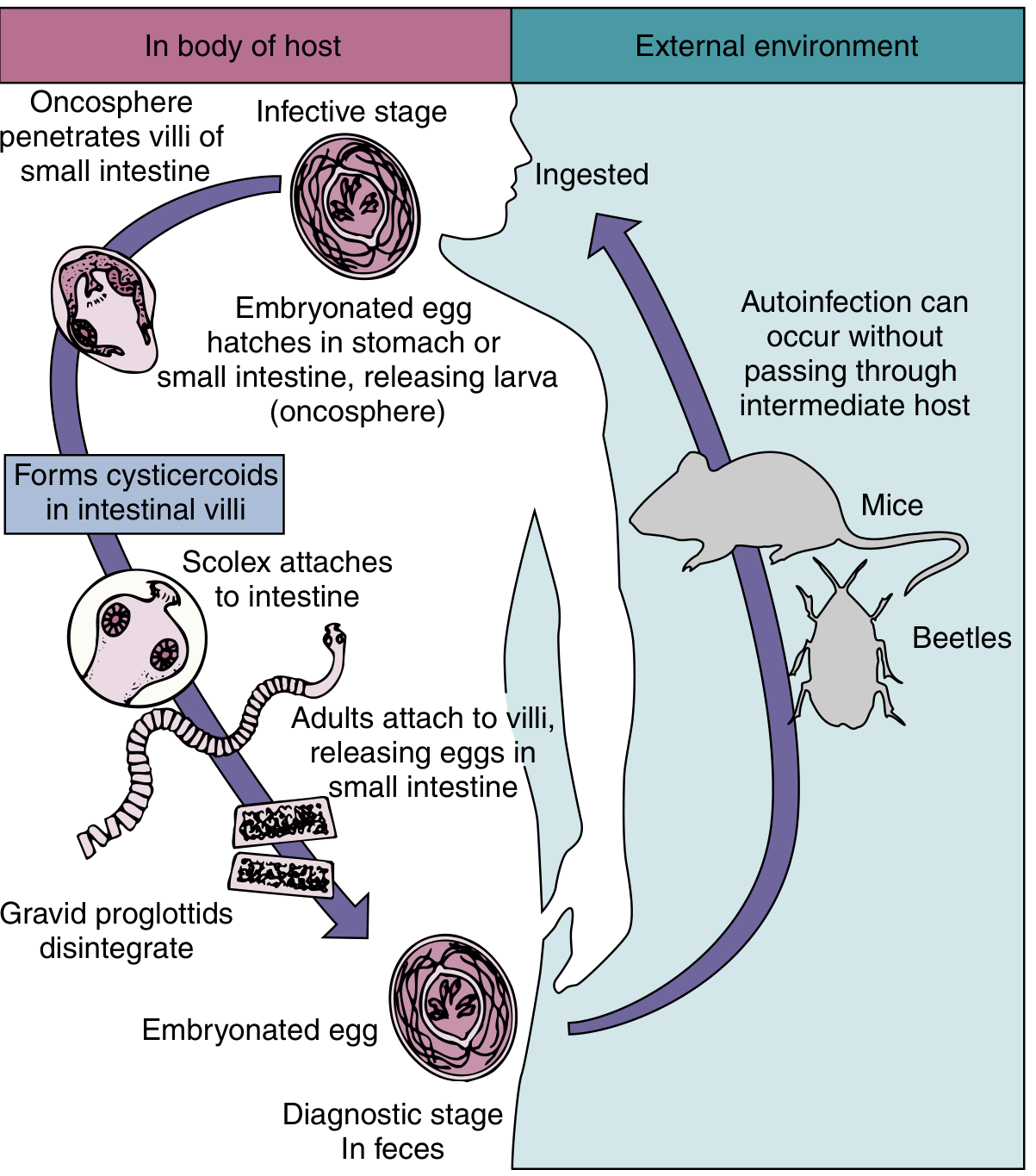
Key features:
- No obligate intermediate host — the only human cestode with this property
- Embryonated eggs are ingested → oncosphere released → penetrates intestinal villi → develops into cysticercoid larva in the epithelium
- Cysticercoid re-enters lumen → scolex attaches to small intestinal mucosa → matures into adult tapeworm in 10–12 days
- Adult produces egg-laden gravid proglottids → eggs passed in feces → immediately infective
- Autoinfection: Eggs can hatch within the intestinal lumen and re-develop into cysticercoids without leaving the host → perpetuates and amplifies infection
- Optional intermediate hosts: mice, beetles (grain/flour beetles); humans can ingest these
Epidemiology
- Worldwide distribution (temperate and tropical regions); endemic in developing countries
- Estimated 50–75 million people infected globally
- Most common tapeworm in North America
- Primarily fecal-oral transmission — person-to-person spread is possible (unique among tapeworms)
- Children are especially at risk; day-care centers and institutions are settings for outbreaks
- Also a common parasite of mice and rodents
Egg Morphology (Diagnostic Stage)
Clinical Features
| Worm burden | Manifestation |
|---|---|
| Light infection | Asymptomatic (most cases) |
| Heavy infection / hyperinfection | Diarrhea, abdominal pain, headache, anorexia, weight loss, malabsorption |
- Heavy infections (hundreds to thousands of worms) occur especially in children via autoinfection/hyperinfection
- Adult worm lifespan: ~4–10 weeks, but perpetuated by autoinfection cycles
Diagnosis
- Stool microscopy — identification of characteristic eggs in wet mount preparations of concentrated stool
- Eggs: 30–45 μm, thin-shelled, contain oncosphere with 6 hooklets and polar filaments (distinguishes from H. diminuta)
- More than one stool specimen may be required
- Culture, serology, antigen detection, and nucleic acid tests are not used in routine diagnosis
Treatment
| Drug | Dose | Notes |
|---|---|---|
| Praziquantel (drug of choice) | 25 mg/kg as a single oral dose | Active against both adult worms AND cysticercoids in the intestinal wall; may need repeat in heavy infection |
| Nitazoxanide (alternative) | 100–500 mg PO BID × 3 days (dose varies by age) | ~75–82% efficacy |
| Niclosamide (alternative) | Standard dose × 7 days (longer course than for other tapeworms) | Must be extended due to autoinfection cycle |
Prevention & Control
- Improved sanitation and personal hygiene (hand washing)
- Control of rodent reservoirs
- Mass chemotherapy has been used to control institutional/community outbreaks
- Treat cases promptly to interrupt autoinfection cycles
Comparison with H. diminuta
| Feature | H. nana | H. diminuta |
|---|---|---|
| Size | 2–4 cm | 20–60 cm |
| Scolex hooklets | Present | Absent |
| Intermediate host | Not required | Required (beetles/"mealworms") |
| Egg size | 30–45 μm | 70–85 × 60–80 μm |
| Polar filaments | Present | Absent |
| Egg staining | — | Bile-stained |
| Autoinfection | Yes | No |
Sources: Medical Microbiology 9e | Goldman-Cecil Medicine | Harrison's Principles of Internal Medicine 22e | Tietz Textbook of Laboratory Medicine 7e
This is a shared conversation. Sign in to Orris to start your own chat.