
Ecg ko smjaho ache se
Reading File
Finding Sources
Searching Images
ECG electrocardiogram waves P QRS T explained diagram
Finding Sources
Loading Image
Finding Sources
Reading File
Finding Sources
Searching Images
ECG basic waves P QRS T labeled diagram normal sinus rhythm
Finding Sources
Reading File
Reading File
Reading File
Reading File
Loading Image
Loading Image
Ab main aapko ECG ko ek dam clearly aur systematically samjhata hoon — bilkul basics se lekar leads, waves, intervals aur common findings tak.
🫀 ECG (Electrocardiogram) — Complete Guide
ECG kya hota hai?
ECG ek aisi recording hai jo dil ki electrical activity ko body ki surface se measure karta hai. Jab dil ki muscles depolarize (contract) ya repolarize (relax) hoti hain, toh electrical signals body ke bahar tak pahunchte hain — aur yahi ECG paper pe capture hota hai.
"ECG ek electrical map hai dil ka — har wave, har segment kuch na kuch batata hai." — Goldman-Cecil Medicine
Step 1 — Dil ka Electrical System (Conduction System)
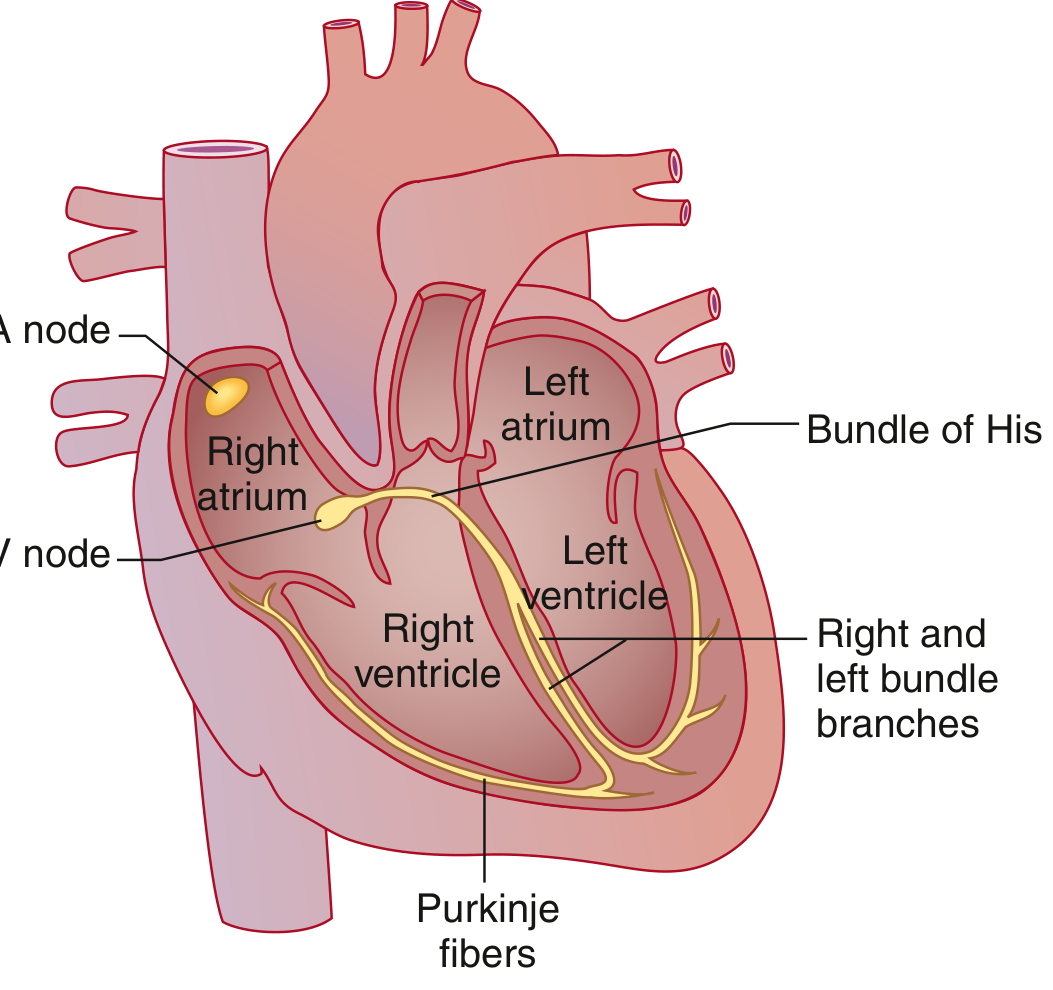
| Structure | Kaam |
|---|---|
| SA Node | Dil ka "pacemaker" — yahan se signal shuru hota hai |
| AV Node | Atria se Ventricles tak signal ko slow karta hai (delay deta hai) |
| Bundle of His | AV node ke baad signal ko niche le jaata hai |
| Bundle Branches | Right aur Left — ventricles mein signal faelata hai |
| Purkinje Fibers | Poore ventricle muscle mein signal deliver karta hai |
Step 2 — ECG Paper ko Samjho
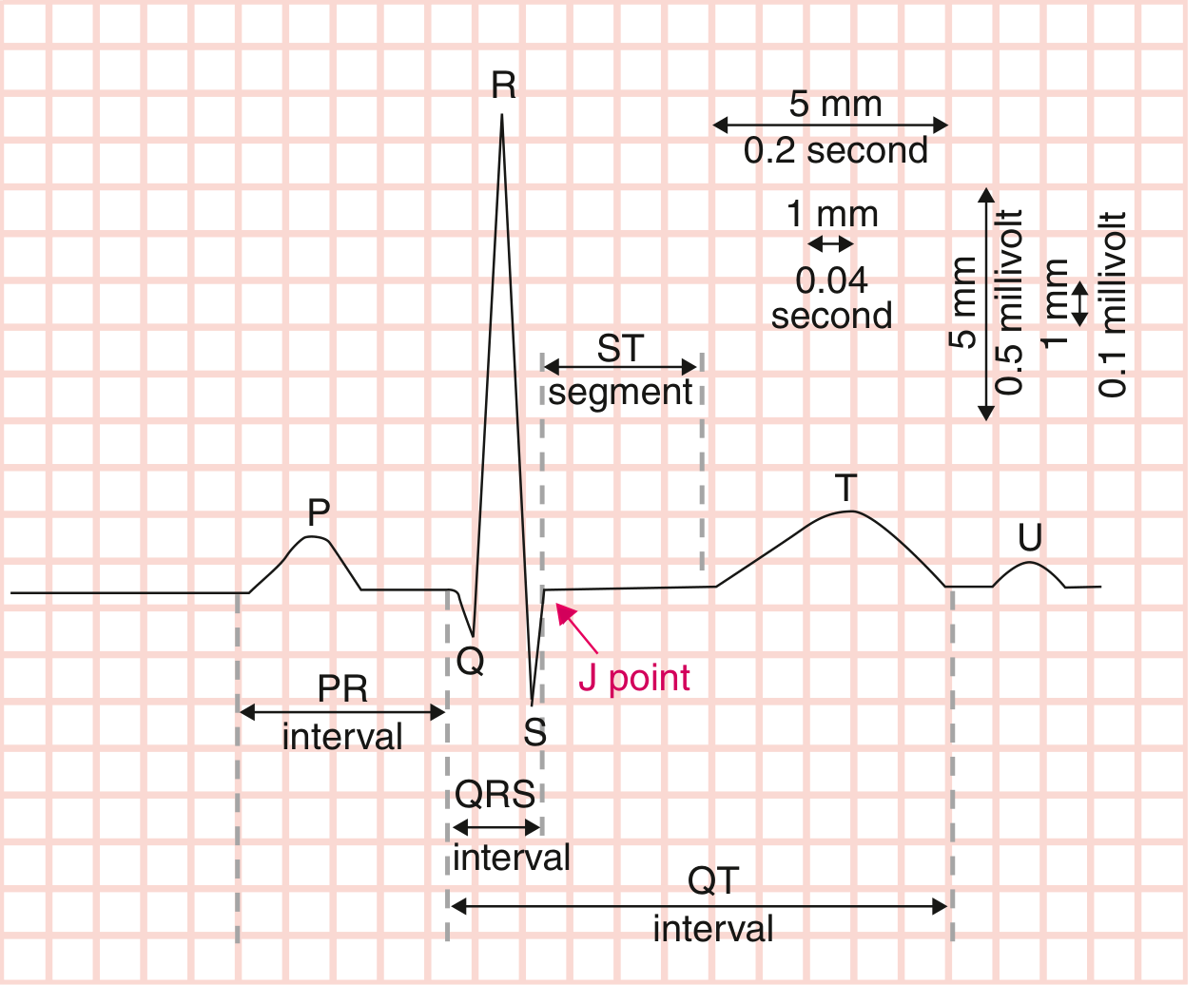
ECG paper pe horizontal = time, vertical = voltage (mV):
| Box | Time | Voltage |
|---|---|---|
| 1 small box (1mm) | 0.04 second (40 ms) | 0.1 mV |
| 1 big box (5mm) | 0.2 second (200 ms) | 0.5 mV |
Step 3 — ECG ki Waves, Segments aur Intervals
🔵 P Wave
- Kya represent karta hai: Atria ka depolarization (SA node se signal atria mein faelna)
- Normal duration: < 0.12 sec (3 small boxes)
- Normal amplitude: < 2.5 mm
- Iska matlab: Atria contract ho rahi hain, blood ventricles mein ja raha hai
🟡 PR Interval
- Kya hai: P wave ke start se QRS ke start tak
- Normal: 0.12 – 0.20 sec (3–5 small boxes)
- Kya batata hai: Signal AV node mein kitna delay hua
- Agar > 0.20 sec → Heart Block (1st degree)
🔴 QRS Complex
- Kya represent karta hai: Ventricles ka depolarization
- Normal duration: < 0.12 sec (< 3 small boxes)
- Q wave = initial small downward deflection
- R wave = tall upward spike
- S wave = downward deflection after R
- Agar > 0.12 sec → Bundle Branch Block ya Ventricular rhythm
🟠 ST Segment
- QRS ke end (J point) se T wave ke start tak
- Normal: Isoelectric line pe hona chahiye (flat)
- ST Elevation → MI (Heart Attack) ya Pericarditis
- ST Depression → Ischemia (blood supply kam)
🟢 T Wave
- Kya represent karta hai: Ventricles ka repolarization (muscles relax ho rahi hain)
- Normal: Upright (most leads mein)
- T wave inversion → Ischemia, MI, strain
- Peaked T waves → Hyperkalemia (potassium zyada)
⚪ QT Interval
- QRS start se T wave end tak
- Normal: < 0.44 sec (men), < 0.46 sec (women) — corrected QTc
- Long QT → Torsades de Pointes (dangerous arrhythmia) ka risk
🔘 U Wave
- T wave ke baad kabhi kabhi ek aur small wave
- Hypokalemia mein prominent hoti hai
Step 4 — 12 Leads ko Samjho
ECG mein 12 leads hote hain — ye dil ko alag-alag angles se "dekhte" hain:
Limb Leads (6 leads):
| Lead | Kya dekhta hai |
|---|---|
| Lead I | Left lateral wall |
| Lead II | Inferior + rhythm strip ke liye best |
| Lead III | Inferior wall |
| aVR | Right side (sab kuch inverted hoga — aVR mein) |
| aVL | High lateral wall |
| aVF | Inferior wall |
Precordial Leads (6 leads):
| Lead | Kya dekhta hai |
|---|---|
| V1 | Right ventricle |
| V2 | Interventricular septum |
| V3 | Anterior wall |
| V4 | Anterior wall |
| V5 | Lateral wall |
| V6 | Lateral wall |
Step 5 — Normal 12-Lead ECG kaisi dikhti hai
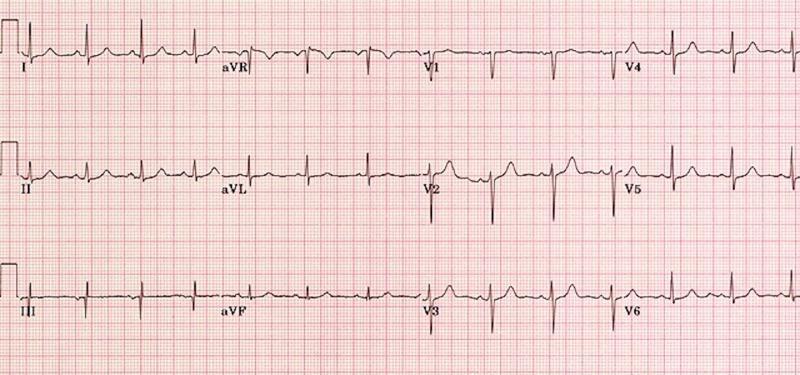
Normal sinus rhythm mein:
- Har QRS se pehle ek P wave hogi
- Regular R-R interval
- Narrow QRS (< 3 small boxes)
- ST segment isoelectric
- T waves upright (V1 aur aVR mein inverted normal hai)
Step 6 — Heart Rate Calculate Karna
Simple method (regular rhythm ke liye):
Heart Rate = 300 ÷ (R-R interval ke big boxes)
| R-R (big boxes) | Heart Rate |
|---|---|
| 1 | 300 bpm |
| 2 | 150 bpm |
| 3 | 100 bpm |
| 4 | 75 bpm |
| 5 | 60 bpm |
| 6 | 50 bpm |
Step 7 — Systematic ECG Padhne ka Tarika (7-Step Approach)
- Rate — HR calculate karo (normal: 60–100 bpm)
- Rhythm — Regular hai? P wave har QRS ke pehle hai?
- Axis — Normal axis: Lead I aur aVF dono upright
- P Wave — Normal shape aur duration?
- PR Interval — 0.12–0.20 sec ke beech?
- QRS — Narrow (<0.12 sec)? Q waves pathological toh nahi?
- ST-T Changes — Elevation, depression, inversion?
Common ECG Findings — Quick Reference
| Finding | ECG Change |
|---|---|
| MI (Heart Attack) | ST elevation + Q waves |
| Ischemia | ST depression + T inversion |
| Atrial Fibrillation | Irregular rhythm, no P waves |
| Heart Block (1st degree) | PR > 0.20 sec |
| LBBB | Wide QRS, "M" pattern V5-6 |
| RBBB | Wide QRS, "M" pattern V1 (RSR') |
| Hyperkalemia | Peaked T waves → wide QRS → flat P |
| Hypokalemia | Flat T + U waves prominent |
| Long QT | QTc > 440ms |
Sources:
- Guyton & Hall Textbook of Medical Physiology — Fundamentals of Electrocardiography
- Goldman-Cecil Medicine — The Electrocardiographic Waves (Ch. 42)
- Harriet Lane Handbook — Basic Electrocardiography Principles
Agar aap kisi specific topic pe aur detail chahte ho — jaise arrhythmias, MI localization, axis calculation, ya bundle branch blocks — toh batao, woh bhi cover kar dete hain! 🎯
This is a shared conversation. Sign in to Orris to start your own chat.