
Tell me about this
python3 -c " import pdfplumber with pdfplumber.open('/tmp/workspace/attachments/8708d711-72de-43e2-bda6-305af3d90d11/rnyQGZKM8yH6JLpUvqtwBQ6a69ca86b246b.pdf') as pdf: print(f'Pages: {len(pdf.pages)}') for i, page in enumerate(pdf.pages[:5]): print(f'\n--- Page {i+1} ---') text = page.extract_text() if text: print(text[:2000]) else: print('[No text extracted]') "
python3 -c " import pdfplumber with pdfplumber.open('/tmp/workspace/attachments/8708d711-72de-43e2-bda6-305af3d90d11/rnyQGZKM8yH6JLpUvqtwBQ6a69ca86b246b.pdf') as pdf: page = pdf.pages[4] text = page.extract_text() print(text[2000:] if text else '[empty]') print('\n--- Page 6 ---') page6 = pdf.pages[5] text6 = page6.extract_text() print(text6 if text6 else '[empty]') "
Patient Summary
- Name: Prem | Age: 82 years, Female
- Barcode: E8484706 | Order ID: 19439808313
- Referred by: Self
- Report Status: Partial (HIV result still pending)
Department of Biochemistry
Potassium - Serum
| Test | Value | Reference | Status |
|---|---|---|---|
| Serum Potassium | 4.25 mmol/L | 3.5 - 5.5 | ✅ Normal |
Kidney Function Test (Advance)
| Test | Value | Reference | Status |
|---|---|---|---|
| Serum Creatinine | 0.50 mg/dL | 0.6 - 1.3 | ⚠️ Low |
| eGFR (CKD-EPI) | 93.58 mL/min/1.73m² | - | ✅ Normal |
| Serum Uric Acid | 2.2 mg/dL | 2.6 - 6.0 | ⚠️ Low |
| Serum Calcium | 8.5 mg/dL | 8.8 - 10.6 | ⚠️ Slightly Low |
| Serum Phosphorus | 3.6 mg/dL | 2.5 - 4.5 | ✅ Normal |
| Serum Sodium | 123 mmol/L | 136 - 146 | 🔴 Critically Low |
| Serum Chloride | 93 mmol/L | 101 - 109 | 🔴 Low |
| Blood Urea | 20.8 mg/dL | 17 - 43 | ✅ Normal |
| BUN | 9.7 mg/dL | 8 - 20 | ✅ Normal |
| BUN/Creatinine Ratio | 19.44 | - | ✅ Normal |
- Confusion, lethargy, weakness
- Nausea, headache
- In severe cases: seizures, coma
Department of Coagulation
Prothrombin Time (PT) / INR
| Test | Value | Reference | Status |
|---|---|---|---|
| PT | 11.00 sec | 8.9 - 13.3 | ✅ Normal |
| INR | 0.99 | 0.80 - 1.16 | ✅ Normal |
aPTT
| Test | Value | Reference | Status |
|---|---|---|---|
| aPTT | 29.10 sec | 25.7 - 37.3 | ✅ Normal |
| Ratio | 0.92 | 0.82 - 1.18 | ✅ Normal |
Department of Serology (HIV SmartDetect Package)
| Test | Result | Status |
|---|---|---|
| HBsAg (Hepatitis B Surface Antigen) | Non-Reactive | ✅ Negative |
| Anti-HCV Antibody (Hepatitis C) | Non-Reactive | ✅ Negative |
| RPR (Syphilis screen) | Non-Reactive | ✅ Negative |
| HIV I & II Antibody | Pending | ⏳ Result awaited |
Summary of Abnormal Results
| Finding | Value | Significance |
|---|---|---|
| 🔴 Serum Sodium | 123 mmol/L (ref: 136-146) | Severe hyponatremia - requires urgent medical attention |
| 🔴 Serum Chloride | 93 mmol/L (ref: 101-109) | Low, consistent with hyponatremia |
| ⚠️ Serum Calcium | 8.5 mg/dL (ref: 8.8-10.6) | Mildly low (hypocalcemia) |
| ⚠️ Serum Uric Acid | 2.2 mg/dL (ref: 2.6-6.0) | Mildly low |
| ⚠️ Serum Creatinine | 0.50 mg/dL (ref: 0.6-1.3) | Mildly low (likely muscle-mass related in elderly) |
Important Note
Please consult a doctor immediately regarding the sodium level. Do not self-treat.
What could cause such a low sodium level?
Causes of Severe Hyponatremia (Na = 123 mmol/L)
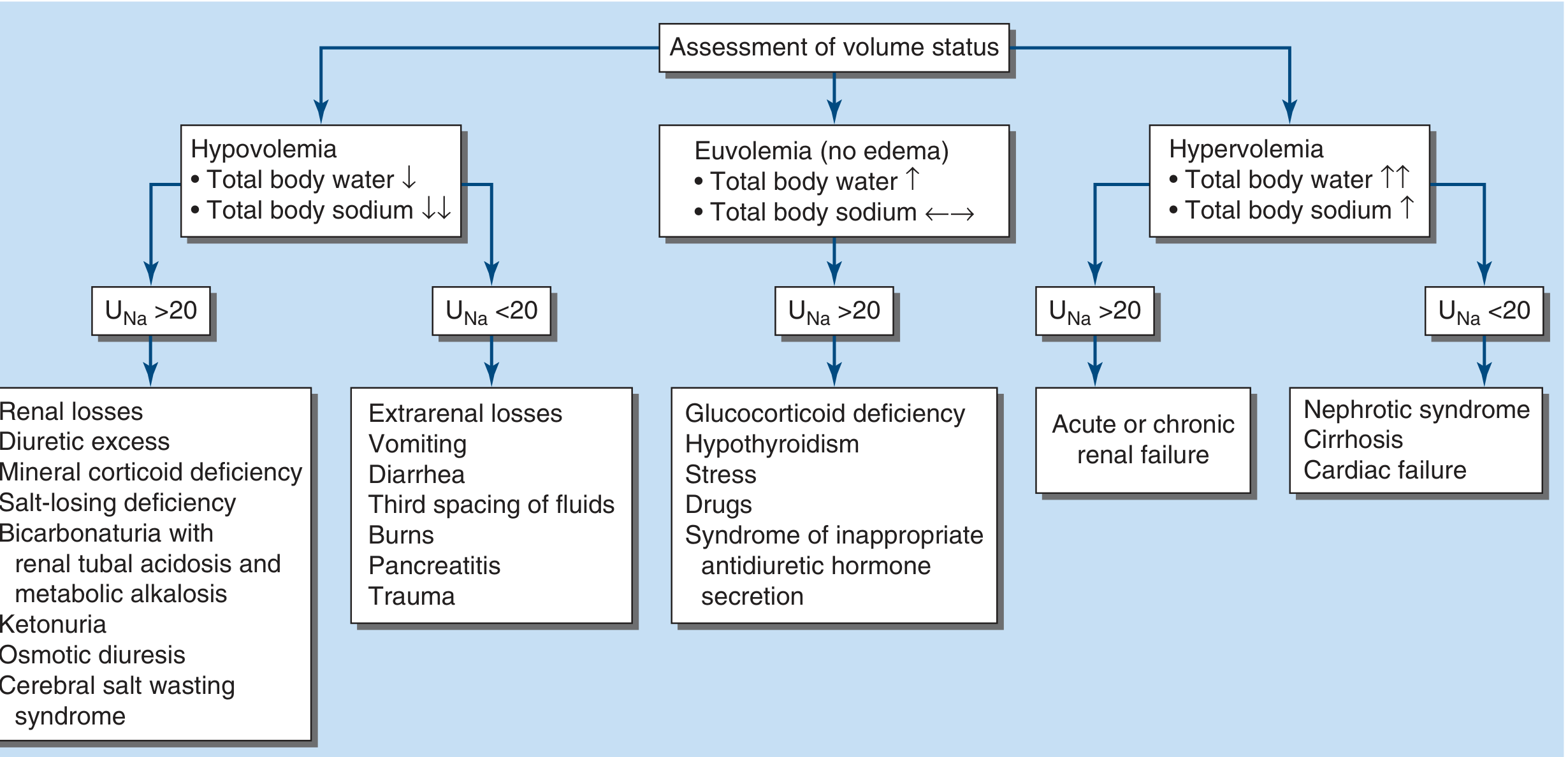
1. Hypovolemic Hyponatremia (Low fluid + even lower sodium)
- Vomiting or diarrhea - very common in elderly patients
- Sweating / insensible losses without adequate replacement
- Burns, pancreatitis, trauma (fluid shifting into tissues)
- Diuretics (especially thiazides like hydrochlorothiazide) - this is one of the most common causes of severe hyponatremia in elderly women
- Adrenal insufficiency / mineralocorticoid deficiency - the adrenal glands fail to retain sodium
- Salt-losing nephropathies (kidney tubule disorders)
- Osmotic diuresis
In an 82-year-old woman, thiazide diuretics are a very common culprit. Elderly women on blood pressure medications should have this checked first.
2. Euvolemic Hyponatremia (Normal fluid volume, diluted sodium)
- SIADH (Syndrome of Inappropriate ADH secretion) - the most common cause of this type. The body keeps holding onto water when it shouldn't. Triggers include:
- Lung conditions (pneumonia, TB, lung cancer)
- Brain conditions (stroke, head injury, meningitis, brain tumors)
- Drugs: antidepressants (SSRIs), antiepileptics (carbamazepine), opioids, barbiturates, chlorpropamide
- Surgery/stress
- Hypothyroidism - an underactive thyroid can cause water retention and hyponatremia; common in elderly women
- Secondary adrenal insufficiency (pituitary failure)
- Psychogenic polydipsia (drinking excessive water)
3. Hypervolemic Hyponatremia (Excess fluid AND sodium, but even more fluid)
- Heart failure - the heart can't pump effectively, the kidneys retain water
- Liver cirrhosis - fluid leaks into the abdomen (ascites), kidneys retain water
- Nephrotic syndrome - protein loss from kidneys causes fluid retention
- Chronic kidney disease - kidneys can't excrete water normally
Context for This Patient (82-year-old woman)
| Priority | Cause | Why Suspect It |
|---|---|---|
| 🔴 1st | Thiazide diuretics | Most common cause of severe hyponatremia in elderly women; often prescribed for BP |
| 🔴 2nd | SIADH from a drug or illness | Very common; many medications can trigger it |
| 🟡 3rd | Hypothyroidism | Common in elderly women; causes euvolemic hyponatremia |
| 🟡 4th | Adrenal insufficiency | Would also explain low sodium + low chloride |
| 🟡 5th | GI losses (vomiting/diarrhea) | Would explain hypovolemic pattern |
| 🟠 6th | Heart failure / cirrhosis | Would present with swelling, breathlessness |
What the Doctor Will Likely Check Next
- Urine sodium and urine osmolality - to distinguish SIADH from other causes
- Serum osmolality - to confirm true hyponatremia vs. pseudohyponatremia
- Thyroid function tests (TSH, T4) - to rule out hypothyroidism
- Cortisol / ACTH stimulation test - to rule out adrenal insufficiency
- Review of all medications - especially diuretics, antidepressants
Important: Sodium must never be corrected too fast. Raising it by more than 8-10 mmol/L in 24 hours can cause severe and irreversible brain damage (osmotic demyelination syndrome). This must be managed by a physician in a hospital setting.
How to treat this
Treatment of Severe Hyponatremia (Na = 123 mmol/L)
Step 1: Assess Symptoms First
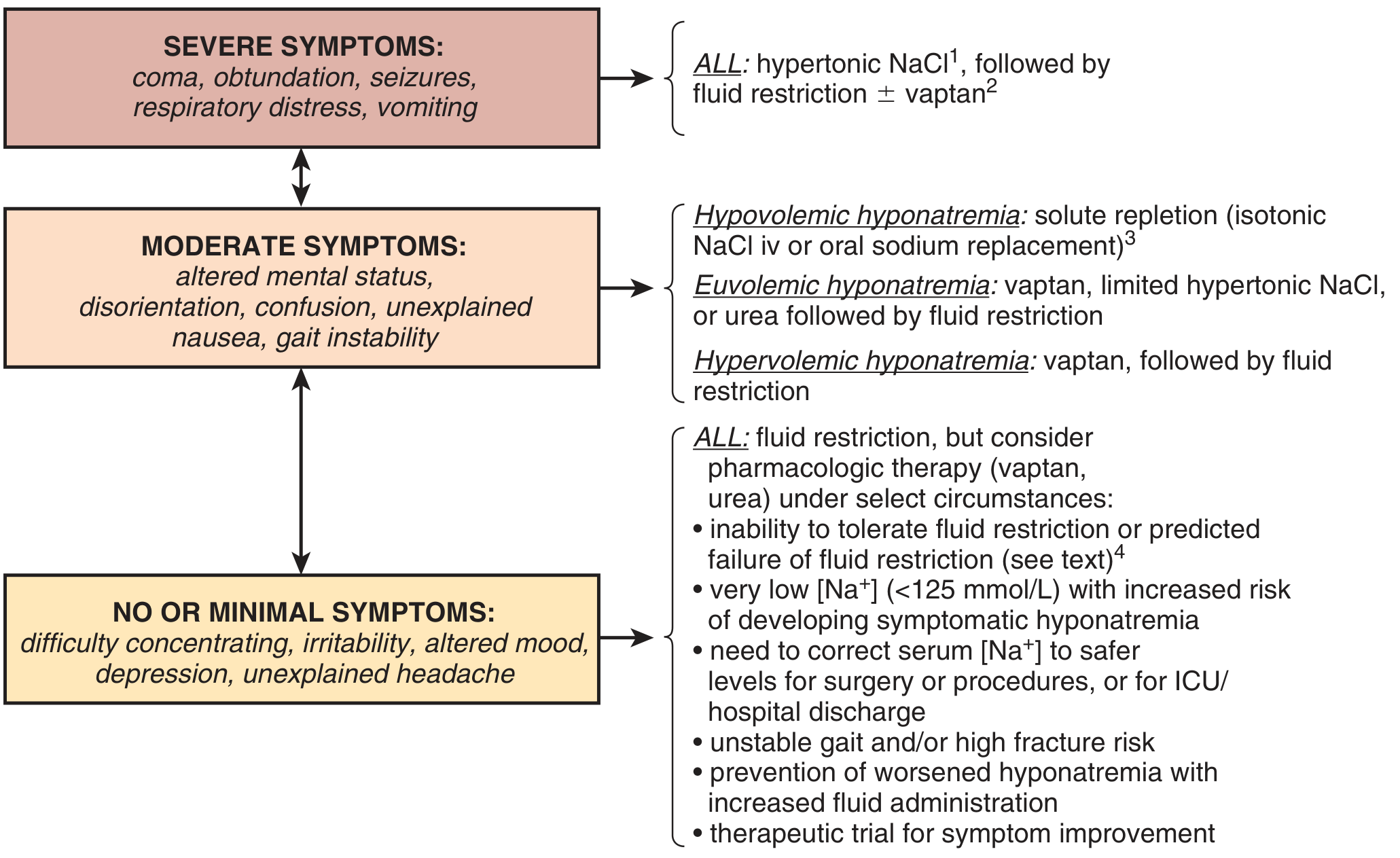
| Symptom Level | Examples | Urgency |
|---|---|---|
| Severe | Coma, seizures, respiratory distress | 🔴 Emergency - act immediately |
| Moderate | Confusion, disorientation, gait instability, falls | 🟡 Urgent - hospital admission |
| Mild/None | Irritability, difficulty concentrating, headache | 🟠 Careful outpatient or inpatient management |
Step 2: The Golden Rule - Rate of Correction
Do NOT correct faster than 8 mEq/L in any 24-hour period.
- Target: raise Na by 4-6 mEq/L in the first 4-6 hours if symptomatic, then slow down
- Ceiling: never exceed 8-10 mEq/L per 24 hours
- Monitoring: recheck serum sodium every 2-4 hours during active correction
Step 3: Treatment by Cause (Volume Status)
🔴 If Symptomatic (any severity) - Hypertonic Saline First
- Given as a continuous infusion at a modest starting rate of 0.25-0.3 mL/kg/hour (safer margin vs. formula-based dosing)
- Alternatively, 100 mL boluses (up to 3 doses) for urgent correction
- Stop or slow dramatically once symptoms resolve or Na rises by 5 mEq/L, whichever comes first
- DDAVP (desmopressin) can be co-administered to prevent over-correction, particularly if the cause of ADH secretion may resolve suddenly (e.g., stopping a causative drug)
If Hypovolemic (fluid-depleted - e.g., from vomiting, diarrhea, diuretics)
- Isotonic (normal) saline (0.9% NaCl) IV - restores volume, and as ADH falls due to volume repletion, the kidneys will naturally excrete the excess water
- Stop the offending diuretic if thiazides are the cause
- Monitor sodium closely - volume repletion can cause rapid auto-correction, risking ODS
If Euvolemic - SIADH (most common cause in elderly)
- Fluid restriction - first-line therapy
- Restrict to 500-1000 mL/day (formula-guided based on urine electrolytes)
- Challenging for patients but highly effective if followed
- Salt tablets / urea tablets - increase solute load, force obligate water loss via kidneys
- Loop diuretics (furosemide) - impair urinary concentrating ability, increase free water excretion
- Vaptans (tolvaptan, conivaptan) - vasopressin/ADH receptor antagonists
- Block the action of ADH on kidney tubules, causing selective water excretion ("aquaresis")
- Used when fluid restriction fails or is impractical
- Tolvaptan is oral; conivaptan is IV
- Risk of over-rapid correction - must be started in hospital with close monitoring
- Treat the underlying cause - stop causative drugs, treat pneumonia/hypothyroidism/adrenal insufficiency
If Hypervolemic (heart failure, cirrhosis)
- Fluid restriction - cornerstone of management
- Loop diuretics (furosemide) - reduce total body fluid
- Vaptans - can raise sodium in heart failure/cirrhosis related hyponatremia
- Treat the underlying disease (optimize heart failure therapy, manage liver disease)
Step 4: What Needs to Happen for Prem
| Action | Detail |
|---|---|
| Admit to hospital | This level requires inpatient monitoring |
| IV access + blood tests | Serum osmolality, urine sodium, urine osmolality, TSH, cortisol |
| Identify & stop the cause | Review all medications - stop thiazide diuretics if present |
| Correct sodium slowly | Max 8 mEq/L per 24 hours - recheck every 2-4 hours |
| Choose fluid based on volume status | Isotonic saline if depleted; fluid restriction if SIADH |
| Hypertonic saline if symptomatic | Only if confusion, seizures, or neurological symptoms present |
| Specialist review | Nephrology or internal medicine consultation |
⚠️ Special Caution in the Elderly
Please take Prem to a hospital immediately for evaluation and treatment. This is not a condition that can be safely managed at home.
Any home based tt
Home Treatment for Hyponatremia - What Is and Is NOT Safe
🔴 For Prem Specifically (Na = 123): No, Home Treatment Is Not Appropriate
- Seizures - can happen without warning at this level
- Sudden collapse or loss of consciousness
- Falls and hip fracture - gait instability from low sodium is a major risk in the elderly
- Brain herniation if sodium drops further
What Home Measures Are Used - But Only AFTER Hospital Stabilization
1. Fluid Restriction (Most Important)
- Limit total daily fluid intake to 500 mL-1 litre per day depending on urine tests
- Includes ALL fluids - water, tea, coffee, juice, soups, lassi, buttermilk, everything
- This is the cornerstone of SIADH management at home
- Very difficult for elderly patients, especially in Indian summer heat
2. Increase Salt and Protein in Diet
- Add extra salt to food (if blood pressure allows)
- Eat protein-rich foods - dals, eggs, paneer, chicken - these increase solute load and force the kidneys to excrete more water
- Avoid low-salt diets (these worsen hyponatremia)
3. Avoid Free Water / Plain Water
- Drink coconut water, electrolyte drinks, or ORS rather than plain water if fluids are needed
- Plain water worsens dilutional hyponatremia
4. Stop Offending Medications
- If thiazide diuretics (like hydrochlorothiazide, indapamide) are identified as the cause, the doctor will stop or switch them
- This alone can normalize sodium within days in drug-induced cases
5. Oral Salt Tablets / Urea Tablets (Prescription only)
- A doctor may prescribe oral sodium chloride tablets or urea sachets
- These increase the solute load and help the kidneys eliminate excess water
- Not to be taken without medical supervision
6. Tolvaptan (Oral Vaptan - Prescription only)
- An oral tablet that blocks ADH and causes selective water excretion
- Must be started in hospital - not started at home
- Can be continued at home under strict monitoring with regular blood tests
7. Regular Blood Test Monitoring
- Sodium must be checked every few days initially when managing at home
- Any drop below 130 or new symptoms = return to hospital immediately
⚠️ Red Flag Symptoms - Go to Hospital Immediately If:
| Symptom | Action |
|---|---|
| Confusion or disorientation | 🔴 Emergency |
| Seizure or convulsion | 🔴 Emergency (call 108) |
| Difficulty walking or sudden weakness | 🔴 Emergency |
| Headache that is worsening | 🔴 Urgent |
| Vomiting that is persistent | 🔴 Urgent |
| Loss of consciousness | 🔴 Emergency |
Bottom Line
| Situation | Recommendation |
|---|---|
| Na = 123 (current) | 🏥 Hospital admission required |
| Na = 128-132, asymptomatic, cause known | 🏠 Home management possible with strict fluid restriction + monitoring |
| Na > 132, stable, on maintenance therapy | 🏠 Home follow-up with regular blood tests |