
Management of Diabetes Step Wise 50 year old female No history of HTN, IHD, CAD, CKD just hypothyroidism
Reading File
Now let me search the medical library and recent guidelines in parallel.
Finding Sources
Searching PubMed
"type 2 diabetes" AND "management" AND "guidelines"
Searching the Web
ADA 2025 2026 standards diabetes care stepwise management algorithm type 2
Finding Sources
Finding Sources
Reading File
Finding Sources
There's a treatment algorithm image and a detailed section on managing T2DM progression. Let me read those key sections now.
Reading File
Finding Sources
Excellent - Harrison's 2025 has a full stepwise management section. Let me read it along with the treatment algorithm image.
Reading File
Loading Image
I have the algorithm image and extensive Harrison's content. Let me read the full stepwise management and drug choice sections from Harrison's.
Reading File
I now have comprehensive content from Harrison's 2025. Let me also get the hypothyroidism-specific interaction with diabetes management.
Finding Sources
I have enough comprehensive data to construct a detailed, stepwise management plan. Here is the full answer:
Stepwise Management of Type 2 Diabetes - 50-Year-Old Female (Hypothyroidism, No HTN/IHD/CAD/CKD)
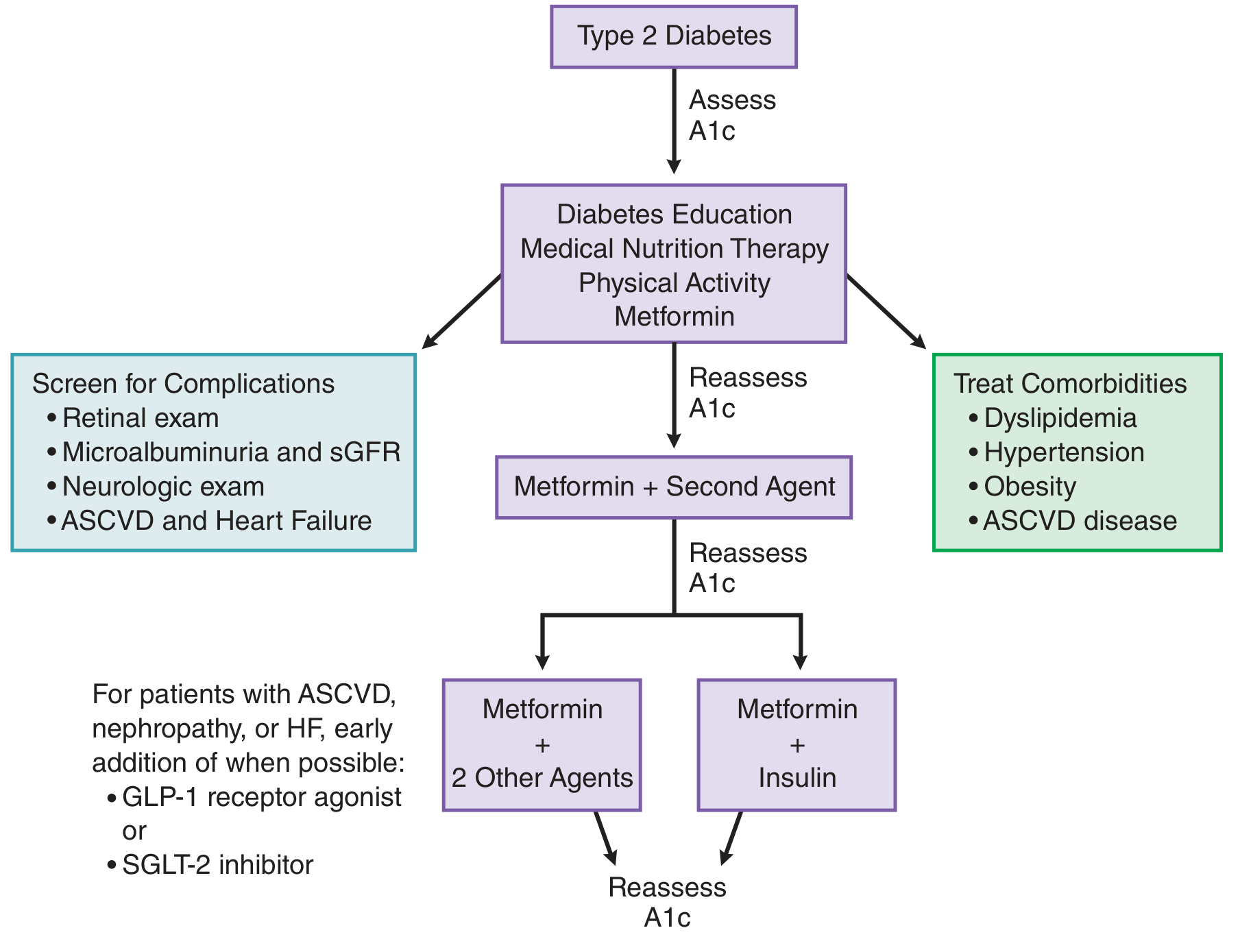
Patient Profile Summary
- Age: 50 years, Female
- Comorbidity: Hypothyroidism (ensure TSH optimized - uncontrolled hypothyroidism worsens insulin resistance and dyslipidemia)
- No ASCVD, HTN, IHD, CAD, CKD - this simplifies the algorithm as we do NOT need to prioritize SGLT-2 or GLP-1RA for cardioprotection as first choice
STEP 1 - Initial Assessment Before Starting Therapy
| Test | Target/Purpose |
|---|---|
| HbA1c | Establishes glycemic baseline and guides intensity of therapy |
| FPG / OGTT | Confirm diagnosis if not done |
| Fasting lipid profile | Screen for dyslipidemia (common with T2DM + hypothyroidism) |
| Serum creatinine / eGFR | Baseline renal function (for Metformin safety) |
| LFTs | Baseline |
| Urine microalbumin / ACR | Early nephropathy screen |
| TSH, Free T4 | Optimize thyroid status - hypothyroidism impairs glycemic control and lipid metabolism |
| Retinal exam | Screen for retinopathy at diagnosis |
| BMI / waist circumference | Guide lifestyle and drug choice |
| BP | Baseline |
Key point: First optimize thyroid replacement (levothyroxine titration to TSH 0.5-2.5 mIU/L). Uncontrolled hypothyroidism independently worsens dyslipidemia, insulin resistance, and weight gain - all of which worsen diabetes management.
STEP 2 - Set Individualized Glycemic Targets
Per Harrison's Principles of Internal Medicine 22E (2025):
| Parameter | Target for this patient |
|---|---|
| HbA1c | < 7.0% (she is 50, no major comorbidities, cognitively intact) |
| Fasting plasma glucose | 80-130 mg/dL |
| 2-hr post-prandial glucose | < 180 mg/dL |
| BP (though no HTN) | < 130/80 mmHg (monitor) |
| LDL | < 100 mg/dL (< 70 if high risk) |
A more stringent HbA1c ≤ 6.5% may be considered if achievable without hypoglycemia.
STEP 3 - Lifestyle Modification (Non-Pharmacological - Initiated from DAY 1)
These are concurrent with, not prior to, pharmacotherapy at diagnosis if HbA1c ≥ 7.5-8%.
a) Medical Nutrition Therapy (MNT)
- Reduce total caloric intake; target 5-10% weight loss if overweight/obese
- Low glycaemic index diet; limit refined carbohydrates and saturated fats
- Consistent carbohydrate distribution across meals
- Mediterranean or DASH dietary pattern preferred
b) Physical Activity
- 150 min/week moderate aerobic exercise (brisk walking, cycling, swimming)
- Resistance training 2-3 days/week
- Reduce prolonged sedentary time
- Stress test needed only if disease duration > 10 years before intensive activity
c) Behavioral/Lifestyle
- Weight management program if BMI > 25
- Smoking cessation
- Limit alcohol (≤1 drink/day for women)
- Diabetes self-management education and support (DSMES)
- Structured self-monitoring of blood glucose (SMBG)
STEP 4 - Pharmacotherapy: Stepwise Escalation
Step 4A - First-Line Monotherapy: METFORMIN
Start at diagnosis - Metformin remains the universal consensus first-line agent.
| Aspect | Detail |
|---|---|
| Mechanism | Decreases hepatic glucose production (gluconeogenesis inhibition via AMPK activation); improves peripheral insulin sensitivity |
| Starting dose | 500 mg OD or BD with meals |
| Target dose | 1000 mg BD (max 2550 mg/day) |
| Titration | Increase by 500 mg every 1-2 weeks to minimize GI side effects |
| HbA1c reduction | 1.0-1.5% |
| Weight effect | Neutral to slight weight loss |
| Hypoglycemia risk | None (does not cause hypoglycemia as monotherapy) |
| Key benefit | Cardiovascular neutral/beneficial; low cost; weight neutral |
| Contraindications | eGFR < 30 (avoid), 30-45 (use with caution, reduce dose) - not applicable here |
| Side effects | GI (nausea, diarrhea, flatulence - dose dependent, mitigated with food and slow titration); rarely lactic acidosis; B12 deficiency with long-term use |
| Special note for hypothyroidism | If patient is on levothyroxine, no interaction with metformin directly, but watch for malabsorption |
Reassess HbA1c at 3 months. If target NOT met, proceed to Step 4B.
Step 4B - Dual Therapy: Metformin + Second Agent
Since this patient has no ASCVD, no HF, no CKD, the second agent choice is primarily based on:
- HbA1c gap from target
- Weight (overweight - prefer weight-neutral or weight-losing agents)
- Hypoglycemia risk
- Cost and patient preference
- Menopausal status (perimenopausal at 50 - TZDs may worsen bone density)
| Agent Class | Examples | HbA1c ↓ | Weight | Hypo Risk | Notes for this patient |
|---|---|---|---|---|---|
| GLP-1 Receptor Agonist | Semaglutide, Dulaglutide, Liraglutide | 1.0-1.5% | ↓↓ (weight loss) | Low | Preferred 2nd agent if overweight/obese. CV benefit. Nausea common initially |
| SGLT-2 Inhibitor | Empagliflozin, Dapagliflozin, Canagliflozin | 0.5-1.0% | ↓ (modest) | Low | Good if overweight; UTI/genital infections risk; monitor eGFR |
| DPP-4 Inhibitor | Sitagliptin, Vildagliptin, Saxagliptin | 0.5-0.8% | Neutral | Low | Well tolerated, oral, convenient; less potent |
| Sulfonylurea | Glimepiride, Glipizide, Gliclazide | 1.0-1.5% | ↑ (weight gain) | Yes - hypoglycemia risk | Cheap but weight gain and hypo risk; less preferred |
| Thiazolidinedione (TZD) | Pioglitazone | 0.5-1.4% | ↑↑ | Low | Avoid in perimenopausal - increases fracture risk. Also weight gain and fluid retention |
For this 50-year-old overweight/obese patient: Preferred 2nd agent is GLP-1RA (semaglutide oral 7-14 mg daily, or weekly SC dulaglutide/semaglutide) given weight reduction benefit and CV protection even as a preventive strategy. If cost is a concern, SGLT-2 inhibitor is a strong alternative.
Reassess HbA1c at 3 months. If still not at target, proceed to Step 4C.
Step 4C - Triple Therapy: Metformin + 2 Other Agents
Choose a complementary third agent addressing different mechanisms:
- Example: Metformin + GLP-1RA + SGLT-2 inhibitor (excellent combination - complementary mechanisms, weight loss, low hypoglycemia)
- Or: Metformin + SGLT-2 inhibitor + DPP-4 inhibitor
- Or: Metformin + Sulfonylurea + DPP-4 inhibitor (if cost is the priority)
Note: Avoid combining DPP-4 inhibitors with GLP-1RAs (redundant mechanism via the same incretin pathway, no additive benefit).
Step 4D - Insulin Therapy
When oral/injectable non-insulin agents fail to maintain targets, or HbA1c is very high at presentation (> 10-11%), insulin is added or substituted.
Initiation:
- Basal insulin first: Insulin glargine (U100 or U300) or Insulin degludec
- Start: 10 units SC at bedtime OR 0.1-0.2 units/kg/day
- Titrate: Increase by 2 units every 3 days until fasting glucose 80-130 mg/dL
- Continue metformin with basal insulin (reduces insulin dose requirement and weight gain)
Intensification if needed:
- Add prandial insulin (rapid-acting: Aspart, Lispro, Glulisine) before largest meal
- Titrate to post-meal glucose targets
- "Basal-bolus" regimen: 4 injections/day - 1 basal + 3 prandial
Premixed insulin option (for simpler regimen):
- Biphasic insulin 30/70 or 70/30 BD (before breakfast and dinner)
- Less flexible but simpler for adherence
STEP 5 - Management of Comorbidities
Dyslipidemia (very likely with T2DM + hypothyroidism)
- Check lipids AFTER TSH is optimized - hypothyroidism-related dyslipidemia may partly resolve with euthyroid state
- If LDL remains elevated: Statin therapy - Atorvastatin 10-40 mg (moderate intensity for primary prevention at age 50 with diabetes)
- Target LDL < 100 mg/dL
Blood Pressure
- No HTN currently - monitor at every visit
- Target if BP develops: < 130/80 mmHg
- First-line if diabetes + HTN develops: ACE inhibitor or ARB (renoprotective)
Antiplatelet Therapy
- No aspirin for primary prevention in T2DM without established CVD per current ADA guidance (bleeding risk outweighs benefit)
Thyroid Management (Key Interaction)
- Maintain TSH in target range (0.5-2.5 mIU/L)
- Poorly controlled hypothyroidism → worsens insulin resistance, dyslipidemia, weight, and makes diabetes harder to control
- Levothyroxine should be taken 30-60 min before breakfast, away from metformin and other drugs that may affect absorption
- Monitor TSH every 6 months in stable diabetes + hypothyroidism
STEP 6 - Screening for Complications (from Diagnosis Onwards)
| Complication | Screen | Frequency |
|---|---|---|
| Diabetic Retinopathy | Dilated fundus exam | At diagnosis, then annually |
| Diabetic Nephropathy | Urine ACR + eGFR | Annually |
| Diabetic Neuropathy | Monofilament test, vibration sense | Annually |
| Peripheral Arterial Disease | Foot exam, ABI if indicated | Annually |
| ASCVD risk | Framingham/ASCVD score, lipids | Annually |
| Non-alcoholic fatty liver (MASLD) | LFTs, USS abdomen | Per clinical suspicion |
| Dental health | Dental exam | Biannually |
| Sleep apnea | Clinical screen | If symptoms present |
STEP 7 - Monitoring Schedule
| Parameter | Frequency |
|---|---|
| HbA1c | Every 3 months until target, then every 6 months |
| Fasting blood glucose | SMBG as per regimen (at least fasting daily) |
| Urine microalbumin | Annually |
| eGFR / Creatinine | Annually |
| Lipid profile | Annually |
| TSH | Every 6 months |
| BP | Every visit |
| Weight / BMI | Every visit |
| Retinal exam | Annually |
| Foot exam | Every visit (inspect), formal annually |
| ECG | Baseline, then as clinically indicated |
| Vitamin B12 | Every 1-2 years (Metformin-related depletion) |
Summary Flowchart for This Patient
Diagnosis of T2DM in 50F with Hypothyroidism
          ↓
STEP 1: Optimize TSH + Full metabolic work-up
          ↓
STEP 2: Set HbA1c target < 7.0%
          ↓
STEP 3: Lifestyle (diet + exercise + DSMES) - start immediately
          ↓
STEP 4A: Metformin (500mg → 2000mg) + reassess HbA1c at 3 months
          ↓ [If HbA1c not at target]
STEP 4B: Add GLP-1RA (preferred if overweight) or SGLT-2i
          ↓ [If HbA1c still not at target]
STEP 4C: Add 3rd agent (triple therapy)
          ↓ [If still failing]
STEP 4D: Add Basal Insulin (+ continue Metformin)
          ↓ [If post-meal glucose also uncontrolled]
STEP 4E: Basal-Bolus Insulin Regimen
          ↓
STEP 5: Treat dyslipidemia (statin), monitor BP, optimize thyroid
          ↓
STEP 6: Ongoing complication screening
          ↓
STEP 7: Regular monitoring (HbA1c q3 months, annual bloods/eyes/feet)
Sources: Harrison's Principles of Internal Medicine 22E (2025), Goodman & Gilman's Pharmacological Basis of Therapeutics, Textbook of Family Medicine 9E - ADA/EASD consensus algorithm for T2DM management.
This is a shared conversation. Sign in to Orris to start your own chat.