
Recent advances in pathology of functional ovarian tumors
Reading File
Now I'll run parallel searches across the library and recent literature.
Finding Sources
Finding Sources
Searching PubMed
functional ovarian tumors pathology advances
Searching the Web
recent advances pathology functional ovarian tumors sex cord stromal 2023 2024 2025
Finding Sources
Finding Sources
Searching PubMed
granulosa cell tumor ovary FOXL2 molecular pathology
Searching PubMed
Sertoli-Leydig cell tumor ovary DICER1 mutation pathology
Finding Sources
Finding Sources
Reading Article
PMID: 38136408
Reading Article
PMID: 35715160
Reading File
Reading Article
PMID: 36869369
Reading Article
PMID: 39740818
Reading File
Reading Article
PMID: 38409829
Searching PubMed
thecoma fibroma sclerosing stromal tumor ovary pathology molecular
Reading File
Reading Article
PMID: 37169445
Loading Image
Finding Sources
Searching PubMed
steroid cell tumor ovary virilization pathology classification
Reading File
Searching PubMed
sex cord tumor annular tubules Peutz-Jeghers STK11 pathology
Reading File
Reading Article
PMID: 40946742
Now I have all the material needed for a comprehensive answer. Let me compile it.
Recent Advances in the Pathology of Functional Ovarian Tumors
Functional ovarian tumors are those capable of hormone secretion - primarily the sex cord-stromal tumors (SCSTs) and steroid cell tumors. They account for ~8% of all primary ovarian neoplasms. The last decade has seen a revolution in their pathological classification driven largely by molecular discoveries.
Classification (WHO Framework)
| Group | Tumor Types |
|---|---|
| Granulosa-stromal | Granulosa cell tumor (adult & juvenile), thecoma, fibroma |
| Sertoli-Leydig (androblastomas) | Well/moderately/poorly differentiated; with heterologous elements |
| Mixed / Other | Gynandroblastoma, sex cord tumor with annular tubules (SCTAT), unclassified SCSTs |
| Steroid cell tumors | Stromal luteoma, Leydig cell tumor, steroid cell NOS |
- Berek & Novak's Gynecology, p. 2399
1. Granulosa Cell Tumors (GCT)
Morphology & Subtypes
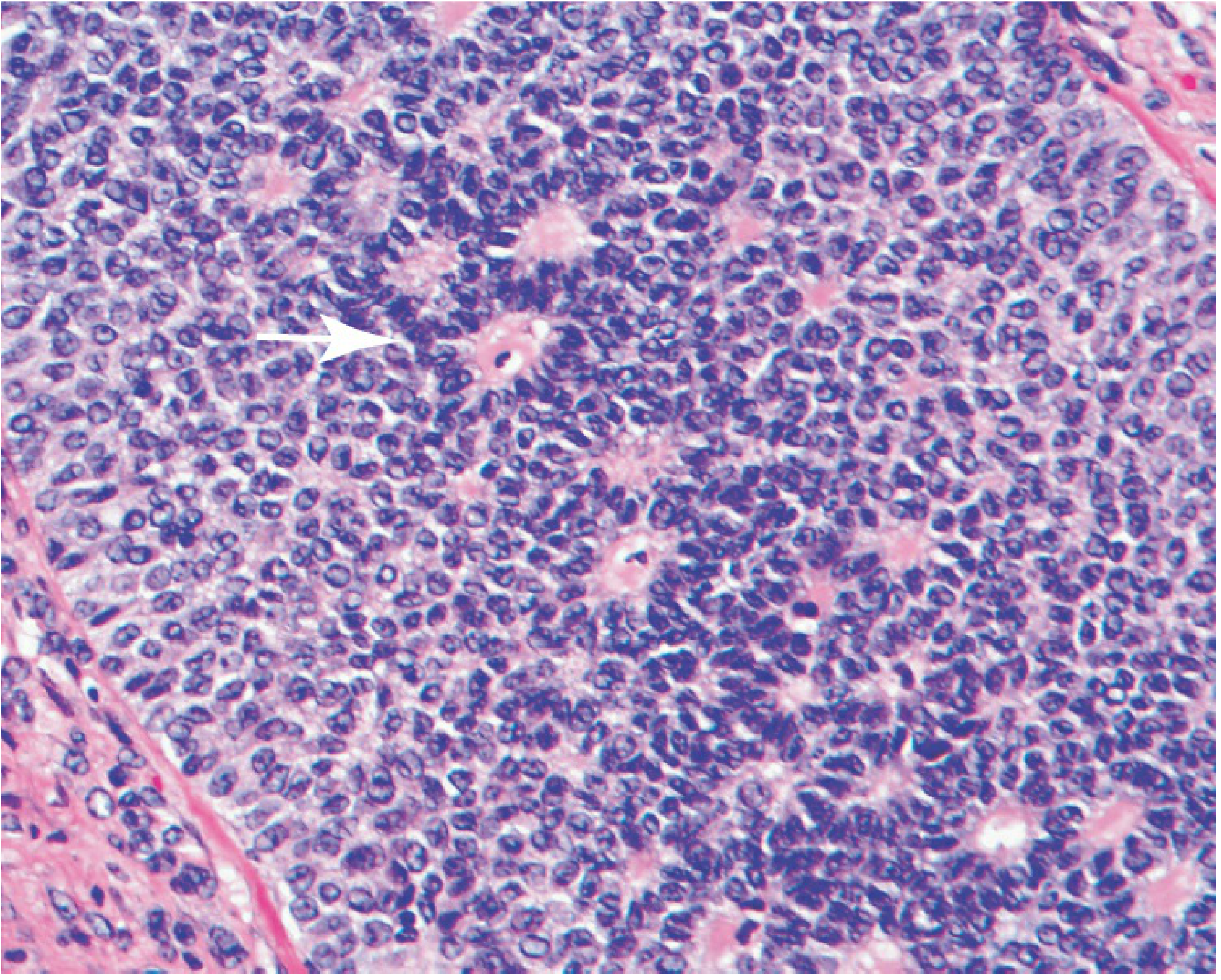
- Adult GCT (95%): Postmenopausal predominance; bilateral in only ~2%. Classic "coffee bean" grooved nuclei, Call-Exner bodies (rosettes around central eosinophilic material), macrofollicular/microfollicular/trabecular/sarcomatoid patterns.
- Juvenile GCT (5%): Younger patients (under 30); rounder hyperchromatic nuclei, large irregular follicle spaces, frequent mitoses, often cystic with luteinized cells. Associated with sexual pseudoprecocity in ~75% of prepubertal cases.
Key Molecular Advance: FOXL2 c.402C>G (p.C134W)
The most important recent advance is the discovery of the FOXL2 missense mutation (c.402C>G; p.C134W), found in up to 97% of adult GCTs but absent in juvenile GCTs. This single-nucleotide somatic mutation is now pathognomonic for the adult subtype and has transformed diagnosis:
- A Norwegian study found ~30% of adult GCTs were initially misdiagnosed; FOXL2 testing corrected these errors. Of 477 cases in the Emil Novak Registry, 15% were reclassified after histologic review.
- FOXL2 molecular testing is now routine to distinguish adult GCT from carcinomas, poorly differentiated mesothelial tumors, teratoid tumors, and small cell carcinoma.
Additional Somatic Alterations (2024-2025 Data)
A 2025 scoping review (Karstensen et al., Anticancer Res, PMID 39740818) of 1,226 sequenced tissues revealed:
- FOXL2 c.402C>G: 97% (only common driver mutation)
- TERT promoter mutation: ~41% - significantly more frequent in recurrent tumors (p<0.01), suggesting a role in clonal evolution at relapse
- KMT2D truncating mutations: ~14% - earlier reports suggested association with recurrence; this larger review found no significant difference between primary and recurrent tumors
- TP53 pathogenic variants: ~4%
- Tumor mutational burden (TMB) is consistently low across all studies - implications for immunotherapy remain limited
Prognostic IHC Markers (2023 Review)
A 2023 systematic review (Jung et al., J Ovarian Res, PMID 36869369) analyzed prognostic IHC markers:
- Unfavorable prognosis associated with: FOXL2 mRNA loss (paradoxically), and positive CD56, GATA-4, SMAD3 expression
- No prognostic value established for: ER, Anti-Müllerian hormone (AMH), inhibin
- Inconsistent data for: Ki-67, p53, beta-catenin, HER2
Serum Markers
- Inhibin B is more frequently elevated than inhibin A; useful for monitoring recurrence with ~12-month lead time before clinical relapse
- AMH has >90% sensitivity for detecting recurrence; elevated in ~75% of patients preoperatively
- About 70% of GCTs secrete estrogen or androgens. GCTs express ER in ~30% and progesterone receptors in nearly 100%, forming the basis for hormonal therapy in recurrent disease (aromatase inhibitors, GnRH agonists, progestins).
2. Sertoli-Leydig Cell Tumors (SLCTs / Androblastomas)
Morphology
- Third to fourth decade predominance; <0.2% of ovarian cancers; rarely bilateral (<1%)
- Tubules of Sertoli cells adjacent to clusters of eosinophilic Leydig cells in stroma
- Graded as well-/moderately-/poorly differentiated (sarcomatoid); heterologous elements (e.g., mucinous epithelium, carcinoid) occur in ~20% and raise the differential of a primary GI mucinous tumor
- Virilization in 70-85% (oligomenorrhea → amenorrhea, hirsutism, clitoromegaly, deepening voice)
Key Molecular Advance: DICER1
The hallmark molecular finding is somatic DICER1 mutation, found in a large proportion of SLCTs (predominantly moderately to poorly differentiated). DICER1 encodes an RNase III endoribonuclease essential for miRNA processing:
- Hotspot mutations in the RNase IIIb domain (exons 24-25) are most common
- DICER1 syndrome (germline DICER1 mutation) confers risk for bilateral SLCTs, pleuropulmonary blastoma, cystic nephroma, thyroid tumors, and other lesions - the pathologist is often the first to raise syndromic suspicion
- DICER1 mutation is associated with moderately to poorly differentiated SLCTs and a worse prognosis
- A 2024 review (Muscat & Calleja-Agius, Discov Med, PMID 38409829) highlights that DICER1 and FOXL2 mutations can coexist in rare cases, and that differentiation level correlates with mutation status and degree of virilization
A 2023 molecular review (Trecourt et al., Cancers, PMID 38136408) synthesizes that:
- Immunophenotype alone is often nonspecific between stromal and sex cord tumors
- Molecular testing (FOXL2, DICER1) is now indispensable for accurate subclassification
- This molecular triage has important downstream implications for genetic counseling
3. Sex Cord Tumor with Annular Tubules (SCTAT)
A distinctive entity at the intersection of granulosa and Sertoli cell differentiation:
- Peutz-Jeghers syndrome (PJS)-associated: bilateral, multifocal, benign; linked to germline STK11/LKB1 mutation. STK11 IHC loss is a reliable surrogate marker for PJS-related tumors.
- Non-PJS (sporadic): usually unilateral, larger, may have malignant potential (~20%)
2025 Genomic Advance: A landmark 2025 study (Mod Pathol, PMID 40946742) of 22 SCTATs defined the genomic landscape of sporadic tumors for the first time:
- Monosomy 22: 8/12 sporadic cases (novel recurrent finding)
- FOXL2 copy number gain: 10/12 cases (not the typical point mutation of adult GCT)
- WT1 and GATA4 gains also recurrent
- TERT promoter mutations: 6/12
- High-grade transformation (previously undescribed): 1 case with TP53 biallelic inactivation, cytologic atypia, necrosis - a newly recognized rare event
- STK11 was mutated in only 1/13 sporadic tumors, confirming that most sporadic SCTATs are STK11 wild-type
4. Steroid Cell Tumors
- Comprise <1% of ovarian neoplasms; most produce androgens causing virilization; rare cases secrete cortisol (Cushing's) or estrogen
- Subtypes: stromal luteoma (benign, within ovarian stroma), Leydig cell tumor/hilus cell tumor (positive for inhibin, calretinin; Reinke crystals on EM), steroid cell NOS (most common, ~20% malignant - especially those >8 cm)
- About 20% metastasize, predominantly intraperitoneally
- IHC: inhibin+, calretinin+, SF-1+; SALL4/PLAP negative
5. IHC Panel Summary for SCSTs
| Marker | Utility |
|---|---|
| Inhibin | Best general SCST marker; positive in granulosa, thecoma, Sertoli-Leydig, steroid cell |
| Calretinin | Co-expressed with inhibin; helps distinguish from carcinomas |
| SF-1 (steroidogenic factor-1) | Highly sensitive and specific for sex cord-stromal lineage |
| FOXL2 IHC/PCR | Pathognomonic for adult GCT |
| DICER1 sequencing | Confirms SLCT diagnosis; guides germline testing |
| STK11 IHC | Loss correlates with PJS-associated SCTAT |
| WT1, GATA4 | Expressed in GCT and SCTAT |
| AMH | Elevated in GCT; >90% sensitivity for recurrence |
6. Emerging Therapeutic Targets
Given consistently low TMB, immune checkpoint inhibitors have limited role currently. Active areas include:
- Granulosa cell tumors: paclitaxel ± bevacizumab (Alienor trial results awaited); aromatase inhibitors for recurrent disease (case series showing durable responses)
- DICER1-mutant SLCTs: potential for targeted therapy given the specific molecular pathway
- Hormonal agents (GnRH agonists, progestins) remain viable in hormone-receptor-positive GCTs
Key References
| PMID | Citation |
|---|---|
| 39740818 | Karstensen et al. (2025) - Scoping review of DNA alterations in adult GCT |
| 38136408 | Trecourt et al. (2023) - Molecular pathology of SCSTs: narrative review |
| 36869369 | Jung et al. (2023) - IHC prognostic markers in adult GCT |
| 38409829 | Muscat & Calleja-Agius (2024) - Comprehensive review of SLCTs |
| 37169445 | Ordulu (2023) - Update on ovarian sex cord-stromal tumors |
| 40946742 | Leader et al. (2025) - SCTAT genomic landscape: monosomy 22 and FOXL2 gains |
| Berek & Novak's Gynecology | pp. 2399-2406 (textbook foundation) |
This is a shared conversation. Sign in to Orris to start your own chat.