
Antipshychortic pharmacology
Reading File
Now let me search the library for antipsychotic pharmacology content in parallel:
Finding Sources
Finding Sources
Searching PubMed
"antipsychotic" AND "pharmacology"
Good. Now let me read the key pharmacology sections from Katzung and Goodman & Gilman in parallel:
Reading File
Reading File
Reading File
Let me read more detailed content from Katzung on mechanisms and classifications:
Reading File
Finding Sources
Finding Sources
Let me read more of Katzung on mechanisms and adverse effects, plus the Forensic Medicine section which has a nice summary:
Reading File
Reading File
I now have comprehensive content. Let me also fetch the receptor affinity image from Katzung and get a bit more on NMS and the dopamine pathways:
Reading File
I now have thorough content to write a comprehensive answer. Let me compile it:
Antipsychotic Pharmacology
1. Background & Indications
Antipsychotic drugs reduce psychotic symptoms across a wide range of conditions: schizophrenia, bipolar disorder, psychotic depression, drug-induced psychoses, and dementia-associated psychosis. A subgroup - neuroleptics - produce a high incidence of extrapyramidal side effects (EPS) at therapeutic doses. Second-generation ("atypical") agents are now the most widely prescribed class.
- Katzung's Basic and Clinical Pharmacology, 16th Ed., p.801
2. Neurotransmitter Hypotheses
Dopamine Hypothesis
The central framework. Evidence includes:
- All antipsychotics strongly block postsynaptic D2 receptors, especially in mesolimbic and striatal-frontal systems
- Dopaminergic drugs (levodopa, amphetamine, bromocriptine) aggravate or induce psychosis
- Postmortem studies show increased D2-receptor density in untreated schizophrenics
- Imaging shows increased amphetamine-induced striatal dopamine release
Limitation: The hypothesis does not explain negative symptoms or cognitive impairment, which may reflect reduced dopaminergic activity in the prefrontal cortex and hippocampus.
Serotonin Hypothesis
- Hallucinogens (LSD, mescaline) are 5-HT agonists, prompting study of serotonergic mechanisms
- 5-HT2A blockade is a key mechanism of second-generation antipsychotics (SGAs): these drugs are inverse agonists at 5-HT2A receptors, modulating dopamine, norepinephrine, glutamate, GABA and acetylcholine in cortex and limbic regions
- 5-HT2C inverse agonism (clozapine, asenapine, olanzapine) disinhibits cortical and limbic dopamine release
Glutamate/NMDA Hypothesis
-
PCP and ketamine (NMDA receptor blockers) worsen both positive and negative symptoms in schizophrenia
-
Proposed mechanism: NMDA hypofunction on GABAergic interneurons → reduced inhibitory tone → disinhibited downstream glutamate activity → cortical hyperstimulation via non-NMDA receptors
-
Supports development of mGluR2/3 agonists and glycine transport inhibitors as novel targets
-
Katzung's Basic and Clinical Pharmacology, 16th Ed., pp.801-803
3. Classification & Chemical Types
First-Generation (Typical) Antipsychotics (FGAs)
| Chemical Class | Key Drug | D2/5-HT2A Ratio | EPS Risk | Sedation | Hypotension |
|---|---|---|---|---|---|
| Phenothiazine - Aliphatic | Chlorpromazine | High | Medium | High | High |
| Phenothiazine - Piperazine | Fluphenazine | High | High | Low | Very low |
| Thioxanthene | Thiothixene | Very high | Medium | Medium | Medium |
| Butyrophenone | Haloperidol | Medium | Very high | Low | Very low |
Second-Generation (Atypical) Antipsychotics (SGAs)
| Chemical Class | Key Drug | D2/5-HT2A Ratio | EPS Risk | Sedation | Hypotension |
|---|---|---|---|---|---|
| Dibenzodiazepine | Clozapine | Very low | Very low | Low | Medium |
| Benzisoxazole | Risperidone | Very low | Low* | Low | Low |
| Thienobenzodiazepine | Olanzapine | Low | Very low | Medium | Low |
| Dibenzodiazepine | Quetiapine | Low | Very low | Medium | Low-Med |
| Dihydroindolone | Ziprasidone | Low | Very low | Low | Very low |
| Dihydrocarbostyril | Aripiprazole | Medium | Very low | Very low | Low |
*Risperidone EPS risk increases at higher doses
- Katzung's Basic and Clinical Pharmacology, 16th Ed., p.805
4. Mechanisms of Action
D2 Receptor Blockade (All Antipsychotics)
- Primary antipsychotic mechanism
- Effective in mesolimbic pathway - reduces positive symptoms
- Blockade in nigrostriatal pathway - causes EPS (the unwanted effect)
- Blockade in tuberoinfundibular pathway - causes hyperprolactinaemia (galactorrhea, amenorrhea)
- Blockade in mesocortical pathway - may worsen negative symptoms and cognition
D2 Partial Agonism
- Aripiprazole, brexpiprazole, cariprazine act as partial D2 agonists - "dopamine system stabilizers"
- Act as functional antagonists where dopamine is high (mesolimbic) and as functional agonists where dopamine is low (mesocortical)
- Result: antipsychotic effect without worsening cognition, lower EPS, minimal prolactin elevation
Additional Receptor Effects
| Receptor | Effect |
|---|---|
| M1 (muscarinic) antagonism | Dry mouth, urinary retention, constipation, blurred vision, delirium in elderly |
| H1 (histamine) antagonism | Sedation, weight gain |
| α1-adrenergic antagonism | Orthostatic hypotension, reflex tachycardia |
| 5-HT2C inverse agonism | Weight gain (olanzapine, clozapine especially) |
5. Dopamine Pathways - Clinical Relevance
| Pathway | Function | Effect of D2 Blockade |
|---|---|---|
| Mesolimbic (VTA → limbic) | Reward, emotion, positive symptoms of psychosis | Therapeutic - reduces hallucinations/delusions |
| Mesocortical (VTA → prefrontal cortex) | Cognition, working memory | May worsen negative symptoms, cognitive blunting |
| Nigrostriatal (substantia nigra → striatum) | Motor control | EPS: dystonia, akathisia, parkinsonism, tardive dyskinesia |
| Tuberoinfundibular (hypothalamus → pituitary) | Prolactin inhibition | Hyperprolactinaemia |
6. Major Adverse Effects
Extrapyramidal Symptoms (EPS)
Result from D2 blockade in the nigrostriatal pathway:
| EPS Type | Onset | Features | Management |
|---|---|---|---|
| Acute dystonia | Hours-days | Sustained muscle contractions, torticollis, oculogyric crisis | Anticholinergics (benztropine, diphenhydramine) IV/IM |
| Akathisia | Days-weeks | Motor restlessness, inability to sit still | Dose reduction; propranolol, benzodiazepines |
| Drug-induced Parkinsonism | Weeks | Bradykinesia, tremor, rigidity | Anticholinergics, amantadine, or drug switch |
| Tardive Dyskinesia (TD) | Months-years | Repetitive involuntary movements (lips, tongue, trunk) | Switch to clozapine/quetiapine; VMAT2 inhibitors (valbenazine, deutetrabenazine) |
- TD prevalence: ~20-30% with long-term FGA use; ~7.2% with SGAs
- Kaplan and Sadock's Synopsis of Psychiatry; Katzung 16th Ed.
Neuroleptic Malignant Syndrome (NMS)
- Medical emergency
- Features: hyperthermia, lead-pipe muscle rigidity, altered mental status, autonomic instability (BP fluctuations, diaphoresis, tachycardia)
- Associated with all typical antipsychotics and most atypicals (aripiprazole, clozapine, olanzapine, risperidone, ziprasidone)
- Lab: markedly elevated CK, leukocytosis, elevated LFTs
- Management: discontinue antipsychotic, supportive care, dantrolene sodium, bromocriptine/amantadine (dopamine agonists)
Metabolic Effects (SGAs >> FGAs)
- Highest risk: clozapine, olanzapine, high-dose quetiapine
- Weight gain, dyslipidemia (hypertriglyceridemia), impaired glucose tolerance/diabetes
- A 2025 meta-analysis in JAMA Psychiatry [PMID: 40864439] confirmed antipsychotics dysregulate glucose homeostasis significantly
- Monitoring: fasting glucose, lipids, weight, waist circumference at baseline and periodically
Endocrine Effects
- Hyperprolactinaemia: FGAs (especially haloperidol, fluphenazine), risperidone, amisulpride
- Leads to: galactorrhea, gynecomastia, amenorrhea, sexual dysfunction, osteoporosis
- SGAs like olanzapine, quetiapine, aripiprazole cause minimal or no prolactin elevation
Clozapine-Specific Risks
- Agranulocytosis (~1%): requires mandatory weekly/biweekly CBC monitoring
- Seizures (dose-dependent, up to 5% at high doses)
- Myocarditis/cardiomyopathy (rare but serious)
- Hypersalivation, obesity, sedation
- Despite this, clozapine remains the gold standard for treatment-resistant schizophrenia (response rate 40-60%)
Cardiovascular
- QTc prolongation: thioridazine, ziprasidone, haloperidol (IV high-dose), iloperidone - risk of torsades de pointes
- Orthostatic hypotension: chlorpromazine, clozapine, quetiapine (α1 blockade)
Other
- Anticholinergic effects (low-potency FGAs, clozapine): dry mouth, constipation, urinary retention, blurred vision
- Photosensitivity, corneal deposits (chlorpromazine - long term)
- Thioridazine: irreversible pigmentary retinopathy at high doses
7. Drug-Specific Pharmacokinetics
- Most antipsychotics are highly lipophilic, with large volumes of distribution and long half-lives
- Extensively metabolized by CYP enzymes (especially CYP1A2, CYP3A4, CYP2D6)
- Long-acting injectable (LAI) formulations (haloperidol decanoate, fluphenazine decanoate, risperidone microspheres, paliperidone palmitate, aripiprazole lauroxil) are available to improve adherence
- Plasma level monitoring is clinically meaningful for several agents (clozapine, olanzapine, haloperidol)
8. Clinical Use Summary
| Indication | First-Line Choice | Notes |
|---|---|---|
| Acute schizophrenia | SGA (risperidone, olanzapine, quetiapine, aripiprazole) | Majority of response by week 2 |
| Treatment-resistant schizophrenia | Clozapine | 40-60% response; requires monitoring |
| Bipolar mania | SGAs (olanzapine, quetiapine, aripiprazole) | Often combined with mood stabilizers |
| Bipolar depression | Quetiapine, lurasidone, cariprazine | FDA-approved specifically |
| Acute agitation | Haloperidol ± lorazepam (IM) | Rapid onset via IM route |
| Tourette syndrome | Haloperidol, pimozide, aripiprazole | Low doses |
9. Newer Agents
- Cariprazine: Preferential D3 partial agonist/D2 partial agonist; also approved for bipolar depression and schizophrenia; useful for negative symptoms
- Brexpiprazole: D2/D3 partial agonist + 5-HT1A partial agonist + 5-HT2A antagonist; "next-gen aripiprazole" with less akathisia
- Lumateperone: Novel multitarget agent; D2 postsynaptic antagonist + presynaptic D2 partial agonist + 5-HT2A antagonist + serotonin reuptake inhibitor; approved for schizophrenia and bipolar depression
- Amisulpride: Selective D2/D3 antagonist; low doses act preferentially at presynaptic D2 receptors (increasing dopamine release) - useful for negative symptoms
A 2025 network meta-analysis in JAMA Psychiatry [PMID: 39412783] found significant differences in cognitive effects across antipsychotics, with amisulpride and some SGAs showing more favorable cognitive profiles.
10. Key Pharmacology Table
| Drug | Key Receptor | Key Risk | Advantage |
|---|---|---|---|
| Haloperidol | D2 antagonist (high affinity) | Very high EPS | High potency, cheap, LAI available |
| Chlorpromazine | D2 + multiple | Sedation, hypotension | Broad receptor action |
| Clozapine | D4 > D2; 5-HT2A; M1; H1; α1 | Agranulocytosis, seizures, metabolic | Treatment-resistant schizophrenia |
| Risperidone | D2 + 5-HT2A | EPS at high dose, hyperprolactinaemia | Effective, LAI available |
| Olanzapine | D2 + 5-HT2A + M1 + H1 | Weight gain, metabolic syndrome | Very effective, LAI available |
| Quetiapine | D2 + H1 + α1 (low D2 affinity) | Sedation, metabolic | Low EPS; mood spectrum coverage |
| Aripiprazole | D2/D3 partial agonist + 5-HT1A | Akathisia, nausea | No weight gain, no prolactin elevation |
| Ziprasidone | D2 + 5-HT2A + 5-HT1A | QTc prolongation | Weight neutral |
| Cariprazine | D3/D2 partial agonist | Akathisia | Negative symptoms, bipolar depression |
| Lumateperone | D2 (partial/antagonist) + 5-HT2A | Somnolence | Novel mechanism, favorable profile |
Sources:
- Katzung's Basic and Clinical Pharmacology, 16th Edition, pp. 801-830
- Goodman & Gilman's The Pharmacological Basis of Therapeutics, Chapter 19
- Kaplan and Sadock's Synopsis of Psychiatry
- The Maudsley Prescribing Guidelines in Psychiatry, 15th Edition
- Recent evidence: Antipsychotics and cognitive function - JAMA Psychiatry 2025 (PMID 39412783); Antipsychotics and glucose dysregulation - JAMA Psychiatry 2025 (PMID 40864439)
Path way of dopamine and its types
Reading File
Quick answer: There are four major dopamine pathways in the brain - mesolimbic (reward/psychosis), mesocortical (cognition/negative symptoms), nigrostriatal (motor control), and tuberoinfundibular (prolactin regulation). Dopamine receptors are divided into D1-family (D1, D5 - Gs-coupled, increase cAMP) and D2-family (D2, D3, D4 - Gi-coupled, decrease cAMP).
Searching sources...
Finding Sources
Finding Sources
Stahl's Essential Psychopharmacology has dedicated sections on each pathway. Let me read those alongside dopamine receptor content from Katzung and Kaplan & Sadock:
Reading File
Finding Sources
Excellent content from Stahl's. Let me read more pathway details and the receptor subtype section from Kaplan & Sadock:
Reading File
Reading File
Excellent content. Now let me fetch the pathway diagram image from Stahl's and read the mesocortical/mesolimbic pathway details:
Loading Image
Reading File
Let me fetch the key brain pathway diagram:
Loading Image
Reading File
I now have all the content needed for a comprehensive answer. Let me compile it:
Dopamine Pathways and Receptor Types
The Five Dopamine Pathways in the Brain
Here is the classic pathway diagram from Stahl's Essential Psychopharmacology, showing all five dopamine pathways:
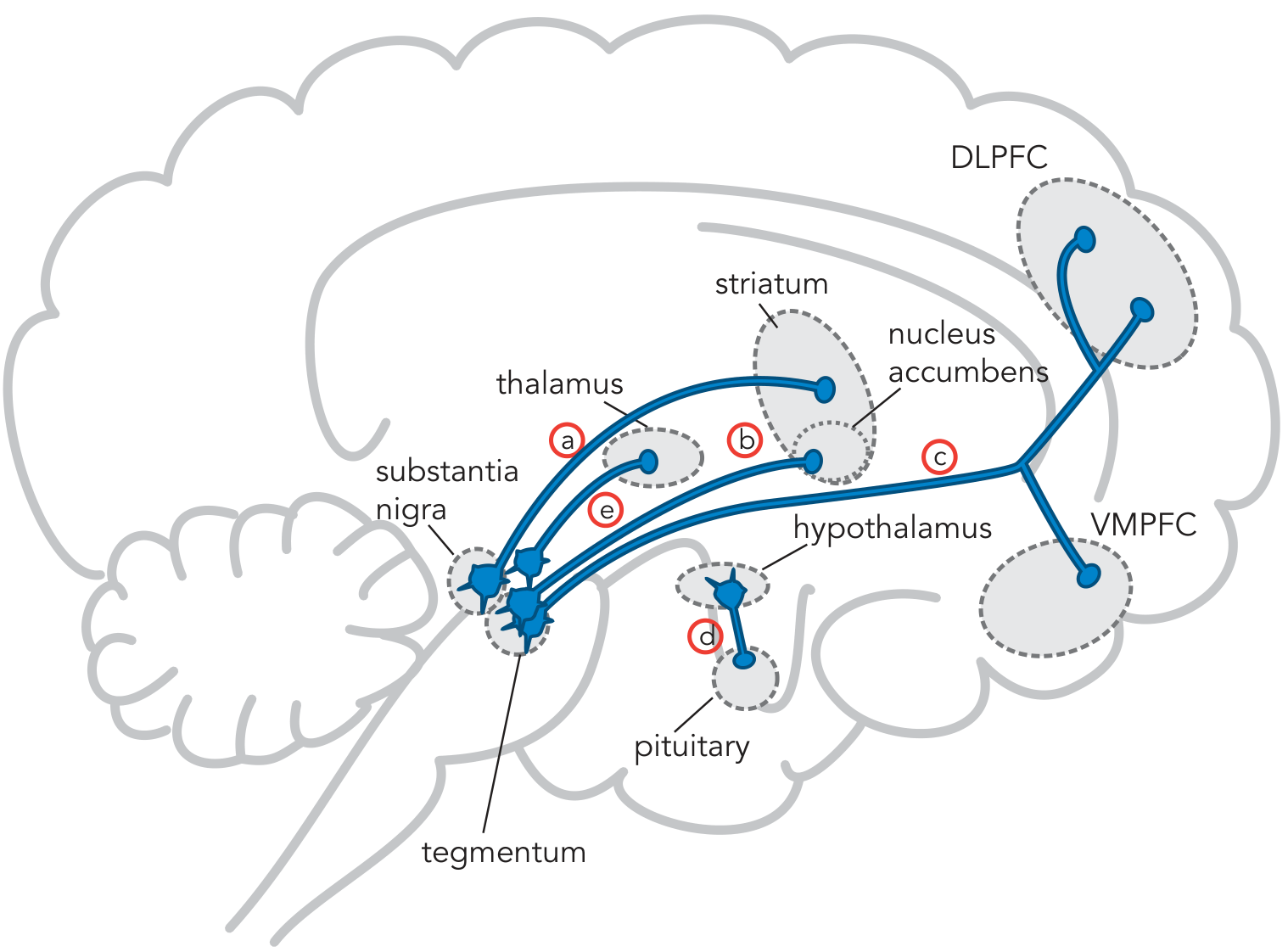
(a) Nigrostriatal, (b) Mesolimbic, (c) Mesocortical, (d) Tuberoinfundibular, (e) Thalamic - Stahl's Essential Psychopharmacology
1. Nigrostriatal Dopamine Pathway
| Feature | Detail |
|---|---|
| Origin | Substantia nigra (brainstem) |
| Projection | Basal ganglia / Striatum (caudate, putamen) |
| Circuit | Cortico-Striato-Thalamo-Cortical (CSTC) loop |
| Function | Motor control and movement |
| Dominant receptors | D1 (direct/go pathway), D2 (indirect/stop pathway) |
Direct vs. Indirect Motor Pathways
- Direct ("Go") pathway: D1 receptors on GABA neurons projecting to globus pallidus interna (GPi) - dopamine stimulates this pathway, promoting movement
- Indirect ("Stop") pathway: D2 receptors on GABA neurons projecting to globus pallidus externa (GPe) - dopamine inhibits this pathway (removes the brake), also promoting movement
- Net result: dopamine facilitates smooth motor movement through both pathways
Disease relevance:
- Too little DA (e.g., Parkinson's disease): bradykinesia, rigidity, tremor
- Too much DA (or D2 blockade by antipsychotics): drug-induced parkinsonism, dystonia, tardive dyskinesia
- Antipsychotic D2 blockade in this pathway = EPS (extrapyramidal side effects)
2. Mesolimbic Dopamine Pathway
| Feature | Detail |
|---|---|
| Origin | Ventral Tegmental Area (VTA) |
| Projection | Nucleus accumbens, amygdala, hippocampus, other limbic areas |
| Function | Reward, motivation, pleasure, emotional behavior |
| Dominant receptors | D1, D2, D3 (postsynaptic in striatum); D3 autoreceptors (presynaptic in VTA) |
Clinical relevance:
- This is considered the final common pathway of all reward and reinforcement - food pleasure, orgasm, music appreciation, drug "highs"
- Hyperdopaminergia (too much DA): positive psychotic symptoms (hallucinations, delusions), drug-induced euphoria, agitation, impulsivity
- Hypodopaminergia (too little DA): anhedonia, apathy, lack of motivation - seen in depression and negative symptoms of schizophrenia
- Antipsychotic D2 blockade here = therapeutic effect (reduces hallucinations and delusions)
3. Mesocortical Dopamine Pathway
| Feature | Detail |
|---|---|
| Origin | Ventral Tegmental Area (VTA) |
| Projection | Prefrontal cortex - DLPFC (dorsolateral) and VMPFC (ventromedial) |
| Function | Cognition (DLPFC), affect and emotional regulation (VMPFC) |
| Dominant receptors | D1 postsynaptically (predominant); few presynaptic autoreceptors; few DATs |
Key difference from mesolimic pathway (shown in diagram below):
Because there are few D2/D3 presynaptic autoreceptors and few DAT transporters in the PFC, dopamine diffuses more freely away from the synapse. D1 is the predominant postsynaptic receptor and is excitatory.
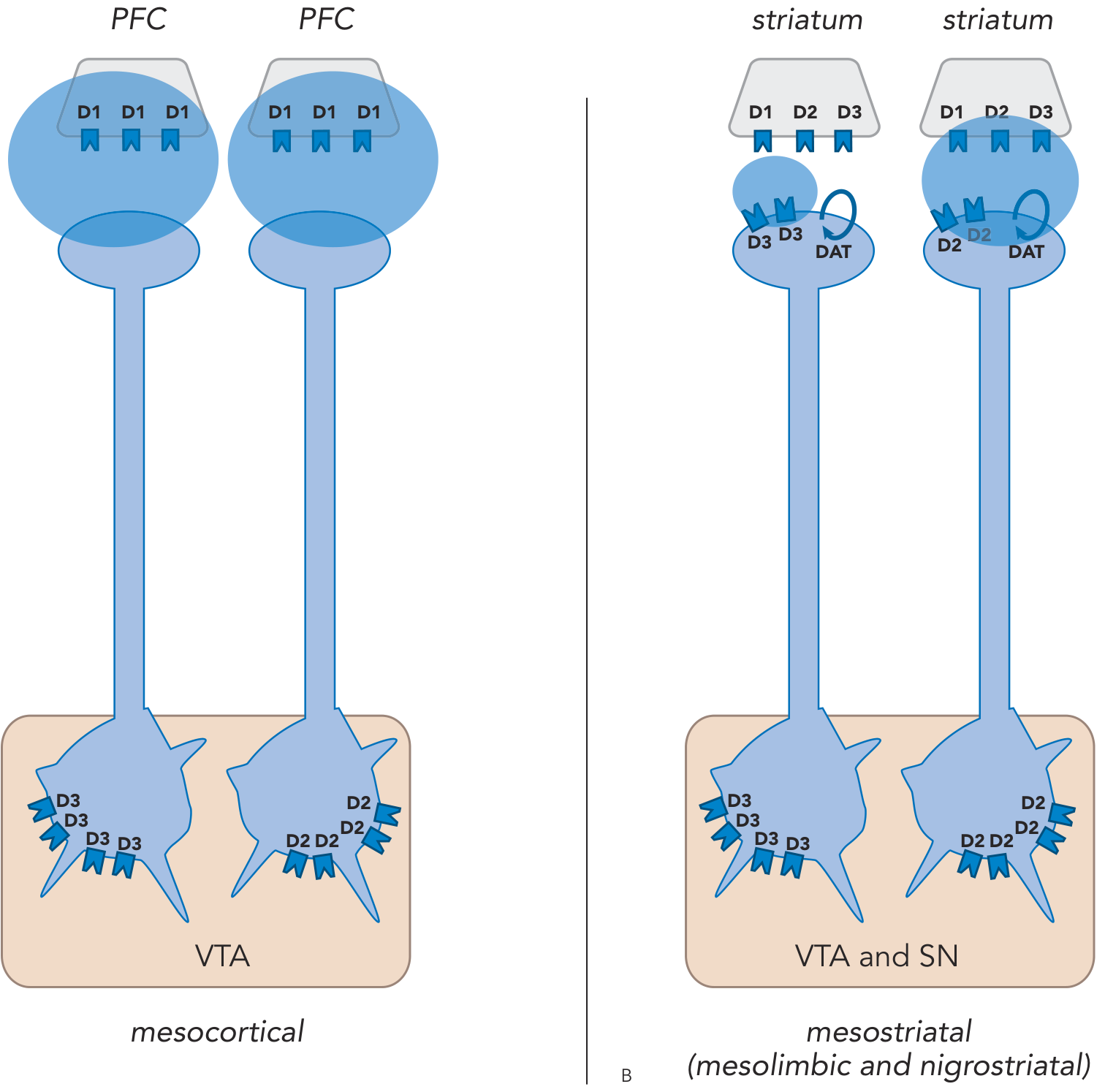
(Left: mesocortical - VTA to PFC with D1 postsynaptic only. Right: mesostriatal - VTA/SN to striatum with D1, D2, D3 postsynaptic and D2/D3 presynaptic autoreceptors)
Clinical relevance:
- Hypodopaminergia here causes: cognitive symptoms (poor working memory, executive dysfunction) and negative symptoms (blunted affect, social withdrawal)
- Antipsychotic D2 blockade here may worsen negative symptoms and cognition - a major limitation of FGAs
- SGAs (especially partial D2 agonists like aripiprazole) are designed to spare or enhance this pathway
4. Tuberoinfundibular Dopamine Pathway
| Feature | Detail |
|---|---|
| Origin | Hypothalamus (arcuate nucleus) |
| Projection | Anterior pituitary gland |
| Function | Tonic inhibition of prolactin secretion |
| Dominant receptor | D2 (very high expression in pituitary) |
Clinical relevance:
- Normal: dopamine tonically inhibits prolactin release
- Postpartum: tuberoinfundibular DA activity decreases → prolactin rises → lactation occurs
- Drug-induced D2 blockade (antipsychotics, metoclopramide, domperidone) → hyperprolactinaemia
- Consequences: galactorrhea, gynecomastia, amenorrhea, sexual dysfunction, infertility, decreased bone mineral density
- Drugs with high D2 affinity (haloperidol, risperidone, amisulpride) cause most hyperprolactinaemia; aripiprazole, quetiapine cause minimal effect
5. Thalamic Dopamine Pathway (5th Pathway)
| Feature | Detail |
|---|---|
| Origin | Multiple sites: periaqueductal gray, ventral mesencephalon, hypothalamic nuclei, lateral parabrachial nucleus |
| Projection | Thalamus |
| Function | Not fully characterized; possibly regulation of sleep-wake states and sensory gating |
- Stahl's Essential Psychopharmacology, p.101
Dopamine Receptor Types
Two Families Based on G-Protein Coupling
Dopamine Receptors
├── D1-FAMILY (D1, D5)
│   ├── G-protein: Gs (stimulatory)
│   ├── Effect: ↑ Adenylyl cyclase → ↑ cAMP
│   ├── Location: postsynaptic only
│   └── Distribution: striatum, nucleus accumbens, frontal cortex
│
└── D2-FAMILY (D2, D3, D4)
    ├── G-protein: Gi (inhibitory)
    ├── Effect: ↓ Adenylyl cyclase → ↓ cAMP
    ├── Location: postsynaptic AND presynaptic (autoreceptors)
    └── Distribution: striatum, nucleus accumbens, limbic areas, pituitary
Individual Receptor Subtypes in Detail
| Receptor | Family | Coupling | Key Locations | Key Functions | Clinical Role |
|---|---|---|---|---|---|
| D1 | D1 | Gs / ↑cAMP | Striatum, nucleus accumbens, frontal cortex | Motor control (direct "go" pathway), cognition, reward | Main target in frontal cortex for cognition |
| D2 | D2 | Gi / ↓cAMP | Striatum, nucleus accumbens, pituitary; also presynaptic autoreceptor | Motor control (indirect "stop" pathway), prolactin regulation, autoreceptor feedback | Primary target of ALL antipsychotics; D2S (short) = presynaptic autoreceptor; D2L (long) = postsynaptic |
| D3 | D2 | Gi / ↓cAMP | Limbic areas (nucleus accumbens shell), VTA, SN | Limbic/emotional functions; autoreceptor in mesolimbic; more sensitive than D2 - narrower diffusion radius | Cariprazine preferentially targets D3 > D2; role in negative symptoms |
| D4 | D2 | Gi / ↓cAMP | Frontal cortex, amygdala, hippocampus, hypothalamus; lowest density in brain | Frontal cortical functions, attention | High affinity for clozapine (explains some atypical profile); linked to ADHD genetics |
| D5 | D1 | Gs / ↑cAMP | Frontal cortex, hypothalamus, hippocampus; low levels | Modulatory roles in cognition and motor functions | Less studied; expressed at low levels |
Autoreceptor Regulation
Presynaptic D2 and D3 receptors on dopamine neurons serve as autoreceptors - when dopamine binds to them, it:
- Shuts off neuronal impulse flow (somatodendritic autoreceptors in VTA/SN)
- Inhibits further dopamine release from nerve terminals (presynaptic autoreceptors)
- Reduces dopamine synthesis
This is a self-regulating feedback loop. D3 autoreceptors are more sensitive to dopamine than D2, giving a narrower diffusion radius in mesolimbic areas. D2 autoreceptors in the nigrostriatal pathway have a wider diffusion radius.
- Stahl's Essential Psychopharmacology, p.100; Kaplan & Sadock's Comprehensive Textbook of Psychiatry, p.428-429
Summary: Pathways, Function, and Antipsychotic Impact
| Pathway | Origin → Target | Normal Function | ↑ DA Effect | ↓ DA Effect | Antipsychotic D2 Block Effect |
|---|---|---|---|---|---|
| Nigrostriatal | SN → Striatum | Motor control | Hyperkinesia, tics | Parkinsonism, akinesia | EPS (dystonia, akathisia, TD) |
| Mesolimbic | VTA → Nucleus accumbens | Reward, motivation | Psychosis, euphoria, addiction | Anhedonia, apathy | Therapeutic - reduces positive symptoms |
| Mesocortical | VTA → PFC | Cognition, affect | - | Negative symptoms, cognitive deficits | May worsen negative symptoms |
| Tuberoinfundibular | Hypothalamus → Pituitary | Prolactin inhibition | ↓ Prolactin (physiologic) | - | Hyperprolactinaemia |
| Thalamic | Multiple → Thalamus | Sleep, sensory gating | ? | ? | Unknown |
Sources:
- Stahl's Essential Psychopharmacology: Neuroscientific Basis, pp. 100-106
- Kaplan & Sadock's Comprehensive Textbook of Psychiatry, pp. 428-429
- Katzung's Basic and Clinical Pharmacology, 16th Edition
This is a shared conversation. Sign in to Orris to start your own chat.