
Create 15 MCQs with answers on necrotising enterocolitis in paediatrics
Reading File
Finding Sources
Finding Sources
Searching PubMed
"Enterocolitis, Necrotizing"[MeSH Terms]
Let me read the key textbook sections.
Reading File
Reading File
Reading File
Reading File
Necrotising Enterocolitis (NEC) in Paediatrics: 15 MCQs
Choose the single best answer for each question. The answer key with explanations follows the questions.
Q1. Which factor is the most significant risk factor for NEC?
A. Formula feeding
B. Prematurity
C. Maternal diabetes
D. Caesarean delivery
Q2. Which part of the bowel is most commonly affected in NEC?
A. Duodenum and jejunum
B. Distal ileum and ascending colon
C. Sigmoid colon and rectum
D. Stomach and duodenum
Q3. A 10-day-old preterm infant has abdominal distension, bloody stools and feed intolerance. An abdominal X-ray shows intramural gas. This sign is produced mainly by:
A. Swallowed air tracking into the bowel wall
B. Hydrogen gas from bacterial fermentation of luminal substrates
C. Gas released from ruptured hepatic vessels
D. Carbon dioxide released by necrotic mucosa
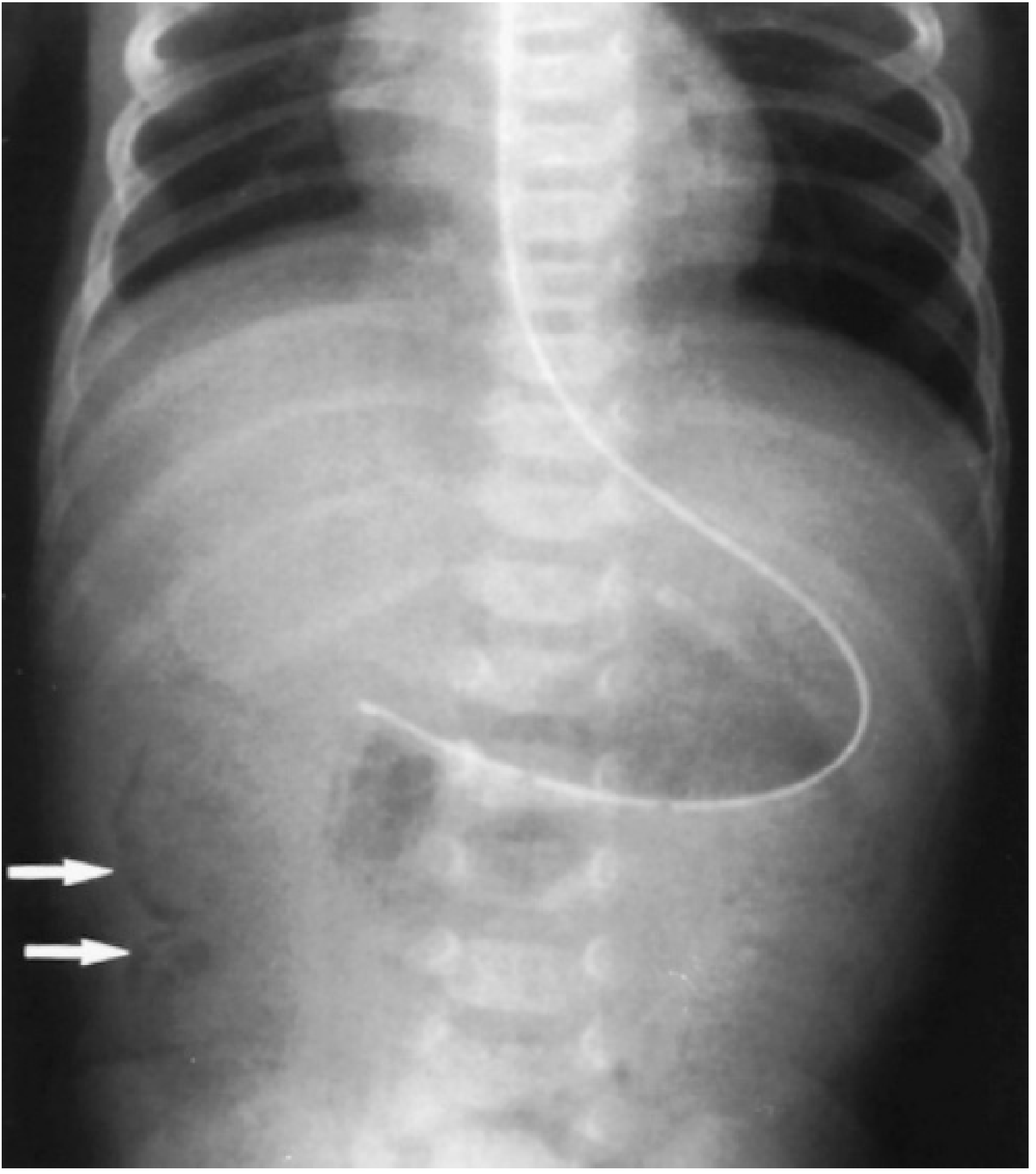
Q4. A preterm infant has persistent gross GI bleeding, marked abdominal distension, pneumatosis intestinalis and portal venous gas, but no pneumoperitoneum. What is the modified Bell stage?
A. Stage I (suspected)
B. Stage II (definite)
C. Stage III (advanced)
D. Stage 0
Q5. What is the absolute indication for surgery in NEC?
A. Portal venous gas
B. Abdominal wall cellulitis
C. Free air on plain abdominal radiograph
D. Persistent acidosis
Q6. Which of the following is NOT a feature of Bell Stage I NEC?
A. Temperature instability
B. Apnoea and bradycardia
C. Pneumoperitoneum
D. Occult blood in stool
Q7. Which is NOT part of the initial medical management of NEC?
A. Nasogastric or orogastric decompression
B. Bowel rest with parenteral nutrition
C. Broad-spectrum intravenous antibiotics
D. Continuing full enteral feeds to maintain gut mucosa
Q8. What is the usual duration of antibiotics and bowel rest in medically treated NEC?
A. 1 to 2 days
B. 3 days
C. 7 to 14 days
D. 6 weeks
Q9. About 10% of infants develop intestinal strictures after NEC. At which site are they most notable, and what should be done before stoma reversal?
A. Duodenum; upper GI endoscopy
B. Splenic flexure of the colon; contrast enema
C. Rectosigmoid; colonoscopy
D. Jejunum; CT angiography
Q10. What is the most common cause of short bowel syndrome in neonates and infants?
A. Midgut volvulus
B. Intestinal atresia
C. Necrotising enterocolitis
D. Gastroschisis
Q11. Which intervention has the best evidence for reducing the incidence of NEC in preterm infants?
A. Early introduction of rapid-advancement feeds
B. Routine prophylactic oral antibiotics
C. Human (breast) milk feeding with gradual, protocol-based feed advancement
D. Prolonged fasting for the first 2 weeks
Q12. A multicentre randomised trial compared primary peritoneal drainage with laparotomy in infants under 1500 g with perforated NEC. What did it find?
A. Drainage had much higher mortality
B. Laparotomy had much better survival
C. Survival, TPN dependence and hospital stay were similar
D. Drainage eliminated the need for any further surgery
Q13. What is the main goal of laparotomy in NEC with bowel necrosis?
A. Resect all of the involved bowel including viable margins
B. Resect nonviable bowel, preserve maximum length (including the ileocaecal valve), and consider a stoma or a second-look operation
C. Primary anastomosis in every case
D. Total colectomy in every case
Q14. A 3-day-old full-term infant with a duct-dependent congenital heart lesion develops NEC. Which statement is correct?
A. NEC cannot occur in term infants
B. NEC in term infants is most often associated with underlying conditions such as congenital heart disease, hypoxia or sepsis
C. NEC in term infants occurs only after 3 months of age
D. It is always caused by cow's milk protein allergy
Q15. A 25-week ELBW infant has an isolated focal ileal perforation at day 5, with no pneumatosis and no prior feeds. Which condition is most likely?
A. Classic NEC
B. Spontaneous intestinal perforation (SIP)
C. Malrotation with volvulus
D. Hirschsprung enterocolitis
Answer Key
Q1. B. Prematurity. Ischaemia, bacterial overgrowth, cytokines and enteral feeding all contribute, but prematurity remains the most significant risk factor. - Sabiston Textbook of Surgery, Necrotizing Enterocolitis
Q2. B. The distal ileum and ascending colon are affected in most cases. Rarely, NEC totalis involves the whole GI tract. - Sabiston Textbook of Surgery
Q3. B. Pneumatosis intestinalis is the pathognomonic radiographic sign. The gas is hydrogen produced by bacterial fermentation of luminal substrates. Other signs are portal venous gas, ascites, a fixed loop of small bowel and free air. - Sabiston Textbook of Surgery
Q4. B. Stage II (definite) NEC has persistent occult or gross GI bleeding, marked distension, and radiographic pneumatosis or portal venous gas. Stage III adds deteriorating vital signs, septic shock, marked GI haemorrhage and pneumoperitoneum. - Mulholland and Greenfield's Surgery, Bell staging table
Q5. C. Free air (pneumoperitoneum) is the absolute indication. Relative indications are clinical deterioration, persistent acidosis, abdominal wall cellulitis, a palpable mass, a fixed bowel loop and portal venous gas. - Sabiston Textbook of Surgery
Q6. C. Pneumoperitoneum is a Stage III feature. Stage I has systemic signs (temperature instability, lethargy, apnoea, bradycardia) plus mild GI signs (poor feeding, increased gastric residuals, emesis, mild distension, occult blood). - Mulholland and Greenfield's Surgery
Q7. D. Treatment is gut rest, decompression, broad-spectrum antibiotics, correction of hypotension, hypoxaemia and electrolyte or acid-base problems, and TPN. Feeds are held until the infant recovers. - Mulholland and Greenfield's Surgery
Q8. C. NG decompression and IV antibiotics usually continue for 7 to 14 days. Enteral feeding resumes after antibiotics stop and GI function returns. Most medically treated infants stabilise within 24 to 36 hours. - Mulholland and Greenfield's Surgery
Q9. B. Strictures follow medical or surgical management in about 10% of infants, most notably at the splenic flexure. A contrast enema is routinely done before stoma reversal. - Sabiston Textbook of Surgery
Q10. C. NEC is the most common cause of short gut syndrome. Midgut volvulus accounts for about 18% of paediatric SBS. - Sabiston Textbook of Surgery
Q11. C. The incidence of NEC has fallen with protocol-based gradual feeding and wider use of breast milk. - Sabiston Textbook of Surgery. Probiotics have supportive but variable evidence, so I did not use them as the keyed answer.
Q12. C. Survival, need for parenteral nutrition and length of stay were similar. Some cohort data suggest worse neurodevelopmental scores at 18 months. - Mulholland and Greenfield's Surgery
Q13. B. The aims are to resect all nonviable bowel, preserve length and the ileocaecal valve, and use a stoma or leave the patient in discontinuity. Marginal bowel can be reassessed at a second look after 24 to 48 hours. Primary anastomosis is reserved for rare stable infants with focal disease, because of the risks of leak, stricture and recurrent NEC. - Sabiston; Mulholland and Greenfield's
Q14. B. NEC is mainly a disease of preterm infants, but term infants who develop it usually have a predisposing condition. These include congenital heart disease, perinatal asphyxia and sepsis. A 2025 systematic review of cardiogenic NEC covers this group. This item draws on general paediatric knowledge and recent literature rather than the textbook sections I read.
Q15. B. SIP typically occurs in extremely preterm infants early in life. It causes an isolated ileal perforation without pneumatosis or diffuse bowel necrosis, and it is linked to early indomethacin and steroid exposure. This item is from my own knowledge and not from the textbook sections I retrieved.
Recent evidence check: A quick PubMed search of the last 2 years found no recent meta-analyses that contradict the textbook content above. Recent meta-analyses cover prediction of the need for surgery (PMID 40609509), cardiogenic NEC in congenital heart disease (PMID 39467858), and risk factors in Chinese preterm infants (PMID 38418993). I did not read these papers in full.
This is a shared conversation. Sign in to Orris to start your own chat.