
GDM
"gestational diabetes mellitus"[MeSH Terms] AND management
Gestational Diabetes Mellitus (GDM)
Definition
- Creasy & Resnik's Maternal-Fetal Medicine, p. 1427
- Goldman-Cecil Medicine, p. 3606
Prevalence
- Affects approximately 5-9% of pregnant women (US two-step criteria) or ~8% using broader screening.
- Rates have increased over the past 20 years, paralleling trends in obesity.
- Harrison's Principles, p. 3944 | Goldman-Cecil Medicine, p. 3611
Pathophysiology
- The underlying mechanism is similar to T2DM: insufficient insulin secretory response to meet pregnancy-induced insulin resistance demands.
- Insulin resistance increases from ~16 weeks and peaks in the third trimester.
- A small subset (~6%) actually have early pre-T1DM (autoimmune), and ~0.5-6% have undetected GCK-MODY (glucokinase mutation causing lifelong mild fasting hyperglycemia).
- Creasy & Resnik's, p. 1427-1428 | Textbook of Family Medicine, p. 491
Risk Factors
- Obesity (BMI >25-30)
- Age >25 years
- Family history of T2DM or prior GDM
- Ethnicity: Hispanics, Native Americans, Asians, African Americans
- Glucosuria in current pregnancy
- Prior macrosomic infant
- Textbook of Family Medicine, p. 491
Screening
| Step | Test | Threshold |
|---|---|---|
| Step 1 | 50-g glucose challenge test (fasting or non-fasting), 1-hr plasma glucose | ≥130-140 mg/dL (provider discretion) |
| Step 2 (if Step 1 positive) | 100-g, 3-hr OGTT (fasting) | See table below |
| Time point | Threshold |
|---|---|
| Fasting | 95 mg/dL |
| 1 hour | 180 mg/dL |
| 2 hours | 155 mg/dL |
| 3 hours | 140 mg/dL |
| Time point | Threshold |
|---|---|
| Fasting | ≥92 mg/dL (5.1 mmol/L) |
| 1 hour | ≥180 mg/dL (10.0 mmol/L) |
| 2 hours | ≥153 mg/dL (8.5 mmol/L) |
- Creasy & Resnik's, p. 1427 | Harrison's, p. 3944 | Textbook of Family Medicine, p. 491
Complications
- Macrosomia (most characteristic)
- Shoulder dystocia / birth trauma
- Neonatal hypoglycemia
- Neonatal hyperbilirubinemia, polycythemia, hypocalcemia
- Respiratory distress syndrome
- Fetal demise / stillbirth (in severe cases)
- Polyhydramnios
-
Preeclampsia
-
Increased cesarean delivery rate
-
Risk of developing T2DM later: 30-60% lifetime risk following GDM
-
Postpartum glucose intolerance
-
Fuster & Hurst's The Heart, p. 1252 | Harrison's, p. 3944 | Textbook of Family Medicine, p. 491
Management
1. Initial (Non-pharmacological)
- Medical nutrition therapy (MNT): Carbohydrate-restricted diet; 30-35 kcal/kg lean body weight per day; 3 meals + 3 snacks daily.
- Exercise: Walking is recommended if not otherwise contraindicated.
- Support from diabetes educators and nutritionists.
2. Blood Glucose Targets
| Measurement | Target |
|---|---|
| Fasting | <95 mg/dL (<5.3 mmol/L) |
| 1-hr postprandial | <140 mg/dL (<7.8 mmol/L) |
| 2-hr postprandial | <120 mg/dL (<6.7 mmol/L) |
3. Pharmacological Therapy (when diet/exercise fail)
- Insulin is the drug of choice due to safety profile and efficacy.
- Starting dose: 0.7-1.0 units/kg/day in divided doses
- Classic regimen: 2/3 total dose in the morning (2/3 NPH + 1/3 regular), 1/3 in the evening (1/2 regular + 1/2 NPH)
- Titrate weekly as insulin resistance increases with advancing gestation
- Oral agents (metformin, glyburide): Can be used; supported by meta-analyses, but insulin remains preferred. Metformin crosses the placenta; some guidelines accept it as an alternative when insulin is declined or unavailable.
4. Monitoring
- Self-monitoring blood glucose: fasting + after each meal (4x daily minimum)
- Fetal growth ultrasound every 4-6 weeks
- Antenatal testing in the third trimester (for insulin-requiring patients)
- Adjust insulin weekly due to increasing insulin resistance
5. Delivery
- Cesarean section for estimated fetal weight ≥4500 g (suspected macrosomia) to reduce shoulder dystocia risk
- Induction of labor may be offered at 37-39 weeks
- Goldman-Cecil Medicine, p. 3595-3598 | Textbook of Family Medicine, p. 491
Postpartum Follow-Up
- GDM typically resolves after delivery but these women have a 30-60% lifetime risk of T2DM.
- Postpartum screening: 75-g OGTT at 6-12 weeks postpartum; then yearly fasting glucose or every 1-3 years with HbA1c.
- Prevention: Weight loss and regular exercise significantly reduce progression to T2DM.
- Textbook of Family Medicine, p. 491
Summary Table
| Feature | Detail |
|---|---|
| Prevalence | ~5-9% of pregnancies |
| Key hormone | Human placental lactogen (hPL) |
| Screening time | 24-28 weeks gestation |
| US diagnostic test | Two-step: 50-g GCT then 100-g OGTT |
| First-line Rx | Diet + exercise |
| Drug of choice | Insulin |
| Characteristic fetal complication | Macrosomia |
| Long-term maternal risk | T2DM (30-60% lifetime) |
What are the latest treatment guidelines for metformin vs. insulin in GDM?
"gestational diabetes" AND metformin AND insulin
ADA ACOG 2024 2025 guidelines metformin vs insulin gestational diabetes treatment
PMID: 39669300
PMID: 39395229
PMID: 38876183
https://www.guidelinecentral.com/insights/aug-2025-diabetesp…
Metformin vs. Insulin in GDM: Latest Guidelines & Evidence
Major Guideline Positions (2024-2025)
| Organization | Recommendation |
|---|---|
| ADA (updated Dec 2024) | Metformin and glyburide should NOT be used as first-line agents; both cross the placenta and may not achieve glycemic goals. Insulin is preferred. |
| Endocrine Society / European Society of Endocrinology (July 2025) | For T2DM on insulin in pregnancy, suggests against routinely adding metformin. Insulin remains the anchor therapy. |
| ACOG (2018, still referenced) | Insulin is the preferred pharmacological agent. Metformin is a second-line option when insulin is not feasible or is declined by the patient. Glyburide is no longer recommended. |
| NICE (UK) | Recommends metformin as first-line pharmacological therapy if lifestyle modification fails, with insulin added as needed - the notable outlier among major guidelines. |
| WHO | Endorses insulin as first-line, but allows metformin where resources or patient acceptability limit insulin use. |
| DIPSI/FIGO (2023) | Both insulin and metformin are supported, especially in resource-limited settings. |
What the Recent Evidence Shows
Short-term Maternal & Neonatal Outcomes: Largely Equivalent
- Insulin alone is not superior to metformin ± insulin on key outcomes.
- No significant differences in macrosomia, neonatal hypoglycemia, or cesarean delivery rates.
- However, the certainty of evidence is very low across all assessed outcomes, and more RCTs are needed.
The Critical Caveat: ~50% Metformin Treatment Failure
Long-term Offspring Effects: Where the Debate Lives
| Study | Finding |
|---|---|
| Dutta et al. 2024 (meta-analysis, PMID 38876183) | Children at 5-11 years born to metformin-treated mothers had similar BMI, body composition, obesity rates, lipids, and developmental outcomes vs. insulin-exposed offspring. No adverse long-term effects detected. |
| Rawat et al. 2024 (meta-analysis, PMID 39395229) | Children at 5-9 years in the metformin group had more fat-free mass and greater abdominal fat volume (subcutaneous + visceral by MRI), but lower fasting glucose and triglycerides. No major differences in other cardiometabolic outcomes. |
| MiTy Kids follow-up (longer-term MiTy trial data) | Some signal of increased adiposity in metformin-exposed offspring, raising concern about programming effects - though not consistently replicated. |
Practical Clinical Takeaway
- Preferred first-line per ADA (2024), ES (2025), ACOG
- Always required in T1DM; strongly preferred in T2DM and GDM when pharmacotherapy is needed
- When metformin fails (fasting glucose persistently >95 or postprandial >140/120 mg/dL)
- If contraindications to metformin exist (renal impairment, risk of preterm birth, fetal growth restriction)
- Patient declines insulin or has significant barriers to insulin use
- Resource-limited settings (NICE, WHO, FIGO)
- As add-on to insulin to reduce insulin dose requirements
- Metformin starting dose: 500 mg/day for 1 week, then 500 mg twice daily, up to 2,500-3,000 mg/day maximum
Summary
| Parameter | Insulin | Metformin |
|---|---|---|
| Guideline preference (ADA/ACOG/ES 2025) | First-line | Second-line / alternative |
| Crosses placenta | No | Yes |
| Short-term maternal/neonatal outcomes | Gold standard | Comparable in most RCTs |
| Treatment failure rate | N/A | ~50% need insulin added |
| Long-term offspring data | Reassuring | Mixed signals on adiposity; no definitive harm to age 11 |
| NICE/WHO position | First-line | First-line (NICE) / acceptable alternative (WHO) |
drug regimen for INSULIN based on Malaysian MOH guidelines
Malaysia MOH CPG gestational diabetes mellitus insulin regimen guidelines 2024 2025
Malaysia MOH CPG GDM insulin dose initiation titration NPH regular site:moh.gov.my OR site:acadmed.org.my
https://mems.my/wp-content/uploads/2019/07/CPG_Management-of…
https://www.moh.gov.my/images/04-penerbitan/penerbitan-klini…
Insulin Regimen for GDM - Malaysian MOH CPG
When to Initiate Insulin
| Indication | Details |
|---|---|
| MNT ± metformin have failed | Blood glucose targets not met after lifestyle + metformin trial |
| Metformin contraindicated or unacceptable | Patient declines or has renal/hepatic/obstetric contraindications |
| FPG ≥7.0 mmol/L at diagnosis | Start insulin with or without metformin |
| FPG 6.0-6.9 mmol/L with complications | Macrosomia or polyhydramnios - start insulin immediately (with or without metformin) |
Preferred Insulin Regime: Multiple Daily Injections (MDI)
Step 1 - Estimate Total Daily Dose (TDD) by Trimester
| Trimester | Total Daily Dose |
|---|---|
| 1st trimester | 0.7 units/kg/day |
| 2nd trimester | 0.8 units/kg/day |
| 3rd trimester | 0.9 units/kg/day |
Step 2 - Practical Initiation Algorithm
- Start with basal insulin (NPH or long-acting analogue) at bedtime
- Start with prandial short-acting insulin
- Start 6 units of short-acting insulin (e.g. Actrapid / Insugen R / NovoRapid)
- Increase by 2 units every 3 days until glycaemic targets are reached
- If preprandial short-acting insulin dose exceeds 16 units TDS, consider adding 6-10 units of intermediate-acting insulin (NPH) in the morning, then titrate accordingly
| Component | Dose | Timing |
|---|---|---|
| Prandial (short-acting Regular OR rapid-acting analogue) | ~50% of TDD, divided TDS | 30 min before meals (Regular) or 5-15 min before/immediately after meals (analogues) |
| Basal (NPH OR long-acting analogue) | ~50% of TDD | NPH: pre-breakfast and/or pre-bed; Analogues: same time daily |
Insulin Types Available in Malaysia
Prandial (Bolus) Insulins
| Type | Brand Names | Onset | Peak | Duration | Timing |
|---|---|---|---|---|---|
| Short-acting (Regular) | Actrapid, Insugen R, Insuman R | 30-60 min | 2-4 hrs | 6-10 hrs | 30 min before meals |
| Rapid-acting analogues | NovoRapid (aspart), Humalog (lispro) | 0-20 min | 1-3 hrs | 3-5 hrs | 5-15 min before or immediately after meals |
Basal Insulins
| Type | Brand Names | Onset | Peak | Duration | Timing |
|---|---|---|---|---|---|
| Intermediate-acting (NPH) | Insulatard, Insugen N, Insuman N | 1-2 hrs | 4-8 hrs | 8-12 hrs | Pre-breakfast and/or pre-bed |
| Long-acting analogues | Lantus/Basalog (glargine), Levemir (detemir) | 30-60 min | Less peak | 16-24 hrs | Same time every day |
Premixed Insulins
| Brand | Composition | Timing |
|---|---|---|
| Mixtard 30, Humulin 30/70, Insugen 30/70 | 30% Regular + 70% NPH | 30 min before meal |
| NovoMix 30, Humalog Mix 25/75, Mix 50/50 | Rapid analogue + intermediate analogue | 10-15 min before meal |
Note: Human insulins (Regular + NPH) are the preferred choice in pregnant patients. Rapid- and long-acting analogues are considered equally efficacious and may be used as alternatives.
Blood Glucose Targets (SMBG)
| Measurement | Target |
|---|---|
| Fasting / Preprandial | ≤5.3 mmol/L (≤95 mg/dL) |
| 1-hour postprandial | ≤7.8 mmol/L (≤140 mg/dL) |
| 2-hour postprandial | ≤6.7 mmol/L (≤120 mg/dL) |
Insulin Titration - Outpatient (Subcutaneous)
| Blood glucose vs. target | Action |
|---|---|
| Consistently above target | Increase dose by 2 units every 3 days |
| Consistently at target | Maintain current dose |
| Hypoglycaemia | Reduce dose; identify cause |
Intrapartum Insulin (Active Labour)
| Setting | Protocol |
|---|---|
| T2DM/GDM on insulin or metformin | Stop subcutaneous insulin/metformin; start IV insulin infusion |
| T1DM | Start IV dextrose + IV insulin infusion |
| GDM on diet alone | Check CBG 4-hourly; refer to Algorithm C if CBG >7.0 mmol/L |
- T1DM: 0.01-0.02 units/kg/hour
- T2DM / GDM: 0.05-0.07 units/kg/hour
- If requirement exceeds 0.1 units/kg/hour → refer endocrinologist/physician
| CBG (mmol/L) | Action |
|---|---|
| Drop >2.0 from previous reading | Reduce by 1.0 unit/hr |
| 4.0-7.0 | Maintain current dose |
| 7.1-8.5 | Add 0.5 unit/hr |
| 8.6-10.0 | Add 1.0 unit/hr |
| >10.0 | Add 2.0 units/hr |
| <4.0 | Withhold infusion, inform doctor; if symptomatic give 20 mL D50% IV bolus |
Setting for Insulin Initiation
- Patient is agreeable
- Able to perform adequate SMBG
- Able to self-titrate insulin to reach glycaemic targets without hypoglycaemia
Create a clinical decision flowchart for GDM insulin vs metformin
A clean, professional clinical decision flowchart for GDM (Gestational Diabetes Mellitus) pharmacotherapy: Insulin vs Metformin, based on Malaysian MOH CPG guidelines. White background, medical blue and teal color scheme. The flowchart flows top to bottom with the following structure: START box at top: "GDM Diagnosed — MNT (Medical Nutrition Therapy) + Lifestyle for 1-2 weeks" Arrow down to diamond decision: "Blood glucose targets met? (Fasting ≤5.3 mmol/L, 1hr PP ≤7.8, 2hr PP ≤6.7)" YES branch → green box: "Continue MNT + SMBG monitoring. Review every 1-2 weeks." NO branch → continues down to next diamond: "Is FPG ≥7.0 mmol/L at diagnosis? OR FPG 6.0–6.9 mmol/L WITH macrosomia/polyhydramnios?" YES branch → red box: "START INSULIN IMMEDIATELY (with or without Metformin)" Sub-box: "• FPG ≥7.0 mmol/L → insulin ± metformin • FPG 6.0–6.9 with complications → insulin ± metformin" NO branch → continues down to diamond: "Is Metformin contraindicated or declined?" Small note: "Contraindications: renal impairment, risk of preterm, FGR, patient refusal" YES branch → blue box: "START INSULIN (Preferred by ADA/ACOG/MOH Malaysia)" NO branch → teal box: "Consider METFORMIN first (NICE/MOH Malaysia acceptable)" Sub-box: "Start 500 mg OD → up to 2000–2500 mg/day" Arrow from Metformin box down to diamond: "Glycaemic targets achieved on Metformin alone?" YES → green box: "Continue Metformin. Monitor SMBG and fetal growth." NO (or ~50% failure) → blue box: "ADD or SWITCH to INSULIN" Both insulin boxes merge into a large blue box at the bottom titled "INSULIN REGIMEN (MDI preferred — Malaysian MOH CPG)": • 1st trimester: 0.7 units/kg/day • 2nd trimester: 0.8 units/kg/day • 3rd trimester: 0.9 units/kg/day • Human insulins preferred (Regular + NPH) • Titrate: increase 2 units every 3 days • Blood glucose targets: fasting ≤5.3, 1hr PP ≤7.8, 2hr PP ≤6.7 mmol/L Small footer note: "Source: Malaysian MOH CPG — Management of Diabetes in Pregnancy" All boxes are rounded rectangles. Diamonds are clearly shaped decision nodes. Arrows are clearly labeled YES/NO. Professional medical illustration style, highly legible font, well-spaced layout.
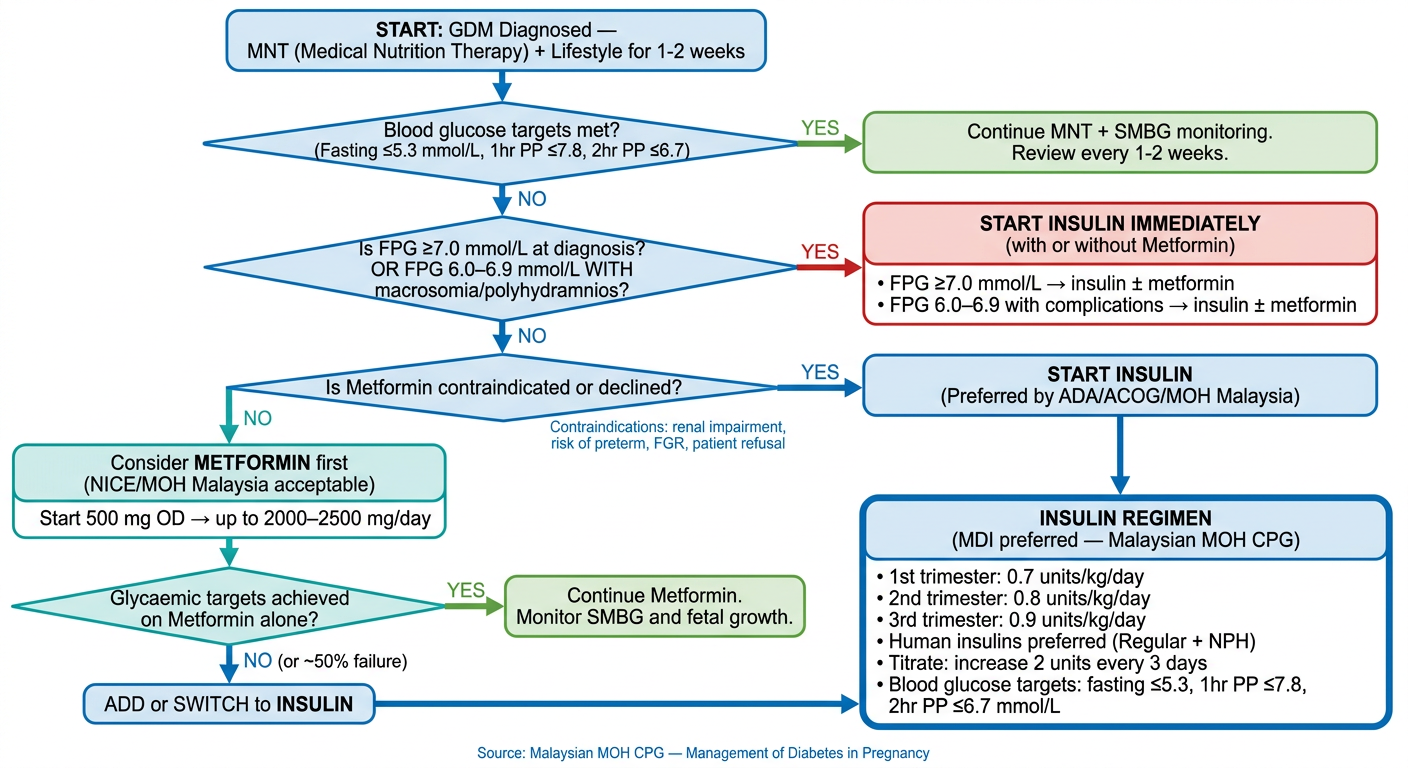
- Always start with MNT + lifestyle for 1-2 weeks first
- Immediate insulin triggers (no trial of metformin): FPG ≥7.0 mmol/L at diagnosis, or FPG 6.0-6.9 mmol/L with macrosomia/polyhydramnios
- Metformin first is acceptable when targets are missed on MNT alone, metformin is not contraindicated, and no immediate insulin trigger exists
- ~50% of metformin patients will fail and need insulin added - anticipate this and escalate early
- MDI with weight-based dosing by trimester is the preferred insulin regime: 0.7 → 0.8 → 0.9 units/kg/day across trimesters 1-3
What happens after delivery to the baby
The Infant of a Diabetic Mother (IDM) - What Happens After Delivery
Why Neonates Are at Risk: The Core Mechanism
Immediate Neonatal Complications
1. Neonatal Hypoglycaemia (Most Urgent)
- Affects 15-25% of neonates born to diabetic mothers
- Caused by fetal hyperinsulinism persisting after cord clamping
- Mean maternal glucose during labour is the strongest predictor - tight intrapartum glucose control (4.0-7.0 mmol/L) directly reduces this risk
- If untreated: seizures, coma, and permanent brain damage
- Longer duration of hypoglycaemia correlates with worse neurodevelopmental scores at age 2
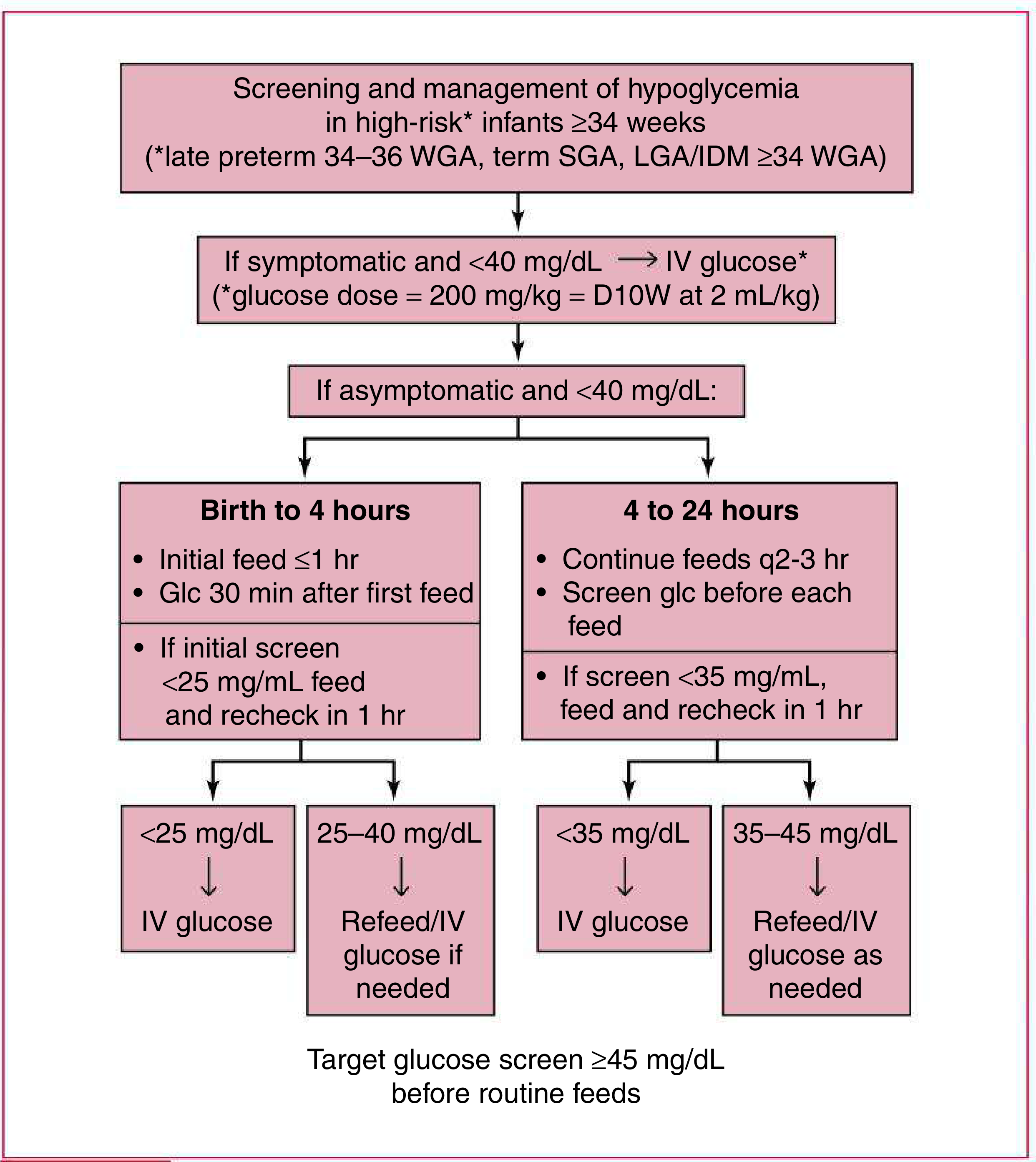
- Symptomatic + glucose <40 mg/dL → IV glucose immediately (D10W at 2 mL/kg = 200 mg/kg)
- Asymptomatic, birth to 4 hours: Feed within 1 hour; check glucose 30 min after first feed
- <25 mg/dL → IV glucose
- 25-40 mg/dL → Refeed; IV glucose if needed
- Asymptomatic, 4-24 hours: Feed every 2-3 hours; screen glucose before each feed
- <35 mg/dL → IV glucose
- 35-45 mg/dL → Refeed; IV glucose as needed
- Target: Glucose ≥45 mg/dL (≥2.5 mmol/L) before routine feeds
2. Macrosomia / Large for Gestational Age (LGA)
- Most characteristic complication of GDM; driven by fetal hyperinsulinism stimulating excess fat and soft tissue growth
- Increases risk of: shoulder dystocia, birth trauma, brachial plexus injury, fractured clavicle, and the need for caesarean section
- Macrosomia can also cause cardiomegaly (see cardiomyopathy below)
3. Respiratory Distress Syndrome (RDS)
- 10x more common in neonates of diabetic pregnancies vs. controls (22.2% vs. 2.7%)
- Mechanism: Fetal hyperinsulinism delays maturation of pulmonary surfactant - specifically delayed appearance of phosphatidylglycerol in amniotic fluid (~1.5 weeks behind non-diabetic controls)
- Also manifests as transient tachypnoea of the newborn (TTN)
- May be mistaken for hyaline membrane disease; consider cardiomyopathy as a cause when respiratory distress is present
4. Hypertrophic Cardiomyopathy
- Prevalence of asymmetric septal hypertrophy estimated at up to 30% at birth in IDMs
- Caused by chronic fetal hyperglycaemia stimulating myocardial hypertrophy
- Echocardiogram shows: hypercontractile thickened myocardium, septal hypertrophy > ventricular free walls, small ventricular chambers, possible LVOTO (left ventricular outflow tract obstruction)
- Typically resolves by 1 year of age with good glucose control
- Elevated B-type natriuretic peptide (BNP) in affected neonates correlates with poor third-trimester maternal glycaemic control
5. Polycythaemia and Hyperviscosity
- Occurs in 5-10% of IDMs
- Mechanism: Fetal hyperglycaemia → decreased fetal O₂ tension → elevated erythropoietin → excess red cell production
- Defined as central venous haemoglobin >20 g/dL or haematocrit >65%
- If untreated: jaundice, kernicterus, vascular sludging, renal and CNS ischaemia/infarction
6. Neonatal Hyperbilirubinemia (Jaundice)
- Affects approximately 25% of IDMs - about double the rate in normal infants
- Primary contributors: prematurity and polycythaemia (increased red cell breakdown)
- Risk of kernicterus and neurological damage if severe and untreated
- Requires close bilirubin monitoring
7. Neonatal Hypocalcaemia
- Serum calcium <7 mg/100 mL; historically reported in up to 50% of IDMs in the first 3 days of life
- With better-managed modern pregnancies, incidence has fallen to 5% or less
- Mechanism not fully established; likely related to hypomagnesaemia suppressing PTH secretion
8. Congenital Anomalies
- Risk of congenital malformations in IDMs is up to 10% overall
- 3-4x higher than the non-diabetic population for pre-gestational diabetes
- Anomaly risk is related to glycaemic control during organogenesis (first trimester)
- For GDM specifically (diagnosed at 24-28 weeks, after organogenesis), the anomaly risk is lower but not zero - some GDM cases represent undetected pre-existing T2DM
Long-Term Risks for the Child
| Risk | Detail |
|---|---|
| Obesity | Intrauterine exposure to hyperglycaemia increases future obesity risk |
| Type 2 Diabetes | Higher lifetime risk of T2DM and impaired glucose tolerance |
| Metabolic syndrome | Increased cardiometabolic risk in childhood and adulthood |
| Neurodevelopment | Prolonged neonatal hypoglycaemia (>2-24 hours) associated with lower adaptive scores at age 2 |
Summary: Complications at a Glance
| Complication | Incidence in IDMs | Key Mechanism |
|---|---|---|
| Neonatal hypoglycaemia | 15-25% | Fetal hyperinsulinism |
| Macrosomia / LGA | Most common feature | Excess fetal insulin → fat deposition |
| Respiratory distress | ~22% (10x normal rate) | Delayed surfactant (phosphatidylglycerol) maturation |
| Hypertrophic cardiomyopathy | Up to 30% (subclinical) | Hyperglycaemia → myocardial hypertrophy |
| Polycythaemia | 5-10% | Erythropoietin excess from fetal hypoxia |
| Hyperbilirubinemia | ~25% (2x normal) | Polycythaemia + prematurity |
| Hypocalcaemia | Up to 50% historically; <5% now | Hypomagnesaemia, suppressed PTH |
- Creasy & Resnik's Maternal-Fetal Medicine, p. 1440 | Rosen's Emergency Medicine, p. 3380 | Harriet Lane Handbook 23e, p. 643 | Swanson's Family Medicine Review