
HI
tell me the clinical differential diagnosis and histopatgological differential diagnosis of lymphangioma of tongue
lymphangioma tongue differential diagnosis histopathology
lymphangioma tongue clinical histopathological differential diagnosis oral pathology
https://www.pathologyoutlines.com/topic/softtissuelymphangio…
Lymphangioma of the Tongue: Differential Diagnosis
Background
I. CLINICAL DIFFERENTIAL DIAGNOSIS
1. Haemangioma of the Tongue
- Most important and common clinical mimic
- Also causes macroglossia; may present as a soft, compressible swelling
- Key distinction: Haemangioma has a blue/red/purple discoloration due to blood content; lymphangioma has a pale/skin-colored or translucent vesicular surface with clear/straw-colored fluid. Haemangioma is compressible and empties on pressure; lymphangioma is non-compressible. Transillumination is positive in both, but lymphangioma transilluminates brilliantly.
- Haemangioma may bleed on surface trauma; lymphangioma oozes clear lymph fluid
2. Cystic Hygroma (extending to floor of mouth/tongue base)
- Large macrocystic lymphatic malformation, usually from neck, may extend to tongue base
- Clinically soft, brilliantly transilluminant, fluctuant
- Distinguished by its location (neck/posterior triangle primarily) and multilocular nature
3. Neurofibroma / Plexiform Neurofibroma
- Can cause macroglossia (especially in neurofibromatosis type 1)
- Firm, non-fluctuant, non-transilluminant; associated with cafe-au-lait spots, cutaneous neurofibromas
- Does NOT transilluminate
4. Muscular Macroglossia
- Diffuse enlargement with normal surface texture
- Common in Cretinism (hypothyroidism), Beckwith-Wiedemann syndrome
- No vesicles or cystic spaces; tongue musculature is hypertrophied uniformly
5. Lingual Thyroid
- Midline mass at tongue base (posterior third)
- Firm, reddish-pink, nodular mass; may be associated with absence of normal thyroid
- Distinguished by radionuclide scan; patients may be hypothyroid
-
- S Das: A Manual on Clinical Surgery, 13th Ed
6. Haemangioma associated with AV Fistula
- Pulsatile, with an audible bruit; may show dilatation of feeding vessels
- Never seen in lymphangioma
7. Amyloidosis of the Tongue
- Causes firm, rubbery, diffuse macroglossia
- Tongue is firm, not soft/fluctuant; no vesicles; systemic features of amyloidosis present
-
- Harrison's Principles of Internal Medicine, 22nd Ed
8. Ranula (for floor of mouth/tongue swellings)
- Mucous retention cyst of sublingual gland, presenting as a bluish, translucent swelling in the floor of mouth
- Doesn't cause true macroglossia; unilateral soft tissue cyst only
-
- Cummings Otolaryngology
9. Dermoid Cyst / Epidermoid Cyst
- Midline floor-of-mouth or tongue swelling in young patients
- Doughy consistency (pastry feel); does NOT transilluminate (sebaceous content)
10. Macroglossia Due to Storage Diseases
- Von Gierke disease (glycogen storage type I), Hurler syndrome (mucopolysaccharidosis)
- Associated with systemic features; no vesicles
-
- K.J. Lee's Essential Otolaryngology
11. Lymphangioma-like Kaposi Sarcoma
- HIV-positive patients; may closely mimic oral lymphangioma clinically
- Distinguished by context (immunosuppression), and immunohistochemistry (HHV-8 positive)
12. Macrocheilia / Cheilitis Granulomatosa (for lip involvement)
- Solid edema, angioedema, cheilitis glandularis, sarcoidosis, oral Crohn's disease must be considered when lymphangioma affects the lips
-
- Andrews' Diseases of the Skin
II. HISTOPATHOLOGICAL DIFFERENTIAL DIAGNOSIS
Key Histological Features of Lymphangioma
- Dilated, thin-walled lymphatic channels of varying caliber
- Flat, bland endothelial lining (no nuclear atypia or mitoses)
- Channels contain pale eosinophilic proteinaceous fluid, lymphocytes, and occasionally red blood cells
- Stroma may show lymphoid aggregates/nodules
- In tongue: channels insinuate between muscle fibers (cavernous type)
- IHC: D2-40 (podoplanin) positive, PROX1 positive, VEGFR3 positive, CD31 positive
Histopathological Mimics:
1. Haemangioma (Capillary / Cavernous)
- Most important histological mimic
- Distinction: Haemangioma channels contain red blood cells (erythrocytes); lymphangioma channels contain clear proteinaceous fluid and lymphocytes, rarely a few RBCs
- Hemangioma endothelium: CD31+, CD34+, D2-40 negative
- Lymphangioma endothelium: D2-40+, PROX1+, CD34 negative/weak
2. Lymphangiohemangioma (Mixed Vascular Malformation)
- Contains both blood-filled and lymph-filled channels
- IHC panel required to distinguish component channels
3. Angiosarcoma (Well-Differentiated / Low-Grade)
- Anastomosing vascular channels, but endothelial cells show nuclear atypia, hyperchromasia, multilayering, mitoses
- Destructive infiltration; no proteinaceous lymphatic fluid
- CD31+, CD34+; variable D2-40; clinical malignant behavior
4. Well-Differentiated Angiosarcoma of the Tongue
- Rare but critical to exclude; anastomosing vascular channels with atypical endothelium
- Infiltrates muscle destructively vs. lymphangioma which separates muscle fibers without destruction
5. Cystic Hygroma (Macrocystic Lymphatic Malformation)
- Histologically similar but shows large macrocysts lined by flat endothelium
- Wall may contain smooth muscle; often with lymphoid aggregates in wall
- D2-40 positive; separated from cavernous lymphangioma only by cyst size (>2 cm conventionally)
6. Lymphangiectasia (Acquired)
- Dilated lymphatic channels secondary to obstruction (surgical, radiation, infection)
- Histologically nearly identical to lymphangioma; distinction is clinical context (acquired vs. congenital)
- Lacks the deep infiltrative pattern of true lymphangioma
7. Benign Lymphangioendothelioma (Acquired Progressive Lymphangioma)
- Anastomosing, thin-walled vascular channels in dermis; superficially resembles lymphangioma
- Channels are more irregular and dissecting; may simulate low-grade angiosarcoma
- D2-40 positive; no cytologic atypia
-
- Andrews' Diseases of the Skin, Clinical Dermatology
8. Venous Malformation
- Large thin-walled blood-filled venous channels; no lymphatic content
- Endothelium is CD34+, D2-40 negative
- Stroma may show phleboliths (calcified thrombi - pathognomonic)
9. Mucocele / Ranula
- Mucous extravasation or retention cyst lined by compressed connective tissue or respiratory/ductal epithelium
- Contents are mucin-rich (not clear proteinaceous fluid); mucin stains positive (PAS, mucicarmine)
- No endothelial lining of the cyst space
10. Lymphangioma-like Kaposi Sarcoma
- Vascular channels lined by cells expressing HHV-8 (LANA-1 positive)
- Irregular, slit-like, anastomosing channels; background lymphoplasmacytic infiltrate; hyaline globules
- D2-40 may be positive but HHV-8 is the definitive marker
Summary Table
| Feature | Lymphangioma | Haemangioma | Venous Malformation | Angiosarcoma |
|---|---|---|---|---|
| Channel content | Lymph fluid + lymphocytes | RBCs | RBCs | RBCs |
| Endothelial atypia | None | None | None | Present |
| D2-40 | Positive | Negative | Negative | Variable |
| PROX1 | Positive | Negative | Negative | Negative |
| CD34 | Negative | Positive | Positive | Positive |
| CD31 | Positive | Positive | Positive | Positive |
| HHV-8 | Negative | Negative | Negative | Negative (unless Kaposi) |
is lymphangioma and hemangioma are same?
Lymphangioma vs. Hemangioma - Are They the Same?
Core Difference
| Feature | Lymphangioma | Hemangioma |
|---|---|---|
| Origin | Lymphatic vessels | Blood vessels |
| Contents | Clear lymph fluid + lymphocytes | Red blood cells (blood) |
| Nature | Developmental malformation (hamartoma) | May be true neoplasm (infantile) or malformation |
Detailed Comparison
1. Definition
- Lymphangioma: A benign proliferation/malformation of lymphatic channels that fail to connect to the normal lymphatic system. It is congenital in almost all cases.
- Hemangioma: A benign proliferation of blood vessel endothelium (capillaries, cavernous sinuses, or venous channels filled with blood).
2. Clinical Appearance
| Feature | Lymphangioma | Hemangioma |
|---|---|---|
| Color | Pale, skin-colored, or translucent vesicles | Red, blue, or purple discoloration |
| Fluid on puncture | Clear/straw-colored lymph | Blood (red) |
| Compressibility | Not compressible | Compressible (empties on pressure) |
| Transillumination | Brilliantly positive | Positive but less brilliant |
| Blanching on pressure | Does NOT blanch | May blanch (capillary type) |
3. Common Sites on Tongue
- Both can affect the tongue and cause macroglossia
- Lymphangioma: tongue surface shows multiple small vesicles (frog-spawn appearance)
- Hemangioma: tongue appears dark blue/purple and spongy
4. Behavior
| Feature | Lymphangioma | Hemangioma |
|---|---|---|
| Spontaneous regression | Rare | Infantile hemangioma regresses by age 5-7 years in ~70% cases |
| Infection risk | Common (lymph stasis) | Less common |
| Bleeding | Rare (oozes lymph) | More likely to bleed |
| Malignant transformation | Extremely rare | Extremely rare |
5. Histopathology
| Feature | Lymphangioma | Hemangioma |
|---|---|---|
| Channel content | Proteinaceous fluid + lymphocytes | Red blood cells |
| Endothelium | Flat, bland lymphatic endothelium | Flat to plump blood vessel endothelium |
| D2-40 (podoplanin) | Strongly positive | Negative |
| PROX1 | Positive | Negative |
| CD34 | Negative or weak | Positive |
| CD31 | Positive | Positive (both positive) |
6. Treatment
- Lymphangioma: Surgical excision is the mainstay; sclerotherapy (OK-432, bleomycin) used for cystic types. Does NOT respond to propranolol.
- Infantile hemangioma: Propranolol is now first-line medical treatment; many involute spontaneously. Surgical excision for residual lesions.
Why They Are Often Confused
- Are benign, congenital/developmental in origin
- Occur in the same locations (tongue, neck, lip, axilla)
- Present as soft, painless swellings
- Are grouped under the umbrella term "vascular malformations" in older classifications
- Can both cause macroglossia
tell me about lymphangioma of tongue
lymphangioma tongue oral cavity
PMID: 40714024
lymphangioma tongue pathology clinical features treatment macroglossia
Lymphangioma of the Tongue
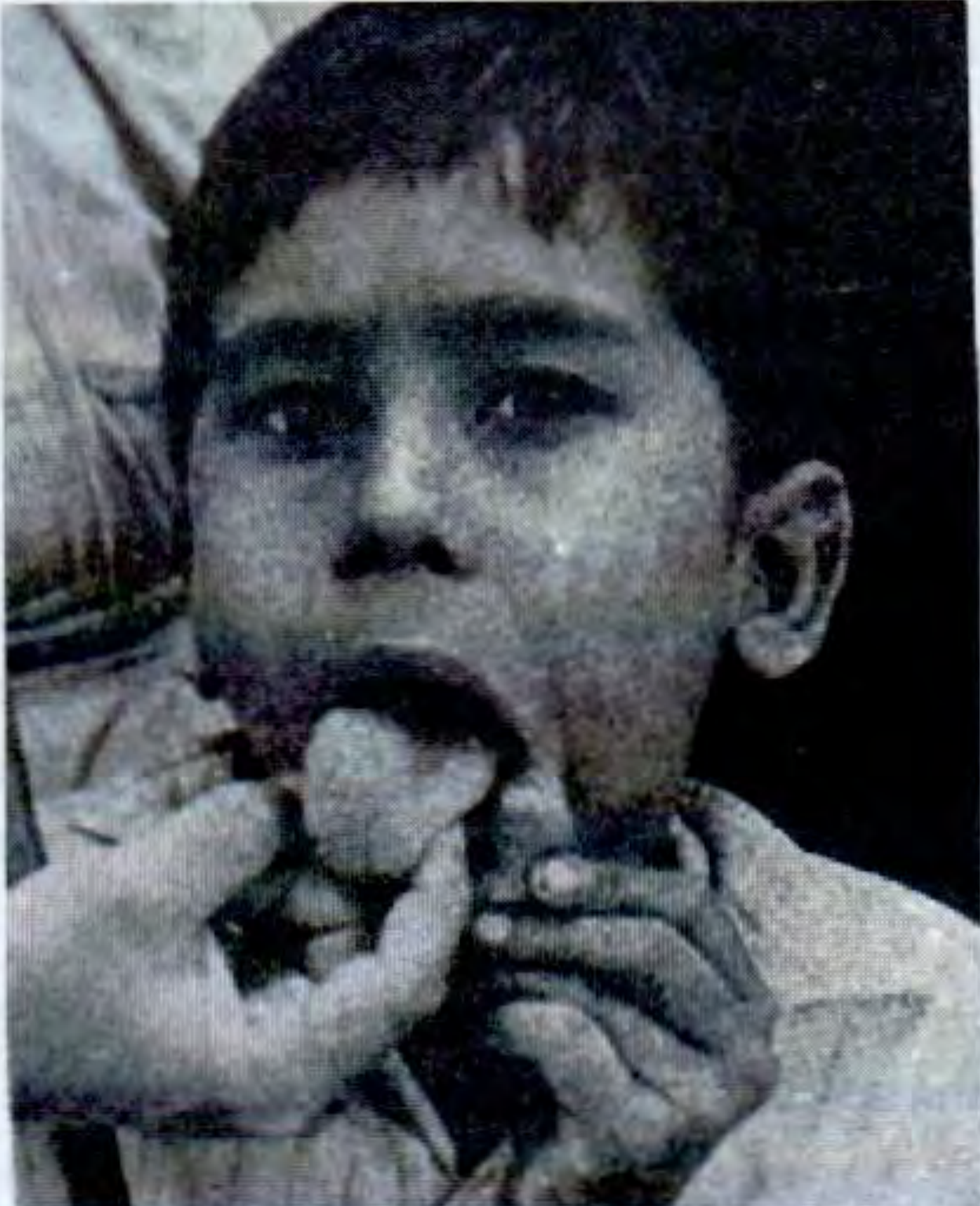
1. Definition
2. Epidemiology
- Age: Congenital in almost all cases; present at birth or appears within the first 2 years of life. Occasionally may manifest for the first time in young adults.
- Sex: No significant sex predilection
- Frequency: The tongue is one of the most common sites for lymphangioma in the head and neck region (along with neck, lips, cheeks)
- Cavernous type represents ~40% of all lymphangiomas and most commonly affects the tongue
- Lymphangioma is the most common cause of congenital macroglossia
3. Etiology and Pathogenesis
4. Classification (Types Occurring in the Tongue)
Type 1: Simple / Capillary Lymphangioma (Lymphangioma Circumscriptum)
- Composed of thin-walled capillary-sized lymphatic channels
- Presents as small, pale vesicles (0.5-4 mm) on the tongue surface
- Multiple vesicles give a characteristic "frog-spawn" or "tapioca pudding" appearance on the tongue dorsum
- Usually superficial; vessels insinuate into superficial tongue musculature
- Most common type seen clinically on the tongue surface
Type 2: Cavernous Lymphangioma
- Composed of larger dilated lymphatic spaces with fibrous adventitia
- Situated deeper within tongue musculature
- The most important type causing macroglossia
- Presents as a diffuse, painless, soft lobulated swelling
- Cyst interspersed among muscle fibers - makes surgical excision difficult
- Represents 40% of all lymphangiomas
Type 3: Cystic Hygroma (Macrocystic Type)
- Large cyst-like cavities containing clear watery fluid
- Primarily in the neck but can extend to the tongue base
- Most common overall form of lymphangioma
5. Clinical Features
Symptoms
- Macroglossia - the tongue protrudes from the mouth (most dramatic feature)
- Painless in most cases (pain occurs if infected)
- Difficulty with eating, chewing, swallowing (dysphagia)
- Speech difficulties (dysarthria) due to enlarged tongue
- Drooling of saliva
- Open-mouth posture and mouth breathing
- Cosmetic disfigurement
Signs
| Feature | Finding |
|---|---|
| Size | Can range from small vesicles to massive macroglossia (tongue may protrude well beyond the lips) |
| Surface | Multiple small pale/translucent vesicles on dorsum (frog-spawn appearance) |
| Color | Pale, skin-colored or slightly translucent; NOT blue/red |
| Consistency | Soft, spongy, lobulated |
| Fluctuation | Positive |
| Transillumination | Brilliantly positive (clear lymph fluid) |
| Compressibility | Not compressible (unlike hemangioma) |
| Fluid on puncture | Clear, watery, straw-colored lymph |
| Lymph nodes | Not enlarged (unless infected) |
Involvement pattern
- May involve half the tongue (unilateral) or entire tongue
- The tongue often shows an irregular, nodular, cobblestone surface due to submucosal lymphatic channels
- Surrounding tissues (lip causing macrocheilia, floor of mouth) may also be involved
6. Complications
- Recurrent infections - lymph stasis predisposes to bacterial infection; episodes of swelling, fever, tenderness
- Sudden rapid enlargement - after infection or internal hemorrhage (blood enters lymphatic channels, turning vesicles dark red/brown)
- Airway obstruction - life-threatening; tongue can obstruct the oropharynx, especially in neonates
- Lymphorrhoea - leakage of clear lymph fluid after trauma or ulceration of surface vesicles
- Dental/occlusal problems - open bite, dental spacing, prognathism from persistent macroglossia
- Difficulty with feeding in neonates and infants
- Psychological impact due to cosmetic deformity
7. Investigations
Imaging
- CT scan - determines size, extent, and relationship to vital structures; shows low-density multilocular mass within tongue musculature
- MRI - best investigation; shows T2 hyperintense multilocular lesion; distinguishes microcystic from macrocystic components; assesses deep extent
- Ultrasonography - High-definition intraoral ultrasonography (IHDUS) is a newer, non-invasive tool to assess lesion depth and vascularity (Limongelli et al., J Pediatr Surg, 2025)
- Doppler ultrasound - shows absence of arterial flow (unlike hemangioma/AVM)
Aspiration
- Aspiration of clear, watery, straw-colored fluid confirms the diagnosis
- Fluid does NOT coagulate (unlike blood)
- Fluid contains lymphocytes and cholesterol crystals
8. Histopathology
Macroscopy
- Cut surface shows multiple locules of varying sizes filled with clear lymph
- In depth: larger locules; towards surface: smaller locules
- Contents: clear watery lymph, cholesterol crystals, lymphocytes
Microscopy
- Dilated, thin-walled lymphatic channels of varying caliber insinuating between tongue muscle fibers
- Channels lined by flat, bland endothelial cells with no atypia or mitoses
- Channel lumen contains: pale eosinophilic proteinaceous fluid, lymphocytes, rarely a few red blood cells
- Stroma shows lymphoid aggregates around channel walls
- Fibrous adventitia in cavernous type
- Surface epithelium may show hyperplasia; lymphatic channels may reach up close to mucosal surface (explaining vesicle formation)
Immunohistochemistry (IHC)
| Marker | Result | Significance |
|---|---|---|
| D2-40 (podoplanin) | Strongly positive | Gold standard for lymphatic endothelium |
| PROX1 | Positive | Lymphatic endothelial transcription factor |
| VEGFR3 | Positive | Lymphatic vessel marker |
| CD31 | Positive | General vascular marker |
| CD34 | Negative/weak | Differentiates from blood vessel tumors |
| HHV-8 | Negative | Rules out Kaposi sarcoma |
9. Treatment
Surgical Excision
- Primary treatment for tongue lymphangioma
- Partial glossectomy for large lesions causing functional problems
- The cyst is often interspersed among tongue muscle fibers, making complete excision difficult - high recurrence rate
- Pre-operative tracheostomy may be needed for airway protection in large lesions
- Post-operative antibiotics + steroids to reduce swelling
Sclerotherapy
- Used for macrocystic lesions; less effective for microcystic tongue lesions
- Agents used:
- OK-432 (Picibanil) - most commonly used; streptococcal preparation
- Bleomycin - effective for macrocystic type
- Doxycycline
- Ethanol (for deep lesions)
- Multiple sessions often required
- May reduce lesion before surgery
Laser Therapy
- CO2 laser / Diode laser - used for superficial vesicular lesions on tongue surface
- Diode laser-assisted excision is a newer minimally invasive approach, showing good results in pediatric patients with tongue lymphangioma circumscriptum (Limongelli et al., 2025 - PMID: 40714024)
Sirolimus (mTOR inhibitor)
- For life-threatening or refractory lymphatic malformations
- Systemic treatment that reduces lesion size by inhibiting lymphatic endothelial proliferation
- Particularly useful in extensive, surgically unresectable lesions
Observation
- Small, asymptomatic lesions may be observed
- Unlike infantile hemangioma, spontaneous regression is rare
10. Prognosis
- Benign - no malignant transformation
- Recurrence is common after incomplete excision (due to deep infiltration of muscle)
- Prognosis is generally good for localized lesions
- Airway compromise is the most serious threat in large/giant lesions - can be life-threatening
- Functional outcomes (speech, swallowing) are usually good after appropriate treatment
now tell me about its differential clinical diagnosis
Clinical Differential Diagnosis of Lymphangioma of the Tongue
- Macroglossia (diffuse tongue enlargement)
- Vesicular/nodular surface lesions on tongue
- Soft cystic swelling of tongue
A. DIFFERENTIALS BASED ON MACROGLOSSIA
1. Haemangioma of the Tongue
| Feature | Lymphangioma | Haemangioma |
|---|---|---|
| Color | Pale, translucent, skin-colored | Blue / red / purple |
| Fluid on puncture | Clear lymph | Blood |
| Compressibility | NOT compressible | Compressible (empties on pressure) |
| Blanching | Does not blanch | May blanch |
| Transillumination | Brilliantly positive | Less brilliant |
| Surface vesicles | Clear/pale | Dark red/blue blebs |
2. Muscular Macroglossia
- Diffuse, uniform enlargement of the tongue with no surface vesicles or cystic spaces
- The tongue musculature is hypertrophied throughout
- Associated conditions: Cretinism (congenital hypothyroidism), Beckwith-Wiedemann syndrome (also associated with omphalocele, neonatal hypoglycemia), Down syndrome
- Tongue is firm and uniformly enlarged - NOT soft/spongy/fluctuant
- No transillumination; no punctum; no vesicles
- - K.J. Lee's Essential Otolaryngology; The Developing Human - Moore's Embryology
3. Neurofibroma / Plexiform Neurofibroma
- Causes macroglossia; associated with Neurofibromatosis Type 1 (von Recklinghausen disease)
- Tongue is soft but with a firm, rubbery feel in areas
- Not fluctuant; not transilluminant
- Associated with: cafe-au-lait spots, cutaneous neurofibromas, axillary freckling, Lisch nodules
- - S Das: A Manual on Clinical Surgery, 13th Ed
4. Amyloidosis of the Tongue
- Causes firm, rubber-like, diffuse macroglossia - the tongue is hard and indented by teeth
- No vesicles, no fluctuation, no transillumination
- Usually in adults with systemic amyloidosis (primary or secondary)
- Associated features: periorbital purpura ("raccoon eyes"), carpal tunnel syndrome, cardiac disease, proteinuria
- Biopsy with Congo red stain shows apple-green birefringence under polarized light
- - Harrison's Principles of Internal Medicine, 22nd Ed
5. Storage Diseases
- Von Gierke disease (glycogen storage disease type I) - hepatomegaly, hypoglycemia + macroglossia
- Hurler syndrome (mucopolysaccharidosis type I) - coarse facies, corneal clouding, hepatosplenomegaly + macroglossia
- Tongue is firm and uniformly enlarged; no vesicles
- Diagnosis by enzyme assay and urinary glycosaminoglycans
- - K.J. Lee's Essential Otolaryngology
6. Acromegaly
- Macroglossia from growth hormone excess in adults
- Associated features: enlargement of hands, feet, jaw (prognathism), wide spacing of teeth, coarse facial features, hypertension, diabetes
- NOT congenital; presents in adults
- Tongue is firm, NOT cystic
7. Myxoedema (Hypothyroidism)
- Acquired macroglossia in adults from mucopolysaccharide infiltration of tongue
- Associated with: dry skin, bradycardia, weight gain, constipation, cold intolerance
- Tongue is pale, puffy, firm - not fluctuant or transilluminant
- - S Das: A Manual on Clinical Surgery, 13th Ed
B. DIFFERENTIALS BASED ON CYSTIC TONGUE SWELLING
8. Cystic Hygroma Extending to Tongue Base
- The macrocystic type of lymphangioma itself - technically within the spectrum
- Primarily in the posterior triangle of the neck; can extend to the floor of mouth/tongue base
- Brilliantly transilluminant, brilliantly fluctuant
- Distinguished by: predominantly cervical location, massive size, "hydrocele of the neck" appearance
- Partial compressibility (fluid shifts between locules)
9. Ranula
- Mucous retention/extravasation cyst of the sublingual salivary gland
- Located in the floor of mouth - NOT in the tongue itself (though it can displace the tongue upward)
- Bluish, translucent swelling in floor of mouth
- Unilocular; contains viscous mucin (NOT clear watery lymph)
- A "plunging ranula" extends through mylohyoid into the neck
- Mucin positive on PAS staining; no lymphocytes in fluid
- - Cummings Otolaryngology
10. Dermoid / Epidermoid Cyst
- Midline swelling of the tongue or floor of mouth
- Doughy, "pastry-like" consistency (sebaceous content)
- Does NOT transilluminate (opaque sebaceous content)
- Smooth surface; no vesicles
- Cyst wall lined by squamous epithelium + skin appendages (dermoid) or just squamous epithelium (epidermoid)
11. Lingual Thyroid
- Midline mass at the base of tongue (posterior third)
- Firm, reddish-pink, nodular, sessile mass
- Associated with absence of normal thyroid gland in the neck (check for ectopic thyroid before removal!)
- Patient may be hypothyroid
- Never transilluminates; no fluctuation
- Confirmed by: thyroid radionuclide scan (Tc-99m), MRI
- - S Das: A Manual on Clinical Surgery, 13th Ed
C. DIFFERENTIALS BASED ON VESICULAR / SURFACE LESIONS
12. Herpes Simplex / Herpes Zoster
- Painful vesicles on the tongue/oral mucosa
- Vesicles contain clear fluid initially, become turbid/purulent, then ulcerate with a yellow base
- Painful, burning - vs. lymphangioma vesicles which are painless
- Acute onset with fever; NOT congenital
- Dermatomal distribution in zoster
13. Pemphigus Vulgaris
- Oral bullae and erosions in middle-aged adults
- Nikolsky's sign positive
- Vesicles rupture easily leaving painful erosions
- NOT congenital; autoimmune (anti-desmoglein antibodies)
14. Angioedema
- Acute, transient swelling of the tongue (and lips) - resolves within 24-48 hours
- Associated with allergic trigger, ACE inhibitor use, or hereditary C1-esterase deficiency
- No vesicles; NOT persistent like lymphangioma
- Responds to antihistamines / epinephrine
D. KEY DISTINGUISHING POINTS SUMMARY
| Clinical Feature | Favors Lymphangioma | Against Lymphangioma |
|---|---|---|
| Age at onset | Present since birth / infancy | Adult onset |
| Color | Pale, translucent, skin-colored | Blue/purple (hemangioma), red (lingual thyroid) |
| Surface | Pale vesicles, frog-spawn appearance | Smooth (muscular), firm (amyloid), dark blebs (hemangioma) |
| Consistency | Soft, spongy, lobulated | Firm (amyloid, neurofibroma, muscular), doughy (dermoid) |
| Fluctuation | Positive | Negative in muscular, amyloid |
| Transillumination | Brilliantly positive | Negative in dermoid, neurofibroma, amyloid, lingual thyroid |
| Compressibility | NOT compressible | Compressible (hemangioma) |
| Fluid on puncture | Clear, watery, non-clotting lymph | Blood (hemangioma), mucin (ranula), sebum (dermoid) |
| Systemic features | Usually absent | Present in storage diseases, amyloidosis, acromegaly |
| Regression | Rare | Infantile hemangioma regresses spontaneously |
- Brilliantly transilluminant - separates it from solid lesions
- Non-compressible - separates it from hemangioma
- Clear, non-clotting fluid on aspiration - the single most definitive clinical test
now tell me its histopathological differential diagnosis
lymphangioma histopathological differential diagnosis oral tongue pathology IHC D2-40 CD34
https://pmc.ncbi.nlm.nih.gov/articles/PMC5824501
Histopathological Differential Diagnosis of Lymphangioma of the Tongue
First: Key Histological Features of Lymphangioma (The Reference Standard)
| Feature | Description |
|---|---|
| Channels | Dilated, thin-walled lymphatic channels of varying caliber |
| Lining cells | Single layer of flat, bland endothelial cells - no atypia, no mitoses |
| Lumen contents | Pale eosinophilic proteinaceous fluid + lymphocytes, rarely a few RBCs |
| Stroma | Fibrous connective tissue with lymphoid aggregates around vessel walls |
| Pattern | Channels insinuate between tongue muscle fibers without destroying them |
| Wall | Thin; NO smooth muscle layer (unlike blood vessels) |
| Surface epithelium | Parakeratotic squamous epithelium with flattened rete ridges; channels may project close to the mucosal surface |
IHC Profile of Lymphangioma
| Marker | Result |
|---|---|
| D2-40 (podoplanin) | Strongly positive - gold standard |
| PROX1 | Positive - lymphatic transcription factor |
| VEGFR3 | Positive |
| CD31 | Positive (pan-vascular) |
| CD34 | Negative / weak |
| SMA (smooth muscle actin) | Negative in vessel walls |
| HHV-8 (LANA-1) | Negative |
| S100 | Negative |
| PAS | Negative |
Histopathological Differentials
1. Haemangioma (Capillary / Cavernous)
| Feature | Lymphangioma | Haemangioma |
|---|---|---|
| Channel lumen | Proteinaceous fluid + lymphocytes | Red blood cells (RBCs) |
| Wall | Thin, no smooth muscle | May have pericytes/smooth muscle |
| Lymphoid aggregates | Present in stroma | Absent |
| D2-40 | Strongly positive | Negative |
| PROX1 | Positive | Negative |
| CD34 | Negative | Strongly positive |
| CD31 | Positive | Positive |
- Capillary hemangioma: small, closely packed capillary-sized vessels filled with RBCs, lobular architecture, plump endothelium
- Cavernous hemangioma: large blood-filled sinusoidal spaces - but always RBCs in lumen, CD34+, D2-40-
- Key rule: If lumen contains RBCs = hemangioma. If lumen contains clear proteinaceous fluid + lymphocytes = lymphangioma
2. Venous Malformation
- Large, blood-filled dilated venous channels with thin walls and flat endothelium
- Channels may show irregular, angulated shapes (not round/oval)
- Pathognomonic feature: phleboliths (calcified thrombi within vessel lumens - appear as round laminated calcifications)
- Vessel wall contains smooth muscle (SMA positive) - absent in lymphangioma
- CD34 positive, D2-40 negative
- Lumen: blood, not lymph
3. Arteriovenous Malformation (AVM)
- Contains a mixture of arteries, veins, and abnormal shunting vessels
- Arteries identified by: thick muscular walls, internal elastic lamina (visible on Elastin stain/EVG stain)
- Veins: thinner walls but contain RBCs
- Endothelial cells flat to plump; NO atypia
- CD34+, SMA+ (arterial walls), D2-40 negative
- Distinguished from lymphangioma by: presence of arterial walls with elastic laminae + blood-filled channels
4. Angiosarcoma (Well-Differentiated / Low-Grade)
| Feature | Lymphangioma | Angiosarcoma |
|---|---|---|
| Architecture | Non-anastomosing channels between muscle | Anastomosing, infiltrative, destructive |
| Endothelium | Flat, bland, single layer | Atypical, hyperchromatic, multilayered, hobnail pattern |
| Mitoses | Absent | Present |
| Nuclear atypia | None | Present |
| Necrosis | Absent | May be present |
| Invasion | Separates fibers (non-destructive) | Destroys muscle fibers |
| CD31 | Positive | Positive |
| CD34 | Negative | Usually positive |
| D2-40 | Positive | Variable (some angiosarcomas D2-40+) |
- This distinction is critical: if you see endothelial atypia, multilayering, mitoses, or destructive infiltration - it is NOT lymphangioma
- Some angiosarcomas of the head and neck can be D2-40 positive, making IHC alone insufficient; nuclear atypia is the deciding feature
5. Lymphangiohemangioma (Mixed Vascular Malformation / Hemangiolymphangioma)
- Contains both lymphatic channels (D2-40+) and blood-filled channels (CD34+) in the same specimen
- A documented entity in oral/tongue lesions (Correia-Neto et al., Spec Care Dentist 2025 - PMID 40913588)
- On H&E alone, identical to either lymphangioma or hemangioma
- Full IHC panel (D2-40 + CD34 + CD31) is mandatory to classify correctly
- Mixed channels may be adjacent or interdigitated
6. Acquired Progressive Lymphangioma (Benign Lymphangioendothelioma)
- Anastomosing, thin-walled vascular channels dissecting through dermis/submucosa in a pattern mimicking low-grade angiosarcoma
- Endothelial cells are flat with minimal/no atypia - key distinguishing feature from angiosarcoma
- D2-40 positive (lymphatic origin)
- Distinguished from ordinary lymphangioma by: more irregular, anastomosing channel pattern and acquired clinical history (post-radiation, post-surgery)
- - Andrews' Diseases of the Skin
7. Granular Cell Tumor (GCT) of the Tongue
- Involves the tongue in 25% of cases - a common tongue lesion to differentiate
- Histology: sheets of polygonal cells with abundant eosinophilic granular cytoplasm, small round central nuclei, distinct cell borders
- Pseudo-epitheliomatous hyperplasia of overlying epithelium is characteristic (can mimic SCC on superficial biopsy)
- Cells infiltrate along small nerves and muscle fibers (similar infiltrative pattern to lymphangioma)
- NO vascular channels or cystic spaces (solid tumor, not channel-based)
- IHC: S100 positive, CD68 positive, PGP9.5 positive - completely different profile from lymphangioma
- - K.J. Lee's Essential Otolaryngology; Fitzpatrick's Dermatology
8. Mucocele / Ranula
- Mucous extravasation or retention cyst of salivary gland origin
- Histology of extravasation type: No epithelial lining - cyst space surrounded by granulation tissue, macrophages (foamy/muciphages), fibrous wall
- Histology of retention type: Lined by ductal epithelium (low cuboidal/columnar)
- Contents: mucin (not proteinaceous lymph fluid)
- PAS positive, Mucicarmine positive lumen contents
- Muciphages (foamy macrophages) in wall
- NO lymphoid aggregates; NO lymphatic endothelial markers
- D2-40, PROX1 - negative
9. Dermoid / Epidermoid Cyst
- Cyst lined by keratinizing stratified squamous epithelium
- Dermoid: contains skin appendages (hair follicles, sebaceous glands, sweat glands) in the wall
- Epidermoid: squamous lining only; lumen filled with laminated keratin (cheesy material)
- Contents: keratin flakes, not lymphatic fluid
- No endothelial lining whatsoever
- All vascular markers: negative
10. Lymphangioma-like Kaposi Sarcoma
| Feature | Lymphangioma | Kaposi Sarcoma |
|---|---|---|
| Channels | Round/oval dilated lymphatic channels | Irregular, slit-like, angulated channels |
| Cells | Flat bland endothelium | Spindle cells, plump endothelium |
| Background | Lymphoid aggregates | Lymphoplasmacytic infiltrate |
| Hyaline globules | Absent | PAS-positive hyaline globules |
| RBCs in stroma | Absent | Extravasated RBCs in stroma |
| HHV-8 (LANA-1) | Negative | Strongly positive - definitive |
| D2-40 | Positive | Also positive (pitfall!) |
| CD31 | Positive | Positive |
- D2-40 positivity in Kaposi sarcoma is a major pitfall - both lesions are D2-40 positive
- HHV-8 immunostaining (LANA-1) is the definitive distinguishing marker
- - Andrews' Diseases of the Skin; JOMFP 2018
11. Amyloidosis of the Tongue
- Homogeneous, amorphous, eosinophilic extracellular deposits in the stroma and vessel walls
- Deposits show apple-green birefringence under polarized light with Congo red stain - pathognomonic
- The deposits surround and obliterate vessel lumens
- No dilated lymphatic channels; amyloid replaces normal tissue architecture
- AA protein / AL protein can be typed by IHC
12. Lipoma of the Tongue
- Sheets of mature adipocytes with thin fibrous septa
- No vascular channels, no proteinaceous fluid
- On H&E: clear vacuolated cells with peripheral nuclei (signet-ring appearance)
- S100 positive; all vascular markers negative
Master IHC Comparison Table
| Lesion | D2-40 | CD34 | CD31 | SMA | HHV-8 | S100 | PAS |
|---|---|---|---|---|---|---|---|
| Lymphangioma | +++ | - | + | - | - | - | - |
| Haemangioma | - | +++ | + | ± | - | - | - |
| Venous Malformation | - | +++ | + | + | - | - | - |
| Angiosarcoma | ± | + | + | - | - | - | - |
| Kaposi Sarcoma | + (pitfall!) | + | + | - | +++ | - | + (hyaline globules) |
| Granular Cell Tumor | - | - | - | - | - | +++ | +++ |
| Mucocele/Ranula | - | - | - | - | - | - | +++ (mucin) |
| Dermoid Cyst | - | - | - | - | - | - | + (keratin) |
| Amyloidosis | - | - | - | - | - | - | + |
Three Golden Histological Rules
-
Lumen contents are the first clue: Clear proteinaceous fluid + lymphocytes = lymphangioma. RBCs = hemangioma/venous malformation.
-
Endothelial atypia excludes lymphangioma: Any nuclear atypia, multilayering, mitoses, or destructive infiltration = consider angiosarcoma.
-
When D2-40 is positive, always add HHV-8: Both lymphangioma and Kaposi sarcoma are D2-40 positive. HHV-8 (LANA-1) is the only way to separate them definitively.