

Only histology diagram and identification point one bye One
histology diagrams identification points mucous salivary gland hyaline cartilage cardiac muscle sensory ganglion thymus skin umbilical cord placenta spleen aorta lymph node
histology guide slides images mucous salivary gland cardiac muscle sensory ganglion thymus umbilical cord placenta spleen aorta identification features site:histologyguide.com OR site:histology.ctl.columbia.edu
https://histologyguide.com/search.html
🔬 HISTOLOGY SPOTTERS - Complete Guide
1. MUCOUS SALIVARY GLAND

- Mucous acini are the dominant secretory units - large, pale-staining cells with flattened basal nuclei
- Cytoplasm appears empty/foamy due to mucin washing out during processing (H&E)
- Serous demilunes (caps of serous cells) may be seen at the periphery of mucous acini in sublingual gland
- Cells are tall with basal nuclei pushed against the cell membrane
- Intercalated ducts are short/absent; striated ducts are sparse (contrast to parotid)
- Connective tissue septa divide lobules clearly
- Organ: Sublingual gland (predominantly mucous)
2. HYALINE CARTILAGE

- Homogeneous, glassy (hyaline) matrix - appears blue-purple on H&E
- Chondrocytes sit in lacunae (spaces) within the matrix
- Isogenous groups - clusters of 2-8 chondrocytes arising by mitosis (appositional growth)
- Territorial matrix (basophilic, surrounding each chondrocyte/group) vs. interterritorial matrix (less basophilic)
- Perichondrium - outer fibrous layer + inner chondrogenic layer (absent on articular surfaces)
- No blood vessels, no nerves, no lymphatics within the cartilage
- Sites: Trachea, nose, articular surfaces, fetal skeleton
3. CARDIAC MUSCLE

- Branching, anastomosing muscle fibers (unlike parallel arrangement of skeletal muscle)
- Centrally placed nuclei - 1 or 2 per cell (perinuclear halo of glycogen visible)
- Intercalated discs - darkly staining transverse bands at cell junctions (unique to cardiac muscle)
- Cross-striations present (A, I, H bands) but less prominent than skeletal muscle
- Endomysium-rich connective tissue with abundant capillaries between fibers
- Fibers do NOT regenerate (permanent/non-regenerating cells)
- Location: Heart wall (myocardium)
4. SENSORY GANGLION

- Large spherical/ovoid pseudounipolar neurons (largest neurons in body)
- Neurons arranged in clusters surrounded by a capsule of satellite cells (small flattened cells)
- Each neuron has a large round nucleus with prominent nucleolus ("owl eye")
- Nissl substance (rough ER) fills the cytoplasm
- Satellite cells form a complete cellular capsule around each neuron
- Myelinated nerve bundles (axons) pass between neuron clusters
- Fibrous connective tissue capsule surrounds the entire ganglion
- Contrast with autonomic ganglion: Autonomic ganglion has multipolar neurons, no satellite cell capsule, smaller neurons
5. THYMUS

- Lobules separated by connective tissue septa extending from capsule
- Each lobule has two zones:
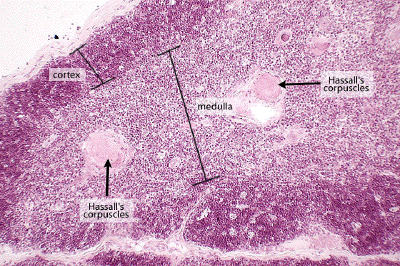
- Dark outer cortex - densely packed T lymphocytes (thymocytes)
- Pale inner medulla - fewer lymphocytes, epithelial reticular cells
- Hassall's corpuscles - concentric whorls of keratinized epithelial cells in medulla (PATHOGNOMONIC)
- Blood-thymus barrier (cortex only): endothelium + basal lamina + perivascular space + epithelial reticular cells
- No lymphoid follicles (no B cells, no germinal centers)
- No sinuses
- Involutes with age - replaced by fat
6. SKIN - L.S. (Longitudinal Section / Thick Skin)

- Epidermis (5 layers from base up):
- Stratum basale (germinativum) - single layer of columnar cells on basement membrane
- Stratum spinosum - polygonal cells with desmosomes ("prickle cells")
- Stratum granulosum - keratohyalin granules
- Stratum lucidum - clear layer (only in thick skin)
- Stratum corneum - dead, anucleate squames
- Dermis: papillary (loose CT) + reticular (dense irregular CT)
- Meissner's corpuscles in dermal papillae
- Pacinian corpuscles in deep dermis / hypodermis (onion-shaped lamellae)
- Sweat glands (eccrine) coiled in dermis
- No hair follicles in thick skin (palms/soles)
7. SKIN - T.S. (Transverse Section / Thin Skin)
- Same 5-layer structure but stratum lucidum is ABSENT
- Stratum corneum is thinner
- Hair follicles present (cross-sections visible as circular structures)
- Sebaceous glands attached to hair follicles
- Arrector pili muscle (smooth muscle) visible
- Fewer sweat glands compared to thick skin
- Key difference from thick skin: Presence of hair follicles + sebaceous glands, no stratum lucidum
8. UMBILICAL CORD

- Wharton's jelly - abundant, pale-staining, mucoid connective tissue (main bulk)
- Rich in proteoglycans (hyaluronic acid) giving gelatinous appearance
- Scattered stellate fibroblasts embedded in matrix
- 3 vessels: 2 umbilical arteries + 1 umbilical vein (AVV - "1 vein, 2 arteries")
- Arteries: thick wall, small lumen, no internal elastic lamina
- Vein: thin wall, large lumen
- Covered by amniotic epithelium (simple cuboidal/flat)
- No nerves, no lymphatics
- Mnemonic: "AVA" - Artery Vein Artery (or 2 arteries + 1 vein)
9. PLACENTA
- Fetal side (chorionic plate): Chorion covered by two layers of trophoblast
- Cytotrophoblast (inner, distinct cells)
- Syncytiotrophoblast (outer, no cell boundaries, multinucleated)
- Chorionic villi: Core of loose CT with fetal capillaries, covered by trophoblast
- Intervillous space: Contains maternal blood
- Decidua (maternal side): Decidual cells (large, pale, glycogen-rich)
- Hofbauer cells: Large macrophages within villous stroma (fetal macrophages)
- Term placenta: Vasculosyncytial membrane (thinned areas where fetal capillaries abut syncytiotrophoblast)
- Fibrinoid material (Nitabuch's layer) at decidua-trophoblast interface
10. SPLEEN

- Capsule of dense CT + trabeculae (no cortex-medulla division unlike lymph node)
- White pulp (dark islands):
- Periarterial lymphatic sheath (PALS) - T lymphocytes around central artery
- Lymphoid follicles with germinal centers - B lymphocytes
- Central artery within white pulp (eccentric position in nodule)
- Red pulp (majority):
- Splenic sinusoids - vascular channels with rod-shaped nuclei of endothelial cells (barrel stave arrangement)
- Splenic cords (cords of Billroth) - between sinusoids
- Marginal zone - between white and red pulp
- No afferent lymphatics (contrast to lymph node)
11. AORTA
- Elastic artery (large conducting artery)
- Tunica intima: Endothelium + subendothelial connective tissue + internal elastic lamina (IEL)
- Tunica media: VERY THICK - multiple layers (40-70) of fenestrated elastic lamellae alternating with smooth muscle cells and collagen
- This is the HALLMARK - wavy elastic laminae on special stains (Verhoeff, orcein)
- Tunica adventitia: Thin relative to media; contains vasa vasorum (small vessels nourishing outer wall), nervi vasorum
- Vasa vasorum prominent in adventitia (tunica media is too thick for diffusion alone)
- No internal elastic lamina is distinct (vs muscular arteries where IEL is prominent)
- Stain: Elastic Van Gieson (EVG) or Weigert shows elastic fibers best
12. LYMPH NODE

- Fibrous capsule + trabeculae extending inward
- Subcapsular (marginal) sinus - just beneath capsule (afferent lymph enters here)
- Outer cortex: Primary and secondary lymphoid follicles (B cell zone)
- Secondary follicles have germinal centers (active antibody production)
- Paracortex (deep cortex): T cell zone; contains High Endothelial Venules (HEV) for lymphocyte recirculation
- Medulla:
- Medullary cords (plasma cells, macrophages)
- Medullary sinuses (lymph drains here)
- Afferent lymphatics enter through capsule; Efferent lymphatic exits at hilum
- Hilum also contains artery and vein
- Contrast with spleen: Lymph node has sinuses + cortex/medulla division; spleen has red/white pulp + no afferent lymphatics
Quick Comparison Table
| Structure | Key Pathognomonic Feature |
|---|---|
| Mucous salivary gland | Pale foamy mucous acini, basal flat nuclei |
| Hyaline cartilage | Glassy matrix, isogenous groups, perichondrium |
| Cardiac muscle | Intercalated discs, branching, central nucleus |
| Sensory ganglion | Pseudounipolar neurons + satellite cell capsule |
| Thymus | Hassall's corpuscles in medulla |
| Skin (thick) | 5 layers incl. stratum lucidum, no hair follicles |
| Skin (thin) | 4 layers, hair follicles + sebaceous glands |
| Umbilical cord | Wharton's jelly + 2 arteries + 1 vein |
| Placenta | Chorionic villi + syncytiotrophoblast |
| Spleen | Red/white pulp, central artery, splenic sinusoids |
| Aorta | Multiple elastic laminae in thick media |
| Lymph node | Cortex/medulla + subcapsular sinus + HEV |
Image
mucous salivary gland histology microscope slide H&E image sublingual gland
hyaline cartilage histology H&E microscope slide trachea image
cardiac muscle histology H&E microscope slide intercalated disc image
sensory dorsal root ganglion histology H&E microscope slide image
thymus histology Hassall corpuscle cortex medulla H&E slide image spleen red white pulp aorta elastic laminae lymph node cortex medulla histology umbilical cord Wharton jelly placenta chorionic villi histology skin thick thin H&E
🔬 HISTOLOGY SPOTTERS - Images + Identification Points
1. MUCOUS SALIVARY GLAND

- Pale, foamy mucous acini dominate the field - large cells with flat basal nuclei
- Cytoplasm appears empty/washed out (mucin dissolves in processing)
- Serous demilunes (dark crescent caps) visible at periphery of some acini
- Sparse striated ducts (unlike parotid)
- Loose connective tissue septa between lobules
- Organ: Sublingual gland (predominantly mucous)
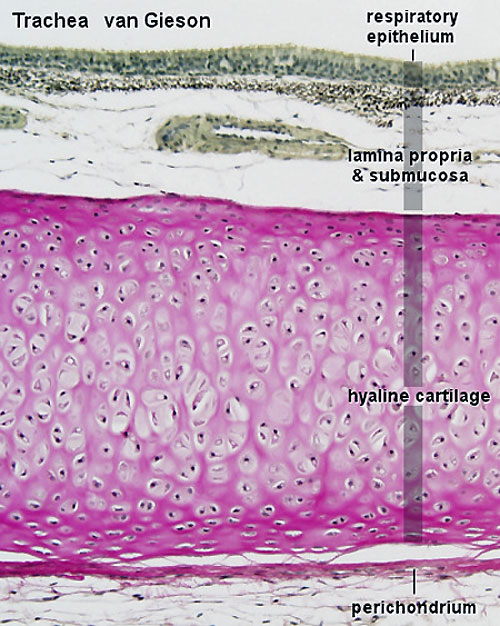
2. HYALINE CARTILAGE
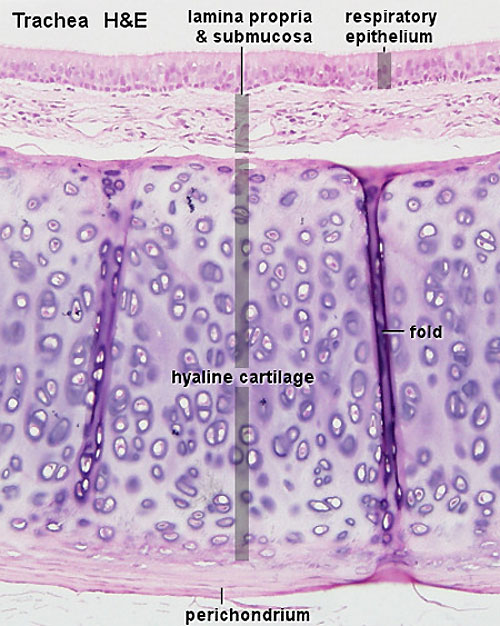
- Glassy/homogeneous blue-purple matrix (type II collagen + proteoglycans)
- Chondrocytes sit in lacunae (empty-looking spaces after processing)
- Isogenous groups - clusters of 2-8 chondrocytes (appositional growth)
- Territorial matrix (basophilic halo) around each lacuna
- Perichondrium - outer fibrous + inner chondrogenic layer
- No blood vessels within cartilage itself
3. CARDIAC MUSCLE
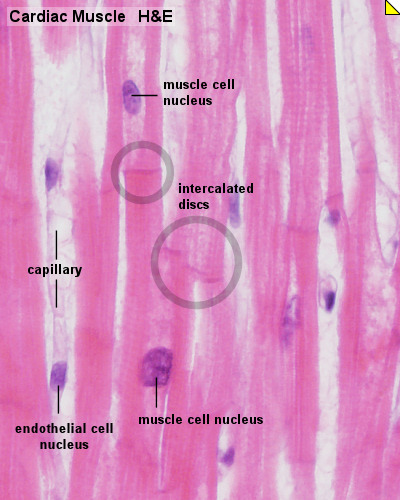
- Branching and anastomosing muscle fibers
- Intercalated discs - dark transverse bands at cell junctions (PATHOGNOMONIC)
- Central single nucleus with perinuclear glycogen halo
- Cross-striations (A and I bands) present
- Rich endomysium with abundant capillaries between fibers
- Fibers shorter and wider than skeletal muscle
4. SENSORY GANGLION (Dorsal Root Ganglion)

- Large round pseudounipolar neurons in clusters
- Satellite cell capsule - small flattened cells surrounding each neuron (PATHOGNOMONIC)
- Large nucleus with prominent nucleolus ("owl eye")
- Nissl substance fills cytoplasm (basophilic granules)
- Myelinated nerve bundles between neuron clusters
- Outer fibrous connective tissue capsule
- No synapses within the ganglion
5. THYMUS
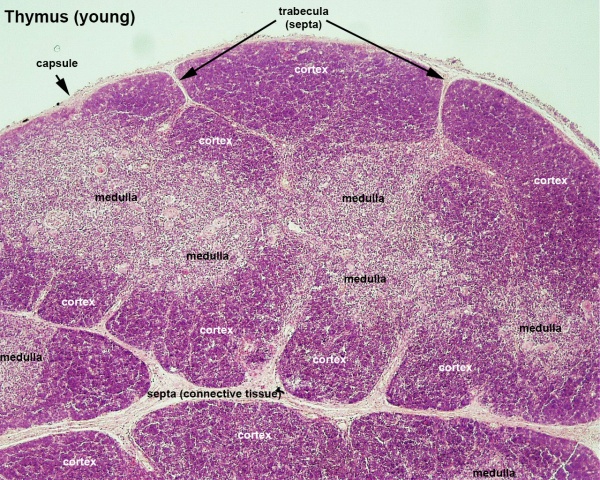
- Lobules separated by connective tissue septa from capsule
- Dark outer cortex - densely packed T lymphocytes (thymocytes)
- Pale inner medulla - fewer lymphocytes, prominent epithelial reticular cells
- Hassall's corpuscles - concentric whorls of keratinized epithelial cells in medulla (PATHOGNOMONIC)
- No lymphoid follicles, no germinal centers, no sinuses
- Involutes with age (replaced by adipose tissue)
6. SKIN L.S. (Thick Skin - Palm/Sole)
- Stratum basale - single columnar layer on basement membrane, mitotic cells
- Stratum spinosum - polygonal "prickle cells" with desmosomes
- Stratum granulosum - keratohyalin granules (dark)
- Stratum lucidum - clear, refractile layer (ONLY in thick skin)
- Stratum corneum - dead anucleate squames
- Meissner's corpuscles in dermal papillae
- Eccrine sweat glands in dermis
- No hair follicles in thick skin
7. SKIN T.S. (Thin Skin)
- Same structure as thick skin but stratum lucidum ABSENT (4 layers only)
- Stratum corneum is thinner
- Hair follicles present (circular cross-sections) - KEY DIFFERENCE
- Sebaceous glands attached to hair follicles
- Arrector pili muscle (smooth muscle bundles) visible
- Fewer sweat glands vs. thick skin
8. UMBILICAL CORD

- Wharton's jelly - abundant pale mucoid stroma (proteoglycan-rich, gelatinous) - FILLS most of section
- 2 umbilical arteries - thick wall, small lumen (high pressure)
- 1 umbilical vein - thin wall, large lumen (low pressure)
- Scattered stellate fibroblasts in jelly
- Amniotic epithelium (simple cuboidal/squamous) covers surface
- No nerves, no lymphatics
9. PLACENTA
- Chorionic villi - finger-like projections in intervillous space
- Syncytiotrophoblast - outer layer, no cell boundaries, multinucleated (dark staining)
- Cytotrophoblast - inner distinct cell layer (Langhans cells)
- Villous core - loose CT + fetal capillaries with nucleated or non-nucleated RBCs
- Intervillous space - maternal blood bathes the villi
- Hofbauer cells - large pale macrophages in villous stroma
- Decidua - large pale decidual cells (maternal side)
10. SPLEEN
- Dense fibrous capsule + trabeculae (NO cortex-medulla division - unlike lymph node)
- White pulp (dark blue islands):
- PALS (periarterial lymphatic sheath) - T cells around central artery
- Lymphoid follicles with germinal centers - B cells
- Central artery visible inside white pulp
- Red pulp (majority of section):
- Splenic sinusoids - vascular channels with distinctive "barrel-stave" endothelium
- Cords of Billroth between sinusoids
- No afferent lymphatics
11. AORTA
- Elastic artery - wall is thick, dominated by TUNICA MEDIA
- Tunica intima: Thin endothelium + subendothelial CT
- Tunica media (THICK): 40-70 fenestrated elastic lamellae alternating with smooth muscle - wavy parallel lines (best seen on EVG/Weigert stain)
- Tunica adventitia: Thin - contains vasa vasorum (small vessels) and nervi vasorum
- No distinct internal elastic lamina (vs muscular artery)
- Media:adventitia ratio is very high
12. LYMPH NODE
- Fibrous capsule + trabeculae extending inward
- Subcapsular (marginal) sinus beneath capsule (afferent lymph enters here)
- Outer cortex: Secondary lymphoid follicles with germinal centers (B cell zone)
- Paracortex: T cell zone; High Endothelial Venules (HEV) for lymphocyte homing
- Medullary cords (plasma cells + macrophages) + medullary sinuses
- Hilum - efferent lymphatic + artery + vein exit here
- HAS afferent lymphatics (contrast: spleen has none)
⚡ Quick Memory Table
| # | Tissue | Single Best ID Feature |
|---|---|---|
| 1 | Mucous salivary gland | Pale foamy acini + flat basal nuclei + demilunes |
| 2 | Hyaline cartilage | Glassy matrix + isogenous groups + perichondrium |
| 3 | Cardiac muscle | Intercalated discs + branching fibers |
| 4 | Sensory ganglion | Large neurons + satellite cell capsule |
| 5 | Thymus | Hassall's corpuscles in pale medulla |
| 6 | Skin L.S. (thick) | Stratum lucidum + no hair follicles |
| 7 | Skin T.S. (thin) | Hair follicles + sebaceous glands + 4 layers |
| 8 | Umbilical cord | Wharton's jelly + 2 arteries + 1 vein |
| 9 | Placenta | Chorionic villi + syncytiotrophoblast |
| 10 | Spleen | Red/white pulp + central artery (no cortex/medulla) |
| 11 | Aorta | Multiple elastic laminae in thick media |
| 12 | Lymph node | Subcapsular sinus + cortex/medulla + HEV |
Create a comparison poster of all 12 tissues side-by-side
A professional medical histology comparison poster showing all 12 tissues side-by-side in a 4x3 grid layout on a dark navy blue background. Each cell has a labeled microscopy diagram with key identification points. The 12 tissues are: 1. MUCOUS SALIVARY GLAND - pale foamy mucous acini, flat basal nuclei, serous demilunes 2. HYALINE CARTILAGE - glassy matrix, chondrocytes in lacunae, isogenous groups, perichondrium 3. CARDIAC MUSCLE - branching fibers, intercalated discs, central nucleus, cross-striations 4. SENSORY GANGLION - large pseudounipolar neurons, satellite cell capsule, prominent nucleolus 5. THYMUS - dark cortex, pale medulla, Hassall's corpuscles (concentric whorls) 6. SKIN L.S. (THICK) - 5 epidermal layers including stratum lucidum, no hair follicles 7. SKIN T.S. (THIN) - 4 layers, hair follicles, sebaceous glands 8. UMBILICAL CORD - Wharton's jelly, 2 arteries + 1 vein in cross-section 9. PLACENTA - chorionic villi, syncytiotrophoblast, intervillous space, fetal capillaries 10. SPLEEN - white pulp islands with central artery, red pulp sinusoids 11. AORTA - thick media with wavy elastic laminae, thin adventitia with vasa vasorum 12. LYMPH NODE - capsule, subcapsular sinus, cortex with germinal centers, paracortex, medullary cords Each panel: white label at top with tissue name in bold, clean schematic diagram in H&E style colors (pink and purple/blue), and 3 bullet-point key ID features in small white text at bottom. Title at top: "HISTOLOGY SPOTTERS - 12 Tissues Comparison" in large gold text. Department of Anatomy watermark at bottom. Medical education poster style, clean, professional.
400, message: Got more than 4194304 bytes when reading: b'data: {"candidates": [{"content": {"role": "model","parts": [{"inlineData": {"mimeType": "image/png"...'.
We encountered an error while processing your request. Please try again or reach out to us for help.
Spleen and thick skin
A medical histology comparison poster showing two tissues side-by-side on a dark navy blue background. LEFT PANEL - SPLEEN: A detailed labeled histology diagram in H&E style (pink and purple tones) showing: - Dense fibrous capsule at top - Trabecula extending inward - White pulp: dark blue/purple lymphoid nodule with central artery labeled, PALS (periarterial lymphatic sheath) labeled, germinal center labeled - Marginal zone between white and red pulp - Red pulp: splenic sinusoids (vascular channels), cords of Billroth labeled - Key ID points listed below: "1. White pulp = PALS + central artery | 2. Red pulp = sinusoids + Billroth cords | 3. No cortex/medulla division | 4. No afferent lymphatics" RIGHT PANEL - THICK SKIN (L.S.): A detailed labeled histology diagram in H&E style showing a longitudinal section with: - 5 epidermal layers clearly labeled from bottom to top: Stratum Basale, Stratum Spinosum, Stratum Granulosum, Stratum Lucidum (clear layer highlighted), Stratum Corneum - Dermis divided into papillary layer and reticular layer - Meissner's corpuscle in dermal papilla labeled - Eccrine sweat gland coil in deep dermis labeled - Key ID points: "1. Stratum lucidum present (ONLY thick skin) | 2. No hair follicles | 3. Meissner's corpuscle in papillary dermis | 4. Found: palm and sole" Title at top center: "HISTOLOGY SPOTTERS" in large gold bold text, subtitle "Spleen vs Thick Skin (L.S.)" in white. Each panel has the tissue name in a gold banner. Clean anatomical illustration style, professional medical education poster, white label arrows pointing to structures.
400, message: Got more than 4194304 bytes when reading: b'data: {"candidates": [{"content": {"role": "model","parts": [{"inlineData": {"mimeType": "image/png"...'.
We encountered an error while processing your request. Please try again or reach out to us for help.