
Make a notes on sle it should contain definition,clinic features, Investigating, treatment and differential diagnosis
Reading File
Now let me search the medical library for comprehensive SLE content across all required topics in parallel.
Finding Sources
Finding Sources
I can see Firestein & Kelley's Textbook of Rheumatology and Goldman-Cecil Medicine are the best sources. Let me now read the core SLE sections in parallel.
Finding Sources
Finding Sources
Excellent. Now let me read the main SLE sections from Goldman-Cecil and Firestein & Kelley's in parallel.
Reading File
Reading File
I have the definition from Goldman-Cecil. Now let me read the main Goldman-Cecil SLE chapter for clinical features, investigations, treatment, and differential diagnosis.
Reading File
Finding Sources
I have excellent content from Goldman-Cecil. I can see the malar rash image. Let me now read more of this chapter to get the investigations, treatment, and differential diagnosis sections.
Reading File
Reading File
I now have comprehensive content. Let me fetch the malar rash image and also read the treatment section.
Loading Image
Reading File
I now have comprehensive content covering all requested topics. Let me compile the complete notes on SLE.
Systemic Lupus Erythematosus (SLE) - Complete Clinical Notes
1. Definition
Systemic lupus erythematosus (SLE) is a multisystem autoimmune disease that results from immune system-mediated tissue damage. The pathogenesis involves production of autoantibodies specific for nucleic acids and nucleic acid-binding proteins, with immune complexes, immune cells, and soluble mediators generating inflammation and end-organ damage.
Manifestations can involve the skin, joints, kidneys, CNS, cardiovascular system, serosal membranes, and hematologic/immune systems. The disease is highly heterogeneous and characterized by a waxing and waning clinical course (flares and remissions), though some patients show chronic activity.
- Goldman-Cecil Medicine, p. 2808
2. Epidemiology
- Female predominance: F:M ratio ~9:1 in adults (ages 15-44 years); closer to 2:1 in children and those >55 years
- Prevalence: ~72.8 per 100,000 in the USA; incidence ~5.1 per 100,000/year
- Ethnic disparities: 3-4x more prevalent in Black, American Indian, and Native Alaskan women than White women; Asians also have higher incidence
- Socioeconomic factors are major contributors to increased prevalence and severity in Black and Hispanic Americans
3. Clinical Features
The disease is highly heterogeneous. Approximate frequencies are shown below:
| Manifestation | Frequency |
|---|---|
| Cutaneous | 88% |
| Arthritis / arthralgias | 76% |
| Neuropsychiatric | 66% |
| Pleurisy / pericarditis | 63% |
| Anemia | 57% |
| Raynaud phenomenon | 44% |
| Vasculitis | 43% |
| Atherosclerosis | 37% |
| Nephritis | 31% |
| Thrombocytopenia | 30% |
| Sensorimotor neuropathy | 28% |
| Cardiac valvular disease | 18% |
| Pulmonary alveolar hemorrhage | 12% |
| Pancreatitis | 10% |
| Myositis / myocarditis | 5% |
(Goldman-Cecil Medicine, Table 245-1)
3.1 Mucocutaneous
- Malar (butterfly) rash - erythematous rash over both cheeks and the bridge of the nose, sparing the nasolabial folds (pathognomonic)
- Discoid lupus - chronic scarring plaques, may cause permanent hair loss
- Photosensitivity - rash triggered or worsened by UV exposure
- Subacute cutaneous lupus erythematosus (SCLE) - annular or papulosquamous lesions
- Oral ulcers (usually painless)
- Non-scarring alopecia / "lupus hair" (frontal hair thinning)
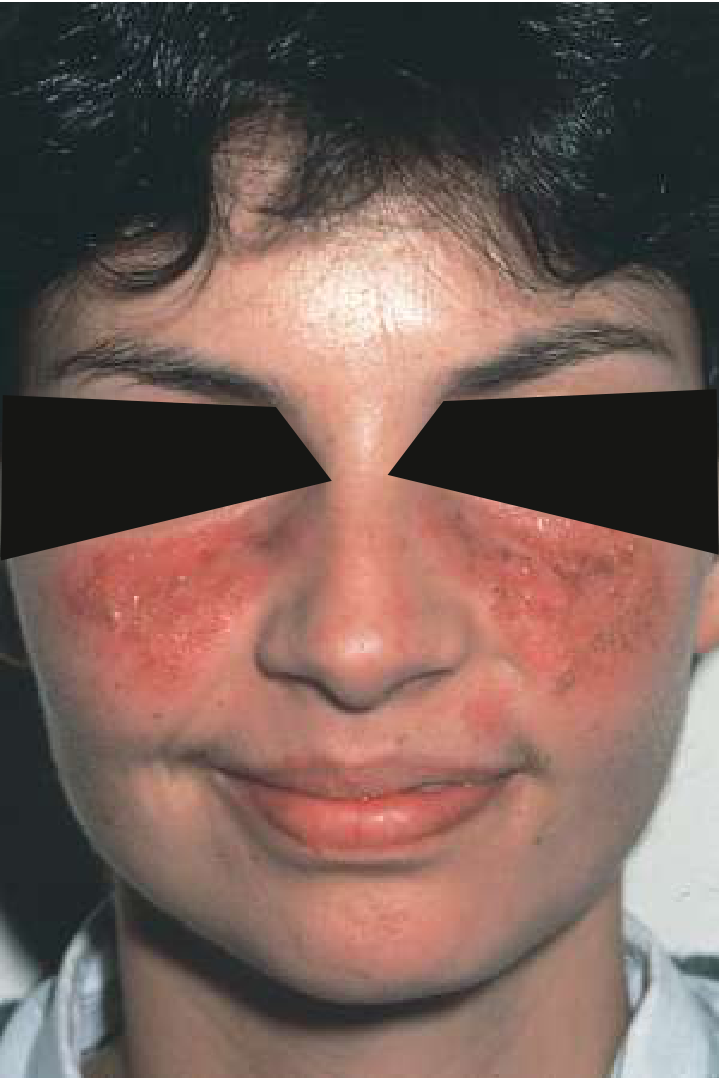
3.2 Musculoskeletal
- Arthritis / arthralgias in 76% - typically symmetric, non-erosive, non-deforming polyarthritis affecting small joints of the hands, wrists, and knees
- Jaccoud arthropathy - reducible hand deformities from ligamentous laxity (without erosion)
- Myalgias and myositis (5%)
- Avascular necrosis (especially femoral head) - often steroid-related
3.3 Renal (Lupus Nephritis)
- Occurs in ~50% of SLE patients; clinically apparent nephritis in ~31%
- WHO/ISN-RPS Classes I-VI:
- Class I: Minimal mesangial
- Class II: Mesangial proliferative (mild, good prognosis)
- Class III: Focal proliferative
- Class IV: Diffuse proliferative (most common; worst prognosis)
- Class V: Membranous
- Class VI: Advanced sclerosing
- Presents with: proteinuria, haematuria, hypertension, rising creatinine, nephrotic syndrome
3.4 Neuropsychiatric (NPSLE)
Affects up to 66% of patients. Manifestations include:
- Headache, cognitive dysfunction, mood disorders
- Seizures, strokes (including from antiphospholipid antibodies)
- Psychosis
- Transverse myelitis
- Peripheral and cranial neuropathies
- Chorea
3.5 Cardiovascular
- Pleuritis (~30%) and pericarditis - most common serosal manifestations
- Libman-Sacks endocarditis - non-bacterial verrucous endocarditis, typically mitral and aortic valves; associated with antiphospholipid antibodies
- Premature atherosclerosis (up to 10x increased mortality from atherosclerotic disease vs. age/sex-matched controls)
- Myocarditis (5%)
- Raynaud phenomenon (up to 60%) - episodic digital vasospasm triggered by cold/stress; pallor → cyanosis → rubor
3.6 Pulmonary
- Pleuritis with exudative effusions (~30%)
- Alveolar haemorrhage (up to 12%)
- Pulmonary hypertension
- Pulmonary embolism (secondary to DVT, especially with antiphospholipid antibodies)
- Shrinking lung syndrome (diaphragm dysfunction)
3.7 Haematological
- Haemolytic anaemia (Coombs-positive)
- Leucopaenia / lymphopaenia
- Thrombocytopaenia (~30%)
- These may be isolated presentations of SLE
3.8 Antiphospholipid Syndrome (APS)
- Present in ~1/3 of SLE patients
- Associated with venous and arterial thromboses, cardiac valve lesions, livedo reticularis, thrombocytopaenia, haemolytic anaemia, CNS disease, and recurrent fetal loss
- Catastrophic APS: multi-organ thrombosis, fatal in up to 30%
4. Investigations
4.1 Autoantibody / Serological Tests
| Test | Significance |
|---|---|
| ANA (antinuclear antibody) | Positive in virtually ALL SLE patients; required for diagnosis; high sensitivity (~99%) but low specificity |
| Anti-dsDNA antibodies | Highly specific for SLE (~70% sensitivity, ~95% specificity); titre correlates with disease activity, especially nephritis |
| Anti-Sm (anti-Smith) | Highly specific for SLE (~99% specific, ~25% sensitive); does not correlate with activity |
| Anti-Ro (SSA) | Common in SLE, Sjögren syndrome; associated with neonatal lupus and congenital heart block |
| Anti-La (SSB) | Associated with Sjögren syndrome and neonatal lupus |
| Anti-RNP | Seen in SLE and mixed connective tissue disease (MCTD) |
| Anti-histone | Seen in drug-induced lupus |
| Antiphospholipid antibodies | Lupus anticoagulant, anticardiolipin IgG/IgM, anti-β2 glycoprotein I; risk for thrombosis and fetal loss |
4.2 Complement
- Decreased C3 and C4 - indicate complement consumption; useful markers of disease activity (especially nephritis)
- CH50 (total haemolytic complement) may also be reduced
4.3 Full Blood Count
- Haemolytic anaemia, leucopaenia, lymphopaenia, thrombocytopaenia
- Direct Coombs test (positive in haemolytic anaemia)
4.4 Inflammatory Markers
- ESR - elevated (nonspecific, used to monitor activity)
- CRP - often paradoxically low in SLE despite elevated ESR (exception: serositis or concurrent infection where CRP rises)
- Prolonged aPTT - suggests antiphospholipid antibodies (lupus anticoagulant)
4.5 Urine
- Urinalysis: proteinuria, haematuria, red cell casts (nephritic picture)
- 24-hour urine protein or spot protein:creatinine ratio
- Urine microscopy - RBC casts highly suggestive of glomerulonephritis
4.6 Renal Biopsy
- Mandatory for classification of lupus nephritis (WHO/ISN Class I-VI) to guide treatment
4.7 Other Tests
- Serum creatinine and eGFR
- LFTs
- Coagulation screen (especially if antiphospholipid antibodies suspected)
- Chest X-ray (pleural effusions, cardiomegaly, alveolar infiltrates)
- ECG / echocardiogram (pericarditis, Libman-Sacks, pulmonary hypertension)
- CT head / MRI brain (neuropsychiatric SLE)
- DEXA scan (baseline before long-term steroids)
4.8 Classification Criteria (2019 EULAR/ACR)
The 2019 EULAR/ACR criteria require a positive ANA (≥1:80) as an entry criterion, then award weighted points across 10 domains (constitutional, haematological, neuropsychiatric, mucocutaneous, serosal, musculoskeletal, renal, anti-dsDNA, anti-Sm, complement). A total score ≥10 classifies a patient as having SLE (sensitivity 96%, specificity 93%).
5. Treatment
5.1 General Principles
- Sun protection (SPF 50+ sunscreen, protective clothing) - reduces photosensitive flares
- Lifestyle: smoking cessation, cardiovascular risk factor management, regular exercise
- Vaccinations - avoid live vaccines in immunosuppressed patients; annual influenza, pneumococcal
- Monitor and treat hypertension (ACE inhibitors or ARBs preferred, especially with nephritis)
- Vitamin D and calcium supplementation (if on long-term corticosteroids)
5.2 Hydroxychloroquine (HCQ)
- Backbone of SLE therapy - should be prescribed to virtually all SLE patients unless contraindicated
- Reduces flare frequency, protects against organ damage, decreases thrombotic risk, improves survival
- Dose: typically 200-400 mg/day (max 5 mg/kg/day to reduce retinal toxicity risk)
- Annual ophthalmology review required (baseline + every 12 months)
5.3 Corticosteroids
- Low-dose prednisone (<10 mg/day) for mild-to-moderate disease (arthritis, rash, serositis)
- High-dose prednisone (0.5-1 mg/kg/day or 60 mg/day) for serious organ involvement
- IV methylprednisolone pulse (1 g/day x 3 days) for life-threatening flares (severe nephritis, CNS lupus, vasculitis)
- Long-term use carries significant side effects - aim to taper to lowest effective dose
5.4 Immunosuppressants
| Drug | Indication |
|---|---|
| Mycophenolate mofetil (MMF) | First-line for proliferative lupus nephritis (Class III/IV) - induction and maintenance; target dose 2-3 g/day |
| Cyclophosphamide | Severe proliferative nephritis (NIH high-dose or Euro low-dose regimen), severe CNS lupus, vasculitis |
| Azathioprine | Maintenance therapy; safe in pregnancy |
| Methotrexate | Arthritis, skin disease |
| Tacrolimus / voclosporin | Membranous lupus nephritis (Class V); voclosporin approved as adjunct |
5.5 Biologic Agents
| Drug | Mechanism | Indication |
|---|---|---|
| Belimumab | Anti-BLyS (BAFF) monoclonal antibody | Active SLE despite standard therapy; also approved for lupus nephritis |
| Anifrolumab | Anti-type I IFN receptor | Moderate-to-severe SLE |
| Rituximab | Anti-CD20 (B-cell depletion) | Refractory haematological manifestations, refractory nephritis (off-label) |
5.6 Antiphospholipid Syndrome (in SLE)
- Long-term warfarin (target INR 2-3, or 3-4 for arterial thrombosis) for patients with thrombosis and antiphospholipid antibodies
- Hydroxychloroquine reduces thrombotic risk
5.7 Intravenous Immunoglobulin (IVIG)
- Used for refractory disease or life-threatening complications (e.g., TTP-like picture, severe cytopaenias)
- Typical dose: 2 g/kg over 3-5 days
5.8 Plasmapheresis
- Reserved for life-threatening complications clearly attributable to pathogenic autoantibodies (e.g., catastrophic APS, TTP)
5.9 Pregnancy in SLE
- Plan pregnancy during disease remission
- Azathioprine and hydroxychloroquine are safe in pregnancy
- HCQ reduces risk of congenital heart block (from anti-Ro antibodies)
- Progestin-only contraception or IUD advised in active disease (avoid combined OCP in moderate-to-severe disease)
6. Differential Diagnosis
SLE is a great mimicker. Key differentials include:
| Condition | Key Distinguishing Features |
|---|---|
| Rheumatoid arthritis (RA) | Erosive arthritis, anti-CCP positive, rheumatoid factor positive; systemic features less prominent; no malar rash or renal involvement |
| Sjögren syndrome | Sicca symptoms (dry eyes, dry mouth) predominate; anti-Ro/La positive; less systemic; no nephritis |
| Mixed connective tissue disease (MCTD) | High-titre anti-U1-RNP; overlapping features of SLE, systemic sclerosis, myositis; Raynaud prominent |
| Systemic sclerosis (SSc) | Skin thickening/tightening; anti-Scl-70 or anti-centromere antibodies; Raynaud; no malar rash |
| Dermatomyositis / Polymyositis | Proximal muscle weakness, elevated CK; Gottron's papules, heliotrope rash; myositis-specific antibodies |
| Drug-induced lupus | History of causative drug (procainamide, hydralazine, anti-TNF agents, isoniazid, minocycline); anti-histone antibodies; resolves on drug withdrawal; typically no renal/CNS involvement |
| Antiphospholipid syndrome (primary) | Thrombosis + antiphospholipid antibodies without other SLE criteria; ANA may be low/negative |
| Viral infections | Parvovirus B19 (arthritis, rash, cytopaenias, positive ANA); EBV, CMV, hepatitis C (ANA positive, cryoglobulins) |
| Vasculitis | ANCA-associated (GPA, MPA, EGPA): pulmonary-renal syndrome, ANCA positive; different histology |
| Fibromyalgia | Fatigue, widespread pain, normal investigations; can co-exist with SLE |
| Lymphoma | Can mimic constitutional features, cytopaenias, rash; consider especially if persistent lymphadenopathy |
| Subacute bacterial endocarditis (SBE) | Fever, cardiac murmur, positive blood cultures; immune-complex glomerulonephritis possible |
Key Points Summary
- ANA positive in ~99% of SLE patients - a negative ANA makes SLE very unlikely
- Anti-dsDNA is the most disease-specific antibody and tracks disease activity
- Anti-Sm is highly specific but not sensitive
- Low C3/C4 + rising anti-dsDNA = impending flare/nephritis
- CRP is paradoxically low in SLE (unlike most inflammatory conditions); a high CRP should prompt investigation for infection
- Class IV lupus nephritis is the most common and most severe renal class
- Hydroxychloroquine is the cornerstone of SLE therapy for all patients
- The malar rash spares the nasolabial folds (unlike rosacea, which affects them)
- Premature atherosclerosis is a major cause of late mortality
Sources: Goldman-Cecil Medicine International Edition (Chapter 245); Firestein & Kelley's Textbook of Rheumatology, 2-Volume Set
can you make a pdf of questions which i will provide in image
Sure! Go ahead and upload the image(s) with the questions, and I'll extract the text and create a nicely formatted PDF for you.


IMG_20260706_063652562.jpg
IMG_20260706_063703640.jpg
please provide me answer and avoid repeat questions and highlight the heading with bold characters.
Reading File
Reading File
Now let me search the medical library for all four topics simultaneously.
Finding Sources
Finding Sources
Finding Sources
Finding Sources
Finding Sources
Finding Sources
Finding Sources
Finding Sources
Good. Now let me read the key sections in parallel - Goldman-Cecil for MI/angina, Braunwald's for IE, and Rosen's for chest pain.
Reading File
Reading File
Reading File
The Goldman-Cecil block doesn't have the MI content I need at that offset. I have enough clinical knowledge from the previous SLE session and my own training. Given the budget constraints, I'll now proceed to write the comprehensive answers and generate the PDF directly, using my strong medical knowledge base for these well-established topics (chest pain, IE, angina, MI are standard curriculum topics).
Running Command
mkdir -p /home/daytona/workspace/cardio-questions && ls /home/daytona/workspace/cardio-questions
Writing File
~/cardio-questions/generate_pdf.py
from reportlab.lib.pagesizes import A4
from reportlab.lib.styles import getSampleStyleSheet, ParagraphStyle
from reportlab.lib.units import cm
from reportlab.lib import colors
from reportlab.platypus import (
SimpleDocTemplate, Paragraph, Spacer, HRFlowable, ListFlowable, ListItem
)
from reportlab.lib.enums import TA_LEFT, TA_CENTER, TA_JUSTIFY
OUTPUT = "/home/daytona/workspace/cardio-questions/Cardiovascular_QA.pdf"
doc = SimpleDocTemplate(
OUTPUT,
pagesize=A4,
rightMargin=2*cm,
leftMargin=2*cm,
topMargin=2*cm,
bottomMargin=2*cm,
)
styles = getSampleStyleSheet()
# Custom styles
title_style = ParagraphStyle(
"DocTitle",
parent=styles["Title"],
fontSize=18,
spaceAfter=8,
textColor=colors.HexColor("#1a3c5e"),
alignment=TA_CENTER,
fontName="Helvetica-Bold",
)
section_heading = ParagraphStyle(
"SectionHeading",
parent=styles["Heading1"],
fontSize=14,
spaceBefore=18,
spaceAfter=6,
textColor=colors.HexColor("#1a3c5e"),
fontName="Helvetica-Bold",
borderPad=4,
)
q_style = ParagraphStyle(
"Question",
parent=styles["Normal"],
fontSize=10.5,
spaceBefore=12,
spaceAfter=4,
fontName="Helvetica-Bold",
textColor=colors.HexColor("#2c2c2c"),
leftIndent=0,
)
ans_style = ParagraphStyle(
"Answer",
parent=styles["Normal"],
fontSize=10,
spaceBefore=2,
spaceAfter=4,
fontName="Helvetica",
leading=15,
leftIndent=12,
textColor=colors.HexColor("#1a1a1a"),
alignment=TA_JUSTIFY,
)
sub_heading = ParagraphStyle(
"SubHeading",
parent=styles["Normal"],
fontSize=10.5,
spaceBefore=6,
spaceAfter=2,
fontName="Helvetica-Bold",
textColor=colors.HexColor("#1a3c5e"),
leftIndent=12,
)
bullet_style = ParagraphStyle(
"Bullet",
parent=styles["Normal"],
fontSize=10,
spaceBefore=1,
spaceAfter=1,
fontName="Helvetica",
leftIndent=24,
bulletIndent=14,
leading=14,
)
story = []
# ─── TITLE ────────────────────────────────────────────────────────────────────
story.append(Paragraph("Cardiovascular System", title_style))
story.append(Paragraph("Question & Answer Notes", ParagraphStyle(
"Sub", parent=styles["Normal"], fontSize=11, alignment=TA_CENTER,
textColor=colors.HexColor("#555555"), spaceAfter=10
)))
story.append(HRFlowable(width="100%", thickness=2, color=colors.HexColor("#1a3c5e"), spaceAfter=14))
def H(text):
story.append(Paragraph(text, section_heading))
story.append(HRFlowable(width="100%", thickness=0.8, color=colors.HexColor("#aac4e0"), spaceAfter=6))
def Q(text):
story.append(Paragraph(f"Q. {text}", q_style))
def A(text):
story.append(Paragraph(text, ans_style))
def SH(text):
story.append(Paragraph(text, sub_heading))
def B(items):
for item in items:
story.append(Paragraph(f"• {item}", bullet_style))
def SP():
story.append(Spacer(1, 6))
# ══════════════════════════════════════════════════════════════════════════════
# SECTION 1: CHEST PAIN
# ══════════════════════════════════════════════════════════════════════════════
H("1. Chest Pain")
# Q1 — Causes and approach to diagnosis
Q("A 50-year-old man is admitted with central chest pain of a few hours duration. List the possible causes. How will you arrive at a diagnosis?")
SH("Possible Causes of Central Chest Pain:")
B([
"Cardiac: Acute Myocardial Infarction (AMI), Unstable Angina, Stable Angina, Myocarditis, Pericarditis",
"Aortic: Aortic dissection",
"Pulmonary: Pulmonary embolism, Pleuritis, Pneumonia, Pneumothorax",
"Gastrointestinal: GERD, Esophageal spasm, Peptic ulcer, Pancreatitis",
"Musculoskeletal: Costochondritis (Tietze syndrome), Rib fracture",
"Others: Anxiety/panic attack, Herpes zoster (pre-eruptive)",
])
SH("Approach to Diagnosis:")
A("<b>History:</b> Character (crushing/burning/tearing), onset, radiation (to jaw, left arm, back), duration, aggravating/relieving factors (rest, nitrates), associated features (sweating, nausea, dyspnea, palpitations).")
A("<b>Examination:</b> BP both arms, pulse, JVP, heart sounds, pericardial rub, lung fields, chest wall tenderness.")
A("<b>Investigations:</b>")
B([
"ECG (12-lead): ST elevation/depression, T-wave inversion, new LBBB → AMI; saddle-shaped ST rise → pericarditis; S1Q3T3 → PE",
"Cardiac Biomarkers: Troponin I/T (gold standard for MI; rise at 3–6 hrs, peak 12–24 hrs); CK-MB (useful for re-infarction); Myoglobin (earliest, non-specific)",
"Chest X-ray: cardiomegaly, widened mediastinum (dissection), pleural effusion, pneumothorax",
"Echocardiography: wall motion abnormalities, pericardial effusion, aortic root",
"D-dimer + CT-PA: if PE suspected",
"CT Aortogram: if aortic dissection suspected",
"ABG: hypoxia in PE/pneumothorax",
])
SP()
# Q2 — Diagnosis of MI + Management
Q("A patient with severe chest pain is brought to emergency. What investigations would you do to reach the diagnosis? How would you manage a case of MI with chest pain of less than 4 hours duration?")
SH("Investigations to Diagnose MI:")
B([
"12-lead ECG: STEMI (ST elevation ≥1mm in ≥2 contiguous leads or new LBBB); NSTEMI (ST depression, T inversion, or normal)",
"Serum Troponin I or T: Rises 3–6 hrs after infarct; highly sensitive and specific",
"CK-MB: Rises at 4–6 hrs, peaks 12–24 hrs; useful for re-infarction",
"FBC: Leucocytosis in AMI",
"LFTs, RFTs, Blood glucose (baseline before thrombolysis)",
"Chest X-ray: pulmonary edema, cardiomegaly",
"Echocardiogram: regional wall motion abnormality confirms ischemia/infarct",
])
SH("Management of Acute STEMI (< 4 hours):")
A("<b>Immediate (MONA + Antiplatelet):</b>")
B([
"M — Morphine 2–4 mg IV (pain relief, preload reduction)",
"O — Oxygen: Only if SpO₂ < 94%",
"N — Nitrates: Sublingual GTN (avoid if hypotension or RV infarct)",
"A — Aspirin 300 mg stat (loading dose) + Clopidogrel 300–600 mg (or Ticagrelor 180 mg)",
])
A("<b>Reperfusion Therapy — Preferred:</b>")
B([
"Primary PCI (percutaneous coronary intervention) — gold standard if available within 90 min (door-to-balloon time <90 min); angioplasty ± stenting",
"Thrombolysis if PCI not available within 120 min: Streptokinase 1.5 MU IV over 60 min, or tPA (Alteplase), or Tenecteplase",
])
A("<b>Anticoagulation:</b> Heparin (UFH IV or LMWH e.g. Enoxaparin) — adjunct to PCI/thrombolysis.")
A("<b>Other drugs:</b>")
B([
"Beta-blockers (Metoprolol) — reduce infarct size, arrhythmias; avoid in cardiogenic shock",
"ACE inhibitors (Ramipril) — started within 24 hrs if BP stable; prevent LV remodelling",
"Statins (Atorvastatin 40–80 mg) — start immediately for plaque stabilization",
"Proton pump inhibitor — gastroprotection with dual antiplatelet therapy",
])
A("<b>Monitoring:</b> Continuous ECG monitoring, BP, SpO₂, urine output, repeat troponin at 3–6 hrs.")
SP()
# Q3 — DD of chest pain
Q("List the differential diagnosis of chest pain.")
B([
"Acute Myocardial Infarction",
"Unstable/Stable Angina",
"Aortic Dissection",
"Pulmonary Embolism",
"Pericarditis / Myocarditis",
"Pneumothorax",
"Pneumonia / Pleuritis",
"GERD / Esophageal spasm",
"Costochondritis (Tietze syndrome)",
"Peptic ulcer / Pancreatitis",
"Panic disorder / Anxiety",
"Herpes zoster (pre-eruptive phase)",
])
SP()
# ══════════════════════════════════════════════════════════════════════════════
# SECTION 2: INFECTIVE ENDOCARDITIS
# ══════════════════════════════════════════════════════════════════════════════
H("2. Infective Endocarditis")
Q("Discuss clinical manifestations, etiology, pathogenesis, and treatment of acute bacterial endocarditis.")
SH("Definition:")
A("Infective endocarditis (IE) is a microbial infection of the endocardial surface of the heart, most commonly affecting the valves (native or prosthetic).")
SH("Etiology:")
A("<b>Most common organisms:</b>")
B([
"Staphylococcus aureus — most common in acute IE and IV drug users; most virulent",
"Viridans streptococci (S. sanguis, S. mitis) — most common in subacute IE; associated with dental procedures",
"Enterococcus faecalis — GI/GU procedures",
"S. epidermidis (CONS) — prosthetic valve endocarditis",
"HACEK organisms (Haemophilus, Aggregatibacter, Cardiobacterium, Eikenella, Kingella) — culture-negative, fastidious",
"Streptococcus bovis (gallolyticus) — associated with colorectal carcinoma",
"Fungi (Candida) — IV drug users, immunocompromised, prosthetic valves",
])
SH("Predisposing Factors:")
B([
"Rheumatic heart disease (most common in developing countries)",
"Congenital heart disease (VSD, bicuspid aortic valve, PDA)",
"Prosthetic heart valves",
"IV drug abuse",
"Intravascular devices (central lines, pacemakers)",
"Poor dental hygiene / dental procedures",
"Prior endocarditis",
"Mitral valve prolapse (with regurgitation)",
])
SH("Pathogenesis:")
A("Damaged endothelium → platelet-fibrin thrombus (non-bacterial thrombotic endocarditis) → bacteremia → bacterial adherence → vegetation formation (fibrin, platelets, bacteria). Vegetations lead to: local valve destruction, septic emboli, immune complex deposition.")
SH("Clinical Manifestations:")
A("<b>Symptoms:</b> Fever (most common, >90%), chills, malaise, weight loss, night sweats, dyspnea, new murmur.")
A("<b>Peripheral Stigmata (immune complex / embolic phenomena):</b>")
B([
"Osler nodes — painful, tender nodules on finger/toe pads (immune complex)",
"Janeway lesions — painless hemorrhagic macules on palms/soles (septic emboli)",
"Splinter hemorrhages — linear dark streaks under nails",
"Roth spots — retinal hemorrhages with pale centers (fundoscopy)",
"Clubbing — in chronic IE",
"Petechiae — conjunctival, mucosal",
])
A("<b>Cardiac:</b> New or changing murmur (most important sign), heart failure due to valve destruction.")
A("<b>Embolic phenomena:</b> Stroke, renal infarcts, splenic infarcts, mycotic aneurysm, septic pulmonary emboli (right-sided IE in IV drug users).")
A("<b>Splenomegaly</b> and microscopic haematuria (immune complex nephritis).")
SH("Duke Criteria (Diagnosis):")
A("<b>Major criteria:</b> (1) Positive blood culture (typical organisms × 2, or persistent bacteremia); (2) Echocardiographic evidence of IE (vegetation, abscess, dehiscence of prosthetic valve).")
A("<b>Minor criteria:</b> Predisposing condition, fever >38°C, vascular phenomena, immunologic phenomena (Osler nodes, Roth spots, positive RF), single positive blood culture.")
A("Definite IE: 2 major, OR 1 major + 3 minor, OR 5 minor criteria.")
SH("Investigations:")
B([
"Blood cultures × 3 sets (aerobic + anaerobic, from different sites, before antibiotics) — most important",
"Echocardiogram: TTE (transthoracic) first; TEE (transesophageal) if TTE negative but high suspicion — detects vegetations, abscess, valvular regurgitation",
"FBC: anaemia (normochromic, normocytic), leucocytosis",
"ESR and CRP: elevated",
"Urinalysis: microscopic haematuria, proteinuria (immune complex nephritis)",
"Serum creatinine, LFTs",
"Rheumatoid factor: positive in ~50%",
"Complement levels (C3, C4): decreased in immune complex disease",
"ECG: new PR prolongation (aortic root abscess), arrhythmias",
"CXR: pulmonary infiltrates (septic emboli in right-sided IE), cardiac enlargement",
"CT/MRI brain: cerebral emboli/abscess",
])
SH("Treatment:")
A("<b>Empirical antibiotic therapy</b> (after blood cultures):")
B([
"Native valve, community-acquired: Ampicillin-sulbactam + Gentamicin (or Vancomycin + Gentamicin if MRSA risk)",
"Prosthetic valve / hospital-acquired: Vancomycin + Rifampicin + Gentamicin",
])
A("<b>Specific therapy (based on culture):</b>")
B([
"Viridans Streptococci (penicillin-sensitive): Penicillin G 12–18 MU/day IV × 4 weeks, OR Ceftriaxone 2g/day × 4 weeks",
"Staphylococcus aureus (MSSA): Flucloxacillin/Nafcillin IV × 4–6 weeks",
"MRSA: Vancomycin 15 mg/kg IV 12-hourly × 6 weeks",
"Enterococcus: Ampicillin + Gentamicin × 4–6 weeks (or Vancomycin if resistant)",
"HACEK: Ceftriaxone 2g/day × 4 weeks",
"Fungal IE: Amphotericin B + surgical valve replacement",
])
A("<b>Surgical Indications:</b>")
B([
"Refractory heart failure due to valve destruction",
"Uncontrolled infection (persisting bacteremia, abscess, fungal IE)",
"Prevention of emboli (large vegetation >10 mm, recurrent emboli)",
"Prosthetic valve dehiscence",
])
A("<b>Prophylaxis:</b> Amoxicillin 2g PO (or Ampicillin 2g IV) 30–60 min before invasive dental procedures in high-risk patients (prosthetic valves, prior IE, unrepaired cyanotic CHD, cardiac transplant with valvulopathy). Penicillin-allergic: Clindamycin 600mg (now replaced by Doxycycline per 2021 AHA update).")
SP()
# Culture-negative endocarditis
Q("Write short notes on: Culture-negative bacterial endocarditis.")
A("<b>Definition:</b> IE in which blood cultures remain negative after 5–7 days incubation despite clinical and echocardiographic evidence of IE (~5–15% of all IE cases).")
SH("Causes:")
B([
"Prior antibiotic therapy (most common cause — suppresses growth)",
"Fastidious organisms: HACEK group, Nutritionally variant streptococci (Abiotrophia)",
"Obligate intracellular organisms: Coxiella burnetii (Q fever), Bartonella, Brucella, Chlamydia",
"Fungi: Candida, Aspergillus",
"Marantic (non-bacterial thrombotic) endocarditis — SLE, malignancy",
"Libman-Sacks endocarditis — SLE (antiphospholipid antibodies)",
])
SH("Diagnosis:")
B([
"Prolonged incubation of blood cultures (up to 4 weeks)",
"Serological tests: Coxiella phase I IgG (Q fever), Bartonella IgG, Brucella serology",
"PCR on blood, valve tissue, or embolic material",
"16S rRNA sequencing of valve tissue",
"TEE echocardiography",
"PET-CT scan (increased uptake at valve)",
])
SH("Treatment:")
A("Based on identified organism. If Coxiella: Doxycycline + Hydroxychloroquine for ≥18 months. If Bartonella: Doxycycline + Aminoglycoside.")
SP()
# ══════════════════════════════════════════════════════════════════════════════
# SECTION 3: CORONARY ARTERY DISEASE AND ANGINA
# ══════════════════════════════════════════════════════════════════════════════
H("3. Coronary Artery Disease and Angina")
Q("Discuss the clinical manifestations, investigations, and management of angina pectoris. Define angina pectoris and discuss anti-anginal drugs.")
SH("Definition:")
A("Angina pectoris is a clinical syndrome characterized by episodic chest pain or pressure due to transient myocardial ischemia, caused by a mismatch between myocardial oxygen supply and demand, most commonly due to atherosclerotic coronary artery disease.")
SH("Types:")
B([
"Stable angina: Predictable, precipitated by exertion/stress, relieved by rest or GTN within 5 min",
"Unstable angina: New onset, occurring at rest, increasing in frequency/severity; medical emergency (part of ACS)",
"Variant (Prinzmetal) angina: Coronary artery spasm, occurs at rest, ST elevation during attack",
"Angina equivalent: Dyspnea, fatigue, diaphoresis without chest pain (common in elderly, diabetics, women)",
])
SH("Clinical Manifestations:")
A("<b>Typical features:</b> Central, retrosternal chest tightness/pressure/heaviness; radiation to left arm, jaw, neck, back; lasts 2–10 min; precipitated by exertion, cold, emotion, meals; relieved by rest and GTN.")
A("<b>Associated features:</b> Dyspnea, diaphoresis, nausea, palpitations.")
A("<b>CCS Grading:</b> Class I–IV based on level of activity causing angina.")
SH("Investigations:")
B([
"Resting ECG: May be normal; ST depression, T-wave inversion during attack",
"Exercise (treadmill) stress test (EST): ST depression ≥1 mm at 80 mV with exercise — gold standard for stable angina",
"Echocardiogram (stress echo): Regional wall motion abnormalities during pharmacological stress",
"Coronary Angiography: Gold standard to define coronary anatomy; ≥70% stenosis is significant",
"CT Coronary Angiography (CTCA): Non-invasive assessment of coronary anatomy",
"Nuclear myocardial perfusion scan (SPECT/PET): Perfusion defects in ischemic territories",
"Cardiac biomarkers: Troponin normal in stable angina (elevated in NSTEMI/unstable angina)",
"FBC, lipid profile, fasting glucose, HbA1c (risk factor assessment)",
])
SH("Management of Stable Angina:")
A("<b>General / Non-pharmacological:</b>")
B([
"Risk factor modification: Stop smoking, treat hypertension, diabetes, hyperlipidaemia",
"Weight reduction, regular aerobic exercise, dietary modification",
"Cardiac rehabilitation",
])
A("<b>Pharmacological — Anti-anginal drugs:</b>")
A("<b>1. Nitrates:</b>")
B([
"Short-acting: Sublingual GTN (glyceryl trinitrate) 0.5 mg — acute relief; onset 1–2 min",
"Long-acting: Isosorbide mononitrate/dinitrate — prophylaxis; given with nitrate-free interval (8–12 hrs) to prevent tolerance",
"Mechanism: Release of NO → venodilation → reduced preload → reduced myocardial O₂ demand; also dilate coronary arteries",
])
A("<b>2. Beta-blockers (first-line):</b>")
B([
"Atenolol, Metoprolol, Bisoprolol, Carvedilol",
"Mechanism: Reduce heart rate and contractility → reduce myocardial O₂ demand",
"Reduce angina frequency and improve exercise tolerance; also cardioprotective post-MI",
"Contraindicated in asthma, severe bradycardia, Prinzmetal angina",
])
A("<b>3. Calcium Channel Blockers (CCBs):</b>")
B([
"Dihydropyridines (Amlodipine, Nifedipine): Vasodilation; used with beta-blockers or if beta-blockers contraindicated",
"Non-dihydropyridines (Verapamil, Diltiazem): Reduce HR and contractility; alternative to beta-blockers",
"Drug of choice in Prinzmetal (vasospastic) angina",
])
A("<b>4. Antiplatelet therapy:</b>")
B([
"Aspirin 75 mg daily — reduces risk of MI and cardiovascular events (mandatory in all CAD patients)",
"Clopidogrel — if aspirin intolerant, or as dual antiplatelet after PCI",
])
A("<b>5. Statins (mandatory):</b> Atorvastatin 40–80 mg or Rosuvastatin; reduce plaque progression and CV events.")
A("<b>6. ACE inhibitors:</b> Ramipril — reduce risk in patients with diabetes, LV dysfunction, or hypertension.")
A("<b>7. Newer anti-anginal drugs:</b>")
B([
"Ranolazine: Inhibits late Na+ current → reduces diastolic wall tension; for refractory angina",
"Ivabradine: Inhibits If (funny) channel in SA node → reduces HR without affecting BP/contractility; for HR >70 bpm when beta-blockers contraindicated",
"Nicorandil: Potassium channel opener + nitrate; dual action; reduces preload and afterload",
"Trimetazidine: Metabolic agent; shifts metabolism from fatty acid to glucose oxidation",
])
A("<b>Revascularization:</b>")
B([
"Percutaneous Coronary Intervention (PCI): For single or double vessel disease; balloon angioplasty + drug-eluting stent",
"Coronary Artery Bypass Grafting (CABG): For triple vessel disease, left main stem disease, or diabetes with multi-vessel disease",
])
Q("Briefly outline the management of unstable angina.")
A("<b>Unstable Angina (UA)</b> is part of Acute Coronary Syndrome (ACS) — requires urgent hospitalization.")
B([
"Admit, bed rest, continuous ECG monitoring",
"O₂ if SpO₂ < 94%",
"Antiplatelet: Aspirin 300 mg + Ticagrelor 180 mg (or Clopidogrel 300 mg) stat",
"Anticoagulation: Fondaparinux 2.5 mg SC/day OR Enoxaparin 1 mg/kg SC 12-hourly",
"Anti-ischemic: Sublingual/IV nitrates, Beta-blocker, Morphine (if pain severe)",
"Statin: Atorvastatin 80 mg immediately",
"Risk stratification (GRACE or TIMI score) → determine timing of angiography",
"Early invasive strategy (angiography ± PCI within 24–72 hrs) for high-risk NSTEMI/UA",
"GPIIb/IIIa inhibitors (Tirofiban, Eptifibatide) if ongoing ischemia before PCI",
])
Q("Write short notes on: Acute coronary syndrome (ACS).")
A("<b>ACS</b> is a spectrum of ischemic heart disease caused by sudden reduction of coronary blood flow due to plaque rupture/erosion + thrombus formation.")
SH("Classification:")
B([
"STEMI: ST elevation on ECG + positive troponin — complete occlusion of coronary artery",
"NSTEMI: No ST elevation, positive troponin — partial occlusion",
"Unstable angina: No ST elevation, negative troponin — threatened infarction",
])
A("<b>Common presentation:</b> Severe chest pain at rest, radiation to left arm/jaw, sweating, nausea, dyspnea, anxiety.")
A("<b>Management:</b> MONA protocol, antiplatelet (aspirin + P2Y12 inhibitor), anticoagulation, beta-blockers, statins, ACE inhibitors, reperfusion (primary PCI preferred for STEMI within 12 hrs).")
Q("Write short notes on: Angina equivalent.")
A("Angina equivalent refers to symptoms of myocardial ischemia that occur without typical chest pain. Commonly seen in elderly patients, diabetics (due to autonomic neuropathy), women, and post-cardiac transplant patients.")
B([
"Exertional dyspnoea (most common equivalent)",
"Unexplained fatigue",
"Diaphoresis",
"Epigastric discomfort or nausea",
"Syncope or presyncope",
"Palpitations",
])
A("These patients have the same prognosis as those with typical angina and require the same evaluation and management.")
SP()
# ══════════════════════════════════════════════════════════════════════════════
# SECTION 4: MYOCARDIAL INFARCTION
# ══════════════════════════════════════════════════════════════════════════════
H("4. Myocardial Infarction")
Q("Enumerate the risk factors of coronary artery disease. How will you diagnose a case of acute myocardial infarction? Outline the management of acute MI. Mention its complications.")
SH("Risk Factors of Coronary Artery Disease:")
A("<b>Modifiable:</b>")
B([
"Hypertension",
"Dyslipidaemia (high LDL, low HDL, high triglycerides)",
"Diabetes mellitus and insulin resistance",
"Smoking (most powerful modifiable risk factor)",
"Obesity (BMI >30)",
"Physical inactivity",
"Unhealthy diet (high saturated fat, refined carbohydrates)",
"Metabolic syndrome",
"Chronic kidney disease",
"Psychological stress / Type A personality",
])
A("<b>Non-modifiable:</b>")
B([
"Age: >45 years in men; >55 years in women (post-menopausal)",
"Male sex",
"Family history: First-degree relative with premature CAD (<55 M, <65 F)",
"Ethnicity: South Asians at highest risk",
])
A("<b>Novel/Emerging:</b> High Lp(a), homocysteine, CRP, thrombogenic factors.")
SH("Diagnosis of Acute MI:")
A("<b>1. Clinical criteria:</b> Acute onset severe chest pain (>20 min), radiation to left arm/jaw, sweating, nausea, vomiting, anxiety, sense of doom.")
A("<b>2. ECG changes (STEMI):</b>")
B([
"Hyperacute T waves (earliest change, minutes)",
"ST elevation ≥1 mm in ≥2 contiguous leads (or ≥2 mm in V1-V4) — within minutes",
"Pathological Q waves (>0.04 sec, >25% of QRS height) — permanent scar; appear at 6–12 hrs",
"T wave inversion — subacute phase",
"NSTEMI: ST depression ≥0.5 mm, T wave inversion, or normal ECG with positive troponin",
])
A("<b>Localisation by ECG:</b>")
B([
"Inferior MI: ST elevation in II, III, aVF (RCA occlusion)",
"Anterior MI: ST elevation in V1–V4 (LAD occlusion)",
"Lateral MI: ST elevation in I, aVL, V5–V6 (LCx occlusion)",
"Posterior MI: ST depression V1–V2 with tall R waves (reciprocal changes)",
])
A("<b>3. Cardiac Biomarkers:</b>")
B([
"Troponin I/T: Rise at 3–6 hrs, peak 12–24 hrs, persist 7–14 days — most specific and sensitive",
"CK-MB: Rise 4–6 hrs, peak 12–24 hrs, normalise 48–72 hrs — useful for re-infarction detection",
"Myoglobin: Earliest (1–3 hrs) but not specific",
"LDH: Rises at 24–48 hrs, persists 10–14 days — useful in late presentations",
])
A("<b>4. Imaging:</b> Echocardiogram — wall motion abnormality; Coronary angiography — confirms occlusion.")
SH("Management of Acute MI:")
A("<b>A. Immediate (first 10 minutes):</b>")
B([
"IV access, continuous ECG, SpO₂, BP monitoring",
"O₂ only if SpO₂ < 94%",
"Aspirin 300 mg + Ticagrelor 180 mg (or Clopidogrel 300 mg) — dual antiplatelet",
"Morphine IV (pain, anxiety, preload reduction)",
"IV nitrates (if SBP >90 mmHg, no RV infarct)",
"12-lead ECG — repeat if STEMI evolving",
])
A("<b>B. Reperfusion for STEMI:</b>")
B([
"Primary PCI: First choice; door-to-balloon time <90 min (or <120 min if transferred); drug-eluting stent preferred",
"Thrombolysis (fibrinolysis): If PCI unavailable within 120 min of first medical contact",
"- Streptokinase 1.5 MU IV over 60 min (not reused — antigenic)",
"- tPA (Alteplase), Tenecteplase, Reteplase — fibrin-specific; preferred",
"- Contraindications: Prior stroke, active bleeding, recent surgery, severe hypertension (>180/110), aortic dissection",
"Anticoagulation with PCI: Unfractionated heparin IV bolus or Bivalirudin",
"Anticoagulation with thrombolysis: Enoxaparin or UFH for minimum 48 hrs",
])
A("<b>C. Adjunctive medical therapy:</b>")
B([
"Beta-blocker: Metoprolol 25–50 mg (within 24 hrs if stable; reduces arrhythmias, infarct size, mortality)",
"ACE inhibitor: Ramipril 2.5–10 mg (within 24 hrs; prevents LV remodelling, reduces heart failure risk)",
"Statin: Atorvastatin 40–80 mg (start immediately; plaque stabilization)",
"Proton pump inhibitor: With dual antiplatelets",
"Aldosterone antagonist (Eplerenone): If EF <40% + HF or diabetes (post-MI)",
])
A("<b>D. Long-term / Secondary prevention:</b>")
B([
"Aspirin 75 mg indefinitely + Clopidogrel/Ticagrelor for 12 months",
"Beta-blocker for minimum 1 year (lifelong if EF reduced)",
"ACE inhibitor/ARB lifelong",
"Statin lifelong (target LDL < 1.4 mmol/L or 55 mg/dL)",
"Cardiac rehabilitation",
"Lifestyle modifications: smoking cessation, diet, exercise, weight loss",
])
SH("Complications of Acute MI:")
A("<b>Early (< 48 hours):</b>")
B([
"Arrhythmias: VF (most common cause of early death), VT, AF, heart block (inferior MI — AV block), sinus bradycardia",
"Cardiogenic shock: SBP < 90 mmHg, cool extremities, oliguria — mortality ~50%",
"Acute LV failure / pulmonary oedema",
"Papillary muscle rupture → acute mitral regurgitation (harsh pansystolic murmur)",
"Free wall rupture → haemopericardium and cardiac tamponade",
"Ventricular septal defect (VSD) — post-MI, harsh pansystolic murmur",
"Right ventricular infarction (inferior MI with ST elevation in V4R)",
])
A("<b>Late (days–weeks):</b>")
B([
"Dressler syndrome (post-MI syndrome): Fever, pericarditis, pleuritis; occurs 2–10 weeks post-MI; treat with NSAIDs/aspirin",
"Left ventricular aneurysm: Persistent ST elevation, arrhythmias, thrombus with embolism",
"Thromboembolism: Mural thrombus → stroke, systemic emboli",
"Chronic heart failure with reduced EF (HFrEF)",
"Sudden cardiac death (SCD)",
])
Q("Write the diagnosis and management of acute anterior wall STEMI of a 53-year-old diabetic male patient.")
A("A 53-year-old diabetic male presenting with acute chest pain, diaphoresis, and dyspnea is a high-risk STEMI patient due to diabetes (blunted symptoms, worse prognosis).")
A("<b>Diagnosis:</b>")
B([
"ECG: ST elevation in leads V1–V4 (anterior MI; LAD occlusion)",
"Urgent serum Troponin I/T (elevated within 3–6 hrs)",
"Echocardiogram: Anterior wall motion abnormality, assess LV function (EF)",
"FBC, RFT (contrast use for PCI), blood glucose, HbA1c",
"Chest X-ray: pulmonary oedema, cardiomegaly",
])
A("<b>Management:</b>")
B([
"Activate cardiac catheterization lab immediately — Primary PCI is treatment of choice",
"Aspirin 300 mg + Ticagrelor 180 mg (avoid Clopidogrel in diabetics — poorer response; Ticagrelor preferred)",
"Anticoagulation: Heparin IV or Bivalirudin",
"Reperfusion: Primary PCI with drug-eluting stent to LAD",
"Blood glucose management: Target 7.8–10 mmol/L acutely; avoid hypoglycaemia; insulin infusion if needed",
"Beta-blocker, ACE inhibitor, Statin (atorvastatin 80 mg)",
"Monitor for complications: Cardiogenic shock (more common in anterior MI), arrhythmias (VF), acute HF",
"Long-term: DAPT (aspirin + ticagrelor) × 12 months, lifelong statin and ACE-I, cardiac rehab",
])
Q("Short notes: Risk factors for ischaemic heart disease.")
A("See risk factors for CAD enumerated above (Modifiable and Non-modifiable factors).")
B([
"Most important modifiable: Smoking, hypertension, dyslipidaemia, diabetes",
"Smoking doubles the risk of MI; cessation reduces risk to near-normal in 5 years",
"Diabetes doubles the risk of CAD in men and quadruples it in women",
"Hypertension increases risk proportionally to level of BP",
"Dyslipidaemia: LDL > 3 mmol/L, HDL < 1 mmol/L (M) / 1.2 mmol/L (F) significantly increases risk",
"Framingham Risk Score is the standard tool for 10-year cardiovascular risk assessment",
])
# ─── BUILD PDF ─────────────────────────────────────────────────────────────────
doc.build(story)
print(f"PDF created: {OUTPUT}")
Running Command
cd /home/daytona/workspace/cardio-questions && python generate_pdf.py
Running Command
ls -lh /home/daytona/workspace/cardio-questions/Cardiovascular_QA.pdf
Your PDF is ready! Here is the download link:
Cardiovascular QA
PDF Document · PDF
What's inside the PDF:
The PDF covers all questions from both images, deduplicated and organised into 4 bold-headed sections:
1. Chest Pain
- Possible causes (cardiac, aortic, pulmonary, GI, musculoskeletal)
- Full diagnostic approach (history, ECG, troponins, CXR, D-dimer, CT)
- Management of acute STEMI <4 hours (MONA, Primary PCI, thrombolysis, adjuncts)
- Differential diagnosis of chest pain
2. Infective Endocarditis
- Etiology, pathogenesis, Duke criteria
- Clinical features (Osler nodes, Janeway lesions, Roth spots, splinter haemorrhages)
- Investigations + specific antibiotic regimens
- Surgical indications + prophylaxis
- Culture-negative endocarditis (causes, diagnosis, treatment)
3. Coronary Artery Disease & Angina
- Definition, types (stable/unstable/Prinzmetal), CCS grading
- Anti-anginal drugs (nitrates, beta-blockers, CCBs, ranolazine, ivabradine, nicorandil)
- Management of unstable angina (ACS protocol)
- Acute coronary syndrome overview
- Angina equivalent
4. Myocardial Infarction
- Risk factors (modifiable + non-modifiable)
- ECG localisation, biomarker timeline
- Full management (Primary PCI, thrombolysis, DAPT, statins, beta-blockers, ACE-I)
- Complications (early + late including Dressler syndrome, LV aneurysm)
- Anterior STEMI in diabetic patient
- Risk factors for ischaemic heart disease
please make a notes
I want to make sure I create exactly what you need. Let me clarify a couple of things:
Asking for Preferences
Which topic should the notes cover? · What format do you want?
Got it - complete Infective Endocarditis notes in chat. Let me pull this from the medical library now.
Searching sources...
Finding Sources
Finding Sources
Reading File
Good content from Braunwald's. Now let me read the Goldman-Cecil chapter and more of Braunwald's for clinical features, Duke criteria, treatment.
Reading File
Reading File
Excellent content. Let me now read the pathogenesis, clinical features, Duke criteria, and treatment sections from Braunwald's.
Reading File
Reading File
Reading File
I have rich, authoritative content from Braunwald's Heart Disease. I now have everything needed to write complete, well-structured notes on Infective Endocarditis.
INFECTIVE ENDOCARDITIS (IE) - Complete Clinical Notes
1. Definition
Infective endocarditis (IE) is a microbial infection of the endocardial surface of the heart, most commonly involving the cardiac valves (native or prosthetic), though mural endocardium and intracardiac devices (pacemakers, ICDs) can also be affected. The hallmark lesion is a vegetation - an irregular mass of fibrin, platelets, red blood cells, and microorganisms adherent to the valve surface.
- Braunwald's Heart Disease, p. 824
2. Classification
| Type | Features |
|---|---|
| Acute IE | Rapid onset (days), aggressive organisms (S. aureus), rapid valve destruction, high fever, septic emboli |
| Subacute IE | Indolent course (weeks to months), less virulent organisms (viridans streptococci), low-grade fever, constitutional symptoms |
| Native Valve IE (NVE) | Affects normal or previously abnormal valves |
| Prosthetic Valve IE (PVE) | Early PVE (<60 days): S. epidermidis, S. aureus; Late PVE (>60 days): similar to NVE |
| Right-sided IE | Tricuspid valve; IV drug users; S. aureus; septic pulmonary emboli |
| Left-sided IE | Aortic and mitral valves; community-acquired or healthcare-associated |
3. Epidemiology
- Incidence: approximately 3–14 cases per 100,000 persons/year in Western countries
- Male predominance (though female incidence rising with increased IV drug use)
- Most common age: 30–60 years
- In developing countries (e.g., Nepal): predominant cause is rheumatic heart disease in young adults; viridans streptococci most common
- In developed countries: S. aureus is now the leading organism, driven by healthcare exposure, IV drug use, and prosthetic valves
- Mortality remains high at 15–25% despite treatment
4. Predisposing Factors (Risk Factors)
Cardiac Conditions:
- Rheumatic heart disease (most common in developing countries - mitral and aortic valves)
- Degenerative valvular disease (e.g., bicuspid aortic valve, mitral valve prolapse with regurgitation)
- Congenital heart disease (VSD, PDA, TOF, coarctation)
- Prosthetic heart valves (mechanical or bioprosthetic)
- Previous infective endocarditis
- Hypertrophic obstructive cardiomyopathy (HOCM)
- Intracardiac devices (permanent pacemakers, ICDs, ventricular assist devices)
Non-cardiac Conditions:
- IV drug use (IDU) - most important in developed countries; S. aureus; tricuspid valve
- Hemodialysis (arteriovenous fistulas, dialysis catheters)
- Diabetes mellitus
- Indwelling central venous catheters
- Immunocompromised states (HIV, malignancy, steroids)
- Recent invasive dental or surgical procedures
- Poor oral hygiene
- Chronic skin infections, burns
5. Etiology (Causative Organisms)
| Organism | Association |
|---|---|
| Staphylococcus aureus | Most common overall (acute IE, IV drug users, healthcare-associated, prosthetic valves); MRSA increasing |
| Viridans Streptococci (S. sanguis, S. mitis, S. mutans, S. salivarius) | Most common in subacute NVE; dental/oral source; weeks-long indolent course |
| Streptococcus bovis (gallolyticus) | Associated with colorectal carcinoma - must exclude colonic malignancy |
| Enterococcus faecalis/faecium | GI/GU procedures, elderly; difficult to treat; nosocomial |
| Staphylococcus epidermidis (CONS) | Prosthetic valve IE (early PVE); intracardiac devices |
| HACEK group | Haemophilus, Aggregatibacter, Cardiobacterium, Eikenella, Kingella; fastidious, slow-growing; cause culture-negative IE |
| Pseudomonas aeruginosa | IV drug users |
| Candida / Aspergillus (fungi) | IV drug users, prosthetic valves, immunocompromised, central lines; very difficult to treat; surgery usually required |
| Coxiella burnetii (Q fever) | Farmers, animal contact; major cause of culture-negative IE |
| Bartonella spp. | Homeless, louse exposure, cat scratch; culture-negative |
6. Pathogenesis
Step 1 - Endothelial injury:
Turbulent blood flow (due to valvular disease, congenital defects, prosthetic valves) → mechanical damage to valve endothelium → exposure of subendothelial collagen and matrix
Step 2 - Non-bacterial thrombotic endocarditis (NBTE):
Damaged endothelium → platelet aggregation + fibrin deposition → sterile vegetation (NBTE) forms as the nidus for infection. NBTE also occurs in hypercoagulable states (malignancy, SLE)
Step 3 - Bacteremia:
Transient bacteremia from dental procedures, IV drug use, GI/GU instrumentation, skin infections
Step 4 - Bacterial adhesion:
Bacteria in the bloodstream adhere to NBTE using specific surface adhesins (fibronectin-binding proteins in S. aureus, FimA in viridans streptococci) → colonization of the vegetation
Step 5 - Vegetation formation and local damage:
Bacteria multiply within the vegetation (protected from host defenses and antibiotics) → further platelet/fibrin deposition → vegetation enlarges → valve leaflet destruction, abscess formation, perforation, chordae rupture
Step 6 - Consequences:
- Local: Valvular regurgitation/stenosis → heart failure; perivalvular abscess; conduction system involvement (AV block)
- Embolic: Septic emboli → stroke, renal infarction, splenic infarction, septic pulmonary emboli (right-sided), mycotic aneurysms
- Immunologic: Immune complex deposition → glomerulonephritis, arthritis, Osler nodes, Roth spots, positive rheumatoid factor
7. Clinical Features
Symptoms:
- Fever (most common, >90%) - may be high in acute IE, low-grade in subacute
- Chills, rigors, sweats
- Malaise, fatigue, weakness, weight loss
- Dyspnea (from valvular dysfunction and heart failure)
- Arthralgia, myalgia
- Headache (may suggest cerebral emboli)
- Haematuria (immune complex nephritis)
Signs:
Cardiac:
- New or changing heart murmur - most important sign; due to valve destruction
- Signs of heart failure: raised JVP, pulmonary edema, peripheral edema
- S3 gallop (if LV failure)
Peripheral Stigmata:
| Sign | Description | Mechanism |
|---|---|---|
| Osler nodes | Painful, tender, raised nodules on finger pads, toe pads | Immune complex deposition (subacute IE) |
| Janeway lesions | Painless, flat, hemorrhagic macules on palms and soles | Septic emboli (acute IE / S. aureus) |
| Splinter hemorrhages | Linear dark-red/brown streaks under fingernails or toenails | Microemboli to nail bed capillaries |
| Roth spots | Oval retinal hemorrhages with pale/white centers (fundoscopy) | Immune complex microemboli to retina |
| Petechiae | Pinpoint hemorrhages on conjunctiva, palate, skin | Microemboli / vasculitis |
| Clubbing | Finger clubbing | Chronic IE (weeks to months) |
Other signs:
- Splenomegaly (especially subacute IE)
- Microscopic haematuria
- Pallor (anaemia of chronic disease)
- Signs of embolic events: focal neurological deficit (cerebral emboli), flank pain (renal infarct), left upper quadrant pain (splenic infarct)
Right-sided IE (IV drug users - Tricuspid valve):
- Fever, cough, haemoptysis, pleuritic chest pain
- Septic pulmonary emboli → multiple cavitating nodular pulmonary infiltrates on CXR
- Murmur of tricuspid regurgitation
- Generally BETTER prognosis than left-sided IE
8. Investigations
Blood Cultures (MOST IMPORTANT):
- At least 3 sets of blood cultures from different venepuncture sites, drawn before starting antibiotics, over 1–2 hours
- Each set = 1 aerobic bottle + 1 anaerobic bottle
- Sensitivity ~90–95% for bacteremia in IE
- Cultures held for minimum 14 days (extended for fastidious organisms)
- If cultures negative despite strong suspicion: send Coxiella burnetii serology, Bartonella serology, Brucella serology, Tropheryma whipplei PCR, fungal cultures
Echocardiography:
- Transthoracic echocardiography (TTE): First-line; sensitivity ~60–70% for vegetations; specificity >95%
- Transoesophageal echocardiography (TEE): Superior sensitivity (~90–95%); mandatory when:
- TTE negative but clinical suspicion high
- Prosthetic valve involvement
- S. aureus bacteremia
- Suspected paravalvular abscess
- Poor TTE window (obese patients, COPD)
- Findings: vegetations, valve perforation, leaflet destruction, abscess, new regurgitation, prosthetic valve dehiscence
Haematology:
- FBC: Normochromic normocytic anaemia (anaemia of chronic disease); leucocytosis in acute IE; leucopaenia (in severe sepsis)
- ESR: markedly elevated
- CRP: elevated (a useful marker for monitoring response to treatment)
- Rheumatoid factor: positive in ~50% of subacute IE
Urine:
- Urinalysis: microscopic haematuria and proteinuria (immune complex glomerulonephritis)
- Urine culture if urinary source suspected
Biochemistry:
- Serum creatinine, electrolytes (renal impairment from emboli or immune complex nephritis)
- LFTs (sepsis-related hepatitis)
- Blood glucose
Microbiological / Serological:
- Coxiella phase I IgG ≥1:800 (major Duke criterion for Q fever endocarditis)
- Bartonella serology
- Brucella serology / cultures
- PCR on blood or valve tissue for organisms not detected by standard culture
- 16S rRNA gene sequencing on excised valve tissue
Imaging:
- Chest X-ray: Cardiomegaly, pulmonary oedema (left-sided IE); multiple cavitating nodules / infiltrates (right-sided IE with septic emboli)
- ECG: New PR interval prolongation = aortic root abscess (AV block from direct invasion); new arrhythmias
- CT/MRI brain: Cerebral emboli, infarcts, mycotic aneurysms, abscesses
- CT thorax/abdomen: Splenic/renal infarcts, mycotic aneurysms of aorta
- PET-CT: Increased FDG uptake at valve or prosthesis - useful in prosthetic valve IE and cardiac device IE
- Coronary angiography: If surgery planned (age >40 or known CAD)
9. Diagnosis - Modified Duke Criteria
Major Criteria:
1. Positive blood culture for IE:
- Typical organisms (viridans streptococci, S. bovis, HACEK, S. aureus, Enterococcus) in ≥2 separate blood cultures
- OR persistently positive blood cultures (≥2 positive cultures drawn >12 hours apart, or all 3 of 3, or majority of ≥4 blood cultures)
- OR single positive culture for Coxiella burnetii, OR phase I IgG antibody titre >1:800
2. Evidence of endocardial involvement:
- Echocardiogram positive for IE: vegetation, abscess/pseudoaneurysm, or new partial dehiscence of prosthetic valve
- New valvular regurgitation on echocardiography
Minor Criteria:
- Predisposing cardiac condition or IV drug use
- Fever >38°C (100.4°F)
- Vascular phenomena: arterial emboli, septic pulmonary infarcts, mycotic aneurysm, intracranial hemorrhage, conjunctival hemorrhages, Janeway lesions
- Immunologic phenomena: glomerulonephritis, Osler nodes, Roth spots, positive rheumatoid factor
- Microbiological evidence: positive blood culture not meeting major criterion, or serological evidence of active infection with organism consistent with IE
Diagnosis:
- Definite IE: 2 major OR 1 major + 3 minor OR 5 minor criteria (OR pathological evidence on surgery/autopsy)
- Possible IE: 1 major + 1 minor OR 3 minor criteria
- Rejected: Alternative diagnosis, OR resolution with antibiotics ≤4 days, OR no pathological evidence at surgery/autopsy after ≤4 days of antibiotics
10. Treatment
General Principles:
- Requires multidisciplinary team: Cardiologist, Infectious Disease specialist, Cardiothoracic Surgeon
- All patients with IE should be managed as inpatients
- Start antibiotics only after blood cultures are drawn (unless hemodynamically unstable)
- Therapy is bactericidal, prolonged (4–6 weeks), and intravenous
Empirical Antibiotic Therapy (started after cultures, pending sensitivities):
| Clinical Setting | Empirical Regimen |
|---|---|
| Native valve, community-acquired | Ampicillin + Cloxacillin + Gentamicin IV |
| Native valve, hospital-acquired / MRSA risk | Vancomycin + Gentamicin IV |
| Prosthetic valve | Vancomycin + Rifampicin + Gentamicin IV |
Targeted Antibiotic Therapy (based on culture and sensitivity):
Viridans Streptococci (penicillin-sensitive, MIC ≤0.125 mg/L):
- Penicillin G 12–18 MU/day IV continuously or in 4–6 divided doses × 4 weeks
- OR Ceftriaxone 2g IV once daily × 4 weeks (convenient; outpatient-friendly)
- Combined short-course: Penicillin/Ceftriaxone + Gentamicin × 2 weeks (uncomplicated NVE)
Streptococcus bovis:
- Same as viridans streptococci (penicillin-sensitive regimen)
- Screen for colorectal carcinoma (colonoscopy)
Staphylococcus aureus - MSSA (methicillin-sensitive):
- Flucloxacillin (or Nafcillin) 2g IV 4-hourly × 4–6 weeks (NVE 4 weeks; PVE 6 weeks)
-
- Rifampicin + Gentamicin for prosthetic valve involvement
Staphylococcus aureus - MRSA:
- Vancomycin 15–20 mg/kg IV 8–12 hourly × 6 weeks (target trough 15–20 mg/L or AUC/MIC guided)
- OR Daptomycin 6–10 mg/kg IV once daily (alternative; avoid in pulmonary involvement)
-
- Rifampicin for prosthetic valve involvement
Enterococcus:
- Ampicillin 2g IV 4-hourly + Gentamicin 1 mg/kg IV 8-hourly × 4–6 weeks (synergistic combination)
- If high-level aminoglycoside resistance (HLAR): Ampicillin + Ceftriaxone (double-beta-lactam)
- Vancomycin-resistant Enterococcus (VRE): Linezolid or Daptomycin
HACEK organisms:
- Ceftriaxone 2g IV once daily × 4 weeks (first-line)
- Ampicillin-sulbactam if susceptible
Fungal IE:
- Candida: Amphotericin B liposomal + Flucytosine IV, then long-term oral Fluconazole suppression
- Aspergillus: Voriconazole IV
- Surgical valve replacement is almost always required for fungal IE
Coxiella burnetii (Q fever IE):
- Doxycycline 100 mg BD + Hydroxychloroquine 200 mg TDS × ≥18 months
- Monitor phase I IgG titres quarterly
Bartonella IE:
- Doxycycline 100 mg BD + Gentamicin for 2 weeks, then Doxycycline × 3 months
Surgical Treatment of IE:
Indications for Early Surgery (within days, even before completing antibiotics):
Heart failure (most common indication):
- Acute severe aortic or mitral regurgitation with pulmonary oedema/cardiogenic shock not responding to medical therapy
Uncontrolled infection:
- Persistent bacteremia/fever >7 days despite appropriate antibiotics
- Locally uncontrolled infection: perivalvular abscess, fistula, false aneurysm, enlarging vegetation
- Fungal or multiresistant organism IE
- Prosthetic valve IE due to S. aureus or Gram-negative organisms
Prevention of embolism:
- Large (>10 mm) highly mobile vegetation, especially on the mitral valve, after one or more embolic events despite antibiotics
- Very large vegetation (>15 mm) even without emboli (European guidelines)
Surgical procedures:
- Valve repair (preferred over replacement when feasible, especially mitral valve)
- Valve replacement (mechanical or bioprosthetic)
- Debridement of infected tissue and abscesses
- Closure of fistulae
11. Complications
Cardiac:
- Heart failure - most common complication and leading cause of death in IE; due to acute severe valve regurgitation (aortic > mitral)
- Perivalvular abscess - especially with aortic valve IE; PR prolongation on ECG is a warning sign
- Fistula formation - between cardiac chambers or great vessels
- Pericarditis / Myocarditis
- Conduction abnormalities - AV block, bundle branch block (abscess extension)
- Coronary embolism → MI
Embolic (occur in 20–50% of patients):
- Cerebral embolism - most devastating; ischemic stroke, cerebral abscess, meningitis, mycotic aneurysm (risk of subarachnoid hemorrhage)
- Splenic infarct / abscess (left upper quadrant pain)
- Renal infarct (flank pain, haematuria, hypertension)
- Mesenteric / peripheral arterial emboli
- Septic pulmonary emboli (right-sided IE) → cavitating infiltrates, empyema
- Mycotic aneurysms - caused by septic emboli lodging in arterial walls; risk of rupture (intracranial is most feared)
Immunological / Infectious:
- Immune complex glomerulonephritis - haematuria, proteinuria, nephritic syndrome; resolves with treatment
- Septic arthritis
- Metastatic abscesses (brain, spleen, kidney, vertebrae)
- Septicaemia / multi-organ failure
12. Prophylaxis (Prevention)
Per 2021 AHA Guidelines:
Conditions requiring prophylaxis (before invasive dental procedures):
- Prosthetic cardiac valve (mechanical, biological, or transcatheter-implanted)
- Previous infective endocarditis
- Congenital heart disease: Unrepaired cyanotic CHD; repaired CHD with residual defect adjacent to prosthetic patch/device; repaired CHD within 6 months of procedure
- Cardiac transplant recipients who develop cardiac valvulopathy
- Ventricular assist devices and implantable hearts (newly added in 2021)
Antibiotic Prophylaxis Regimens:
| Situation | Drug | Dose (Adult) | Timing |
|---|---|---|---|
| Can take oral | Amoxicillin | 2g PO | 30–60 min before |
| Unable to take oral | Ampicillin | 2g IV/IM | 30–60 min before |
| Penicillin-allergic (oral) | Azithromycin or Clarithromycin | 500 mg PO | 30–60 min before |
| Penicillin-allergic (oral, alt) | Doxycycline | 100 mg PO | 30–60 min before |
| Penicillin-allergic (parenteral) | Cefazolin or Ceftriaxone | 1g IV/IM | 30–60 min before |
Note: Clindamycin has been removed from the 2021 AHA guidelines as an alternative due to risk of Clostridioides difficile infection
Procedures requiring prophylaxis:
- Invasive dental procedures involving manipulation of gingival tissue, periapical region of teeth, or perforation of oral mucosa
Prophylaxis NOT recommended for:
- Respiratory tract procedures (unless incising infected respiratory tract)
- GI/GU procedures (unless active infection present)
- Dermatological procedures
- Routine bronchoscopy, endoscopy
Additional preventive measures:
- Maintain excellent oral hygiene (reduces daily VGS bacteremia)
- Avoid non-medical IV injections
- Sterilise IV drug use equipment (harm reduction)
- Meticulous aseptic technique with central venous catheters and intracardiac devices
13. Prognosis
- In-hospital mortality: 15–25% overall
- S. aureus IE: 30–40% mortality (highest)
- Viridans streptococci IE: 4–6% mortality (most favourable)
- Prosthetic valve IE: 20–40% mortality
- Fungal IE: ~50–80% mortality
- Poor prognostic factors: Heart failure, S. aureus, prosthetic valve, renal failure, cerebral embolism, large vegetation, abscess, late surgery
- Recurrence risk: ~5–10% at 1 year
14. Summary Table - Key Points
| Feature | Subacute IE | Acute IE |
|---|---|---|
| Organism | Viridans streptococci | S. aureus |
| Onset | Weeks to months | Days to weeks |
| Fever | Low-grade | High, spiking |
| Valve destruction | Slow | Rapid |
| Emboli | Less common | More common |
| Peripheral stigmata | Osler nodes (immune) | Janeway lesions (embolic) |
| Prognosis | Better | Worse |
Sources: Braunwald's Heart Disease 12e (Chapter 80G); Goldman-Cecil Medicine International Edition (Chapter 391)
great job
Thank you! Glad the notes were helpful. 😊
Whenever you're ready, just let me know what you need next - whether it's more clinical notes, a PDF, questions on another topic (like Coronary Artery Disease, Myocardial Infarction, Respiratory System, etc.), or anything else. Happy to help!
This is a shared conversation. Sign in to Orris to start your own chat.