
What is CABG
"coronary artery bypass"
coronary artery bypass grafting CABG overview NIH
- An artery from inside the chest, often the left internal mammary artery
- A vein from the leg, called the saphenous vein
- Sometimes an artery from the arm
- On-pump, using a heart-lung machine while the heart is temporarily stopped
- Off-pump, while the heart continues beating in selected patients
Sabiston Textbook of Surgery, section “Coronary Artery Bypass Grafting”
Explain in deeply and how to perform CABG surgery
diagram coronary artery bypass grafting internal mammary artery saphenous vein graft
"coronary artery bypass" AND "perioperative care"
coronary artery bypass grafting CABG procedure recovery American Heart Association
https://www.nhlbi.nih.gov/health/coronary-artery-bypass-graf…
CABG: coronary artery bypass grafting
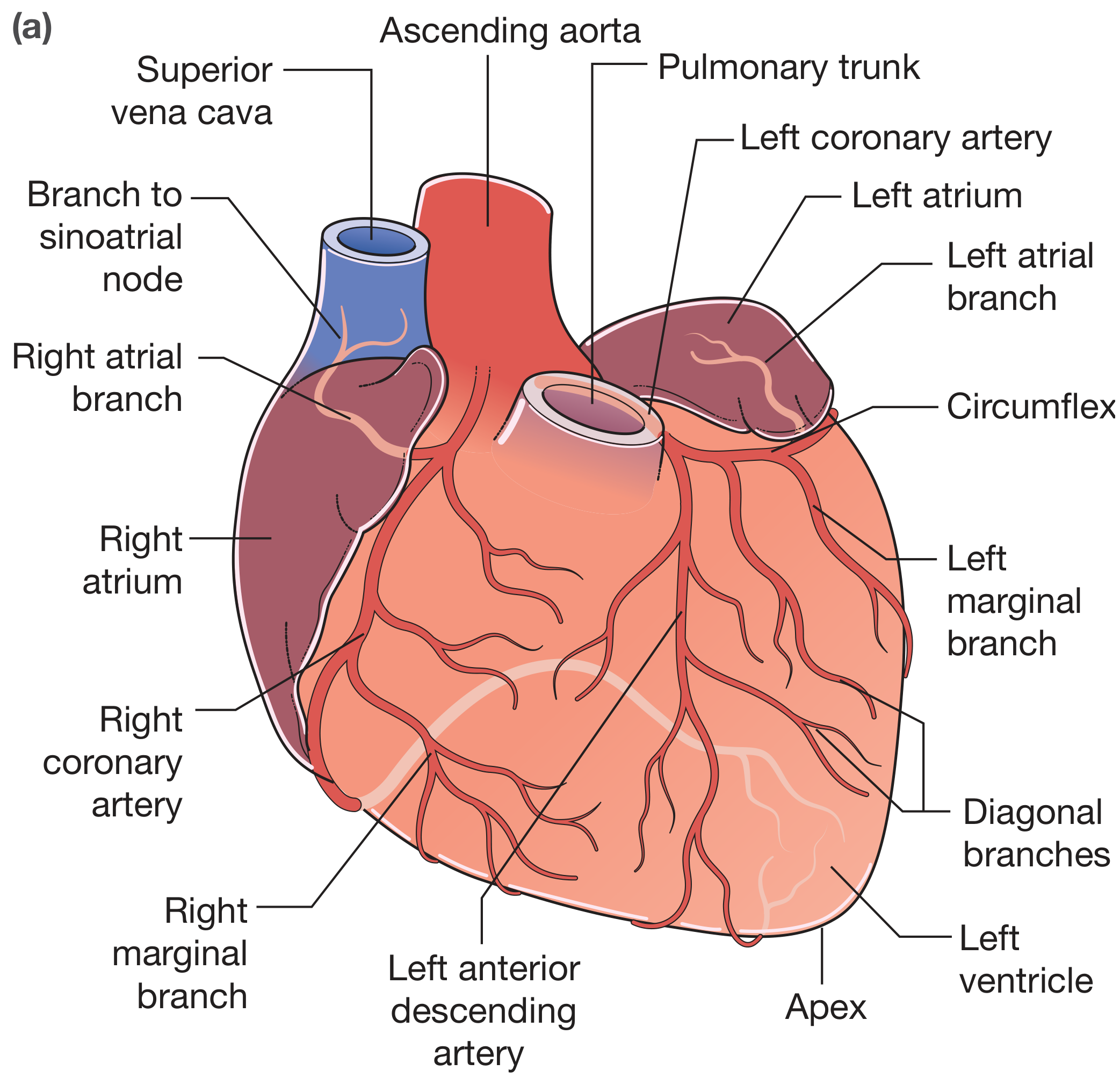
Why CABG is done
- Significant left main coronary artery disease
- Severe three-vessel coronary artery disease
- Multivessel disease with diabetes
- Disease involving the proximal left anterior descending artery, or LAD
- Persistent angina despite optimal medication
- Failed or unsuitable PCI, meaning balloon angioplasty/stenting
- Some emergency situations, including ongoing ischemia or complications of a heart attack
Which vessels are used as grafts?
| Conduit | Source | Typical use and advantage |
|---|---|---|
| Left internal mammary artery (LIMA), also called left internal thoracic artery | Inner chest wall | Usually connected to the LAD. It remains attached at its origin from the subclavian artery and has excellent long-term patency. |
| Right internal mammary artery (RIMA) | Inner right chest wall | May be used in selected patients for additional arterial grafting. |
| Radial artery | Forearm | Used as a free arterial graft after confirming that hand circulation will remain adequate. |
| Great saphenous vein | Leg | Commonly used for additional bypasses. One end is attached to the aorta and the other to a coronary artery beyond the obstruction. |
The principle of the operation
How CABG is performed
1. Preoperative planning
- Coronary angiography to identify each blockage and suitable distal coronary target
- Echocardiography to assess heart pumping function and valves
- Kidney function, blood count, diabetes control, lung disease, carotid and peripheral arterial disease
- Current antiplatelet and anticoagulant medicines
- Availability and quality of possible graft conduits
2. Anesthesia, monitoring, and preparation
- An arterial line for beat-to-beat blood-pressure monitoring
- Central venous access
- A urinary catheter
- Transesophageal echocardiography in many cases, which images cardiac function during surgery
3. Surgical access and graft harvesting
Traditional CABG
- A midline chest incision is made.
- The breastbone, or sternum, is divided vertically.
- A sternal retractor opens the chest so the heart can be accessed.
4. On-pump CABG: the most common conventional approach
- Heparin anticoagulation is administered to prevent blood clotting in the bypass circuit.
- Large cannulas are placed in the heart and major vessels.
- Blood is diverted to the heart-lung machine, where it is oxygenated and pumped back to the body.
- The aorta is temporarily clamped.
- Cardioplegia, a cold protective solution, is delivered to stop the heart in a controlled way and reduce its metabolic demand.
- The surgeon sews the grafts to coronary arteries beyond the blockages.
- Vein grafts or free arterial grafts are connected proximally to the aorta when required.
- The aortic clamp is removed and the heart is restarted, sometimes with pacing or medications.
- The patient is gradually separated from the bypass machine after the team confirms stable heart function and blood pressure.
- Heparin is reversed, bleeding is controlled, chest drains are placed, and the sternum is closed with wires.
5. Off-pump CABG: beating-heart surgery
6. Minimally invasive and hybrid CABG
What happens immediately after surgery?
- A breathing tube and ventilator temporarily, often removed within about 24 hours if stable
- Chest tubes to drain blood and fluid
- Temporary pacing wires in some cases
- Continuous ECG, oxygen, blood-pressure, urine-output, and laboratory monitoring
- Pain relief, early breathing exercises, and early mobilization
Recovery
- Antiplatelet treatment, commonly aspirin
- High-intensity statin therapy when appropriate
- Blood-pressure and diabetes control
- Smoking cessation
- Cardiac rehabilitation and regular exercise
- A heart-healthy dietary pattern
- Long-term follow-up for recurrent symptoms or graft disease
Create a CABG step-by-step study guide
With video and photo
coronary artery bypass graft CABG surgical diagram internal thoracic artery to left anterior descending saphenous vein
CABG coronary artery bypass grafting surgery animation video American Heart Association Cleveland Clinic YouTube
"coronary artery bypass" AND outcomes
Create a CABG step-by-step study guide With video and photo
- CABG purpose, indications, and coronary anatomy
- Grafts and conduit selection
- Preoperative assessment and operating-room preparation
- Conventional on-pump CABG sequence
- Off-pump and minimally invasive CABG
- Postoperative ICU care, complications, and recovery
- Visual anatomy and selected educational videos
Choose the CABG section to study in detail next.
- An artery from inside the chest, often the left internal mammary artery
- A vein from the leg, called the saphenous vein
- Sometimes an artery from the arm
- On-pump, using a heart-lung machine while the heart is temporarily stopped
- Off-pump, while the heart continues beating in selected patients
Sabiston Textbook of Surgery, section “Coronary Artery Bypass Grafting”## CABG: coronary artery bypass grafting
Why CABG is done
- Significant left main coronary artery disease
- Severe three-vessel coronary artery disease
- Multivessel disease with diabetes
- Disease involving the proximal left anterior descending artery, or LAD
- Persistent angina despite optimal medication
- Failed or unsuitable PCI, meaning balloon angioplasty/stenting
- Some emergency situations, including ongoing ischemia or complications of a heart attack
Which vessels are used as grafts?
| Conduit | Source | Typical use and advantage |
|---|---|---|
| Left internal mammary artery (LIMA), also called left internal thoracic artery | Inner chest wall | Usually connected to the LAD. It remains attached at its origin from the subclavian artery and has excellent long-term patency. |
| Right internal mammary artery (RIMA) | Inner right chest wall | May be used in selected patients for additional arterial grafting. |
| Radial artery | Forearm | Used as a free arterial graft after confirming that hand circulation will remain adequate. |
| Great saphenous vein | Leg | Commonly used for additional bypasses. One end is attached to the aorta and the other to a coronary artery beyond the obstruction. |
The principle of the operation
How CABG is performed
1. Preoperative planning
- Coronary angiography to identify each blockage and suitable distal coronary target
- Echocardiography to assess heart pumping function and valves
- Kidney function, blood count, diabetes control, lung disease, carotid and peripheral arterial disease
- Current antiplatelet and anticoagulant medicines
- Availability and quality of possible graft conduits
2. Anesthesia, monitoring, and preparation
- An arterial line for beat-to-beat blood-pressure monitoring
- Central venous access
- A urinary catheter
- Transesophageal echocardiography in many cases, which images cardiac function during surgery
3. Surgical access and graft harvesting
Traditional CABG
- A midline chest incision is made.
- The breastbone, or sternum, is divided vertically.
- A sternal retractor opens the chest so the heart can be accessed.
4. On-pump CABG: the most common conventional approach
- Heparin anticoagulation is administered to prevent blood clotting in the bypass circuit.
- Large cannulas are placed in the heart and major vessels.
- Blood is diverted to the heart-lung machine, where it is oxygenated and pumped back to the body.
- The aorta is temporarily clamped.
- Cardioplegia, a cold protective solution, is delivered to stop the heart in a controlled way and reduce its metabolic demand.
- The surgeon sews the grafts to coronary arteries beyond the blockages.
- Vein grafts or free arterial grafts are connected proximally to the aorta when required.
- The aortic clamp is removed and the heart is restarted, sometimes with pacing or medications.
- The patient is gradually separated from the bypass machine after the team confirms stable heart function and blood pressure.
- Heparin is reversed, bleeding is controlled, chest drains are placed, and the sternum is closed with wires.
5. Off-pump CABG: beating-heart surgery
6. Minimally invasive and hybrid CABG
What happens immediately after surgery?
- A breathing tube and ventilator temporarily, often removed within about 24 hours if stable
- Chest tubes to drain blood and fluid
- Temporary pacing wires in some cases
- Continuous ECG, oxygen, blood-pressure, urine-output, and laboratory monitoring
- Pain relief, early breathing exercises, and early mobilization
Recovery
- Antiplatelet treatment, commonly aspirin
- High-intensity statin therapy when appropriate
- Blood-pressure and diabetes control
- Smoking cessation
- Cardiac rehabilitation and regular exercise
- A heart-healthy dietary pattern
- Long-term follow-up for recurrent symptoms or graft disease
- CABG purpose, indications, and coronary anatomy
- Grafts and conduit selection
- Preoperative assessment and operating-room preparation
- Conventional on-pump CABG sequence
- Off-pump and minimally invasive CABG
- Postoperative ICU care, complications, and recovery
- Visual anatomy and selected educational videos
- Purpose, indications, and coronary anatomy
- Grafts and conduit selection
- Conventional on-pump CABG procedure
- Off-pump and minimally invasive CABG
- Postoperative ICU care, complications, and recovery
Find reliable CABG surgical education videos
site:youtube.com CABG coronary artery bypass surgery educational video Cleveland Clinic Yale Medicine Society of Thoracic Surgeons
CABG surgical education video coronary artery bypass graft professional society CTSNet
Yale Medicine explains coronary disease, conventional on-pump CABG, and off-pump CABG in a short clinician-led overview. It includes clear chapter markers and is appropriate for students and patients.
Cleveland Clinic cardiac surgeons explain graft choices, complete revascularization, off-pump surgery, and minimally invasive options. This is a good overview before watching operative-technique material.
Cleveland Clinic’s video explains robotically assisted CABG, including how it differs from sternotomy-based surgery. It may contain real operative images.
This CTSNet step-by-step surgical training video focuses on the proximal anastomosis, including aortic preparation, aortotomy, graft preparation, parachuting, and completion of the connection. This is intended for surgical education rather than patient education.
CTSNet provides a step-by-step video of a MIDCAB approach for selected single-vessel disease. This is advanced surgical content.
CTSNet’s curated list brings together videos on conduit harvest, coronary anastomoses, complex CABG, and minimally invasive methods.
Give me video on angioplasty
angioplasty coronary angioplasty educational animation video American Heart Association Mayo Clinic YouTube
"coronary angioplasty"