
Neisseria gonococcus
Reading File
Now let me search the medical library for comprehensive content on Neisseria gonorrhoeae.
Finding Sources
Finding Sources
Searching PubMed
"Neisseria gonorrhoeae"[MeSH Terms] AND "gonorrhea"[MeSH Terms]
Good. Now let me read the main microbiology textbook content on N. gonorrhoeae in parallel.
Reading File
Reading File
Reading File
Reading File
Reading File
Reading File
Reading File
Now let me fetch the key images and read the virulence factor and resistance sections.
Loading Image
Loading Image
Reading File
I now have comprehensive content from multiple textbooks. Let me compile the full answer.
Neisseria gonorrhoeae (The Gonococcus)
Classification and Basic Microbiology
Neisseria gonorrhoeae (the gonococcus) is a Gram-negative diplococcus - pairs of kidney/coffee-bean-shaped cocci (~0.6-1.0 µm diameter) with adjacent sides flattened. It is:
- Obligate aerobe, oxidase-positive, catalase-positive
- Fastidious - requires enriched media (chocolate agar, Thayer-Martin, Martin-Lewis) plus 5-10% CO2 at 35-37°C in a humid atmosphere
- Produces acid from glucose only (not maltose, lactose, or sucrose) - key biochemical distinguishing feature from N. meningitidis (which also ferments maltose)
- More fragile than N. meningitidis; lacks a polysaccharide capsule
- Small, smooth, non-pigmented colonies appear in 18-24 hours; well-developed (2-4 mm) by 48 hours
Virulence Factors
| Factor | Function |
|---|---|
| Type IV Pili | Initial attachment to non-ciliated epithelial cells; "twitching" motility via contraction; facilitate transformation (DNA uptake); facilitate movement up fallopian tubes |
| Opa proteins (opacity proteins) | Tight secondary adherence to host receptors (CD66, integrins); mediate gonococcus-to-gonococcus clumping; expressed in opaque colonies |
| Por proteins (Porins: Por1BA, Por1BB) | Insert into host cell membrane; trigger signaling cascades leading to intracellular uptake (parasite-directed endocytosis) |
| Rmp protein | Reduces bactericidal antibody activity |
| LOS (Lipooligosaccharide) | Endotoxin activity; triggers inflammation; sialylation of LOS binds factor H to block complement C3b deposition |
| IgA1 protease | Cleaves secretory IgA, evading mucosal immunity |
| β-lactamase | Confers penicillin resistance (PPNG strains) |
| Iron receptors | Transferrin, lactoferrin, hemoglobin receptors allow iron scavenging from host |
| Catalase / antioxidant systems | Resist oxidative killing inside neutrophils |
Antigenic variation of pili and Opa proteins (via phase variation and gene rearrangement) is a major immune evasion strategy and the reason lasting protective immunity does not develop after infection.
Pathogenesis
Step 1 - Attachment: Gonococci introduced onto a mucosal surface attach via pili to receptors (CD46, CD66) on non-ciliated columnar epithelial cells. Pili-driven twitching motility moves microcolonies across the cell surface.
Step 2 - Tight binding and invasion: Opa proteins mediate tighter attachment, and porin proteins (Por1BA) trigger signaling cascades that induce parasite-directed phagocytosis (endocytosis by the host cell using microfilaments and microtubules). The bacteria transcytose through the cell and exit through the basal membrane into the submucosa.
Step 3 - Survival in submucosa: Despite lacking a capsule, gonococci survive via:
- LOS sialylation (blocks C3b deposition by binding factor H)
- Pili and Opa proteins interfering with effective phagocytosis
- Upregulation of catalase (resists oxidative burst inside PMNs)
Step 4 - Spread: Purulent exudate with "sticky" Opa-mediated gonococcal clusters spreads to adjacent structures: epididymis and prostate (men); paracervical glands, fallopian tubes (women). LOS and peptidoglycan shedding cause epithelial injury and intense inflammation.
Note: Gonococci infect columnar/transitional epithelium only - they cannot infect the squamous epithelium lining the vagina of post-pubescent women (hence cervical columnar epithelium is the primary site in women).
Epidemiology
- Humans are the only natural host
- Transmission is exclusively by direct sexual contact (or vertical at birth)
- ~78 million new cases worldwide annually; ~555,608 cases reported in the US in 2017 (true incidence likely double)
- Highest rates: ages 15-24, Black Americans, residents of southeastern US, individuals with multiple sexual partners
- Asymptomatic carriage is common in women (~50%), driving unrecognized transmission
- Complement deficiency (late components C5-C9) is a risk factor for disseminated gonococcal infection (DGI)
Clinical Diseases
1. Uncomplicated Gonorrhea
Men:
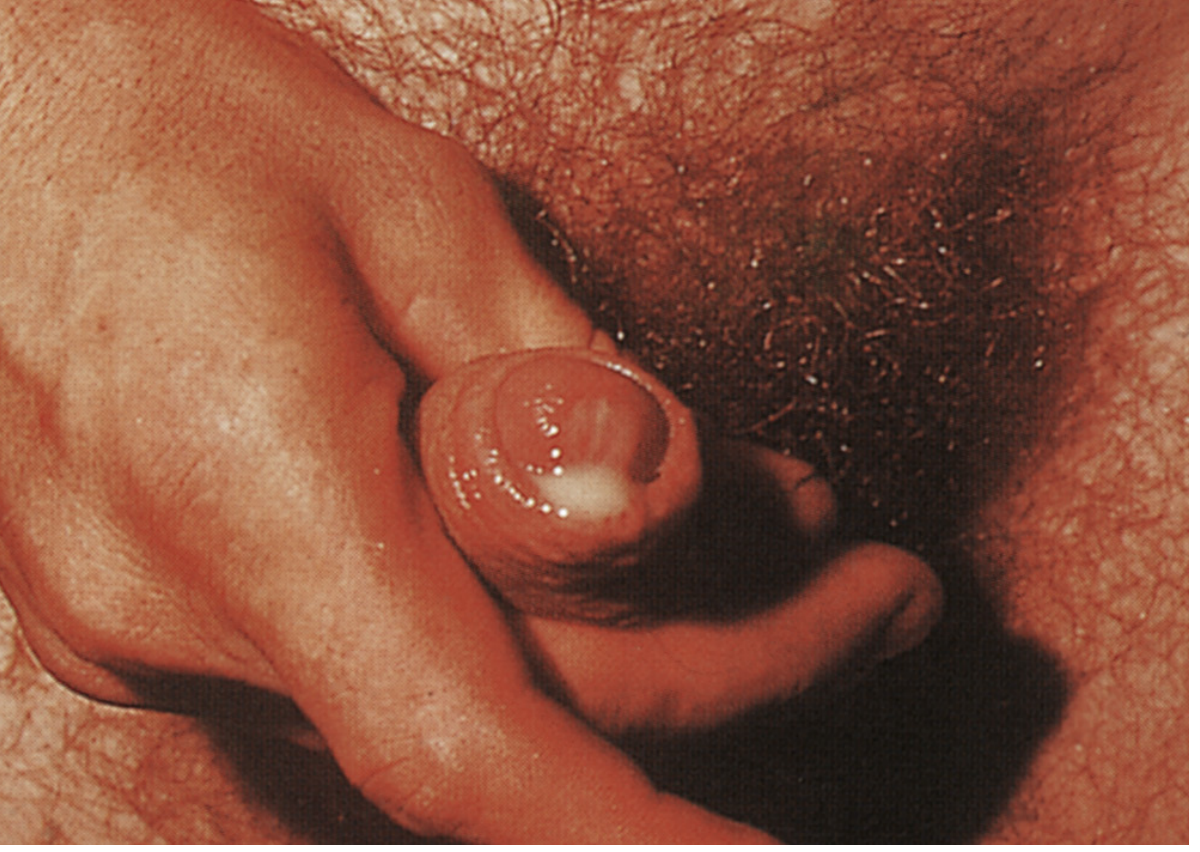
- Urethritis: purulent urethral discharge + dysuria after a 2-5 day incubation period
- Virtually all infected men are symptomatic
- Complications: epididymitis, prostatitis, periurethral abscesses
Women:
- Primary site: endocervix (columnar epithelium)
- Symptoms: vaginal discharge, dysuria, abdominal pain - but often asymptomatic
- Complications: PID (10-20%), salpingitis, tubo-ovarian abscess, ectopic pregnancy, infertility
Other sites (by sexual practice):
- Proctitis (rectal gonorrhea)
- Pharyngeal gonorrhea (often asymptomatic)
- Conjunctivitis in adults (from autoinoculation)
2. Pelvic Inflammatory Disease (PID)
Ascending infection in women involving fallopian tubes (salpingitis). Presents with fever, lower abdominal pain, cervical motion tenderness. Long-term consequences: sterility, ectopic pregnancy, chronic pelvic pain.
3. Disseminated Gonococcal Infection (DGI) - "Gonococcemia"
Occurs in 1-3% of infected women, less often in men (due to high rate of asymptomatic women with untreated infection).
Classic triad:
- Fever + migratory arthralgias/polyarthritis
- Suppurative (septic) arthritis - wrists, knees, ankles most common
- Pustular rash on an erythematous base over extremities (not palms/soles)
Blood cultures are often negative in DGI even though bacteremia is present - cervical cultures are more revealing.
4. Ophthalmia Neonatorum
Purulent conjunctivitis in newborns acquired during passage through an infected birth canal. Can lead to blindness if untreated. Prophylaxis: 1% silver nitrate drops (or erythromycin ointment) at birth.
Diagnosis
| Method | Notes |
|---|---|
| Gram stain | Gram-negative diplococci inside PMNs. >95% sensitive and specific in symptomatic men only. Only 50-70% sensitive in women. Acceptable as sole diagnostic in symptomatic men. |
| Culture | Selective media (Martin-Lewis, modified Thayer-Martin, NYC agar) - chocolate agar + antibiotics (vancomycin, colistin, trimethoprim, nystatin) to inhibit competing flora. Oxidase-positive colonies confirmed by glucose oxidation. |
| NAAT (Nucleic Acid Amplification Tests) | Now the diagnostic gold standard. More sensitive than culture. Can be performed on urine, genital swabs. Often combined with Chlamydia detection (same target population). Results are diagnostic from genital sites; may need culture confirmation from non-genital sites. |
Treatment
Resistance evolution:
- Penicillin: no longer used - widespread β-lactamase (PPNG) and chromosomally mediated resistance
- Fluoroquinolones (ciprofloxacin): widespread resistance, no longer recommended
- Azithromycin: high-level resistance emerging; dropped from standard regimens after ~2020
Current standard (as of updated guidelines):
- Ceftriaxone 500 mg IM single dose (or 1g if weight ≥150 kg) - third-generation cephalosporin resistant to prevalent β-lactamases
- Concurrent treatment for Chlamydia is recommended for all patients treated for gonorrhea (doxycycline 100 mg PO BID x 7 days if chlamydia not excluded)
- High-level cephalosporin resistance has been reported (XDR gonorrhea - a WHO priority pathogen)
Ophthalmia neonatorum: Ceftriaxone IV/IM
Prevention and Control
- Condoms provide high-degree protection against acquisition and transmission
- Spermicides/douches are not reliable protection
- Case-contact tracing and partner notification
- No effective vaccine available; antigenic variation of pili and OMPs makes vaccine development challenging
- MenB-4C vaccine (meningococcal B vaccine) has shown cross-protective efficacy against gonorrhea in recent studies - a promising 2024-2025 development (PMID: 39082700)
Comparison: N. gonorrhoeae vs. N. meningitidis
| Feature | N. gonorrhoeae | N. meningitidis |
|---|---|---|
| Capsule | No | Yes |
| Maltose fermentation | No | Yes |
| Disease | Gonorrhea, DGI, PID | Meningitis, meningococcemia |
| Transmission | Sexual contact | Respiratory droplets |
| Carrier state | Common (asymptomatic women) | Nasopharyngeal carriage |
| Vaccine | None effective | Available (serogroups A, C, W, Y, B) |
| Growth on selective media | Yes (Thayer-Martin, NYC) | Yes |
Sources: Medical Microbiology 9e (Murray); Sherris & Ryan's Medical Microbiology 8e; Jawetz, Melnick & Adelberg's Medical Microbiology 28e
Recent evidence update: A 2025 systematic review (PMID 39082700) confirmed the MenB-4C vaccine (4CMenB/Bexsero) offers meaningful cross-protective efficacy against gonorrhea - an important development given the absence of a dedicated gonococcal vaccine and rising antimicrobial resistance.
This is a shared conversation. Sign in to Orris to start your own chat.