
Jaluka all important things Notes
- Jaluka (leeches) remove vitiated blood, particularly Pitta-dominant conditions
- Used in conditions like skin diseases, gout, inflammatory swellings, abscesses
- Classified as Sashstra (instrument-based) Shodhana therapy
Jaluka Ayurveda leech therapy important notes classification uses
https://pmc.ncbi.nlm.nih.gov/articles/PMC7772495
https://www.slideshare.net/slideshow/jalaukavacharana-leech-…
JALUKA - Complete Notes (Ayurveda)
1. Introduction & Definition
- Jaluka (also written as Jalauka, Jaloka) = leech; the term literally means "water-dwelling creature"
- Synonyms: Jalayuka, Jalaua, Jalita, Jalasuchi, Jalasarpini, Raktapata, Raktapayini, Vanini, Vedhini, Venika
- Jalaukavacharana = therapeutic application of leeches
- It is one of the methods of Raktamokshana (bloodletting), which is classified under Panchakarma as a Shodhana therapy
- Reference: Sushruta Samhita has an entire chapter dedicated to Jalauka (Sushrutasamhita Sutrasthana 13)
2. Position in Ayurvedic Therapeutics
| Category | Classification |
|---|---|
| Panchakarma limb | Raktamokshana (bloodletting) |
| Type of Raktamokshana | Anushashtra (without sharp instrument) |
| Ideal for | Pitta-dominant conditions, delicate patients, women, children, elderly |
- Two main types of Raktamokshana:
- Sashstra (with instruments): Pracchana Karma (scarification), Siravedha (venipuncture)
- Anushashtra (without instruments): Jaloka Avacharana (leeches), Shringa Avacharana (horn/wet cupping), Alabu Avacharana (gourd/dry cupping)
- Jaluka is the safest and best method for delicate patients
3. Classification of Jalauka (12 Types Total)
A. Nirvisha (Non-poisonous / Fit for therapy) - 6 types
| # | Name | Description |
|---|---|---|
| 1 | Kapila | Brown colored, safe for bloodletting |
| 2 | Pingala | Reddish-brown |
| 3 | Sankumukhi (Shankumukhi) | Conch-shaped mouth, excellent suction |
| 4 | Mushika | Mouse-like in appearance |
| 5 | Pundarikamukhi | Lotus-faced appearance |
| 6 | Savarika | Small and active |
- Habitat: Fresh water bodies (ponds with water lilies, clean rivers)
B. Savisha (Poisonous / Unfit for therapy) - 6 types
| # | Name | Appearance |
|---|---|---|
| 1 | Krishna | Black colored, thick, flattened |
| 2 | Karbura | Variegated/striped |
| 3 | Alagarda (Algarda) | Black-mouthed |
| 4 | Indrayudha | Rainbow-colored |
| 5 | Samudrika | Having patterns like sea shells |
| 6 | Gochandana | Divided into two parts like cow |
- Habitat: Stagnant, turbid, contaminated water with decomposed bodies of poisonous insects, toads, and fish
4. Characters of Unfit (Rejected) Jalauka
- Sthulamadhya (thick in the middle) / Pariklishta (ugly)
- Pruthvi (flattened) / Manda Vichesta (reduced activity)
- Agrahi (non-grasping) / Alpapayi (sucks very little blood)
- Savisha (poisonous type)
- Asamyaka Vamanata (improper vomiting of ingested blood)
- Pratantama (tired after blood ingestion)
- Nipatana (immotile after use)
5. Features of Savisha (Poisonous) Jalauka Bite
- Svayathu - inflammation/swelling
- Atimatra Kandu - excessive itching
- Murcha - unconsciousness
- Jwara - fever
- Daha - burning sensation
- Chardi - vomiting
- Mada - confusion/intoxication
- Sadana - lethargy/weakness
6. Collection and Preservation of Leeches
- Collection site: Fresh water ponds with water lilies rooted in soil
- Method of collection: Using a piece of wet leather or fresh meat
- Storage: In a wide new earthen pot with clean water
- Feed: Aquatic plant parts + dried meat powder of marshy land animals (pig)
- Water and feed changed every 3rd day, pot replaced every 7th day
7. Activation of Jalauka Before Use
- According to Acharya Sushruta: Keep leeches in water mixed with Haridra (turmeric) until they become active, then clean with pure water
- According to Acharya Vagbhata: Keep in water containing Tanasha kalka, Yava (water in which grains are washed), or Takra (buttermilk), then restore in pure water
8. Indications (Yogya - Suitable Conditions)
- Skin diseases: Kushtha (skin disorders), Psoriasis, Eczema, Acne
- Inflammatory conditions: Abscesses, boils, carbuncles, erysipelas (Visarpa)
- Joint disorders: Vatrakta (gout), Amavata (rheumatoid arthritis), Sandhivata (osteoarthritis)
- Pitta-dominant blood diseases (Raktapitta / Raktaja Rogas)
- Surgical conditions: Varicose veins, venous ulcers, diabetic ulcers
- Eye diseases (Netra Rogas) - skin around the eye
- Ear, nose, and throat conditions
- Headache and migraine
- Venous congestion in post-surgical flaps (modern use)
9. Contraindications (Ayogya - Unsuitable Conditions)
- Pregnant women (Garbhini)
- Very young children (Bala) and very elderly (Vriddha) - use with caution
- Anemia / severe debility (Durbala)
- Patients with coagulation disorders
- Edema (Shotha) from internal causes
- Conditions caused purely by Vata or Kapha (without Pitta/Rakta involvement)
- Immunocompromised patients
10. Procedure (Karma Vidhi)
Pre-procedure (Poorvakarma):
- Select a suitable Nirvisha Jalauka
- Activate the leech in Haridra water
- Prepare the patient site - clean and slightly roughen the skin using Gomaya churna (dried cow dung powder) or Mrut (fine sand) - called Vigharshana
- Make a small skin nick (Pracchana) if leech doesn't bite spontaneously
Main procedure (Pradhanakarma):
- Apply leech to the site
- Cover with wet cloth
- Leech bites and begins sucking - each leech ingests 5-15 mL of blood
- Application time: 20-120 minutes (one or two leeches typically used)
- Signs of adequate bloodletting: leech raises its head, site appears clean
Signs of proper sucking (Samyak Lakshana):
- Leech becomes round and full
- Local relief of pain, swelling, and itching
- Patient feels comfortable
Post-procedure (Paschatkarma):
- Remove leech by applying Saindhava lavana (rock salt) or Haridra (turmeric) - do NOT pull forcibly (causes laceration and infection)
- Make the leech vomit (Vamana) by placing it on wet turmeric powder - essential for its reuse
- Dress the wound with Madhu (honey) and Ghrita (ghee)
- Store the leech back in clean water for reuse after recovery
11. Bioactive Components in Leech Saliva (Modern Science)
| Compound | Action |
|---|---|
| Hirudin | Potent thrombin inhibitor - anticoagulant |
| Hyaluronidase | Spreads saliva/drugs deeper into tissues |
| Destabilase | Fibrinolytic - dissolves clots |
| Eglin C | Anti-inflammatory |
| Calin | Inhibits collagen-induced platelet aggregation |
| Bdellins | Anti-plasmin, anti-trypsin activity |
| Factor Xa inhibitor | Prevents coagulation cascade |
12. Seasonal Recommendation
- Raktamokshana (including Jalaukavacharana) is best performed in Sharada Ritu (autumn) as humors are deranged due to seasonal change
13. Advantages of Jalauka Over Other Raktamokshana Methods
- Safe for delicate patients (women, children, elderly)
- Precise, localized, and painless bloodletting
- Can be applied in areas unsuitable for sharp instruments (near eyes, joints, face)
- No need for sharp instruments - less risk of iatrogenic injury
- The leech's saliva provides additional therapeutic (anti-inflammatory, analgesic) effects
14. Modern Applications (Biomedicine)
- Post-surgical venous congestion in replanted digits/flaps
- Varicose veins
- Deep vein thrombosis
- Osteoarthritis
- Diabetic neuropathy / diabetic ulcers
- Chronic otitis, tinnitus
- Migraine
- Standard antibiotic prophylaxis (Ciprofloxacin/Ceftriaxone) used to prevent Aeromonas hydrophila infection during leech therapy
15. Complication - Aeromonas hydrophila Infection
- The most important infectious complication of leech therapy
- Aeromonas hydrophila is a normal gut flora of leeches
- Can cause severe cellulitis, wound infections, septicemia
- Ciprofloxacin-resistant strains have been reported
- Prophylactic antibiotics recommended before and during leech therapy
Make pdf with images and procedures video
Jaluka leech therapy Ayurveda procedure video YouTube
mkdir -p /home/daytona/workspace/jaluka-pdf && ls /home/daytona/workspace/jaluka-pdf/
cd /home/daytona/workspace/jaluka-pdf && \ wget -q "https://upload.wikimedia.org/wikipedia/commons/thumb/8/8b/Hirudo_medicinalis.jpg/640px-Hirudo_medicinalis.jpg" -O leech1.jpg && \ wget -q "https://upload.wikimedia.org/wikipedia/commons/thumb/3/3d/Leech_Feeding.jpg/640px-Leech_Feeding.jpg" -O leech_feeding.jpg && \ wget -q "https://upload.wikimedia.org/wikipedia/commons/thumb/0/06/Medicinal_leeches_%28Hirudo_medicinalis%29.jpg/640px-Medicinal_leeches_%28Hirudo_medicinalis%29.jpg" -O leech_medicinal.jpg && \ ls -la *.jpg
python3 -c "import reportlab; print('reportlab ok'); import qrcode; print('qrcode ok')" 2>&1
Failed to create session: bad request: failed to resolve container IP after 3 attempts: no IP address found. Is the Sandbox started?
We encountered an error while processing your request. Please try again or reach out to us for help.
Parkinson disease ke bare me all about with images
Parkinson disease pathophysiology symptoms treatment 2024
🧠 Parkinson's Disease - Complete Notes
1. Definition & Overview
- First described by James Parkinson in 1817 ("An Essay on the Shaking Palsy")
- Typically emerges between 55-65 years of age
- By the time symptoms appear, 60-80% of dopaminergic neurons are already lost
2. Pathophysiology & Pathogenesis
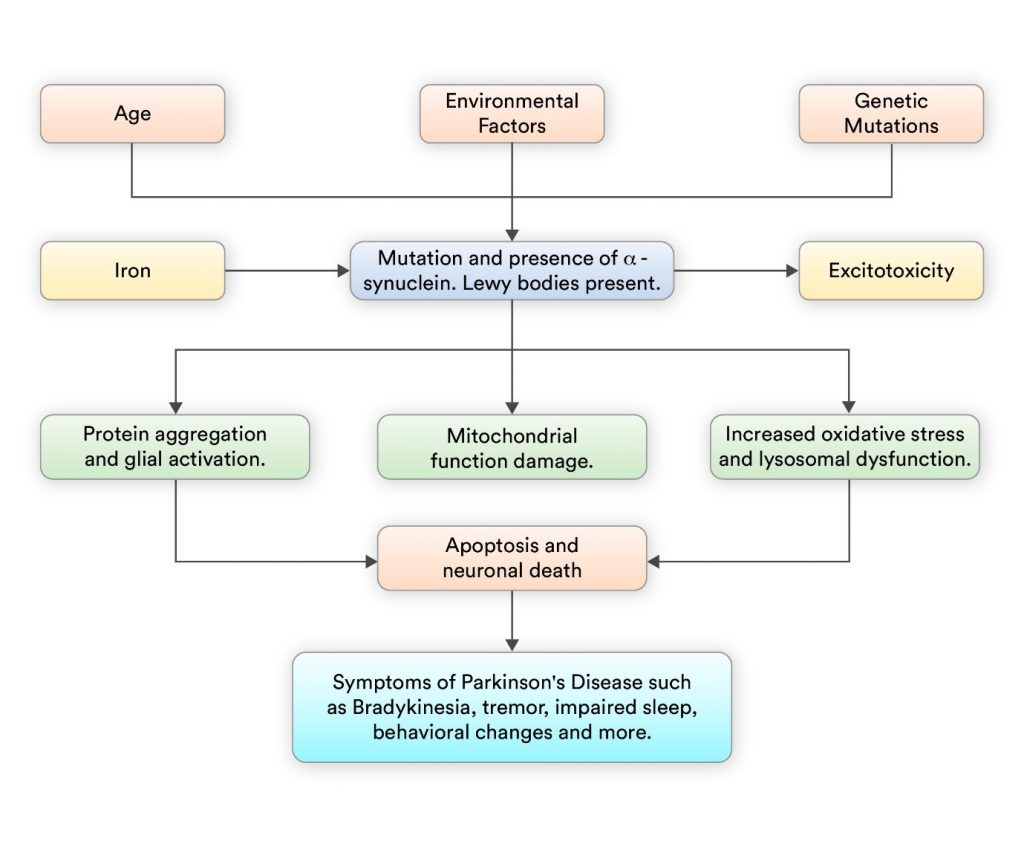
🔬 Core Pathological Mechanism
| Mechanism | Detail |
|---|---|
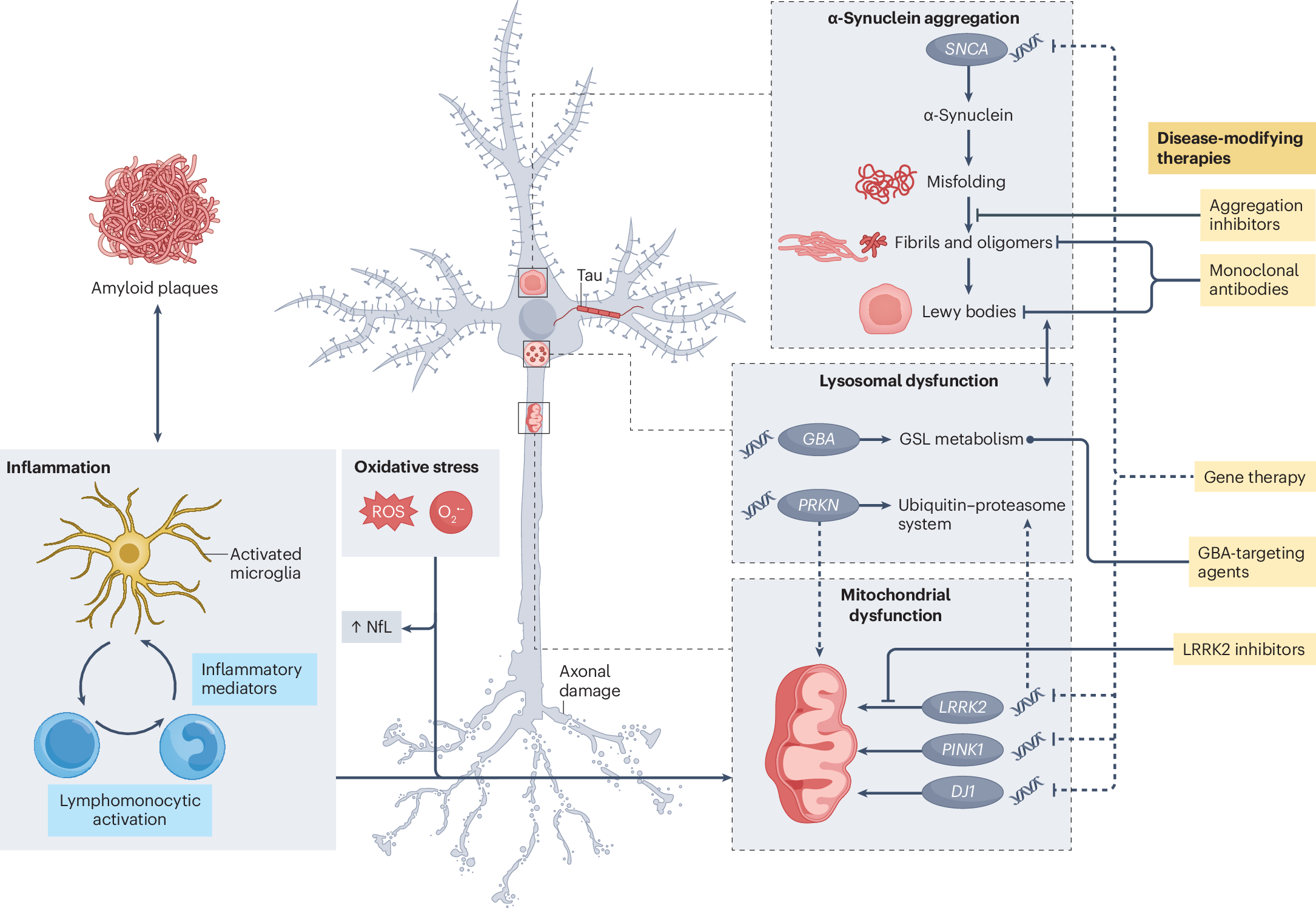
| α-Synuclein misfolding | Normal synaptic protein misfolds into toxic oligomers and fibrils |
| Lewy body formation | Aggregated α-synuclein forms dense cytoplasmic inclusions |
| Mitochondrial dysfunction | Impaired energy production in neurons |
| Oxidative stress | ROS (reactive oxygen species) accumulate, causing neuronal death |
| Lysosomal/autophagy failure | Defective protein clearance via ubiquitin-proteasome system |
| Neuroinflammation | Activated microglia release inflammatory mediators |
3. Gross & Microscopic Pathology
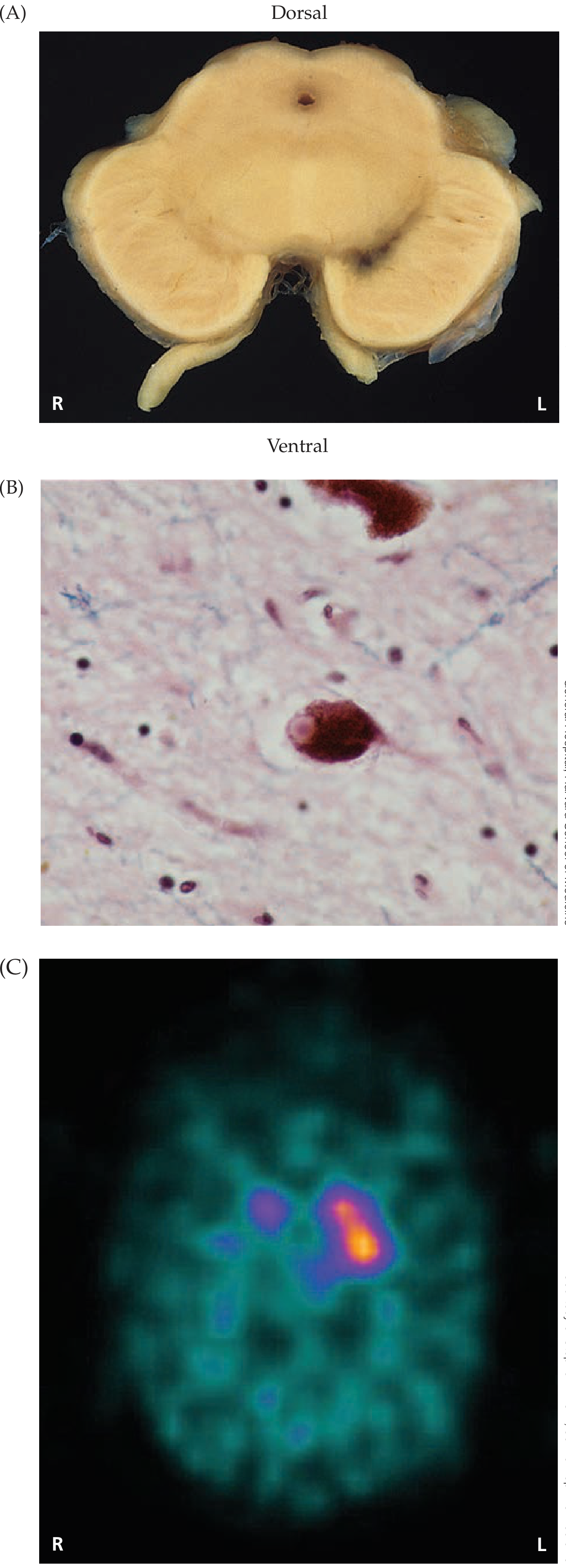
Microscopic Features:
- Loss of pigmented catecholaminergic neurons in substantia nigra + gliosis
- Lewy bodies - single or multiple cytoplasmic, eosinophilic, round inclusions
- Composed of: α-synuclein filaments + neurofilaments + ubiquitin
- Lewy neurites - dystrophic neurites containing aggregated α-synuclein
4. Genetics of PD
| Gene | Mutation Type | Effect |
|---|---|---|
| SNCA (α-synuclein) | Point mutation / duplication | Autosomal dominant PD |
| LRRK2 (Leucine-rich repeat kinase 2) | Gain-of-function | Most common autosomal dominant PD |
| PARK2 / Parkin | Loss-of-function | Autosomal recessive, early onset |
| PINK1 | Loss-of-function | Mitochondrial maintenance |
| DJ1 | Loss-of-function | Oxidative stress protection |
| GBA (glucocerebrosidase) | Heterozygous mutation | Risk factor (Gaucher disease gene) |
Most cases (~90%) are sporadic (non-genetic). Genetic PD = ~10%
5. Motor Symptoms (Cardinal Features - "TRAP")
| Letter | Symptom | Description |
|---|---|---|
| T | Tremor | Resting "pill-rolling" tremor (4-6 Hz); disappears with movement |
| R | Rigidity | "Lead pipe" or "cogwheel" rigidity; increased muscle tone |
| A | Akinesia / Bradykinesia | Slowness and poverty of movement |
| P | Postural instability | Loss of righting reflexes; risk of falls |
Other Motor Features:
- Masked facies (hypomimia) - reduced facial expression, decreased blink rate
- Micrographia - progressively small handwriting
- Hypophonia - soft, monotone voice; hurried muttering speech
- Festinating gait - shuffling small steps, appears to be running forward
- Freezing - sudden inability to initiate movement
- En bloc turning - turns without normal torso twist
- Anteropulsion/Retropulsion - uncontrolled forward/backward movement
- Stooped posture
- Myerson's sign - inability to suppress blinking on tapping the glabella
6. Non-Motor Symptoms
Autonomic:
- Constipation (most common GI symptom)
- Orthostatic hypotension
- Urinary dysfunction
- Sexual dysfunction
- Excessive sweating
Neuropsychiatric:
- Depression (very common, ~40%)
- Anxiety
- Dementia - seen in 15-40% later in course
- Psychosis / hallucinations (often drug-induced)
- Impulse control disorders (dopamine agonist side effect)
Sleep:
- REM Sleep Behavior Disorder (RBD) - acts out dreams; can precede PD by years
- Excessive daytime sleepiness
- Insomnia
Sensory:
- Anosmia (loss of smell) - often the earliest symptom
- Pain
- Paresthesias
GI:
- Dysphagia (swallowing difficulty) - affects 35-82% of PD patients
- Drooling (sialorrhea)
- Gastroparesis
7. Diagnosis
Clinical Diagnosis (UK Brain Bank Criteria):
- Bradykinesia + at least one of: rigidity, resting tremor, postural instability
- Repeated strokes, head injuries, antipsychotic use
- Cerebellar signs, early severe dementia
- No response to levodopa
- Unilateral onset
- Resting tremor present
- Progressive, persistent asymmetry
- Excellent response to levodopa
- Levodopa-induced dyskinesia
Investigations:
| Test | Finding in PD |
|---|---|
| Clinical exam | Primary diagnostic tool |
| DaT SPECT scan | Reduced dopamine transporter uptake in striatum |
| MRI brain | Normal (used to exclude other causes) |
| PET scan | Reduced F-DOPA uptake |
| Smell test | Reduced olfaction (early sign) |
⚠ Alternative diagnoses should be suspected if: early postural instability, rapid progression, symmetrical symptoms, NO response to levodopa, or cerebellar signs.
8. Treatment
A. Pharmacological Treatment
🥇 First-Line: Levodopa (L-DOPA)
- Gold standard treatment
- Given as Levodopa + Carbidopa (Carbidopa inhibits peripheral decarboxylation)
- Most effective for motor symptoms
- Does NOT slow disease progression
| Complication | Description |
|---|---|
| Wearing off | Benefit wanes before next dose |
| On-off fluctuations | Unpredictable swings between mobility and immobility |
| Peak-dose dyskinesia | Involuntary writhing movements at peak drug levels |
| Diphasic dyskinesia | At onset and end of dose effect |
Dopamine Agonists (DA)
- Pramipexole, Ropinirole, Rotigotine (transdermal patch)
- Used as initial therapy (especially in younger patients) or adjunct
- Avoid in patients >70 years (risk of hallucinations, impulse control disorders)
- Side effects: hallucinations, excessive daytime sleepiness, impulse control disorders (gambling, hypersexuality)
MAO-B Inhibitors
- Selegiline, Rasagiline, Safinamide
- Inhibit breakdown of dopamine in the brain
- Mild symptomatic benefit; possible neuroprotective effect debated
COMT Inhibitors
- Entacapone, Opicapone, Tolcapone
- Prolong levodopa effect by blocking peripheral metabolism
- Used for "wearing off" episodes
Anticholinergics
- Benztropine, Trihexyphenidyl
- Mainly for tremor in younger patients
- Avoid in elderly (cognitive side effects)
Amantadine
- Helps with dyskinesias
- Mild dopaminergic and anticholinergic effects
For PD Psychosis:
- Pimavanserin - selective serotonin inverse agonist (no dopamine antagonism)
- Clozapine, Quetiapine (low dose)
B. Surgical Treatment
Deep Brain Stimulation (DBS)
- Electrodes implanted in Subthalamic Nucleus (STN) or Globus Pallidus Internus (GPi)
- For patients with advanced PD + motor fluctuations + dyskinesia
- Does NOT cure disease but significantly reduces symptoms
| Target | Advantage |
|---|---|
| STN DBS | Better medication off-state benefit; allows larger levodopa reduction |
| GPi DBS | Better dyskinesia suppression; fewer neuropsychiatric risks; more flexible |
C. Non-Pharmacological Treatment
- Physiotherapy - gait training, balance exercises, LSVT BIG program
- Speech therapy - LSVT LOUD for hypophonia
- Occupational therapy - adaptive devices
- Swallowing therapy - for dysphagia
- Exercise - vigorous aerobic exercise may slow progression
- Diet - high-fiber diet for constipation; avoid high-protein meals near levodopa doses
9. Disease Progression & Hoehn-Yahr Staging
| Stage | Description |
|---|---|
| 1 | Unilateral symptoms only |
| 2 | Bilateral symptoms, no balance impairment |
| 3 | Bilateral + mild postural instability; independent |
| 4 | Severe disability but still able to walk |
| 5 | Wheelchair bound or bedridden |
- Typically progresses over 10-15 years
- Death commonly from aspiration pneumonia or trauma from falls
- Many patients (especially elderly) die of unrelated causes
10. Parkinsonism vs. Parkinson's Disease
| Feature | PD | Atypical Parkinsonism |
|---|---|---|
| Onset | Unilateral | Bilateral/symmetric |
| Progression | Slow (10-15 yrs) | Rapid |
| Tremor | Prominent resting tremor | Less prominent |
| Levodopa response | Excellent | Poor |
| Postural instability | Late | Early |
| Autonomic failure | Mild-moderate | Severe (MSA) |
- MSA (Multiple System Atrophy) - autonomic failure + parkinsonism
- PSP (Progressive Supranuclear Palsy) - vertical gaze palsy + early falls
- CBS (Corticobasal Syndrome) - alien limb phenomenon
- DLB (Dementia with Lewy Bodies) - dementia preceding motor features
11. Key Facts for Exams
- Most common neurodegenerative movement disorder worldwide
- Pathological hallmark: Lewy bodies (α-synuclein inclusions) in substantia nigra
- Gross pathology: pallor of substantia nigra
- Most common genetic mutation in PD: LRRK2 (autosomal dominant)
- Anosmia + RBD (REM sleep behavior disorder) = prodromal PD markers
- Carbidopa is always given with levodopa to prevent peripheral side effects (nausea, hypotension)
- Pimavanserin = only antipsychotic approved for PD psychosis (no dopamine blockade)
- DaT SPECT = best imaging test for confirming dopaminergic deficit
- Up to 30% of PD patients never develop tremor
- Robbins & Kumar Basic Pathology, p. 854
- Bradley and Daroff's Neurology in Clinical Practice
- Neuroanatomy through Clinical Cases, 3rd Edition, Figure 16.10
- Katzung's Basic and Clinical Pharmacology, 16th Edition
- Nature Reviews Neurology - PD Pathogenesis 2024
- NINDS - Parkinson's Disease
Parkinson according to Ayurveda full details treatment
Kampavata Parkinson disease Ayurveda treatment Panchakarma herbs full details
https://pmc.ncbi.nlm.nih.gov/articles/PMC12589928
Kampavata Ayurveda Charaka Sushruta nidana chikitsa herbs Mucuna pruriens Kapikacchu
https://vaidyahealthcare.com/ayurvedic-treatment-for-parkins…
Kampavata Ayurveda nidana samprapti Vata Majja dhatu symptoms classical text management
Ayurvedic diagram of Kampavata (Parkinson's disease) showing Vata dosha imbalance in the body, with labeled pathways: Prana Vata (brain/head), Vyana Vata (body movement), Apana Vata (lower body), Majja Dhatu (nervous tissue), and treatment symbols including Panchakarma procedures like Basti, Nasya, Shirodhara, Abhyanga. Traditional Indian medical illustration style with Sanskrit labels and English translations.
400, message: Got more than 4194304 bytes when reading: b'data: {"candidates": [{"content": {"role": "model","parts": [{"inlineData": {"mimeType": "image/png"...'.
We encountered an error while processing your request. Please try again or reach out to us for help.
Notes
🌿 KAMPAVATA - Parkinson's Disease in Ayurveda
1. Nomenclature & Definition
| Sanskrit Term | Meaning |
|---|---|
| Kampa | Trembling / Shaking |
| Vata | The biological force governing all movement |
| Kampavata | Disease of pathological trembling due to aggravated Vata |
- Vepathu - tremor (Charaka Samhita)
- Vepathu Vata - trembling Vata disorder
- Kampana - shaking/oscillating movement
- Stambha - rigidity
- Chestasanga - bradykinesia/slowness
Symptoms like Kampa (tremor), Stambha (rigidity), Chestasanga (bradykinesia), and Vakvikriti (speech disturbance) are described in Charaka Samhita, Sushruta Samhita, and Basavarajeeyam.
2. Ayurvedic Understanding - Dosha & Dhatu Involvement
Primary Dosha: Vata (specifically two subtypes)
| Vata Subtype | Location | Role in Kampavata |
|---|---|---|
| Prana Vata | Brain / Head / Chest | Governs brain function, intelligence, sensory input; its depletion causes cognitive decline |
| Vyana Vata | Heart / Whole body | Governs body-wide nerve signaling and motor movement; when vitiated causes tremor and rigidity |
| Apana Vata | Lower abdomen | Governs elimination; its dysfunction causes constipation (Vibandha) |
| Udana Vata | Throat / Upward movement | Governs speech; its impairment causes Vakvikriti (speech disturbance) and Smritihani (memory loss) |
Primary Dhatu affected: Majja Dhatu (nervous tissue / bone marrow)
- Vitiated Vata dries out Kapha (cellular/structural component) within Majja dhatu
- This creates Majja Kshaya (degeneration of nerve tissue)
- Correlates to loss of dopaminergic neurons in substantia nigra
- Vata then lodges in Sira (vessels), Snayu (tendons/ligaments), Majja (nervous tissue), and Asthi (bones)
Secondary involvement:
- Pitta - its heat can "burn out" cellular structure, causing Kapha Kshaya in Majja dhatu
- Manovaha Srotas - affected in cases with depression, dementia (Prana Kshaya entering mind channels)
- Mamsa Dhatu - Vyana Vata entering muscle tissue causes rigidity
3. Nidana (Causes / Etiology)
Nidana Panchaka framework:
- Ruksha Ahara - excessive dry, rough foods
- Sheeta Ahara - cold, raw foods
- Laghu Ahara - very light, insufficient nutrition
- Katu, Tikta, Kashaya Rasa predominant diet (pungent, bitter, astringent excess)
- Viruddha Ahara - incompatible food combinations
- Irregular eating habits / skipping meals
- Ati Vyayama - excessive physical exertion
- Ratri Jagarana - habitual night wakefulness
- Ati Chinta - excessive worry/stress (Manasika Nidana)
- Shoka (grief), Bhaya (fear), Krodha (anger) - emotional triggers aggravating Vata
- Vega Dharana - suppression of natural urges
- Trauma to head or spine
- Excessive sexual activity (depletes Ojas/Majja)
- Vata is the dominant dosha of old age (Vriddhavastha)
- Natural Dhatu Kshaya (tissue degeneration) with aging
- Ojas (vital essence) depletion
- Correlates to modern pesticide/toxin exposure in PD
4. Samprapti (Pathogenesis / Disease Progression)
NIDANA (Causes)
     ↓
Vata Prakopa (Aggravation of Vata dosha)
     ↓
Dhatu Kshaya - depletion of Majja, Asthi, Mamsa dhatus
     ↓
Srotorodha / Srotodushti - obstruction in Majjavaha Srotas
(channels carrying nerve impulses)
     ↓
Vata lodges in Sira, Snayu, Majja, Asthi
     ↓
Prana Vata + Vyana Vata vitiation
     ↓
Loss of coordinated motor control
     ↓
KAMPAVATA VYAKTI (Full manifestation of symptoms)
| Component | Value |
|---|---|
| Dosha | Vata (Prana + Vyana + Apana + Udana) |
| Dushya | Majja, Mamsa, Asthi dhatus; Prana |
| Srotas | Majjavaha Srotas, Mamsavaha Srotas, Manovaha Srotas |
| Srotodushti | Kshaya (depletion/degeneration) |
| Udbhava Sthana | Pakwashaya (large intestine - seat of Vata) |
| Sanchara Sthana | Siras (channels throughout the body) |
| Vyakti Sthana | Sarva Shareera (whole body, esp. nervous system) |
| Rogamarga | Madhyama Rogamarga (middle pathway - involving vital organs and marma) |
5. Purvarupa (Prodromal Symptoms)
- Anxiety and restlessness (Chittodvega)
- Fatigue and weakness (Daurbalya)
- Cognitive disturbances (Mati Vibhrama)
- Pain and discomfort (Angamarda)
- Sensory abnormalities (Sparsha Asamvedana)
- Sleep disturbances (Nidranasha)
- Loss of smell (Ghrana Vibhrama) - correlates to prodromal anosmia in PD
- Constipation (early Apana Vata disturbance)
6. Rupa (Symptoms - Lakshanas)
| Ayurvedic Symptom | Sanskrit Term | Modern Correlation |
|---|---|---|
| Tremor | Kampa / Vepathu | Pill-rolling resting tremor |
| Rigidity | Stambha | Cogwheel / lead-pipe rigidity |
| Slowness of movement | Chestasanga | Bradykinesia / Akinesia |
| Postural change | Dehabhramana | Stooped posture, postural instability |
| Speech disturbance | Vakvikriti | Hypophonia, dysarthria |
| Insomnia | Nidrabhanga | Sleep disturbance, RBD |
| Dementia | Matiksheena | Cognitive decline, Parkinson's dementia |
| Constipation | Vibandha | Apana Vata dysfunction |
| Drooling | Lala Srava | Sialorrhea |
| Gait abnormality | Gati Vibhrama | Festinating gait, freezing |
| Depression | Vishada | Prana Kshaya in Manovaha Srotas |
| Masked face | Mukha Sthambha | Hypomimia / masked facies |
7. Upashaya - Anupashaya
- Anupashaya (aggravating factors) = all factors that worsen Vata (cold, dry food, stress, fasting, cold weather)
- Upashaya (relieving factors) = all Vata-pacifying measures (warm food, oils, rest, warmth, nourishing diet)
8. Chikitsa (Treatment Principles)
Core treatment principles for Vata Vyadhi:
- Snehana - oleation (internal + external)
- Swedana - sudation/fomentation
- Basti - medicated enema (most important for Vata)
- Shamana - palliative treatment with herbs
- Rasayana - rejuvenation / neuroprotective therapy
- Nidana Parivarjana - removing causative factors
9. Panchakarma Treatment (Shodhana Chikitsa)
A. Snehana (Oleation)
- Abhyanga - full body warm oil massage with medicated oils
- Oils used: Mahanarayana Taila, Dhanwantaram Taila, Bala Taila, Ksheerabala Taila
- Reduces Vata, nourishes Majja dhatu, reduces tremor and stiffness
- Medicated ghee given orally: Brahmi Ghrita, Kalyanaka Ghrita, Panchatikta Ghrita
B. Swedana (Sudation / Heat Therapy)
- Bashpa Sweda - steam bath after oil massage
- Pinda Sweda - bolus fomentation with medicated rice or herbs
- Nadi Sweda - steam directed at specific body parts
- Reduces stiffness, improves circulation, opens channels
C. 🌟 Basti (Medicated Enema) - Most Important Treatment
"Basti is the best treatment for Vata disorders" - classical Ayurveda
- Sesame oil, Dhanwantaram Taila, Mahanarayana Taila
- Nourishes the nervous system, reduces dryness
- Decoctions of Dashamula + medicated oils
- Detoxifies and balances Vata in Pakwashaya
- Dashamula Basti
- Ashwagandha Basti
- Kapikacchu Basti
- Sahacharadi Basti
D. 🌟 Nasya (Nasal Administration)
"Nasa hi shiraso dwaram" - The nose is the gateway to the head
- Medicated oil/ghee administered through nostrils
- Directly targets CNS, bypasses blood-brain barrier
- Drugs travel via olfactory and trigeminal nerve pathways
- Ksheerbala Taila Nasya - nourishes brain
- Brahmi Taila Nasya - enhances cognitive function
- Shadbindu Taila - clears head channels
- Vacha Taila - improves speech and cognition
E. Shirodhara
- Continuous stream of warm medicated oil poured on forehead (Sthapani marma)
- Oils: Brahmi Taila, Ksheerabala Taila, Chandanadi Taila
- Benefits: Calms Prana Vata, reduces anxiety/depression, improves sleep, calms neurological symptoms
- Duration: 30-45 minutes per session
F. Shirobasti
- Warm medicated oil held on the head with a leather cap
- Deeply nourishes brain tissue (Majja dhatu)
- Used for advanced Kampavata with dementia, severe tremors
G. Pizhichil (Sarvanga Dhara)
- Warm medicated oil poured all over the body by therapists simultaneously
- Highly nourishing for Vata disorders
- Traditional Kerala Panchakarma speciality
H. Vamana & Virechana
- Vamana (emesis) - used when Kapha + Vata combined; clears Ama toxins
- Virechana (purgation) - removes Pitta; used when pitta plays a role in pathology
10. Shamana Chikitsa (Palliative / Herbal Treatment)
🌿 Key Single Herbs
| Herb | Sanskrit Name | Modern Name | Action in Kampavata |
|---|---|---|---|
| Kapikacchu | Kapikacchu / Atmagupta | Mucuna pruriens | Natural source of L-DOPA; neuroprotective; Rasayana |
| Ashwagandha | Ashwagandha | Withania somnifera | Adaptogen; reduces neuroinflammation; Vata pacifier |
| Brahmi | Brahmi | Bacopa monnieri | Nervine tonic; cognitive enhancer; antioxidant |
| Shankhapushpi | Shankhapushpi | Convolvulus pluricaulis | Brain tonic; reduces anxiety; improves memory |
| Bala | Bala | Sida cordifolia | Strengthens muscles and nerves; anti-Vata |
| Guggulu | Guggulu | Commiphora mukul | Anti-inflammatory; Srotoshodhana |
| Haritaki | Haritaki | Terminalia chebula | Vata-Kapha pacifier; rejuvenating; clears Ama |
| Shatavari | Shatavari | Asparagus racemosus | Nourishes all dhatus; anti-Vata |
| Turmeric | Haridra | Curcuma longa | Anti-inflammatory; neuroprotective (curcumin) |
| Jatamansi | Jatamansi | Nardostachys jatamansi | Nervine sedative; calms Prana Vata |
| Vacha | Vacha | Acorus calamus | Improves speech and cognitive function |
| Guduchi | Guduchi | Tinospora cordifolia | Rasayana; immunomodulator; neuroprotective |
🌿 Star Herb: Kapikacchu (Mucuna pruriens)
| Property | Detail |
|---|---|
| Natural L-DOPA content | Seeds contain 4-7% L-DOPA (levodopa) - direct dopamine precursor |
| Mechanism | Provides L-DOPA + natural DDCI (dopa decarboxylase inhibitor-like activity) preventing rapid breakdown |
| Anti-dyskinetic | Natural components prevent dyskinesia (unlike synthetic levodopa alone) |
| Antioxidant | Reduces oxidative stress in nigrostriatal tissue |
| Rasayana | Rejuvenates nervous system; Vata pacifier |
| Aphrodisiac | Improves vitality and stamina |
| Dose | 5-10g seed powder twice daily with milk / as directed |
Clinical studies show M. pruriens improves UPDRS scores with faster onset, longer ON periods, and fewer side effects compared to standard levodopa/carbidopa - via novel mechanisms.
🏺 Classical Formulations (Yoga)
| Formulation | Type | Indication |
|---|---|---|
| Kapikacchu Churna | Powder | Primary anti-tremor |
| Ashwagandha Churna / Lehya | Powder/paste | Muscle strength, anti-Vata |
| Brahmi Vati | Tablet | Cognitive enhancement |
| Saraswatarishta | Fermented liquid | Memory, speech, nervine tonic |
| Dashamularishta | Fermented liquid | Vata pacification, rejuvenation |
| Bala Taila | Medicated oil | Abhyanga, internal oleation |
| Mahanarayana Taila | Medicated oil | Muscle relaxant, Abhyanga |
| Ksheerabala Taila | Medicated oil | Nervine tonic, Nasya, Abhyanga |
| Brahmi Ghrita | Medicated ghee | Cognitive decline, nervine |
| Kalyanaka Ghrita | Medicated ghee | Mental disorders, nervine |
| Rasayana Churna | Compound powder | Neuroprotective Rasayana |
| Yogaraja Guggulu | Tablet | Rigidity, joint/muscle stiffness |
| Ekangaveer Rasa | Herbo-mineral | Vata disorders with rigidity |
| Vatachintamani Rasa | Rasa (mineral) | Severe Vata neurological disorders |
11. Rasayana Chikitsa (Neuroprotective / Rejuvenation Therapy)
- Ashwagandha Rasayana - adaptogen + neuroprotective
- Brahmi Rasayana - brain tonic
- Chyawanprash - general Rasayana; improves Ojas
- Amalaki Rasayana - antioxidant, rejuvenating
- Kapikacchu Rasayana - specific for nervous system
- Medhya Rasayana (4 herbs): Brahmi, Shankhapushpi, Guduchi, Jyotishmati
12. Pathya-Apathya (Diet & Lifestyle)
✅ Pathya (What to follow / eat)
- Warm, freshly cooked, easily digestible food
- Ghee (Ghrita) - in all preparations; nourishes Majja dhatu
- Warm milk with Ashwagandha or Kapikacchu at bedtime
- Root vegetables - sweet potato, yam, carrot
- Sesame seeds, almonds, walnuts (brain nourishing)
- Wheat, rice, moong dal
- Garlic, ginger, turmeric in cooking
- Warm soups, broths
- Avoid large protein meals near herbal medicine doses (protein competes with L-DOPA absorption)
- Warm oil self-massage (Abhyanga) daily
- Adequate sleep and rest
- Yoga and gentle exercise - especially Tadasana, Vrikshasana, Shavasana
- Pranayama - Nadi Shodhana, Anuloma Viloma (balances Prana Vata)
- Meditation for mental calm
- Regular daily routine (Dinacharya)
❌ Apathya (What to avoid)
- Cold, raw, dry, processed foods
- Leftover / stale food (Paryushita)
- Excessive fasting
- Alcohol
- Carbonated beverages
- Incompatible food combinations
- Cold exposure
- Excessive mental stress, grief, worry
- Suppression of natural urges
- Night wakefulness
- Excessive physical exertion
- Watching screens excessively (aggravates Vata)
13. Yoga for Kampavata
| Yoga Practice | Benefit |
|---|---|
| Tadasana (Mountain Pose) | Improves posture and balance |
| Vrikshasana (Tree Pose) | Balance training |
| Virabhadrasana (Warrior) | Strengthens muscles |
| Shavasana (Corpse Pose) | Deep Vata pacification, relaxation |
| Nadi Shodhana Pranayama | Balances Prana Vata, reduces anxiety |
| Anuloma Viloma | Balances nervous system |
| Om chanting | Calms Prana Vata, improves speech |
| Kapalbhati (gentle) | Stimulates Prana |
14. Modern Scientific Correlation
| Ayurvedic Concept | Modern Equivalent |
|---|---|
| Majja Dhatu Kshaya | Neurodegeneration / loss of dopaminergic neurons |
| Vata Prakopa | Dopamine deficiency / neurotransmitter imbalance |
| Prana Vata vitiation | Basal ganglia dysfunction |
| Srotorodha in Majjavaha Srotas | Impaired neural transmission |
| Kapikacchu (L-DOPA) | Natural levodopa therapy |
| Basti | Gut-brain axis modulation (ENS - enteric nervous system) |
| Nasya | Intranasal drug delivery bypassing blood-brain barrier |
| Abhyanga oils | Anti-inflammatory, neuroprotective skin absorption |
| Rasayana herbs | Neuroprotection, antioxidant, anti-neuroinflammatory effects |
15. Evidence Summary
- 6 out of 7 clinical studies showed significant benefit of Mucuna pruriens in managing Kampavata / PD
- Studies show faster ON periods, longer duration of effect, and less dyskinesia compared to standard levodopa/carbidopa
- Panchakarma (especially Basti + herbal therapy) has shown improvements in UPDRS scores, gait parameters, and quality of life
- Nasya therapy offers a unique route for CNS drug delivery bypassing the blood-brain barrier via olfactory/trigeminal pathways
- Ayurvedic interventions may offer disease-modifying potential by addressing neurodegeneration and oxidative stress - unlike levodopa which is purely symptomatic
Reference: PMC - Exploring Ayurveda's Potential in Parkinson's Disease, 2025 | Charaka Samhita | Sushruta Samhita | Basavarajeeyam
16. Key Exam Points (Summary)
- Kampavata = Vata Nanatmaja Vyadhi (disease arising from Vata alone)
- Rogamarga = Madhyama Rogamarga
- Most important Panchakarma = Basti (king of Vata treatments)
- Most important herb = Kapikacchu (Mucuna pruriens) - natural L-DOPA source
- Nasya = unique advantage of bypassing blood-brain barrier
- Shirodhara = best for calming Prana Vata (tremor, sleep, anxiety)
- Predominant Vata subtypes involved = Prana Vata + Vyana Vata
- Primary Dhatu affected = Majja Dhatu
- Prodromal symptoms closely mirror modern prodromal PD (anosmia, constipation, sleep disturbance, anxiety)
- Ayurveda does NOT claim to cure PD but aims to slow progression, manage symptoms, and improve quality of life
Each group must identify and review 5 recent research papers related to the allotted topic and prepare a single PowerPoint presentationsummarizing the key findings of all five papers. Of fistula The PPT should not exceed 10 slides.with images