
Im final year medicine student I'm preparing for my psm exam be a professional teacher and prepare me for exam topic name family planning and contraceptive methods for 20 marks
Reading File
Now let me search the medical library for family planning and contraception content in parallel.
Finding Sources
Finding Sources
Park's Textbook of PSM is exactly what I need. Let me read those blocks in parallel.
Reading File
Reading File
Excellent content from Park's PSM. Let me read more of block 7 (the core contraceptive methods section) and block 8 (evaluation + sterilization) to get full coverage.
Reading File
Reading File
I have extensive material. Let me now read the remaining key sections - IUD, hormonal methods, sterilization details from block 7, and Pearl index/evaluation from block 8.
Reading File
Reading File
I now have comprehensive material from Park's PSM. I have enough to write a thorough 20-mark exam answer. Let me now compose the complete, exam-ready answer.
Family Planning and Contraceptive Methods
PSM Exam Preparation - 20 Marks
Source: Park's Textbook of Preventive and Social Medicine
INTRODUCTION
Contraceptive methods are preventive measures that help women avoid unwanted pregnancies. They include all temporary and permanent methods to prevent pregnancy resulting from coitus.
There is no single "ideal contraceptive" - one that is safe, effective, acceptable, inexpensive, reversible, simple to administer, independent of coitus, long-lasting, and requiring little medical supervision. The modern approach in family planning is to provide a "cafeteria choice" - offering all methods from which an individual can choose according to their needs, cultural background, and socioeconomic situation.
CLASSIFICATION OF CONTRACEPTIVE METHODS
CONTRACEPTIVE METHODS
├── I. SPACING METHODS
│   ├── 1. Barrier Methods
│   │   ├── (a) Physical methods
│   │   ├── (b) Chemical methods
│   │   └── (c) Combined methods
│   ├── 2. Intra-uterine Devices (IUDs)
│   ├── 3. Hormonal Methods
│   ├── 4. Post-conceptional Methods
│   └── 5. Miscellaneous (Natural methods)
│
└── II. TERMINAL METHODS
    ├── 1. Male Sterilization (Vasectomy)
    └── 2. Female Sterilization (Tubectomy)
I. SPACING METHODS
A. BARRIER METHODS
Barrier methods prevent live sperm from reaching the ovum. They have gained popularity due to:
- Contraceptive advantage: Absence of side-effects of pill/IUD
- Non-contraceptive advantage: Protection from STDs, reduction in PID incidence, possible protection from cervical cancer
Require high motivation from the user; less effective than pills or IUDs.
1. CONDOM (Male)
- Trade name in India: NIRODH (Sanskrit = "prevention")
- Fitted on the erect penis before intercourse; air expelled from the teat end
- A new condom used for each sexual act
- Failure rate: 2-3 per 100 woman-years (perfect use) to >14 (typical use)
- Effectiveness increased by using with spermicidal jelly
| Advantages | Disadvantages |
|---|---|
| Easily available, inexpensive | May slip off or tear with incorrect use |
| No side-effects | Interferes with sexual sensation |
| No medical supervision required | Requires motivation at every coitus |
| Protection against STDs/HIV | - |
| Light, compact, disposable | - |
2. DIAPHRAGM (Female)
- A dome-shaped, soft rubber cap inserted into the vagina to cover the cervix
- Must be inserted before intercourse and left in place for at least 6 hours afterward
- Always used with a spermicidal cream or jelly
- Failure rate: 2-3 per 100 woman-years (careful use); 10-20 in typical use
- Advantages: No systemic effects, female-controlled, reusable
- Disadvantages: Requires fitting by a physician, needs correct insertion technique, can cause UTI
3. CERVICAL CAP
- Smaller than the diaphragm; fits directly over the cervix
- Can be left in place for 24-48 hours
- Used with spermicidal cream
- Must be fitted by a trained provider
4. FEMALE CONDOM
- A polyurethane sheath inserted into the vagina
- Can be inserted hours before intercourse
- Female-controlled; also protects against STDs
5. CHEMICAL METHODS (Spermicides)
- Act by killing or immobilizing sperms
- Available as creams, jellies, foams, tablets, foaming tablets, suppositories
- Nonoxynol-9 is the most common spermicide
- Must be inserted into the vagina before coitus; active for ~1 hour
- Best used in combination with a barrier method
- Failure rate alone: ~20-25 per 100 woman-years
B. INTRA-UTERINE DEVICES (IUDs)
Types of IUDs
| Generation | Type | Examples |
|---|---|---|
| 1st generation | Non-medicated / Inert | Lippes Loop |
| 2nd generation | Copper-releasing | Cu-T-200B, Cu-T-380A, Cu-T-220C |
| 3rd generation | Hormone-releasing | Progestasert (progesterone), Mirena (LNG-IUS) |
- In India under the National Family Welfare Programme: Cu-T-200B was used; Cu-T-380A introduced from 2002
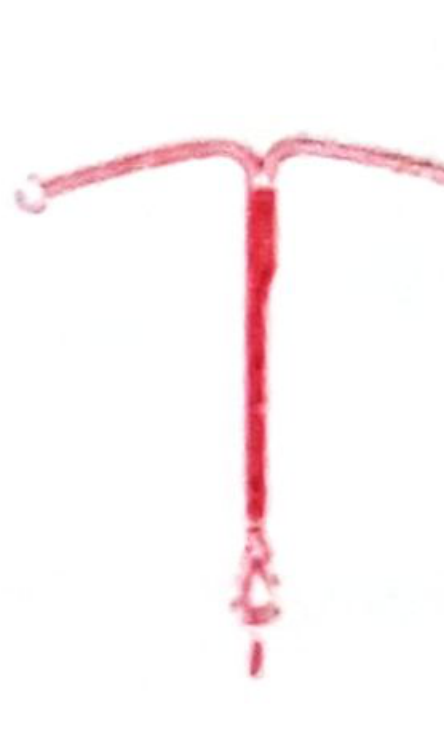
Mechanism of Action of Copper IUDs
- Spermicidal effect - copper ions are toxic to sperms
- Inhibition of fertilization - changes in tubal motility
- Endometrial effect - creates hostile environment; prevents implantation
- May also alter cervical mucus
Effectiveness of IUDs (First Year, Parous Women)
| Device | Pregnancy rate (%) | Expulsion rate (%) |
|---|---|---|
| Lippes Loop | 3 | 12-20 |
| Cu-7 | 2-3 | 6 |
| TCu-200 | 3 | 8 |
| TCu-380A | 0.5-0.8 | 5 |
| Progesterone IUD | 1.3-1.6 | 2.7 |
| Levonorgestrel IUD | 0.2 | 6 |
Duration of Use
- Cu-T-380A: approved for 10 years (shown effective for 12 years)
- Cu-T-200: 4 years
- Progesterone IUD: replaced annually (reservoir depleted in 12-18 months)
- LNG-IUS (Mirena): at least 7 years
Timing of Insertion
- Within 10 days of onset of menstrual period (ideal: within 2 days)
- Postpartum: after 6 weeks (48 hours postpartum is also acceptable - immediate postpartum)
- Post-abortion: immediately or within 1 week
Contraindications to IUD
- Pregnancy
- Active pelvic infection / PID
- Uterine abnormalities (fibroids, bicornuate uterus)
- Undiagnosed abnormal uterine bleeding
- Genital malignancy
- Copper allergy (for copper IUDs)
Side-effects of IUD
- Bleeding: most common - increased menstrual flow, intermenstrual spotting
- Pain: dysmenorrhoea, pelvic cramps
- Expulsion: 5-20% in first year
- Pelvic Infection / PID: risk increased especially in the first 20 days post-insertion; risk of actinomycosis with prolonged use
- Ectopic pregnancy: IUD does not prevent ectopic pregnancy (relative risk increased)
- Perforation of uterus (rare, ~1 per 1000 insertions)
- Missing threads: check for expulsion, pregnancy, or perforation
C. HORMONAL METHODS
1. Combined Oral Contraceptive Pill (COC)
Composition: Synthetic estrogen (Ethinyl estradiol) + Progestogen
Mechanism of action:
- Inhibition of ovulation (primary mechanism) - suppresses LH surge via negative feedback on hypothalamus-pituitary axis
- Cervical mucus - becomes thick, hostile to sperm penetration
- Endometrial changes - prevents implantation (atrophic endometrium)
- Tubal motility - altered
Types of COC pills:
- Monophasic: same dose of both hormones throughout the cycle
- Biphasic: estrogen dose same, progestogen increases after day 10
- Triphasic: doses change in 3 phases mimicking natural cycle; lowest total hormone dose
Regimen: Taken daily for 21 days, then 7-day break (withdrawal bleed occurs); newer packs include 28 days (7 inactive pills)
Efficacy: Failure rate = 0.1-0.5 per 100 woman-years (perfect use); ~3 (typical use) - most effective reversible spacing method
Non-contraceptive benefits:
- Reduces dysmenorrhoea and PMS
- Reduces risk of ovarian and endometrial cancer
- Treats acne, hirsutism (anti-androgenic pills)
- Reduces PID risk; protects against benign breast disease
- Reduces risk of ectopic pregnancy
Side-effects:
- Nausea, weight gain, breast tenderness, breakthrough bleeding
- Cardiovascular: hypertension, increased risk of DVT/PE (estrogen effect), stroke
- Reduced libido
- Cholestasis; gallstones
Contraindications (absolute): Pregnancy, thromboembolic disease, ischemic heart disease, uncontrolled hypertension, stroke, breast/genital carcinoma, liver disease, SLE, smoking >35 years age
2. Progestogen-Only Pill (POP / Mini-pill)
- Contains only progestogen; no estrogen
- Taken continuously (no pill-free interval)
- Mechanism: thickens cervical mucus (primary), may inhibit ovulation
- Used in: Breastfeeding mothers (doesn't affect milk), women with contraindications to estrogen
- Less effective than COC; higher failure rate ~1-3 per 100 WY
- Side-effects: irregular bleeding, amenorrhoea
3. Injectable Contraceptives
- DMPA (Depot Medroxyprogesterone Acetate / Depo-Provera): 150 mg IM every 3 months
- NET-EN (Norethisterone Enanthate): 200 mg IM every 2 months
- Mechanism: inhibits ovulation, thickens cervical mucus
- Efficacy: 0.3 per 100 WY - very effective
- Advantages: long-acting, no daily compliance needed, coitus-independent, safe in breastfeeding
- Disadvantages: menstrual irregularities, weight gain, delayed return of fertility (up to 12-18 months for DMPA), not immediately reversible, requires clinic visit for injection
4. Implants
- Norplant: 6 silastic capsules containing levonorgestrel implanted subdermally in the upper arm; effective for 5 years
- Implanon/Nexplanon: Single rod, etonogestrel; effective 3 years
- Most effective reversible method available
- Disadvantages: Irregular bleeding, requires trained provider for insertion/removal, expensive
5. Hormonal IUD (LNG-IUS / Mirena)
- Releases 20 µg levonorgestrel/day locally
- Failure rate: 0.2 per 100 WY (most effective IUD)
- Effective for 5-7 years
- Also used therapeutically for menorrhagia, endometriosis
6. Emergency Contraception (EC)
- Levonorgestrel (Plan B / i-pill): 1.5 mg single dose or 0.75 mg x 2 doses 12 hours apart - within 72 hours of unprotected intercourse (efficacy up to 120 hours but decreases)
- Ulipristal acetate (ella): within 120 hours
- Combined pill (Yuzpe method): 2 doses of high-dose COC 12 hours apart within 72 hours
- Copper IUD: inserted within 5 days; most effective EC (~99%)
- Mechanism: delays/inhibits ovulation; does NOT terminate established pregnancy
D. NATURAL (MISCELLANEOUS) METHODS
1. Rhythm / Calendar Method (Ogino-Knaus Method)
- Abstinence during fertile period
- Fertile period: day of ovulation (14 days before next period) ± 3-4 days
- Formula: Shortest cycle - 18 = first unsafe day; Longest cycle - 11 = last unsafe day
- Failure rate: 14-47 per 100 WY (high - depends on regularity)
2. Basal Body Temperature (BBT) Method
- Temperature drops slightly before ovulation, then rises by 0.2-0.5°C after ovulation (progesterone effect)
- Abstinence from menstruation until 3 consecutive days of elevated temperature
- Identifies post-ovulatory infertile period only
3. Billings / Cervical Mucus Method (Ovulation Method)
- Monitors cervical mucus changes
- Pre-ovulatory: mucus is clear, slippery, stretchy (spinnbarkeit/egg-white mucus = fertile)
- Post-ovulatory: mucus becomes thick, opaque, scanty (infertile)
4. Symptothermal Method
- Combines BBT + cervical mucus + calendar - most effective natural method
5. Lactational Amenorrhoea Method (LAM)
- Breastfeeding suppresses GnRH via raised prolactin → anovulation
- Effective if ALL 3 criteria met: (BELLAGIO CRITERIA)
- Baby is <6 months old
- Mother is fully/exclusively breastfeeding (no supplemental feeds)
- Mother is amenorrhoeic (no menstrual return)
- When all 3 met: failure rate < 2 per 100 WY
6. Coitus Interruptus (Withdrawal)
- Withdrawal of penis before ejaculation
- Failure rate: 15-20 per 100 WY (pre-ejaculatory fluid may contain sperm)
II. TERMINAL METHODS (Sterilization)
A. MALE STERILIZATION (Vasectomy)
- Surgical division/ligation of the vas deferens under local anaesthesia
- Done as an outpatient/day-care procedure
- No scalpel vasectomy (NSV): newer technique using a small puncture - safer, quicker, less complications, no suture needed
Post-operative advice:
- NOT immediately sterile - at least 30 ejaculations needed before semen examination is negative
- Use contraceptives until aspermia is confirmed
- Avoid bath for 24 hours; keep site clean and dry
- Wear T-bandage/scrotal support (langot) for 15 days
- Avoid cycling or lifting heavy weights for 15 days
- Stitches removed on 5th post-op day
Failure rate: 0.15 per 100 WY (almost negligible)
Complications: hematoma, infection, sperm granuloma, recanalization (rare)
B. FEMALE STERILIZATION (Tubectomy)
Methods:
1. Laparoscopy:
- Instrument introduced via small abdominal incision; abdomen inflated with CO₂/N₂O/air
- Fallopian tubes occluded using Falope rings or clips
- Short operating time, smaller scar, shorter hospital stay
- Not recommended for postpartum patients for 6 weeks after delivery (CAN be done concurrent with MTP)
- Haemoglobin must be ≥ 8 g/dL; no associated medical disorders
2. Minilaparotomy (minilap):
- Small suprapubic incision (~2-3 cm); tubes identified and ligated
- Simple, low-cost, performed under local/spinal anaesthesia
- Most suitable for: postpartum sterilization within 7 days of delivery
Tubal Occlusion Techniques:
- Pomeroy method (most common): loop of tube tied with absorbable suture and excised
- Fimbriectomy: removal of fimbriated end (highest failure if partial)
- Falope ring / Filshie clip (laparoscopic)
- Hulka-Clemens clip
Timing:
- Interval: any time during menstrual cycle (early better)
- Postpartum: within 7 days (mini-lap) or after 6 weeks (laparoscopy)
- Concurrent with caesarean section or MTP
Failure rate: ~0.5 per 100 WY (Pomeroy); Filshie clip ~0.3
III. EVALUATION OF CONTRACEPTIVE METHODS
Pearl Index (Pearl Pregnancy Rate)
The standard measure of contraceptive efficacy.
Definition: Number of unintended pregnancies per 100 woman-years (HWY) of exposure
Formula:
Pearl Index = (Total accidental pregnancies / Total months of exposure) × 1200
- The factor 1200 = number of months in 100 years
- Total accidental pregnancies in numerator = every known conception (live births + still births + abortions)
- Deduct 10 months for full-term pregnancy and 4 months for abortion from total exposure period
- A minimum of 600 months of exposure needed before firm conclusion
Interpretation: A Pearl Index of 10 → 2.5 unintended pregnancies over a woman's 25-year fertile life
Limitation: Failure rates decline with duration of use; Pearl Index (based on fixed exposure period) cannot accurately compare methods at various durations. Overcome by Life-Table Analysis.
Life-Table Analysis
- Calculates failure rate for each month of use
- Cumulative failure rate compares methods at any specific length of exposure
- Women leaving the study for reasons other than unintended pregnancy are removed from analysis
COMPARATIVE FAILURE RATES (Pearl Index Summary)
| Method | Failure Rate (per 100 WY) |
|---|---|
| No contraception | ~85 |
| COC pill (perfect use) | 0.1-0.5 |
| DMPA injection | 0.3 |
| LNG-IUS | 0.2 |
| Implant (Norplant) | 0.05-0.09 |
| Cu-T-380A | 0.5-0.8 |
| Condom | 2-14 |
| Diaphragm (with spermicide) | 2-20 |
| Spermicides alone | 20-25 |
| LAM (all criteria met) | <2 |
| Rhythm method | 14-47 |
| Coitus interruptus | 15-20 |
| Vasectomy | 0.15 |
| Tubectomy (Pomeroy) | 0.5 |
HIGH-YIELD EXAM POINTS (20-Mark Focus)
| Question Pattern | Key Answer |
|---|---|
| Contraception under NHP | Cu-T-380A (from 2002); NIRODH; DMPA |
| IUD generations | 1st=inert (Lippes); 2nd=copper (CuT); 3rd=hormonal (LNG-IUS) |
| Most effective reversible method | Implants (Norplant) / LNG-IUS |
| Most effective OC | Combined Oral Pill |
| OC in lactation | Progestogen-only pill (POP) |
| When is vasectomy "sterile"? | After 30 ejaculations + confirmed aspermia |
| Pearl Index formula | (Pregnancies/Months of exposure) x 1200 |
| Emergency contraception window | LNG: 72h; UPA: 120h; Cu-IUD: 5 days |
| LAM criteria | <6 months + exclusive BF + amenorrhoea |
| Fertile period formula | Shortest cycle -18; Longest cycle -11 |
| IUD interval insertion time | Within 10 days of period (ideally day 2) |
| Postpartum tubectomy | Minilaparotomy within 7 days |
| Most common IUD side effect | Increased menstrual bleeding |
| NSV stands for | No Scalpel Vasectomy |
KEY DEFINITIONS TO MEMORIZE
Contraceptive method: Any temporary or permanent measure to prevent pregnancy resulting from coitus.
Spacing method: Temporary method allowing delay between pregnancies (reversible).
Terminal method: Permanent surgical method - vasectomy / tubectomy.
Cafeteria approach: Offering all methods from which a couple can choose based on individual needs - the current approach in family planning programmes.
Conventional contraceptives: Methods requiring action at the time of intercourse (condoms, spermicides).
Pearl Index: Number of unintended pregnancies per 100 woman-years of contraceptive use.
Source: Park's Textbook of Preventive and Social Medicine (PSM), pp. 581-597
Pro exam tip: For a 20-mark question, structure your answer as: (1) Definition + Introduction, (2) Classification table, (3) Detailed description of each category with mechanism, efficacy, advantages, disadvantages, and (4) Evaluation methods (Pearl Index). Diagrams of IUD types and the contraceptive classification tree earn extra marks. Always quote the Pearl Index formula - it is a guaranteed scoring point.
Anc detail explanation with mnemonics for 20 marks
Reading File
Finding Sources
Finding Sources
Park's PSM has dedicated ANC sections in blocks 7, 8, and 12. Let me read them all in parallel.
Reading File
Reading File
Reading File
Excellent - rich content from Park's PSM. Let me now read more of the core ANC block (block 8) to get investigations, iron-folic acid, TT immunization, and high-risk criteria.
Reading File
I have everything I need for a comprehensive 20-mark ANC answer. Let me now compose the full response with mnemonics.
Antenatal Care (ANC)
PSM Exam Preparation - 20 Marks | With Mnemonics
Source: Park's Textbook of Preventive and Social Medicine
DEFINITION
Antenatal Care (ANC) is defined as the care provided by skilled health-care professionals to pregnant women and adolescent girls in order to ensure the best health conditions for both mother and baby during pregnancy.
Components of ANC include:
- Risk identification
- Prevention and management of pregnancy-related or concurrent diseases
- Health education and health promotion
ANC reduces maternal and perinatal morbidity and mortality - both directly (by detection and management) and indirectly (by identifying women at risk during labour/delivery and ensuring timely referral).
OBJECTIVES OF ANC
🧠 Mnemonic: "PRFR ATIM" (Pregnant Requires Focused Routine Attention To Improve Motherhood)
| Letter | Objective |
|---|---|
| P | Promote, protect and maintain health of the mother during pregnancy |
| R | Reduce maternal and infant mortality and morbidity |
| F | Foresee complications and prevent them |
| R | Remove anxiety and dread associated with delivery |
| A | Attend to under-fives accompanying the mother |
| T | Teach the mother - child care, nutrition, hygiene, sanitation |
| I | Identify ("detect") high-risk cases for special attention |
| M | Make her aware of family planning needs |
ANTENATAL VISITS - SCHEDULE
Ideal Schedule:
- 1st to 7th month: Once a month
- 8th month: Twice a month
- 9th month onwards: Once a week
Minimum 4-Visit Schedule (WHO / India's NHP):
🧠 Mnemonic: "12 – 26 – 34 – TERM"
| Visit | Timing | Purpose |
|---|---|---|
| 1st visit | Within 12 weeks (as soon as pregnancy suspected) | Registration + 1st antenatal check-up + history |
| 2nd visit | 14 - 26 weeks | Blood tests, Hb, anomaly scan |
| 3rd visit | 28 - 34 weeks | BP, presentation, fetal growth |
| 4th visit | 36 weeks to term | Final check, delivery planning |
"Register her early, check her often" - Early registration = within first trimester (before 12 weeks)
COMPONENTS OF ANC (The "3H + WAIT" Package)
🧠 Mnemonic: "HEAL the BITE"
| Letter | Component |
|---|---|
| H | History - complete obstetric, medical, family history |
| E | Examination - general + abdominal + pelvic |
| A | Anemia assessment + Iron/Folic acid supplementation |
| L | Lab investigations |
| B | BP monitoring for pre-eclampsia |
| I | Immunization - Tetanus Toxoid |
| T | Teaching/Counselling - nutrition, hygiene, birth preparedness |
| E | Early identification of high-risk cases |
1. HISTORY TAKING
- LMP (Last Menstrual Period) → calculate Expected Date of Delivery (EDD)
- EDD formula (Nagele's rule): LMP + 9 months + 7 days (or LMP - 3 months + 7 days)
- Obstetric history: parity, past abortions, previous CS, instrumental deliveries
- Medical history: diabetes, hypertension, cardiac disease, TB, malaria, HIV
- Family history: twins, hypertension, diabetes
2. PHYSICAL EXAMINATION
General Examination:
| Parameter | Significance |
|---|---|
| Height | <140 cm in primi → high risk (small pelvis) |
| Weight | Baseline + gain monitoring (normal gain: 10-12 kg total) |
| Blood Pressure | Detect pre-eclampsia (BP ≥ 140/90 mmHg) |
| Pallor | Detect anaemia |
| Oedema | Pre-eclampsia, nutritional deficiency |
| Respiratory rate | Detect respiratory problems |
Abdominal Examination:
| Trimester | What to Assess |
|---|---|
| 1st trimester | Uterine size for gestational age |
| 2nd trimester | Fundal height, fetal heart sounds (FHS from 20 wk with fetoscope, 12 wk with Doppler) |
| 3rd trimester | Fundal height, presentation, lie, position, engagement, FHS |
🧠 Mnemonic for Abdominal Palpation - "FLiPPE":
- F - Fundal height
- L - Lie (longitudinal / transverse / oblique)
- P - Presentation (cephalic / breech)
- P - Position (Lateral - LOA/ROA)
- E - Engagement (head: fifths palpable)
3. LABORATORY INVESTIGATIONS
🧠 Mnemonic: "HURB STV" (At Sub-Centre + PHC)
At Sub-Centre (SC):
| Test | Purpose |
|---|---|
| H - Haemoglobin estimation | Detect anaemia |
| U - Urine albumin and sugar | Pre-eclampsia, gestational diabetes |
| R - Rapid malaria test | Malaria (endemic zones) |
| B - Blood group (ABO + Rh) | At PHC |
At PHC/CHC/FRU:
| Test | Purpose |
|---|---|
| S - Syphilis (VDRL/RPR) | Congenital syphilis prevention |
| T - TB skin test | Detect TB |
| V - VDRL + VIH (HIV) testing | PPTCT programme |
| Blood sugar | Gestational diabetes |
| HBsAg | Hepatitis B (for newborn prophylaxis) |
At every visit: Hb estimation + Urine albumin/sugar + BP + Weight + Abdominal examination
4. NUTRITIONAL SUPPLEMENTATION
🧠 Mnemonic: "IFA - Iron Folic Acid = Important For Anemia"
Iron and Folic Acid (IFA) Supplementation:
| Drug | Dose | Duration |
|---|---|---|
| Folic acid alone | 5 mg/day (or 400 µg periconceptionally) | Peri-conception - 1st trimester (prevents Neural Tube Defects) |
| IFA (Iron 100 mg + Folic acid 500 µg) | 1 tablet/day | From 12 weeks throughout pregnancy |
| Post-delivery | Continue IFA for 180 days postpartum | Under WIFS/RCH programme |
Importance of Folic Acid: Prevents Neural Tube Defects (NTD) - spina bifida, anencephaly. Must be given BEFORE conception and in the first 12 weeks (when neural tube closes by week 6).
Calcium Supplementation:
- 500 mg elemental calcium twice daily from 20 weeks
- Prevents pre-eclampsia and eclampsia
5. TETANUS TOXOID (TT) IMMUNIZATION
🧠 Mnemonic: "TT at 16 and 20 = Two T's, Two Times"
| Situation | Schedule |
|---|---|
| Unimmunized / Unknown | TT-1: as early as possible in pregnancy; TT-2: 4 weeks after TT-1 |
| Previously received 2 TT doses (within 3 years) | Booster dose only |
| Completely immunized (5 doses childhood + 2 previous TT) | One booster |
Under NHP India:
| Dose | Timing |
|---|---|
| TT-1 | At 1st ANC visit (or early as possible, ideally 16 weeks) |
| TT-2 | 4 weeks after TT-1 (ideally at ~20 weeks) |
| TT Booster | If immunized in previous pregnancy within 3 years |
Why TT? Prevents Neonatal Tetanus (NNT) - tetanus of the newborn through infected umbilical stump. NNT is a significant cause of neonatal mortality in India.
Protection duration: Each complete TT series provides immunity for at least 3 years.
6. HIGH-RISK PREGNANCY (Risk Approach)
The central purpose of ANC is to identify high-risk cases early from the large group of antenatal mothers.
🧠 Mnemonic: "ESMAP + 3 Olds PAST"
| Risk Factor | Detail |
|---|---|
| E - Elderly primi | Age ≥ 30 years at first pregnancy |
| S - Short statured primi | Height ≤ 140 cm |
| M - Malpresentation | Breech, transverse lie |
| A - APH / Abortion | Antepartum haemorrhage, threatened abortion, previous abortions |
| P - Pre-eclampsia / eclampsia | BP ≥ 140/90 + proteinuria |
| 3 - 3 or more spontaneous consecutive abortions | |
| Olds - Elderly grandmultipara | Risk of atonic PPH, malpresentations |
| P - Previous CS / instrumental delivery / still-birth / IUD / MRP | |
| A - Anaemia | Hb <11 g/dL (mild), <7 g/dL (severe) |
| S - Systemic diseases | CVD, renal disease, DM, TB, malaria, HIV |
| T - Twins / hydramnios + Treatment for infertility | |
| + | Prolonged pregnancy (>14 days post EDD) |
7. ANAEMIA IN PREGNANCY
🧠 Mnemonic for Grading: "NHS + S" (Normal-Healthy Starts Suffering)
| Grade | Hb Level | Management |
|---|---|---|
| Normal | ≥ 11 g/dL | Routine IFA |
| Mild anaemia | 10-10.9 g/dL | Double IFA + diet |
| Moderate anaemia | 7-10 g/dL | IFA + investigate + treat underlying cause |
| Severe anaemia | < 7 g/dL | Hospitalize, consider blood transfusion |
| Very severe | < 4 g/dL | Emergency blood transfusion |
WHO definition of anaemia in pregnancy: Hb < 11 g/dL
India: Most common cause = nutritional iron deficiency (inadequate diet + repeated pregnancies + hookworm infestation)
8. HEALTH EDUCATION AND COUNSELLING
🧠 Mnemonic: "DRIB SAFE"
| Letter | Advice |
|---|---|
| D | Diet - increase calorie intake by 350 kcal/day, protein-rich diet, green leafy vegetables |
| R | Rest - at least 2 hours rest in afternoon; avoid strenuous work |
| I | Institutional delivery - encourage, explain JSY scheme benefits |
| B | Breastfeeding - antenatal breast preparation, advice on exclusive BF |
| S | Stop smoking/alcohol/tobacco - teratogenic risks |
| A | Awareness of danger signs (see below) |
| F | Family planning - post-delivery contraception counselling |
| E | Exercise/Personal hygiene - light walking, dental care, bowel habits |
9. DANGER SIGNS IN PREGNANCY
🧠 Mnemonic: "SHE BLEED"
| Letter | Danger Sign |
|---|---|
| S | Severe headache / visual disturbances / convulsions (eclampsia) |
| H | High fever |
| E | Excessive vomiting |
| B | Bleeding per vagina (APH) |
| L | Labour pains before 37 weeks (preterm labour) |
| E | Edema of face/hands (pre-eclampsia) |
| E | Escape of fluid (PROM - Premature Rupture of Membranes) |
| D | Decreased / absent fetal movements |
Any danger sign = IMMEDIATE REFERRAL
10. GOVERNMENT SCHEMES UNDER ANC
🧠 Mnemonic: "JSY JSSK PMSMA"
| Scheme | Full Name | Benefit |
|---|---|---|
| JSY | Janani Suraksha Yojana | Cash incentive for institutional delivery (especially BPL) |
| JSSK | Janani Shishu Suraksha Karyakram | Free drugs, diagnostics, blood, diet, transport for pregnant women & sick neonates |
| PMSMA | Pradhan Mantri Surakshit Matritva Abhiyan | Free, assured, comprehensive ANC on 9th of every month at government health facilities |
| WIFS | Weekly Iron Folic Acid Supplementation | IFA supplementation for adolescent girls + pregnant women |
| PPTCT | Prevention of Parent-to-Child Transmission | HIV testing + ARV prophylaxis in pregnancy |
11. COMPLETE ANC PACKAGE (Under NHP/NRHM)
Essential Services:
- Early registration - within first trimester (before 12 weeks)
- Minimum 4 ANC visits as per schedule
- Weight, BP, Hb, urine albumin/sugar at every visit
- IFA from 12 weeks; Folic acid from peri-conception
- TT immunization (TT1 + TT2 / Booster)
- Abdominal examination for fetal growth and presentation
- Recording tobacco use by all antenatal mothers
- Name-based tracking of all pregnant women
- Identification and management of high-risk pregnancies
- Malaria prophylaxis in endemic zones
- Counselling on nutrition, rest, birth preparedness, family planning, institutional delivery
- Identify RTI/STI, HIV, Hepatitis B - provide counselling + referral
- JSSK / JSY information
- Name-based tracking of missed and left-out ANC cases
SUMMARY TABLE: HIGH-YIELD NUMBERS FOR ANC
🧠 Mnemonic: "4 visits, 12-26-34-Term, 180 IFA, 140 short, 11 anaemia"
| Item | Number to Remember |
|---|---|
| Minimum ANC visits | 4 |
| 1st visit | Within 12 weeks |
| 2nd visit | 14-26 weeks |
| 3rd visit | 28-34 weeks |
| 4th visit | 36 weeks to term |
| High-risk: short stature | ≤ 140 cm |
| High-risk: elderly primi | ≥ 30 years |
| Anaemia in pregnancy (WHO) | Hb < 11 g/dL |
| Severe anaemia | Hb < 7 g/dL |
| IFA postpartum | 180 days |
| Normal weight gain | 10-12 kg total |
| TT-2 interval | 4 weeks after TT-1 |
| NTD prevention: folic acid timing | Before conception + first 12 weeks |
POSTNATAL CARE (PNC) - Brief (related to ANC continuum)
Postnatal home visits on: Day 0, 3, 7 and 42
- Early breastfeeding within 1 hour of birth
- Exclusive breastfeeding for 6 months
- Newborn care: warmth, cord care, eye care, immunization
EXAM WRITING FORMAT FOR 20 MARKS
For a 20-mark PSM question on ANC, structure your answer as:
- Definition (2 marks)
- Objectives - list all 8 with mnemonic (3 marks)
- ANC Visit Schedule - 4-visit schedule with timing (2 marks)
- Components of each visit - History, Examination, Investigations, Interventions (5 marks)
- Examinations (general + obstetric)
- Lab investigations (SC level + PHC level)
- IFA supplementation schedule
- TT immunization schedule
- High-Risk Approach - list all risk factors (3 marks)
- Health Education / Danger Signs (2 marks)
- Government Schemes - JSY, JSSK, PMSMA (2 marks)
- Conclusion - 1-2 lines on importance of ANC (1 mark)
QUICK-RECALL MNEMONICS SUMMARY
| Mnemonic | Covers |
|---|---|
| "12-26-34-TERM" | ANC visit schedule |
| "HEAL the BITE" | Components of ANC |
| "HURB STV" | Lab investigations |
| "IFA = Important For Anemia" | Iron-folic acid role |
| "TT at 16 and 20" | TT immunization schedule |
| "ESMAP + 3 Olds PAST" | High-risk pregnancy features |
| "NHS + S" | Grading of anaemia |
| "DRIB SAFE" | Health education advice |
| "SHE BLEED" | Danger signs in pregnancy |
| "JSY JSSK PMSMA" | Government schemes |
| "FLiPPE" | Abdominal palpation steps |
| "4 visits, 12-26-34-Term, 180, 140, 11" | Key numbers |
Source: Park's Textbook of Preventive and Social Medicine, pp. 597-620
Pro exam tip: In PSM exams, drawing the 4-visit ANC schedule as a timeline diagram and the high-risk features as a box consistently earns extra marks. Mentioning PMSMA (9th of every month), JSY, and JSSK shows awareness of current national programmes - examiners love this. Danger signs with the mnemonic "SHE BLEED" is a guaranteed scoring point if asked as a sub-question.
Describe epidemiology, prevention and control of Tuberculosis.
Reading File
Finding Sources
Finding Sources
Finding Sources
The main TB content is in block3. Let me read the core TB section, natural history, and control all in parallel.
Reading File
Reading File
Reading File
Good content. Let me read the epidemiology (determinants/agent/host/environment), natural history, and the NTEP/treatment sections now.
Reading File
Reading File
Let me read the epidemiology determinants section (agent/host/environment) and the treatment/NTEP section.
Reading File
Reading File
Let me now get the epidemiology determinants (agent, host, environment), NTEP treatment regimens, and BCG vaccination details.
Reading File
Reading File
Now let me get the NTEP treatment regimens, BCG, and the End TB strategy sections.
Reading File
I now have comprehensive material. Let me also get the BCG vaccination and NTEP treatment regimens.
Reading File
I have enough comprehensive content from Park's PSM. Now let me compose the full, exam-ready answer with mnemonics.
Tuberculosis - Epidemiology, Prevention and Control
PSM Exam - 20 Marks | Full Answer with Mnemonics
Source: Park's Textbook of Preventive and Social Medicine
INTRODUCTION
Tuberculosis (TB) is a specific infectious disease caused by Mycobacterium tuberculosis, primarily affecting the lungs (pulmonary TB). It can also affect the intestines, meninges, bones and joints, lymph glands, skin, and other tissues. It is usually chronic with varying clinical manifestations.
TB remains a worldwide public health problem despite the causative organism being discovered over 100 years ago and effective drugs/vaccines being available. It is both preventable and curable but continues to kill millions annually.
PART 1: EPIDEMIOLOGY OF TUBERCULOSIS
Epidemiology is studied under three headings: Agent, Host, and Environment (Epidemiological Triad).
🧠 Mnemonic: "AHE = Agent, Host, Environment"
A. AGENT FACTORS
Causative Organism:
- Mycobacterium tuberculosis (human type) - most common
- Mycobacterium bovis (bovine type) - from cattle; transmitted by consuming unpasteurized milk; causes intestinal TB
- Mycobacterium africanum - rare, found in West Africa
Properties of M. tuberculosis:
| Property | Detail |
|---|---|
| Staining | Acid-fast bacillus (AFB) - Ziehl-Neelsen stain (carbol fuchsin → red bacilli) |
| Gram stain | Gram-positive but difficult to stain |
| Shape | Slender, slightly curved rod |
| Growth | Slow-growing; takes 6-8 weeks on Lowenstein-Jensen (LJ) medium |
| Resistance | Resistant to drying; survives in dark, dusty environments for weeks |
| Sensitivity | Killed by sunlight, UV light, heat (60°C for 20 min), common disinfectants |
🧠 Mnemonic for AFB stain steps: "Fix, Carbol, Steam, Wash, Acid, Wash, Counterstain"
B. HOST FACTORS
1. Age:
- Can affect all ages
- In India: peak incidence in 15-54 year age group (working adults - most productive years)
- Children: 12% of global TB burden; often miliary/meningeal TB
2. Sex:
- Males > Females (2:1 ratio globally; 56% male in 2019)
- BUT: TB disproportionately affects young females - >50% of female cases before age 34
- TB kills more women in reproductive age than all causes of maternal mortality combined
3. Immunity and Nutrition:
- Malnutrition is the single most important host factor - reduces cell-mediated immunity
- Protein deficiency, vitamin deficiencies increase susceptibility
- Immunosuppression: HIV is the most potent risk factor for progression from TB infection to disease
- Corticosteroid use, diabetes, renal failure, malignancies increase risk
4. Prior Infection / BCG Vaccination:
- Previous BCG vaccination → partial protection (especially against severe forms - miliary, meningeal TB in children)
- Tuberculin test (Mantoux) positivity = evidence of past infection
5. Race / Genetics:
- Certain races (e.g., Africans) show higher susceptibility
- HLA type influences susceptibility
6. Co-morbidities:
🧠 Mnemonic: "DIAMOND" (conditions increasing TB risk)
| Letter | Condition |
|---|---|
| D | Diabetes mellitus (3x increased risk; "lethal duet") |
| I | Immunosuppression (steroids, TNF-inhibitors) |
| A | Alcoholism + tobacco use |
| M | Malignancy (especially hematological) |
| O | Other lung diseases (silicosis - 30x risk) |
| N | Nutrition - malnutrition |
| D | Dialysis / renal failure |
HIV-TB co-infection: The most dangerous combination:
- HIV = most potent risk factor for TB reactivation
- TB = most common opportunistic infection and cause of death in HIV patients
- TB patients should be offered HIV testing; HIV patients should be screened for TB
C. ENVIRONMENTAL FACTORS
1. Overcrowding:
- Most important environmental factor
- Overcrowded dwellings, slums, prisons, refugee camps promote TB spread
- Inadequate ventilation → prolonged exposure to droplet nuclei
2. Socio-economic Status:
- TB is primarily a disease of poverty
- Victims: migrant labourers, slum dwellers, residents of backward areas, tribal pockets
- Poor living conditions + malnutrition + shanty housing = triad of TB promotion
3. Urbanization and Migration:
- Rapid urbanization → overcrowding
- Migration mixes infected and uninfected communities rapidly
4. Indoor Air Pollution:
- Smoke from cooking, tobacco - damages respiratory mucosa → increased susceptibility
5. Ventilation and Sunlight:
- Poor ventilation → accumulation of droplet nuclei
- Sunlight (UV) is bactericidal - kills M. tuberculosis
D. SOURCE OF INFECTION AND TRANSMISSION
Source:
- Sputum-positive (smear-positive) pulmonary TB patient = main source
- One smear-positive case can infect 10-15 persons in a year
Mode of Transmission:
🧠 Mnemonic: "AD-I-C" (Air Droplet Is the Common route)
| Route | Detail |
|---|---|
| Airborne (main) | Inhalation of droplet nuclei (Wells' droplet nuclei) produced by coughing, sneezing, speaking, singing |
| Droplet infection | Large droplets settle quickly; droplet nuclei (<5 µm) stay suspended for hours |
| Ingestion | M. bovis via infected cow's milk → intestinal TB (now rare with pasteurization) |
| Inoculation | Direct inoculation through skin (rare - "prosector's wart") |
| Congenital | Transplacental spread (very rare - congenital TB) |
KEY FACT: Droplet nuclei (1-5 µm diameter) can remain suspended in air for hours and reach alveoli. Large droplets (>5 µm) are filtered out in upper respiratory tract.
E. INCUBATION PERIOD
- Time from infection to tuberculin test positivity: 3-6 weeks
- Time to development of clinical disease: weeks to months to years (depending on host-parasite relationship)
- Lifetime risk of developing disease from infection: 5-10%
- One-third of global population is asymptomatically infected (latent TB)
F. NATURAL HISTORY OF TUBERCULOSIS
Exposure to M. tuberculosis
         ↓
PRIMARY INFECTION (Ghon Focus)
         ↓
    90-95%                    5-10%
      ↓                          ↓
LATENT TB               PRIMARY PROGRESSIVE TB
(Dormant bacilli)         (especially in children,
Lifetime risk:             immunocompromised)
5-10% reactivation
         ↓
REACTIVATION (POST-PRIMARY TB)
(Most adult TB = reactivation of latent focus)
Ghon Complex = Ghon focus (peripheral lung lesion) + ipsilateral hilar lymphadenopathy
G. PROBLEM STATEMENT
Global:
- 10 million new TB cases in 2019 (slowly declining)
- 1.2 million deaths among HIV-negative people (2019)
- 208,000 additional deaths among HIV-positive people
- 56% male; 32% female; 12% children (<15 years)
- 30 high-burden countries account for 87% of global TB burden
India:
- Highest TB burden country in the world
- India accounts for 17% of global TB incidence (highest single-country contribution)
- Top 5 countries with highest gap between estimated and notified cases: India (17%), Nigeria (11%), Indonesia (10%), Pakistan (8%), Philippines (7%)
- Goal: TB-free India by 2025 (5 years ahead of global SDG target of 2030)
H. INDICES USED TO MEASURE TB BURDEN
🧠 Mnemonic: "PAINT" (Prevalence, ARTI, Incidence, Notifications, Treatment success)
| Index | Definition |
|---|---|
| Prevalence | Number of cases (old + new) per 100,000 population at a given time |
| Incidence | Number of new cases per 100,000 population per year |
| ARTI | Annual Risk of Tuberculosis Infection - probability of a person being infected during 1 year |
| Notification rate | Number of cases notified to programme per 100,000/year |
| Treatment success rate | % of cohort achieving cure + treatment completed |
| Case fatality rate | Deaths among registered cases |
| Default rate | Patients lost to follow-up |
ARTI is the most sensitive indicator of TB burden in a community. A 1% ARTI means 1 in 100 uninfected persons gets infected per year.
PART 2: PREVENTION AND CONTROL OF TUBERCULOSIS
"Tuberculosis control means reduction in the prevalence and incidence of disease in the community."
The two fundamental components of a national TB programme:
- Curative component: Case-finding + Treatment (most powerful weapon)
- Preventive component: BCG vaccination
🧠 Mnemonic: "CATS + B" (Case-finding, Adequate treatment, Treatment adherence, Surveillance + BCG)
A. CASE FINDING
a. Passive Case Finding:
- Most TB patients (>60%) seek care on their own due to symptoms (cough, fever)
- "Symptomatic case finding" - the most common and productive method
- All patients with cough ≥ 2 weeks = "TB presumptive case" - must be investigated
b. Intensified / Active Case Finding (ICF):
- Provider-initiated activity to detect TB early in targeted/vulnerable groups
- Focuses on: HIV patients, contacts of TB cases, prisoners, migrants, slum dwellers, diabetics, silicosis patients
- Screening tools: symptom screening + sputum microscopy + Chest X-ray + CBNAAT
c. Contact Tracing:
- All household contacts of a sputum-positive case must be examined
- Children under 5 who are contacts → given Isoniazid Preventive Therapy (IPT)
B. DIAGNOSIS OF TB
🧠 Mnemonic: "SXCM" = Sputum, X-ray, Culture, Molecular
| Test | Details |
|---|---|
| Sputum Smear Microscopy (ZN stain) | Method of choice; cheap, fast, specific. 2 samples (spot + early morning). Detects AFB. Positivity threshold: 10,000 bacilli/mL |
| Chest X-ray | Infiltrates, cavitations, upper lobe involvement, hilar adenopathy. Not diagnostic alone |
| CBNAAT (Xpert MTB/RIF) | Cartridge-based nucleic acid amplification test. WHO-endorsed. Detects M. tuberculosis AND rifampicin resistance simultaneously in ~2 hours. First-line test in India under NTEP |
| Culture (LJ medium) | Gold standard. Takes 6-8 weeks. For drug susceptibility testing (DST) |
| MGIT (liquid culture) | Results in ~42 days. Faster than LJ medium |
| Mantoux/Tuberculin test | Indicates infection (not disease). 0.1 mL PPD (2TU) intradermally; read at 48-72 hours. Positive: ≥10 mm induration (immunocompromised: ≥5 mm) |
| IGRA (Interferon Gamma Release Assay) | More specific than Mantoux; not affected by BCG vaccination |
| Line Probe Assay (LPA) | Detects MDR-TB quickly |
C. TREATMENT (NTEP - National Tuberculosis Elimination Programme)
Two-Phase Chemotherapy:
- Intensive Phase (IP): Multiple drugs to kill rapidly multiplying bacilli quickly (2-3 months)
- Continuation Phase (CP): Fewer drugs to eliminate dormant/persisting bacilli (4 months)
Standard Treatment Regimens (NTEP/WHO):
🧠 Mnemonic for First-line drugs: "RIPE"
| Drug | Mechanism | Major Side Effect |
|---|---|---|
| R - Rifampicin (RMP) | RNA polymerase inhibitor; bactericidal; kills "persisters" | Orange urine/tears, hepatotoxicity, drug interactions (induces CYP450) |
| I - Isoniazid (INH/H) | Mycolic acid synthesis inhibitor; bactericidal | Peripheral neuropathy (prevented by Pyridoxine B6), hepatotoxicity |
| P - Pyrazinamide (PZA/Z) | Kills intracellular slow-multiplying bacilli; bactericidal | Hepatotoxicity, hyperuricaemia (gout) |
| E - Ethambutol (EMB) | Arabinogalactan synthesis inhibitor; bacteriostatic | Retrobulbar neuritis (visual disturbance, colour blindness) |
Additional (classic):
- Streptomycin (S): First anti-TB drug ever; aminoglycoside; ototoxicity (hearing loss), nephrotoxicity
Drug Regimens:
| Category | Patients | Regimen |
|---|---|---|
| New DS-TB | New/previously treated DS-TB (all forms) | 2HRZE / 4HR (6 months total) |
| MDR-TB | Resistance to at least H + R | Long regimen (18-24 months) with second-line drugs |
| XDR-TB | MDR-TB + resistance to fluoroquinolones + second-line injectables | Individualised regimen |
Notation key: 2HRZE/4HR = 2 months of HRZE (Intensive Phase) followed by 4 months of HR (Continuation Phase)
DOTS (Directly Observed Treatment, Short-course): Healthcare worker directly observes patient swallowing every dose. Prevents drug resistance from irregular treatment.
Drug-Resistant TB:
| Type | Definition |
|---|---|
| MDR-TB | Resistant to at least Isoniazid + Rifampicin |
| Pre-XDR-TB | MDR/RR-TB + resistance to any fluoroquinolone |
| XDR-TB | MDR/RR-TB + resistance to fluoroquinolones + second-line injectables |
| RR-TB | Rifampicin-resistant TB (detected by Xpert) |
D. BCG VACCINATION
- BCG = Bacille Calmette-Guérin (attenuated live M. bovis)
- Developed by: Calmette and Guérin (1921) at Institut Pasteur, France
- Given at birth (or as early as possible in first year) - single intradermal dose
- Site: Left upper arm (deltoid region), intradermal
- Dose: 0.05 mL in neonates; 0.1 mL in older children/adults
- Cold chain required: Stored at 2-8°C (freeze-dried vaccine)
Efficacy of BCG:
| Protection Against | Efficacy |
|---|---|
| Pulmonary TB (adult) | Variable: 0-80% (inconsistent across trials) |
| Miliary TB (in children) | 75-86% |
| Tuberculous meningitis | 75-86% |
| Leprosy | ~50% |
BCG is most effective against severe disseminated forms of TB in children (miliary + meningeal). It does NOT reliably prevent pulmonary TB reactivation in adults.
BCG and Mantoux:
- BCG vaccination causes Mantoux positivity for up to 5-10 years; does NOT cause lifelong positivity
- A strongly positive Mantoux (≥15 mm) in a BCG-vaccinated child likely represents true infection
E. ISONIAZID PREVENTIVE THERAPY (IPT)
- INH 5 mg/kg/day (max 300 mg) daily for 6-9 months
- Given to latent TB cases to prevent progression to active disease
- Indications:
- HIV-positive individuals (regardless of Mantoux)
- Children under 5 years who are household contacts of smear-positive TB cases
- Recently tuberculin-converted individuals
F. HEALTH EDUCATION AND SOCIAL MEASURES
🧠 Mnemonic: "NOVES" (No to poverty; Overcrowding reduction; Ventilation; Education; Sunlight)
| Measure | Detail |
|---|---|
| N - Nutrition | Improve diet, combat malnutrition - boosts immunity |
| O - Overcrowding | Reduce overcrowding in homes, prisons, hostels |
| V - Ventilation | Adequate cross-ventilation; ceiling fans to disperse droplet nuclei |
| E - Education | Public awareness - recognize symptoms, seek early treatment, complete treatment |
| S - Sunlight | Encourage sunlight exposure; UV kills bacilli |
| + - Stop tobacco/alcohol | Both impair respiratory immunity |
G. NIKSHAY - MANDATORY TB NOTIFICATION
- All TB cases (public + private sector) must be notified on Nikshay portal
- TB is a notifiable disease in India since 2012
- Nikshay = IT platform for TB case management and tracking
- Nikshay Poshan Yojana: Direct benefit transfer of ₹500/month to TB patients for nutritional support
H. END TB STRATEGY (WHO, 2015-2030)
🧠 Mnemonic: "Zero = 90-95-90"
| Target by 2030 | Goal |
|---|---|
| Reduce TB deaths by 90% (vs 2015) | |
| Reduce TB incidence by 80% (vs 2015) | |
| Zero TB-affected families with catastrophic costs |
Three pillars of End TB:
- Integrated, patient-centred TB care and prevention
- Bold policies and supportive systems
- Intensified research and innovation
India's target: TB-free India by 2025 (National Strategic Plan under NTEP)
I. NTEP - NATIONAL TUBERCULOSIS ELIMINATION PROGRAMME
- Formerly called RNTCP (Revised National TB Control Programme)
- Renamed NTEP in 2020 to align with elimination goal
Key components of NTEP:
🧠 Mnemonic: "PPID + N"
| Component | Detail |
|---|---|
| P - Political commitment | Government funding, integration with health system |
| P - Patient-centered care | Free drugs, DOTS, nutritional support (Nikshay Poshan) |
| I - Intensified case finding | Active case finding in vulnerable groups |
| D - DOTS | Directly Observed Treatment for all patients |
| N - Nikshay | Mandatory notification + tracking portal |
Additional NTEP elements:
- Free diagnosis and treatment to all
- CBNAAT machines at every district level
- Universal Drug Susceptibility Testing (UDST)
- Management of TB-HIV and TB-Diabetes co-infection
- Engagement of private sector (99DOTS, digital adherence tools)
- Social support: Nikshay Poshan Yojana (₹500/month)
SUMMARY: HIGH-YIELD NUMBERS
🧠 Mnemonic: "3-10-17-30-10"
| Fact | Number |
|---|---|
| Global infected (latent TB) | 1/3 of world population |
| Risk of active disease from infection | 5-10% |
| Persons infected by 1 smear-positive case/year | 10-15 |
| Global new TB cases (2019) | 10 million |
| India's share of global TB burden | 17% |
| High-burden countries (87% of global TB) | 30 |
| Incubation period to tuberculin positivity | 3-6 weeks |
| BCG efficacy (miliary/meningeal TB) | 75-86% |
| ARTI threshold for high-endemic area | >1% |
| TB mortality in HIV-negative (2019) | 1.2 million |
| India's TB elimination target | 2025 |
| Global SDG target | 2030 |
COMPLETE MNEMONICS RECAP
| Mnemonic | Topic |
|---|---|
| "AHE" | Epidemiological triad |
| "DIAMOND" | Risk factors / co-morbidities |
| "AD-I-C" | Routes of transmission |
| "PAINT" | TB indices |
| "RIPE" | First-line anti-TB drugs |
| "2HRZE / 4HR" | Standard treatment regimen |
| "SXCM" | Diagnostic tools |
| "NOVES" | Social/environmental control measures |
| "PPID + N" | NTEP components |
| "Zero = 90-80-0" | End TB targets |
| "3-10-17-30-10" | Key numbers |
| "CATS + B" | TB control strategy overview |
EXAM WRITING FORMAT (20 Marks)
- Introduction + Definition (1 mark)
- Epidemiology - Agent factors - organism, properties, viability (3 marks)
- Epidemiology - Host factors - age, sex, nutrition, HIV, co-morbidities (3 marks)
- Epidemiology - Environmental factors - overcrowding, poverty, ventilation (2 marks)
- Source + Mode of transmission + Incubation period (2 marks)
- Problem statement - global + India burden (1 mark)
- Prevention: BCG vaccination - type, efficacy, schedule (2 marks)
- Prevention: Case finding - passive + active (1 mark)
- Treatment: DOTS + Drug regimens (2HRZE/4HR) (2 marks)
- NTEP + Nikshay + End TB strategy (2 marks)
- Social measures (1 mark)
Source: Park's Textbook of Preventive and Social Medicine, pp. 200-240
Pro exam tip: Drawing the "natural history of TB" flow diagram (exposure → latent → active disease) earns bonus marks. The ARTI definition is a frequent short-answer/MCQ question. Always mention that India contributes 17% of global TB burden and the target of TB-free India by 2025 - it demonstrates awareness of current national goals. The drug table with RIPE side effects is extremely high yield.
Epidemiology and its uses
Finding Sources
Finding Sources
Finding Sources
Excellent - multiple key sections identified. Let me read them all in parallel.
Reading File
Reading File
Reading File
Excellent content. Let me read more of the uses section and the definitions section.
Reading File
Reading File
I now have all the core content. Let me also quickly read the aims/objectives and the analytical epidemiology section.
Reading File
Reading File
I have all the essential content from Park's PSM. Now I'll compose the complete, exam-ready answer with mnemonics.
Epidemiology and Its Uses
PSM Exam - 20 Marks | Full Answer with Mnemonics
Source: Park's Textbook of Preventive and Social Medicine
INTRODUCTION
"I keep six honest serving men; they taught me all I know. Their names are what, why, when, how, where and who." - Rudyard Kipling
Epidemiology is considered the basic science of preventive and social medicine. Although of ancient lineage, it made slow progress until the start of the 20th century. Today, it has evolved far beyond the study of epidemics to cover all diseases, health events, and health services in human populations.
PART 1: DEFINITION OF EPIDEMIOLOGY
Etymology:
🧠 Mnemonic: "EPI-DEMOS-LOGOS"
| Word | Origin | Meaning |
|---|---|---|
| Epi | Greek | Among |
| Demos | Greek | People |
| Logos | Greek | Study |
Literally: "Study of what is among the people"
Historical Definitions:
| Author | Year | Definition |
|---|---|---|
| Parkin | 1873 | "That branch of medical science which treats epidemics" |
| Frost | 1927 | "The science of the mass phenomena of infectious diseases" |
| Greenwood | 1934 | "The study of disease, any disease, as a mass phenomenon" |
| MacMahon | 1960 | "The study of the distribution and determinants of disease frequency in man" |
Most Accepted (Standard) Definitions:
1. Last (IEA - International Epidemiological Association, 1988):
"Epidemiology is the study of the distribution and determinants of health-related states or events in specified populations, and the application of this study to control of health problems."
2. MacMahon and Pugh (1970):
"Epidemiology is the study of the distribution and determinants of disease frequency in man."
Key exam point: The IEA definition by Last is the most widely used and accepted definition in PSM exams.
Three Key Components of the Definition:
🧠 Mnemonic: "3 D's of Epidemiology - DDD" (Distribution, Determinants, and application to Disease control)
| Component | Meaning | Type of Epidemiology |
|---|---|---|
| 1. Disease Frequency | Measurement of disease - prevalence, incidence, rates and ratios | Quantitative science - biostatistics |
| 2. Distribution | Patterns by TIME, PLACE, PERSON | Descriptive Epidemiology |
| 3. Determinants | Identifying causes/risk factors - testing aetiological hypotheses | Analytical Epidemiology |
| + Application | Using data for prevention, control, planning, evaluation | Applied Epidemiology |
PART 2: AIMS OF EPIDEMIOLOGY
According to the International Epidemiological Association (IEA), 3 main aims:
🧠 Mnemonic: "DAP" (Describe, Aetiological factors, Planning)
| Letter | Aim |
|---|---|
| D | Describe the distribution and magnitude of health and disease problems in human populations |
| A | Identify aetiological factors (risk factors) in the pathogenesis of disease |
| P | Provide data essential to the planning, implementation and evaluation of services for prevention, control and treatment of disease |
Ultimate aim of epidemiology:
- To eliminate or reduce the health problem or its consequences
- To promote health and well-being of society as a whole
PART 3: EPIDEMIOLOGY vs. CLINICAL MEDICINE
This is a very commonly asked comparison in PSM exams.
🧠 Mnemonic: "Pop vs. Patient" (Population vs. Patient)
| Feature | Epidemiology | Clinical Medicine |
|---|---|---|
| Unit of study | Defined population / population at risk | Individual case |
| Concern | Disease patterns in the entire population | Disease in the individual patient |
| Approach | Investigator goes into the community | Patient comes to the doctor |
| Method | Conceptual - tables, graphs, rates | Perceptual - clinical/lab examination |
| Objective | Identify source of infection, aetiology, control measures | Diagnosis, prognosis, treatment |
| Output | Rates, ratios, risk measures | Diagnosis + treatment plan |
| Focus | Both sick AND healthy | Only sick |
| Result | Public health policy | Individual care |
Classic quote: "Clinicians are interested in cases with the disease; the statistician with the population from which cases are derived; the epidemiologist is interested in the relationship between cases and the population in the form of a rate."
Despite differences, clinical medicine and epidemiology are not antagonistic - they are mutually helpful.
PART 4: EPIDEMIOLOGICAL APPROACH
The epidemiological approach to problems of health and disease is based on two major foundations:
🧠 Mnemonic: "Ask and Compare"
a. Asking Questions - "Who? What? Where? When? Why? How?"
- Epidemiology has been defined as "a means of learning or asking questions... and getting answers that lead to further questions"
b. Making Comparisons - comparing disease rates between groups exposed vs. unexposed, different time periods, different geographic areas
PART 5: TYPES/BRANCHES OF EPIDEMIOLOGY
🧠 Mnemonic: "DAE" = Descriptive, Analytical, Experimental
| Type | Description | Study Designs | Key Question |
|---|---|---|---|
| 1. Descriptive | Describes distribution by time, place, person | Cross-sectional surveys, ecological studies, case reports | "What? Who? Where? When?" - generates hypothesis |
| 2. Analytical | Tests aetiological hypotheses; identifies causation | Case-control, Cohort studies | "Why? How?" - tests hypothesis |
| 3. Experimental | Intervention to test hypotheses under controlled conditions | RCT, Field trials, Community trials | "Does this intervention work?" - proves/disproves hypothesis |
A. DESCRIPTIVE EPIDEMIOLOGY
Describes distribution of disease by 3 variables:
🧠 Mnemonic: "TPP" = Time, Place, Person
1. TIME Distribution (When?)
| Pattern | Example |
|---|---|
| Secular trend | Long-term change over decades (e.g., declining TB over 100 years) |
| Cyclical variation | Regular periodic fluctuations (e.g., influenza every winter) |
| Seasonal variation | Changes with season (e.g., cholera in monsoon) |
| Epidemic curve | Sudden rise in a common-source outbreak |
| Point epidemic | All cases from single source at one time (e.g., food poisoning) |
2. PLACE Distribution (Where?)
- Geographic distribution: Urban vs. rural, regional, national, global
- Spot map (John Snow's cholera map - classic example)
- Identifies environmental, cultural, occupational causes
3. PERSON Distribution (Who?)
| Variable | Examples |
|---|---|
| Age | TB in 15-54 yrs; leukemia in children |
| Sex | Lung cancer more in males; thyroid disease more in females |
| Occupation | Silicosis in miners; byssinosis in cotton workers |
| Race/Ethnicity | Sickle cell in Africans; Tay-Sachs in Ashkenazi Jews |
| Religion | Cirrhosis less in Muslims (no alcohol) |
| Socioeconomic | TB more in poor; cardiovascular disease more in rich (in India) |
| Marital status | Some cancers differ |
| Family clustering | Genetic/infectious diseases |
B. ANALYTICAL EPIDEMIOLOGY
Tests hypotheses generated by descriptive epidemiology - identifies causation.
Study Designs:
| Design | Direction | Measures | Example |
|---|---|---|---|
| Case-Control | Retrospective (backward) | Odds Ratio (OR) | Smoking and lung cancer (Doll & Hill) |
| Cohort | Prospective (forward) | Relative Risk (RR), Incidence | Framingham Heart Study |
| Cross-sectional | At one point in time | Prevalence | National Family Health Survey (NFHS) |
C. EXPERIMENTAL EPIDEMIOLOGY
Deliberately applies an intervention and observes the effect.
Types:
| Type | Population | Example |
|---|---|---|
| Randomized Controlled Trial (RCT) | Patients | Drug trial |
| Field Trial | Healthy high-risk individuals | Salk polio vaccine trial |
| Community Trial | Entire communities | Water fluoridation trial |
PART 6: USES OF EPIDEMIOLOGY
Morris (1957) identified 7 uses of epidemiology - the classic answer
🧠 Mnemonic: "HEAPS CR" (History Epidemics Announces Public health Strategies, Community Risk)
| # | Use | Explanation |
|---|---|---|
| 1 | H - Historical study of rise and fall of disease | |
| 2 | C - Community diagnosis | |
| 3 | P - Planning and evaluation | |
| 4 | R - Risk evaluation for individuals | |
| 5 | S - Syndrome identification | |
| 6 | N - Natural history of disease | |
| 7 | I - Identifying new syndromes/causes |
(Alternative mnemonic below)
🧠 Better Mnemonic: "HiC-PRINS"
| Letter | Use | Key Example |
|---|---|---|
| Hi | History - rise and fall of disease | CHD epidemic; smallpox eradication; AIDS emergence |
| C | Community diagnosis | NFHS, burden of disease studies |
| P | Planning and evaluation | Planning hospital beds, immunization campaigns |
| R | Risk evaluation | RR of lung cancer in smokers; age risk for Down syndrome |
| I | Identification of syndromes | Differentiating gastric vs. duodenal ulcer |
| N | Natural history of disease | 1/3 of IHD deaths are sudden death |
| S | Search for causes/determinants | Snow + cholera; Doll + cigarettes + lung cancer |
DETAILED EXPLANATION OF EACH USE:
USE 1: Historical Study of Rise and Fall of Disease
- Churchill: "The farther back you look, the farther forward you can see"
- Health and disease patterns are never constant - fluctuate over time
- Epidemiology provides a means to study disease profiles and time trends
- Examples:
- CHD was found to be an "epidemic" through epidemiological study
- Later: accidents, cancer, diabetes also found to be "epidemics"
- Old diseases (smallpox) conquered; new ones (AIDS, SARS, COVID-19) identified through epidemiology
- Allows projections into the future and identification of emerging health problems
USE 2: Community Diagnosis
- Epidemiology is described as a "diagnostic tool" of community medicine
- Community diagnosis = identification and quantification of health problems in a community in terms of:
- Mortality rates and morbidity rates/ratios
- Identification of their correlates (risk factors)
- Identification of groups at risk or in need of health care
What community diagnosis achieves:
- Lays down priorities in disease control and prevention
- Provides benchmark for later evaluation of health services
- Source of new knowledge about disease distribution, causation, prevention
- Extends to understanding social, cultural, environmental characteristics of community
Parallel: As a physician diagnoses an individual patient, the epidemiologist "diagnoses" the health of a community.
USE 3: Planning and Evaluation of Health Services
- Planning requires knowledge of distribution of health problems over time and place
- Examples of planning using epidemiology:
- Number of hospital beds required for specific diseases
- Health manpower planning
- Planning screening programmes
- Planning immunization campaigns
- Provision of sanitary services
- Research planning
Evaluation: Any disease control measure must be followed by evaluation:
- Is the measure effective in reducing disease frequency?
- What is the cost - vaccine, personnel, storage, transport?
- Are there adverse effects?
The application of epidemiological principles to health care is called the "new epidemiology"
USE 4: Evaluation of Individual's Risks and Chances
- Epidemiologists calculate absolute risk, relative risk, and attributable risk
- Examples:
- Risk of bearing a Down syndrome (mongol) child - risk increases dramatically with maternal age (>35 years)
- Risk of hereditary disorders
- Smokers vs. non-smokers: risk of lung cancer (RR = 10-20), CHD (RR = 2-3)
- Risk assessment guides individual counselling
USE 5: Syndrome Identification and Classification
- Epidemiological investigations define and refine disease syndromes
- Correct misconceptions about syndromes by studying groups
- Examples:
- Gastric vs. duodenal ulcer: differentiated by the "poverty gradient" seen in gastric ulcer (but not duodenal) - identified epidemiologically in 1920
- Paterson-Kelly syndrome: association between dysphagia and iron-deficiency anaemia was tested epidemiologically and was NOT confirmed
- Two main types of essential hypertension - identified by plasma renin epidemiological studies
- Approximately 3000 paediatric syndromes described; primary defect known in only ~20% - epidemiology helps fill the gaps
USE 6: Completing the Natural History of Disease
- Picture of disease based on hospital patients is very different from that in the community (Iceberg phenomenon)
- The epidemiologist studies disease patterns in community in relation to agent, host, and environment → better understands the full spectrum of disease
- Hospital studies see only the tip of the iceberg (severe/clinical cases)
- Epidemiology reveals subclinical, mild, and asymptomatic cases
Classic example: Epidemiology revealed that one-third to two-thirds of all deaths due to ischaemic heart disease are sudden (occurring in less than one hour) - this could never have been discovered from hospital studies alone.
USE 7: Search for Causes (Aetiology) and Risk Factors
- The most well-known and central use of epidemiology
- Identifying causative/risk factors of disease through hypothesis generation and testing
- Examples of classic epidemiological discoveries of aetiology:
🧠 Mnemonic: "Snow Smokes, Doll Dreads, Bradford Believes"
| Epidemiologist | Discovery |
|---|---|
| John Snow (1854) | Linked cholera to contaminated water (Broad Street pump) |
| Doll and Hill (1950) | Linked cigarette smoking to lung cancer |
| Bradford Hill | Established criteria for causation (Hill's criteria) |
| Burkitt | Linked EBV to Burkitt's lymphoma through observations in Africa |
| Goldberger | Linked pellagra to dietary niacin deficiency (not infection) |
PART 7: SCOPE OF MODERN EPIDEMIOLOGY
Modern epidemiology extends beyond infectious diseases to:
🧠 Mnemonic: "COCNOPS-G"
| Epidemiology Type | Focus |
|---|---|
| C - Chronic disease epidemiology | CVD, diabetes, cancer |
| O - Occupational epidemiology | Silicosis, byssinosis, cancer |
| C - Clinical epidemiology | Evidence-based medicine |
| N - Neuro-epidemiology | Stroke, epilepsy, Alzheimer's |
| O - Oncological / Cancer epidemiology | Risk factors, incidence |
| P - Psychosocial epidemiology | Mental health, stress |
| S - Serological epidemiology | Antibody surveys |
| G - Genetic epidemiology | Gene-environment interactions |
PART 8: THE EPIDEMIOLOGICAL TRIAD
🧠 Mnemonic: "AHE on a Web"
        AGENT
         /\
        /  \
       /    \
      / DISEASE\
     /----------\
   HOST -------- ENVIRONMENT
The epidemiological triad consists of:
- Agent - biological, chemical, physical, nutritional
- Host - age, sex, genetics, immunity, nutrition
- Environment - physical, biological, social environment
Disease occurs when:
- Agent is virulent enough
- Host is susceptible
- Environment favours transmission
The modern concept adds a fourth element: TIME → making it the "web of causation" (Brian MacMahon).
PART 9: MEASUREMENTS IN EPIDEMIOLOGY
🧠 Mnemonic: "PRIMO"
| Measure | Definition |
|---|---|
| P - Prevalence rate | All existing cases (new + old) at a point in time ÷ population × 1000 |
| R - (Incidence) Rate | New cases in a period ÷ population at risk × 1000 |
| I - Incidence | Number of new cases in a defined period |
| M - Mortality rate | Deaths ÷ population × 1000 |
| O - Odds Ratio | Used in case-control studies; approximates RR |
SUMMARY TABLE: KEY POINTS FOR EXAM
| Topic | Key Point |
|---|---|
| Best definition | IEA/Last: "Distribution, determinants... application to control" |
| 3 components of definition | Disease frequency, Distribution (TPP), Determinants |
| 3 aims (IEA) | Describe, Aetiology, Planning (DAP) |
| Unit of study | Population (not individual) |
| 7 uses (Morris) | HiC-PRINS (History, Community Dx, Planning, Risk, Identify syndromes, Natural history, Search causes) |
| Types | Descriptive, Analytical, Experimental |
| Time distribution | Secular, cyclical, seasonal, epidemic |
| Place distribution | Spot map, geographic variation |
| Person distribution | Age, sex, race, occupation, SES |
| John Snow's contribution | Cholera + Broad Street pump = first epidemiological study |
| Classic comparison | Population vs. Patient |
QUICK-RECALL MNEMONICS SUMMARY
| Mnemonic | Topic |
|---|---|
| "EPI-DEMOS-LOGOS" | Etymology |
| "3D's - DDD" | Three components of definition |
| "DAP" | Three aims of epidemiology |
| "Pop vs. Patient" | Epi vs. Clinical medicine |
| "Ask and Compare" | Epidemiological approach |
| "DAE" | Three types of epidemiology |
| "TPP" | Descriptive epidemiology variables |
| "HiC-PRINS" | 7 uses of epidemiology (Morris) |
| "AHE on a Web" | Epidemiological triad |
| "PRIMO" | Measurements in epidemiology |
| "COCNOPS-G" | Scope of modern epidemiology |
| "Snow Smokes, Doll Dreads" | Classic epidemiological discoveries |
EXAM WRITING FORMAT (20 Marks)
- Etymology + Definition (2 marks) - give 3 historical + IEA definition
- Three components of definition - frequency, distribution, determinants (3 marks)
- Aims of epidemiology (IEA - 3 aims) (1 mark)
- Epidemiology vs. Clinical medicine (2 marks)
- Types of epidemiology - descriptive, analytical, experimental with examples (3 marks)
- Descriptive epidemiology - TPP (Time-Place-Person) with examples (2 marks)
- 7 Uses of epidemiology (Morris) - all 7 explained with examples (5 marks)
- Epidemiological triad - with diagram (1 mark)
- Conclusion (1 mark)
Source: Park's Textbook of Preventive and Social Medicine, Chapter 3 - Epidemiology, pp. 64-115
Pro exam tip: The 7 uses of Morris is the most important part - aim to write a paragraph on each use with at least one example per use. The John Snow cholera story (linking cholera to the Broad Street pump in 1854) is the single most famous example in epidemiology and earns marks in almost every use you mention it in. Drawing the epidemiological triad triangle diagram always impresses examiners.
Which kind of questions will ask from nutrition chapter
Based on my knowledge of PSM final year MBBS exams, here's what to expect from the Nutrition chapter — no need to search for this, it's a well-structured prediction.
Nutrition Chapter - Exam Question Predictions
PSM Final Year MBBS (University + USMLE/NExT Level)
🎯 LONG QUESTIONS (10-20 Marks)
These are the most commonly asked long essay/descriptive questions:
| # | Question | Marks |
|---|---|---|
| 1 | Define Protein Energy Malnutrition (PEM). Describe the clinical features, grading, prevention and control of PEM in children. | 10-20 |
| 2 | Describe the classification, clinical features, prevention and control of Vitamin A deficiency (VAD) / Xerophthalmia. | 10-15 |
| 3 | What is balanced diet? Describe the nutritional requirements of a pregnant woman / adult male / child. | 10-15 |
| 4 | Describe the epidemiology, clinical features, prevention and control of Iron Deficiency Anaemia (IDA). | 10-15 |
| 5 | Nutritional assessment methods - classify and describe in detail. | 10 |
| 6 | Define and classify malnutrition. Describe the national nutritional programmes in India. | 10-15 |
| 7 | Iodine Deficiency Disorders (IDD) - epidemiology, clinical features, prevention and control. | 10 |
📝 SHORT QUESTIONS (5 Marks)
These are the most frequent short-answer questions:
Deficiency Diseases:
| Question |
|---|
| Kwashiorkor vs. Marasmus - differentiate |
| Vitamin D deficiency / Rickets / Osteomalacia |
| Pellagra (Niacin/Vit B3 deficiency) - "3D's" |
| Scurvy (Vit C deficiency) |
| Beriberi (Vit B1/Thiamine deficiency) |
| Fluorosis - dental and skeletal |
| Zinc deficiency |
| Folate deficiency and Neural Tube Defects |
Assessment and Classification:
| Question |
|---|
| Gomez classification (weight for age) |
| Wellcome classification (Kwashiorkor/Marasmus) |
| IAP classification of malnutrition |
| Waterlow classification (wasting + stunting) |
| Mid-Upper Arm Circumference (MUAC) - interpretation |
| Weight for height / Height for age indices |
| Z-scores and standard deviations in nutrition |
Programmes and Policies:
| Question |
|---|
| ICDS (Integrated Child Development Services) scheme |
| National Nutrition Mission (POSHAN Abhiyan) |
| Mid-Day Meal (MDM) programme |
| Vitamin A prophylaxis programme |
| National Iodine Deficiency Disorders Control Programme (NIDDCP) |
| Iron and Folic Acid supplementation (WIFS, Anaemia Mukt Bharat) |
| National Nutritional Anaemia Control Programme |
🔵 MCQ/Very Short Answer Topics (1-2 Marks)
These appear in viva, MCQs, and spot questions:
🧠 Must-Know Numbers:
| Topic | Key Number |
|---|---|
| Kwashiorkor: weight deficit | 60-80% of expected weight |
| Marasmus: weight deficit | <60% of expected weight |
| Bitot's spots | Vitamin A deficiency (XN/X1B) |
| Night blindness (Nyctalopia) | First sign of VAD |
| WHO Vitamin A dose (6-12 months) | 1,00,000 IU |
| WHO Vitamin A dose (>1 year) | 2,00,000 IU (every 6 months) |
| Anaemia in pregnancy (WHO) | Hb < 11 g/dL |
| Anaemia in children <5 yrs | Hb < 11 g/dL |
| Anaemia in adults (male) | Hb < 13 g/dL |
| Protein requirement (adult) | 0.83 g/kg/day (WHO) |
| Calories (adult male sedentary) | 2320 kcal/day |
| Calories (adult female sedentary) | 1900 kcal/day |
| Extra calories in pregnancy | +350 kcal/day |
| Extra calories in lactation | +550 kcal/day |
| BMI normal range | 18.5-24.9 kg/m² |
| Overweight BMI | 25-29.9 |
| Obese BMI | ≥30 |
| Iodine in salt (India) | 15 ppm at consumer level |
| MUAC for SAM (<5 yrs) | <11.5 cm |
| MUAC for MAM (<5 yrs) | 11.5-12.5 cm |
| MUAC normal | ≥12.5 cm |
📊 TOPIC-WISE QUESTION FREQUENCY
HIGH FREQUENCY (guaranteed to appear):
✅ PEM (Kwashiorkor/Marasmus)
✅ Vitamin A deficiency/Xerophthalmia
✅ Iron Deficiency Anaemia
✅ Nutritional assessment methods/classification
✅ National nutrition programmes (ICDS, POSHAN)
✅ Balanced diet / Nutritional requirements

MEDIUM FREQUENCY:
🔶 Iodine deficiency disorders
🔶 Vitamin D deficiency / Rickets
🔶 BMI and obesity
🔶 Fluorosis
🔶 MUAC and growth monitoring

LOWER FREQUENCY (but viva/MCQ important):
🔷 Pellagra, Scurvy, Beriberi
🔷 Zinc, Folate deficiencies
🔷 Breastfeeding and complementary feeding
🔷 Food adulteration / PFA Act
🔷 Essential fatty acids
🧠 MASTER MNEMONICS TO PREPARE
| Mnemonic | Topic |
|---|---|
| "ABCDE" | Nutritional assessment methods (Anthropometry, Biochemical, Clinical, Dietary, Ecological) |
| "3 D's" | Pellagra - Dermatitis, Diarrhoea, Dementia (4th D = Death) |
| "WICKED" | Kwashiorkor features (W-oedema edema, I-Irritable, C-Changed hair, K-Kwashiorkor look, E-Enlarged liver, D-Depigmentation) |
| "XN, X1A, X1B, X2, X3A, X3B" | WHO Xerophthalmia classification |
| "Gomez 1-2-3" | Grade 1: 75-90%, Grade 2: 60-74%, Grade 3: <60% |
| "ICDS: Jyoti Se Poshan" | ICDS services (Immunization, Supplementary nutrition, Health check-up, Referral, Pre-school education, Nutrition + Health education) |
📋 MUST-PREPARE LIST (Priority Order)
- ✅ PEM - Kwashiorkor + Marasmus (most important topic)
- ✅ Xerophthalmia / Vitamin A deficiency (WHO classification table)
- ✅ Nutritional assessment - ABCDE methods + Gomez/Waterlow/IAP classifications
- ✅ Iron Deficiency Anaemia (grading + national programme)
- ✅ ICDS scheme (most important national programme)
- ✅ Balanced diet + Nutritional requirements (figures for pregnant, lactating, child)
- ✅ Iodine deficiency disorders (NIDDCP + iodized salt)
- ✅ BMI + Obesity (classification + health implications)
- ✅ POSHAN Abhiyan (national nutrition mission goals)
- ✅ Breastfeeding (exclusive BF, WHO recommendations, benefits)
💡 EXAM STRATEGY FOR NUTRITION
- PEM alone can be a 20-mark question - prepare it thoroughly with Gomez, Wellcome, Waterlow classifications and the difference between Kwashiorkor and Marasmus
- National programmes are always asked as part of prevention and control - know ICDS, POSHAN Abhiyan, Vitamin A prophylaxis programme, NIDDCP, and Anaemia Mukt Bharat
- Always mention WHO definitions and cut-offs for deficiencies (examiner-favourite)
- Any deficiency disease question = define → causes → clinical features → grading/classification → prevention + control + national programme
- MUAC is increasingly asked in recent years as a community-level screening tool for SAM/MAM
Would you like me to prepare a detailed answer on any of these topics - for example, PEM, Vitamin A deficiency, nutritional assessment methods, or ICDS? I can give you the full 10-20 mark answer with mnemonics for whichever topic you choose.
PEM
Finding Sources
Finding Sources
Finding Sources
Reading File
Reading File
Good content. Now let me get the Gomez/Wellcome/Waterlow/IAP classifications and the SAM management section.
Finding Sources
Finding Sources
Finding Sources
Finding Sources
Reading File
Reading File
Let me get the classifications (Gomez, Wellcome, Waterlow, IAP) and SAM management details.
Reading File
Reading File
Let me get the classification tables (Gomez, Wellcome, Waterlow, IAP, WHO Z-score).
Reading File
I now have comprehensive content from Park's PSM. I have all the material needed for a complete 20-mark PEM answer. Let me compose it now.
Protein Energy Malnutrition (PEM)
PSM Exam - 20 Marks | Full Answer with Mnemonics
Source: Park's Textbook of Preventive and Social Medicine
DEFINITION
Protein Energy Malnutrition (PEM) is a spectrum of nutritional disorders resulting from inadequate intake of both protein and energy, primarily affecting infants and young children. It ranges from subclinical forms (underweight, stunting, wasting) to severe clinical forms (Kwashiorkor and Marasmus).
PEM is the most common nutritional disorder in developing countries and an underlying cause in 30% of deaths among children under 5 years of age.
EPIDEMIOLOGY / MAGNITUDE OF THE PROBLEM
Global:
- ~27% of children in low-income countries have low height-for-age (stunting)
- ~17% have low weight-for-height (wasting)
- PEM is directly or indirectly responsible for 30-40% of all under-5 deaths
India (NFHS-4):
| Indicator | Prevalence |
|---|---|
| Low birth weight (<2500 g) | 18.5% |
| Underweight (weight-for-age <-2SD) | 35.7% |
| Stunting (height-for-age <-2SD) | 38.4% |
| Wasting (weight-for-height <-2SD) | 21% |
| Kwashiorkor/Marasmus | <1% |
AETIOLOGY / CAUSES OF PEM
Primary Cause:
- "Food gap" (inadequate intake of food in quantity AND quality)
- Previously thought to be "protein gap" alone, but now recognized as inadequate overall food intake
The Malnutrition-Infection Vicious Cycle:
🧠 Mnemonic: "Malnutrition Makes Infections More Miserable"
        MALNUTRITION
         ↓          ↑
Reduced immunity → Infections (diarrhoea, ARI,
                    measles, worms)
         ↑          ↓
Reduced absorption, increased requirements,
decreased appetite
Infections increase caloric and protein requirements while decreasing absorption and utilization → accelerates malnutrition → weakens immunity further → more infections → vicious cycle
Contributing Factors:
🧠 Mnemonic: "PALM-FIBC"
| Factor | Detail |
|---|---|
| P - Poverty | Inability to buy adequate food |
| A - Adverse feeding practices | Over-diluted cow's milk, discarding cooking water from cereals |
| L - Large family size | More mouths, less food per child |
| M - Maternal malnutrition | Malnourished mother → LBW baby → cycle continues |
| F - Failure of breastfeeding | Premature termination of breastfeeding |
| I - Infections | Diarrhoea, ARI, measles, intestinal worms |
| B - Bad environment | Poor sanitation, overcrowding |
| C - Cultural practices | Delayed supplementary feeding, food taboos |
"Malnutrition is self-perpetuating": A malnourished mother → LBW infant → malnourished child → malnourished adult woman → cycle continues across generations.
CLASSIFICATION OF PEM
There are 4 major classification systems - all are exam-important.
🧠 Mnemonic: "Great Wolly Worm Is Alive" = Gomez, Wellcome, Waterlow, IAP, WHO Z-score
1. GOMEZ CLASSIFICATION (1956) - Weight for Age
Most commonly used in clinical practice.
Reference: Expected weight for age = 50th percentile of Harvard Standards (NCHS)
🧠 Mnemonic: "Gomez 1-2-3 = 90, 75, 60" (thresholds going DOWN)
| Grade | Weight for Age (% of expected) | Classification |
|---|---|---|
| Normal | ≥ 90% | Well-nourished |
| Grade I (Mild) | 75 - 90% | Mild PEM |
| Grade II (Moderate) | 60 - 74% | Moderate PEM |
| Grade III (Severe) | < 60% | Severe PEM (Marasmus) |
Gomez limitation: Does NOT differentiate between oedematous (Kwashiorkor) and non-oedematous malnutrition; cannot distinguish wasting from stunting.
2. WELLCOME TRUST CLASSIFICATION (1969) - Weight for Age + Oedema
Specifically designed to differentiate Kwashiorkor from Marasmus.
🧠 Mnemonic: "WELLcome = WEight + oeLLedema"
| Weight for Age | No Oedema | With Oedema |
|---|---|---|
| 60 - 80% of expected | Undernutrition | Kwashiorkor |
| < 60% of expected | Marasmus | Marasmic Kwashiorkor |
This classification is critical - oedema is the key differentiator between Kwashiorkor and Marasmus.
3. WATERLOW CLASSIFICATION (1972) - Wasting + Stunting
Uses TWO parameters: Weight-for-Height (wasting) + Height-for-Age (stunting)
🧠 Mnemonic: "WATERlow = WAsting + sTuntERing"
| Wasting (Wt/Ht) | |||
|---|---|---|---|
| Normal ≥ 90% | Wasted < 90% | ||
| Stunting | Normal ≥ 95% | Normal | Wasted only (Acute) |
| (Ht/Age) | Stunted < 95% | Stunted only (Chronic) | Wasted + Stunted (Chronic+Acute) |
- Wasting = acute, current malnutrition (low weight for height)
- Stunting = chronic, past malnutrition (low height for age)
- Wasting + Stunting = chronic malnutrition with acute deterioration
4. IAP CLASSIFICATION (Indian Academy of Pediatrics) - Weight for Age
Uses Harvard median as reference (50th percentile).
| Grade | Weight for Age (% of median) |
|---|---|
| Normal | >80% |
| Grade I | 71-80% |
| Grade II | 61-70% |
| Grade III | 51-60% |
| Grade IV | ≤50% |
Note: IAP revised classification now uses WHO Growth Standards and Z-scores (see below).
5. WHO Z-SCORE CLASSIFICATION (Current / Modern)
Each nutritional index expressed in Standard Deviation (Z-score) units from the median of WHO Child Growth Standards.
| Z-Score | Classification |
|---|---|
| ≥ -1 SD | Normal |
| -1 to -2 SD | At risk |
| -2 to -3 SD | Moderate Malnutrition (MAM) |
| < -3 SD | Severe Malnutrition (SAM) |
| Index | Condition it measures |
|---|---|
| Weight-for-Age (WFA) | Underweight (composite) |
| Height-for-Age (HFA) | Stunting (chronic malnutrition) |
| Weight-for-Height (WFH) | Wasting (acute malnutrition) |
MUAC (Mid-Upper Arm Circumference) - Field Screening Tool
Used by community health workers as a simple, cheap, quick screening for PEM.
🧠 Mnemonic: "Red-Yellow-Green = SAM-MAM-Normal"
| MUAC | Classification | Colour Code |
|---|---|---|
| < 11.5 cm | SAM (Severe Acute Malnutrition) | 🔴 Red |
| 11.5 - 12.5 cm | MAM (Moderate Acute Malnutrition) | 🟡 Yellow |
| ≥ 12.5 cm | Normal | 🟢 Green |
MUAC can be used from age 1 to 5 years; NOT valid before 1 year.
CLINICAL FORMS OF PEM
KWASHIORKOR vs. MARASMUS - THE MOST IMPORTANT TABLE
🧠 Mnemonic for Kwashiorkor features: "FACED SHOP"
| Letter | Feature |
|---|---|
| F | Fatty liver (hepatomegaly) |
| A | Anaemia + apathy/irritability |
| C | Changed hair (flag sign - alternating light/dark bands; reddish-brown discolouration) |
| E | Edema (pitting oedema - hallmark feature) |
| D | Depigmentation of skin and hair |
| S | Skin changes (flaky paint dermatosis, hypo/hyperpigmentation) |
| H | Hypoalbuminaemia (serum albumin < 3 g/dL) |
| O | Oedema (pitting, starts at feet) |
| P | Poor appetite, Psychomotor changes (miserable look) |
🧠 Mnemonic for Marasmus: "3 W's - Wasted, Wizened, Wrinkled"
| Feature | Marasmus |
|---|---|
| Appearance | "Old man face" (wizened, senile-looking), "skin and bones" |
| Wasting | Severe muscle + subcutaneous fat wasting |
| Weight | < 60% of expected |
| Oedema | ABSENT |
| Hair | Usually normal |
| Skin | Loose, wrinkled (baggy pants appearance) |
| Albumin | Near normal |
| Appetite | Usually preserved/increased |
| Liver | Normal |
COMPARISON TABLE: KWASHIORKOR vs. MARASMUS
| Feature | Kwashiorkor | Marasmus |
|---|---|---|
| Cause | Low protein/energy ratio (mainly protein deficiency) | Deficiency of both protein AND energy (total starvation) |
| Age | 1-3 years (weaning age) | < 1 year (infancy) |
| Onset | Often after weaning | Gradual, early infancy |
| Weight deficit | 60-80% of expected | < 60% of expected |
| Oedema | Present (hallmark) | Absent |
| Muscle wasting | Moderate | Severe |
| Subcutaneous fat | Preserved (masked by oedema) | Markedly reduced |
| Skin | Flaky paint dermatosis, hyper/hypopigmentation | Wrinkled, loose ("baggy pants") |
| Hair | Depigmented, thin, sparse, flag sign | Less affected |
| Face | Moon face (oedema) | Old man face / monkey facies |
| Liver | Enlarged (fatty) | Normal |
| Albumin | Very low (<3 g/dL) | Near normal |
| Appetite | Poor, irritable | Relatively good |
| Mental status | Apathetic, miserable | Alert, irritable |
| Mortality | Higher (if untreated) | Lower (but severe) |
MARASMIC KWASHIORKOR (Mixed Form)
- Features of BOTH: weight < 60% expected + oedema present
- Worst prognosis
- = Wellcome classification: weight <60% + oedema
DIAGNOSIS / EARLY DETECTION
🧠 Mnemonic: "ABCDE" of Nutritional Assessment
| Method | Detail |
|---|---|
| A - Anthropometry | Weight, height, MUAC, skinfold thickness, head circumference, growth charts |
| B - Biochemical | Serum albumin (<3 g/dL = hypoalbuminaemia), Hb, serum retinol, urine creatinine-height index |
| C - Clinical | Signs and symptoms (oedema, skin, hair, liver, moon face, wasting) |
| D - Dietary | 24-hour dietary recall, food frequency questionnaire |
| E - Ecological | Socioeconomic assessment, cultural factors, food availability, maternal education |
"The first indicator of PEM is underweight for age" - best monitored using growth charts (Road to Health chart)
MANAGEMENT OF SEVERE ACUTE MALNUTRITION (SAM)
WHO 10-Step Management Protocol
🧠 Mnemonic: "TREAT Her with Vitamins, Food, Love, Exercise - Sensibly at Follow-up"
| Phase | Step | Intervention |
|---|---|---|
| Stabilization Phase (Days 1-2) | 1 | Treat/prevent HYPOGLYCAEMIA - give glucose/feed every 30 min |
| 2 | Treat/prevent HYPOTHERMIA - keep warm, KMC | |
| 3 | Treat/prevent DEHYDRATION - ORS (modified, low-Na ReSoMal) | |
| 4 | Correct ELECTROLYTE imbalance (K+, Mg++, Na+) | |
| 5 | Treat/prevent INFECTION - broad-spectrum antibiotics | |
| 6 | Correct MICRONUTRIENT deficiencies (Vitamin A, Zinc, Folate, Fe - but iron LATER) | |
| Rehabilitation Phase (Weeks 2-6) | 7 | Start CAUTIOUS FEEDING - Starter Formula (F-75 = 75 kcal/100mL) |
| 8 | Achieve CATCH-UP GROWTH - high energy F-100 (100 kcal/100mL) | |
| 9 | Provide SENSORY STIMULATION - play therapy, emotional support | |
| Follow-up | 10 | FOLLOW-UP after discharge - home visits, community monitoring |
Phases of Management:
| Phase | Duration | Diet |
|---|---|---|
| Stabilization | Days 1-2 | F-75 (starter diet, 75 kcal/100 mL) |
| Transition | Days 3-7 | F-75 → F-100 (gradual) |
| Rehabilitation | Weeks 2-6 | F-100 (100 kcal/100 mL) |
| Follow-up | Weeks 7-26 | RUTF (Ready-to-Use Therapeutic Food) |
RUTF = Ready to Use Therapeutic Food (e.g., Plumpy'Nut - peanut paste + powdered milk + sugar + oil + vitamins). Used for outpatient management of uncomplicated SAM.
NRC = Nutritional Rehabilitation Centre - facility-based management for SAM with medical complications
PREVENTION AND CONTROL
🧠 Mnemonic: "BESPIN + National Programs" (Breastfeeding, Environment, Supplementation, Prevention of infection, Immunization, Nutrition education)
(a) Health Promotion:
| Measure | Detail |
|---|---|
| Breastfeeding | Exclusive breastfeeding for 6 months; continue up to 2 years |
| Complementary feeding | Start at 6 months; nutrient-dense, locally available foods |
| Nutrition education | Promote correct child feeding practices |
| Maternal nutrition | Improve diet of pregnant + lactating women; IFA supplementation |
| Low-cost weaning foods | Use locally available protein-rich foods (dal, eggs, groundnut) |
| Family planning | Spacing of births; smaller family size |
(b) Specific Protection:
| Measure | Detail |
|---|---|
| Protein + energy rich diet | Milk, eggs, pulses, fish |
| Immunization | Protect against measles, whooping cough, diarrhoea - all worsen malnutrition |
| Vitamin A supplementation | Prevents VAD + infections that worsen PEM |
| Deworming | 6-monthly albendazole for children >12 months |
(c) Early Diagnosis and Treatment:
- Growth monitoring using Road to Health charts
- MUAC screening at community level
- Early referral to NRCs
(d) Rehabilitation:
- NRCs (Nutritional Rehabilitation Centres)
- RUTF (Ready-to-Use Therapeutic Food)
- Community-based management for uncomplicated SAM
NATIONAL PROGRAMMES FOR PEM PREVENTION
🧠 Mnemonic: "ICAN-PWM"
| Programme | Target | Key Feature |
|---|---|---|
| ICDS (Integrated Child Development Services) | Children 0-6 yrs + pregnant/lactating mothers | Supplementary nutrition, immunization, health check-up, pre-school education |
| POSHAN Abhiyan (National Nutrition Mission) | Children, adolescents, pregnant/lactating women | Reduce stunting by 2%, wasting by 2%, underweight by 2% per year |
| Anaemia Mukt Bharat | All age groups | IFA supplementation, WIFS, deworming |
| NRCs (Nutritional Rehab Centres) | SAM children <5 yrs | Facility-based care |
| PMMVY | Pregnant/lactating women | ₹5000 maternity benefit |
| Mid-Day Meal (MDM) | School children | Improve nutrition + school attendance |
| WIFS (Weekly Iron Folic Acid Supplementation) | Adolescent girls + pregnant women | IFA tablets weekly |
KEY NUMBERS TO REMEMBER
🧠 Mnemonic: "60-80 Kwashiorkor, <60 Marasmus, 1-3 Kwashi age, <1 Marasmus age"
| Fact | Number |
|---|---|
| Kwashiorkor - weight deficit | 60-80% of expected |
| Marasmus - weight deficit | <60% of expected |
| Kwashiorkor - typical age | 1-3 years |
| Marasmus - typical age | < 1 year |
| MUAC - SAM | < 11.5 cm |
| MUAC - MAM | 11.5-12.5 cm |
| MUAC - Normal | ≥ 12.5 cm (old standard) |
| MUAC - valid age range | 1-5 years |
| India - stunting prevalence | 38.4% (NFHS-4) |
| India - wasting prevalence | 21% (NFHS-4) |
| India - underweight | 35.7% (NFHS-4) |
| Gomez Grade I | 75-90% |
| Gomez Grade II | 60-74% |
| Gomez Grade III | <60% |
| F-75 (Starter formula) | 75 kcal/100 mL |
| F-100 (Catch-up formula) | 100 kcal/100 mL |
| PEM as cause of under-5 deaths | 30% |
COMPLETE MNEMONICS RECAP
| Mnemonic | Topic |
|---|---|
| "PALM-FIBC" | Causes/contributing factors of PEM |
| "Malnutrition-Infection Vicious Cycle" | Pathogenesis |
| "Gomez 1-2-3 = 90, 75, 60" | Gomez classification |
| "WELLcome = WEight + oeLLedema" | Wellcome classification |
| "WATERlow = WAsting + sTuntERing" | Waterlow classification |
| "Red-Yellow-Green" | MUAC colour coding (SAM-MAM-Normal) |
| "FACED SHOP" | Kwashiorkor clinical features |
| "3 W's" | Marasmus: Wasted, Wizened, Wrinkled |
| "ABCDE" | Nutritional assessment methods |
| "ICAN-PWM" | National nutrition programmes |
| "60-80 Kwashi, <60 Marasmus" | Key weight thresholds |
EXAM FORMAT FOR 20 MARKS
- Definition (1 mark)
- Epidemiology / Magnitude - global + India (NFHS-4 figures) (2 marks)
- Aetiology - food gap, infection-malnutrition cycle, contributing factors (2 marks)
- Classification - Gomez, Wellcome, Waterlow, IAP, WHO Z-score, MUAC (5 marks)
- Clinical features - Kwashiorkor vs. Marasmus comparison table (4 marks)
- Diagnosis - ABCDE of nutritional assessment (1 mark)
- Management - WHO 10 steps, NRC, RUTF, phases (2 marks)
- Prevention and Control - health promotion, specific protection, national programmes (2 marks)
- Conclusion (1 mark)
Source: Park's Textbook of Preventive and Social Medicine, Chapter on Nutrition & Child Health, pp. 634-760
Pro exam tip: The Kwashiorkor vs. Marasmus comparison table written as a neat two-column table gets maximum marks in a short time. The Wellcome classification (the 2x2 box with oedema vs. weight) is a guaranteed examiner-favourite diagram. Always quote NFHS-4 figures for India's malnutrition burden - it shows you know current statistics.
Balanced diet
Finding Sources
Finding Sources
Reading File
Finding Sources
Excellent - very rich data from Park's PSM. Let me get the food groups, macronutrients, and the recommended dietary allowances section.
Reading File
Finding Sources
Reading File
Let me read the food groups section and protein/fat/carbohydrate sections.
Finding Sources
Reading File
Finding Sources
Reading File
Excellent - very rich content. I now have everything needed for a comprehensive balanced diet answer. Let me compose it.
Balanced Diet
PSM Exam - 20 Marks | Full Answer with Mnemonics
Source: Park's Textbook of Preventive and Social Medicine
DEFINITION
A Balanced Diet is defined as one which contains a variety of foods in such quantities and proportions that the need for energy, amino acids, vitamins, minerals, fats, carbohydrates and other nutrients is adequately met for:
- Maintaining health, vitality and general well-being
- Making small provision for extra nutrients to withstand short duration of leanness
A balanced diet has become an accepted means to safeguard a population from nutritional deficiencies.
PRINCIPLES OF CONSTRUCTING A BALANCED DIET
🧠 Mnemonic: "PCM" (Protein first, Carbohydrates later, Micronutrients met)
| Nutrient | % of Daily Energy Intake |
|---|---|
| Protein | 10-15% of daily energy intake (first priority) |
| Fats | 15-30% of daily energy intake |
| Carbohydrates | Remaining energy (rich in natural fibre) |
| Micronutrients | As per RDA (vitamins + minerals) |
NUTRIENTS IN A BALANCED DIET
A balanced diet must provide all 6 classes of nutrients:
🧠 Mnemonic: "CPFVMW" = Carbohydrates, Proteins, Fats, Vitamins, Minerals, Water
1. PROTEINS - "The Building Blocks"
"The word 'protein' by derivation means that which is of first importance."
- Complex organic nitrogenous compounds
- Contain: C, H, O, N (16%), S; sometimes P and Fe
- Constitute ~20% of body weight in adults
- Made up of amino acids (~20 different types)
Essential Amino Acids (EAA) - 9 in total:
🧠 Mnemonic: "PVT TIM HaLL"
| Letter | Amino Acid |
|---|---|
| P | Phenylalanine |
| V | Valine |
| T | Threonine |
| T | Tryptophan |
| I | Isoleucine |
| M | Methionine |
| H | Histidine |
| L | Leucine |
| L | Lysine |
Body cannot synthesize essential amino acids → must be obtained from diet. Non-essential amino acids (arginine, glutamic acid, glycine, serine, proline) can be synthesized by the body.
Biologically Complete Protein: Contains all EAA in adequate amounts (animal proteins - milk, eggs - are biologically complete; vegetable proteins are incomplete).
Functions of Protein:
🧠 Mnemonic: "BORSI" (Body Build, Osmotic, Repair, Synthesis, Immunity)
| Function | Detail |
|---|---|
| B - Body building | Growth of new tissues |
| O - Osmotic pressure | Maintains plasma oncotic pressure (albumin) |
| R - Repair + maintenance | Replacing worn-out tissues |
| S - Synthesis | Antibodies, enzymes, hormones, haemoglobin, coagulation factors |
| I - Immunity | Cell-mediated immune response, bactericidal activity of macrophages |
Recommended Protein Intake (ICMR 2020):
| Group | Protein (g/day) |
|---|---|
| Adult man (sedentary) | 54 g/day |
| Adult woman (sedentary) | 46 g/day |
| Pregnant woman | +23 g/day extra |
| Lactating (0-6 months) | +19 g/day extra |
| General (WHO) | 0.83 g/kg/day |
Limiting amino acid: The essential amino acid present in the lowest amount in a protein relative to body needs. In cereals = lysine is the limiting amino acid. In pulses = methionine.
Supplementary Action of Proteins:
- Cereals + Pulses = Complete Protein (mutual supplementation)
- Cereals are rich in methionine but poor in lysine; pulses are rich in lysine but poor in methionine
- Combined together (dal + rice / dal + roti) = complementary protein with all EAA
- This is the basis of India's traditional diet
2. CARBOHYDRATES - "The Energy Fuel"
- Chief source of energy in the diet
- Provide 4 kcal per gram
- Made up of C, H, O (hence "carbohydrate")
Classification:
| Type | Examples | Key Feature |
|---|---|---|
| Monosaccharides | Glucose, fructose, galactose | Simplest; directly absorbed |
| Disaccharides | Sucrose, lactose, maltose | Split by digestive enzymes |
| Polysaccharides | Starch, glycogen, cellulose | Complex carbohydrates |
| Dietary Fibre | Cellulose, hemicellulose, pectin | Not digested but very important |
Functions of Carbohydrates:
🧠 Mnemonic: "SAFE" (Spare protein, Anti-ketogenic, Fuel for brain, Energy)
| Function | Detail |
|---|---|
| S - Spare protein | When carbohydrates adequate, proteins used for synthesis (not energy) |
| A - Anti-ketogenic | Prevents ketosis; required for fat oxidation |
| F - Fuel for CNS | Glucose is the only fuel for brain/nerve tissue |
| E - Energy source | Primary energy source; 55-65% of total energy should come from CHO |
Dietary Fibre:
- Also called roughage or non-starch polysaccharides
- Not digested by human digestive enzymes but fermented by gut bacteria
- RDA for dietary fibre: 32 g/day (men, sedentary); 25 g/day (women, sedentary) - ICMR 2020
Benefits of dietary fibre:
🧠 Mnemonic: "BCDL" (Bowel, Cholesterol, Diabetes, Lowers Cancer risk)
- Prevents constipation (adds bulk to stool)
- Lowers serum cholesterol (prevents CVD)
- Slows glucose absorption → prevents diabetes
- Reduces risk of colorectal cancer
- Gives satiety, helps in weight control
3. FATS (LIPIDS) - "The Energy Reserve"
- Most concentrated source of energy: 9 kcal per gram
- Made up of fatty acids + glycerol
- Dietary fat recommendation: 15-30% of total energy
Classification of Fatty Acids:
🧠 Mnemonic: "SUM = Saturated, Unsaturated, MUFA"
| Type | Example | Source | Health Effect |
|---|---|---|---|
| Saturated Fatty Acids (SFA) | Palmitic, stearic | Animal fat, coconut oil, ghee | ↑ LDL, ↑ CVD risk |
| Monounsaturated (MUFA) | Oleic acid (omega-9) | Olive oil, groundnut oil | Neutral/beneficial |
| Polyunsaturated (PUFA) | Linoleic (ω-6), α-linolenic (ω-3) | Sunflower, fish oils | ↓ LDL, ↓ CVD risk |
| Trans fats | Partially hydrogenated vegetable oil (vanaspati) | Margarine, processed foods | ↑ LDL, ↓ HDL - WORST |
Essential Fatty Acids (EFA):
- Linoleic acid (Omega-6) and Alpha-linolenic acid (Omega-3) = ESSENTIAL (body cannot synthesize)
- Deficiency → dermatitis, poor growth, impaired wound healing
- Omega-3 sources: fish, flaxseed, walnuts → cardioprotective
Functions of Fats:
🧠 Mnemonic: "CAVEATS"
| Function | Detail |
|---|---|
| C - Concentrated energy | 9 kcal/g (double of CHO/protein) |
| A - Absorption of fat-soluble vitamins | Vitamins A, D, E, K need fat for absorption |
| V - Vital organs protection | Cushions kidneys, heart |
| E - Essential fatty acids | Linoleic, alpha-linolenic |
| A - Adipose tissue (insulation) | Body temperature regulation |
| T - Taste and palatability | Improves food palatability |
| S - Satiety | Delays gastric emptying |
4. VITAMINS - "The Protective Nutrients"
Vitamins are organic compounds required in small amounts for specific metabolic functions.
Classification:
🧠 Mnemonic: "Fat-soluble ADEK; Water-soluble B+C"
| Category | Vitamins | Key Feature |
|---|---|---|
| Fat-soluble | A, D, E, K | Stored in body; toxicity possible with excess |
| Water-soluble | B complex (B1, B2, B3, B6, B12), C, Folic acid, Biotin, Pantothenic acid | Not stored; regular intake needed |
Key Vitamins at a Glance:
| Vitamin | Function | Deficiency Disease | Source |
|---|---|---|---|
| A (Retinol) | Vision, epithelium, immunity | Xerophthalmia, Night blindness | Liver, egg, carrot, green leafy vegetables |
| D (Calciferol) | Ca/P absorption, bone mineralisation | Rickets (children), Osteomalacia (adults) | Sunlight (main), fish oil, egg |
| E (Tocopherol) | Antioxidant, membrane integrity | Haemolytic anaemia (newborn), infertility | Vegetable oils, nuts, wheat germ |
| K (Phylloquinone) | Blood coagulation (factors II,VII,IX,X) | Bleeding tendency | Green leafy vegetables, synthesized by gut bacteria |
| B1 (Thiamine) | CHO metabolism (pyruvate dehydrogenase) | Beriberi (wet/dry) | Whole grains, legumes |
| B2 (Riboflavin) | Oxidative phosphorylation | Angular stomatitis, corneal vascularisation | Milk, liver, eggs |
| B3 (Niacin) | NAD/NADP - energy metabolism | Pellagra (3Ds): Dermatitis, Diarrhoea, Dementia | Meat, fish, peanuts; from tryptophan |
| B6 (Pyridoxine) | Amino acid metabolism, Hb synthesis | Peripheral neuropathy, sideroblastic anaemia | Meat, fish, poultry, banana |
| B12 (Cobalamin) | DNA synthesis, nerve myelin | Megaloblastic anaemia, subacute combined degeneration | Animal foods only (meat, milk, egg) |
| C (Ascorbic acid) | Collagen synthesis, antioxidant, Fe absorption | Scurvy (bleeding gums, perifollicular haemorrhage) | Fresh fruits, citrus, amla (richest source) |
| Folic acid | DNA synthesis, neural tube formation | Megaloblastic anaemia, Neural Tube Defects | Green leafy vegetables, legumes, liver |
5. MINERALS - "The Inorganic Regulators"
Required in small amounts for structural and regulatory functions.
Classification:
| Type | Minerals | Amount needed |
|---|---|---|
| Macrominerals | Ca, P, Mg, Na, K, Cl | >100 mg/day |
| Microminerals (Trace elements) | Fe, Zn, I, Cu, Mn, Se, Cr, F | <100 mg/day |
Key Minerals:
🧠 Mnemonic: "CAFI-ZINC" (Key minerals to remember)
| Mineral | Function | Deficiency | RDA (Indian adult) |
|---|---|---|---|
| Ca (Calcium) | Bone/teeth formation, muscle contraction, clotting | Rickets, Osteomalacia, tetany | 1000 mg/day |
| Fe (Iron) | Haemoglobin, myoglobin, enzymes | Iron deficiency anaemia | Men: 19 mg/day; Women: 29 mg/day |
| I (Iodine) | Thyroid hormone (T3, T4) synthesis | Goitre, cretinism, IDD | 150 µg/day |
| Zn (Zinc) | Enzyme function, growth, immunity, wound healing | Growth retardation, poor wound healing, diarrhoea | 17 mg/day (men) |
| Na (Sodium) | Fluid balance, nerve transmission | Hyponatraemia | Limit to <5 g salt/day (WHO) |
| F (Fluoride) | Tooth enamel hardening | Dental caries | Excess → Fluorosis |
6. WATER - "The Universal Solvent"
- Makes up 60-70% of body weight
- Requirement: ~2.5-3 litres/day (through food + drink)
- Functions: solvent, temperature regulation, transport of nutrients, metabolic reactions, excretion
FOOD GROUPS
Foods are classified into groups based on their primary nutrient contribution:
🧠 Mnemonic: "GMFVOC" = Go, Meal, Fuel, Veggies, Oils, Construct (or use the table below)
| Group | Foods | Primary Nutrients |
|---|---|---|
| 1. Cereals and millets | Rice, wheat, maize, jowar, bajra, ragi | Energy (CHO), some protein, B vitamins |
| 2. Pulses and legumes | Dal, peas, beans, groundnut, soybean | Protein, energy, iron, B vitamins |
| 3. Milk and milk products | Milk, curd, cheese, paneer | Protein, calcium, Vit B12, fat |
| 4. Meat, poultry, fish, eggs | Chicken, fish, eggs, mutton | Complete protein, iron, Vit B12, Zn |
| 5. Vegetables | Green leafy, roots, other vegetables | Vitamins (A, C, K, folate), minerals, fibre |
| 6. Fruits | Citrus, mango, banana, guava, amla | Vitamin C, fibre, antioxidants |
| 7. Fats and oils | Ghee, butter, vegetable oils | Energy, fat-soluble vitamins, EFA |
| 8. Sugar and jaggery | Sugar, jaggery, honey | Quick energy (empty calories) |
| 9. Condiments and spices | Garlic, ginger, turmeric, pepper | Palatability, carminative (no major nutrition) |
| 10. Water and beverages | Water, tea, coffee | Hydration |
"Go Foods" (energy) = Cereals; "Grow Foods" (protein/build) = Pulses, milk, meat; "Glow Foods" (protective) = Vegetables and fruits
ENERGY REQUIREMENTS (ICMR 2020)
🧠 Mnemonic: "Men 2110, Women 1660, Preg +350, Lactat +600"
| Group | Energy (kcal/day) - ICMR 2020 |
|---|---|
| Adult man (sedentary) | 2110 kcal/day |
| Adult man (moderate work) | 2710 kcal/day |
| Adult man (heavy work) | 3470 kcal/day |
| Adult woman (sedentary) | 1660 kcal/day |
| Adult woman (moderate work) | 2130 kcal/day |
| Pregnant woman (extra) | +350 kcal/day |
| Lactating (0-6 months) (extra) | +600 kcal/day |
| Lactating (7-12 months) (extra) | +520 kcal/day |
| Infant (0-6 months) | 550 kcal/day |
| Child (1-3 years) | 1010 kcal/day |
Note: ICMR 2010 gave 2320 kcal for sedentary man; revised DOWN to 2110 in ICMR 2020 - based on actual activity studies in India.
BALANCED DIET FOR SPECIFIC GROUPS
🧠 Mnemonic: "PLAG" = Pregnant, Lactating, Adolescent, General adult
1. Balanced Diet for an Adult Man (Sedentary):
| Food | Quantity/day |
|---|---|
| Cereals (rice/wheat) | 460 g |
| Pulses (dal) | 40 g |
| Milk | 150 mL |
| Vegetables (green leafy) | 40 g |
| Vegetables (other) | 60 g |
| Roots/tubers | 50 g |
| Fruits | 30 g |
| Fats/oils | 40 g |
| Sugar/jaggery | 30 g |
2. Additional Requirements During Pregnancy:
| Nutrient | Extra Amount | Purpose |
|---|---|---|
| Energy | +350 kcal/day | Fetal growth + maternal stores |
| Protein | +23 g/day | Fetal tissue building |
| Calcium | +300 mg/day | Fetal bone development |
| Iron | +12.5 mg/day (as IFA supplement) | Prevent anaemia |
| Folic acid | 5 mg/day (periconceptional) | Neural tube defect prevention |
| Vitamin A | No extra (risk of teratogenicity in excess) | - |
3. Lactating Mother:
| Nutrient | Extra Amount |
|---|---|
| Energy | +600 kcal/day (0-6 months); +520 (7-12 months) |
| Protein | +19 g/day |
| Calcium | +600 mg/day |
RECOMMENDED DIETARY ALLOWANCES (RDA) - KEY VALUES (ICMR 2020)
| Nutrient | Adult Man | Adult Woman | Pregnant |
|---|---|---|---|
| Energy | 2110 kcal | 1660 kcal | +350 kcal |
| Protein | 54 g/day | 46 g/day | +23 g/day |
| Calcium | 1000 mg | 1000 mg | 1200 mg |
| Iron | 19 mg | 29 mg | 35 mg |
| Iodine | 150 µg | 150 µg | 220 µg |
| Zinc | 17 mg | 10 mg | 12 mg |
| Vitamin C | 80 mg | 65 mg | 80 mg |
| Vitamin A | 1000 µg RE | 840 µg RE | 800 µg RE |
| Vitamin D | 600 IU | 600 IU | 600 IU |
| Folate | 300 µg | 220 µg | 500 µg |
| Dietary Fibre | 32 g | 25 g | 35 g |
WHO DIETARY GUIDELINES FOR HEALTHY EATING
🧠 Mnemonic: "RALF SAFE"
| Recommendation | Detail |
|---|---|
| R - Reduce saturated fat | <10% of total energy; replace with PUFA |
| A - Avoid trans fats | <1% of total energy (eliminate vanaspati/partially hydrogenated oils) |
| L - Limit sugar | <10% of total energy (<5% for additional health benefits) |
| F - Fibre up | ≥25 g dietary fibre/day from whole grains, fruits, vegetables |
| S - Salt reduction | <5 g/day (India averages 15 g/day - very high!) |
| A - Adequate fruits and vegetables | ≥400 g/day (5 portions) |
| F - Fat 15-30% | Of total daily energy intake |
| E - Energy balance | Match energy intake to expenditure to maintain healthy weight |
CONCEPT OF FOOD PYRAMID
The Food Pyramid (or Food Guide Pyramid) represents the relative proportions of food groups in a healthy diet:
              ▲ FATS/OILS/SWEETS
             ▲▲ (use sparingly)
            ▲▲▲ MILK / MEAT / FISH / EGGS
           ▲▲▲▲ (2-3 servings)
          ▲▲▲▲▲ VEGETABLES / FRUITS
         ▲▲▲▲▲▲ (3-5 / 2-4 servings)
        ▲▲▲▲▲▲▲ CEREALS / BREAD / RICE / PULSES
       ▲▲▲▲▲▲▲▲ (6-11 servings - BASE)
- Base (largest portion) = Cereals and grains (CHO - energy)
- Middle = Vegetables, fruits (vitamins, minerals, fibre)
- Upper = Protein foods (milk, meat, fish, eggs, pulses)
- Apex (smallest) = Fats, oils, sweets (use sparingly)
CALORIC VALUE OF NUTRIENTS
🧠 Mnemonic: "4-4-9" (CHO-Protein-Fat)"
| Nutrient | Energy (kcal/g) |
|---|---|
| Carbohydrate | 4 kcal/g |
| Protein | 4 kcal/g |
| Fat | 9 kcal/g |
| Alcohol | 7 kcal/g |
IMPORTANT TERMS
| Term | Definition |
|---|---|
| RDA | Recommended Dietary Allowance - level of intake of a nutrient that meets the needs of almost all (97.5%) healthy people in a population |
| EAR | Estimated Average Requirement - meets the needs of 50% of individuals |
| BV (Biological Value) | % of absorbed protein retained in the body; egg = BV 100 (reference) |
| NPU (Net Protein Utilization) | BV × digestibility; measures overall protein quality |
| PER (Protein Efficiency Ratio) | Weight gain per g protein consumed (used in animal studies) |
| Limiting amino acid | The EAA in lowest proportion in a protein; determines protein quality |
| Empty calories | Foods providing energy but very little or no other nutrients (sugar, alcohol, junk food) |
| Nutrient density | Nutrient content per unit of energy of a food |
COMPLETE MNEMONICS RECAP
| Mnemonic | Topic |
|---|---|
| "CPFVMW" | 6 classes of nutrients |
| "PCM" | Principles of balanced diet (Protein 10-15%, CHO rest, Micronutrients) |
| "PVT TIM HaLL" | 9 Essential amino acids |
| "BORSI" | Functions of protein |
| "SAFE" | Functions of carbohydrates |
| "CAVEATS" | Functions of fats |
| "Fat ADEK, Water B+C" | Vitamin classification |
| "CAFI-ZINC" | Key minerals |
| "Go-Grow-Glow" | Food groups by function |
| "Men 2110, Women 1660, Preg +350, Lact +600" | Energy requirements (ICMR 2020) |
| "4-4-9" | Caloric values of nutrients |
| "RALF SAFE" | WHO dietary guidelines |
EXAM WRITING FORMAT (20 Marks)
- Definition of balanced diet (1 mark)
- Principles of constructing a balanced diet - PCM ratios (1 mark)
- 6 classes of nutrients with brief description of each (8 marks - 1 each + extra for key details):
- Proteins (EAA, functions, RDA, supplementary action)
- Carbohydrates (types, dietary fibre, functions)
- Fats (classification, EFA, functions)
- Vitamins (fat vs. water soluble table)
- Minerals (CAFI-ZINC table)
- Water
- Food groups - classification table (2 marks)
- Energy requirements - ICMR 2020 table for different groups (2 marks)
- RDA table - key values for adult man, woman, pregnant (2 marks)
- Food pyramid - diagram (1 mark)
- WHO dietary guidelines (1 mark)
- Balanced diet for specific groups - pregnancy/lactation (1 mark)
- Conclusion (1 mark)
Source: Park's Textbook of Preventive and Social Medicine, Chapter on Nutrition, pp. 680-730
Pro exam tip: Drawing the Food Pyramid diagram and the 4-4-9 caloric table are guaranteed quick marks. The supplementary action of proteins (cereals + pulses = complete protein) is a very commonly asked short-note. Always differentiate fat-soluble (ADEK) vs. water-soluble vitamins (B+C) in a table format - examiners love it. The ICMR 2020 energy values have changed from 2010 - make sure you use the updated figures (2110 for sedentary man, NOT 2320).
This is a shared conversation. Sign in to Orris to start your own chat.