
Viral interferon mode pf action 5 marker
Interferons are cytokines released by virus-infected cells that signal neighboring cells to activate antiviral defenses. They work through JAK-STAT signaling to upregulate antiviral proteins like PKR, OAS, and Mx proteins.
Searching sources...
Reading File
Finding Sources
Finding Sources
Reading File
Finding Sources
Reading File
Reading File
Now let me fetch the key diagram for visual clarity:
Loading Image
Loading Image
Here is a complete 5-marker answer on the Mode of Action of Viral Interferons:
Viral Interferon - Mode of Action
(Medical Microbiology 9e; Sherris & Ryan's Medical Microbiology, 8e)
The 5-Step Mechanism (Exam Answer)
Step 1 - Induction & Release
A virus-infected cell (or plasmacytoid dendritic cell) detects double-stranded RNA (dsRNA) produced during viral replication. This is the major trigger for synthesis and release of IFN-α and IFN-β (Type I interferons) within hours of infection. A single dsRNA molecule per cell is sufficient to trigger this response.
Step 2 - Binding to Neighbouring Cells
Released interferon does not protect the already-infected cell. Instead, it binds to specific cell-surface receptors (IFNAR) on uninfected neighbouring cells via JAK/STAT signalling. This is the "early warning system" for surrounding cells.
Step 3 - Establishment of the "Antiviral State"
Via JAK-STAT signalling, interferon upregulates the synthesis of three key antiviral proteins inside the neighbouring cell:
- Protein Kinase R (PKR)
- 2',5'-Oligoadenylate Synthetase (OAS)
- Mx protein (especially important for influenza)
These proteins are produced but remain inactive until dsRNA is detected inside that cell (i.e., until that cell itself becomes infected).
Step 4 - Activation by Viral dsRNA & Enzymatic Cascades
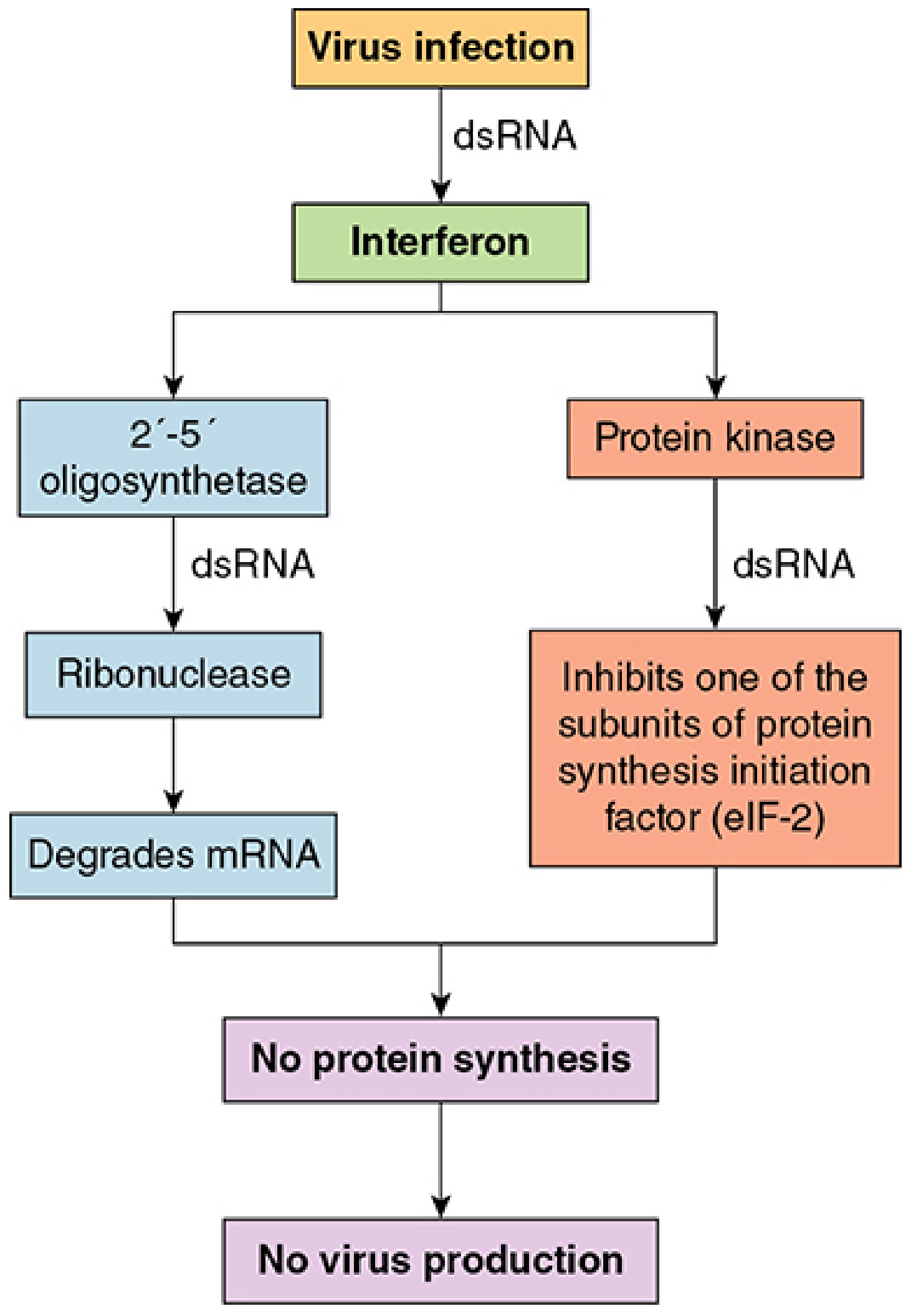
When that cell is subsequently infected, viral dsRNA activates the antiviral enzymes through two parallel pathways:
| Pathway | Enzyme | Mechanism |
|---|---|---|
| Pathway 1 | PKR | Phosphorylates eIF-2α (elongation initiation factor) → blocks ribosome assembly → inhibits protein synthesis |
| Pathway 2 | OAS → RNase L | 2',5'-OAS synthesizes 2',5'-oligoadenylate → activates RNase L → degrades viral mRNA |
| Pathway 3 | Mx protein | Blocks influenza by inhibiting viral transcription directly |
Step 5 - Immune Activation & Systemic Effects
Interferons also amplify immune defenses:
- Activate NK cells for early killing of infected cells
- Upregulate MHC class I on cell surfaces → better antigen presentation → enhanced killing by cytotoxic T lymphocytes (CTLs)
- Trigger systemic flu-like symptoms (fever, myalgia, malaise) via hypothalamic effects
Diagrams
Fig 1 - Induction of antiviral state (Medical Microbiology 9e):
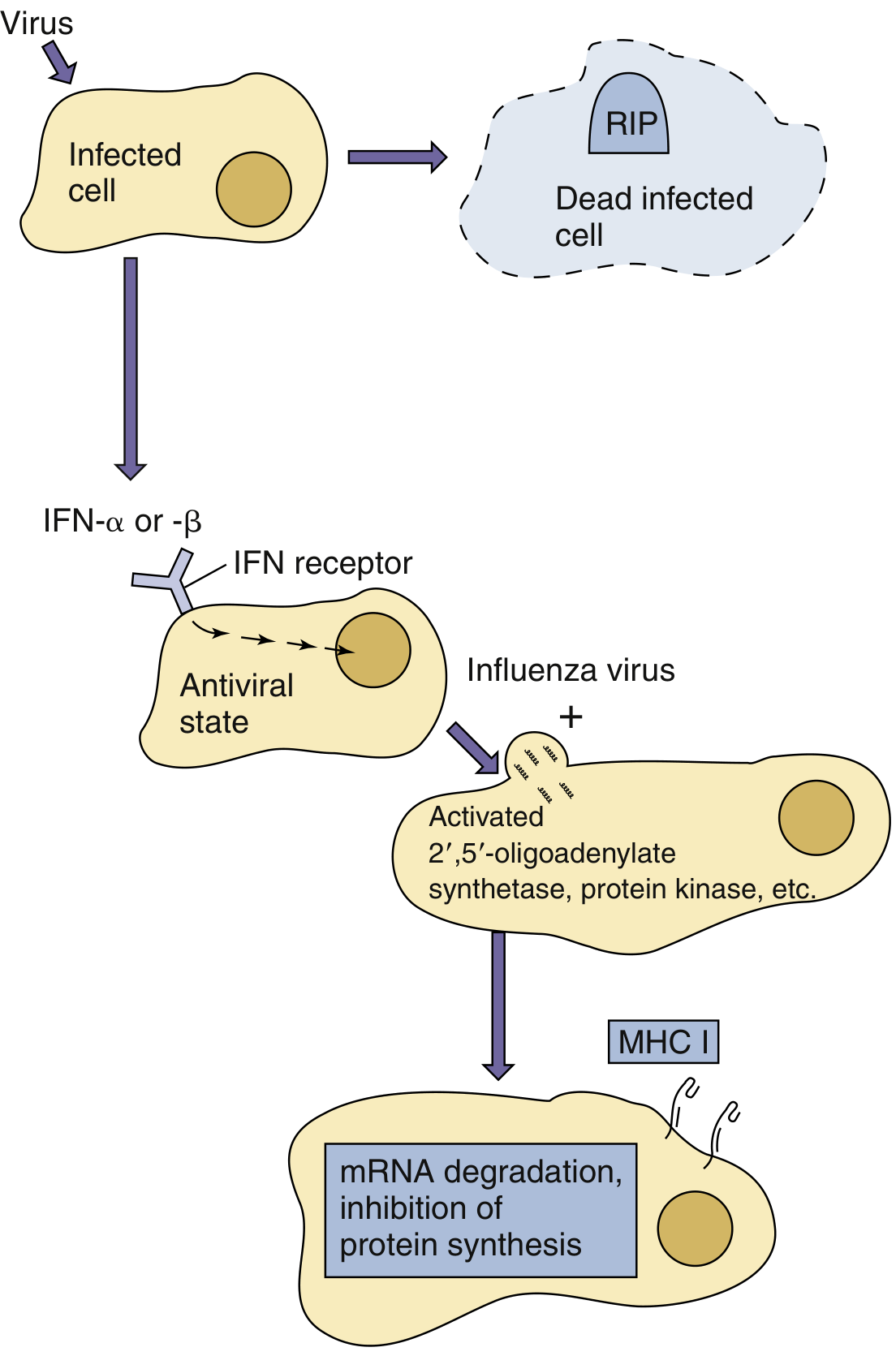
Fig 2 - Dual pathway cascade (Sherris & Ryan's Medical Microbiology 8e):
Key Points for 5 Markers
- Interferon does NOT directly block virus - it induces a protective state in uninfected cells
- dsRNA is the key trigger for both interferon production AND activation of antiviral enzymes
- Two main enzymatic pathways: PKR (protein synthesis inhibition) + OAS/RNase L (mRNA degradation)
- Mx protein is specifically relevant to influenza
- The antiviral enzymes remain latent in uninfected cells - dsRNA from active infection is required to switch them on (prevents damage to healthy uninfected cells)
Sources: Medical Microbiology 9e (Sherris & Ryan), Ch. 10; Sherris & Ryan's Medical Microbiology 8e, Ch. 7
This is a shared conversation. Sign in to Orris to start your own chat.