Heart attack
myocardial infarction pathophysiology presentation diagnosis management
Harrison's Principles of Internal Medicine, Twenty First Edition
Page 7482
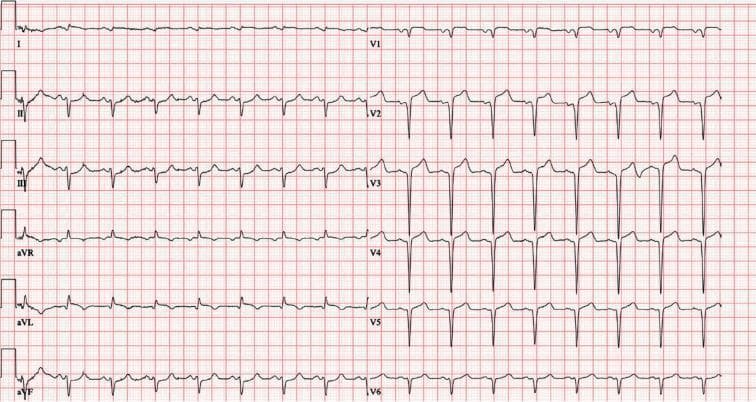
myocardial infarction ECG ST elevation coronary artery
Hugging Face pmc clinical VQA raw
Page 0
Heart Attack (Myocardial Infarction)
Pathophysiology
- Oxygen demand is driven by heart rate, contractility, and wall tension
- Oxygen supply depends on blood oxygen-carrying capacity and coronary blood flow
- Coronary flow is phasic — ~75% occurs during diastole, and most resistance is across three sets of vessels: large epicardial arteries, pre-arteriolar vessels, and arterioles
Types
| Type | Description |
|---|---|
| STEMI | Complete occlusion; ST elevation on ECG; requires emergent reperfusion |
| NSTEMI | Partial occlusion; elevated troponins without ST elevation |
| Unstable Angina | Ischemia without myocardial necrosis (troponins negative) |
Clinical Presentation
- Crushing, pressure-like chest pain, often radiating to the left arm, jaw, or back
- Diaphoresis (cold sweat)
- Nausea/vomiting
- Dyspnea
- Sense of impending doom
- Epigastric pain or "indigestion"
- Fatigue, weakness
- Syncope
- Silent MI (no chest pain at all)
Diagnosis
ECG
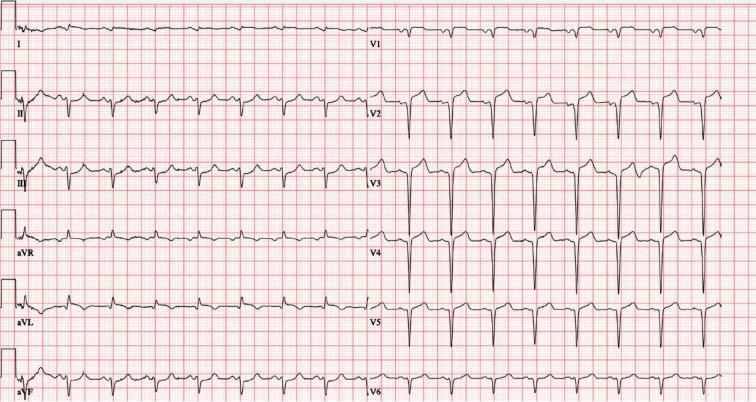
| Leads with Changes | Territory | Artery |
|---|---|---|
| V1–V4 | Anterior | LAD |
| II, III, aVF | Inferior | RCA |
| I, aVL, V5–V6 | Lateral | LCx |
| V1–V2 (reciprocal) | Posterior | RCA/LCx |
Biomarkers
- Troponin I/T — gold standard; rises within 3–4 hours, peaks at 24h, remains elevated for days
- CK-MB — rises in 4–6 hours, useful for re-infarction detection
- BNP/NT-proBNP — assesses heart failure severity
Imaging
- Echocardiogram — detects wall motion abnormalities, LV function (EF), mechanical complications
- Coronary angiography — identifies and quantifies the culprit lesion
Management
STEMI — Immediate Reperfusion (Time-Critical)
- Primary PCI (percutaneous coronary intervention) — preferred if available within 90 min
- Fibrinolysis (thrombolytics) — alteplase, tenecteplase — if PCI is not available within 120 min
Medications (STEMI & NSTEMI)
| Drug Class | Examples | Purpose |
|---|---|---|
| Antiplatelet | Aspirin + P2Y12 inhibitor (ticagrelor, clopidogrel) | Prevent further clot formation |
| Anticoagulant | Heparin (UFH/LMWH), bivalirudin | Adjunct during PCI |
| Beta-blocker | Metoprolol | Reduce HR, limit infarct size |
| ACE inhibitor/ARB | Ramipril, lisinopril | Prevent remodeling, reduce mortality |
| Statin | Atorvastatin 40–80 mg | Plaque stabilization, LDL reduction |
| Nitrates | Nitroglycerin | Symptom relief (avoid in hypotension/RV infarct) |
NSTEMI/Unstable Angina
- Risk-stratify with TIMI or GRACE score
- High-risk: early invasive strategy (angiography within 24 hours)
- Low-risk: medical management, stress testing before discharge
Complications
| Complication | Timing |
|---|---|
| Arrhythmias (VF, VT, heart block) | Early (hours) |
| Cardiogenic shock | Hours to days |
| Acute mitral regurgitation (papillary muscle rupture) | Days 2–7 |
| Ventricular free wall rupture | Days 3–7 |
| Ventricular septal defect | Days 3–7 |
| Pericarditis (Dressler syndrome) | Weeks to months |
| LV aneurysm / thrombus | Weeks |
Secondary Prevention
- Dual antiplatelet therapy for 12 months post-MI (aspirin + ticagrelor/clopidogrel)
- Lifelong aspirin and statin
- ACE inhibitor (especially if EF < 40%)
- Beta-blocker
- Cardiac rehabilitation
- Lifestyle modification: smoking cessation, diet, exercise, weight management
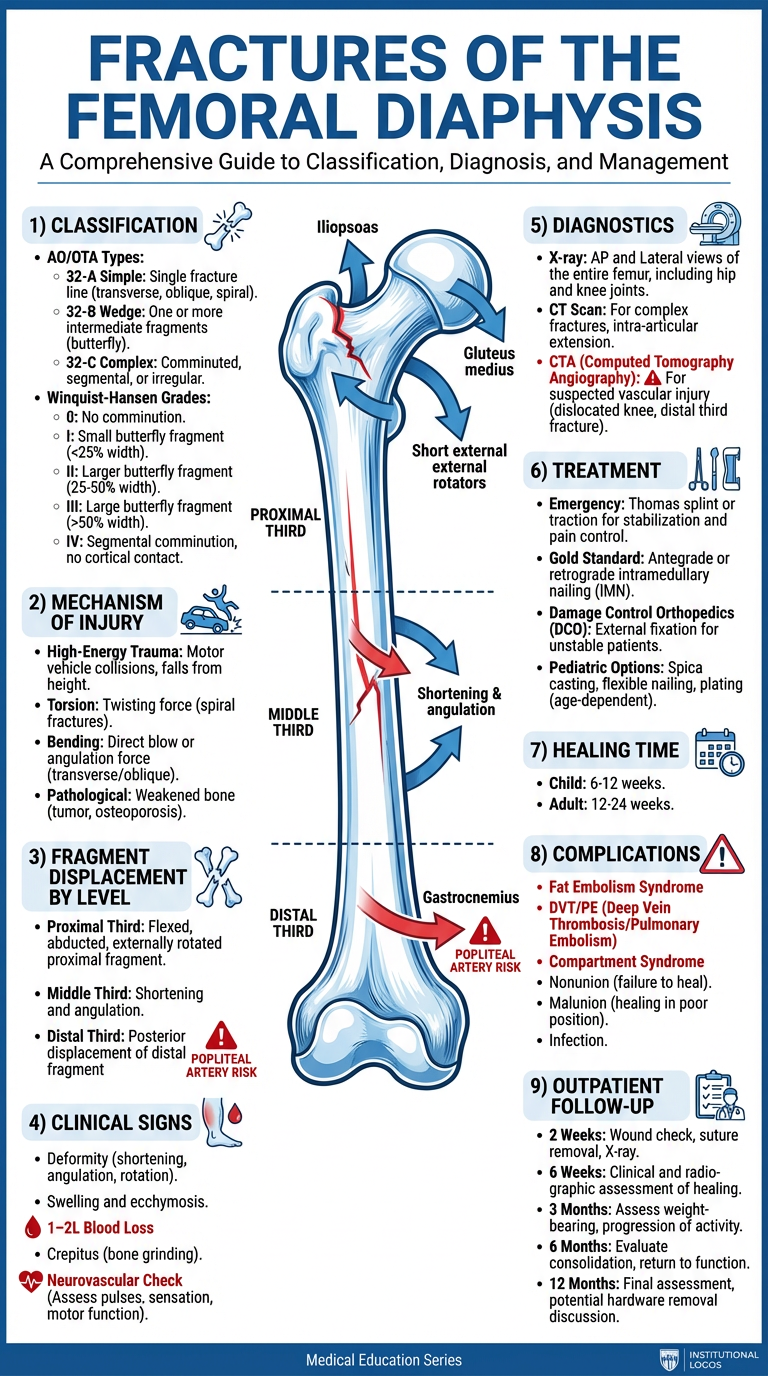
Fractures of the femoral diaphysis: classification, mechanism of injury, mechanogenesis of fragment displacement depending on the fracture level, clinical manifestations, diagnostics, treatment methods, healing time, prevention of possible complications. Outpatient treatment of patients with femoral fractures.
femoral diaphysis fracture classification AO OTA mechanism of injury
Bailey and Love's Short Practice of Surgery 28th Edition
Page 443
femoral shaft fracture fragment displacement muscle pull proximal middle distal third
Acute Lower Extremity Fracture Management in Chronic Spinal Cord Injury
Page 4
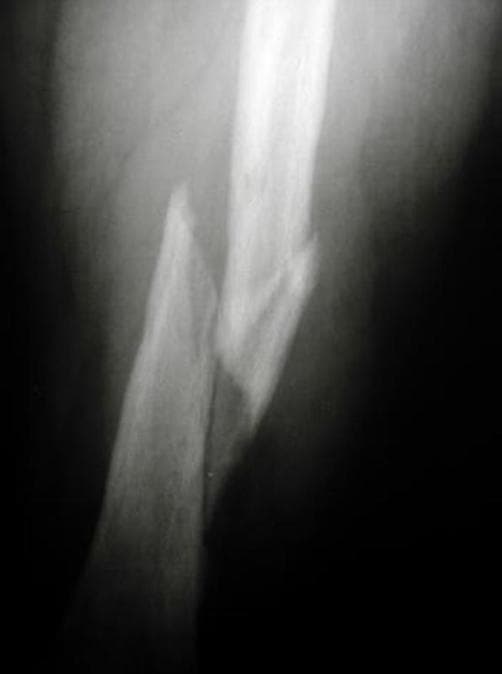
femoral shaft fracture X-ray displacement classification
Hugging Face pmc clinical VQA raw
Page 0
femoral shaft fracture intramedullary nailing surgical treatment traction
femoral fracture complications fat embolism DVT compartment syndrome blood loss
Fractures of the Femoral Diaphysis
1. Definition and Anatomy
2. Classification
AO/OTA Classification (Bailey & Love's, p. 443)
- Bone 3 = femur; Segment 2 = diaphysis → prefix 32
| AO Code | Type | Description |
|---|---|---|
| 32-A | Simple | 2 fragments; spiral (A1), oblique >30° (A2), transverse (A3) |
| 32-B | Wedge | 3 fragments; spiral wedge (B1), bending wedge (B2), fragmented wedge (B3) |
| 32-C | Complex | >3 fragments; spiral (C1), segmental (C2), irregular comminuted (C3) |
Winquist-Hansen Classification (by comminution degree)
| Grade | Comminution | Stability |
|---|---|---|
| 0 | No comminution | Stable |
| I | Small cortical fragment | Stable |
| II | Butterfly fragment, >50% cortex contact | Stable |
| III | Butterfly fragment, <50% cortex contact | Unstable |
| IV | Segmental/circumferential comminution | Highly unstable |
By Fracture Level
- Proximal third (subtrochanteric zone)
- Middle third (most common)
- Distal third (supracondylar zone)
By Wound Status
- Closed (most common)
- Open (Gustilo-Anderson grade I–IIIC) — dramatically worsens prognosis
3. Mechanism of Injury
| Mechanism | Typical Scenario | Fracture Pattern |
|---|---|---|
| High-energy direct trauma | MVA, pedestrian struck, fall from height | Transverse, comminuted, segmental (32-A3, 32-C) |
| Indirect torsional force | Skiing, twisting fall | Spiral or long oblique (32-A1) |
| Indirect bending force | High-energy bending moment | Short oblique, butterfly wedge (32-B2) |
| Gunshot / blast | Ballistic injury | Highly comminuted (32-C) |
| Pathological | Metastasis, Paget's, osteoporosis | Transverse fracture at abnormal bone, minimal trauma |
| Stress fracture | Military recruits, athletes | Medial cortex, distal third; insidious onset |
4. Mechanogenesis of Fragment Displacement by Fracture Level
Proximal Third Fracture
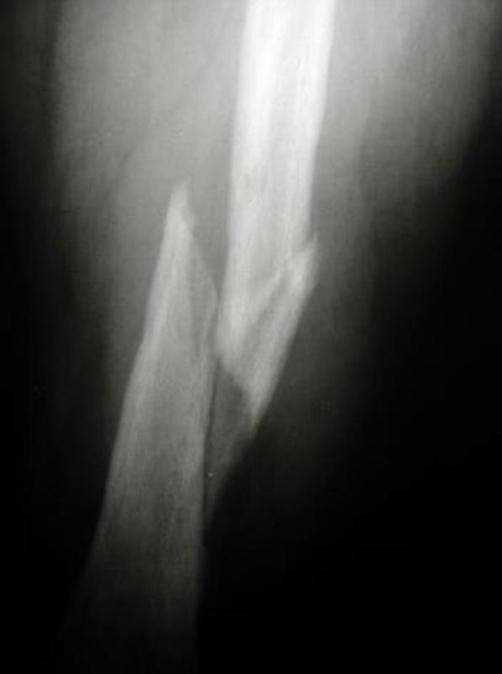
| Fragment | Displacing Muscles | Direction of Displacement |
|---|---|---|
| Proximal fragment | Iliopsoas (flexion), gluteus medius/minimus (abduction), short external rotators | Flexed, abducted, externally rotated |
| Distal fragment | Adductors (adduction), hamstrings + gravity (shortening) | Adducted, proximally displaced, posteriorly displaced |
Middle Third Fracture
| Fragment | Displacing Muscles | Direction |
|---|---|---|
| Proximal fragment | Adductors pull both fragments somewhat medially; less extreme flexion than proximal | Mild flexion and abduction |
| Distal fragment | Adductors (medial), hamstrings and gastrocnemius (posterior and proximal) | Adducted, shortened, mild posterior sag |
Distal Third Fracture (Supracondylar)
| Fragment | Displacing Muscles | Direction |
|---|---|---|
| Proximal fragment | Adductors pull shaft medially and proximally | Proximal, medial |
| Distal fragment | Gastrocnemius (origin at posterior femoral condyles) pulls distally backward | Posteriorly rotated — apex posterior, risk of popliteal artery injury |
5. Clinical Manifestations
Symptoms
- Severe pain in the thigh, often the worst pain the patient has experienced
- Inability to bear weight or move the limb
- History of significant trauma
Signs
| Sign | Description |
|---|---|
| Deformity | Shortening, angulation, external rotation of the limb |
| Swelling and bruising | Massive — the thigh can accommodate 1–2 L of blood |
| Crepitus | Palpable/audible bone-end movement |
| Abnormal mobility | Movement at mid-shaft |
| Muscle spasm | Rigid, "splinted" thigh muscles |
| Neurovascular signs | Check distal pulses (popliteal, dorsalis pedis), capillary refill, sciatic nerve function |
Systemic manifestations (due to hemorrhage)
- Hypovolemic shock — femoral shaft fracture causes 1.0–2.0 L of blood loss into the thigh (closed), up to 3+ L if open
- Tachycardia, hypotension, pallor, diaphoresis
6. Diagnostics
Imaging
| Modality | Role |
|---|---|
| Plain X-ray (AP + lateral) | Primary diagnostic tool; must include hip and knee joints to exclude associated injuries |
| CT scan | Complex fractures, intra-articular extension (distal third), polytrauma evaluation |
| CT angiography | Suspected vascular injury (especially distal third with posterior displacement) |
| MRI | Stress fractures, pathological fractures |
| Doppler ultrasound | Vascular injury assessment if CTA unavailable |
Laboratory
- FBC (baseline Hb, monitor hemorrhage)
- Group & crossmatch (2–4 units PRBCs)
- Coagulation screen
- Metabolic panel (polytrauma)
- Bone profile if pathological fracture suspected (ALP, calcium, PSA, serum protein electrophoresis)
7. Treatment Methods
Emergency/Initial Management
- ABCDE assessment — femoral fractures are life-threatening; hemorrhage control is first priority
- IV access × 2, fluid resuscitation, blood transfusion
- Splinting — Thomas splint (traction splint) for prehospital/emergency department immobilization; reduces pain and blood loss
- Analgesia — IV morphine ± femoral nerve block (reduces opioid requirements)
- Wound management for open fractures — sterile dressing, IV antibiotics (cefazolin ± gentamicin)
Definitive Treatment
Intramedullary Nailing (IMN) — Gold Standard
| Parameter | Detail |
|---|---|
| Indication | Virtually all adult closed and most open femoral shaft fractures |
| Technique | Reamed or unreamed nail; locked proximally and distally |
| Approach | Antegrade (piriformis fossa or greater trochanteric entry) or retrograde (knee) |
| Advantages | Load-sharing, early mobilization, high union rates (>95%), low infection |
| Timing | Early definitive fixation within 24–48 hours in hemodynamically stable patients; damage control in unstable patients |
Plate Fixation (ORIF)
- Used in: periarticular fractures (distal third extending to condyles), periprosthetic fractures around a hip implant, young children (<8 years — flexible elastic nailing preferred), pathological fractures where a nail cannot be locked
- Higher infection risk if open approach used over contaminated wounds
External Fixation
- Temporary only (damage control) in adults
- Definitive in highly contaminated open fractures (Gustilo IIIB/IIIC)
Skeletal Traction (Historical / Low-Resource Settings)
- 90-90 traction (hip and knee at 90°) or balanced traction via distal femoral/proximal tibial pin
- Used as temporizing measure or definitive treatment where surgery not available
- Long immobilization (12–16 weeks), high complication rate; not standard of care in modern practice
Pediatric Considerations
| Age | Preferred Method |
|---|---|
| < 6 months | Pavlik harness / Gallows traction |
| 6 months – 5 years | Spica cast (immediate or after brief traction) |
| 5–11 years | Flexible intramedullary nails (TENS — Titanium Elastic Nailing System) |
| ≥ 12 years (near-adult) | Rigid IMN (as adult) |
8. Healing Time
| Patient Group | Expected Consolidation |
|---|---|
| Child | 6–12 weeks |
| Young adult (simple fracture) | 12–16 weeks |
| Adult (comminuted fracture) | 16–24 weeks |
| Elderly / osteoporotic | 20–28 weeks |
| Pathological fracture | Variable; depends on underlying disease |
9. Prevention and Management of Complications
Early Complications
| Complication | Prevention / Management |
|---|---|
| Hemorrhagic shock | Early splinting (Thomas splint reduces bleeding), rapid IV access, blood transfusion, urgent surgery |
| Fat embolism syndrome | Early fixation (within 24–48h) is the strongest preventive measure; supportive O₂, consider corticosteroids in severe cases |
| Vascular injury (popliteal a. in distal fractures) | Check pulses at every assessment; immediate CTA if absent; vascular surgery within 6h |
| Nerve injury (sciatic) | Careful reduction; most resolve spontaneously |
| Compartment syndrome | Monitor for pain out of proportion, tense compartment, pain on passive stretch; urgent fasciotomy if pressures >30 mmHg or within 30 mmHg of diastolic |
| Wound infection / open fracture sepsis | Immediate antibiotics (within 1h of injury), early surgical debridement, tetanus prophylaxis |
Late Complications
| Complication | Prevention / Management |
|---|---|
| Malunion | Correct reduction at surgery; acceptable limits: <5° angulation, <15° rotation, <1.5 cm shortening |
| Nonunion | Dynamization of nail, exchange nailing, bone grafting |
| Delayed union | Monitor; risk factors: open fractures, infection, inadequate fixation, smoking |
| Leg length discrepancy | Accurate length restoration at IMN; shoe lift if <2 cm; corrective osteotomy if >2 cm |
| DVT / Pulmonary Embolism | LMWH (enoxaparin) started within 12–24h post-op, mechanical compression stockings, early mobilization; continue for 4–6 weeks |
| Implant failure | Avoid early weight-bearing in comminuted/Winquist III–IV; conversion to larger diameter nail if breakage |
| Post-traumatic arthritis | Unavoidable with intra-articular extension; minimize by anatomical reduction |
| Refracture after nail removal | Avoid premature nail removal; protect with progressive weight-bearing after removal |
10. Outpatient Management of Patients with Femoral Fractures
Follow-Up Schedule
| Time Point | Assessment |
|---|---|
| 2 weeks post-op | Wound inspection, suture/staple removal, X-ray (check fixation), pain control |
| 6 weeks | X-ray (early callus?), gait assessment, PT progress review |
| 3 months | X-ray (bridging callus), progress toward weight-bearing, ROM assessment |
| 6 months | Full weight-bearing expected; check for malunion/nonunion |
| 12 months | Final functional outcome; consider implant removal discussion |
Physiotherapy (Outpatient Rehabilitation)
- Phase 1 (0–6 weeks): Bed/chair exercises, quadriceps sets, ankle pumps, pain-free ROM of hip and knee, non-weight-bearing mobilization with crutches
- Phase 2 (6–12 weeks): Partial weight-bearing, progressive resistance exercises, hydrotherapy
- Phase 3 (3–6 months): Full weight-bearing, functional training, gait normalization, stair climbing
- Phase 4 (6–12 months): Return to sport/work-specific training, proprioception
Outpatient Pharmacotherapy
- Analgesia: Paracetamol + NSAIDs (short-term); opioid weaning
- Anticoagulation: Outpatient LMWH or DOAC (rivaroxaban, apixaban) continued for 4–6 weeks post-operatively
- Calcium + Vitamin D: Especially in elderly, osteoporotic patients
- Bisphosphonates: If pathological fracture or underlying osteoporosis
- Antibiotics: Course completed for open fractures
Monitoring for Delayed Complications (Outpatient Red Flags)
- Increasing pain after initial improvement → implant failure, infection, nonunion
- Calf swelling/redness → DVT (urgent Doppler ultrasound)
- Sudden dyspnoea → PE (urgent CT-PA)
- Wound discharge, fever → deep infection (urgent surgical review)
- Limb shortening or rotational deformity → malunion
Patient Education
- Weight-bearing instructions (non-WB / partial WB / full WB by stage)
- DVT prophylaxis: keep legs elevated, hydration, compression stockings, mobility
- Wound care
- Signs of complications requiring emergency review
- Smoking cessation (smoking roughly doubles nonunion risk)
- Nutritional support (protein, calcium, vitamin D)
Summary Table
| Aspect | Key Points |
|---|---|
| Most common fracture level | Middle third |
| Most dangerous displacement | Distal third — posterior displacement, popliteal artery risk |
| Blood loss | 1–2 L (closed); up to 3 L (open) |
| Gold standard treatment | Antegrade locked intramedullary nailing |
| Healing time (adult) | 12–24 weeks |
| Most feared early complication | Hemorrhagic shock, fat embolism, vascular injury |
| Most feared late complication | Nonunion, malunion, DVT/PE |
| Outpatient priority | PT rehabilitation, anticoagulation, serial X-rays, DVT surveillance |
Make into poster
A detailed medical educational poster titled "Fractures of the Femoral Diaphysis" with a clean clinical layout. Include the following sections with icons and organized columns: 1) Classification (AO/OTA types 32-A simple, 32-B wedge, 32-C complex; Winquist-Hansen grades 0-IV); 2) Mechanism of Injury (high-energy trauma, torsion, bending, pathological); 3) Fragment Displacement by Level (proximal third: flexed/abducted/externally rotated proximal fragment; middle third: shortening and angulation; distal third: posterior displacement with popliteal artery risk); 4) Clinical Signs (deformity, swelling, 1-2L blood loss, crepitus, neurovascular check); 5) Diagnostics (X-ray AP+lateral, CT, CTA for vascular injury); 6) Treatment (Thomas splint emergency, intramedullary nailing gold standard, external fixation DCO, pediatric options); 7) Healing Time (child 6-12 weeks, adult 12-24 weeks); 8) Complications (fat embolism, DVT/PE, compartment syndrome, nonunion, malunion); 9) Outpatient Follow-up (2 weeks, 6 weeks, 3 months, 6 months, 12 months checkpoints). Include a central anatomical diagram of the femur showing proximal, middle, and distal third fracture levels with arrows indicating muscle pull directions. Professional medical poster style, blue and white color scheme with red accent highlights for danger points.