
My mom has heacache unilaterally for more than 1 week Its persistent She took combiflam everyday Its not working What should i give?!
Reading File
A persistent unilateral headache lasting more than 1 week that is not responding to Combiflam (ibuprofen + paracetamol) is a situation that needs proper medical evaluation before giving more medications. This could be migraine, tension-type headache, cluster headache, or something that requires ruling out serious causes.
Searching sources...
Finding Sources
Finding Sources
Searching the Web
persistent unilateral headache 1 week not responding NSAIDs red flags treatment
Finding Sources
Finding Sources
Reading File
Reading File
Now I have sufficient information to give a thorough, well-sourced answer.
⚠️ Important: See a Doctor First
A unilateral headache lasting more than 1 week that is not responding to NSAIDs (Combiflam) is beyond self-treatment territory. Before recommending any new drug, your mom needs a proper evaluation to rule out dangerous causes. Here's why:
Red Flags to Watch For - Go to Emergency Immediately if Present
| Red Flag | What it Could Mean |
|---|---|
| Sudden, severe "thunderclap" onset | Subarachnoid hemorrhage |
| Fever + neck stiffness | Meningitis |
| Confusion, weakness, vision changes | Stroke / brain mass |
| Age >50 + scalp tenderness + jaw pain with chewing | Giant Cell Arteritis (serious - needs steroids NOW) |
| Headache worse on lying down / coughing | Raised intracranial pressure |
| Headache getting progressively worse over days/weeks | Space-occupying lesion |
If any of these are present, go to the emergency room immediately - do not give any more painkillers and wait.
The Likely Cause: Migraine or Medication Overuse Headache (MOH)
A persistent unilateral headache is a classic migraine pattern. However, taking Combiflam every day for a week means she may now also have a Medication Overuse Headache (MOH) - also called a "rebound headache." NSAIDs taken >10 days/month can actually perpetuate and worsen headaches. This is likely why Combiflam has stopped working.
What She Actually Needs
Step 1: Doctor Visit (Urgent, Within 24 Hours)
A doctor needs to:
- Take a full history (age, associated symptoms, visual changes, nausea, triggers)
- Check blood pressure
- Do a brief neurological exam
- Possibly order ESR/CRP (to rule out Giant Cell Arteritis, especially if she is >50)
Step 2: Proper Migraine Treatment (Prescription Required)
If it is migraine, Combiflam is the wrong drug class. According to Harrison's and Lippincott Pharmacology:
First-line: Triptans (migraine-specific, ~70% effective)
- Sumatriptan 50 mg oral - the most commonly used
- Or Zolmitriptan, Rizatriptan, Naratriptan
- These work by activating 5-HT1B/1D receptors on trigeminal nerve system, causing vasoconstriction and blocking inflammatory neuropeptide release
- Require a prescription - she should ask the doctor for one
Add-on if nausea is present:
- Metoclopramide 10 mg or Domperidone 10 mg - these help migraine by restoring gastric motility (absorption of oral drugs is impaired during migraine even without obvious nausea) and reduce nausea
- These are available OTC in India
If triptans are unavailable right now:
- Aspirin 900-1000 mg (not ibuprofen - she has already tried that) + metoclopramide is a reasonable acute option while awaiting the doctor visit
- Adding caffeine to the analgesic (a cup of strong coffee with the aspirin) can modestly help
Step 3: Stop Combiflam
She must stop taking Combiflam daily. Daily NSAID use is now causing MOH, which is making her headache perpetual. Withdrawal may briefly worsen the headache for a few days, but it will improve.
What NOT to Give
- More Combiflam / ibuprofen - daily use >10 days causes rebound headache
- Opioids / tramadol - worsen migraine long-term, not recommended
- Aspirin + paracetamol + ibuprofen combinations without a clear plan
Summary Action Plan
- Today - Stop Combiflam; give one dose of Aspirin 900mg + Metoclopramide 10mg if headache is severe
- Within 24 hours - Visit a doctor or neurologist for evaluation and triptan prescription
- If she is >50 with scalp tenderness or jaw pain - Go to emergency today for Giant Cell Arteritis workup (needs immediate steroids)
Sources: Harrison's Principles of Internal Medicine 22E, Lippincott Illustrated Reviews Pharmacology, Goodman & Gilman's Pharmacological Basis of Therapeutics; NHS Headache Pathway guidelines; AAFP Red Flags in Headache
How old is your mom, and does she have any other symptoms like nausea, light/sound sensitivity, fever, or neck stiffness? That would help narrow down whether this is migraine or something else.
Only nausea seen Age: 44 Hypothyroid
Nausea + unilateral headache + 44 years old = very consistent with migraine. Hypothyroidism is also a known trigger/aggravator of headache and can cause headaches on its own if under-controlled.
Searching sources...
Finding Sources
Finding Sources
Finding Sources
Reading File
Reading File
Loading Image
This profile is very clear. Here is a focused, practical plan:
Diagnosis: Almost Certainly Migraine + Medication Overuse Headache
44-year-old woman + unilateral headache + nausea + >1 week duration + daily NSAID use = classic migraine with superimposed Medication Overuse Headache (MOH).
Hypothyroidism is relevant too - if her thyroid levels are not well controlled, hypothyroidism itself causes headache. Ask: when did she last check her TSH? If it has been >3 months, a TSH test is warranted.
Immediate Plan (Today)
1. STOP Combiflam Now
Daily ibuprofen use is the reason the headache is not going away. This is MOH (rebound headache). The headache will worsen briefly for 2-3 days after stopping, but that is expected and necessary.
2. For This Acute Attack - Give Both Together:
| Drug | Dose | Why |
|---|---|---|
| Domperidone 10 mg (Domstal / Vomistop) | 10 mg orally, now | Treats nausea, restores gastric motility so other drugs absorb properly |
| Aspirin 650-900 mg | 30 min after domperidone | Better choice than ibuprofen now (different mechanism); take after domperidone kicks in |
Do not give more ibuprofen/paracetamol (Combiflam) - she has taken it daily for a week, it is no longer working and is perpetuating the headache.
3. Visit a Doctor Today or Tomorrow for a Triptan Prescription
Triptans are the correct drug for migraine. They work in ~70% of patients where NSAIDs fail:
- Sumatriptan 50 mg (Suminat / Migranil) - most commonly prescribed in India
- Or Zolmitriptan 2.5 mg, Rizatriptan 10 mg
These need a prescription. The doctor visit is not optional at this point - 1 week of uncontrolled headache needs to be properly assessed and treated.
Migraine Treatment Overview
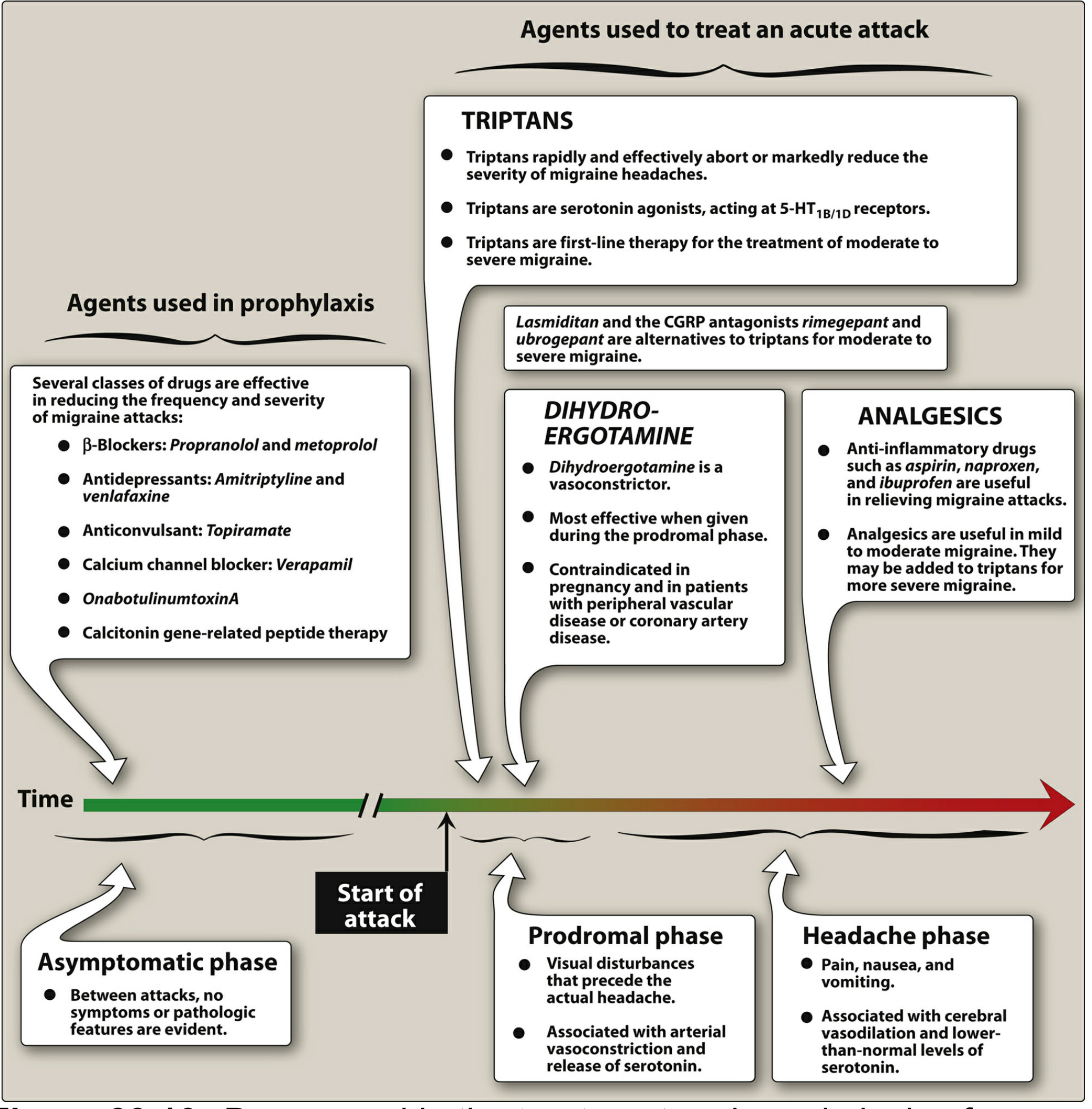
What the Doctor Should Prescribe
Acute (for attacks):
- Sumatriptan 50 mg + domperidone 10 mg at onset of next attack
Preventive (since attacks are frequent/prolonged):
Since she has been having headaches persistent enough to need daily medication, she likely needs migraine prophylaxis. Options her doctor may choose:
| Drug | Notes for Her Case |
|---|---|
| Propranolol 40 mg (first choice) | Effective, cheap, widely available |
| Amitriptyline 10-25 mg (at night) | Good if she also has disturbed sleep |
| Topiramate | Effective but causes cognitive side effects |
Note on hypothyroidism: Propranolol can slightly mask some hypothyroid symptoms but is generally safe. Amitriptyline is also fine. Her thyroid meds (levothyroxine) do not interact with triptans.
Also Ask the Doctor to Check:
- TSH levels - poorly controlled hypothyroidism causes chronic headache directly (Adams and Victor's Neurology)
- Blood pressure - hypertension causes headache and is more common in hypothyroid patients
- No imaging is needed if the neuro exam is normal and there are no red flags
Summary
Today: Stop Combiflam. Give domperidone 10 mg now + aspirin 650 mg after 30 min.
Tomorrow: Doctor visit for sumatriptan prescription + TSH check.
Long-term: Likely needs migraine prophylaxis (propranolol or amitriptyline) to prevent recurrence.
Sources: Lippincott Illustrated Reviews Pharmacology, Adams and Victor's Principles of Neurology 12th Ed, Harrison's Principles of Internal Medicine 22E
I dont have aspirin Can i give dolo 650 instead?
Yes, you can give Dolo 650 (paracetamol 650 mg).
Here is the reasoning:
- Paracetamol alone is less effective than aspirin for migraine, but it is a reasonable substitute when aspirin is not available
- The key reason aspirin was preferred is that it has both analgesic AND anti-inflammatory action at the trigeminal level - paracetamol lacks the anti-inflammatory component
- However, paracetamol is NOT the same as Combiflam - Combiflam contains ibuprofen + paracetamol together. Dolo 650 is paracetamol alone, so you are not repeating the same failed drug
Give This Combination Right Now:
| Step | Drug | Dose | Timing |
|---|---|---|---|
| 1st | Domperidone 10 mg (Domstal/Vomistop) | 1 tablet | Give first |
| 2nd | Dolo 650 (paracetamol 650 mg) | 1 tablet | Wait 20-30 min after domperidone, then give |
Why give domperidone first? During a migraine attack, the stomach stops moving (gastroparesis). Paracetamol will just sit in the stomach and not absorb properly unless domperidone opens up gastric motility first. This is why the combo works better than paracetamol alone - Harrison's Principles of Internal Medicine 22E specifically notes that delayed gastric absorption occurs even without obvious nausea during migraine attacks.
Important Points:
- This combination may or may not fully relieve the headache - paracetamol is a mild option for migraine
- It should at least reduce the nausea and take the edge off the pain
- The doctor visit tomorrow is still necessary for a triptan - that is the drug that will actually abort this migraine properly
- If she gets no relief at all from this within 2 hours, do not give another Dolo - just wait for the doctor visit
This is a shared conversation. Sign in to Orris to start your own chat.