
Mediastenum
I'll look up the mediastinum from the medical library for you.
Reading File
Searching sources...
Finding Sources
Finding Sources
Good - found rich content in Gray's Anatomy for Students. Let me read the key sections in parallel.
Reading File
Reading File
Reading File
Now let me read the superior and posterior mediastinum sections, and fetch the key diagrams.
Reading File
Reading File
Loading Image
Loading Image
Excellent - I have comprehensive content and clear diagrams. Let me also fetch the superior mediastinum structures diagram and the cross-section diagram.
Loading Image
Loading Image
I now have everything needed for a thorough, well-illustrated answer. Here it is:
The Mediastinum
Source: Gray's Anatomy for Students; Grainger & Allison's Diagnostic Radiology
Definition and Boundaries
The mediastinum is a thick midline partition within the thoracic cavity. Its boundaries are:
- Anteriorly: sternum
- Posteriorly: bodies of the thoracic vertebrae
- Superiorly: superior thoracic aperture (opening into the root of the neck)
- Inferiorly: diaphragm
- Laterally (on each side): mediastinal part of the parietal pleura
The pleural cavities lie on either side of it, and each lung remains attached to it via a root formed by the airway, pulmonary vessels, lymphatics, and nerves.
Subdivisions
A horizontal plane through the sternal angle and the TIV/TV intervertebral disc divides the mediastinum into two major parts:
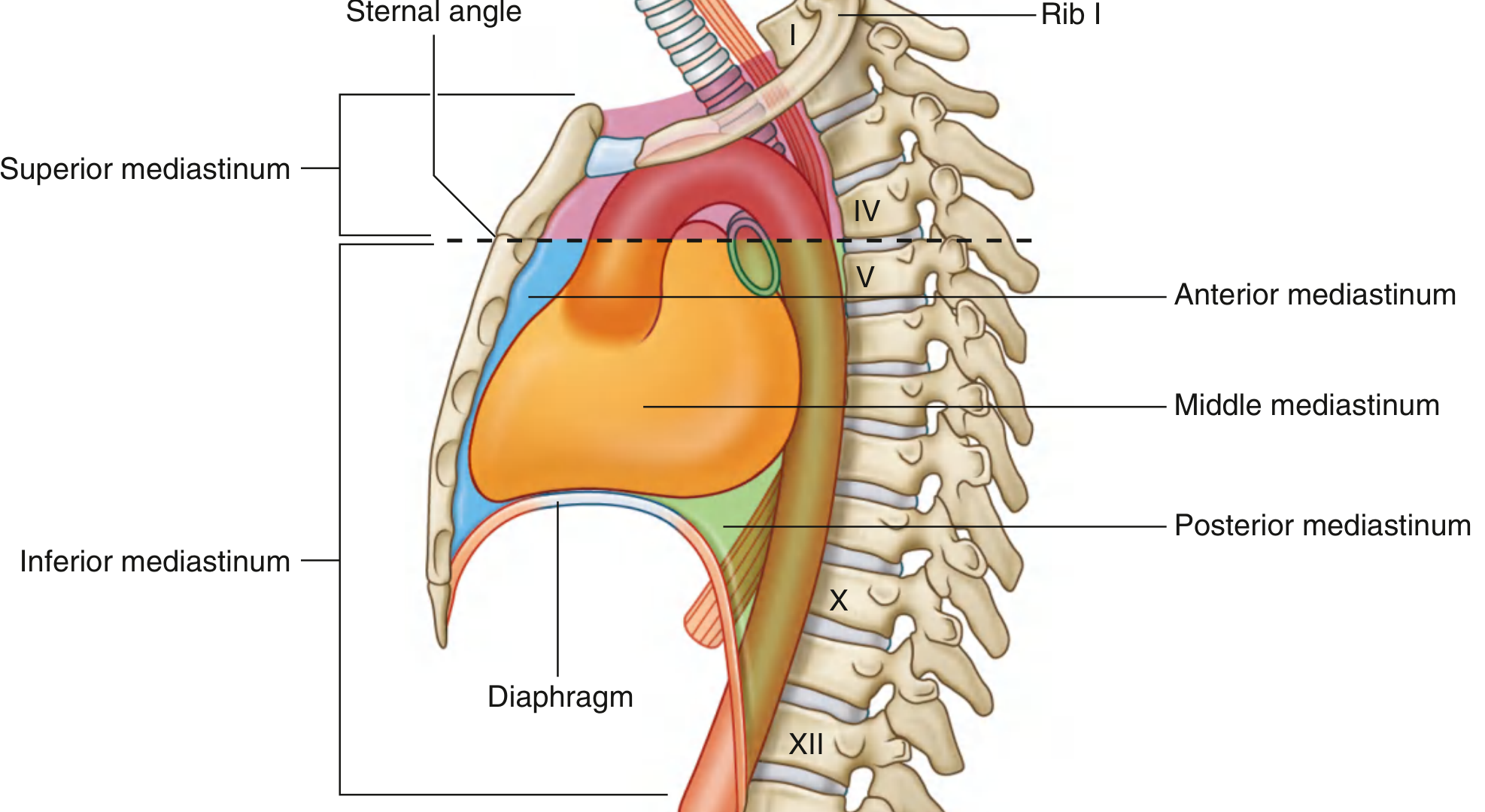
Fig. 3.5 - Lateral view showing divisions of the mediastinum (Gray's Anatomy for Students)
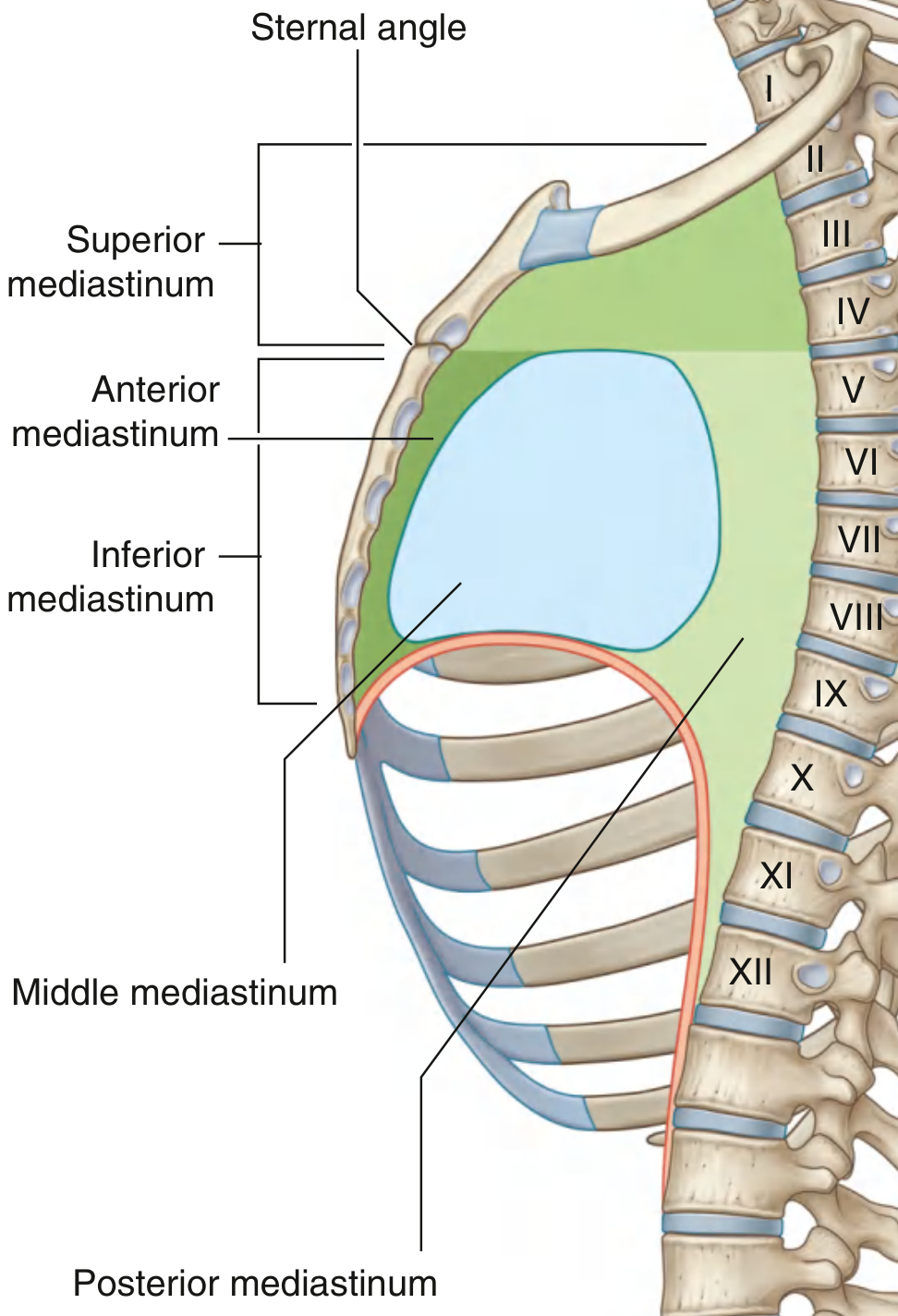
Fig. 3.59 - Subdivisions of the mediastinum (Gray's Anatomy for Students)
1. Superior Mediastinum
Boundaries:
- Anterior: manubrium of sternum
- Posterior: bodies of T1-T4 vertebrae
- Superior: oblique plane from jugular notch to T1 (continuous with root of neck)
- Inferior: sternal angle / TIV-TV disc plane
Contents:
| Structure | Notes |
|---|---|
| Thymus | Most anterior structure; large in children, involutes with age |
| Right and left brachiocephalic veins | Join to form SVC |
| Left superior intercostal vein | Drains into left brachiocephalic vein |
| Superior vena cava (SVC) | |
| Arch of aorta + 3 branches | Brachiocephalic trunk, left common carotid, left subclavian |
| Trachea | Midline, bifurcates at carina (T4-5 level) |
| Esophagus | Posterior to trachea |
| Phrenic nerves | Pass anterior to lung roots |
| Vagus nerves | Pass through here on way to abdomen |
| Left recurrent laryngeal nerve | Hooks around arch of aorta |
| Thoracic duct |
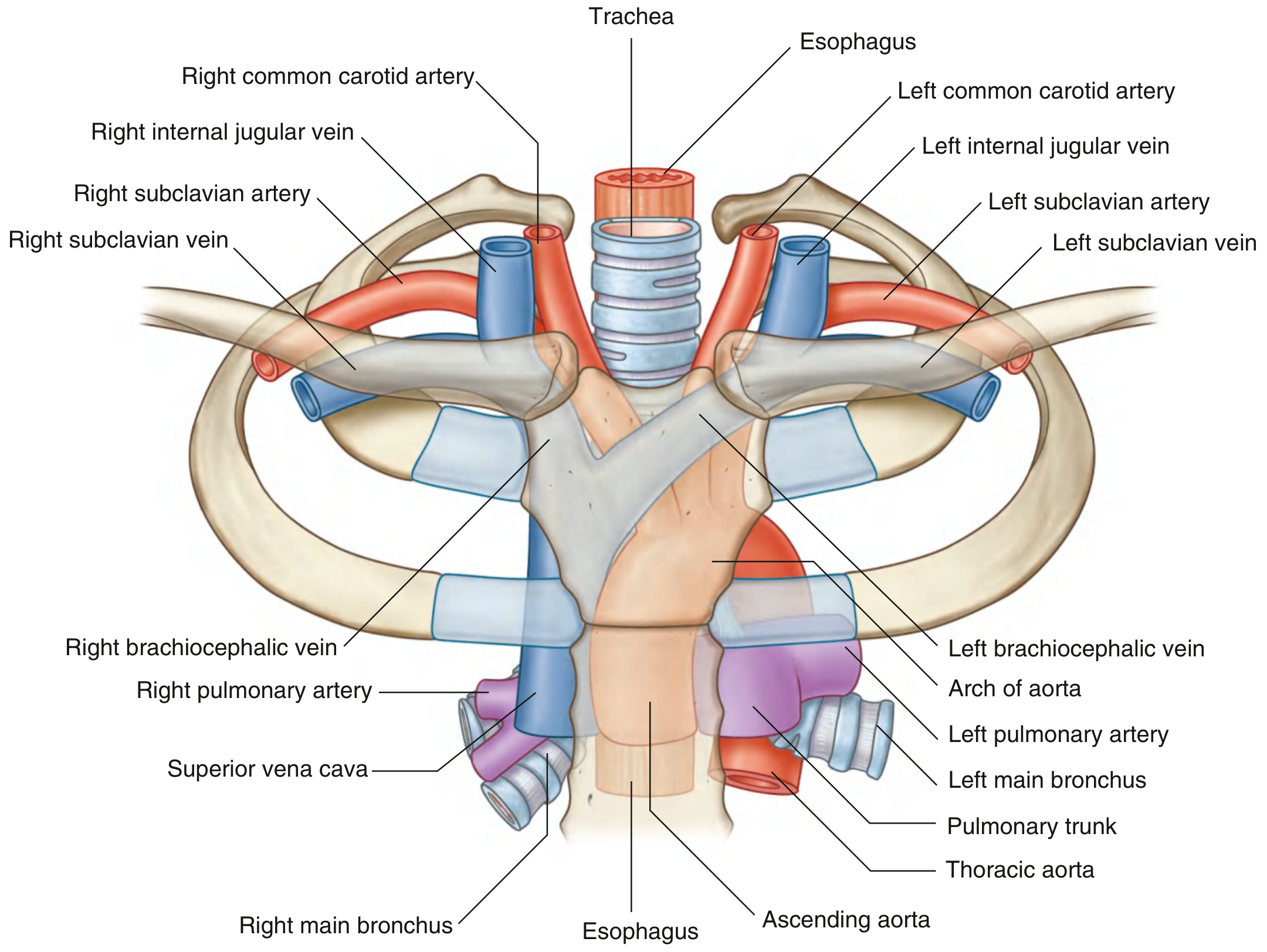
Fig. 3.89 - Structures in the superior mediastinum (Gray's Anatomy for Students)
2. Inferior Mediastinum
Divided into 3 parts by the pericardium:
2a. Anterior Mediastinum (smallest)
Boundaries:
- Anterior: body of sternum
- Posterior: pericardial sac
- Superior: sternal angle / TIV-TV plane
- Inferior: diaphragm
- Lateral: mediastinal pleura on each side
Contents: Inferior extension of the thymus gland, fat, connective tissue, lymph nodes, mediastinal branches of internal thoracic vessels, and sternopericardial ligaments.
2b. Middle Mediastinum
Contents (the pericardium and heart):
- Pericardium - a fibroserous sac consisting of:
- Fibrous pericardium - tough outer connective tissue layer
- Serous pericardium - thin inner layer with parietal layer (lining fibrous pericardium) and visceral layer/epicardium (on the heart surface); between them is the pericardial cavity containing a small amount of fluid
- Heart and roots of the great vessels
- Phrenic nerves and pericardiacophrenic vessels
- Various smaller nerves and vessels
2c. Posterior Mediastinum
Boundaries:
- Anterior: pericardial sac and diaphragm
- Posterior: bodies of mid and lower thoracic vertebrae
- Superior: TIV-TV disc plane (continuous with superior mediastinum above)
- Inferior: diaphragm
- Lateral: mediastinal pleura on each side
Contents:
| Structure | Key Relations |
|---|---|
| Esophagus | Begins at C6; passes through esophageal hiatus at T10; moves left and anterior as it descends |
| Thoracic aorta | Left of esophagus; gives off posterior intercostal arteries |
| Azygos system of veins | Drains posterior thoracic wall; azygos on right, hemiazygos on left |
| Thoracic duct | On right side inferiorly, crosses to left more superiorly; posterior to esophagus |
| Sympathetic trunks | Run alongside vertebral bodies |
| Thoracic splanchnic nerves | Arise from sympathetic ganglia; pierce diaphragm to reach abdomen |
Important esophageal relations in the posterior mediastinum:
- Right side: covered by mediastinal parietal pleura
- Left side: thoracic aorta
- Posterior: thoracic duct (right side inferiorly), hemiazygos veins, right posterior intercostal vessels
- Anterior (below carina): right pulmonary artery, left main bronchus, then immediately posterior to the left atrium (separated only by pericardium) - clinically important in left atrial enlargement causing dysphagia
Summary Table
| Compartment | Key Boundary | Key Contents |
|---|---|---|
| Superior | Above sternal angle (TIV/V disc) | Aortic arch + 3 branches, SVC, brachiocephalic veins, trachea, esophagus, thymus, phrenic/vagus/recurrent laryngeal nerves, thoracic duct |
| Anterior | Behind sternum, in front of pericardium | Thymus (inferior part), fat, lymph nodes, sternopericardial ligaments |
| Middle | Pericardium itself | Heart, pericardium, origins of great vessels, phrenic nerves |
| Posterior | Behind pericardium, in front of vertebrae | Esophagus, descending aorta, azygos veins, thoracic duct, sympathetic trunks, splanchnic nerves |
Clinical Relevance
-
Mediastinal widening on CXR: suggests aortic aneurysm/dissection, lymphoma, or haematoma
-
Superior mediastinal syndrome (SVC compression): facial/arm swelling, venous distension - caused by tumour, lymphoma, or thrombosis
-
Left atrial enlargement: displaces the esophagus posteriorly - detected on barium swallow
-
Left recurrent laryngeal nerve palsy: caused by any mass at the aortic arch level (e.g. Pancoast tumour, lymph node enlargement) producing hoarseness
-
Mediastinitis: infection spreading from esophageal perforation or neck is serious because the mediastinum has no fascial barriers to contain spread
-
Mediastinal masses (classic "4 T's" of anterior mediastinum): Thymoma, Teratoma, Terrible lymphoma, Thyroid mass
-
Gray's Anatomy for Students, pp. 165, 220, 252
-
Grainger & Allison's Diagnostic Radiology, p. 44
This is a shared conversation. Sign in to Orris to start your own chat.