
ppt of acute and chronic pain anaesthesia
WHO analgesic ladder pain management
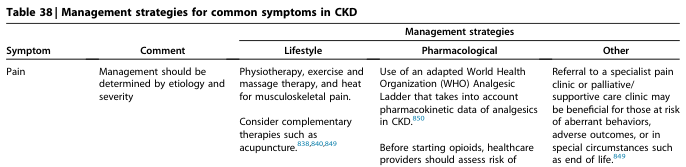
Table 38 | Management strategies for common symptoms in CKD
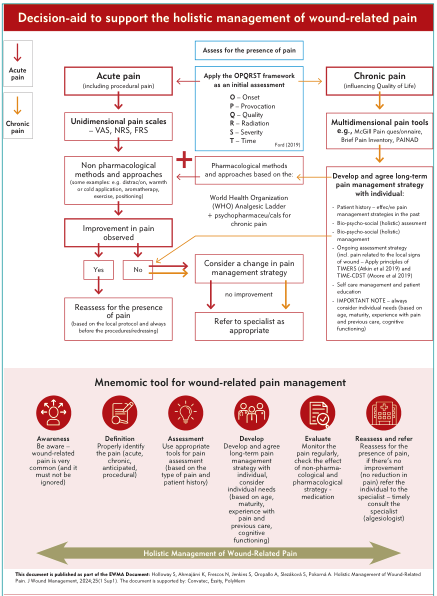
Summary : This figure presents a decision-aid flowchart for the holistic management of wound-related pain, including both acute and chronic pain, and a mnemonic tool for wound-related pain management. It guides clinicians through pain assessment, intervention, and ongoing evaluation, integrating pharmacological and non-pharmacological strategies.
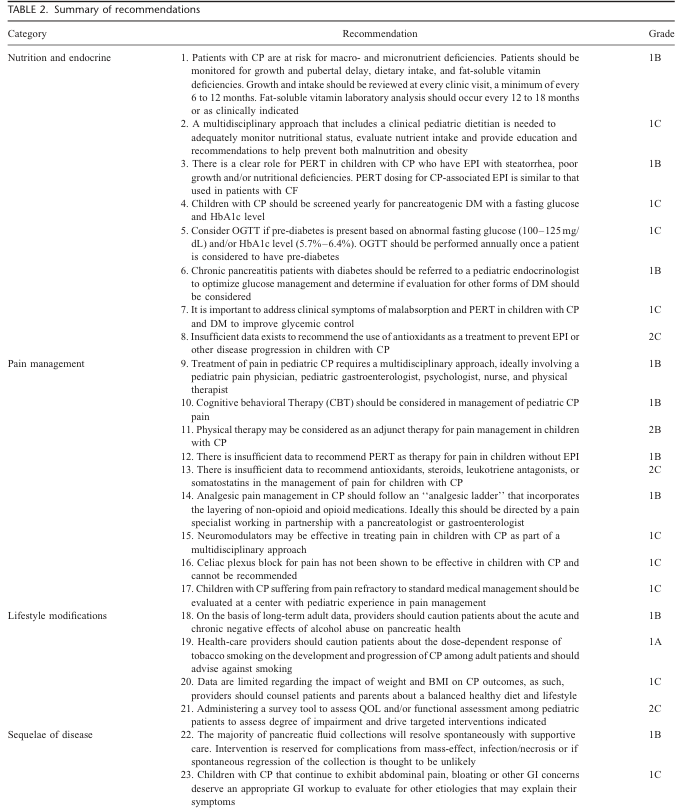
TABLE 2. Summary of recommendations
pain pathway nociception diagram ascending descending
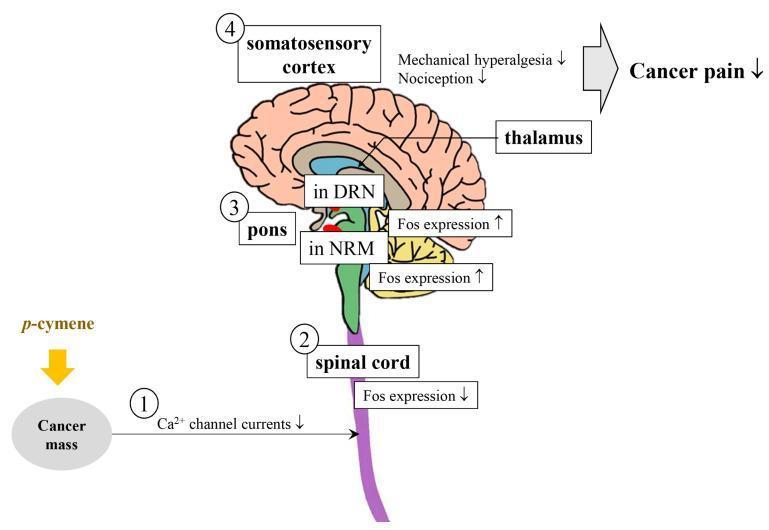
This pathophysiology diagram illustrates the neurobiological mechanism of p-cymene in attenuating cancer-associated pain. The schematic follows a four-step numerical pathway beginning at a localized cancer mass. (1) Administration of p-cymene leads to a downregulation (indicated by a downward arrow) of Ca2+ channel currents. (2) This signal progresses to the spinal cord, where Fos expression is decreased. (3) The pathway involves the pons, specifically highlighting increased Fos expression (upward arrow) in the nucleus raphe magnus (NRM) and the dorsal raphe nucleus (DRN). (4) These subcortical modulations reach the thalamus and somatosensory cortex, resulting in a reduction of mechanical hyperalgesia and nociception. The final clinical outcome is represented by a large block arrow indicating a decrease in overall cancer pain. The diagram serves as an educational tool for understanding monoterpene-mediated analgesia and the ascending/descending pain modulation pathways in the central nervous system.
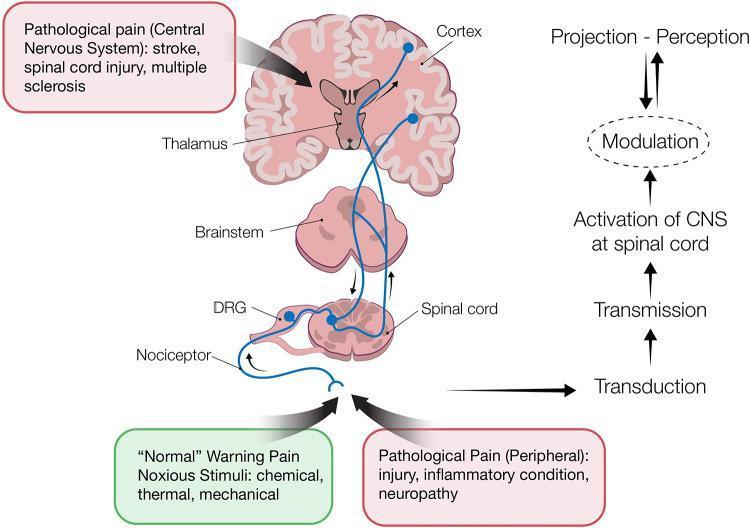
This pathophysiology diagram illustrates the ascending and descending pathways of pain processing in the human nervous system. The visual is divided into an anatomical illustration on the left and a functional flowchart on the right. Anatomical structures shown include peripheral nociceptors, the dorsal root ganglion (DRG), the spinal cord, brainstem, thalamus, and cerebral cortex. The diagram traces the sequence of nociception through four key stages: 1) Transduction (conversion of noxious stimuli like chemical, thermal, or mechanical signals into electrical impulses), 2) Transmission (conduction of action potentials via the DRG to the spinal dorsal horn), 3) Perception (projection of signals through the brainstem and thalamus to the cortex), and 4) Modulation (the enhancement or inhibition of pain signals via descending pathways, represented by a bidirectional arrow). Clinical context is provided through text boxes distinguishing between 'Normal' warning pain and 'Pathological Pain,' citing causes such as inflammation, neuropathy, stroke, spinal cord injury, and multiple sclerosis. This diagram is designed for medical students to understand the neuroanatomy of the pain pathway and the functional distinction between different pain types.
epidural anesthesia anatomy diagram
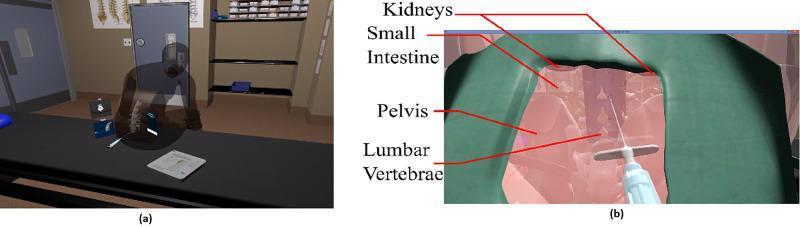
This composite image displays a virtual reality (VR) medical training environment designed for epidural anesthesia simulation. Panel (a) shows the overall virtual operating room setting, featuring a digital human patient model in a lateral decubitus 'C-shaped' position on a medical table. The background includes simulated clinical equipment like storage cabinets and a skeletal diagram. Panel (b) provides a detailed, close-up anatomical view using both solid and transparent rendering styles. In this view, a virtual Tuohy needle is positioned for insertion. The transparent rendering reveals underlying anatomical structures essential for the procedure, including the lumbar vertebrae (L1-L5), pelvis, kidneys, and small intestine. Labels identify these key landmarks to assist the learner in navigating the internal anatomy and identifying the correct site for lumbar puncture or epidural space entry, focusing on the loss of resistance (LOR) technique. This simulation illustrates the integration of computer-aided design (CAD) with haptic feedback systems for anesthesiology education.
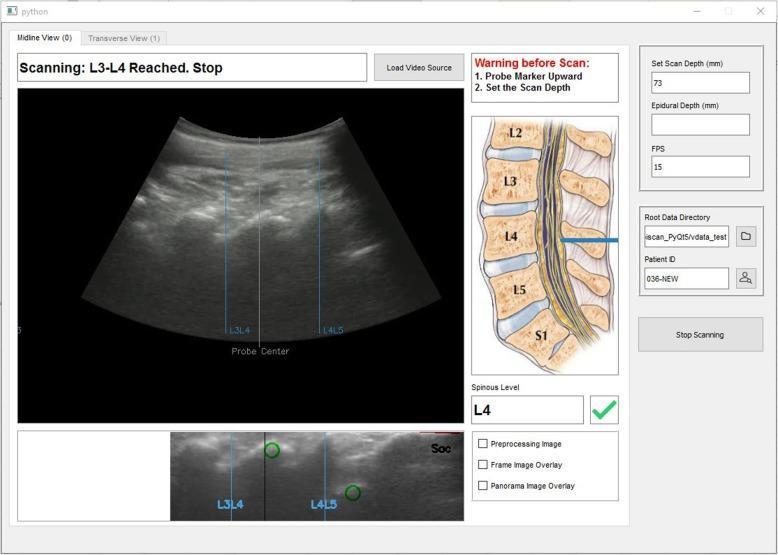
This image displays a specialized software interface for automated spinal ultrasound landmark identification, specifically a midline longitudinal view of the lumbar spine. The central component is a live ultrasound scan identifying the L3-L4 and L4-L5 interspinous spaces, marked with vertical blue lines and a central probe marker. Hyperechoic (bright) signals indicate bony surfaces of the vertebral bodies and posterior elements, while darker areas represent interspinous gaps. To the right, an anatomical diagram of the lumbar vertebrae (L2-S1) and the dural sac provides a visual reference for the scanning level. The software interface includes technical parameters such as scan depth (73 mm), frames per second (15 FPS), and epidural depth measurements. It facilitates clinical workflow for neuraxial anesthesia by identifying the spinous level (indicated as L4 with a green checkmark) and the optimal needle insertion site. A lower panoramic view displays labeled interspinous landmarks (L3L4, L4L5) with green circular highlights, demonstrating the system's tracking of spinal anatomy during the vertical probe movement.
patient controlled analgesia PCA pump
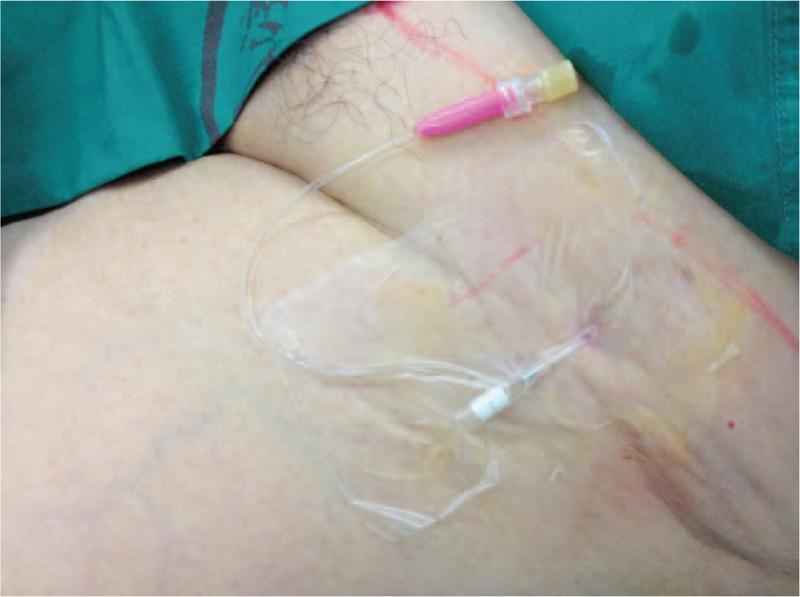
Clinical photograph of a continuous fascia iliaca compartment block (FICB) setup in the inguinal region. The image displays a long-axis view of an indwelling cannula inserted into the skin, secured with a large, transparent, sterile adhesive film dressing. Attached to the cannula is a clear flexible extension tube terminating in a pink luer-lock connector with a yellow cap, intended for connection to a patient-controlled analgesia (PCA) pump. The surrounding skin exhibits anatomical landmarks including the inguinal crease and linear surgical skin markings in red. Yellowish skin discoloration at the site suggests the application of topical antiseptic solution, such as povidone-iodine. This visual demonstrates the postoperative analgesia protocol for lower extremity surgeries, specifically focusing on the stabilization and placement of a regional anesthesia catheter for continuous local anesthetic infusion.
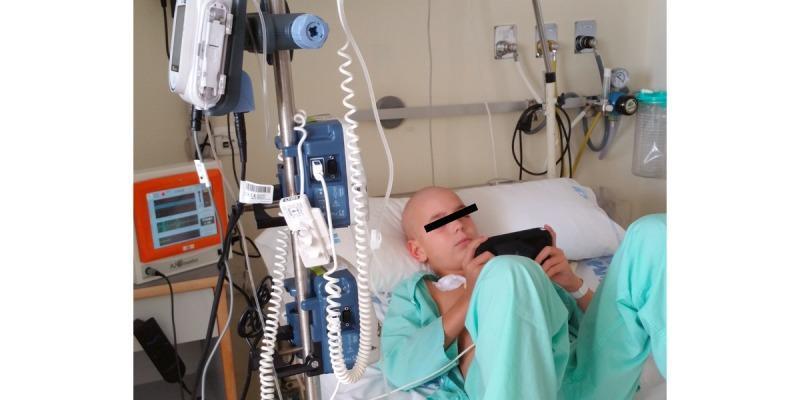
A clinical photograph of a pediatric oncology patient in a hospital bed, illustrating the integration of supportive technology and distraction therapy. The patient, appearing bald (suggestive of chemotherapy-induced alopecia), is positioned in a semi-recumbent posture wearing a green gown. The primary focus is the medical setup including a Patient-Controlled Analgesia (PCA) morphine pump mounted on an IV pole and a multi-parameter monitor displaying respiratory and cardiac waveforms. Clinical connections are visible via intravenous tubing and a chest-mounted sensor for monitoring heart rate variability (HRV) and analgesia nociception index (ANI). The photograph demonstrates the use of an electronic video game (EVG) as a non-pharmacological intervention for managing incidental and basal pain related to chemotherapy-induced mucositis. The setting includes standard intensive or acute care infrastructure such as wall-mounted oxygen flowmeters and suction canisters, highlighting a multidisciplinary approach to pediatric pain management and autonomic nervous system monitoring.
"acute pain" AND "postoperative pain management"
"chronic pain" AND "pain management" AND guideline
mkdir -p /tmp/workspace/pain-anaesthesia-ppt/assets && ls -la /tmp/workspace/
cd /tmp/workspace/pain-anaesthesia-ppt && python /tmp/skills/shared/scripts/fetch_images.py \ "https://cdn.orris.care/cdss_images/pmc_clinical_VQA_25362a85e7d8437d09039e32ea1d18dc50c7c8176ea2e116994930f30402b5c2.jpg" \ "https://cdn.orris.care/cdss_images/pmc_clinical_VQA_204039f32ebe6486c7e394de92816ba11c0dd09bb394b439f1bed27a5638ca3f.jpg" \ "https://cdn.orris.care/cdss_images/bf6ccc62f925f040b53651b313056422f0fce52bf69373ba4d1cb5d39b500aed.png" \ > images.json python3 -c " import json data = json.load(open('images.json')) for d in data: print(d['url'], 'ERR' if d.get('error') else 'OK', len(d.get('base64') or '')) "
cd /tmp/workspace/pain-anaesthesia-ppt && python3 -c " import json, base64 data = json.load(open('images.json')) names = ['pain_pathway.jpg','epidural_anatomy.jpg','biopsychosocial.png'] for d, name in zip(data, names): b64 = d['base64'].split(',',1)[1] if ',' in d['base64'] else d['base64'] raw = base64.b64decode(b64) with open(f'assets/{name}', 'wb') as f: f.write(raw) print(name, len(raw)) " ls -la /tmp/workspace/pain-anaesthesia-ppt/assets/
~/pain-anaesthesia-ppt/build_ppt.py
"""Build: Acute and Chronic Pain in Anaesthesia - PPTX"""
from pptx import Presentation
from pptx.util import Inches, Pt, Emu
from pptx.dml.color import RGBColor
from pptx.enum.text import PP_ALIGN, MSO_ANCHOR
from pptx.enum.shapes import MSO_SHAPE
import os

ASSETS = "/tmp/workspace/pain-anaesthesia-ppt/assets"

# Color palette
NAVY = RGBColor(0x0B, 0x2B, 0x4E)
TEAL = RGBColor(0x0E, 0x7C, 0x86)
LIGHT_BG = RGBColor(0xF4, 0xF8, 0xF9)
WHITE = RGBColor(0xFF, 0xFF, 0xFF)
DARK_TEXT = RGBColor(0x22, 0x2A, 0x33)
ACCENT = RGBColor(0xE0, 0x7A, 0x2C)
GREY = RGBColor(0x6B, 0x74, 0x7C)

prs = Presentation()
prs.slide_width = Inches(13.333)
prs.slide_height = Inches(7.5)
BLANK = prs.slide_layouts[6]
SW, SH = prs.slide_width, prs.slide_height


def add_bg(slide, color=WHITE):
    rect = slide.shapes.add_shape(MSO_SHAPE.RECTANGLE, 0, 0, SW, SH)
    rect.fill.solid()
    rect.fill.fore_color.rgb = color
    rect.line.fill.background()
    rect.shadow.inherit = False
    slide.shapes._spTree.remove(rect._element)
    slide.shapes._spTree.insert(2, rect._element)
    return rect


def add_header_bar(slide, title, kicker=None):
    bar = slide.shapes.add_shape(MSO_SHAPE.RECTANGLE, 0, 0, SW, Inches(1.15))
    bar.fill.solid()
    bar.fill.fore_color.rgb = NAVY
    bar.line.fill.background()
    bar.shadow.inherit = False

    accent = slide.shapes.add_shape(MSO_SHAPE.RECTANGLE, 0, Inches(1.15), Inches(2.2), Pt(4))
    accent.fill.solid()
    accent.fill.fore_color.rgb = ACCENT
    accent.line.fill.background()
    accent.shadow.inherit = False

    tb = slide.shapes.add_textbox(Inches(0.55), Inches(0.18), Inches(11.5), Inches(0.85))
    tf = tb.text_frame
    tf.word_wrap = True
    p = tf.paragraphs[0]
    p.text = title
    p.font.size = Pt(28)
    p.font.bold = True
    p.font.color.rgb = WHITE
    p.font.name = "Calibri"

    if kicker:
        kb = slide.shapes.add_textbox(Inches(0.55), Inches(0.0), Inches(8), Inches(0.3))
        ktf = kb.text_frame
        kp = ktf.paragraphs[0]
        kp.text = kicker
        kp.font.size = Pt(11)
        kp.font.color.rgb = RGBColor(0xB9, 0xCC, 0xD8)
        kp.font.bold = True


def add_footer(slide, num, section="Acute & Chronic Pain in Anaesthesia"):
    tb = slide.shapes.add_textbox(Inches(0.55), Inches(7.15), Inches(8), Inches(0.3))
    tf = tb.text_frame
    p = tf.paragraphs[0]
    p.text = section
    p.font.size = Pt(9)
    p.font.color.rgb = GREY
    nb = slide.shapes.add_textbox(Inches(12.5), Inches(7.15), Inches(0.6), Inches(0.3))
    ntf = nb.text_frame
    np_ = ntf.paragraphs[0]
    np_.text = str(num)
    np_.font.size = Pt(9)
    np_.font.color.rgb = GREY
    np_.alignment = PP_ALIGN.RIGHT


def bullet_slide(num, title, bullets, kicker=None, source=None, two_col=False):
    """bullets: list of (text, level, bold) or list of strings; if two_col, list of two lists"""
    slide = prs.slides.add_slide(BLANK)
    add_bg(slide, LIGHT_BG)
    add_header_bar(slide, title, kicker)

    def fill_box(box, items):
        tf = box.text_frame
        tf.word_wrap = True
        first = True
        for item in items:
            if isinstance(item, tuple):
                text, level, bold = item
            else:
                text, level, bold = item, 0, False
            p = tf.paragraphs[0] if first else tf.add_paragraph()
            first = False
            p.text = ("" if level == 0 else "")
            run = p.add_run()
            run.text = text
            run.font.size = Pt(20 if level == 0 else 16)
            run.font.bold = bold or (level == 0)
            run.font.color.rgb = NAVY if level == 0 else DARK_TEXT
            p.level = min(level, 4)
            p.space_after = Pt(10 if level == 0 else 6)

    if two_col:
        left, right = bullets
        b1 = slide.shapes.add_textbox(Inches(0.6), Inches(1.5), Inches(5.9), Inches(5.4))
        fill_box(b1, left)
        b2 = slide.shapes.add_textbox(Inches(6.75), Inches(1.5), Inches(5.9), Inches(5.4))
        fill_box(b2, right)
    else:
        b1 = slide.shapes.add_textbox(Inches(0.7), Inches(1.5), Inches(11.9), Inches(5.3))
        fill_box(b1, bullets)

    if source:
        sb = slide.shapes.add_textbox(Inches(0.6), Inches(6.85), Inches(11.5), Inches(0.3))
        sp = sb.text_frame.paragraphs[0]
        sp.text = source
        sp.font.size = Pt(10)
        sp.font.italic = True
        sp.font.color.rgb = GREY

    add_footer(slide, num)
    return slide


def image_slide(num, title, img_path, caption, bullets=None, kicker=None, source=None):
    slide = prs.slides.add_slide(BLANK)
    add_bg(slide, LIGHT_BG)
    add_header_bar(slide, title, kicker)

    if bullets:
        tb = slide.shapes.add_textbox(Inches(0.6), Inches(1.5), Inches(5.6), Inches(5.0))
        tf = tb.text_frame
        tf.word_wrap = True
        first = True
        for text, level, bold in bullets:
            p = tf.paragraphs[0] if first else tf.add_paragraph()
            first = False
            run = p.add_run()
            run.text = text
            run.font.size = Pt(17 if level == 0 else 15)
            run.font.bold = bold
            run.font.color.rgb = NAVY if level == 0 else DARK_TEXT
            p.level = level
            p.space_after = Pt(8)
        img_left, img_width = Inches(6.5), Inches(6.2)
    else:
        img_left, img_width = Inches(2.9), Inches(7.5)

    pic = slide.shapes.add_picture(img_path, img_left, Inches(1.55), width=img_width)
    if pic.height > Inches(4.9):
        ratio = Inches(4.9) / pic.height
        pic.height = Inches(4.9)
        pic.width = int(pic.width * ratio)
        pic.left = img_left + (img_width - pic.width) // 2 if not bullets else img_left

    cap = slide.shapes.add_textbox(img_left, Inches(6.55), img_width, Inches(0.5))
    cp = cap.text_frame.paragraphs[0]
    cp.text = caption
    cp.font.size = Pt(11)
    cp.font.italic = True
    cp.font.color.rgb = GREY
    cp.alignment = PP_ALIGN.CENTER

    if source:
        sb = slide.shapes.add_textbox(Inches(0.6), Inches(7.0), Inches(11.5), Inches(0.3))
        sp = sb.text_frame.paragraphs[0]
        sp.text = source
        sp.font.size = Pt(10)
        sp.font.italic = True
        sp.font.color.rgb = GREY

    add_footer(slide, num)
    return slide


def table_slide(num, title, headers, rows, kicker=None, source=None, col_widths=None):
    slide = prs.slides.add_slide(BLANK)
    add_bg(slide, LIGHT_BG)
    add_header_bar(slide, title, kicker)

    n_rows = len(rows) + 1
    n_cols = len(headers)
    left, top, width, height = Inches(0.6), Inches(1.5), Inches(12.1), Inches(5.2)
    gtable = slide.shapes.add_table(n_rows, n_cols, left, top, width, height).table

    if col_widths:
        for i, w in enumerate(col_widths):
            gtable.columns[i].width = Inches(w)

    for i, h in enumerate(headers):
        cell = gtable.cell(0, i)
        cell.text = h
        cell.fill.solid()
        cell.fill.fore_color.rgb = NAVY
        for p in cell.text_frame.paragraphs:
            p.font.bold = True
            p.font.size = Pt(15)
            p.font.color.rgb = WHITE
            p.alignment = PP_ALIGN.LEFT
        cell.vertical_anchor = MSO_ANCHOR.MIDDLE

    for r, row in enumerate(rows, start=1):
        for c, val in enumerate(row):
            cell = gtable.cell(r, c)
            cell.text = str(val)
            cell.fill.solid()
            cell.fill.fore_color.rgb = WHITE if r % 2 else RGBColor(0xE9, 0xF1, 0xF3)
            for p in cell.text_frame.paragraphs:
                p.font.size = Pt(13)
                p.font.color.rgb = DARK_TEXT
            cell.vertical_anchor = MSO_ANCHOR.MIDDLE
            cell.margin_top = Pt(4)
            cell.margin_bottom = Pt(4)

    if source:
        sb = slide.shapes.add_textbox(Inches(0.6), Inches(6.85), Inches(11.5), Inches(0.3))
        sp = sb.text_frame.paragraphs[0]
        sp.text = source
        sp.font.size = Pt(10)
        sp.font.italic = True
        sp.font.color.rgb = GREY

    add_footer(slide, num)
    return slide


# ---------------- SLIDE 1: TITLE ----------------
slide = prs.slides.add_slide(BLANK)
add_bg(slide, NAVY)
band = slide.shapes.add_shape(MSO_SHAPE.RECTANGLE, 0, Inches(4.6), SW, Inches(0.12))
band.fill.solid(); band.fill.fore_color.rgb = ACCENT; band.line.fill.background(); band.shadow.inherit = False

kick = slide.shapes.add_textbox(Inches(0.9), Inches(2.15), Inches(11), Inches(0.5))
kp = kick.text_frame.paragraphs[0]
kp.text = "ANAESTHESIOLOGY  |  PAIN MEDICINE"
kp.font.size = Pt(16); kp.font.bold = True; kp.font.color.rgb = RGBColor(0x8F, 0xC8, 0xD3)

t = slide.shapes.add_textbox(Inches(0.9), Inches(2.65), Inches(11.5), Inches(1.6))
tp = t.text_frame
tp.word_wrap = True
p1 = tp.paragraphs[0]
p1.text = "Acute and Chronic Pain"
p1.font.size = Pt(44); p1.font.bold = True; p1.font.color.rgb = WHITE
p2 = tp.add_paragraph()
p2.text = "in Anaesthesia"
p2.font.size = Pt(44); p2.font.bold = True; p2.font.color.rgb = WHITE

sub = slide.shapes.add_textbox(Inches(0.9), Inches(4.85), Inches(11), Inches(0.6))
sp = sub.text_frame.paragraphs[0]
sp.text = "Pathophysiology, Assessment and Multimodal Management"
sp.font.size = Pt(20); sp.font.color.rgb = RGBColor(0xD8, 0xE6, 0xEA); sp.font.italic = True

src = slide.shapes.add_textbox(Inches(0.9), Inches(6.7), Inches(11), Inches(0.5))
srcp = src.text_frame.paragraphs[0]
srcp.text = "Compiled from Miller's Anesthesia, Barash Clinical Anesthesia, Morgan & Mikhail Clinical Anesthesiology, Goodman & Gilman, and Bailey & Love's Short Practice of Surgery"
srcp.font.size = Pt(11); srcp.font.color.rgb = RGBColor(0x9A, 0xAE, 0xB8)

# ---------------- SLIDE 2: AGENDA ----------------
bullet_slide(2, "Agenda", [
    ("1.  Defining Pain & Classification", 0, True),
    ("2.  Pain Pathways – Nociception", 0, True),
    ("3.  Acute Pain: Assessment, WHO Ladder & Multimodal Analgesia", 0, True),
    ("4.  Regional & Neuraxial Techniques", 0, True),
    ("5.  From Acute to Chronic – Sensitization", 0, True),
    ("6.  Chronic Pain: Mechanisms & Syndromes", 0, True),
    ("7.  Chronic Pain Management – Pharmacological, Non-pharmacological & Interventional", 0, True),
    ("8.  Key Terminology & Recent Evidence", 0, True),
], kicker="OVERVIEW")

# ---------------- SLIDE 3: WHAT IS PAIN ----------------
bullet_slide(3, "What Is Pain?", [
    ("IASP definition:", 0, True),
    ("\u201cAn unpleasant sensory and emotional experience associated with, or resembling that associated with, actual or potential tissue damage.\u201d", 1, False),
    ("A multidimensional experience:", 0, True),
    ("Sensory-discriminative component (location, intensity, quality)", 1, False),
    ("Affective-motivational component (unpleasantness, distress)", 1, False),
    ("Cognitive-evaluative component (meaning, context)", 1, False),
    ("Pain is widely regarded as the \u201cfifth vital sign\u201d — appropriate assessment and management is a recognised standard of care.", 0, True),
], kicker="DEFINITIONS", source="Goodman & Gilman's The Pharmacological Basis of Therapeutics, 14e; IASP")

# ---------------- SLIDE 4: ACUTE VS CHRONIC ----------------
bullet_slide(4, "Acute vs Chronic Pain", [
    [
        ("ACUTE PAIN", 0, True),
        ("Caused by noxious stimulation: injury, disease process, or abnormal function of muscle/viscera", 1, False),
        ("Almost always nociceptive", 1, False),
        ("Serves a protective, warning function", 1, False),
        ("Time-limited — resolves as healing occurs", 1, False),
        ("Moderate–severe unrelieved acute pain can affect the function of nearly every organ system", 1, False),
    ],
    [
        ("CHRONIC PAIN", 0, True),
        ("Persists beyond the usual course of an acute disease, or beyond a reasonable time for healing (typically 1–6 months)", 1, False),
        ("May be nociceptive, neuropathic, or mixed", 1, False),
        ("Loses protective/warning value", 1, False),
        ("Arises from peripheral, central, and psychological mechanisms", 1, False),
        ("Best understood as a disease in its own right, not just a symptom", 1, False),
    ],
], kicker="DEFINITIONS", two_col=True, source="Morgan & Mikhail's Clinical Anesthesiology, 7e, Ch. 47")

# ---------------- SLIDE 5: PAIN PATHWAY (IMAGE) ----------------
image_slide(5, "Pain Pathway – Nociception", f"{ASSETS}/pain_pathway.jpg",
    "Ascending and descending pathways of pain processing",
    bullets=[
        ("Four processes of nociception:", 0, True),
        ("1. Transduction — noxious stimulus \u2192 electrical signal at peripheral nociceptor", 1, False),
        ("2. Transmission — signal conducted via dorsal root ganglion to spinal dorsal horn, then contralateral spinothalamic tract to thalamus", 1, False),
        ("3. Perception — thalamus relays to postcentral gyrus (cortex)", 1, False),
        ("4. Modulation — descending pathways enhance or inhibit signals at the dorsal horn", 1, False),
        ("First \u2192 second \u2192 third order neurons link periphery to cortex", 0, True),
    ], kicker="PHYSIOLOGY", source="Morgan & Mikhail's Clinical Anesthesiology, 7e; PMC clinical imaging library")

# ---------------- SLIDE 6: CLASSIFICATION ----------------
bullet_slide(6, "Classification of Pain", [
    [
        ("BY PATHOPHYSIOLOGY", 0, True),
        ("Nociceptive — activation/sensitization of peripheral nociceptors", 1, False),
        ("Neuropathic — injury or acquired abnormality of peripheral/central neural structures", 1, False),
        ("Mixed — features of both (common in chronic pain, e.g. cancer pain)", 1, False),
        ("BY ORIGIN", 0, True),
        ("Somatic — skin, muscle, joint (well localized)", 1, False),
        ("Visceral — internal organs (poorly localized, referred)", 1, False),
    ],
    [
        ("BY DURATION", 0, True),
        ("Acute — protective, resolves with healing", 1, False),
        ("Chronic — persists beyond expected healing (1–6 months)", 1, False),
        ("BY ETIOLOGY / SITE", 0, True),
        ("e.g. cancer pain, arthritis pain, low back pain, headache", 1, False),
    ],
], kicker="TAXONOMY", two_col=True, source="Morgan & Mikhail's Clinical Anesthesiology, 7e")

# ---------------- SLIDE 7: CONSEQUENCES OF UNRELIEVED ACUTE PAIN ----------------
bullet_slide(7, "Consequences of Unrelieved Acute Pain", [
    ("Autonomic hyperreactivity", 0, True),
    ("\u2191 Heart rate, \u2191 blood pressure, suppressed GI motility and secretions", 1, False),
    ("Respiratory & mobility effects", 0, True),
    ("Splinting, atelectasis; reduced mobilization \u2192 deconditioning, muscle wasting, joint stiffening, decalcification", 1, False),
    ("Psychological effects", 0, True),
    ("Anxiety, depression, helplessness syndromes", 1, False),
    ("Risk of chronicity", 0, True),
    ("Unrelieved acute pain drives peripheral and central sensitization, a major risk factor for persistent post-surgical (chronic) pain", 1, False),
], kicker="ACUTE PAIN — RATIONALE FOR TREATMENT", source="Goodman & Gilman's The Pharmacological Basis of Therapeutics, 14e")

# ---------------- SLIDE 8: WHO LADDER (TABLE) ----------------
table_slide(8, "WHO Analgesic Ladder", ["Step", "Pain Level", "Approach"], [
    ["Step 1", "Mild–moderate pain", "Nonopioid \u00b1 adjuvant\n(acetaminophen or NSAID, unless contraindicated)"],
    ["Step 2", "Mild–moderate pain, or uncontrolled after Step 1", "Short-acting opioid PRN \u00b1 nonopioid (around the clock) \u00b1 adjuvant\n(e.g. morphine, oxycodone, or hydromorphone added to acetaminophen/NSAID)"],
    ["Step 3", "Moderate–severe pain, or uncontrolled after Step 2", "Sustained-release / long-acting opioid (around the clock) or continuous infusion + short-acting opioid PRN \u00b1 nonopioid \u00b1 adjuvant\n(e.g. sustained-release oxycodone, morphine, oxymorphone, or transdermal fentanyl)"],
], kicker="ACUTE PAIN MANAGEMENT", col_widths=[1.3, 3.3, 7.5],
   source="Adapted from Goodman & Gilman's The Pharmacological Basis of Therapeutics, 14e, Table 23-5 (WHO analgesic ladder)")

# ---------------- SLIDE 9: MULTIMODAL ANALGESIA ----------------
bullet_slide(9, "Multimodal Analgesia", [
    ("Combines drug classes with different mechanisms of action \u2192 additive/synergistic analgesia, lower doses of each agent, fewer side effects, reduced opioid consumption.", 0, True),
    ("NSAIDs / COX-2 inhibitors", 0, True),
    ("Reduce pain intensity & opioid requirements; watch for GI bleeding, renal effects, anastomotic healing concerns", 1, False),
    ("Acetaminophen (paracetamol)", 0, True),
    ("~20–30% less potent than NSAIDs but safer; synergistic when combined with NSAIDs", 1, False),
    ("Gabapentinoids (gabapentin, pregabalin)", 0, True),
    ("Single preoperative dose can reduce pain & opioid use in first 24 h; watch sedation/falls in elderly", 1, False),
    ("NMDA-receptor antagonists (ketamine)", 0, True),
    ("Low-dose perioperative infusion reduces pain, opioid consumption, and PONV; may attenuate central sensitization", 1, False),
    ("Regional / local anaesthesia techniques", 0, True),
    ("Wound infiltration, epidural/intrathecal analgesia, peripheral nerve blockade — core to Enhanced Recovery Pathways", 1, False),
], kicker="ACUTE PAIN MANAGEMENT", source="Morgan & Mikhail's Clinical Anesthesiology, 7e; Barash, Cullen & Stoelting's Clinical Anesthesia, 9e")

# ---------------- SLIDE 10: REGIONAL/NEURAXIAL (IMAGE) ----------------
image_slide(10, "Regional & Neuraxial Techniques", f"{ASSETS}/epidural_anatomy.jpg",
    "Epidural needle placement — lumbar spine anatomy (simulation view)",
    bullets=[
        ("Epidural analgesia", 0, True),
        ("\u201cGold standard\u201d for thoracotomy / major abdominal surgery; local anaesthetic + opioid act synergistically", 1, False),
        ("Reduces postoperative respiratory complications (meta-analysis evidence)", 1, False),
        ("Identified via loss-of-resistance technique; paramedian approach favored at mid-thoracic levels", 1, False),
        ("Spinal / intrathecal opioids", 0, True),
        ("Single injection can give up to ~24 h analgesia", 1, False),
        ("Peripheral nerve blocks", 0, True),
        ("Single-shot or continuous catheter (e.g. TAP block, fascia iliaca block)", 1, False),
        ("Patient-controlled analgesia (PCA)", 0, True),
        ("IV opioid, patient-titrated bolus dosing", 1, False),
    ], kicker="ACUTE PAIN MANAGEMENT", source="Miller's Anesthesia, 2-Vol Set, 10e")

# ---------------- SLIDE 11: ERAS / SPECIAL CONSIDERATIONS ----------------
bullet_slide(11, "Acute Pain in Enhanced Recovery Pathways (ERPs)", [
    ("Preemptive, opioid-sparing multimodal analgesia is central to Enhanced Recovery pathways", 0, True),
    ("Laparoscopic/minimally invasive surgery", 0, True),
    ("Lower intra-abdominal pressure, shorter pneumoperitoneum duration, evacuation of subdiaphragmatic CO\u2082 before closure all reduce pain", 1, False),
    ("Transversus abdominis plane (TAP) block is a viable adjunct, though role remains debated", 1, False),
    ("Neuraxial analgesia not routine unless conversion-to-open risk is high", 1, False),
    ("PONV prophylaxis is integrated with the analgesia plan (opioids are a major PONV driver)", 0, True),
    ("Goal: early mobilization, shorter length of stay, faster return to normal activity", 0, True),
], kicker="ACUTE PAIN MANAGEMENT", source="Barash, Cullen & Stoelting's Clinical Anesthesia, 9e")

# ---------------- SLIDE 12: SENSITIZATION (TRANSITION) ----------------
bullet_slide(12, "From Acute to Chronic Pain: Sensitization", [
    ("Peripheral sensitization", 0, True),
    ("Tissue injury / inflammation lowers the activation threshold of peripheral nociceptors", 1, False),
    ("Central sensitization", 0, True),
    ("Increased excitability of dorsal horn (second-order) neurons — innocuous stimuli begin to be perceived as painful", 1, False),
    ("At least 3 mechanisms:", 1, False),
    ("(1) Wind-up / sensitization of wide dynamic range neurons", 2, False),
    ("(2) Dorsal horn receptive-field expansion", 2, False),
    ("(3) Hyperexcitability of flexion reflexes", 2, False),
    ("Mediated by glutamate, substance P, NO, prostaglandins, aspartate, norepinephrine, serotonin", 1, False),
    ("Clinical significance: unrelieved acute pain is a major driver of persistent post-surgical / chronic pain", 0, True),
], kicker="MECHANISM BRIDGE", source="Morgan & Mikhail's Clinical Anesthesiology, 7e; ROSEN's Emergency Medicine")

# ---------------- SLIDE 13: CHRONIC PAIN DEFINITION ----------------
bullet_slide(13, "Chronic Pain: Definition & Classification", [
    ("Definition", 0, True),
    ("Pain that persists beyond the usual course of an acute disease, or beyond a reasonable time for healing to occur — typically 1 to 6 months", 1, False),
    ("May be nociceptive, neuropathic, or mixed", 1, False),
    ("Classified according to:", 0, True),
    ("Pathophysiology — nociceptive vs neuropathic", 1, False),
    ("Etiology — e.g. arthritis, cancer pain", 1, False),
    ("Affected region — e.g. low back pain, headache", 1, False),
    ("Key concept: chronic pain arises from a combination of peripheral, central, and psychological mechanisms — it becomes a disease state itself.", 0, True),
], kicker="CHRONIC PAIN", source="Morgan & Mikhail's Clinical Anesthesiology, 7e, Ch. 47 — Key Concepts")

# ---------------- SLIDE 14: CHRONIC PAIN SYNDROMES ----------------
bullet_slide(14, "Common Chronic Pain Syndromes", [
    [
        ("Myofascial Pain Syndrome", 0, True),
        ("Aching muscle pain, spasm, stiffness, weakness; occasional autonomic dysfunction; trigger points", 1, False),
        ("Low Back Pain", 0, True),
        ("Disc herniation — 90% occur at L4–L5 or L5–S1, often after flexion injury/heavy lifting", 1, False),
        ("Spinal stenosis — pseudoclaudication: pain radiating to buttocks/thighs/legs, worse with exercise, relieved by sitting/flexion", 1, False),
    ],
    [
        ("Complex Regional Pain Syndrome (CRPS)", 0, True),
        ("Neuropathic pain disorder with prominent autonomic features; subdivided into CRPS I and CRPS II", 1, False),
        ("Neuropathic Pain Syndromes", 0, True),
        ("Diabetic neuropathy (most common cause), postherpetic neuralgia, phantom limb pain, causalgia, post-stroke / spinal cord injury pain", 1, False),
    ],
], kicker="CHRONIC PAIN", two_col=True, source="Morgan & Mikhail's Clinical Anesthesiology, 7e")

# ---------------- SLIDE 15: NEUROPATHIC PAIN TREATMENT ----------------
bullet_slide(15, "Neuropathic Pain: Features & Treatment", [
    ("Clinical features", 0, True),
    ("Paroxysmal, often lancinating, burning quality; usually accompanied by hyperpathia", 1, False),
    ("Treatment is often multimodal and difficult:", 0, True),
    ("Anticonvulsants — gabapentin, pregabalin (act on the \u03b12\u03b4 subunit of the calcium channel)", 1, False),
    ("Antidepressants — tricyclics (caution: anticholinergic effects) or SNRIs", 1, False),
    ("Antiarrhythmics — mexiletine", 1, False),
    ("\u03b12-adrenergic agonists — clonidine", 1, False),
    ("Topical agents — lidocaine, capsaicin", 1, False),
    ("Analgesics — NSAIDs and opioids (selected patients)", 1, False),
    ("Interventional — sympathetic blocks (effective in select disorders); spinal cord stimulation for refractory cases", 1, False),
], kicker="CHRONIC PAIN", source="Morgan & Mikhail's Clinical Anesthesiology, 7e, Ch. 47")

# ---------------- SLIDE 16: BIOPSYCHOSOCIAL MODEL (IMAGE) ----------------
image_slide(16, "Chronic Pain: The Biopsychosocial Model", f"{ASSETS}/biopsychosocial.png",
    "Biopsychosocial model of health",
    bullets=[
        ("Chronic pain management requires a multidisciplinary approach targeting biological, psychological and social domains", 0, True),
        ("Non-pharmacological strategies", 0, True),
        ("Early physiotherapy and exercise", 1, False),
        ("Cognitive behavioural therapy (CBT), counselling, mindfulness", 1, False),
        ("Structured \u201cpain management programmes\u201d", 1, False),
        ("Goal is functional restoration, not just pain-score reduction", 0, True),
    ], kicker="CHRONIC PAIN MANAGEMENT", source="Bailey & Love's Short Practice of Surgery, 28th Edition, Fig. 23.8")

# ---------------- SLIDE 17: PHARMACOLOGICAL MANAGEMENT ----------------
bullet_slide(17, "Chronic Pain Management: Pharmacological", [
    ("Musculoskeletal / nociceptive pain", 0, True),
    ("Paracetamol and NSAIDs are the mainstay of treatment", 1, False),
    ("Neuropathic pain", 0, True),
    ("Tricyclic antidepressants and anticonvulsants are useful, though side effects can limit compliance", 1, False),
    ("Pregabalin & gabapentin reduce spontaneous neuronal activity via the \u03b12\u03b4 calcium-channel subunit; routinely used for neuropathic chronic pain", 1, False),
    ("Severe / debilitating non-malignant pain", 0, True),
    ("Opioids used in slow-release oral form (morphine, oxycodone) or transdermal patches (fentanyl, buprenorphine)", 1, False),
    ("Caution", 0, True),
    ("Chronic mu-opioid use \u2192 tolerance, physical dependence, risk of opioid use disorder — a key driver of the opioid epidemic", 1, False),
], kicker="CHRONIC PAIN MANAGEMENT", source="Bailey & Love's Short Practice of Surgery, 28e; Goodman & Gilman's Pharmacological Basis of Therapeutics, 14e")

# ---------------- SLIDE 18: INTERVENTIONAL ----------------
bullet_slide(18, "Interventional & Advanced Techniques", [
    ("Reserved for pain refractory to conservative pharmacological and non-pharmacological therapy", 0, True),
    ("Sympathetic nerve blocks — effective for select sympathetically-maintained pain disorders", 0, True),
    ("Epidural / intrathecal steroid or opioid injections", 0, True),
    ("Radiofrequency ablation of pain-generating structures", 0, True),
    ("Spinal cord stimulation / neuromodulation — for patients who fail or cannot tolerate other treatments", 0, True),
    ("Intrathecal drug-delivery (pain pump) systems", 0, True),
    ("2026 Best Practice Guidelines (Neuromodulation Society of Australia & New Zealand) reinforce structured patient selection for neuromodulation in chronic pain", 0, True),
], kicker="CHRONIC PAIN MANAGEMENT", source="Bailey & Love's Short Practice of Surgery, 28e; Neuromodulation Society of Australia & NZ, 2026 (PMID 40434331)")

# ---------------- SLIDE 19: KEY TERMS TABLE ----------------
table_slide(19, "Key Terminology in Pain Medicine", ["Term", "Definition"], [
    ["Allodynia", "Pain due to a stimulus that does not normally provoke pain (change in quality of sensation — tactile, thermal, etc.)"],
    ["Hyperalgesia", "Abnormally heightened sensitivity/response to a normally painful stimulus"],
    ["Analgesia", "Absence of pain in response to a stimulus that would normally be painful"],
    ["Central sensitisation", "Increased responsiveness of nociceptive CNS neurones to normal or subthreshold input, so innocuous stimuli are felt as painful"],
    ["Epidural space", "Potential space between ligamentum flavum/vertebral wall and the dura, extending from foramen magnum to sacrum; site for catheter/lead placement"],
], kicker="TERMINOLOGY", col_widths=[3.0, 9.1],
   source="Bailey & Love's Short Practice of Surgery, 28th Edition — Summary Box 23.10")

# ---------------- SLIDE 20: RECENT EVIDENCE ----------------
bullet_slide(20, "Recent Evidence Highlights (2024–2026)", [
    ("Buprenorphine vs full-agonist opioids for acute postoperative pain", 0, True),
    ("Systematic review & meta-analysis of RCTs — Regional Anesthesia and Pain Medicine, 2026 (PMID 39753290)", 1, False),
    ("Regional anaesthesia for postoperative pain after laparoscopic visceral surgery", 0, True),
    ("Systematic review & meta-analysis — Surgical Endoscopy, 2024 (PMID 38307961)", 1, False),
    ("Acupuncture for postoperative pain relief", 0, True),
    ("Systematic review & meta-analysis — Pain Management Nursing, 2025 (PMID 39814622)", 1, False),
    ("Best Practice Guidelines for Neuromodulation in Pain Management", 0, True),
    ("Neuromodulation Society of Australia & New Zealand, 2026 (PMID 40434331)", 1, False),
    ("Managing chronic non-cancer pain in primary care", 0, True),
    ("Systematic clinical guideline review — Journal of Evaluation in Clinical Practice, 2025 (PMID 39104080)", 1, False),
], kicker="EVIDENCE UPDATE — PUBMED", source="Searched via PubMed, systematic reviews & meta-analyses, last 2 years")

# ---------------- SLIDE 21: SUMMARY ----------------
bullet_slide(21, "Key Takeaways", [
    ("Acute pain is protective and nociceptive; it resolves with healing, but if unrelieved it harms multiple organ systems and predisposes to chronic pain via sensitization.", 0, True),
    ("Multimodal, opioid-sparing analgesia (NSAIDs, acetaminophen, gabapentinoids, ketamine) plus regional/neuraxial techniques is the standard of care perioperatively.", 0, True),
    ("Chronic pain is a disease state in itself — driven by peripheral and central sensitization, and is often mixed nociceptive/neuropathic.", 0, True),
    ("Effective chronic pain care is multidisciplinary: pharmacological, non-pharmacological (biopsychosocial), and interventional strategies combined.", 0, True),
    ("Judicious opioid use, guided by the WHO analgesic ladder and current guidelines, balances analgesia against tolerance, dependence, and misuse risk.", 0, True),
], kicker="SUMMARY")

# ---------------- SLIDE 22: REFERENCES ----------------
bullet_slide(22, "References", [
    ("Morgan & Mikhail's Clinical Anesthesiology, 7th Edition — Ch. 47 (Chronic Pain Management), Ch. on Nociception & Multimodal Analgesia", 0, False),
    ("Barash, Cullen & Stoelting's Clinical Anesthesia, 9th Edition — Acute & Chronic Pain Management chapters", 0, False),
    ("Miller's Anesthesia, 2-Volume Set, 10th Edition — Epidural Analgesia, Nociception and Antinociception", 0, False),
    ("Goodman & Gilman's The Pharmacological Basis of Therapeutics, 14th Edition — Opioid Analgesics, WHO Analgesic Ladder", 0, False),
    ("Bailey & Love's Short Practice of Surgery, 28th Edition — Chapter 23, Anaesthesia and Pain Relief", 0, False),
    ("PubMed: PMIDs 39753290, 38307961, 39814622, 40434331, 39104080 (systematic reviews / meta-analyses, 2024–2026)", 0, False),
], kicker="SOURCES")

out_path = "/tmp/workspace/pain-anaesthesia-ppt/Acute_and_Chronic_Pain_in_Anaesthesia.pptx"
prs.save(out_path)
print("Saved:", out_path, "| slides:", len(prs.slides.__iter__.__self__._sldIdLst))
cd /tmp/workspace/pain-anaesthesia-ppt && python3 build_ppt.py
cd /tmp/workspace/pain-anaesthesia-ppt && python3 -c " from pptx import Presentation prs = Presentation('Acute_and_Chronic_Pain_in_Anaesthesia.pptx') print('Total slides:', len(prs.slides)) for i, slide in enumerate(prs.slides, 1): texts = [s.text_frame.text.split(chr(10))[0] for s in slide.shapes if s.has_text_frame and s.text_frame.text.strip()] title = texts[0] if texts else '(no text)' print(i, '-', title) " ls -la /tmp/workspace/pain-anaesthesia-ppt/
Acute and Chronic Pain in Anaesthesia
Presentation · PPTX
- Title slide
- Agenda
- What Is Pain? (IASP definition)
- Acute vs Chronic Pain (side-by-side comparison)
- Pain Pathway – Nociception (with diagram)
- Classification of Pain
- Consequences of Unrelieved Acute Pain
- WHO Analgesic Ladder (table)
- Multimodal Analgesia (NSAIDs, acetaminophen, gabapentinoids, ketamine, regional techniques)
- Regional & Neuraxial Techniques (with epidural anatomy image)
- Acute Pain in Enhanced Recovery Pathways (ERPs)
- From Acute to Chronic Pain: Sensitization
- Chronic Pain: Definition & Classification
- Common Chronic Pain Syndromes (CRPS, myofascial, low back pain, neuropathic)
- Neuropathic Pain: Features & Treatment
- Chronic Pain: Biopsychosocial Model (with diagram)
- Chronic Pain Management: Pharmacological
- Interventional & Advanced Techniques (nerve blocks, neuromodulation)
- Key Terminology table (allodynia, hyperalgesia, central sensitisation, etc.)
- Recent Evidence Highlights (2024–2026 systematic reviews/meta-analyses)
- Key Takeaways
- References