

Explain mw this in a easy manner woth daigram amd flow chart
A clear educational biology diagram showing the telomerase mechanism with two parts: 1) A step-by-step flowchart on the left showing: Step 1: Chromosome end shortens after DNA replication → Step 2: Telomerase RNA binds to telomere end (base pairing) → Step 3: Telomerase extends DNA a small distance → Step 4: Telomerase translocates (moves forward) → Step 5: Fresh extension of DNA occurs → Step 6: Repeat steps 3-5 several times → Step 7: DNA polymerase and primase complex completes extension → Step 8: New DNA is sealed (ligase) → Chromosome fully extended. 2) On the right, a molecular diagram showing a chromosome end with telomere repeats (TTAGGG), telomerase enzyme sitting on the end with its RNA template, arrows showing extension direction, and translocation movement. Use bright colors: blue for DNA, orange for telomerase, green for new DNA being added. Label everything clearly. Title: "How Telomerase Extends Telomeres"
404 Not Found. {'message': '{\n "error": {\n "code": 404,\n "message": "Publisher model `projects/engaged-beaker-474810-u2/locations/global/publishers/google/models/gemini-3-pro-image-preview` was not found or your project does not have access to it. Ensure you are using a valid model name and that the model is available in the specified region. For more information, see: https://docs.cloud.google.com/gemini-enterprise-agent-platform/resources/locations.",\n "status": "NOT_FOUND"\n }\n}\n', 'status': 'Not Found'}
We encountered an error while processing your request. Please try again or reach out to us for help.
Telomer and telomerase... Explain it
telomere telomerase structure function mechanism simple explanation
🧬 Telomeres and Telomerase - Simple Explanation
🔷 PART 1: What is a TELOMERE?
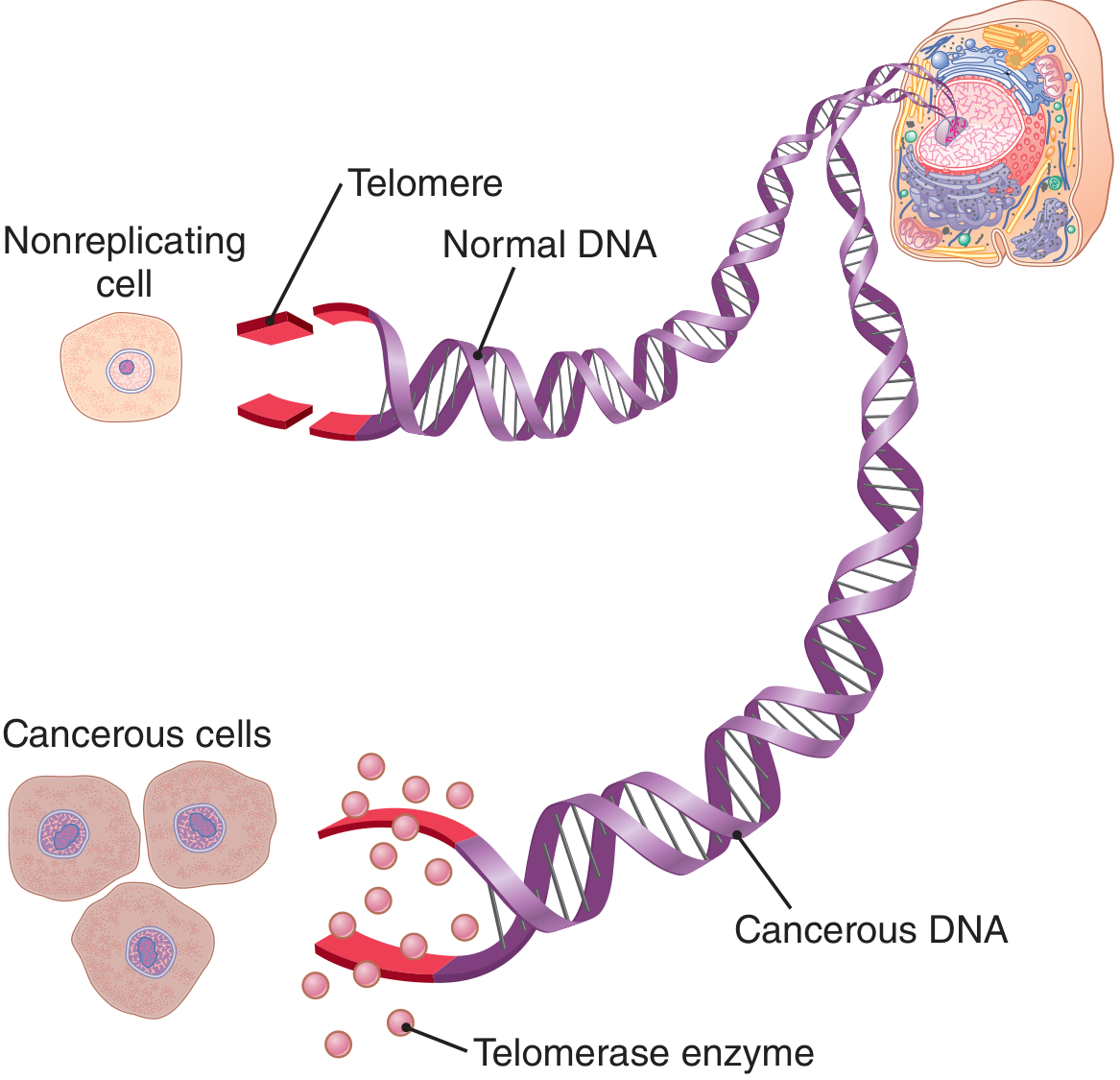
- Telomeres are repetitive DNA sequences (TTAGGG repeated thousands of times) sitting at the tips of every chromosome
- They do NOT code for any protein - they are just protective buffers
- At birth, telomeres are about 8,000 base pairs long
- In old age, they shrink to about 1,500 base pairs
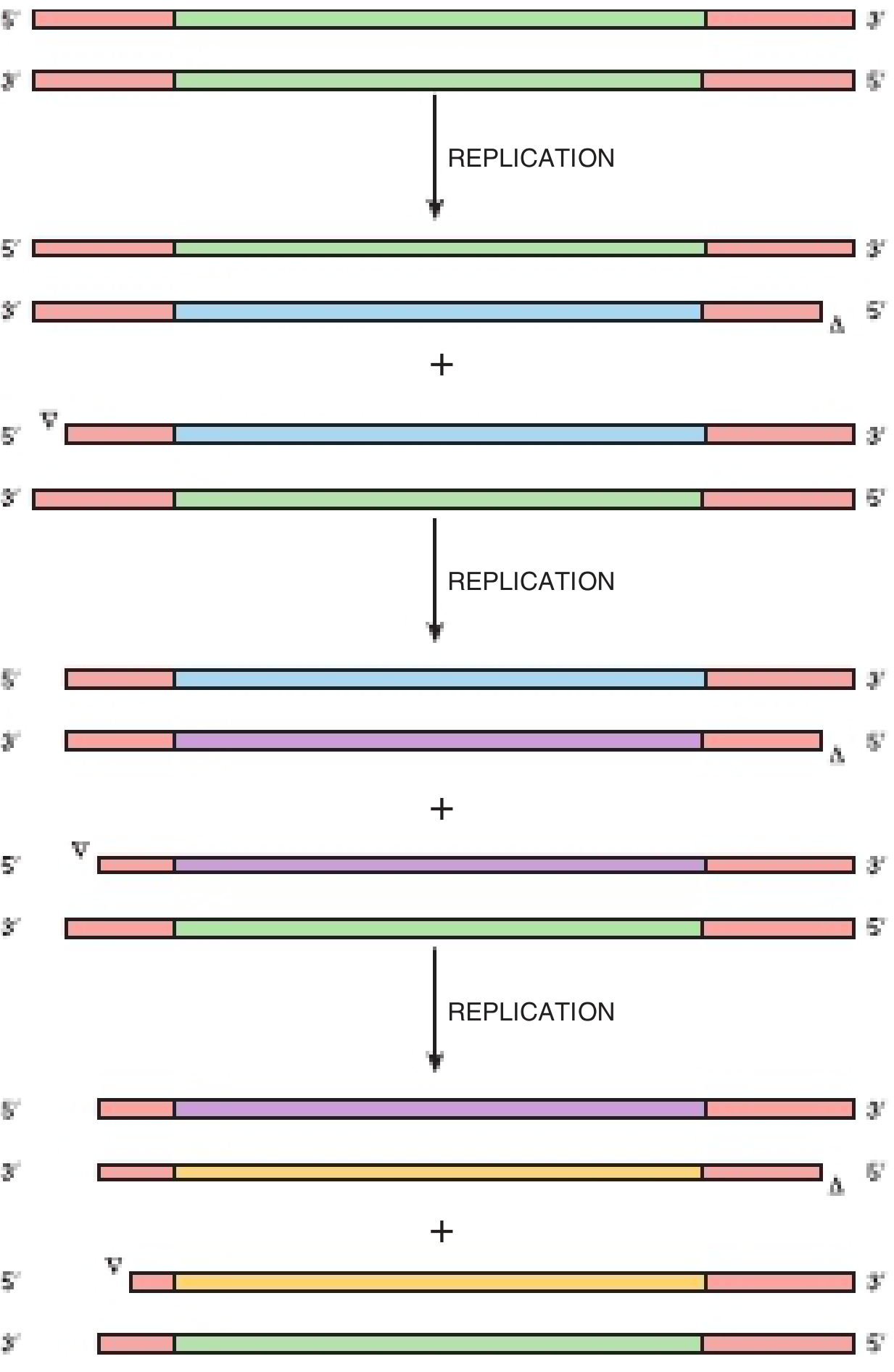
Why do they shorten? Every time a cell divides, DNA polymerase copies DNA but cannot copy the very last bit of the chromosome end. So each division = chromosome loses ~30-200 base pairs from its telomeres.
📊 FLOWCHART 1 - Telomere Shortening with Each Cell Division
NEW CELL (long telomeres)
        |
        ▼
   Cell divides (DNA replication)
        |
        ▼
   DNA polymerase copies the chromosome
        |
        ▼
   BUT — cannot copy the very last ~100 bp at the 5' end
        |
        ▼
   Daughter cell has SLIGHTLY SHORTER telomeres
        |
        ▼
   Divides again → even shorter
        |
        ▼
   After ~50-70 divisions → telomeres reach CRITICAL SHORT LENGTH
        |
        ▼
   Chromosomes become UNSTABLE
        |
        ▼
   Cell enters SENESCENCE (stops dividing) or DIES
🔷 PART 2: What is TELOMERASE?
- TERT (Telomerase Reverse Transcriptase) - the protein/enzyme part that does the actual DNA synthesis
- TERC (Telomerase RNA Component) - carries the RNA template (3'-CCCAAU-5') used to add new DNA
📊 FLOWCHART 2 - How Telomerase Works (Step by Step)
STEP 1: Chromosome end has a shortened telomere with a single-stranded 3' overhang
        |
        ▼
STEP 2: Telomerase binds to this 3' end
        (its RNA template base-pairs with the telomere: TTAGGG ← 3'-AATCCC-5' RNA)
        |
        ▼
STEP 3: TERT (reverse transcriptase part) synthesizes NEW DNA
        using its own RNA as template → adds TTAGGG repeat
        → Telomere extends a small distance
        |
        ▼
STEP 4: TRANSLOCATION - Telomerase moves (slides forward)
        along the newly made DNA to a fresh position
        |
        ▼
STEP 5: Synthesizes ANOTHER TTAGGG repeat
        (fresh extension)
        |
        ▼
STEP 6: Repeat Steps 3-5 multiple times
        → Chromosome end keeps getting longer
        |
        ▼
STEP 7: DNA Polymerase + Primase complex joins in
        → Fills in the complementary strand
        |
        ▼
STEP 8: DNA Ligase SEALS the new strand
        |
        ▼
RESULT: Telomere is RESTORED to full length ✓
🖼️ Textbook Diagram - Telomeres & Telomerase
🖼️ Textbook Diagram - Progressive Shortening with Each Replication
🔷 PART 3: WHERE is Telomerase Active?
| Cell Type | Telomerase Active? | Effect |
|---|---|---|
| Most body (somatic) cells | ❌ NO | Telomeres shorten → aging |
| Stem cells (bone marrow, skin) | ✅ YES | Can keep dividing throughout life |
| Germ cells (sperm, eggs) | ✅ YES | Pass full-length telomeres to offspring |
| Cancer cells | ✅ YES (abnormally) | Divide FOREVER - immortal |
📊 FLOWCHART 3 - Big Picture: The Telomere Story
        BIRTH
          |
   Long telomeres (8000 bp)
          |
   Telomerase OFF in most cells
          |
          ▼
    Cell divides → telomere shortens
    Cell divides → telomere shortens
    Cell divides → telomere shortens
          |
          ▼ (~50-70 divisions)
    Telomere critically short
          |
     ┌────┴────┐
     ▼         ▼
  NORMAL    CANCER CELL
  CELL      (telomerase turns ON)
     |              |
  Senescence   Immortal division
  / Cell death  (tumor grows)
     |
     ▼
   AGING
🧠 Key Points to Remember (Summary)
| Concept | Simple Version |
|---|---|
| Telomere | Protective cap at chromosome ends (like shoelace tip) |
| Why it shortens | DNA polymerase can't copy the last bit of the strand |
| Consequence of shortening | Cell aging and eventual cell death |
| Telomerase | Enzyme that rebuilds telomere length |
| How it works | Uses its own RNA as template to add TTAGGG repeats |
| Translocation | Telomerase slides forward to add more repeats |
| Who has it active | Stem cells, germ cells, cancer cells |
| Cancer connection | Cancer exploits telomerase to become immortal |