
abdominal pain according to macalide with dds
Reading File
The user is asking about abdominal pain content from a book called "Macalide with DDS" - this likely refers to "Macleod's" clinical examination or similar, but "DDS" could refer to a specific edition or companion. Let me search for this in the library.
Finding Sources
Finding Sources
Finding Sources
Finding Sources
The library doesn't appear to have a book called "Macalide" or "Macalide with DDS." This term "macalide" doesn't match any known standard medical textbook. Let me clarify with the user - they may mean "Macleod's" (clinical examination), or perhaps "MACLEODS" or something else. "DDS" could be an abbreviation for "Diagnosis and Differential Signs," or a specific edition. Let me also check the remaining books and search for abdominal pain more generally.
Finding Sources
Finding Sources
There is no book called "Macalide" in the library. The term "macalide" is likely a phonetic spelling of "Macleod's" (as in Macleod's Clinical Examination), and "DDS" likely refers to the Diagnosis and Differential Diagnosis of Abdominal Pain section. Let me clarify with the user before proceeding further.
I don't see a book called "Macalide" in the library - this name doesn't match any standard medical textbook title I recognize. Could you help me identify what you're looking for?
Asking for Preferences
Which book are you referring to? 'Macalide' doesn't match any title in our library. · What does 'DDS' stand for in your question?
The user wants abdominal pain - differential diagnosis and signs - from Macleod's Clinical Examination. That book isn't in the library, but let me search the available books for the best content on abdominal pain differential diagnosis. The closest we have would be clinical examination/history-taking sections in internal medicine, surgery, or gastroenterology books. Let me search for this content.
Finding Sources
Finding Sources
The library doesn't have Macleod's, but it has excellent content on abdominal pain differential diagnosis from Rosen's Emergency Medicine, Symptom to Diagnosis, and Yamada's Gastroenterology. Let me read the most relevant sections - the clinical examination-style approach from "Symptom to Diagnosis" and Rosen's.
Reading File
Reading File
Excellent content. Let me also read the location-based table from Symptom to Diagnosis and the Rosen's section on signs/examination findings, plus the Textbook of Family Medicine table.
Reading File
Reading File
Now let me fetch the key diagram (differential by location) and also read the signs/clinical examination section from Rosen's.
Loading Image
Loading Image
Reading File
I now have excellent, comprehensive material. Let me also fetch the referred pain diagram since it's very relevant for a Macleod's-style clinical examination approach.
Loading Image
Loading Image
I now have excellent visual and textual material to provide a comprehensive Macleod's-style answer. Note: Macleod's Clinical Examination is not in the library, but the content below draws from the closest equivalents - Symptom to Diagnosis (evidence-based clinical reasoning guide) and Rosen's Emergency Medicine - which cover the same clinical examination framework for abdominal pain.
Abdominal Pain - Differential Diagnosis and Signs
Note: Macleod's Clinical Examination is not available in our medical textbook library. The following content is drawn from Symptom to Diagnosis: An Evidence-Based Guide, 4th Ed. and Rosen's Emergency Medicine - both of which use the same structured clinical examination approach to abdominal pain differential diagnosis.
Types of Abdominal Pain
Understanding the type of pain guides the differential:
| Pain Type | Character | Common Causes |
|---|---|---|
| Visceral | Dull, crampy, poorly localized, midline | Hollow organ distension (bowel obstruction, early appendicitis) |
| Somatic/Parietal | Sharp, well-localized, worsened by movement | Peritoneal irritation (peritonitis, late appendicitis) |
| Referred | Distant from the source | Diaphragmatic irritation - shoulder tip; biliary/renal colic - back |
| Colicky | Waxes and wanes in waves | Hollow viscus obstruction (ureter, bile duct, small bowel, large bowel) |
Characteristics of Colicky Pain
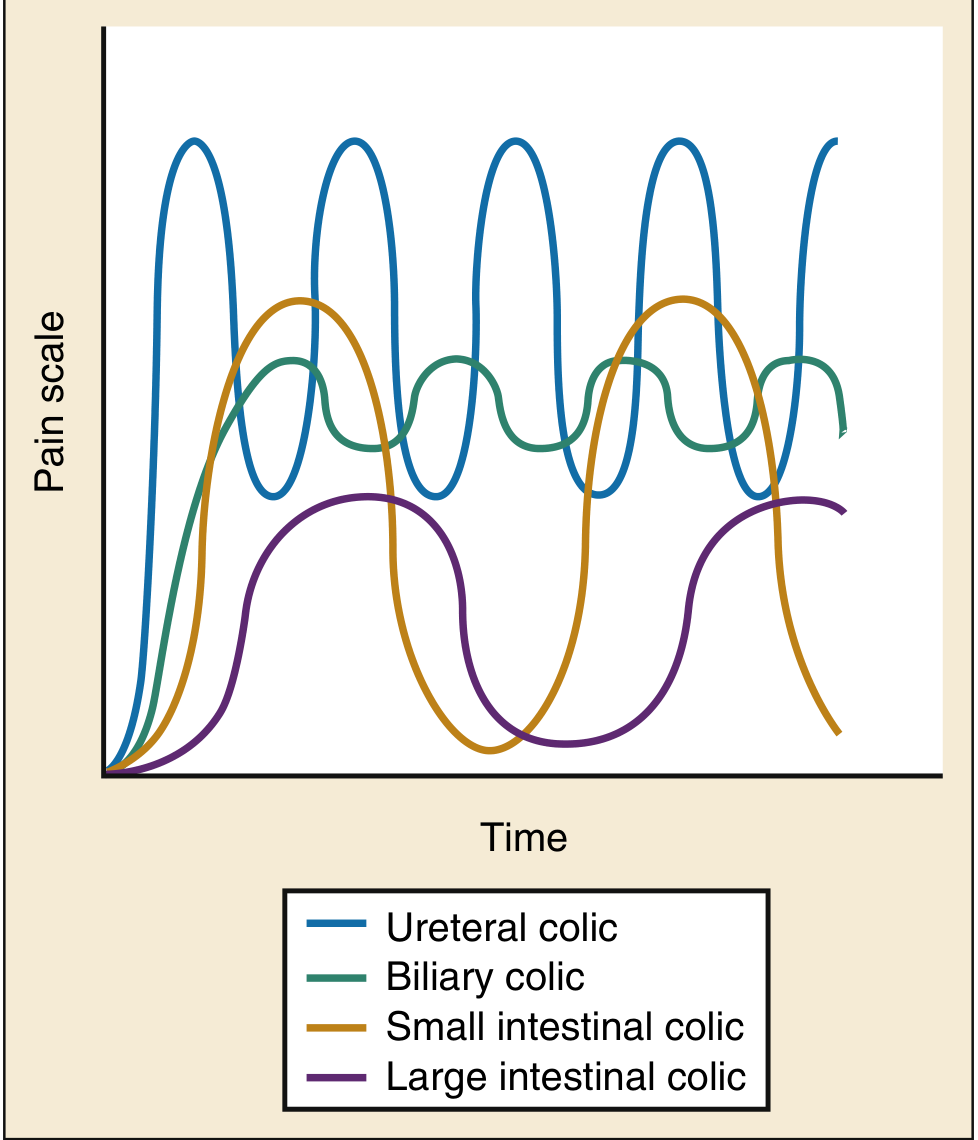
Ureteral colic is the most severe and rapid-cycling; large intestinal colic is slower and lower in intensity.
Differential Diagnosis by Location
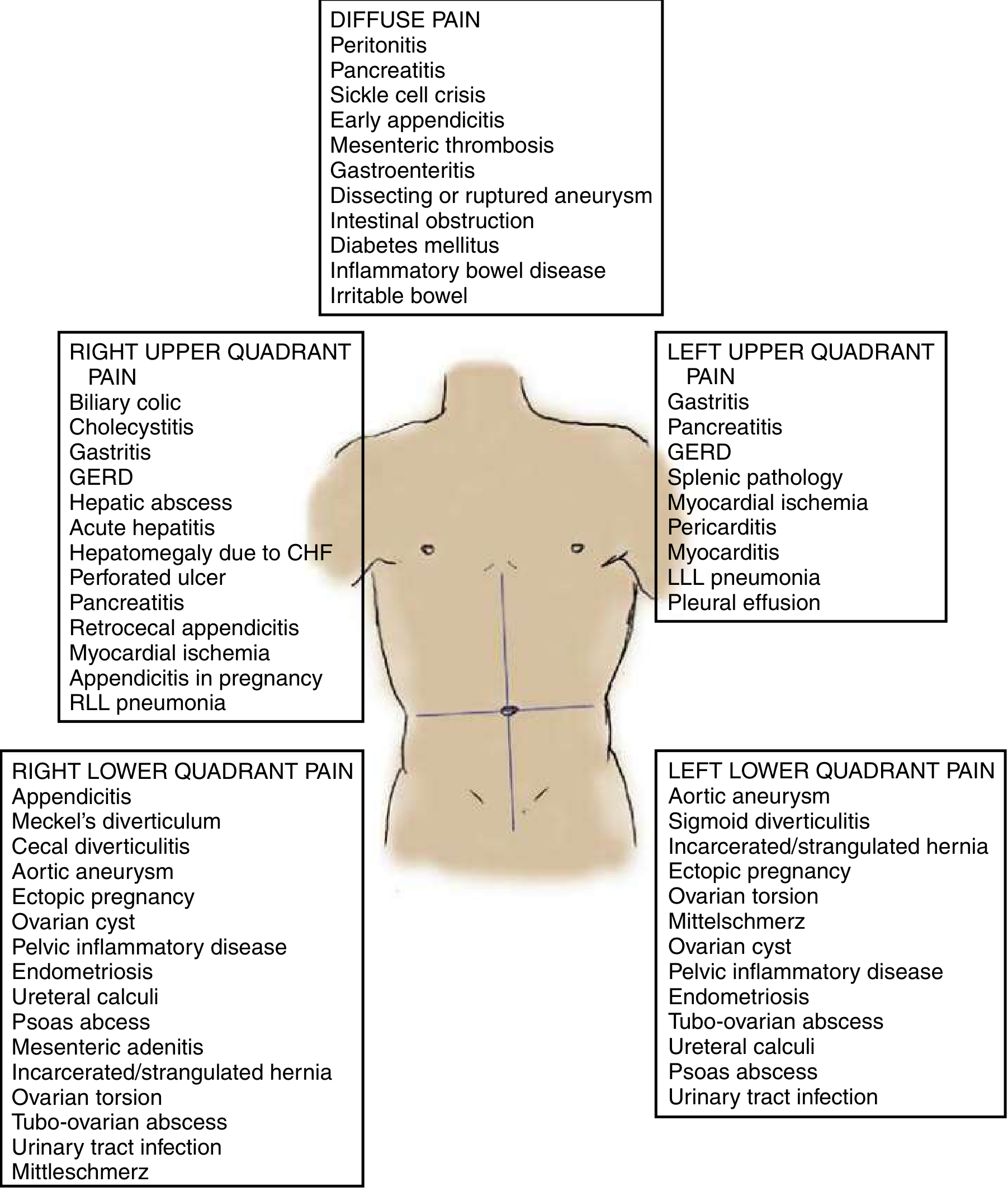
Epigastric / Central
- Myocardial infarction (referred)
- Peptic ulcer disease (PUD)
- Pancreatitis - pain radiates straight through to mid-back
- Biliary disease
- Gastritis / GERD
- Early appendicitis (visceral, pre-migration)
Right Upper Quadrant (RUQ)
- Biliary colic / Cholecystitis - postprandial or nocturnal, dark urine
- Hepatitis (acute)
- Hepatomegaly from congestive heart failure
- Hepatic abscess
- Perforated ulcer
- RLL (right lower lobe) pneumonia
- Retrocecal appendicitis
- Myocardial ischemia (referred)
Left Upper Quadrant (LUQ)
- Gastritis / GERD / Pancreatitis
- Splenic pathology - referred pain to left shoulder tip
- Myocardial ischemia, Pericarditis, Myocarditis
- LLL (left lower lobe) pneumonia / Pleural effusion
Right Lower Quadrant (RLQ)
- Appendicitis - pain migrates from periumbilical to RLQ (McBurney's point)
- Meckel's diverticulum
- Cecal diverticulitis
- Ectopic pregnancy, Ovarian cyst, Ovarian torsion, PID
- Ureteral calculi
- Psoas abscess
- Mesenteric adenitis
- Incarcerated / strangulated hernia
- Endometriosis
- Mittleschmerz
Left Lower Quadrant (LLQ)
- Sigmoid diverticulitis
- Ectopic pregnancy, Ovarian torsion, Ovarian cyst, PID
- Tubo-ovarian abscess
- Endometriosis
- Ureteral calculi
- Psoas abscess
- Incarcerated / strangulated hernia
- Aortic aneurysm (AAA)
- UTI
Diffuse Abdominal Pain
- Peritonitis (from any cause)
- Pancreatitis
- Sickle cell crisis
- Early appendicitis (before localization)
- Mesenteric thrombosis / ischemia
- Gastroenteritis
- Dissecting or ruptured AAA - life-threatening
- Intestinal obstruction
- Diabetes mellitus / DKA
- Inflammatory bowel disease (IBD)
- Irritable bowel syndrome (IBS)
Referred Pain Patterns
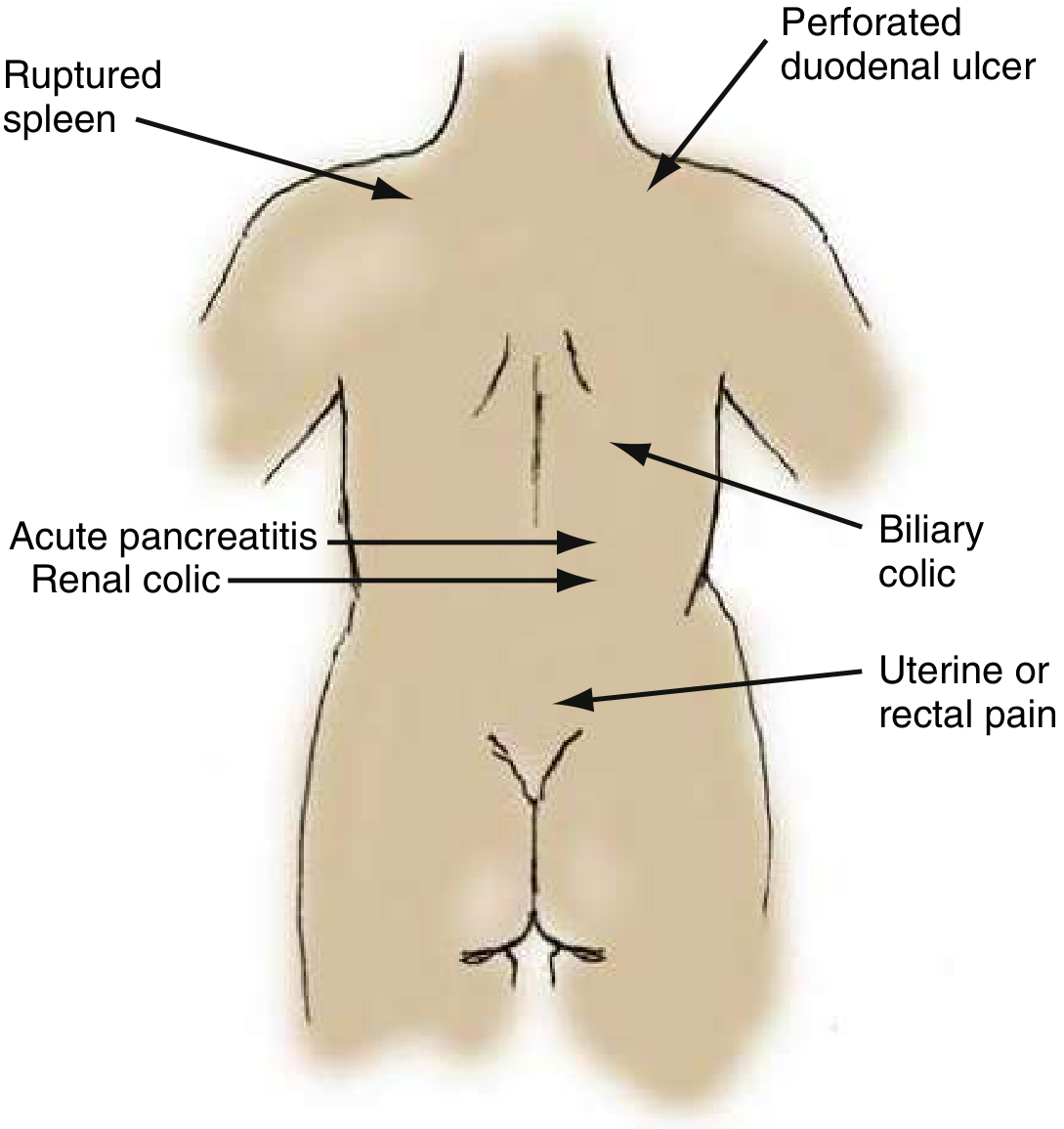
| Source | Site of Referred Pain |
|---|---|
| Biliary colic | Right shoulder / right scapula / mid-back |
| Acute pancreatitis | Mid-back (straight through) |
| Renal colic | Flank - loin - groin |
| Ruptured spleen | Left shoulder tip (Kehr's sign) |
| Perforated duodenal ulcer | Right shoulder (diaphragmatic irritation) |
| Uterine / rectal pain | Sacrum / perineum |
Differential Diagnosis by Time Course
| Acute (First Episode) | Acute (Recurrent) | Subacute / Chronic |
|---|---|---|
| AAA | Biliary disease | Chronic mesenteric ischemia |
| Acute mesenteric ischemia | Diverticulitis | IBD |
| Appendicitis | DKA | IBS |
| Ectopic pregnancy | Nephrolithiasis | Hepatitis |
| Ovarian torsion | Pancreatitis | PUD |
| Splenic rupture | PID | |
| Bowel obstruction | Bowel obstruction | |
| Gastroenteritis / Peritonitis | ||
| MI |
Clinical Signs on Examination
| Sign | Description | Condition Suggested |
|---|---|---|
| Rebound tenderness | Pain worse on release than on pressure | Peritoneal irritation / peritonitis |
| Guarding | Involuntary muscle rigidity | Peritonitis |
| Rigidity ("board-like abdomen") | Constant involuntary rigidity | Perforated viscus |
| Murphy's sign | Inspiratory arrest on deep palpation RUQ | Acute cholecystitis |
| Rovsing's sign | LLQ palpation causes RLQ pain | Appendicitis |
| Psoas sign | Pain on hip extension | Retrocecal appendicitis / psoas abscess |
| Obturator sign | Pain on internal rotation of hip | Pelvic appendicitis / pelvic pathology |
| Kehr's sign | Left shoulder pain on lying flat | Splenic injury / free intraperitoneal blood |
| Carnett's sign | Pain worsens with tensed abdominal muscles | Abdominal wall (not intraperitoneal) |
| Cullen's sign | Periumbilical bruising | Haemoperitoneum (pancreatitis, ectopic) |
| Grey Turner's sign | Flank bruising | Retroperitoneal haemorrhage (pancreatitis) |
High-Risk Populations (Red Flags)
From Rosen's Emergency Medicine, certain groups require a lower threshold for serious diagnosis:
- Age > 60 years
- Pregnant women
- Previous abdominal surgery (especially bariatric)
- Immunocompromised patients (even low-dose steroids)
- Patients with known vascular disease
- Known abdominal/pelvic malignancy
Key Clinical Clues - "Must Not Miss" Diagnoses
| Clue | Diagnosis to Consider |
|---|---|
| Pain out of proportion to examination | Mesenteric ischemia |
| Syncope with abdominal pain | Ruptured AAA, ruptured ectopic pregnancy |
| Epigastric pain radiating to mid-back + vomiting | Acute pancreatitis |
| Periumbilical pain migrating to RLQ | Appendicitis |
| Left shoulder tip pain | Splenic pathology / diaphragmatic irritation |
| Postprandial pain + dark urine + fever | Biliary disease / cholecystitis |
| Colicky pain + inability to pass stool or flatus | Bowel obstruction |
Sources:
- Symptom to Diagnosis: An Evidence-Based Guide, 4th Ed. - Chapter 3 (Abdominal Pain)
- Rosen's Emergency Medicine, 9th Ed. - Chapter 23 (Abdominal Pain)
DDs according to 9 quardant of abdomin
Finding Sources
Finding Sources
Good - found relevant sections in Gray's Anatomy, Bailey & Love's Surgery, and S. Das. Let me read those sections now in parallel.
Reading File
Reading File
Finding Sources
Let me get the 9-region diagram from Gray's and also search for the DD by specific regions (hypochondrium, flank, iliac fossa etc.).
Loading Image
Finding Sources
Finding Sources
Found the exact 9-region naming from S. Das. Let me read the S. Das section which specifically lists the 9 regions and their contents/differentials.
Reading File
Reading File
Let me fetch the S. Das 9-region diagram and also read the S. Das section on differentials by region.
Loading Image
Finding Sources
Excellent - S. Das has a dedicated section on differential diagnosis by region. Let me read it fully.
Reading File
Reading File
I now have all the foundational material needed. I have the 9-region diagram, the anatomical framework from Gray's Anatomy and S. Das, and the differential diagnosis content. Let me now compile the complete, well-structured answer.
Differential Diagnosis of Abdominal Pain by 9 Regions
The 9 Regions of the Abdomen
The abdomen is divided into 9 regions by 2 vertical lines (midclavicular/midinguinal) and 2 horizontal lines (subcostal/transpyloric plane above, intertubercular/transtubercular plane below):
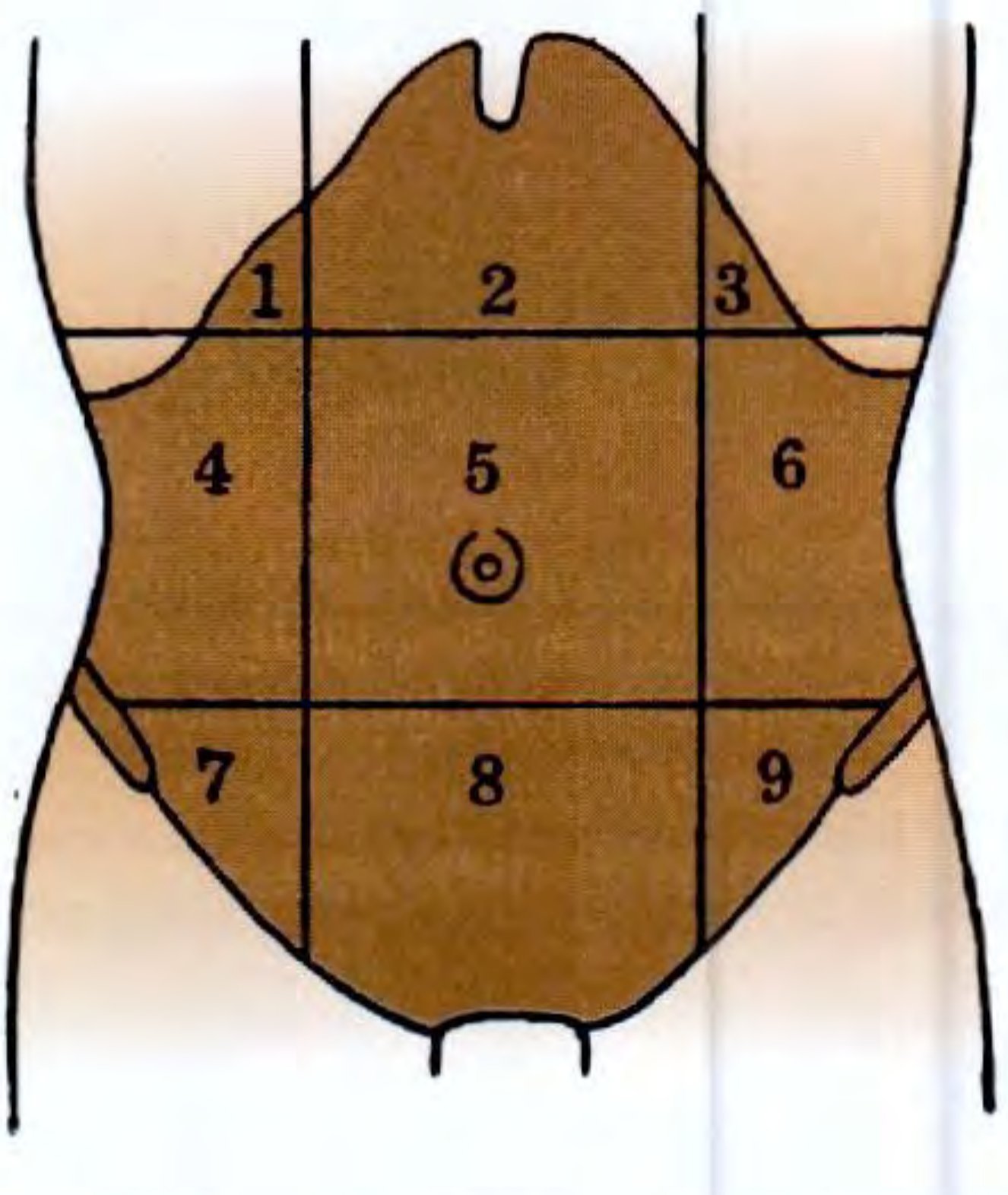
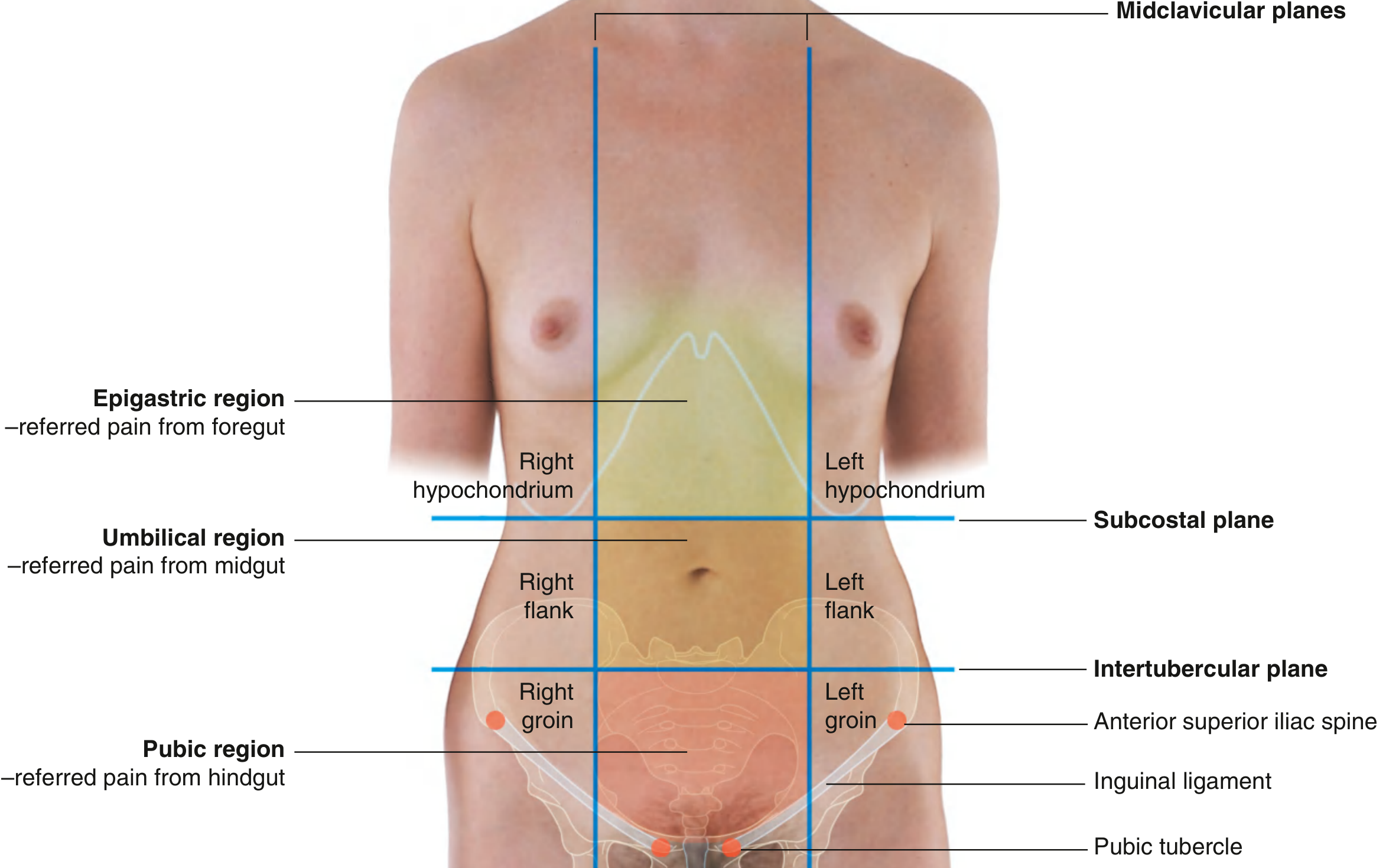
| Region No. | Name | Referred pain from |
|---|---|---|
| 1 | Right Hypochondrium | Foregut (liver, gallbladder) |
| 2 | Epigastrium | Foregut (stomach, duodenum, pancreas) |
| 3 | Left Hypochondrium | Foregut (spleen, stomach, pancreas tail) |
| 4 | Right Lumbar (Right Flank) | Midgut (ascending colon, right kidney) |
| 5 | Umbilical | Midgut (small bowel, AAA) |
| 6 | Left Lumbar (Left Flank) | Midgut (descending colon, left kidney) |
| 7 | Right Iliac (Right Groin/Iliac Fossa) | Hindgut (appendix, caecum, right ureter) |
| 8 | Hypogastrium (Pubic/Suprapubic) | Hindgut (bladder, uterus, sigmoid colon) |
| 9 | Left Iliac (Left Groin/Iliac Fossa) | Hindgut (sigmoid colon, left ureter) |
Key rule (Gray's Anatomy): Foregut pain - epigastric; Midgut pain - umbilical; Hindgut pain - pubic/hypogastric.
Region-by-Region Differential Diagnosis
1. Right Hypochondrium (RHC)
Structures here: Liver (right lobe), gallbladder, hepatic flexure of colon, right kidney (upper pole), right suprarenal gland, subphrenic space.
| Cause | Key Features |
|---|---|
| Acute cholecystitis | Sudden onset RHC pain, Murphy's sign +ve, fever, vomiting, fatty food intolerance |
| Biliary colic | Colicky pain radiating to right shoulder/scapula, no fever |
| Hepatitis (acute) | RHC tenderness, jaundice, dark urine, pale stools, hepatomegaly |
| Liver abscess | Swinging fever, tender enlarged liver, raised R hemidiaphragm |
| Hepatomegaly (CCF, malignancy) | Smooth (CCF) vs. irregular (malignancy) |
| Subphrenic abscess | Follows perforation/surgery; tachycardia, tachypnea, R shoulder pain |
| Carcinoma hepatic flexure | Mass, anaemia, blood in stool, barium enema filling defect |
| Right renal colic | Loin-to-groin radiation, haematuria, writhing in pain |
| Right renal mass (hydronephrosis, carcinoma) | Ballottable, bimanually palpable, reniform |
| Right suprarenal tumour | Adrenal mass - Conn's/Cushing's/phaeochromocytoma features |
| Empyema of gallbladder | Tender palpable gallbladder, high fever, systemically unwell |
| Mucocele of gallbladder | Non-tender mobile cystic RHC mass, no fever |
| Carcinoma of gallbladder | Irregular hard RHC mass, jaundice, weight loss |
| Right basal pneumonia | Pleuritic chest pain, cough, fever; referred to abdomen |
| Right-sided pleural effusion | Dullness at base; referred abdominal pain |
| Parietal: Cold abscess (TB rib caries), lipoma, sebaceous cyst |
2. Epigastrium
Structures here: Stomach (body/pylorus), duodenum (1st/2nd part), pancreas (head/body), lower oesophagus, liver (left lobe), aorta, coeliac plexus.
| Cause | Key Features |
|---|---|
| Peptic ulcer disease | Burning epigastric pain, nocturnal, relieved by food/antacids; NSAID/H. pylori history |
| Acute gastritis | Epigastric pain, nausea, relation to alcohol/NSAIDs |
| Acute pancreatitis | Severe epigastric pain radiating to mid-back, nausea/vomiting, raised lipase/amylase |
| Perforated peptic ulcer | Sudden severe "board-like" rigidity, free air under diaphragm |
| Gastric carcinoma | Weight loss, dysphagia, early satiety, mass, anaemia |
| GERD / Oesophagitis | Heartburn, worse on lying, regurgitation |
| Myocardial infarction | Epigastric pain (inferior MI), diaphoresis, ECG changes |
| Aortic aneurysm (AAA) | Pulsatile epigastric mass, severe pain with rupture + shock |
| Acute mesenteric ischaemia | Pain out of proportion to examination |
| Subphrenic abscess | Post-operative/perforation; swinging fever, tachycardia |
| Carcinoma of pancreas (head) | Painless progressive jaundice, weight loss, Courvoisier's sign +ve |
| Acute pancreatitis complications (pseudocyst) | Epigastric mass, raised amylase, behind stomach on barium meal |
| Hiatus hernia | Heartburn, dysphagia; CXR shows gas shadow in mediastinum |
| Parietal: Epigastric hernia, cold abscess |
3. Left Hypochondrium (LHC)
Structures here: Spleen, stomach (fundus/body), splenic flexure of colon, tail of pancreas, left kidney (upper pole), left suprarenal gland.
| Cause | Key Features |
|---|---|
| Splenomegaly | Various - see below; notched medial border, moves diagonally toward RIF |
| - Malaria, visceral leishmaniasis | Tropical, massive splenomegaly |
| - Portal hypertension | Ascites, varices, hepatomegaly |
| - Haematological (lymphoma, CML, myelofibrosis) | Massive splenomegaly, blood film changes |
| - Haemolytic anaemia | Splenomegaly, anaemia, jaundice |
| Splenic rupture | Trauma; Kehr's sign (left shoulder pain), peritonism, haemorrhagic shock |
| Gastric pathology | Gastritis, PUD, carcinoma - features as in epigastric region |
| Splenic infarct | Sudden LHC pain, friction rub |
| Carcinoma splenic flexure | Mass, altered bowel habit, blood in stool, barium enema defect |
| Left renal colic / mass | As for right side, mirrored |
| Left suprarenal tumour | Adrenal features |
| LLL pneumonia / pleuritis | Referred LHC pain; chest signs |
| Pancreatitis (tail) / pancreatic pseudocyst | LHC fullness, raised amylase |
| Parietal: Cold abscess (rib caries), soft tissue tumours |
4. Right Lumbar (Right Flank)
Structures here: Ascending colon, right kidney (lower pole), right ureter (upper), right psoas muscle, quadratus lumborum.
| Cause | Key Features |
|---|---|
| Right ureteric colic | Loin-to-groin colicky pain, haematuria, nausea; stones on CT KUB |
| Right hydronephrosis | Loin ache, enlarged ballottable kidney |
| Right renal carcinoma | Classic triad: haematuria + loin pain + palpable mass |
| Carcinoma ascending colon | Mass, iron-deficiency anaemia, occult blood in stool |
| Crohn's disease | RLF pain + diarrhoea + weight loss + perianal disease |
| Retroperitoneal mass | Fixed, does not move with respiration; lymphoma, sarcoma |
| Psoas abscess | Fluctuant, pointing in the groin; hip held in flexion; Pott's disease |
| Acute pyelonephritis | Loin pain + fever + dysuria + renal angle tenderness (CVA tenderness) |
| Perinephric abscess | Fixed loin swelling, scoliosis towards the side, spiking fever |
| Parietal: Cold abscess (vertebral TB/lumbar rib) |
5. Umbilical Region
Structures here: Transverse colon, small intestine (jejunum/ileum), aorta (bifurcation), mesenteric lymph nodes, umbilicus.
| Cause | Key Features |
|---|---|
| Small bowel obstruction | Colicky central pain, vomiting, distension, constipation, tinkling bowel sounds |
| Mesenteric adenitis | Children, central pain + fever, tender mesenteric nodes |
| Crohn's disease | Central crampy pain, diarrhoea, weight loss, RIF mass |
| Gastroenteritis | Colicky pain, diarrhoea, vomiting, fever |
| Abdominal aortic aneurysm (AAA) | Expansile pulsatile central mass; rupture - sudden pain + collapse |
| Carcinoma transverse colon | Mass, obstruction signs, blood in stool |
| Umbilical hernia | Reducible umbilical swelling, cough impulse +ve |
| Para-umbilical hernia | Similar to above, just above/below umbilicus |
| Mesenteric cyst | Soft, fluctuant, mobile - moves perpendicular to mesenteric attachment |
| Early appendicitis | Pain begins central (visceral) before migrating to RIF |
| Intestinal TB | Ulcerative or hypertrophic; central pain, doughy abdomen, ascites |
| Lymphoma (mesenteric) | Central mass, "rubber" feel nodes, systemic B symptoms |
| Pancreatitis / pancreatic pseudocyst | Upper central mass following pancreatitis |
| Signs: Cullen's sign (periumbilical bruising) - haemoperitoneum (ruptured ectopic, pancreatitis) |
6. Left Lumbar (Left Flank)
Structures here: Descending colon, left kidney, left ureter (upper), left psoas muscle.
| Cause | Key Features |
|---|---|
| Left ureteric colic | Loin-to-groin pain, haematuria |
| Left hydronephrosis / renal mass | Ballottable mass, loin pain |
| Carcinoma descending colon | Obstruction features (colicky pain + distension), blood PR, barium enema defect |
| Diverticulitis | LLQ/left flank pain, fever, altered bowel habit, elderly |
| Psoas abscess | As for right side |
| Left pyelonephritis / perinephric abscess | Loin pain + fever, renal angle tenderness |
| Parietal: Cold abscess |
7. Right Iliac Fossa (Right Iliac Region / Right Groin)
Structures here: Caecum, appendix, terminal ileum, right ovary/tube (females), right ureter (lower), right iliacus/psoas, inguinal canal, right iliac vessels.
| Cause | Key Features |
|---|---|
| Acute appendicitis | Pain migrates from umbilicus to McBurney's point; Rovsing's sign, guarding, rebound; most common surgical emergency |
| Carcinoma caecum | Mass, iron-deficiency anaemia, occult blood, right-sided obstruction |
| Crohn's disease (ileo-caecal) | Chronic RIF pain + diarrhoea, perianal disease, RIF mass |
| Intestinal TB (ileo-caecal) | Hypertrophic - mass + obstruction; Ulcerative - pain + diarrhoea; doughy abdomen |
| Mesenteric adenitis | Children; self-limiting, no migration of pain; tender mobile nodes |
| Meckel's diverticulitis | Clinically indistinguishable from appendicitis; Tc-99m scan |
| Ovarian cyst (right) | Right-sided; smooth, mobile, non-tender unless complicated; pelvic USS |
| Ovarian torsion (right) | Sudden severe right pelvic/RIF pain, vomiting; USS Doppler |
| Ectopic pregnancy (right) | Missed period + RIF pain + bleeding; b-hCG +ve; haemoperitoneum |
| Pelvic inflammatory disease (PID) | Bilateral but often RIF; cervical excitation +ve, vaginal discharge, fever |
| Ureteric colic (right lower ureter) | Radiation to groin/testis/labia, haematuria |
| Right inguinal hernia | Groin swelling, cough impulse; strangulation - pain + irreducibility |
| Right femoral hernia | Below and lateral to pubic tubercle; high strangulation risk |
| Psoas abscess | Fluctuant, tracks to groin; hip flexion deformity |
| Iliopsoas bursitis / iliacus haematoma | Trauma history, hip flexion pain |
| Carcinoid tumour (ileum) | Flushing, diarrhoea, carcinoid syndrome |
| Lymphoma (ileo-caecal) | Mass, B symptoms |
| Parietal: Lipoma, spigelian hernia, cold abscess |
8. Hypogastrium (Pubic / Suprapubic Region)
Structures here: Bladder, sigmoid colon (lower), uterus/cervix, ovaries (partially), rectum, iliac vessels.
| Cause | Key Features |
|---|---|
| Acute urinary retention | Lower abdominal fullness, inability to void, palpable bladder; males (BPH) / females |
| Cystitis (UTI) | Suprapubic pain, frequency, dysuria, haematuria |
| Pelvic inflammatory disease (PID) | Bilateral lower abdominal pain, cervical excitation, vaginal discharge, fever |
| Ectopic pregnancy | Bilateral or midline pelvic pain, haemoperitoneum; b-hCG +ve |
| Fibroid uterus | Irregular firm midline mass arising from pelvis, menorrhagia |
| Ovarian cyst (bilateral/large) | Smooth, cystic, mobile pelvic mass |
| Carcinoma bladder | Haematuria + suprapubic pain; cystoscopy diagnostic |
| Diverticulitis (sigmoid) | LLQ/hypogastric pain, fever, altered bowel habit |
| Carcinoma sigmoid / rectum | Rectal bleeding, tenesmus, altered bowel habit, palpable on PR |
| Uterine/cervical carcinoma | Post-menopausal bleeding, hard irregular uterus |
| Endometriosis | Cyclical pelvic pain, dysmenorrhoea, dyspareunia |
| Ovarian torsion / ruptured ovarian cyst | Sudden pelvic pain, guarding, vomiting |
| Intestinal obstruction (sigmoid volvulus) | Gross distension + obstipation; bent inner-tube on plain AXR |
| Parietal: Diastasis recti, lipoma, lower midline hernia |
9. Left Iliac Fossa (Left Iliac Region / Left Groin)
Structures here: Sigmoid colon, left ovary/tube (females), left ureter (lower), left iliacus/psoas, left inguinal canal.
| Cause | Key Features |
|---|---|
| Sigmoid diverticulitis | Most common; "left-sided appendicitis", LIF pain + fever + altered bowel habit; elderly |
| Carcinoma sigmoid colon | Rectal bleeding, tenesmus, mucus, obstruction, palpable mass |
| Left ovarian cyst / torsion | As for right side |
| Left ectopic pregnancy | As for right side |
| PID | Bilateral, as above |
| Ulcerative colitis | LIF + lower abdominal cramps, bloody diarrhoea, urgency |
| Constipation | Hard faecal masses (mobile, indentable, transient) in LIF |
| Left ureteric colic (lower ureter) | Loin-to-groin colicky pain, haematuria |
| Left inguinal / femoral hernia | As for right side |
| Psoas abscess (left) | As for right side |
| Lymphoma / enlarged iliac nodes | Firm, rubbery, non-tender nodes |
| Endometriosis | Cyclical pain |
| Parietal: Lipoma, spigelian hernia |
Summary Diagram
| Right | Central | Left | |
|---|---|---|---|
| Upper | Right Hypochondrium (liver, GB, RHC colon) | Epigastrium (stomach, duodenum, pancreas) | Left Hypochondrium (spleen, gastric fundus) |
| Middle | Right Lumbar/Flank (ascending colon, R kidney) | Umbilical (small bowel, transverse colon, aorta) | Left Lumbar/Flank (descending colon, L kidney) |
| Lower | Right Iliac Fossa (appendix, caecum, R ovary) | Hypogastrium (bladder, uterus, sigmoid) | Left Iliac Fossa (sigmoid colon, L ovary) |
Sources:
- S. Das - A Manual on Clinical Surgery, 13th Ed. - Chapter on Examination of Abdomen and Differential Diagnosis of Abdominal Swellings
- Gray's Anatomy for Students - Nine Regions and Referred Pain Patterns
- Bailey & Love's Short Practice of Surgery, 28th Ed. - Chapter on Abdominal Examination
This is a shared conversation. Sign in to Orris to start your own chat.