How MI can present on ECG in different ways ..( different presentations if MI on ECG ) when to suspect it clinically in different patients even when ECG is normal .. mnemonics where necessary.. when to give the protocol prophylactically .. according to latest guidelines and clinical books

Reading File
Finding Sources
Finding Sources
Finding Sources
Searching PubMed

"myocardial infarction" AND "ECG" AND "normal electrocardiogram"

Reading File
Reading File
Finding Sources
Searching PubMed

"acute coronary syndrome" AND "normal ECG" AND "clinical diagnosis"

Reading File
Reading File
Finding Sources
Searching PubMed

"myocardial infarction" AND "STEMI equivalent" AND "guidelines"

Reading File
Reading File
Finding Sources
Searching the Web

2023 2024 ACC AHA STEMI NSTEMI guidelines ECG diagnosis normal ECG ACS management

Reading File
Finding Sources
Reading File
Finding Sources
Reading File
Loading Image
Loading Image
Reading File
I now have everything needed for a comprehensive, well-sourced answer. Let me compile it.

Myocardial Infarction: ECG Presentations, Clinical Suspicion, and Management Protocols

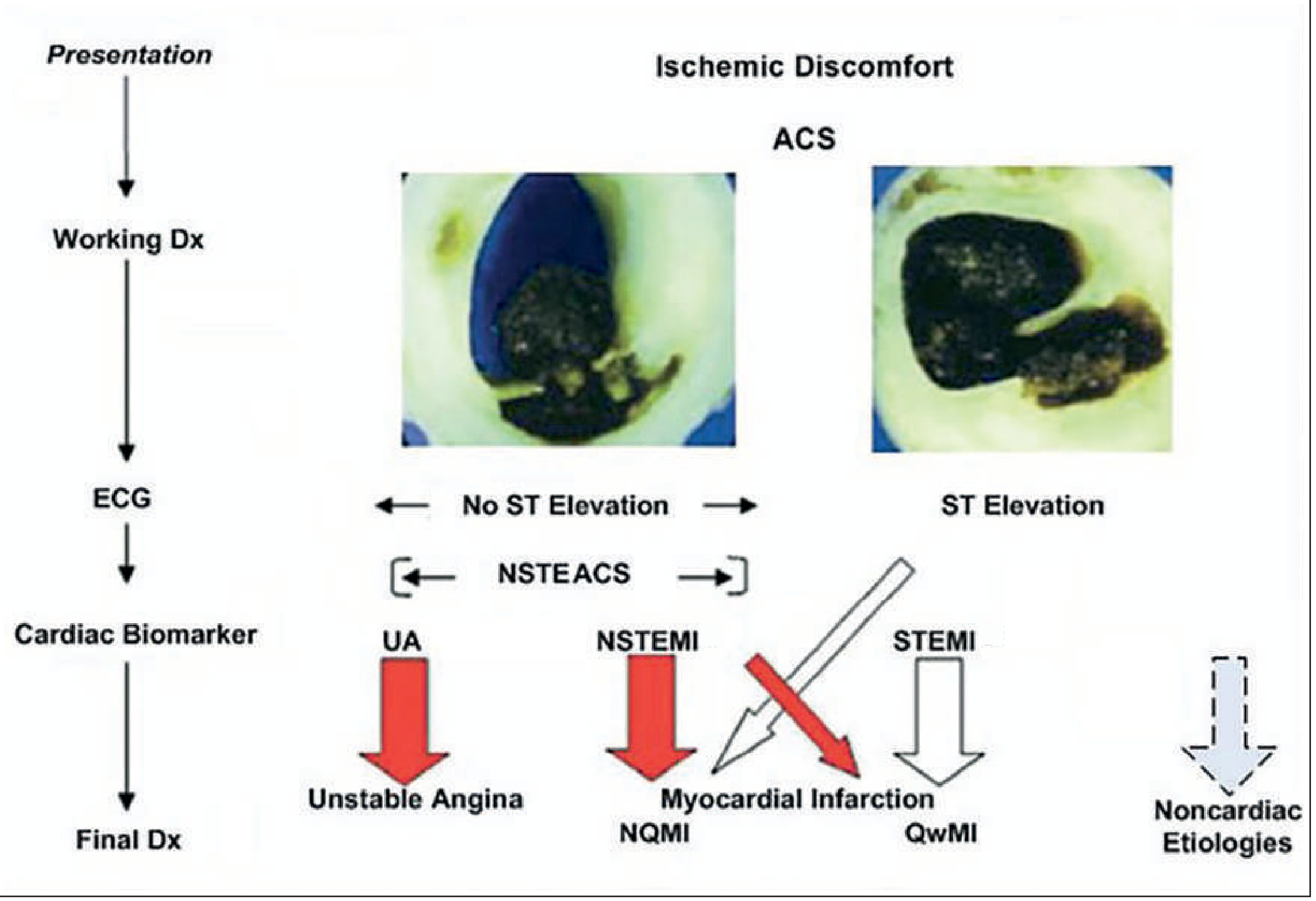
ACS Diagnostic Framework

ACS flowchart - STEMI vs NSTE-ACS pathway
ACS diagnostic pathways - Goldman-Cecil Medicine
The ECG is the single best initial test for MI but is fallible. The 12-lead should be obtained and interpreted within 10 minutes of patient arrival. - Tintinalli's Emergency Medicine, p. 378

PART 1: ECG PRESENTATIONS OF MI

The Classic Temporal Evolution (Mnemonic: "HATE Q")

PhaseECG FindingTime Frame
H - Hyperacute T wavesBroad, tall, peaked T wavesMinutes (earliest sign)
A - sT-segment Ascent (elevation)Convex upward ST elevationHours
T - T-wave inversionDeep symmetric T-wave inversionsHours-days
E - Q waves EstablishedPathological Q waves (>0.04s, >25% QRS)Hours-days
(Q) - Q waves persistMay become permanent "tombstone"Weeks-months
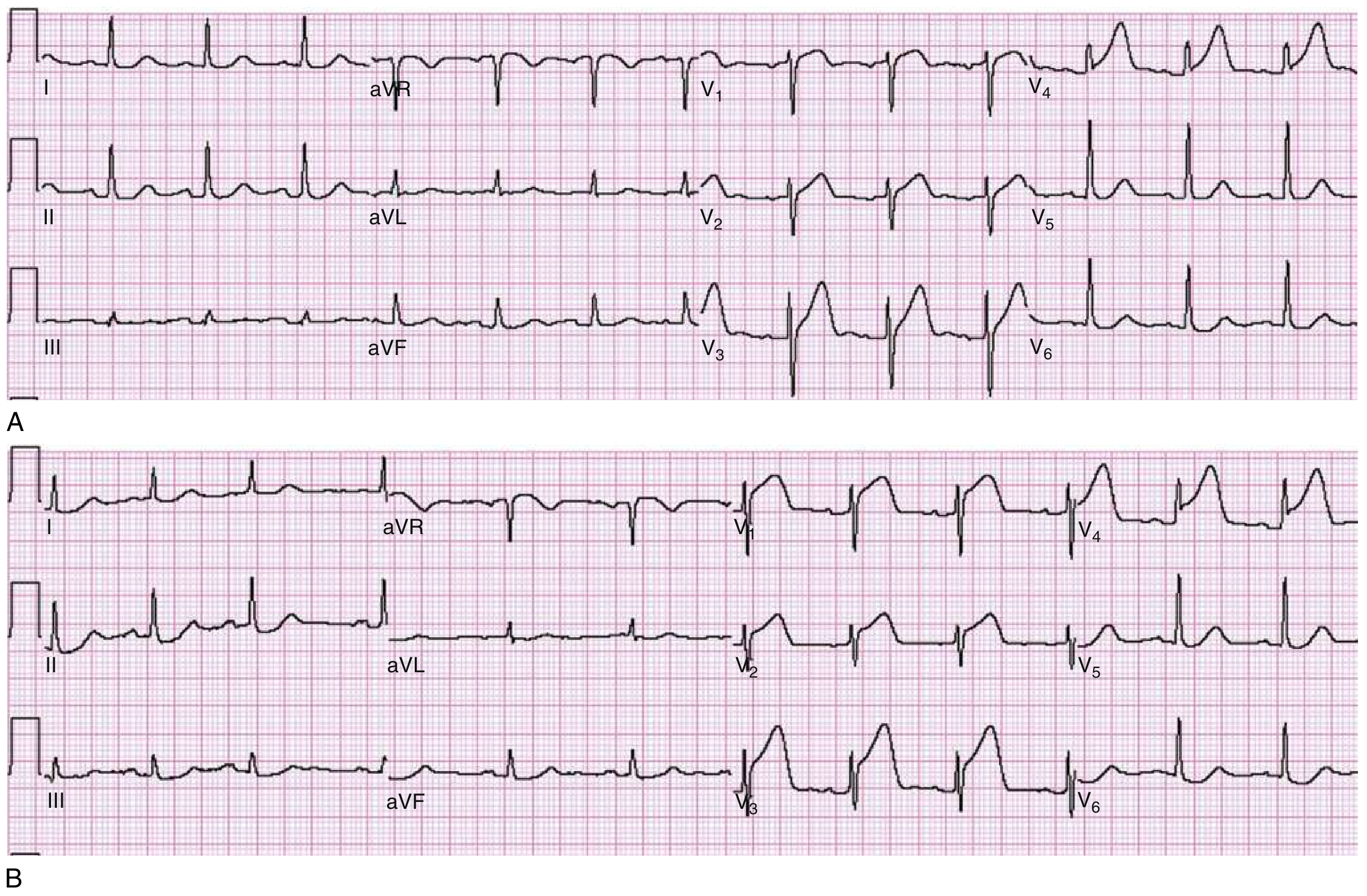
The classic ECG of Anterior STEMI: hyperacute T waves evolving to full ST elevation:
Hyperacute T waves progressing to full STEMI in the same patient 30 minutes apart
Panel A: hyperacute T waves in V3-V4 with early ST rise in V1-V2. Panel B: Same patient 30 minutes later - full STEMI in V1-V4. - Rosen's Emergency Medicine, Fig. 64.1

1A. STEMI - Anatomic Lead Localization (Mnemonic: "All Indians Lie Poste Right")

TerritoryLeads InvolvedCulprit Vessel
AnteroseptalV1-V3Proximal LAD
AnteriorV1-V4LAD
AnterolateralV1-V6, I, aVLProximal LAD or LCx
Lateral (high)I, aVLDiagonal or LCx
InferiorII, III, aVFRCA (85%) or LCx
Posterior (true)Tall R in V1-V2, R/S ≥1, ST depression V1-V3 (mirror image)RCA or LCx
Right VentricularII, III, aVF + ST elevation in V3R-V6RProximal RCA
Key rule: Any inferior STEMI (II, III, aVF elevation) - always obtain a right-sided ECG for RV infarction. ST elevation ≥1mm in V4R is the most sensitive finding. - Tintinalli's, Table 49-4

1B. STEMI Equivalents (Mnemonic: "WDAP" - these do NOT look like classic STEMI but require emergent cath)

1. Wellens Syndrome

  • Type A (25%): Biphasic T waves in V2-V3 (negative then positive)
  • Type B (75%): Deep symmetric T inversions in V2-V3
  • ECG features: isoelectric or minimally elevated ST (<1mm), no Q waves, no significant R-wave loss
  • Represents LAD stenosis - natural history is progression to massive anterior STEMI
  • Key point: patient may be pain-free when this is seen; do NOT stress test these patients - Rosen's EM, p. 1001

2. De Winter Pattern

  • Upsloping ST depression at the J point with tall, symmetric (hyperacute) T waves in precordial leads V1-V6
  • ST elevation in aVR
  • Represents proximal LAD occlusion - functionally equivalent to anterior STEMI
  • Present in ~2% of LAD occlusions; does NOT evolve to classic ST elevation
  • 2026 systematic review: thrombolysis is considered when PCI is delayed (PMID: 41663344)

3. aVR Elevation Pattern

  • ST elevation in aVR (≥1mm) with diffuse ST depression in ≥8 leads
  • Indicates left main or proximal LAD occlusion (severe multivessel disease / ischemia)
  • High mortality; treated as emergent - newly reclassified from "STEMI equivalent" to "High-Risk NOMI" in 2026 literature (PMID: 41798790)

4. Posterior MI

  • Classic 12-lead shows: ST depression in V1-V3, tall/broad R wave in V1-V2, R/S ratio ≥1, upright T in V1
  • These are reciprocal of posterior ST elevations
  • Confirm with posterior leads (V7-V9): ST elevation ≥0.5mm
  • Always associated with inferior or lateral MI

1C. NSTEMI and Non-Diagnostic ECG Changes

FindingSignificance
Horizontal or downsloping ST depressionSubendocardial ischemia, NSTEMI
Diffuse ST depression in multiple leads with ST elevation in aVRLeft main / proximal LAD disease
Symmetric, narrow T-wave inversionsIschemia (especially Wellens)
Nonspecific ST-T changesMay be only finding in NSTEMI
Normal ECGPresent in 1-6% of AMI patients at first presentation
Harrison's 22e, p. 1915: "With ischemia confined primarily to the subendocardium, the ST vector shifts toward the subendocardium and ventricular cavity, so overlying leads show ST depression with ST elevation in aVR."

1D. Confounding Patterns - When ECG Interpretation Is Difficult

Left Bundle Branch Block (LBBB) - Modified Sgarbossa Criteria

LBBB normally produces discordant ST-T changes (ST moves opposite to QRS). AMI is diagnosed when you see concordant or disproportionate changes:
Original Sgarbossa (scored):
  • Concordant ST elevation ≥1mm in leads with positive QRS = 5 points
  • Concordant ST depression ≥1mm in V1-V3 = 3 points
  • Discordant ST elevation ≥5mm = 2 points
  • Score ≥3 = highly specific for AMI
Modified (Smith) Criteria - more sensitive:
  • Concordant ST elevation ≥1mm = positive
  • Concordant ST depression ≥1mm in V1-V3 = positive
  • Proportionally excessive discordant ST elevation: ST/S ratio ≤ -0.25 (ST:S ratio <-0.25)
Important update: A new LBBB alone is NO LONGER a STEMI equivalent in 2025 ACC/AHA guidelines. <10% of new LBBB patients have AMI. Sgarbossa criteria are required. - Rosen's EM, p. 1028

Ventricular Paced Rhythm (VPR)

  • Mimics LBBB pattern; apply same Sgarbossa criteria
  • Pacemaker spikes precede QRS; leads V5-V6 often predominantly negative (unlike true LBBB)

Right Bundle Branch Block (RBBB) in ACS

  • RBBB does NOT obscure inferior or anterior ST elevations as much as LBBB
  • New RBBB with ACS presentation carries independent adverse prognosis (PMID: 39546998)
  • ST elevation in V1-V3 behind RBBB can still indicate STEMI

Left Ventricular Aneurysm

  • Persistent ST elevation after old MI (weeks to months)
  • Well-formed Q waves in V2-V5 with absent reciprocal changes - key differentiator from acute STEMI

PART 2: WHEN TO SUSPECT MI EVEN WITH A NORMAL ECG

The 3 Groups Where ECG Fails Most Often

Group 1: Posterior MI

  • Standard ECG shows only mirror-image changes (tall R, upright T, ST depression V1-V3)
  • If suspected: perform posterior leads (V7, V8, V9)
  • Mnemonic: "POSTERIOR = MIRROR" - everything is flipped

Group 2: Right Ventricular MI

  • Inferior STEMI is the giveaway - then look for RV involvement
  • ST elevation in V4R is diagnostic; often isoelectric on standard ECG
  • Clinical triad: hypotension + clear lungs + elevated JVP in setting of inferior STEMI = RV infarct
  • AVOID nitrates (preload-dependent); give IV fluids first

Group 3: Very Early Presentation (<2 hours)

  • May show only nonspecific changes or be completely normal
  • Serial ECGs every 15-30 minutes mandatory
  • High-sensitivity troponin is the key adjunct

Clinical Suspicion When ECG Is Normal - Patient-Specific Red Flags

Use the mnemonic "DOWE SAD" for high-risk groups with normal ECGs:
LetterGroupWhy ECG Can Be Normal/Misleading
DDiabeticsSilent ischemia - neuropathy blunts chest pain and autonomic response; may present with fatigue, nausea, or hyperglycemia alone
OOlder adults (>75y)Atypical presentation common; dyspnea, confusion, syncope, or weakness as primary complaint
WWomenMore likely to present with dyspnea, nausea, jaw pain, fatigue, or back pain rather than classic chest pain; higher false-negative ECG rate
EEarly presenters (<2h)ECG changes may not have developed yet
SPosterior/lateral MINot well-represented on standard 12-lead
AaVR/left main occlusionMay look like diffuse ischemia rather than focal STEMI
DDeep circumflex occlusionLCx is "ECG-silent" - very posterior territory; standard leads miss it
"Silent ischemia and silent MI are most common in diabetics, older adults, and women." - US Pharmacist review of 2025 ACC/AHA guidelines

Risk Stratification Scores for Suspected ACS

TIMI Risk Score (0-7 points):
  • Age ≥65 years (+1)
  • ≥3 CAD risk factors (+1)
  • Known coronary stenosis ≥50% (+1)
  • Aspirin use in past 7 days (+1)
  • ≥2 anginal events in past 24h (+1)
  • ST deviation ≥0.5mm (+1)
  • Elevated cardiac markers (+1)
GRACE Score: preferred in 2023 ESC guidelines for continuous risk stratification using 8 variables. Score >140 = high-risk, warrants early invasive strategy.
HEART Score (most ED-friendly): History, ECG, Age, Risk factors, Troponin - uses only high-sensitivity troponin.

PART 3: ACUTE MI PROTOCOL - WHEN AND WHAT TO GIVE

Immediate "MONA BASH" Protocol (first 10-30 minutes)

DrugIndicationDose
M - MorphinePain unresponsive to nitrates (use cautiously - may impair P2Y12 absorption)2-4mg IV titrate
O - OxygenOnly if SpO2 <90% - do NOT give routinely (worsens outcomes if normoxic)Titrate to >90%
N - NitratesChest pain relief, hypertension, pulmonary edemaSL 0.4mg q5min x3, then IV
A - AspirinALL suspected ACS immediately162-325mg chewed (non-enteric coated)
B - Beta-blockerHR control, anti-ischemicOral metoprolol; avoid IV if any signs of HF/shock
A - AnticoagulationAll STEMI and NSTEMIUFH (preferred if going to PCI) or LMWH
S - Statin (high-intensity)All ACSAtorvastatin 80mg or rosuvastatin 40mg
H - Heparin (P2Y12 inhibitor)STEMI: before PCI; NSTEMI: after risk stratificationTicagrelor 180mg or clopidogrel 600mg loading
Key caveat on Nitrates: CONTRAINDICATED in:
  • RV infarction (causes fatal hypotension - preload dependent)
  • Recent phosphodiesterase-5 inhibitor use (sildenafil/tadalafil within 24-48h)
  • Systolic BP <90 mmHg

STEMI-Specific: Reperfusion Strategy

Primary PCI is the gold standard if:
  • Door-to-balloon time <90 minutes (or <120 min if transfer needed)
  • Available 24/7 at a capable center
Fibrinolysis if PCI not available within 120 minutes:
  • Give within 30 minutes of ED arrival (door-to-needle time)
  • Agents: tPA, tenecteplase (TNK), reteplase
  • Window: symptoms <12 hours (can extend to 24h if ongoing symptoms/ECG changes)
Contraindications to fibrinolysis:
  • Prior intracranial hemorrhage (absolute)
  • Active bleeding (absolute)
  • BP >180/110 unresponsive to treatment (relative)
  • Recent surgery within 3 weeks (relative)
  • NOT for NSTEMI or ST depression (UNLESS posterior MI suspected)
  • NOT for patients presenting >24 hours after symptom onset who are now asymptomatic - Washington Manual of Medical Therapeutics

NSTEMI/Unstable Angina Protocol (2025 ACC/AHA & 2023 ESC Guidelines)

Risk LevelStrategyTiming
Immediate-risk (ongoing ischemia, hemodynamic instability, life-threatening arrhythmia)Emergent invasive<2 hours
High-risk (GRACE >140, dynamic ST/T changes, elevated troponin)Early invasive<24 hours
Intermediate-risk (GRACE 109-140, rising troponin)Invasive24-72 hours
Low-risk (TIMI 0-1, negative troponin, no ECG changes)Conservative / outpatientElective
Key 2025 guideline update (ACC/AHA): P2Y12 inhibitor loading before coronary angiography is Class IA. The ESC 2023 de-escalated pre-angio P2Y12 loading to Class IIb based on ATLANTIC and SWEDEHEART data showing no mortality benefit in the acute phase.
Dual antiplatelet therapy (DAPT) = Aspirin + P2Y12 inhibitor (ticagrelor preferred over clopidogrel in most patients; prasugrel preferred in PCI if no prior stroke/TIA) for 12 months post-MI.

Prophylactic/Secondary Prevention Protocol (Post-MI)

DrugTargetNotes
Aspirin 75-100mg dailyLifelongCombined with P2Y12 for first 12 months
P2Y12 inhibitor12 monthsTicagrelor or clopidogrel
High-intensity statinLDL <55 mg/dL (<1.4 mmol/L)Atorvastatin 40-80mg or rosuvastatin 20-40mg
Beta-blockerLV dysfunction (EF <40%) or arrhythmiaIndefinite if EF reduced
ACE inhibitor/ARBEF <40%, HTN, DM, CKDConsider all post-MI
Eplerenone/spironolactone (MRA)EF <35% + DM or HF symptomsAfter EPHESUS/RALES evidence
SGLT2 inhibitorDM or HFrEF post-MIEmpagliflozin/dapagliflozin - new indication

Quick Visual Summary

MI ECG SPECTRUM
━━━━━━━━━━━━━━━━━━━━━━━━━━━━━━━━━━━━━━━━━━━━━━━━━━━
STEMI    → ST elevation in anatomic leads + reciprocals
Equivalents:
  Wellens → Deep T inversions V2-V3 (LAD critical stenosis)
  De Winter → Upsloping STD + hyperacute T (proximal LAD occlusion)
  Posterior → Tall R + STD V1-V3 (check V7-V9)
  aVR elev → ST ↑ aVR + diffuse STD (LM/proximal LAD)
NSTEMI   → STD ± T inversions ± normal ECG
─ Key: Serial ECGs + hs-Troponin in ALL suspected ACS ─
━━━━━━━━━━━━━━━━━━━━━━━━━━━━━━━━━━━━━━━━━━━━━━━━━━━

Sources:
  • Harrison's Principles of Internal Medicine 22E (2025), Chapter 247 - ECG Myocardial Ischemia
  • Rosen's Emergency Medicine, 10th Ed - Chapter 64: Acute Coronary Syndromes
  • Tintinalli's Emergency Medicine, Table 49-4 - ECG ST-Segment Criteria for AMI
  • Goldman-Cecil Medicine, Chapter 57 - ACS Figure 57-1
  • Washington Manual of Medical Therapeutics - ACS Reperfusion
  • 2023 ESC Guidelines for Management of ACS
  • 2025 ACC/AHA Guidelines for Acute Coronary Syndromes
  • PMID 41663344 (De Winter + thrombolysis, 2026 systematic review)
  • PMID 41798790 (aVR as high-risk NOMI, 2026 review)
  • PMID 39546998 (RBBB in ACS, 2024 review)

What type of shock to suspect in 80 yr old female presents to ER with 50 nill BP , ASOC for 1 day , Dec oral intake for 2-3 days .. ECG unremarkable, no peripheral edema , no raised JVP , chest relatively clear on aurcultation.. given broadspectrum antibiotics, steroids , norepinephrine, dobutamine .. what clinical points to consider in such patient for best diagnsisi and management

Reading File
Finding Sources
Finding Sources
Finding Sources
Finding Sources
Searching PubMed

"septic shock" AND "elderly" AND "atypical presentation"

Searching the Web

shock elderly female 80 years septic distributive adrenal insufficiency diagnosis management 2024 2025

Reading File
Reading File
Finding Sources
Finding Sources
Reading File
Finding Sources
Finding Sources
Searching PubMed

"sepsis" AND "elderly" AND "vasopressor" AND "management"

Reading File
Finding Sources
Searching PubMed

"sepsis" AND "elderly" AND "presentation" AND "altered consciousness"

Loading Image
Searching PubMed

"sepsis" AND "aging" AND "frailty" AND "outcomes"

Searching the Web

surviving sepsis campaign 2021 2024 guidelines norepinephrine vasopressin hydrocortisone elderly septic shock management

I now have comprehensive material. Let me compile the full, authoritative answer.

Shock in an 80-Year-Old Female: Full Clinical Analysis

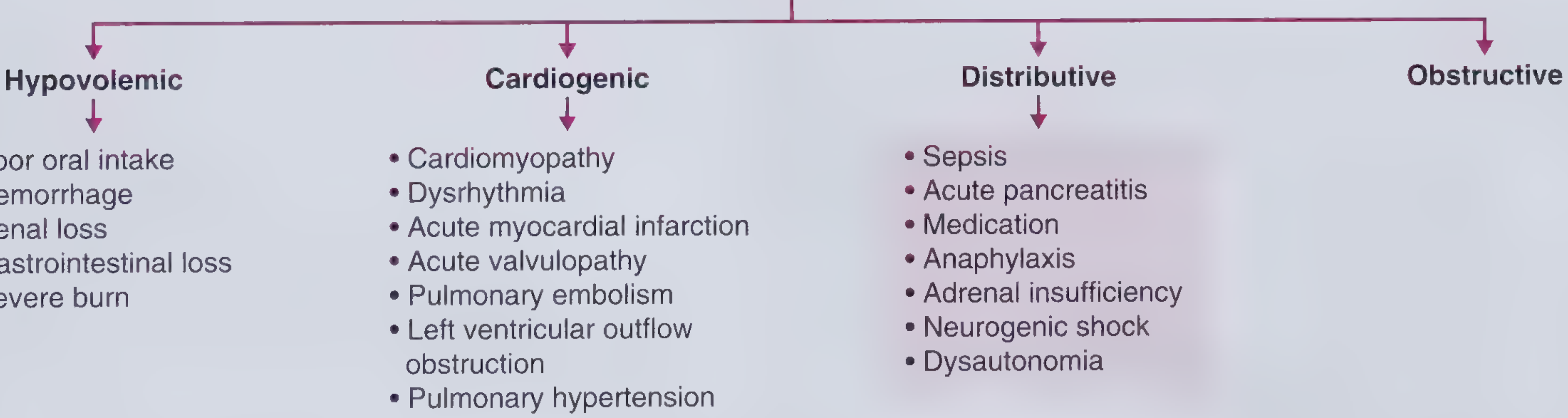
Shock classification framework
Shock classification - Frameworks for Internal Medicine

Step 1: Clinical Reasoning - What Type of Shock?

This patient presents with:
  • BP 50 mmHg (profound hypotension) / altered consciousness for 1 day
  • Decreased oral intake 2-3 days (dehydration)
  • Unremarkable ECG (argues against cardiogenic, or acute STEMI as primary cause)
  • No peripheral edema
  • No raised JVP
  • Chest clear on auscultation
  • 80-year-old female
The triad of no raised JVP + no edema + clear chest effectively rules out cardiogenic shock as the dominant picture. This is a low-preload, low-SVR state.

Most Likely Diagnoses in Order of Priority

PriorityDiagnosisWhy This Patient
#1Septic shock (distributive)Most common cause of distributive shock; elderly with altered sensorium and poor intake often have occult infection; no classic fever/leukocytosis needed in the elderly
#2Hypovolemic shock + sepsis (mixed)2-3 days poor oral intake in elderly is sufficient to cause severe dehydration; may have combined picture
#3Adrenal crisis (distributive)MUST NOT MISS in elderly female - mimics septic shock exactly; steroids already given may be treating this
#4Occult cardiogenic shockSilent MI (common in elderly, diabetic, and women); normal ECG does NOT rule out MI; can present with no pulmonary edema early
#5Hypothyroid/myxedema crisisClassic in elderly females; causes hypotension, altered consciousness, hypothermia
#6Dysautonomia/neurogenicAge-related autonomic failure; less acute

Step 2: Why the Elderly Are Different - Critical Clinical Points

"Sepsis in older adults may present atypically - without fever, without leukocytosis, with altered sensorium as the only sign." - Sepsis in Aging Populations review (PMID: 39744263)

Mnemonic: "FAIL SAFE" for Atypical Presentations in the Elderly

LetterFeature
FFever absent - hypothermia or low-grade temp can be the only finding
AAltered sensorium - confusion/ASOC may be the ONLY presenting feature of sepsis
IInconspicuous source - UTI, pneumonia, biliary sepsis often clinically silent
LLabs misleading - normal WBC does NOT rule out sepsis (immunosenescence); CRP and procalcitonin more reliable
SSilent MI - women and diabetics have high rates; ECG may be normal
AAdrenal insufficiency - steroids prescribed long-term (even topical/inhaled) suppress HPA axis
FFunctional reserve low - frailty means rapid decompensation; smaller insults cause severe shock
EElectrolytes - hyponatremia (from adrenal crisis, SIADH from sepsis, or hypothyroidism) may be the diagnostic clue

Step 3: The Adrenal Insufficiency Problem - This Is the Pivot Point

This is the most important clinical consideration in this patient, because:
  1. She is already receiving steroids + norepinephrine + dobutamine - if adrenal crisis is the cause, steroids would be life-saving and this patient may be on the right treatment inadvertently
  2. Adrenal crisis presents identically to septic shock: hypotension (90%), fever (66%), confusion (42%), vomiting (47%)
  3. 8% of patients with adrenal insufficiency have a crisis per year; 6% of episodes are fatal
  4. Adrenal crisis is often precipitated by intercurrent illness - the "poor oral intake for 2-3 days" is exactly this trigger
  5. An elderly female with a prior history of prolonged corticosteroid use (e.g., for asthma, COPD, arthritis, skin disease) has HPA axis suppression and is extremely vulnerable
Classic biochemical fingerprint of adrenal crisis:
  • Hyponatremia (dilutional + mineralocorticoid loss)
  • Hyperkalemia (aldosterone deficiency)
  • Hypoglycemia
  • Eosinophilia (unexpected finding in "sepsis" - think Addison's)
  • Low cortisol
"Adrenal crisis may occur despite increase in glucocorticoids with stress. It may be the initial manifestation of adrenal insufficiency." - Symptom to Diagnosis, 4th Ed.
Key clinical clues pointing to primary adrenal insufficiency:
  • Hyperpigmentation (gums, palmar creases, knuckles, areolae) - only in primary AI
  • Salt craving history
  • History of vitiligo or other autoimmune disease
  • Prior or current steroid use (any route)
  • Hyponatremia + hyperkalemia combination

Step 4: What to Do - Systematic Diagnostic Workup

Immediate Bedside Assessment (First 10 Minutes)

"ABCDE + FGH" for this patient:
StepActionWhat you're looking for
AAirway + O2 saturationHypoxia may suggest PE or pneumonia as source
BRespiratory rate, lung examSubtle crackles (early CHF, pneumonia)
CBP both arms; heart rate; skin temp/colourWarm extremities + bounding pulse = distributive; Cool/clammy = cardiogenic
DGCS, pupils, focal deficitStroke, meningitis
EExpose + examine skin fullyHyperpigmentation (adrenal), rash (meningococcemia, anaphylaxis), purpura
FFluid status: mucous membranes, skin turgor, capillary refillDehydration assessment
GGlucometerHypoglycemia = adrenal or sepsis
HHistory: steroids? prior illness? medications?Adrenal suppression, drug side effects

Investigations to Order Simultaneously

"BLAST ME" workup:
TestClinical Purpose
BBlood cultures x2 (before antibiotics if not already given)Source identification
LLactate>2 mmol/L = tissue hypoperfusion; >4 = severe sepsis
AABG + electrolytes (Na, K, glucose)Hyponatremia+hyperkalemia = adrenal crisis; acidosis severity
SSerum cortisol (random)If <150 nmol/L = likely adrenal insufficiency; if <400 in shock = concerning
TTroponin (hs-troponin) + BNPSilent MI, occult cardiac dysfunction
MMorphology (CBC with differential)Eosinophilia (adrenal), leukocytosis (infection), anaemia
EEcho (bedside POCUS)Differentiate shock types; IVC collapse = hypovolemia; poor LV function = cardiogenic
Additional:
  • Urine dipstick + culture (most common source in elderly women)
  • Chest X-ray (occult pneumonia)
  • TSH (myxedema crisis if hypothermic)
  • Procalcitonin (more reliable than WBC in elderly)
  • ACTH level (if time allows, alongside cortisol - before any steroids if possible, but do NOT delay treatment)

Step 5: Bedside POCUS - The Game Changer

Point-of-care ultrasound distinguishes shock types rapidly:
POCUS FindingInterpretation
Flat/collapsible IVC + normal LV functionHypovolemic or distributive (septic/adrenal)
Dilated/non-collapsible IVC + poor LV contractilityCardiogenic shock
Dilated IVC + right ventricular dilatation + septal shiftObstructive (massive PE, tension pneumothorax)
Hyperdynamic LV + flat IVCClassic distributive (septic) shock
In this patient: no JVP raised + clear chest + no edema strongly suggests she will have a flat IVC on POCUS with hyperdynamic or normal LV - consistent with distributive (septic or adrenal) shock.

Step 6: Management Protocol - What Has Been Given, What's Still Needed

Already Given (Assessment)

DrugAppropriate?Caveat
Broad-spectrum antibioticsYes - correctShould have been given after blood cultures
SteroidsPotentially life-savingIf adrenal crisis, this is the cure; if septic shock with vasopressor dependency, correct per Surviving Sepsis Campaign 2021
NorepinephrineCorrect first-line vasopressorSSC 2021: Strong recommendation; target MAP ≥65 mmHg
DobutamineConditional - needs clarificationSSC 2021: Only recommended if septic shock + cardiac dysfunction + persistent hypoperfusion despite adequate volume and vasopressors (Weak recommendation, low quality evidence). If LV function is normal on POCUS, dobutamine is not indicated and may worsen hypotension

What Still Needs to Be Done

1. Fluid resuscitation - Has 30 mL/kg crystalloid been given?
  • SSC 2021: 30 mL/kg IV crystalloid in the first hour for sepsis-induced hypoperfusion
  • BUT in elderly patients - give cautiously and reassess frequently (risk of fluid overload, diastolic dysfunction)
  • Use passive leg raise test to assess fluid responsiveness before each bolus
  • Target: MAP ≥65 mmHg (not necessarily a normal BP - aggressive BP targets in elderly cause harm)
2. Vasopressor escalation ladder (Surviving Sepsis Campaign 2021):
Step 1: Norepinephrine (first-line, strong recommendation)
        ↓ if MAP inadequate
Step 2: Add Vasopressin 0.03 U/min 
        (when NE dose ≥0.25 mcg/kg/min for ≥4 hours)
        ↓ if still inadequate
Step 3: Add Epinephrine
        ↓ if cardiac dysfunction present
Step 4: Dobutamine added to norepinephrine
3. Hydrocortisone - correct use:
  • SSC 2021: Give IV hydrocortisone 200 mg/day (50 mg q6h or continuous infusion) when:
    • NE or epinephrine dose ≥0.25 mcg/kg/min for at least 4 hours AND
    • Still hemodynamically unstable
  • Do NOT use ACTH stimulation test to guide steroid use in shock
  • If adrenal crisis suspected independently: give hydrocortisone 100 mg IV stat immediately
4. Avoid specific pitfalls in the elderly:
  • Aggressive BP targets (MAP 65 is appropriate; pushing to 80+ increases arrhythmia and ischemia risk)
  • Fluid overload - use stroke volume variation or IVC assessment
  • Aminoglycoside dosing - adjust for renal function
  • Drug interactions - check for ACE inhibitors, ARBs, beta-blockers that lower BP
5. Source control:
  • Most common sepsis sources in elderly women: UTI/urosepsis, pneumonia, biliary sepsis, skin/soft tissue
  • Obtain urine culture, CXR, consider CT abdomen if no source found

Step 7: The Myxedema Crisis Consideration

Do not miss this in an elderly female with:
  • Hypothermia (low temperature is often the clue)
  • Altered consciousness disproportionate to vital signs
  • Bradycardia (but ECG said unremarkable - may be slow rate)
  • Constipation history, dry skin, macroglossia, delayed relaxation of reflexes
  • Hyponatremia
  • Hypoglycemia
Action: Send TSH + free T4. If strongly suspected, treat empirically with IV levothyroxine.

Summary Decision Tree for This Patient

80F, BP 50, ASOC, 2-3d poor intake, clear chest, no edema, no raised JVP
                           ↓
           DISTRIBUTIVE or MIXED (Hypovolemic + Distributive) SHOCK
                           ↓
     ┌─────────────────────┼──────────────────────┐
     ▼                     ▼                      ▼
  SEPTIC                ADRENAL                MIXED
  SHOCK                 CRISIS              (both above)
  (most likely)    (must not miss)
     ↓                     ↓
  Source?           Hyponatremia?
  Blood cx           Hyperkalemia?
  Urine cx          Hypoglycemia?
  Procalcitonin     Hyperpigmentation?
  CXR               Steroid history?
  CT abdomen         ↓              
                  Cortisol + ACTH
                  (send before more steroids)
                  
Also check: Troponin/echo (silent MI), TSH (myxedema), lactate

Key Points Summary

  1. Most likely: septic shock from an occult source - UTI is most common in elderly women, often without dysuria or fever
  2. Adrenal crisis must be excluded actively - it mimics septic shock, is common in elderly, and the steroids already given may be masking the diagnosis
  3. ECG normal does NOT rule out MI - send troponin; silent MI in elderly women is well-documented
  4. Dobutamine is not automatically indicated - only if POCUS confirms cardiac dysfunction with preserved filling pressures
  5. POCUS is the fastest diagnostic tool - distinguishes all shock types at bedside
  6. Fluid resuscitation first - 30 mL/kg crystalloid (with caution in elderly); reassess with PLR after each 500 mL
  7. Vasopressin is the logical next vasopressor before escalating norepinephrine further
  8. Steroid dosing: hydrocortisone 200 mg/day IV when NE dose ≥0.25 mcg/kg/min for ≥4h (SSC 2021)
  9. Glucose monitoring - hypoglycemia is common in adrenal crisis and sepsis in elderly
  10. Check TSH - myxedema crisis is a great mimicker in elderly females

Sources:
  • Harrison's Principles of Internal Medicine 22E (2025), Chapter on Shock - vasopressor management
  • Rosen's Emergency Medicine 10th Ed - Chapters 64, 106, Vasoactive Drug Therapy
  • Symptom to Diagnosis 4th Ed, Chapter 24 - Adrenal Insufficiency, p. 7379-7445
  • Frameworks for Internal Medicine - Distributive Shock, p. 299
  • Surviving Sepsis Campaign International Guidelines 2021 (SCCM/ESICM)
  • NICE Guideline NG243: Adrenal Insufficiency (2024)
  • PMID: 39744263 - Sepsis in Aging Populations, Cureus 2024
  • PMID: 38200360 - The critically ill older patient with sepsis, Ann Intensive Care 2024
  • Cleveland Clinic Journal of Medicine 2024 - Primary Adrenal Insufficiency: When to Suspect
This is a shared conversation. Sign in to Orris to start your own chat.