
Pancreatitis in detail point wise
Reading File
Searching sources...
Finding Sources
Searching PubMed
"pancreatitis"[MeSH Terms] AND "management"[MeSH Terms]
Now let me read the most authoritative sources in parallel - Sleisenger (GI textbook), Robbins (Pathology), and Rosen's (Emergency Medicine):
Reading File
Reading File
Reading File
Reading File
Reading File
Reading File
Reading File
Reading File
Reading File
Reading File
Reading File
Reading File
Reading File
I now have comprehensive information from multiple authoritative textbooks. Let me compile the full detailed answer:
Loading Image
Loading Image
Here is the comprehensive, point-wise breakdown of pancreatitis from multiple authoritative medical textbooks:
PANCREATITIS - Detailed Point-Wise Notes
1. DEFINITION & OVERVIEW
- Pancreatitis = inflammation of the pancreas caused by autodigestion of pancreatic tissue by its own enzymes
- Divided into acute (reversible if underlying cause removed) and chronic (irreversible destruction of exocrine pancreas)
- Acute pancreatitis: annual incidence 33-74 per 100,000 globally; 5-35 per 100,000 in the Western world
- Overall mortality ~5% for acute pancreatitis; up to 30% in severe necrotizing cases
- Most common pancreatic disease worldwide; one of the top GI causes of hospitalization in the USA
2. ANATOMY RELEVANT TO PANCREATITIS
- Pancreas is a retroperitoneal organ with three segments: head, body, and tail
- Head sits within the C-loop of the duodenum; body passes posterior to the stomach; tail abuts the splenic hilum
- Main pancreatic duct (duct of Wirsung) meets the common bile duct to form the ampulla of Vater, draining into the duodenum via the sphincter of Oddi
- Exocrine function: secretion of digestive enzymes (trypsinogen, lipase, amylase, etc.)
- Endocrine function: insulin, glucagon, somatostatin secretion from islets of Langerhans
3. ETIOLOGY / CAUSES
Gallstones and alcohol = ~80% of all cases
Mechanical/Obstructive
- Gallstones impacting ampulla of Vater (40-70% of cases) - "gallstone pancreatitis"
- Post-ERCP (endoscopic retrograde cholangiopancreatography)
- Pancreatic cancer or periampullary neoplasms
- Pancreas divisum, annular pancreas
- Ampullary dysfunction or stenosis
- Duodenal diverticulum
- Biliary sludge / microlithiasis
- Trauma / perioperative injury
Toxic/Metabolic
- Chronic alcohol use (25-35% of cases)
- Hypertriglyceridemia (triglycerides >1000 mg/dL) - 5-10% of cases
- Hypercalcemia / hyperparathyroidism
- Uremia
- Drugs: azathioprine, thiazide diuretics, estrogens, anticonvulsants, cancer chemotherapeutic agents, many others
- Scorpion venom
Infectious
- Mumps virus (directly infects exocrine cells)
- Coxsackievirus
- Parasites: Ascaris lumbricoides, Clonorchis sinensis
Genetic
- PRSS1 mutations (cationic trypsinogen) - autosomal dominant hereditary pancreatitis
- SPINK1 mutations (trypsin inhibitor) - autosomal recessive
- CFTR mutations (symptoms restricted to pancreas)
- CTRC mutations
Vascular
- Shock, atheroembolism, polyarteritis nodosa
Autoimmune
- Type 1 (IgG4-related), Type 2
Idiopathic
- 10-20% of cases; many have occult microlithiasis or underlying genetic mutations
- Smoking and diabetes are independent risk factors
4. PATHOGENESIS (MECHANISM)
The central event: inappropriate intracellular activation of trypsinogen → trypsin → cascade of enzyme activation → autodigestion
Three Pathogenic Pathways (shown in diagram below):
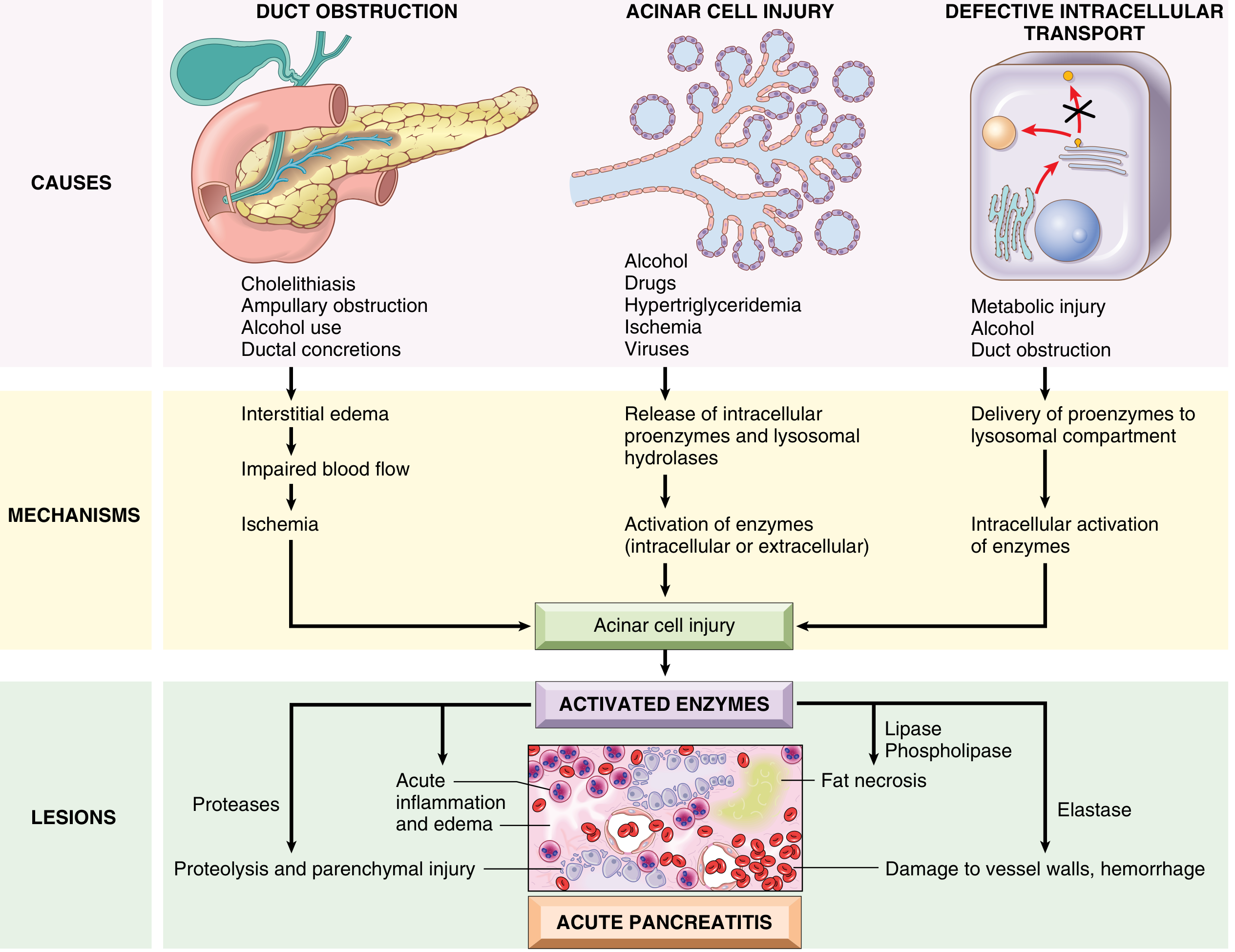
Pathway 1 - Pancreatic Duct Obstruction
- Gallstone/biliary sludge impaction → increased intraductal pressure → enzyme-rich fluid accumulates
- Lipase (secreted in active form) causes local fat necrosis
- Injured tissues + leukocytes release proinflammatory cytokines → interstitial edema → vascular insufficiency → acinar cell ischemia
Pathway 2 - Primary Acinar Cell Injury
- Mechanism in alcohol, hypertriglyceridemia, ischemia, viral infections, drugs
- Large triglyceride-rich chylomicrons retard capillary circulation → ischemic injury
- Injured cells release lipase → hydrolysis of triglycerides → toxic free fatty acids
Pathway 3 - Defective Intracellular Transport
- Normally, digestive enzymes (for secretion) and lysosomal hydrolases are transported in separate pathways
- In metabolic injury: proenzymes and lysosomal hydrolases get packaged together → proenzyme activation → lysosomal rupture → intracellular release of activated enzymes
Downstream Cascade:
- Activated trypsin converts prekallikrein → kallikrein (kinin system activation)
- Activates Factor XII (Hageman factor) → clotting + complement systems
- Proteases → proteolysis and parenchymal injury
- Lipase + phospholipase → fat necrosis
- Elastase → damage to vessel walls → hemorrhage
- Cytokine release → increased vascular permeability → edema, hemorrhage, necrosis
- Bacteremia from intestinal flora translocation
- SIRS, sepsis, shock in severe cases
Alcohol-specific mechanisms:
- Transient increase in pancreatic exocrine secretion + sphincter of Oddi contraction
- Direct toxic effects on acinar cells
- May alter enzyme activation, increase oxygen-derived free radicals
5. MORPHOLOGY / PATHOLOGY
Mild Acute Pancreatitis (Interstitial Edematous Pancreatitis)
- Interstitial edema
- Focal areas of fat necrosis in pancreas and peripancreatic fat
- Released fatty acids combine with calcium → insoluble calcium soaps precipitate in situ
Severe Acute Pancreatitis (Necrotizing Pancreatitis)
- Damage extends to acinar cells, ductal cells, islets of Langerhans, and blood vessels
- Macroscopically: red-black hemorrhagic areas interspersed with yellow-white chalky fat necrosis
- Fat necrosis can extend to omentum, mesentery, even subcutaneous fat
- Peritoneum contains serous, brown-tinged fluid with fat globules
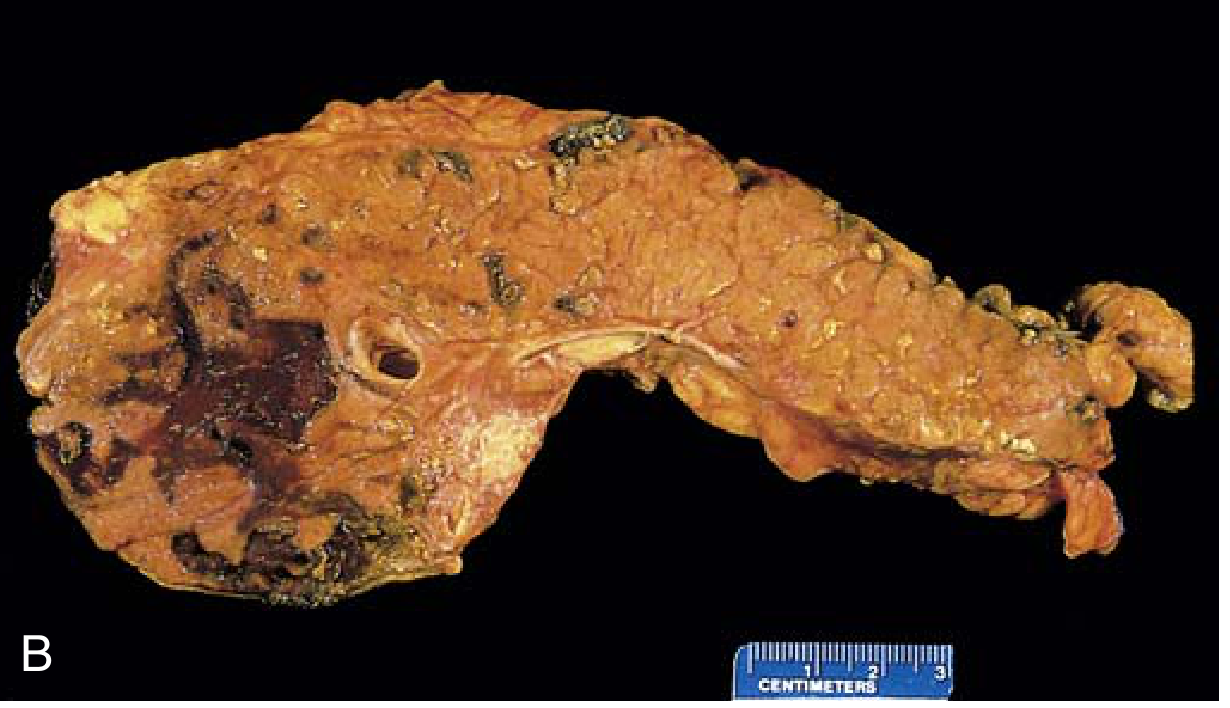
Hemorrhagic Pancreatitis (Most Severe Form)
- Extensive parenchymal necrosis with diffuse hemorrhage within the gland
Basic Pathological Alterations:
- Microvascular leakage causing edema
- Necrosis of fat by lipases
- Acute inflammatory reaction
- Proteolytic destruction of pancreatic parenchyma and blood vessels → interstitial hemorrhage
6. CLINICAL FEATURES
Symptoms
- Abdominal pain - cardinal manifestation; persistent epigastric or left upper quadrant pain
- Radiation to the back, chest, or flanks
- Pain is constant, severe, not relieved by change of position but may be alleviated by sitting forward/bending
- Intensity of pain does NOT correlate with clinical severity
- Nausea, vomiting, anorexia (oral intake worsens pain)
Signs
- Vital signs: may be normal in mild disease; fever, tachycardia, tachypnea in severe disease
- Hypotension and shock signs in severe/complicated cases
- Jaundice - suggests obstructive etiology (gallstone/tumor)
- Cullen sign - bluish periumbilical discoloration (due to hemoperitoneum) - rare, poor prognosis
- Grey Turner sign - reddish-brown discoloration around flanks (retroperitoneal bleeding) - rare, poor prognosis
- Abdomen: normal or distended; epigastric tenderness with or without guarding
- Rebound tenderness - less common
- Absent or diminished bowel sounds (ileus)
- Murphy sign may be present in gallstone pancreatitis
Systemic Complications
- SIRS (Systemic Inflammatory Response Syndrome) - most important early complication
- ARDS - increased microvascular permeability; enzymatic degradation of surfactant
- Pleural effusions (up to 50% of patients; more commonly left-sided)
- Cardiovascular collapse - fluid shifts + volume loss
- Renal failure - hypoperfusion + inflammatory mediators
- Coagulopathy / DIC - cytokine-mediated activation of coagulation
- Hyperglycemia - decreased insulin production
- Hypocalcemia - low albumin and magnesium; calcium soap formation
Local Complications (Atlanta Classification 2012)
| Type | Complication | Timing |
|---|---|---|
| Interstitial Edematous | Acute peripancreatic fluid collection (homogeneous, no wall) | <4 weeks |
| Interstitial Edematous | Pancreatic pseudocyst (homogeneous, well-defined wall) | >4 weeks |
| Necrotizing | Acute necrotic collection (heterogeneous fluid + necrosis) | <4 weeks |
| Necrotizing | Walled-off necrosis (heterogeneous, well-defined wall) | >4 weeks |
Other local complications: bowel necrosis, splenic/portal vein thrombosis, GI bleeding, gastric outlet obstruction, pseudoaneurysm
7. DIAGNOSIS
Diagnostic Criteria (Atlanta Classification)
At least 2 of 3 criteria:
- Abdominal pain characteristic of acute pancreatitis
- Serum lipase or amylase >3x upper limit of normal
- Characteristic findings on abdominal imaging
Laboratory Tests
- Serum lipase - preferred test; greater sensitivity and specificity than amylase; also elevated in renal failure, appendicitis, cholecystitis
- Serum amylase - produced by pancreas AND salivary glands; less specific; may be falsely negative in alcohol/hypertriglyceridemia pancreatitis
- Neither enzyme elevation correlates with disease severity or prognosis
- Testing both enzymes does NOT improve diagnostic sensitivity
- ALT - specific for biliary pancreatitis (PPV 95% if elevated)
- AST, bilirubin - evaluate for obstructive etiology
- Serum calcium - rule out hypercalcemia as cause; monitor for hypocalcemia
- Triglyceride levels - if no gallstones/alcohol history
- CBC - evaluate SIRS
- BMP/BUN/creatinine - organ failure assessment
Imaging
Ultrasound (US)
- First-line; best for gallbladder and biliary tract
- Limited for direct pancreatic visualization (bowel gas interference)
- Can identify gallstones as etiology
CT Scan (with IV contrast)
- NOT routinely recommended at first presentation
- Indicated when: (1) diagnostic uncertainty, (2) rule out other pathology, (3) no response to treatment after 48-72 hours
- Best performed 3-7 days after symptom onset (necrosis may not be evident earlier)
- Sensitivity/specificity >90% for acute pancreatitis
- Findings: pancreatic enlargement, loss of texture/borders, peripancreatic fat stranding, areas of non-enhancement (necrosis)
- CT is normal in 15-30% of mild cases
MRI/MRCP
- Similar diagnostic utility to CT
- Superior for gallbladder/biliary tract imaging
- Preferred when contrast contraindicated or for choledocholithiasis
Plain films - may show ileus pattern, "sentinel loop" of dilated small bowel in left upper quadrant
8. SEVERITY SCORING SYSTEMS
Ranson Criteria
At admission:
- Age >55 years
- WBC >16,000/mm³
- Glucose >200 mg/dL
- AST >250 IU/L
- LDH >350 IU/L
At 48 hours:
- Hematocrit drop >10%
- BUN rise >5 mg/dL
- Calcium <8 mg/dL
- PaO₂ <60 mmHg
- Base deficit >4 mEq/L
- Fluid needs >6 L
(Biliary pancreatitis uses slightly modified thresholds: Age >70, WBC >18,000, Glucose >220, LDH >400)
Score: 0-2 = mild; 3-4 = moderate; 5-6 = severe; >6 = very severe
BISAP Score (simpler, ED-friendly)
- BUN >25 mg/dL
- Impaired mental status (disorientation, lethargy, somnolence, coma)
- SIRS criteria present
- Age >60 years
- Pleural effusion present
Score ≥3 = severe disease
APACHE II - Uses 12 physiological variables (temperature, MAP, HR, RR, PaO₂, pH, sodium, potassium, creatinine, hematocrit, WBC, Glasgow Coma Scale) + age + chronic health problems
Modified CT Severity Index (CTSI)
- Pancreatic inflammation score (0-4) + necrosis score (0-4) + extrapancreatic complications (+2)
- Total 0-10; higher = more severe
9. DIFFERENTIAL DIAGNOSIS
Abdominal:
- Peptic ulcer disease / perforated peptic ulcer
- Cholecystitis / cholelithiasis / cholangitis / choledocholithiasis
- Gastritis, gastroenteritis
- Mesenteric ischemia / bowel obstruction
- Abdominal aortic aneurysm
- Nephrolithiasis
- Ectopic pregnancy
Cardiopulmonary:
- Myocardial infarction (lower thoracic/upper abdominal pain)
- Pneumonia, pericarditis, pleural effusion
Systemic:
- Sickle cell crisis
- Diabetic ketoacidosis
10. MANAGEMENT OF ACUTE PANCREATITIS
Initial/General
- Hospitalization; most cases (80%) are mild and self-limiting
- NPO initially; advance diet as tolerated
Fluid Resuscitation
- Aggressive IV hydration is a mainstay of treatment
- Correct hypovolemia from third-spacing and vomiting
- Lactated Ringer's preferred over normal saline (lower risk of hyperchloremic acidosis)
Pain Management
- IV opioid analgesics as needed
- Pain control does not worsen clinical outcomes
Nutrition (Major paradigm shift)
- Old practice: NPO to avoid stimulating pancreatic secretion
- Current evidence: Early enteral nutrition (EN) initiated within 24-36 hours
- Benefits of early EN: lower risk of multi-organ failure, operative interventions, systemic infections, septic complications, mortality
- If ICU admission (severe SIRS): nasogastric (NG) or nasojejunal (NJ) tube + EN within 24-36 hours
- If mild SIRS on wards: offer oral diet as tolerated; start EN only if diet fails after 4 days
- Gastric vs. jejunal feeding: no significant difference in outcome in severe AP
- Enteral vs. parenteral (PN): EN significantly reduces risk of infected peripancreatic necrosis (OR 0.28), single organ failure (OR 0.25), MOF (OR 0.41), and death (~2.5x reduction)
- Caution: EN in hemodynamically unstable patients requiring inotropes risks non-occlusive mesenteric ischemia
Antibiotics
- NOT routinely indicated in acute pancreatitis
- Reserved for confirmed infected necrosis or other documented infection
- Prophylactic antibiotics do not reduce mortality in sterile necrosis
ERCP
- Indicated urgently in acute biliary pancreatitis with concurrent cholangitis or persistent biliary obstruction
- Cholecystectomy should be performed after resolution (same admission for mild cases)
ICU / Organ Support
- ICU admission for severe cases: SIRS, organ failure
- Mechanical ventilation, vasopressors, renal replacement therapy as needed
Surgical/Interventional
- Reserved for infected pancreatic necrosis - typically via step-up approach:
- Percutaneous/endoscopic drainage first
- Video-assisted retroperitoneal debridement (VARD) or surgical necrosectomy if above fails
- Pseudocyst drainage (if symptomatic/complicated): endoscopic, radiologic, or surgical
11. CHRONIC PANCREATITIS
Definition
- Long-standing inflammation causing irreversible destruction of the exocrine pancreas, eventually also the islets of Langerhans
- Recurrent bouts of acute pancreatitis can evolve into chronic pancreatitis
- Prevalence: 0.04-5% of US population; 9-62 per 100,000 globally
Most Common Causes (TIGAR-O Classification)
- Toxic-metabolic: Chronic alcohol use (most common)
- Idiopathic: 40% of cases; many have CFTR/PRSS1/SPINK1 mutations
- Genetic: PRSS1, SPINK1, CFTR, CTRC mutations
- Autoimmune: Type 1 (IgG4-related, responds to steroids), Type 2
- Recurrent and severe acute pancreatitis
- Obstructive: Pancreas divisum, sphincter of Oddi disorders, malignant obstruction
Morphology
- Gross: Hard gland, dilated ducts, visible calcific concretions
- Microscopic: Parenchymal fibrosis, reduced/absent acini, dilated ducts, chronic inflammatory infiltrate, ductal epithelial changes (atrophy/hyperplasia/squamous metaplasia)
- Islets of Langerhans initially relatively spared, eventually destroyed
- Autoimmune pancreatitis: striking lymphocyte/plasma cell infiltration, IgG4+ cells, "swirling" fibrosis, venulitis ("lymphocytic sclerosing pancreatitis")
Clinical Features
- Severe postprandial epigastric pain radiating to the back; sitting forward helps
- Associated nausea and vomiting
- Exocrine insufficiency: steatorrhea, weight loss, malnutrition, malabsorption
- Endocrine insufficiency: Type 3c diabetes; increased risk of hypoglycemia (loss of counterregulatory glucagon)
- Jaundice (biliary obstruction or alcoholic cirrhosis)
- Palpable mass (pseudocyst or tumor)
- Weight loss from hypermetabolism + malabsorption + pain-related food avoidance
Complications of Chronic Pancreatitis
- Pancreatic pseudocysts
- Pancreatic ascites
- Ductal strictures
- Duodenal stenosis
- Pleural effusions
- Pseudoaneurysms (splenic, hepatic, gastroduodenal, pancreaticoduodenal arteries)
- Portal and splenic vein thrombosis
- Increased risk of pancreatic adenocarcinoma
Diagnosis
- Serum lipase/amylase: may be normal (less helpful than in acute)
- CT (imaging of choice): Intraductal pancreatic calcifications are the most specific finding; duct dilation, parenchymal atrophy, pseudocysts
- US can show calcifications and ductal dilation
- MRCP: superior for ductal anatomy
Management
- Pain: analgesics (stepwise from NSAIDs to opioids); pancreatic enzyme supplementation (reduces enzyme secretion via negative feedback); celiac plexus block; surgical drainage
- Exocrine insufficiency: pancreatic enzyme replacement therapy (PERT) with meals
- Endocrine insufficiency: diabetes management; insulin therapy
- Nutrition: jejunal feeding to improve weight; reduce abdominal pain
- Antioxidants: selenium, ascorbic acid, β-carotene, α-tocopherol, methionine - may provide pain relief (evidence conflicting)
- Autoimmune pancreatitis: anti-B cell therapy + corticosteroids (responds well)
- Endoscopic: ERCP for ductal strictures, stone removal, stenting
- Surgical: pancreaticojejunostomy (Puestow procedure), Whipple's procedure, distal pancreatectomy for refractory cases
12. PANCREATIC PSEUDOCYST
- Collection of fluid that may be intra- or extrapancreatic, arising weeks after acute pancreatitis
- Walled off by inflammatory and fibrous tissue; lacks an epithelial lining (hence "pseudo")
- Contents: rich in pancreatic enzymes (amylase, lipase)
- Usually solitary; common in lesser omental sac or retroperitoneum between stomach and transverse colon
- Size: 2-30 cm
- Account for ~75% of all pancreatic cysts
- Most resolve spontaneously
- Complications if persistent: infection, compression/obstruction of adjacent structures, rupture, hemorrhage
13. PANCREATITIS IN CHILDREN (Pediatric Points)
- Uncommon especially in those <10 years old
- Common causes in children: trauma, infections, structural anomalies, systemic disease, drugs/toxins
- Idiopathic: 30% of cases
- Biliary disease should be considered in adolescents/teenagers
- Sentinel loop on plain film is a common finding
- Management: similar to adults; NPO initially, analgesics, IV fluids
14. KEY POINTS SUMMARY TABLE
| Feature | Acute Pancreatitis | Chronic Pancreatitis |
|---|---|---|
| Reversibility | Reversible | Irreversible |
| Common causes | Gallstones (40-70%), Alcohol (25-35%) | Alcohol (most common), genetic, autoimmune |
| Key enzyme | Lipase preferred >3x ULN | May be normal |
| Pain | Severe, acute onset | Recurrent, postprandial |
| Key complication | MOF, SIRS, infected necrosis | Exocrine/endocrine insufficiency, pseudocyst |
| Imaging | CT with contrast (if indicated) | CT - calcifications most specific |
| Nutrition | Early EN within 24-36h | Enzyme replacement, jejunal feeding |
| Surgery | Step-up approach for infected necrosis | Drainage procedures, Whipple's |
Sources:
- Robbins & Kumar Basic Pathology
- Rosen's Emergency Medicine (9th/current edition)
- Sleisenger & Fordtran's Gastrointestinal and Liver Disease
- Rosen's Emergency Medicine (Pediatric section)
In short but cover all points
PANCREATITIS - Concise Complete Notes
1. DEFINITION
- Inflammation of the pancreas caused by autodigestion by its own enzymes
- Two forms: Acute (reversible) and Chronic (irreversible)
2. CAUSES (ETIOLOGY)
Gallstones + Alcohol = ~80% of cases
| Category | Examples |
|---|---|
| Mechanical | Gallstones (40-70%), post-ERCP, trauma, pancreas divisum |
| Toxic/Metabolic | Alcohol (25-35%), hypertriglyceridemia (>1000 mg/dL), hypercalcemia, drugs (thiazides, azathioprine, estrogens) |
| Infectious | Mumps, coxsackievirus, Ascaris, Clonorchis |
| Genetic | PRSS1, SPINK1, CFTR, CTRC mutations |
| Vascular | Shock, polyarteritis nodosa |
| Autoimmune | Type 1 (IgG4), Type 2 |
| Idiopathic | 10-20% of cases |
3. PATHOGENESIS
Key event: Inappropriate activation of trypsinogen → trypsin → cascade
Three pathways:
- Duct obstruction → increased intraductal pressure → enzyme accumulation → edema → ischemia
- Acinar cell injury → direct toxic damage (alcohol, drugs, viruses) → intracellular enzyme release
- Defective intracellular transport → proenzymes + lysosomal hydrolases packaged together → intracellular activation
Downstream:
- Proteases → parenchymal destruction
- Lipase/phospholipase → fat necrosis (chalk-white deposits = calcium soaps)
- Elastase → vessel wall damage → hemorrhage
- Cytokines → SIRS → MOF
4. MORPHOLOGY / PATHOLOGY
| Form | Gross / Micro Features |
|---|---|
| Mild (interstitial edematous) | Edema, focal fat necrosis only |
| Severe (necrotizing) | Red-black hemorrhagic + yellow-white chalky fat necrosis areas |
| Hemorrhagic (worst) | Diffuse hemorrhage throughout gland |
- Fat necrosis can extend to omentum, mesentery, subcutaneous fat
- 4 basic changes: microvascular leakage, fat necrosis, acute inflammation, proteolytic parenchymal destruction
5. CLINICAL FEATURES
Symptoms:
- Severe constant epigastric pain radiating to the back
- Relieved by leaning forward
- Nausea, vomiting, anorexia
- Pain intensity does NOT correlate with severity
Signs:
- Fever, tachycardia, hypotension (severe cases)
- Jaundice → obstructive etiology
- Cullen sign - periumbilical bruising (hemoperitoneum) - rare, poor prognosis
- Grey Turner sign - flank bruising (retroperitoneal bleed) - rare, poor prognosis
- Epigastric tenderness ± guarding
- Absent bowel sounds (ileus)
Systemic Complications (SIRS → MOF):
- ARDS (left-sided pleural effusion in 50%)
- Cardiovascular collapse / shock
- Renal failure
- DIC / coagulopathy
- Hyperglycemia, hypocalcemia
Local Complications (Atlanta 2012):
| Type | <4 weeks | >4 weeks |
|---|---|---|
| Interstitial | Acute peripancreatic fluid collection | Pseudocyst |
| Necrotizing | Acute necrotic collection | Walled-off necrosis |
6. DIAGNOSIS
Criteria (Atlanta) - 2 of 3:
- Characteristic abdominal pain
- Lipase or amylase >3× upper limit of normal
- Imaging findings
Labs:
- Lipase - preferred (more sensitive/specific than amylase)
- Amylase - less specific; falsely negative in alcohol/hypertriglyceridemia cases
- Elevation level does NOT predict severity
- ALT: PPV 95% for biliary pancreatitis
- CBC, BMP, triglycerides, calcium
Imaging:
- US - first-line; best for gallstones; limited for pancreas
- CT (IV contrast) - NOT routine; use at 48-72h if no improvement; >90% sensitivity; shows fat stranding, non-enhancement (necrosis)
- MRI/MRCP - best for biliary anatomy; preferred if contrast contraindicated
- Plain film - sentinel loop (dilated small bowel in LUQ)
7. SEVERITY SCORING
| Score | Components | Severe if |
|---|---|---|
| Ranson | 5 at admission + 6 at 48h | ≥3 |
| BISAP | BUN >25, impaired mentation, SIRS, Age >60, Pleural effusion | ≥3 |
| APACHE II | 12 physiological variables + age + chronic disease | >8 |
| Modified CTSI | CT inflammation (0-4) + necrosis (0-4) + extrapancreatic (+2) | >4 |
8. MANAGEMENT - ACUTE
| Aspect | Action |
|---|---|
| Fluids | Aggressive IV resuscitation; Lactated Ringer's preferred |
| Pain | IV opioid analgesics |
| Nutrition | Early EN within 24-36h; NG/NJ tube if ICU-level SIRS; oral diet if mild |
| Antibiotics | NOT routine; only for confirmed infected necrosis |
| ERCP | Urgent if biliary pancreatitis + cholangitis or obstruction |
| Cholecystectomy | Same admission (mild); after recovery (severe) |
| Surgery | Step-up: drainage first → necrosectomy if needed (only for infected necrosis) |
EN vs PN: EN reduces infected necrosis (OR 0.28), organ failure (OR 0.25), MOF (OR 0.41), death (2.5× reduction)
9. CHRONIC PANCREATITIS
Definition: Irreversible exocrine (eventually endocrine) destruction with fibrosis
Causes (TIGAR-O): Toxic-metabolic (alcohol #1), Idiopathic (40%), Genetic, Autoimmune, Recurrent acute, Obstructive
Morphology: Hard gland, dilated ducts, calcific concretions, parenchymal fibrosis, acinar loss, islets initially spared
Clinical:
- Recurrent postprandial epigastric pain → back radiation
- Exocrine insufficiency: steatorrhea, malabsorption, weight loss
- Endocrine insufficiency: Type 3c diabetes + hypoglycemia risk
- Jaundice if biliary obstruction
Diagnosis:
- CT: intraductal calcifications (most specific), ductal dilation, atrophy
- Lipase/amylase may be normal
- MRCP for ductal anatomy
Complications: Pseudocysts, ductal strictures, pancreatic ascites, duodenal stenosis, pseudoaneurysms, portal/splenic vein thrombosis, pancreatic adenocarcinoma risk
Management:
- Pain: analgesics, enzyme supplements, celiac plexus block, surgery
- PERT (pancreatic enzyme replacement) for exocrine insufficiency
- Insulin for diabetes
- Jejunal feeding for nutrition
- Autoimmune type: steroids + anti-B cell therapy (responds well)
- Endoscopic: stricture dilation, stone extraction, stenting
- Surgical: Puestow procedure, Whipple's, distal pancreatectomy
10. PSEUDOCYST
- Fluid collection walled off by fibrous/inflammatory tissue; no epithelial lining
- Arises weeks after acute pancreatitis; rich in enzymes
- ~75% of all pancreatic cysts; most resolve spontaneously
- Complications: infection, compression, rupture, hemorrhage
- Treatment if symptomatic: endoscopic, radiologic, or surgical drainage
11. SPECIAL NOTES
- Autoimmune pancreatitis (IgG4): IgG4+ plasma cells, "swirling" fibrosis, venulitis; responds to steroids
- Hereditary pancreatitis: PRSS1 mutation → trypsin can't self-inactivate → hyperactivation
- Pediatric pancreatitis: trauma, infections, structural anomalies > gallstones/alcohol
- Scorpion envenomation: causes pancreatitis in tropical regions
- Smoking + diabetes = independent risk factors
Sources: Robbins & Kumar Basic Pathology | Rosen's Emergency Medicine | Sleisenger & Fordtran's GI and Liver Disease
This is a shared conversation. Sign in to Orris to start your own chat.