
Aminoglycosides
Reading File
Finding Sources
Finding Sources
The Medical Microbiology textbook has a dedicated AMINOGLYCOSIDES section. Let me read from the best pharmacology sources simultaneously.
Reading File
Finding Sources
Finding Sources
Reading File
Finding Sources
Finding Sources
Goldman-Cecil and Katzung have dedicated aminoglycoside sections with good clinical content. Let me read those in parallel.
Reading File
Reading File
Reading File
Reading File
Reading File
Loading Image
I now have comprehensive content from multiple authoritative textbooks. Let me compile the full answer.
Aminoglycosides
Chemistry & Members
Aminoglycosides consist of amino sugars linked via glycosidic bonds to an aminocyclitol ring. Members are derived from two genera:
- Streptomyces: streptomycin, neomycin, kanamycin, tobramycin
- Micromonospora: gentamicin, sisomicin
- Semisynthetic: amikacin (from kanamycin), netilmicin (from sisomicin), plazomicin
The most clinically used are gentamicin, tobramycin, and amikacin.
Mechanism of Action
Aminoglycosides are concentration-dependent bactericidal agents. They cross the bacterial outer membrane, cell wall, and cytoplasmic membrane via an oxygen-dependent, energy-dependent transport process to reach the cytoplasm where they:
- Bind irreversibly to the 30S ribosomal subunit
- Cause misreading of mRNA → production of aberrant proteins
- Cause premature dissociation of the ribosome from mRNA → interruption of protein synthesis
The three key effects on the ribosome — block of the initiation complex, generation of miscoded peptide chains, and block of translocation — are illustrated here:
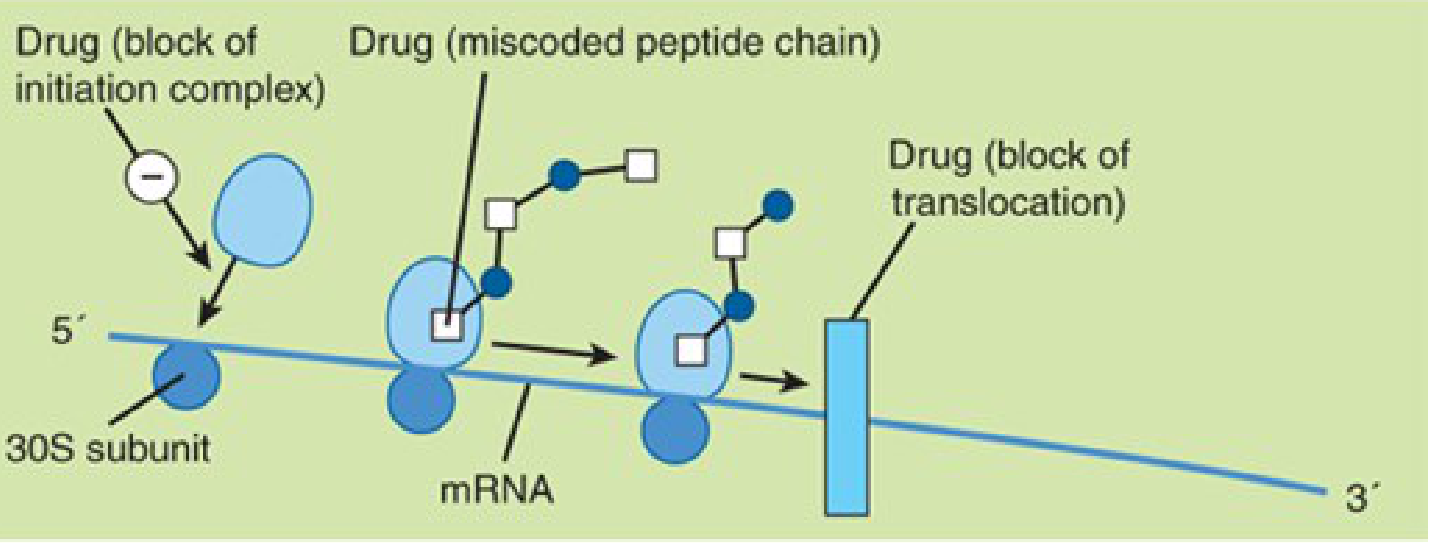
Because entry requires aerobic respiration, anaerobes are intrinsically resistant (no functional oxidative transport). For the same reason, organisms in an abscess cavity are not effectively killed.
Spectrum of Activity
| Organism Type | Activity |
|---|---|
| Aerobic gram-negative rods (Enterobacteriaceae, Pseudomonas, Acinetobacter) | Excellent |
| Some gram-positive organisms | Yes (with combination) |
| Mycobacterium tuberculosis | Streptomycin, amikacin |
| Anaerobes | None (intrinsic resistance) |
| Streptococci / Enterococci (alone) | Poor — fail to penetrate cell wall |
Synergy with cell-wall–active agents: When given alongside a β-lactam or vancomycin, the disrupted cell wall allows aminoglycosides to penetrate streptococci and enterococci, achieving bactericidal synergy. This is the basis for treating enterococcal endocarditis (ampicillin + gentamicin, or the preferred current regimen of ampicillin + ceftriaxone).
Tobramycin has the most potent activity against P. aeruginosa. Amikacin has the broadest activity and is often reserved for gentamicin/tobramycin-resistant gram-negatives. — Goldman-Cecil Medicine
Pharmacodynamics
- Concentration-dependent killing: Higher peak concentrations → faster, greater bacterial kill
- Postantibiotic effect (PAE): Bactericidal activity persists for several hours beyond measurable drug levels
- PD index: AUC/MIC ratio (or peak:MIC ratio) is the target linked to bacterial killing
- These properties justify once-daily dosing (extended-interval dosing)
Pharmacokinetics
| Parameter | Details |
|---|---|
| Absorption | Negligible orally (highly polar cations); IV infusion over 30–60 min or IM |
| Distribution | Largely excluded from CNS, eye, and intracellular compartments; high concentrations in renal cortex |
| CSF penetration | ~20% of plasma even with inflammation; requires intrathecal injection for meningitis |
| Half-life | 2–3 hours (normal renal function); 24–48 hours in renal failure |
| Elimination | Renally excreted (GFR-dependent); dose reduction required for creatinine clearance < 60 mL/min |
| Dialysis | Only 40–60% removed by hemodialysis; less by peritoneal dialysis |
— Katzung's Basic and Clinical Pharmacology, 16th Ed.
Dosing Strategies
Once-Daily (Extended-Interval) Dosing
- Preferred in most clinical settings (normalrenal function, CrCl > 60 mL/min)
- Gentamicin/tobramycin: 5–7 mg/kg/day; amikacin/plazomicin: 15 mg/kg/day
- Target: serum concentration < 1 mcg/mL at 18–24 hours post-dose (Hartford nomogram)
- Toxicity risk is equal or lower compared to conventional dosing due to reduced time above toxic trough threshold
- Exceptions: Not well-defined for endocarditis (enterococcal/staphylococcal on prosthetic valve), pregnancy, neonates, obesity
Conventional (Multiple Daily) Dosing
- Gentamicin/tobramycin: peak 8–10 mcg/mL, trough < 2 mcg/mL (optimal < 1 mcg/mL)
- Peak drawn 30–60 min post-dose; trough drawn just before next dose
- Required when CrCl < 60 mL/min
Adverse Effects
1. Nephrotoxicity
- Most common serious adverse effect
- Accumulation in the proximal tubular cells of the renal cortex
- Manifests as non-oliguric renal failure, rising creatinine
- Risk factors: prolonged therapy (>5 days), high doses, elderly, pre-existing renal insufficiency, concurrent nephrotoxins (NSAIDs, contrast, amphotericin B, vancomycin)
- Trough > 2 mcg/mL predicts toxicity
- Generally reversible with discontinuation
2. Ototoxicity
- Cochleotoxicity (hearing loss) and/or vestibulotoxicity (vertigo, ataxia)
- Streptomycin preferentially causes vestibular damage
- Other aminoglycosides preferentially cause cochlear damage
- Often irreversible due to destruction of hair cells in the organ of Corti
- Risk factors: same as nephrotoxicity + loop diuretics (furosemide)
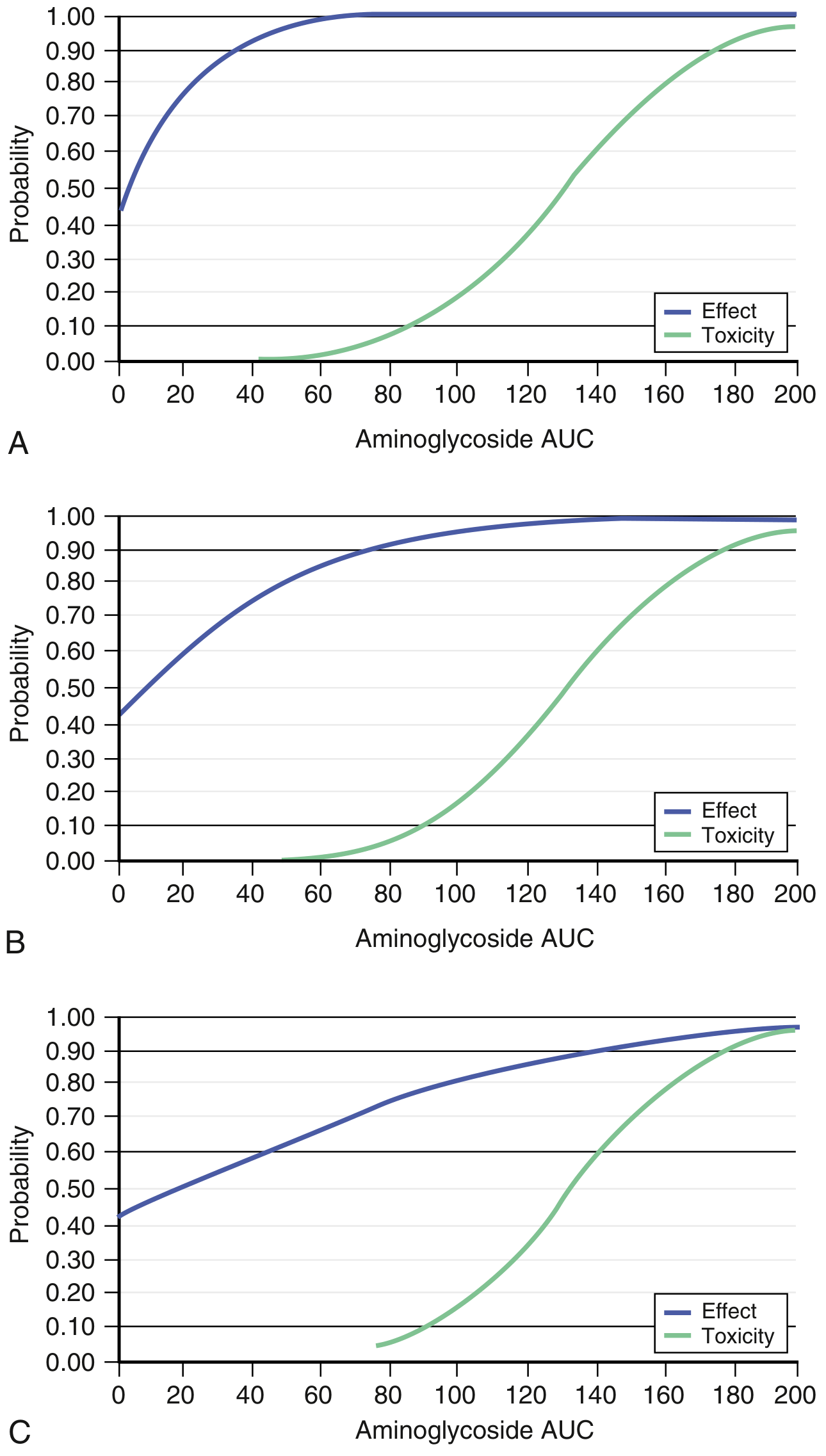
- AUC/MIC graphs below show the overlap between therapeutic effect and nephrotoxicity probability:
3. Neuromuscular Blockade
- Rare; occurs at very high doses
- Curare-like effect → respiratory paralysis
- Reversed by calcium gluconate (promptly) or neostigmine
- Caution in patients with myasthenia gravis or receiving neuromuscular blockers
Resistance Mechanisms
Four mechanisms, in order of clinical importance:
-
Enzymatic modification (most common):
- Phosphotransferases (APHs), adenylyltransferases (ANTs), acetyltransferases (AACs) modify amino/hydroxyl groups → drug no longer binds ribosome
- Encoded on plasmids or transposons
- Amikacin is less susceptible to these enzymes due to structural modifications; plazomicin is the most resistant to modifying enzymes
-
Decreased uptake / permeability defect: Mutation or deletion of outer membrane porins; seen with Pseudomonas; produces low-level cross-resistance to all aminoglycosides
-
Ribosomal binding site mutation: Requires mutation of multiple rRNA gene copies — uncommon; limits streptomycin (single binding site)
-
Active efflux: Occurs only in gram-negative bacteria; rarely clinically significant
— Medical Microbiology 9e; Katzung's Basic and Clinical Pharmacology, 16th Ed.
Clinical Uses
| Indication | Aminoglycoside Used |
|---|---|
| Serious gram-negative infections (empiric/sepsis) | Gentamicin or tobramycin + β-lactam |
| Pseudomonas aeruginosa infections | Tobramycin preferred |
| Drug-resistant gram-negatives (gentamicin/tobramycin-R) | Amikacin |
| Enterococcal/streptococcal endocarditis (synergy) | Gentamicin (+ ampicillin or penicillin) |
| Tuberculosis (second-line) | Streptomycin or amikacin |
| Tularemia, plague, brucellosis | Streptomycin (+ tetracycline) |
| Complicated UTI (CRKP) | Plazomicin |
| Mycobacterial infections | Amikacin (± streptomycin) |
| Cystic fibrosis (Pseudomonas) | Tobramycin (inhaled) |
Key "Must-Know" Points
- Bactericidal, concentration-dependent killers with postantibiotic effect → support once-daily dosing
- No oral bioavailability — parenteral only (or topical/inhaled for local infections)
- Inactive in anaerobic conditions and against obligate anaerobes
- Synergistic with β-lactams against gram-positives (enterococci, streptococci)
- Monitoring: renal function + drug levels (especially with conventional dosing or prolonged therapy)
- Major toxicities: nephrotoxicity (reversible) and ototoxicity (often irreversible)
- Plazomicin: newest agent, retains activity against many aminoglycoside-modifying enzyme–expressing organisms
Sources: Medical Microbiology 9e (Murray); Katzung's Basic and Clinical Pharmacology 16e; Goldman-Cecil Medicine
Source from KD TRIPATHI BOOK
Finding Sources
Finding Sources
KD Tripathi's Essentials of Medical Pharmacology is not available in the textbook library. The library's pharmacology collection includes only:
- Goodman & Gilman's The Pharmacological Basis of Therapeutics
- Katzung's Basic and Clinical Pharmacology, 16th Edition
- Lippincott Illustrated Reviews Pharmacology
KD Tripathi is a widely used South Asian pharmacology textbook but it is not part of this library's licensed collection.
What I can do instead:
- Source the aminoglycosides topic from Goodman & Gilman or Lippincott — both are highly detailed and cover the same content as Tripathi (mechanism, spectrum, PK, toxicity, clinical uses)
- Lippincott in particular uses a presentation style similar to Tripathi — concise, exam-oriented, with clear tables
Would you like me to pull the aminoglycoside content from Goodman & Gilman, Lippincott, or both?
Lippincott
Finding Sources
Reading File
The IV. AMINOGLYCOSIDES section starts at line 4359. Let me read that full section.
Reading File
Reading File
I overshot. Let me read the remaining aminoglycoside section content that was cut off.
Reading File
Reading File
Now let me fetch the Lippincott figures.
Loading Image
Loading Image
I now have all the Lippincott content. Here is the complete presentation:
Aminoglycosides
Lippincott Illustrated Reviews: Pharmacology
Members: Amikacin, Gentamicin, Neomycin, Plazomicin, Streptomycin, Tobramycin
A. Mechanism of Action
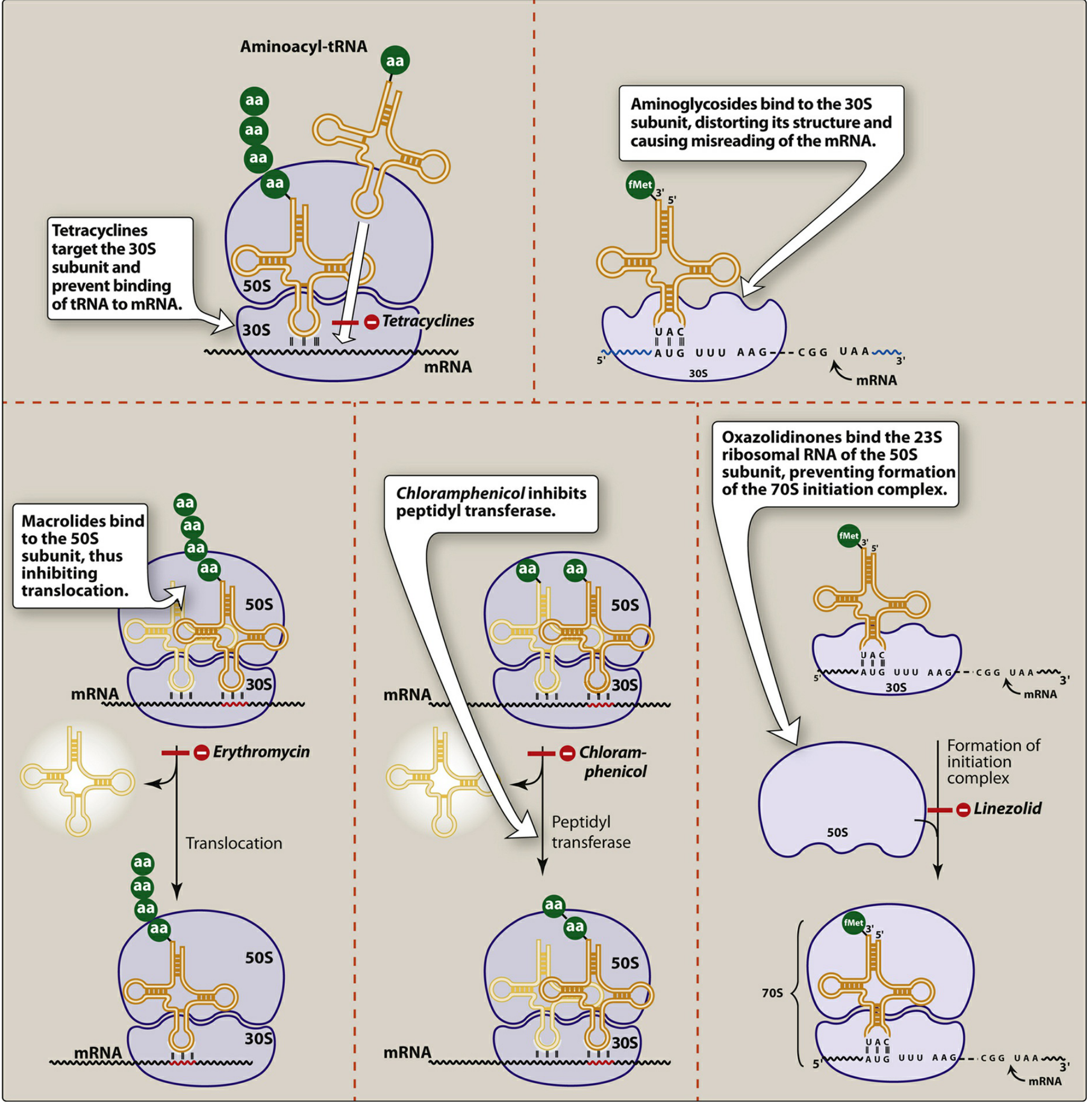
Aminoglycosides diffuse through porin channels in the outer membrane of susceptible organisms. An oxygen-dependent transport system then carries the drug across the cytoplasmic membrane. Inside the cell, they bind the 30S ribosomal subunit, where they:
- Interfere with assembly of the functional ribosomal apparatus
- Cause the 30S subunit to misread the genetic code → aberrant, nonfunctional proteins
Pharmacodynamic properties:
- Concentration-dependent bactericidal activity — efficacy depends on peak (C
max) / MIC ratio - Target C
max: 8–10 × MIC - Exhibit a postantibiotic effect (PAE) — continued bacterial suppression even after drug falls below MIC; the larger the dose, the longer the PAE
- These two properties are the rationale for high-dose extended-interval (once-daily) dosing, which also reduces nephrotoxicity and increases convenience
B. Antibacterial Spectrum
Aminoglycosides are effective against aerobic gram-negative bacilli, including multidrug-resistant organisms:
| Organism | Drug of Choice |
|---|---|
| Pseudomonas aeruginosa | Tobramycin (alone for UTI; + anti-pseudomonal β-lactam for pneumonia) |
| Klebsiella pneumoniae, Enterobacter spp. | Amikacin or gentamicin |
| Acinetobacter baumannii | Gentamicin/amikacin |
| Francisella tularensis (tularemia) | Gentamicin |
| Brucella spp. | Gentamicin + doxycycline |
| Yersinia pestis (plague) | Streptomycin |
| Enterococcus faecalis / faecium endocarditis | Ampicillin + gentamicin (synergy) |
| Streptococcus agalactiae | Ampicillin + gentamicin (synergy) |
Synergy: Aminoglycosides are combined with β-lactams for serious gram-positive infections (particularly enterococcal endocarditis). The β-lactam disrupts the cell wall, allowing aminoglycoside entry → bactericidal synergy.
Anaerobes, Streptococcus, Enterococcus are intrinsically resistant when aminoglycosides are used alone (no oxygen-dependent transport possible).
C. Resistance
Three mechanisms:
- Efflux pumps — active export of drug out of the cell
- Decreased uptake — altered outer membrane permeability
- Enzymatic modification and inactivation (most common clinically) — plasmid-encoded enzymes (phosphotransferases, acetyltransferases, adenylyltransferases) inactivate the drug
Each modifying enzyme has its own aminoglycoside specificity, so cross-resistance cannot be assumed. Amikacin and plazomicin are less vulnerable to these enzymes than other members of the class.
D. Pharmacokinetics
1. Absorption
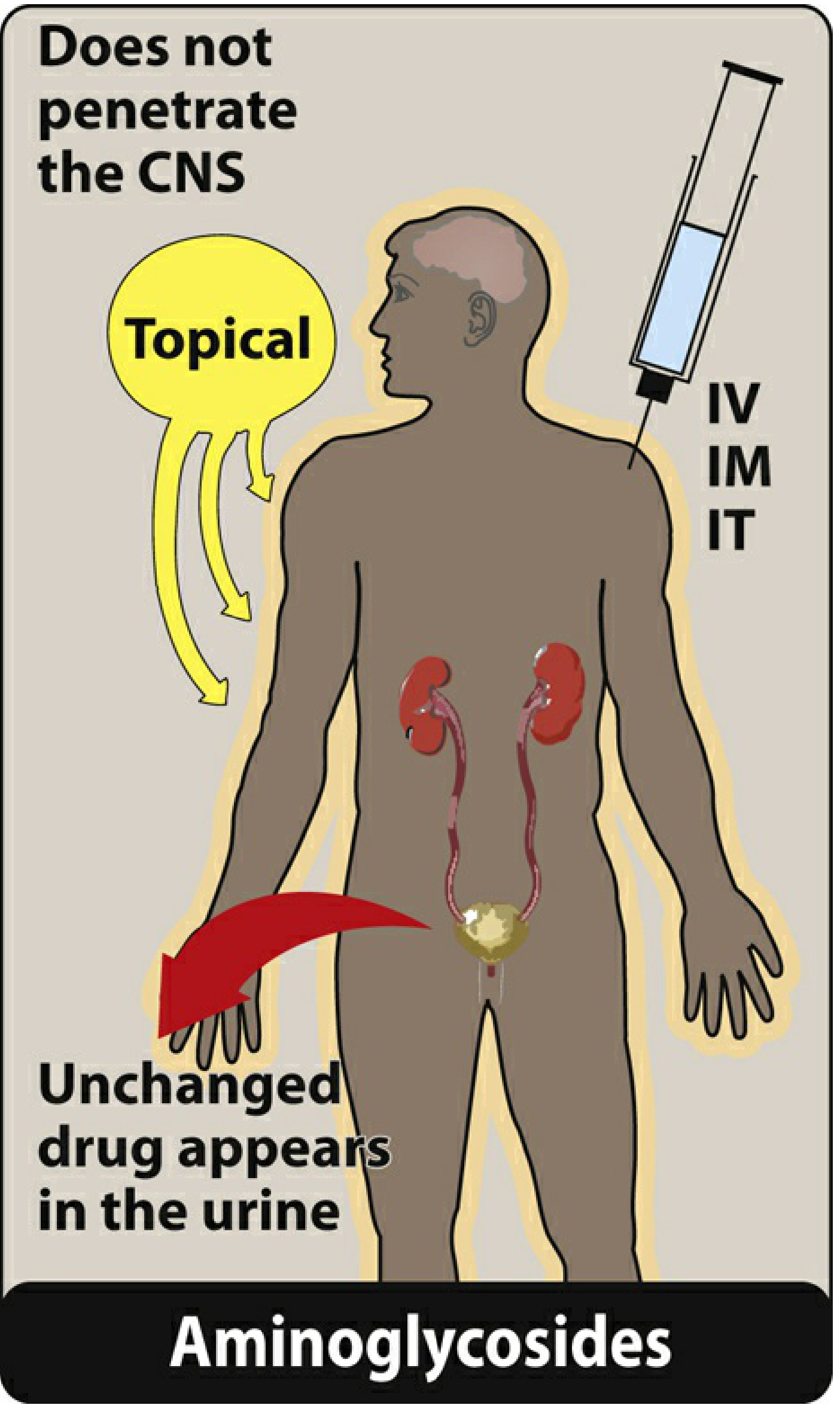
- Highly polar, polycationic structure → not absorbed orally
- Must be given parenterally (IV, IM) to achieve adequate serum concentrations
- Neomycin exception: Never given parenterally (severe nephrotoxicity); administered topically (skin infections) or orally (GI decontamination before colorectal surgery)
- Intrathecal (IT) route used for CNS infections
2. Distribution
- Hydrophilic → poor tissue penetration; subtherapeutic concentrations in most body fluids
- Does not penetrate the CNS — concentrations inadequate even with inflamed meninges → intrathecal or intraventricular routes required for CNS infections
- Cross the placental barrier → accumulate in fetal plasma and amniotic fluid (teratogenic risk)
3. Elimination
-
90% excreted unchanged in the urine (renal filtration)
- Accumulates in renal dysfunction → dose adjustment mandatory
- Neomycin (oral): excreted unchanged in feces
E. Adverse Effects
Therapeutic drug monitoring of gentamicin, tobramycin, amikacin, and plazomicin plasma concentrations is essential. The elderly are especially vulnerable.
1. Ototoxicity
- Vestibular (vertigo, loss of balance) and auditory (hearing loss/deafness) damage
- Directly related to high peak plasma concentrations and duration of treatment
- Drug accumulates in endolymph and perilymph of the inner ear
- Deafness may be irreversible and can affect the developing fetus
- Streptomycin preferentially causes vestibular toxicity (vertigo)
- Potentiated by concurrent cisplatin or loop diuretics (furosemide)
2. Nephrotoxicity
- Retention by proximal tubular cells disrupts calcium-mediated transport processes
- Ranges from mild, reversible renal impairment to severe acute tubular necrosis (potentially irreversible)
- Risk increases with prolonged therapy, high doses, elderly patients, pre-existing renal disease
3. Neuromuscular Blockade
- Associated with rapid concentration increase (high doses given over a short period) or concurrent use of neuromuscular blocking agents
- Patients with myasthenia gravis are particularly at risk
- Reversed promptly by calcium gluconate
4. Allergic Reactions
- Contact dermatitis is a common reaction to topically applied neomycin
Summary Table
| Property | Detail |
|---|---|
| Class | Aminocyclitol + amino sugars |
| Action | Binds 30S subunit → mRNA misreading; bactericidal |
| PD type | Concentration-dependent; exhibits PAE |
| PD target | C |
| Route | IV, IM (parenteral only); topical (neomycin) |
| Distribution | Poor CNS penetration; crosses placenta |
| Elimination | >90% unchanged in urine; dose-adjust for renal failure |
| Spectrum | Aerobic gram-negatives; synergy with β-lactams for gram-positives |
| Key toxicities | Ototoxicity (irreversible), nephrotoxicity, neuromuscular blockade |
| Resistance | Enzymatic modification (main), efflux, decreased uptake |
| Amikacin/Plazomicin | Less susceptible to resistance enzymes |
— Lippincott Illustrated Reviews: Pharmacology, Chapter 30 (Protein Synthesis Inhibitors)
This is a shared conversation. Sign in to Orris to start your own chat.