
Left side headache in adult
unilateral headache differential diagnosis adult
Left-Sided Headache in Adults
Primary Headache Disorders
1. Migraine (most common cause of unilateral headache)
- Duration: 4-72 hours
- At least 2 of the following:
- Unilateral location
- Pulsating quality
- Moderate-to-severe intensity (inhibits daily activities)
- Aggravated by routine physical activity (walking, climbing)
- During headache, at least 1 of:
- Nausea and/or vomiting
- Photophobia AND phonophobia
- Textbook of Family Medicine 9e
2. Trigeminal Autonomic Cephalalgias (TACs)
| Feature | Cluster Headache | Paroxysmal Hemicrania | SUNCT/SUNA |
|---|---|---|---|
| Gender | M > F | F = M | F ~ M |
| Pain quality | Stabbing, boring | Throbbing, boring | Burning, stabbing |
| Severity | Excruciating | Excruciating | Severe-excruciating |
| Site | Orbit, temple | Orbit, temple | Periorbital |
| Duration | 15-180 min | 2-30 min | 5-240 seconds |
| Frequency | 1 every other day to 8/day | 1-20/day | 3-200/day |
| Autonomic features | Yes (lacrimation, nasal congestion, conjunctival injection) | Yes | Yes (prominent) |
| Alcohol trigger | Yes | No | No |
| Cutaneous triggers | No | No | Yes |
| Key treatment | Sumatriptan injection/nasal spray; O2; verapamil (preventive) | Indomethacin (diagnostic & therapeutic) | Lidocaine IV (abortive); lamotrigine (preventive) |
- Harrison's Principles of Internal Medicine 22E
3. Tension-Type Headache
- Bilateral or pressing/tightening quality (but can be unilateral)
- Mild-to-moderate intensity
- NOT aggravated by routine physical activity
- No nausea, no vomiting
- Key distinguisher: frequent and frustrating but not disabling
Secondary (Dangerous) Causes - Red Flags
| Red Flag Feature | Potential Cause |
|---|---|
| Sudden thunderclap onset ("worst headache of life") | Subarachnoid hemorrhage (SAH) |
| Wakes from sleep / early morning headache | Elevated intracranial pressure (ICP) |
| Progressive worsening in frequency/severity | Intracranial mass lesion |
| Worse with recumbency or Valsalva | Elevated ICP, Chiari malformation |
| Fever + headache | Meningitis, encephalitis |
| Neurologic symptoms (focal weakness, vision change, gait change) | Stroke, mass, hemorrhage |
| Age >50 with new headache + scalp tenderness + jaw claudication | Giant cell arteritis (temporal arteritis) |
| Unilateral + neck pain + recent trauma | Carotid artery dissection |
| History of malignancy | Brain metastases |
| Pregnancy | Cerebral venous sinus thrombosis, preeclampsia |
Specific Cause Worth Highlighting: Giant Cell Arteritis (GCA)
- Always consider in adults over 50 with new unilateral/temporal headache
- Associated features: temporal artery tenderness, jaw claudication, visual loss (risk of irreversible blindness), elevated ESR (>50 mm/hr) and CRP
- Treat immediately with high-dose corticosteroids - do not wait for biopsy results if clinical suspicion is high
- Textbook of Family Medicine 9e
Approach to Evaluation
- History: onset (sudden vs. gradual), quality, duration, frequency, triggers, associated symptoms (nausea, photophobia, autonomic features), prior headache history, age, medications
- Neurological exam: focal deficits, papilledema, meningismus
- Imaging (CT/MRI): indicated if any red flags are present, new/progressive headache, or first severe headache
- Lumbar puncture: if SAH suspected and CT negative
- Labs: ESR/CRP if GCA suspected
Management Summary
| Disorder | Acute Treatment | Prevention |
|---|---|---|
| Migraine | NSAIDs, triptans, antiemetics | Topiramate, propranolol, amitriptyline, CGRP antagonists |
| Cluster headache | Sumatriptan SC/nasal, O2 100% | Verapamil, galcanezumab, lithium |
| Paroxysmal hemicrania | Indomethacin | Indomethacin |
| Tension-type | NSAIDs, acetaminophen | Amitriptyline |
| Giant cell arteritis | High-dose prednisone (1 mg/kg) | Taper per clinical response |
Clinical Pearl: The side of unilateral headache can change between attacks in migraine (strictly always-same-side raises concern for a structural lesion). In cluster headache and paroxysmal hemicrania, the pain is always on the same side within a cluster period.
Cord around the neck in fetus and cefalic pregention
nuchal cord management delivery outcome
Nuchal Cord (Cord Around the Neck) in Cephalic Presentation
What Is a Nuchal Cord?
- Incidence: Found in approximately 20-35% of all term deliveries
- Can be a single loop (nuchal cord x1) or multiple loops
- May be loose (reducible) or tight (non-reducible)
Clinical Significance
Antenatal (Before Labor)
- Detected on ultrasound - often visualized with color Doppler
- Antenatal presence alone is generally not an indication for cesarean section
- Most fetuses tolerate it well throughout pregnancy
Intrapartum (During Labor)
- Variable decelerations on the cardiotocograph (CTG) - the most characteristic fetal heart rate (FHR) pattern
- Variable in onset, duration, and magnitude (often >30 bpm drop)
- Abrupt in onset due to baroreceptor reflex activation from cord compression
- Commonly seen during contractions as the cord is intermittently compressed
- Persistent and repetitive variable decelerations may indicate ongoing cord compression with risk of fetal hypoxia and acidosis
- Rosen's Emergency Medicine; Barash Clinical Anesthesia 9e
Normal Mechanism of Cephalic (Vertex) Delivery
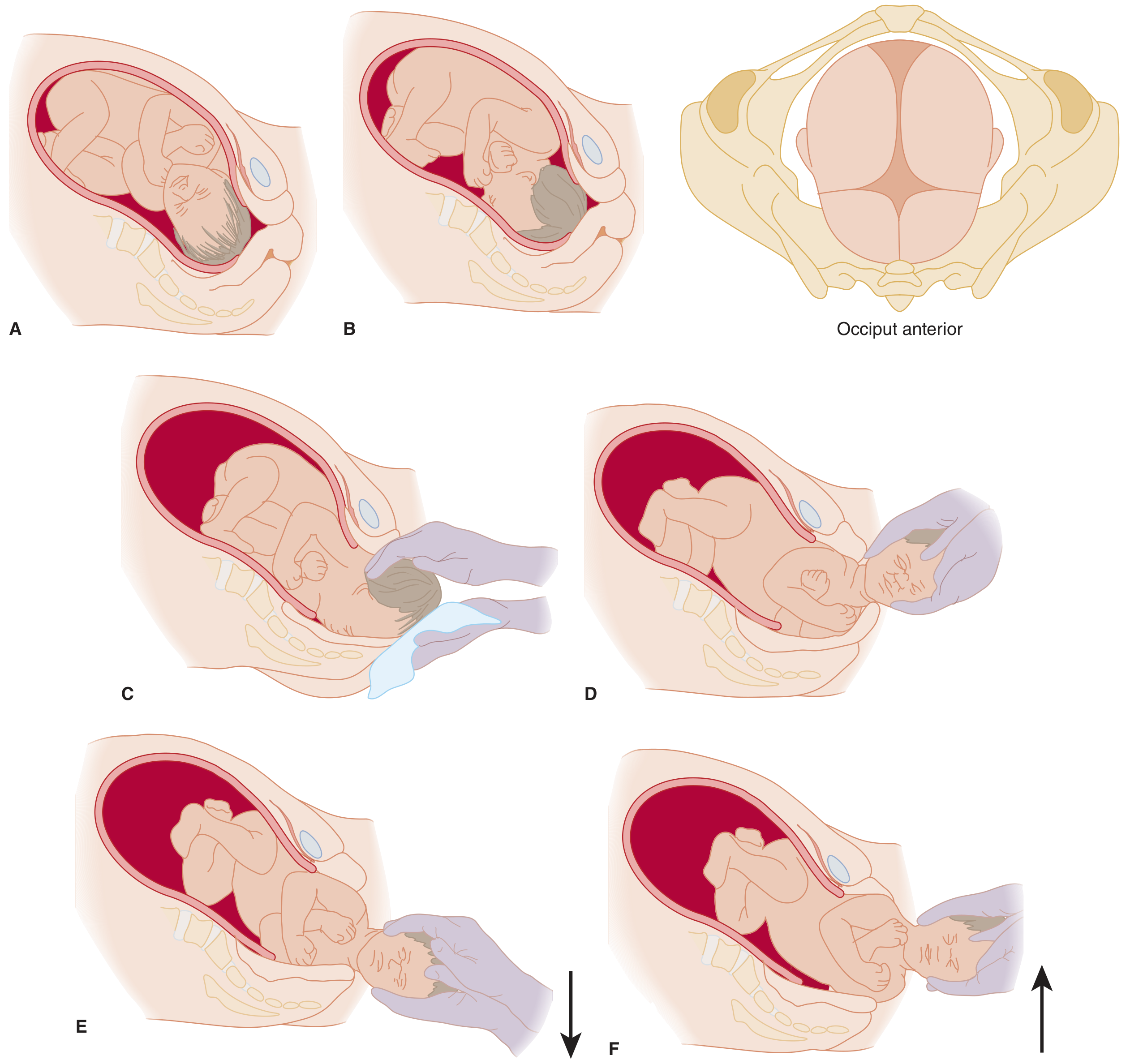
Management of Nuchal Cord at Delivery
If the Cord is LOOSE (reducible):
- Simply slip the cord over the fetal head toward the occiput
- Proceed with normal delivery
- This is straightforward and requires no interruption of delivery
If the Cord is TIGHT (non-reducible):
- Apply two clamps close together at the most accessible area of the cord
- Cut between the clamps
- Deliver the baby immediately without delay - the blood supply is now interrupted, so time is critical
- The baby's head is kept flexed against the maternal thigh
- The baby's body is "somersaulted" out without removing the cord from the neck
- Avoids cutting the cord before delivery, preserving cord blood flow until after birth
- Preferred when cord blood gas analysis or delayed cord clamping is desired
- Pfenninger and Fowler's Procedures for Primary Care; Textbook of Family Medicine 9e; Tintinalli's Emergency Medicine
Fetal Heart Rate Monitoring During Labor
| FHR Pattern | Association | Management |
|---|---|---|
| Variable decelerations (intermittent) | Cord compression (nuchal cord) | Usually benign; observe |
| Persistent repetitive variable decelerations | Ongoing cord compression, possible hypoxia | Change maternal position (left lateral, knee-chest), IV fluids, O2, consider amnioinfusion |
| Late decelerations | Uteroplacental insufficiency | Urgent intervention |
| Prolonged bradycardia | Severe cord compression or abruption | Emergency delivery |
Intrapartum Monitoring Recommendations (Cephalic with Nuchal Cord Risk)
- Low-risk labors: FHR auscultation every 30 minutes in active phase; every 15 minutes in second stage
- Higher-risk labors: Every 15 minutes in active phase; every 10 minutes in second stage
- Continuous EFM: Recommended when variable decelerations are detected or other risk factors present
- Any FHR deceleration pattern should prompt increased surveillance or continuous monitoring
Complications if Not Managed
| Complication | Mechanism |
|---|---|
| Fetal asphyxia / hypoxia | Cord compression reduces O2 delivery |
| Metabolic acidosis | Prolonged hypoxia |
| Low Apgar scores | Neonatal depression |
| Hypoxic-ischemic encephalopathy (HIE) | Severe/prolonged asphyxia |
| Neonatal death (rare) | Extreme cord compromise |
Key Clinical Pearls
- A nuchal cord is found in 1 in 4 to 1 in 3 term deliveries - it is common and usually manageable
- Always palpate the neck after the head delivers before attempting shoulder delivery
- A tight cord that is cut before delivery mandates immediate delivery - do not delay
- The somersault maneuver is a valid alternative to cord cutting and preserves delayed cord clamping
- Variable decelerations on CTG during second stage strongly suggest nuchal cord compression
- Antenatal diagnosis on ultrasound should not automatically lead to cesarean - mode of delivery is guided by clinical judgment and fetal well-being during labor
Aspirate risk in newborn
meconium aspiration syndrome newborn management
Aspiration Risk in the Newborn
Types of Aspiration in Newborns
| Type | Substance Aspirated | Timing |
|---|---|---|
| Meconium Aspiration Syndrome (MAS) | Meconium (fetal stool) | Antenatal / intrapartum |
| Feed / Milk Aspiration | Breast milk / formula | Postnatal |
| Neonatal Pneumonia (aspiration type) | Infected amniotic fluid / vaginal secretions | Peripartum |
1. Meconium Aspiration Syndrome (MAS)
Background
- Meconium-stained amniotic fluid (MSAF) occurs in 4-22% of all deliveries, more frequent with post-term gestation (>42 weeks)
- MAS (clinical diagnosis) complicates approximately 1-2% of MSAF deliveries
- Meconium passage in utero is unusual before 36 weeks (requires maturation of intestinal smooth muscle and the myenteric plexus)
- A stressed fetus is more likely to pass meconium - MSAF is associated with lower cord pH and non-reassuring fetal heart tracings
- Creasy & Resnik's Maternal-Fetal Medicine
Pathophysiology
- Airway obstruction - meconium is thick and viscous; migrates to distal airways causing:
- Complete obstruction → atelectasis
- Partial obstruction → "ball-valve" effect → air trapping and overinflation
- Chemical pneumonitis - direct inflammatory effect of meconium on lung tissue
- Surfactant inactivation - meconium components deactivate surfactant, worsening lung compliance
- Pulmonary hypertension (PPHN) - a major and potentially fatal complication; increased pulmonary vascular resistance causes right-to-left shunting
- Grainger & Allison's Diagnostic Radiology; Creasy & Resnik's Maternal-Fetal Medicine
Chest X-Ray Appearance (MAS)
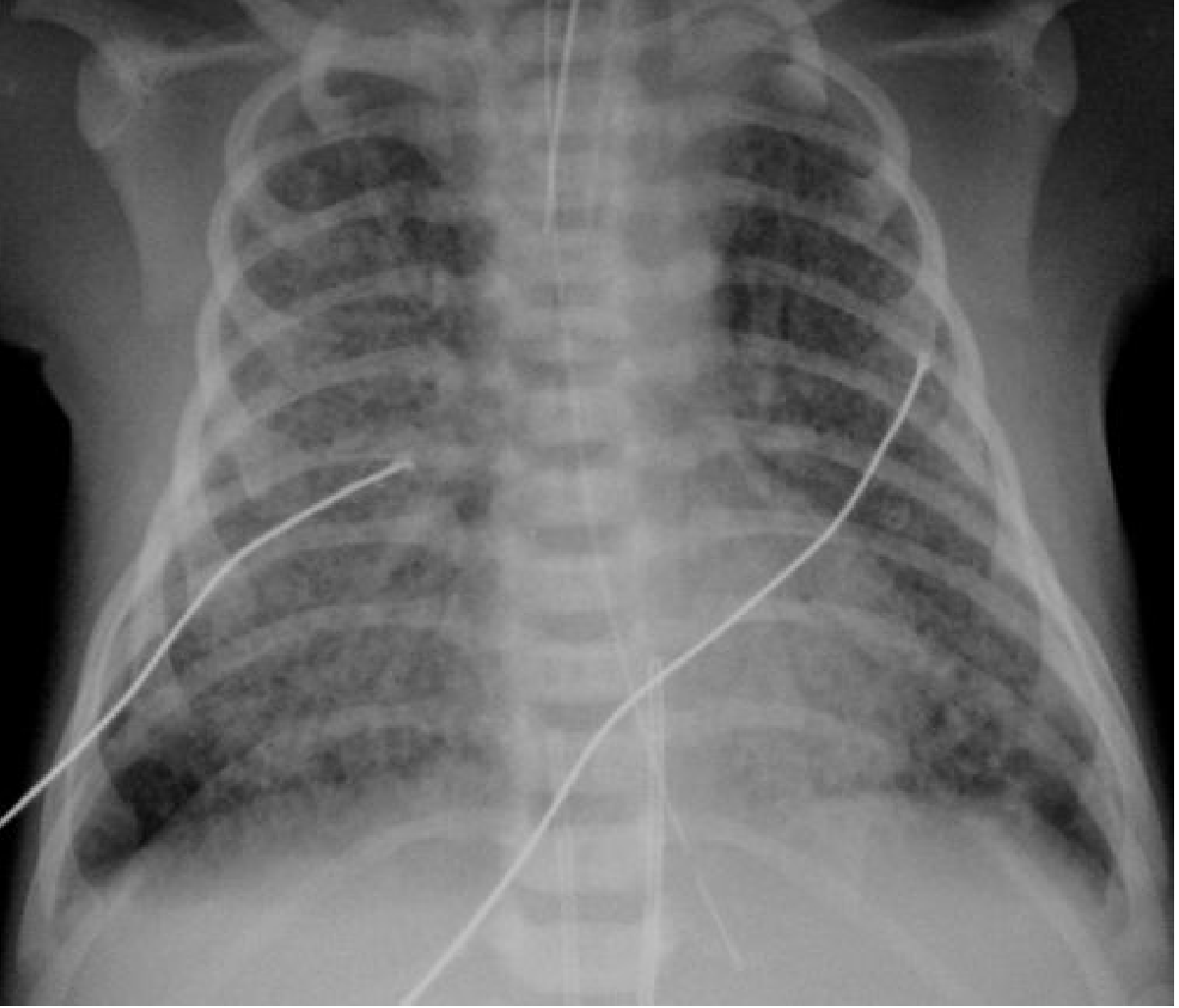
- Bilateral hyperinflation (air trapping)
- Asymmetrical coarse patchy opacification (atelectasis + consolidation)
- Pleural effusions (small, associated)
- Air leaks (pneumothorax, pneumomediastinum) are common
Risk Factors for MAS
- Post-term gestation (>41-42 weeks) - most common risk factor
- Fetal distress / hypoxia in utero
- Intrauterine growth restriction (IUGR)
- Oligohydramnios
- Maternal hypertension / pre-eclampsia
- Chorioamnionitis
- Langman's Medical Embryology; Creasy & Resnik's Maternal-Fetal Medicine
2. Management of the Newborn with MSAF - Current Guidelines
Key paradigm shift (2004-2015):
Current guidelines (ILCOR/AAP) recommend against routine endotracheal suctioning for both vigorous AND depressed infants following MSAF delivery. Delay in PPV causes more harm than benefit.
At Delivery - Decision Based on Infant's Condition:
| Infant Status | Management |
|---|---|
| Vigorous (good tone, HR ≥100, adequate respiratory effort) | Clear mouth and nose with bulb suction or large-bore catheter only; dry and return to mother |
| Non-vigorous / Depressed (poor tone, HR <100, poor respiratory effort) | Warm, open airway, stimulate; if not improving → Positive Pressure Ventilation (PPV) immediately |
Tracheal suctioning in depressed infants born through MSAF does NOT reduce morbidity or mortality - current evidence does NOT support this practice.
- Tintinalli's Emergency Medicine; Textbook of Family Medicine 9e; Creasy & Resnik's
Resuscitation Algorithm for Newborns with MSAF:
| Step | Action |
|---|---|
| 1. Warm, dry, stimulate | For all infants |
| 2. Assess: tone, HR, respiratory effort | Decision point |
| 3a. If vigorous | Bulb suction nose/mouth only; routine care |
| 3b. If non-vigorous + HR <100 or apnea/gasping | PPV with bag-mask immediately; room air first |
| 4. If no improvement with PPV | Intubate; begin chest compressions if HR <60 after 30s of effective ventilation |
| 5. Target SpO2 (preductal) | 1 min: 60-65%; 5 min: 80-85%; 10 min: 85-90% |
Oxygen Targets During Resuscitation
| Time After Birth | Target SpO2 (preductal) |
|---|---|
| 1 min | 60-65% |
| 2 min | 65-70% |
| 3 min | 70-75% |
| 4 min | 75-80% |
| 5 min | 80-85% |
| 10 min | 85-90% |
3. Treatment of Established MAS
| Severity | Treatment |
|---|---|
| Mild | Supplemental O2, close monitoring |
| Moderate | CPAP or nasal cannula high-flow O2 |
| Severe (needing PPV) | Mechanical ventilation (~30% of affected infants) |
| Pulmonary hypertension | Inhaled nitric oxide (iNO) - first-line for PPHN in MAS |
| Refractory to iNO | Extracorporeal membrane oxygenation (ECMO) - VA or VV method |
- Grainger & Allison's Diagnostic Radiology
4. Aspiration Pneumonia (Peripartum)
- Neonates may aspirate infected amniotic fluid or vaginal secretions during birth
- Risk factor: prolonged rupture of membranes (PROM)
- Most common organism: Group B Streptococcus (GBS)
- CXR: coarse bilateral asymmetrical alveolar opacification - may mimic MAS or transient tachypnea of the newborn (TTN)
- Grainger & Allison's Diagnostic Radiology
5. Feed / Milk Aspiration (Postnatal)
- Preterm neonates (immature suck-swallow-breathe coordination)
- Neonates with neurological impairment
- Infants with structural anomalies (cleft palate, tracheoesophageal fistula, laryngomalacia)
- Those with gastroesophageal reflux (GER)
Prevention Summary
| Strategy | Evidence |
|---|---|
| Induction at 41 weeks | Reduces MSAF and MAS incidence (systematic review data) |
| Amnioinfusion | Does NOT reduce MAS in settings with adequate peripartum surveillance |
| Prophylactic antibiotics to mother | Reduces chorioamnionitis but does NOT reduce neonatal sepsis or NICU admissions |
| Routine oropharyngeal/tracheal suctioning at delivery | No longer recommended - abandoned since 2015 guidelines |
| Skilled resuscitation team at high-risk deliveries | Required at all deliveries with MSAF |
High-Risk Delivery Indicators Requiring a Skilled Team
Diaper of baby Bio medical waste management
baby diaper biomedical waste management classification hospital WHO guidelines 2024
India biomedical waste management rules 2016 diaper nappy category soiled waste hospital
https://www.legitquest.com/act/bio-medical-waste-management-…
Diaper (Nappy) Waste - Biomedical Waste Management
Classification: Where Does a Baby's Diaper Fall?
| Setting | Contamination | Classification |
|---|---|---|
| Home / Community | Urine + feces only | Sanitary / Solid Waste (Municipal) |
| Hospital / NICU / Clinic | Urine + feces (no blood) | Soiled Waste → Yellow Category (BMW Rules) |
| Hospital / NICU / Clinic | Contaminated with blood or body fluids | Infectious Soiled Waste → Yellow Category (BMW Rules) |
| Home - diaper contaminated with blood | Blood-contaminated | Should be treated as biomedical-type / infectious waste |
India: Bio-Medical Waste Management (BMW) Rules, 2016
The 4-Category Color-Coded System
| Color | Category | Type of Waste | Includes Diapers? | Treatment & Disposal |
|---|---|---|---|---|
| 🟡 Yellow | Anatomical, soiled, microbiological | Human anatomical waste, soiled waste (items contaminated with blood/body fluids - dressings, cotton swabs, plaster casts), expired medicines, discarded linen | Yes - hospital diapers contaminated with blood/fluid | Incineration or plasma pyrolysis or deep burial; in absence, autoclaving + shredding |
| 🔴 Red | Contaminated recyclable waste | Tubing, IV sets, syringes (without needle), catheters, urine bags | No | Autoclaving/microwaving + recycling |
| ⬜ White (Translucent) | Sharps | Needles, syringes with needle, lancets, scalpel blades | No | Shredding + encapsulation |
| 🔵 Blue | Glassware | Broken glass, medicine vials, ampoules | No | Disinfection + recycling |
Hospital diapers from the neonatal ward/NICU fall under Yellow Category - Soiled Waste when contaminated with blood or body fluids. Urine/stool-only diapers in hospital settings are still handled as Yellow category soiled waste in practice due to infectious pathogen risk.
- BMW Management Rules 2016, Schedule I - Government of India
Soiled Waste - Definition Under BMW Rules 2016
"Items contaminated with blood, body fluids like dressings, plaster casts, cotton swabs and bags containing residual or discarded blood and blood components."
- Neonatal Intensive Care Units (NICU)
- Pediatric wards
- Post-surgical neonatal care
- Infected neonates
Home-Generated Diapers: Solid Waste Management Rules, 2016
- Used diapers, sanitary napkins, tampons, incontinence sheets = "Sanitary Waste"
- Classified as dry waste / non-biodegradable at household level
- The waste generator (parent/caregiver) must:
- Wrap the used diaper in the manufacturer's pouch or suitable wrapping material
- Segregate from wet (biodegradable) waste
- Hand over to the urban local body (ULB) collection system
- Under Swachh Bharat Mission (SBM) guidelines: diapers must be separately marked and sent for incineration
Step-by-Step Protocol: Hospital/Clinical Setting
At the Point of Generation (Bedside / NICU)
- Wear gloves before handling soiled diapers
- Fold the diaper inward (contaminated side inside) to prevent spillage
- Place directly into a yellow biomedical waste bag - do not place in regular/black bin
- Seal the bag when 3/4 full - never overfill
- Label with: ward, date, time, category
Collection
- Collect soiled waste from wards at fixed intervals (at least once daily, more frequently in NICU)
- Transport in covered, leak-proof trolleys - separate from general waste
- Never transport biomedical waste and general waste together
Storage
- Store in a ventilated, secure, designated BMW storage area
- Soiled waste (Yellow category) must not be stored beyond 48 hours
- If storage exceeds 48 hours, inform the State Pollution Control Board (SPCB) with reason
Treatment & Disposal
- Incineration (preferred) - at Common Biomedical Waste Treatment Facility (CBWTF)
- Plasma pyrolysis - alternative high-temperature treatment
- Deep burial - only where incineration/pyrolysis unavailable
- In absence of above: Autoclaving/microwaving + shredding, then energy recovery
- No healthcare facility needs its own treatment facility if a CBWTF exists within 75 km
WHO Classification of Healthcare Waste
| WHO Category | Examples |
|---|---|
| Infectious waste | Items contaminated with blood, secretions, excretions from infectious patients |
| Pathological waste | Tissues, organs, body parts, fetus |
| Sharps | Needles, scalpels |
| Pharmaceutical waste | Expired medicines |
| Chemical waste | Lab reagents, disinfectants |
| General / Non-hazardous | ~85% of all healthcare waste - food wrappers, non-contaminated paper, non-contaminated diapers |
Hospital diapers with blood/infectious body fluid = Infectious waste (WHO) Urine/stool only diapers in non-infectious patients = can be classified General waste per WHO, but most hospital protocols treat all neonatal ward diapers as infectious/soiled waste for safety.
US Context (OSHA / EPA Standards)
- Diapers contaminated with blood = Regulated Medical Waste (RMW) → Red biohazard bag → autoclave or incineration
- Diapers with urine/stool only (no blood) = General solid waste → Gray bin → municipal landfill
- OSHA 29 CFR 1910.1030 (Bloodborne Pathogens Standard)
Key Points to Remember
| Point | Detail |
|---|---|
| Hospital neonatal diapers | Yellow bag (India) / Red biohazard bag (US) |
| Home diapers | Wrap and place in non-biodegradable/dry waste (India SWM Rules) |
| Maximum storage time | 48 hours for soiled yellow-category waste |
| Never mix | BMW bags must never be mixed with general waste |
| Staff protection | Gloves mandatory; hand hygiene after every diaper change |
| Documentation | Hospital must maintain BMW register updated daily |
| Reporting | Major BMW accidents must be reported to SPCB within 24 hours |
Clinical Note for NICU/Neonatal Ward Staff: All diapers from newborns in clinical settings should be treated as yellow-category soiled biomedical waste by default, regardless of visible blood contamination, as neonatal feces may contain viral pathogens (Rotavirus, Norovirus, GBS, etc.) capable of nosocomial transmission.
Bp 185/95 hr 89 in old adult
hypertension older adults treatment guidelines
PMID: 39688187
BP 185/95 mmHg, HR 89 in an Older Adult - Clinical Assessment & Management
Step 1: Classification
| Parameter | Value | Interpretation |
|---|---|---|
| Systolic BP | 185 mmHg | Stage 2 Hypertension (≥140 mmHg) |
| Diastolic BP | 95 mmHg | Stage 2 Hypertension (≥90 mmHg) |
| Heart Rate | 89 bpm | Normal sinus range (60-100 bpm) |
| Pulse Pressure | 90 mmHg | Wide - suggests reduced arterial compliance (common in elderly) |
Note: In older adults, isolated systolic hypertension (ISH) is the most common pattern due to age-related arterial stiffness. This patient has both systolic AND diastolic elevation, making it combined hypertension.
Step 2: First Priority - Rule Out Hypertensive Emergency
Hypertensive Urgency vs. Emergency
| Feature | Hypertensive Urgency | Hypertensive Emergency |
|---|---|---|
| BP | ≥180/120 mmHg | ≥180/120 mmHg |
| End-organ damage | ABSENT | PRESENT |
| Symptoms | Headache, anxiety | See below |
| Management | Oral meds, outpatient | IV medications, ICU |
| BP reduction goal | Gradual over 24-48 hrs | 10-20% in 1st hour |
This patient's BP is 185/95 - the systolic qualifies for urgent evaluation. The key differentiator is end-organ damage, NOT the BP number alone.
Screen for End-Organ Damage Immediately:
| System | Symptoms/Signs to Assess | Indicates |
|---|---|---|
| Brain | Headache (esp. occipital), confusion, visual changes, focal deficits, seizures | Hypertensive encephalopathy, stroke |
| Eyes | Blurred vision, sudden visual loss | Hypertensive retinopathy, papilledema |
| Heart | Chest pain, shortness of breath, orthopnea | ACS, acute heart failure/pulmonary edema |
| Aorta | Tearing chest/back pain, BP difference between arms | Aortic dissection |
| Kidneys | Oliguria, hematuria | Acute kidney injury |
- Comprehensive Clinical Nephrology 7th Edition
Step 3: Full Evaluation
History
- Duration of hypertension and previous BP readings
- Current antihypertensive medications (compliance? dose?)
- Symptoms: headache, chest pain, dyspnea, visual changes, focal neurological symptoms
- Risk factors: diabetes, CKD, dyslipidemia, smoking, obesity
- Medications raising BP: NSAIDs, decongestants, steroids, OCPs, stimulants
- Alcohol intake
Physical Examination
- BP in both arms (difference >20 mmHg suggests aortic dissection or subclavian stenosis)
- Fundoscopy - retinal changes (AV nicking, flame hemorrhages, papilledema)
- Cardiac exam: S3/S4, displaced apex (LVH), pulmonary crackles
- Peripheral pulses, carotid bruits
- Neurological exam - focal deficits
Investigations
| Test | Purpose |
|---|---|
| ECG | LVH (voltage criteria), ischemia |
| Urinalysis | Proteinuria, hematuria (renal damage) |
| Serum creatinine + eGFR | Renal function |
| Electrolytes (Na+, K+) | Hypokalemia → hyperaldosteronism? |
| Fasting glucose / HbA1c | Diabetes co-morbidity |
| Lipid profile | Cardiovascular risk stratification |
| CBC | Microangiopathic hemolytic anemia (in emergency) |
| Chest X-ray | Cardiomegaly, pulmonary congestion, aortic dilation |
| Echo (if indicated) | LVH, systolic/diastolic function |
| Spot urine albumin:creatinine | Early nephropathy |
- Comprehensive Clinical Nephrology 7th Edition
Step 4: Management
BP Target in Older Adults - What Does Evidence Say?
-
2024 Cochrane Systematic Review (Falk et al., PMID 39688187, 4 trials, 16,732 older adults, mean age 70.3 years):
- No compelling evidence that aggressive lowering to <140/90 mmHg is superior to a higher target (<150-160 mmHg) in older adults for all-cause mortality, stroke, or serious cardiovascular events
- Frail older adults may have better outcomes with less aggressive BP lowering
-
ACC/AHA 2017: Target <130/80 mmHg for most adults including elderly if tolerated
-
ESC/ESH: Target <140/90 mmHg for age 65-80; <150/90 mmHg acceptable in >80 years
-
JNC / HYVET trial: Target <150/90 mmHg in patients >80 years showed benefit (stroke and HF reduction)
Practical consensus: For most older adults with BP 185/95, start treatment and aim for <140-150/90 mmHg, with caution in frail, very elderly patients (>80 years) or those with known CAD (where excessive DBP lowering risks myocardial ischemia - J-curve effect).
- Orthostatic hypotension → falls and hip fractures
- Cerebral hypoperfusion → cognitive decline
- Coronary hypoperfusion (J-curve) → MI risk
- Brenner and Rector's The Kidney
Non-Pharmacologic (Lifestyle) - Always First Step
| Intervention | Expected SBP Reduction |
|---|---|
| Salt restriction (<2g Na/day) | 5-6 mmHg |
| DASH diet | 8-14 mmHg |
| Weight reduction (per 10 kg lost) | 5-20 mmHg |
| Regular aerobic exercise (30 min, 5x/week) | 4-9 mmHg |
| Limit alcohol | 2-4 mmHg |
| Smoking cessation | Cardiovascular risk reduction |
Pharmacologic Treatment
| Drug Class | Examples | Notes for Elderly |
|---|---|---|
| Thiazide / Thiazide-like diuretics | Chlorthalidone 12.5-25mg, Indapamide 1mg | Preferred; chlorthalidone preferred (longer half-life) |
| ACE Inhibitors | Enalapril 5-40mg, Lisinopril 10-40mg, Ramipril 2.5-20mg | Avoid if bilateral RAS; contraindicated in pregnancy; can cause hyperkalemia in elderly with CKD |
| ARBs | Losartan 50-100mg, Valsartan 80-320mg, Olmesartan | Alternative to ACEi if cough; don't combine with ACEi |
| CCB (DHP) | Amlodipine 2.5-10mg, Felodipine | Particularly useful in isolated systolic HTN; watch for ankle edema |
| Beta-blockers | Metoprolol succinate, Carvedilol | Second-line unless concurrent CAD, HF, or HR control needed; atenolol less preferred |
For this patient (BP 185/95, HR 89): A combination of a thiazide-like diuretic + ACEi/ARB or CCB is a reasonable first choice. Beta-blocker is not first-line for HTN alone (HR 89 is already normal) but would be useful if there is concurrent heart failure or CAD.
Step 5: Specific Considerations in the Older Adult
| Issue | Consideration |
|---|---|
| Orthostatic hypotension | Check standing BP; common in elderly; avoid over-treatment |
| Falls risk | Aggressive BP lowering increases fall/fracture risk |
| Polypharmacy | Check for drug interactions; NSAIDs, decongestants raise BP |
| White coat hypertension | Confirm with home BP monitoring or 24-hr ABPM |
| Frailty | Frail patients may benefit from higher BP targets (<150/90 mmHg) |
| Cognitive function | Hypertension is a major risk factor for vascular dementia; treating reduces progression |
| CKD (common in elderly) | ACEi/ARB preferred if proteinuria; monitor K+ and creatinine |
| Isolated systolic HTN | Most common pattern in elderly; treat the systolic; do not over-lower diastolic |
Summary Action Plan
BP 185/95, HR 89 in older adult
          ↓
1. ASSESS: Any end-organ damage symptoms?
          ↓
   YES → Hypertensive Emergency → IV labetalol/nicardipine → ICU
   NO  → Hypertensive Urgency OR Stage 2 HTN
          ↓
2. CONFIRM BP on 2-3 occasions (both arms); check for white coat HTN
          ↓
3. INVESTIGATE: ECG, urinalysis, renal function, electrolytes, lipids, glucose
          ↓
4. TREAT:
   - Lifestyle modification (DASH diet, salt restriction, exercise)
   - Combination antihypertensive therapy:
     Thiazide + ACEi/ARB OR Thiazide + CCB
   - Target: SBP <140-150 mmHg, DBP ≥60-65 mmHg
   - Monitor for orthostatic hypotension and falls
          ↓
5. FOLLOW UP in 2-4 weeks to reassess BP and medication tolerability
Recent evidence note (Cochrane 2024, PMID 39688187): In adults ≥65 years, there is insufficient evidence that targeting BP <140/90 mmHg is better than targeting <150-160 mmHg for hard outcomes (mortality, stroke, cardiovascular events). Individualize targets, especially in frail or very elderly patients (>80 years).
S. Billirubin total is 8.6 mg/dl
hyperbilirubinemia diagnosis differential management adult
PMID: 39823630
Serum Total Bilirubin 8.6 mg/dL - Clinical Interpretation & Approach
Reference Range & Significance
| Parameter | Normal Range | This Patient | Interpretation |
|---|---|---|---|
| Total bilirubin | 0.2 - 1.2 mg/dL | 8.6 mg/dL | Markedly elevated (7.2x ULN) |
| Direct (conjugated) | 0 - 0.3 mg/dL | Not yet known | Must be fractionated |
| Indirect (unconjugated) | 0.2 - 0.9 mg/dL | Not yet known | Must be fractionated |
Jaundice (icterus) becomes clinically visible in the sclera and skin when total bilirubin exceeds 3.0 mg/dL. At 8.6 mg/dL, the patient will have obvious jaundice. Tea-colored or dark urine suggests conjugated (direct) hyperbilirubinemia.
- Sleisenger & Fordtran's GI & Liver Disease
Bilirubin Metabolism - The Basis for Classification
- Hemoglobin → Biliverdin (via heme oxygenase in reticuloendothelial cells)
- Biliverdin → Unconjugated bilirubin (water-insoluble; bound to albumin in blood)
- Hepatic uptake → Conjugation (by bilirubin-UGT enzyme → bilirubin glucuronide; water-soluble)
- Canalicular excretion into bile (via MRP2 transporter - the only energy-dependent step)
- Intestinal conversion → urobilinogen/urobilin → excreted in stool/urine
- Sleisenger & Fordtran's GI & Liver Disease
Step 1: Fractionate the Bilirubin - The Most Critical First Test
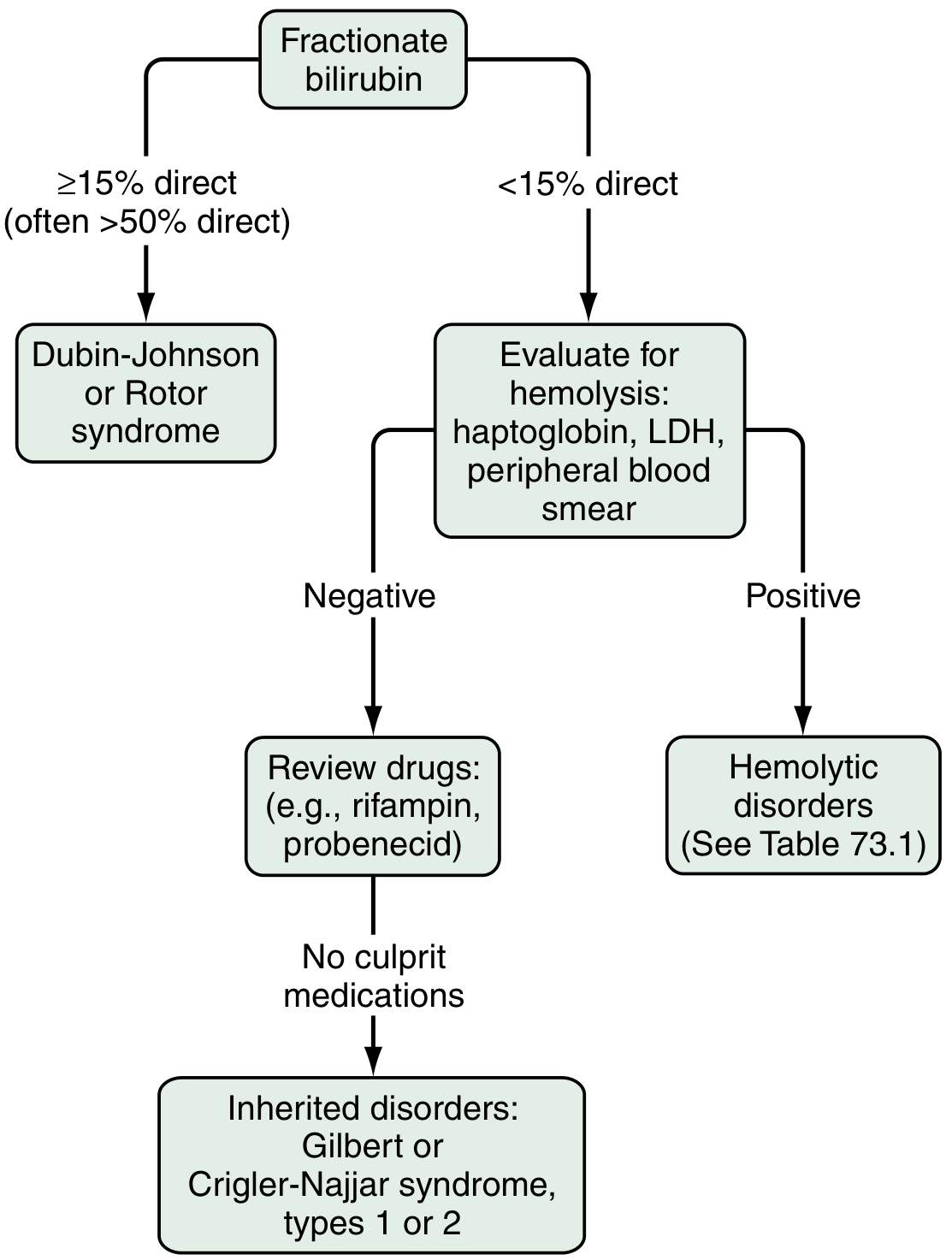
| Fraction Dominant | Type | Mechanism | Broad Category |
|---|---|---|---|
| Indirect > 85% of total | Unconjugated hyperbilirubinemia | Overproduction, impaired uptake, or impaired conjugation | Pre-hepatic or hepatic (conjugation defect) |
| Direct > 15-50% of total | Conjugated hyperbilirubinemia | Impaired excretion (intrahepatic) or biliary obstruction (extrahepatic) | Hepatic or post-hepatic |
Normally, >90% of serum bilirubin is unconjugated. Conjugated bilirubin in urine = conjugated hyperbilirubinemia = hepatobiliary disease (unconjugated bilirubin is bound to albumin and NEVER appears in urine).
Step 2: Differential Diagnosis by Bilirubin Type
A. Predominantly Indirect (Unconjugated) - Pre-hepatic / Hepatic Conjugation Defect
| Category | Conditions |
|---|---|
| Hemolytic disorders (Inherited) | Sickle cell disease, Spherocytosis/elliptocytosis, G6PD deficiency, Thalassemia |
| Hemolytic disorders (Acquired) | Autoimmune hemolytic anemia, Microangiopathic hemolysis (TTP/HUS/DIC), Malaria, Transfusion reactions |
| Ineffective erythropoiesis | Megaloblastic anemia, Thalassemia |
| Resorption of large hematoma | Post-trauma, post-surgery |
| Impaired hepatic uptake | Drugs (rifampicin, probenecid), sepsis |
| Impaired conjugation (inherited) | Gilbert syndrome (most common - 6-12% prevalence), Crigler-Najjar Type I & II |
Note: Gilbert syndrome typically causes only mild elevation (rarely >5 mg/dL), usually triggered by fasting, stress, or illness. A total bilirubin of 8.6 mg/dL is too high for typical Gilbert's alone - another cause must be sought.
B. Predominantly Direct (Conjugated) - Hepatic or Post-hepatic
| Condition | Key Features |
|---|---|
| Viral hepatitis (A, B, C, E) | Fever, malaise, elevated ALT/AST (hepatocellular pattern) |
| Alcoholic liver disease | Alcohol history, AST:ALT ratio >2:1, GGT elevated |
| Drug-induced liver injury (DILI) | Medication history review essential |
| Autoimmune hepatitis | Young/middle-aged women, elevated IgG, ANA/ASMA |
| Primary biliary cholangitis (PBC) | Middle-aged women, elevated ALP/GGT, anti-mitochondrial antibody |
| Cirrhosis / acute liver failure | Coagulopathy, low albumin, encephalopathy |
| Ischemic hepatitis | "Shock liver"; massive ALT/AST rise (>10,000 U/L) |
| Sepsis-associated cholestasis | Systemic infection, predominantly direct bilirubin |
| Wilson's disease | Young patient, Kayser-Fleischer rings, neuropsychiatric symptoms |
| Dubin-Johnson / Rotor syndrome | Isolated conjugated hyperbilirubinemia; benign hereditary |
| Condition | Key Features |
|---|---|
| Choledocholithiasis | Colicky RUQ pain, fever, elevated ALP/GGT; Charcot's triad if cholangitis |
| Cholangitis (ascending) | Charcot's triad: fever + RUQ pain + jaundice; Reynold's pentad (+hypotension + confusion) = severe |
| Pancreatic cancer | Painless progressive jaundice, weight loss, palpable gallbladder (Courvoisier's sign) |
| Cholangiocarcinoma | Progressive jaundice, biliary dilation on imaging |
| Primary sclerosing cholangitis (PSC) | Associated with IBD (ulcerative colitis), beaded bile ducts on MRCP |
| Biliary stricture | Post-surgical or inflammatory |
| Ampullary carcinoma | Periampullary tumor; intermittent jaundice |
Step 3: Investigations to Order
First-Line Laboratory Tests
| Test | Purpose |
|---|---|
| Fractionated bilirubin (direct + indirect) | Mandatory first step - guides entire workup |
| ALT, AST | Hepatocellular damage marker (elevation pattern) |
| ALP, GGT | Cholestatic/obstructive pattern |
| Albumin | Hepatic synthetic function |
| PT/INR | Hepatic synthetic function (best test) |
| CBC with differential | Hemolysis (anemia, reticulocytosis), infection (leukocytosis) |
| Urinalysis | Bilirubinuria = conjugated hyperbilirubinemia |
| Serum creatinine | Renal function (hepatorenal syndrome?) |
Interpreting LFT Patterns
| Pattern | ALT/AST | ALP/GGT | Bilirubin | Suggests |
|---|---|---|---|---|
| Hepatocellular | Very high (>10x ULN) | Normal or mildly ↑ | Both fractions ↑ | Hepatitis, ischemia, DILI |
| Cholestatic | Normal or mildly ↑ | High (>3x ULN) | Predominantly direct | Obstruction, PBC, drugs |
| Mixed | Both elevated | Both elevated | Both fractions ↑ | Cirrhosis, sepsis |
Imaging
| Modality | When to Use | Detects |
|---|---|---|
| Abdominal Ultrasound | First-line for ALL jaundice | Gallstones, bile duct dilation, liver texture, masses |
| CT abdomen with IV contrast | If US inconclusive or mass suspected | Pancreatic/liver tumors, lymphadenopathy |
| MRCP | Biliary tree detail without contrast | Choledocholithiasis, PSC, cholangiocarcinoma |
| ERCP | Therapeutic (stone removal, stenting) | Biliary obstruction - also treats it |
| Liver biopsy | If etiology unclear after labs + imaging | Histological diagnosis (hepatitis, cirrhosis, DILI) |
Per 2025 AFP review (PMID 39823630): "Ultrasonography of the abdomen, CT with IV contrast, and MRCP are first-line imaging options depending on suspected etiology. If etiology remains unclear despite lab testing and imaging, liver biopsy may be required."
Additional Serology (as clinically indicated)
| Suspected cause | Test |
|---|---|
| Viral hepatitis | Hep A IgM, HBsAg, Anti-HCV, Hep E IgM |
| Hemolysis | Reticulocyte count, haptoglobin (↓), LDH (↑), peripheral blood smear |
| Autoimmune hepatitis | ANA, ASMA, IgG |
| PBC | Anti-mitochondrial antibody (AMA), IgM |
| PSC | pANCA, MRCP |
| Wilson's disease | Serum ceruloplasmin, 24-hr urine copper, slit-lamp exam |
| Hemochromatosis | Serum ferritin, transferrin saturation |
Step 4: Danger Signs Requiring Urgent Admission
- Coagulopathy (elevated PT/INR) → suggests acute liver failure
- Encephalopathy (confusion, asterixis) → hepatic encephalopathy
- Charcot's Triad / Reynold's Pentad → ascending cholangitis (surgical emergency)
- Bilirubin >15 mg/dL → risk of acute kidney injury, pruritus, coagulopathy
- Rapid rise over days → acute process
- Signs of sepsis → fever, tachycardia, hypotension
Summary Diagnostic Algorithm
Total bilirubin 8.6 mg/dL → Clinically jaundiced
              ↓
1. FRACTIONATE BILIRUBIN
              ↓
  ┌──────────────────────────────────┐
  │ Predominantly INDIRECT            │ Predominantly DIRECT
  │ (<15% direct)                     │ (≥15-50% direct)
  │                                   │
  │ → Hemolysis workup                │ → LFT pattern analysis
  │   (haptoglobin, LDH, smear)       │   (hepatocellular vs cholestatic)
  │ → Drug review                     │ → Ultrasound abdomen
  │ → Gilbert's / Crigler-Najjar      │ → Viral/autoimmune serology
  └──────────────────────────────────┘
              ↓
2. ABDOMINAL ULTRASOUND (all cases)
              ↓
3. ALT, AST, ALP, GGT, PT/INR, Albumin, CBC, Urine bilirubin
              ↓
4. Directed additional tests (MRCP, CT, liver biopsy) per findings
Clinical Pearl: Bilirubin 8.6 mg/dL with elevated ALP/GGT and dilated bile ducts on ultrasound = obstructive jaundice until proven otherwise - requires urgent MRCP/ERCP. With markedly elevated ALT/AST and no duct dilation = hepatocellular injury - focus on hepatitis, DILI, autoimmune causes.
Baby age 5day and blood urea 62 and serum ceritinine is 1.0 and he is viattly stable and CRP is negative
neonatal acute kidney injury creatinine reference values newborn
neonatal AKI diagnosis criteria serum creatinine
PMID: 41504897
neonatal day 5 serum creatinine 1.0 blood urea 62 normal range AKI criteria 2024
https://www.safercare.vic.gov.au/best-practice-improvement/c…
5-Day-Old Neonate: Blood Urea 62 mg/dL, Serum Creatinine 1.0 mg/dL
Step 1: Interpret the Values Against Neonatal Reference Ranges
Blood Urea - Neonatal Normal Reference
| Age | Normal Urea (mmol/L) | Normal Urea (mg/dL approximate) |
|---|---|---|
| Day 1-7 (term) | 1.1 - 9.1 mmol/L | ~6.6 - 54.7 mg/dL |
| Day 21+ | 0.8 - 11.2 mmol/L | ~4.8 - 67.2 mg/dL |
This baby's blood urea 62 mg/dL = ~22 mmol/L, which is above the upper limit of 9.1 mmol/L (~54.7 mg/dL) for the first week. This is elevated but not critically so.
- Safer Care Victoria - Normal Laboratory Values for Neonates
Serum Creatinine - Neonatal Trajectory
| Age | Expected Serum Creatinine |
|---|---|
| Birth (day 1) | 0.6-1.2 mg/dL (reflects maternal creatinine - passively transferred across placenta) |
| Day 3-5 | Should be falling toward 0.5-0.8 mg/dL |
| Day 7-14 | ~0.3-0.7 mg/dL |
| 1 month | ~0.2-0.4 mg/dL |
| 1 year | ~0.2-0.4 mg/dL |
Key Concept: In the first 2-3 days, serum creatinine in a term newborn mirrors the mother's creatinine. It then progressively falls as the baby's own kidneys take over. By day 5, creatinine of 1.0 mg/dL is borderline-high - it should be falling. If it is NOT falling (or rose from a lower earlier value), this is a red flag.
Step 2: Assess for Neonatal AKI
KDIGO Modified Criteria for Neonatal AKI
| Stage | Serum Creatinine Criterion | Urine Output Criterion |
|---|---|---|
| Stage 1 | Rise ≥ 0.3 mg/dL within 48 hrs OR rise 1.5-1.9× baseline (days 2-7) | < 0.5 mL/kg/h for 6-12 hours |
| Stage 2 | Rise 2.0-2.9× baseline | < 0.5 mL/kg/h for ≥12 hours |
| Stage 3 | Rise ≥ 3× baseline OR SCr ≥ 2.5 mg/dL OR dialysis | ≤ 0.3 mL/kg/h for ≥24 hrs OR anuria ≥12 hrs |
Important: For neonates, the "baseline" = the lowest previous SCr value in days 2-7 (day of birth = day 1). So if SCr was 0.8 on day 3 and is now 1.0 on day 5 - that's a rise of 0.2 mg/dL which approaches Stage 1 territory. If it was 0.6 mg/dL and is now 1.0 mg/dL - that's a 1.67× rise = Stage 1 AKI.
Step 3: What Are the Likely Causes?
Most Likely Cause in a Vitally Stable Day-5 Neonate:
🔴 1. Dehydration / Inadequate Feeding (Pre-renal - Most Common)
- In the first week, physiological weight loss of 5-10% is normal, but >10% = pathological
- Breastfed neonates are at particular risk if milk supply is not yet established
- Elevated urea with creatinine that hasn't fallen is the classic pattern of pre-renal azotemia
- BUN:Creatinine ratio: 62/1.0 = 62:1 (very elevated; normal is ~10-20:1)
- A ratio >20:1 in adults (and high in neonates) suggests pre-renal cause (dehydration, poor intake)
- Associated findings: weight loss, dry mucous membranes, decreased wet diapers (<6/day), high urine specific gravity
2. Reflected Maternal Creatinine (Physiological)
- If mother had a creatinine around 1.0 mg/dL and the baby's values have not yet fallen to neonatal levels
- This is a benign explanation only if creatinine is falling on serial measurements
3. Transient Renal Dysfunction / Delayed Transition
- Neonatal kidneys have low GFR at birth (~20 mL/min/1.73m²) and mature gradually
- Stress at delivery (hypoxia, perinatal asphyxia) can impair early renal function
4. Structural Renal Anomaly
- Posterior urethral valves (boys), renal dysplasia, bilateral hydronephrosis
- Suspect if: prenatal hydronephrosis on antenatal ultrasound, poor urine stream (boys), oligouria
5. Neonatal AKI (if creatinine is NOT falling)
- Perinatal asphyxia / hypoxia-ischemia
- Sepsis (though CRP negative here)
- NSAID exposure (antenatal indomethacin)
- Aminoglycoside nephrotoxicity (if given any medications)
- Congenital anomalies of kidney and urinary tract (CAKUT)
- Patent ductus arteriosus (PDA) with compromised renal perfusion
Step 4: The BUN:Creatinine Ratio - Key Clue
| BUN (mg/dL) | Creatinine (mg/dL) | Ratio | Interpretation |
|---|---|---|---|
| 62 | 1.0 | 62:1 | Strongly suggests pre-renal (dehydration, poor intake) |
Step 5: Clinical Assessment to Do Now
History
- Birth weight vs. current weight → % weight loss (>10% = significant dehydration)
- Feeding history: breastfed or formula? Frequency? Duration of feeds? Adequate latch?
- Urine output: how many wet diapers per day? (Normal by day 4-5: ≥6 wet diapers/day)
- Stool frequency and character
- Any maternal medications? (NSAIDs, ACE inhibitors during pregnancy)
- Antenatal ultrasound findings?
- Birth history: Apgar scores, resuscitation needed?
Physical Examination
- Weight: compare to birth weight (>10% loss = significant)
- Mucous membranes (dry?), fontanelle (sunken?)
- Skin turgor
- Capillary refill time
- Jaundice (can worsen dehydration)
- Urine stream (boys): poor stream → suspect posterior urethral valves
- Abdominal exam: palpable kidney masses?
Investigations
| Test | Purpose |
|---|---|
| Serial serum creatinine (repeat in 24-48h) | Is creatinine falling? If yes → likely physiological/pre-renal resolving |
| Urine specific gravity | >1.020 = concentrated urine = dehydration / pre-renal |
| Urine:plasma creatinine ratio | High = pre-renal (kidneys concentrating) |
| Urine sodium | Low (<20 mEq/L) = pre-renal; High (>40 mEq/L) = intrinsic renal |
| Fractional excretion of sodium (FeNa) | <2.5% in neonates = pre-renal |
| Electrolytes (Na, K, Ca, PO4) | Hyperkalemia, hyponatremia in AKI |
| Renal ultrasound | Structural anomalies, hydronephrosis |
| Blood gas | Metabolic acidosis in AKI |
| Full blood count | Hemolysis, polycythemia |
Step 6: Management
If Pre-renal (Dehydration) - Most Likely Here
- Optimize feeding - if breastfed:
- Lactation support, ensure adequate latch
- Monitor feed frequency (8-12 feeds/day)
- Consider supplementation with expressed breast milk or formula if intake inadequate
- If >10% weight loss or clinically dehydrated: IV fluid resuscitation
- Use 10% dextrose in 0.45% saline OR 0.9% normal saline 10-20 mL/kg bolus
- Then maintenance fluids at 60-100 mL/kg/day
- Monitor urine output: target >1 mL/kg/hr
- Daily weights
- Repeat renal function in 24-48 hours - expect BUN and creatinine to fall if pre-renal
If AKI Confirmed (Creatinine Not Falling)
- Avoid nephrotoxins: aminoglycosides, NSAIDs, ibuprofen
- Fluid management: careful fluid balance, avoid overload
- Monitor electrolytes: treat hyperkalemia aggressively (risk of arrhythmia)
- Treat underlying cause
- Refer to neonatologist / pediatric nephrologist if Stage 2-3 AKI or no improvement
Summary
| Parameter | This Baby | Interpretation |
|---|---|---|
| Blood urea 62 mg/dL | Upper limit of neonatal normal (~54 mg/dL) - mildly elevated | Suggests dehydration/pre-renal or reduced intake |
| Creatinine 1.0 mg/dL | Borderline-high for day 5 (should be falling) | Needs serial monitoring - is it falling? |
| BUN:Cr ratio 62:1 | Very high | Strongly suggests pre-renal/dehydration |
| CRP negative | No infection | Sepsis unlikely |
| Vitally stable | Good sign | Not in shock |
Most probable diagnosis: Neonatal dehydration with pre-renal azotemia - likely due to inadequate breastfeeding intake in the first week. This is a common and correctable condition. The critical next step is to check the baby's weight loss from birth, urine output, and repeat renal function after hydration optimization.
⚠ Red flag: If creatinine on repeat testing is NOT falling - or if urine output is <1 mL/kg/hr despite adequate feeding - escalate to neonatologist and arrange renal ultrasound to exclude structural anomaly.
Preterm neonate is dull and spo2 is 97 blood sugar is 38 , RR is 50 , HR 140 , temp 36.9
neonatal hypoglycemia management treatment guidelines preterm
⚠ Preterm Neonate - Clinical Assessment & Urgent Management
Vital Signs Interpretation
| Parameter | Value | Neonatal Normal | Interpretation |
|---|---|---|---|
| Level of consciousness | Dull | Alert, active | 🔴 ABNORMAL - major red flag |
| SpO2 | 97% | 95-100% (room air) | ✅ Acceptable |
| Blood Sugar | 38 mg/dL | >45-50 mg/dL (neonate) | 🔴 HYPOGLYCEMIA - symptomatic |
| RR | 50 breaths/min | 40-60/min (neonate) | 🟡 Upper normal / borderline tachypnea |
| HR | 140 bpm | 120-160 bpm (neonate) | 🟡 Normal range / slightly elevated |
| Temperature | 36.9°C | 36.5-37.5°C | ✅ Normal |
🚨 Immediate Priority: Symptomatic Neonatal Hypoglycemia
Per Rosen's Emergency Medicine: "Neonates with a glucose level less than 40 mg/dL and with symptoms of hypoglycemia - irritability, tremors, jitteriness, apnea, tachypnea, seizures, cyanosis, lethargy, poor feeding - require treatment with IV glucose."
Definition of Neonatal Hypoglycemia
- Symptomatic: any glucose <45 mg/dL with clinical features
- Asymptomatic: glucose <40-45 mg/dL (threshold for treatment varies by guideline)
- Preterm neonates have lower glycogen stores and are at high risk - this baby needs treatment NOW
Why Preterm Neonates Are at Highest Risk
- Limited hepatic glycogen stores (less time for antenatal deposition)
- Immature gluconeogenesis
- High glucose utilization (large brain:body ratio)
- Poor feeding tolerance / inadequate enteral intake
- Reduced fat stores for ketone production
Differential Diagnosis for the "Dull" Preterm Neonate
| Diagnosis | Supporting Features | How to Evaluate |
|---|---|---|
| 🔴 Symptomatic hypoglycemia | BSL 38 + lethargy | Confirmed - treat immediately |
| Neonatal sepsis (early/late onset) | Tachycardia 140, RR 50, preterm, lethargy | CRP (repeat), CBC, blood culture, consider empiric antibiotics |
| Respiratory distress syndrome (RDS) | Preterm, RR 50, may have grunting/retractions | CXR, SpO2 trend, work of breathing |
| Hypothermia (mild/occult) | Dull preterm | Core temperature, incubator check |
| Hypoxic-ischemic encephalopathy | Birth history, Apgar scores | Birth history review |
| Metabolic/electrolyte disorder | Hypo-natremia, hypocalcemia | Electrolytes, calcium |
| Intraventricular hemorrhage (IVH) | Very preterm + sudden deterioration | Head ultrasound |
| Polycythemia | Ruddy appearance, hematocrit >65% | Hematocrit/CBC |
🔴 Immediate Management Protocol
Step 1 - TREAT HYPOGLYCEMIA FIRST (within minutes)
- 10% Dextrose in Water (D10W): 2 mL/kg IV bolus over 5-10 minutes
- In a 1.5 kg preterm: give 3 mL of D10W IV
- In a 2 kg preterm: give 4 mL of D10W IV
Do NOT use D50W in neonates - causes rebound hypoglycemia and osmotic injury. D10W is standard for neonates.
- Start D10W at 80-100 mL/kg/day as maintenance infusion
- This provides a Glucose Infusion Rate (GIR) of ~5.5-6.9 mg/kg/min
- Target GIR: 4-8 mg/kg/min for neonates
GIR (mg/kg/min) = [% dextrose × infusion rate (mL/hr)] ÷ [weight (kg) × 6]
Step 2 - Check Glucose Response
- Recheck blood glucose 15-30 minutes after bolus
- Target: BSL >50 mg/dL (ideally >60 mg/dL in preterm)
- If still <45 mg/dL → increase GIR by 2 mg/kg/min increments
- If persistent/refractory hypoglycemia → consider hydrocortisone or glucagon
Step 3 - Secure Airway & Monitoring
- Position: neutral neck position, avoid flexion
- Continue SpO2 monitoring
- Monitor HR, RR, temperature continuously
- Place in a pre-warmed incubator appropriate for gestational age
Step 4 - IV Access & Samples (Simultaneously)
| Investigation | Purpose |
|---|---|
| Blood glucose (bedside glucometer + lab confirmation) | Hypoglycemia confirmed |
| Full blood count (CBC) | Sepsis screen (WBC, neutrophil:lymphocyte ratio, platelets) |
| C-reactive protein (CRP) - if not done recently | Infection marker |
| Blood culture x2 | Before starting antibiotics |
| Electrolytes: Na, K, Ca, Mg | Electrolyte disturbances |
| Blood gas (capillary or arterial) | Acidosis, CO2, respiratory status |
| Chest X-ray | RDS, pneumonia, cardiac |
| Bilirubin | Preterm jaundice |
| Head ultrasound | If very preterm or deteriorating - IVH |
Sepsis Assessment & Empiric Antibiotics
- Preterm neonate
- Lethargy/dull
- Tachycardia (HR 140)
- Borderline tachypnea (RR 50)
Common Organisms in Early-Onset Neonatal Sepsis (within 72 hours of birth):
- Group B Streptococcus (GBS)
- Escherichia coli
- Klebsiella spp.
- Listeria monocytogenes
Common Organisms in Late-Onset Sepsis (after 72 hours):
- Coagulase-negative Staphylococcus (CoNS) - most common in NICU
- Staphylococcus aureus
- Gram-negative organisms
Empiric Antibiotic Regimen (if sepsis suspected):
| Drug | Dose | Route | Frequency |
|---|---|---|---|
| Ampicillin | 50-100 mg/kg | IV | Every 12h (preterm <1 week) |
| Gentamicin | 4-5 mg/kg | IV | Every 36-48h (preterm, adjust by GA) |
- If meningitis suspected: increase Ampicillin to 100-200 mg/kg/day
- Cefotaxime (50 mg/kg IV) preferred over ceftriaxone (risk of kernicterus in neonates)
- Rosen's Emergency Medicine; Red Book 2021
Respiratory Status Assessment
| Feature | Significance |
|---|---|
| Grunting (expiratory) | Splinting to maintain FRC - suggests RDS |
| Nasal flaring | Increased work of breathing |
| Intercostal/subcostal retractions | Significant respiratory distress |
| Apnea spells | Very concerning in preterm |
| Cyanosis | SpO2 may not capture brief episodes |
Temperature Management
- Ensure baby is in a servo-controlled incubator at appropriate humidity
- Neutral thermal environment (NTE): varies by gestational age and weight
- Skin-to-skin (kangaroo care) if stable and appropriate
Summary Action Plan
PRETERM NEONATE - DULL, BSL 38, RR 50, HR 140, SpO2 97%, Temp 36.9°C
                            ↓
🔴 IMMEDIATE:
   1. IV access → D10W 2 mL/kg bolus IV over 5-10 min
   2. Follow with D10W infusion 80-100 mL/kg/day (GIR 5-7 mg/kg/min)
   3. Recheck glucose at 15-30 minutes
                            ↓
🟡 WITHIN 30 MINUTES:
   4. Blood culture x2, CBC, CRP, electrolytes, blood gas
   5. Chest X-ray
   6. Place in incubator - maintain temperature
   7. Start empiric antibiotics if sepsis suspected:
      Ampicillin + Gentamicin IV
                            ↓
🟢 ONGOING MONITORING:
   8. Continuous SpO2, HR, RR, temperature
   9. Blood glucose every 30 min until stable >50 mg/dL
  10. Urine output monitoring (>1 mL/kg/hr)
  11. Head ultrasound if very preterm or neurological concern
  12. Neonatologist / NICU referral immediately
Key Clinical Pearls
"Dull" preterm + glucose 38 = treat first, investigate simultaneously. Every minute of hypoglycemia in a preterm causes ongoing risk of neurological injury - glucose is neuroprotective.
CRP negative does NOT rule out sepsis in the first 12-24 hours. Serial CRP (repeat at 12-24h) + CBC + blood culture are the minimum.
Tachycardia (140 bpm) in a preterm is a non-specific but important sign - can be caused by hypoglycemia itself, pain, fever, sepsis, hypovolemia, or cardiac causes.
Refractory hypoglycemia (glucose not responding to D10W infusion at GIR >10 mg/kg/min) should prompt investigation for hyperinsulinism, cortisol deficiency, growth hormone deficiency, or inborn errors of metabolism.
neonate after delivery is dull and spo2 is 97 blood sugar is 38 , RR is 50 , HR 140 , temp 36.9 , weight 1.7 kg colur pink and oral secretion in mouth, crt less than 3 sec
Newborn Delivery - 1.7 kg Preterm: Immediate Assessment & NRP Management
Step 0: Three-Question Rapid Assessment (NRP - at Birth)
| Question | This Baby | Answer |
|---|---|---|
| Term gestation? | 1.7 kg → likely preterm (28-34 weeks) | ❌ NO |
| Good tone? | Dull = reduced tone | ❌ NO |
| Breathing or crying? | Not specified / dull → poor respiratory effort likely | ❌ NO |
Because the answer is NO to at least one question → baby goes under radiant warmer for initial steps immediately. Do NOT leave with mother.
NRP Algorithm for This Baby
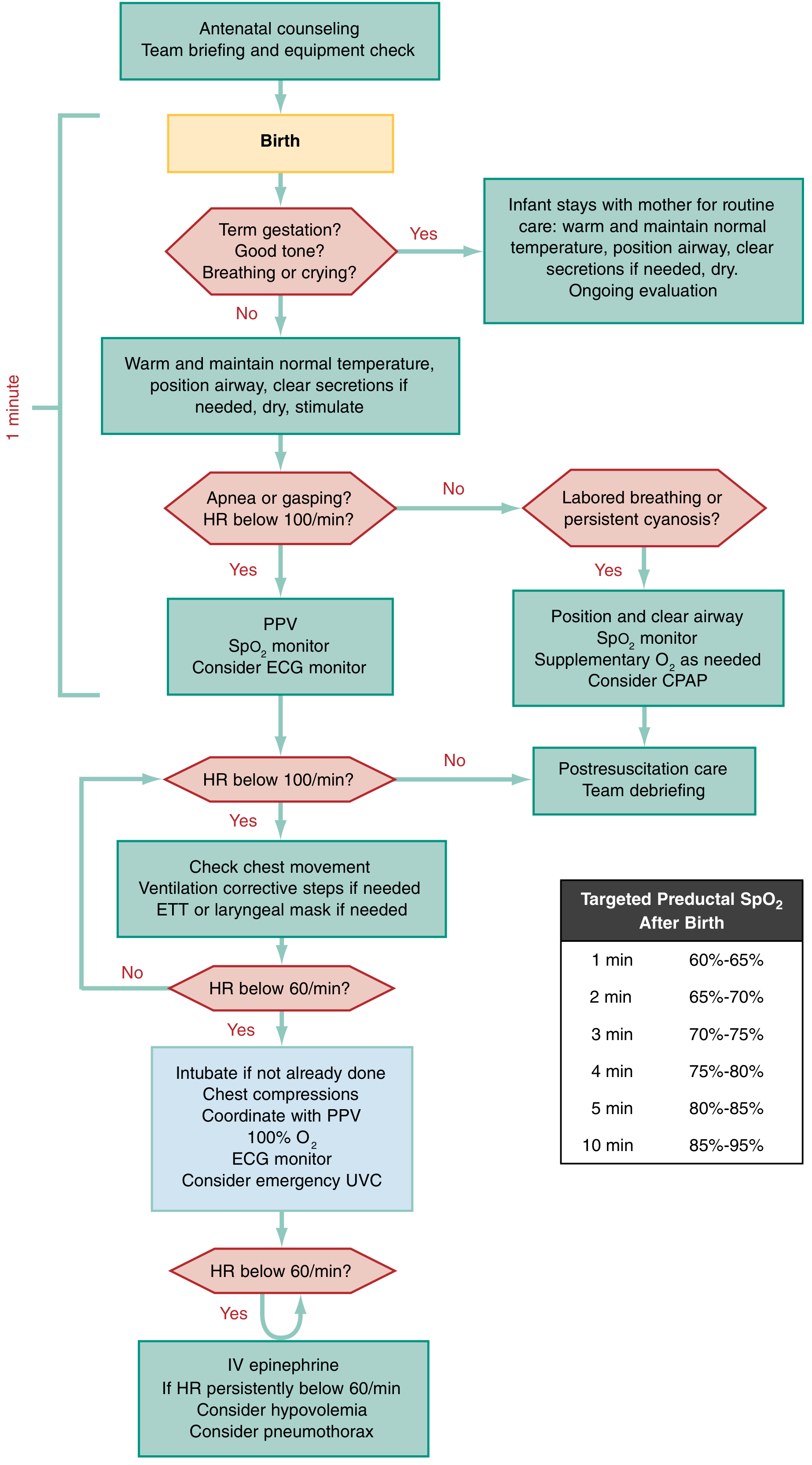
Full Clinical Interpretation
| Parameter | Value | Normal (Neonate) | Assessment |
|---|---|---|---|
| Weight | 1.7 kg | Term: 2.5-4.0 kg | 🔴 Preterm / LBW |
| Tone/consciousness | Dull | Alert, active, good tone | 🔴 ABNORMAL |
| Color | Pink | Pink centrally | ✅ Good |
| SpO2 | 97% | 85-95% at 10 min (see targets below) | ✅ Acceptable |
| Blood Sugar | 38 mg/dL | >45 mg/dL | 🔴 HYPOGLYCEMIA |
| RR | 50/min | 40-60/min | 🟡 Upper normal |
| HR | 140 bpm | 120-160 bpm | ✅ Normal |
| Temp | 36.9°C | 36.5-37.5°C | ✅ Normal |
| CRT | <3 sec | <3 sec | ✅ Perfusion adequate |
| Oral secretions | Present | Should be cleared if obstructing | 🟡 Clear if needed |
Key Positive Signs (Reassuring):
- Pink color → no central cyanosis
- HR 140 → above 100/min, NO need for PPV on HR alone
- CRT <3 sec → peripheral perfusion is maintained
- Temp 36.9°C → no hypothermia (yet)
Key Concerning Signs:
- DULL tone → most important abnormal sign
- BSL 38 mg/dL → symptomatic hypoglycemia
- Preterm 1.7 kg → high risk for multiple complications
- Oral secretions → airway needs assessment
Immediate Management - Minute by Minute
🔴 FIRST 30 SECONDS: "Initial Steps" Under Radiant Warmer
- Place under pre-warmed radiant warmer
- For preterm <32 weeks: place in polyethylene plastic wrap/bag (head out) to prevent heat loss - do NOT dry first
- For this baby (~32-34 weeks, 1.7 kg): dry with warm towels AND consider plastic wrap
- Place in sniffing position (slight neck extension)
- Small roll under shoulders helps open airway in preterm
- Use bulb syringe or gentle mechanical suction (<100 mmHg)
- Suction MOUTH first, then NOSE (M before N - prevents aspiration if baby gasps after nasal suction)
- Only suction if secretions visibly obstructing - avoid deep/vigorous suctioning (causes vagal bradycardia)
- Do NOT routinely suction unless airway is obstructed
- Dry vigorously with warm towel
- Tactile stimulation: flick soles of feet, rub back
- Remove wet towel - place on dry warm surface
⏱ AT 60 SECONDS: Reassess
- Is HR <100 bpm? → No (HR 140) ✅
- Apnea or gasping? → Assess after stimulation
- Labored breathing or persistent cyanosis? → Assess
- Dullness may be partly from hypoglycemia and cold stress
- If baby improves (cries, tone improves, RR adequate) → proceed to post-resuscitation care
- If still dull with poor respiratory effort → give PPV
| Post-stimulation finding | Action |
|---|---|
| Breathing adequately, HR >100, improving tone | → Post-resuscitation care + treat hypoglycemia |
| Still dull, poor effort, HR >100 | → Supplemental O2 + SpO2 monitor + consider CPAP |
| Apnea or HR <100 bpm | → Start PPV immediately |
APGAR Score - Calculate at 1 and 5 Minutes
| Sign | 0 | 1 | 2 | This Baby (estimated) |
|---|---|---|---|---|
| Heart rate | Absent | <100 | ≥100 | 2 (HR 140) |
| Respiratory effort | Absent | Weak, irregular | Good, crying | 1 (dull, weak) |
| Muscle tone | Limp | Some flexion | Active motion | 1 (dull) |
| Reflex irritability | None | Grimace | Cry/cough | 1 (reduced) |
| Color | Blue/pale | Blue extremities | Pink all over | 2 (pink) |
| Estimated APGAR | ~7/10 at 1 min |
APGAR 7-10 = good; 4-6 = moderate depression; 0-3 = severe depression. This baby is likely borderline 7, pending actual respiratory effort assessment.
Targeted SpO2 After Birth (Preductal - Right Hand)
| Time After Birth | Target SpO2 |
|---|---|
| 1 min | 60-65% |
| 2 min | 65-70% |
| 3 min | 70-75% |
| 4 min | 75-80% |
| 5 min | 80-85% |
| 10 min | 85-95% |
SpO2 97% may actually be too high if measured in first few minutes - healthy newborns take 10 minutes to reach normal oxygen saturation. Avoid supplemental O2 unless SpO2 is below target range for age. Hyperoxia in preterm = risk of retinopathy of prematurity (ROP) and chronic lung disease.
🔴 TREAT HYPOGLYCEMIA - Blood Sugar 38 mg/dL
| Step | Action |
|---|---|
| IV access | Peripheral IV or Umbilical Venous Catheter (UVC - preferred in preterm) |
| Dextrose bolus | D10W 2 mL/kg = 3.4 mL IV over 5 minutes |
| Maintenance infusion | D10W at 80 mL/kg/day = 5.7 mL/hour for 1.7 kg |
| Glucose Infusion Rate (GIR) | Target 4-6 mg/kg/min initially |
| Recheck glucose | 15-30 minutes after bolus |
| Target BSL | >50 mg/dL (ideally >60 mg/dL in preterm) |
GIR = (% dextrose × rate in mL/hr) ÷ (weight kg × 6)
D10W at 5.7 mL/hr in 1.7 kg = (10 × 5.7) ÷ (1.7 × 6) = 57 ÷ 10.2 = 5.6 mg/kg/min ✅
NEVER use D50W or D25W in neonates - causes hyperosmolarity and rebound hypoglycemia. Use D10W only.
Endotracheal Tube Size (If Intubation Needed)
| Birth Weight | Gestational Age | ETT Size (uncuffed) | Depth of Insertion |
|---|---|---|---|
| 1-2 kg | 28-34 weeks | 3.0 mm | 8 cm at lip |
Complete Action Summary
1.7 kg PRETERM NEWBORN - DULL, ORAL SECRETIONS, BSL 38
                    ↓
🔴 IMMEDIATE (0-30 sec):
   ✅ Warm under radiant warmer
   ✅ Sniffing position
   ✅ Suction MOUTH then NOSE (secretions present)
   ✅ Dry and stimulate (rub back, flick feet)
   ✅ SpO2 probe on right hand
                    ↓
⏱ AT 60 SECONDS: Reassess
   HR >100? → YES (140) ✅
   Breathing? → Assess after stimulation
   Cyanosis? → No (pink) ✅
                    ↓
IF STILL DULL BUT BREATHING:
   → Supplemental O2 to target SpO2
   → Consider CPAP (PEEP 5-6 cmH2O) for preterm
   → Get IV access / UVC
   → Treat hypoglycemia: D10W 3.4 mL IV bolus, then D10W infusion
   → Keep warm in incubator
   → NICU transfer
                    ↓
IF APNEA OR HR <100 AFTER STIMULATION:
   → PPV with room air (21%) via face mask
   → Reassess HR at 15 sec
   → If no improvement → intubate (ETT 3.0mm, depth 8cm)
                    ↓
FURTHER WORKUP:
   → Blood culture, CBC, CRP (sepsis screen)
   → Electrolytes, Ca, blood gas
   → Chest X-ray
   → Blood glucose every 30 min until stable
Clinical Pearls for This Scenario
Dullness in a newborn = reduced tone = critical sign. Do not dismiss it. In a preterm, it is most commonly hypoglycemia, hypothermia, or both - both correctable. But sepsis and asphyxia must be excluded.
Oral secretions: only suction if obstructing airway. Suction mouth first, then nose. Keep suction <100 mmHg to avoid vagal bradycardia.
Pink color + HR 140 + CRT <3 sec are reassuring signs - this baby has adequate circulation and oxygenation at this moment.
Preterm 1.7 kg = high risk for: RDS, hypoglycemia, hypothermia, IVH, NEC, sepsis, apnea of prematurity. All need proactive monitoring in NICU.
Never start room air resuscitation with 100% O2 in preterm - use 21-30% O2 and titrate to SpO2 targets. Hyperoxia is harmful.
- Rosen's Emergency Medicine - Neonatal Resuscitation
Preterm neonate is dull and spo2 is 97 blood sugar is 38 , RR is 50 , HR 140 , temp 36.9 , wbc 16000 , HB 16.0 , pletlates 85000
neonatal sepsis thrombocytopenia management preterm
neonatal WBC 16000 platelets 85000 preterm sepsis CBC interpretation normal range
Preterm Neonate - Complete CBC + Clinical Interpretation
Full Parameter Analysis
| Parameter | Value | Neonatal Normal Range | Interpretation |
|---|---|---|---|
| Dull (tone/response) | Dull | Alert, active tone | 🔴 ABNORMAL |
| SpO2 | 97% | 91-95% in preterm | 🟡 Slightly high (watch for hyperoxia) |
| Blood Sugar | 38 mg/dL | >45-50 mg/dL | 🔴 SYMPTOMATIC HYPOGLYCEMIA |
| RR | 50/min | 40-60/min | 🟡 Upper normal - monitor |
| HR | 140 bpm | 120-160/min | ✅ Normal |
| Temp | 36.9°C | 36.5-37.5°C | ✅ Normal |
| WBC | 16,000/mm³ | 9,000-30,000 (term); 6,000-19,000 (preterm) | 🟡 Upper normal - NOT diagnostic alone |
| Hemoglobin | 16.0 g/dL | 14.5-19 g/dL (preterm, term) | ✅ Normal for neonate |
| Platelets | 85,000/mm³ | ≥150,000; rarely <100,000 in healthy newborns | 🔴 THROMBOCYTOPENIA |
Interpreting the CBC in This Context
WBC 16,000/mm³ - Significance
| WBC Range (Neonate) | Interpretation |
|---|---|
| <5,000 | Leukopenia - HIGH risk of sepsis (LR 50-120x) |
| 5,000-19,000 | Normal range (preterm) |
| >20,000-30,000 | Leukocytosis - can be sepsis, stress, steroids |
| 16,000 | Upper range of normal - not diagnostic of sepsis alone |
Important: WBC alone has low positive predictive value for neonatal sepsis. A WBC of 16,000 does NOT confirm or exclude sepsis. Normal WBC counts are seen in up to 50% of culture-proven neonatal sepsis cases. The immature-to-total (I:T) neutrophil ratio >0.2 is far more specific - this requires the differential count.
Hemoglobin 16.0 g/dL - Normal
- Normal for a preterm neonate (reference: preterm 34 weeks ~15 g/dL; term ~18 g/dL)
- Not polycythemic (>22 g/dL would be concerning)
- Rules out significant anemia as a cause of dullness
🔴 Platelets 85,000/mm³ - KEY ABNORMAL FINDING
| Platelet Count | Classification | Action |
|---|---|---|
| 150,000-400,000 | Normal | None |
| 100,000-149,000 | Mild thrombocytopenia | Monitor closely |
| 50,000-99,000 | Moderate thrombocytopenia | Investigate urgently - transfuse if bleeding |
| <50,000 | Severe thrombocytopenia | Transfuse immediately |
"The platelet count in the healthy newborn is rarely lower than 100,000/μL in the first 10 days of life. Thrombocytopenia (platelet count <100,000/μL) may be a presenting sign of neonatal sepsis and can last as long as 3 weeks; 10-60% of infants with sepsis have thrombocytopenia." - Medscape/Medline evidence
Differential Diagnosis - Thrombocytopenia in a Preterm Neonate
Most Likely Causes (with this clinical picture):
| Cause | Supporting Features | Probability |
|---|---|---|
| 🔴 Neonatal Sepsis (Early/Late onset) | Dullness + thrombocytopenia + preterm + borderline WBC | MOST LIKELY |
| Neonatal DIC | Complicating sepsis - consumption of platelets + coagulation factors | Concurrent with sepsis |
| Congenital infections (TORCH) | CMV: thrombocytopenia + petechiae + hepatosplenomegaly | Possible |
| Neonatal alloimmune thrombocytopenia (NAIT) | Maternal anti-HPA-1a antibodies; severe isolated thrombocytopenia | Less likely (usually severe, isolated) |
| Maternal ITP | Maternal history of ITP; passive transfer of IgG | Ask maternal history |
| Birth asphyxia | Consumptive thrombocytopenia | Check Apgar, birth history |
| Polycythemia | HB 16 is normal here - less likely | Low |
| Hypersplenism | Hepatosplenomegaly on exam | Examine abdomen |
| Metabolic disease | Propionic acidemia, MMA - rare | If workup negative |
Sepsis Probability Assessment
| Criterion | Present? |
|---|---|
| Preterm gestation | ✅ YES |
| Dullness / altered consciousness | ✅ YES |
| Tachycardia (HR 140) | Borderline |
| Tachypnea (RR 50) | Borderline |
| Hypoglycemia (BSL 38) | ✅ YES (can be caused by sepsis) |
| Thrombocytopenia (plt 85K) | ✅ YES |
| WBC borderline | Soft |
Sepsis organisms in preterm (Early Onset <72h): Group B Streptococcus, E. coli, Klebsiella, Listeria Sepsis organisms in preterm (Late Onset >72h): CoNS, S. aureus, gram-negatives, Candida
🚨 Urgent Management Plan
Priority 1: Treat Hypoglycemia IMMEDIATELY
| Step | Action for this baby (assume ~1.5-2 kg preterm) |
|---|---|
| Bolus | D10W 2 mL/kg IV over 5 min (e.g., 3-4 mL) |
| Infusion | D10W at 80-100 mL/kg/day (GIR 5-6 mg/kg/min) |
| Recheck BSL | 15-30 minutes after bolus |
| Target | BSL >50 mg/dL |
Priority 2: Sepsis Workup (draw BEFORE antibiotics)
| Test | Purpose |
|---|---|
| Blood culture x2 (peripheral veins, 1 mL each) | Gold standard for sepsis |
| CBC with differential | I:T ratio (>0.2 = significant); absolute neutrophil count |
| CRP (if not already done / repeat) | Rises 6-12h after infection onset |
| Procalcitonin (PCT) | More sensitive early marker than CRP |
| Serum electrolytes (Na, K, Ca, Mg) | Electrolyte abnormalities |
| Blood gas | Metabolic acidosis (lactatemia in sepsis) |
| Coagulation screen (PT, aPTT, fibrinogen, D-dimer) | 🔴 IMPORTANT - platelets 85K → rule out DIC |
| LFTs + bilirubin | Hepatic involvement (CMV, sepsis) |
| Urinalysis + urine culture | Especially if >72h of age |
| Lumbar puncture | If clinically stable + sepsis confirmed or meningitis suspected |
| Chest X-ray | Pneumonia, RDS |
| Head ultrasound | IVH (very preterm) |
Priority 3: Start Empiric Antibiotics
| Drug | Dose | Route | Frequency |
|---|---|---|---|
| Ampicillin | 50 mg/kg/dose | IV | Q12h (<1 week old, preterm) |
| Gentamicin | 4-5 mg/kg/dose | IV | Q36-48h (preterm, adjust by GA) |
Note: Cefotaxime preferred over ceftriaxone in neonates (ceftriaxone displaces bilirubin → kernicterus risk)
Priority 4: Manage Thrombocytopenia
| Platelet Count | Bleeding? | Action |
|---|---|---|
| 85,000 + no active bleeding | None seen | Monitor; recheck in 12-24h |
| 85,000 + active bleeding | Yes | Platelet transfusion 10-15 mL/kg |
| 85,000 + coagulopathy (PT/aPTT elevated) | Any | Treat DIC: FFP 10-15 mL/kg + platelets |
| Falling trend | Rapid drop | Transfuse at <50,000 regardless of bleeding |
Priority 5: Supportive Care
| Intervention | Detail |
|---|---|
| Incubator | Servo-controlled; appropriate temperature for GA |
| Continuous monitoring | SpO2, HR, RR, temperature, BP |
| SpO2 target in preterm | 91-95% (avoid hyperoxia - ROP risk) |
| Fluid balance | Monitor input/output strictly |
| Urine output | Target >1 mL/kg/hr |
| Oxygen | Only if SpO2 <91%; do NOT give O2 for SpO2 of 97% in stable preterm |
| NPO initially | If septic/unstable - hold enteral feeds until stabilized |
| NICU referral | Immediate - this baby needs NICU level care |
Interpreting All Findings Together - Summary Picture
PRETERM NEONATE
  ├── DULL (lethargy) ──────────────────────────────── Sepsis / Hypoglycemia
  ├── BSL 38 mg/dL ─────────────────────────────────── Symptomatic Hypoglycemia
  ├── WBC 16,000 ────────────────────────────────────── Upper normal (not diagnostic alone)
  ├── Hb 16.0 g/dL ─────────────────────────────────── NORMAL for neonate
  ├── Platelets 85,000 ─────────────────────────────── 🔴 MODERATE THROMBOCYTOPENIA
  ├── HR 140, RR 50 ─────────────────────────────────── Borderline tachycardia/tachypnea
  └── SpO2 97%, Pink, CRT <3 sec ────────────────────── Adequate perfusion/oxygenation

MOST LIKELY DIAGNOSIS: NEONATAL SEPSIS (Early or Late Onset)
  with THROMBOCYTOPENIA ± early DIC
  + SYMPTOMATIC HYPOGLYCEMIA (contributing to dullness)

IMMEDIATE PRIORITIES:
  1. D10W IV bolus → hypoglycemia
  2. Blood culture, coagulation screen, full workup
  3. Ampicillin + Gentamicin IV → empiric sepsis
  4. Monitor platelets; transfuse if <50K or bleeding
  5. NICU admission
Key Clinical Pearls
Thrombocytopenia (plt <100K) is present in 10-60% of neonatal sepsis cases. In this preterm with dullness, it is a strong supporting sign of infection - even with a borderline normal WBC.
WBC of 16,000 alone does NOT diagnose or exclude sepsis. The differential (I:T ratio, ANC) matters more than the total count. A low WBC (<5,000) is actually more predictive of sepsis than a high count.
Always screen for DIC when platelets are low + sepsis suspected - get PT, aPTT, fibrinogen, D-dimers. Missing DIC and not giving FFP can be fatal.
Hypoglycemia in a septic neonate is both a symptom AND a worsening factor - treat it independently even while treating sepsis. The dullness may partly resolve once glucose is corrected.
Do NOT delay antibiotics waiting for CRP to turn positive - CRP has a 6-12 hour lag. Treat on clinical suspicion + platelet + culture results.
Type of seizures
Types of Seizures
ILAE 2017 Classification - The International Standard
- Where they begin (onset)
- Level of awareness (for focal seizures)
- Motor vs. non-motor features
Overview Diagram - Seizure Types by Age
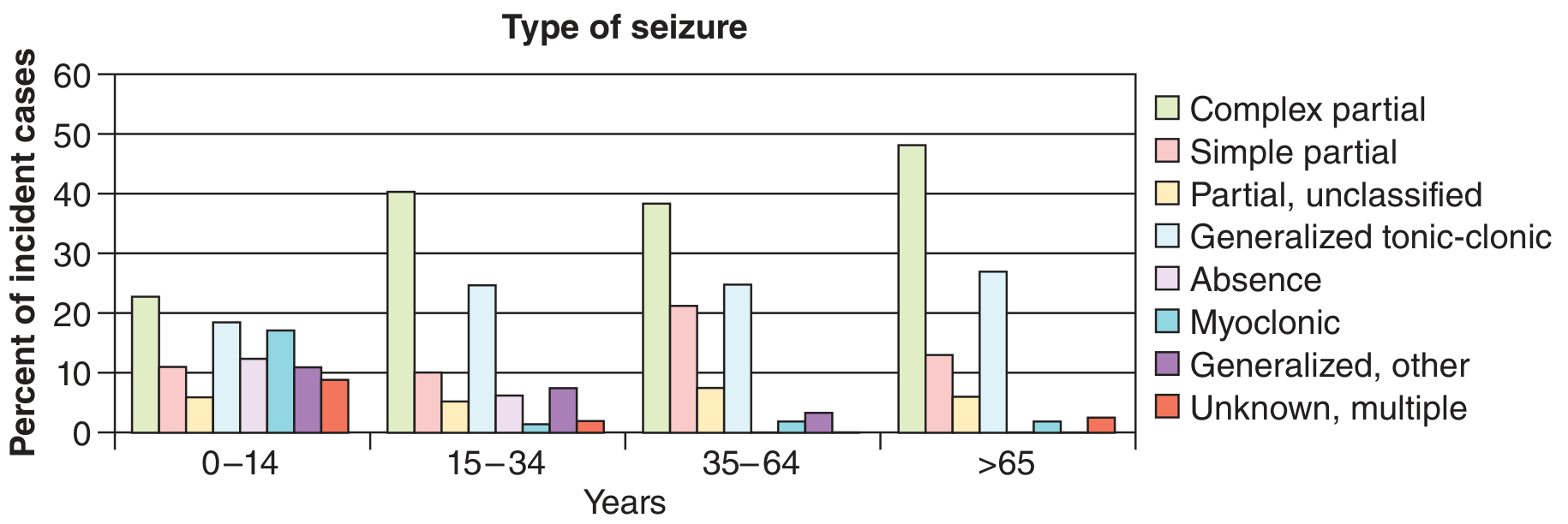
Category 1: FOCAL ONSET Seizures
A. By Awareness Level
| Type | Old Name | Awareness | Features |
|---|---|---|---|
| Focal Aware | Simple Partial | Preserved | Patient conscious; motor, sensory, autonomic, or psychic symptoms limited to one body area |
| Focal Impaired Awareness | Complex Partial | Impaired/Lost | Altered consciousness; automatisms (lip-smacking, hand-wringing); patient appears in a trance |
B. By Onset Features
- Automatisms - repetitive semi-purposeful movements (chewing, lip-smacking, fumbling)
- Clonic - rhythmic jerking of one limb
- Tonic - sustained stiffening
- Myoclonic - brief muscle jerks
- Hyperkinetic - thrashing, pedaling movements
- Atonic - sudden loss of muscle tone
- Epileptic spasms
- Autonomic - flushing, palpitations, piloerection, GI sensations
- Behavior arrest - sudden cessation of activity
- Cognitive - déjà vu, jamais vu, forced thinking
- Emotional - sudden fear, panic, ecstasy (Dostoyevsky's "sacred disease")
- Sensory - tingling, visual flashes, smell (olfactory aura), taste
C. Focal to Bilateral Tonic-Clonic
- Focal seizure that spreads to involve both hemispheres
- Formerly called "secondarily generalized"
- Begins with focal symptoms (aura), then evolves to full tonic-clonic activity
The Aura
"A focal onset seizure can be preceded by telltale symptoms called auras. Common auras include unprovoked and often vivid sensations such as a sense of fear, a rising feeling in the abdomen, or even a specific odor." - Kandel's Principles of Neural Science 6th Edition
Category 2: GENERALIZED ONSET Seizures
A. Motor (Convulsive) Generalized Seizures
| Type | Features | Duration | Post-ictal |
|---|---|---|---|
| Tonic-Clonic (Grand Mal) | Most common motor type; tonic (rigid) phase → clonic (jerking) phase; may fall, cry out, bite tongue, lose bladder/bowel control, become cyanotic | 1-3 min | Yes - confusion, headache, fatigue, myalgia |
| Tonic | Sustained muscle stiffening (no clonic phase); may fall rigidly | Seconds | Brief |
| Clonic | Rhythmic jerking only (no tonic phase) | Seconds-minutes | Brief |
| Myoclonic | Brief (milliseconds), sudden muscle jerks; often bilateral; patient conscious | Milliseconds | None |
| Myoclonic-Tonic-Clonic | Myoclonic jerks followed by tonic-clonic | Variable | Yes |
| Myoclonic-Atonic | Myoclonic jerks + sudden loss of tone; "drop attack" | Seconds | Minimal |
| Atonic (Drop Attack) | Sudden complete loss of muscle tone → patient drops to ground | Seconds | Minimal |
| Epileptic Spasms | Brief flexion/extension spasms; seen in infants (West syndrome) | 1-2 sec | None |
B. Non-Motor (Non-Convulsive) Generalized Seizures - ABSENCE SEIZURES
| Type | Old Name | Features | EEG | Age |
|---|---|---|---|---|
| Typical Absence | Petit Mal | Abrupt staring, cessation of activity, brief (<10 sec), NO aura, NO post-ictal state, may have eye blinking | 3 Hz spike-and-wave | Children (4-12 yrs) |
| Atypical Absence | - | Longer duration, more gradual onset/offset, associated with intellectual disability | Slow spike-and-wave <2.5 Hz | Lennox-Gastaut syndrome |
| Myoclonic Absence | - | Absence + rhythmic myoclonic jerks of shoulder/arms | - | Childhood |
| Eyelid Myotonia | Jeavons syndrome | Eyelid jerking on eye closure + brief absence | - | Childhood |
"Typical absence seizures begin abruptly, usually last less than 10 seconds, are associated with staring and sudden cessation of all motor activity, and result in loss of awareness but not loss of posture. Unlike a focal onset seizure, there is no aura before the seizure or confusion after the seizure." - Kandel's Principles of Neural Science 6th Edition
Category 3: UNKNOWN ONSET Seizures
| Type | Features |
|---|---|
| Unknown onset Tonic-Clonic | Tonic-clonic without known onset |
| Unknown onset Epileptic Spasms | Spasms with unknown onset |
| Behavior Arrest | Cessation of activity, unknown onset |
| Unclassified | Inadequate information |
Complete ILAE 2017 Classification at a Glance
SEIZURES
│
├── FOCAL ONSET
│   ├── Focal Aware (Simple Partial)
│   │   ├── Motor onset (clonic, tonic, myoclonic, automatisms, hyperkinetic)
│   │   └── Non-motor onset (sensory, autonomic, cognitive, emotional, behavior arrest)
│   │
│   ├── Focal Impaired Awareness (Complex Partial)
│   │   ├── Motor onset
│   │   └── Non-motor onset
│   │
│   └── Focal to Bilateral Tonic-Clonic (Secondary Generalization)
│
├── GENERALIZED ONSET
│   ├── Motor
│   │   ├── Tonic-Clonic (Grand Mal) ← most common motor
│   │   ├── Tonic
│   │   ├── Clonic
│   │   ├── Myoclonic
│   │   ├── Myoclonic-Tonic-Clonic
│   │   ├── Myoclonic-Atonic
│   │   ├── Atonic (Drop Attacks)
│   │   └── Epileptic Spasms
│   │
│   └── Non-Motor (Absence)
│       ├── Typical Absence (Petit Mal) ← most common non-motor
│       ├── Atypical Absence
│       ├── Myoclonic Absence
│       └── Eyelid Myotonia
│
└── UNKNOWN ONSET
    ├── Tonic-Clonic
    ├── Epileptic Spasms
    ├── Behavior Arrest
    └── Unclassified
Comparison of Key Seizure Types
| Feature | Absence | Focal Impaired Awareness | Generalized Tonic-Clonic |
|---|---|---|---|
| Onset | Generalized | Focal (one hemisphere) | Generalized |
| Aura | ❌ None | ✅ Often present | ❌ None |
| Awareness | Lost briefly | Lost/impaired | Lost |
| Duration | <10 seconds | 1-3 minutes | 1-3 minutes |
| Automatisms | Mild (eye blinking) | Yes (complex) | No |
| Post-ictal | ❌ None | ✅ Yes (confusion) | ✅ Yes (prolonged) |
| Convulsions | ❌ None | Usually no | ✅ Yes (tonic+clonic) |
| EEG | 3Hz spike-wave | Focal temporal discharge | Generalized polyspike-wave |
| Age | Children | Any age | Any age |
| Common cause | Idiopathic | TLE, mesial temporal sclerosis | Idiopathic or symptomatic |
Special Seizure-Related Terms
| Term | Definition |
|---|---|
| Ictal | During the seizure |
| Post-ictal | After the seizure (confusion, fatigue, Todd's paralysis) |
| Aura | Earliest subjective phase of a focal seizure |
| Todd's Paralysis | Transient focal weakness post-ictal (mimics stroke) |
| Status Epilepticus | Seizure lasting >5 minutes OR two or more seizures without recovery between them |
| Provoked seizure | Due to acute cause (fever, drugs, metabolic); not epilepsy |
| Epilepsy | Chronic condition of recurrent (≥2) unprovoked seizures |
Age-Related Patterns
| Age Group | Most Common Seizure Types |
|---|---|
| Neonates | Subtle (eye deviation, lip-smacking), clonic, tonic |
| Infants (3-12 months) | Epileptic spasms (West syndrome / infantile spasms) |
| Young children | Febrile seizures, absence epilepsy |
| Adolescents | Juvenile myoclonic epilepsy (JME) - myoclonic on awakening |
| Adults | Focal (complex partial) from temporal lobe - most common |
| Elderly | Focal seizures from stroke, tumor, neurodegenerative disease |
- Adams & Victor's Principles of Neurology 12th Edition; Kandel's Principles of Neural Science 6th Edition; ILAE 2017 Operational Classification
What is diagnostic work up and metabolic workup in neonatal in nicu
neonatal NICU diagnostic workup metabolic investigations preterm newborn standard protocol 2024
https://platform.who.int/docs/default-source/mca-documents/p…
neonatal NICU routine investigations metabolic screen ammonia lactate amino acids organic acids IEM newborn
Neonatal NICU - Diagnostic & Metabolic Workup
Overview: Categories of NICU Investigations
NICU Workup
├── 1. Routine Admission Investigations
├── 2. Infection / Sepsis Screen
├── 3. Metabolic Panel (Basic)
├── 4. Hematological Screen
├── 5. Respiratory / Cardiac Assessment
├── 6. Neurological Investigations
├── 7. Metabolic Workup for IEM (Inborn Errors of Metabolism)
└── 8. Ongoing Monitoring / TPN Monitoring
1. ROUTINE ADMISSION INVESTIGATIONS (All NICU Admissions)
| Test | Purpose | Normal Neonatal Value |
|---|---|---|
| Blood glucose (bedside glucometer) | Hypoglycemia screening | >45-50 mg/dL |
| Temperature | Hypothermia/hyperthermia | 36.5-37.5°C |
| Pulse oximetry | Oxygenation | 91-95% (preterm), 95-100% (term) |
| Birth weight, length, head circumference | Growth assessment | GA-appropriate |
| APGAR at 1 & 5 min | Perinatal condition | 7-10 = normal |
| Blood group + Rh type | Hemolytic disease of newborn (HDN) | - |
| Maternal blood group | Isoimmunization screen | - |
| Direct Coombs test (DAT) | HDN due to blood group incompatibility | Negative |
2. INFECTION / SEPSIS SCREEN
| Test | Purpose | Abnormal Values |
|---|---|---|
| Blood culture x2 | Gold standard - identify organism | Any growth |
| Full Blood Count (CBC) with differential | Leukopenia (<5,000), leukocytosis (>20,000) | WBC <5,000 or >20,000 |
| C-Reactive Protein (CRP) | Inflammation marker; rises 6-12h after infection | >10 mg/L = significant |
| Procalcitonin (PCT) | Earlier and more specific marker than CRP | >2 ng/mL = concern |
| I:T Ratio (immature:total neutrophil) | Immature neutrophil excess = sepsis | >0.2 = significant; >0.4 = clearly abnormal |
| Absolute Neutrophil Count (ANC) | Neutropenia in severe sepsis | <1,500/μL = abnormal |
| Urine culture + urinalysis | UTI / late-onset sepsis | Any growth in catheter specimen |
| Lumbar puncture (CSF) | Meningitis | WBC, protein, glucose, culture, Gram stain |
| Chest X-ray (CXR) | Pneumonia, RDS | Infiltrates, effusions |
| Tracheal aspirate culture | If intubated | Any growth of pathogen |
CSF Normal Values for Neonate:
| Parameter | Term (<7 days) | Preterm (<7 days) |
|---|---|---|
| WBC | 0-30 cells/mm³ (mean 5) | 0-30 cells/mm³ (mean 9) |
| Protein | 0.3-2.5 g/L | 0.5-2.9 g/L |
| Glucose | 1.5-5.5 mmol/L | 1.5-5.5 mmol/L |
| CSF:blood glucose ratio | >0.6 | >0.6 |
3. BASIC METABOLIC PANEL
3A. Blood Chemistry
| Test | Purpose | Normal Range (Neonate) |
|---|---|---|
| Serum glucose | Hypoglycemia (most common neonatal emergency) | 45-120 mg/dL |
| Sodium (Na) | Hypo/hypernatremia | 133-146 mEq/L |
| Potassium (K) | Hypo/hyperkalemia | 4.6-6.7 mEq/L (day 1-7) |
| Chloride (Cl) | Acid-base, electrolyte | 100-117 mEq/L |
| Calcium (Ca total) | Hypocalcemia - common preterm | 2.3-2.9 mmol/L (1.5-2.9) |
| Ionized calcium (iCa) | More accurate in sick neonates | 1.04-1.52 mmol/L (day 5) |
| Magnesium (Mg) | Hypomagnesemia - causes seizures | 0.62-1.02 mmol/L |
| Phosphate (PO4) | Metabolic bone disease in preterm | 1.7-3.5 mmol/L |
| Bicarbonate / CO2 | Metabolic acidosis/alkalosis | 18-25 mEq/L |
| BUN / Blood Urea | Renal function, hydration | 10-50 mg/dL (neonatal) |
| Serum Creatinine | Renal function (should fall after birth) | 0.4-1.0 mg/dL (day 1-5) |
| Uric acid | Metabolic disorders, renal | - |
3B. Blood Gas (Capillary / Arterial)
| Parameter | Normal Neonate | Significance |
|---|---|---|
| pH | 7.35-7.45 | Acidosis in sepsis, metabolic disease, respiratory failure |
| PaCO2 | 35-45 mmHg | Respiratory failure, hyperventilation |
| PaO2 | 50-80 mmHg | Oxygenation |
| HCO3 | 18-25 mEq/L | Metabolic component |
| BE (Base Excess) | -4 to +4 | <-8 = significant acidosis |
| Lactate | <2.0 mmol/L | Elevated = poor perfusion, metabolic disease, sepsis |
3C. Liver Function Tests (LFTs)
| Test | Purpose | Normal |
|---|---|---|
| Total Bilirubin | Jaundice assessment (phototherapy threshold) | Varies by age/GA - see nomogram |
| Direct/Conjugated Bilirubin | Cholestasis, TORCH infections | <1.5 mg/dL (should be <20% of total) |
| AST / ALT | Hepatocellular damage (asphyxia, viral) | AST <80 U/L |
| Alkaline Phosphatase (ALP) | Metabolic bone disease, cholestasis | Higher in neonates (up to 400 U/L) |
| GGT | Cholestasis | <200 U/L in neonates |
| Albumin | Nutrition, hepatic synthetic function | 2.5-4.0 g/dL |
3D. Coagulation Screen
| Test | Purpose | Normal |
|---|---|---|
| Prothrombin Time (PT) | Clotting, hepatic synthesis, DIC, Vit K deficiency | 13-20 seconds (newborn) |
| aPTT | Clotting pathway, DIC | 30-55 seconds |
| INR | Standardized PT | <1.5 |
| Fibrinogen | DIC marker | 1.5-3.7 g/L |
| D-dimer | DIC (elevated) | <0.5 μg/mL |
| Platelet count | Thrombocytopenia | >150,000/μL |
4. HEMATOLOGICAL SCREEN
| Test | Purpose | Normal Neonatal Values |
|---|---|---|
| Hemoglobin (Hb) | Anemia, polycythemia | Term: 16-22 g/dL; Preterm 34wk: ~15 g/dL |
| Hematocrit (Hct) | Polycythemia (>65% = significant) | Term: 50-65%; Preterm: 45-55% |
| Reticulocyte count | Hemolytic anemia (elevated), bone marrow failure | 3-7% (day 1-2) |
| Peripheral blood smear | Cell morphology - spherocytes (ABO), sickle cells, schistocytes (DIC) | Normal morphology |
| Blood group + Direct Coombs | Isoimmune hemolytic anemia (ABO, Rh) | Negative |
5. RESPIRATORY / CARDIAC ASSESSMENT
| Test | Purpose |
|---|---|
| Chest X-Ray (CXR) | RDS (ground-glass), pneumothorax, pneumonia, cardiomegaly |
| Echocardiography | Congenital heart disease, PDA, PPHN, cardiac function |
| Pulse oximetry (pre and post-ductal) | Pre-ductal (right hand) vs post-ductal (foot); difference >3% = PPHN or ductal shunting |
| ECG | Arrhythmias, electrolyte effects |
| Hyperoxia test | PaO2 <100 mmHg on 100% O2 = congenital cyanotic heart disease |
6. NEUROLOGICAL INVESTIGATIONS
| Test | Purpose | When |
|---|---|---|
| Cranial Ultrasound (HUS) | IVH, periventricular leukomalacia (PVL), hydrocephalus | All <32 weeks by day 3-5; all at-risk neonates |
| EEG / aEEG (amplitude-integrated) | Seizure detection, HIE prognostication | Seizures, encephalopathy |
| MRI Brain | HIE injury pattern, IVH extent, PVL | After stabilization; best at 5-7 days for HIE |
| TORCH Screen | Congenital infections (Toxoplasma, Rubella, CMV, HSV) | Microcephaly, hepatosplenomegaly, thrombocytopenia, calcifications |
| Serum glucose, Ca, Mg, Na | Treatable causes of seizures | Any neonatal seizure |
| Lumbar puncture | Meningitis, SAH | Suspected meningitis |
HIE (Hypoxic-Ischemic Encephalopathy) Workup:
- Cord blood gas (pH, lactate)
- Serial blood gases
- Sarnat/Thompson HIE scoring
- aEEG monitoring
- MRI at 3-5 days (best predictor of outcome)
7. METABOLIC WORKUP FOR INBORN ERRORS OF METABOLISM (IEM)
When to Suspect IEM:
- Deterioration after initial well period (with feeding)
- Unexplained encephalopathy, seizures, coma
- Unexplained metabolic acidosis with high anion gap
- Hyperammonemia
- Unusual odor (maple syrup, sweaty feet, mousy)
- Family history of consanguinity, SIDS, neonatal deaths
- No response to treatment for presumed sepsis/asphyxia
7A. FIRST-LINE (Tier 1) Metabolic Tests
| Test | Significance | Disorders Detected |
|---|---|---|
| Blood glucose | Hypoglycemia | Fatty acid oxidation defects, GSD, hyperinsulinism |
| Plasma ammonia | Hyperammonemia | Urea cycle defects, organic acidemias |
| Serum lactate (arterial) | Lactic acidosis | MSUD, MMA, PA, respiratory chain defects |
| Pyruvate | Lactate:pyruvate ratio | Pyruvate carboxylase deficiency |
| Blood gas + anion gap | Metabolic acidosis with high AG | Organic acidemias |
| Serum electrolytes | Anion gap = Na - (Cl + HCO3); normal <12 mmol | High AG = organic acids |
| Urine ketones | Ketonuria in neonate = abnormal (suggests IEM) | Organic acidemias |
| Urine reducing substances | Galactosemia, fructosemia, tyrosinemia | Clinitest positive |
| Urine ferric chloride test | MSUD, PKU | Green color = positive |
CRITICAL: Ammonia, lactate, and pyruvate must be collected WITHOUT a tourniquet, kept on ice, and analyzed within 15 minutes to prevent artifactual elevation.
7B. SECOND-LINE (Tier 2) Metabolic Tests
| Test | Disorders Identified |
|---|---|
| Plasma amino acids (quantitative) | PKU, MSUD, urea cycle defects, organic acidemias, homocystinuria |
| Urine organic acids | Propionic acidemia (PA), methylmalonic acidemia (MMA), isovaleric acidemia (IVA), MSUD |
| Plasma acylcarnitine profile | Fatty acid oxidation defects (MCAD, LCHAD, VLCAD), organic acidemias |
| Total and free carnitine | Carnitine deficiency, organic acidemias |
| Urine amino acids | Amino acid transport disorders |
| Urine mucopolysaccharides | MPS disorders (Hurler, Hunter) |
| Urine oligosaccharides | Glycoprotein disorders |
| Plasma very long chain fatty acids (VLCFA) | Peroxisomal disorders (Zellweger) |
| Biotinidase activity | Biotinidase deficiency (treatable) |
| Thyroid function (TSH, T4) | Congenital hypothyroidism |
7C. THIRD-LINE (Tier 3) - Specialized Testing
| Test | Disorders |
|---|---|
| CSF amino acids, neurotransmitters | GLUT-1 deficiency, neurotransmitter disorders |
| CSF lactate | Mitochondrial disorders |
| Urine purines/pyrimidines | Purine metabolism disorders |
| Enzyme assays (leukocytes/fibroblasts) | Lysosomal storage diseases |
| Molecular genetics (gene panel/WES/WGS) | Definitive diagnosis of any IEM |
| Skin/muscle biopsy | Mitochondrial disorders, storage diseases |
Key Clues to Specific IEMs:
| Finding | Consider |
|---|---|
| High ammonia + respiratory alkalosis | Urea cycle defects (OTC, CPS deficiency) |
| High ammonia + metabolic acidosis + ketonuria | Organic acidemias (PA, MMA, IVA) |
| High lactate + high pyruvate | PDH deficiency, Pyruvate carboxylase deficiency |
| High lactate + normal pyruvate (ratio >25) | Respiratory chain (mitochondrial) disorder |
| Maple syrup odor + high leucine | MSUD (Maple Syrup Urine Disease) |
| Hypoglycemia + no ketones | Fatty acid oxidation defect (MCAD) |
| Hypoglycemia + hyperinsulinism | Congenital hyperinsulinism |
| Galactosuria + jaundice + E. coli sepsis | Galactosemia (classic) |
| Mousy odor + hyperphenylalaninemia | PKU |
| Non-immune hydrops + organomegaly | Lysosomal storage disease |
8. ONGOING MONITORING / TPN MONITORING
| Test | Initial | When Stable |
|---|---|---|
| Electrolytes (Na, K, Cl, HCO3) | Daily | 2-3x/week |
| Blood glucose | Every 6-24 hours | Daily |
| BUN / Creatinine | Daily | 2-3x/week |
| Calcium, Phosphate, Magnesium | Daily | 2-3x/week |
| Liver function (ALT, ALP, bilirubin) | Weekly | Weekly |
| Triglycerides | If on lipids | 2x/week |
| Albumin / Pre-albumin | Weekly | Weekly |
| Complete blood count | Weekly | Weekly |
Summary Quick Reference
| Category | Key Tests |
|---|---|
| Infection | Blood culture, CBC+diff, CRP, PCT, LP (CSF), urine culture, CXR |
| Metabolic - Basic | Glucose, Na, K, Ca, Mg, PO4, BUN, creatinine, LFTs, bilirubin |
| Blood gas | pH, pCO2, pO2, HCO3, lactate, BE |
| Hematology | Hb, Hct, platelets, reticulocytes, Coombs, peripheral smear |
| Coagulation | PT, aPTT, fibrinogen, D-dimer |
| Neurology | Cranial US, EEG/aEEG, MRI, TORCH, glucose/Ca/Mg/Na |
| Respiratory/Cardiac | CXR, Echo, pre/post-ductal SpO2, ECG |
| IEM Screen (Tier 1) | Glucose, ammonia, lactate, pyruvate, blood gas+AG, urine ketones, reducing substances |
| IEM Screen (Tier 2) | Plasma amino acids, urine organic acids, acylcarnitine profile, carnitine |
| IEM Screen (Tier 3) | CSF studies, enzyme assays, molecular genetics |
| TPN Monitoring | Daily electrolytes, glucose, BUN/Cr; weekly LFTs, triglycerides |
- WHO Neonatal Care Clinical Guidelines; UCSF ICN House Staff Manual; Safer Care Victoria Neonatal Guidelines