
Diarrhoea Patho physiology and different intervention and antibiotic that can help
Reading File
Now let me search the medical library and PubMed in parallel for comprehensive coverage.
Finding Sources
Finding Sources
Searching PubMed
"diarrhea" AND "pathophysiology" AND "treatment"
Excellent results. Now let me read the core textbook sections in parallel.
Reading File
Reading File
Finding Sources
Good. Let me now read the key pathophysiology and treatment sections from Sleisenger & Fordtran (the most comprehensive GI textbook) and The Washington Manual in parallel.
Reading File
Reading File
Reading File
Excellent. Let me fetch the fluid diagram and get the secretory/osmotic diarrhea detail and antibiotic table.
Reading File
Loading Image
Loading Image
Now let me get the detailed secretory diarrhea mechanism and the specific antibiotic table from Sleisenger & Fordtran.
Reading File
Finding Sources
Reading File
Reading File
I now have rich, comprehensive content from top-tier textbooks. Let me compile the full answer.
Diarrhoea: Pathophysiology, Interventions & Antibiotics
Definition
Diarrhoea is the passage of 3 or more loose/liquid stools per day, or a stool weight exceeding 200 g/day, or more precisely, a net excess of stool water caused by abnormal intestinal electrolyte and fluid transport. It is a symptom, not a disease. - Sleisenger and Fordtran's Gastrointestinal and Liver Disease
Pathophysiology
The Normal Fluid Balance
Under normal conditions, roughly 9-10 litres of fluid (from oral intake plus secretions from salivary glands, stomach, pancreas, and bile) pass the ligament of Treitz each day. Absorption efficiency is 99%:
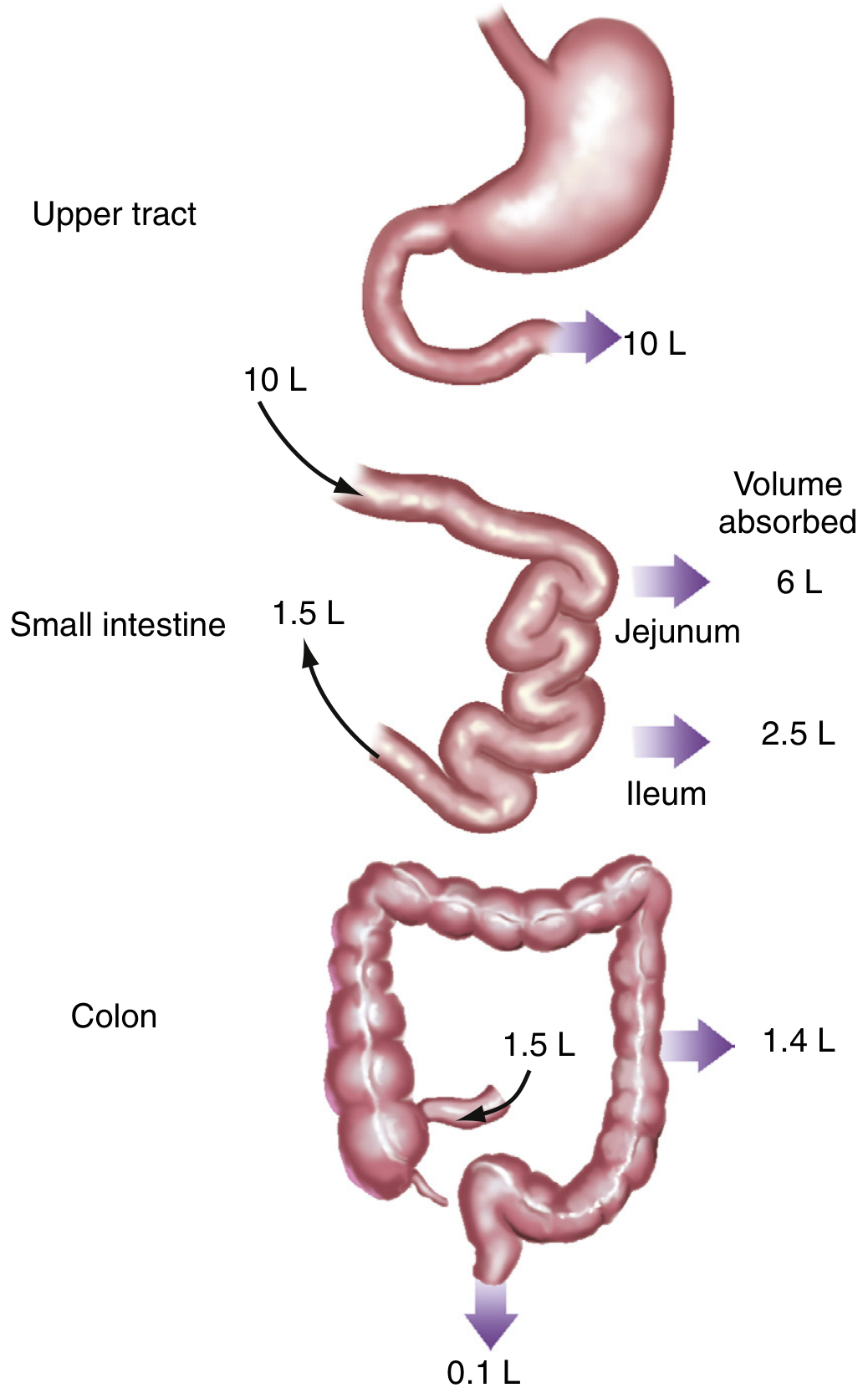
Diarrhoea results when this tightly regulated system is disrupted via one or more of three core mechanisms:
- Reduced net water absorption - impaired mucosal electrolyte transport
- Rapid intestinal transit - insufficient time for water absorption, especially in the colon
- Altered stool solid composition - reduced water-binding capacity (e.g., steatorrhoea)
Water itself is not actively transported; it follows osmotic gradients created by solute (electrolyte and nutrient) transport. - Sleisenger & Fordtran's
The Four Major Pathophysiological Mechanisms
1. Secretory Diarrhoea
The mechanism is net secretion of anions (Cl⁻ or HCO₃⁻), net secretion of K⁺, or net inhibition of Na⁺ absorption. The stimuli arise from the intestinal lumen, subepithelial space, or systemic circulation, and alter the messenger systems (cAMP, cGMP, Ca²⁺) that regulate ion transport.
- Most common cause: infection - Enterotoxins interact with enterocyte receptors to increase anion secretion. For example, E. coli heat-stable toxin activates guanylate cyclase C, increasing intracellular cGMP and inhibiting Na⁺/Cl⁻ absorption while stimulating Cl⁻ secretion.
- Other causes: neuroendocrine tumors (VIPoma, carcinoid, gastrinoma), bile acid malabsorption, villous adenomas, alcohol, congenital chloridorrhoea
Key clinical clue: Secretory diarrhoea persists with fasting. Stool osmotic gap is normal (< 50 mOsm/kg). - Sleisenger & Fordtran's
2. Osmotic Diarrhoea
Caused by poorly absorbed osmotically active substances (magnesium, sulfate, lactulose, sorbitol, undigested sugars) that retain fluid in the lumen to maintain osmotic equilibration with body fluids. Approximately 3.5 mL of water is retained for every 1 mOsm of retained solute.
- Common causes: lactase deficiency, ingestion of Mg²⁺-containing antacids/laxatives, sorbitol/fructose in diet, lactulose therapy, FODMAPs
Key clinical clue: Osmotic diarrhoea stops with fasting or cessation of the offending agent. Stool osmotic gap is elevated (> 125 mOsm/kg). Stool electrolyte concentrations are low. - Sleisenger & Fordtran's
3. Inflammatory / Exudative Diarrhoea
Mucosal inflammation, ulceration, or infiltration leads to increased permeability and protein/blood/pus exudation into the lumen. Reduced absorptive surface area compounds the problem.
- Causes: Inflammatory bowel disease (Crohn's, UC), infectious colitis (Shigella, C. difficile, invasive E. coli, CMV), microscopic colitis, eosinophilic enteritis, radiation proctitis
- Stool: bloody, mucoid, may have fecal WBCs
4. Malabsorptive / Osmotic-Secretory Mixed
Impaired digestion/absorption of nutrients leads to their accumulation in the lumen with secondary osmotic and secretory effects.
- Causes: pancreatic exocrine insufficiency, celiac disease, small intestinal bacterial overgrowth (SIBO), short bowel syndrome
Clinical classification summary (Yamada's Gastroenterology):
| Type | Examples |
|---|---|
| Secretory | Carcinoid, VIPoma, cholera, bile acid diarrhoea |
| Osmotic | Lactase deficiency, Mg antacids, FODMAPs |
| Malabsorptive | Pancreatic insufficiency, celiac disease, SIBO |
| Inflammatory | IBD, microscopic colitis, infectious colitis |
| Prolonged infectious | Whipple's disease, tropical sprue |
| Nosocomial | C. difficile, medications, dumping syndrome |
| Functional | IBS-D, postinfectious IBS |
Management Algorithm
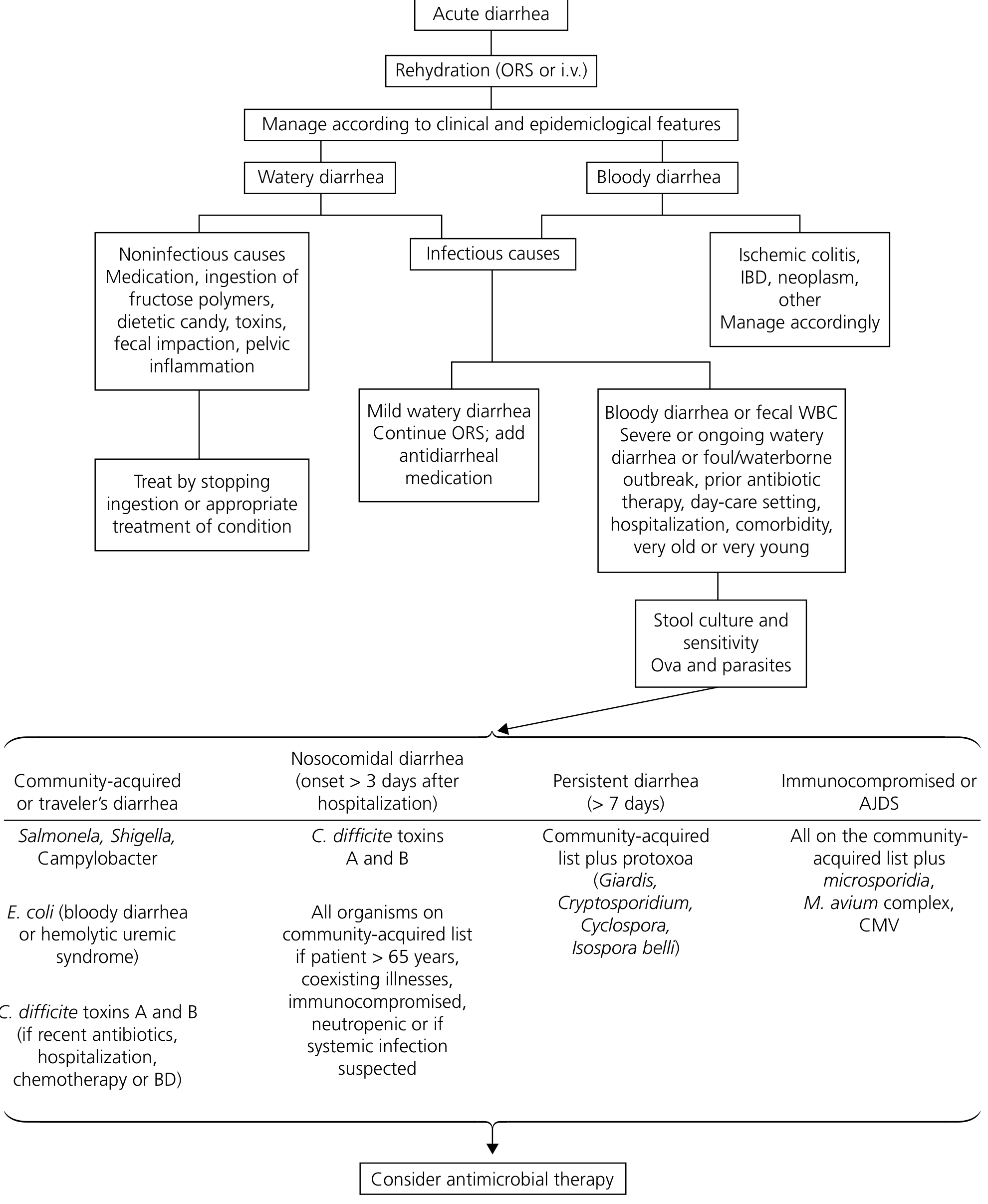
Interventions
1. Fluid and Electrolyte Replacement (First Priority)
Adequate hydration is the most important treatment for all diarrhoeal illnesses. - Washington Manual of Medical Therapeutics
- Oral Rehydration Solution (ORS): WHO-recommended for mild-moderate dehydration. Contains glucose + sodium (glucose co-transports Na⁺ even in secretory states, making ORS work against cholera-type toxins). Commercially available as Pedialyte. Avoid high-sugar drinks (sports drinks, juices) - they lack sufficient salt and can worsen fluid losses.
- IV Rehydration: Reserved for severe dehydration, profuse vomiting, shock, or inability to tolerate oral fluids. Lactated Ringer's is preferred in diarrhoea because its electrolyte composition better matches what is lost. Paediatric patients: 20 mL/kg normal saline bolus.
2. Dietary Modifications
- The old "BRAT diet" (bananas, rice, applesauce, toast) is no longer strictly recommended; early return to normal nutrition is preferred.
- Avoid dairy temporarily if lactase deficiency is suspected.
- Avoid FODMAPs if functional diarrhoea is suspected.
- Avoid alcohol and caffeine.
3. Antimotility / Symptomatic Agents
| Drug | Mechanism | Use |
|---|---|---|
| Loperamide | µ-opioid agonist - slows motility, increases sphincter tone | First-line for mild-moderate nonbloody watery diarrhoea in adults. Initial 4 mg then 2 mg after each loose stool (max 16 mg/day). Avoid in febrile dysentery and STEC. |
| Diphenoxylate + Atropine (Lomotil) | Opioid receptor agonist | Symptomatic relief; anticholinergic side effects |
| Bismuth Subsalicylate | Antibacterial, antisecretory, coating | Traveler's diarrhoea prophylaxis and treatment; avoid in renal impairment and immunocompromised |
| Kaolin-Pectin | Adsorbs toxins and bacteria | Mild acute diarrhoea symptomatic relief |
| Simethicone | Reduces gas/bloating | Synergistic with loperamide in traveler's diarrhoea |
| Octreotide | Somatostatin analogue - reduces GI secretions | Hormone-mediated secretory diarrhoea (VIPoma, carcinoid), refractory diarrhoea |
| Cholestyramine | Bile acid-binding resin | Bile acid diarrhoea (post-cholecystectomy, ileal resection) |
Loperamide is safe and effective for traveler's diarrhoea when combined with antibiotics but can lead to toxic megacolon in severe colitis. - Rosen's Emergency Medicine
4. Probiotics
Evidence supports Lactobacillus and Saccharomyces boulardii in reducing the duration of acute infectious diarrhoea in children and in antibiotic-associated diarrhoea. Role in adults is modest but safe to recommend.
5. Zinc Supplementation
WHO recommends zinc (10-20 mg/day for 10-14 days) in children <5 years with acute diarrhoea in low/middle-income countries - reduces severity and prevents recurrence.
Antibiotics in Diarrhoea
Important caveat: Most acute diarrhoea is viral or self-limiting bacterial. Empiric antibiotics do not dramatically alter the course and are not indicated routinely. Antibiotics increase the risk of haemolytic uraemic syndrome (HUS) in Shiga toxin-producing E. coli (STEC O157:H7). - Tintinalli's Emergency Medicine
When to Use Empiric Antibiotics (IDSA 2017 Criteria)
- Infants < 3 months of age
- Immunocompromised patients with severe illness
- Immunocompetent patients with documented fever + bloody diarrhoea + signs of bacillary dysentery (presumed Shigella)
- Recent international travelers with fever ≥38.5°C or signs of sepsis
- Avoid empiric antibiotics if STEC is suspected (bloody diarrhoea without fever in community outbreak setting)
Empiric Regimens
| Drug | Dose | Duration | Notes |
|---|---|---|---|
| Ciprofloxacin (oral) | 500 mg twice daily | 3-5 days | Broad coverage; fluoroquinolone resistance increasing in Campylobacter in SE Asia |
| Levofloxacin (oral) | 500 mg once daily | 3-5 days | Alternative fluoroquinolone |
| Azithromycin (oral) | 500 mg once daily (or 1000 mg single dose) | 3 days (or single dose for traveler's diarrhoea) | Preferred for Campylobacter, pregnancy, children; single dose effective in traveler's diarrhoea |
| Ciprofloxacin (IV) | 400 mg twice daily | As needed | For severe illness/sepsis |
| Ceftriaxone (IV) | 1-2 g once daily | As needed | For septic presentations |
Use of ciprofloxacin, azithromycin, or rifaximin may reduce bacterial diarrhoea by 90% in high-risk travellers. - Harrison's Principles of Internal Medicine 22E
Pathogen-Specific Antibiotic Therapy
| Pathogen | First-Line Antibiotic | Alternative | Notes |
|---|---|---|---|
| Shigella | Ciprofloxacin 500 mg BID x 3d (adults) | Azithromycin | Uncomplicated cases may be self-limiting |
| Salmonella (non-typhi) | Usually NO antibiotics needed | Ciprofloxacin if severe/immunocompromised | Antibiotics may prolong carrier state |
| Campylobacter | Azithromycin 500 mg daily x 3d | Erythromycin | Fluoroquinolone resistance common in Asia |
| Vibrio cholerae | Doxycycline 300 mg single dose (adults) | Azithromycin, ciprofloxacin | ORS is the cornerstone; antibiotics reduce duration and shedding |
| ETEC (traveler's diarrhoea) | Rifaximin 200 mg TID x 3d OR azithromycin | Ciprofloxacin | Rifaximin NOT for invasive disease |
| STEC (E. coli O157:H7) | AVOID ANTIBIOTICS | Supportive care | Antibiotics increase HUS risk |
| C. difficile | Fidaxomicin 200 mg BID x 10d (preferred) OR Vancomycin 125 mg QID x 10d | Metronidazole IV + oral Vanco in fulminant disease | Metronidazole now only if oral agents unavailable; fidaxomicin has lower recurrence rate |
| Giardia | Metronidazole 250 mg QID x 7d | Tinidazole (single 2g dose) | Nitazoxanide as alternative for resistant cases |
| Entamoeba histolytica | Metronidazole 750 mg TID x 10d, then paromomycin or iodoquinol | Tinidazole | Paromomycin eliminates intestinal cysts |
| Cryptosporidium | Nitazoxanide 500 mg BID x 3d | Supportive in immunocompetent | No highly effective agent in immunocompromised |
| Cyclospora | TMP-SMX DS BID x 7d | Ciprofloxacin |
Source: Washington Manual of Medical Therapeutics, Rosen's Emergency Medicine, Harrison's 22E
Special Situations
- C. difficile (CDAD): After confirmed diagnosis, fidaxomicin preferred over vancomycin to reduce recurrence (35% recurrence rate after first treatment). Fecal microbiota transplant (FMT) is effective for recurrent CDI (>2 recurrences) with 80-90% success rates. - Rosen's Emergency Medicine
- HIV/Immunocompromised patients: Expand workup to include Cryptosporidium, Microsporidia, M. avium complex, and CMV.
- Antibiotic-associated diarrhoea (AAD): Prevent by restricting high-risk antibiotics. Treat underlying C. difficile if present; otherwise discontinue offending antibiotic.
Recent Evidence Alert
The 2024 Evidence-Based Clinical Guidelines for Chronic Diarrhea (Ihara et al., Digestion, PMID 39197422) provide updated management guidance for chronic diarrhea, confirming the diagnostic and treatment framework above while emphasizing the importance of classifying diarrhea type before initiating specific therapy.
Sources: Sleisenger & Fordtran's GI and Liver Disease, Harrison's Principles of Internal Medicine 22E, Rosen's Emergency Medicine, Tintinalli's Emergency Medicine, Yamada's Textbook of Gastroenterology 7e, Washington Manual of Medical Therapeutics, Goodman & Gilman's Pharmacological Basis of Therapeutics
This is a shared conversation. Sign in to Orris to start your own chat.