I'll start by reading the medical library skill, then launch comprehensive parallel research on vomiting and diarrhea in veterinary medicine.Now let me run comprehensive parallel searches across all veterinary textbooks on vomiting and diarrhea:I can see the library has human medicine books, not veterinary books. Let me search specifically for veterinary content and also search for vomiting/diarrhea in dogs and cats specifically:The library has human medicine books. Let me now read key sections on vomiting and diarrhea pathophysiology from the best GI textbooks, and simultaneously search PubMed for veterinary-specific content:I have excellent physiology content. Let me now fetch the image for the vomiting center diagram and read more diarrhea/GI pathophysiology content:Excellent! I now have superb pathophysiology content. Let me search for more veterinary-specific content on causes and treatment:I now have comprehensive data from textbooks, PubMed, and web sources. Let me extract additional detail from the Today's Veterinary Practice PDF and get a few more key details:I now have extensive, comprehensive information from all sources. Let me now compile the complete, masterclass-level veterinary guide:
🐾 VOMITING & DIARRHEA IN VETERINARY MEDICINE
A Complete Conceptual Guide for Veterinary Students & Practitioners
PART 1: VOMITING (EMESIS)
1.1 DEFINITION
Vomiting (Emesis) = The forceful, active expulsion of gastric and/or proximal duodenal contents through the mouth via coordinated neuromuscular contractions of the diaphragm and abdominal muscles.
Important distinction:
- Vomiting - active process, preceded by nausea and retching
- Regurgitation - passive process, no abdominal effort, no nausea (covered in differentiation section)
1.2 ANATOMY OF THE VOMITING REFLEX - PATHOPHYSIOLOGY
Understanding vomiting requires understanding the neural circuit. This is tested heavily in exams.
The "Vomiting Center" (Emetic Center)
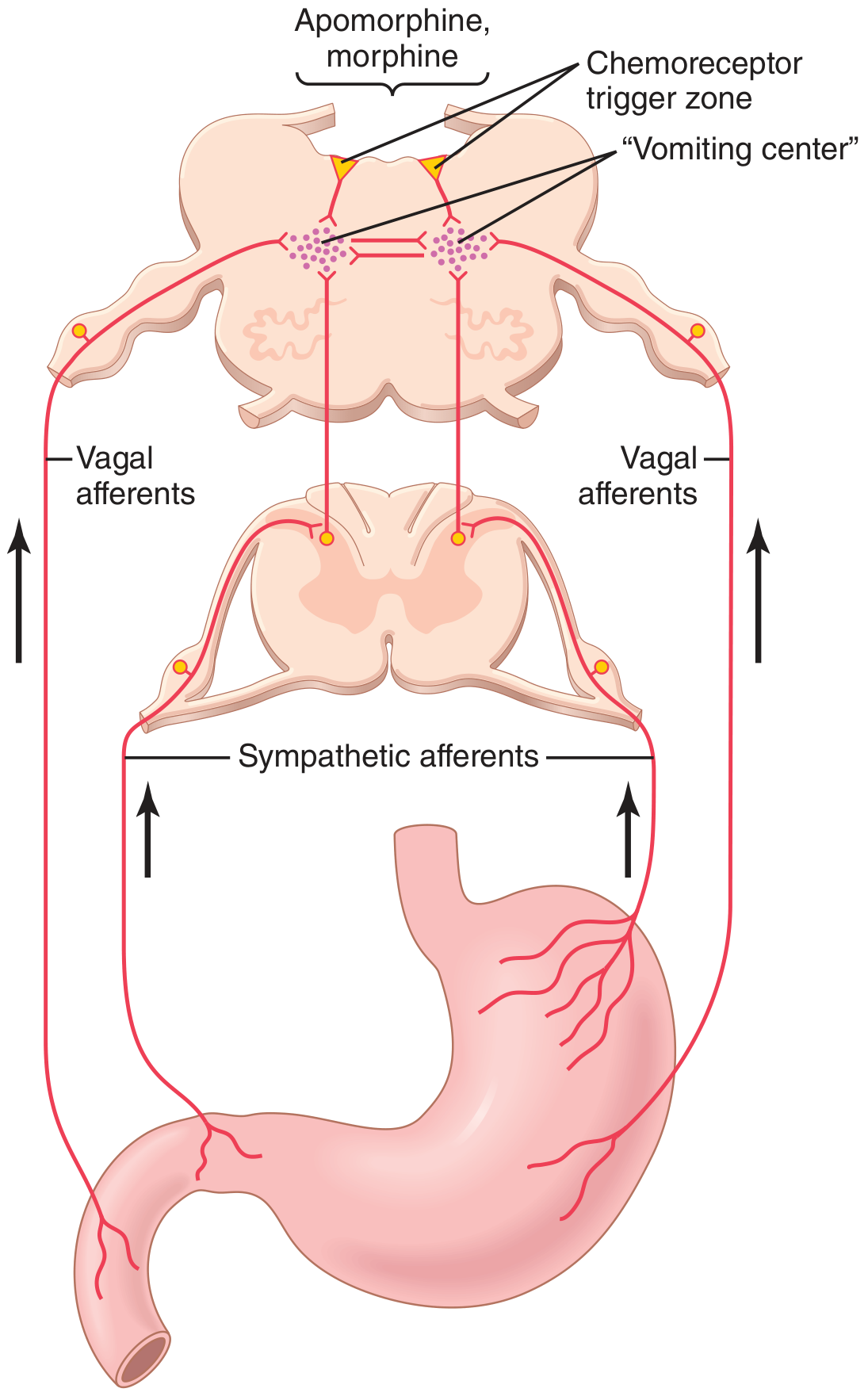
Located in the medullary reticular formation (brain stem). It is not a single nucleus but a network of nuclei that coordinates the entire act of vomiting.
It receives input from 5 main sources:
| Input Source | Stimulus | Nerve Used |
|---|
| GI tract (pharynx, esophagus, stomach, duodenum) | Distension, irritation, mucosal damage | Vagal (CN X) + Sympathetic afferents |
| Chemoreceptor Trigger Zone (CTZ) | Toxins, drugs, uremia, ketones in blood | Dopamine (D2), Serotonin (5-HT3) receptors |
| Vestibular apparatus (inner ear) | Motion, labyrinthitis | CN VIII -> vestibular nuclei -> cerebellum -> CTZ |
| Higher cortical centers | Pain, fear, repulsive smells, anticipatory | Cortex -> limbic system |
| Abdominal viscera (liver, pancreas, peritoneum) | Inflammation, ischemia | Vagal + sympathetic |
Neural connections of the vomiting center showing vagal and sympathetic afferents from the stomach, and the chemoreceptor trigger zone (CTZ) at the area postrema. Drugs like apomorphine and morphine act directly on the CTZ. (Guyton & Hall Textbook of Medical Physiology)
The Chemoreceptor Trigger Zone (CTZ)
Located at the area postrema on the lateral walls of the 4th ventricle. This is the KEY zone in veterinary medicine because:
- It lies OUTSIDE the blood-brain barrier (BBB) - so blood-borne toxins, drugs, and metabolic waste products can reach it directly
- Dogs have a very sensitive CTZ (dogs vomit easily; cats are more resistant)
- Key receptors: D2 (dopamine), 5-HT3 (serotonin), NK1 (neurokinin/substance P), alpha-2 adrenergic, opioid receptors
Drugs acting here: apomorphine (D2 agonist - used as emetic in dogs), xylazine (alpha-2 - used as emetic in cats), morphine, cisplatin (chemotherapy), digoxin toxicity.
Step-by-Step Mechanism of the Vomiting Act
(From Guyton & Hall Physiology):
- Antiperistalsis begins - Retrograde peristalsis starting as far down as the ileum pushes contents back to stomach/duodenum in 3-5 minutes
- Distension of duodenum triggers the actual vomiting act
- Deep breath is taken
- Hyoid bone and larynx rise - opens upper esophageal sphincter
- Glottis closes - prevents aspiration of vomitus into lungs
- Soft palate rises - closes posterior nares (prevents nasal expulsion)
- Diaphragm contracts downward simultaneously with abdominal wall muscles - squeezes stomach like a vice
- Lower esophageal sphincter (cardia) relaxes completely
- Gastric contents expelled through esophagus and out
1.3 CLASSIFICATION OF VOMITING
By Duration
| Type | Duration | Common Causes |
|---|
| Acute | < 7 days | Dietary indiscretion, parvovirus, foreign body, gastritis, pancreatitis |
| Chronic | > 7 days (or intermittent) | IBD, lymphoma, food allergy, hypoadrenocorticism, chronic kidney disease |
By Timing/Character (Clinically Important!)
| Feature | Significance |
|---|
| Vomiting immediately after eating | Gastric outflow obstruction, pyloric stenosis, foreign body |
| Vomiting several hours after eating | Gastric motility disorder, pyloric stenosis |
| Projectile vomiting | Gastric outflow obstruction (pyloric stenosis) - forceful, no retching |
| Bilious vomiting (yellow/green) | Bile reflux from duodenum; empty stomach; common in "bilious vomiting syndrome" - early morning on empty stomach |
| Coffee-ground / dark brown vomit | Digested blood (hematemesis) - GI ulceration, coagulopathy |
| Fresh blood (red) in vomit | Active upper GI bleeding |
| Fecal-smelling vomit | Lower GI obstruction or ileus |
1.4 CAUSES OF VOMITING IN DOGS AND CATS
PRIMARY (GI) CAUSES
Dietary / Non-inflammatory:
- Dietary indiscretion (garbage eating, coprophagia) - most common cause in dogs
- Rapid eating / overeating
- Sudden diet change
- Food intolerance / food allergy
Infections / Parasites:
- Canine Parvovirus (CPV-2) - most serious viral cause in young dogs; hemorrhagic vomiting + diarrhea
- Canine Distemper Virus
- Feline Panleukopenia (feline parvovirus) - cats
- Canine Coronavirus
- Rotavirus
- Salmonella, Campylobacter, Clostridium perfringens (bacterial)
- Helicobacter pylori (gastric spiral bacteria)
- Giardia, Cryptosporidium, Toxocara (roundworms), Hookworms
Structural / Mechanical:
- Foreign body (linear or non-linear)
- Gastric Dilatation-Volvulus (GDV) - emergency in large breed dogs
- Intussusception (telescoping of intestine into itself)
- Pyloric stenosis / hypertrophic pyloric gastropathy
- Intestinal obstruction
- Mesenteric volvulus
Inflammatory / Ulcerative:
- Gastritis (acute or chronic)
- Gastric ulceration (NSAID-induced, mast cell tumor, Helicobacter)
- Inflammatory Bowel Disease (IBD)
- Pancreatitis (very common in dogs, particularly Miniature Schnauzers)
- Cholangiohepatitis (cats)
- Peritonitis
SECONDARY (EXTRA-GI / SYSTEMIC) CAUSES
These are critically important - a vomiting animal may have NO primary GI disease:
| System | Disease |
|---|
| Renal | Acute Kidney Injury (AKI), Chronic Kidney Disease (CKD) - uremic gastritis |
| Hepatic | Hepatic failure, portosystemic shunt, hepatic encephalopathy |
| Endocrine | Hypoadrenocorticism (Addison's disease) - classic "great imitator", Diabetic Ketoacidosis (DKA), Hyperthyroidism (cats), Hypercalcemia |
| CNS | Increased intracranial pressure (ICP), vestibular disease, meningitis, encephalitis |
| Toxins | Xylitol, ethylene glycol, lead, organophosphates, grapes/raisins, zinc, acetaminophen |
| Drugs | Opioids, NSAIDs, digoxin, cisplatin, doxorubicin, tetracyclines |
| Neoplasia | Gastric carcinoma, intestinal lymphoma, mast cell tumor |
| Cardiac | Congestive heart failure (rarely) |
| Pyometra | Toxemia/endotoxemia causes vomiting in intact females |
1.5 CLINICAL SIGNS / HISTORY TO COLLECT
Before the vomiting act, prodromal signs include:
- Nausea: drooling (hypersalivation), lip-licking, repeated swallowing, restlessness, grass eating
- Retching: rhythmic abdominal contractions before expulsion
History questions for clients (important for exam!):
- When did it start? (acute vs. chronic)
- How often? (frequency)
- What does the vomit look like? (content, color, blood?)
- Relation to feeding?
- Access to garbage, toxins, foreign objects?
- Other signs? (diarrhea, weight loss, PU/PD [polyuria/polydipsia], lethargy)
- Vaccination status?
- Current medications?
- Deworming history?
- Travel history / exposure to other animals?
1.6 PHYSICAL EXAMINATION
| Finding | Suggests |
|---|
| Dehydration (skin tent, dry mucous membranes, sunken eyes) | Fluid losses, severity assessment |
| Pain on cranial abdominal palpation | Pancreatitis, peritonitis, GDV |
| Palpable mass/foreign body | Obstruction, neoplasia, intussusception |
| Distended, tympanic abdomen | GDV |
| Tucked-up abdomen | Pain (peritonitis) |
| Jaundice (icterus) | Hepatic disease |
| Pallor (pale mucous membranes) | Anemia, shock, GI hemorrhage |
| Bradycardia with vomiting/weakness | Hypoadrenocorticism (classic triad!) |
| Thin/cachexic | Chronic disease (IBD, neoplasia, kidney disease) |
| Cervical/abdominal masses | Lymphoma |
| Rectal examination | Blood, foreign material, masses |
1.7 DIAGNOSTICS FOR VOMITING
Minimum Database
- CBC (Complete Blood Count): Leukocytosis (infection/inflammation), neutropenia (parvovirus!), anemia (GI blood loss), thrombocytopenia
- Biochemistry panel: BUN/creatinine (renal), ALT/ALP (hepatic), glucose (DKA), calcium, electrolytes
- Urinalysis: Isosthenuria (renal), glucosuria (DKA), proteinuria
- Fecal exam: Parasites, parvovirus antigen test
- Electrolytes: Hyponatremia + hyperkalemia = classic Addison's pattern; Na:K ratio < 27:1 is suspicious
Advanced Diagnostics
- Abdominal radiographs (X-rays): Foreign body, gas patterns, obstruction, GDV ("double-bubble" sign), intussusception
- Abdominal ultrasound: Mass lesions, pancreatic changes, intussusception (target sign), wall thickening, lymphadenopathy, free fluid
- Gastroscopy/endoscopy: Direct visualization, biopsy
- SNAP Parvo test: Rapid fecal antigen test for CPV
- Serum cPLI (canine Pancreatic Lipase Immunoreactivity): For pancreatitis
- ACTH stimulation test: For hypoadrenocorticism
- Serum T4: Hyperthyroidism (cats > 8 years)
- Bile acids (pre- and post-prandial): Portosystemic shunt, hepatic dysfunction
- Serum B12 (cobalamin) / folate: Chronic GI malabsorption
1.8 TREATMENT OF VOMITING
Immediate Stabilization
- IV fluid therapy - correct dehydration, electrolyte imbalances, acid-base disturbances
- Use Lactated Ringer's (LR) or Normal Saline based on electrolyte status
- Hypokalemia: add KCl supplementation to fluids
- Metabolic alkalosis (from pyloric obstruction): correct with NS + KCl
Antiemetics (Anti-vomiting drugs)
| Drug | Mechanism | Notes |
|---|
| Maropitant (Cerenia) | NK1 (neurokinin) receptor antagonist | Gold standard in vet medicine; blocks substance P at vomiting center; also has anti-nausea and visceral analgesic effects; FIRST CHOICE |
| Metoclopramide | D2 antagonist + prokinetic | Also acts on CTZ; promotes gastric emptying; not for obstruction! |
| Ondansetron | 5-HT3 antagonist | Excellent for chemotherapy-induced vomiting, severe nausea |
| Chlorpromazine | D2, H1, alpha antagonist | Broad-spectrum; use with caution (hypotension risk) |
| Mirtazapine | 5-HT3 + H1 antagonist | Also appetite stimulant; great for cats |
Gastroprotectants
- Omeprazole (PPI): Best gastric acid suppression; prevents ulcers
- Famotidine (H2 blocker): Less potent than PPI
- Sucralfate: Coats ulcers; excellent for gastric/esophageal ulcers (give separately from other meds - binds them!)
Dietary Management
- NPO (Nil Per Os - nothing by mouth): Short fasts (2-4 hours) then bland diet (boiled chicken + rice)
- Early enteral nutrition is now preferred over prolonged fasting - supports gut mucosal integrity
- Avoid in obstruction (must be ruled out first!)
PART 2: DIARRHEA
2.1 DEFINITION
Diarrhea = Increased frequency, fluidity, or volume of feces, resulting from abnormally rapid transit of intestinal contents, impaired absorption, or increased secretion/exudation.
2.2 PATHOPHYSIOLOGY - THE 4 MECHANISMS OF DIARRHEA
This is one of the most important concepts. All types of diarrhea work through one or more of these four mechanisms:
Mechanism 1: OSMOTIC DIARRHEA
- Mechanism: Non-absorbed osmotically active substances remain in the intestinal lumen, drawing water in by osmosis
- Causes: Lactose intolerance, maldigestion (exocrine pancreatic insufficiency - EPI), malabsorption, overfeeding of fermentable carbohydrates, lactulose
- Key feature: Stops when animal fasts (stops eating) - "fast-responsive diarrhea"
- Fecal osmolar gap: HIGH (measured osmolarity much higher than calculated)
Mechanism 2: SECRETORY DIARRHEA
- Mechanism: Active secretion of water and electrolytes INTO the lumen by enterocytes, driven by bacterial toxins, bile acids, fatty acids, or inflammatory mediators (e.g., prostaglandins, VIP)
- Causes: Cholera toxin (activates adenylyl cyclase -> cAMP -> Cl- secretion), E. coli enterotoxin, Clostridium perfringens, bile acid malabsorption, VIPoma (rare)
- Key feature: Does NOT stop with fasting (secretion continues even on empty gut)
- Produces large volumes of watery diarrhea
Mechanism 3: INCREASED MUCOSAL PERMEABILITY (Exudative / Protein-losing)
- Mechanism: Damage to the intestinal epithelium allows leakage of plasma proteins, blood, and inflammatory cells into the lumen
- Causes: Parvovirus, IBD, intestinal lymphoma, ulceration, intussusception, severe parasitism, Protein-Losing Enteropathy (PLE)
- Key feature: Hypoproteinemia (low albumin + low globulins - pan-hypoproteinemia), possible edema, ascites
- Diarrhea is often bloody or contains mucus
Mechanism 4: ABNORMAL MOTILITY
- Mechanism: Either too fast (hypermotility) - reduced contact time, inadequate absorption; or too slow (hypomotility/ileus) - bacterial overgrowth, fermentation, gas
- Causes (hypermotility): Psychogenic stress, hyperthyroidism (cats), irritable bowel syndrome (IBS)
- Causes (hypomotility): Post-operative ileus, peritonitis, hypokalemia, opioid use
Note from Today's Veterinary Practice: In most small animal diseases, MULTIPLE mechanisms contribute simultaneously, and osmotic forces plus mucosal permeability changes are the most common in dogs and cats.
2.3 SMALL BOWEL vs. LARGE BOWEL DIARRHEA - CRITICAL DIFFERENTIATION
This table is essential for EVERY exam and clinical case. Master it completely:
| Feature | Small Bowel Diarrhea | Large Bowel Diarrhea |
|---|
| Frequency of defecation | Normal to mildly increased (2-4x/day) | Markedly increased (5-10+ times/day) |
| Volume per defecation | Large volumes | Small volumes |
| Urgency / Tenesmus (straining) | Absent | Present (often confused with constipation!) |
| Mucus in stool | Absent | Often present (colon produces mucus) |
| Blood in stool | Melena (dark, digested blood) | Hematochezia (fresh, bright red blood) |
| Weight loss | Often present (malabsorption) | Usually absent |
| Vomiting | May be present | Usually absent |
| Dyschezia (painful defecation) | Absent | May be present |
| Steatorrhea (fat in stool, greasy) | Present if malabsorption | Absent |
| Borborygmi (intestinal sounds) | Increased | Variable |
Key teaching point: Hematochezia (fresh red blood) = large bowel; Melena (dark tarry) = small bowel or stomach
2.4 CAUSES OF DIARRHEA IN DOGS AND CATS
DIETARY
- Dietary indiscretion (most common acute cause)
- Sudden diet change
- Food intolerance / allergy (beef, dairy, wheat most common)
- Garbage intoxication (enterotoxins from spoiled food)
- Overfeeding
INFECTIOUS
Viral:
- Canine Parvovirus (CPV-2): Hemorrhagic diarrhea, vomiting, severe leukopenia (neutropenia!), panleukopenia in puppies; targets rapidly dividing crypt cells of intestine
- Feline Panleukopenia Virus (FPV): Cats; same parvovirus family; similar clinical signs
- Canine Coronavirus (CCV): Milder than parvovirus; often concurrent
- Rotavirus: Young animals mainly
Bacterial:
- Salmonella spp.: Zoonotic! Bloody diarrhea, fever, septicemia risk
- Campylobacter jejuni: Common in puppies/kittens from shelters; watery to bloody diarrhea; zoonotic!
- Clostridium perfringens: Produces CPE and NetF toxins; associated with AHDS in dogs
- Clostridium difficile: Similar to humans; especially after antibiotic use
- E. coli (pathogenic strains)
- Yersinia enterocolitica
Parasitic (very common!):
- Giardia: Pale, greasy, soft stools; small bowel; very common in young animals and shelters; zoonotic!
- Cryptosporidium: Watery diarrhea; immunocompromised risk; zoonotic!
- Toxocara canis/cati (Roundworms): Young animals; pot-bellied appearance
- Ancylostoma (Hookworms): Blood-sucking; anemia + bloody diarrhea; zoonotic!
- Trichuris vulpis (Whipworms): Large bowel diarrhea + hematochezia in dogs; typically not in cats
- Tritrichomonas foetus: Cats (especially Bengals); large bowel diarrhea; resistant to many drugs
Fungal:
- Histoplasma capsulatum (endemic regions)
- Pythium insidiosum (pythiosis - subtropical regions)
INFLAMMATORY / IMMUNE-MEDIATED
- Inflammatory Bowel Disease (IBD): Lymphoplasmacytic, eosinophilic, or granulomatous infiltration; chronic, often concurrent vomiting; requires biopsy for diagnosis
- Protein-Losing Enteropathy (PLE): End-result of severe intestinal disease (IBD, lymphoma, lymphangiectasia); marked hypoproteinemia, edema, ascites
- Lymphocytic-Plasmacytic Enteritis: Most common form of IBD
- Eosinophilic Gastroenteritis: Often food-triggered; eosinophilia may be present
STRUCTURAL / MECHANICAL
- Intussusception (telescoping of bowel - classic in puppies after parvovirus infection!)
- Foreign body (linear: string in cats is CLASSIC; causes plication of intestines)
- Intestinal volvulus
- Rectal polyps (large bowel)
MALABSORPTIVE / MALDIGESTIVE
- Exocrine Pancreatic Insufficiency (EPI): Insufficient digestive enzymes; classic signs = profuse, yellowish, greasy, voluminous diarrhea, weight loss despite ravenous appetite; common in German Shepherds
- Small Intestinal Bacterial Overgrowth (SIBO): Now termed Antibiotic-Responsive Diarrhea (ARD); deconjugated bile acids cause osmotic + secretory diarrhea; responds to tylosin or metronidazole
- Intestinal lymphangiectasia (protein-losing; dilated lymphatics; chylous ascites)
SYSTEMIC / METABOLIC
- Hypoadrenocorticism (Addison's): Chronic intermittent diarrhea + vomiting; Na:K ratio < 27:1; "great imitator"
- Renal failure (uremic enteritis)
- Liver failure (bile acid dysregulation)
- Hyperthyroidism (cats) - hypermotility
- DKA (osmotic diarrhea from glycosuria)
NEOPLASTIC
- Intestinal lymphoma (most common GI tumor in cats!)
- Adenocarcinoma
- Mast cell tumor (histamine causes gastric hypersecretion and diarrhea)
- Leiomyosarcoma, GIST
SPECIAL ENTITY: Acute Hemorrhagic Diarrhea Syndrome (AHDS)
Previously called Hemorrhagic Gastroenteritis (HGE):
- Sudden onset of severe hemorrhagic diarrhea (often "raspberry jam" consistency)
- Marked hemoconcentration: PCV (packed cell volume) can reach 60-75%+ while total protein remains NORMAL (plasma protein stays in vessels but fluid leaks out)
- Associated with netF-positive Clostridium perfringens type A
- Predilection for small/toy breeds (Miniature Poodle, Miniature Schnauzer, Yorkshire Terrier)
- Treatment: IV fluids (primary), antibiotics (ampicillin or metronidazole); antiemetics; most recover within 24-48 hours
- Key differentiator: PCV very high but TP normal (vs. hemorrhage where both drop!)
2.5 CLINICAL SIGNS AND HISTORY
Same history-taking principles as vomiting, PLUS:
- Character of stool: watery, soft, mucoid, bloody?
- Small bowel vs. large bowel signs (use the table above)
- Tenesmus vs. polyuria/polydipsia
- Weight loss (suggests chronic / malabsorptive disease)
- Appetite: increased with EPI (ravenous but losing weight); decreased with IBD/neoplasia
- Other animals or humans affected? (suggests zoonotic cause - Salmonella, Campylobacter, Giardia)
- Deworming / vaccination history
2.6 METABOLIC CONSEQUENCES OF DIARRHEA
This is tested in exams and matters clinically:
| Loss | Consequence |
|---|
| Water | Dehydration, hypovolemic shock |
| Sodium (Na+) | Hyponatremia |
| Potassium (K+) | Hypokalemia (causes weakness, ileus) |
| Chloride (Cl-) | Hypochloremia |
| Bicarbonate (HCO3-) | Metabolic acidosis (most common acid-base disturbance in diarrhea) |
| Protein | Hypoproteinemia, edema, ascites (in PLE) |
Metabolic acidosis develops from: (1) loss of bicarbonate-rich intestinal secretions, (2) hypovolemia causing anaerobic metabolism and lactic acidosis. - (Ngwenyama, Vet Clin North Am Small Anim Pract, 2026)
2.7 DIAGNOSTICS FOR DIARRHEA
Minimum Database
- CBC: Leukocytosis (bacterial/inflammatory), neutropenia + lymphopenia (parvovirus!), eosinophilia (parasites, eosinophilic enteritis), anemia (chronic blood loss - hookworms, IBD)
- Biochemistry: Total protein/albumin (low = PLE), glucose, BUN, liver enzymes, electrolytes
- Urinalysis
- Fecal flotation + direct smear: Parasites (ova, larvae, trophozoites)
- Fecal culture: Salmonella, Campylobacter
- SNAP Giardia antigen test
- SNAP Parvo antigen test
Advanced
- Serum TLI (Trypsin-Like Immunoreactivity): Diagnostic test for EPI - low TLI = EPI; high = pancreatitis
- Serum cPLI/fPLI: Pancreatitis
- Serum cobalamin (B12) and folate: B12 low = terminal ileal disease or SIBO; folate high = SIBO; both low = diffuse small bowel disease
- Serum albumin: PLE (< 2.0 g/dL severe)
- Abdominal radiographs + ultrasound
- Endoscopy + biopsy: Definitive for IBD, lymphoma (requires FULL-THICKNESS biopsy for diffuse infiltrative lymphoma)
- PARR (PCR for Antigen Receptor Rearrangements): Differentiates IBD from alimentary lymphoma
2.8 TREATMENT OF DIARRHEA
Fluid Therapy - Phased Approach (2026, Ngwenyama)
A structured 4-phase approach:
- Resuscitation: Rapid IV fluid boluses for hypovolemic shock (crystalloids - LRS, NS, or Plasma-Lyte)
- Optimization: Correct remaining deficits over 12-24 hours; add KCl to fluids for hypokalemia
- Stabilization: Maintenance rate; monitor electrolytes frequently
- De-escalation: Transition to oral intake when tolerated
Antidiarrheal / Supportive Medications
| Drug | Use | Notes |
|---|
| Metronidazole | Giardia, Clostridium, anaerobes, antiprotozoal | FIRST-LINE for many acute diarrheas; also immunomodulatory in IBD |
| Fenbendazole | Giardia, roundworms, hookworms, whipworms | 50 mg/kg x 5 days; safe in pregnancy |
| Tylosin | SIBO/ARD, Tylosin-responsive diarrhea (TRD) | Unique anti-inflammatory on gut flora |
| Kaolin-pectin | Mild diarrhea, adsorbent | Coats intestinal mucosa |
| Probiotic / Fecal Microbiota Transplant (FMT) | Dysbiosis, AHDS recovery, post-antibiotic | Growing evidence in vet medicine (2023-2024) |
| Prednisolone | IBD (after ruling out infections) | Immunosuppressive; taper slowly |
| Chlorambucil | High-grade alimentary lymphoma; some IBD | Chemotherapy |
Dietary Management
- Bland diet: Easily digestible, low fat, low fiber - boiled chicken/white fish + white rice
- Hydrolyzed protein diet: Food allergy / adverse food reaction
- High-fiber diet: Large bowel diarrhea, fiber-responsive diarrhea (trichuris, idiopathic colitis)
- Highly digestible / EPI diet: Enzyme supplementation (Viokase, pancreatic enzyme powder)
- Withhold food 12-24 hours (acute mild diarrhea only - do NOT fast severely ill animals)
PART 3: DIFFERENTIATION OF KEY DISEASES
3.1 VOMITING vs. REGURGITATION vs. RETCHING (Must Know!)
| Feature | Vomiting | Regurgitation | Retching |
|---|
| Abdominal effort | Yes - active | No - passive | Yes, but no expulsion |
| Prodrome (nausea) | Yes (drooling, lip-licking) | No | Yes |
| Content | Digested food, bile, blood | Undigested food, foam, mucus | Nothing expelled |
| pH of material | Acidic (stomach content) | Neutral/alkaline (esophagus) | N/A |
| Timing | Minutes to hours after eating | Immediately to minutes after eating | Can occur any time |
| Origin | Stomach / proximal intestine | Esophagus / pharynx | Upper GI stimulated but not enough |
| Common Causes | Gastritis, parvovirus, pancreatitis | Megaesophagus, esophageal stricture, PRAA | Gastric distension, foreign body, GDV |
3.2 KEY DISEASE DIFFERENTIATIONS
Parvovirus vs. AHDS (Hemorrhagic Gastroenteritis)
| Feature | Canine Parvovirus | AHDS |
|---|
| Age | Usually < 1 year (puppies) | Any age, adults common |
| Breed predilection | Rottweilers, Dobermans, unvaccinated dogs | Toy/small breeds |
| Vaccination history | Usually unvaccinated or poorly vaccinated | Vaccinated |
| Onset | Acute | Peracute (sudden) |
| CBC | Marked neutropenia + lymphopenia (panleukopenia) | Marked hemoconcentration (PCV 60-75%) - TP normal |
| Pathogen | CPV-2 (fecal antigen test positive) | Clostridium perfringens (netF toxin) |
| Prognosis | Guarded; mortality 10-50% without treatment | Good with IV fluids; < 10% mortality |
| SNAP test | Positive | Negative |
IBD vs. Alimentary Lymphoma (Cats - Very Common Exam Topic)
| Feature | IBD (chronic) | Alimentary Lymphoma |
|---|
| Age | Middle-aged | Older cats (> 9 years) |
| Clinical signs | Chronic vomiting/diarrhea, weight loss | Same - but progressive |
| Blood work | Hypoalbuminemia, B12 deficiency | Low B12; may have hypercalcemia |
| Ultrasound | Diffuse wall thickening, mucosal change | Focal or diffuse mass; regional lymphadenopathy |
| Biopsy | Inflammatory infiltrate | Neoplastic lymphocytes (clonal) |
| PARR test | Polyclonal (not neoplastic) | Monoclonal (neoplastic) |
| Treatment | Steroids + diet | Chemotherapy (CHOP or COP protocol) |
EPI vs. IBD/PLE (Small Bowel Malabsorption)
| Feature | EPI | IBD / PLE |
|---|
| Mechanism | Lack of digestive enzymes | Mucosal inflammation / protein loss |
| Stool character | Voluminous, greasy, yellowish, rancid odor | Variable; may be bloody |
| Appetite | Ravenous (eating everything!) | Variable (often reduced) |
| TLI | Very low (< 2.5 µg/L) - diagnostic | Normal |
| Albumin | Often normal initially | Low (hallmark of PLE) |
| Breed | German Shepherd (most common!) | Any breed |
| Treatment | Enzyme supplementation | Immunosuppression |
PART 4: PATHOGNOMONIC SIGNS
"Pathognomonic" = A sign or finding so specific that it alone is diagnostic of a particular disease.
| Finding | Disease |
|---|
| Severe neutropenia + lymphopenia + vomiting + bloody diarrhea in unvaccinated puppy | Canine Parvovirus |
| PCV > 60% with NORMAL total protein + peracute bloody diarrhea | AHDS (Hemorrhagic Gastroenteritis) |
| Sodium:Potassium ratio < 27:1 + vomiting + diarrhea + bradycardia | Hypoadrenocorticism (Addison's disease) |
| Ravenous appetite + weight loss + voluminous greasy pale stool + German Shepherd | Exocrine Pancreatic Insufficiency (EPI) |
| Linear foreign body causing pleating/plication of intestines + base of tongue lesion in cat | Linear foreign body (string) in cats |
| "Target sign" or "bull's eye" on abdominal ultrasound | Intussusception |
| "Double bubble" gas pattern on radiograph + large breed dog + bloat | Gastric Dilatation-Volvulus (GDV) |
| Profuse watery diarrhea with no fever, no leukocytosis + loss of HCO3- | Secretory diarrhea (e.g., cholera-like toxin) |
| Raspberry jam diarrhea + small breed + rapid onset | AHDS |
| Panleukopenia + enteritis in cat | Feline Panleukopenia (FPV) |
PART 5: IMPORTANT EXAM / INTERVIEW / CLIENT QUESTIONS
Q1. What is the most common cause of acute vomiting and diarrhea in adult dogs?
A: Dietary indiscretion (eating garbage, table scraps, foreign material). Most cases resolve with supportive care.
Q2. What is the most dangerous cause of acute vomiting and diarrhea in puppies?
A: Canine Parvovirus (CPV-2). It causes severe hemorrhagic enteritis with panleukopenia (marked neutropenia) and can be fatal without aggressive IV fluid therapy.
Q3. How do you differentiate small bowel from large bowel diarrhea?
A: Use the classic table - large bowel diarrhea has hematochezia, tenesmus, urgency, increased frequency with small volumes, and mucus. Small bowel diarrhea has melena, weight loss, large volumes, and may have vomiting.
Q4. What is the Na:K ratio and what does a low ratio mean?
A: Sodium:Potassium ratio. Normal is > 27:1. A ratio < 27:1 (especially < 24:1) is strongly suggestive of Hypoadrenocorticism (Addison's disease). The mineralocorticoid deficiency causes sodium loss and potassium retention.
Q5. What antiemetic is the gold standard in small animal veterinary medicine?
A: Maropitant (Cerenia) - NK1 receptor antagonist that blocks substance P at the vomiting center. It also provides visceral analgesia (pain relief for abdominal discomfort).
Q6. Why should you NOT use metoclopramide in suspected GI obstruction?
A: Metoclopramide is a prokinetic (speeds up GI motility). Using it when there is a physical obstruction can cause the bowel to push against the obstruction, risking perforation or rupture.
Q7. What is the pathognomonic CBC finding in canine parvovirus?
A: Marked neutropenia (low neutrophils) combined with lymphopenia (low lymphocytes) = panleukopenia. The virus destroys rapidly dividing cells including intestinal crypt cells AND bone marrow progenitors.
Q8. What is AHDS and how is it different from parvovirus?
A: AHDS (Acute Hemorrhagic Diarrhea Syndrome, formerly HGE) causes peracute bloody diarrhea with severe hemoconcentration (PCV > 60%, TP normal). Unlike parvovirus: CBC is hemoconcentrated (not neutropenic), affects vaccinated adult dogs of small breeds, and the parvo test is negative. Associated with Clostridium perfringens netF toxin.
Q9. What is the diagnostic test for Exocrine Pancreatic Insufficiency (EPI)?
A: Serum TLI (Trypsin-Like Immunoreactivity). A value < 2.5 µg/L (dogs) is diagnostic. Serum cobalamin (B12) is also often low and must be supplemented for treatment to succeed.
Q10. What is a linear foreign body and why is it dangerous in cats?
A: Strings, thread, sewing needles, tinsel. One end gets anchored (often at the base of the tongue or pylorus) while peristalsis pulls the other end, causing the intestines to bunch up (plicate/fold up like an accordion). This causes ischemia, necrosis, and perforation. SURGICAL EMERGENCY.
Q11. What is PLE and what are its hallmarks?
A: Protein-Losing Enteropathy = protein leaks from inflamed or damaged intestinal mucosa into the lumen and is lost in feces. Hallmarks are: panhypoproteinemia (low albumin AND low globulins), dependent edema (legs, ventral abdomen), pleural effusion, ascites, possible chylous effusion. Caused by IBD, lymphangiectasia, lymphoma, or severe parasitism.
Q12. What emetic do you use in dogs vs. cats?
A:
- Dogs: Apomorphine (D2 agonist; given subconjunctivally or IV; fast acting)
- Cats: Xylazine (alpha-2 agonist; IM or SQ; also causes sedation)
- Alternative (both): 3% hydrogen peroxide (dogs only - irritant; not in cats - toxic!)
Q13. When is vomiting induction CONTRAINDICATED?
A:
- Caustic/corrosive ingestion (acids, alkalis) - re-exposure burns esophagus
- Petroleum products
- Already unconscious or seizuring patient
- Respiratory compromise
- Foreign body that could cause more trauma on the way back up
- More than 2-4 hours after ingestion (already absorbed)
Q14. How do you treat GDV (Gastric Dilatation-Volvulus)?
A: TRUE EMERGENCY:
- Stabilize first - IV fluids, oxygen, pain relief, treat shock
- Decompress stomach - pass orogastric tube OR trocharize (needle through flank)
- Surgical correction - detort stomach + gastropexy (to prevent recurrence)
- Monitor for cardiac arrhythmias (ventricular premature contractions - common post-GDV)
Q15. What are the 4 mechanisms of diarrhea?
A: Osmotic (non-absorbed solutes draw water in), Secretory (active secretion of water/electrolytes into lumen - doesn't stop with fasting), Increased mucosal permeability (exudative - leaks protein/blood), Abnormal motility (too fast or too slow).
PART 6: QUICK SUMMARY FLOWCHART
VOMITING / DIARRHEA PATIENT
          |
    ┌─────┴─────┐
Is it VOMITING    Is it DIARRHEA
or REGURGITATION? Small vs. Large Bowel?
          |              |
   [History + PE]   [Character of stool]
          |
   Acute (< 7 days) → Dietary? Infectious? Toxin? Obstruction?
   Chronic (> 7 days) → IBD? Neoplasia? EPI? Systemic disease?
          |
   [MINIMUM DATABASE: CBC, CHEM, UA, FECAL]
          |
   ┌──────────────┐
   Parvo test?       Na:K ratio?     Ultrasound?
   PCV/TP?           TLI?            Radiographs?
          |
   [TREATMENT: Fluids, Antiemetics, Antibiotics if indicated,
    Bland diet, Treat underlying cause]
REFERENCES & SOURCES
- Guyton & Hall Textbook of Medical Physiology (physiology of vomiting/diarrhea, mechanisms)
- Sleisenger & Fordtran's Gastrointestinal and Liver Disease (GI pathophysiology)
- Ngwenyama TT. "Fluid and Electrolyte Therapy in the Patient with Vomiting and Diarrhea." Vet Clin North Am Small Anim Pract. 2026 [PMID: 41162294]
- Mazzaferro EM. "Update on Canine Parvoviral Enteritis." Vet Clin North Am Small Anim Pract. 2025 [PMID: 40044515]
- Dupont N, et al. "Retrospective study of 237 dogs with AHDS." J Vet Intern Med. 2021 [PMID: 33638574]
- Today's Veterinary Practice: "Approach to Diagnosis and Therapy of the Patient with Acute Diarrhea" (2013)
- Washington State University Veterinary Teaching Hospital - Diarrhea in Dogs and Cats
Aap ko is guide se yeh cheezain clearly samajh aani chahiye:
- Vomiting ki complete neurology - CTZ, vagal afferents, vomiting center
- Diarrhea ke 4 mechanisms - osmotic, secretory, permeability, motility
- Small vs. large bowel diarrhea differentiation (exam mein zaroor aata hai)
- Key diseases ki differentiation - parvovirus vs. AHDS, IBD vs. lymphoma, EPI vs. PLE
- Pathognomonic signs jo seedha diagnosis batate hain
- Treatment protocols - antiemetics, fluid therapy, dietary management
- Interview/exam questions with complete answers
Agar kisi bhi point par aur detail chahiye - koi specific disease, koi specific drug, ya koi case scenario - batao, main aur detail de sakta hun!Running all searches in parallel now:Good, now let me read the key textbook sections on pancreatitis pathology, liver disease, and also get the key PubMed abstracts:Excellent content from textbooks and PubMed. Now let me read the key pancreatitis pathophysiology and get recent veterinary pancreatitis and hepatic data:Excellent data. Let me now get the pancreatitis pathophysiology image and read more on hepatic disease and Robbins chronic pancreatitis:I now have comprehensive data from all sources. Let me update the todos and write the complete masterclass guide:Ab main complete guide compile kar raha hun. Yeh teen topics bilkul detailed taur par cover kiye gaye hain:
🐾 VETERINARY MASTERCLASS GUIDE
REGURGITATION + PANCREATITIS + LIVER DISEASE
═══════════════════════════════════
SECTION 1: REGURGITATION
═══════════════════════════════════
1.1 DEFINITION
Regurgitation = The PASSIVE, retrograde (backward) expulsion of undigested food, saliva, or fluid from the esophagus or pharynx, WITHOUT any abdominal muscular effort, WITHOUT nausea, and WITHOUT retching.
Key concept to remember: Regurgitation is an ESOPHAGEAL problem. Vomiting is a GASTRIC problem. This is the most fundamental distinction in veterinary gastroenterology.
1.2 VOMITING vs. REGURGITATION - MASTER TABLE
This is asked in EVERY exam and clinical assessment. Know it perfectly:
| Feature | VOMITING | REGURGITATION |
|---|
| Mechanism | Active - neuromuscular reflex | Passive - gravity-driven |
| Abdominal effort | YES - visible heaving, straining | NO - food just "falls out" |
| Nausea (prodrome) | YES - drooling, lip-licking, restlessness | NO |
| Retching | YES - rhythmic contractions | NO |
| Origin of material | Stomach / upper small intestine | Esophagus / pharynx |
| Timing after eating | Minutes to hours (variable) | Can be immediately or hours later |
| Appearance of material | Digested or partly digested; acidic; bile (yellow/green) | UNDIGESTED food; may be tubular/sausage-shaped; foam or mucus |
| Bile present? | YES (if reflux from duodenum) | NO (bile is in stomach, not esophagus) |
| pH of material | Acidic (< 4) - stomach content | Neutral to alkaline (esophageal content) |
| Blood present? | Melena or fresh blood (gastric ulcer) | Sometimes (esophageal injury) |
| Shape of expelled material | Formless, liquid-mixed | Often tubular / sausage-shaped (shape of esophagus!) |
| Weight loss | Variable | Common (food never reaches stomach!) |
Pathognomonic clue:
Tubular/sausage-shaped undigested food expelled passively = REGURGITATION = ESOPHAGEAL disease
1.3 ANATOMY - WHY REGURGITATION HAPPENS
The esophagus runs from the pharynx (throat) to the stomach. It has two sphincters:
- Upper Esophageal Sphincter (UES): At pharyngo-esophageal junction; striated muscle; prevents air entry
- Lower Esophageal Sphincter (LES) / Cardia: At gastroesophageal junction; prevents gastric reflux
The esophageal wall has:
- Dogs: Entirely STRIATED (voluntary) muscle throughout the whole esophagus
- Cats: Striated in upper 2/3, smooth muscle in lower 1/3
This is why esophageal motility disorders (especially neuromuscular diseases) cause megaesophagus more dramatically in dogs - the whole organ is striated and loses function when nerves are damaged.
Normal esophageal function requires:
- Coordinated peristalsis (primary and secondary waves)
- Intact vagal innervation (CN X)
- Normal neuromuscular junction (acetylcholine release)
- Normal smooth/striated muscle function
When any of these fail = MEGAESOPHAGUS = REGURGITATION
1.4 CAUSES OF REGURGITATION
ESOPHAGEAL CAUSES (Primary)
A. Megaesophagus (most important and most common cause)
- Megaesophagus = generalized dilation and loss of peristalsis of the entire esophagus
- Food accumulates and cannot move to the stomach - it sits, ferments, and is regurgitated
- Can be congenital (present at birth) or acquired (develops later in life)
Congenital Megaesophagus:
- Seen in puppies when weaning begins (~ 3 months of age)
- Pathophysiology: defect in vagal afferent innervation or esophageal muscle abnormality
- Predisposed breeds: Wire Fox Terrier (autosomal recessive), Miniature Schnauzer (autosomal dominant/recessive), Great Dane, German Shepherd, Labrador Retriever, Newfoundland, Irish Setter, Chinese Shar-Pei
Acquired Megaesophagus - CAUSES (very important for exams):
| Cause | Details |
|---|
| Myasthenia Gravis (MG) | MOST COMMON cause of acquired megaesophagus in dogs; autoantibodies against acetylcholine (ACh) receptors at neuromuscular junction; focal form affects only the esophagus; test with Tensilon (edrophonium) test or acetylcholine receptor antibody titer |
| Hypothyroidism | Low thyroid hormone impairs nerve and muscle function |
| Hypoadrenocorticism (Addison's) | Electrolyte imbalance (hyponatremia/hyperkalemia) causes muscle weakness |
| Polymyositis / Dermatomyositis | Inflammatory muscle disease affects esophageal muscle |
| Lead toxicity | Heavy metal toxicity damages peripheral nerves |
| Organophosphate toxicity | Cholinergic toxidrome; inhibits acetylcholinesterase |
| Botulism | Clostridium botulinum toxin blocks ACh release at NMJ |
| Tetanus | C. tetani toxin blocks inhibitory interneurons; spastic paralysis |
| Canine Distemper Virus | Demyelination of vagal nerve fibers |
| Dysautonomia | Degeneration of autonomic ganglia; cats more than dogs |
| Thymoma | Paraneoplastic association with Myasthenia Gravis |
| Neospora caninum | Protozoal neuromuscular disease |
| Idiopathic | No identifiable cause found |
B. Esophageal Obstruction / Stricture
- Foreign bodies (bones most common in dogs; sewing needles in cats)
- Esophageal stricture (post-esophagitis scarring; post-vomiting; pill esophagitis from doxycycline in cats!)
- Esophageal neoplasia (squamous cell carcinoma, leiomyoma, GIST)
- Extraluminal compression (lymph nodes, mediastinal masses, lung tumors)
C. Vascular Ring Anomaly (PRAA - Persistent Right Aortic Arch)
- Developmental anomaly where the aortic arch forms on the RIGHT instead of left
- Creates a fibrous ring that encircles and compresses the esophagus at the heart base
- Classic presentation: puppy/kitten that regurgitates when starting solid food (weaning age)
- Diagnosis: Radiography (dilation of esophagus CRANIAL to heart base)
- Treatment: SURGICAL LIGATION and cutting of the ligamentum arteriosum
- Pathognomonic: Regurgitation in young animal + esophageal dilation cranial to heart on X-ray
D. Esophagitis (Inflammation of Esophagus)
- Causes: Gastroesophageal reflux (GERD), anesthesia (acid reflux during GA), vomiting, foreign bodies, doxycycline capsules (cats - pill burns), feeding tubes
- Signs: Regurgitation, hypersalivation, odynophagia (painful swallowing), repeated swallowing
- Can progress to esophageal stricture if chronic
E. Gastroesophageal Reflux (GER)
- Stomach acid refluxes into esophagus (especially during anesthesia - animals positioned in Trendelenburg/head-down)
- Causes esophagitis, pain, regurgitation
1.5 CLINICAL SIGNS
- Regurgitation (hallmark sign) - passive, tubular food
- Dysphagia (difficulty swallowing) - repeated swallowing attempts
- Odynophagia - painful swallowing (esophagitis)
- Hypersalivation / ptyalism (drooling)
- Halitosis (bad breath from fermented food in esophagus)
- Weight loss / failure to thrive (food never reaches stomach)
- Aspiration pneumonia - MOST DANGEROUS COMPLICATION
- Regurgitated material enters airway
- Signs: cough, dyspnea, fever, nasal discharge, crackles on auscultation
- Cranioventral lung lobe consolidation on X-ray
- Can be FATAL
1.6 DIAGNOSTICS
| Test | Finding |
|---|
| Thoracic radiograph (plain X-ray) | Dilated air-filled or food-filled esophagus (DIAGNOSTIC for megaesophagus); aspiration pneumonia (cranioventral consolidation) |
| Barium swallow / Fluoroscopy | Real-time assessment of swallowing and esophageal motility; detects strictures, PRAA, motility abnormalities |
| Endoscopy (esophagoscopy) | Direct visualization of mucosa; detects foreign bodies, strictures, esophagitis, masses |
| CBC / Chemistry / Electrolytes | Rule out Addison's (Na:K < 27:1), hypothyroidism (low T4), toxicosis |
| Acetylcholine Receptor Antibody Titer | Specific test for Myasthenia Gravis (most useful) |
| Edrophonium (Tensilon) test | Short-acting AChE inhibitor; if positive, brief improvement confirms MG |
| ACTH stimulation test | Rule out hypoadrenocorticism |
| Serum T4 / TSH | Rule out hypothyroidism |
| EMG (Electromyography) | Polymyositis, neuromuscular disease |
| Muscle biopsy | Polymyositis, dermatomyositis |
1.7 TREATMENT
Underlying Cause Treatment (MOST IMPORTANT)
- Myasthenia Gravis: Pyridostigmine (AChE inhibitor) - prolongs ACh action at NMJ; ± immunosuppression (prednisolone)
- Hypothyroidism: Levothyroxine (L-thyroxine) supplementation
- Addison's disease: Fludrocortisone (mineralocorticoid) + prednisolone
- PRAA: Surgical ligation of ligamentum arteriosum
- Foreign body: Endoscopic retrieval or surgery
- Esophageal stricture: Balloon dilation (endoscopic)
- Esophagitis: PPIs (omeprazole), sucralfate, feeding management
Supportive Management for Megaesophagus
- "Bailey Chair" feeding: Feed the dog in an UPRIGHT position (45-90 degrees, like a human) so gravity helps food fall into the stomach; dog must remain upright for 15-30 minutes after eating
- Multiple small meals daily - easier to swallow in smaller amounts
- Food texture modification - some dogs do better with liquids (water + kibble slurry), others with solid food (trial and error)
- Elevated food bowl - less beneficial than upright positioning
- Nasogastric (NG) or esophagostomy tube - if severe malnutrition
- Sildenafil (phosphodiesterase-5 inhibitor) - one study showed some improvement in LES relaxation and esophageal function; experimental
- Aspiration pneumonia treatment: Antibiotics (broad-spectrum), oxygen, nebulization
Prognosis
- Congenital megaesophagus: Variable - some puppies improve as the nervous system matures; others have lifelong disease
- Secondary megaesophagus (MG, Addison's, hypothyroid): GOOD if underlying disease is treated early
- Idiopathic megaesophagus: POOR prognosis; aspiration pneumonia is major mortality cause (VCA Animal Hospitals)
═══════════════════════════════════
SECTION 2: PANCREATITIS
═══════════════════════════════════
2.1 DEFINITION
Pancreatitis = Inflammation of the pancreas caused by premature, inappropriate activation of pancreatic digestive enzymes WITHIN the pancreatic tissue itself, leading to AUTODIGESTION (the pancreas digests itself).
- Acute Pancreatitis = Reversible inflammatory episode; function can return to normal if cause is removed
- Chronic Pancreatitis = Repeated episodes; causes irreversible destruction of exocrine pancreas; leads to fibrosis and loss of acinar cells
"Acute pancreatitis is caused by autodigestion of the pancreas by intraacinara (within acinar cells) activation of pancreatic enzymes." - Robbins & Kumar Basic Pathology
2.2 NORMAL PANCREATIC PHYSIOLOGY (Review)
The pancreas has TWO functions:
- Exocrine function (acinar cells - 80% of pancreas): Produce digestive enzymes (amylase, lipase, trypsin, chymotrypsin, elastase, phospholipase) as INACTIVE PROENZYMES (zymogens) to prevent self-digestion
- Endocrine function (islets of Langerhans - 20%): Produce insulin (beta cells), glucagon (alpha cells), somatostatin (delta cells)
The Safety Mechanism That Prevents Autodigestion:
- Enzymes are stored as INACTIVE zymogens in secretory granules
- They are only activated in the DUODENUM by enteropeptidase (enterokinase), which converts trypsinogen → TRYPSIN
- Trypsin then activates ALL other proenzymes
- Intracellular trypsin inhibitors (PSTI/SPINK1) neutralize any accidentally activated trypsin
In Pancreatitis: This safety mechanism fails → trypsin activates INSIDE the pancreas → cascade of enzyme activation → self-destruction
2.3 PATHOPHYSIOLOGY OF PANCREATITIS
The central event in ALL forms of pancreatitis is premature, intrapancreatic activation of trypsin.
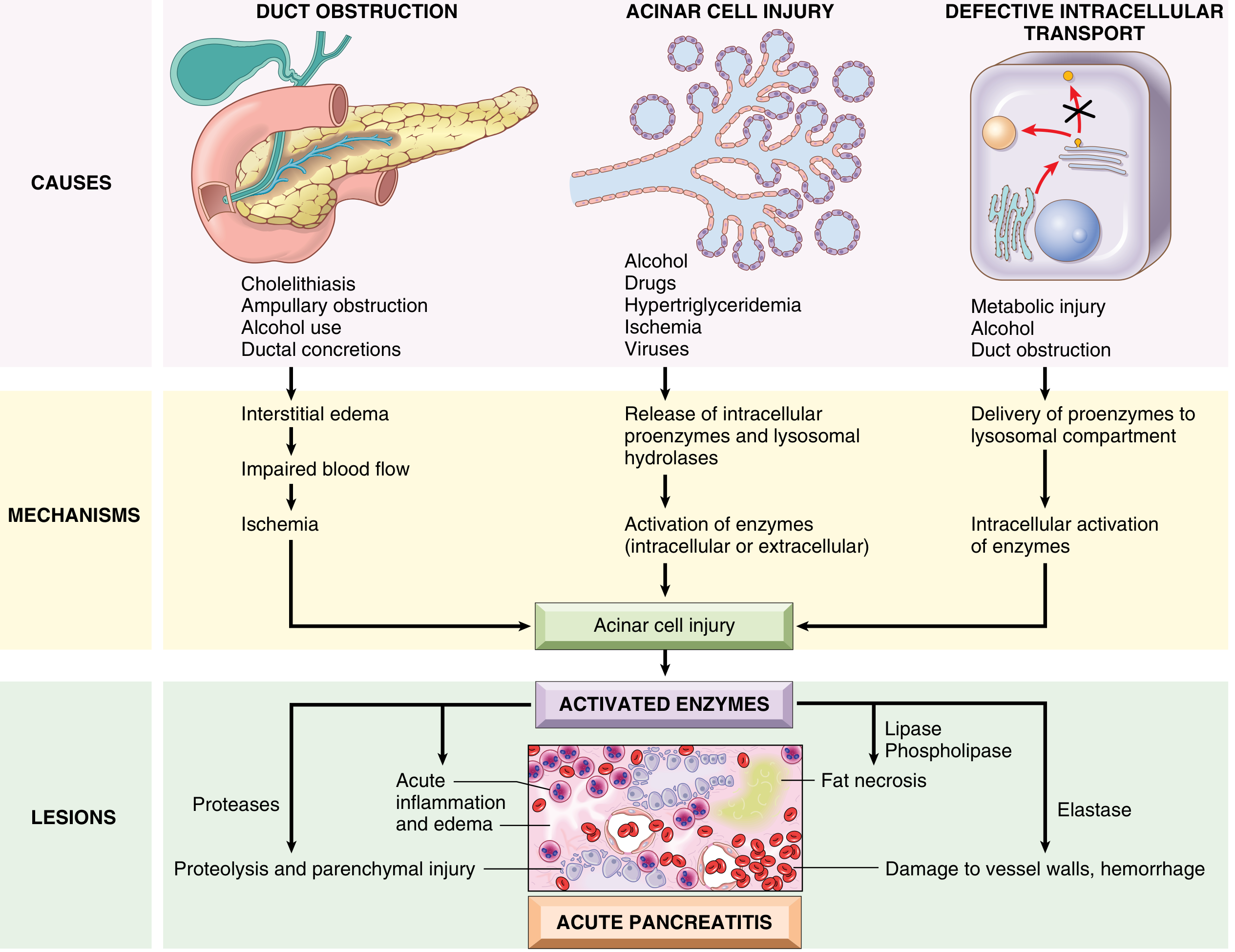
The 3 pathways of acute pancreatitis initiation: Duct obstruction, Direct acinar cell injury, and Defective intracellular transport. All converge on acinar cell injury → activated enzymes → Proteases (proteolysis, parenchymal destruction), Lipase + Phospholipase (fat necrosis), Elastase (blood vessel wall damage + hemorrhage). (Robbins & Kumar Basic Pathology)
THREE PATHWAYS OF INITIATION (Robbins & Kumar):
Pathway 1: Pancreatic Duct Obstruction
- Gallstone or biliary sludge blocks the common bile duct / ampulla of Vater
- Intraductal pressure rises → enzyme-rich interstitial fluid accumulates
- Lipase (already active) causes local fat necrosis
- Inflammatory cytokines released → edema, impaired blood flow → ischemia → acinar cell injury
Pathway 2: Primary Acinar Cell Injury (Most relevant in dogs and cats)
- Direct damage to acinar cells by:
- High-fat diet / dietary indiscretion (most common in dogs)
- Hypertriglyceridemia (Miniature Schnauzer predisposition!)
- Ischemia
- Drugs (azathioprine, bromides, potassium bromide, L-asparaginase, sulfonamides, zinc, tetracyclines)
- Toxins
- Trauma
- Injured cells release proenzymes → intracellular activation
Pathway 3: Defective Intracellular Transport
- Normally, digestive enzymes and lysosomal hydrolases travel in SEPARATE pathways
- When packaging goes wrong (metabolic injury), they merge → proenzymes activate inside lysosomes → lysosomal rupture → enzyme release
Cascade of Damage Once Trypsin Activates:
| Activated Enzyme | Effect |
|---|
| Trypsin | Activates ALL other proenzymes; converts prekallikrein to kallikrein (kinin system - pain, vasodilation); activates Factor XII (clotting cascade, complement cascade) |
| Lipase | Digests fat cells → fat necrosis (saponification - grey-white chalky deposits) |
| Phospholipase A2 | Destroys cell membranes; liberates free fatty acids; damages lung alveoli (ARDS risk!) |
| Elastase | Digests elastic fibers in blood vessel walls → hemorrhage into pancreatic tissue |
| Proteases | Parenchymal destruction, tissue liquefaction |
Local effects: Edema → fat necrosis → hemorrhage → necrosis
Systemic effects (severe pancreatitis): Hypotension, SIRS (Systemic Inflammatory Response Syndrome), ARDS (Acute Respiratory Distress Syndrome), DIC (Disseminated Intravascular Coagulation), AKI, sepsis
2.4 CAUSES OF PANCREATITIS IN DOGS AND CATS
IN DOGS:
| Cause | Notes |
|---|
| Dietary indiscretion / high-fat meal | MOST COMMON cause; garbage eating, table scraps, fatty food |
| Hypertriglyceridemia | Miniature Schnauzer - inherited predisposition! |
| Obesity | Major risk factor |
| Drugs | Azathioprine, potassium bromide, L-asparaginase, sulfonamides, tetracyclines, zinc toxicity, NSAIDs |
| Trauma | Blunt abdominal trauma, post-surgical |
| Ischemia/hypoperfusion | Shock, GDV, anesthesia hypotension |
| Biliary disease | Biliary obstruction (uncommon in dogs compared to humans; dogs have separate pancreatic duct opening) |
| Hypercalcemia | Activates trypsinogen directly |
| Hypothyroidism | Causes secondary hypertriglyceridemia |
| Hyperadrenocorticism | Corticosteroids increase pancreatic fragility |
| Breed predispositions | Miniature Schnauzer, Yorkshire Terrier, Cocker Spaniel, Cavalier King Charles Spaniel |
| Idiopathic | Up to 50% of cases |
IN CATS: (Different and important!)
Feline pancreatitis is more often chronic and subclinical and is frequently part of a TRIAD:
"FELINE TRIADITIS" (Unique to Cats!)
The simultaneous presence of:
- Pancreatitis
- Inflammatory Bowel Disease (IBD)
- Cholangitis (liver/bile duct inflammation)
Because in cats, the bile duct and pancreatic duct share a COMMON OPENING into the duodenum (unlike dogs where they open separately). So infection/inflammation can spread between all three organs easily.
Armstrong & Williams, Top Companion Anim Med, 2012 [PMID: 23148855]
| Cause (Cats) | Notes |
|---|
| Idiopathic | MOST COMMON in cats; cause rarely identified |
| Toxoplasmosis | Parasitic infection |
| Herpesvirus, Calicivirus, Parvovirus (FPV) | Viral damage to acinar cells |
| Bacterial ascending infection (Ascending from duodenum) | Via shared duct |
| Trauma | Vehicular accidents (cats hit by cars) |
| Organophosphate toxicity | |
| Concurrent hepatic lipidosis | Pancreatitis triggers hepatic lipidosis and vice versa |
2.5 CLINICAL SIGNS
In Dogs (more classic presentation):
- Vomiting - common, often the presenting complaint
- Abdominal pain - dog adopts "prayer position" (front legs down, hindquarters up) to relieve abdominal discomfort - this is nearly PATHOGNOMONIC!
- Anorexia / inappetence
- Lethargy, depression
- Diarrhea (less consistent)
- Fever
- Dehydration
- Cranial abdominal pain on palpation
- Severe cases: jaundice (biliary obstruction), ascites, respiratory distress (ARDS), collapse (shock)
Prayer position (Praying dog posture) = Pathognomonic for cranial abdominal pain, highly suggestive of pancreatitis in dogs
In Cats (MUCH more subtle - that's why it's frequently missed!):
- Anorexia (most common sign - 87%)
- Lethargy
- Dehydration
- Hypothermia (unusual - cats can be COLD, not hot!)
- Vomiting (less common than dogs - only ~50%)
- Abdominal pain (often absent or hard to detect)
- Jaundice (from concurrent cholangitis)
- Weight loss
"Few of the diagnostic tests of value in the dog were helpful in cats." - Armstrong & Williams (2012)
This is why feline pancreatitis is often found incidentally or at necropsy.
2.6 DIAGNOSTICS
Blood Tests:
| Test | Finding in Pancreatitis |
|---|
| Serum cPLI / fPLI (canine/feline Pancreatic Lipase Immunoreactivity) | GOLD STANDARD - most sensitive and specific test available! cPLI > 400 µg/L = highly suggestive; SNAP cPL (rapid in-clinic test) is screening tool |
| Serum lipase | Elevated, but NOT specific - can be elevated in renal disease, GI disease, steroid administration (false positive) |
| Serum amylase | Elevated, but even LESS specific than lipase; NOT reliable in cats |
| CBC | Leukocytosis (neutrophilia ± left shift); packed cell volume may be elevated (dehydration) |
| Chemistry panel | Elevated ALT/ALP (secondary hepatic involvement), hyperbilirubinemia, azotemia (renal involvement), hyperglycemia (if enough beta cells damaged), hypokalemia, hypocalcemia (fat necrosis binds calcium - poor prognostic sign!) |
| Triglycerides | Elevated in Miniature Schnauzer-associated pancreatitis |
| Coagulation panel | PT/aPTT prolonged if DIC developing |
Hypocalcemia is a serious prognostic indicator in pancreatitis - calcium binds to fatty acids produced by fat necrosis (saponification), depleting serum calcium.
Imaging:
| Modality | Finding |
|---|
| Abdominal Ultrasound (BEST IMAGING TEST) | Enlarged hypoechoic (dark) pancreas; hyperechoic (bright white) peripancreatic fat (fat necrosis); peritoneal effusion; mass effect (abscess/pseudocyst); loss of normal pancreatic architecture |
| Abdominal radiographs | "Ground glass" opacity in cranial abdomen; loss of peritoneal detail; displacement of duodenum and stomach; rarely specific |
| CT scan (rarely done in vet) | Gold standard in human medicine; occasionally used in referral centers |
2.7 TREATMENT
There is NO specific cure for pancreatitis - treatment is SUPPORTIVE and aims to:
- Rest the pancreas (NPO initially)
- Correct fluid and electrolyte deficits
- Control pain and vomiting
- Prevent complications
Step-by-Step Treatment Protocol:
1. IV Fluid Therapy - CORNERSTONE
- Correct dehydration and hypovolemia
- Lactated Ringer's Solution (LRS) or Plasma-Lyte as first choice
- Add KCl if hypokalemia present
- Avoid overhydration (can worsen pancreatic edema)
2. Analgesia (Pain Management) - CRITICAL (often undertreated!)
- Pancreatitis is VERY PAINFUL
- Buprenorphine (partial opioid agonist) - excellent for moderate pain
- Fentanyl CRI (constant rate infusion) - for severe pain
- Maropitant (Cerenia) - also has visceral analgesic properties; useful concurrently
- Avoid NSAIDs (worsen renal perfusion and GI issues)
3. Antiemetics
- Maropitant (Cerenia) - first-line; NK1 antagonist
- Metoclopramide CRI - prokinetic, helps gastric emptying; also antiemetic
- Ondansetron - for severe/refractory vomiting
4. Nutritional Support - EARLY ENTERAL NUTRITION IS NOW RECOMMENDED
- Old teaching: "NPO for 24-48 hours to rest the pancreas"
- New evidence: Early enteral feeding (naso-esophageal or naso-gastric tube) IMPROVES outcomes; reduces bacterial translocation; supports gut integrity; prevents muscle wasting
- Begin small amounts of low-fat, highly digestible diet ASAP
- Cats: MUST be fed early to prevent hepatic lipidosis!
- If can't eat voluntarily: nasogastric tube or esophagostomy tube placement
5. Antibiotics
- NOT routinely recommended (pancreatitis is mostly sterile initially)
- Use only if evidence of infection: fever, positive blood cultures, sepsis, aspiration pneumonia
- If needed: ampicillin/sulbactam, metronidazole, or enrofloxacin
6. Additional Treatments:
- Gastroprotectants: Omeprazole (PPIs) if vomiting, gastric ulceration risk
- Plasma transfusion: Provides alpha-macroglobulins that neutralize proteases; used in severe cases
- Dopamine: Low-dose to maintain splanchnic blood flow (controversial)
- Surgery: For pancreatic abscess, pseudocyst, necrosis debridement
7. Management of Specific Complications:
- DIC: Fresh frozen plasma, heparin (controversial)
- Hypocalcemia: Slow IV calcium gluconate supplementation
- Hyperglycemia/DKA: Insulin therapy
- ARDS: Oxygen therapy, mechanical ventilation
- Hepatic lipidosis (cats): Aggressive enteral nutrition
8. Chronic Pancreatitis Management:
- Low-fat diet PERMANENTLY
- Omega-3 fatty acid supplementation
- Cobalamin (B12) supplementation if deficient (common with EPI)
- If leads to EPI: Pancreatic enzyme supplementation
- If leads to diabetes mellitus: Insulin therapy
- Cats with chronic pancreatitis: Often benefit from prednisolone (has anti-inflammatory effect in cats)
2.8 COMPLICATIONS
| Complication | Mechanism |
|---|
| Pancreatic pseudocyst | Collection of pancreatic fluid enclosed by fibrous tissue (not true cyst - no epithelial lining) |
| Pancreatic abscess | Infected necrotic pancreatic tissue |
| Exocrine Pancreatic Insufficiency (EPI) | Destruction of enough acinar cells (need >85% loss) |
| Diabetes mellitus | Destruction of enough islet beta cells |
| Biliary obstruction | Swollen pancreas compresses common bile duct |
| Peritonitis | Enzyme leakage into peritoneal cavity |
| SIRS/Sepsis | Systemic spread of inflammatory mediators |
| DIC | Trypsin activates clotting cascade |
| ARDS | Phospholipase A2 damages pulmonary surfactant |
| AKI | Hypovolemia, inflammatory mediators |
2.9 PANCREATITIS EXAM QUESTIONS
Q: What is the "prayer position" and what does it indicate?
A: The dog places its front legs on the ground and raises its hindquarters. This relieves pressure on the inflamed cranial abdomen. Highly suggestive of pancreatitis or any cranial abdominal pain.
Q: What breed is most predisposed to pancreatitis in dogs and why?
A: Miniature Schnauzer - due to inherited hypertriglyceridemia. Elevated triglycerides cause primary acinar cell injury via toxic free fatty acids from lipase action on chylomicrons.
Q: Why is hypocalcemia a bad prognostic sign in pancreatitis?
A: Calcium ions bind to free fatty acids produced by fat necrosis (saponification = calcium soap formation). This depletes serum calcium. Severe hypocalcemia indicates extensive fat necrosis = severe disease.
Q: What is feline triaditis?
A: Simultaneous pancreatitis + IBD + cholangitis in cats. Possible because cats have a COMMON opening (major duodenal papilla) for both bile duct and pancreatic duct into the duodenum, allowing bidirectional inflammation.
Q: What is the gold standard diagnostic test for pancreatitis in dogs?
A: Serum cPLI (canine Pancreatic Lipase Immunoreactivity). The SNAP cPL is the in-clinic rapid version. More specific than serum lipase or amylase.
═══════════════════════════════════
SECTION 3: LIVER DISEASE (HEPATIC DISEASE)
═══════════════════════════════════
3.1 OVERVIEW OF LIVER FUNCTION
The liver is the most metabolically active organ in the body. It performs:
| Function | Clinical Significance if Fails |
|---|
| Protein synthesis (albumin, clotting factors, globulins) | Hypoalbuminemia → edema/ascites; coagulopathy → bleeding |
| Detoxification (ammonia, drugs, hormones, toxins) | Hepatic encephalopathy (ammonia accumulates) |
| Bile production and secretion | Icterus (jaundice), fat malabsorption |
| Carbohydrate metabolism (glycogen storage, gluconeogenesis) | Hypoglycemia |
| Lipid metabolism | Hepatic lipidosis (cats) |
| Coagulation factor synthesis (I, II, V, VII, IX, X, XI) | Bleeding disorders |
| Vitamin storage (A, D, E, K, B12) | Deficiencies |
| Iron storage | Anemia |
| Immune function (Kupffer cells) | Reduced immunity |
The liver has massive reserve capacity - clinical signs of failure only appear when > 70-80% of hepatic mass is lost or non-functional.
3.2 CLINICAL SIGNS OF LIVER DISEASE
| Sign | Mechanism |
|---|
| Vomiting and diarrhea | Uremia (from reduced hepatic clearance), abnormal bile acids in gut, congestion |
| Anorexia | Nausea, toxin accumulation |
| Weight loss | Reduced nutrient metabolism |
| PU/PD (Polyuria/Polydipsia) | Reduced urea synthesis → medullary washout → can't concentrate urine; ADH resistance; hypokalemia |
| Icterus (Jaundice) | Bilirubin cannot be conjugated/excreted → accumulates in tissue; yellow sclera, skin, mucous membranes |
| Ascites | Low albumin (reduced oncotic pressure) + portal hypertension → fluid into peritoneal cavity |
| Hepatic Encephalopathy (HE) | Ammonia + other toxins (manganese, endogenous benzodiazepines) accumulate → neurological signs |
| Coagulopathy / Bleeding | Reduced clotting factor synthesis; also possible DIC |
| Hepatomegaly (large liver) | Hepatic congestion, neoplasia, hepatic lipidosis, glucocorticoid hepatopathy |
| Microhepatia (small liver) | Cirrhosis, portosystemic shunt (PSS) |
| Copper-colored urine (bilirubinuria) | Conjugated bilirubin excreted in urine |
| Ammonium biurate crystals in urine | PSS, severe hepatic failure - classic finding! |
| Seizures, behavior change, head pressing | Hepatic encephalopathy |
3.3 HEPATIC ENCEPHALOPATHY (HE) - Key Topic
Definition: Neurological dysfunction caused by failure of the liver to detoxify ammonia and other neurotoxins that are then absorbed from the gut.
Central Role of Ammonia:
- Gut bacteria (especially urease-producing bacteria) convert protein → ammonia (NH3)
- Normally: portal blood carries ammonia to liver → converted to urea (urea cycle) → excreted by kidneys
- In liver failure or PSS: ammonia bypasses or overwhelms the liver → reaches the brain
- Ammonia → enters astrocytes (brain support cells) → converted to glutamine → astrocyte SWELLING → cerebral edema → neurological signs
Other neurotoxins contributing to HE:
- Manganese (deposited in basal ganglia)
- Endogenous benzodiazepines (GABA-A receptor agonists → sedation)
- Mercaptans (sulfur compounds from gut bacteria)
- Aromatic amino acids
Clinical Signs of HE:
- Head pressing against walls
- Aimless wandering / circling
- Ataxia (stumbling, wobbling)
- Blindness (cortical)
- Behavioral changes (aggression, confusion, depression)
- Hypersalivation
- Seizures (terminal sign)
- Signs often EPISODIC and worsen after protein-rich meals
Management of HE (Lidbury et al., J Vet Emerg Crit Care, 2016 [PMID: 27060899]):
- Lactulose: Laxative disaccharide that:
- Traps ammonia in the colon (acidifies colon → NH3 + H+ → NH4+ which cannot be absorbed)
- Speeds intestinal transit (flushes ammonia out)
- Reduces ammonia-producing bacteria
- Antibiotics (metronidazole, neomycin, rifaximin): Reduce gut bacteria that produce ammonia
- Dietary protein modification: Use HIGH-QUALITY, digestible protein (soy protein or dairy protein in dogs - soy-based diet shown beneficial); severe protein restriction is NO LONGER recommended (causes muscle wasting → more endogenous ammonia from muscle breakdown)
- Lactulose enemas: For acute HE crisis
- Treat precipitating factors: GI bleeding (blood = protein load), infection, constipation, azotemia
3.4 MAJOR LIVER DISEASES BY SPECIES
A. CANINE LIVER DISEASES
1. Chronic Hepatitis (CH) - Most important chronic liver disease in dogs
-
Progressive inflammatory disease → hepatocellular necrosis + fibrosis → eventually cirrhosis
-
Causes:
- Copper accumulation (most important recognized cause!)
- Infectious: Leptospira interrogans (highly zoonotic!), Adenovirus type 1 (CAV-1 - Canine Infectious Hepatitis)
- Drugs: Phenobarbital, carprofen, trimethoprim-sulfonamide
- Idiopathic (most common after copper ruled out) - Bexfield (2017) [PMID: 28063746]
-
COPPER-ASSOCIATED HEPATITIS - VERY IMPORTANT:
- Copper normally excreted in bile; defective biliary excretion leads to hepatic accumulation
- Bedlington Terrier - autosomal recessive mutation in COMMD1 gene → classic breed; most severe copper accumulation
- Other predisposed breeds: Labrador Retriever, Doberman Pinscher, Dalmatian, Skye Terrier, West Highland White Terrier
- Copper is hepatotoxic (oxidative damage) → inflammation → fibrosis → cirrhosis
- Diagnosis: Liver biopsy with Rhodanine stain (copper stain - shows orange-red granules in hepatocytes) + quantitative copper measurement (> 2000 µg/g DW = toxic)
- Treatment: D-penicillamine (chelates and promotes urinary excretion of copper), low-copper diet, zinc supplementation (induces metallothionein in gut, blocks copper absorption)
-
Histologic criteria for CH (WSAVA Liver Standardization Group):
- Hepatocellular apoptosis OR necrosis
- Mononuclear or mixed inflammatory cell infiltrate
- Regeneration
- Fibrosis
2. Canine Vacuolar Hepatopathy (CVH)
- Hepatocytes become swollen with glycogen or fat vacuoles
- Associated with hyperadrenocorticism (Cushing's), chronic steroid use (iatrogenic Cushing's), stress
- ALP markedly elevated (often > 1000 IU/L!) while ALT is mildly elevated
- Typically benign unless underlying Cushing's is severe
- Diagnosis: Biopsy (pale vacuolated hepatocytes), low-dose dexamethasone suppression test for Cushing's
3. Portosystemic Shunt (PSS)
-
Abnormal vessel that connects the portal circulation DIRECTLY to the systemic circulation, BYPASSING the liver
-
Portal blood (full of ammonia and gut-absorbed toxins) goes straight to brain = hepatic encephalopathy
-
Congenital PSS (single shunting vessel):
- Small breeds: Yorkshire Terrier, Maltese, Shih Tzu, Miniature Schnauzer - extrahepatic shunt (outside liver)
- Large breeds: Irish Wolfhound, German Shepherd - intrahepatic shunt (inside liver - ductus venosus fails to close)
-
Acquired PSS (multiple small vessels): Develop due to chronic portal hypertension (cirrhosis)
-
Classic presentation of PSS:
- Young animal (< 2 years for congenital)
- Small stature / failure to thrive despite eating well
- Post-prandial (after eating) neurological signs
- Urinary signs (ammonium biurate crystals, urolithiasis)
- Hepatic encephalopathy signs
-
Diagnosis:
- Pre- and post-prandial bile acids - most useful screening test; very elevated (> 25 µmol/L fasted, > 50 µmol/L post-prandial)
- Ammonia tolerance test (risky - can precipitate HE!)
- Ultrasound: Abnormal vessel, small liver (microhepatia), diminished portal vasculature
- Scintigraphy (nuclear scan): > 15% of portal blood going direct to systemic = significant shunting
- CT angiography (best for surgical planning)
- Ammonium biurate crystals in urine sediment
-
Treatment:
- Surgical (definitive): Ameroid constrictor or cellophane banding to gradually occlude the shunting vessel; allows portal blood to gradually readjust; preferred for extrahepatic shunts
- Medical management: For poor surgical candidates, pre-surgical stabilization; lactulose + antibiotics + dietary management
- Prognosis: GOOD with successful surgery (especially extrahepatic shunts - 85%+ long-term success)
4. Gallbladder Mucocele (GBM)
- Unique to dogs - not reported in cats
- Accumulation of abnormally viscous bile within the gallbladder, forming a star-shaped or kiwi-shaped mucocele
- Associated with Shetland Sheepdog, Cocker Spaniel, Miniature Schnauzer, hypothyroidism, hyperadrenocorticism, dyslipidemia
- Signs: Vomiting, anorexia, jaundice, abdominal pain; can rupture → bile peritonitis (EMERGENCY!)
- Diagnosis: Ultrasound - "kiwi fruit" or "stellate" (star-shaped) pattern in gallbladder
- Treatment: Cholecystectomy (surgical gallbladder removal) before rupture; medical with ursodeoxycholic acid in stable cases
- Pathognomonic: "Kiwi fruit" sign on ultrasound
B. FELINE LIVER DISEASES
1. Hepatic Lipidosis (HL) - Most Common Liver Disease in Cats
This is arguably the most important feline liver disease to know completely.
Definition: Accumulation of excessive triglycerides (fat) within hepatocytes (liver cells) leading to liver cell dysfunction and cholestasis (bile flow blockage).
Key Pathophysiology:
- Cats have UNIQUE metabolic vulnerability: obligate carnivores; high protein metabolism; low capacity for hepatic lipid oxidation
- When a cat STOPS EATING (anorexia from ANY cause) for even 2-5 days:
- Body fat stores are mobilized → triglycerides flood the bloodstream
- Liver is overwhelmed → cannot process all the fat → fat ACCUMULATES in hepatocytes
- Hepatocytes become bloated with fat → cannot function → cholestasis → jaundice → liver failure
- This is the only disease where being OBESE makes you MORE vulnerable (obese cats have more fat to mobilize!)
Causes (usually HL is secondary to a trigger that causes anorexia):
- Any cause of anorexia in a cat: stress, pain, other illness (pancreatitis, IBD, renal disease), travel, change in environment, new pet in house
- Obesity is the #1 risk factor
- Concurrent pancreatitis very common
Clinical Signs:
- Jaundice (icterus) - hallmark
- Anorexia (the cause AND the perpetuating factor)
- Vomiting
- Lethargy, depression
- Weight loss
- Hepatomegaly (enlarged liver)
- Neurological signs if HE develops
- Drooling, nausea
- Muscle wasting (hepatic failure)
Diagnosis:
- History of anorexia (2+ days in obese cat)
- Blood tests: Markedly elevated ALP (very high ALP in a CAT is SIGNIFICANT - unlike dogs, cats have low baseline ALP); elevated ALT; hyperbilirubinemia; hypokalemia; hypomagnesemia
- Ultrasound: Hyperechoic (bright white) liver - fat makes liver echogenic; hepatomegaly
- FNA (Fine Needle Aspirate) of liver - DIAGNOSTIC: shows hepatocytes stuffed with lipid vacuoles (lipid vacuolation); simple and safe to perform with ultrasound guidance
- Rule out underlying cause (blood glucose, T4, urinalysis, thoracic X-ray)
Treatment - NUTRITIONAL SUPPORT IS THE CURE:
- Feeding tube placement is the cornerstone of treatment! Cat must receive adequate calories
- Esophagostomy tube (E-tube): Preferred; easy to place, can go home with tube
- PEG tube (Percutaneous Endoscopic Gastrostomy): For longer-term use
- Nasogastric (NG) tube: Short-term
- Feed HIGH-PROTEIN, MODERATE-FAT diet through tube (protein stimulates lipid oxidation in cats)
- Do NOT restrict protein (despite liver disease - cats NEED protein to reverse HL)
- Supplement: Cobalamin (B12), thiamine (B1), potassium, magnesium
- IV fluids for dehydration
- Antiemetics for nausea (maropitant)
- S-Adenosylmethionine (SAMe): Antioxidant, hepatoprotectant; supports glutathione synthesis
- Vitamin E: Antioxidant
- Carnitine: Helps fat oxidation in liver
- Treat underlying cause simultaneously
Prognosis: GOOD (80-90% survival) if aggressive nutritional support is initiated early; POOR if treatment delayed or refused.
2. Feline Cholangitis / Cholangiohepatitis Complex
- Most common form of chronic inflammatory liver disease in cats
- Inflammation of the bile ducts (cholangitis) ± liver (cholangiohepatitis)
- THREE FORMS (important for differential diagnosis):
| Type | Cause | Histology | Treatment |
|---|
| Neutrophilic (Suppurative) | Ascending bacterial infection from duodenum via common duct | Neutrophils in bile ducts | Antibiotics (amoxicillin-clavulanate or metronidazole + fluoroquinolone) |
| Lymphocytic | Immune-mediated (autoimmune) | Lymphocytes in portal triads | Prednisolone (immunosuppression) |
| Chronic Sclerosing (Destructive) | Progressive fibrosis of bile ducts | Fibrosis, ductopenia | Ursodeoxycholic acid + prednisolone |
- Signs: Jaundice, vomiting, anorexia, weight loss, hepatomegaly, fever (neutrophilic form), abdominal pain
- Diagnosis: Chemistry (elevated ALP, ALT, GGT, bilirubin), ultrasound (thickened bile ducts, echogenic liver), liver biopsy is DEFINITIVE (tissue diagnosis essential to determine type)
- Part of Feline Triaditis with pancreatitis + IBD
3. Feline Hepatic Neoplasia
- Lymphoma = most common hepatic tumor in cats (unlike dogs where hepatocellular carcinoma is #1)
- Also: bile duct carcinoma (cholangiocarcinoma), mast cell tumor, hepatocellular carcinoma
3.5 DIAGNOSTICS FOR LIVER DISEASE (General)
Blood Biomarkers:
| Test | What it measures | Notes |
|---|
| ALT (Alanine Aminotransferase) | Hepatocyte DAMAGE marker | Most liver-specific enzyme in dogs and cats; elevated with active hepatocellular injury |
| ALP (Alkaline Phosphatase) | Cholestasis + biliary disease marker | Dogs: can be elevated by steroids, phenobarbital, bone disease; Cats: ALP is very low normally → even mild elevation significant! |
| GGT (Gamma-Glutamyl Transferase) | Biliary disease marker | More specific for biliary disease than ALP in cats |
| AST (Aspartate Aminotransferase) | Hepatocyte + muscle damage | Less liver-specific (also elevated in muscle damage) |
| Serum Bilirubin (Total) | Cholestasis / hemolysis | Elevated = jaundice; helps identify if pre-hepatic, hepatic, or post-hepatic |
| Albumin | Liver SYNTHESIS function | Low albumin = chronic liver failure (liver can't make enough); takes weeks to months to drop |
| BUN (Blood Urea Nitrogen) | Liver synthesis + renal | LOW BUN in liver failure (can't synthesize urea from ammonia) |
| Glucose | Liver stores glycogen | Hypoglycemia in acute hepatic failure or end-stage cirrhosis |
| PT / aPTT (Clotting times) | Coagulation factor synthesis | Prolonged = hepatic failure (factors I, II, V, VII, IX, X made by liver) |
| Pre- and post-prandial bile acids | Hepatic function test (portal circulation) | Best non-invasive test for portosystemic shunting and functional liver reserve |
| Ammonia (blood) | Hepatic clearance of gut ammonia | Elevated = PSS or HE; must be processed quickly or gives false results |
Imaging:
- Radiographs: Liver size and position; hepatomegaly vs. microhepatia; calcification (rare)
- Ultrasound: Parenchymal texture, echogenicity, vessel anatomy, bile duct thickness, mass lesions, ascites, PSS vessel
- Scintigraphy: Portal blood flow quantification (PSS diagnosis)
- CT angiography: Best for PSS surgical planning
Biopsy - DEFINITIVE DIAGNOSIS:
- Required to definitively diagnose type of liver disease
- Methods: Ultrasound-guided tru-cut biopsy, keyhole (laparoscopic), or exploratory laparotomy
- ALWAYS check coagulation times BEFORE biopsy (liver disease = coagulopathy = bleeding risk!)
- FNA (fine needle aspirate): Quick, minimal bleeding risk; can diagnose HL, neoplasia, but CANNOT assess architecture (can't diagnose hepatitis/fibrosis from FNA alone)
3.6 TREATMENT OF LIVER DISEASE (General Principles)
| Treatment | Indication / Use |
|---|
| SAMe (S-Adenosylmethionine) | Hepatoprotectant; antioxidant; restores glutathione; beneficial in most liver diseases |
| Milk thistle (Silymarin) | Antioxidant; hepatoprotectant; anti-fibrotic |
| Ursodeoxycholic acid (UDCA) | Improves bile flow; cytoprotective; anti-fibrotic; useful in cholestatic diseases |
| Vitamin E | Antioxidant; reduces oxidative hepatocellular injury |
| D-Penicillamine | Copper chelation; copper-associated hepatitis |
| Zinc acetate | Reduces dietary copper absorption; maintenance therapy for copper hepatopathy |
| Prednisolone | Immune-mediated hepatitis, chronic active hepatitis, lymphocytic cholangitis in cats |
| Lactulose | HE management; also laxative |
| Antibiotics (amoxicillin-clavulanate) | Bacterial cholangitis/cholangiohepatitis |
| IV Fluids | Dehydration, electrolyte correction, supportive |
| Enteral nutrition (feeding tube) | Hepatic lipidosis in cats - ESSENTIAL |
| Vitamin K1 injection | Coagulopathy from cholestasis (fat-soluble vitamin malabsorption); give before biopsy! |
| Spironolactone + furosemide | Ascites management (diuretics); spironolactone first, furosemide added carefully |
| Low-sodium diet | Ascites management (reduces sodium retention) |
3.7 LIVER DISEASE COMPLICATIONS SUMMARY (Lidbury, Vet Clin North Am, 2025 [PMID: 40379581])
| Complication | Management |
|---|
| Vomiting | Case-by-case antiemetic use (maropitant) |
| Ascites | Low-sodium diet + spironolactone ± furosemide |
| Hepatic Encephalopathy | Lactulose + antimicrobials (metronidazole); appropriate protein diet |
| Coagulopathy | Fragile hemostatic balance - can bleed OR clot; Vitamin K1; fresh frozen plasma for active bleeding; monitor carefully |
| Hypoglycemia | Dextrose supplementation in fluids |
3.8 EXAM / INTERVIEW QUESTIONS - LIVER DISEASE
Q: What is the most reliable indicator of liver FUNCTION (not just damage)?
A: Pre- and post-prandial bile acids. These test whether the portal circulation is actually being filtered by the liver. ALT and ALP only indicate damage, not function. Albumin and PT/aPTT also test function.
Q: Which liver enzyme is most specific for the liver in dogs and cats?
A: ALT (Alanine Aminotransferase) is the most liver-specific. ALP is less specific because it can be elevated by steroids, phenobarbital, bone growth, etc.
Q: Why is ALP elevation more significant in cats than in dogs?
A: Cats have a very short half-life for ALP (6 hours vs. 72 hours in dogs) and a very low baseline. Any elevation in ALP in a cat is clinically significant and should prompt investigation. In dogs, ALP can be mildly elevated by many non-hepatic causes.
Q: What is the treatment for hepatic lipidosis in cats?
A: Aggressive nutritional support via feeding tube (esophagostomy tube preferred). Feed a HIGH-PROTEIN diet. Supplement cobalamin, potassium, thiamine. Antiemetics to reduce nausea. Treat the underlying cause. Do NOT fast the cat.
Q: What is the pathognomonic ultrasound finding of gallbladder mucocele?
A: "Kiwi fruit" or "stellate" (star-shaped) pattern within the gallbladder on ultrasound. Treatment = surgical cholecystectomy before rupture.
Q: What are ammonium biurate crystals and what do they suggest?
A: Crystals found in urine sediment; they form when excess ammonia combines with uric acid. Their presence in urine is strongly suggestive of portosystemic shunt or severe hepatic failure. Classic in Yorkshire Terriers with congenital PSS.
Q: What breed is most associated with copper storage hepatopathy?
A: Bedlington Terrier (COMMD1 gene mutation - autosomal recessive). Also Labrador Retriever, Doberman Pinscher, Dalmatian.
Q: Why is severe protein restriction NO LONGER recommended in hepatic encephalopathy?
A: Severe protein restriction causes muscle wasting. When muscles break down, they release amino acids, which gut bacteria convert to MORE ammonia - paradoxically worsening HE. Modern guidelines recommend providing adequate high-quality protein (soy-based preferred in dogs with HE) to maintain muscle mass. (Lidbury et al., 2016 [PMID: 27060899])
MASTER DIFFERENTIATION TABLE - All 3 Topics + Vomiting & Diarrhea
| Feature | Vomiting | Regurgitation | Pancreatitis | Liver Disease |
|---|
| Abdominal effort | Yes | No | Pain response | Variable |
| Prodrome (nausea) | Yes | No | Yes | Yes |
| Material appearance | Digested, bile | Undigested, tubular | Vomit = yellow-brown | Bile-stained vomit, jaundice |
| Pain location | Cranial abdomen | None (esophageal) | Cranial abdomen (severe!) | Cranial abdomen to diffuse |
| Key blood test | Na:K ratio (Addison's); parvo test | AChR antibody (MG); T4; Na:K | cPLI | Pre/post-prandial bile acids; ALT, ALP, albumin |
| Key imaging | Radiograph (obstruction), U/S | Thoracic X-ray (dilated esophagus), barium | Abdominal U/S | Abdominal U/S + liver biopsy |
| Pathognomonic sign | PCV>60%+TP normal = AHDS; Neutropenia = Parvo | Tubular undigested food = Esophageal | Prayer position + elevated cPLI | Kiwi fruit U/S = GBM; Ammonium biurate crystals = PSS |
| Key treatment | Maropitant, IV fluids, treat cause | Bailey chair feeding, treat underlying cause (pyridostigmine for MG) | IV fluids, analgesia, maropitant, early enteral feeding | SAMe, UDCA, treat specific cause; feeding tube (cats + HL) |
REFERENCES
- Robbins & Kumar Basic Pathology - Pancreatitis pathophysiology (pages 640-641)
- Guyton & Hall Textbook of Medical Physiology - Vomiting center, GI physiology
- Armstrong PJ, Williams DA. "Pancreatitis in cats." Top Companion Anim Med. 2012 [PMID: 23148855]
- Lidbury JA, Cook AK, Steiner JM. "Hepatic encephalopathy in dogs and cats." J Vet Emerg Crit Care. 2016 [PMID: 27060899]
- Lidbury JA. "Complications of Liver Disease." Vet Clin North Am Small Anim Pract. 2025 [PMID: 40379581]
- Bexfield N. "Canine Idiopathic Chronic Hepatitis." Vet Clin North Am Small Anim Pract. 2017 [PMID: 28063746]
- DVM360: Diagnosis and Management of Megaesophagus in Dogs
- VCA Animal Hospitals: Megaesophagus
- Cornell University College of Veterinary Medicine: Liver Disorders
---Yeh complete masterclass guide hai. Chalte hain ek quick summary dekh lein kya cover kiya:
Quick Summary - Kya Cover Kiya Gaya:
REGURGITATION:
- Vomiting vs. Regurgitation ka complete master table (exam mein zaroor aata hai)
- Esophageal anatomy (dogs = fully striated muscle = why MG causes megaesophagus)
- Megaesophagus - congenital + acquired causes (MG #1 cause!)
- PRAA (Persistent Right Aortic Arch) - pathognomonic for weaning-age puppies
- Bailey Chair feeding technique
- Pyridostigmine for Myasthenia Gravis
PANCREATITIS:
- Autodigestion mechanism - complete trypsin cascade
- Three pathways: Duct obstruction, Acinar cell injury, Defective intracellular transport
- Pancreatitis diagram image from Robbins & Kumar
- Prayer position in dogs = pathognomonic
- Feline Triaditis (Pancreatitis + IBD + Cholangitis)
- Miniature Schnauzer predisposition (hypertriglyceridemia)
- cPLI = gold standard diagnostic test
- Hypocalcemia = serious prognostic indicator
- Complications (EPI, DM, pseudocyst, DIC, ARDS)
LIVER DISEASE:
- Complete liver function overview
- Hepatic Encephalopathy - ammonia pathway, management (lactulose, metronidazole)
- Copper-associated hepatitis (Bedlington Terrier = COMMD1 gene)
- PSS (Portosystemic Shunt) - ammonium biurate crystals, bile acids
- Gallbladder Mucocele - "kiwi fruit" ultrasound sign
- Feline Hepatic Lipidosis - MOST IMPORTANT feline liver disease; esophagostomy tube = treatment
- Feline Cholangitis - 3 types + treatment
- Why ALP is more significant in cats than dogs
- Why protein restriction is no longer recommended in HE
Agar aap chahte hain kisi ek specific topic mein aur ghusna ho - jaise GDV, Addison's disease, EPI, IBD, Leptospirosis ya koi specific drug mechanism - batain, woh bhi isi tarah detail mein cover karunga!Running all searches in parallel now:Excellent! I found great sources in Kanski's Clinical Ophthalmology and Wills Eye Manual. Let me now read the key sections in parallel:Now let me search for more detailed veterinary-specific ophthalmology content and read the KCS and uveitis sections from Kanski:Excellent data. Now let me fetch the corneal ulcer image, get veterinary anterior uveitis details, and extract more from the KCS article:I now have comprehensive data from all sources. Let me update todos and compile the complete masterclass:Ab complete masterclass guide compile kar raha hun:
🐾 VETERINARY OPHTHALMOLOGY MASTERCLASS
CORNEAL ULCERS + KCS + ANTERIOR UVEITIS
═══════════════════════════════════════
SECTION 1: CORNEAL ULCERS (ULCERATIVE KERATITIS)
═══════════════════════════════════════
1.1 ANATOMY OF THE CORNEA - UNDERSTAND FIRST
The cornea is the transparent, avascular (no blood vessels) front window of the eye. It has 5 layers from outside to inside:
OUTSIDE (Tear Film)
    ↓
1. Epithelium (5-7 cell layers thick - MOST SENSITIVE; contains pain receptors)
2. Bowman's Layer (acellular basement membrane - thin)
3. Stroma (THICKEST layer - 90% of corneal thickness; collagen fibrils + keratocytes)
4. Descemet's Membrane (basement membrane of endothelium - thin but very TOUGH)
5. Endothelium (single cell layer; contains Na-K ATPase PUMP - keeps cornea dehydrated and clear)
    ↓
INSIDE (Anterior Chamber)
Key facts:
- Dog cornea thickness: 0.55 mm (center), 0.65 mm (periphery)
- Cat cornea thickness: ~0.58 mm (center and periphery similar)
- The cornea is AVASCULAR (gets oxygen from tear film and aqueous humor)
- The cornea has the HIGHEST density of sensory nerve endings of any tissue in the body - this is why corneal ulcers are EXTREMELY PAINFUL
- The superficial cornea (epithelium) is the MOST sensitive layer
1.2 DEFINITION
Corneal Ulcer (Ulcerative Keratitis) = A breach (break) in the corneal epithelial barrier, exposing the underlying stroma or deeper layers to the environment, allowing infectious agents to invade and causing tissue loss.
- An erosion = loss of only epithelium (no stromal involvement)
- An ulcer = loss of epithelium + some degree of stromal involvement
1.3 CLASSIFICATION BY DEPTH (Most Important System!)
This is the single most important classification. Depth determines treatment and prognosis.
GRADE 1: Superficial Ulcer (Epithelial Erosion)
- Loss of epithelium ONLY
- Stroma is exposed but NOT lost
- MOST PAINFUL paradoxically - because the superficial nerve endings are exposed
- Fluorescein stain: POSITIVE (stain pools in the defect)
- Treatment: Topical antibiotics, lubricants, ± E-collar
GRADE 2: Superficial Stromal Ulcer
- Loss of epithelium + loss of superficial stroma (< 50% stromal depth)
- Risk of bacterial colonization
- Fluorescein stain: POSITIVE
GRADE 3: Deep Stromal Ulcer
- Loss of epithelium + loss of > 50% stromal depth
- THREATENS structural integrity of the eye
- Risk of rupture if progresses
- Requires aggressive treatment and possibly surgery
GRADE 4: Descemetocele
- Loss of ALL stroma - only Descemet's membrane remains as the floor of the ulcer
- Descemet's membrane does NOT absorb fluorescein dye!
- Fluorescein stain: NEGATIVE at the very center (because no stroma remains!) but POSITIVE at the edges
- This is a SURGICAL EMERGENCY - one sneeze, one paw rub, and the eye ruptures
- Pathognomonic: Negative fluorescein staining at center of deepest ulcer = Descemetocele
GRADE 5: Ruptured Globe / Corneal Perforation
- The Descemet's membrane has also ruptured
- Aqueous humor (fluid) leaks out
- Iris may prolapse through the perforation
- Globe-threatening emergency
1.4 SPECIAL TYPES OF CORNEAL ULCERS IN VETERINARY MEDICINE
A. INDOLENT ULCER (SCCED - Spontaneous Chronic Corneal Epithelial Defect)
Also called: "Boxer Ulcer," Recurrent Erosion, Refractory Ulcer
- Definition: A superficial ulcer that REFUSES to heal through normal wound-healing processes despite appropriate treatment, persisting for weeks to months
- Mechanism: Abnormally weak adhesion between basal epithelial cells and their basement membrane. The epithelium is present but does NOT stick down - it slides loosely over the stroma like a carpet that won't stick to the floor
- There is also an abnormal, acellular (cell-free), hyaline zone in the anterior stroma that physically prevents epithelial adhesion
- Characteristics:
- Superficial ONLY (does not extend into stroma)
- Has redundant, loose, non-adherent epithelial edges ("lip" of epithelium around the ulcer)
- Characteristic "halo" staining pattern with fluorescein - the loose epithelium uptakes dye at the edges
- May or may not have superficial corneal vascularization (blood vessels growing in)
- Affects: Middle-aged to older dogs (average 8-9 years); any breed but Boxers are classically overrepresented
- Other predisposed breeds: Golden Retriever, Labrador, Corgi, Samoyed, Poodle
- Treatment:
- Debridement - Gently remove all loose epithelium with a dry cotton-tipped swab or surgical sponge (don't scrape the stroma)
- Grid/Punctate Keratotomy - Using a 25-gauge needle, lightly score the ulcer bed in a grid pattern to break up the acellular hyaline zone and create microchannels for new blood vessels and epithelial adhesion
- Diamond burr keratectomy - Mechanical superficial keratectomy (preferred over grid keratotomy by ophthalmologists); removes the abnormal anterior stroma
- Topical broad-spectrum antibiotic (prophylactic)
- E-collar (Elizabethan collar - cone) - ALWAYS
- Oral NSAIDs for pain
- If grid keratotomy fails: Superficial keratectomy (surgical removal of abnormal tissue)
B. MELTING ULCER (Stromal Lysis)
- Definition: An ulcer in which bacterial-produced and host-produced enzymes (Matrix Metalloproteinases - MMPs, particularly MMP-2 and MMP-9, and bacterial proteases and collagenases) are ACTIVELY DESTROYING the corneal stroma
- The stroma dissolves like jelly - the eye can go from a small ulcer to a perforation in HOURS
- Appearance: Grey-white, gelatinous, liquefied-looking stroma at the ulcer base. Distinguished from corneal edema by its soft, jelly-like texture
- Key causative organisms: Pseudomonas aeruginosa (most aggressive collagenase producer!), Beta-hemolytic Streptococcus, Staphylococcus
- Predisposed: Brachycephalic breeds (Pugs, Bulldogs, French Bulldogs, Shih Tzu, Pekinese) due to:
- Exophthalmos (bulging eyes) - increased exposure
- Lagophthalmos (incomplete eyelid closure) - incomplete corneal protection
- Macroblepharon (large palpebral fissure)
- Reduced corneal sensation (trigeminal nerve compression)
- Why topical steroids are CONTRAINDICATED in melting ulcers:
- Steroids INCREASE tear protease activity
- Steroids increase collagenase activity
- Steroids impair corneal healing
- Using steroids on a melting ulcer = accelerating destruction
- Treatment:
- STOP all topical steroids immediately
- Aggressive topical antibiotics every 1-2 hours (fluoroquinolones: ciprofloxacin 0.3%, ofloxacin)
- Antiprotease therapy: Acetylcysteine (5-10% topical solution) - N-acetylcysteine inhibits MMPs; EDTA drops; autologous serum (from the patient's own blood) - contains natural anti-proteases (alpha-2 macroglobulin)
- Systemic doxycycline - inhibits MMPs systemically
- Systemic NSAIDs or oral prednisolone (to reduce inflammation - NEVER topical steroids)
- Surgical: Conjunctival pedicle graft or corneal graft if severe
C. FELINE HERPESVIRUS (FHV-1) ULCERS
- Feline Herpesvirus Type 1 is the most common cause of corneal ulcers in CATS
- FHV-1 causes direct viral lysis of corneal epithelial cells
- Initial: Dendritic (branching, tree-shaped) ulcers - pathognomonic for herpes keratitis
- Can progress to geographic (large map-like) ulcers
- May cause corneal stromal disease in chronically infected cats
- Key feature: Often BILATERAL; associated with upper respiratory signs (sneezing, nasal discharge); can be recurrent (virus stays latent in trigeminal ganglion and reactivates with stress)
- Treatment: Topical antiviral (idoxuridine 0.1%, trifluridine 1%), oral famciclovir (100-125 mg/cat every 12 hrs - drug of choice for systemic FHV treatment), L-lysine supplementation (controversial but widely used), topical lubricants
D. CORNEAL SEQUESTRUM (Feline Specific!)
- A unique condition seen ONLY in cats (not reported in dogs)
- A dark brown to black, plaque-like focus of degenerate (dead) corneal stromal tissue that forms, usually after chronic corneal trauma or FHV infection
- Appears as a brown/black opaque plaque embedded in the cornea
- Can cause chronic discomfort, tearing, blepharospasm
- Predisposed breeds: Persian, Himalayan, Siamese, Burmese (all brachycephalic cats)
- Treatment: Superficial keratectomy (surgical removal); healing usually good but recurrence possible
- Pathognomonic: Dark brown/black corneal plaque in a brachycephalic cat = Corneal Sequestrum
1.5 CAUSES OF CORNEAL ULCERS IN DOGS AND CATS
| Category | Cause |
|---|
| Trauma | Cat scratch, foreign body (grass seeds, soil), thorn, blunt trauma, self-trauma (rubbing) |
| Infections | Bacterial (Staphylococcus, Streptococcus, Pseudomonas, Moraxella); Viral (FHV-1 in cats); Fungal (Aspergillus, Candida - rare) |
| KCS (Dry Eye) | Insufficient tear film exposes cornea to drying and infection |
| Entropion | Eyelid rolls inward; lashes/skin rub on cornea |
| Distichiasis | Extra row of eyelashes from tarsal gland openings; rub cornea |
| Trichiasis | Normal lashes growing in wrong direction |
| Ectopic cilia | Hair emerging through palpebral conjunctiva; causes persistent ulcers |
| Lagophthalmos | Incomplete eyelid closure (brachycephalics, CN7 palsy) |
| Neurotrophic keratitis | Loss of corneal sensation (CN5 damage); cornea cannot feel damage |
| Chemical exposure | Shampoo, soap, household chemicals |
| Foreign body | Embedded in conjunctival sac |
| Post-anesthetic exposure | Inadequate lubrication during surgery |
| Immune-mediated | Chronic superficial keratitis (Pannus) - German Shepherds |
1.6 CLINICAL SIGNS
The "5 P's" of corneal ulcer:
- Pain - blepharospasm (squinting), pawing at the eye
- Photophobia - avoiding light (due to ciliary spasm from reflex uveitis)
- Purulent/mucoid discharge
- Protrusion of nictitating membrane (third eyelid rises to protect painful eye)
- Periocular changes - conjunctival hyperemia (redness), chemosis (swollen conjunctiva)
Additional signs:
- Epiphora (excessive tearing/watering)
- Corneal edema (blue-white haze due to fluid entering the stroma through the damaged epithelium)
- Superficial corneal vascularization (blood vessels grow into cornea from limbus - response to chronic ulceration; superficial = pink, brush-like vessels)
- Miosis (constricted pupil) - from reflex anterior uveitis (the pain signals trigger uveitis)
- Aqueous flare (protein in anterior chamber) - from secondary uveitis
1.7 DIAGNOSIS
Step 1: Schirmer Tear Test (STT) FIRST
- Always do STT BEFORE instilling any drops!
- Rules out KCS as the underlying cause
- Normal: > 15 mm/minute in dogs; > 10 mm/minute in cats
- If STT is low, treat KCS simultaneously
Step 2: Fluorescein Stain - THE MOST IMPORTANT TEST
- Fluorescein is a water-soluble, orange dye that is hydrophilic (water-loving)
- It is REPELLED by the intact lipid-based epithelium (normally)
- It is ATTRACTED to and pools in any area where epithelium is lost (stroma is hydrophilic = loves water = takes up dye)
- Application: Place fluorescein strip in lower conjunctival sac; flush with sterile saline; examine under cobalt blue light (dye fluoresces bright GREEN under blue light)
- Positive stain = Green fluorescence = Epithelial defect PRESENT = Ulcer confirmed
- Descemetocele: NEGATIVE at the center (no stroma to take up dye!) but POSITIVE ring at the edges
- Use cobalt blue light - routine white light examination misses subtle ulcers
Step 3: Tonometry (IOP measurement)
- Check intraocular pressure (IOP)
- Uveitis usually causes LOW IOP (ciliary body shutdown)
- If IOP is HIGH in an inflamed eye = secondary glaucoma = serious complication
Step 4: Additional Tests
- Corneal cytology: Sample from ulcer margin - look for bacteria, neutrophils, fungal hyphae
- Bacterial culture and sensitivity: From deep/infected ulcers before starting antibiotics
- Rose Bengal stain: Stains dead or devitalized epithelial cells; useful for early FHV dendritic ulcers
- Slit-lamp biomicroscopy: Detailed examination of ulcer depth, corneal layers
- Complete ocular examination: Rule out entropion, distichiasis, foreign body, ectopic cilia
1.8 TREATMENT BY ULCER TYPE
All Corneal Ulcers - General Principles:
1. Topical Broad-Spectrum Antibiotics (ALWAYS)
- Prevent/treat secondary bacterial infection
- Choices: Triple antibiotic (neomycin-polymyxin-bacitracin), tobramycin 0.3%, ofloxacin 0.3%, ciprofloxacin 0.3% (fluoroquinolones for infected/deep ulcers)
- Frequency: Every 4-6 hours for superficial; every 1-2 hours for melting ulcers
- NEVER use aminoglycosides (gentamicin, tobramycin) as SOLE treatment - Pseudomonas can be resistant
2. Atropine 1% (Topical Cycloplegic/Mydriatic)
- Use when REFLEX UVEITIS is present (miosis, aqueous flare, severe photophobia)
- Mechanism: Parasympatholytic → dilates pupil (mydriasis) + paralyzes ciliary muscle (cycloplegia)
- Benefits: Relieves pain from ciliary spasm; prevents posterior synechiae (iris sticking to lens)
- Frequency: Every 8-24 hours until pupil dilated, then taper
- CONTRAINDICATED if IOP is elevated (will worsen glaucoma!)
- CONTRAINDICATED if KCS is present (decreases tear production further)
- In cats: Use atropine OINTMENT only (not drops) - drops drain to nasopharynx → extremely bitter taste → excessive salivation, frothing, vomiting
3. E-Collar (Elizabethan Collar / Cone) - MANDATORY
- Prevents self-trauma (pawing, rubbing)
- Most critical single instruction to give the owner!
- "If you take the cone off, the eye will get worse."
4. Oral Analgesics / NSAIDs
- Meloxicam or carprofen for pain
- Corneal ulcers are very painful
5. NEVER USE:
- Topical corticosteroids on any ulcer - impair healing, increase risk of infection, worsen melting
- Topical anesthetics (proxymetacaine, tetracaine) as dispensed medications - epitheliotoxic; delay healing; mask pain that protects the eye
Surgical Options for Deep/Non-Healing Ulcers:
- Conjunctival pedicle graft: Brings blood supply and antiproteases to the ulcer; preferred for deep/melting ulcers
- Corneoconjunctival transposition
- Corneal graft (when > 50% stromal depth lost)
- Temporary tarsorrhaphy (sewing eyelids partially together) - provides protection for healing
- Enucleation (eye removal) - for ruptured globes with no vision potential
1.9 KEY DIFFERENTIATIONS
| Type | Key Feature | Breed | Fluorescein |
|---|
| Superficial | Painful, minimal discharge | Any | Positive |
| Indolent (SCCED) | Loose edges, non-healing weeks | Boxer, Golden | Halo pattern |
| Melting | Grey-gelatinous, rapidly progressive | Brachycephalics | Positive |
| Descemetocele | Deepest possible without perforation | Brachycephalics | NEGATIVE center |
| FHV dendritic | Branching tree pattern, bilateral, cats | Cats | Dendritic pattern |
| Sequestrum | Brown/black plaque, cats only | Persian, Siamese | Stain surrounds plaque |
═══════════════════════════════════════
SECTION 2: KERATOCONJUNCTIVITIS SICCA (KCS) - DRY EYE SYNDROME
═══════════════════════════════════════
2.1 DEFINITION
Keratoconjunctivitis Sicca (KCS) = Chronic, progressive inflammatory eye disease caused by a deficiency in the AQUEOUS (water) component of the precorneal tear film, leading to dryness of the cornea (kerato-) and conjunctiva (conjunctivitis), with secondary surface damage.
- KCS = "Kera" (cornea) + "to" + "conjunctivitis" (conjunctival inflammation) + "Sicca" (Latin for DRY)
- Also known simply as "Dry Eye Syndrome"
- Very common in dogs (annual incidence 0.3-1.52% in North America)
- Uncommon in cats (cats have primarily lipid-deficient tear film disease instead)
2.2 THE TEAR FILM - UNDERSTAND THOROUGHLY
The precorneal tear film has THREE LAYERS (from outside to inside):
| Layer | Produced By | Function |
|---|
| 1. Lipid Layer (outermost) | Meibomian glands (tarsal glands) in eyelids | Prevents evaporation of aqueous layer; spreads tear film; prevents overflow onto cheek |
| 2. Aqueous Layer (middle, thickest - 90% of tear film) | Lacrimal gland (main) + Third eyelid lacrimal gland (nictitans gland) | Provides nutrients and oxygen to cornea; contains antibacterial proteins (IgA, lysozyme, lactoferrin, defensins); flushes debris; provides smooth optical surface |
| 3. Mucin Layer (innermost) | Goblet cells of conjunctiva | Allows aqueous layer to adhere to hydrophobic corneal epithelium; traps debris; lubrication |
In KCS: The aqueous layer is deficient → cornea dries out → surface damage → inflammation → more damage (vicious cycle)
Important: The third eyelid (nictitating membrane) gland contributes 30-40% of total aqueous tear production in dogs. This is why removal of the third eyelid gland ("cherry eye" surgery by inexperienced surgeons) predisposes to KCS!
2.3 PATHOPHYSIOLOGY
Primary mechanism in dogs: IMMUNE-MEDIATED destruction of lacrimal gland tissue
- CD4+ T-lymphocytes (helper T-cells) infiltrate the lacrimal gland tissue
- They attack and destroy lacrimal acinar cells (the secretory cells that make aqueous tears)
- Progressive glandular atrophy and fibrosis
- Tear production drops → aqueous layer becomes insufficient
- Corneal surface dries → epithelial cell death, corneal ulceration, chronic inflammation
- Goblet cells (mucin producers) also affected → mucin becomes thick and stringy
- Result: thick, ropy, mucopurulent (mucous + pus) discharge
This is a self-perpetuating inflammatory cycle - dryness causes inflammation which causes more destruction which causes more dryness.
Evidence: Histopathology (tissue examination) of lacrimal glands from KCS dogs shows increased numbers of lymphocytes and plasma cells with acinar atrophy - classic immune-mediated pattern.
2.4 CAUSES OF KCS IN DOGS
| Cause | Details |
|---|
| Immune-mediated | MOST COMMON (>75% of cases); T-cell mediated destruction of lacrimal gland |
| Breed-related (congenital alacrima) | Yorkshire Terrier may have congenital absence of lacrimal gland (alacrima); present from birth |
| Drug-induced | Sulfonamide antibiotics (sulfadiazine, trimethoprim-sulfa) - classic! Directly toxic to lacrimal gland acinar cells; may be irreversible; etodolac (NSAID); atropine (transient) |
| Viral | Canine Distemper Virus - destroys lacrimal gland; may cause permanent KCS |
| Neurogenic (CN7/CN5 damage) | Damage to parasympathetic fibers (facial nerve CN7) that stimulate lacrimal secretion → neurogenic KCS; paradoxically DRY ipsilateral nostril also (Horner-like) |
| Iatrogenic | Surgical removal of nictitating membrane gland ("cherry eye surgery gone wrong") |
| Hypothyroidism | Reduced lacrimation |
| Cushing's disease (hyperadrenocorticism) | Lacrimal gland dysfunction |
| Radiation therapy | Destruction of lacrimal gland tissue |
| Congenital | Yorkshire Terrier predisposition |
2.5 BREED PREDISPOSITIONS
Highly predisposed breeds (immune-mediated KCS):
- English Bulldog, American Cocker Spaniel - highest prevalence (up to 30% lifetime risk!)
- West Highland White Terrier
- Yorkshire Terrier (also congenital alacrima)
- Shih Tzu, Lhasa Apso, Pekingese
- Cavalier King Charles Spaniel
- Pug
- Boston Terrier
- Miniature Schnauzer
- Bloodhound
2.6 CLINICAL SIGNS
Think "MUDDY EYE" - KCS presents with:
| Sign | Why It Occurs |
|---|
| Mucopurulent (thick, yellow-green, ropy) ocular discharge | Classic hallmark! Mucin becomes thick (no aqueous to dilute it); secondary bacterial infection; goblet cell dysfunction |
| Conjunctivitis (red, inflamed conjunctiva) | Chronic dryness and inflammation |
| Corneal changes | Vascularization (new blood vessels growing in); pigmentation (brown pigment deposits); scarring; ulceration |
| Dull, lusterless cornea | Loss of tear film sheen |
| Blepharospasm (squinting) | Pain from dry, inflamed cornea |
| Corneal ulcers | Breakdown of dry corneal epithelium |
| Corneal pigmentation (melanosis) | Chronic irritation → melanocytes (pigment cells) migrate in → cornea turns black → BLINDNESS if covers visual axis |
| Keratinization | Cornea develops skin-like surface (extreme cases) |
| Neurogenic KCS: Dry ipsilateral nostril | Parasympathetic fibers to lacrimal gland AND nasal mucosa damaged together |
2.7 DIAGNOSIS
Schirmer Tear Test (STT) - THE DIAGNOSTIC TEST
How to perform STT-I (Standard):
- Before ANY eye drops, without topical anesthetic
- Fold standardized Whatman filter paper strip at notch
- Place hooked end in LOWER conjunctival sac (not touching cornea)
- Close eyelids gently around strip
- Wait EXACTLY 60 seconds
- Read wetted length in millimeters
Interpretation:
| STT-I Value (mm/min) | Interpretation |
|---|
| > 15 mm/min | NORMAL |
| 11-14 mm/min | Borderline / suspicious for early KCS |
| 6-10 mm/min | Mild-moderate KCS |
| 0-5 mm/min | SEVERE KCS |
| 0 mm/min | Complete aqueous tear deficiency |
STT-II: Performed AFTER topical anesthetic → measures BASAL tear secretion only (reflex component removed)
Normal dogs: STT-I > 15 mm/min
Normal cats: STT-I > 10 mm/min (cats have somewhat lower normal values)
Note: A dog presenting with classic KCS signs but STT > 15 mm/min may have qualitative KCS (deficient in lipid or mucin layer rather than aqueous layer). In this case, tear film break-up time (TFBUT) is measured.
2.8 TREATMENT
The goal is: stimulate natural tear production + supplement tear film + prevent secondary complications
First-Line: Immunomodulatory Therapy (Tear Stimulants)
A. Cyclosporine A (CsA) - GOLD STANDARD
Brand name: Optimmune® (0.2% ointment)
Mechanism:
- Calcineurin inhibitor (blocks calcineurin enzyme in T-cells)
- Blocks transcription of cytokine genes (IL-2, IL-4, IFN-gamma) in activated T-cells
- Prevents T-cell activation and proliferation
- Reduces T-cell-mediated destruction of lacrimal gland
- ALSO directly stimulates lacrimogenesis (tear production) - possibly via effects on prolactin receptors
- Isolated from fungus Tolypocladium inflatum (1976)
Dosing:
- 0.2% ointment (Optimmune) - twice daily (every 12 hours)
- Compounded 1-2% cyclosporine in olive/corn oil if 0.2% insufficient
- Allow 30-45 days minimum for full response
- If STT improves > 20 mm/min: can reduce to once daily for maintenance
- Lifelong treatment required (stopping causes relapse)
Response rates:
- 50-80% of dogs respond to 0.2% CsA
- Severely affected dogs (STT 0-5 mm/min) may respond less well
- Must evaluate after 6-8 weeks before declaring failure
B. Tacrolimus (FK506) - SECOND LINE / ALTERNATIVE
Mechanism: Also a calcineurin inhibitor (FK506-binding protein pathway)
Key facts:
- 100 times MORE POTENT than cyclosporine
- Used as 0.02%-0.03% ophthalmic solution or ointment
- Dogs that fail cyclosporine may respond to tacrolimus
- Studies show tacrolimus is as effective as cyclosporine; some suggest superior in non-responders
- Compounded in olive oil for better bioavailability
C. Pimecrolimus
- Macrolide immunosuppressant; similar mechanism to tacrolimus
- Less commonly used in veterinary medicine
D. Sirolimus (Rapamycin)
- Newer option; 0.02% aqueous topical solution
- Different mechanism (mTOR inhibition, not calcineurin)
- Has shown increased tear production in dogs
Second-Line: Tear Film Supplementation
Artificial Tears / Lubricants:
- Methylcellulose, carbomer, hyaluronic acid (sodium hyaluronate) - based ocular lubricants
- Provide temporary relief; do NOT treat underlying cause
- Must be used frequently (every 1-4 hours) - impractical as sole treatment
- Use as ADJUNCT to immunomodulators, especially initially when tear stimulants haven't started working yet
Third-Line: Additional Medications
Pilocarpine (Parasympathomimetic):
- SPECIFICALLY for NEUROGENIC KCS (nerve damage causing reduced lacrimation)
- Stimulates the parasympathetic receptors on lacrimal gland to secrete tears
- Oral pilocarpine: 1-2 drops of 2% solution on food, 2-3x daily
- Topical: 0.1-0.2% dilute pilocarpine ophthalmic drops
- Side effects: vomiting, diarrhea, salivation (if too high a dose)
Mucolytics (Acetylcysteine 5-10%):
- Break up thick, ropy mucoid discharge
- Make it easier to clear
Topical Antibiotics:
- For secondary bacterial conjunctivitis and corneal ulceration
Topical Corticosteroids:
- Used short-term if no ulcer present - reduces conjunctival inflammation
- Prednisolone acetate 1% or dexamethasone 0.1%
- NEVER use if corneal ulcer is present
Surgical Options (Refractory Cases)
Parotid Duct Transposition (PDT):
- Surgically redirect the parotid salivary gland duct to open in the conjunctival sac instead of the mouth
- Saliva then wets the eye!
- Works reasonably well but complications include:
- Mineral deposits on cornea (calcium salts in saliva) especially when animal eats/drinks
- Overflow when eating (food smell stimulates salivation → eye wets excessively)
- Requires careful client education
Cyclosporine episcleral implant:
- Slow-release CsA implant placed under conjunctiva
- Provides 18 months of tear stimulation from single procedure
Enucleation (eye removal):
- For end-stage, blind, painful eyes that cannot be managed medically
2.9 PROGNOSIS
- Early diagnosis + lifelong cyclosporine: EXCELLENT - vision preserved, comfort maintained
- Delayed treatment: Risk of permanent corneal scarring, pigmentation, and BLINDNESS
- Neurogenic KCS (pilocarpine-responsive): Variable; depends on whether nerve damage recovers
- Drug-induced (sulfonamides): May be irreversible even after stopping the drug
═══════════════════════════════════════
SECTION 3: ANTERIOR UVEITIS (IRIDOCYCLITIS)
═══════════════════════════════════════
3.1 ANATOMY OF THE UVEAL TRACT
The uvea (uveal tract) = the pigmented, vascular middle layer of the eye. It has THREE components:
ANTERIOR UVEA:
  ├── Iris (colored ring around pupil; contains sphincter and dilator pupillae muscles)
  └── Ciliary Body (produces aqueous humor; controls lens accommodation; contains ciliary muscle)

POSTERIOR UVEA:
  └── Choroid (vascular layer between retina and sclera; nourishes retina)
Anterior Uveitis (Iridocyclitis) = Inflammation of the IRIS + CILIARY BODY
Posterior Uveitis (Choroiditis) = Inflammation of the CHOROID ± RETINA
Panuveitis = Inflammation of ALL three uveal structures simultaneously
The key word "cyclitis" = inflammation of the ciliary body (cyclo = ciliary body)
3.2 PATHOPHYSIOLOGY
The uvea is the most vascular tissue in the eye. The blood vessels of the iris and ciliary body have a Blood-Aqueous Barrier (BAB) - analogous to the blood-brain barrier - that normally keeps proteins and cells OUT of the anterior chamber.
When uveitis occurs:
- The trigger (trauma, infection, immune activation, tumor) causes inflammation
- Prostaglandins (PGE2), histamine, cytokines, and leukotrienes are released
- These inflammatory mediators BREAK DOWN the Blood-Aqueous Barrier
- Blood vessels become hyperpermeable (leaky)
- Plasma PROTEINS leak into the anterior chamber → Aqueous Flare (cloudy, hazy aqueous)
- White blood cells (WBCs) migrate into the anterior chamber → Aqueous Cells
- Fibrin may leak in → Fibrin clots in anterior chamber
- If severe: WBCs settle gravitationally → Hypopyon (white layer of cells at bottom of anterior chamber)
- If blood vessels rupture: Hyphema (blood in anterior chamber - red)
3.3 CLINICAL SIGNS - "THE UVEITIS SIGN GRID"
MUST KNOW: 8 Classic Signs of Anterior Uveitis
| Sign | Description | Mechanism |
|---|
| 1. Blepharospasm | Squinting, eyelid spasm | Pain from ciliary muscle spasm and corneal irritation |
| 2. Epiphora | Excessive tearing | Reflex lacrimation from pain |
| 3. Episcleral / Conjunctival Hyperemia | Redness (deep episcleral vessels - "ciliary flush") | Inflammation of ciliary blood vessels |
| 4. Miosis (constricted, small pupil) | Small, non-responsive pupil | Iris sphincter spasm from prostaglandins (PGE2) |
| 5. Aqueous Flare | Tyndall effect - beam of light visible in anterior chamber (like dust in a sunbeam) | Protein leakage through broken BAB |
| 6. Aqueous Cells | WBCs floating in anterior chamber | Inflammatory cell migration through broken BAB |
| 7. Corneal Edema | Diffuse blue-white haze of cornea | Inflammatory mediators damage corneal endothelium → fluid enters stroma |
| 8. Hypotony (low IOP) | IOP below normal (< 10 mmHg) | Ciliary body is inflamed → aqueous production DECREASES → IOP falls |
Additional Signs:
- Keratic precipitates (KPs): WBC aggregates deposited on the posterior corneal endothelium; appear as white dots on back of cornea (especially in cats)
- Fine KPs = lymphocytes, plasma cells (chronic, immune-mediated)
- Mutton-fat KPs (large, greasy) = macrophages + epithelioid cells (granulomatous uveitis - FIP, blastomycosis)
- Hypopyon (white cells layer at bottom of anterior chamber) - severe inflammation
- Hyphema (blood in anterior chamber) - rupture of inflamed iris vessels
- Rubeosis iridis (new blood vessels on iris surface) - chronic uveitis
- Iris color change (darker, "muddy" iris) - inflamed iris changes appearance
- Posterior synechiae (iris adheres to anterior lens capsule) - inflammatory fibrin glues iris to lens
- Iris bombe - complete 360° posterior synechiae → aqueous humor cannot flow through pupil → builds up behind iris → pushes iris forward → acute angle closure glaucoma
- Secondary glaucoma - trabecular meshwork blocked by inflammatory cells and debris
3.4 CAUSES OF ANTERIOR UVEITIS
OCULAR (Primary / Reflex) CAUSES
| Cause | Notes |
|---|
| Corneal ulcer (Reflex Uveitis) | Pain signals from ulcerated cornea trigger reflex inflammation in uvea via axon reflex; MOST COMMON cause of MILD uveitis in dogs and cats |
| Lens-induced uveitis (LIU) / Phacoclastic uveitis | Lens proteins leak through a damaged or hypermature (overripe) cataract capsule → immune reaction against "foreign" proteins → severe uveitis; very common in dogs with cataracts |
| Trauma (blunt or penetrating) | Direct injury disrupts BAB |
| Anterior lens luxation | Luxated lens (dislocated from its normal position) mechanically irritates uveal tissues + blocks aqueous drainage |
| Intraocular neoplasia | Melanoma, ciliary body adenoma/carcinoma, secondary metastatic tumors (lymphoma most common!) |
SYSTEMIC (Infectious) CAUSES
IN DOGS:
| Pathogen | Notes |
|---|
| Leptospira spp. | Classic cause of uveitis in dogs; test serology |
| Brucella canis | Reproductive disease + uveitis; zoonotic |
| Borrelia burgdorferi (Lyme disease) | Tick-borne; joint + eye involvement |
| Ehrlichia canis / Anaplasma | Tick-borne rickettsial diseases |
| Rocky Mountain Spotted Fever (Rickettsia rickettsii) | Vasculitis → uveitis, retinal hemorrhage |
| Toxoplasma gondii | Protozoal; posterior uveitis more common |
| Systemic fungal infections | Blastomyces, Histoplasma, Cryptococcus, Coccidioides - cause granulomatous uveitis |
| Canine Adenovirus type 1 (CAV-1) | "Blue eye" reaction - post-vaccination or natural infection; anterior uveitis with corneal edema |
| Canine Distemper Virus | Rarely causes uveitis |
| Neoplasia (lymphoma) | Uveal infiltration by lymphoma cells |
IN CATS (very important - different spectrum):
| Pathogen | Notes |
|---|
| Feline Leukemia Virus (FeLV) | Lymphoma of uvea; hyphema, secondary glaucoma |
| Feline Immunodeficiency Virus (FIV) | Immune dysregulation; opportunistic infections; panuveitis |
| Feline Infectious Peritonitis (FIP) - coronavirus | CLASSIC cause of uveitis in cats; large mutton-fat KPs; fibrinous exudate; effusive FIP also causes uveitis; immune complex deposition |
| Toxoplasma gondii | Most common cause of posterior uveitis in cats; also anterior |
| Bartonella henselae (Cat Scratch Disease) | Posterior > anterior uveitis |
| Fungal (Cryptococcus especially in cats) | Granulomatous uveitis; CNS + eye involvement |
| Lens-induced uveitis | Hypermature cataracts common in older cats |
IMMUNE-MEDIATED CAUSES
Uveodermatologic Syndrome (Vogt-Koyanagi-Harada-like syndrome):
- Autoimmune attack against melanocytes (pigment-containing cells) in uvea AND skin
- Bilateral granulomatous panuveitis + depigmentation of skin/nose/lips/eyelids
- Most commonly affected: Akita Inu, Siberian Husky, Samoyed, Chow Chow, Shetland Sheepdog
- Treatment: Aggressive, long-term immunosuppression (prednisolone + azathioprine)
- Pathognomonic: Bilateral panuveitis + vitiligo (depigmentation) of nose/lips in an Akita = Uveodermatologic syndrome
3.5 DIAGNOSIS
Step 1: Complete Ophthalmic Examination
- Slit-lamp biomicroscopy - gold standard for detecting flare, cells, KPs, synechiae
- Tonometry - check IOP (LOW = uveitis; HIGH = secondary glaucoma)
- Indirect ophthalmoscopy - examine retina (choroidal lesions, retinal detachment)
- Fluorescein stain - rule out concurrent corneal ulcer
Step 2: Minimum Database (Blood Work)
- CBC: Lymphocytosis (viral), thrombocytopenia (tick-borne diseases - Ehrlichia!), anemia
- Chemistry panel: BUN/creatinine (leptospirosis), liver enzymes
- Urinalysis: Proteinuria (leptospirosis, FIP)
Step 3: Disease-Specific Tests
| Test | Disease |
|---|
| FeLV/FIV antigen/antibody test | Cats - always |
| FIP coronavirus antibody titer + protein electrophoresis + effusion analysis | FIP in cats |
| Leptospira serology (MAT - Microscopic Agglutination Test) | Dogs with uveitis |
| Brucella canis serology + blood culture | Intact/recently intact dogs |
| Tick-borne disease panel (Ehrlichia, Anaplasma, RMSF, Lyme) | Dogs in endemic areas |
| Fungal serology / antigen tests (Blastomyces, Histoplasma, Cryptococcus) | Endemic areas |
| Toxoplasma IgG/IgM | Cats especially |
| Aqueous humor analysis (via paracentesis - specialist procedure) | Culture, PCR for specific pathogens |
| Fine needle aspirate of ocular mass | Neoplasia suspected |
| Thoracic/abdominal imaging | Rule out systemic neoplasia (lymphoma) |
3.6 COMPLICATIONS OF UNTREATED/CHRONIC UVEITIS
If uveitis is not treated promptly or adequately, the following serious complications develop:
| Complication | Mechanism | Outcome |
|---|
| Posterior synechiae | Fibrin glues iris to anterior lens capsule | Irregular pupil; may lead to iris bombe |
| Iris bombe | Complete posterior synechiae → aqueous cannot flow forward | Acute angle-closure glaucoma - EMERGENCY |
| Secondary glaucoma | Trabecular meshwork blocked by inflammatory cells; peripheral anterior synechiae (iris blocks drainage angle) | Blindness from optic nerve damage |
| Cataract | Chronic inflammation changes lens metabolism; iris pigment deposits on lens | Lens opacity → visual impairment |
| Retinal detachment | Inflammatory exudate accumulates under retina; choroidal effusion | Blindness |
| Phthisis bulbi | End-stage chronic uveitis; ciliary body destroyed → no aqueous produced → IOP drops to zero → globe shrinks and becomes non-functional | Small, shrunken, blind, firm eye |
| Hypotony | Ciliary body shutdown | If severe/prolonged → phthisis bulbi |
| Vitreous degeneration | Inflammatory cells and proteins in vitreous | Floaters, visual impairment |
3.7 TREATMENT
Goals of treatment:
- Relieve pain (blepharospasm, photophobia, ciliary spasm)
- Reduce inflammation (prevent BAB breakdown)
- Prevent synechiae (iris-lens adhesion)
- Prevent secondary glaucoma
- Treat the underlying cause
Topical Therapy:
1. Corticosteroids - TREATMENT OF CHOICE for inflammation
- Prednisolone acetate 1% (best penetration - lipophilic; passes through cornea efficiently) - FIRST LINE
- Dexamethasone 0.1% - alternative
- Dosing: Every 3-6 hours initially (severe); taper over weeks as inflammation resolves
- CONTRAINDICATED if corneal ulcer present (will prevent healing and worsen ulcer)
2. Topical NSAIDs (Non-steroidal anti-inflammatories)
- Diclofenac 0.1%, flurbiprofen 0.03%, ketorolac 0.5%
- Use when steroids contraindicated (concurrent corneal ulcer)
- Less potent than steroids but safe with ulcers
3. Atropine 1% - ESSENTIAL
- Mechanism:
- Cycloplegia (paralyzes ciliary muscle) → relieves pain from ciliary spasm
- Mydriasis (dilates pupil) → breaks early posterior synechiae; prevents new synechiae formation
- Stabilizes blood-aqueous barrier (reduces permeability of iris vessels)
- Dosing: Every 8-24 hours; reduce to every 24-48 hours when pupil fully dilated
- Monitor IOP - if IOP rises, STOP atropine (mydriasis worsens glaucoma by crowding the drainage angle)
- Use ointment in cats - avoid bitter drops draining to pharynx (salivation, nausea)
- AVOID in KCS - reduces already deficient tear production
- AVOID in secondary glaucoma - will worsen the pressure
Systemic Therapy:
1. Systemic Corticosteroids
- Prednisolone 1-2 mg/kg/day orally
- Indicated for: severe anterior uveitis, posterior uveitis, panuveitis, immune-mediated causes (uveodermatologic syndrome)
- AVOID or use cautiously if systemic infectious disease suspected (leptospirosis, brucellosis, systemic fungal) - will worsen infection
- Start topical steroids even in suspected infections - protect the eye
2. Systemic NSAIDs
- Meloxicam, carprofen, aspirin
- For mild-moderate uveitis, especially if systemic steroids contraindicated
- Aspirin in cats: Use with EXTREME CAUTION - toxic at high doses; low-dose only
3. Treat the Underlying Cause (MOST IMPORTANT for long-term success)
| Cause | Specific Treatment |
|---|
| Leptospirosis | Doxycycline (100 mg/dog BID) + penicillin initially |
| Brucellosis | Doxycycline + aminoglycoside (controversial - may not eliminate); spay/neuter recommended |
| Ehrlichia / Anaplasma | Doxycycline 5-10 mg/kg BID for 28 days |
| Rocky Mountain Spotted Fever | Doxycycline |
| Toxoplasma (cats) | Clindamycin + TMS (trimethoprim-sulfa) |
| FIP (cats) | GS-441524 (antiviral - nucleoside analog) - now available; remission possible |
| Systemic Fungal | Itraconazole, fluconazole (species-specific) |
| FeLV/FIV-related | Supportive; antiretrovirals (limited); treat opportunistic infections |
| Lens-induced uveitis | Aggressive anti-inflammatory → cataract surgery (lens removal) to cure LIU |
| Uveodermatologic syndrome | Prednisolone + azathioprine (long-term) |
| Intraocular lymphoma | Systemic chemotherapy (CHOP protocol) |
| Trauma | Anti-inflammatories + time |
MASTER COMPARISON TABLE - ALL 3 DISEASES
| Feature | Corneal Ulcer | KCS (Dry Eye) | Anterior Uveitis |
|---|
| Primary location | Corneal epithelium/stroma | Tear glands (lacrimal) | Iris + Ciliary body |
| Mechanism | Epithelial barrier loss → infection/necrosis | Immune-mediated lacrimal gland destruction | BAB breakdown → inflammatory cascade |
| Discharge type | Mucopurulent | Thick, ropy, yellow-green mucopurulent | Watery epiphora + possibly fibrin |
| Pupil | MIOTIC (from reflex uveitis) | Normal to miotic if corneal ulcer present | MIOTIC (sphincter spasm from PGE2) |
| IOP | Normal (unless secondary uveitis) | Normal (unless KCS → ulcer → uveitis) | LOW (ciliary body shutdown) |
| Fluorescein stain | POSITIVE (or negative at center = Descemetocele) | Negative (unless secondary ulcer) | NEGATIVE (no epithelial defect) |
| Schirmer tear test | Normal (unless KCS is cause) | LOW (< 10 mm/min) | Normal to slightly reduced |
| Aqueous flare | Present if reflex uveitis | Absent | PRESENT (classic sign) |
| Corneal edema | Localized at ulcer site | Possible if chronic | Diffuse corneal edema |
| Key test | Fluorescein stain + STT | STT-I | Slit-lamp (flare, cells, KPs) + IOP |
| Top antibiotic | Topical fluoroquinolone | Topical antibiotic (for secondary infections) | Topical prednisolone acetate 1% |
| Cycloplegic used? | YES (atropine for reflex uveitis) | AVOID (reduces tear production) | YES (atropine - essential) |
| Topical steroids? | NEVER | Use if no ulcer | YES (first-line) |
| Cyclosporine role | Not primary treatment | FIRST-LINE treatment (Optimmune) | For uveodermatologic syndrome |
| Pathognomonic | Negative fluor at deepest point = Descemetocele; Brown plaque (cat) = Sequestrum | STT < 10 mm/min + ropy discharge | Mutton-fat KPs = granulomatous; Miosis + flare + low IOP |
IMPORTANT EXAM & INTERVIEW QUESTIONS
Q1: What layers of the cornea does fluorescein stain, and why does a Descemetocele NOT stain in the center?
A: Fluorescein is hydrophilic (water-loving) and stains the hydrophilic STROMA which is exposed when the epithelium is lost. Descemet's membrane is a dense basement membrane that does NOT absorb fluorescein. So in a Descemetocele (where all stroma is gone and only Descemet's membrane remains at the ulcer base), the center does NOT stain with fluorescein. The stain pools around the EDGES of the defect (where the stroma is still present at the rim) giving a "negative center with positive ring" pattern. This is why Descemetoceles can be missed - the clinician sees no green stain at the center and falsely concludes there is no ulcer!
Q2: Why should you NEVER use topical local anesthetics (proxymetacaine) as dispensed medication for corneal ulcer pain?
A: Topical anesthetics are epitheliotoxic - they directly damage and kill corneal epithelial cells. They slow down and prevent corneal healing, potentially turning a simple superficial ulcer into a non-healing ulcer. Additionally, by removing pain perception, they eliminate the protective blepharospasm that prevents the animal from rubbing the eye. They should only be used in-clinic for examination purposes, NEVER dispensed for home use.
Q3: What is the "SCCED" and what treatment is used?
A: SCCED = Spontaneous Chronic Corneal Epithelial Defect (Indolent/Boxer Ulcer). A superficial ulcer with loose, non-adherent epithelial edges that persists for weeks despite appropriate treatment. The epithelium won't stick to the abnormal anterior stroma. Treatment: debride loose epithelium with dry swab, then perform grid/punctate keratotomy (scoring ulcer bed with 25G needle) or diamond burr keratectomy to disrupt the abnormal acellular hyaline zone and allow proper adhesion. Always place an E-collar.
Q4: What is the Schirmer Tear Test and what values diagnose KCS in dogs?
A: The STT is a standardized strip of filter paper placed in the lower conjunctival sac for exactly 60 seconds WITHOUT topical anesthetic (STT-I). It measures combined basal and reflex aqueous tear production. Values:
-
15 mm/min = Normal
- 11-14 = Borderline
- 6-10 = Mild-moderate KCS
- 0-5 = SEVERE KCS
Diagnosis of KCS requires STT-I < 10 mm/min combined with compatible clinical signs.
Q5: How does cyclosporine work in KCS, and what is its brand name?
A: Cyclosporine (brand: Optimmune® 0.2% ointment) is a calcineurin inhibitor. It blocks T-cell activation by preventing transcription of cytokine genes (IL-2, IFN-gamma). This reduces T-cell-mediated destruction of lacrimal gland acinar cells. It also DIRECTLY stimulates lacrimogenesis (tear production), possibly via prolactin pathways. Must be used lifelong (twice daily initially), with 30-45 days before assessing response.
Q6: What is the single most important sign differentiating anterior uveitis from other causes of red eye?
A: Miosis (constricted pupil) combined with low IOP (hypotony) and aqueous flare. In glaucoma: IOP is HIGH, pupil is often DILATED (mydriasis). In corneal ulcer: no aqueous flare. In conjunctivitis: no change in pupil or IOP. Uveitis uniquely combines MIOSIS + LOW IOP + AQUEOUS FLARE. Also, ciliary flush (deep episcleral redness) rather than superficial conjunctival hyperemia.
Q7: Why does anterior uveitis cause MIOSIS, and why does glaucoma cause MYDRIASIS?
A: In uveitis: prostaglandins (especially PGE2) released from inflamed iris tissue directly stimulate the iris sphincter muscle → miosis. Also, ciliary muscle spasm contributes. In glaucoma: extremely high IOP causes ischemia (oxygen deprivation) of the iris sphincter muscle → the sphincter STOPS WORKING → iris dilator (sympathetic) dominates → mydriasis. This pupil difference is clinically very useful: MIOSIS = uveitis; MYDRIASIS in an inflamed eye = secondary glaucoma.
Q8: What is Uveodermatologic Syndrome and which breeds are affected?
A: Uveodermatologic Syndrome (VKH-like) = autoimmune attack against melanocytes (pigment cells) in the uvea and skin simultaneously. The immune system produces antibodies against melanin-associated proteins. Results in: bilateral granulomatous panuveitis (blindness risk) + depigmentation (vitiligo) of nasal planum, lips, eyelids, footpads. Most common in: Akita Inu (classic!), Siberian Husky, Samoyed, Chow Chow. Treatment: aggressive long-term immunosuppression with prednisolone + azathioprine (or cyclosporine). Pathognomonic: Bilateral uveitis + nose depigmentation in an Akita.
Q9: What is the "Blue Eye" in dogs and what causes it?
A: "Blue Eye" (Canine Adenovirus-associated uveitis) is a syndrome caused by immune complex deposition in the uveal tract following infection with Canine Adenovirus type 1 (CAV-1 - infectious canine hepatitis virus), OR occasionally as a vaccine reaction to modified live CAV-1 vaccine (this is why vaccines now use CAV-2 which doesn't cause this reaction). Immune complexes deposit in the corneal endothelium and uveal vessels → endothelial damage → fluid enters cornea → diffuse BLUE corneal edema. Usually self-limiting. Treated with topical anti-inflammatories and atropine.
Q10: What is "Lens-Induced Uveitis" (LIU) and how do you treat it?
A: LIU (also called Phacoclastic or Phacoanaphylactic Uveitis) occurs when lens proteins leak through a damaged, hypermature (overripe/liquefied), or ruptured cataract capsule. The immune system recognizes these proteins as "foreign" (because they are sequestered from the immune system during normal development) and mounts an inflammatory response → severe uveitis. In dogs with mature/hypermature cataracts: expect LIU. Treatment: Topical prednisolone acetate 1% + atropine to control inflammation; DEFINITIVE treatment = CATARACT SURGERY (phacoemulsification - ultrasonic lens removal) to eliminate the source of lens proteins. If LIU is left untreated: secondary glaucoma → blindness.
Q11: What organisms cause corneal ulcers in dogs vs. cats?
A:
- Dogs: Bacterial most common: Staphylococcus pseudintermedius, Streptococcus, Pseudomonas aeruginosa (most dangerous - produces collagenase, causes melting ulcers)
- Cats: Feline Herpesvirus-1 (FHV-1) is the most common cause of corneal ulcers in cats; also bacteria (Staphylococcus, Streptococcus), Mycoplasma
- Fungal ulcers are uncommon in both species but seen in immune-suppressed patients or those on chronic topical steroids
Q12: Client asks: "Can I use the eye drops I have from my own prescription in my dog's eye?" What do you say?
A: ABSOLUTELY NOT without veterinary evaluation. Many human eye drops contain corticosteroids which would DESTROY a corneal ulcer (perforation risk). Additionally, some human preparations contain preservatives or concentrations that are toxic to animals. MOST IMPORTANTLY: you need to first do a Schirmer Tear Test and Fluorescein stain to know what you're actually dealing with - the treatment is completely different depending on whether there's an ulcer, KCS, or uveitis.
REFERENCES
- Tintinalli's Emergency Medicine - Corneal Ulcer section
- Kanski's Clinical Ophthalmology 10th Edition - KCS, Anterior Uveitis
- Merck Veterinary Manual - Anterior Uveitis in Small Animals; KCS; Equine Recurrent Uveitis
- Today's Veterinary Practice - "When Is It Indolent? Diagnosis and Treatment of Indolent Corneal Ulcers" (2023)
- University of Florida Small Animal Hospital - Corneal Ulceration handout
- PMC: "Immune-mediated KCS in dogs: current perspectives on management" [PMC6067592]
- PMC: "Tacrolimus vs Cyclosporine in KCS dogs" [PMC3103853]
- MedVet - Uveitis in Dogs and Cats
- Today's Veterinary Practice - "Managing Uveitis in Dogs and Cats"
- Vettimes - "Corneal Ulcers Update in Canine and Feline Pets" (2023)
- Belknap EB. "Corneal Emergencies." Top Companion Anim Med. 2015 [PMID: 26494498]Yeh complete masterclass guide hai! Quick summary of what's covered:
✅ Coverage Summary
🔵 CORNEAL ULCERS:
- 5 layers of cornea explained with diagram
- 4 grades by depth - Superficial → Stromal → Descemetocele → Perforation
- Special types: SCCED/Indolent (Boxer Ulcer), Melting Ulcer (Pseudomonas!), FHV-1 Dendritic Ulcers (cats), Corneal Sequestrum (cats only - black plaque)
- Fluorescein stain - how it works, why Descemetocele is NEGATIVE center
- Why NEVER give topical anesthetics home
- Brachycephalic breed predisposition
- Treatment: antibiotics, atropine, E-collar, anti-proteases for melting
🟡 KCS (DRY EYE):
- 3-layer tear film explained
- Immune-mediated T-cell destruction of lacrimal gland = main cause
- Schirmer Tear Test - values, technique, normal vs. abnormal
- Cyclosporine A (Optimmune) - mechanism (calcineurin inhibitor), dosing, brand name
- Tacrolimus - 100x more potent than CsA
- Breed predispositions (Cocker Spaniel, Bulldog)
- Sulfonamide drugs as a cause
- Parotid duct transposition surgery
🔴 ANTERIOR UVEITIS:
- Uveal tract anatomy (iris + ciliary body + choroid)
- Blood-Aqueous Barrier breakdown = core pathophysiology
- 8 classic signs including MIOSIS + LOW IOP + AQUEOUS FLARE
- KPs (Keratic Precipitates) - fine vs. mutton-fat
- Causes in dogs (Leptospira, Brucella, tick-borne) vs. cats (FIP, FeLV, FIV, Toxoplasma)
- Uveodermatologic Syndrome (Akita + vitiligo = pathognomonic)
- Lens-Induced Uveitis (cataracts leak protein)
- Treatment: prednisolone acetate 1% + atropine (ointment in cats!)
- Complications: Synechiae → Iris Bombe → Glaucoma → Phthisis Bulbi
Aur bhi koi topic chahiye - GDV, Glaucoma, Retinal Detachment, Cataracts, Addison's Disease - batao, usi tarah detail mein cover karunga!Chronic kidney disease is a large clinical topic because it involves diagnosis, staging, pathophysiology, complications, diet, fluid planning, medicines, monitoring, and species-specific differences. For safe learning, drug doses must always be tied to the species, body weight, IRIS stage, blood pressure, hydration, potassium, phosphorus, and concurrent disease.
CKD study map
-
Core concepts and renal physiology
What CKD means, nephron loss, glomerular filtration rate (GFR), azotemia, uremia, and why CKD is progressive.
-
Causes and risk factors in dogs and cats
Congenital disease, chronic interstitial nephritis, pyelonephritis, glomerular disease, toxins, hypertension, breed risks, and age-related disease.
-
Clinical signs and pathophysiology
Polyuria-polydipsia (PU/PD), weight loss, dehydration, vomiting, anemia, hypertension, proteinuria, metabolic acidosis, hyperphosphatemia, hypokalemia, and uremic oral ulcers.
-
Diagnostic approach and differentials
Urinalysis, urine specific gravity, SDMA, creatinine, UPC ratio, blood pressure, ultrasound, culture, and differentiation from acute kidney injury, pre-renal azotemia, post-renal obstruction, diabetes, and hyperthyroidism.
-
IRIS staging and substaging
How to stage stable CKD using creatinine or SDMA, then substage by proteinuria and systemic blood pressure.
-
Treatment plan by problem
Renal diet, hydration, antiemetics, phosphate binders, potassium, antihypertensives, antiproteinuric drugs, anemia management, acid-base correction, and treatment of urinary infection.
-
Species-specific CKD
Important differences between dogs and cats, including feline hypokalemia and hypertension, and canine protein-losing nephropathy.
-
Monitoring, prognosis, client communication, and cases
Recheck plans, quality-of-life assessment, emergency red flags, practical client advice, and exam/interview questions.
High-level overview
CKD is an irreversible loss of functional nephrons (kidney filtering units) present for at least 3 months. Surviving nephrons compensate by hyperfiltration (each remaining nephron filters more), but this eventually damages them too. Clinical disease becomes visible only after substantial renal reserve has been lost.
The practical veterinary goal is not to “cure” CKD but to slow progression, reduce uremic illness (toxins accumulating in blood), correct complications, preserve hydration and nutrition, and maintain quality of life. A renal diet, early recognition of proteinuria and hypertension, and tailored monitoring are central.
There is no single pathognomonic (uniquely diagnostic) sign for CKD. Diagnosis relies on persistent abnormalities in a stable, well-hydrated patient: reduced urine concentrating ability, persistent azotemia or increased SDMA, plus evidence of renal damage such as proteinuria, abnormal renal imaging, or persistent renal-origin hypertension.Please choose one CKD section to begin:
- Core concepts and pathophysiology
- Diagnosis, differentials, and IRIS staging
- Treatment by problem, including carefully checked dose ranges
- Dog versus cat CKD differences
- Monitoring, prognosis, clinical cases, and exam questions
I will explain one section fully first, then we can continue step by step.