
Antiepileptic drug
I'll read the medical library skill first, then provide a comprehensive overview of antiepileptic drugs.
Reading File
Now let me search the medical library for antiepileptic drugs in parallel:
Finding Sources
Finding Sources
Excellent! The best sources are Adams and Victor's Neurology (comprehensive AED section) and Bradley's Neurology. Let me read both in parallel:
Reading File
Reading File
The Adams & Victor block has a drug table. Let me read more of it, and also search for specific drug mechanisms and classifications:
Reading File
Finding Sources
I have the pharmacologic table. Let me read more content including individual drug descriptions and the continuation of the tables:
Reading File
Finding Sources
Let me get the Goldman-Cecil characteristics table and more Adams & Victor individual drug content:
Reading File
Reading File
Now let me get more detail on individual drugs (phenytoin, valproate, etc.) and the Maudsley side effects table:
Reading File
Reading File
I found the synaptic mechanism diagram. Let me fetch that image and also get more specific drug details:
Loading Image
Reading File
Excellent! I now have comprehensive information. Let me get a bit more on valproate, levetiracetam and newer drugs:
Reading File
I now have enough comprehensive information to provide a detailed, well-organized response. Let me compile this into a thorough answer.
Antiepileptic Drugs (AEDs)
Also called antiseizure medications (ASMs)
Goals of Treatment
The primary goal is to render the patient seizure-free with the fewest side effects. About 70% of epilepsy patients achieve complete or near-complete seizure control with medications; another 20-25% have significantly reduced attacks. Approximately 45-50% respond to the first drug, 10-15% to a second agent, and the remainder are considered treatment-resistant (refractory epilepsy). Starting at low doses and spacing administration (once or twice daily) is generally preferred. - Adams and Victor's Principles of Neurology, 12th Ed.
Mechanisms of Action
AEDs act through several principal mechanisms, best illustrated in this diagram:
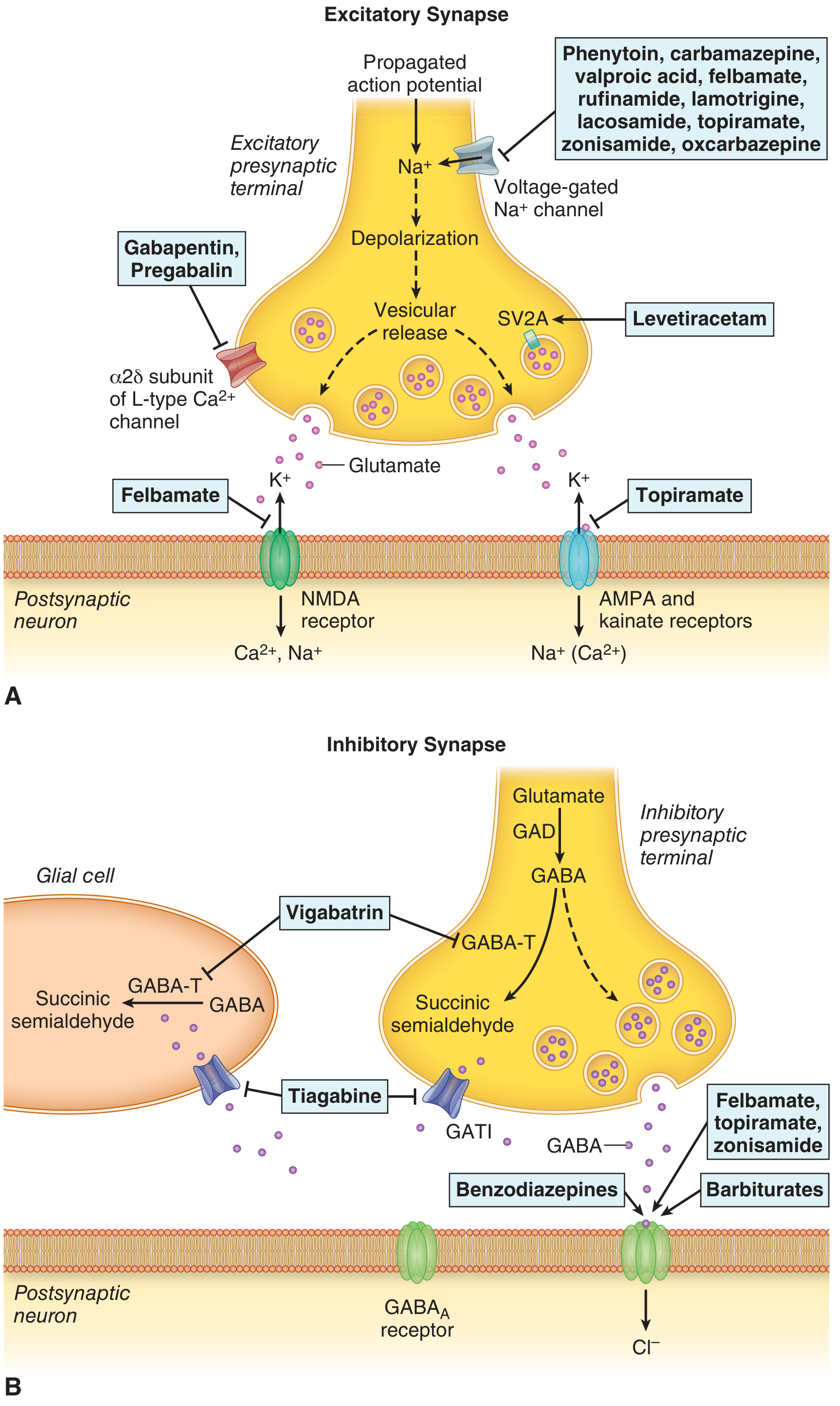
Figure 15-4 from Adams and Victor's Principles of Neurology - AED sites of action
The major mechanisms are:
| Mechanism | Drugs |
|---|---|
| Voltage-gated Na+ channel blockade | Phenytoin, carbamazepine, oxcarbazepine, lamotrigine, lacosamide, valproate, rufinamide, topiramate, zonisamide |
| GABA-A receptor enhancement (Cl- influx) | Benzodiazepines, barbiturates (phenobarbital), topiramate, zonisamide, felbamate |
| GABA reuptake inhibition | Tiagabine |
| GABA transaminase inhibition (raises GABA levels) | Vigabatrin |
| T-type Ca2+ channel blockade | Ethosuximide, valproate |
| Synaptic vesicle protein SV2A binding | Levetiracetam, brivaracetam |
| Alpha-2-delta subunit of Ca2+ channels | Gabapentin, pregabalin |
| AMPA/kainate receptor blockade | Topiramate, felbamate, perampanel |
| NMDA receptor blockade | Felbamate |
- Adams and Victor's Principles of Neurology, 12th Ed., Fig. 15-4; Bradley and Daroff's Neurology
Classification by Generation
First-Generation (Traditional) AEDs
Phenytoin, phenobarbital, primidone, ethosuximide, carbamazepine, valproate
Second-Generation AEDs
Lamotrigine, levetiracetam, topiramate, oxcarbazepine, gabapentin, pregabalin, vigabatrin, tiagabine, felbamate, zonisamide
Third-Generation (Newer) AEDs
Lacosamide, eslicarbazepine, brivaracetam, perampanel, cenobamate, rufinamide, cannabidiol
Pharmacology of Key Individual Drugs
1. Phenytoin (Dilantin)
- Mechanism: Voltage-gated Na+ channel blocker; inhibits abnormal repetitive neuronal firing
- Dose (adult): 300-400 mg/day | Serum level: 10-20 µg/mL | Half-life: 12-36 h
- Use: Focal seizures, generalized tonic-clonic (GTC) seizures; IV form for status epilepticus
- Key side effects: Nystagmus, ataxia, diplopia at toxic levels; gingival hyperplasia, hirsutism, coarsening of facial features (long-term); peripheral neuropathy; non-linear (zero-order) kinetics - small dose increases cause disproportionate level rises above 10 µg/mL
- Serious: Blood dyscrasias, hepatotoxicity, Stevens-Johnson syndrome (rare), teratogenicity (fetal hydantoin syndrome)
- Interactions: Warfarin (unpredictable INR changes), oral contraceptives (failure), CYP enzyme inducer
2. Carbamazepine (Tegretol)
- Mechanism: Na+ channel blocker (similar to phenytoin)
- Dose (adult): 600-1,200 mg/day | Serum level: 4-12 µg/mL | Half-life: 14-25 h
- Use: Focal seizures, GTC; also trigeminal neuralgia, bipolar disorder (mood stabilizer)
- Key side effects: Leukopenia (mild, common), diplopia, dizziness, ataxia; hyponatremia (SIADH); hepatotoxicity; pancytopenia (rare)
- Serious: Stevens-Johnson syndrome - HLA-B*1502 screening required in Asian patients; toxic epidermal necrolysis
- Important: Autoinduction - induces its own metabolism, so doses adequate initially become inadequate after weeks; induces CYP3A4 (reduces OCP, warfarin levels)
3. Valproate / Valproic Acid (Depakote)
- Mechanism: GABAergic (enhances GABA synthesis via glutamic acid decarboxylase), Na+ channel blockade, T-type Ca2+ channel blockade
- Dose (adult): 1,000-3,000 mg/day | Serum level: 50-100 µg/mL | Half-life: 6-15 h (shorter - split dosing)
- Use: Broad spectrum - GTC, absence, myoclonic, focal seizures; drug of choice for juvenile myoclonic epilepsy; mood stabilizer (bipolar); migraine prophylaxis
- Key side effects: Weight gain, tremor, hair loss (reversible), nausea/GI upset, hepatotoxicity (potentially fatal in children < 2 years), pancreatitis
- Serious - Teratogenicity: Major risk of neural tube defects (spina bifida, ~1-2%); cognitive impairment in offspring; contraindicated in pregnancy if alternatives exist; menstrual irregularities, polycystic ovarian syndrome
- Inhibits CYP enzymes - elevates levels of phenytoin, lamotrigine, phenobarbital; avoid in women of childbearing age when possible
4. Phenobarbital (Luminal)
- Mechanism: Enhances GABA-A receptor activity (prolongs Cl- channel opening); also inhibits Na+ currents
- Dose (adult): 90-200 mg/day | Serum level: 15-40 µg/mL | Half-life: 40-120 h (longest - once daily dosing)
- Use: GTC, focal, neonatal seizures; status epilepticus (IV)
- Key side effects: Sedation and cognitive dulling (major limiting factor); nystagmus; behavioral problems in children; Dupuytren contractures, frozen shoulder (chronic use); osteoporosis
- Strong CYP inducer - interacts extensively with warfarin, OCP, other AEDs; teratogenic (~5.5% major malformation rate)
5. Lamotrigine (Lamictal)
- Mechanism: Blocks slow voltage-gated Na+ channels - reduces release of excitatory transmitters (glutamate, aspartate)
- Dose (adult): 300-500 mg/day | Serum level: 2-7 µg/mL | Half-life: 15-60 h
- Use: Broad spectrum - focal, GTC, absence; preferred in women (no weight gain, no ovarian/hormonal issues, better teratogenic profile); mood stabilizer in bipolar
- Key side effects: Rash in ~12% (potentially severe); titrate slowly to minimize; Stevens-Johnson syndrome in ~1%
- Interaction: Valproate doubles lamotrigine levels (requires dose halving); enzyme-inducers reduce lamotrigine levels
- Psychiatric: Antidepressant and mood-stabilizing properties; rarely anxiogenic
6. Levetiracetam (Keppra)
- Mechanism: Binds synaptic vesicle protein SV2A - modulates vesicle release; precise anticonvulsant mechanism still under investigation
- Dose (adult): 500-3,000 mg/day | Half-life: 6-8 h | Renally excreted - dose reduce in renal failure
- Use: Focal and generalized seizures; widely used as first-line due to minimal drug interactions; safe in patients on chemotherapy, anticoagulants, complex polypharmacy
- Key side effects: Somnolence, dizziness; irritability, depression, behavioral changes, suicidality - significant psychiatric concern
- Major advantage: No significant hepatic metabolism, no CYP interactions; favorable in liver disease and complex polypharmacy
7. Ethosuximide (Zarontin)
- Mechanism: Blocks T-type Ca2+ channels in thalamic neurons
- Use: Drug of choice for childhood absence epilepsy (petit mal); NOT effective for other seizure types
- Half-life: Long (~40-60 h) - once daily dosing
- Side effects: GI upset, behavioral disturbance, depression, rarely psychosis
8. Gabapentin (Neurontin) & Pregabalin (Lyrica)
- Mechanism: Bind alpha-2-delta subunit of voltage-gated Ca2+ channels - reduce calcium-mediated neurotransmitter release; structurally GABA analogs but do NOT act on GABA receptors
- Use: Adjunctive therapy for focal seizures; also neuropathic pain, fibromyalgia, anxiety (pregabalin)
- Advantages: Not metabolized hepatically; few drug interactions; renally excreted (adjust in renal failure)
- Side effects: Sedation, weight gain, peripheral edema, dizziness; withdrawal anxiety/depression on cessation
9. Topiramate (Topamax)
- Mechanism: Multiple - Na+ channel blockade, GABA-A enhancement, AMPA/kainate receptor blockade, carbonic anhydrase inhibition
- Use: Focal and generalized seizures; migraine prophylaxis; weight loss (Qsymia)
- Side effects: Cognitive slowing ("dopamax"), word-finding difficulties, kidney stones (carbonic anhydrase inhibition), weight loss, metabolic acidosis
- Psychiatric: Anxiety, depression, psychosis (rare)
10. Oxcarbazepine (Trileptal)
- Mechanism: Na+ channel blockade (carbamazepine analogue - acts via active metabolite monohydroxy derivative, MHD)
- Use: Focal seizures; better tolerated than carbamazepine
- Advantages over carbamazepine: Less marrow toxicity, no autoinduction, fewer drug interactions
- Side effects: Hyponatremia (more common than carbamazepine, ~3%); rash; dizziness
Drug of Choice by Seizure Type
| Seizure/Epilepsy Type | First-line Drug(s) |
|---|---|
| Focal (partial) seizures | Carbamazepine, lamotrigine, levetiracetam, oxcarbazepine |
| Generalized tonic-clonic | Valproate, lamotrigine, levetiracetam, phenytoin |
| Absence (childhood) | Ethosuximide (first choice), valproate |
| Juvenile myoclonic epilepsy | Valproate, levetiracetam, lamotrigine |
| Myoclonic seizures | Valproate, levetiracetam, clonazepam |
| Status epilepticus | IV lorazepam/diazepam (1st) → IV fosphenytoin/valproate (2nd) → phenobarbital/propofol (3rd) |
| Neonatal seizures | Phenobarbital (IV) |
| Infantile spasms (West) | ACTH, vigabatrin, prednisolone |
| Lennox-Gastaut | Valproate, rufinamide, cannabidiol, clobazam |
| Dravet syndrome | Stiripentol, cannabidiol, valproate |
- Goldman-Cecil Medicine; Adams and Victor's Neurology
Pharmacokinetics Summary
| Drug | Adult Dose (mg/d) | Therapeutic Level (µg/mL) | Half-life (h) | Dosing |
|---|---|---|---|---|
| Valproate | 1,000-3,000 | 50-100 | 6-15 | 2-3x daily |
| Phenytoin | 300-400 | 10-20 | 12-36 | Once daily |
| Carbamazepine | 600-1,200 | 4-12 | 14-25 | 2-3x daily |
| Oxcarbazepine | 900-2,400 | - | 1-5 (MHD: 9-11) | 2x daily |
| Phenobarbital | 90-200 | 15-40 | 40-120 | Once daily |
| Lamotrigine | 300-500 | 2-7 | 15-60 | 2x daily |
| Levetiracetam | 500-3,000 | - | 6-8 | 2x daily |
| Topiramate | 200-400 | - | 20-24 | 2x daily |
| Ethosuximide | 500-1,500 | 40-100 | 40-60 | Once daily |
| Gabapentin | 900-3,600 | - | 5-7 | 3x daily |
- Adams and Victor's Principles of Neurology, Table 15-6
Drug Interactions (Key Points)
Enzyme Inducers (reduce levels of other drugs - OCP, warfarin, other AEDs):
- Phenytoin, carbamazepine, phenobarbital, primidone, rufinamide
Enzyme Inhibitors (raise levels of co-drugs):
- Valproate - inhibits CYP2C9, displaces protein-bound drugs; raises phenytoin, lamotrigine, phenobarbital levels
Renally Excreted (safer in liver disease, fewer interactions):
- Levetiracetam, gabapentin, pregabalin - dose reduce in renal failure
Clinically Critical Interactions:
-
Valproate + lamotrigine: doubles lamotrigine levels → rash risk; halve lamotrigine dose
-
Valproate + carbamazepine: carbamazepine epoxide builds up via epoxide hydrolase inhibition → toxicity
-
Phenytoin/carbamazepine + oral contraceptives: OCP failure - adjust estradiol dose
-
Fluoxetine/fluvoxamine + phenytoin or carbamazepine: raises AED levels (CYP inhibition)
-
Adams and Victor's, p. 361; Maudsley Prescribing Guidelines, 15th Ed.
Special Populations
Pregnancy
- All AEDs are potentially teratogenic - folic acid supplementation and vitamin K before delivery are essential
- Valproate carries the highest teratogenic risk (neural tube defects, reduced IQ in offspring) - avoid if possible; switch to levetiracetam for juvenile myoclonic epilepsy before conception
- Lamotrigine has a more favorable teratogenic profile than most others
- Enzyme-inducing AEDs accelerate vitamin K metabolism - give to mother and newborn to prevent neonatal hemorrhage
Women of Childbearing Age
- Avoid valproate when alternatives exist
- Enzyme inducers reduce OCP efficacy
- Lamotrigine or levetiracetam are preferred first-line choices
Elderly
- Prefer drugs with fewer interactions: gabapentin, levetiracetam, brivaracetam, lacosamide
- Avoid enzyme inducers (carbamazepine, phenytoin, phenobarbital) due to complex polypharmacy
Renal Failure
- Reduce dose of renally excreted AEDs: levetiracetam, gabapentin, pregabalin
Liver Failure
- Monitor levels more closely; prefer renally excreted drugs
Psychiatric Side Effects
| Drug | Adverse Effects | Psychiatric Benefits |
|---|---|---|
| Barbiturates | Behavioral disturbance, depression, cognitive impairment | Anxiolytic, hypnotic |
| Carbamazepine/Oxcarbazepine | Insomnia | Mood stabilizing, anti-manic |
| Lamotrigine | Anxiogenic in some | Antidepressant, mood stabilizing |
| Levetiracetam | Anxiety, behavioral disturbance, depression, suicidality | None confirmed |
| Valproate | Behavioral disturbance at high doses (children) | Mood stabilizing, anti-manic, anti-panic |
| Topiramate | Anxiety, depression, psychosis | Possible anti-manic |
| Phenytoin | Behavioral disturbance, depression | Anti-manic |
| Vigabatrin | Behavioral disturbance, depression, psychosis | None |
- Maudsley Prescribing Guidelines, 15th Ed., Table 10.4
Skin Reactions (Rashes)
- Aromatic AEDs (phenytoin, carbamazepine, phenobarbital, primidone, lamotrigine) have the highest rash risk with significant cross-reactivity
- Typical rash: maculopapular, trunk-predominant, within the first month
- Severe reactions: Stevens-Johnson syndrome, toxic epidermal necrolysis - most common with lamotrigine (especially if escalated too fast) and carbamazepine
- HLA-B*1502: Screen Asian patients before starting carbamazepine (risk of SJS/TEN)
- HLA-A*3101: Associated with skin eruptions in Caucasians on carbamazepine
- If replacing an aromatic drug: use valproate, gabapentin, topiramate, or levetiracetam as substitutes
Discontinuation of AEDs
- Consider after 2 years of seizure freedom; taper slowly
- ~40% relapse risk at 2.5 years, ~50% at 5 years after stopping (vs ~20% on continued therapy)
- Obtain EEG before withdrawal - paroxysmal activity favors continuing treatment
- Juvenile myoclonic epilepsy: Lifelong therapy usually recommended
- Relapse risk is higher in focal seizures vs. absence/generalized-onset
Bone Health
Most AEDs (especially enzyme inducers) reduce bone density through CYP450-mediated vitamin D degradation. Consider calcium, vitamin D supplementation, and periodic bone density monitoring - particularly in women on long-term therapy. - Adams and Victor's, p. 362
References:
- Adams and Victor's Principles of Neurology, 12th Ed., Ch. 15 (Antiepileptic Drugs - General Principles, Specific Drugs, Tables 15-5 & 15-6)
- Goldman-Cecil Medicine International Edition, Ch. 372 (Table 372-7)
- Maudsley Prescribing Guidelines in Psychiatry, 15th Ed., Table 10.4
- Kaplan & Sadock's Comprehensive Textbook of Psychiatry
This is a shared conversation. Sign in to Orris to start your own chat.