
Hyperthyroidism according to Harrison
Reading File
Now let me search Harrison's for hyperthyroidism sections and content in parallel.
Finding Sources
Finding Sources
Harrison's ISBN is 9781265977061. Now let me search for hyperthyroidism headings specifically in Harrison's.
Finding Sources
Finding Sources
The main hyperthyroidism content is in block43 (Secondary Hyperthyroidism section, which is the main chapter). Let me read the key sections now.
Reading File
Finding Sources
I can see the full structure. Let me now read the main hyperthyroidism/thyrotoxicosis content in parallel chunks.
Reading File
Reading File
Excellent content coming in. Let me read more - the clinical manifestations, lab diagnosis sections, and the rest of treatment.
Reading File
Reading File
I now have rich content. Let me read two more sections - the Graves' disease specific features and laboratory diagnosis, and the thyroid storm content.
Reading File
Reading File
I have very comprehensive content. Let me also fetch the Graves' disease image and get the thyroid storm section.
Loading Image
Finding Sources
Finding Sources
Finding Sources
Reading File
I now have all the content needed for a thorough, well-organized response. Let me compile it.
Hyperthyroidism - Harrison's Principles of Internal Medicine (22nd Ed., 2025)
Definitions
Thyrotoxicosis = state of thyroid hormone excess (broad term).
Hyperthyroidism = thyrotoxicosis caused by excessive thyroid function specifically.
These terms are often used interchangeably, but Harrison's draws a precise distinction.
Etiology and Classification
Table 396-1 - Causes of Thyrotoxicosis
Primary Hyperthyroidism (elevated thyroid production, low TSH)
- Graves' disease (most common, 60-80%)
- Toxic multinodular goiter (MNG)
- Toxic adenoma
- Functioning thyroid carcinoma metastases
- Activating mutation of the TSH receptor
- Activating mutation of Gsa (McCune-Albright syndrome)
- Struma ovarii
- Drugs: iodine excess (Jod-Basedow phenomenon)
Thyrotoxicosis Without Hyperthyroidism (preformed hormone release, low RAI uptake)
- Subacute thyroiditis
- Silent thyroiditis
- Other thyroid destruction: amiodarone, cytokines, tyrosine kinase inhibitors, immune checkpoint inhibitors, radiation, infarction of adenoma
- Ingestion of excess thyroid hormone (thyrotoxicosis factitia)
Secondary Hyperthyroidism (elevated TSH)
- TSH-secreting pituitary adenoma
- Thyroid hormone resistance syndrome
- Chorionic gonadotropin-secreting tumors*
- Gestational thyrotoxicosis*
*TSH levels are low in these forms despite being listed as "secondary."
Graves' Disease
Epidemiology
- Accounts for 60-80% of thyrotoxicosis
- Prevalence up to 2% of women, ~10x less frequent in men
- Typically onset between 20-50 years; also occurs in elderly
Pathogenesis
- Polygenic susceptibility: HLA-DR, CTLA-4, CD25, CD40, PTPN22, FCRL3, CD226, and TSH-R gene polymorphisms
- Concordance in monozygotic twins: 20-30% vs. <5% in dizygotic twins
- Environmental triggers: stress, smoking (moderate risk for Graves', major risk for ophthalmopathy), sudden iodine increase, postpartum (3x increased risk)
- Also triggered during immune reconstitution (HAART, alemtuzumab) and immune checkpoint inhibitor therapy
Key mechanism: Thyroid-stimulating immunoglobulins (TSIs) synthesized by lymphocytes activate the TSH receptor. Detected by:
- Bioassays
- TSH receptor antibodies (TRAb) - the widely available immunoassay
TPO and thyroglobulin antibodies present in up to 80% of cases (coexisting autoimmune thyroiditis).
Clinical Manifestations
Table 396-2 - Signs and Symptoms of Thyrotoxicosis
| Symptoms | Signs |
|---|---|
| Hyperactivity, irritability, dysphoria | Tachycardia; atrial fibrillation (elderly) |
| Heat intolerance and sweating | Tremor |
| Palpitations | Goiter |
| Fatigue and weakness | Warm, moist skin |
| Weight loss with increased appetite | Muscle weakness, proximal myopathy |
| Diarrhea | Lid retraction or lag |
| Polyuria | Gynecomastia |
| Oligomenorrhea, loss of libido |
Specific notes:
- Apathetic thyrotoxicosis in the elderly: fatigue and weight loss dominate, classic features may be absent
- Weight gain occurs in 5% (increased food intake overcomes metabolic rate)
- Neurologic: fine tremor, hyperreflexia, proximal myopathy, hypokalemic periodic paralysis (especially Asian males)
- Cardiovascular: sinus tachycardia, widened pulse pressure, bounding pulse; AF more common >50 yrs; treating thyrotoxicosis converts AF to sinus rhythm in 75% without underlying cardiac disease
- Skin: warm, moist; palmar erythema, onycholysis, diffuse alopecia (up to 40%)
- Bone: osteopenia; mild hypercalcemia in up to 20%
- Menstrual: oligomenorrhea/amenorrhea
Graves'-Specific Features
Graves' Ophthalmopathy (Thyroid Eye Disease, TED)
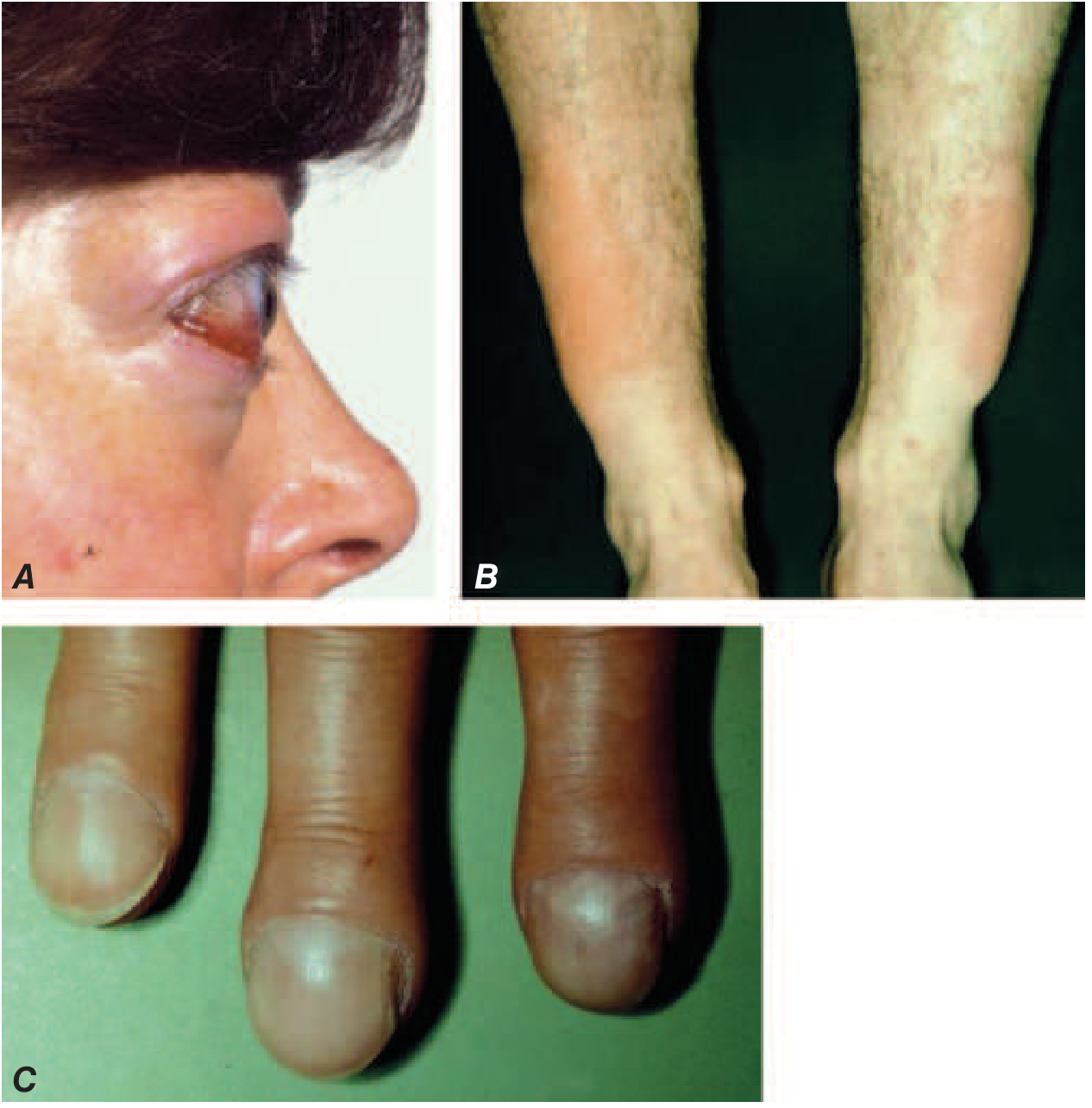
Figure 396-1. A: Ophthalmopathy - lid retraction, periorbital edema, conjunctival injection, proptosis. B: Thyroid dermopathy over lateral shins. C: Thyroid acropachy.
- Occurs in 10% without hyperthyroidism (euthyroid ophthalmopathy)
- About one-third of Graves' patients have clinical ophthalmopathy
- Pathogenesis: T-cell infiltration of extraocular muscles → IFN-γ, TNF, IL-1 → glycosaminoglycan accumulation + fibrosis; TSH-R expressed on orbital fibroblasts; aberrant IGF-1R signaling also implicated
- Symptoms: grittiness, tearing, proptosis (1/3), diplopia (5-10%), corneal exposure, optic nerve compression (most serious)
- Unilateral signs in up to 10%
NO SPECS scoring:
- 0 = No signs/symptoms
- 1 = Only signs (lid retraction/lag)
- 2 = Soft tissue involvement (periorbital edema)
- 3 = Proptosis (>22 mm)
- 4 = Extraocular muscle involvement (diplopia)
- 5 = Corneal involvement
- 6 = Sight loss
(EUGOGO scoring system is preferred for monitoring and treatment decisions.)
Thyroid Dermopathy
- Pretibial myxedema: raised, hyperpigmented, indurated skin over lower legs
- Caused by glycosaminoglycan deposition
Thyroid Acropachy
- Clubbing + periosteal new bone formation; rare
Laboratory Diagnosis
Graves' disease characterized by:
- Suppressed TSH (often undetectable)
- Elevated free T4 and/or T3
- TRAb positive (implies TSI; also useful for monitoring in pregnancy due to risk of neonatal thyrotoxicosis)
Distinguishing thyrotoxicosis without hyperthyroidism (e.g., thyroiditis):
- Low radionuclide uptake (vs. elevated in Graves'/toxic MNG)
- Elevated serum thyroglobulin (Tg) in destructive thyroiditis
- Low Tg in thyrotoxicosis factitia
- Normal ESR + TPO antibodies in silent thyroiditis vs. elevated ESR in subacute
TSH-secreting pituitary adenoma: inappropriately normal or elevated TSH with elevated T4/T3; elevated TSH alpha subunit; confirmed by MRI/CT.
Treatment of Graves' Disease
Three main options: antithyroid drugs, radioiodine (¹³¹I), or thyroidectomy
Geographic variation: Antithyroid drugs predominate in Europe, Latin America, Japan; radioiodine more common as first-line in North America.
Antithyroid Drugs (Thionamides)
| Drug | Dose | Notes |
|---|---|---|
| Methimazole | 10-20 mg q12h initially; 2.5-10 mg/day maintenance | Drug of choice (once-daily possible after euthyroidism) |
| Carbimazole | 10-20 mg q12h initially | Not available in US; active metabolite is methimazole |
| Propylthiouracil (PTU) | 100-200 mg q6-8h | Limited by FDA to: pregnancy 1st trimester, thyroid storm, methimazole intolerance |
Mechanism: Inhibit TPO (block oxidation and organification of iodide); reduce thyroid antibody levels. PTU also inhibits T4→T3 conversion.
PTU hepatotoxicity: monitor LFTs if used.
Regimens:
- Titration regimen: dose gradually reduced as euthyroidism restored (preferred - minimizes drug dose)
- Block-replace regimen: high fixed antithyroid dose + LT4 supplement (avoids iatrogenic hypothyroidism)
Review thyroid function 4-6 weeks after starting; TSH may remain suppressed for months - use free T4 to monitor initially. Maximum remission rates 30-60% at 12-18 months. Remission more likely when TRAb becomes undetectable.
Higher relapse risk in: young patients, males, smokers, allergy history, severe hyperthyroidism, large goiters, persistent TRAb.
Radioiodine (¹³¹I)
- Thyroid will be rendered hypothyroid over months-years (virtually all eventually)
- Contraindicated in pregnancy; avoid pregnancy for 6 months after treatment
- Can worsen Graves' ophthalmopathy (cover with glucocorticoids if ophthalmopathy present)
- Give antithyroid drugs pretreatment in elderly or those with cardiac disease
Surgery (Thyroidectomy)
- Indicated for: large goiters, suspected malignancy, first-trimester pregnancy complications, patient preference
- Should achieve euthyroidism with antithyroid drugs before surgery
- Risks: hypoparathyroidism, recurrent laryngeal nerve damage
- Leads to hypothyroidism (definitive treatment)
Special Situations
- Pregnancy: PTU preferred in 1st trimester (methimazole teratogenic - choanal atresia, aplasia cutis); switch to methimazole in 2nd/3rd trimester (PTU hepatotoxicity risk). Monitor TRAb - if high, risk of neonatal thyrotoxicosis.
- Children: Methimazole/carbimazole (avoid PTU) as titration regimen for ≥3 years; surgery or radioiodine for severe/relapsing disease.
- Breast-feeding: Safe with low antithyroid drug doses.
Thyroid Storm (Thyrotoxic Crisis)
A rare, life-threatening emergency:
- Features: Fever, delirium, seizures, coma, vomiting, diarrhea, jaundice
- Mortality: 4-17% even with treatment (cardiac failure, arrhythmia, hyperthermia)
- Precipitants: Acute illness (stroke, infection, trauma, DKA), surgery, radioiodine in untreated/partially treated patients
Management of Thyroid Storm:
- PTU 500-1000 mg loading dose, then 250 mg every 4 h (PO/NG/PR) - preferred for T4→T3 inhibition
- Stable iodide (SSKI 5 drops q6h) - given 1 hour after the first PTU/methimazole dose (Wolff-Chaikoff effect; the delay prevents iodine from being incorporated into new hormone)
- Propranolol 60-80 mg PO q4h or 2 mg IV q4h (high doses also inhibit T4→T3 conversion); esmolol IV for rate control if heart failure concern
- Hydrocortisone 300 mg IV bolus, then 100 mg q8h
- Antibiotics (if infection present), cholestyramine (sequesters thyroid hormones), cooling, O₂, IV fluids
Thyroiditis
Subacute (De Quervain's) Thyroiditis
- Viral etiology; painful thyroid, elevated ESR, transient thyrotoxicosis followed by hypothyroidism then recovery
- RAI uptake suppressed during thyrotoxic phase
- Treatment: Aspirin 600 mg q4-6h or NSAIDs ± PPI; glucocorticoids (prednisone 15-40 mg) if severe; β-blockers for thyrotoxic symptoms; no antithyroid drugs (not true hyperthyroidism)
Silent (Painless) Thyroiditis
- Autoimmune; brief thyrotoxicosis 2-4 weeks, then hypothyroidism 4-12 weeks, then recovery
- Postpartum thyroiditis: occurs 3-6 months postpartum in up to 5% of women; 3x more common in type 1 DM; TPO antibodies antepartum
- Distinguish from subacute thyroiditis: normal ESR, TPO antibodies present, no pain
- Treatment: short-course propranolol for symptoms; LT4 for hypothyroid phase; withdraw after 6-9 months
Drug-Induced Thyroiditis
- IFN-α (hepatitis, hematologic malignancies): thyroid dysfunction in ~5%
- Immune checkpoint inhibitors (pembrolizumab, nivolumab): thyroiditis in 5-20% of cancer patients
- Treatment: same as silent thyroiditis; routine TFT monitoring recommended (ASCO guidelines)
Ophthalmopathy Treatment
- Mild: Artificial tears, dark glasses, smoking cessation, euthyroid control, selenium 100 mcg bid
- Moderate-to-severe: IV methylprednisolone 500 mg once weekly x6 weeks, then 250 mg once weekly x6 weeks (preferred over oral)
- Teprotumumab: monoclonal antibody IGF-1R inhibitor; improves proptosis and other features
- Surgery (decompression, strabismus correction, lid) after disease stabilizes
- External beam radiotherapy: reserved for those unresponsive to glucocorticoids
Source: Harrison's Principles of Internal Medicine, 22nd Edition (2025, McGraw Hill Medical), Chapter 396 - Disorders of the Thyroid Gland
This is a shared conversation. Sign in to Orris to start your own chat.