
I have my university exam of 1 st year of subject biochemistry These are the important long answer give me answer of this question "Regulation of blood glucose level." and remeber it's a long question
Reading File
Now let me search the medical library for comprehensive content on blood glucose regulation.
Finding Sources
Finding Sources
Excellent! Let me now read the most relevant sections from multiple textbooks in parallel.
Reading File
Reading File
Reading File
Now let me read the key sections from Guyton & Hall (physiology) and Lippincott Biochemistry on insulin, glucagon, and counterregulatory hormones in parallel.
Reading File
Reading File
Reading File
Now let me fetch the key images and read the insulin action section from Lippincott for a complete picture.
Finding Sources
Loading Image
Loading Image
Now let me get the hormonal regulation diagram and read the insulin actions section from Costanzo Physiology.
Reading File
Loading Image
I now have comprehensive material from multiple authoritative textbooks. Let me compose the full long-answer response.
Regulation of Blood Glucose Level
Introduction
The concentration of glucose in the blood is maintained within a narrow range - normally 70-100 mg/dL (fasting) and rises to 120-140 mg/dL after a meal, but feedback systems return it to the fasting level within about 2 hours. This tight regulation is one of the most important homeostatic functions in the body.
Why is regulation so important?
- Glucose is the primary and often the only fuel for the brain, retina, and germinal epithelium of the gonads
- High blood glucose causes osmotic damage to cells and tissues
- Persistently elevated glucose leads to glycosuria, osmotic diuresis, and dehydration
- Very low glucose leads to neuroglycopenia - brain dysfunction, seizures, coma, and death
Normal Blood Glucose Values
| State | Blood Glucose Level |
|---|---|
| Fasting (normal) | 70-100 mg/dL |
| Postprandial (1-2 hrs after meal) | 120-140 mg/dL |
| Hypoglycemia | < 70 mg/dL |
| Hyperglycemia (diagnostic for DM) | > 126 mg/dL fasting |
Sources of Blood Glucose
Blood glucose is supplied and removed by several pathways:
Sources that RAISE blood glucose:
- Dietary absorption - glucose absorbed from the gut after a meal
- Glycogenolysis - breakdown of liver glycogen (major source during 12-hour fast)
- Gluconeogenesis - synthesis of glucose from non-carbohydrate precursors (amino acids, lactate, glycerol) - becomes the major source as fasting extends overnight and glycogen is depleted
Pathways that LOWER blood glucose:
- Glycolysis - oxidation of glucose to pyruvate/lactate
- Glycogenesis - conversion of glucose to glycogen (in liver and muscle)
- Lipogenesis - conversion of excess glucose to fatty acids and triglycerides
- Glucose oxidation via the TCA cycle and oxidative phosphorylation
Organs Involved in Blood Glucose Regulation
1. The Liver - the "Glucose Buffer"
The liver is the central organ for blood glucose regulation. It:
- Stores up to ~100g of glycogen after a meal (about two-thirds of absorbed gut glucose)
- Releases glucose back into circulation between meals via glycogenolysis
- Performs gluconeogenesis during prolonged fasting
- Is the only organ (with kidney) that expresses glucose-6-phosphatase, allowing it to release free glucose into blood
- Reduces fluctuations in blood glucose to about one-third of what they would otherwise be
2. The Pancreas
The islets of Langerhans contain:
- Beta (β) cells - secrete insulin (in response to high blood glucose)
- Alpha (α) cells - secrete glucagon (in response to low blood glucose)
- Delta (δ) cells - secrete somatostatin (inhibits both insulin and glucagon)
3. Skeletal Muscle and Adipose Tissue
Major insulin-responsive tissues. They take up glucose via GLUT4 transporters (recruited to membrane by insulin), store it as glycogen (muscle) or convert to fat (adipose).
4. Brain (Hypothalamus)
Glucoreceptors in the hypothalamus detect hypoglycemia and activate the autonomic nervous system and pituitary to release counterregulatory hormones.
Hormonal Regulation - The Core Mechanism
Hormonal control is the dominant mechanism. There are two opposing groups:
A. Hypoglycemic hormone: Insulin (lowers blood glucose)
B. Hyperglycemic (counterregulatory) hormones: Glucagon, Epinephrine, Cortisol, Growth Hormone (raise blood glucose)
A. Insulin - The Hypoglycemic Hormone
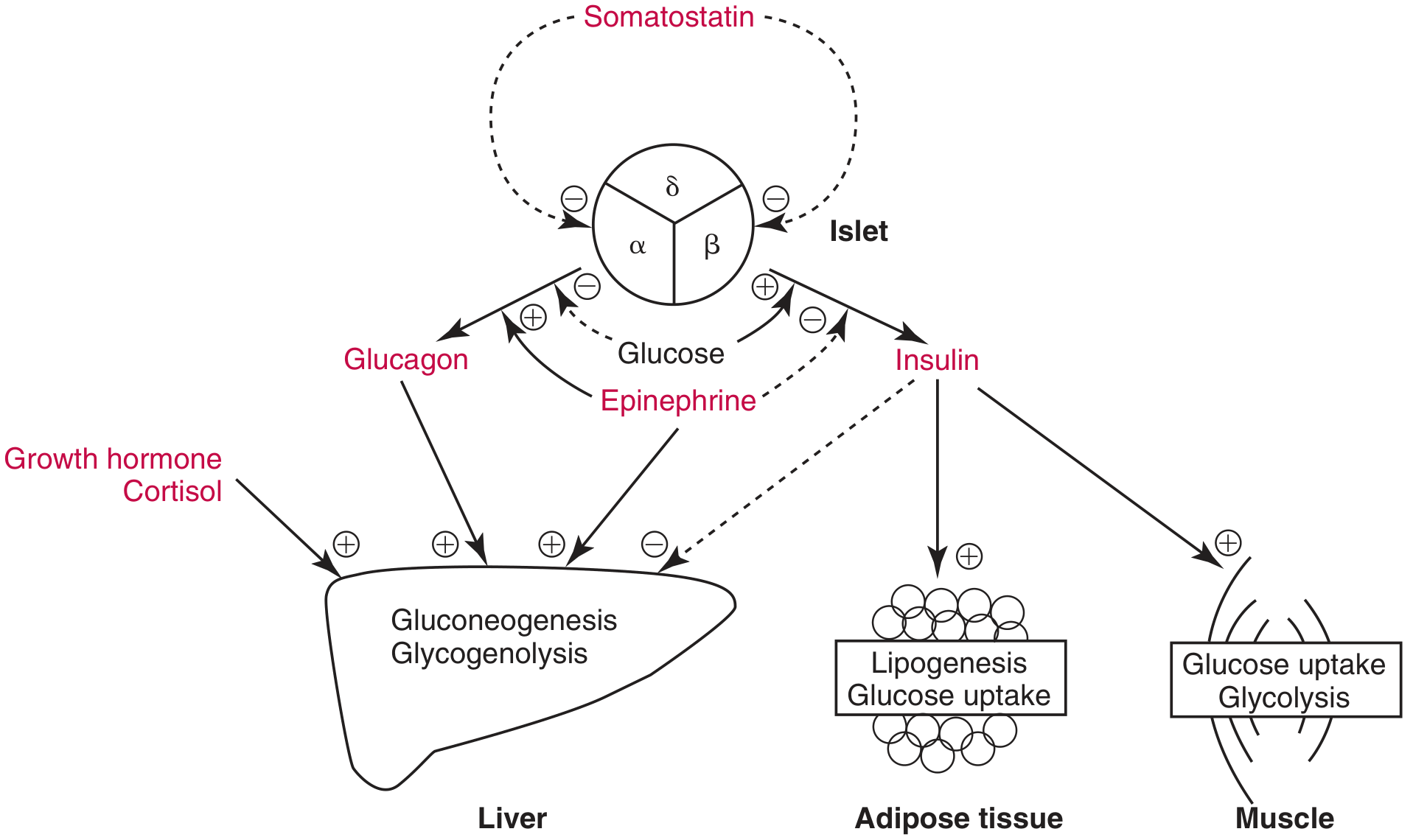
Fig. 1 - Hormonal regulation of blood glucose. (+) = stimulation; (-) = inhibition. (Tietz Textbook of Laboratory Medicine)
Source and Stimulus for Secretion
- Secreted by beta cells of the islets of Langerhans, pancreas
- Primary stimulus: rise in blood glucose above ~100 mg/dL
- Insulin secretion rises 10-25 times above basal levels when blood glucose is 400-600 mg/dL
- Secretion turns off rapidly (within 3-5 min) when blood glucose falls back to fasting levels
- Additional stimuli: amino acids (especially arginine, lysine), incretins (GLP-1, GIP) from the gut, glucagon, growth hormone, cortisol, parasympathetic stimulation
- Inhibited by: sympathetic stimulation (epinephrine at alpha receptors), somatostatin
Actions of Insulin on Blood Glucose (Carbohydrate Metabolism)
| Action | Pathway | Net Effect |
|---|---|---|
| Increases glucose uptake into muscle and adipose | Recruits GLUT4 to cell membrane | Lowers blood glucose |
| Promotes glycogenesis | Activates glycogen synthase | Stores glucose as glycogen |
| Inhibits glycogenolysis | Inhibits glycogen phosphorylase | Prevents glucose release from liver |
| Inhibits gluconeogenesis | Increases fructose-2,6-bisphosphate, inhibits PEPCK | Prevents new glucose synthesis |
| Promotes glycolysis | Activates phosphofructokinase | Oxidizes glucose for energy |
Actions of Insulin on Fat and Protein
- Fat metabolism: Stimulates lipogenesis; inhibits lipolysis and ketogenesis -> lowers blood fatty acids and ketones
- Protein metabolism: Anabolic - increases amino acid uptake into cells, promotes protein synthesis, inhibits protein catabolism -> lowers blood amino acids
- K+ transport: Promotes K+ uptake into cells alongside glucose (via Na+/K+-ATPase activation)
Mechanism of Insulin Action (Signal Transduction)
- Insulin binds to its tyrosine kinase receptor on target cell membrane
- Receptor autophosphorylation activates IRS (insulin receptor substrate) proteins
- Activates PI3K → AKT pathway
- AKT → GLUT4 vesicle translocation to membrane → glucose entry
- AKT → inhibits GSK3 → activates glycogen synthase → glycogen synthesis
- cAMP-dependent protein kinase and AMP-activated protein kinase (AMPK) coordinate metabolic switching
B. Glucagon - The Hyperglycemic Hormone
Source and Stimulus for Secretion
- Secreted by alpha (α) cells of the islets of Langerhans
- Primary stimulus: fall in blood glucose (hypoglycemia)
- Also stimulated by: amino acids (especially arginine), catecholamines, sympathetic stimulation
- Inhibited by: elevated blood glucose, insulin, somatostatin
Actions of Glucagon
On liver (primary target):
- Stimulates glycogenolysis (breaks down liver glycogen → releases glucose) - major short-term effect
- Stimulates gluconeogenesis (from amino acids, lactate, glycerol)
- Inhibits glycolysis by decreasing fructose-2,6-bisphosphate → inhibits PFK-1
- Net result: rapid rise in blood glucose
On fat:
- Inhibits fatty acid synthesis (phosphorylates and inactivates ACC)
- Stimulates fatty acid oxidation (removes malonyl-CoA inhibition on CPT-1)
- Promotes ketogenesis during prolonged fasting
Mechanism of Glucagon Action
- Glucagon binds GPCR on hepatocyte membrane
- Activates adenylyl cyclase → ↑ cAMP
- cAMP activates Protein Kinase A (PKA)
- PKA phosphorylates phosphorylase kinase → activates glycogen phosphorylase → glycogenolysis
- PKA also phosphorylates and inactivates glycogen synthase → stops glycogen synthesis
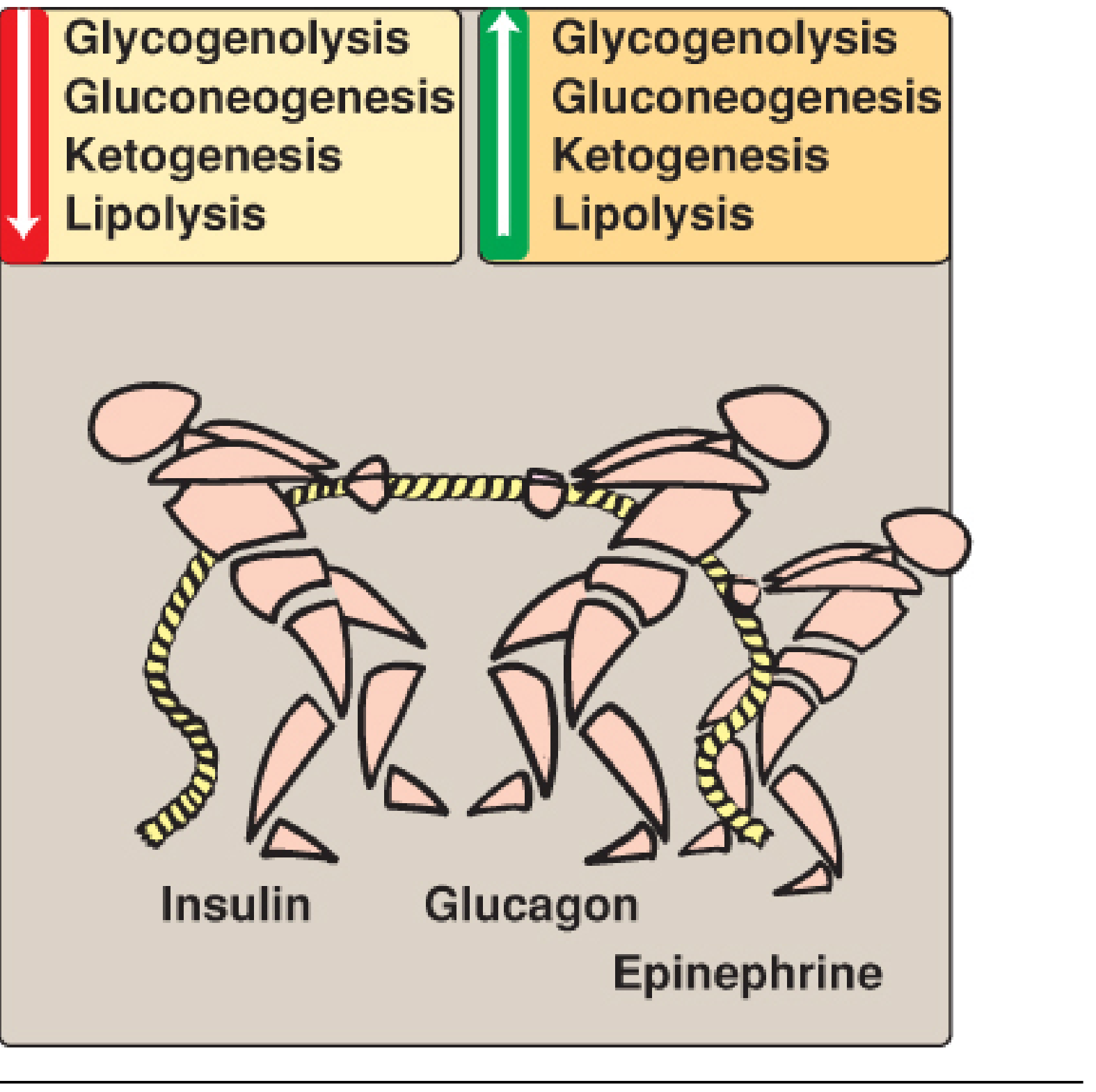
Fig. 2 - Tug-of-war: Insulin opposes glucagon and epinephrine. Insulin pulls DOWN glycogenolysis, gluconeogenesis, ketogenesis, lipolysis; glucagon + epinephrine pull UP these same processes. (Lippincott Biochemistry, 8th ed.)
C. Counterregulatory Hormones (Glucose-Raising Hormones)
These are especially important during hypoglycemia, stress, fasting, and exercise. They collectively oppose insulin's actions.
1. Epinephrine (Adrenaline)
- Released from adrenal medulla during stress/hypoglycemia (stimulated by hypothalamus via sympathetic nerves)
- Most potent stimulator of glycogenolysis (both liver and muscle)
- Stimulates gluconeogenesis
- Promotes lipolysis → releases free fatty acids as alternative fuel
- Acts via β-adrenergic receptors → cAMP → PKA
- Also suppresses insulin secretion (via α-adrenergic receptors on beta cells)
2. Cortisol (Glucocorticoid)
- Released from adrenal cortex via ACTH from pituitary (triggered by hypothalamus)
- Acts over hours to days
- Strongly promotes gluconeogenesis (increases substrates - amino acids - by stimulating protein catabolism in muscle)
- Decreases glucose utilization by peripheral tissues
- Causes insulin resistance
3. Growth Hormone
- Secreted by anterior pituitary in response to prolonged hypoglycemia
- Acts over hours to days
- Decreases glucose uptake and utilization by cells
- Promotes lipolysis (fat mobilization) as alternative energy
- Causes insulin resistance at the level of target tissues
4. Somatostatin
- Secreted by delta (δ) cells of the islets of Langerhans
- Inhibits both insulin AND glucagon secretion
- Fine-tunes the hormonal response
- Also secreted by hypothalamus and gut
Summary table of counterregulatory hormones:
| Hormone | Source | Glycogenolysis | Gluconeogenesis | Speed of Action |
|---|---|---|---|---|
| Glucagon | Pancreatic α cells | +++ | +++ | Minutes |
| Epinephrine | Adrenal medulla | +++ | 0 | Minutes |
| Cortisol | Adrenal cortex | 0 | ++ | Hours-days |
| Growth hormone | Anterior pituitary | 0 | + | Hours-days |
D. Nervous System Control
The hypothalamic glucoreceptors play a critical role in responding to hypoglycemia:
- When blood glucose falls below ~50 mg/dL, hypothalamic glucoreceptors are activated
- They trigger the sympathetic nervous system → epinephrine release from adrenal medulla
- They stimulate ACTH from anterior pituitary → cortisol from adrenal cortex
- They stimulate growth hormone release from anterior pituitary
The two overlapping glucose defense systems (Lippincott):
- Pancreatic α cells → glucagon release
- Hypothalamic glucoreceptors → catecholamines (epinephrine/norepinephrine) + ACTH (→ cortisol) + growth hormone
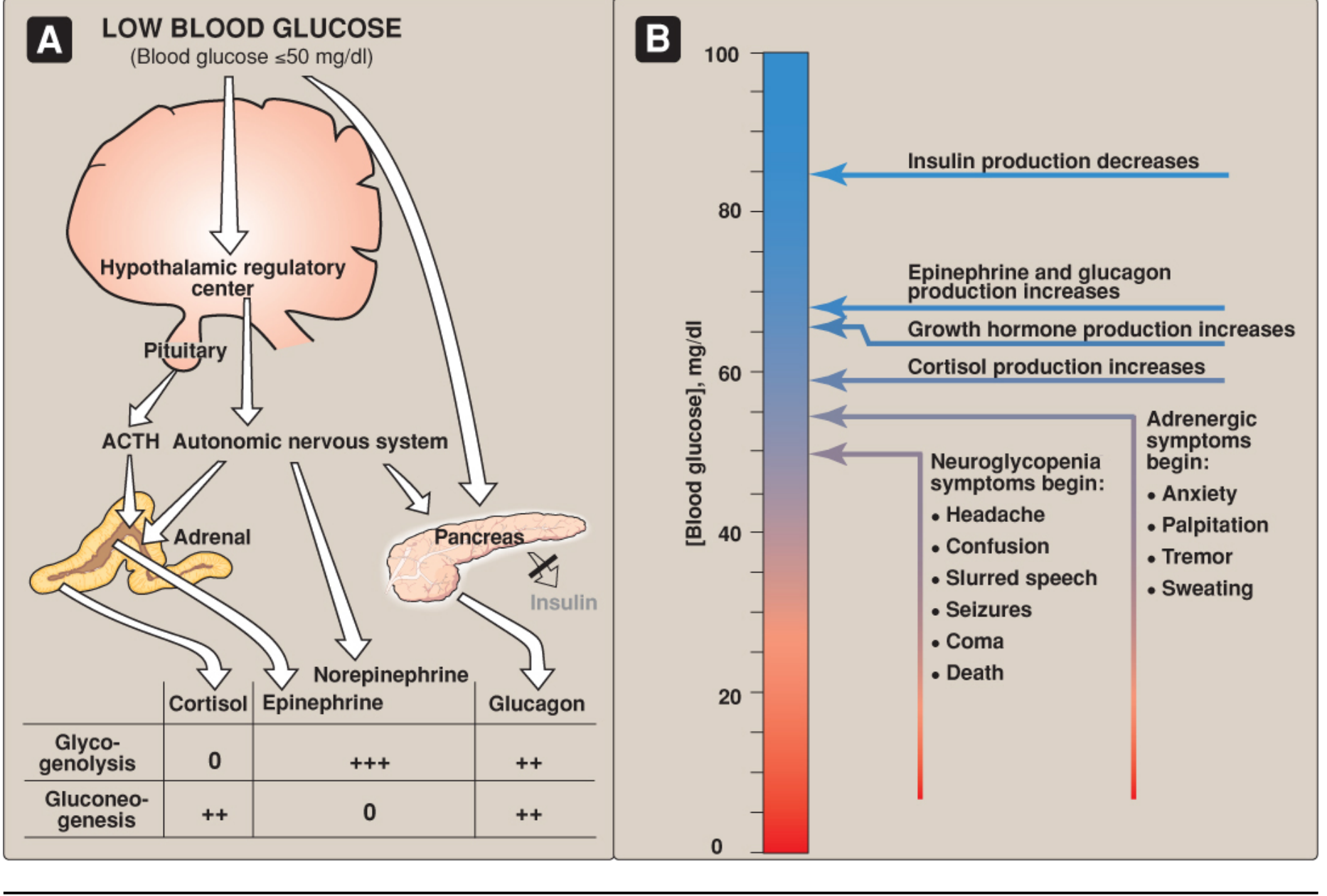
Fig. 3 - Glucoregulatory responses to hypoglycemia showing the cascade of hormonal counterregulation and symptom thresholds. (Lippincott Biochemistry, 8th ed.)
E. Enzyme-Level Regulation (Biochemical Mechanisms)
Blood glucose regulation also occurs at the level of key metabolic enzymes:
Key enzymes regulated:
| Enzyme | Activated by | Inhibited by | Function |
|---|---|---|---|
| Glucokinase (liver) | High glucose | - | Traps glucose in liver as G6P |
| Phosphofructokinase-1 (PFK-1) | Fructose-2,6-bisphosphate (insulin) | Glucagon | Drives glycolysis |
| Glycogen synthase | Insulin, dephosphorylation | Glucagon/epinephrine (via PKA) | Synthesizes glycogen |
| Glycogen phosphorylase | Glucagon/epinephrine (via PKA) | Insulin | Breaks down glycogen |
| Fructose-1,6-bisphosphatase | Glucagon | Fructose-2,6-bisphosphate | Drives gluconeogenesis |
| Pyruvate carboxylase / PEPCK | Glucagon, cortisol | Insulin | Gluconeogenesis |
Key second messengers:
- cAMP / PKA pathway: Activated by glucagon and epinephrine → promotes glycogenolysis and gluconeogenesis, inhibits glycolysis and glycogenesis
- PI3K/AKT pathway: Activated by insulin → promotes glucose uptake, glycogenesis; inhibits gluconeogenesis
F. The Integrated Response
After a Carbohydrate Meal (Fed State - High Glucose)
- Blood glucose rises → insulin secreted by beta cells
- Insulin promotes:
- Glucose uptake by muscle and adipose (via GLUT4)
- Liver glycogen synthesis (stores up to 2/3 of absorbed glucose)
- Glycolysis and lipogenesis
- Inhibits glycogenolysis and gluconeogenesis
- Blood glucose falls back to normal within 2 hours
- Glucagon secretion falls, insulin falls
- Net: glucose stored as glycogen and fat
During Fasting/Overnight (Low Glucose)
- Blood glucose falls → glucagon secreted by alpha cells
- Glucagon promotes:
- Hepatic glycogenolysis → rapid glucose release (major source for first 8-12 hrs)
- Gluconeogenesis → sustained glucose production as glycogen depletes (major source overnight)
- Fatty acid oxidation → ketone body production as alternative fuel
- Insulin falls → GLUT4 not recruited → peripheral tissues switch to fatty acid oxidation
- Brain continues to receive glucose (and eventually adapts to use ketone bodies)
During Stress or Exercise
- Sympathetic activation → epinephrine release
- Epinephrine stimulates rapid glycogenolysis (liver and muscle)
- Epinephrine also suppresses insulin release
- Blood glucose rises to meet increased energy demands
During Prolonged Starvation
- Glycogen is depleted in 24-48 hours
- Gluconeogenesis becomes the primary source of blood glucose
- Cortisol and growth hormone increase
- They promote muscle protein catabolism → amino acids for gluconeogenesis
- Ketone bodies (from fatty acid oxidation) become the brain's major fuel, sparing glucose for obligate glycolytic tissues
G. Summary of Regulatory Mechanisms (Guyton & Hall)
The four-tier control system for blood glucose homeostasis:
-
Liver as glucose buffer - dampens glucose fluctuations by absorbing excess glucose into glycogen after meals and releasing it during fasting
-
Insulin-glucagon feedback loop - the most important mechanism: high glucose → insulin release → glucose uptake and storage; low glucose → glucagon release → glucose production and release. This returns blood glucose toward normal within minutes to hours
-
Sympathetic nervous system/epinephrine - activated by severe hypoglycemia via the hypothalamus; provides rapid, emergency glucose release from the liver
-
Cortisol and growth hormone - slower-acting (hours to days); decrease peripheral glucose utilization and increase gluconeogenesis during prolonged hypoglycemia
Clinical Relevance
Diabetes Mellitus: Failure of this regulatory system. In Type 1 DM, beta cells are destroyed → no insulin → persistent hyperglycemia, glycosuria, osmotic diuresis, ketoacidosis. In Type 2 DM, insulin resistance + impaired beta cell function → inadequate glucose control.
Hypoglycemia: Blood glucose < 70 mg/dL.
- Adrenergic symptoms (glucose ~50 mg/dL): anxiety, palpitation, tremor, sweating (mediated by epinephrine)
- Neuroglycopenic symptoms (glucose falling further): headache, confusion, slurred speech, seizures, coma, death (from failure of glucose delivery to brain)
Summary Points for Exam
- Normal fasting blood glucose: 70-100 mg/dL
- Insulin: only hormone that lowers blood glucose; secreted by beta cells in response to hyperglycemia
- Glucagon: major hyperglycemic hormone; secreted by alpha cells in response to hypoglycemia; acts on liver
- Counterregulatory hormones: glucagon, epinephrine, cortisol, growth hormone - all raise blood glucose
- Liver is the central organ - glucose buffer, glycogenolysis, gluconeogenesis
- Glucagon/epinephrine act via cAMP-PKA pathway; insulin acts via tyrosine kinase-PI3K-AKT pathway
- During fasting: glycogenolysis (short-term) → gluconeogenesis (long-term)
- After meal: glycogenesis and glycolysis dominate under insulin control
- Hypothalamic glucoreceptors are the neural component of regulation - activate the full hormonal cascade during severe hypoglycemia
- Somatostatin from delta cells inhibits BOTH insulin and glucagon - fine-tunes the system
Sources: Guyton & Hall Textbook of Medical Physiology; Lippincott Illustrated Reviews: Biochemistry 8th ed.; Costanzo Physiology 7th Edition; Basic Medical Biochemistry: A Clinical Approach 6th ed.; Tietz Textbook of Laboratory Medicine 7th ed.
This is a shared conversation. Sign in to Orris to start your own chat.