
A patient having some red spot, अ, at the... अ, ये, pubic। Resident. Near the-- near and below the hair follicles. On the skin after shaving the pubic hair. Uh, and, uh... By pressing the red area, a bus is coming out. Uh, what should be the medication?
Reading File
Based on the clinical picture - red spots near/below hair follicles in the pubic area after shaving, with pus expressed on pressure - this is almost certainly folliculitis, possibly with pseudofolliculitis barbae (razor bumps) as a contributing factor. Let me search the medical library for detailed management.
Searching sources...
Finding Sources
Finding Sources
Searching the Web
folliculitis pubic area after shaving treatment medication 2025
Now let me read the dermatology textbook section on folliculitis for detailed treatment information:
Reading File
Finding Sources
Finding Sources
Reading File
Reading File
Let me also get the specific treatment section from Dermatology 2-Volume Set:
Reading File
I now have comprehensive information. Let me also fetch the clinical image of staphylococcal folliculitis for the user:
Loading Image
Here is a thorough clinical answer:
Diagnosis: Pubic Folliculitis (Post-shaving)
The presentation - red spots near/below hair follicles in the pubic area after shaving, with pus expressible on pressure - is classic bacterial folliculitis of the pubic region, most likely caused by Staphylococcus aureus. The act of shaving creates micro-trauma to the follicle, allowing bacterial entry. This is confirmed by textbook description: "Staphylococcal folliculitis can affect any hair-bearing areas... including the pubis" - Andrews' Diseases of the Skin.
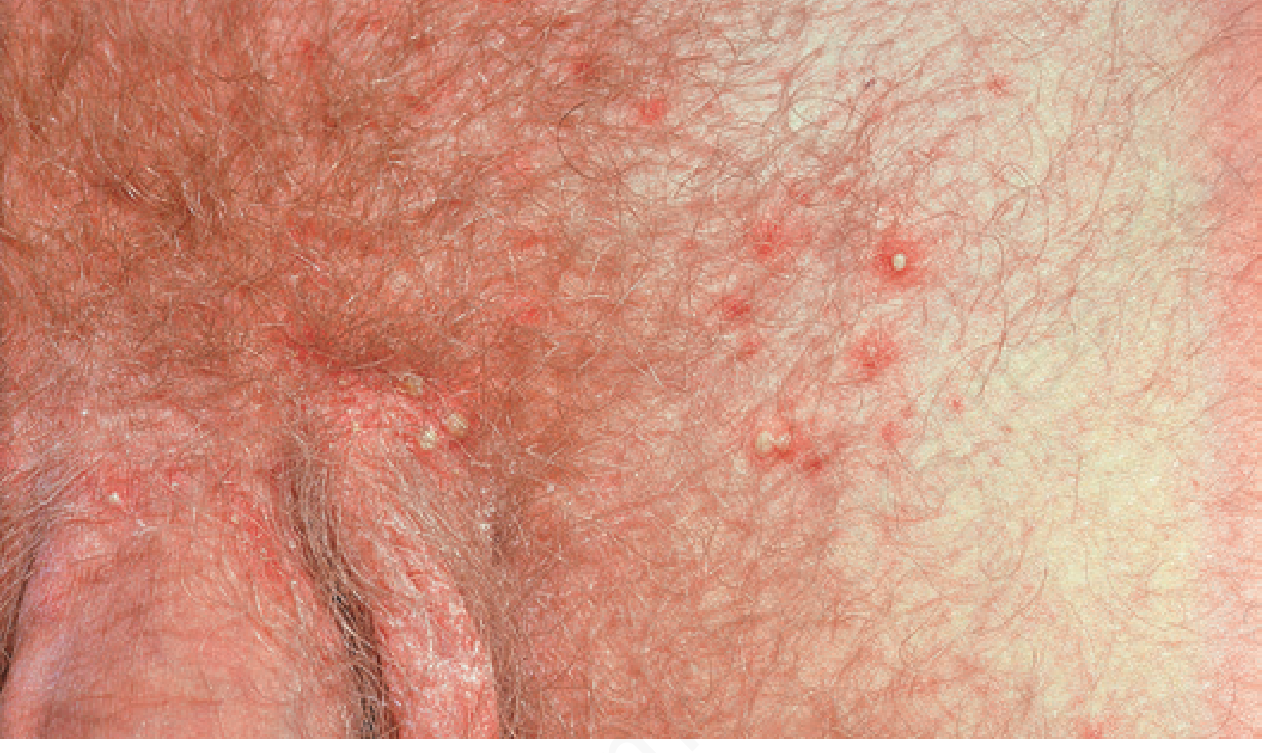
Fig. 14.5 - Staphylococcal folliculitis in the pubic region (Andrews' Diseases of the Skin)
Treatment
1. Mild / Localized (First-line - Topical)
| Medication | How to use |
|---|---|
| Mupirocin 2% ointment (Bactroban) | Apply twice daily for 5-7 days |
| Clindamycin 1% topical gel/lotion | Apply twice daily for 7 days |
| Fusidic acid cream | Apply 2-3 times daily for 5-7 days |
| Benzoyl peroxide wash (5-10%) | Use as a cleanser once daily (antibacterial effect) |
Also use warm compresses for 10-15 min, 3-4 times/day to bring lesions to a head and promote drainage.
2. Moderate / Multiple lesions (Oral Antibiotics)
If there are multiple sites or lesions are not responding:
For suspected MSSA (standard S. aureus):
- Cephalexin 250-500 mg PO 3-4 times/day for 7-10 days
- Dicloxacillin 250-500 mg PO 4 times/day for 7-10 days
If MRSA suspected (lesions failed first-line, recurrent, or epidemiological risk):
- Doxycycline 100 mg PO twice daily for 7-10 days
- Trimethoprim-sulfamethoxazole (TMP-SMX) 1-2 double-strength tablets PO twice daily
- Clindamycin 300-450 mg PO 4 times/day (check local resistance patterns)
(Dermatology 2-Volume Set 5e, Table 74.3)
Prevention (Important to counsel the patient)
- Stop shaving the area until all lesions have fully resolved (minimum 2-4 weeks)
- When shaving resumes: shave with the direction of hair growth, not against it
- Use a fresh, clean razor each time; do not share razors
- Apply antiseptic/antibacterial cleanser (e.g., chlorhexidine or povidone-iodine wash) before and after shaving
- Wear loose, breathable cotton underwear to reduce friction and moisture
- Keep the area clean and dry
- For recurrent cases: apply mupirocin to the nares (nasal carriage of S. aureus is a common reservoir) and consider chlorhexidine baths
Important Clinical Notes
- If pus is expressible, it suggests superficial folliculitis (Impetigo of Bockhart) - generally responds well to topical treatment alone.
- If a lesion becomes a firm, tender nodule (boil/furuncle), it needs incision and drainage (I&D), not just antibiotics.
- Per Andrews' Diseases of the Skin: "On the pubis, [staphylococcal folliculitis] may be transmitted among sexual partners, and 'mini' epidemics of folliculitis and furunculosis of the genital and gluteal areas may be considered an STD" - so if the patient is sexually active, both partners may need evaluation.
- Consider fungal folliculitis (Malassezia) if lesions do not respond to antibiotics - treat with topical antifungal (ketoconazole, clotrimazole).
Bottom line for medication:
- Start with topical mupirocin or clindamycin gel + warm compresses
- If no improvement in 5-7 days or lesions are widespread, add oral cephalexin (first choice for community MSSA)
- Advise the patient to avoid shaving until healed
This is a shared conversation. Sign in to Orris to start your own chat.