
Anti coagulative pharma need all details so I cam understand
Reading File
Now let me search the medical library for anticoagulant pharmacology comprehensively.
Finding Sources
Finding Sources
Searching PubMed
"anticoagulant" AND "pharmacology"
Excellent. Let me now read the most comprehensive pharmacology source - Lippincott's Pharmacology book which had a dedicated section on parenteral anticoagulants, plus Goldman-Cecil and Washington Manual.
Reading File
Reading File
Now let me get the full anticoagulant pharmacology content from Lippincott's and the Washington Manual, reading more sections.
Reading File
Reading File
I have great content from Lippincott's. Let me continue reading it for the full anticoagulant section (warfarin, DOACs, reversal agents).
Reading File
Finding Sources
Reading File
I now have rich content. Let me fetch a couple of the key diagrams and then compose the comprehensive answer.
Loading Image
Loading Image
Now I have all the core content I need. Let me compile the comprehensive answer.
Anticoagulant Pharmacology - Complete Guide
The Clotting Cascade (Foundation)
Before understanding anticoagulants, you need to understand what they target.
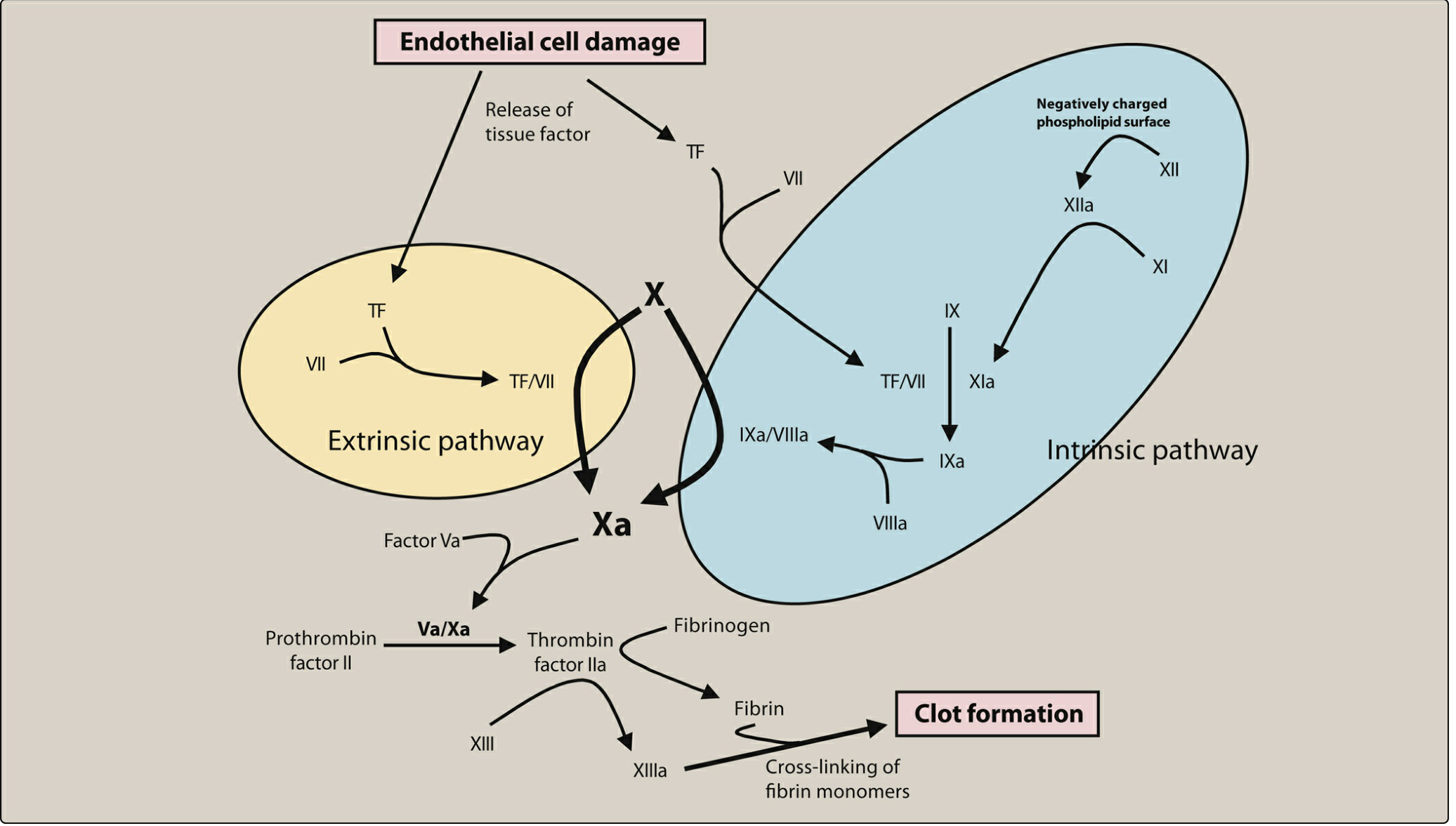
Two pathways converge at Factor X to form the common pathway:
- Extrinsic pathway: triggered by tissue factor (TF) released after vascular damage → activates Factor VII → activates Factor X
- Intrinsic pathway: Factor XII activated by contact with collagen → XIIa → XIa → IXa → Factor X
- Common pathway: Factor Xa + Factor Va → converts prothrombin (II) → thrombin (IIa) → converts fibrinogen → fibrin clot
Anticoagulants target specific steps in this cascade. Here is how each class works:
PART 1: PARENTERAL ANTICOAGULANTS
1. Unfractionated Heparin (UFH)
Mechanism of action:
Heparin binds to antithrombin III (AT-III), causing a conformational change that accelerates its inhibitory action ~1000-fold. The heparin-AT-III complex then inactivates thrombin (IIa) and Factor Xa (as well as IXa, XIa, XIIa). After inactivating these factors, heparin dissociates and can be reused.
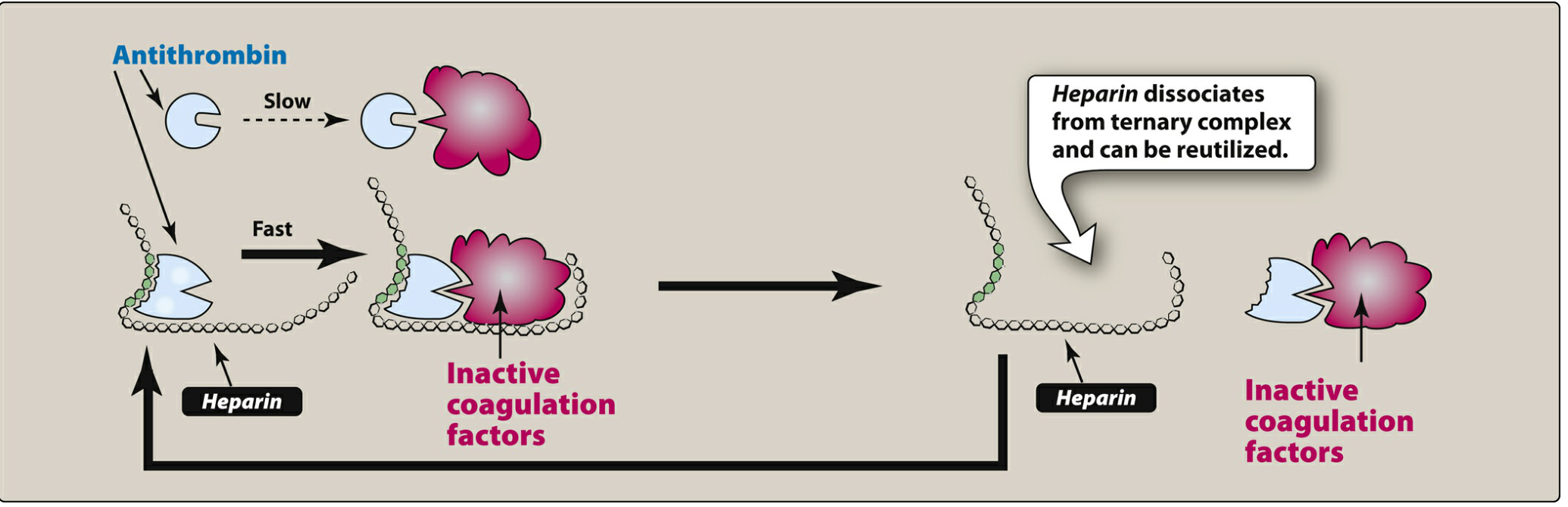
- UFH inhibits both thrombin AND Factor Xa (requires the full heparin chain)
- A unique pentasaccharide sequence in heparin allows binding to AT-III
Route & Pharmacokinetics:
- Given IV (immediate effect) or subcutaneously (onset 1-2 hours)
- Half-life: ~1.5 hours
- Binds many plasma proteins → unpredictable pharmacokinetics
- Metabolized by monocyte/macrophage system; renally excreted
- Monitoring: aPTT (target 1.5-2.0x control); or anti-Xa levels
Therapeutic uses:
- Acute DVT/PE treatment
- ACS (NSTEMI, STEMI) - reduces death/MI by up to 60% with aspirin
- Post-op VTE prophylaxis (hip replacement, etc.)
- Anticoagulant of choice in pregnancy (does not cross placenta - too large)
- Bridging therapy during procedures
Adverse effects:
- Bleeding (most important) - reversible with protamine sulfate (1 mg per 100 units heparin)
- Heparin-Induced Thrombocytopenia (HIT) - immune-mediated platelet activation causing paradoxical thrombosis; requires stopping heparin immediately
- Osteoporosis (with long-term use)
- Hypersensitivity
Contraindications: active bleeding, thrombocytopenia, recent surgery of brain/eye/spinal cord
2. Low-Molecular-Weight Heparins (LMWHs)
Examples: Enoxaparin (Lovenox), Dalteparin (Fragmin)
Mechanism: Produced by depolymerization of UFH; ~1/3 the size. LMWHs bind AT-III via the same pentasaccharide sequence but are too short to bridge thrombin - they selectively inhibit Factor Xa only (with minimal anti-IIa activity).
| Feature | UFH | LMWH |
|---|---|---|
| Anti-Xa : Anti-IIa ratio | 1:1 | 2:1 to 4:1 |
| Monitoring required | Yes (aPTT) | Usually not needed |
| Predictability | Variable | Predictable |
| Route | IV or SC | SC only (enoxaparin IV for MI) |
| HIT risk | Higher | Lower (but still possible) |
| Reversal | Protamine (complete) | Protamine (partial ~60%) |
| Renal clearance | Minimal | Yes - reduce dose if GFR <30 |
Pharmacokinetics:
- Half-life: 3-12 hours (longer than UFH)
- Anti-Xa peak: ~4 hours after SC injection
- Eliminated renally - dose reduce in renal impairment
- Monitor anti-Xa levels in obese, pregnant, renally impaired patients
Dosing (enoxaparin):
- Treatment DVT/PE: 1 mg/kg SC twice daily (or 1.5 mg/kg once daily)
- ACS: 1 mg/kg SC bid (reduce 50% if creatinine >2 mg/dL or GFR <30)
- Prophylaxis: 40 mg SC daily
Advantages over UFH: predictable dosing, no routine lab monitoring, can be outpatient use
3. Fondaparinux (Arixtra)
Mechanism: A synthetic pentasaccharide - the exact binding sequence from heparin. Selectively inhibits Factor Xa only by binding AT-III; has no anti-thrombin (IIa) activity at all.
- Completely synthetic - no risk of HIT
- Given SC once daily
- Dose: 2.5 mg SC daily
- Eliminated renally (contraindicated if GFR <30)
- No reversal agent available (andexanet alfa may work but off-label)
- Not recommended for PCI/ACS without additional antithrombin anticoagulation (increased thrombosis risk during PCI)
- Good option in non-invasive ACS management (less bleeding than LMWH)
4. Direct Thrombin Inhibitors (DTIs) - Parenteral
Bivalirudin (Angiomax)
- Mechanism: Directly inhibits thrombin (IIa) - both free thrombin AND clot-bound thrombin (heparin cannot reach clot-bound thrombin)
- Does NOT require AT-III
- IV infusion, monitored with aPTT (target 1.5-2.5x control if >4 hours)
- No HIT - drug of choice when HIT is present or suspected
- Dose: 0.75 mg/kg IV bolus, then 1.75 mg/kg/h during PCI
- Adjust for renal impairment (GFR <30 or dialysis)
- Associated with increased stent thrombosis vs UFH in some studies - use with caution unless high bleeding risk
Argatroban
- Direct thrombin inhibitor given IV
- Hepatically metabolized - preferred in renal failure
- Used for HIT treatment and HIT patients needing PCI
Lepirudin/Desirudin
- Recombinant hirudin derivatives (hirudin from leeches is the original direct thrombin inhibitor)
- Renally eliminated
PART 2: ORAL ANTICOAGULANTS
5. Warfarin (Coumadin) - Vitamin K Antagonist
Mechanism: Warfarin is a coumarin derivative that inhibits Vitamin K epoxide reductase (VKORC1), blocking regeneration of active vitamin K. Vitamin K is required as a cofactor for gamma-carboxylation (activation) of clotting factors II, VII, IX, X and anticoagulant proteins C and S.
- Without active vitamin K, these factors are synthesized but non-functional
- Effect is delayed by 2-3 days (existing factor levels must deplete first)
- Factor VII (shortest half-life ~6 hours) falls first - PT/INR rises early
- Factor II (longest half-life ~72 hours) falls last - full anticoagulation takes several days
Important: When starting warfarin, early reduction in Protein C (anticoagulant protein with short half-life) can cause a transient hypercoagulable state - this is why heparin/LMWH must be overlapped for at least 5 days AND until INR is therapeutic for 2 consecutive days.
Pharmacokinetics:
- Oral bioavailability nearly 100%
- Highly protein-bound (albumin)
- Metabolized by CYP2C9 (primarily) and 2C19, 3A4
- Half-life: ~36-42 hours
- Monitoring: PT/INR - target INR typically 2.0-3.0 (or 2.5-3.5 for mechanical heart valves)
Drug Interactions (extensive):
- Drugs that increase INR (potentiate warfarin): amiodarone, fluconazole, metronidazole, trimethoprim, NSAIDs, fluoroquinolones
- Drugs that decrease INR (inhibit warfarin): rifampin, carbamazepine, barbiturates, St. John's Wort
- Foods high in Vitamin K (leafy greens) decrease INR
Genetic variation: VKORC1 and CYP2C9 polymorphisms affect dose requirements significantly
Reversal:
- Minor bleeding / high INR: hold warfarin, give oral Vitamin K
- Major bleeding: IV Vitamin K + 4-Factor Prothrombin Complex Concentrate (PCC) or Fresh Frozen Plasma (FFP)
- Reversal with PCC is faster than FFP
Adverse effects:
- Bleeding (most common)
- Warfarin-induced skin necrosis - occurs early in therapy when Protein C drops; treat by stopping warfarin, giving Vitamin K, switch to heparin/DOAC
- Teratogenicity - contraindicated in pregnancy (crosses placenta; causes warfarin embryopathy)
- Purple toe syndrome (rare - cholesterol microembolism)
6. Direct Oral Anticoagulants (DOACs)
DOACs directly inhibit a single coagulation factor without needing AT-III. They have predictable pharmacokinetics with fixed dosing and minimal drug/food interactions compared to warfarin.
Direct Factor Xa Inhibitors ("-xabans")
| Drug | Brand | Dose (AF) | Half-life | Renal excretion |
|---|---|---|---|---|
| Rivaroxaban | Xarelto | 20 mg OD with food | 5-9 h (young), 11-13 h (elderly) | 33% |
| Apixaban | Eliquis | 5 mg BID | 12 h | 27% |
| Edoxaban | Savaysa | 60 mg OD | 10-14 h | 50% |
| Betrixaban | Bevyxxa | Prophylaxis only | 19-27 h | 82% |
Mechanism: Directly bind the active site of Factor Xa, preventing conversion of prothrombin to thrombin. They block both free Factor Xa and Factor Xa within the prothrombinase complex.
Reversal agent: Andexanet alfa (Andexxa) - a modified recombinant Factor Xa decoy molecule that binds and sequesters Xa inhibitors
Direct Thrombin Inhibitor (Oral)
Dabigatran (Pradaxa)
- Mechanism: Oral prodrug (dabigatran etexilate) converted to dabigatran; directly inhibits thrombin (IIa) - both free and clot-bound
- Dose: 150 mg BID (AF); 110 mg BID in elderly/high bleeding risk
- Half-life: 12-17 hours
- 80% renally excreted - avoid if GFR <30 mL/min (or <15 for some indications)
- Reversal agent: Idarucizumab (Praxbind) - humanized antibody fragment that binds dabigatran with 350x higher affinity than thrombin
- Must be taken with food (capsules must not be crushed - enteric coated)
- Requires functional kidneys - stop if GFR declines
DOAC Advantages over Warfarin:
- No routine monitoring required
- Fixed dosing (weight-independent in most cases)
- Fewer drug interactions
- No dietary restrictions (no vitamin K concern)
- Faster onset and offset
- Specific reversal agents available
DOAC Limitations:
- More expensive
- Reduce dose / avoid in severe renal impairment
- Less data in mechanical heart valves (warfarin still preferred)
- Adherence important due to short half-life (missing doses = rapid loss of effect)
PART 3: COMPARISON TABLE - All Anticoagulants
| Drug | Class | Route | Target | Monitoring | Reversal | Special Notes |
|---|---|---|---|---|---|---|
| UFH | Indirect thrombin/Xa inhibitor | IV/SC | IIa + Xa (via AT-III) | aPTT | Protamine sulfate | HIT risk; pregnancy safe |
| Enoxaparin | LMWH | SC | Xa > IIa (via AT-III) | Anti-Xa (if needed) | Protamine (partial) | Renal dose adjustment |
| Fondaparinux | Synthetic pentasaccharide | SC | Xa only (via AT-III) | None | None available | No HIT; avoid if GFR <30 |
| Bivalirudin | Direct thrombin inhibitor | IV | IIa (direct) | aPTT/ACT | None (short t½) | HIT patients; PCI |
| Argatroban | Direct thrombin inhibitor | IV | IIa (direct) | aPTT | None | Hepatic metabolism; HIT |
| Warfarin | Vitamin K antagonist | Oral | Factors II,VII,IX,X synthesis | PT/INR | Vit K + PCC/FFP | Many interactions; teratogenic |
| Rivaroxaban | Direct Xa inhibitor | Oral | Xa (direct) | None | Andexanet alfa | Once daily; take with food |
| Apixaban | Direct Xa inhibitor | Oral | Xa (direct) | None | Andexanet alfa | Twice daily; least renal |
| Dabigatran | Direct thrombin inhibitor | Oral | IIa (direct) | None | Idarucizumab | 80% renal; avoid CrCl <30 |
PART 4: INDICATIONS BY CONDITION
| Condition | Preferred Anticoagulant |
|---|---|
| VTE treatment (acute, inpatient) | LMWH or UFH → transition to DOAC or warfarin |
| VTE treatment (outpatient) | Rivaroxaban or apixaban (DOAC) as monotherapy |
| VTE prophylaxis (surgical) | LMWH (enoxaparin 40 mg SC daily) or fondaparinux |
| Atrial fibrillation (stroke prevention) | DOAC preferred; warfarin if mechanical valve or severe mitral stenosis |
| ACS/NSTEMI (acute) | UFH or LMWH or bivalirudin |
| PCI | UFH or bivalirudin |
| Mechanical heart valves | Warfarin only (DOACs failed clinical trials in this setting) |
| HIT (heparin-induced thrombocytopenia) | Stop all heparin; use argatroban or bivalirudin |
| Pregnancy | LMWH (UFH if near delivery); warfarin and DOACs contraindicated |
| Renal failure (GFR <30) | UFH or argatroban (hepatic metabolism); avoid LMWH, fondaparinux, dabigatran |
PART 5: REVERSAL AGENTS SUMMARY
| Anticoagulant | Reversal Agent | Mechanism |
|---|---|---|
| UFH | Protamine sulfate | Ionically binds heparin, neutralizes it |
| LMWH | Protamine sulfate (partial ~60%) | Partial neutralization |
| Warfarin | Vitamin K + 4F-PCC or FFP | Restore clotting factor synthesis/replace factors |
| Dabigatran | Idarucizumab (Praxbind) | Monoclonal antibody fragment binds dabigatran |
| Rivaroxaban/Apixaban/Edoxaban | Andexanet alfa (Andexxa) | Recombinant Factor Xa decoy |
| All (emergency) | 4F-PCC (nonspecific) | Replaces clotting factors II, VII, IX, X |
PART 6: MONITORING TESTS
- aPTT (activated Partial Thromboplastin Time): monitors the intrinsic + common pathway; used for UFH and bivalirudin
- PT/INR (Prothrombin Time / International Normalized Ratio): monitors extrinsic + common pathway; used for warfarin
- Anti-Xa levels: monitors LMWH and fondaparinux when needed (renal impairment, obesity, pregnancy)
- ACT (Activated Clotting Time): used to monitor UFH during PCI/cardiac surgery
- Thrombin time (TT): very sensitive for dabigatran; prolonged even at low levels
- Ecarin Clotting Time (ECT): specific for direct thrombin inhibitors
KEY CLINICAL PEARLS
-
HIT: Any drop in platelets >50% after 5-10 days of heparin = suspect HIT. Stop heparin immediately. Do NOT give platelets (paradoxically worsens thrombosis). Switch to argatroban or bivalirudin.
-
Warfarin + DOAC bridging: When starting warfarin, always overlap with heparin/LMWH for ≥5 days AND until INR is therapeutic for 2 days - to prevent the transient Protein C drop hypercoagulable state.
-
Pregnancy: Only heparin/LMWH are safe (do not cross placenta). Warfarin is teratogenic (weeks 6-12). DOACs - insufficient data, avoid.
-
Renal dosing: LMWHs, fondaparinux, dabigatran, edoxaban all accumulate in renal failure. UFH, warfarin, argatroban, and apixaban (least renally cleared DOAC) are safer.
-
DOACs in AF: Major trials - RE-LY (dabigatran), ROCKET-AF (rivaroxaban), ARISTOTLE (apixaban) - all showed non-inferiority or superiority to warfarin with less intracranial bleeding.
Sources: Lippincott Illustrated Reviews: Pharmacology; The Washington Manual of Medical Therapeutics; Braunwald's Heart Disease; Goldman-Cecil Medicine

1000071959.jpg
Explain their mech. Of actually. In easy language so I can understand
I can see your textbook chart showing the full classification of anticoagulants. Let me explain each mechanism in the simplest possible way — like a story!
🩸 How Anticoagulants Work — Simple Explanation
First, understand the problem they solve:
Imagine your blood is like a river. When a pipe (blood vessel) gets damaged, your body sends clotting workers to patch the hole. That's good. But sometimes these workers go overboard and block the whole pipe — causing a dangerous clot (DVT, stroke, heart attack). Anticoagulants are like supervisors that slow down the workers.
The main "workers" (clotting factors) form a chain reaction called the coagulation cascade. The final goal of this chain is to make THROMBIN, which then makes FIBRIN (the glue that holds clots together).
🔵 GROUP 1: PARENTERAL ANTICOAGULANTS (given by injection)
🔹 A. Indirect Thrombin Inhibitors (Heparins)
"Indirect" = they don't fight thrombin directly. They use a bodyguard.
Your body has a natural guard called Antithrombin III (AT-III). This guard can stop clotting - but it works VERY slowly on its own.
Heparin's job: Wake up the sleeping guard (AT-III) and make it work 1000x faster.
Once AT-III is activated, it destroys thrombin (IIa) and Factor Xa - two key workers in the clotting chain. No thrombin = no fibrin = no clot.
UFH (Unfractionated Heparin)
- Big molecule, activates AT-III
- AT-III then kills both Thrombin AND Factor Xa
- Given IV or SC
- Think of it as: "Heparin hands AT-III a weapon and says — go kill both thrombin and Xa!"
LMWH (Low Molecular Weight Heparins)
Examples: Enoxaparin, Dalteparin, Reviparin, Nadroparin, Ardeparin
- Smaller piece of heparin
- Also activates AT-III, BUT the molecule is too short to grab thrombin
- So AT-III only kills Factor Xa (not thrombin)
- Think of it as: "LMWH is a smaller key that only opens one lock (Factor Xa)"
- More predictable, given SC, no routine blood monitoring needed
Fondaparinux & Danaparoid
- Synthetic - not real heparin but mimics the key part
- Fondaparinux = just the 5-sugar sequence that binds AT-III
- Result: Only Factor Xa is inhibited
- Zero risk of HIT (no real heparin involved)
🔹 B. Direct Thrombin Inhibitors
"Direct" = they skip the middleman (AT-III) and punch thrombin in the face directly.
Bivalirudin & Argatroban
Imagine thrombin as the villain boss. Instead of waking up a guard, these drugs walk straight up to the villain and block its active site (the mouth it uses to convert fibrinogen → fibrin).
- No AT-III needed
- Works even on clot-bound thrombin (heparin can't reach this!)
- Key use: patients with HIT (allergic to heparin) - these drugs have NO heparin, so no allergy
- Given IV only
🟢 GROUP 2: ORAL ANTICOAGULANTS
🔹 C. Vitamin K Antagonists (Warfarin, Acenocoumarol, etc.)
The "factory sabotage" approach
Clotting factors II, VII, IX, X are made in the liver, and they need Vitamin K to become functional (like adding a battery to a toy).
Vitamin K gets recycled after each use. The enzyme that recycles it is called Vitamin K Epoxide Reductase (VKORC1).
Warfarin blocks VKORC1 — so Vitamin K cannot be recycled — so new clotting factors come out "dead" and non-functional.
- Works SLOWLY (2-3 days) because existing factors must naturally die off first
- Monitored with INR (target 2-3)
- Reversed with Vitamin K or Prothrombin Complex Concentrate (PCC)
- CANNOT be used in pregnancy (crosses placenta, causes birth defects)
Simple analogy: Warfarin is like turning off the charger for clotting factors. The old batteries still work for a few days until they run out.
🔹 D. Direct Factor Xa Inhibitors ("-xabans")
Rivaroxaban, Apixaban, Edoxaban
Imagine Factor Xa is a key step in an assembly line. These drugs directly plug Factor Xa's active site — like sticking chewing gum in the machine.
- No AT-III needed (unlike heparins)
- Oral pills, fixed dose, no monitoring
- Stop Factor Xa → prothrombin cannot become thrombin → no fibrin → no clot
- Reversed with Andexanet alfa (a fake Factor Xa that acts as a "sponge" to absorb the drug)
🔹 E. Oral Direct Thrombin Inhibitor
Dabigatran etexilate (Pradaxa)
This is the oral version of the "punch thrombin directly" approach.
- Swallowed as a prodrug → gets converted to active dabigatran in the body
- Directly sits in thrombin's active site and blocks it
- No AT-III needed
- 80% excreted by kidneys - avoid in severe renal failure
- Reversed with Idarucizumab (an antibody that grabs dabigatran like a magnet)
🟡 GROUP 3: IN VITRO ANTICOAGULANTS (used outside the body only)
These are used in lab tubes and blood bags — NOT in patients.
| Drug | How it works |
|---|---|
| Heparin | Same mechanism — used to stop blood clotting in tubes |
| Sodium Edetate (EDTA) | Chelates (grabs) calcium — calcium is needed for clotting; no calcium = no clot |
| Sodium Citrate | Also chelates calcium — used in blood transfusion bags |
| Sodium Oxalate | Also chelates calcium — precipitates it out of solution |
The calcium story: Clotting factors need calcium ions as a "glue" between steps. These agents simply steal the calcium so the cascade cannot proceed. They only work in a tube/bag — you can't use them in a patient because removing calcium from blood in the body is dangerous.
🧠 Super Simple Summary Table
| Drug Group | Target | Analogy |
|---|---|---|
| Heparin (UFH) | AT-III → kills Thrombin + Xa | Wake up bodyguard to kill 2 enemies |
| LMWH | AT-III → kills Xa only | Smaller bodyguard, kills 1 enemy |
| Fondaparinux | AT-III → kills Xa only | Synthetic key, kills 1 enemy, no allergy risk |
| Bivalirudin/Argatroban | Directly block Thrombin | Punch the villain directly |
| Warfarin | Block Vitamin K recycling → no working clotting factors | Sabotage the factory charger |
| Rivaroxaban/Apixaban | Directly block Factor Xa | Stick gum in Xa machine |
| Dabigatran | Directly block Thrombin (oral) | Oral villain-puncher |
| EDTA/Citrate/Oxalate | Steal calcium | Remove the glue from the assembly line |
The chart in your textbook is a great map - the key insight is: everything either blocks the coagulation cascade at Xa, at Thrombin (IIa), or stops the synthesis of clotting factors (Vit K antagonists). Once you know WHERE a drug hits, the rest follows logically!
This is a shared conversation. Sign in to Orris to start your own chat.