
Paracetamol is good for
Paracetamol (acetaminophen) is good for pain relief and fever reduction. It works centrally to raise the pain threshold and acts on the hypothalamus to lower body temperature. It is one of the most widely used over-the-counter medications.
Searching sources...
Reading File
Finding Sources
Searching the Web
paracetamol uses indications clinical pharmacology
Reading File
Finding Sources
Finding Sources
Reading File
Loading Image
Here is a complete overview of what paracetamol (acetaminophen) is good for, sourced from authoritative medical textbooks:
Paracetamol (Acetaminophen) - Uses & Pharmacology
What It Is Good For
| Indication | Notes |
|---|---|
| Fever (Antipyretic) | Reduces elevated body temperature by acting on the hypothalamic heat-regulating center via CNS prostaglandin inhibition |
| Mild to moderate pain (Analgesic) | Headache, toothache, muscle aches, backache, menstrual cramps, sore throat, post-procedural pain |
| Pain in children with viral illness or chickenpox | The preferred choice over aspirin because aspirin carries a risk of Reye syndrome in this setting |
| Patients with GI risks from NSAIDs | Does NOT cause gastric irritation, ulceration, or GI bleeding, making it safer for patients with peptic ulcer disease or gastritis |
| Patients with bleeding/coagulation disorders | Unlike NSAIDs and aspirin, paracetamol does not inhibit platelet function or prolong bleeding time |
| Pregnancy | It is the first-line analgesic and antipyretic in pregnancy, where NSAIDs (especially in the third trimester) are discouraged |
| Patients who don't need anti-inflammatory action | When inflammation is not the primary issue, paracetamol avoids the side effects of NSAIDs entirely |
| Intravenous (IV) use | Available as Ofirmev (IV formulation) for peri-operative pain and fever management in hospital settings |
| Combination analgesics | Often combined with codeine, tramadol, or caffeine to boost pain relief for moderate-to-severe pain or migraine |
Mechanism of Action
Paracetamol inhibits prostaglandin synthesis in the CNS by acting on the peroxidase function of COX-1 and COX-2 enzymes. However, it is inactivated peripherally, which explains why it:
- ✅ Reduces fever and pain (central action)
- ✅ Does NOT cause GI bleeding (no peripheral COX inhibition)
- ❌ Has little to no anti-inflammatory effect
Metabolism (Therapeutic vs. Toxic Doses)
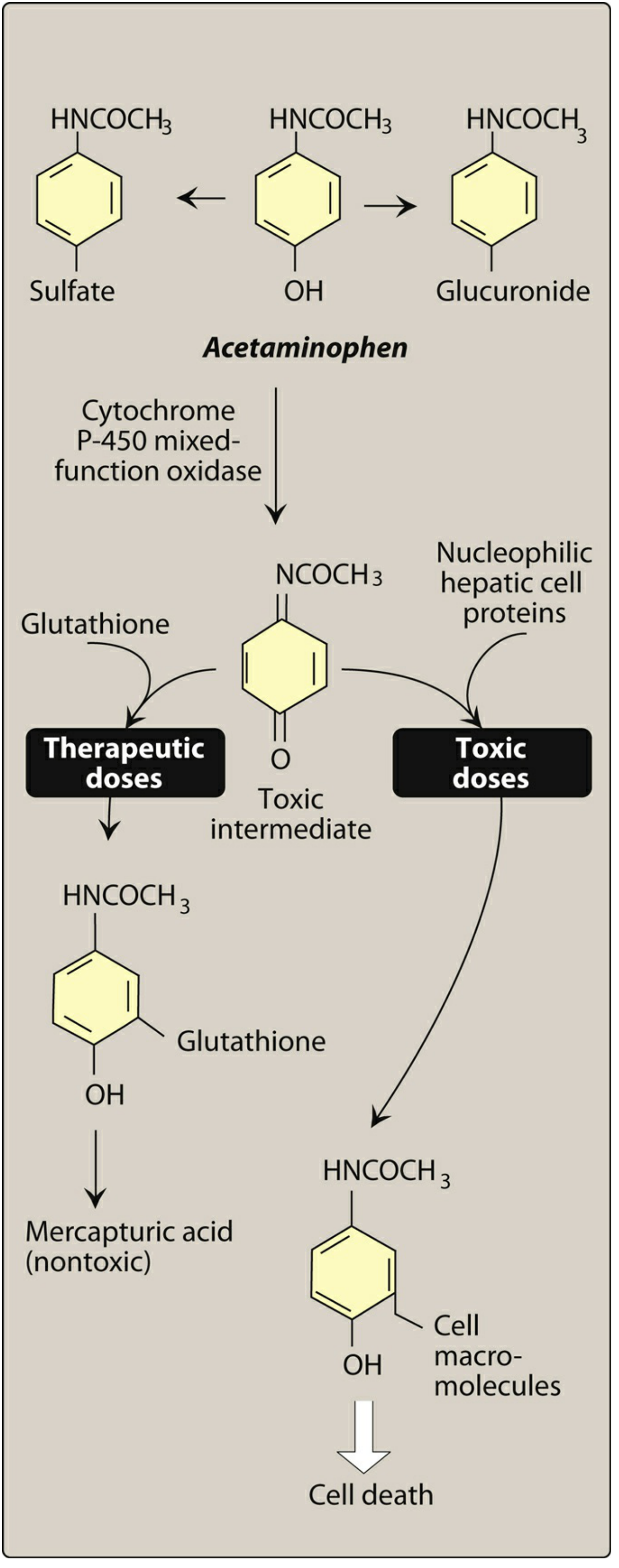
At therapeutic doses: The toxic intermediate NAPQI is neutralized by hepatic glutathione, forming mercapturic acid (harmless).
At toxic/overdose doses: Glutathione is depleted, NAPQI binds to liver cell proteins, causing hepatic necrosis. The antidote is N-acetylcysteine (NAC).
Key Advantages Over NSAIDs
- No GI ulceration or bleeding
- No platelet dysfunction
- Safe in patients with aspirin-sensitive asthma
- Safe in renal impairment (short-term, low dose)
- First-line in pregnancy and children with viral illness
Recommended Dosing (Adults)
- Oral: 500-1000 mg every 4-6 hours, max 3000-4000 mg/day (lower limit recommended in patients with liver disease, malnutrition, or chronic alcohol use)
- Reduce dose or avoid entirely in severe hepatic impairment
Sources: Lippincott Illustrated Reviews: Pharmacology, p. 1364-1366 | Goodman & Gilman's Pharmacological Basis of Therapeutics | Morgan & Mikhail's Clinical Anesthesiology | Henry's Clinical Diagnosis and Management by Laboratory Methods
This is a shared conversation. Sign in to Orris to start your own chat.